LP_468x60
on-the-record-468x60-white

Alberta has a long history of discontent over its treatment by the federal government.

After the Conservatives’ federal election loss, some Albertans frustrated with Liberal government policies are rallying for separation from Canada. Recently, hundreds of separatists held a rally at the Alberta legislature, angered at the province’s place within confederation.

It’s not the first time Albertans have pushed for sovereignty. There were upswings in separatist sentiment during the National Energy Program in the 1980s. More recently, separatist agitators gained steam in the dying years of the 2010s, angered over Liberal legislation that targeted the energy sector and a general downturn in the petro-province’s economic fortunes. This culminated with the now-defunct Wexit movement.

Now, separatist sentiment is back. And Alberta Premier Danielle Smith’s government has made it easier for separatists to get a referendum on the ballot by reducing the threshold necessary to do so. She said if Albertans want it, her government will hold a referendum on separation. Here’s what you need to know about the likelihood of that and the strength of the Alberta separatist movement.

Have separatists ever had any success in Alberta?

Not much. At least not electorally.

Just once was a separatist elected to the Alberta legislature. Gordon Kesler, an

oil scout and rodeo rider

, won a byelection in 1982. He was elected by voters in Olds, Alta., who didn’t like bilingualism, the metric system, gun control and then prime minister Pierre Trudeau’s National Energy Program. Kesler won, but he sat only for two-and-a-half months, before running in the general election and losing solidly.

But it turns out Kesler wasn’t a true believer: By 1983, he was vowing to leave the Western Canada Concept party unless it dropped separatism from its platform.

When did the Alberta separatism movement begin?

Despite the deep admiration that conservative Albertans tend to express for Sir John A. Macdonald, Canada’s first prime minister can also be identified as the first prime minister to put the needs of central Canada over the needs of the west. His 1878 National Policy was crafted specifically to force east-west rather than north-south trade, to the outrage of those in what was then the North-West Territories.

“The people of the North-West are allowed but a degree more control of their affairs than the serfs of Siberia,” wrote Frank Oliver, the publisher of Edmonton’s first newspaper, in August 1885. Ottawa’s rule, he wrote, is “despotism as absolute, or more so, than that which curses Russia.”

This sentiment has ebbed and flowed over the years (and also existed beyond Alberta’s borders, in other parts of the Prairies). There was anger in some parts of the west over the 1885 execution of Louis Riel, a Métis leader who is now recognized by many as the founder of Manitoba. Preston Manning, the founder of the federal Reform Party, traces the origins of alienation back to that event, as well as land surveys of the west done in 1869 with insufficient regard for the local populations. Freight rates on the national railways were also a source of grievance.
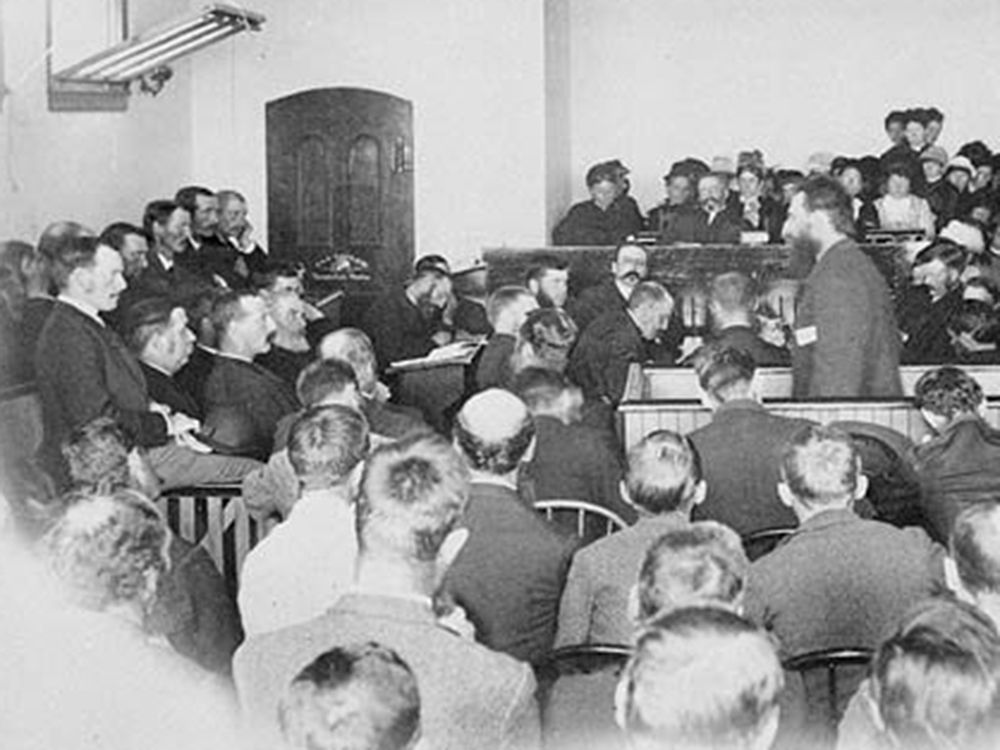
 Métis leader Louis Riel, standing at right, addresses the jury during his trial for treason in 1885.

In Alberta, specifically, William Aberhart’s Social Credit Party, which was founded in 1935, briefly flirted with separatism. But it wasn’t until the energy crises of the 1970s, the election of Trudeau Sr. and the National Energy Program that Alberta separation emerged in its more modern form.

Throughout all of this, only the fringes of Alberta’s political spectrum have actually wanted the province to leave Canada. But far more Albertans have shared some sense of alienation or anger with Ottawa.

What’s the history of the Alberta separatism movement?

In 1975, the Calgary Herald surveyed 221 Calgarians for their views on Alberta separation and alienation.

Only eight people expressed support for separation. That’s 3.6 per cent of respondents. However, by other metrics, Albertans were alienated, with more than 70 per cent saying Alberta politicians weren’t taken seriously in Ottawa.

By 1980, things had shifted: Mel Hurtig, the late pro-Canada publisher, commissioned a poll that found 14 per cent of Albertans supported separation. “God forbid if the separatist movement would be able to find a charismatic leader,” Hurtig told the audience at an Edmonton hotel.

It wasn’t considered front-page news. It appeared on page D22 of the Herald, above a story about a robot running amok in Florida and the TV listings. Still, the chatter remained, and by 1980, Reform party MPs were telling the media that they were hearing about the issue from constituents.

Later that year, Doug Christie, the head of Western Canada Concept, held a fundraiser in Edmonton. It was a flop: He raised so little money that it “wouldn’t keep anyone in cheap cigars,” the Herald reported.
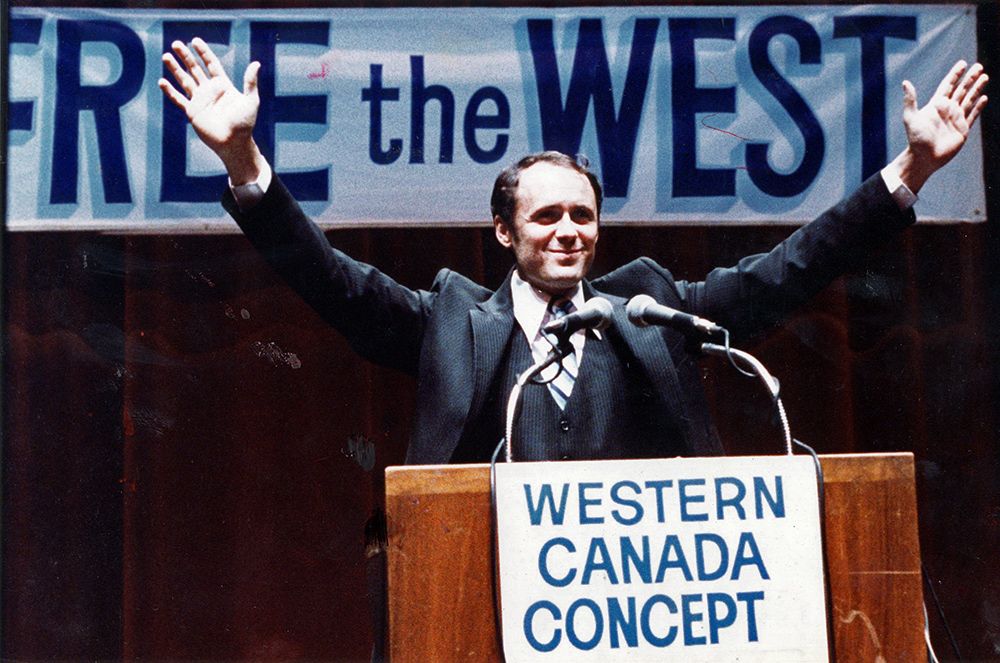
 Western Canada Concept party founder Doug Christie at a rally on Nov. 24 1980.

Still, separation kept coming up again, though it wasn’t always taken seriously.

“Alberta, alas, is over-generously supplied with chronic complainers whose lung capacity dangerously exceeds their IQs,” wrote Herald columnist William Gold in 1995. Separatists, Gold wrote, were a “miniscule dishwasher copycat” of Jacques Parizeau’s Quebec aspirations “with no such claim on the respect of decent people.”

In 1997, two years after Quebec’s last, failed attempt to separate, Social Credit leader Randy Thorsteinson said he thought it was inevitable that Alberta would separate.

By 2002, when Jean Chrétien’s government was signing the Kyoto Accords on climate change, then Alberta premier Ralph Klein warned that it could lead to separation. Naomi Lakritz, a Calgary Herald columnist, shellacked Klein.

“If the rest of Canada sees Alberta as greedy, uncaring, money-grubbing and self-centred in its negative reaction to the Kyoto accord, then Ralph Klein’s use of the word ‘separatism’ and his petulant warning not to ‘push us too hard,’ has just reinforced that view,” Lakritz wrote.

Even in 2018-20, when the Wexit movement — which advocated for the separation of British Columbia, Alberta, Saskatchewan, and Manitoba — was ascendant and aggrieved westerners formed the Maverick Party, the movement never got that far. The Maverick Party never managed to win any seats and none of the provincial separatist parties had a meaningful showing in the 2019 or 2023 elections.

How much support is there for Alberta separatism?

In 2019, the Angus Reid Institute found that 60 per cent of Albertans were

open to the idea of the province

joining a western separatist movement. This, however, is a bit of a vague question.

ThinkHQ did polling that year

, and found that when presented with a clear question — would you vote to stay or go? — only 23 per cent of Albertans said they’d opt to go it alone.

More recent polling, conducted by the Angus Reid Institute prior to the 2025 federal election, pegged separatist support at 25 per cent, and that jumped to 30 per cent when Albertans were asked if they would vote to leave if the Liberals formed government again.

The Association for Canadian Studies found in recent polling that

52 per cent of Canadians

believe the threat of Alberta separating should be taken seriously. In Alberta itself, that’s a view held by 63 per cent of those polled.

A Postmedia-Leger poll

, found that 35 per cent of Albertans would support an independent western bloc, comprised of Manitoba, Saskatchewan, Alberta and British Columbia. Support for Alberta and Saskatchewan forming an independent state lies at 30 per cent, while 29 per cent of Albertans think the province should go it alone.

But, put another way, the most attractive option to Albertans, at least according to Leger’s polling, is still rejected by 65 per cent of Albertans.

This is, however, uncharted territory. It could be a different situation altogether if a question actually makes it to the referendum stage.

Who are the separatists and alienated Albertans?

There have been a handful of separatist parties in Alberta, such as the Wildrose Independence Party of Alberta and the Independence Party of Alberta.

Ideologically speaking, separatists are largely conservatives and the parties are, too. For example, while separatism flowered in the 1970s and ’80s, the defeat of the Trudeau Liberals by Brian Mulroney’s Progressive Conservatives stanched the enthusiasm at the time.

And in 2001, when the Alberta Independence Party was founded in Red Deer, the inspiration for it, National Post reported, was the rejection of Stockwell Day’s Canadian Alliance party by voters in central and eastern Canada.
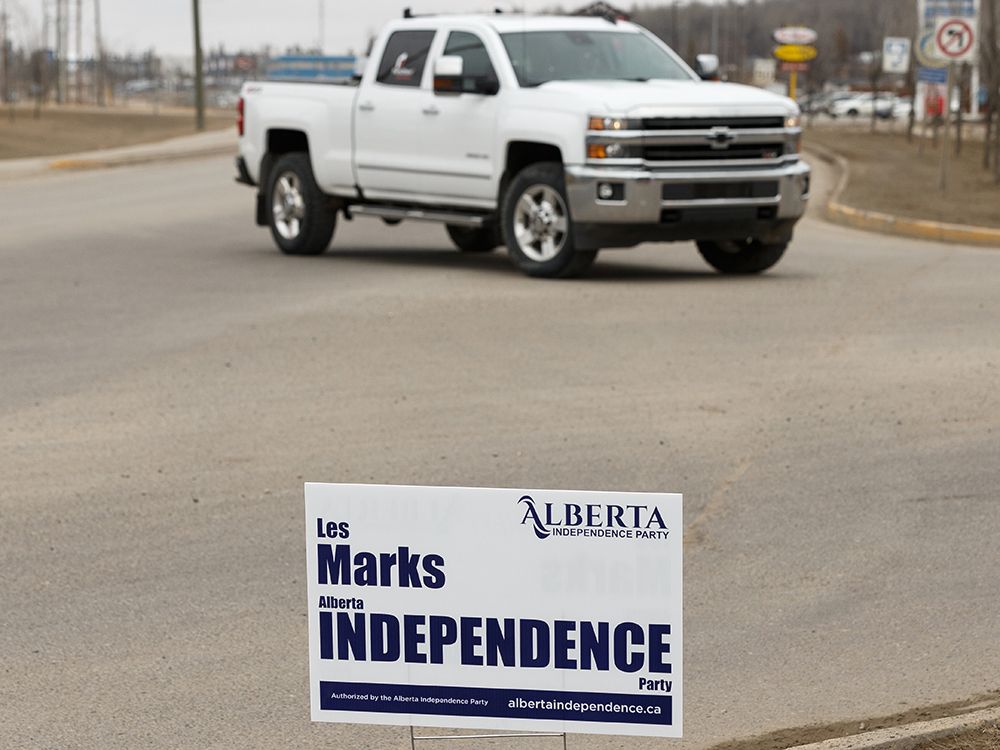
 A campaign sign for an Alberta Independence Party candidate in Drayton Valley, southwest of Edmonton, in 2019.

The latest iteration of a separatist party in Alberta is the Republican Party of Alberta, and it’s another conservative party. The current leader is Cameron Davies, a long-time Alberta conservative. The vice-president of policy is former conservative parliamentarian Art Hanger. Other conservatives are involved, too.

The polling also bears this out. In 2023,

Environics research found that

83 per cent of United Conservative Party voters felt like Alberta didn’t get the respect it deserves. In contrast, just 37 per cent of New Democrats felt that way. That same survey found that 67 per cent of UCP supporters agreed that Alberta got so few benefits from being a part of Canada, it may as well go it alone, compared to 24 per cent of NDP supporters.

Could Alberta really separate?

The first step would be to get to a referendum. This could happen if the provincial government chooses to hold one, or under the Alberta’s Citizen Initiative Act, which allows any Albertan to put their concerns to a provincial referendum if they garner enough support.

Smith has said that the government would hold such a referendum, if it had enough support. In order for citizens to force a referendum on the issue, they must gather the signatures of 10 per cent of all Albertans who voted in the last provincial election. Just shy of 1.8 million Albertans voted in the 2023 general election, so those wanting a separation referendum must gather around 180,000 signatures.

Then, everything would follow per the federal Clarity Act. This legislation sets out that a province — whether Quebec, Alberta or anywhere else — may not unilaterally secede from Canada. They must negotiate secession with the federal government and the rest of the provinces, settling on some sort of constitutional amendment and agreement.
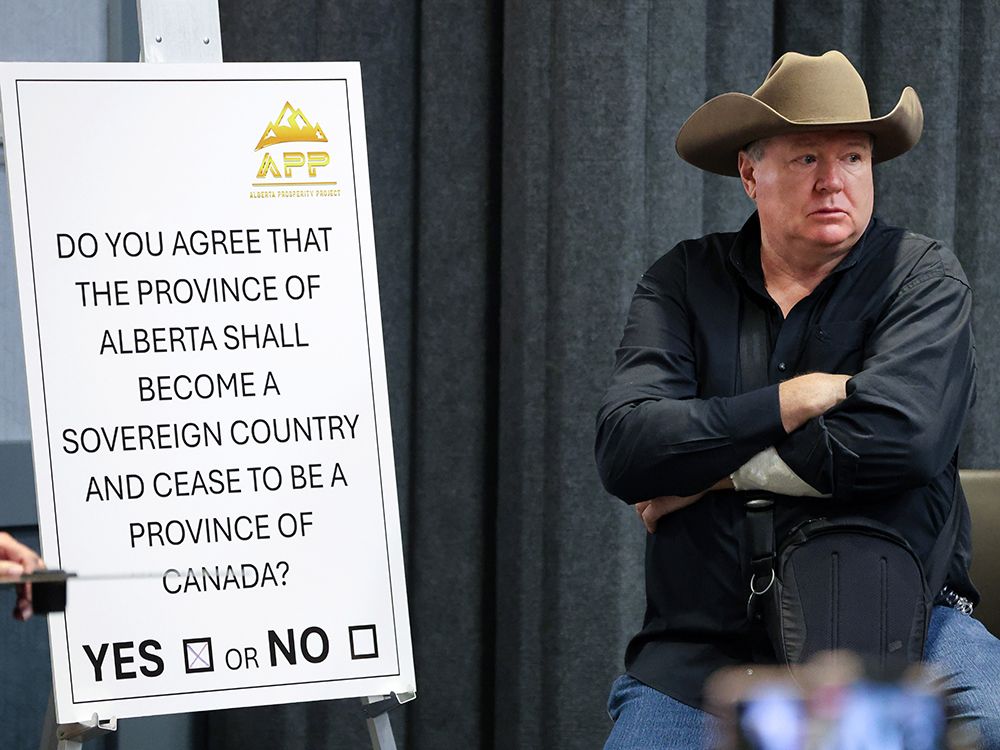
 Jeff Rath with the sovereigntist Alberta Prosperity Project displays a proposed referendum question on separating from Canada, in Calgary on May 12, 2025.

The preamble also sets out a few guideposts on what happens. First, the outcome of a referendum would need to demonstrate a “

clear majority in favour of secession,” which would then “create an obligation to negotiate secession.” The Clarity Act does not set a specific percentage that counts as a “clear majority,” although 51 per cent is often cited as a clear majority. (The House of Commons could determine that that wasn’t clear enough, and that means that secession could not go ahead.) 

Second, the question asked on the referendum itself must be “free of ambiguity.”

Third, for any province to legally leave would require negotiations between all the provinces and opening up and amending the Constitution. 

If all that was satisfied — plus any other aspects of the Clarity Act — and if an agreement was reached, then Alberta could separate. Eric Adams, a University of Alberta law professor, has said it “seems next to impossible.”

“If you look to the Supreme Court of Canada’s statement on separation, it looks exceptionally difficult but may be feasible, if … those negotiations produce some workable separation arrangement,”

Adams said in 2019

.

What role could Indigenous people play?

All of Alberta is covered by treaties, the majority of it by Treaties 6, 7 and 8. And there are 813,000 hectares of specific reserve land. After Smith said she would be willing to hold a referendum, a coalition of First Nation chiefs met for an emergency meeting and denounced the talk of separation.

“We’re not going anywhere and if you feel that you have problems with First Nations you could leave,”

said Chief Troy Knowlton of Piikani Nation

.

While the Alberta government is making it easier for citizens to push for a referendum, in the face of concern from Indigenous people in Alberta, the government

introduced 11th-hour amendments

to the legislation changing up the referendum process. The amendments were in the legislation passed as the spring session of the Alberta legislature drew to a close.

“In response to feedback from First Nations and Indigenous partners and to reassert our commitment to protecting Treaty rights, the bill now includes a clause stating that nothing in a referendum under the Act is to deviate from existing Treaty rights,” said Alberta Justice Minister Mickey Amery in a statement. “Alberta’s government will always recognize, protect, and honour Treaty rights as recognized by section 35 of the Constitution Act, 1982.”

It remains to be seen whether this would affect the ability of Albertans to even get a separation referendum on the ballot in the first place.

An analysis of First Nations rights vis-à-vis separation, written by University of Calgary law professors Robert Hamilton and David Wright, says that Indigenous people in the province would likely have a significant role to play in any future negotiations over separation.

“It is reasonable to think that Indigenous peoples would expect to be full negotiating partners in any movement toward Albertan or Western secession,” wrote Hamilton and Wright.
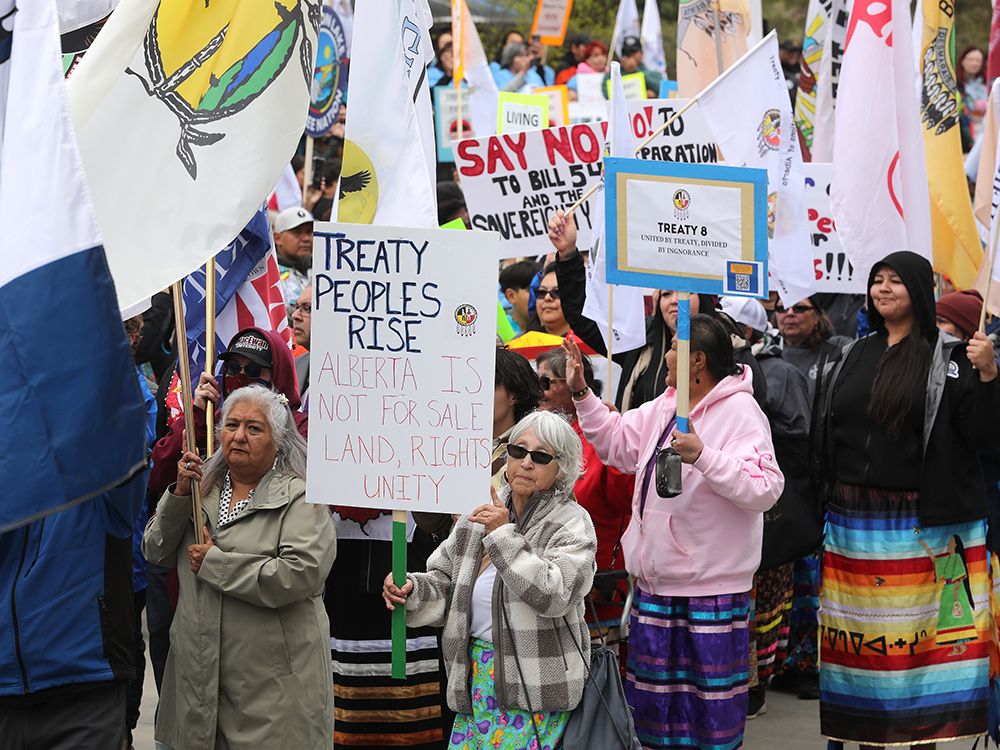
 First Nations leaders and supporters rally against the potential of an Alberta separation referendum, outside the Alberta Legislature in Edmonton on May 15, 2025.

They also said that it would be more complicated for both Ottawa and Edmonton than to simply hand over treaty obligations to a hypothetical future independent state government.

“The only way Canada would be able to legally agree to secession, then, would be if there were guarantees in place ensuring that Alberta would respect the rights of Indigenous peoples to the same extent as they are at Canadian law (we set aside for the moment critiques on the adequacy of such) and if Indigenous peoples agreed to this modification in the relationship,” they wrote. “The Crown cannot unilaterally decide to divest itself of its obligations or transfer them to another government.”

Still, this perhaps would not amount to an Indigenous veto.

“It would seem plausible that there could be a state succession to a treaty…. People generally haven’t suggested that Quebec would be incapable of separating due to treaties,” said University of Saskatchewan law professor Dwight Newman. “At a broad level, Alberta could likely take on the obligations associated with the treaties to ensure that they continue on. I do see it as appropriate that Indigenous peoples are part of the conversations.”

Bruce Pardy, a Queen’s University law professor, wrote in an email that there would be no Indigenous veto in the case of a separation vote, but that opponents of separation might use Indigenous rights to “discredit the process.”

“Canadian constitutional rights will not automatically be carried over to a newly independent Alberta. At the outset, everything will be an open question. That includes the status of Aboriginal people,” wrote Pardy.

Our website is the place for the latest breaking news, exclusive scoops, longreads and provocative commentary. Please bookmark nationalpost.com and sign up for our daily newsletter, Posted, here.


Conservative Party Leader Pierre Poilievre speaks to his supporters after losing the Canadian Federal Election on April 29, 2025 in Ottawa, Canada.

Conservative Leader Pierre Poilievre is expected to 

continue living at Stornoway

with his family while he seeks a seat to return to the House of Commons.

Poilievre lost his Ottawa-area Carleton seat in the federal election last month and is no longer recognized as the official leader of the Opposition in the House. It was

initially unclear if Poilievre would remain

at the taxpayer-funded residence, which has been

reserved for the leader of the Opposition since 1950

.

Former Conservative leader and MP Andrew Scheer has been selected to take Poilievre’s place temporarily until Poilievre runs in a byelection.

To regain his seat in Parliament, Poilievre has said he will run in a byelection in the Alberta riding of Battle River—Crowfoot, after re-elected Conservative MP Damien Kurek said he was stepping aside to make that seat available for the leader. Prime Minister Mark Carney has said he will call the byelection as quickly as possible to allow Poilievre to return to the House as Opposition leader.

“Given that Mr. Poilievre hopes to be re-elected as a Member of Parliament in a few months and Prime Minister Carney promised to hold the byelection quickly, it would be more costly to taxpayers to move the family out and then right back into the residence,” Scheer said in a statement to CBC News.

“I have no intention to move into the residence and so we expect the family will just remain there through this short transition phase.”

However, Kurek will have to wait until he can resign.

According to the Parliament of Canada Act, a Member of Parliament cannot resign until after the expiration of the period during which their election may be contested. Section 527(a) of the Canada Elections Act provides that the contestation period of an election is 30 days following the publication of their election result in the Canada Gazette, the Office of the Speaker of the House said.

On May 15, Kurek’s election result was published in the 

Canada Gazette, Part I, Volume 159, Number 10: Extra edition

.

After recording a notice of resignation, the House speaker must report it to the chief electoral officer in order to hold a byelection to fill the vacancy, 

per the House of Commons

.

The date of that byelection must be called between 11 and 180 days after the chief electoral officer receives the warrant from the Speaker, 

Elections Canada says

. “The Governor in Council also fixes the date for election day, which cannot be earlier than 36 days, or later than 50 days,” after the formal order for the byelection has been given. That would mean the earliest Poilievre could be elected would be in August.

Meanwhile, Poilievre has moved out of his Parliament Hill office as well as his constituency office. His 

webpage

 on the House of Commons website indicates that he is “no longer a Member of Parliament.”

The results of the federal election are expected to be officially finalized by May 19, according to the federal government. Parliament will return on May 26 and King Charles will deliver the throne speech on May 27.

Our website is the place for the latest breaking news, exclusive scoops, longreads and provocative commentary. Please bookmark nationalpost.com and sign up for our politics newsletter, First Reading, here.


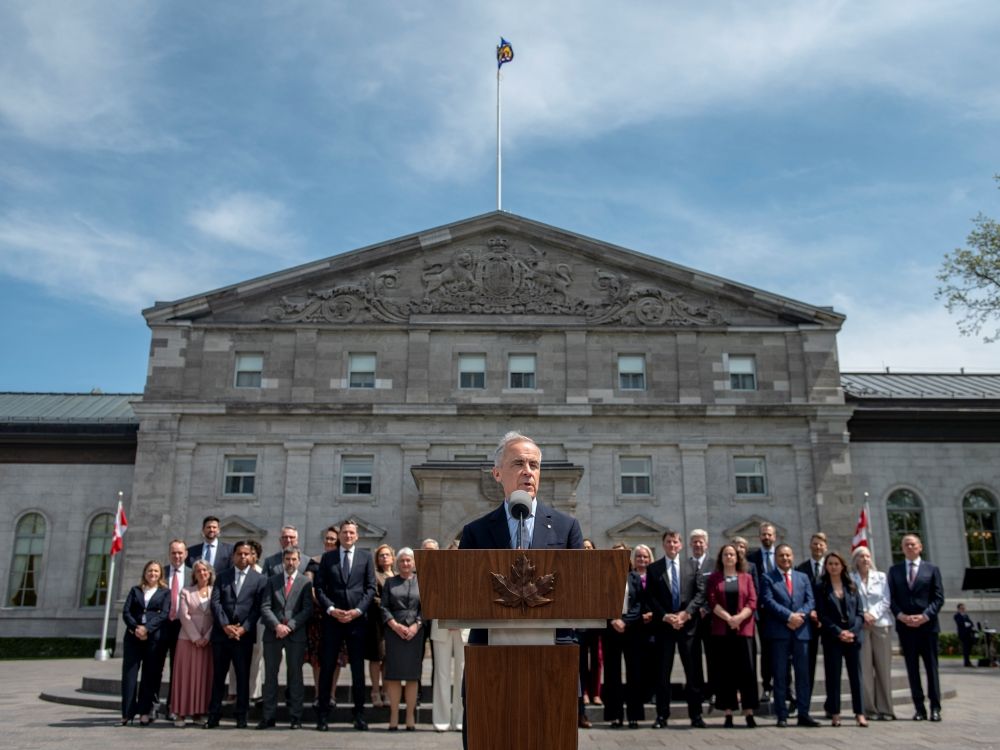
Canadian Prime Minister Mark Carney delivers a press conference at Rideau Hall after his cabinet's swearing-in ceremony on May 13, 2025 in Ottawa, Canada.

Prime Minister Mark Carney and his Liberal government are looking to set a new course after what some saw as an unlikely election victory late last month.

But his new cabinet selections, and the fact his government won’t be tabling a budget have left a lot of political watchers scratching their heads.

National Post columnist Tasha Kheiriddin joins the show to discuss the biggest looming challenges for the Carney government, what to make of his cabinet picks, and what Canadians can take away from the fact that we won’t see a budget this year.

Background reading:
Tasha Kheiriddin: Carney’s cabinet still looks a lot like Trudeau’s

Subscribe to 10/3 on your favourite podcast app

Our website is the place for the latest breaking news, exclusive scoops, longreads and provocative commentary. Please bookmark nationalpost.com and sign up for our newsletters here.


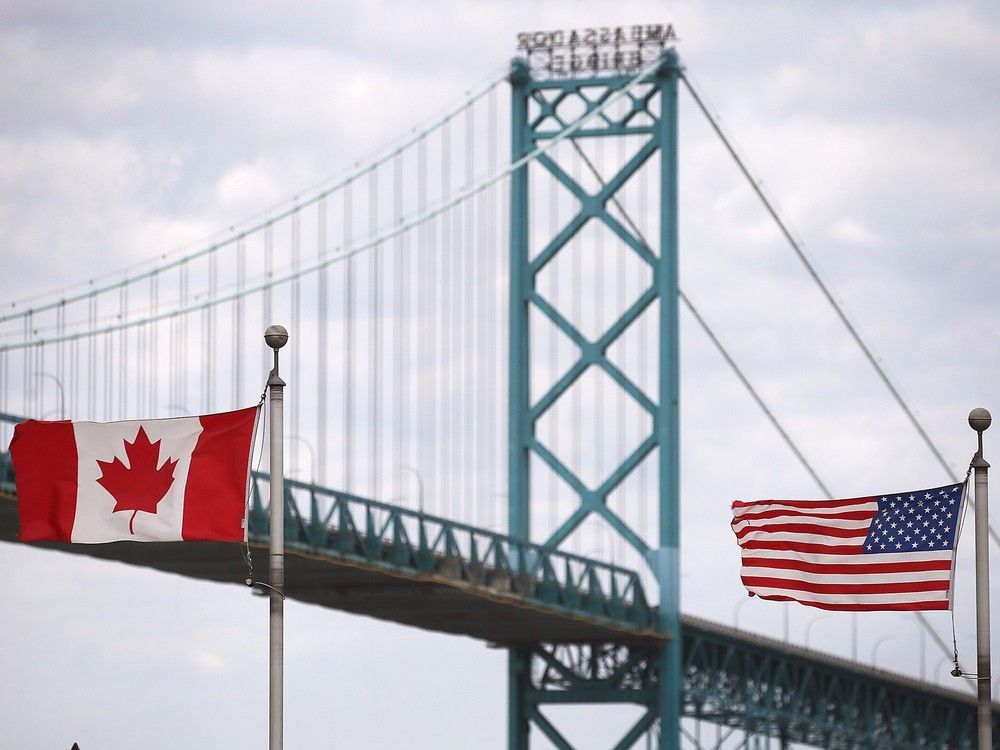
Canadian and American flags fly side-by-side near the Ambassador Bridge in Windsor on Wednesday, March 12, 2025.

The Canadian government has imposed 25 per cent tariffs on certain imported goods from the United States. This could affect Canadians with travel plans that include crossing the border for the Victoria Day long weekend. Upon returning home, the Canada Border Services Agency (CBSA) said in

a news release

that Canadians should be prepared to declare “everything you have with you upon entry into Canada,” adding that travellers who are driving are responsible for everything inside their vehicle.

Here’s how many Americans came to Canada this April compared to last year

The long weekend comes as

tensions between Canada and U.S. remain high

. The ongoing trade war has led to some changes for travellers, including tariffs being imposed on American goods being brought into Canada.

Here’s what to know.

What is a surtax?

A surtax is a tax imposed on top of another tax. The CBSA is collecting the tariffs in the form of a surtax,

the agency said

.

“The amount of tariffs is a percentage of the ‘value for duty’ of the good before taxes (GST and HST). The surtax is calculated by multiplying the value for duty by 25 per cent,” according to the CBSA.

An example would be a U.S. good with the value for duty of $50. That amount would be multiplied by 25 per cent, equalling $12.50. Therefore, the total surtax in that case would be $12.50.

How is the surtax on U.S. goods being collected at the Canadian border?

Per the CBSA, the surtax is collected upon entry into Canada. Returning residents as well as visitors are expected to pay the “applicable tariffs, duties and taxes owing on purchased U.S. goods upon entry into Canada.”

“This surtax applies only to goods exceeding your

personal exemptions limit

” for Canadian residents, per the CBSA news release. This includes groceries.

“The length of your absence from Canada determines your eligibility for an exemption and the amount of goods you can bring back without paying any duty and taxes,” per the CBSA. “You must be outside Canada at least 24 hours to claim this exemption. Personal exemptions do not apply to same-day cross-border shoppers.”

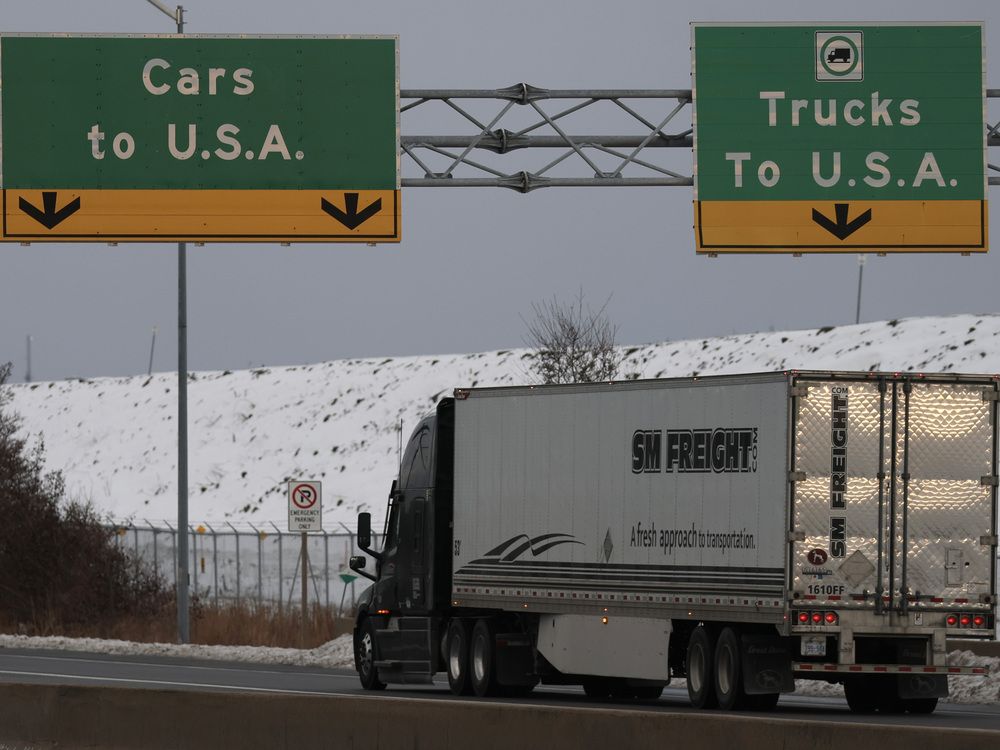
 Commercial trucks drive towards the Lewiston-Queenston Bridge border crossing to the United States on February 04, 2025 in Niagara Falls, Canada.

For international travellers, including Americans, goods that visitors are

importing temporarily for personal use

, such as vehicles, luggage and personal items, are not subject to tariffs. A border officer will do an assessment of the goods that the traveller is bringing, per the CBSA. International travellers are permitted to bring in personal goods that are “considered reasonable in quantity” for the length of their stay.

“If an officer determines that the goods exceed a reasonable quantity for the intended stay, you are still allowed to bring them in but you will need to pay duties, taxes and applicable tariffs,” the CBSA said.

The tariffs do not replace the GST/HST or any applicable duties and are added to the value for tax, the CBSA said. There are separate limits for items like alcohol, tobacco, meat and dairy.

Are there surtax exemptions for some Canadian residents?

Yes. There is an exemption for residents of Campobello Island, New Brunswick. That’s because the island can only be accessed from the U.S. by ferry in the summer or by bridge year-round. As long as goods from the U.S. are purchased by a Campobello Island resident who is returning after less than 24 hours, the goods are in the person’s possession and intended for personal or household use, those goods won’t be subject to tariffs.

What goods will the tariffs apply to at the Canadian border?

The federal government has provided a complete

list of U.S. products that the tariffs apply to online

. This ranges from food items like tomatoes to artwork such as paintings or drawings.

The tariffs at the border apply to “new and used goods marked as made in the U.S., produced in the U.S., or originating in the U.S. or goods that have no country of origin marking.”

Travellers will still need to pay tariffs on U.S. goods that are imported by mail and courier. They will also need to pay tariffs on goods that will stay in Canada, including gifts that are otherwise duty and tax exempt up to $60, as well as goods that are transiting through, being transported or shipped through Canada to a third country or goods that are brought into Canada temporarily for demonstration or exhibition.

 Canadian travelling to the U.S. are facing increased scrutiny by U.S. Customs and Border Protection (CBP) officers, which has led to fears of detainment or denial of entry based on the contents of travellers’ devices.

“The burden of proof that the goods are not considered as originating from the U.S. lies with the person bringing the goods into Canada,” the CBSA said. “Goods purchased in the U.S. but which originate in another country are not subject to these tariffs (for example, clothing marked as made in Italy is exempt). Tariffs will apply if there is no evidence that the goods are the product of a country other than the U.S.”

How many travellers came to Canada last year on Victoria Day long weekend?

Last year, CBSA said it welcomed 93.4 million travellers into Canada for Victoria Day. The increased volume of travellers also led to illegal drugs, weapons and firearms being confiscated at the border.

The agency said it stopped 34,400 kilograms of illegal drugs from entering the country over the long weekend in 2024, as well as 17,200 weapons and 930 firearms.

Ahead of this long weekend, CBSA said that although it prioritizes efficient processing of travellers by air and land “without compromising safety and security.”

“If you encounter wait times at the border, it is likely because we are working behind the scenes to conduct examinations, seize drugs, firearms or stolen vehicles or prevent high-risk individuals from entering Canada,” per CBSA.

Our website is the place for the latest breaking news, exclusive scoops, longreads and provocative commentary. Please bookmark nationalpost.com and sign up for our daily newsletter, Posted, here.


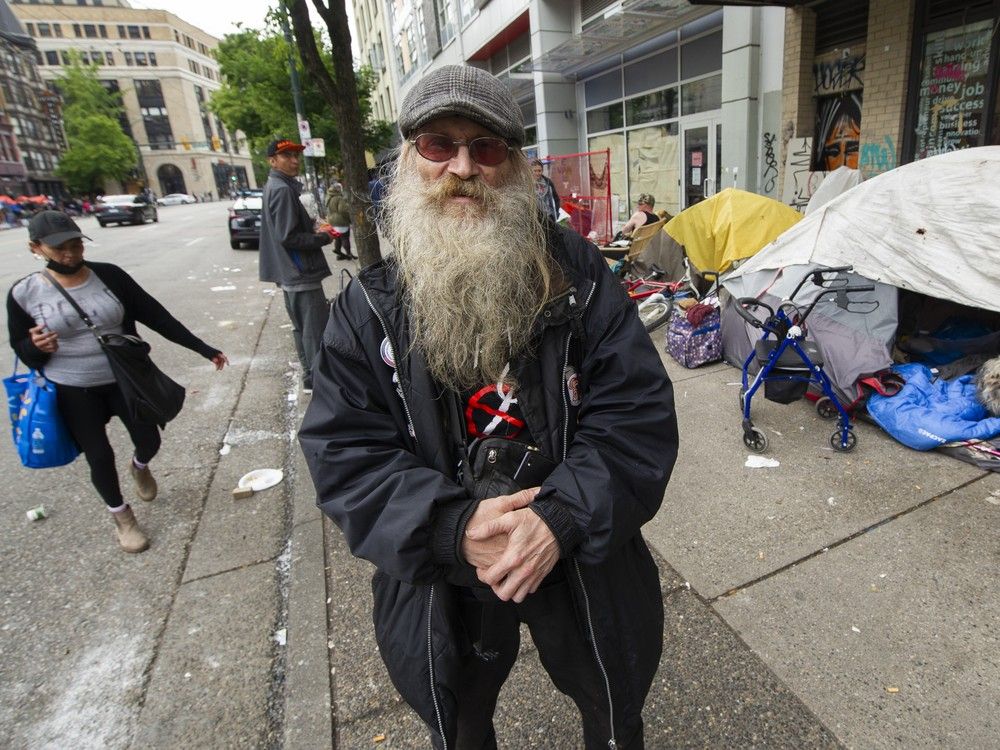
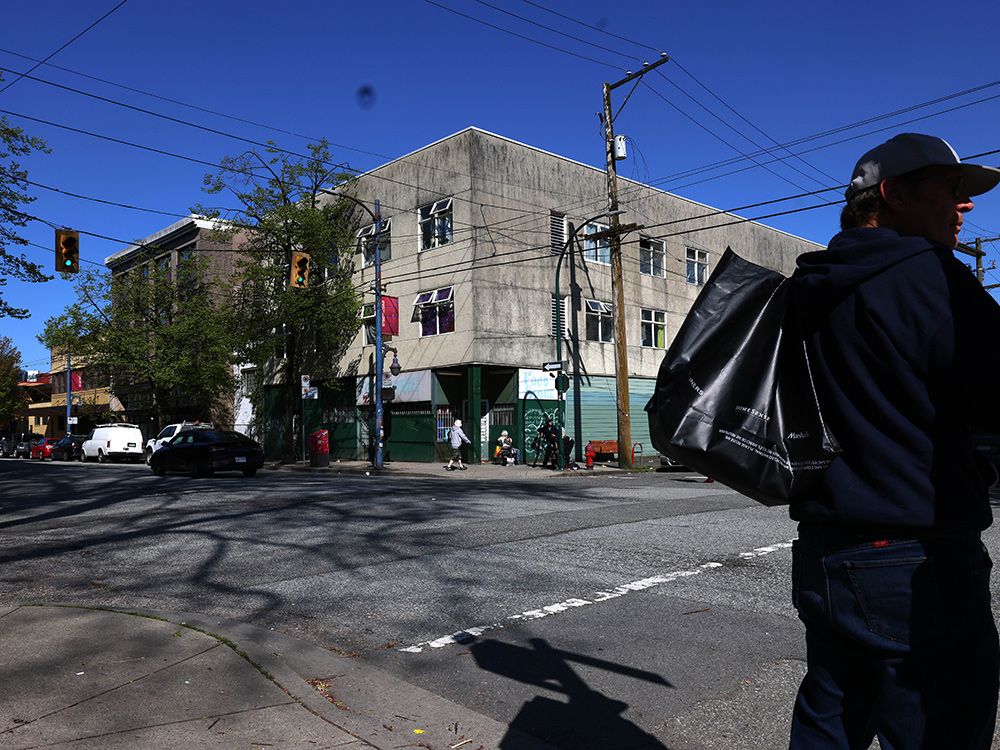
Dave Hamm from the Vancouver Area Network of Drug Users, in 2022. “It’s one of the worst things down here that we have to put up with,” he says of the city's poop problem.

Vancouver, renowned for its natural beauty and laid back lifestyle, has a human waste problem so bad that businesses have hired “poop fairies” to speed the cleanup on city sidewalks.

Dodging human and dog waste has become a real problem for pedestrians navigating the city’s sidewalks, and it’s not just a problem plaguing the Downtown Eastside. The city’s own feces removal response program can’t seem to keep up so business improvement districts have hired the “poop fairies.”

“Everybody down here feels that you end up walking in stuff no matter where you go. So, basically, it’s getting tracked around,” said Dave Hamm, vice president of the Vancouver Network of Drug Users, which counts about 3,000 people in its membership.

He’s encountered people defecating in public on the city’s Downtown Eastside.

“What are you going to do? You give them their privacy,” Hamm said. “It’s in the alleys more than the sidewalk.”

He’s been lobbying the city for more public toilets for over a decade.

“It’s one of the worst things down here that we have to put up with,” Hamm said of poop littering the ground.

Vancouver launched its feces removal program four years ago “to address feces complaints submitted through 311 and to proactively patrol and collect feces in the Downtown and Downtown Eastside areas of Vancouver,” Doug Thomas, who speaks for the city, said in an email.

“The program is run by Mission Possible under the city’s street cleaning grant program,” Thomas said.

“Mission Possible staff collect feces for proper disposal and sanitize affected areas with a disinfectant spray. Collection takes place weekdays across five Business Improvement Areas: Chinatown, Downtown east of Burrard, Strathcona, Gastown, and Hastings Crossing.”

“The issue is something we see throughout the downtown area,” said Walley Wargolet, executive director of the Gastown Business Improvement Society.

Wargolet pegs a lot of the problem on “folks not picking up after their dogs.”

His business improvement area and the neighbouring one in Hastings Crossing are both providing free bags for dog poop as a trial.

But he’d like to be able to test the collected feces to determine whether it came from a canine or human source. “We’re hoping someone will come up with an idea about that, because I’m sure that there’s analysis that could be done.”

There are some public restrooms available in his area for people struggling with homelessness. “But maybe not enough,” Wargolet said. “We also know that some folks are just really severely mentally ill who cannot take care of themselves even if there’s washrooms close by. In some cases, we’ve seen this, where there are (public toilets) but they’re still not using them.”

The businesses have also hired Clean Start B.C., a non-profit social enterprise, which provides people, known as “poop fairies,” to clean up the feces. “We were Monday through Friday, but we moved that to Monday, Wednesday, Friday, just from a cost perspective,” Wargolet said, noting he’s budgeted between $30,000 and $40,000 this year for the service.

“It’s not cheap work because it’s not a fun job and they also are sanitizing the areas as well.”

The city’s feces removal program “is not reactive enough,” Wargolet said, noting that it can take up to 72 hours for a response. “One, it doesn’t look great in the area,” he said. “But it also creates messes for folks as people step in it and walk into stores and things. It’s not a good situation so we’re trying to tackle it the best that we can.”

About 98 per cent of the feces collected by the city are discovered through regular patrols, “even before a complaint is filed,” Thomas said, noting residents or businesses can report feces through 311 or the Van311 app.

In 2022, the city’s feces program logged 1,311 complaints and collected 20,800 poops. Complaints dropped to 753 the next year, with 19,900 feces collected. Last year, the program fielded 761 complaints and collected 17,670 feces. In the first three months of this year, it logged 232 complaints and collected 3,370 poops.

Hepatitis A outbreaks have been linked to public defecation, said Lezlie Lowe, author of No Place To Go: How Public Toilets Fail our Private Needs.

“There are many diseases that are carried in feces, and we don’t necessarily think it’s going to affect us, but we step in feces accidentally and we bring that, and the pathogens in it, into our homes,” Lowe said.

“If you’re out on a nice patio enjoying a beer and some nachos and a fly lands on some human s–t and then comes and lands on the cheese on your nachos, it’s serious.”

 Dodging human and dog waste is not just a problem plaguing the Downtown Eastside section of Vancouver.

Landon Hoyt, executive director of the Hastings Crossing Business Improvement Association, has “poop fairies” operating five days a week, with a two-hour shift each day.

“They’ll clean, at the latest, within 24 hours (of a complaint), but ideally it’s usually sooner than that.”

The poop problem “has been getting worse over the years,” Hoyt said, because of higher rates of drug use, homelessness and the closure of drop-in centres and “affordable businesses where people could go in and get a $1 coffee” and use the bathroom.

His area has a 30 per cent business vacancy rate on the ground level. “Safety and cleanliness issues” play a role in that, as does “general neglect” Hoyt said, noting many businesses and social enterprises that once offered bathrooms have left or closed.

“No one wants to poop on the sidewalk,” he said. “It’s embarrassing; it’s terrible.”

But when people are using drugs “they may not have control, or they may not have the dignity or care” to use a public bathroom, he said.

There are some public toilets in his area. Three are supervised 24/7; one is currently broken. “I’d love to have one on every other corner.”

He’s hoping to see the city add a new public toilet to his area and replace the broken one by the end of this year. Both will be Portland Loos, which cost about $135,000 each, with another $40,000 to get them installed.

“The Portland Loo was created by the City of Portland, Oregon, which had this problem with open defecation and public urination, and they also had a significant homeless population,” Lowe said.

“A lot of public bathrooms are created either like, ‘We’ve got to keep these homeless people out,’ or, ‘We’re going to build it for the homeless people.’ But the Portland Loo was designed for everybody.”

The public toilets — built by Madden Fabrication — are large enough to take a baby stroller or a bicycle inside, she said.

“It’s got potable water on the outside so everybody can use it to wash their hands or get drinking water,” Lowe said. “And the bottom is open, so you can see if somebody is in distress in there.”

But she cautioned that more public toilets alone won’t solve the problem of open defecation.

“It’s one part of the puzzle,” she said. “You have more bathrooms. That gives more people more opportunities to, I’m not going to say make good choices, because there is no person who would be like, ‘There’s a bathroom, but I think I’ll just go between these two parked cars.’ Nobody is thinking that.”

It’s “highly simplistic” to think adding more public toilets is going to solve the problem, “but that is the core first step,” Lowe said. “Obviously if somebody is having a difficult reaction to a drug or even food poisoning, it’s not always going to go the way we hope it would go.”

Our website is the place for the latest breaking news, exclusive scoops, longreads and provocative commentary. Please bookmark nationalpost.com and sign up for our daily newsletter, Posted, here.


Nathalie Sinclair-Desgagné, the Bloc Québécois candidate for Terrebonne, speaks to reporters in the foyer of the House of Commons on Thursday, May 15, 2025.

For a while, the razor-thin election-night outcome in Terrebonne, a riding just north of Montreal, struck many Canadians as an example of the system working as it should: Liberal Tatiana Auguste was initially declared the winner by just 35 votes; standard validation procedures flipped the riding to the Bloc Québécois by 44 votes; and then a judicial recount, triggered automatically because the outcome was so close — less than 0.1 per cent of the turnout — found Auguste had won by a single vote.

“Aha, see, every vote

does

count!” was a popular sentiment on social media. It was Christmas come early for

the “turnout nerds,” as my colleague Colby Cosh calls

those irritating people who insist you have a “civic duty to vote,” no matter how uninterested or disillusioned or pig-ignorant you might be.

Ironically, in the end, precisely none of the votes cast in Terrebonne might wind up counting. Turns out Elections Canada

put the wrong return postal code on at least some of the mail-in ballots it sent out.

At least one was returned to sender, and it was a vote for the incumbent Bloc MP Nathalie Sinclair-Desgagné. That would make the election a tie.

Thursday morning, the Bloc quite understandably

announced it was taking the matter to the judiciary

.

“Since Elections Canada cannot by themselves ask for the election to be repeated, we have to bring this situation in front of a judge, in a court, in order to do the election all over again,”

Bloc leader Yves-François Blanchet told reporters outside the House of Commons

.

I argued recently that while Canada’s hand-counted paper-ballot system routinely looks great

compared to more supposedly technologically advanced alternatives, Elections Canada really isn’t as good at what it does as it should be. Its website crashed while polls were still open on April 28, when some Canadians would have been trying to figure out where to vote. And for the second election in a row at least, voters in some remote districts were denied their ballots because the fly-in poll staffers bugged out early — in some cases six hours before polls were meant to close.

On what principle would we run the election in Terrebonne election over again, but not the election in Abitibi—Baie-James—Nunavik—Eeyou, where voters encountered signs apologizing for polls that shut down at 2:30 p.m.? Certainly not a democratic principle: If all votes are equal, then a vote denied is a vote denied. Rather, we do it on a practical principle: Those votes wouldn’t have changed the outcome, so Elections Canada just apologizes and moves on.

“I deeply regret that some electors in Nunavik were not able to cast their vote,”

Chief Electoral Officer Stéphane Perreault said

, which is a bit like an airline pilot saying he deeply regrets having missed the runway while landing.

It’s only when the outcome in a particular riding is close that anyone seems to really care about these things, which is a sure sign that every vote absolutely does not count, and the agency tasked with making them all count clearly doesn’t make that its Number 1 priority.

I’m open to certain forms of proportional representation, as insufferable as many of its proponents are. I’m open to it in large part because representation-by-population, as currently represented in the House of Commons, is a silly joke. Canada’s federal ridings range in population from 26,665 in Labrador to 134,415 in Kingston and the Islands in Ontario.

The population per riding apportioned to the provinces ranges

from 38,583 in Prince Edward Island to more than 115,000 in Ontario, Alberta and British Columbia.

That’s not unique to Canada, by any means. Labour MP Torcuil Crichton was elected to the British House of Commons by roughly 21,000 registered voters in the riding of Na h-Eileanan an Iar, comprising Scotland’s Outer Hebrides islands. Labour MP Tracy Gilbert was elected in Edinburgh North and Leith by roughly 77,000 registered voters. The idea that creating ridings should consider factors other than simply population is as old as parliamentary democracy itself. It seems natural, for example, that the Yukon, Northwest Territories and Nunavut (or the Outer Hebrides) should each have their own MP. It is nevertheless a crazy distortion of the basic idea of bicameral Westminster parliaments: One house is meant to represent population, another is meant to represent the regions.

The effects of this are not small. The average Conservative candidate elected on April 28 received 33,348 votes; the average Liberal candidate, 30,181 votes; the average Bloc candidate, 25,120 votes; the average NDP candidate, 20,601 votes, that number being pulled down by its win in Nunavut, where just 2,945 votes sent Inuk lawyer Lori Idlout back to Ottawa for a second term. The NDP’s Gord Johns needed more than 10 times that many votes form to win Courtenay—Alberni.

If the territories were one riding instead of three, there would be 341 seats in the House of Commons instead of 343, and there would be one fewer New Democrat. (Liberals took the Yukon and Northwest Territories.) If the northern Saskatchewan ridings of Desnethé—Missinippi—Churchill River and Battlefords—Lloydminster—Meadow Lake were at the same time combined to form one riding of 122,000 people — which is smaller than dozens of other Canadian ridings — there would be 340 seats in the House of Commons, and one fewer Liberal.

Liberal Buckley Belanger won Desnethé—Missinippi—Churchill River with 2,301 votes. Conservative Rosemarie Falk needed 28,634 to win Battlefords—Lloydminster—Meadow Lake. In a tight minority parliament like we have now, the effects are all the more magnified.

Canada is a functional democracy. Foreign interference aside, we do elections pretty well. But the democratic ideals to which we turn in times of crisis, like elections that are too close to call, are something of a fraud.

National Post

cselley@postmedia.com

Get more deep-dive National Post political coverage and analysis in your inbox with the Political Hack newsletter, where Ottawa bureau chief Stuart Thomson and political analyst Tasha
Kheiriddin
get at what’s really going on behind the scenes on Parliament Hill every Wednesday and Friday, exclusively for subscribers. Sign up here.


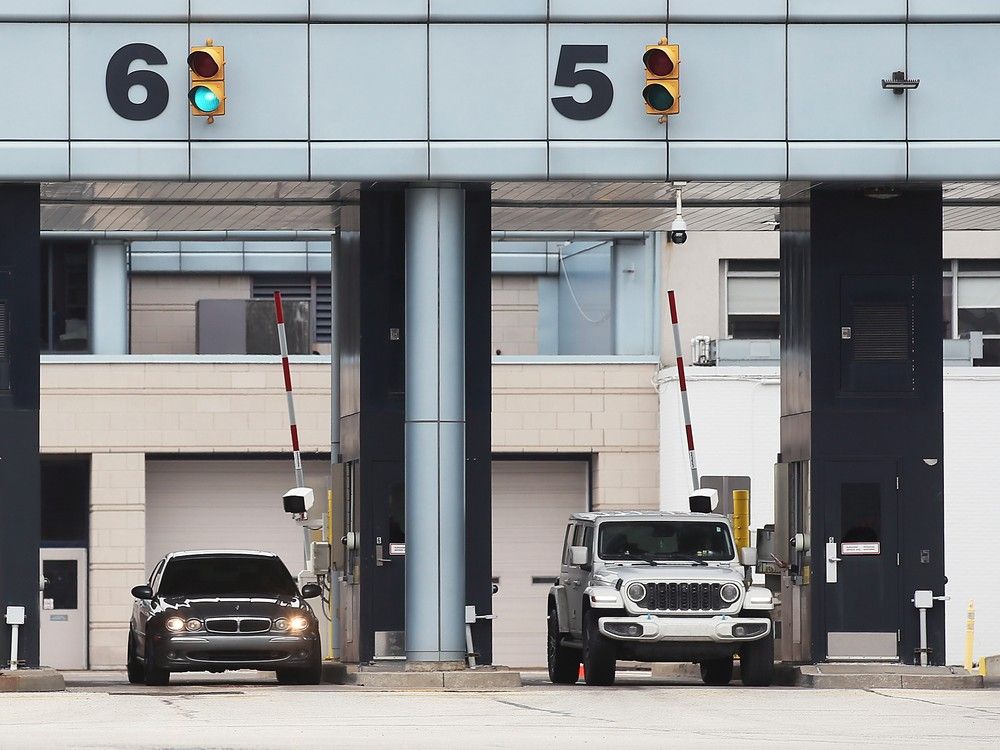
If it looks like your preferred crossing is backed up this weekend, CBSA says to “consider an alternative port of entry with shorter wait times or less traffic.”

Border crossings between Canada and the U.S. are down, particularly so for those going north to south, according to

Statistics Canada

, but with the Victoria Day long weekend ahead, the Canada Border Services Agency is expecting more traffic at its checkpoints.

To facilitate a smoother trip all around, particularly as it relates to entering Canada, the agency has advice for travellers.

What do I need to know about driving into Canada this weekend?

For those returning to or visiting Canada from the U.S., the agency’s first piece of advice is to cross early in the morning when it’s typically less busy, but if that’s not an option, travellers can check

wait times at 28 of the busiest land border crossings online.

As of Thursday afternoon, the Peace Bridge crossing between Fort Erie, Ont., and Buffalo, N.Y., — one of the busiest borders by volume of traffic — has the longest delay at 13 minutes. The vast majority show no delay for travellers.

“If you encounter wait times at the border, it is likely because we are working behind the scenes to conduct examinations, seize drugs, firearms or stolen vehicles or prevent high-risk individuals from entering Canada,” CBSA advised.

The information is also available on the CanBorder app, available for Apple and Android devices.

If it looks like your preferred crossing is backed up this weekend, the agency says to

“consider an alternative port of entry with shorter wait times or less traffic.”

Travellers headed into the U.S. can also

go online

to gauge wait times at the CBP checkpoint at their preferred or alternate crossing. Both current and average wait times are listed.

U.S. reportedly plans to photograph people leaving the country by vehicle at border crossings

Why was there a slowdown at a border crossing in B.C.?

Earlier this month, after it was reported that some B.C. residents returning from the U.S. were met with an additional screening before checking in with Canadian officials. The CBSA told National Post it was

a routine inspection

conducted as part of a national security agreement with U.S. Customs and Border Protection (CBP).

Immigration lawyer Rosanna Berardi told National Post such checkpoints, where “CBP officers may ask about immigration status and refer travellers for secondary inspection if necessary,” are legal under U.S. federal regulations.

The checkpoint was removed at the end of the weekend.

How can I ensure a faster checkpoint stop in Canada?

First and foremost, don’t pull up to the window and then start looking for your travel documents. Have your passport, NEXUS or applicable paperwork ready to go.

Travellers should also “be prepared to declare” any goods they’ve purchased in the U.S. and be ready to pay regular duty and taxes on anything above the

personal exemption limits

, which only apply to visits that extend beyond 24 hours.

“Make sure you know how much you are bringing back in Canadian dollars and have your receipts readily available for the officer,” reminds CBSA.

It also doesn’t hurt to consult the list of

prohibited and restricted goods

, and it should go without saying that items such as firearms, weapons, narcotics and cannabis should not be in the vehicle.

Our website is the place for the latest breaking news, exclusive scoops, longreads and provocative commentary. Please bookmark nationalpost.com and sign up for our newsletters here.


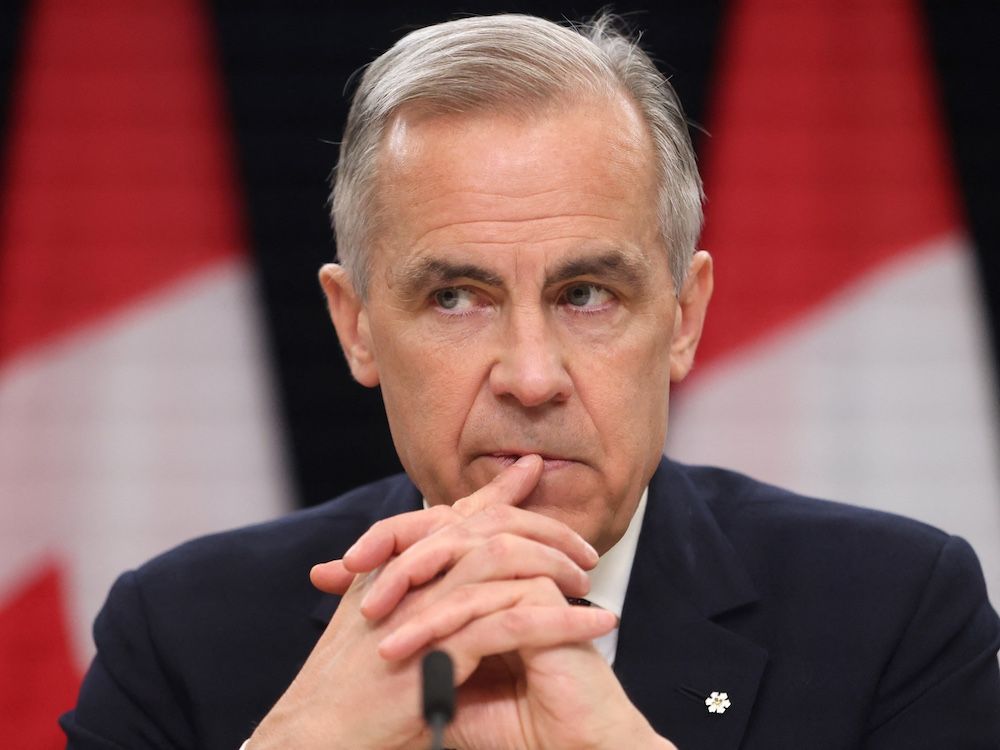
Prime Minister Mark Carney speaks at a press conference in Ottawa on May 2, 2025.

Prime Minister Mark Carney is not only a Canadian leader, he’s also an author. His second book, The Hinge, was expected to hit shelves this summer. But now it’s unclear. The book is being published by Penguin Random House Canada. On the

book publisher’s website

, the release date is listed as July 1, 2025. However, the publication of the book has reportedly been delayed, per the

Toronto Star

.

Here’s what to know.

When was Carney’s second book announced?

In October 2024, it was announced that Carney would be writing a second book, entitled The Hinge: Time to Build an Even Better Canada,

The Canadian Press reported

. This was prior to Carney running for political office. The book’s date of publication was set for May 13, 2025 at the time.

Carney himself posted on X about the book, which he said was available for pre-order. He tagged Canadian book publishing company McClelland & Stewart, a division of Penguin Random House Canada.

The post also included a link to the Penguin Random House Canada website, which is supposed to show a preview of the book. However, almost all of the information about it has been removed. It is called “untitled” and Carney is not listed as the author. There is no cover image, and the link to pre-order on book seller Indigo’s website says “this page cannot be found.” However, the book appears to be available for pre-order through Amazon Canada and other independent book stores, like

Mabel’s Fables

and

Queen Books

.

“Information about this exciting publication from Penguin Random House Canada is coming soon,” it says on the Penguin Random House Canada webpage.

What is The Hinge about?

In his post on X, Carney said his book is about building an “even better Canada in an increasingly dangerous and divided world.”

A

description of the book is provided online

by Quebec retailer Archambault, where The Hinge is set to be sold, although most of the other information, like title and author, has been removed. It says the book “charts an ambitious and urgent path forward for Canada and the world as we collectively face a multitude of existential threats to our long-standing democratic traditions.”

It continues: “We are at a hinge moment in history — reminiscent of what the Allies faced at the end of 1941, when Winston Churchill was in Ottawa meeting with Mackenzie King — an age of uncertainty and rising perils that is reshaping global political, economic, technological, and social orders, and overturning our day-to-day lives. The good news is that, just as Churchill, King, and FDR would eventually swing what Churchill termed the ‘Hinge of Fate’ towards freedom and prosperity, we too have agency to build an even better Canada.”

In the book, it says, Carney will show how Canadians can continue to solve problems and “build things that last,” adding that it can be done “not as a government, but as a people.”

What is the reason for the reported delay?

The release date for Carney’s book was moved from May 15, 2025 to July 1, 2025 online; however, no reason was given by the publisher online. In April, after the initial release date was delayed,

Juno News reported

that the publishers would not explain why.

The Toronto Star reported that a source said the delay was due to Carney not being able to finish “the editing process in the last several months as he campaigned.” The publication also reported that Carney had finished writing the book.

Penguin Random House Canada has not responded to a request from National Post.

How did Carney’s first book, Value(s), do?

Carney’s first book,

Value(s): Building a Better World for All

, was published in Canada in 2021 by McClelland & Stewart. It was a national bestseller, according to Penguin Random House Canada. It was the winner of the 2021 National Business Book Award and it was shortlisted for the 2021 Donner Prize.

The description of the book provided by the publisher explains that it “offers a vision of a more humane society and a practical manifesto for getting there.”

Our website is the place for the latest breaking news, exclusive scoops, longreads and provocative commentary. Please bookmark nationalpost.com and sign up for our daily newsletter, Posted, here.


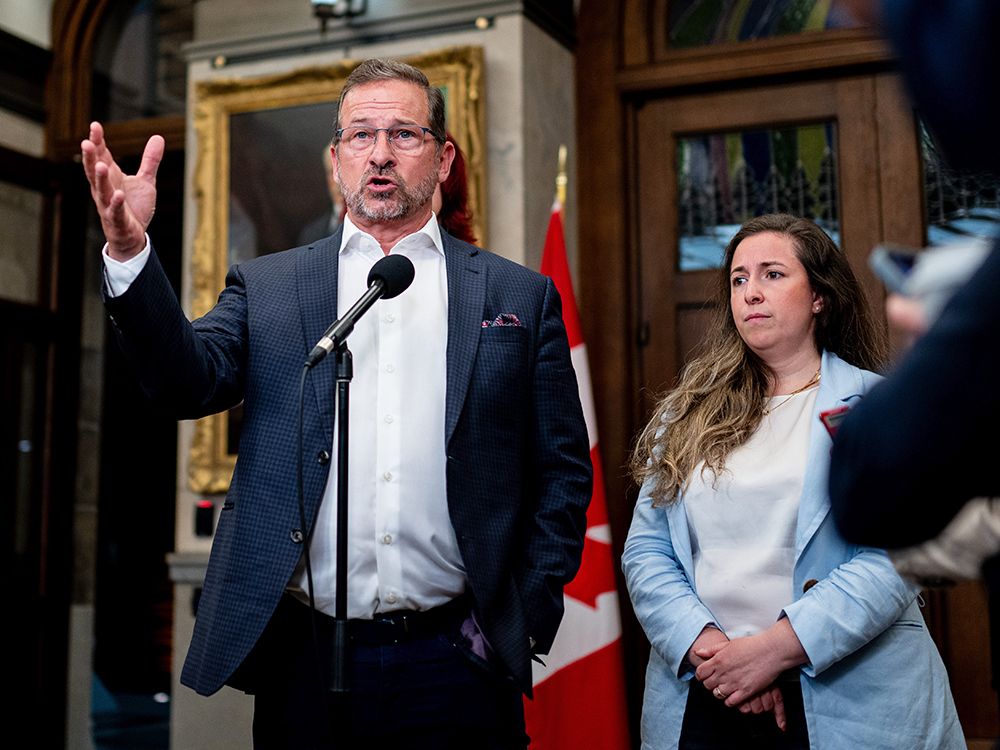
Bloc Québécois Leader Yves-François Blanchet, alongside Terrebonne candidate Nathalie Sinclair-Desgagné, speaks in the foyer of the House of Commons in Ottawa, on Thursday, May 15, 2025.

OTTAWA – The Bloc Québécois says it will ask the Superior Court of Quebec to order a new election in the riding of Terrebonne, Que, “as soon as possible,” following the Liberals’ victory by a single vote.

Bloc Leader Yves-François Blanchet announced Thursday that his party would challenge the result “on the basis of a vote that was not taken into account, which constitutes an irregularity” in the electoral process. The challenge is not based on the judicial recount that took place.

“The judge said that we lost by one vote; the vote that would have created a tie appeared in the hand of a citizen. There is therefore a difficult-to-contest irregularity that, according to the law, requires that the election be rerun,” Blanchet told reporters on Parliament hill.

Liberal candidate Tatiana Auguste was declared the winner

following a judicial recount on May 10, bringing the number of seats won by the Liberal Party of Canada to 170, two shy of a majority. The incumbent, Bloc Québécois candidate Nathalie Sinclair-Desgagné, previously thought she had won the riding by dozens of votes.

However, a Terrebonne voter came forward a few days after the results were confirmed, claiming she had voted for the Bloc Québécois by mail, but that her ballot had never been cast.

This vote would have placed the Liberals and the Bloc in a tie, potentially leading to a byelection to determine the winner.

Emmanuelle Bossé stated in several media interviews that her special ballot was returned to her by Canada Post a few days after the April 28 election.

Elections Canada does not have the authority to order a rerun of the election, but admitted the error raised by Ms. Bossé.

According to Elections Canada, the error was in the last three characters of the postal code of the office’s address, although, it

declared the results final

.

“To date, only one case has come to our attention where an envelope containing a marked ballot was returned to a voter because of an incorrect address,” said Matthew Mckenna, a spokesperson for Elections Canada.

In an email exchange with National Post, McKenna also said the local office issued 115 special ballots for local voting by mail, and that according to their database, five ballots were received late at the local office and that the return envelope contained an error in the postal code.

“There is no information as to whether the delay was due to the incorrect postal code. We note that voters signed the declaration late in the election period,” McKenna said.

Meanwhile, 85 of these ballots were returned on time and counted, 16 ballots, including Bossé’s, were not returned to the local office and 9 other electors gave up voting by mail and voted in person in the electoral district.

Sinclair-Desgagné told reporters on Thursday that this whole experience has been a “roller coaster” emotionally but that it’s also an “issue that goes beyond the outcome of a single party.”

“I think it’s an issue of trust in our democratic institutions and that it’s important in our case to follow through with these efforts so that in the end, the residents of Terrebonne and the citizens of Terrebonne have a legitimate MP to represent them,” she said.

Sinclair-Desgagné did not say whether she still trusted Elections Canada and Canada Post, because “there is a legal recourse pending.”

Alex Marland, a political science professor at Acadia University in Wolfville, N.S, told National Post that while he’s always “very careful about expressing opinions”, in this case, he “100 per cent think that it should go to the courts.”

“That one woman who has that one ballot is an irregularity that affected the results of the election, and we can say it affected the result of the election because of the closeness of the outcome,” Dr. Marland said.

“So, to me, this is a slam dunk, and it should not be looked at by anybody as a partisan play by the Bloc,” he added.

Blanchet did not ask Prime Minister Mark Carney to keep Auguste out of the House of Commons while the case is ongoing, but said he hopes it will be resolved “as quickly as possible,” with Parliament scheduled to resume on May 26.

According to Marland, Carney and the Liberal Party should support the Bloc in this legal case to “clear the air” and emphasize that an administrative problem influenced the election outcome.

“I think this is an opportunity for him to just realize that we’ve got real issues about elections integrity… A byelection is a way to clear it, but a court case that drags on is not in anybody’s interest,” he said.

Liberal Party spokesperson Matteo Rossi did not comment on the Bloc’s legal challenge or indicate whether the Liberals would support it. Instead, he referred questions to Elections Canada.

Meanwhile, Blanchet said he had “a very high level” of confidence in the Bloc’s case and believes a judge will trigger a byelection.

Although, precedent could work against the separatists.

In a split decision,

the Supreme Court of Canada ruled in 2012

— more than a year after the 2011 federal election — that Etobicoke Centre Conservative MP Ted Opitz could keep his job, bringing to an end former MP Borys Wrzesnewskyj’s long battle to overturn the election result.

The majority of Canada’s highest court found that minor administrative errors should not be sufficient to allow an election to be overturned.

“The practical realities of election administration are such that imperfections in the conduct of elections are inevitable,” the justices wrote. “Courts cannot demand perfect certainty.”

National Post

atrepanier@postmedia.com

Get more deep-dive National Post political coverage and analysis in your inbox with the Political Hack newsletter, where Ottawa bureau chief Stuart Thomson and political analyst Tasha Kheiriddin get at what’s really going on behind the scenes on Parliament Hill every Wednesday and Friday, exclusively for subscribers. Sign up here.

Our website is the place for the latest breaking news, exclusive scoops, longreads and provocative commentary. Please bookmark nationalpost.com and sign up for our daily newsletter, Posted, here.


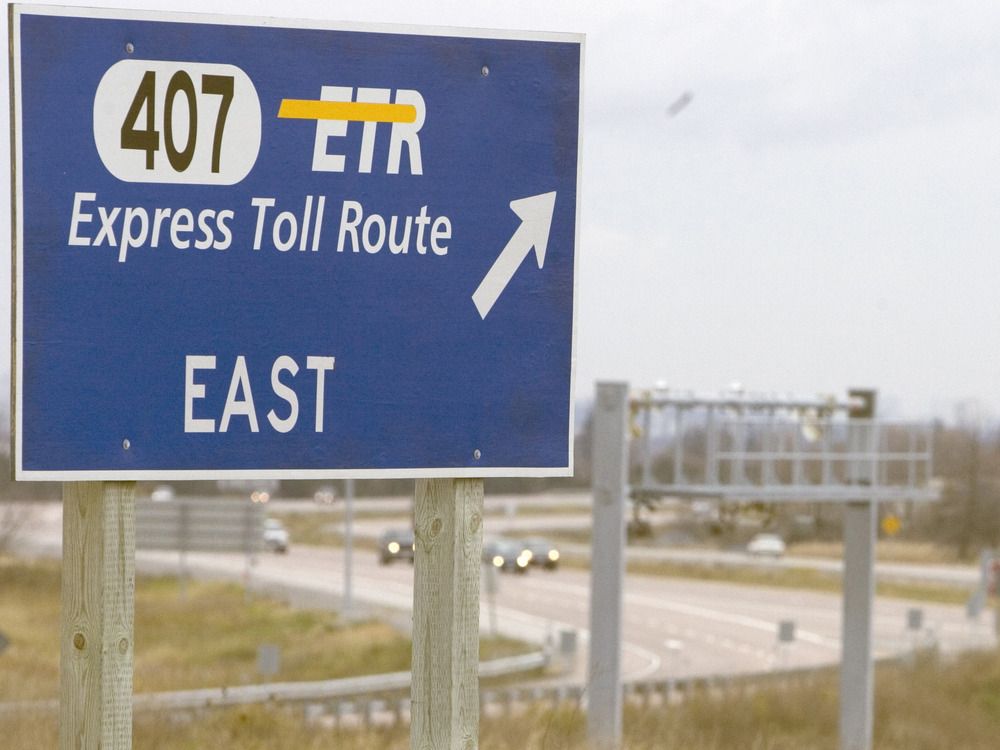
A sign at the side of the Highway 407.

This week, the government of Ontario announced a plan to remove tolls from the provincially owned Highway 407 East, a move it said is expected to save daily commuters

an estimated $7,200

annually.

“To help lower costs and fight gridlock, the government is introducing legislation that would, if passed, permanently remove tolls from the provincially owned section of Highway 407, from Brock Road to Highway 35/115, effective June 1, 2025,” the province said in a press release.

“This is the last stretch of provincially owned tolled highway in Ontario and follows the government’s previous removal of tolls from

Highways 412 and 418

, and its recent legislation banning new road tolls on any public roadway in Ontario,” it added.

Here’s what to know.

What is Highway 407?

Highway 407 is a 151.4-kilometre highway that crosses and encircles the GTA. It starts in Burlington in the west, passing north of Highway 401 around Mississauga, and then running roughly parallel to the 401 across Toronto and to the east, where it terminates at Highway 35/115 north of Newcastle.

Planning studies date as far back

as the 1950s

, but construction began in 1987, and the first section, 36 kilometres between Highways 410 and 404, was opened in 1997. The portion from Brock Road to Highway 35/115 started construction in 2012 and was fully opened in 2019.

How much does it cost now?

The highway is operated by two groups —

the provincial government

from Brock Road to the eastern end, and the

407 ETR Concession Company

(which also handles all billing) to the west from Brock Road.

Currently, a trip from one end of the highway to the other during peak times costs $91.73, or $96.93 for drivers without a transponder. (Transponders cost $29.50 a year, before taxes.)

A trip on the provincial end of the highway alone costs $14.94 with a transponder, and a trip on the privately-owned portion is $76.78. If the government ends its tolls, that would become the cost for the entire length of the highway.

Are the savings projected by the government accurate?

If a driver makes a rush-hour trip twice a day, five days a week, on the provincial portion of the highway, the annual cost is approximately $7,200, which is what the government says drivers would save.

However, a twice-daily trip on the rest of the highway would still amount to almost $40,000 annually.

Can Ontario just buy the rest of the highway?

It could, and it’s something Ontario Premier Doug Ford has talked about in the past. The province sold the western part of the highway to the private sector in 1999.

This week, after his announcement about cutting tolls,

Ford was asked

if he was still considering that idea.

“They’re going to be at capacity in 10 years, and I’d never rule out acquiring it, but we also have to build capacity,” he said, adding it would cost “tens of billions of dollars.”

He added: “We should never have sold the 407.”

How will this change traffic patterns?

Time will tell, but anecdotal evidence suggests that charging people to use roads causes fewer people to use them; the

“congestion charge”

in London, England, is one example.

One would expect a higher number of people living near the toll-free section of the 407 to start using it instead of the 401, and that might have a small spillover effect into the still-tolled portion as well.

Our website is the place for the latest breaking news, exclusive scoops, longreads and provocative commentary. Please bookmark nationalpost.com and sign up for our newsletters here.