LP_468x60
on-the-record-468x60-white

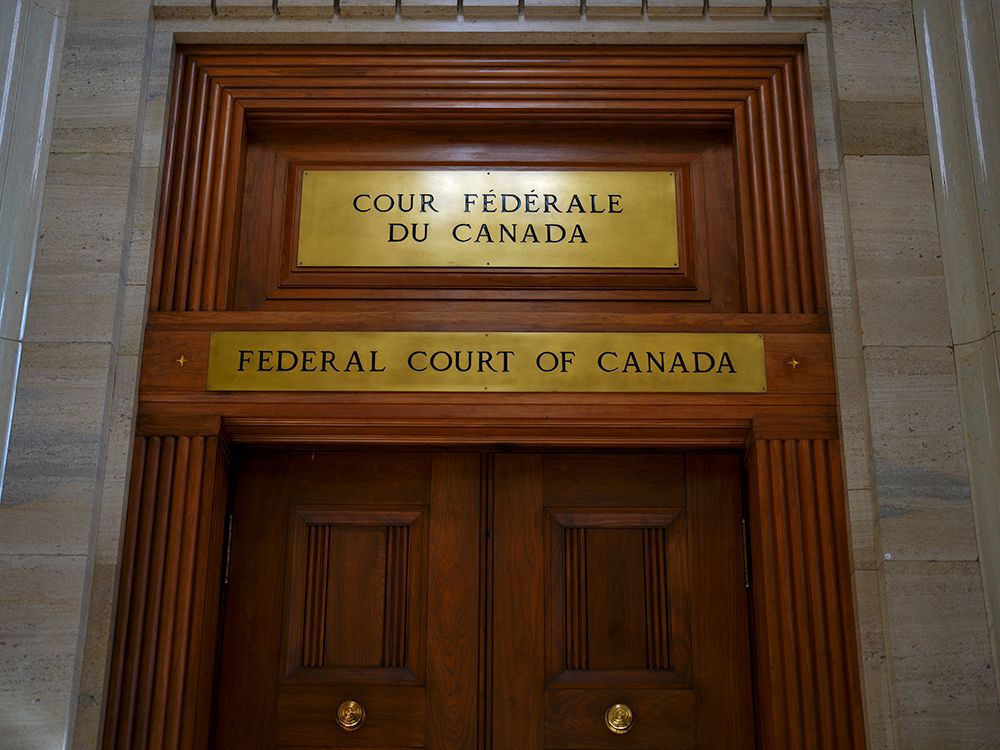
A Federal Court sign.

An Iranian whose refugee claim was turned down in Canada because he was convicted in England 16 years ago of a serious assault that left one person dead and another two injured will get another shot at arguing he should be allowed to stay here because his bisexuality, Kurdish ethnicity, conversion from Islam to Christianity and identity as a Westerner would all put him at risk back home.

An immigration officer refused Sirus Lotfi’s last ditch plea to stay in Canada in March 2024, arguing he had not provided sufficient evidence to establish the basis for his protection claim.

“I respectfully disagree with this position,” Justice Angus Grant wrote in a recent Federal Court decision out of Toronto.

“On the core details related to the applicant’s risk factors, the affidavit (outlining those) was detailed and comprehensive. This was particularly the case with respect to (Lotfi’s) sexual orientation. The affidavit contained many details, from the applicant’s first homosexual encounters, to subsequent relationships, to his time spent in Tehran, frequenting a park where gay men would meet. Moreover, the documentary evidence before the officer clearly raised concerns with respect to the applicant’s safety, assuming the risk factors he raised in his affidavit were true. This being the case, there was simply no doubt that the facts set out in the applicant’s affidavit, if believed, would have justified granting the application.”

The judge noted “the well-established principle that when an individual in refugee protection proceedings swears to the truth of their testimony, that testimony is presumed to be true unless there is a valid reason to doubt its truthfulness.”

The immigration officer’s conclusion that Lotfi “had not established facts that he had categorically and unambiguously sworn to be true” amounted to a “veiled credibility finding,” Grant said. In other words, the immigration officer questioned Lotfi’s honesty without explicitly stating the Iranian’s credibility was in doubt.

The judge granted Lotfi’s application for a judicial review.

“The matter is remitted to a different decision-maker for reconsideration,” Grant said in his decision dated June 18.

Lotfi “entered Canada in November 2022 on a fraudulently obtained passport and made a claim for refugee protection,” said the decision.

“He did not have any other identity documents with him at the time, so he was arrested and detained by the Canada Border Services Agency.”

While Lotfi was in detention, Immigration, Refugees and Citizenship Canada “learned that in April 2009, the applicant was convicted in England with intent to do grievous bodily harm,” it said. “The Canadian equivalent of this offence is aggravated assault.”

Because of his conviction, for which he served half of a 10-year prison sentence, “Lotfi was referred for an admissibility hearing before the Immigration Division of the Immigration and Refugee Board,” said the decision.

It found Lotfi “was inadmissible to Canada on grounds of serious criminality.”

That meant Lotfi became ineligible for his refugee claim to be heard, so he applied for a pre-removal risk assessment — his last ditch plea to stay in Canada.

For that hearing, Lotfi submitted a detailed written argument alleging that he would be at risk in Iran on four distinct grounds. But the immigration officer hearing his case noted Lotfi’s lack of supporting evidence to establish his claim for protection.

The court heard Lotfi “had essentially no relationship with his mother in Iran, and moved to Germany as a young adolescent, where his father placed him in a boarding school.”

At some point his family “stopped paying tuition fees for this school, and he was subsequently placed in a Christian orphanage where he lived until he turned 18,” said the decision.

“Over the course of these years, (Lotfi) grew disconnected with his Islamic background and gravitated towards Christianity. At one point while at the orphanage, he tattooed a cross on his shoulder.”

Lotfi “also explained how he explored his sexual orientation while in the orphanage, though this was not easy to do. At 20, the applicant learned that his father had committed suicide. This led to a period of serious drug addiction, and in 2007 (he) was removed to Iran.”

Lotfi “had a difficult time adjusting to life back in Iran,” said the decision.

“Eventually, he learned of a park where gay men met to have sex. He began frequenting the park and having encounters with men, despite the obvious dangers that this posed. Eventually, however, (he) decided to leave Iran and went to the United Kingdom.”

The subsequent altercation in England “led to his criminal conviction, which resulted in the death of one individual and the injury of two others,” said the decision.

“He claims that he acted in self-defence, but contrary to the advice of his lawyer, he plead guilty and was sentenced to a ten-year sentence, of which he served five years. While in prison, (Lotfi) stated that he received mental health treatment for the first time, that he disavowed drugs, and formally converted to Christianity.”

Our website is the place for the latest breaking news, exclusive scoops, longreads and provocative commentary. Please bookmark nationalpost.com and sign up for our daily newsletter, Posted, here.


A report by Cybernews researchers has revealed a massive data leak affecting 16 billion passwords.

An incredible 16 billion passwords have been leaked in what tech experts are calling the largest data breach ever.

The breach contains a massive amount of information that can affect billions of online accounts since cybercriminals now have access to a massive amount of login credentials.

Cybernews researcher Vilius Petkauskas, whose team has been investigating the online theft since the beginning of the year, told

Forbes Magazine

that the breach comprised “30 exposed datasets” including logins from Apple, Google, Facebook and more.

A

Cybernews report

details that the stolen records from the 30 databases, each contain up to 3.5 billion passwords from social media and VPN logins to corporate platforms.

These aren’t just “old breaches being recycled” but rather “fresh, weaponizable intelligence at scale,” the Cybernews researchers warned.

Here’s how to find out if you’re affected and how to stay safe.

What has been exposed in the leak?

Currently, almost all major platforms have been affected, including Apple accounts (formerly Apple IDs), Gmail, Facebook and GitHub, as well as instant messaging platforms such as Telegram and commercial and government platform portals.

The data appears to contain URLs, usernames and passwords. “However, with the unfathomable size of the data that’s been exposed, there’s no way to tell how many accounts are currently under threat,” reports

tomsguide.com

.

The stolen data appears to come from several infostealers (malicious software created to breach computer systems and steal sensitive information, such as login details). The datasets are reportedly new, but the

sheer amount of info

could also be from a mix of different datasets from previous breaches.

One of those previous breaches included a database containing 184 million records, as reported by

Wired Magazine

in May.

How can you protect your accounts?

First, check on your accounts. To find out if your login credentials have been affected, you could use:

Have I Been Pwned

.

Second, change passwords to affected accounts, but consider doing it anyway with any major accounts where you may be at risk. (Apple, Facebook, Google).

Third, a recommended method to keep your accounts secure is to enable two-factor authentication (2FA). This is intended to stop threat actors from easily accessing your online accounts. A second-step authentication through an app, phone, passcode or a physical USB key will need to be approved by you.

If you haven’t already, find out how to

enable 2FA here

.

Fourth, delete unused accounts and consider using a

password manager

to secure your online accounts. A password manager provides a secure place to store all your passwords in one place, so you can autofill them into a website or app instead of remembering all of them.

Fifth, consider using

passkeys instead of passwords

. Passkeys aim to keep your accounts more secure by using passwordless logins instead of traditional passwords. Each passkey is unique — a digital key that can’t be reused. They’re also stored in an encrypted format on your devices, instead of on a company’s server. That keeps them safe from a data breach.

Our website is the place for the latest breaking news, exclusive scoops, longreads and provocative commentary. Please bookmark nationalpost.com and sign up for our daily newsletter, Posted, here.

Just some of the jewellery that was stolen, according to the FBI.

Police in California have made several arrests and laid charges in what they are calling the largest jewellery heist in U.S. history. The 2022 crime is said to have resulted in the theft of more than US$100 million worth of gold, diamonds, rubies, emeralds and luxury watches.

According to a press release

from the U.S. Attorney’s Office, on the evening of July 10, 2022, two men scouted a Brinks truck leaving an international jewellery show in San Mateo, Calif., with 73 bags containing millions of dollars of jewellery. Overnight, six men and other conspirators followed the truck approximately 480 kilometres from the show to rest stops in Buttonwillow and Lebec, north of Los Angeles.

At the second stop, defendants stole 24 bags from the truck containing about US$100 million in jewellery. In the following days, they all deactivated their cellphone numbers that they had been using during the heist.

Several of the men are also alleged to have stolen US$240,573 worth of Samsung electronics from an interstate cargo shipment in Ontario, Calif., four months earlier. Those same defendants then allegedly robbed a box truck driver of US$57,377 worth of Apple AirTags, with one of the robbers brandishing a knife to threaten the driver.

Next, on May 25, 2022, the defendants allegedly attempted to steal from one truck at a Fontana, Calif., rest stop using a crowbar to break in. Shortly after, they successfully stole approximately US$14,000 worth of Samsung electronics from another interstate shipment in the same city.

The accusations in

the 14-page indictment

have not yet been proven in court. The trial is set to start on Aug. 1. If convicted, five of the men would face statutory maximum sentences of 20 years in federal prison for each robbery charge, and all would face a statutory maximum sentence of five years in federal prison for the theft conspiracy charge, plus 10 years in federal prison for each theft charge.

The FBI, the Los Angeles County Sheriff’s Department, the Fontana Police Department, and the Ontario Police Department are continuing their investigation.

Facing charges are seven men from California: Carlos Victor Mestanza Cercado, 31, of Pasadena, Calif; Jazael Padilla Resto, a.k.a. “Ricardo Noel Moya,” “Ricardo Barbosa,” and “Alberto Javier Loza Chamorro,” 36, of Boyle Heights and currently an inmate in Arizona state prison; Pablo Raul Lugo Larroig, a.k.a. “Walter Loza,” 41, of Rialto; Victor Hugo Valencia Solorzano, 60, of Los Angeles; Jorge Enrique Alban, 33, of Los Angeles; Jeson Nelon Presilla Flores, 42, of Upland; and Eduardo Macias Ibarra, 36, of Los Angeles.

Assistant United States Attorneys Jena A. MacCabe and Kevin J. Butler of the Violent and Organized Crime Section are prosecuting the case.

Our website is the place for the latest breaking news, exclusive scoops, longreads and provocative commentary. Please bookmark nationalpost.com and sign up for our newsletters here.


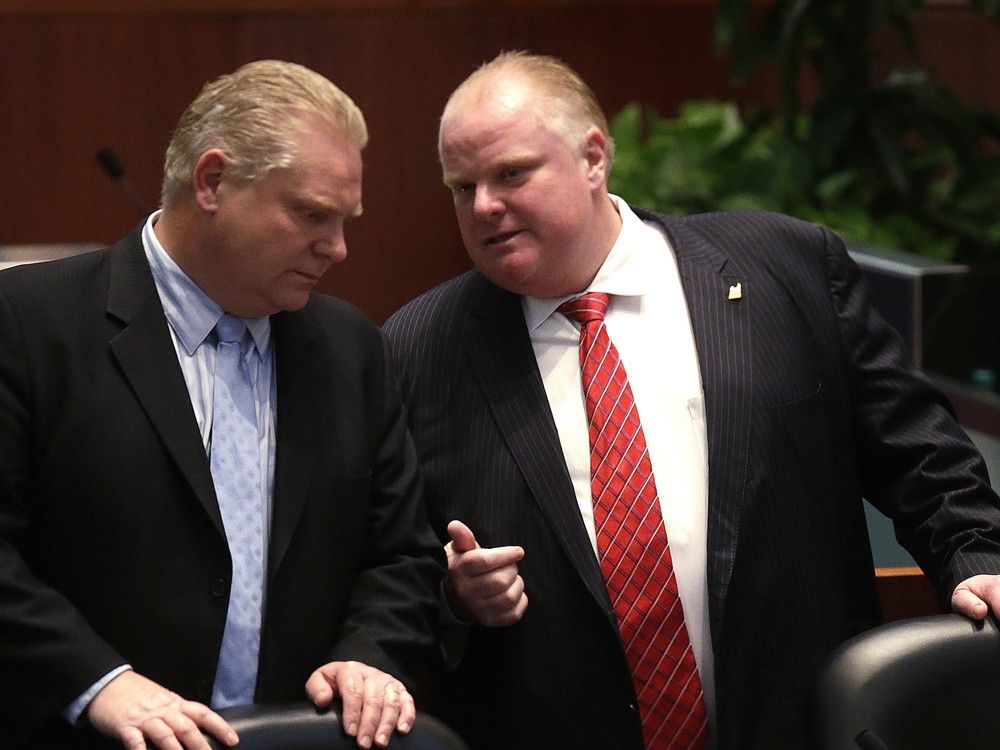
Ontario Premier Doug Ford next to his brother, former Toronto mayor Rob Ford, at a meeting on Jan. 13, 2014. After the release of a documentary about the late former mayor, the Ontario premier commented he thought it was

Ontario Premier Doug Ford has commented on a Netflix documentary about his late brother and former mayor of Toronto, Rob Ford.

“They’re disgusting people,” he said, referring to the filmmakers, at

a news conference

on Tuesday. “Poor Rob’s been dead for nine years and they just want to keep going after him. I talked to one person that saw it. It’s just disgusting. Leave the guy alone. Let him rest in peace. Let his family rest in peace.”

The premier said that he would not be watching the documentary, entitled Trainwreck: Mayor of Mayhem. It was released on the streaming service in Canada on June 17. The 49-minute film covers Rob’s rise to prominence as a politician, from city councillor to mayor, in Canada’s largest city.

Despite having the support of many of the city’s residents, Rob was a polarizing figure.

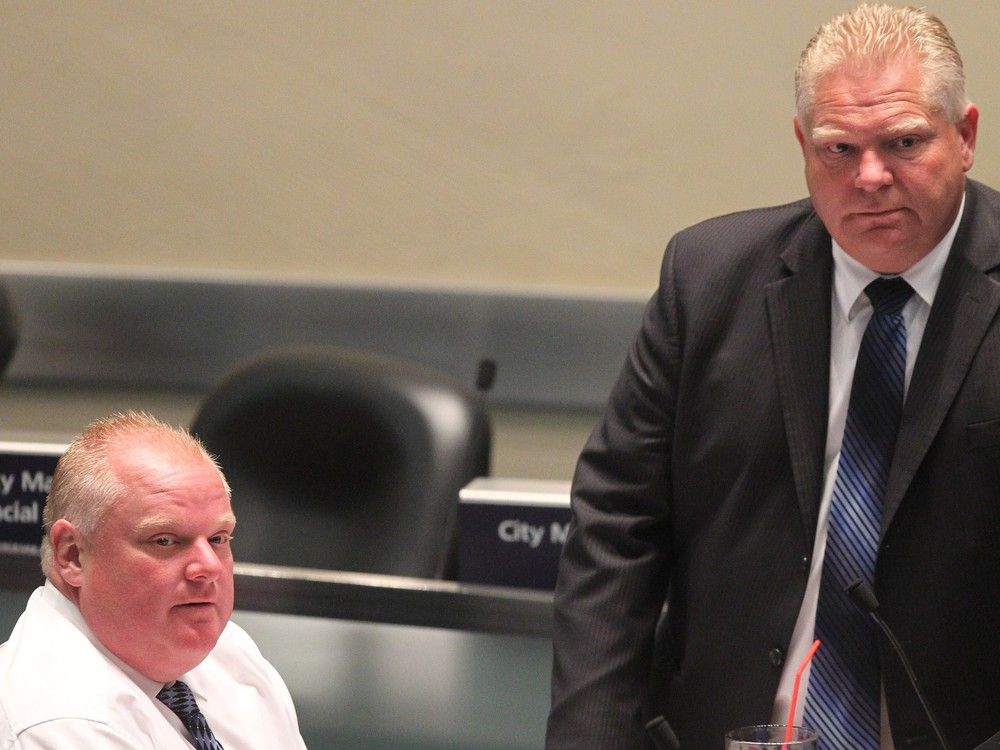
 Former Toronto mayor Rob Ford and his brother, current Ontario Premier Doug Ford, at a Toronto council meeting on July 7, 2014.

As his former staffer Tom Beyer described it in the film, there were often two reactions when people saw him driving Rob’s campaign bus on the streets while he was running for mayor. “People would be waving and cheering, and others would be giving me the finger,” said Beyer. “There was no middle ground.”

Rob was elected mayor in 2010. In the first year of his mayoralty, he was “able to get his agenda passed,” city councillor Josh Matlow said in the documentary. “He was ticking off, piece by piece, his plan to make the city work and end the waste,” said Mark Towhey, Rob’s former chief of staff.

However, Rob was also known for making off the cuff remarks to the media and in city hall’s council chambers. He was accused of inappropriate behaviour while intoxicated, including showing up at

a gala while drunk

,

confronting a couple at a Maple Leafs game, and drinking in his City Hall office on St. Patrick’s Day in 2012

. Photos and videos allegedly showing him inebriated surfaced many times during his mayoralty, according to media reports at the time, which prompted him to either deny wrongdoings, or in some cases, apologize.

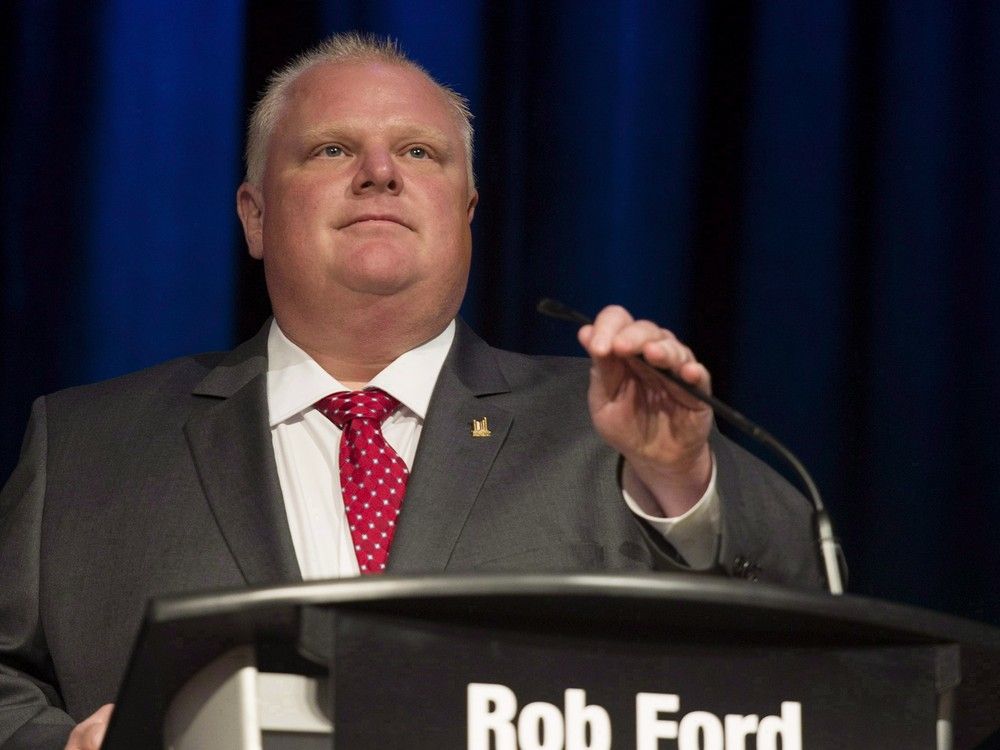
 Former Toronto mayor Rob Ford is pictured in Toronto on July 15, 2014.

The situation became more dire in 2013 when reports circulated that there was a video of Rob smoking crack cocaine out of a glass pipe. He denied the drug use at first, but later, in November of that year, admitted to it.

“Yes, I have smoked crack cocaine,” he told reporters. “Do I? Am I an addict? No.”

He said it was possible he had tried the drug in one of his “drunken stupors.”

The documentary follows the subsequent fallout from the admission, as well as Rob’s fatal battle with cancer. He died in March 2016.

“Let his family rest in peace,” said Doug on Tuesday. “It absolutely infuriates me, to be honest with you. They want the truth, talk to the real people that absolutely love him. I’ll leave it at that.”

The office of the premier told National Post that his remarks made on Tuesday stand as his response to the documentary.

Our website is the place for the latest breaking news, exclusive scoops, longreads and provocative commentary. Please bookmark nationalpost.com and sign up for our daily newsletter, Posted, here.

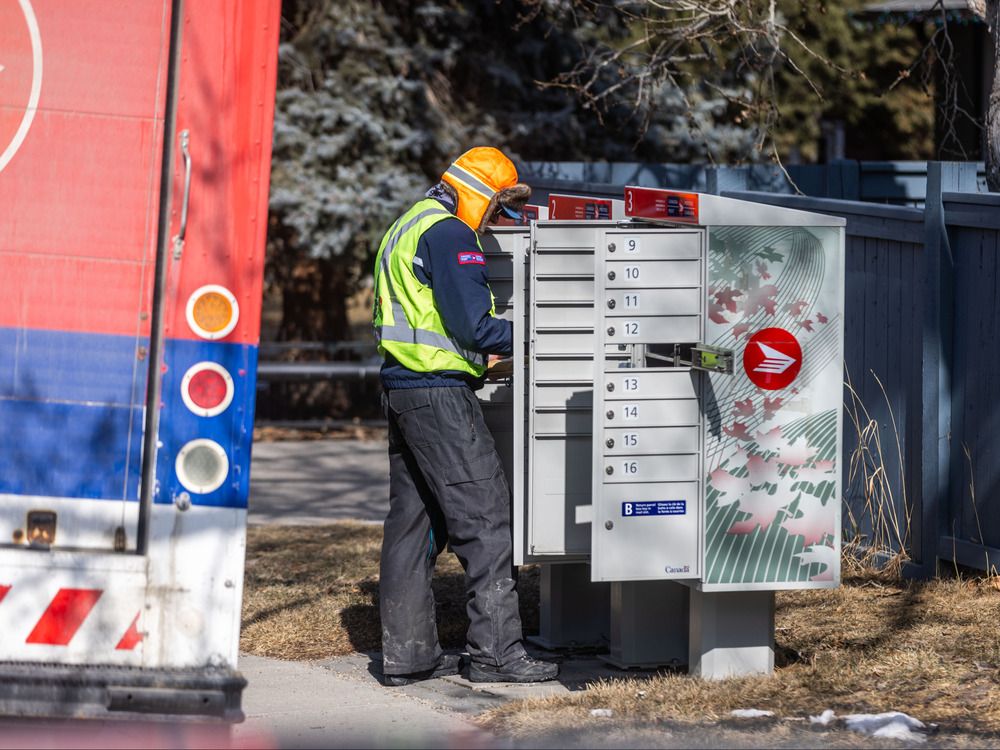
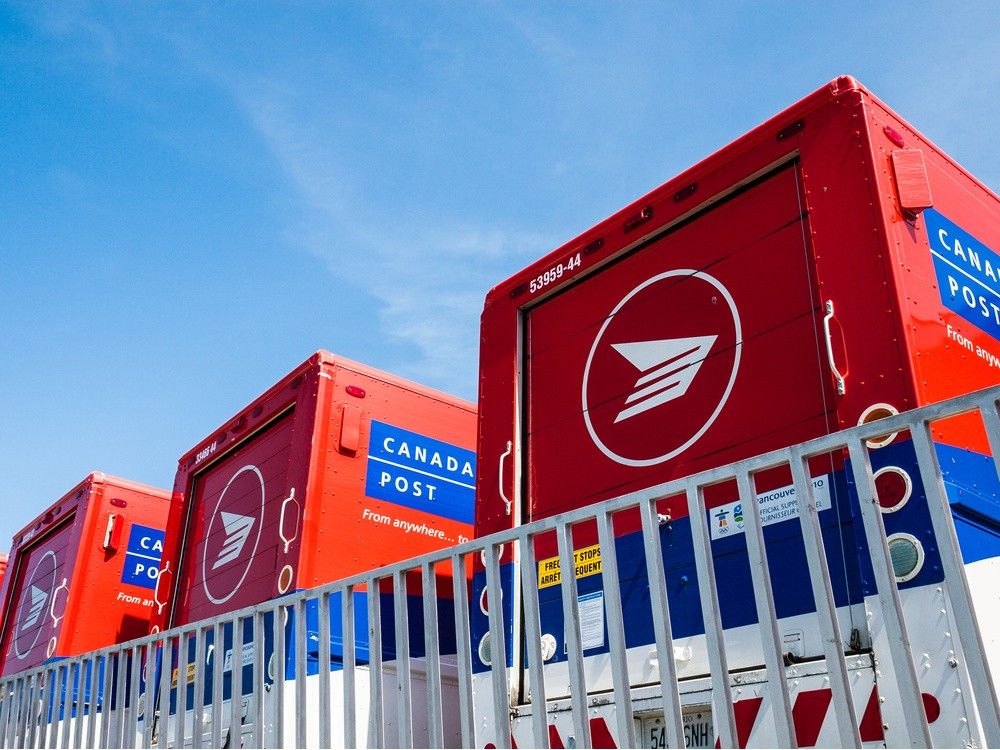
A Canada Post mail carrier delivers to a community mailbox in Calgary on Tuesday, March 18, 2025.

Canada Post and its second-largest union have reached an agreement in the ongoing labour dispute between the postal service and its workers.

In a

statement released Thursday

, the employer said it has a new collective agreement with the Canadian Postmasters and Assistants Association. As Canada Post’s second-largest union, CPAA represents more than 8,500 employees, primarily those responsible for managing post offices in rural Canada.

 The end of door-to-door delivery? A recent report includes a recommendation to call it quits as a means for Canada Post to achieve solvency.

What are the terms of the new agreement?

The new agreement includes an 11 per cent wage increase over three years, retroactive to Jan. 1, 2024. The increase is split between 6 per cent in 2024, 3 per cent in 2025, and 2 per cent in 2026. The agreement is effective from Jan. 1, 2024, to Dec. 31, 2026.

According to a

release from the union

, the agreement also includes a $1,000 lump-sum payment to all full-time employees on the date of its signing, and $500 to all other employees.

Does this end the threat of a Canada Post strike?

No. Canada Post is still trying to reach a deal with CUPW, its largest union, which represents about 55,000 postal workers. It has been in a strike position since May 23, with the union having imposed a

ban on overtime

since that date.

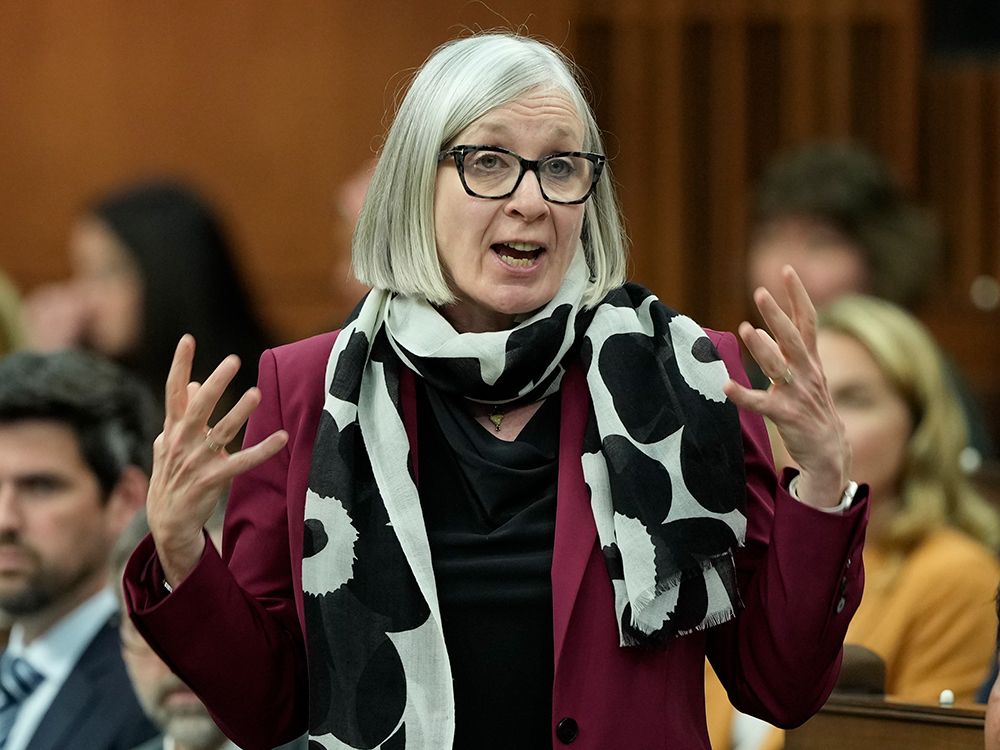
Last week, the corporation received notice that Patty Hajdu, the minister of jobs and families, had approved its request for a

vote to take place

on the company’s final offers to CUPW, which was delivered on May 28. The vote will be administered by the Canada Industrial Relations Board as soon as possible.

“Canada Post welcomes the Minister’s decision as it will provide employees with the opportunity to have a voice and to vote on a new collective agreement at a critical point in the company’s history,” the company said

in a statement

. It is still unclear when the vote will take place.

 Jobs and Families Minister Patty Hajdu.

What is Canada Post’s final offer?

Canada Post’s final offer includes a 13.59 per cent cumulative wage hike over four years and a plan to have part-time workers for weekend delivery.

It’s also offering a signing bonus of up to $1,000 and an end to compulsory overtime. “The company is no longer proposing a new health benefits plan, changes to employees’ post-retirement benefits, or enrolling future employees in the defined contribution pension,” according to Canada Post.

Are any other unions involved?

A number of Canada Post workers are part of PSAC, the Public Service Alliance of Canada. However, in April that union announced that it would

defer bargaining

until 2026, after agreeing to a 5 per cent increase retroactive to Sept. 1, 2024, without any concessions on other issues.

When was the last Canada Post strike?

Mail carriers last went on strike for 32 days beginning Nov. 15, at the height of the pre-holiday shipping season last year. That ended with a back-to-work order and an extension of the current collective agreement to May 22, which brings us to where we are now.

— With files from Canadian Press

Our website is the place for the latest breaking news, exclusive scoops, longreads and provocative commentary. Please bookmark nationalpost.com and sign up for our daily newsletter, Posted, here.

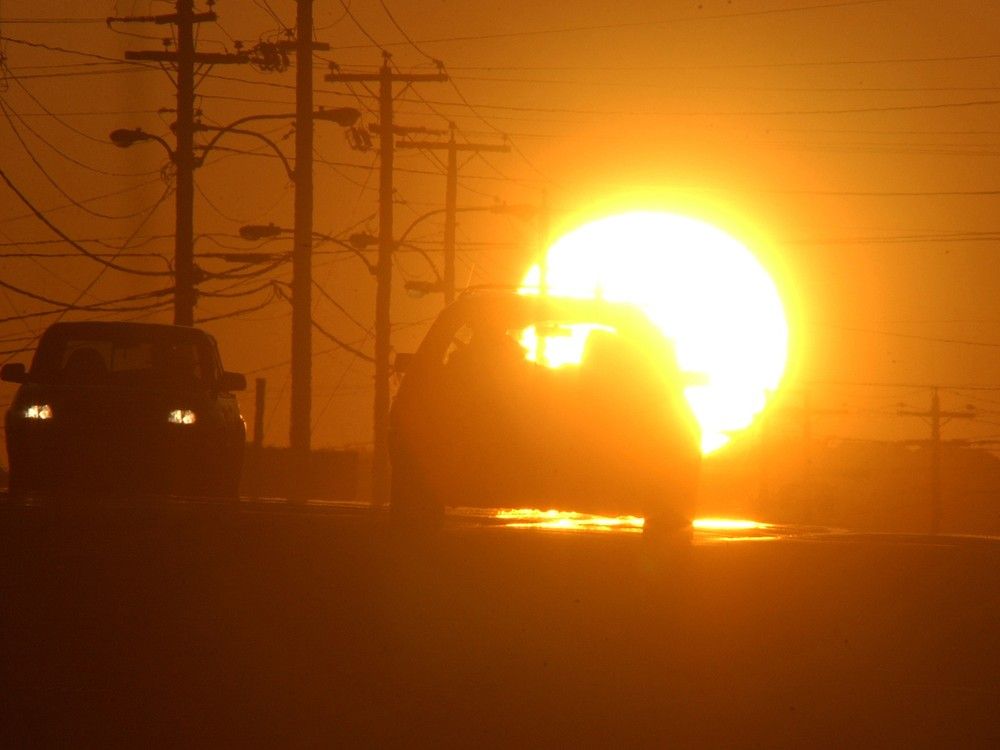
Environment Canada senior meteorologist says the heat wave about to hit Eastern Canada is just the first to be repeated throughout the summer.

The first heat wave of Summer 2025 is about to hit Eastern Canada, with temperatures climbing to the mid-30s early next week. Add the humidity from a wet spring and it will feel even hotter.

We’d better get used to it, as it is signalling “a torrid summer ahead,” says David Phillips, senior climatologist with Environment and Climate Change Canada.

“We rarely go a year without a heat wave,” he says, “but this will be the first one and people have to learn how to deal with it again.”

The high pressure system will settle over southern and eastern Ontario as well as southern Quebec. It will edge into southeastern Manitoba on one side and western New Brunswick on the other.

What is such a heat event called?

Contrasting this spate of heat with the renown “polar vortex” of winter, Phillips refers to this phenomenon as a “Bermuda High.” That’s a

semi-permanent, subtropical area of high pressure, which usually migrates east-west, back and forth across the North Atlantic, influencing weather patterns.

Except this one is further west and further north than usual, says Phillips.

“It circulates southern air further north.”

There’s no doubt it will feel oppressive, says Phillips, adding that a heat dome squeezes air molecules, pressing them downward, creating heat from the friction.

How will a lot of spring rain play a role?

Moisture from a particularly wet spring will compound with the heat. There has been 30 to 40 per cent more precipitation than normal this year, he says.

During the day the humidity may make it feel like 40 degrees Celsius or more.

Another factor in the mix is the sunshine. Long summer days “prevent the cool-off,” he says. At night, it will feel tropical, with temperatures above 20 C.

How far east will the heat extend?

The Maritimes won’t get the extreme heat, but temperatures will rise, particularly in western New Brunswick.

What about Western Canada?

Western Canada has been experiencing heat already, with many hot, dry days (made worse by wildfire smoke), he says. But, he adds, in eastern Canada, people have been asking when the warmth is going to arrive.

Normally, Eastern Canada would have several days in the 30s by now, says Phillips, but there were none in May and only one in June. Contrast that with Winnipeg, which he says has had nine or 10.

“In eastern Canada, people have felt left out, on the sidelines.”

How will the heat play out this weekend/next week?

But now summer heat is arriving with a vengeance. It will be a three-day event with temperatures rising to the mid-30s in Toronto, Ottawa and Montreal, accompanied by nighttime temperatures in the 21-23 C range,

with the humidex in the low to mid 40s

. “That’s eight or nine degrees warmer than normal.”

Ultimately, it seems we had better get used to this. All the weather-mapping models from Canada, the U.S. and Europe are predicting increasingly hot summers, says Phillips.

“This will be the first heat wave, but it’s not going to be the last. We’re going to see repetition throughout the summer.”

How does extreme heat affect the body?

He cautions that publicized high temperatures are measured in the shade. As a result, “going out into the sun could add another seven to 10 degrees to the body. It’s a lot of stress on the body. Too much.”

It results in increased hospital admissions, he notes. “People may not be dying in the streets but there is increased respiratory and cardiovascular distress.”

What precautions should you take?

The

Canadian Red Cross

urges people to stay indoors between 10 a.m. and 2 p.m., the hottest period of the day. Drink plenty of cool fluids — even if you’re not thirsty. And avoid alcohol and caffeine, as both can result in dehydration.

Check regularly with the children and seniors in your life to ensure they are drinking enough water.

Finally, says the Red Cross, be aware of the following signs of heat illness: dizziness or fainting; nausea or vomiting; headache; rapid breathing or heartbeat; extreme thirst; dark yellow urine; muscle cramps, especially in arms, legs, or stomach.

Our website is the place for the latest breaking news, exclusive scoops, longreads and provocative commentary. Please bookmark nationalpost.com and sign up for our daily newsletter, Posted, here.

Premier of Ontario Doug Ford speaks to media prior the First Minister's Meeting in Saskatoon on Monday, June 2, 2025.

OTTAWA — Ontario Premier Doug Ford has apologized to Ontario First Nations for saying they cannot “keep coming hat in hand all the time to the government” for more money.

On Thursday, Ford met with chiefs who are part of Anishinabek Nation, which represents 39 First Nations in the province. Before the meeting started, he issued an apology to them and repeated his apology in public during a press conference after the meeting.

“I just want to say I sincerely apologize for my words, not only if it hurt all the chiefs in that room, but all First Nations,” he said.

Linda Debassige, Grand Chief of the Anishinabek Nation, said the chiefs in the meeting felt that Ford’s apology was “sincere.”

“We are looking at today as a new day going forward,” she said.

Ford made those comments on Wednesday

over concerns that First Nations in the province have over the passage of Bill 5, which gives the province the power to suspend municipal and provincial laws for projects through so-called special economic zones.

Ford has said the mineral-rich Ring of Fire region in northern Ontario will be declared the first such zone. While First Nations have said they want to be part of economic development, they are outraged by the government’s decision to proceed with legislation before consulting them.

Ford dismissed those concerns during an unrelated press conference.

“This is like handing an opportunity on a silver platter to First Nations that, by the way, I have treated like gold,” he said. “But there’s going to be a point that you can’t just keep coming hat in hand all the time to the government, you’ve got to be able to take care of yourselves.”

Ford continued: “When you literally have gold mines, nickel mines, every type of critical mineral that the world wants, and you’re saying, ‘No, no, I don’t want to touch that, by the way, give me money’ — not going to happen.”

Assembly of First Nations (AFN) National Chief Cindy Woodhouse Nepinak urged Ford to withdraw his remarks in a letter sent Thursday, saying that his words “only serve to perpetuate racist stereotypes and are not acceptable in any way or circumstance.”

Ford justified his brash comments by saying he gets “passionate” on the issue.

“I want prosperity for their communities. I want prosperity for their children,” he said.

“As I said before, I’ll always respect treaty rights, and I’ll always respect the duty to consult, because without First Nations, we can’t get the critical minerals out of the ground. We can’t have the energy that we need, that the whole world wants,” he said.

“We’re going to work together. We’re going to get through this, and we’re going to have a great collaboration,” he added.

The federal government is also dealing with similar resistance from Indigenous peoples for fast-tracking a bill with the same number, C-5, which would also give cabinet sweeping powers to override federal laws to approve projects in the national interest. Like in Ontario, Indigenous peoples said they have not been consulted on the legislation beforehand.

This has led to chiefs promising a summer of discontent over C-5, which is expected to be passed in the House of Commons by the end of this week and in the Senate next week.

Kebaowek First Nation Chief Lance Haymond qualified the rushed legislative process that led to the creation of C-5 a “case study in how not to engage with Indigenous nations.”

“The conditions for an Idle No More 2.0 uprising are being written into the law as we speak,” he told the House of Commons transport committee late Wednesday night.

Prime Minister Mark Carney said section 35 of the Constitution — which provides protection to the treaty rights of Indigenous peoples in Canada — is at the “heart” of the bill and that it respects the principle of free, prior and informed consent.

He said the legislation also has to be seen in parallel with measures his government is taking to finance equity ownership for Indigenous participation. The government has notably doubled the Indigenous Loan Guarantee Program from $5 billion to $10 billion to help Indigenous peoples make major economic investments.

Carney said projects of national interest would only go ahead after consultation with provinces, Indigenous groups and stakeholders and only if conditions are met.

Liberal MP Marc Miller, who served as minister of Indigenous Services and minister of Crown-Indigenous Relations, said the entire process is about respect and building trust.

“You can’t do that through legislation. You have to do that by being patient and sitting down and talking to people in a respectful way,” he told the National Post.

— With files from Stephanie Taylor and the Canadian Press.

National Post

calevesque@postmedia.com

Our website is the place for the latest breaking news, exclusive scoops, longreads and provocative commentary. Please bookmark nationalpost.com and sign up for our newsletters here.


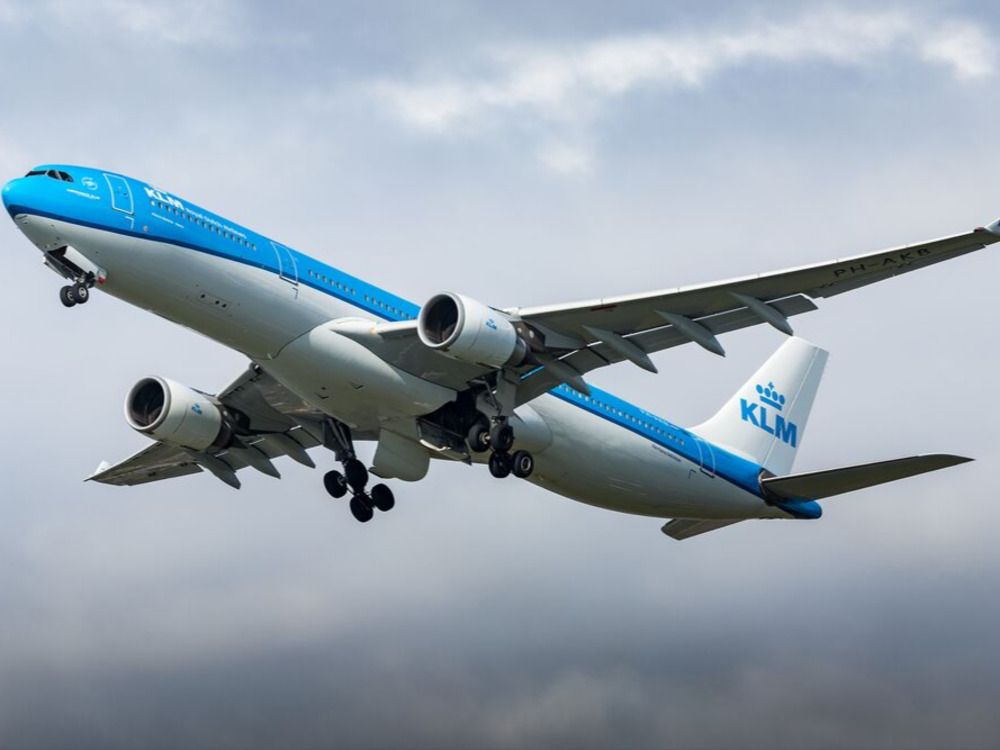
A KLM twin-engine Airbus similar to the one that made a U-turn over the Atlantic on Monday.

A flight this week from Amsterdam to Toronto spent more than five hours in the air before landing — in Amsterdam. The cause was a missed scheduled maintenance that was discovered while the plane was over the Atlantic Ocean, requiring it to do a U-turn and return home.

The aircraft, an Airbus A330-303, had already been delayed 90 minutes from its original departure time of 11:20 a.m. local time, for what should have been an eight-hour flight from Schiphol airport to Toronto. That was due to a last-minute change of plane because the air conditioning on the original one wasn’t working.

But the new plane had its own issues. As reported on the website

View from the Wing

and elsewhere, the crew realized only en route that there was required maintenance for the aircraft that had not been performed.

KLM confirmed to National Post that the U-turn was caused by the aircraft reaching what it called a “maintenance deadline.”

“During flight KL691 from Amsterdam to Toronto, it was decided to return to Schiphol as a precaution after it became apparent during the flight that the replacement aircraft (PH-AKA) would reach its maintenance deadline,” the airline said in a statement to the Post.

“The aircraft was fully airworthy at the time of departure,” it added. “To prevent the license from expiring during the flight, it was decided to return to perform the maintenance in the Netherlands.”

The delay — more than three hours on a flight of more than 3,500 kms — means that,

due to European laws

, each passenger is entitled to 600 euros in compensation, as well as rebooking by the airline.

“Although all passengers were rebooked upon arrival, we naturally find it very unfortunate for the passengers who were affected by this,” KLM said in its statement.

Flight data from

flightradar24.com

shows that the aircraft was south of Iceland and nearly midway across the Atlantic when it turned around.

Last-minute aircraft swaps have caused issues in the past.

View from the Wing

details how, earlier this month, American Airlines swapped out a Boeing 787-8 for a similar 787-9, then sent the latter on a flight from Philadelphia to Naples, Italy. But the runway at Naples wasn’t certified for the 787-9, so it had to be diverted to Rome, 200 kms to the north.

National Post has reached out to KLM for further comment.

Our website is the place for the latest breaking news, exclusive scoops, longreads and provocative commentary. Please bookmark nationalpost.com and sign up for our newsletters here.


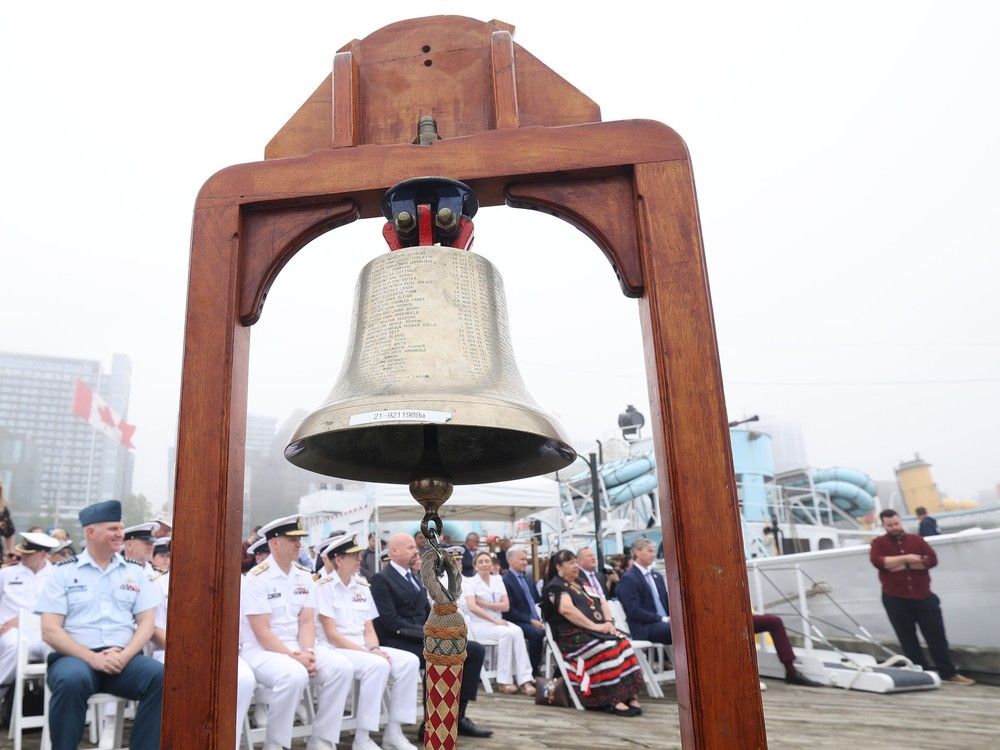
Commander of the Royal Canadian Navy Vice Admiral Angus Topshee, is seen during a scrum with reporters following the ringing of the bell ceremony marking the start of Fleet Week, in Halifax on June 19, 2025.

Canada’s top sailor is so fed up with the dearth of Cyclone helicopters available to fly off this country’s warships, he’ll replace them with drones if he must.

The fleet of 26 CH-148 helicopters was grounded for most of last month due to spare parts problems. And, as of Thursday, only three of the choppers were available to fly off the country’s warships as the problems persist.

“Am I satisfied? No, not at all,” Vice-Admiral Angus Topshee said in Halifax on Thursday.

Naval officers often say maritime helicopters are the eyes and ears of a warship.

“This is why we’re going all-in on drones right now,” Topshee said. “The Royal Canadian Navy is working to get into contract for an uncrewed aerial vehicle that we can operate. It was meant to supplement the helicopter, but the reality is, if the helicopter can’t be more reliable, then we are going to have to rely even more on other systems.”

As a stopgap, the navy is employing Hammerhead target drones

remote-control speedboats it normally uses to mimic small boat attacks

to launch sonobuoys ahead of a fleet so ships can detect submarines.

“One of the things a helicopter can do for us is it can drop sonobuoys to help detect submarines. Now we’ve got the ability to do that in other ways,” Topshee said.

“Whenever we’ve been forced to innovate, we will innovate. We will find a way to get the job done. So, the helicopter has been letting us down, but we will find a way to achieve the effect.”

The navy is hoping to have purpose-built aerial drones in operation by next summer, he said, noting the project went out to tender. “We’re in the process of awarding it.”

 Royal Canadian Navy sailor first class, Bradley Downey, looks on through heavy fog at the arrival of the Danish warship, HDMS (Her Danish Majesty’s Ship) Vædderen (F359) during a sailpast at a ceremony marking the start of Fleet Week in Halifax Thursday June 19, 2025.

Topshee — who was in Halifax to celebrate the start of Fleet Week, where the public can tour warships and meet the folks who crew them — doesn’t want to rely on unmanned drones over helicopters.

“A helicopter is a far better platform,” he said. “A helicopter can do everything. So, what we’re going to need to do is take all of the things that we need a helicopter to be able to do and do them individually” in other ways.

To that end, the navy’s experimenting with large drones that can transport equipment between ships, Topshee said. “That’s not a task that we need a well-armed (anti-submarine warfare) helicopter to do,” he said. “If it can be done by a drone very simply without people involved in the process of actually flying it back and forth, that’s ideal for us.”

Topshee is adamant he’s not replacing the Cyclones.

“We’re not,” he said. “We want the Cyclone helicopter to be an effective part of the force.”

 Members of the Helicopter Air Detachment aboard HMCS MONTREAL conduct helicopter hoist drills with a CH-148 Cyclone helicopter, call sign Strider, during Operation REASSURANCE on Feb. 13, 2022.

The admiral points out that, even when the helicopters are in top shape, they can only operate for 12 hours a day.

“Even if it’s perfectly operational, there’s 12 hours where you don’t have it available,” Topshee said. “Which means we need to be experimenting and ready to operate all of the time.”

Canada has 26 of the ship-borne maritime helicopters, with a final one slated for delivery this year. The $5.8-billion fleet is normally used to provide air support for the navy. Their missions include surface and subsurface surveillance, search and rescue, and anti-submarine warfare.

The Cyclones didn’t fly at all for 27 days in May as the military struggled with spare parts problems with certain components. The Department of National Defence indicated last month that it was working with the military and Sikorsky, which manufactured the helicopters, “to identify potential parts of concern. This includes components of the Cyclone’s landing gear, tail rotor driveshaft flange and auxiliary power unit, as well as engine parts.”

The problems persist, according to Topshee. “It’s a parts issue that’s keeping them grounded.”

Another “messy problem” plaguing the helicopters, he said, is replacing the Cyclones’ ageing datalinks — used to communicate digital information such as radar images to other aircraft, warships and shore bases.

“It is a technology from the 1980s,” Topshee said.

The admiral places the blame for old tech aboard relatively new helicopters, ordered in November 2004, squarely on former prime minister Jean Chretien’s 1993 decision to cancel the contract to buy AgustaWestland’s EH-101 maritime helicopters to replace Canada’s geriatric fleet of Sea Kings, which went out of service in 2018 after flying off navy ships for more than half a century.

“One of the accusations at the time, as we were coming out of the Cold War, was that we had gold-plated the requirement,” Topshee said. “That we were asking for far more than we needed out of a maritime helicopter. The interesting thing is if you were to go back to our initial requirement, it is almost exactly the helicopter we need today because … we’re in a period of great power competition. We need a war-fighting helicopter.”

The military “listened to the complaints,” and watered down the requirements as much as it could, he said. “We specified exactly the systems that we wanted as opposed to saying we need the helicopter to have modern link, modern communications and up-to-date combat systems. We said we needed to have this Link 11 system, which was the state-of-the-art at the time we set that requirement.”

The datalink is “critical” for the Cyclones, he said. “It’s what tells the rest of the force where the helicopter is. It tells the rest of the force everything the helicopter is seeing. So, when it finds a submarine, it uses that link to communicate the position of the submarine to the rest of the force so that we can either target that submarine or avoid the submarine. It also tells us that that’s our friendly helicopter right there so we don’t accidentally shoot it down.”

Canada is negotiating with Sikorsky to get the datalinks updated, Topshee said.

“The timeline is unacceptably long. We’re in negotiations with the company for them to try and deliver it as quickly as possible but right now it’s not quick enough.”

Sikorsky is saying it will take “more than two” years to upgrade datalinks aboard all of the Cyclones, according to Topshee, who wants the choppers upgraded from datalink 11 to datalink 16 and datalink 22.

The Cyclones “can still use the old link … but it doesn’t provide all the functionality that we need,” he said.

“A lot of countries are stopping using it.”

The old datalinks could put Cyclone crews in jeopardy.

“Without the most modern link system, we don’t know exactly where the helicopter is all the time because that system does not provide the same level of positional fidelity that we would expect,” Topshee said.

“The helicopter knows where it is. We just don’t know whether it’s friendly or not all of the time. Can that put them in danger? Yes. In an operational environment where we’re starting to shoot, that could be a problem.”

 The ship’s bell from the former HMCS Athabaskan is seen during a ceremony marking the start of Fleet Week in Halifax Thursday June 19, 2025.

Our website is the place for the latest breaking news, exclusive scoops, longreads and provocative commentary. Please bookmark nationalpost.com and sign up for our daily newsletter, Posted, here.

Lilly and Jack Sullivan have been missing since May 2, 2025.

A reward of up to $150,000 is being offered by the Nova Scotia Department of Justice to anyone with information about the disappearance of Lilly and Jack Sullivan.

It has been “felt across the province and beyond, and my heart goes out to the family, the community and everyone who has been working to find these children since day one,” said Attorney General and Minister of Justice Becky Druhan in

a news release

on Thursday.

The reward is payable in Canadian funds and will be apportioned as deemed just by Druhan as the minister of justice. Law enforcement and correctional agency employees are not eligible for the reward.

On the morning of May 2, Lilly and Jack disappeared from their Lansdowne Station home in rural Nova Scotia. There have been extensive ongoing searches in the area, especially in the thick woods near the property where they lived. As of mid-June, police said they had received

488 tips in the case

. According to authorities, the siblings were last seen with family in public on May 1.

In an interview published on Wednesday, the children’s paternal grandmother opened up about what happened.

Belynda Gray, who

spoke to CBC News

, said she hasn’t seen six-year-old Lilly or four-year-old Jack in almost two years.

Gray’s son, Cody Sullivan, is the biological father of the two children. He was in a relationship with the children’s mother, Malehya Brooks-Murray, for about three years, Gray said. When Brooks-Murray decided to end the relationship, she petitioned the court for sole custody, Gray told CBC.

“When she did that, he said that he was done. He just didn’t want no part of it,” said Gray, who also said that Brooks-Murray told her they were “having problems and she wasn’t happy.”

The relationship between Gray and Brooks-Murray, however, remained intact. Gray said that Brooks-Murray would bring the children to visit whenever Gray asked. But those visits faded when Brooks-Murray moved in with her new boyfriend, the children’s stepfather, Daniel Martell. Martell and Brooks-Murray also have an infant daughter together.

Gray learned about the children’s disappearance after receiving a call from a relative. She then texted Brooks-Murray, who said they were, in fact, missing.

“I was in a state of panic, shock, but in the back of my mind I kept saying, ‘Well, they’ll find them,’” said Gray.

She joined the search in Pictou County. She said she called out for the children, even using her nickname for Jack, “Jackie boy.” However, after several days, police announced they were scaling back the search and would focus on specific areas.

Since then, the ongoing investigation has included extensive searches of the home where the children lived and went missing from, the grounds, outbuildings and nearby septic systems, wells, mineshafts and culverts, the RCMP said in

a news release

. Officers have also searched areas around a nearby pipeline, where

a boot print was previously located

.

“My heart tells me these babies are gone,” Gray told CBC. “I just want them back. These are everybody’s grandchildren. They’re not just mine now. It does seem like the whole world cares.”

Gray said she and her son, who lives with her, were both questioned by police.

They are included in the 54 people who police have formally interviewed, which for some, involved a polygraph test. Police have also collected hundreds of hours of video footage from the Landsdowne Station area.

Martell, the children’s stepfather, told

CBC News

that he took a polygraph test. He said he was asked outright if he killed the children and added that he was “extremely nervous.” He said he had offered to take the test and even encouraged police to search the property early on. He was told by an officer that he passed the test, CBC reported.

He also told the CBC that there “is more evidence than what the public knows,” although he was not permitted to “elaborate” more.

He confirmed that Lilly’s blanket was found on the first day of the search, although police have not yet released that information. It was discovered near a bootprint in the area of the pipeline, Martell said.

Both

CTV News

and CBC reported that the bootprint appeared to be child-sized.

Meanwhile, authorities continue to look into the children’s disappearance.

“We’re accessing, evaluating and analyzing a significant volume of information from a variety of sources. We have a very coordinated and deliberate approach to make certain all information is meticulously scrutinized, prioritized and actioned to ensure nothing is missed,”

said

investigation lead Cpl. Sandy Matharu from the Northeast Nova RCMP Major Crime Unit.

“We’re committed to doing what is necessary to locate Lilly and Jack and advance the investigation, which may take longer than we all hoped.”

Our website is the place for the latest breaking news, exclusive scoops, longreads and provocative commentary. Please bookmark nationalpost.com and sign up for our daily newsletter, Posted, here.