LP_468x60
on-the-record-468x60-white

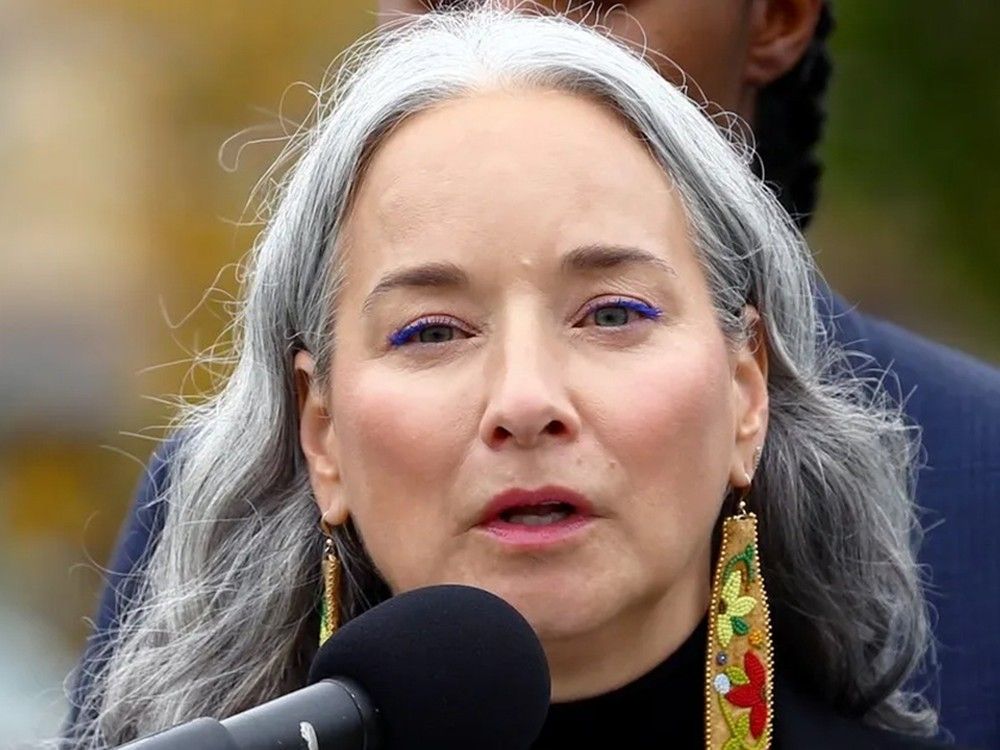
NDP Famalies Minister Nahanni Fontaine. (file photo)

Families Minister Nahanni Fontaine won’t lose her job over comments she made online about

Charlie Kirk’s assassination

, Manitoba’s premier Wab Kinew said in a statement. Fontaine was told to apologize instead.

Kinew’s cabinet minister, Fontaine, reshared a post on Instagram on Thursday that called the slain 31-year-old political commentator a “racist, xenophobic, transphobic, Islamophobic” individual. Extending condolences to Kirk’s family, Fontaine’s post went on to say that she has “absolutely no empathy” for him. “The man stood for nothing but hate,” her post, in part and since removed, read.

While speaking to reporters on Friday, Kinew said, “It would be too easy to show her the door. It is a much harder task to say we’re going to work through this together and I am going to try to help you understand why we need to bring people together and not divide people at this time.”

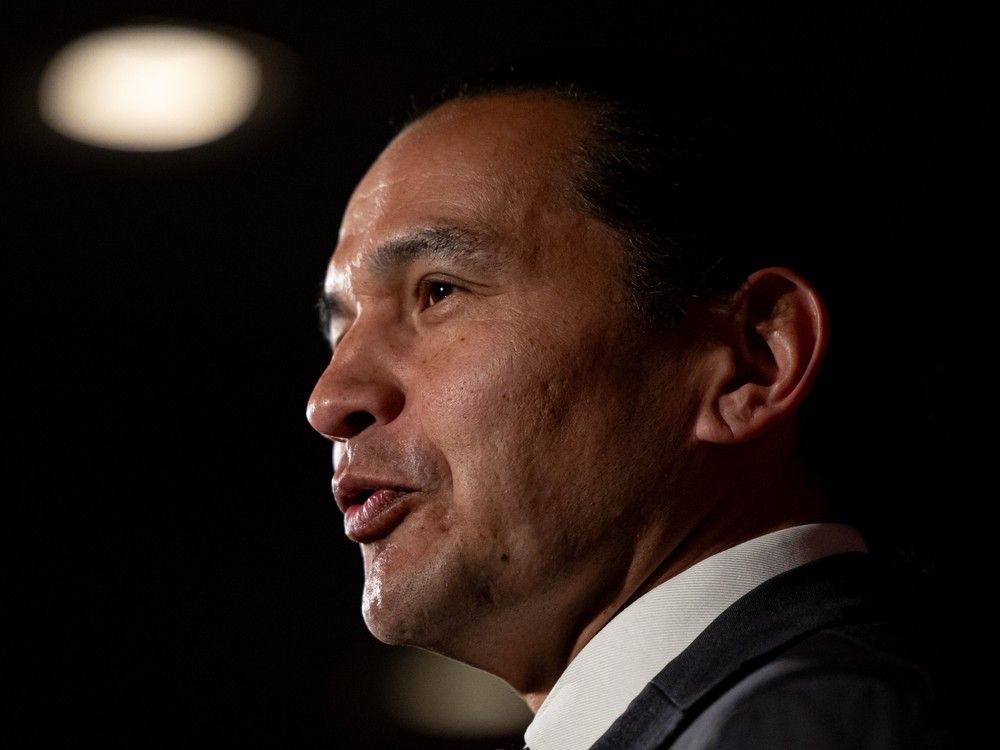
 FILE: Manitoba Premier Wab Kinew speaks at the First Ministers’ Meeting at TCU Place. Photo taken in Saskatoon, Sask., on Monday, June 2, 2025.

He added, “I don’t believe in cancel culture and I think people need to be brought along and shown if we want a society that is one where we can express ourself freely and have debate then we need to be showing empathy and compassion for people even when we don’t agree with them.”

Fontaine posted an apology on her Instagram story. The statement read: “I apologize for sharing a post yesterday on the murder of Charlie Kirk. Violence has no place in our democracy. Political debate is achieved with words and discussion. In a world too often divided, we should strive to show empathy to everyone even those we don’t agree with.”

The reshared message by Fontaine that sparked criticism stayed online for several hours Thursday before it was taken down. Meanwhile, Kinew on Wednesday, the day Kirk was assassinated, called the killing “deeply disturbing.”

Kirk was killed by a single shot in a “targeted attack” that the governor of Utah called a political assassination. At the time of the fatal incident, he was speaking at a debate at Utah Valley University, where he was gunned down in broad daylight on the university campus and pronounced dead at a hospital a few hours later.

 Kirk was killed by a single shot in a “targeted attack” that the governor of Utah called a political assassination.

The

apology by Fontaine

is the second one this year. She landed in hot water in June for her hot mic comments that she made after sharing a stage with an American Sign Language interpreter. “Yeah! I’m like, f— why did I have her on the stage,” said Fontaine. “Jesus, I’m like, ‘You need to leave,’” she said.

A written apology issued by Fontaine read: “I sincerely apologize to the deaf and hard of hearing community, and to all Manitobans for my comments,” Fontaine wrote.

“Yesterday, during a private debrief with my staff, I was reflecting on my public speaking performance and remarked I had been distracted by the interpreter’s hand movements. I was expressing frustration on my own poor planning to ensure clear sight lines at the event.”

Our website is the place for the latest breaking news, exclusive scoops, longreads and provocative commentary. Please bookmark nationalpost.com and sign up for our daily newsletter, Posted, here.



New polling reveals Canadians are divided on peacekeeping roles in Ukraine and Gaza, highlighting generational splits and questions about Canada's global identity.

Though involvement has diminished in recent decades, Canada has traditionally portrayed itself and operated as a peacekeeping nation since the Second World War .

Whether due to their efforts in the former Yugoslavia, Afghanistan, or even going back to Lester B. Pearson’s instrumental and Nobel Peace Prize-winning role in de-escalating the 1956 Suez Crisis, the peacekeeper role became a core component of Canadians’ self-image.

But new polling for the Association for Canadian Studies (ACS) shows that when it comes to the current major global conflicts — the Russia-Ukraine war and Israel’s war on the terror group Hamas — that peacekeeping image may not be as deeply rooted for all Canadians.

Jack Jedwab, ACS president and CEO, told National Post that in an era where mega powers like the U.S., Russia and China yield increasingly more influence, “there’s some work to be done to determine how we feel about our own self-image and our own role in terms of these global conflicts.”

In a web survey conducted by Leger Marketing on Labour Day weekend, Canadian respondents were asked how much they agreed with the idea of Canada deploying peacekeeping soldiers to either region in the event that agreements bring an end to hostilities.

In the case of the Eastern European setting, it found a slight majority (53 per cent) think “Canada should consider sending peacekeepers even if it involves risk to their safety.” The same percentage of Canadians, meanwhile, disagree with the notion of participating in keeping the peace in Israel and Gaza.

Broken down by age group, however, there’s a divide in sentiment when it comes to Canada’s post-war involvement.

In the event of a Russia-Ukraine peace, a slight majority (53 per cent) in age groups 18 to 54 disagree with Canada playing a role, whereas 55 per cent of the 55-64 cohort and 66 per cent of the 65-plus (34 per cent) crowd think Canada has a part to play.

Should peace be achieved between Israel and Hamas, only the 65-plus cohort (53 per cent) favours Canadian peacekeeping involvement. All those younger, including 57 per cent of the 18-24 group, disagreed.

“They’re more opposed to it in terms of the Israeli-Palestinian conflict than they are in terms of the Russia-Ukraine one, even though paradoxically there’s a lot more street and campus mobilization for the former one,” Jedwab said, “but that doesn’t necessarily translate into significant interest in supporting peacekeeping efforts.”

 Jack Jedwab, head of the Association for Canadian Studies.

The survey also sought to understand how “directly affected” Canadians felt by either war relative to their American and European peers.

Canadians felt less directly affected overall and again, it was the younger cohorts that led the way, meeting or surpassing the national averages — including 66 per cent of the 18-24 group when asked about the Israel-Hamas war.

Jedwab said that while the same younger cohorts are often the ones leading public mobilization against Israel on streets and campuses, it may not paint an accurate picture.

“We need to be cautious and sort of put the street mobilization, which is not an insignificant thing, into that context,” he said..

As for why older cohorts are more engaged, he reasoned they’re likely getting their information from established sources and not relying on social media channels that are often “castigating” in how they present the news.

“It may also be a function of the perception, rightly or wrongly, that Canada can be more of a player in this thing,” he explained.

“To some degree, our perceptions around feeling affected are going to be influenced by the extent to which we actually think as Canadians we can have any impact on this, relative to say Europeans or Americans.”

Correlations between both sets of data for the two wars revealed that the more a respondent felt affected, the more they supported peacekeeping. Those who felt less affected were less willing to support it.

Jedwab concluded that while “it would be nice to see Canadians support” any future peace in either afflicted area, the results show that Ottawa could face a challenge because “Canadians seem to be rather divided about the matter.”

The (Aug. 29-31) survey of 1,62 respondents was conducted via web panel and would have a comparative margin of error of +2.5 per cent, 19 times out of 20.

Our website is the place for the latest breaking news, exclusive scoops, longreads and provocative commentary. Please bookmark nationalpost.com and sign up for our daily newsletter, Posted, here.


Conservative Leader Pierre Poilievre gestures as he receives applause after speaking at a meeting of the Conservative caucus on Parliament Hill in Ottawa, before Monday's return of the House of Commons, on Sunday, Sept. 14, 2025.

OTTAWA — The start of the new fall session on Monday will see Prime Minister Mark Carney facing off against Conservative Leader Pierre Poilievre in the House of Commons for the first time after Poilievre regained a seat over the summer.

Poilievre was defeated in his Ottawa-area riding of Carleton in April and therefore could not sit as leader of the Opposition during the short spring session that followed. However, he managed to get elected in one of the safest Conservative ridings of the country, Battle River—Crowfoot, on August 18 after one of his MPs, Damien Kurek, agreed to step down.

In a speech to his caucus on Sunday, Poilievre acknowledged the unusual circumstances that brought him back to his leader’s seat nearly five months after the election.

“I took a more scenic route through eastern Alberta and enjoyed every minute of it, but it is great to be back on the job, on Parliament Hill, doing the job that Canadians need done.”

Now that he is back in the saddle, Poilievre intends to hold Carney to the standards the prime minister set for himself and propose solutions on crime, immigration and housing among other things.

“He promised that after 10 years of Liberal government driving up costs and crime and chaos, that he would be different,” Poilievre said of Carney. “Yet, sadly, unemployment is worse. The cost of living is worse. Homebuilding is worse. Divisions are worse. The tariffs are worse. Crime is worse. Immigration is worse. That is not what Canadians voted for.”

Carney spent part of the summer taking away political ammunition from Poilievre by pausing the electric vehicle and reviewing more Trudeau-era climate initiatives, despite causing some frustration from his party’s left flank. He also made good on two campaign promises by setting up new entities: Major Projects Office and Build Canada Homes.

But the billions in new spending and a slower economy will lead to a substantially bigger deficit, according to Carney, who said on Sunday it would be “bigger than it was last year.”

Then, there is the issue of crime. Liberals know it cost them crucial seats in Ontario in the last election, so expect it to be one of their main legislative priorities this session.

Justice Minister Sean Fraser told reporters last week that he will be tabling “legislation dealing with intimidation and obstruction” of places of worship “in the very near future” and that legislation touching on bail reform could be coming as soon as next month.

Fraser also expects to table a third bill this session dealing with intimate partner violence and victims in the criminal justice process.

The goal, according to Liberal sources, is to secure some “easy wins” in the parliamentary process with issues that receive cross-partisan support and don’t cost too much money.

Whether Poilievre will be more collaborative — or less — in this fall session remains to be seen. But already, the Conservative leader has vowed to work with any party, even the governing Liberals, to “make this session a success for the Canadian people.”

“We will oppose things we’re against, support things we’re for, but we will also propose solutions to the problems Liberals have created,” he said.

Carney, for his part, might not be in the House of Commons as often as Poilievre would like as he continues his globetrotting this fall. The prime minister is expected to travel to Mexico later in the week and should be at the United Nations General Assembly in New York later in September, where he has promised to recognize Palestinian statehood.

National Post

calevesque@postmedia.com

Our website is the place for the latest breaking news, exclusive scoops, longreads and provocative commentary. Please bookmark nationalpost.com and sign up for our newsletters here.


Israel's Prime Minister Benjamin Netanyahu, U.S. Secretary of State Marco Rubio, and U.S. ambassador to Israel Mike Huckabee visit the Western Wall in the old city of Jerusalem on Sunday. Rubio's visit comes after the Trump administration's expressed unwavering support for its ally in the war with Hamas despite a strike in Qatar.

U.S. Secretary of State Marco Rubio arrived in Israel on Sunday for meetings in Jerusalem with top officials, including Prime Minister Benjamin Netanyahu.

“My focus will be on securing the return of hostages, finding ways to make sure humanitarian aid reaches civilians, and addressing the threat posed by Hamas,” said Rubio ahead of his departure.

“Hamas cannot continue to exist if peace in the region is the goal,” he added.

Rubio on Sunday afternoon visited the Western Wall in Jerusalem’s Old City, accompanied by Netanyahu and U.S. Ambassador to Israel Mike Huckabee.

The prime minister and the secretary of state offered a joint prayer for the hostages’ safety, as well as a special prayer in honour of U.S. President Donald Trump, “a true friend of the Jewish people and the State of Israel,” according to Netanyahu’s office.

“I think (Rubio’s) visit here is a testament to the resilience and strength of the U.S.-Israel alliance, which is as enduring and strong as the stones of the Western Wall we just touched,” said the prime minister.

“Under President Trump, Secretary Rubio and all their team, this alliance has never been stronger, and we greatly appreciate it. Not only on behalf of the people of Israel today, but also on behalf of the generations of Jews who came before us, with the hope that we will rebuild our nation with friends like you,” Netanyahu added.

Afterward, the two placed notes between the stones of the Western Wall and toured the archaeological site in the Western Wall tunnels.

Tommy Pigott, principal deputy spokesperson for the State Department, stated on Friday that Rubio “will convey America’s priorities in the Israel-Hamas conflict and broader issues concerning Middle Eastern security, reaffirming U.S. commitment to Israeli security.”

Discussions will also center on “our commitment to fight anti-Israel actions, including unilateral recognition of a Palestinian state that rewards Hamas terrorism, and lawfare.” The International Criminal Court has issued arrest warrants against Netanyahu and former Israeli Defence Minister Yoav Gallant, and at the International Court of Justice, Israel is defending itself against charges of genocide lodged by South Africa.

This is Rubio’s second trip to Israel this year, following his visit in February as part of a multi-country tour of the Middle East.

Speaking to reporters on Saturday, Rubio said Washington was not happy about Israeli strikes that targeted Hamas terrorists in Qatar but emphasized the attack would not alter the strategic alliance.

“Obviously, we’re concerned that events last week, (U.S. President Donald Trump) didn’t like the way it went down,” said Rubio, in reference to the assassination attempt in Doha.

“Sometimes things happen or come up in those relationships that perhaps we’re not 100 percent aligned with, or unhappy. But it’s not going to change the nature of our relationship with the Israelis. But we are going to have to talk about it. Primarily, what impact does this have,” he added.

Despite the disagreement, Rubio stressed the importance of moving forward to figure out what comes next.

“At the end of the day, when all is said and done, there is still a group called Hamas, which is an evil group that still has weapons and is terrorizing; there are still 48 hostages that deserve to be released immediately, all at once; and there is still the hard work ahead of, once this ends, of rebuilding Gaza in a way that provides people a quality of life that they all want,” he said.

Rubio is expected to meet separately on Monday with Israeli President Issac Herzog and Foreign Minister Gideon Sa’ar.

Our website is the place for the latest breaking news, exclusive scoops, longreads and provocative commentary. Please bookmark nationalpost.com and sign up for our daily newsletter, Posted, here.

An image of retired Israel Defence Forces General Noam Tibon from the film The Road Between Us: The Ultimate Rescue, which won the People's Choice Documentary Award at TIFF 2025.

The Road Between Us: The Ultimate Rescue, Canadian director Barry Avrich’s gripping account of one family’s fight for survival during Hamas’s Oct. 7, 2023, terrorist attack on Israel, has won the People’s Choice Documentary Award at the Toronto International Film Festival.

The film follows retired Israeli general Noam Tibon as he races across a country under siege to save his son, journalist Amir Tibon, and his family from terrorists who have infiltrated their home in Kibbutz Nahal Oz near the border with Gaza.

Avrich used interviews with both men, a walk-through of the places Noam visited, dashcam and Israeli army footage, and even bodycam video live-streamed by the terrorists, to create a documentary “with the raw urgency of a survival film,” TIFF wrote in a press release.

“You could make an excellent dramatic thriller out of the bones of Noam’s story,”

National Post film reviewer Chris Knight wrote this week.

 Barry Avrich.

The honour caps a tumultuous festival run for The Road Between Us.

TIFF organizers had pulled the documentary from the schedule in August, citing a failure to meet “legal clearance for all footage.” That decision was swiftly met with backlash from Canadian politicians and a consortium of Hollywood celebrities — including Amy Schumer, Howie Mandel, Debra Messing and Mayim Bialik — who penned a letter condemning the move.

In it, they said such silencing of “Israeli and Jewish” creatives is becoming too common since Hamas’s attack.

“The deliberate effort to marginalize and silence Jewish voices in the arts worldwide is intolerable, and it cannot be allowed to persist,” the

letter

read.

It wasn’t long before TIFF reinstated the film and CEO Cameron Bailey apologized. He did so again at the sold-out premiere last week in Toronto.

“I want to apologize, especially to the Jewish community, for mistakes I made in the lead-up to this day,” he told the audience before the Wednesday screening. “In an environment of rising, dangerous antisemitism, I want to apologize.”

While a small group of anti-Israel demonstrators protested

outside sold-out Roy Thompson Hall

, Avrich received a standing ovation before the film played.

 A Hamas supporter argues with a supporter of Israel outside Roy Thomson Hall, where the documentary film “The Road Between Us: The Ultimate Rescue” was being viewed at the Toronto film festival on Wednesday, September 10, 2025.

In an emailed statement to National Post, Avrich said he was humbled and overwhelmed by the premiere audience’s response.

“And to now win the TIFF People’s Choice Award validates our mission to make films for audiences and let them alone decide how they want to interpret the story, after they have actually seen the film.”

The Road Between Us opens in theatres on Oct. 3 with a roll-out in the top 20 markets, including New York, Los Angeles, Toronto, San Francisco, Chicago, Vancouver, Montreal and West Palm Beach.

Avrich told National Post this week he hopes schools and community organizations, regardless of their faith, see his film.

“It’s a story of family. As we’ve said, there’s a universal message,”

he said.

“So I’m going to make sure that no stone is unturned, and that anybody who wants to see this film, anybody that should see this film, sees it.”

Our website is the place for the latest breaking news, exclusive scoops, longreads and provocative commentary. Please bookmark nationalpost.com and sign up for our daily newsletter, Posted, here.

Rawan Osman, who grew up believing that Jews, Zionists and Israelis were the enemy is now one of their fiercest advocates.

Born in Damascus and raised in Lebanon, where she spent 18 years, Rawan Osman grew up believing what politicians, teachers, media, and leaders all said about Jews, Zionists and Israelis: they were one in the same, and they were the enemy. She was, as she described, a “fan” of Hezbollah — the extremist Islamic group considered a terror entity by the Canadian government.

With the tune of an antenna, she could view Israeli television, but to the ire of her parents. Hebrew became associated with the language of the enemy.

She moved back to Syria in 2011 and left for France as war began, eventually moving to Strasbourg in 2018 for academic study.

Until she lived in the Jewish Quarter in Strasbourg in her twenties, she had never met, let alone spoken, to any Jews. But a pivotal moment of chance occurred during a shopping trip in a grocery store.

There, within close proximity, she saw Jews with religious head coverings and side locks. In a panic, she left her belongings and raced to her home, where she faced her own triggers and deep-seated fears of Jews.

Upon her return to the store, she was greeted with kindness by the Jewish shop owner — what would be the first of many positive interactions she would have with Jews, and a transformation in the making. “It was a journey for me, detoxing from the propaganda I was bombarded with was not an easy thing to do,” she said.

In an effort to expand her understanding, she has since visited areas in the Gaza envelope hit by the October 7 attacks, as well as the Auschwitz death camp.

Her new views haven’t come without cost: some family and friends, particularly those in Syria and Lebanon, cut their ties when she denounced Hamas.

Osman spoke at the UN Human Rights Council in Geneva on March 3, 2025, delivering a speech in which she declared that Israel is not the problem, and called out the regimes of Qatar, Iran, Egypt, Jordan, Lebanon, and Syria for their roles in human rights violations and perpetuating conflict.

Today, at 42, she lives in Germany, and uses her social media following of a quarter-million to build bridges and promote understanding about Israel among Arabic speakers.

 Rawan Osman lives in Germany, and uses her social media following of a quarter-million to build bridges and promote understanding about Israel among Arabic speakers.

Osman will be in attendance at the Canadian cinema premiere of

Tragic Awakening

, Sept. 15, in Toronto, a documentary in which she stars, alongside its producer, Rabbi Raphael Shore, who will also attend the screening. The film, which has been viewed half a million times via streaming and screen, describes the ever-morphing virus of antisemitism through the ages, until today.

Dave Gordon interviewed Osman for National Post:

What were you taught about Jews?

I grew up in Lebanon, but then I lived in Syria for four years. I lived in Saudi Arabia for one and a half years, and I lived in Qatar less than a year. I travelled in the Arab world, and there is a consensus that the Jew is the lowest of the low and evil.

The belief was that the Jews don’t mind instigating a “fake Holocaust.”

Can you describe the roots of the Islamic antisemitism that pervaded the region?

This discrimination affects all non-Muslims, and that continued for 1,400 years, because the Jews — the non-Muslims — were inferior to Muslims and they would be dhimmis, a lowered status.

Another dimension of antisemitism arose in the 1920s while the Ottoman Empire was collapsing. Arab intellectuals were adopting ideas coming from the West about nationalism and the concept of a nation-state. They learned the news about the Zionist movement’s project plans. To counter that, they wanted their own individual national projects in Palestine.

During the British Mandate (1922-1948), there was a wicked political and religious leader, the Grand Mufti of Jerusalem, Amin al-Husseini. He realized there was a way to turn the conflict between the Muslims and the Jews, or the Jews and the Arabs, into a holy war. Otherwise, the Jews were going to find a way to find a compromise with (British) leadership and establish the Jewish state.

He was an Islamist, and he decided to remind the Arab world of the importance of Jerusalem, based on no proof, that Jerusalem is a place where Prophet Muhammad, one time, flew to heaven, starting on a rock that is part of the Western Wall complex today.

Amin al-Husseini dwells on this story and says he estimated that Al Aqsa, which translates to the farthest mosque, is the one near the rock where Muhammad went to heaven, and Muslims need to claim it back.

Otherwise, he believed, the Jews were going to establish a Jewish state and take the Muslim third-holiest place away.

If you go to the archives, you will realize that the Dome of the Rock and mosque were abandoned for centuries under the Ottoman rule.

 Jerusalem’s Dome of the Rock.

Amin al-Husseini called for a Pan-Islamic Congress in Jerusalem in 1931, called upon Arab leaders, mostly Muslims, but also Christians. There was a pamphlet distributed in that conference, that included Christian propaganda imported from Europe, and stories from the Protocols of the Elders of Zion, etc. (the notorious antisemitic Russian forgery).

Hezbollah introduced the same kind of hatred that the Grand Mufti of Jerusalem introduced back in the 20s. This is an intensive and adamant commitment to removing Israel, no matter how long this will take.

When I started reading the history, the background of Hezbollah, the manifesto, I understood that we are brainwashed. They reject the notion of Lebanon as a state. They do not acknowledge political borders, and they are working towards making Lebanon an extension of the Islamic Republic in Iran.

What message do you have for Palestinian leadership?

Especially after October 7, you are not fit for governing. You are not safe for your own children. You make up stories, and were always involved in terrorism or corruption. If you truly want a Muslim entity, you are welcome to live in Jordan. If you identify with Israeli values, you are welcome to stay. You also have the same responsibilities. You have to contribute and give to your communities, to your country. Only then we can move on and build something viable for all of us to start building a new Middle East.

How did you get involved in the film?

Raphael Shore called me to ask if I would narrate the documentary. At the beginning, I said ‘no,’ because it should have an Israeli voice, not mine. But once he explained that my participation might incentivize more people to watch it, I agreed.

This interview has been edited for brevity.

Our website is the place for the latest breaking news, exclusive scoops, longreads and provocative commentary. Please bookmark nationalpost.com and sign up for our daily newsletter, Posted, here.


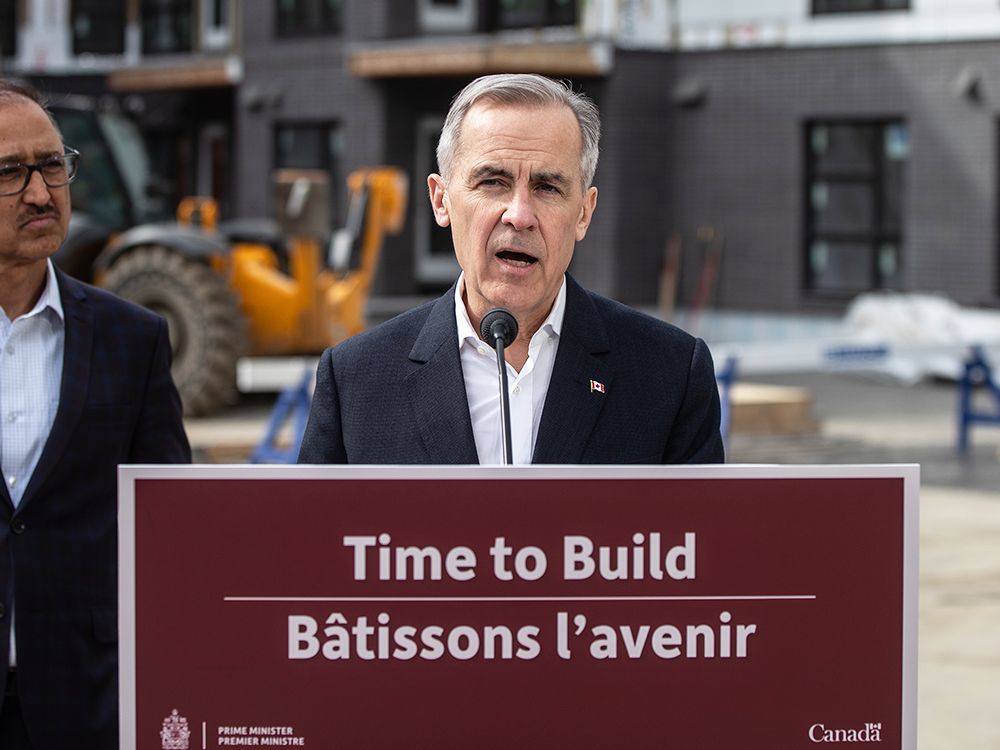
Prime Minister Mark Carney announces his plan to create Build Canada Homes, during a visit to Edmonton on March 20, 2025.

Over a 40-year-career, Leo de Bever has had a hand on the tiller inside eight financial institutions — in Canada, the U.S., Japan and Australia.

For nearly a decade, he ran the risk department at Ontario Teachers’ Pension Plan; he was hired to advise the Norwegians on managing their sovereign wealth; and when Alberta Investment Management corporation (AIMCo) was spun off as a Crown corporation in 2008, Leo was the guy recruited by the Alberta government to manage those sovereign wealth and pension assets.

All that experience inside the machine left him with an existential question about the machine: “How do you build innovation — and innovation incentives — into a bureaucracy?”

He’s asking that question again now, because I asked to speak to him about Mark Carney’s promise to launch Canada’s most ambitious housing plan since the Second World War. Build Canada Homes, a yet-to-be-created Crown corp., will get the feds back into the business of building affordable housing, including on public lands, and is set to spend billions to “catalyze” the housing industry and finance “innovative” prefabricated home builders.

De Bever, a PhD economist born in the Netherlands now living in a small community outside Calgary, shares Canadians’ anxiety about housing affordability, especially the intergenerational divide created by historically unprecedented income and wealth inequality.

“Young families (those under 35) were equally represented across income quintiles (statistics) in 1975,” Leo shares in a recent conversation. “Today, they make up two-thirds of the bottom 50 per cent of lower-income households in Canada.”

So Leo’s not questioning the government’s ambitious plan. But he fears the Ottawa machine may not be up to it.

“Who in government has done innovation?” he asks, and gives an example of what he means:

To make housing affordable, you have to bring the costs down by about 50 per cent, Leo posits. “If you give public land, as in Crown-owned land, that property has to be in the right place, or you have to do a swap of some sort,” Leo observes. “Yeah, OK,” he says, “I just think that it will be very hard for traditional bureaucrats to do this.

“They’re just setting up another company (Build Canada Homes) and giving it a mandate,” Leo suggests. “It’s going to take 18 months,” he predicts, “and then they’ll be so-so; they’ll work with large companies because they don’t want a failure on their hands.”

Leo knows governments sometimes have a role — he cites Alberta premier Peter Lougheed’s decision decades ago to step in and co-operate with the private sector to develop oil sands technology. And he knows Canadians need more affordable housing and he’s personally investing — his own time and resources — into community-led projects to achieve that end.

In the northern Alberta town of Athabasca (home of the first post-secondary in Canada to specialize in distance education), Leo is working with the municipal council on a prefab housing project; in a rural B.C. community, he’s helping to advance an affordable recreational community overlooking a lake; in locations outside Calgary, he’s devising new ways to build accessible and health-care supported retirement subdivisions.

“There is a view that stability in home prices can be achieved by replacing urban core detached homes with more densely spaced condominiums or apartment towers,” Leo explains. But he’s not convinced that’s a solution: “The rising average cost of transportation, utilities and other urban infrastructure under already congested conditions could easily offset that effect,” he says.

Instead, Leo’s encouraging investment in housing outside of urban centres, in locations where available land offers a cost advantage and telecommunication infrastructure is reliable. In towns like Athabasca, Alta., Leo suggests “lower-cost modular homes can be brought to an attractive physical environment, as a catalyst for employment, long-distance workers, and economic activity.” What he’s envisioning in Athabasca could be a proof of concept for the Carney government’s Build Canada Homes.

Modern telecommunication technology has diminished the advantage of concentrated urban centres, he adds, “making it easier to adopt a ‘polycentric’ model, where jobs and activities can be moved to satellite communities, where land is less costly.”

With a smile, Leo assures me he isn’t necessarily suggesting companies follow in Elon Musk’s footsteps — relocating Tesla from California to set up a company town in a lower-density, lower-cost land base in Texas.

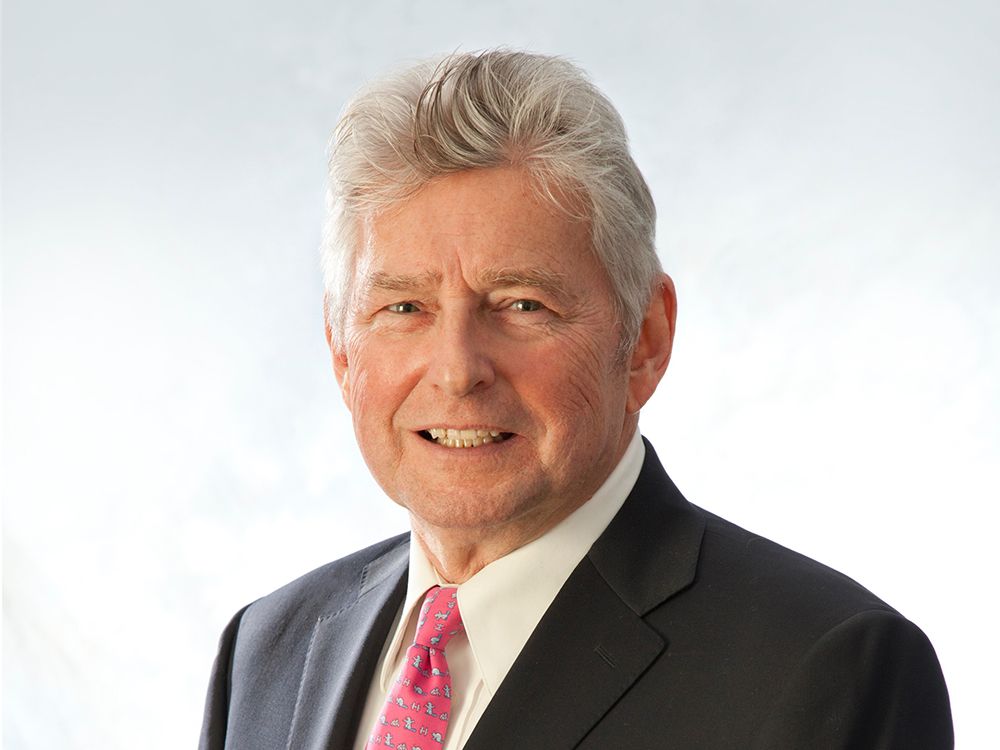
 Leo de Bever, former head of AIMCo in Alberta, is skeptical of the view that “stability in home prices can be achieved by replacing urban core detached homes with more densely spaced condominiums or apartment towers.”

Finding housing solutions across Canada — community by community — will require fresh thinking. And based on a career spent on the inside of big pension companies and government financial institutions, Leo’s skeptical of bureaucrats’ motivation to innovate. “They stay stuck in a mould,” he asserts, “that’s the problem with big companies and big government.”

How did a guy steeped in decades of big finance become a champion of “small is beautiful”? Leo doesn’t bristle at the question; he even admits to getting caught up in the “bigger is better” culture.

“At AIMCo, I had the same issue, and I only realized afterwards. If you are within that organization and you spend your time on $10 million, $20 million worth of investing, there is a notion that you’re not earning your keep. Because that’s the culture,” he says with a shrug.

“It even was the case when I did something innovative for Teachers,” he continues. “Infrastructure wasn’t a thing when I started doing it, and my colleagues hated it … on the fixed income side, they said, ‘Oh, too much risk,’ and on the private equity side, ‘Not enough money.’”

Notwithstanding, Leo persisted and invested in infrastructure. “Bob Bertram (OTPP’s first chief investment officer) let me do it,” Leo recalls, “and I realized that without the Bob Bertrams of this world, these organizations don’t change.”

National Post

Our website is the place for the latest breaking news, exclusive scoops, longreads and provocative commentary. Please bookmark nationalpost.com and sign up for our newsletters here.


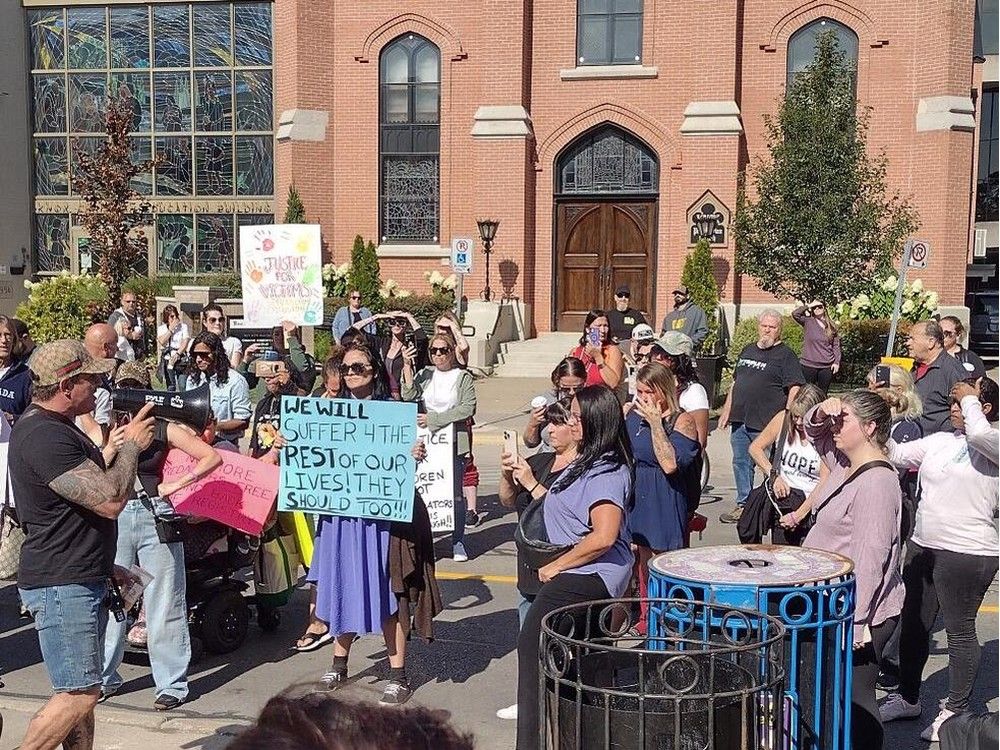
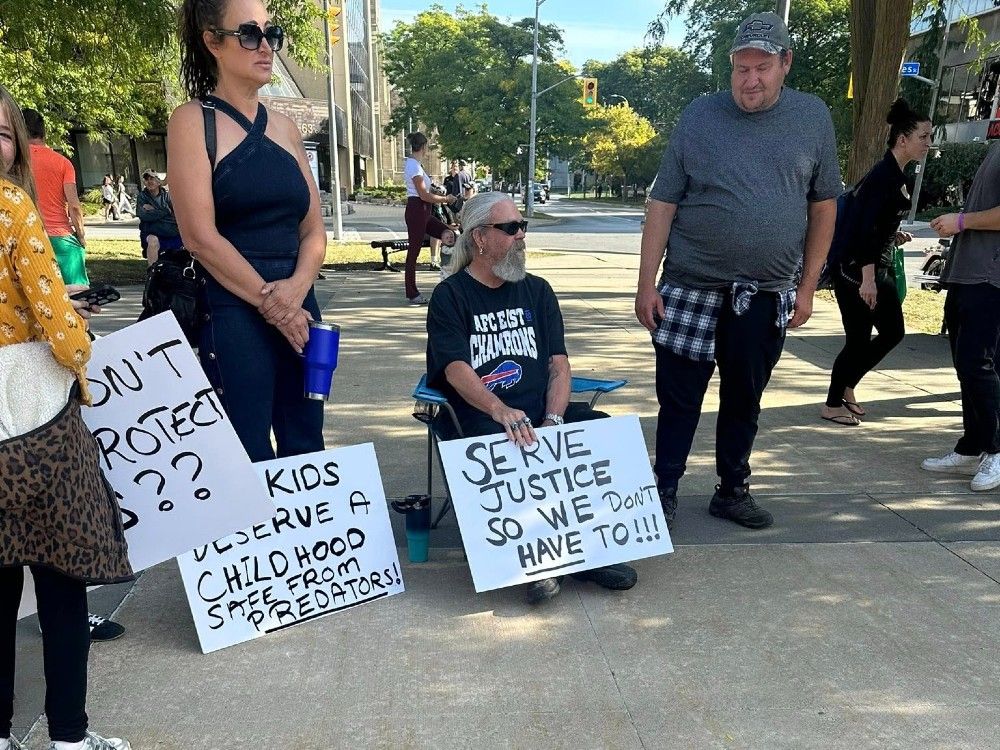
People protest in St. Catharines outside the courthouse hearing the case of Daniel Senecal, who is charged with the alleged sexual assault of a three-year-old girl in an Aug. 31 incident in Welland.

Women who attended an extraordinary protest outside an Ontario court appearance this week by a man who allegedly broke into a home, choked and sexually assaulted a young child say they aimed to push authorities to ensure the child gets justice.

The case, in Welland, Ont., has drawn special attention because of the horror of the crime — the victim was under five years old, attacked in bed as the parents slept — and the fact that the suspect was on probation at the time for a similar offence.

“It should disturb people. It should make decision-makers feel uncomfortable and guilty. It should be obvious that the system is flawed and this must spark change,” Jackie Heximer said.

 A mother of two and sexual assault survivor Jackie Heximer posted photos from a protest she attended in St. Catharines, Ont. on Sept. 10, 2025, against the suspect in the sexual assault of a child.

The protest outside the St. Catharines courthouse drew hundreds of people and led police to shut the street as the suspect attended a bail hearing.

Heximer, who is a mother of two young girls and a sexual assault survivor, said it was crucial that the case not “fade into silence.”

“This case hits painfully close to home. Survivors know too well the feelings of powerlessness and shame that follow these crimes,” Heximer told National Post. “That is why we rely on those in power to protect the most vulnerable members of our community and ensure that offenders like this are kept away from society permanently.”

One of the event’s organizers, Alicia Googoo, told National Post that the idea for the event was sparked after the “whole community was expressing their outrage on social media.”

“I thought maybe we could come together in a form that would help make change in hopes this child gets the justice she deserves,” she said. “I felt a sense of love and compassion in the crowd as victims of past sexual violence shared their stories of how the justice system failed them or their children.”

She said there were petitions signed by attendees that urged the Canadian government for change, and more than $2,100 was raised for the victim.

Heximer said another reason she attended the protest was to stand up for all victims “whose stories are not widely shared and who typically don’t receive the justice they deserve.”

 A sign that reads “we deserve to know” is shown from a protest in St. Catharines, Ont., attended by mother and sex assault survivor Jackie Heximer. She was there to protest for harsher punishment for offenders after a child was sexually assaulted in August.

She said the atmosphere was both “powerful and heartbreaking.” There was power in the unity and support for the victim, but it was heartbreaking because “so many of those in attendance were survivors themselves,” she said — “living proof of how deeply and widely the system has failed.”

She also condemned the fact that “predators are too often given a second chance” while victims are left with the life-altering consequences.

The suspect had reportedly been arrested in 2021 and faced similar charges. Court documents showed he was charged with the sexual assault of a minor, sexual interference of a minor and choking, CTV News reported. He was sentenced to 18 months in jail.

Public records indicate the suspect “was subject to a probation order at the time of the offence,” said Niagara Regional Police Chief Bill Fordy in a

statement posted on X

.

The case caught the attention of Conservative Leader Pierre Poilievre. On Sept. 11,

Poilievre hosted a news conference

calling for “jail, not bail to bring back safety for all Canadians.”

“As a mother, this is my worst nightmare,” said Heximber, adding that a child’s bed should be a safe space, never a place where they can be “subjected to such violence and horror.”

The suspect was identified by police as Daniel Senecal. He was taken back into custody after a court appearance via video link and the date of the hearing was pushed to Oct. 15, per local radio station 610 CKTB. According to CBC News, the date was moved to “give him more time to consult with a lawyer.”

Senecal is

facing five charges

, including aggravated sexual assault on a person under 16, assault, choking, and breaking and entering.

Our website is the place for the latest breaking news, exclusive scoops, longreads and provocative commentary. Please bookmark nationalpost.com and sign up for our daily newsletter, Posted, here.


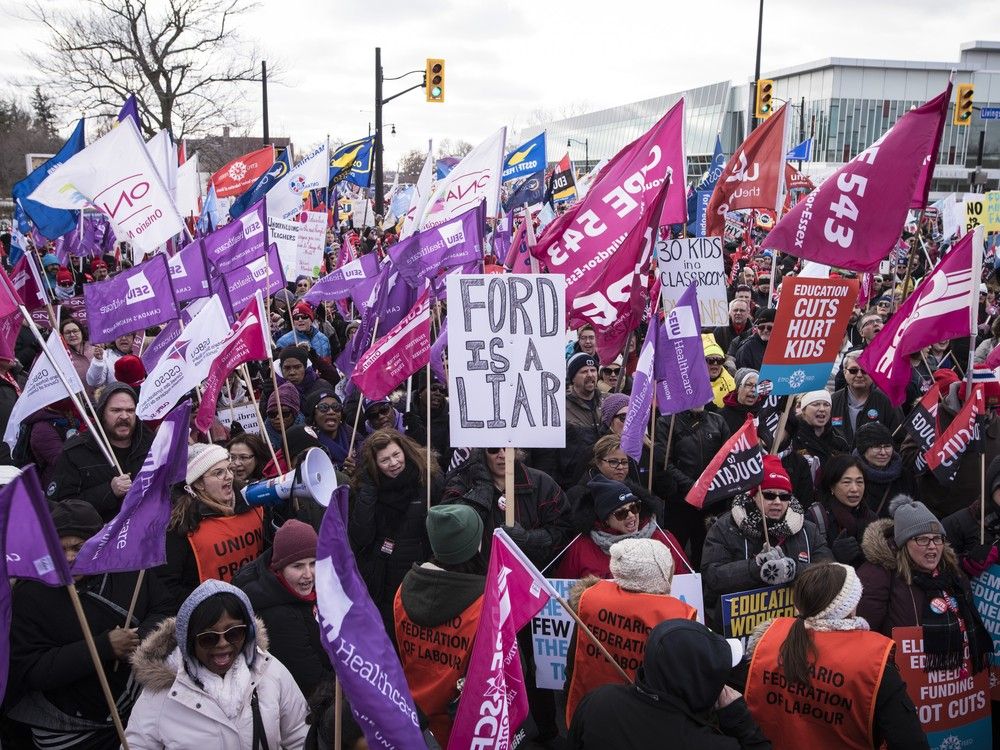
One Ontario union, LiUNA is leaving the Ontario Federation of Labour, in part because of the OFL's protests against the Ontario Progressive Conservative government.

A new fissure has appeared in the landscape of Ontario union politics. The Labourers’ International Union of North America (LiUNA) is leaving the Ontario Federation of Labour (OFL), stating that the OFL is engaging in “bad politics.”

In a

statement posted on LinkedIn

on Friday, LiUNA president Joseph Manincelli made his union’s case: “Recently the Ontario Federation of Labour and OPSEU HAVE ATTACKED the Skill Development Fund that has funded numerous LiUNA Training Centers and training, apprentice and mentorship programs that have empowered opportunities for marginalized communities, students, women in trades, youth at risk, second chance career paths and our indigenous partners. They have done so under the guise of protecting colleges.”

According to the province, the Skills Development Fund supports organizations looking to train or retrain workers. In a May 6 press release, the Ontario government announced almost $1 billion for it over the next three years for a total of $2.5 billion. In part, it is aimed at “reskilling” workers laid off because of U.S. tariffs.

Meanwhile there is a capital funding stream aimed at helping organizations build, expand or retrofit their training facilities.

Manincelli specifically addressed the OFL, OPSEU attacks on these facilities in his LinkedIn post: “To be clear, LiUNA has a strong partnership with our Colleges in Ontario and it is a disservice to create a conflict between private sector training centers and colleges.”

LiUNA’s business manager, Joseph Oliveira expressed similar sentiments in a letter sent to the OFL’s president, Laura Watson on Friday, formally notifying her of LiUNA’s withdrawal from the federation. (The National Post reached out to Watson for comment but has not yet received a response.)

Manincelli went on to say that the OFL is engaging in “nothing but bad politics” in its attacks on the Ford government. As a result, he continued, LiUNA won’t participate further in the OFL until it “starts treating private sector unions fairly, as opposed to favouring public sector unions to the detriment of LiUNA and its hundreds of thousand members.”

The LiUNA move has been welcomed by the Ontario government. Minister of Labour

David Piccini also wrote on LinkedIn

Friday.

“Organizations like LIUNA — who fight for their members and deliver strong, results-driven programs — are exactly the kind of partners we’re proud to support through the Skills Development Fund,” Piccini said. “Together, we’re protecting workers in these unprecedented economic times, while giving them the tools and training to land better jobs with bigger paycheques.”

LiUNA has previously endorsed Doug Ford and his Progressive Conservative government publicly, highlighting the Ontario government’s investments in skilled trades, training and infrastructure projects, and stating that the Ford government “shows up for them.”

It provided an

official endorsement

back in February before the provincial election. In a statement released at the time, Mancinelli said: “To date, Ford’s governments have invested over $60 million in LiUNA and their local chapters to boost skilled trades training across the province.”

That included a new training centre in Vaughan, Ont., aimed at helping “almost 100,000 people gain the skills and training they need to find good-paying jobs in construction. In addition, the union’s workers are involved in countless numbers of the more than $200 billion worth of publicly funded construction activity.”

Contrarily, the OFL has been highly

critical of Ford, attacking his government

over wages, public service cuts and privatization, arguing that Ford’s May 2025 budget “fails working Ontarians.”

Instead, the OFL argues, the budget was a “plan to reward Conservative insiders.” And counter to LiUNA’s appreciation for the government focus on skills development, the OFL says the Skills Development Fund “means little when the jobs being created don’t come with decent pay, security, or benefits.”

It shows a seeming preference for public sector workers, stating that “Ford continues to neglect … sectors that are key to our global competitiveness (such as) health care, childcare, public education, post-secondary, and public transit.”

The OFL has not been entirely alone. The

International Association of Machinists and Aeropsace Workers

argued, prior to the election, that the Ford government should have focused its efforts on combating the U.S. tariff threat, rather then spend money on another provincial vote.

In a statement released in late January, it said that more than 30 labour leaders from Ontario’s private, public, and trades sectors came together to demand action from Ford.

“A serious plan would include permanent investments in key publicly delivered services — not just in skilled training centres, but in restoring core post-secondary funding. Ontario needs immediate, ongoing support to ensure everyone has access to education and retaining in today’s changing economy.”

However, now there is a fresh rift amid Ontario labour with LiUNA’s withdrawal from the OFL.

Our website is the place for the latest breaking news, exclusive scoops, longreads and provocative commentary. Please bookmark nationalpost.com and sign up for our daily newsletter, Posted, here.

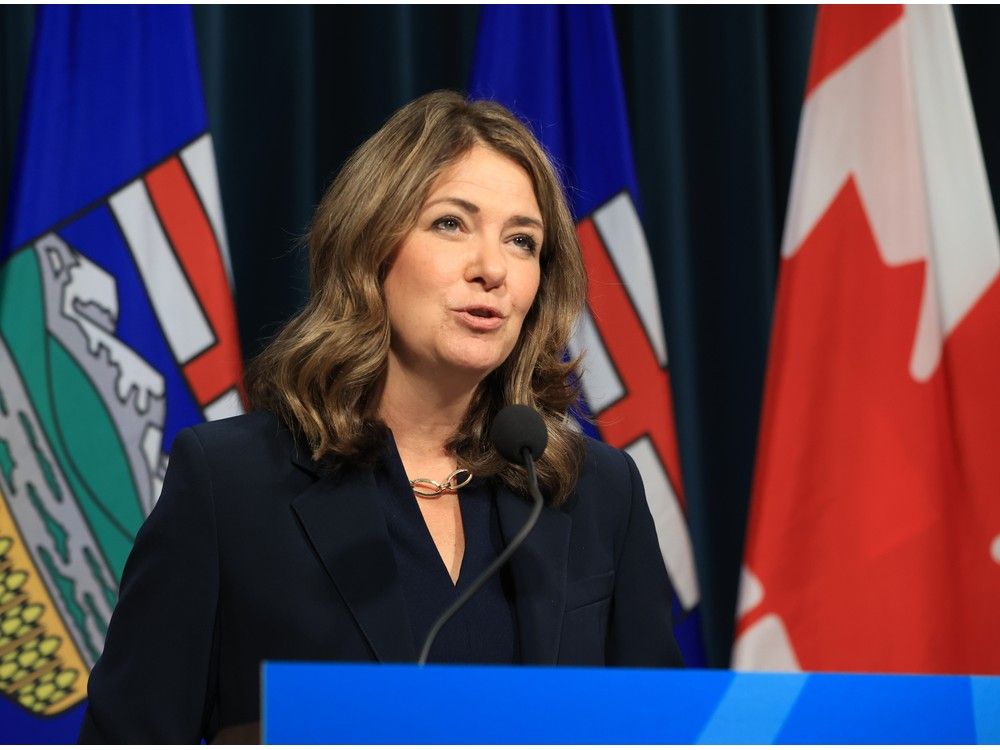
Alberta Premier Danielle Smith during an announcement in Calgary in August 2025. (Gavin Young/Postmedia)

Canada is unapologetically back in the resource extraction business. For Alberta Premier Danielle Smith, that’s great news.
When you look at the nation-building projects announced by Prime Minister Mark Carney this week, Premier Smith said in a Friday night interview, the “mines for gold and copper, the nuclear power installation, LNG Canada 2 — these are true resource extraction, revenue-generating projects.”
“It’s about generating revenue,” she enthuses. “This isn’t supposed to be an exercise in how do we spend more government money on public infrastructure,” she says, “It’s how do we create an environment so that the private sector will build resource projects and revenue-generating projects so that we can afford to pay for the public infrastructure.”
And getting a bitumen pipeline built can help pay the bills, she suggests, including the cost to decarbonize the oil that flows in that pipeline. “You have to have new revenue in order to pay for new spending,” she reasons, quite unlike “the model that Justin Trudeau put on the table which was nothing but cost and no benefits, all shut in and no expansion.”
This is the way she sees it: The carbon capture and storage network and pipeline proposed by the Pathways Alliance, a coalition of oilsands producers, “is going to cost somewhere between $10 to $20 billion.” Expensive, yes, “but if we get a new million barrel per day bitumen pipeline, that generates $20 billion per year in revenue, and if you are able then to have that operate year after year after year,” she emphasizes, “now you have a revenue stream to be able to offset whatever the cost will be of developing a new technology to decarbonize.”
Figuring out who pays to decarbonize the bitumen is a negotiation in progress, the premier acknowledges, but she doesn’t think it needs to hold up pipeline construction. “Honestly,” she says, “I think, really, if you want the truth, both of us (the province and Ottawa) are committed.”
“We benefit almost equally from new barrels getting to the market,” the premier reports; the feds earn corporate and personal incomes taxes, and the province earns royalties. “We’re all committed to doing it,” she posits, “the bigger issue is none of this can be paid for if we don’t have new production and new revenue.”
To shed a little light on the tone of her meeting this week with the prime minister, the premier shares a snippet of that exchange: “I said to him, ‘Guess what we’re looking for is a compromise.’ And he said, ‘I’m not. I’m looking for a win-win.’” She continues: “I just thought, ‘You know what? That’s the right attitude.’ He doesn’t want a win-lose. He doesn’t want a lose-lose. He wants a win-win.”
There has been so much bad-blood between Alberta and Ottawa, I find myself listening closely to the tenor of the premier’s voice, to gauge if her optimism is genuine.
While I recognize her unrelenting rallying cry — “We can get new production. We can get achievable emissions reduction targets. We can expand our influence, not only economically, but from a security point of view, globally” — I also want assurance this Carney-led resource extraction momentum is for real.
So I poke back. How is any of this grand strategy viable with an emissions cap in place? No pipeline company or energy producer is going to invest with a federal-government imposed ceiling on oil production.
“Not a lot of folks understand how pipelines get built,” Smith readily agrees. “How pipelines get built is companies go around to people who take oil out of the ground and say, ‘Hey, are you willing to pledge some barrels for this pipeline so I can go to the bank and get financing?’” An emissions cap means oil producers aren’t prepared to make those pledges.
“I know the prime minister wants to ensure that the Pathways project goes ahead, so there’s lower carbon emissions, but in order to be able to pay for that, you need to have new production, and to have new production, you’ve got to get rid of the bad laws,” she says, reiterating her wish-list for Ottawa.
“You’ve got to get rid of emissions caps, you’ve got to get rid of the greenwashing law, you’ve got to get rid of the tanker ban, and then all of those things will allow a pipeline company to go to those same producers and say, ‘Do you want to pledge some barrels?’ and they’ll say ‘yes.’”
While the premier isn’t saying she’s been told the emissions cap will go the way of the carbon tax — and other Justin Trudeau-era greening aspirations — she says, the prime minister “seems to signal that he is prepared to do that.”
Premier Smith sees opportunity for exports of Canada’s oil, in all directions. “If I had my druthers,” she says, “I’d have a million barrel a day pipeline going to Churchill, a million barrel a day pipeline going to the West Coast, and two million barrels a day going down to the U.S., because I want to double production.”
Even the International Energy Agency has realized they must modify their expectations for future oil demand “based on reality, rather than hopes and wishes,” she confidently reports, and points to OPEC’s latest forecasts for global oil consumption (123 million barrels per day by 2050). Given those outlooks, she predicts, ”there’s room for another 2 or 3 or 4 billion barrels per day of Canadian oil.”
“You’ve even got Europe saying, yes, there’s a market; we would like to buy more Canadian energy. We’ve already seen with TransMountain and the Coastal gas link and LNG Canada opening up; the Asian markets want us as well. And the Americans too have said they’d like to do a reboot on the Keystone XL concept.”
“With all of our friends and allies and neighbours saying, ‘Please, help us, so that we don’t have to rely on despotic regimes,’ how can we say no to that?” she rhetorically asks.
The premier’s enthusiasm is unbridled, but where’s her ubiquitous sense of urgency? Could she really be as sanguine as she sounds? Prime Minister Carney has hinted he’d like to see all the premiers gather in Winnipeg for the Grey Cup in November, she says, that’s when the second tranche of nation-building projects is to be revealed.
“My urgency is still there,” she admits. “I’m going to the ADIPEC Conference in Abu Dhabi in November, and it sure would be nice for me to have a platform there, to say Canada’s open for business again.” Before that, she’s got a Throne Speech to deliver in the Alberta Legislature. “It would be nice for the prime minister and I to have a joint announcement,” she hints, “well before the end of the year.”
And there’s that niggling risk of a referendum vote, if the petition initiated by former Alberta deputy premier Thomas Lukaszuk is successful. “He’s crafting his vote: Do you want to remain in Canada?” she explains. “But those are yes/no votes. So what’s the consequence if people are disgruntled and disenfranchised? He gets the signatures; and then people have the choice of voting yes or no.”
“Anytime you get an issue like that on the table, it could go either way, especially when emotions run high,” Smith cautions. “So I’m aware of the urgency. I have told the prime minister that Justin Trudeau created the separatist movement, and I think he (Carney) can take the air out of it, but we have to see action.”
If Lukaszuk’s petition is successful, Smith says the province will have a vote in the spring. “It would be far better for us to have demonstrated some real progress,” she suggests, “so people can feel confident in the relationship that Canada and Alberta have.”

Our website is the place for the latest breaking news, exclusive scoops, longreads and provocative commentary. Please bookmark nationalpost.com and sign up for our newsletters here.