



LP_468x60
on-the-record-468x60-white

A U.S. Customs and Border Patrol officer on the Maine-N.B. border.

A New Hampshire man is stuck in Canada after the U.S. Customs and Border patrol refused him reentry.

Chris Landry is a legal U.S. resident and a Canadian citizen. He lives in Peterborough, New Hampshire with his partner and five children, and is employed as a manufacturing machine operator.

On Sunday, he was stopped while trying to cross the border in Houlton, Maine. He and his three of his children (two under 18 and one aged 20) were visiting his father, grandmother and extended relatives in New Brunswick. He says this is an annual trip, with returns across the N.B.-Maine border. He was born in Canada and has lived in the “Granite State” since he was 3 years old, when his family moved there. But he never pursued becoming a U.S. citizen.

The CBP pulled him aside and questioned past misdemeanor convictions that date back to 2004 and 2007, he told the

Boston NBC News affiliate

this week. Under the American criminal justice system, a person can be charged with a felony or a misdemeanor, depending on the offence and its severity. Misdemeanors are lesser offence, resulting in lesser penalties.

Landry was charged with marijuana possession and driving with a suspended license. He was given 60-day sentences (both suspended) and fined for both offences, which he paid.

In the past, he said he would cross without issue. Border authorities would scan his green card, ask a few questions and send him on his way, Landry told New Hampshire newspaper,

The Keene Sentinel

.

However, after three hours at the border, the 46-year-old was told by the CBP that he wouldn’t be allowed back into the U.S. Instead, he was instructed to return to Canada and warned if he tried again to reenter the U.S., he would be immediately arrested. The only way for him to get back in would be to go before an immigration judge, Landry told NBC10 Boston from a relative’s home in New Brunswick.

The CBP told NBC Boston that “possessing a green card is a privilege, not a right, and under our nation’s laws, our government has the authority to revoke a green card if our laws are broken and abused. Lawful permanent residents presenting at a U.S. port of entry with previous criminal convictions may be subject to mandatory detention and/or may be asked to provide additional documentation to be set up for an immigration hearing.”

The CBP posted the same statement on its X account on Tuesday.

As a Canadian citizen, Landry couldn’t vote for president, but he says he supported Donald Trump. Now he blames the

Trump administration’s crackdown on immigration

for his dilemma.

“A misdemeanor shouldn’t be a deciding factor on the rest of my life,” Landry told the Sentinel. However, multiple convictions can, in some cases, be a reason not to grant a non-citizen entry to the U.S., according to American

federal law

.

After being contacted by Landry, New Hampshire Democratic Senator Maggie Hassan released a statement to the Sentinel: “Helping constituents navigate federal agencies and processes is a core function of Senator Hassan’s office. We can confirm that Mr. Landry reached out to our office and our constituent services team has been in touch with him. We won’t have any additional comment on specific details as is our general policy around ongoing constituent matters.” (The statement was not posted to Senator Hassan’s official website or her X account.)

This is not the first time a New England resident has faced trouble reentering the U.S. from eastern Canada. In April, a New Hampshire real estate attorney said he was returning home when he was

detained at the border

without an explanation.

Bachir Atallah and his wife, Jessica Fakhri, were traveling back from a quick family trip when they say U.S. Customs and Border Protection stopped them while reentering via the Quebec-Vermont border.

They had been visiting Canada for the weekend, but “on the way back, I was treated like a criminal,” Atallah told

NBC Boston

.

Atallah received his legal training in Maine,

founded his own law firm

and speaks English, French, Arabic and Russian. He has been a U.S. citizen for 10 years.

The U.S. Customs and Border Patrol

defended its actions

by calling Atallah’s account “blatantly false and sensationalized.”


Our website is the place for the latest breaking news, exclusive scoops, longreads and provocative commentary. Please bookmark nationalpost.com and sign up for our daily newsletter, Posted, here.



A Palestinian flag flies near the Peace Tower during a march for Gaza rally on Parliament Hill in Ottawa on Saturday, Nov. 4, 2023.

The embassy of Israel to Canada says that recognizing Palestinian statehood “at this time” would be a “grave mistake.”

“Such a step would amount to an unconscionable reward for the heinous Hamas attack on Israel on October 7, 2023 — an attack marked by mass murder and the brutal kidnapping of innocent civilians, including Canadian citizens,” it said in an emailed statement to National Post on Wednesday.

“Rather than advancing peace, it would legitimize violence and severely undermine international efforts to restore stability and security in the region.”

The statement comes after chief representative of the Palestinian General Delegation to Canada Mona Abuamara told The Canadian Press she feels that Canada is getting closer to formally recognizing Palestinian statehood. In an article published on Wednesday, she said the recognition would “set in stone for Canadians the rights of the Palestinian people to self-determination.”

Abuamara has been in the role, which is to promote and strengthen relations between Palestinians and Canada, since 2021. It is coming to an end after her four-year term. She was appointed by a government that only has control of the West Bank, not the Gaza Strip, CP said. She is still pushing for Canada to take a harsher stance on Israel’s actions in Gaza, and has commended Canada for its recent use of “tougher language.”

“Accountability means everything to the Palestinian people. That’s all we are looking for,” said Abuamara. “Canada could have done better and must do better.”

Canada’s approach to the conflict in recent years has been to support Israel “without budging,” she said. Meanwhile, the Palestinian territories received funding for smaller projects, such as police training. The mentality was that the Palestinian territories would be “managed under the occupation,” she said, adding that she was looking to Canada to “get rid of that occupation instead, so we could make our own money.” Israel maintains that it withdrew from Gaza in 2005.

Abuamara praised the Carney government for making “stronger, clearer statements,” and mentioned comments made by Foreign Affairs Minister Anita Anand.

Speaking to reporters in May

, Anand said Israel used food as a political tool and that more than 50,000 people have died as a result of Israel’s “aggression.” That number, which cannot be independently verified, was provided by the Hamas-run Gaza health ministry.

In an

Instagram post on June 3

, Senator Marilou McPhedran thanked Abuamara for her “hard work and advocacy.” McPhedran, along with other senators from Quebec, Ontario, Manitoba, British Columbia and Saskatchewan, urged the Canadian government to recognize a State of Palestine, among other demands, in a June 25 news release.

“Canada needs to just stand by international law,” Abuamara told CP. “It’s not about Palestine. It’s about the international rules-based order, about human rights, about values and principles.”

The

federal government said in May 2024

it is “prepared to recognize a Palestinian state at the time most conducive to lasting peace, not necessarily as the last step along the path to achieving the two-state solution.”

Prime Minister Mark Carney responded to questions about the Middle East during an interview with CNN in late June.

“Can there be a lasting peace in the Middle East without peace in Gaza, that takes into account Gaza and West Bank and effectively working on a path to a Palestinian state? I would agree with all of those,” he said. “(Palestinians) living side by side in security with Israel — a Zionist, if you will, Palestinian state that recognizes the right of Israel not just to exist, but to prosper and not live in fear — we can’t have peace unless we move towards that.”

Abuamara said talks with other countries, including a recent one between Canada, Qatar, and Mexico, are helping to push Canada toward recognizing Palestinian statehood. Although a United Nations conference set to be organized by France and Saudi Arabia was cancelled due to the Israel-Iran war, she said there would be conversations about how to achieve that goal when it’s rescheduled.

At a White House dinner this week, Israeli Prime Minister Benjamin Netanyahu was asked whether or not he believed there could be an independent Palestine.

“I think Palestinians should have all the powers to govern themselves, but none of the powers to threaten us and that means that certain powers, like overall security, will always remain in our hands,” he said.

“After October 7th, people said the Palestinians have a state, a Hamas state in Gaza, and look what they did with it. They didn’t build it up. They built down into bunkers, into terror tunnels after which they massacred our people, raped our women, beheaded our men, invaded our cities and our towns, our kibbutzim and did horrendous massacres, the kind of which we didn’t see since World War Two and the Nazis, the Holocaust. So people aren’t likely to say, ‘Let’s just give them another state.’ It’ll be a platform to destroy Israel.”

Carney’s office did not respond to National Post’s request for comment.

Our website is the place for the latest breaking news, exclusive scoops, longreads and provocative commentary. Please bookmark nationalpost.com and sign up for our daily newsletter, Posted, here.


Brad Marchand of the Florida Panthers skates with the Stanley Cup after defeating the Edmonton Oilers in Game 6 of the NHL hockey Stanley Cup Final Tuesday, June 17, 2025, in Sunrise, Fla.

No Canadian NHL team has won a Stanley Cup in 32 years, meaning no Canadian NHL city has hosted a Stanley Cup parade for its hometown team in more than three decades.

But one Canadian city, too small to host an NHL team, is in early discussions for what could be its remarkable sixth Stanley Cup parade since 2007.

Halifax has produced some of the most exciting — and successful — hockey players of our time. And with them has come a tradition of bringing the Cup to their NHL-less hometown for parades that can draw tens of thousands of people.

Pittsburgh Penguins captain Sidney Crosby brought the coveted National Hockey League trophy back to his hometown of Cole Harbour, a suburb of Halifax, and toured it around the city, in 2009. He then repeated it in 2016, and again in 2017.

“All three of his parades were unbelievable,” Phil Pritchard, the “Keeper of the Cup” and legendary Hockey Hall of Fame curator, said in a recent interview.

“Most guys don’t really have parades and things like that. They have little town celebrations or community things. But Halifax went all-in.”

An estimated 25,000 people attended Crosby’s first hometown parade in 2009, with fans reportedly lining up 10 deep in some places to cheer on their hockey hero.

A similar parade route for Crosby in 2016 drew about 30,000 people. And when Sid the Kid was the marshal for the city’s 2017 Natal Day parade, that number reportedly doubled.

“What I found amazing about it was the people who came out in support, not just to watch the parade, but volunteered, that helped with security, that just helped out,” Pritchard said.

Thousands of people also showed up for Nathan MacKinnon’s 2022 parade in Halifax when he won the Stanley Cup with the Colorado Avalanche, which Pritchard dubbed “equally as amazing” as the Crosby celebrations.

“Not to take anything away from Sidney or Nathan, but maybe it’s the people of Halifax – they’re hockey crazy,” Pritchard said. “And they’ve got two of the best players in the world playing, so maybe it all falls in together.”

 Pittsburgh Penguin captain Sidney Crosby lifts the Stanley Cup over his head as thousands of hockey fans watch in Cole Harbour, Nova Scotia, Saturday, July 16, 2016.

Pritchard’s quick to point out that Joe DiPenta was the first hockey player to bring the Stanley Cup back to his hometown of Cole Harbour in 2007, as a member of the Anaheim Ducks. But his celebrations and parade were “a lot smaller,” Pritchard said.

Official Stanley Cup parades have been going on for more than a century. The first one the Hockey Hall of Fame could confirm marched down Winnipeg’s Main Street after the Winnipeg Victorias won the Cup in 1896, three years after it was first awarded.

For the past 30 years, players on Cup-winning teams each get at least a day with the storied trophy, to do with it as they please.

This year’s Cup champion, the Florida Panthers, has 100 days with the Stanley Cup, from the night they won it, June 17, until the NHL’s opening night in early October.

One of the breakout stars of this year’s Panthers is Halifax’s Brad Marchand. He won the Cup in 2011 with the Boston Bruins, but chose to celebrate with smaller events at Halifax City Hall and a visit to the local children’s hospital.

“He didn’t have a parade,” Pritchard said. “Not a lot of them do actual parades. The community has to get that going and Halifax has been great at it.”

The 37-year-old right winger, who hails from the Halifax suburb of Hammonds Plains, deserves a parade, according to Jason Wilson, who teaches a course about hockey in Canadian history at the University of Guelph.

“Marchand has proven himself to hockey fans everywhere. He has even convinced long-suffering Leafs fans like myself that he’s the real deal,” said Wilson, co-author of Lord Stanley: The Man Behind the Cup.

“His commitment to focusing on the game and shredding — though perhaps not altogether — his sometimes-bizarre non-hockey play on the ice, is a declaration of maturity. When you consider the Four Nations Cup and this past Stanley Cup playoffs, I think there’s an argument to be made that he has to be included among the top five most impactful players of 2025. An impact that surely has the good people of Hammonds Plains, N.S., planning a parade route for their ice warrior.”

 Colorado Avalanche forward Nathan MacKinnon holds up the Stanley Cup during his parade in Halifax on Saturday, August 20, 2022.

Marchand scored six goals in five games for the Panthers during the 2025 Stanley Cup Final, including game-winning goals in both of their road wins, to help Florida take their second straight championship against the Edmonton Oilers.

“Brad doesn’t have a date picked yet” for his personal day with the Stanley Cup, Pritchard said.

That begs the question: should Halifax throw Marchand a parade?

“It takes more than one guy to have the parade,” Pritchard said, “the community’s got to get behind it.”

Halifax Mayor Andy Fillmore sounds keen on hosting a Marchand parade.

“Brad Marchand is a hometown legend and now a two-time Stanley Cup champion and Halifax couldn’t be prouder,” Fillmore said in an email.

“As mayor of Halifax, I’d love to welcome Brad home to celebrate this incredible win, with the Cup, of course. We’re in early discussions at the city about how to help make that happen. It’s entirely up to him, but if he’s game, we’d be thrilled to host him here in Halifax this summer.”

Our website is the place for the latest breaking news, exclusive scoops, longreads and provocative commentary. Please bookmark nationalpost.com and sign up for our daily newsletter, Posted, here.


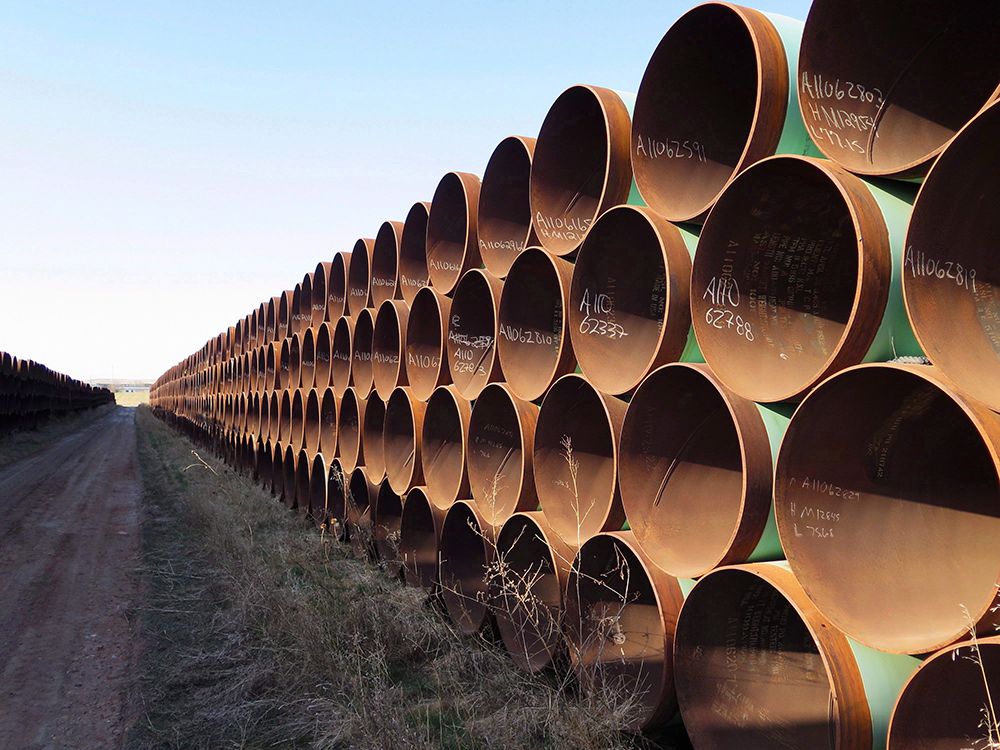
Hundreds of kilometres of pipes meant for the Keystone XL pipeline lie in a yard in North Dakota. Canada agreeing to go back to Keystone XL is “sort of like going back to an abusive partner,” one observer says.

WASHINGTON, D.C. — It’s “build, baby, build” versus “drill, baby, drill.”

Prime Minister Mark Carney has promised to transform Canada into an “energy superpower.” His build-baby rallying cry for a construction boom even echoes U.S. President Donald Trump’s drill-baby slogan for increased oil and gas. But when it comes to a new pipeline for Canada, their two visions could clash.

“Canada has a tremendous opportunity to be the world’s leading energy superpower, in both clean and conventional energy,” Carney said in April. “We can lead the energy transition while ensuring affordable energy at home and building the strongest economy in the G7.”

The prime minister

said this month that it’s “highly, highly likely” that a new oil pipeline to the Pacific Coast

will be proposed as a nation-building project and fast-tracked under new federal legislation aimed at accelerating projects of “national interest.” Boosters of the pipeline plan see Canada maximizing its oil export revenues and diversifying its customer base after decades of being captive to U.S. buyers, perhaps reshaping North American energy flows.

Trump, meanwhile, has said he wants to resuscitate the Keystone XL pipeline, the long-contested project that was supposed to carry nearly a million barrels of Alberta oil a day to the U.S. Midwest. He promised “easy approvals” for investors willing to try it again, after it was blocked twice by two different Democratic presidents and its original backer, TC Energy, gave up.

Any new pipeline will face political and regulatory hurdles on both sides of the border, and in March Trump

hit Canadian oil imports with a 10 per cent tariff.

The pipeline politicking could deepen the trade-war rift between Ottawa and Washington. It could also unexpectedly reshape the future of a North American energy market that has been increasingly tightly integrated since the middle of the last century.

Trump or Tidewater

Last weekend, while attending the Calgary Stampede, Carney said that Ottawa is prepared to prioritize a new pipeline from Alberta to the Pacific. During the recent federal election, he had promised to reduce Canada’s reliance on the U.S. — a whopping 93 per cent of Canada’s crude oil is shipped south of the border each year — by launching infrastructure projects and diversifying to new markets. Ottawa is keen to reduce Canada’s dependence on a single customer, especially amid Trump’s trade war.

Building a new pipeline would signal that Canada is getting serious about reaching Asian markets with its oil. China has become

the second-largest buyer of oil shipped through the new Trans Mountain expansion

, which opened just over a year ago (the U.S. is still buying the most). And the extra market access has shrunk the typical discount Canadian oil long had to give its sole buyer by around a third.

Getting more efficient at producing crude oil while ensuring sales go to more than just one export partner gives Canada “a little more stability,” said Graeme Thompson, a senior analyst with Eurasia Group’s global macro practice.

But it could also annoy Trump, who puts a premium on loyalty to the U.S., said Kent Fellows, a professor of economics at the University of Calgary School of Public Policy, who specializes in energy issues.

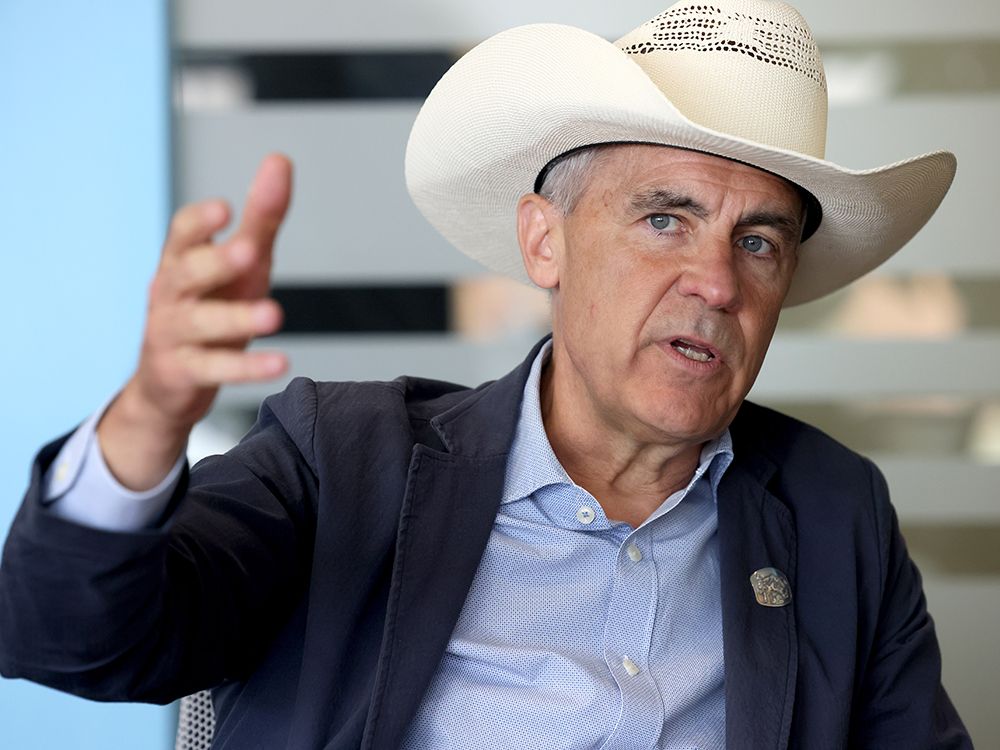
 Prime Minister Mark Carney has vowed to transform Canada into an “energy superpower.”

If building the pipeline is all about supplying demand in new markets without disrupting the flow to the U.S., then “that’s not really threatening to the United States in any way,” said Dan Stein, a former senior advisor at the Bureau of Energy Resources for the U.S. State Department. But if the idea is to divert supplies away from the U.S., “then it’s a different story.”

Washington “might not love the politics of Canada saying ‘Hey, we’re going to find some other export partners’,” added Thompson. “But the amount being exported to the U.S. has gone up substantially in recent years, and there’s no reason to think that would decline.” On the other hand, if China becomes one of those export markets for Canadian energy, that could cause a bigger diplomatic challenge, he warned.

But Carney isn’t the only leader with pipeline dreams.

Keystone to success?

Trump suggested in February that he wanted to revive the Keystone XL project. The president sees it as a way to strengthen the American energy security market by ramping up oil deliveries from Canada while reducing U.S. reliance on oil imports from volatile regions around the world.

But Trump’s push for Keystone XL also fits with a broader strategy to create a bargaining chip in U.S.-Canada trade relations. By signalling support for the pipeline, Trump is offering Carney a potential win — with expanded access to the U.S. market — in exchange for concessions.

President Joe Biden cancelled Keystone XL in 2021 (after Trump approved it in his first term, after president Barack Obama blocked it in his second term). So promoting it again has the added benefit for Trump of undermining his predecessor’s legacy. In February, Trump urged TC Energy to come back to the plan and “get it built — NOW.” But TC has since spun off its oil business and the subsidiary has said it’s not interested.

Resurrecting Keystone XL would be a “tougher decision for Carney than it would be for (Alberta Premier Danielle) Smith,” says Fellows, because Carney is supposed to balance the interests of all provinces. Smith, meanwhile, is representing Alberta’s interest, and crude oil is the province’s biggest sector.

Thompson isn’t so sure. “If there was an economic case for (Keystone XL), if there was a private actor who came and said ‘let’s resuscitate this project,’ in the current environment, maybe there’s a better chance of it getting done,” he says.

 Prime Minister Mark Carney and U.S. President Donald Trump in Alberta for a G7 meeting, June 16, 2025.

Even if Trump and Carney could agree on a path forward for Keystone XL, it would still be a struggle to get the pipeline built. Government permits have expired and initial construction has been dismantled. Still, with the plan well advanced, it wouldn’t start from scratch.

But Canada agreeing to go back to Keystone XL is “sort of like going back to an abusive partner,” Fellows said, given the political football it was made into by Democratic and Republican presidents.

And something else Carney and Trump have in common is it seems they’re both racing to maximize their country’s strategic position as they tussle over trade. For Trump, a revived Keystone XL pipeline locking in more Canadian oil for U.S. use must look like an advantage. With no one eagerly stepping up to build it, Carney might be just as happy if it stays dead.

National Post

tmoran@postmedia.com

Our website is the place for the latest breaking news, exclusive scoops, longreads and provocative commentary. Please bookmark nationalpost.com and sign up for our politics newsletter, First Reading, here.


Molten copper is poured into molds at the Horne copper smelter in Rouyn-Noranda, Quebec.

OTTAWA —

U.S. President Donald Trump’s vow this week that he will impose heavy tariffs on copper imports

on Aug. 1 is of particular cause for concern in Quebec, which harbours Canada’s only copper smelting facility and a major refinery that do significant business across the border.

“There’s an impression of déjà vu,” said Emmanuelle Toussaint, president and CEO of the Quebec Mining Association. “Since the start of the year, there have been on several occasions declarations made about tariffs, and some of them have materialized.”

“Our first reaction is to say that we will follow the situation closely,” she added. “We’re really in a context where we are vigilant and preparing for this possibility.”

Industry players told National Post they are keeping a close eye on when Trump will sign an executive order imposing the tariffs, when they will come into force, whether they’ll be at the 50 per cent rate Trump promised, and how they could potentially affect both countries’ deeply integrated structures.

“Today we are doing copper,” Trump declared to reporters covering his cabinet meeting on Tuesday. “I believe the tariff on copper, we are going to make it 50 per cent.”

In February, the president

launched investigations under Section 232 of the Trade Expansion Act of 1962

into multiple products, including copper and pharmaceuticals, citing national security concerns.

The Commerce Department investigation was originally set to conclude by November 2025.

On Wednesday evening, Trump wrote on his social media platform Truth Social the tariffs would be effective Aug. 1.

Pierre Gratton, head of the Mining Association of Canada, said those tariffs would not have a great effect on copper mines, many of which are in British Columbia, as they sell to other markets in Europe and Asia. But he said it was concerning for the “midstream” operators in Quebec who refine and smelt copper.

The province is home to the Horne Smelter in Rouyn-Noranda — the only copper smelter in the country — and to the Canadian Copper Refinery (CCR) in Montreal East. Both facilities are owned by the Swiss multinational Glencore, which declined an interview for this article.

“Canada and the United States benefit from a robust and highly integrated copper supply chain — one that Glencore plays an active part in,” said Fabrice de Dongo, spokesperson for Glencore Canada, in a written statement.

“This is an important issue for our business, and we continue to watch developments closely,” he added.

In essence, Horne Smelter processes concentrate and recycled copper from mining operations and third parties, including from the U.S. The material is then shipped to CCR to be transformed into copper cathodes and sold on world markets, according to Glencore.

The U.S. only has a few active smelters in Utah and in Arizona. Sung Choi, metals and mining analyst at BloombergNEF, said it would take two to three years to build up more American smelting capacity.

Jean-Denis Charest, CEO of the Chamber of Commerce in Montreal East, said that CCR creates more than 1,300 direct and indirect jobs and generates around $300 million in economic benefits for the Montreal region alone.

“Of course, this is worrisome, but at the same time, we have to keep a cool head because there are lots of changes and lots of negotiations at play,” he said of the tariffs. “That being said, what happened in the steel and aluminum sectors is making me a bit more worried,” he said referring to

mass layoffs and production cutbacks in those sectors

after Trump raised tariffs to 50 per cent tariffs on Canadian aluminum and steel in June, from 25 per cent in March.

“We find ourselves in a movie in which we have already played but which is very problematic, and which will weaken our copper supply chains in North America,” Charest said.

The federal government has so far refused to comment on the copper threats until Trump has signed an executive order to enforce the tariffs and more details are available.

Toussaint, from the Quebec Mining Association, said it is still too early to speculate on job losses in Quebec should these new tariffs on copper move ahead. But she said prices are sure to jump if the U.S. imposes them and even more if Canada decides to retaliate. Copper prices this week have already hit record highs in the U.S., surging 13 per cent on Tuesday.

That means a spike in prices for electrical wires, telecommunications and electronic devices, but also plumbing, machinery, and construction materials, Toussaint said.

Prime Minister Mark Carney has already said he is prepared to match tariffs on steel and aluminum should Canada and the U.S. not come to a new economic and security agreement by July 21. But Toussaint said Carney should spare copper from any counter tariffs because the two countries’ supply chains are so heavily integrated.

Charles Cooper, head of copper research at Wood Mackenzie, agreed retaliation would be “counterproductive.” “I think once you start going into tit for tat, in that sense, eventually, everybody’s going to lose out,” he said.

Cooper said Carney probably recognizes that the U.S. might receive some weaker economic news over the next month or so, such as higher inflation numbers, which could make it a lot more difficult for Trump to continue hammering more tariffs.

“Once the reality sort of sets in… it’s a bit of a waiting game as well.”

— With additional files from Tracy Moran in Washington.

National Post

calevesque@postmedia.com

Our website is the place for the latest breaking news, exclusive scoops, longreads and provocative commentary. Please bookmark nationalpost.com and sign up for our newsletters here.


Along with facing

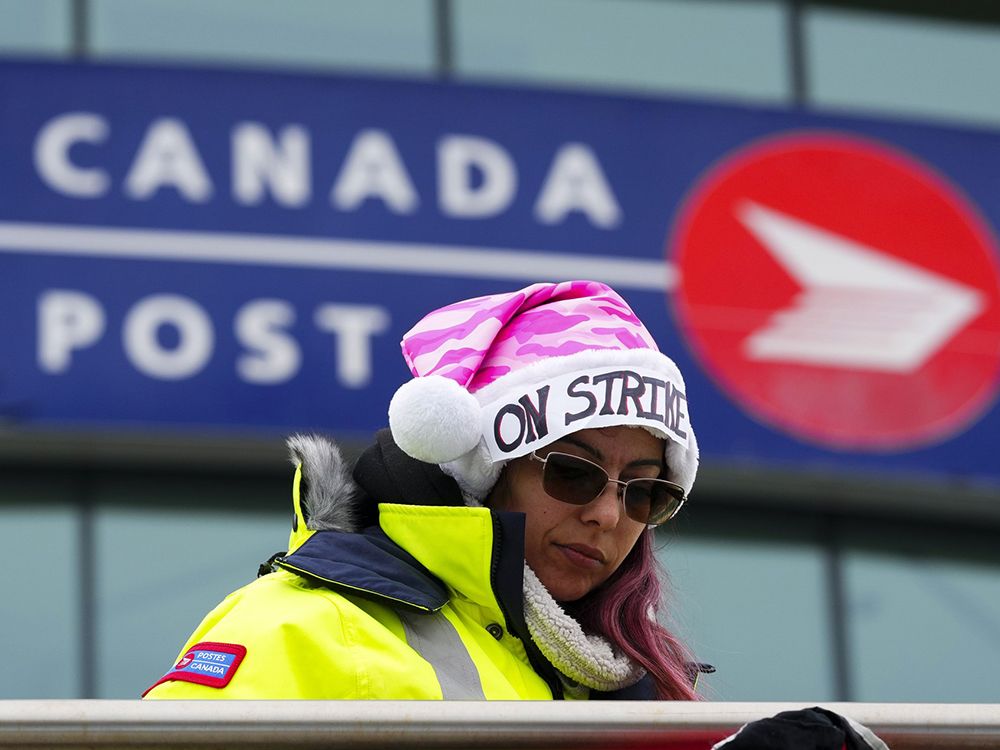
OTTAWA— With Canada Post facing a dire fiscal future, the federal government is taking the first steps towards a possible overhaul of its mandate.

Public Services and Procurement Canada, the department responsible for Canada Post Corp. and the charter that dictates how often it delivers letters and parcels, is planning to launch consultations about the future of the Crown corporation.

“The goal is to engage Canadians and stakeholders to redefine the government’s service-oriented vision for Canada Post, in a context where the postal industry landscape has changed, the needs of Canadians have evolved, and the volume of mail and letters has declined significantly to the point where Canada Post’s sustainability has been undermined,” reads a department notice.

It said the consultations are meant to “Inform the analysis of the future of Canada Post and make recommendations to (the) cabinet.”

National Post requested clarification from the office of Joel Lightbound, the minister of the department, but did not receive one on Wednesday.

The department says the consultation plan has not yet been finalized, but it has identified this fall as the time when it could begin consultations.

“As part of its portfolio responsibilities, Public Services and Procurement Canada is exploring options to modernize Canada Post’s operations to best suit the needs of Canadians,” wrote ministry spokeswoman Nicole Allen, in a statement.

“Canada Post has a mandate to provide quality postal services to all Canadians in a secure and financially self-sustaining manner. Canada Post must be efficient and financially sustainable for the long term, and the government is exploring all options to that effect.”

A spokeswoman for Canada Post said the Canadian Postal Service Charter must be reviewed every five years. However, the last time the federal government did so was in 2018, meaning a review is now two years overdue.

The Crown corporation has underlined the need for the government to make major changes to the charter to alter the service standards that mandate Canada Post deliver mail to Canadians five days a week, given how few Canadians now send mail. It has also flagged concerns over rules preventing rural post office closures and stipulating the geographic density of postal outlets.

The current mandate has largely been unchanged since 2009, according to the corporation. It cited the mandate in a submission to the Industrial Inquiry Commission,

tasked earlier this year with handling a dispute between the corporation and its unions.

In it, Canada Post said the mandate has become a hindrance that prevents the postal service from modernizing.

Ian Lee, a professor at Carleton University’s business school, who has authored two reports on Canada Post’s situation over the past decade, sees the upcoming consultation as the “front end” of a process to restructure and “completely and radically reinvent the post office.”

Lee says a review into Canada Post’s operations is “inevitable” given how the corporation’s figures show it to be “hemorrhaging cash,” with losses only predicted to get worse as fewer and fewer Canadians send letters. Canada Post has also faced intensifying competition for parcels from private delivery companies.

Last year, Canada Post cited a loss of around $1.3 billion, on top of a $750 million loss in 2023. It said its back-to-back losses since 2018 amounted to around $4.5 billion. Earlier this year,

the federal government loaned the Crown corporation $1 billion

to continue operating as it faces “significant financial challenges.” Without it, Canada Post said it would have depleted its financial reserves this year.

Lee says that admission makes clear that operating the postal service as is is no longer sustainable.

Coupled with Canada finding itself in a trade war with the U.S., and Prime Minister Mark Carney promising to spend billions more on defence, Lee said the federal government won’t want to spend billions propping up the post office.

“This is a luxury we can no longer afford,” Lee said.

Adding to the postal service’s troubles has been a labour dispute with its workers that has dragged out for 18 months.

Last month, Employment Minister Patty Hajdu approved the corporation’s request to

force a vote on its final offer to the Canadian Union of Postal Workers (CUPW)

, which the union called an attack on workers’ rights. Hajdu had said she wanted it as “soon as possible,” but the union asked for more time, citing confusion over the voting process. The union has been in a legal strike position since May 2.

The dispute resulted in a strike

late last year that disrupted Christmas mail

, before the government intervened with forced arbitration in mid-December. It has led to other labour action, including workers refusing overtime. Canada Post

settled a contract dispute with its second-largest union

, the Canadian Postmasters and Assistants Association, in June.

When it comes to a mandate review, CUPW said in a statement it was aware of the government’s intention to consult about the postal service’s future, calling it a “critical opportunity for Canadians to help shape a Canada Post that truly serves the public interest.”

It said it wanted to ensure “all voices are heard,” saying that in past reviews, it has made submissions and sought input from seniors’ groups and students, as well as rural and remote communities, farmers, and other unions.

Lee said one risk the government runs by embarking on consultations is hearing from those “who care the most” about maintaining postal service, such as people living in rural areas and older people.

The task for the government, he says, is to “temper” the feedback it receives with the reality that “mail volumes have collapsed.” In 2006, Canada Post delivered 5.5 billion letters, but just 2 billion letters in 2024,

its annual report said

.

“I think that they’re going to change the mandate,” Lee said. “The only question is, are they going to go to what, three days a week, two days a week, one day a week, and that’s yet to be determined.”

National Post

staylor@postmedia.com

Our website is the place for the latest breaking news, exclusive scoops, longreads and provocative commentary. Please bookmark nationalpost.com and sign up for our politics newsletter, First Reading, here.


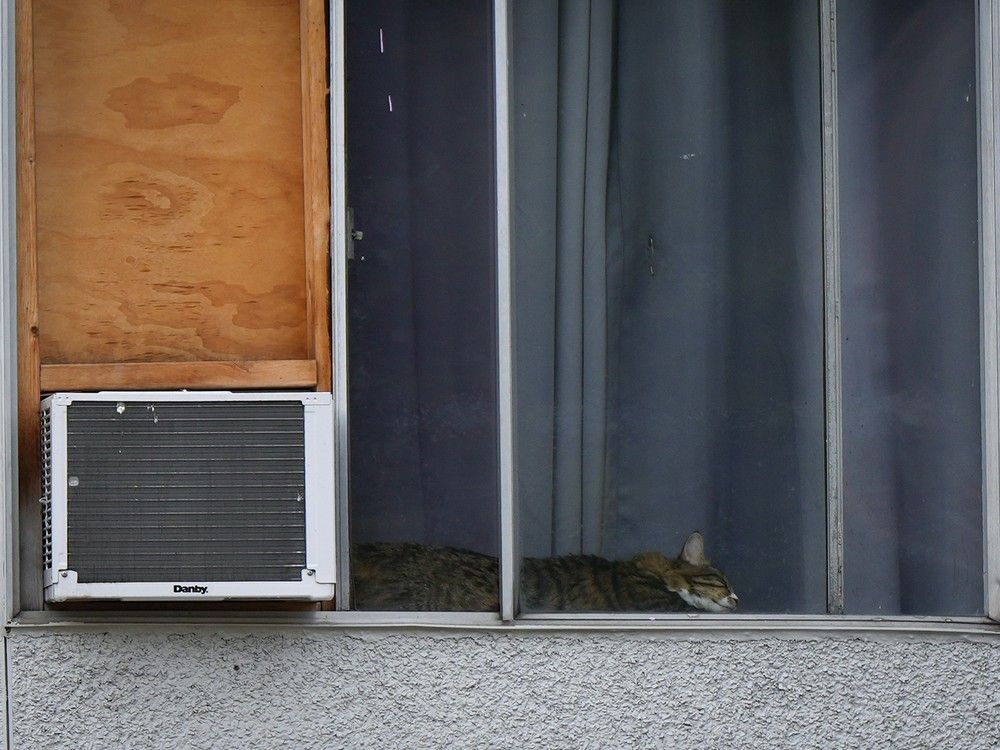
A cat sleeps in an apartment window beside an air conditioner, in Burnaby, B.C.

A new report from

Statistics Canada

says just over two-thirds, or 68 per cent, of Canadian household are reporting use of air conditioning or cooling systems such as heat pumps to beat the heat of summer. That’s up from 64 per cent in 2021.

Air conditioning can offset some of the health and safety effects of heat waves, says StatCan but the agency is also urging Canadians to conserve energy by turning the a/c down when they aren’t home.

Who has air conditioning in Canada?

Air conditioner ownership varies across Canada.

Ontario households (83 per cent) were the most likely to air conditioning, while households in British Columbia (45 per cent) were least likely. This is due in part to climate. Meanwhile, says StatCan, “the most densely populated areas of Southern Ontario reaching higher average summer temperatures than other regions of Canada.“

People in newer homes were predictably more likely to have an air conditioner: 80 per cent of homes built in 2001 and later, compared with 58 per cent of homes built before 1960.

Air conditioning was also more prevalent among homeowners (76 per cent) than renters (52 per cent). It was also more likely in households with higher incomes (82 per cent of those earning more than $150,000 before taxes) than by households with lower incomes (55 per cent among those earning less than $50,000).

There were no differences based on age.

Atlantic Canadians prefer to maintain slightly cooler temperatures than other regions of the country, at 19.8 C.

Natural Resources Canada

suggests an indoor thermostat range of 22 C to 25 C.

Who is most likely to turn their a/c down or off when away from home?

As of 2025, just over half (51 per cent) of Canadians with an air conditioner reported turning it off or down when they go away on vacation for one week or longer, says StatCan. Households in the Prairies (56 per cent) and British Columbia (56 per cent) are most likely to do so.

Meanwhile, only a third (28 per cent) of folks out of town for the weekend reported turning air conditioning off or down while away. Adults aged 30 to 44 years were most likely, compared with people 60 years and older. About 26 per cent of people aged 15 to 64 years reported turning it off or down while at work or school.

People aged 75 years and older (25 per cent) were more likely to turn down their air conditioning for short absences, compared to people aged 45 to 59 (18 per cent).

Why do people turn their a/c off?

The vast majority (82 per cent) of Canadians said they want to avoid wasting energy.

The second most-cited reason was to prolong the lifespan of their cooling equipment (7 per cent). This answer was more prevalent among people aged 30 to 59 years.

A further 5 per cent of Canadians mentioned that their main reason for turning down their a/c was to reduce greenhouse gas emissions.

What is the impact of air conditioning on health?

A 2023 study released by

Health Canada

linked air conditioning and prevention of deaths, as well as a variety of heat-related illnesses. Heat-related illnesses include heatstroke, exhaustion, dehydration and hospitalization resulting from respiratory and cardiovascular diseases.

Approximately 280 deaths occurred during the 2010 Quebec heat wave, and 619 deaths occurred in British Columbia during the 2021 heat dome in Western North America.

Who is most vulnerable to heat?

Health Canada has identified the most vulnerable groups when it comes to heat-related health challenges. First was older adults (more than 65 years old). The second was older adults living alone. Third was older adults with health conditions such as high blood pressure, heart and respiratory diseases.

What challenges do renters face over a/c?

Air conditioning is more of an issue for renters, where units are only sometimes provided by the landlord. Generally, if your rental contains air-conditioning, then your landlord is legally obligated to maintain it, as with any other equipment in the home.

Ontario law

simply states that a rental unit “must be fit for habitation.”

However, in Toronto the legal obligation for landlords has tightened. Against a backdrop of heat waves that have increasingly hit central Canada, the

city amended its bylaws

as of April 30, 2025.

For rental units equipped with air conditioning provided by the property owner, the Property Standards Bylaw was updated to require landlords to operate air conditioning from June 1 to September 30 (instead of June 2 to September 14).

Meanwhile, federal regulations focus more on air-conditioning types, efficiency, and equipment standards. See the federal government’s guidance

here

.


Our website is the place for the latest breaking news, exclusive scoops, longreads and provocative commentary. Please bookmark nationalpost.com and sign up for our daily newsletter, Posted, here.

Travis Dhanraj reporting for the CBC in St. John’s, N.L., in 2023.

The Conservative party is calling for a parliamentary committee to investigate the

CBC

after

journalist Travis Dhanraj resigned

over the public broadcaster’s alleged “performative diversity, tokenism, a system designed to elevate certain voices and diminish others.”

Dhanraj was the host of Canada Tonight: With Travis Dhanraj on CBC. But he resigned on Monday, involuntarily, he says, because the CBC “has made it impossible for me to continue my work with integrity.”

“I have been systematically sidelined, retaliated against, and denied the editorial access and institutional support necessary to fulfill my public service role,” he wrote in his resignation letter. “I stayed as long as I could, but CBC leadership left me with no reasonable path forward.”

On Wednesday, Rachel Thomas, an Alberta Conservative member of Parliament, wrote a letter to the chair of the House of Commons standing committee on Canadian heritage, saying that Dhanraj’s claims have “reignited concerns about the organization’s workplace culture.”

The letter calls on the chair, Ontario Liberal MP Lisa Hepfner, to recall the committee.

“It is critical that we hear testimony from Mr. Dhanraj, CBC executives and Minister of Canadian Identity and Culture, Steven Guilbeault,” the letter states.

Kathryn Marshall, Dhanraj’s lawyer, told National Post in an interview that they welcome the attempt to recall the committee for hearings.

“Obviously, the issues that Travis has highlighted in his resignation letter and which will be part of a future legal proceeding are very serious, and they’re not just isolated to Travis,” Marshall said. “I’ve heard from a lot of other CBC employees who have similar stories. It’s a systemic issue, and it’s a workplace culture issue that goes very deep at CBC, which is very concerning given the amount of public funds going to the corporation and its public-interest mandate.”

CBC has denied Dhanraj’s allegations.

“CBC categorically rejects the accusations made about CBC News, our staff and management,” Kerry Kelly, a CBC spokesperson, said in an email.

On Wednesday, National Post reported that Dhanraj is still considered an employee by CBC, although he is on leave.

“CBC is refusing to accept his resignation,” Marshall

told National Post

, in an emailed statement. “This refusal is indicative of their abusive work culture. However, to be clear, Travis has resigned, albeit involuntarily. We intend to commence a human rights lawsuit.”

Marshall alleged earlier this week that Dhanraj had been discouraged from booking “Conservative voices” on his show.

Dhanraj had been on leave last July but returned to full-time hours last December. At that point, Marshall said, he was pressured to sign a non-disclosure agreement regarding a tweet he posted in April 2024 about former CBC president Catherine Tait declining an interview request for his show.

“Within basically the first week of his return he was immediately retaliated against by CBC for not signing the NDA,” Marshall said. “He was, at that point, permanently removed as the host of Canada Tonight, and his salary got slashed, and it was evident at that point that he had no future or career at the CBC.”

In his resignation letter, Dhanraj said the experience at CBC has “taken a real toll — on my health, my career, and my trust in an institution I once believed I could help reform from within.”

“But the greater harm is to the public: a broadcaster that no longer lives up to its mandate, a culture that resists accountability, and a system that punishes those who dare to challenge it.”

Our website is the place for the latest breaking news, exclusive scoops, longreads and provocative commentary. Please bookmark nationalpost.com and sign up for our daily newsletter, Posted, here.

The Canada Revenue Agency.

July is the start of the fiscal year for the

Ontario Trillium Benefit

(OTB), which means those who are registered and qualified to receive it should be seeing a deposit in their bank accounts on Thursday, July 10.

What is the Ontario Trillium Benefit?

The OTB combines three government payments: the Ontario Energy and Property Tax Credit, the Northern Ontario Energy Credit and the Ontario Sales Tax Credit. You must be eligible for at least one of the three to receive it.

Who is eligible?

To qualify for the Ontario Energy and Property Tax Credit you must have been an Ontario resident on Dec. 31, 2024, and one of the following must apply before June 1, 2026: you’re over the age of 18, you’re in (or have been in) a marriage or common-law relationship, or you live with (or have lived with) your child.

For the Ontario Sales Tax Credit, the qualifications are the same except the age limit is 19 and over.

For the Northern Ontario Energy Credit, the same qualifications apply (18 and over in this case), but you must also live in one of the designated northern communities: Algoma, Cochrane, Kenora, Manitoulin, Nipissing, Parry Sound, Rainy River, Sudbury, Thunder Bay or Timiskaming.

How does one apply?

You must have filed your tax return for the previous year (2024 in this case) to be eligible, even if you have no income to report. The government will then calculate the amount you’re owed.

What is the benefit worth?

The Ontario Energy and Property Tax Credit tops out at $1,283 for those under 65 and $1,461 for seniors, while the Northern Ontario Energy Credit can be up to $185 for single people and $285 for families. The Ontario Sales Tax Credit has a maximum payout of $371 for each qualified individual.

The government has a

calculator you can use

to determine your own payout. Variables include age, income, family size, residence, and amount paid in rent or property tax. You can also use the calculator to figure out child benefit payments.

When does the benefit arrive?

If your benefit is under $360, it will arrive in a lump sum on July 10. If it’s more, it will arrive in monthly instalments on the 10th of each month (or the last working day before that if the 10th is a weekend or holiday).

What should you do if it doesn’t show up?

The Canada Revenue Agency requests that you wait 10 working days from the payment due date before contacting them if it didn’t arrive.

Our website is the place for the latest breaking news, exclusive scoops, longreads and provocative commentary. Please bookmark nationalpost.com and sign up for our daily newsletter, Posted, here.


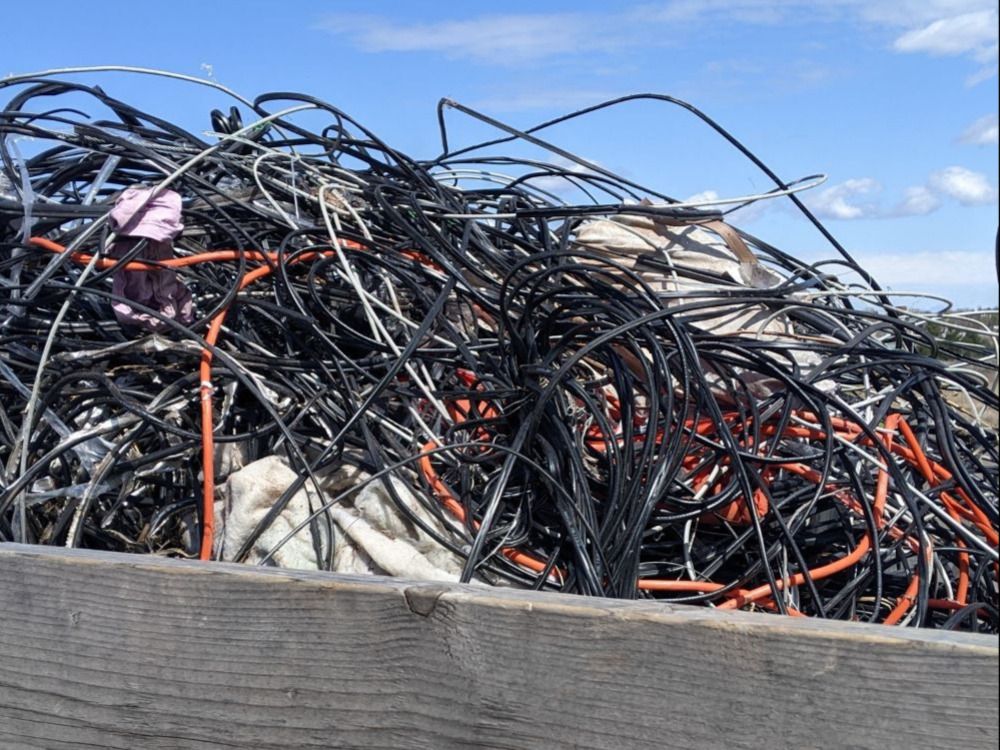
Higher copper prices could lead to more theft, and stolen copper is hard to trace.

This week, Ontario Provincial Police arrested four men and charged them with stealing copper wire from 33 decommissioned hydro police that were cut down in a rural region in northern Ontario.

Police said the copper

, with an estimated value of $100,000, was taken in May from Coleman Township, some 200 kilometres northeast of Sudbury.

The news comes at the same time that U.S. President Donald Trump is announcing a possible

50 per cent tariff

on Canadian copper.

“Today we are doing copper,” he told reporters during a cabinet meeting on Tuesday. “I believe the tariff on copper, we are going to make it 50 per cent.” U.S. Commerce Secretary Howard Lutnick, who was in the meeting, later confirmed the amount.

What does the new tariff mean?

It’s a major hit. According to Natural Resources Canada, Canada’s exports of copper and copper-based products were valued at $9.3 billion in 2023, with the United States accounting for more than half the total export value that year.

Already the

Guardian newspaper

is reporting that the tariffs have driven copper prices in the U.S. to an all-time high, with copper futures jumping more than 10 per cent to $5.682 a pound overnight. Conversely, it noted that prices elsewhere in the world fell amid fears that high U.S. prices could reduce demand globally.

Is copper theft tied to the new tariffs?

Yes and no. Anything that increases the price of copper will mean more theft of the material, but it’s long been a problem in Canada and elsewhere.

Back in 2014 the industry group

Electricity Canada

released a paper, “Copper Theft from Canada’s Electricity Infrastructure: Dangerous, Expensive and a Threat to Reliability,” highlighting what was even then a $40-million-a-year problem.

How big a problem is it today?

Last year,

Caliber Communications

highlighted the cost of copper as a factor driving thefts, and also noted the peril faced by criminals: “In addition to the illegal aspect of copper theft, it can also be an extremely dangerous crime, as thieves may put themselves at great risk when stealing copper wires. Stealing live wires from hydro sites, telephone poles or underground wiring systems can result in serious injury, or even death.”

And just this month a

release from Bell Canada

noted that copper theft is up 23 per cent year-over-year, with over 500 cases this year alone, and more than 2,270 since 2022. It noted that Ontario leads the country with 63 per cent of copper thefts, but that New Brunswick and Quebec are also hot spots.

Where do thieves steal copper?

Electrical transmission wires, such as the recent case in Coleman Township, are one source. Depots are another: Caliber related an October 2024 incident in which thieves broke into a business in Cambridge, Ont., and made off with copper wire valued at approximately $50,000.

In 2006, the Canadian Press reported a crime in which criminals climbed to the roofs of four Quebec City churches, carting away several hundreds dollars worth of copper from the roofs, gutters and wiring, and leaving behind tens of thousands of dollars in damages to the buildings.

And just this week a man in Brantford, Ont., was

sentenced to six months

in jail for dismantling the air conditioning units of two local businesses to get at the copper inside.

How is stolen copper sold?

Scrap metal dealers are the main source for selling copper, which is difficult to trace and thus hard to detect as stolen.

In January,

an Alberta judge struck down

a 10-year-old law called the Scrap Metal Dealers and Recyclers Identification Act that required dealers to record home addresses of sellers, and for sellers to show the dealer government-issued ID.

“Further, these individuals must provide detailed information about the vehicle used to transport the metal to the dealer, the make, model, license plate, and colour,” the law stated.

Justice Heather Lamoureux concluded the act amounted to unreasonable search and seizure by the state, and violated Section 8 of the Canadian Charter of Rights and Freedoms.

Other jurisdictions have set up similar laws, however. Last year, Brantford city council

passed a law

that scrap metal dealers receiving “restricted scrap metal” (a list that includes copper) must have police permission to do so, and have to gather information about the transaction, and not pay out in cash.

Our website is the place for the latest breaking news, exclusive scoops, longreads and provocative commentary. Please bookmark nationalpost.com and sign up for our daily newsletter, Posted, here.