



LP_468x60
on-the-record-468x60-white

PSAC President Sharon DeSousa: “It doesn't have to be done like previous administrations, where it starts off with just this lazy approach of austerity and cutting jobs.”

OTTAWA — Canada’s largest public sector union is warning that any cuts to federal employees, as the Liberal government looks to shrink spending, will mean slower, lower-quality services for people seeking passports, employment insurance and veterans benefits.

Sharon DeSousa, national president of the Public Service Alliance of Canada (PSAC), said Prime Minister Mark Carney should stick with his campaign promise to “cap” the federal public service — not cut it.

However, Carney’s senior-most minister this week

directed cabinet to find a total of 15 per cent in spending cuts in their departments by 2028-29

. The direction from Finance Minister

François-Philippe

Champagne spelled out cuts of 7.5 per cent by 2026–27, an additional 2.5 per cent cut by 2027–28, and another five per cent on top of that by 2028–29. The target  will amount to $25 billion, a government official confirmed to National Post.

Any cuts to staff, said DeSousa, will have consequences.

“What it actually means is that you’re looking to cut jobs, which means cutting services — end of story,” DeSousa said. “It will mean longer wait times. It means that we’re not going to be able to deliver on the programs that are a priority to us, and I think everyone is going to be impacted.”

“What we’re talking about is employment insurance. We’re talking about veterans who are looking for services. We’re talking about an aging population who is looking to get guidance as to how to receive their benefits. It’s going to impact people looking for passports.”

“There’s not one area that’s not going to be affected,” she added.

Mohammad Kamal, director of communications to the President of the Treasury Board, did said the government’s spending review is requesting that all departments “bring forward savings proposals by targeting programs and activities that are underperforming, not core to the federal mandate, duplicative, or misaligned with government priorities.”

There are exceptions, however: the Department of National Defence, the Canada Border Services Agency and the Royal Canadian Mounted Police will be subject to a “lower savings target” of two per cent over those three years, said Kamal.

The process does not apply to agents of Parliament — such as the auditor general and the parliamentary budget officer, the courts administration service and the office of the registrar of the Supreme Court of Canada — to “preserve their independence,” he said.

Anxiety among federal public servants is reportedly already high. DeSousa said 10,000 jobs were cut just last year, and an estimated 2,000 to 7,000 more jobs could be on the chopping block for this year as well. That includes contracts at the Canada Revenue Agency, as well as the departments of employment and immigration that are not being renewed, she said.

“Right now, if you try to call Canada Revenue Agency, less than five per cent of the calls are being picked up. They don’t have enough people to do this,” she claimed.

While the government has vowed to not touch transfers to individuals and provinces, or social programs such as child care and dental care, Assembly of First Nations National Chief Cindy Woodhouse Nepinak warned Indigenous services should be exempt from the cuts as well.

“I think health care for Canadians and Indian Affairs should never be cut back,” said Woodhouse Nepinak in an interview. “And I think because the gaps are so huge, you don’t want to further and widen the gap on First Nations people by cutting services and programs very much needed to make this country be a better place.”

DeSousa said the government can look at different ways of finding efficiencies in delivering services to Canadians while still redirecting money to the government’s core priorities.

“There’s a different way that we can do this. It doesn’t have to be done like previous administrations, where it starts off with just this lazy approach of austerity and cutting jobs… I don’t think it needs to be at the expense of people who rely on those services.”

DeSousa suggested reducing the amount departments and agencies spend on outside consultants, which would save millions of dollars each year, but also reverse the return-to-office mandate to free up buildings so they can be repurposed for other initiatives, such as low-income housing, or sold to generate potentially billions of dollars in savings.

“What we’re trying to do is to provide practical solutions that the government can, in fact, look at so that it doesn’t make the sacrifices on the programs and services, and to get them to understand the actual impact their decision-making is going to have, and how it’s going to affect people residing in Canada who depend on them,” she said.

“For us, it’s about fighting for their services.”

National Post

calevesque@postmedia.com

Our website is the place for the latest breaking news, exclusive scoops, longreads and provocative commentary. Please bookmark nationalpost.com and sign up for our newsletters here.

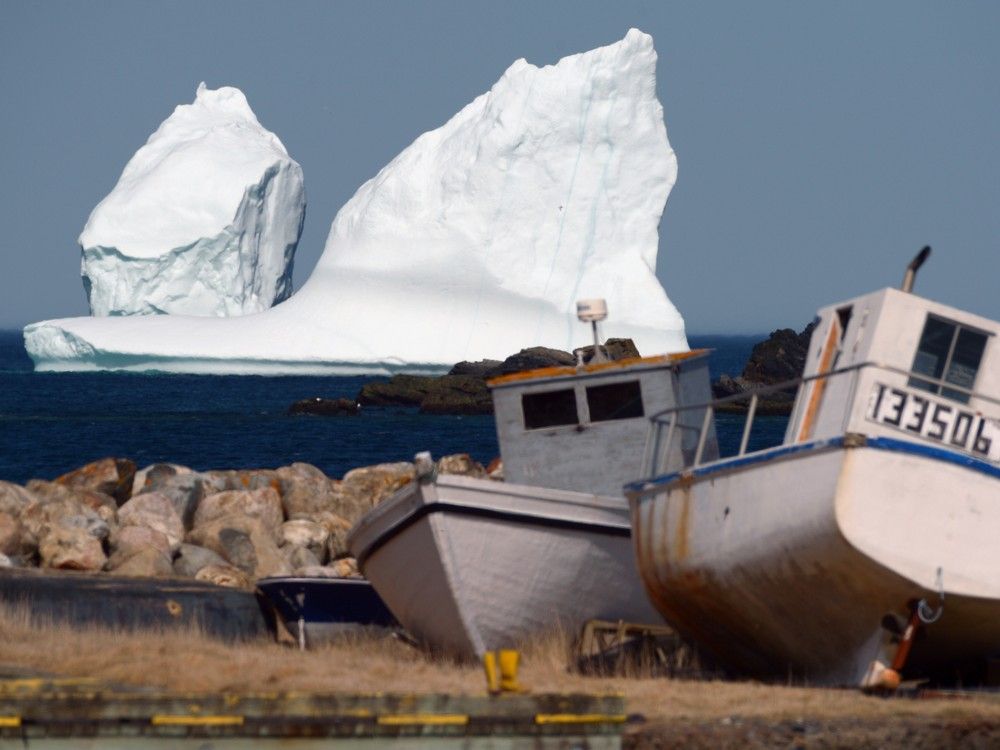

This image from July 2018 shows the last time a giant iceberg threatened the village of Innarsuit, in northwestern Greenland.

An enormous iceberg is drifting dangerously close to the shore in northwestern Greenland.

The

skyscraper-sized

piece of ice is on a potential collision course with the harbour of Innaarsuit, a village in Greenland’s Avannaata Municipality.

It originally sidled up to the village last week, but seemed to have drifted away before reappearing on Monday and remaining precariously close.

Local authorities have issued warnings to residents as the iceberg sits near the Royal Greenland fish factory and the local grocery store. People have been advised to take care when in that part of the community.

Emergency services are encouraging families not to go in a group towards the store. They are also asking people who have difficulty walking to be extra careful. The fish-processing factory has been temporarily closed.

Meanwhile, locals have been advised to be careful when sailing to or from the settlement.

While some residents are concerned, others are

reportedly excited

by the rare and dramatic sight.

What can be done with large icebergs that threaten coastal communities?

There are few options for dealing with threatening icebergs. One of the main concerns with a large iceberg is that it will “calve” (split), with pieces falling into the ocean, resulting in large waves that will swamp nearby coastal communities.

As a result, authorities monitor icebergs for cracks and holes that may result in calving.

The first line of defence is for nearby residents to evacuate. That

occurred in 2018

, when this same Greenlandic community was similarly threatened.

Other options have been considered but remain experimental. They involve explosives to break up the iceberg and towing. These tactics present monumental challenges.

The

U.S. Coast Guard

says aside from difficulty involved in successfully getting onto an iceberg, demolition would require “a 1,000 lb. charge of conventional explosives…to break up approximately 70,000 cubic ft of ice (an iceberg weighing 1,960 tons).” Further, a hundred of these charges would be needed to destroy an average iceberg, (presumably more for the mammoth berg threatening Innaarsuit at this time).

Melting a medium-sized iceberg of 100,000 tons would theoretically require heat from the “combustion of over a quarter of a million gallons of gasoline” says the Coast Guard.

“Such methods are, of course, economically, as well as practically unsound.”

How common are icebergs?

Icebergs drift south after calving from Arctic and western Greenland glaciers. They are

regular sights

in spring-early summer. Transported by Atlantic Ocean currents to waters off Greenland, Newfoundland and Labrador, as well as Cape Breton Island, they eventually melt in somewhat warmer southern climes. An iceberg that drifts south rarely lasts more than a year.

Icebergs flow at speeds of up to seven kilometres a year, first floating in Arctic bays before passing into the Labrador Current and south into what is known as “

Iceberg Alley

.”

 A huge iceberg grounded off the coast of Newfoundland in 2023. (Keith Gosse/The Telegram)

Every year about 40,000 medium to large icebergs calve from glaciers but only 400-800 make it as far south as St. John’s. However, those numbers can vary greatly from year to year based on temperature, ocean current, wind direction and sea/pack ice.

Often huge, ninety per cent of an iceberg sits below the ocean surface.

Our website is the place for the latest breaking news, exclusive scoops, longreads and provocative commentary. Please bookmark nationalpost.com and sign up for our daily newsletter, Posted, here.


A crowd waits for an act to come on the main stage at the Festival d’été de Québec in 2023.

OTTAWA – As Avril Lavigne was about to take the stage at the Festival d’été de Québec (FEQ) last week, many other Canadian artists were no doubt wondering why the organizers of Canada’s largest outdoor music festival had to go make things so complicated for them.

The FEQ began on July 3 — just as it was being hit with a copyright infringement lawsuit from the Society of Composers, Authors and Music Publishers of Canada (SOCAN), National Post has learned.

The not-for-profit group, which is responsible for granting licences and collecting royalties on licensed music in Canada, claims in the lawsuit filed in Federal Court that since at least July 2022 the festival’s organizers “have failed to obtain a license from SOCAN and have not paid any royalties or submitted any report forms to SOCAN.” The Festival International d’été de Québec Inc. and Bleufeu, another organizer, are named as the defendants.

The festival is still ongoing and will conclude on Sunday. Many Canadian and international artists are there this year, including Rod Stewart and Shania Twain. It attracts over a million visitors each year, and receives public funding, while earning millions in revenue.

SOCAN represents more than 200,000 Canadian songwriters, composers, and music publishers, as well as millions of rights holders through a network of over 100 collective societies in over 200 countries.

One of them is the Montreal-based rock band Half Moon Run. Its members said they were thrilled to be the final act of the FEQ in 2022. In fact, they thought it was going to be

“the show of (their) lives.”

While the show was a success, the aftermath may have been less thrilling: The group is one of 11 artists named in the SOCAN lawsuit as those allegedly impacted by the festival’s non-payment.

Other artists named include Walk Off the Earth, pianist Alexandra Streliski, Beyries, Tokyo Police Club, Les Trois Accords and Karkwa.

“The full extent of the Defendants’ wrongful acts and infringements is not known by SOCAN but is within the knowledge of the Defendants. SOCAN will seek relief in respect of all such activities,” reads the lawsuit.

According to the lawsuit, despite SOCAN’s notice, both organizations have “persisted in organizing, producing and promoting the FEQ Festival, and have, by their actions, sanctioned, approved and countenanced the performances of SOCAN Musical Works” contrary to the Copyright Act.

The FEQ festival organizers did not respond to National Post’s request for comment.

The lawsuit alleges the organizers have relied on their tax status as charities to exempt them from paying royalties to music creators and their publishers when their music is performed at the FEQ.

In an email to the Post, SOCAN’s legal advisor Julia Werneburg wrote that her organization is “deeply concerned” with that justification.

“Although the Festival d’été de Québec is a registered charity, the performances it presents are virtually identical to those of its for-profit competitors, and Canadian law requires the payment of licensing fees for these performances,” she said.

“Failing to pay royalties to music creators and their publishers weakens the foundations of the music industry.”

The FEQ is considered an institution in Quebec. Each year, it presents an impressive program of international artists on the famous Plains of Abraham, a historic space in Quebec City’s Battlefields Park.

On Friday, the federal government announced a total of $1.75 million in financial support to the organizers, including a non-repayable contribution of $1.2 million to “engage in promotional activities internationally, to renew its brand image and to develop new products to enhance festivalgoers’ experience” for this year and next year’s editions.

“Our government is proud to support this artistic effervescence and to contribute to the success of an event that really brings people together,” said Heritage minister Steven Guilbeault in a statement announcing the funding.

Ottawa also granted the FEQ $550,000 through Canadian Heritage’s Canada Arts Presentation Fund for its program.

Guilbeault’s office did not provide comment on the lawsuit for this story by deadline.

National Post

atrepanier@postmedia.com

Our website is the place for the latest breaking news, exclusive scoops, longreads and provocative commentary. Please bookmark nationalpost.com and sign up for our daily newsletter, Posted, here.


Kanye West at the Grammy Awards in Los Angeles on Feb. 2, 2025.

A music festival in Slovakia has been cancelled after thousands signed a petition against the performance of rapper Kanye West, who was referred to as “one of the world’s most famous anti-semites.”

In May, West, who also goes by Ye, released a song entitled Heil Hitler, which includes part of a speech given by Nazi leader Adolf Hitler. West has written

antisemitic posts on social media the past

. In February, he bought an ad that played during the 2025 Super Bowl promoting his brand, Yeezy, which was only

selling white T-shirts with swastikas

at the time.

The

petition

, called Kanye West Does Not Belong in Bratislava, garnered more than 6,200 signatures online. It described West as someone who has “repeatedly and openly espoused the symbolism and ideology associated with the darkest period of modern world history.”

It concluded: “Today we have the opportunity to say clearly and publicly that there is no place on our soil for those who celebrate a perverse regime that has taken the lives of millions of people.”

During the Second World War, 70,000 Jews were deported from Slovakia by German and Slovak authorities, according to the

U.S. Holocaust Memorial Museum

. More than 60,000 of them were murdered.

The Rubicon Festival was scheduled for the weekend of July 18, featuring American rappers Ken Carson, Offset and Kanye West as headliners, in Bratislava. In a post on Instagram on Wednesday, festival organizers said it would “not take place this year.”

“Due to media pressure and the withdrawal of several artists and partners, we were unable to deliver the festival at the standard of quality you deserve,” it said. The organizers did not mention West by name. They said information regarding refunds would be sent via email within two weeks.

According to

Czech news site CT24

, after receiving backlash, festival organizers said that they included West in their lineup because he had apologized for his remarks.

However, one of the petition’s co-authors disagreed with allowing the rapper to perform, despite his apology.

“Such opinions should have no place in a democratic society and we do not want to give such role models to our young people,” Zuzana Izsáková told the publication.

Before the festival was cancelled, Bratislava Mayor Matúš Vallo said he would not support having West as a headliner.

“West praises Adolf Hitler, has called himself a Nazi, speaks out against Jews, sells swastika T-shirts on his online shop, and just a few weeks ago, he caused further outrage with his song ‘Heil Hitler.’ What Kanye West is preaching is in complete contradiction to my values ​​and I am convinced that it is also with the values ​​of our city,” he said,

per Slovak news site Novy Cas

.

“I know that the organizers are trying to solve the difficult logistics of the festival and obtain all the necessary opinions and approvals from the institutions concerned, but under these circumstances they cannot count on any support from the city.”

Petition organizer Lucia Stasselova posted on her Instagram account over the weekend, saying West had deleted a post on social media about performing at the festival.

“This petition did something important: draw attention to what is and what is not okay. And maybe we helped prevent another international shame,” she wrote in the caption, translated to English. “We don’t have to be ashamed of what country we live in. Because this is the power of civil society — it has a voice. And it has meaning.”

This comes after Australia cancelled West’s visa. The rapper’s wife, Bianca Censori, is Australian and he has visited the country for some time, Home Affairs Minister Tony Burke said, per Agence France-Presse. The cancellation comes after officials took a closer look into West’s visa upon the release of Heil Hitler. The visa was not intended for performing concerts, but was a “lower level,” he told Australian broadcaster ABC.

West is reportedly in China for a concert, according to

The News International

. In June,

Lifestyle Asia reported

about the gig, saying West was expected to hit the stage in in Shanghai on July 12.

Jing Daily

also reported about the upcoming performance.

Love concerts, but can’t make it to the venue? Stream live shows and events from your couch with VEEPS, a music-first streaming service now operating in Canada. Click here for an introductory offer of 30% off. Explore upcoming concerts and the extensive archive of past performances.

Our website is the place for the latest breaking news, exclusive scoops, longreads and provocative commentary. Please bookmark nationalpost.com and sign up for our daily newsletter, Posted, here.


U.S. President Donald Trump meets with Canadian Prime Minister Mark Carney in the Oval Office at the White House on May 6, 2025 in Washington, DC.

OTTAWA — Prime Minister Mark Carney says the deadline for a new economic and security deal between Canada and Ottawa has been pushed back to August 1 as U.S. President Donald Trump threatens to increase tariffs on Canadian products to 35 per cent.

Carney wrote on social media late Thursday evening that Canada and the U.S. are now working towards a new deadline of Aug. 1 to sign a new trade deal. The original deadline was set for July 21 before shifting Thursday evening.

“Throughout the current trade negotiations with the United States, the Canadian government has steadfastly defended our workers and businesses. We will continue to do so as we work towards the revised deadline of August 1,” Carney reacted on social media.

His statement made no reference to Trump’s new tariff threat nor did it suggest any immediate retaliatory measures from Canada.

Carney has repeatedly said that his government is working to that his government hopes will eliminate all of Trump’s tariffs on Canadian goods. Those include 50 per cent tariffs on all aluminium and steel imports and separate 25 per cent border levies on foreign vehicles and components as well as Canadian goods not covered by CUSMA.

Those hopes look increasingly dashed, though, as Trump published an open letter on Thursday threatening to increase existing 25 per cent tariffs on all non-CUSMA goods to 35 per cent on Aug. 1. He once again cited fentanyl smuggling to the U.S. and Canada’s dairy supply management system as irritants.

“As you are aware, there will be no Tariff if Canada, or companies within your Country, decide to build or manufacture product within the United States and, in fact, we will do everything possible to get approvals quickly, professionally, and routinely — In other words, in a matter of weeks,” read Trump’s letter to Carney.

“If Canada works with me to stop the flow of Fentanyl, we will, perhaps, consider an adjustment to this letter. These Tariffs may be modified, upward or downward, depending on our relationship with your Country.”

Trump ended his letter by noting that Canada “will never be disappointed with The United States of America.”

The U.S. government’s data shows that trace amounts of fentanyl are intercepted by border guards coming from Canada, particularly when compared to the southern border with Mexico.

Trump has also promised 50 per cent tariffs on copper imports — another major Canadian export to the U.S. — as well as eventual tariffs of up to 200 per cent on foreign pharmaceuticals.

In his statement, Carney reiterated his government’s commitment to removing internal trade barriers in Canada and working to diversify the country’s trading partners away from the U.S.

“The federal government, provinces and territories are making significant progress in building one Canadian economy. We are poised to build a series of major new projects in the national interest. We are strengthening our trading partnerships throughout the world,” he wrote.

The latest Trump threats once again illustrate the increasingly diverging economic views held by Trump and Carney.

Speaking to media during the G7 meeting

in Alberta last month, Trump said tariffs were a key part of his economic strategy to build up American manufacturing.

“I think we have different concepts,” said Trump on trade with Canada. “I have a tariff concept. Mark (Carney) has a different concept, which is something that some people like. But we’re going to see if we can get to the bottom of it today.”

In a statement on X

, Conservative leader Pierre Poilievre called the latest Trump threat an “unjustified attack on Canada’s economy”.

“Canada has long been a reliable partner and trusted friend to the United States. These tariffs will damage both our countries,” Poilievre wrote.

Conservatives stand ready to do everything we can to secure the best deal for Canada,” he added.

More to come.

National Post

cnardi@postmedia.com

Our website is the place for the latest breaking news, exclusive scoops, longreads and provocative commentary. Please bookmark nationalpost.com and sign up for our politics newsletter, First Reading, here.


Prime Minister Mark Carney speaks to construction workers in Edmonton after making a housing announcement on March 20, 2025.

Most Canadians support Prime Minister Mark Carney’s new legislation to fast-track infrastructure projects deemed in the “national interest,” according to a new poll, but the federal government has a long way to go if it wants to convince voters that it should be able to unilaterally approve such big projects without buy-in from other groups.

The

Leger poll released Friday

found that 56 per cent of respondents nationally view the One Canadian Economy Act, the Carney government’s signature piece of legislation to date, as a positive step, compared to 25 per cent who said it’s a bad idea. Support was strongest in B.C., the Atlantic provinces, Saskatchewan and Manitoba, at around two-thirds, while just over half supported the new legislation in Ontario, Quebec and Alberta.

The legislation,

which became law last month

, has been criticized for giving Ottawa too much power and discretion because it allows the federal cabinet to fast-track major infrastructure projects by bypassing the usual environmental and approval processes.

A plurality of respondents (42 per cent) to the Leger poll said that such projects should require the support of federal and provincial governments as well as impacted First Nations. Only eight per cent of respondents said that the federal government’s support alone should be enough, while 27 per cent said projects should go ahead if the federal and affected provincial governments are in favour.

Ten per cent said the decision belonged to Ottawa and affected Indigenous governments.

Andrew Enns, Leger’s executive vice-president, said the public seems to be sending Ottawa a two-track message.

“In theory, it gives the federal government strong latitude to move forward on projects of national interest,” he said. “But for the public, it’s going to be a collaborative process.”

Since the legislation became law late last month,

the federal government has tried to work behind the scenes

to convince Indigenous leaders, provinces and others that their concerns won’t be steamrolled in the push to get big projects built.

Carney announced late last month that the government will host a series of summits with Indigenous leaders, beginning July 17 with First Nations. Summits with Inuit and Metis leaders will soon follow.

Some provinces, notably Quebec and British Columbia, have also

pushed back on Ottawa’s new rights to fast-track pipelines in particular

, while environmental groups and First Nations have called for a more inclusive process for big projects than what they believe is in the works.

The poll also found that the Carney government’s post-election honeymoon shows no signs of ending yet. After winning the popular vote in the April federal election by 2.5 percentage points, the Liberals now enjoy a 13-percentage-point lead (48 per cent versus 35 per cent) over the second-place Conservatives among decided voters.

More than half of all respondents (58 per cent) also said they approve of Carney’s performance so far.

The poll sampled 1,546 adult Canadians between July 4-6. A probability sample of this size yields a margin of error no greater than plus or minus 2.49 per cent 19 times out of 20.

National Post

stuck@postmedia.com

Our website is the place for the latest breaking news, exclusive scoops, longreads and provocative commentary. Please bookmark nationalpost.com and sign up for our daily newsletter, Posted, here.


Flooding in London, Ont., in 2024. When Canadians were asked about what they thought were the biggest challenges facing Canada, only 4 per cent said climate change.

OTTAWA — One of the key barriers that seemed to be facing the Carney government’s plans to fast-track big projects designed to boost the Canadian economy — namely, climate concerns — appears now to be not much of an obstacle at all when it comes to public opinion.

A

new Leger poll released Friday asked Canadians

about what they thought were the biggest challenges facing Canada. Trade and tariff issues and U.S. relations were No. 1, at 20 per cent. But climate change, one of the federal government’s key objections in recent years to building or expanding pipelines, ports and other big projects, was way down the list, a “third tier” issue, said Leger executive vice-president Andrew Enns.

Prime Minister Mark Carney could find the shift makes his life easier as he faces calls to

roll back the imposing climate policies of the previous prime minister

, including a planned emissions cap on oil and gas production, electric vehicle mandates, an oil tanker ban off the B.C. coast, plans to force fossil fuels off the electricity grid, and hostility to oil development and pipelines.

Just four per cent of respondents listed “climate change/extreme weather” as the No. 1 issue facing Canada today, putting it in eighth place among the 14 top issues offered as choices.

That’s in sharp contrast to a similar Leger poll conducted in 2019, Enns said. Back then his data show that “fighting climate change” ranked as the third most frequently cited priority (by 30 per cent), just a few points behind taxation and “jobs and the economy” (both 35 per cent). In that poll — conducted prior to prior to the pandemic, six years of mostly sluggish economic growth, rising prices and a trade war with the United States — respondents were asked to choose the two issues most important to them.

Enns said environmental issues have tumbled over the ensuing six years into the “third tier” of public concerns, as Canadians are seized with economic issues, including tariffs, housing prices, immigration and inflation — all of which were ranked by poll respondents as more pressing than climate concerns.

“These things hit people directly,” said Enns. “We all prioritize.”

While 20 per cent of poll respondents identified “tariffs/(President Donald)Trump/U.S. aggression” as the top issue; inflation and rising prices were given top spot by 18 per cent; housing affordability by 11 per cent; “state of the economy” by 10 per cent; health care by nine per cent; and immigration by six per cent. “Government debt/deficit” and “high taxes” tied with “climate change/extreme weather,” as chosen by four per cent. The poll was taken well after weeks of news of huge wildfires this summer in Manitoba and Saskatchewan, and Central Canadian heat waves in June.

Brian Lee Crowley, managing director of the Macdonald-Laurier Institute, said that more Canadians are becoming aware of the costs of years of climate change policy, particularly when it comes to developing the country’s energy and other natural resources industries. The previous prime minister, Justin Trudeau, had made climate change a top priority, often downgrading other considerations at its expense, particularly economic development and resource exploitation, making sacrifices other countries were not.

“They’re saying it’s not a trade-off I want to make,” Crowley said.

By contrast,

one of the Carney government’s first pieces of legislation

is the One Canadian Economy Act, It allows the federal cabinet to fast-track major infrastructure projects, including resource development, by identifying them as being in the “national interest” and bypassing the normal environmental regulations and approvals. (The specific laws to that effect are in the Building Canada Act, contained within the larger One Canadian Economy Act.)

The legislation, which has been criticized for giving the federal government too much power and discretion, became law late last month.

Upon taking office in March, Carney moved quickly to scrap the consumer portion of Canada’s carbon tax. He has indicated he would be open to approving a new oil export pipeline. And he met earlier this month with the chief executives of Canada’s major auto producers, who pressed him to cancel or delay the federal mandate that electric vehicles must comprise at least 20 per cent of new auto sales by 2026 and 100 per cent by 2035.

In March, when Carney was first sworn in after winning the federal Liberal leadership, Alberta Premier Danielle Smith presented a list of

nine demands that would be necessary to reset relations with the West

that had been battered during the Trudeau years. All of them were related to cancelling Liberal environmental policies.

Last week, the environment ministers of Alberta and Ontario issued a joint letter asking Carney to abandon “net zero” policies

they say are holding back Canada economically.

“We are hopeful that (the Carney government) will move away from policies and legislation that undermine competitiveness, delay project development, and disproportionately harm certain (regions) without any quantifiable benefit to the natural environment,” they wrote.

Crowley said Canadians are now more aware that Canadian wealth and jobs are tied directly to its natural resources and its ability to get them to market as efficiently as possible.

“I think that message is starting to get through to a lot of people.”

Crowley added that the Carney government is still in its honeymoon phase but that these helpful poll indicators show the prime minister — who recently won an election victory from the jaws of certain Liberal defeat, thanks to a fortunate turn of external events — once again has timing on his side.

“I think he’s led a bit of a charmed life politically,” Crowley said.

The poll sampled 1,546 adult Canadians between July 4-6. A probability sample of this size yields a margin of error no greater than plus or minus 2.49 per cent 19 times out of 20.

stuck@postmedia.com

National Post

Our website is the place for the latest breaking news, exclusive scoops, longreads and provocative commentary. Please bookmark nationalpost.com and sign up for our politics newsletter, First Reading, here.


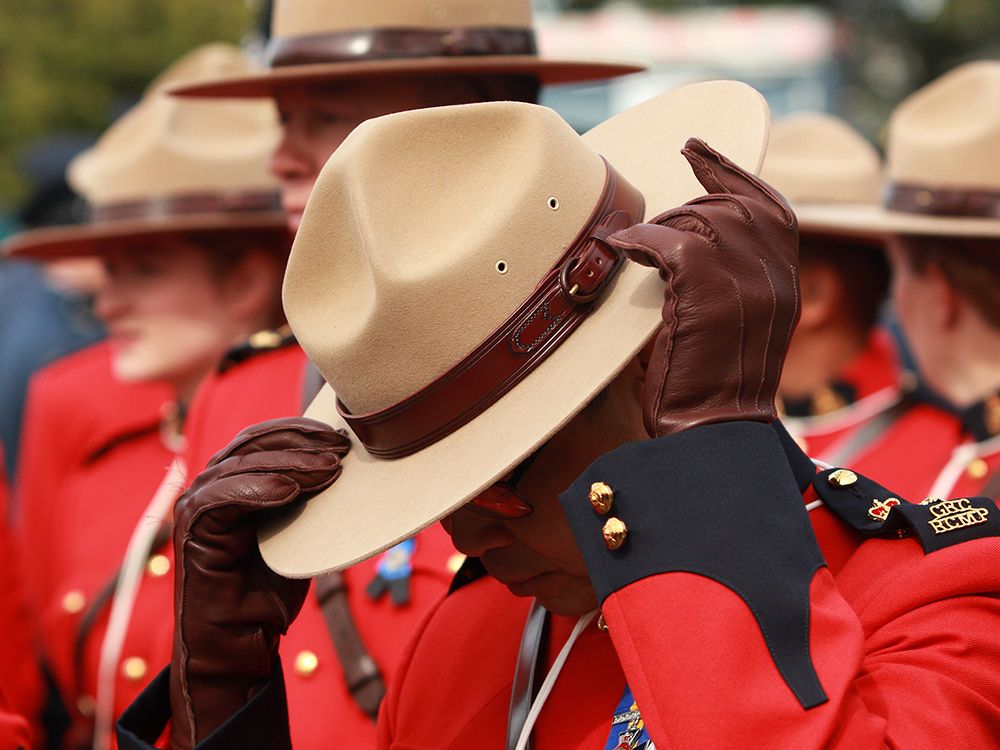
An RCMP officer adjusts his Stetson hat before the start of march.

OTTAWA —  Go to any event featuring RCMP in ceremonial dress, and you’re bound to see Mounties wearing the red serge, blue and yellow breeches, a Sam Browne belt, brown Strathcona boots, and a wide-brimmed, beige Stetson.

The hat, nicknamed the “red Stetson,” has appeared as part of the RCMP uniform on

stamps

, posters, promotional videos and even documentaries. It is a core piece of the Mounties’ iconic image and an internationally recognizable piece of Canadiana.

It’s also made in the U.S.A.

On its website

, the B.C. RCMP boast that no other element of the Mountie uniform “has the mystique of the Stetson hat,” apart from maybe the red serge.

The RCMP’s official page on the Stetson

also notes that the hat is Canadian from its inception as it is “exclusively crafted by the Biltmore Stetson Canada Company in Guelph, Ontario.”

Except that the Biltmore Stetson Canada Company plant in Guelph shut down in early 2012 after it was purchased by Dorfman-Pacific (now Dorfman Milano),

according to the Guelph Mercury newspaper.

Since then, the iconic Canadian hat has been built at the Dorfman plant — in Garland, Texas.

“Absolutely, I believe that they should be manufactured in Canada,” says Holly Allen, general manager and head of millinery design at Smithbilt Hats, a Calgary-based manufacturer that makes the traditional “white hat” given to visitors during the Calgary Stampede.

The Stetson appears to be the only part of the RCMP uniform that is not made in Canada. For example, the red serge is manufactured in Quebec, the boots are made by the Alberta Boot company, and bidding on a 2015 contract for RCMP breeches was “conditionally

limited to Canadian Goods.

In a statement, Erica Prince, RCMP deputy director of communications, suggested that the RCMP was not aware of the wrong information on its webpage about the Stetson until the inquiry by the National Post.

She said the webpage had not been updated in a long time and that the date of the update was due to aesthetic changes to the website.

“We appreciate you bringing this to our attention and have flagged the page for review,” Prince said in an emailed reply.

Despite its website and 

social media posts

reiterating the false claim that the hats are manufactured in Guelph, the

RCMP noted that its Stetsons

are made in Texas in a 2024 press release about a visit to the Dorfman Milano Hat Factory.

“What better place to have our iconic Stetsons made than a state known for their ten-gallon hats?!,” reads the press release.

But at a time when Canada is in a trade war with the United States and President Donald Trump frequently proposes to make Canada the 51st American state, is the government comfortable that such an iconic piece of Canadiana is being produced in Texas?

The office of Public Safety Minister Gary Anandasangaree referred the question to the RCMP, which demurred.

The RCMP also did not respond to questions about if and when it had last proactively sought out a Canadian manufacturer for the Stetson.

Prince said that open tenders for the hat contract were completed in 2013 and 2017 and only Biltmore (now Dorfman Milano) submitted a bid.

Before renewing the contract to the company in 2021, the RCMP issued a notice of the impending deal, and no other company said it could meet the Mounties’ requirements, Prince added.

Allen of Calgary’s Smithbilt Hats said the company’s CEO, Cam Clark, was in the process of receiving the necessary equipment to bid on the next contract and bring back production of the RCMP’s Stetson to Canada.

“Mr. Clark is fiercely Canadian and he believes that the hat should be manufactured here,” Allen said. “We’re seriously looking at it.”

The Stetson was adopted formally by the force in 1904, making it one of the oldest pieces of the Mounties’ ceremonial uniform.

But it was an unofficial mainstay for Mounties long before that because its large brim offers riders protection from the sun as well as the rain and snow.

“Members incurred the cost of purchasing a Stetson because it was preferred to the official pith helmet for practical policing. While the official headgear was de rigueur on the parade ground, the Stetson’s wide brim was better suited to protect the riders from the harsh elements,” reads the RCMP’s website.

National Post

cnardi@postmedia.com

Our website is the place for the latest breaking news, exclusive scoops, longreads and provocative commentary. Please bookmark nationalpost.com and sign up for our newsletters here.


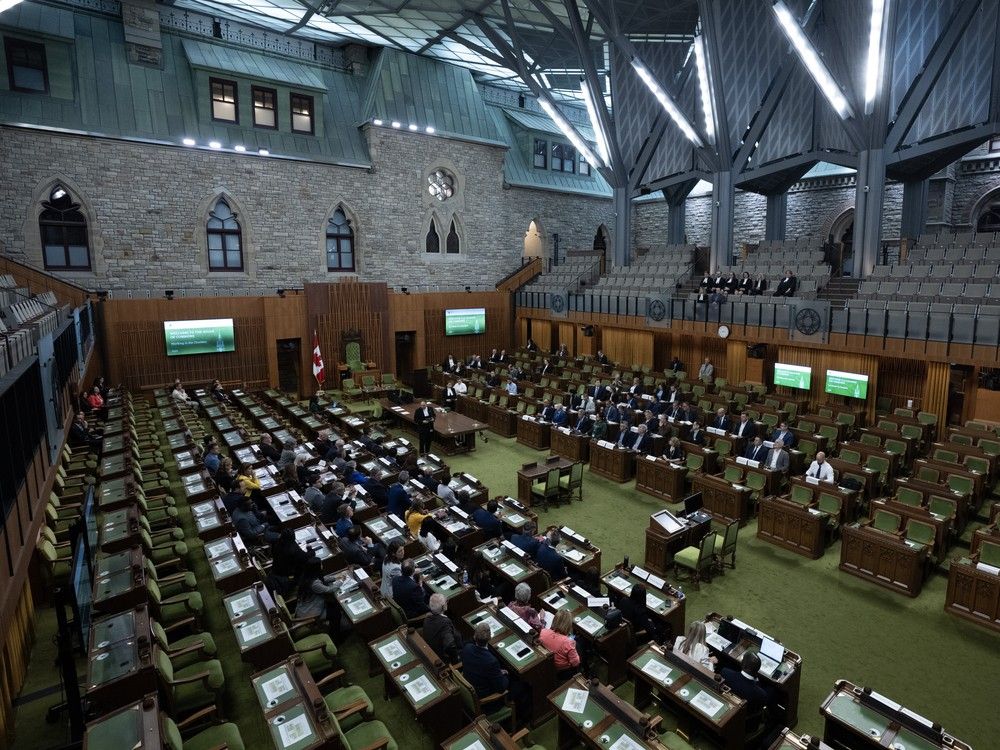
House of Commons on Parliament Hill in Ottawa. MP pensions are up 11.4 per cent, according to a new report from the Treasury Board.

New numbers from the federal

Treasury Board

indicate that annual MP pensions averaged $81,140 last year.

That’s up 11.4 per cent, compounded over the last two years due to inflation indexing, according to

Blacklock’s Reporter

.

The indexation covers retirement allowances, survivor benefits, and disability pensions based on cost-of-living increases.

1,193 MPs, retirees and family members

are enrolled

in the benefits plan. Payments last year included benefits to 192 widows and orphans.

“A plan member’s benefits are based on the number of years of pensionable service at retirement, where that service was accrued, the age at which they start receiving benefits and whether they retire because of a disability,” states the Treasury Board report.

To get a pension, MPs must serve for at least six years.

Six MPs fell short

of that after losing in the recent federal election. That includes ex-Liberals Han Dong (Don Valley North, ON) and Irek Kusmierczyk (Windsor—Tecumseh, ON), and New Democrats Taylor Bachrach (Skeena—Bulkley Valley, BC), Laurel Collins (Victoria), Matthew Green (Hamilton Centre, ON) and Lyndsay Mathyssen (London—Fanshawe, ON).

In 2000, parliament mandated

all MPs to enroll in the pension plan

.

Then in 2005, parliament passed An Act To Amend The Parliament Of Canada Act

mandating automatic annual pay hikes for MPs

based on inflation and a labour department index of wage settlements in the unionized private sector.

Cabinet has

waived the automatic April 1 raises only once,

for three years following the 2008 financial panic.


Our website is the place for the latest breaking news, exclusive scoops, longreads and provocative commentary. Please bookmark nationalpost.com and sign up for our daily newsletter, Posted, here.


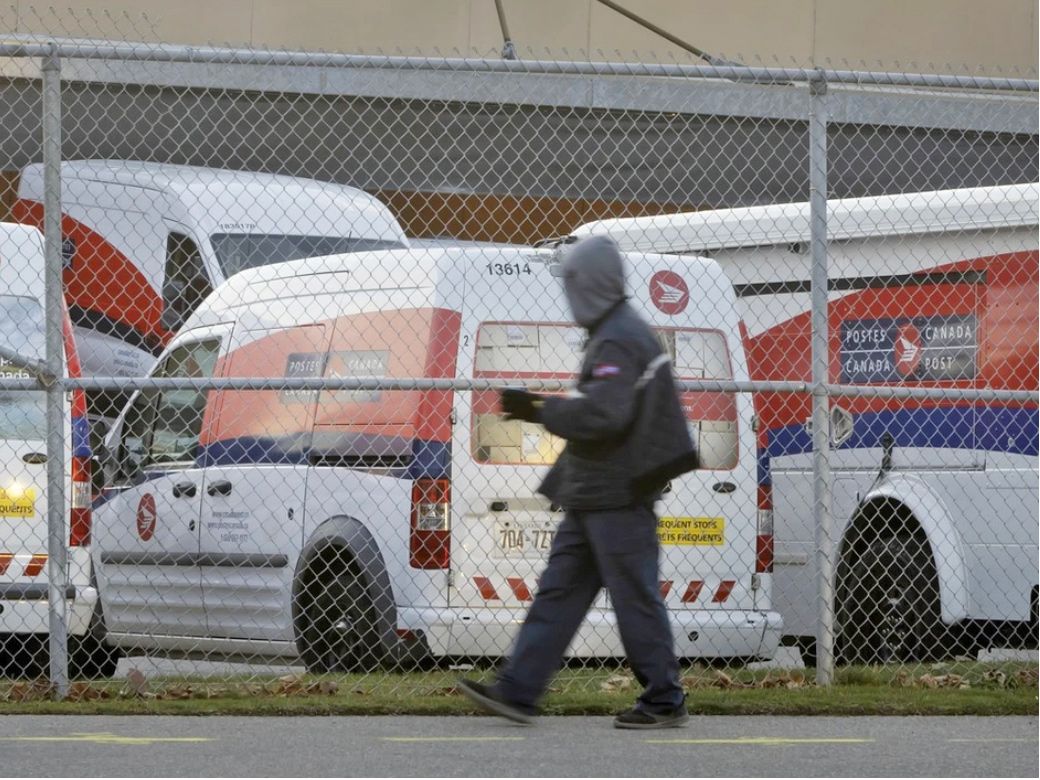
Canada Post denies it is using “drip pricing” in the mandatory “fuel surcharge” for its delivery services.

A B.C. small business owner’s complaint that Canada Post uses illegal “drip pricing” in online shipping services has been certified by the Federal Court as a class-action lawsuit.

The lawsuit seeks compensation from the troubled national postal service for adding a mandatory “fuel surcharge” late in the purchase process, after showing shipping rates. If successful, customers who used Canada Post’s online shipping tools in the last few years could be eligible for reimbursement.

Marci Deane filed a civil lawsuit in Federal Court last year alleging that three of Canada Post’s online shipping services failed to disclose the full price of shipping by adding a required additional charge for fuel after advertising a purchase price, in violation of the Competition Act.

She accused the Crown corporation of using banned “drip pricing” and “double ticketing” in its sales.

The additional charge to the price is significant.

The cost of the fuel surcharge is calculated as a percentage of the price of the shipping job — from a high of 26 per cent to a low of 13.75 per cent in April 2024, depending on service type and destination. Canada Post adjusts it weekly based on the price of fuel

Canada Post denies using “drip pricing” or “double ticketing.” The Crown corporation opposed the certification of Deane’s lawsuit as a class action.

Making it a class-action case means that if the lawsuit is successful, any damages assessed by a judge can apply to a wide group of people who suffered similar losses, rather than just Deane.

In court, Canada Post argued all pricing information is disclosed on a single webpage, during a single stage of the purchasing process. The company said customers are unable to complete their purchase without agreeing to the fuel surcharge, so they can change their mind before paying if they objected. They also argued that when opening an account to use its services, customers agree to terms that would allow fuel surcharges.

Deane complained of three of Canada Post’s online shipping services, called Snap Ship, Ship Online, and Shipping Manager. They allow online users to create, pay, and print shipping labels to send parcels.

Deane, as a small business owner, has been using Canada Post services and programs for businesses for more than 15 years, court heard.

While deciding whether Deane’s lawsuit should be a class-action suit, Justice Jocelyne Gagné was shown screen shots and videos of the Canada Post online purchase process and parsed the experience.

Deane showed the Snap Ship service in action. The video showed that after logging into her account and entering shipping information and destination, Canada Post displays four shipping options with prices, from regular parcel shipping to priority shipping. None of the quoted prices include a fuel surcharge.

Canada Post said that the onscreen box Deane showed was only part of a single, longer page of four successive stages where surcharges are shown in a separate summary box.

The judge found neither of their descriptions to be adequately accurate, noting that each successive box must be closed for the next to open and by the time the destination information is entered in a box, triggering a fuel surcharge being listed in the summary box, that summary is no longer visible onscreen. A user must scroll up to see it.

When the last box is filled out and closed, the page still doesn’t return to the summary page, the judge noted.

That stationary summary box was a change to the site made in July 2023, court heard. Before that, the summary box was dynamic, meaning it moved along with the cascading order process and was always visible.

The mechanics of the three online shipping tools are basically the same, but some have additional business options.

Ship Online is a service anyone can use to create paid shipping labels. Snap Ship is designed for small businesses doing regular low-volume shipping. Shipping Manager is designed for large volume commercial clients.

The Competition Act bans several sales tricks that are considered false or misleading representations in transactions.

“Drip pricing” is when a price is presented that is never attainable because obligatory charges are automatically added later in the purchase process (unless the fee is government mandated, such as a sales tax).

“Double ticketing” is when a product costs more than the lowest of two or more advertised prices, such as the same items having different price tags offered for sale at the same time.

For a claim to be certified as a class action, a court must rule that there is a reasonable cause of action, meaning a sound legal basis for complaining, and there must also be an identifiable group of people suffering the same alleged loss, among other considerations.

The damages claimed by Deane is the cost of the fuel surcharge in all transactions in the time frame, plus the cost of investigating and launching her lawsuit.

If Deane is successful, Canada Post could be forced to reimburse the fuel surcharges.

Certifying a suit as a class action does not assess the merits of it, only that it can appropriately move forward as a court action.

The parties and the judge looked carefully through previous class action competition-related complaints: one against Airbnb over service fees, one against Cineplex over buying online movie tickets, and the third against internet phone service provider Ooma.

Gagné, the judge, questioned how the same shipping transaction could be guilty of both drip pricing and double ticketing.

“One cannot say that Canada Post is, on one hand, adding price elements as the sale process unfolds, and, on the other hand, charging the higher of two or more prices clearly expressed,” Gagné wrote in her ruling, published Thursday.

Gagné rejected Deane’s claim against Canada Post of double ticketing but accepted her claim over drip pricing could proceed as a class action.

She defined the eligible class of claimants as Canadian residents charged fuel surcharges through Canada Post’s online shipping tools Snap Ship, Ship Online, and Shipping Manager after June 23, 2022.

The judge said who was a member of the group and how large it might be should be sorted out at trial. Receipts from customers show a fuel surcharge and Canada Post has online records of some users, she said.

• Email: ahumphreys@postmedia.com | X:

Our website is the place for the latest breaking news, exclusive scoops, longreads and provocative commentary. Please bookmark nationalpost.com and sign up for our newsletters here.