LP_468x60
on-the-record-468x60-white

Factors driving longer wait times include a shortage of specialists and nurses, and limited operating room time, space and staff

The massive surgical backlogs left after rolling pandemic lockdowns are clearing but Canadians are still waiting longer than they were pre-COVID for new hips and knees, cancer surgeries and other “priority” procedures, new data show.

Even though 26 per cent more hip and knee replacements were done in 2024 than 2019, it still wasn’t enough to meet the need: just 68 per cent of Canadians received a hip replacement within the 26-week benchmark last year, compared to 75 per cent in 2019.

For those needing a knee replacement, 61 per cent got a slot in the operating room within the 182-day threshold, compared with 70 per cent in 2019, even though 21 per cent more knee replacements were performed in 2024 than in 2019.

Median wait times for breast, bladder, colorectal, lung and prostate cancer surgery also rose, with prostate cancer seeing the biggest bump in wait times, an extra nine days over 2019.

Wait times for scans to diagnose diseases and injuries also increased, “with MRI scans requiring an additional 15 days and CTS scans three more days compared with 2019,” the Canadian Institute for Health Information (CIHI) reported in a background release.

Canadians waited a median 57 days for an MRI scan in 2024. One in 10 waited 198 days.

The longer people wait, the more they deteriorate. Delays getting to an operating room “can lead to disease progression, increased symptoms of anxiety and depression, risk of mental health flareups and worsening of surgical and nonsurgical patient outcomes,” Canadian researchers have warned.

Hospitals across the country pushed back non-urgent surgeries during the early waves of COVID to free up beds. Almost 600,000 fewer operations were performed in the first 22 months of the pandemic alone compared to 2019, CIHI reported.

The backlog has meant that by the time people see a surgeon, their problem is more complex than it would have been in the past, Dr. James Howard, chief of orthopedic surgery at University Hospital – London Health Sciences Centre said in the news release.

Canada’s aging baby boomer generation, with arthritis and other joint conditions, is also putting pressure on the system.

“So even with surgeons collectively working as much as they can and completing more surgeries than we have in the past, we are not seeing wait times come down due to the complexity and volume of patients presenting to orthopedic surgeons,” Howard said.

While case numbers are bouncing back — five per cent more surgeries of all types were performed in 2023 than in 2019 — the volumes still haven’t kept up with population growth (seven per cent over the same period) or the 10 per cent rise in demand for surgery among those 65 and older, CIHI reported.

“Although an increase in the volume of procedures performed across Canada means that the surgical backlog from the height of the pandemic period has effectively been cleared, ripple effects in the health systems — due in part to the pandemic — persist that impact wait times in Canada,” CIHI’s Cheryl Chui, director of health system analytics, said in a statement.

Factors driving those longer wait times include a shortage of specialists and nurses, limited operating room time, space and staff, and emergency cases that take priority over scheduled ones.

Ontario and other provinces are trying to push through more surgeries and procedures, partly by doing more on an outpatient basis, meaning no overnight hospital stay.

Ontario has also announced plans to expand the number of private clinics providing publicly covered hip and knee replacements. Other provinces have done the same, though “the impact on surgical volumes and wait times is still being assessed,” CIHI said.

According to the agency’s latest waitlist snapshot, while the number of hip replacements increased from 22,000 in 2019, to 28,000 in 2024, and the number of knee replacements from 35,000 to 42,000 over the same period, a smaller proportion of people received joint replacement surgery within the recommended six months.

Nationally, in 2024, only 68 per cent of people needing a new hip were treated within the 26-week benchmark, compared to 75 per cent in 2019.

Ontario fared better than all other provinces: 82 per cent of hip replacement patients were treated within that timeframe. Newfoundland and Labrador (41 per cent) and Prince Edward Island (45 per cent) performed the worst. British Columbia (63 per cent), Saskatchewan (50 per cent), Manitoba (54 per cent) and Quebec (49 per cent) also scored below the proportion nationally. In Alberta, 73 per cent of hip replacements were performed within the benchmark in 2024.

Overall, patients waited a median 125 days for hip surgery in 2024 (half waited less, half waited more). One in 10 waited 340 days.

For knee replacements, 79 per cent of patients in Ontario received surgery within the 26-week benchmark in 2024, compared to 38 per cent in Quebec, 47 per cent in Saskatchewan, 55 per cent in B.C. and 62 per cent in Alberta.

While efforts are being made to better manage and monitor surgical waitlists, researchers have warned that people with severe pain or worsening symptoms aren’t being prioritized.

Wait times for cataract surgery were close to pre-pandemic levels — 69 per cent of people were treated within a 16-week benchmark in 2024 versus 70 per cent in 2019.

The percentage of people who received radiation therapy within 28 days and surgery to repair a fractured hip within 48 hours dropped slightly, by three percentage points from 2019 to 2024, falling to 94 per cent and 83 per cent, respectively.

The volume of prostate cancer surgeries performed dropped by three per cent, from 3,500 in 2019, to 3,400 in 2024. And men waited longer for the procedure — from a median 41 days in 2019, to 50 days in 2024.

Slower-growing cancers like prostate cancer tend to have the longest surgical wait times, CIHI reported.

Median wait times for breast cancer surgery increased from 18 days in 2019 to 23 days in 2024, and wait times for bladder cancer increased from 24 days to 28 days.

National Post

Our website is the place for the latest breaking news, exclusive scoops, longreads and provocative commentary. Please bookmark nationalpost.com and sign up for our daily newsletter, Posted, here.


Leader of the Government in the House of Commons Steven MacKinnon responds to a question during question period in the House of Commons on Parliament Hill in Ottawa on Monday, June 9, 2025.

OTTAWA — Government House Leader Steven MacKinnon rejected the Bloc Québécois’ proposal to split Bill C-5 in two parts, so that the sections on lifting internal trade barriers and the fast-tracking of major projects can be studied separately.

Bloc House Leader Christine Normandin said earlier this week it made little sense that the bill, in its current form, would be sent to the House of Commons committee on transport as it falls under the mandate of Minister of Transport and Internal Trade Chrystia Freeland.

Normandin instead suggested dividing the bill to study the portions on free trade and labour mobility in one committee and the fast-tracking of major projects in the national interest in another. She said the free trade portion is “rather consensual” and could go “a bit faster,” whereas the major projects portion would warrant more scrutiny.

On Wednesday, MacKinnon offered a resounding “no” to the Bloc’s proposition.

“This is a bill that responds to economic conditions caused by the tariff war, among other things, and mobilizes premiers, mobilizes Canadians from coast to coast to coast behind projects of national significance,” he said.

“These projects have a certain urgency, as do interprovincial trade barriers that must fall,” he added. “This is a very comprehensive bill. We understand that it’s going to be debated, but it’s something that we solicited and secured a mandate for.”

Prime Minister Mark Carney said

his intention is to see the bill passed before June 20

, when the House of Commons rises and MPs return to their ridings for the summer.

“It is a top priority for this government, and we will do everything to get it passed before the summer,” he said after C-5 was tabled on Friday. “And if Parliament needs to sit longer, it should sit longer in order to get it passed. That’s what Canadians expect.”

MacKinnon said to date there is no consensus from other parties to sit into the summer.

The part of the bill on lifting internal trade barriers would allow a good or service that meets provincial or territorial rules to have met federal requirements but also make it easier for workers to get a federal licence by recognizing provincial or territorial work authorizations.

The second part, which is a bit more contentious, seeks to get projects deemed in the national interest — such as highways, pipelines, mines and nuclear facilities — built faster by having only one environmental assessment done and respecting federal conditions.

On Wednesday,

the Assembly of First Nations (AFN) once more expressed concern

the Liberals were “ramming” through this bill without giving First Nations time to properly study the text.

“I keep hearing that they want to push through this legislation right to the end of this month, and I think that that’s the wrong way to go,” said AFN National Chief Cindy Woodhouse Nepinak during a press conference on Parliament Hill.

Woodhouse Nepinak is expected to meet with Carney in July, presumably after the bill may have passed. She urged the government to slow down the process to allow meaningful consultation and study to occur with all the parties involved, including First Nations.

“Look, take the summer, take the time to listen to First Nations, take the time to listen to Canadians. And I think that’ll make a more united country,” she said.

Conservative Leader Pierre Poilievre, on the other hand, is favourable to the fast-tracking of major projects like pipelines and dismissed the need for a consensus to move ahead.

“If you wait till everybody agrees on everything, nothing will happen. You’re never going to get everybody to agree on every single project,” he told reporters on Monday.

“If the prime minister says he’s going to wait until everyone agrees, then nothing will get done, which is what has been happening for the last decade,” he added.

Woodhouse Nepinak said national chiefs before her were ignored in discussions on major projects, which caused civil unrest and lawsuits that slowed down the projects.

“Isn’t it better to talk through things rather than always being in litigation?” she asked. “It seems like First Nations always need to litigate, and then we get… results later.”

“Does Canada want to change that or not?”

National Post

calevesque@postmedia.com

Get more deep-dive National Post political coverage and analysis in your inbox with the Political Hack newsletter, where Ottawa bureau chief Stuart Thomson and political analyst Tasha Kheiriddin get at what’s really going on behind the scenes on Parliament Hill every Wednesday and Friday, exclusively for subscribers. Sign up here.

Our website is the place for the latest breaking news, exclusive scoops, longreads and provocative commentary. Please bookmark nationalpost.com and sign up for our newsletters here.

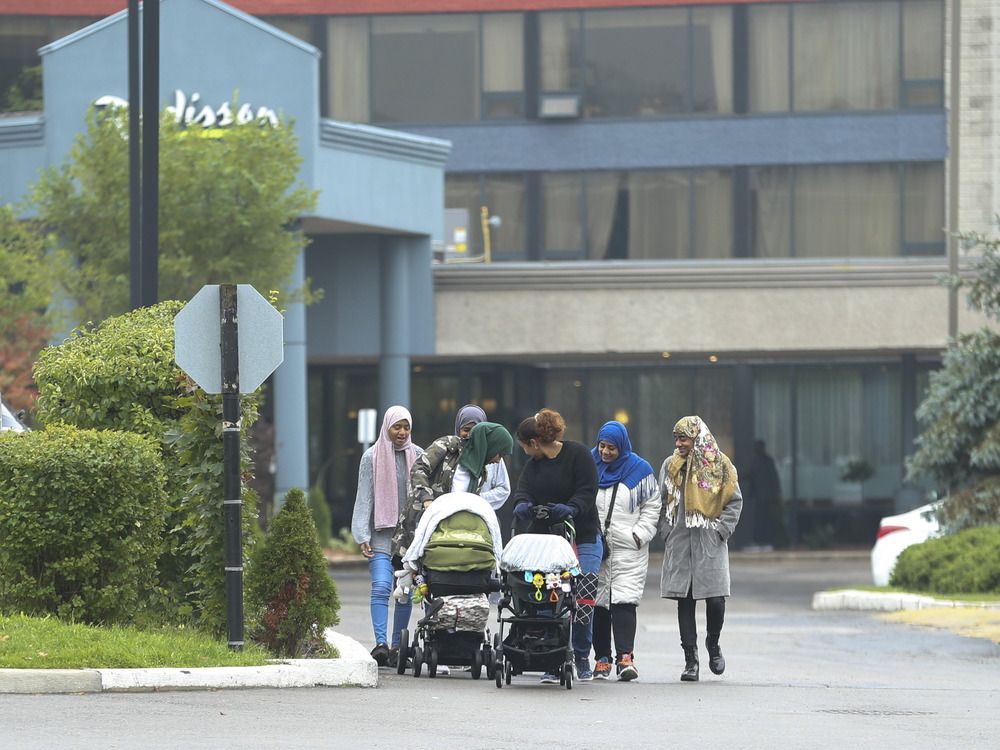
Lilly and Jack Sullivan have been missing since May 2, 2025.

Mounties searching for two young Nova Scotia siblings who went missing more than a month ago say they’ve administered lie detector tests, collected hundreds of hours of surveillance video from the area around the children’s home, fielded 488 tips and formally interviewed 54 people.

But they still haven’t found Lilly and Jack Sullivan.

“This investigation is being led by seasoned investigators committed to gathering information about the disappearance of Lilly and Jack,” RCMP Cpl. Guillaume Tremblay said Wednesday.

“All scenarios are being considered and every resource and tools are at their disposal.”

Mounties have previously said there is no evidence the children were abducted. Tremblay would not say Wednesday if investigators still believe that to be the case, and he would not get into whether or not police believe the children are still alive.

“We’re leaving no stones unturned in this case,” Tremblay said.

He wouldn’t say how many people have been subjected to lie detector tests during the hunt for the missing children. “Experts are examining every question and answer that those individuals are providing,” Tremblay said. “And it could guide the investigation.”

Mounties won’t say if they have any suspects in the case. “I can’t speak to persons of interests at this time,” Tremblay said. “It would compromise the investigation that’s ongoing.”

Mounties first got the call on Friday, May 2 at 10 a.m. that Lilly, 6, and Jack, 4, were missing from their trailer home on Gairloch Road in Lansdowne Station, Pictou County. Their mother and stepfather told police the children must have slipped out while they were in bed with their baby.

Late last month, the RCMP said the children were seen in public with family members one day earlier.

Mounties appear to have pulled out all the stops in the search for the pair.

“More than 11 Nova Scotia RCMP units are working on the missing persons investigation, some of which include the Northeast Nova RCMP Major Crime Unit, Pictou County District RCMP, Digital Forensic Services, Truth Verification Section, Legal Application Support Team, Police Dog Services, Underwater Recovery Team, Behavioural Sciences Group, and the Criminal Analysis Service,” the force said Wednesday in a news release.

“They are joined in their investigational efforts by the National Centre of Missing Persons, Canadian Centre for Child Protection, and provincial and municipal police agencies from Nova Scotia and other parts of Canada.”

Police have “extensively searched the property from which the children went missing, including every aspect of the home, grounds, outbuildings and nearby septic systems, wells, mineshafts and culverts,” said the news release.

Mounties have also obtained search warrants “to seize and examine materials and devices that may provide information useful to the investigation,” it said.

“We’re accessing, evaluating and analyzing a significant volume of information from a variety of sources. We have a very coordinated and deliberate approach to make certain all information is meticulously scrutinized, prioritized and actioned to ensure nothing is missed,” Cpl. Sandy Matharu, investigation lead with the Northeast Nova RCMP Major Crime Unit, said in the release. “We’re committed to doing what is necessary to locate Lilly and Jack and advance the investigation, which may take longer than we all hoped.”

Daniel Robert Martell, who identifies as the children’s stepfather, told The Chronicle Herald earlier last month that he and the children’s mother, Malehya Brooks-Murray, last heard Jack and Lily on the morning of May 2, as they lay in bed with their baby.

“The sun was already up and Lily came into the (bedroom),” said Martell.

“She had a pink shirt on. We could hear Jackie in the kitchen. A few minutes later we didn’t hear them so I went out to check. The sliding door was closed. Their boots were gone.”

He surmised the children slipped outside through a sliding door.

 Daniel Martell, who identifies as the stepfather of Lily and Jack Sullivan, speaks with reporters following an announcement earlier this month that the search for the missing Pictou County children was being scaled back.Ryan Taplin – The Chronicle Herald

Martell said when they noticed the two children were missing May 2, he immediately jumped in the car and searched neighbouring roads, looking in culverts. By the time he returned home, the RCMP were there, having been called by the children’s mother.

Martell is not Jack and Lily’s father. He’s been Brooks-Murray’s partner for three years, though after the children disappeared she reportedly left him and the county with their baby and is staying with family.

Martell has said that he had been working with Northeast Nova Major Crime, had provided the RCMP with his cellphone and had agreed to take a lie detector test. Martell told CBC he passed that test, so “you really can’t point fingers at me anymore.” 

On the weekend after they vanished, Brooks-Murray told CTV that Jack and Lilly are not typically the type of children who would go outside on their own. “I just want to remain hopeful, but there’s always in a mother’s mind, you’re always thinking the worst,” Brooks-Murray said at the time.

A large scale-ground search began immediately after the children were reported missing. Hundreds of volunteers, multiple dogs, drones, an underwater recovery team and several aircraft scoured a heavily wooded 5.5-square-kilometre area before search efforts were scaled back on May 7.

Several additional searches have taken place since, many of them on weekends.

“The terrain here in Nova Scotia is very rugged in that area,” Tremblay said.

On Wednesday, Mounties said the information they have gathered to this point has not identified new search areas.

Police want anyone with information on the whereabouts of the missing children to call the Northeast Nova RCMP Major Crime Unit at 902-896-5060. To remain anonymous, contact Nova Scotia Crime Stoppers, toll-free, at 1-800-222-TIPS (8477), submit a secure web tip at www.crimestoppers.ns.ca, or use the P3 Tips app.

Our website is the place for the latest breaking news, exclusive scoops, longreads and provocative commentary. Please bookmark nationalpost.com and sign up for our daily newsletter, Posted, here.


The Spirit of British Columbia leaves the Tsawwassen Ferry Terminal in Delta, BC, May, 14, 2025.

OTTAWA — BC Ferries set off a tidal wave of controversy on Tuesday after announcing a major shipbuilding deal with a Chinese state-owned enterprise, with the ripple effects of the decision reaching Ottawa.

Vancouver Island Conservative MP Jeff Kibble raised the issue in Wednesday’s question period, accusing the Liberal government of rewarding the provincial carrier for selling out Canada’s national interest.

“The Liberals are set to hand over $30 million (in federal subsidies) to BC Ferries while BC Ferries hands over critical jobs, investment and industry to China,” said Kibble.

BC Ferries said

in a press release

that it had awarded China Merchants Industry Weihai Shipyards (CMI Weihai) a contract to build four new vessels after a “rigorous” global bidding process.

Kibble blasted BC Ferries in the House of Commons for buying the ships from China instead of a “proven Canadian shipbuilder” and pressed the Liberal government to tie federal ferry subsidies to buying Canadian-built ships.

Liberal Transport Minister Chrystia Freeland said that she shared Kibble’s concerns about procurement “at all levels of government” but wouldn’t comment directly on the BC Ferries contract, calling it a provincial matter.

One politician who hasn’t hesitated to criticize the deal is the provincial minister responsible for BC Ferries.

B.C. Transportation Minister Mike Farnworth was quick to distance himself from the decision, saying he was worried about the message it sends in the midst of Chinese economic aggression.

“I do have concerns around procuring services from any country that is actively harming Canada’s economy through unfair tariffs or other protectionist trade practices. I have shared these concerns with BC Ferries,” Farnworth told the media.

Yet, despite his reservations,

he ruled out blocking

the BC Ferries-CMI Weihai deal.

“BC Ferries is an independent company responsible for its own operational decisions,” said Farnworth.

The B.C. government is the sole preferred shareholder in
BC
Ferries and it receives public funding.

Farnworth added that he was “disappointed” that the contract didn’t include more involvement from Canadian shipyards.

BC Ferries’ head of fleet renewal, Ed Hooper, told Postmedia

that no Canadian shipbuilders

bid on the contract won by CMI Weihai.

BC
Ferries CEO Nicolas Jimenez

said on Tuesday when the deal was announced that there are currently no tariffs associated with the import of vessels of this type into Canada and tariff disputes didn’t factor into the decision.  The value of the contract has not been released.

He said that the shipyard was “the clear choice based on the overall strength of its bid.”

“When it comes to things like trade policy, industrial policy, geopolitics, I think we would really defer that to the federal and provincial governments and expect them to manage and work those issues,” said Jimenez.

Liberal Prime Minister Mark Carney

promised to ramp up

Canadian shipbuilding during this spring’s federal election campaign.

The federal government previously awarded the Chinese state-owned company a contract to

build a new vessel

for East Coast ferry operator Marine Atlantic, according to a 2023 filing from Transport Canada.

The ship began service

between Nova Scotia and Newfoundland

in July 2024.

Federal Procurement Minister Joël Lightbound didn’t respond to an inquiry from the National Post about the BC Ferries-CMI Weihai deal, and didn’t indicate whether the federal government would continue to take bids from the company.

A spokesperson with Public Services and Procurement Canada told the National Post that CMI Weihai does not appear on the agency’s database of active bids.

Christian Leuprecht, a distinguished professor at Royal Military College, said that the BC Ferries-CMI Weihai contract carries clear national security risks.

“The moment you have Chinese equipment onboard, there will be tons of backdoors that either the company can deliberately install or Chinese intelligence can exploit,” said Leuprecht.

He added that B.C. is especially exposed to Chinese high jinks with the ferry being the main transportation artery to capital city Victoria.

“If there is, for instance, a confrontation between the U.S. and China over Taiwan, one of the things that China will do is try to sow social chaos,” said Leuprecht.

“One obvious way to do that in B.C. is to take out it’s most important ferry route.”

National Post, with a file from The Canadian Press

rmohamed@postmedia.com

Get more deep-dive National Post political coverage and analysis in your inbox with the Political Hack newsletter, where Ottawa bureau chief Stuart Thomson and political analyst Tasha Kheiriddin get at what’s really going on behind the scenes on Parliament Hill every Wednesday and Friday, exclusively for subscribers. Sign up here.

Our website is the place for the latest breaking news, exclusive scoops, longreads and provocative commentary. Please bookmark nationalpost.com and sign up for our daily newsletter, Posted, here.


York region Police say a shooting outside a Jewish community centre in a GTA neighbourhood was not a hate crime.

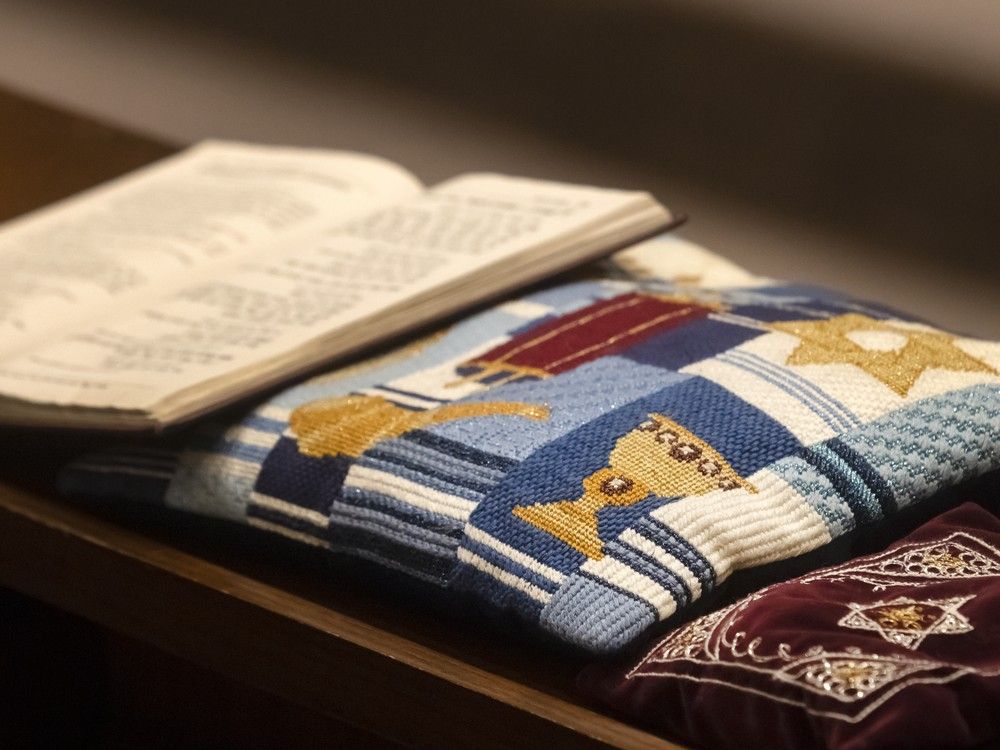
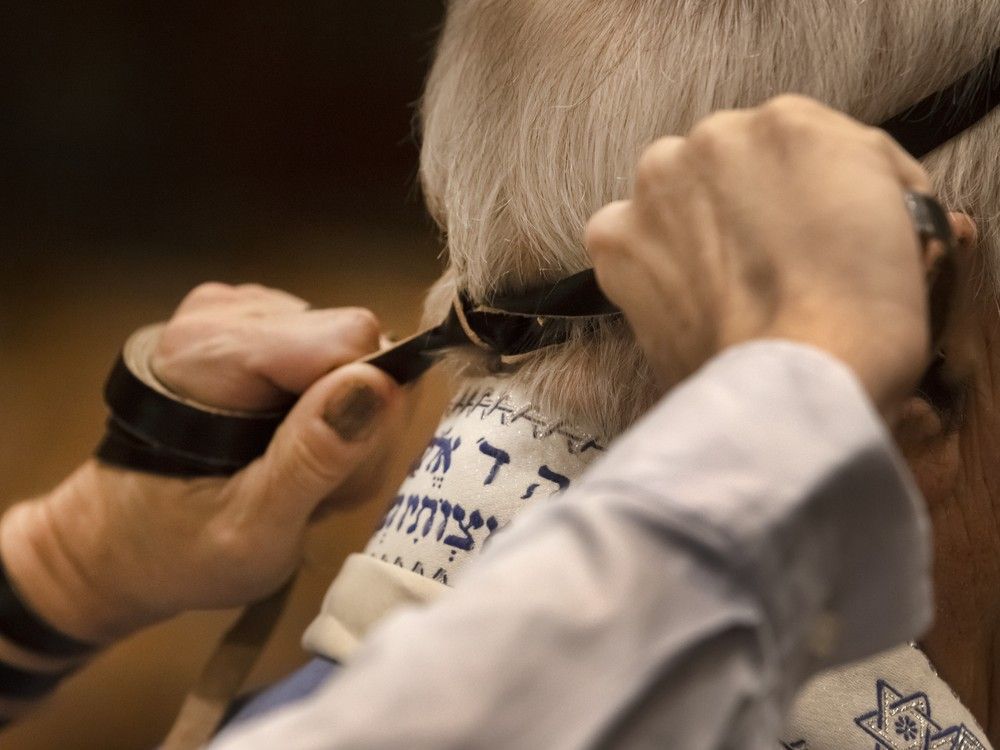
A shooting near the Jewish Community Centre (JCC) in Vaughan, Ontario on Wednesday morning is not being ruled a hate crime, York Regional Police said during a midday press conference.

“There’s no indication at all that this is a hate bias incident,” media relations officer James Dickson said in response to a question from National Post.

Dickson told reporters at the scene that officers responded to reports of a shooting at 10:25 a.m. and confirmed that a 33-year-old man had been shot. The individual was taken to hospital with “serious but non-life threatening injuries” from a gunshot wound, he said.

“We do believe that the shooting was targeted,” Dickson added, while refusing to provide “any additional information in terms of identifying any of our victims.”

York Regional Police are currently looking for one “white male” suspect “operating an older-model, dark-coloured sedan.” Dickson asked people in the community with any information about the incident to contact local law enforcement but said they “don’t believe that there’s any public safety (concerns) at this time.”

“None of the criteria that would be there for the Hate Crime Investigation Bureau to be brought into consultation have been met,” the spokesman said. “We do believe this to be a targeted incident. We do know that there’s been a lot of incidents this year right across Vaughan that have brought hate bias to the front of people’s minds and I can confirm that this is not related to that whatsoever nor the (Jewish Community) Centre.”

The neighbourhood was quiet on the sunny afternoon. A few local students walked by, and captured images of the police tape blocking off streets. Local residents expressed alarm at the sight of their neighbourhood being filled with police cruisers.

“I figured it’s probably another kid just setting up a firework,” one eyewitness, who asked not to be identified, told the Post. “I don’t know what this government is doing,” he said, adding that the community is home to the elderly and kids and the threat of violence is disconcerting.

He told the Post that he heard lockdown announcements broadcast from the Jewish schools located nearby.

“I’m just so concerned because I come home late from work. If this is happening in broad daylight,” he said, without finishing the sentence.

Our website is the place for the latest breaking news, exclusive scoops, longreads and provocative commentary. Please bookmark nationalpost.com and sign up for our daily newsletter, Posted, here.


This photograph taken and released by the Indian Press Information Bureau (PIB) on June 6, 2025, shows India's Prime Minister Narendra Modi addressing the public during the inauguration of various projects at Katra in Jammu and Kashmir.

OTTAWA

— A Liberal MP says he met with Prime Minister Mark Carney to raise concerns about the decision to invite India’s Prime Minister Narendra Modi to Canada to attend the upcoming G7 summit. 

Sukh Dhaliwal represents the Surrey, B.C. riding, where prominent Sikh activist Hardeep Singh Nijjar was shot outside of a temple in June 2023, a killing that Canada has linked to agents acting on behalf of the Indian government. 

India has denied any involvement in Nijjar’s death. Four Indian nationals have been charged in the killing.

Since Modi confirmed last week that he would be attending next week’s G7 meeting in Alberta at Canada’s invitation,

Dhaliwal said he’s heard from many concerned constituents and confirmed to reporters that he raised them directly with the prime minister on Wednesday. 

“We expressed to him what our constituents are saying, and he knows the issue very well, and he’s very strong and alarmed on this,”

Dhaliwal told reporters on his way into the Liberals’ weekly caucus meeting. 

Gurbux Saini, the Liberal MP for the riding of

Fleetwood—Port Kells, said he also raised the issue with the prime minister and said he disagrees with the decision to invite Modi. 

“It’s not a Hindu-Sikh issue,” Saini told reporters.

“It’s a Canadian issue.”

Saini cited statements made by the RCMP that it has evidence showing India’s government to be involved in violent crime unfolding in Canada, from murders to intimidation by criminal gangs towards the South Asian community.

“India has to be accountable,” Saini said.

“They have to give assurance that they are going to cooperate with our agencies.”

He suggested that not only was the invitation to Modi damaging to Canada’s reputation, but that he was also concerned about a report that Canada had extended an invitation to the Crown Prince and Prime Minister of Saudi Arabia,

Mohammed bin Salman. 

Human rights groups like Amnesty International have issued statements about what they say has been the erosion of human rights under his leadership.

“It is a damaging thing, because Canadians are known in the world as caring and compassionate and people who love human rights,” said Saini.

Carney’s office confirmed he and the crown prince recently spoke on “deepening bilateral trade” and discussed other issues, including energy security and the need for peace in the Middle East.

Last week, Carney defended his decision to invite Modi to next week’s G7 meeting by saying that he did so as chair of the leaders’ group and that it was important for India to be at the table for discussions on trade and security, given it plays a central role in supply chains as well as boasts the world’s fifth-largest economy and largest population.

Sikh groups have nevertheless denounced Modi’s invitation and plan to meet with MPs later on Wednesday to press them to speak up.

Earlier this week, a coalition of Sikh Canadian organizations wrote to MPs from the Liberals and Conservatives whose ridings have sizeable Sikh populations, asking them to reject the invitation.

In a statement posted to X on Monday, Randeep Sarai, who serves as the secretary of state for international development, responded to some of those concerns.

“As a proud Sikh Canadian and Member of Parliament, I hear the concerns many of you are expressing regarding India’s participation at the G7.”

“Let me be clear: the safety and security of Canadians is, and always will be, our top priority.”

International Trade Minister Maninder Sidhu told reporters on Wednesday he has heard “concerns about invitations to leaders,” but defended the need to bring together different leaders to sort through economic issues, given the uncertainty caused by U.S. President Donald Trump’s global tariffs.

“We need to be able to collaborate and, of course, work out some issues.”

Ontario Liberal MP and former cabinet minister Karina Gould said she understands why, in a time of economic uncertainty and the need to diversity trade, it was important to have both India and Saudi Arabia around the table.

“But that being said, as Canada, you know, we also have certain values that are important to us, when it comes to human rights.”

National Post

staylor@postmedia.com
Get more deep-dive National Post political coverage and analysis in your inbox with the Political Hack newsletter, where Ottawa bureau chief Stuart Thomson and political analyst Tasha Kheiriddin get at what’s really going on behind the scenes on Parliament Hill every Wednesday and Friday, exclusively for subscribers. Sign up here.

Our website is the place for the latest breaking news, exclusive scoops, longreads and provocative commentary. Please bookmark nationalpost.com and sign up for our daily newsletter, Posted, here.


Grafitti stating “Stolen Land” in a Toronto park.

A majority of Canadians reject the idea they live on stolen Indigenous land, and the older people are, the more likely they are to say they don’t, according to a new public opinion poll.

Among all respondents across Canada, 52 per cent said they did not live on stolen Indigenous land, with 27 per cent saying they do. The remaining 21 per cent said they didn’t know or declined to answer.

Notably, there was a significant generational divide among those who answered

the national opinion survey

, conducted by Leger Marketing for the Association for Canadian Studies and provided to Postmedia.

More respondents in the youngest cohort, 18-to-24-year-olds, agreed they did live on stolen Indigenous land (41 per cent) than rejected the idea (37 per cent). That contrasts with those in the oldest age group of 65 years or older, who overwhelmingly said they did not live on stolen land (65 per cent) with only 15 per cent agreeing they did.

In between them, the remaining age groups were on an unbroken sliding scale in their answers: the older they were the more likely they were to reject the statement they lived on stolen land, and, conversely, the younger they were the more likely they were to agree that they did.

The sentiment rejecting the idea they live on stolen Indigenous land was a low majority regardless of the respondents’ region in Canada, except for in Atlantic Canada, where most people still rejected the idea, but at a nationally low rate of 44 per cent, with 29 per cent of Atlantic respondents saying yes, they do live on stolen land.

The type of land people live on also impacted their feelings on the issue.

Canadians living in rural areas were the least likely to agree they live on stolen Indigenous land, with urban dwellers the most likely to agree.

When asked to agree or disagree with the statement “I live on stolen Indigenous land,” 56 per cent of respondents living in a rural area said they disagree, 24 per cent said they agree, and 20 per cent said they didn’t know or didn’t answer. For those living in a suburban area, 50 per cent said they disagree, 29 per cent said they agree, and 21 per cent didn’t give an answer. For urban dwellers, 46 per cent disagreed, 34 per cent agreed and 20 per cent didn’t answer.

The city they live in also impacted opinions.

Those living in Calgary were the most vociferous in rejecting that their land is “stolen” among the cities named in the polling data. In Calgary, 69 per cent said no, 20 per cent said yes, and 11 per cent didn’t answer.

That differs sharply from those living in Edmonton, just 300 kilometres away in the same province, where respondents were the most amenable to the idea: 41 per cent said no, 32 per cent said yes, and 27 per cent didn’t answer.

Montrealers had the second most forceful rejection: 53 per cent said no, 26 per cent yes, and 21 per cent didn’t answer.

Next came those living in the Hamilton-Niagara peninsula, where 50 per cent said no, 27 per cent said yes, and 23 per cent didn’t answer, followed by the greater Ottawa area with 50 per cent saying no, 35 per cent saying yes, and 15 per cent not answering; Vancouver was next, where 45 per cent said yes, 34 per cent said no, and 21 per cent didn’t answer.

In the Greater Toronto Area, 43 per cent said no, 30 per cent said yes, and 27 per cent didn’t answer.

A majority of respondents who are Indigenous (53 per cent) said they live on stolen Indigenous land, although more than one third of Indigenous respondents (36 per cent) said no.

Homeowners are more likely to reject the belief they’re living on stolen Indigenous land than renters (53 per cent said no compared to 42 per cent).

Students (50 per cent) and the unemployed (37 per cent) are more likely to agree they live on stolen land than workers, with full-time workers (35) more likely to agree than part-time workers (30).

Respondents who described themselves as non-immigrants are more likely to reject that they live on stolen land than those who identified as immigrants (51 per cent compared to 44 per cent).

“Most Canadians reject the idea that they live on stolen Indigenous lands,” said Jack Jedwab, president of the Montreal-based Association for Canadian Studies.

“This reflects not just a disagreement over language, but a deeper divide in how people view Canada’s history — highlighting ongoing political conversations about land ownership and societal values.

“The findings also raise important questions about the impact of public land acknowledgments, particularly when they are made without genuine understanding or conviction…. The survey results suggest that requiring Canadians to publicly acknowledge they live on stolen Indigenous lands would imply that the majority does so without conviction.”

The poll asking Canadians if they think they live on “stolen” Indigenous land suggests it may be more palatable to use a different word: unceded.

The term unceded has become popular in modern usage, particularly in land acknowledgements that are frequently read at the start of government meetings and official public gatherings.

Even King Charles III in his recent throne speech in Ottawa began by saying: “I would like to acknowledge that we are gathered on the unceded territory of the Algonquin Anishinaabeg people. This land acknowledgement is a recognition of shared history as a nation.”

 King Charles, right, delivers the speech from the throne in the Senate in Ottawa on May 27. In his recent throne speech in Ottawa, he began by saying: “I would like to acknowledge that we are gathered on the unceded territory of the Algonquin Anishinaabeg people.”

There has been some pushback. In April professors launched a lawsuit against the at the University of British Columbia complaining that land acknowledgments saying the school is on “unceded Indigenous” land violates legislation requiring universities to be non-political. The petition claims the word unceded “is often considered synonymous or closely affiliated in meaning with the assertion that the territory of Canada is ‘stolen land’ and that the speaker, at least to some degree, and in this respect, does not recognize Canada as a lawful or legitimate state.”

Compared to the 52 per cent who declared in the recent poll they did not live on “stolen Indigenous land,” a 2021 survey found only 42 per cent of respondents rejected the statement that they live on “unceded Indigenous territory.”

“Paradoxically, the push back on the word ‘stolen’ may reflect not indifference, but the weight and seriousness people associate with it, and what such acknowledgement might imply,” said Jedwab. “Dismissing such views does little to advance issues that are highly relevant for the country’s past and future.”

The public opinion survey was conducted with 1,537 adult respondents in Canada from May 16 to 18. As a non-probability sample in a panel survey, traditional margins of error do not apply.

• Email: ahumphreys@postmedia.com | Twitter:

Our website is the place for the latest breaking news, exclusive scoops, longreads and provocative commentary. Please bookmark nationalpost.com and sign up for our daily newsletter, Posted, here.


AI Minister Evan Solomon speaks with reporters outside of the Liberal cabinet meeting in West Block on Tuesday, June 10, 2025.

OTTAWA

— As ministers settle into their new roles, discussions are underway about who is best suited to steer the government’s efforts to legislate against online harms, cabinet minister Steven Guilbeault said on Tuesday. 

Questions have arisen about which minister and department would be best suited to handle the complicated issue after the Liberals’ proposed Online Harms Act died in Parliament when Prime Minister Mark Carney triggered a federal election in March.

“It’s a good question,” said Guilbeault, who oversees the Canadian Heritage department, told reporters on his way into the Liberals’ weekly cabinet meeting.

“We’re having conversations to see what would be the most appropriate department to bring this forward.”

Canadian Heritage had been the first department to develop and later introduce the Liberals’ initial plan to combat the harms Canadian users experience online.

That proposal, which was released in 2021, was met with widespread backlash over concerns about the requirement for social media companies to remove content within 24 hours after receiving a complaint.

Experts had warned the provision was overly broad and risked infringing on free expression, given that companies could remove legal content.

The Liberals then struck an advisory group and got to work on figuring out a Plan B.

Responsibility for the bill also shifted from Canadian Heritage to the Justice Department.

In early 2024, former justice minister Arif Vriani introduced Bill C-63, which proposed to create a new digital safety regulator that would be tasked with ensuring social media giants took steps to reduce users’ access to content, such as child sex abuse images and incite extremism and violence.

That bill was also met with backlash over its proposal to introduce stiffer sentences for hate-related offences and reintroduce a controversial section to the Canadian Human Rights Act to allow people to bring forward complaints of hate speech, which civil liberties advocates and Parliamentarians said risked violating free speech.

Virani spent months defending the need for the tougher Criminal Code measures to be included in the online safety bill, but last December announced the government was prepared to split the bill to help get it passed.

In January, former prime minister Justin Trudeau announced his resignation and that Parliament would be suspended until March.

Emily Laidlaw, a Canada Research Chair in cybersecurity law at the University of Calgary, who sat on the government’s expert advisory group, said it was a mistake for the government to have combined different provisions into the same legislation and that by the time it announced the legislation would be split, “it was too late.”

“What I’m hoping is, when they reintroduce it, they have very firmly the platform regulation law,” she says.

Should the Liberals want to propose changes to the Criminal Code or the Canadian Human Rights Act, that should be separate, she said.

Justice Minister Sean Fraser told reporters on Tuesday that the government was going to look at different measures when it comes to protecting children online, but would have more to say in the months ahead.

One new factor in how the Liberals may decide to proceed is the fact that Carney named to his cabinet the country’s first minister responsible for artificial intelligence and digital innovation, a position currently held by former broadcaster Evan Solomon, who was elected in late April’s general election.

The Liberals in their last bill listed AI-generated sexualized “deepfakes” as one of the harms companies would have to take steps to tackle.

Asked whether online harms would fall under his mandate, Solomon told reporters on Tuesday that it was “up for debate.”

“But probably yeah.”

Laidlaw said while she does not believe the government needs to start a new round of consultations, it ought to take a second look at the scope of harms it is seeking to tackle.

For example, she suggested there was room to include the issue of identity fraud.

“I actually think it should be broadened to include some of the ways that AI can be used to facilitate harm, so it might not just be the typical social media on Instagram.”

National Post
staylor@postmedia.com
Get more deep-dive National Post political coverage and analysis in your inbox with the Political Hack newsletter, where Ottawa bureau chief Stuart Thomson and political analyst Tasha Kheiriddin get at what’s really going on behind the scenes on Parliament Hill every Wednesday and Friday, exclusively for subscribers. Sign up here.

Our website is the place for the latest breaking news, exclusive scoops, longreads and provocative commentary. Please bookmark nationalpost.com and sign up for our daily newsletter, Posted, here.


Suspected cocaine found by Canada Border Services Agency hidden in a commercial truck at the Ambassador Bridge border crossing in Windsor, Ont., on Feb. 11.

A cross-border drug smuggling network using commercial truck drivers to haul large loads of cocaine across the border from the United States into Canada has been revealed by police in southern Ontario, leading to the arrest of nine men and the seizure of 479 kilograms of bulk cocaine bricks.

Of the nine arrested, six have since been released on bail while three are still awaiting bail hearings after what Peel Regional Police described Tuesday as the largest drug bust in the police service’s history.

Investigators gave the cocaine an estimated retail street value (based on a per-gram level) of $47.9 million.

More than a third of the cocaine was caught at the border, reflecting a significant trend in the flow of drugs: from Mexico into the United States and then smuggled into Canada hidden aboard commercial transport trucks.

The importations were destined for Peel Region, located to the west and northwest of Toronto and encompassing the cities of Mississauga and Brampton and the town of Caledon. It is a large commercial trucking and distribution point, and home to the Toronto Pearson International Airport.

“Here in Peel, we have the largest logistics hub outside of Los Angeles, and what that means is that vulnerabilities in logistic systems can be exploited by criminal networks to their advantage,” said Peel’s Chief of Police Nishan Duraiappah.

 Nine men charged by Peel Regional Police in a large cocaine smuggling probe using cross-border commercial trucks.

The Peel probe, in collaboration with other Canadian and American agencies, identified commercial trucking companies and storage facilities connected to the smuggling operation, he said.

“This represents a seismic blow to transnational organized crime … these drugs came from south of the border and were destined right here in Peel and the greater Toronto area and other communities in Canada. And what they do is represent secondary and tertiary criminal acts, vulnerabilities and harm that damage our communities right across Ontario and beyond.”

The arrests and seizures, called Project Pelican, follow

recent similar arrests

, indictments and seizures in the United States of several American, Canadian and Mexican citizens who were using commercial transport trucks to

smuggle tonnes of cocaine

into Ontario and Montreal. The U.S. cases linked Los Angeles to Brampton through trucking operations.

Project Pelican began a year ago when investigators with Peel police’s Specialized Enforcement Bureau learned of an organized criminal network smuggling drugs into Peel region, Duraiappah said.

Det.-Sgt. Earl Scott, case manager for Project Pelican, said the importations were “a well-organized criminal enterprise.”

Peel investigators worked with Canada Border Services Agency (CBSA) officers to stop and search two specific trucks crossing into Canada.

On Feb. 11, border agents at Ambassador Bridge crossing in Windsor sent a tractor trailer arriving in Canada for a secondary examination based on intelligence developed during the probe, said Abid Morgan, CBSA’s director of intelligence and enforcement for the Southern Ontario region. CBSA officers, aided by a drug sniffing detector dog, found 110 bricks of suspected cocaine that weighed 127 kg. One person was arrested and charged.

 Stacks of bricks of bulk cocaine seized in Project Pelican, a large cross-border drug smuggling probe, are display by Peel Regional Police on Tuesday.

On May 24, border agents at the Bluewater Bridge border crossing in Sarnia sent an arriving tractor trailer for a secondary examination, again based on intelligence developed during the investigation. CBSA officers used a detector dog and a large-scale imaging truck and found 57 kg of suspected cocaine, CBSA said. One person was arrested and charged.

“This is a significant quantity of drugs that will never make it into our communities,” Morgan said.

The suspected cocaine was found hidden in the trailers of two tractor trailer trucks.

In addition to the two border stops and arrests, a series of coordinated search warrants and arrests took place around Peel region and in Toronto, involving more than 60 officers.

Two of those arrested in the probe were in possession of loaded guns, Scott said. The men arrested had no, or very little, known criminal background, he said.

The investigation continues, police said.

Peel’s Deputy Chief Nick Milinovich said the problem is acute.

“This is connected to a trend that we’re seeing,” he said. “And without commenting specifically on this investigation that trend is illegal drugs coming from Mexico through the U.S. using logistics companies to bring them to Canada. And not specific to this investigation, we’re aware of the trends. We’re seeing more illegal drugs than we have before.”

 Peel Region’s Chief of Police Nishan Duraiappah announcing the result of Project Pelican, a large cross-border drug-smuggling probe.

Milinovich said the amount of drugs seized was important enough, but the operation becomes impressive because of how difficult such transnational investigations can be.

“When you consider that with the complexity of the way crime has evolved today, the face of crime, it’s no longer a person within your jurisdiction that’s responsible for it, it’s transnational crime with complexity and barriers attached to it,” Milinovich said.

“Every gram every kilogram that we stop from coming to our community saves lives. Every firearm, illegal firearm, that we seize off the street saves lives.”

The investigation also involved the RCMP, U.S. Department of Homeland Security, the U.S. Drug Enforcement Administration, and the Criminal Intelligence Service Ontario.

• Email: ahumphreys@postmedia.com | Twitter:

Our website is the place for the latest breaking news, exclusive scoops, longreads and provocative commentary. Please bookmark nationalpost.com and sign up for our daily newsletter, Posted, here.


The Canada Revenue Agency.

Unless you are willing to calculate your Tax-Free Savings Account contribution room, you’ll have to wait for the Canada Revenue Agency to get caught up.

Individual contribution room is

usually readily available

by signing into your CRA account. Alternatively, you can usually call the Tax Information Phone Service.

However, that

hasn’t been so since mid-April

. Up-to-date numbers indicating taxpayer TFSA contribution room for 2025 haven’t been made available.

Unlike RRSP contribution room, “TFSA room is not shown on your notice of assessment,” says Jason Heath, managing director of Objective Financial Planners in Toronto. “Even when you try to view your TFSA details like the contribution history, it too is unavailable.”

Instead, a warning has been posted on the CRA site, says Robert Kepes, a tax lawyer with Toronto firm Morris Kepes Winter LLP.

The

warning states

: “TFSA information, including contribution room, is updated once your financial institution’s annual TFSA return is processed. We are experiencing delays in processing these returns as a result of a new data validation process. TFSA information is temporarily unavailable in your CRA account to prevent errors.”

Instead, the CRA is suggesting taxpayers calculate it themselves using the following:

Form RC343, Worksheet – TFSA contribution room

.

And there is an added CRA reminder to keep records of your TFSA transactions “to make sure that your contributions do not go over your TFSA contribution room,” which is what taxpayers are concerned about in the first place.

As to when this will be resolved, “the CRA has yet to provide a timeline for resolution,” says Heath.

You could try to determine your TFSA room by looking at all your past contributions and withdrawals since 2009 when TFSA accounts were introduced, he says. If you were 18 or older in 2009 and have always lived in Canada, your cumulative TFSA room would be $102,000.

But there’s a big caveat.

“The problem is a mistake could lead to a TFSA overcontribution, and financial institution records may not go back 16 years.”

An overcontribution is no small matter.

“The risk of making an overcontribution is significant. There is a penalty of 1 per cent per month for any overcontribution to a TFSA. And if a contributor messes up and forgets, it may be years from now (before the) CRA notices. Years of penalties and interest can add up fast, and CRA does not always show leniency with inadvertent errors.”

So, it may be better to be safe than sorry.

“As such, TFSA holders may want to wait if they are uncertain about their TFSA room until CRA’s records are updated,” Heath suggests.

Meanwhile, the CRA says it’s aware of this concern.

In an email to National Post, Sylvie Branch with CRA media relations writes that the agency recognizes the importance of its online services for taxpayers and “strives to minimize service outages.”

TFSA contribution room is generally updated on Jan. 1 of each year to reflect the new annual TFSA limit, says Branch. Adjustments to the contribution room are made when a taxpayer’s financial institution’s TFSA annual information return has been processed by the CRA.

However, this year’s delay, says Branch, stems from the agency striving to improve data accuracy.

Echoing the warning on the CRA site, she writes of the agency introducing a new data validation process in January 2025. The institutions filing the information “had to get accustomed to the new system, adapt to new processes, and … contend with stricter validation of the data they submit to the CRA.”

“As a result, there have been significant delays in processing TFSA annual information returns this year. Resolving our system issues, is our priority, so that we can update TFSA information in My Account as soon as possible.”

Unfortunately, she adds, the CRA does “not have an expected date for the resumption of service. We regret the inconvenience and thank taxpayers for their patience.”

Our website is the place for the latest breaking news, exclusive scoops, longreads and provocative commentary. Please bookmark nationalpost.com and sign up for our daily newsletter, Posted, here.