LP_468x60
on-the-record-468x60-white

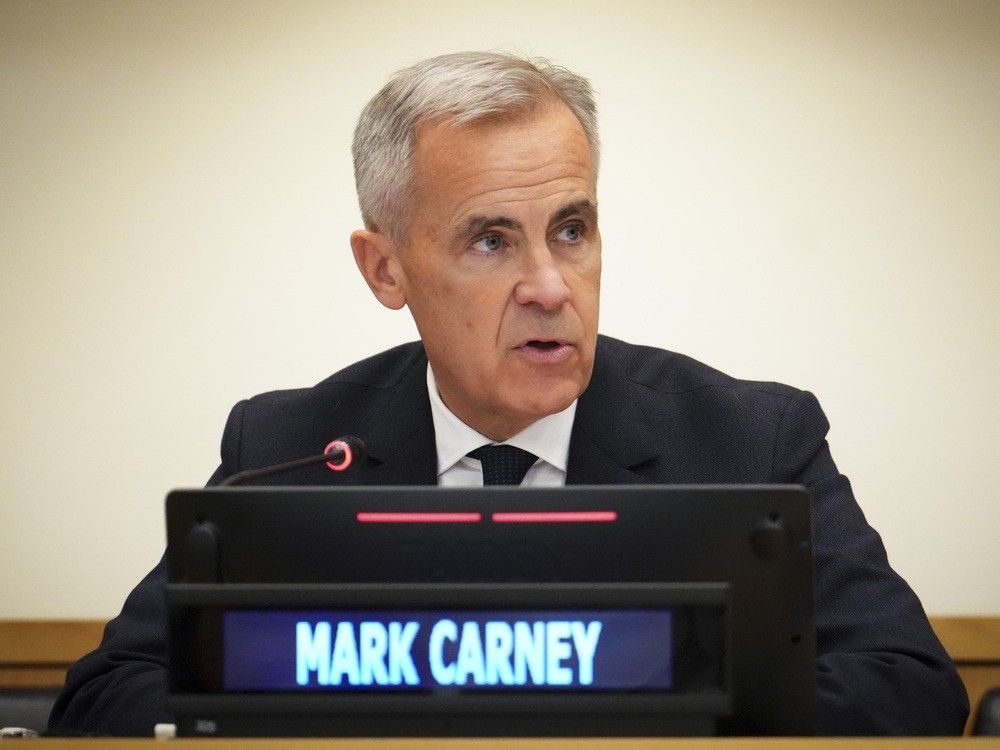
Prime Minister Mark Carney tours military vehicles and meets with Canadian troops of the 4th Canadian Division as he attends a tour of the Fort York Armoury in Toronto on June 9, 2025.

OTTAWA — Canadian Armed Forces personnel will get their largest pay increase in more than 25 years, Prime Minister Mark Carney announced Friday, part of the federal government’s plan to improve the military’s capabilities and hit NATO’s spending target.

Carney said Ottawa will spend about $2 billion on the pay increases because soldiers and other military personnel are at the heart of protecting Canada’s sovereignty and their pay should reflect the importance of their roles.

The pay hikes, part of a $9 billion federal investment in the Canadian military that was announced in June, mean that every member of the Canadian armed forces will get a wage increase of as much as 20 per cent.

“We are strengthening our military, recognizing their sacrifice, and giving service members the resources, confidence and certainty they need to survive,” Carney said during a press conference at CFB Trenton, the eastern Ontario facility that serves as one of Canada’s most important air force bases.

The pay hikes includes increases of eight per cent for colonels and above and 13 per cent for lieutenant-colonels and below, and a 20 per cent hike in starting pay for privates in the regular force. Prior to this pay increase, privates’ starting salary was barely above $43,000.

The hike also includes a new pay increase based on length of military service, which will be part of an effort to align the pay of military personnel with other public servants. There will also be additional compensation to be announced over the next year for those who are asked to make frequent moves, serving in forest fires or natural disasters, in training for combat, top instructors at training schools, or separated from their families.

Carney said the pay scale changes, which will affect both regular forces and reserves, will improve military recruitment and retention but that the pay hikes, retroactive to April 1, are also about fairness.

Charlotte Duval-Lantoine, vice-president of Ottawa Operations at the Canadian Global Affairs Institute, said the pay hikes are an “unequivocal” step forward because military pay had fallen behind.

When asked if hiking military pay was a better use of defence spending than buying equipment, Duval-Lantoine said both are necessary. “It’s nice to have equipment, but what’s the point if you don’t have enough people?”

On the political side, the pay increases satisfy the Liberals’ campaign promise to boost military wages, while also moving Canada closer to fulfilling a promise to meet the NATO target that each member spend at least two per cent of gross domestic product (GDP) on defence spending. Carney said Canada will hit that mark this year, five years earlier than previously stated.

Ottawa has also promised to spend at least 5 per cent of GDP on defence spending by 2035, a commitment that will require a massive financial infusion. That will mean hefty investments in military equipment, likely including new fighter jets, investing in the defence industry, and spending on infrastructure such as airports, ports, telecom networks and emergency systems that can serve both defence and civilian needs. Those infrastructure investments are expected to account for about 30 per cent of the five per cent commitment.

Carney repeated Friday his argument that the world is more dangerous than in years past and that technological gains mean that some of those threats, including those that involve foreign adversaries, are no longer constrained by distance.

The emphasis on defence spending is also part of a broader strategy to try to rely less on the United States for defence and trade and increase the emphasis on other international relationships because of what Carney has called “a darker world.”

National Post

Our website is the place for the latest breaking news, exclusive scoops, longreads and provocative commentary. Please bookmark nationalpost.com and sign up for our politics newsletter, First Reading, here.


A screenshot of a video posted to X by Jim Muldoon shows water pouring out of a slide on the Royal Caribbean's Icon of the Seas.

A passenger has been injured on a Royal Caribbean cruise ship after acrylic glass shattered on a water slide on Thursday.

The passenger, an adult, was on board the Icon of the Seas, according to

ABC News

,

CBS News

and

People Magazine

. It departed from Miami on Aug. 2.

A video posted on X on the evening of Aug. 7 shows water rushing out of the red and yellow slide where a glass panel appeared to be missing. People in the background were shouting as water gushed out of the slide down onto the deck.

“Did the person fall out?” an off-camera voice can be heard asking repeatedly.

“Yes, they did,” someone else replies.

“Oh my God, someone just fell out of the slide,” a person can be heard saying, moments later.

People can be heard yelling: “Stop the slide!”

The adult guest is reportedly in stable condition, but the extent of the injuries are not known.

“Our team provided medical care to an adult guest when acrylic glass broke off a water slide as the guest passed through the slide,” a Royal Caribbean Group spokesperson said in a statement to ABC News. “The guest is being treated for his injuries.”

The injured person has not been identified.

Officials said the slide was closed “for the remainder of the sailing pending an investigation,” People Magazine reported.

The massive ship was called the

largest cruise ship in the world by The Guardian

when it set sail last year. It can accommodate 7,000 guests and crew, per the publication. It is 365 metres in length. For comparison, the CN Tower stands at

553 metres tall.

The ship has seven different pools, 20 decks above sea level, a rock-climbing wall, a waterpark, an ice skating rink, and 20 dining options.

 Royal Caribbean International’s Icon of the Seas arrived in Miami ahead of its official debut on Jan. 27, 2024.

The waterpark has a total of six slides.

According to Cruise Hive

, the slide that broke was called the Frightening Bolt, which is 46 feet high. In unconfirmed reports, other passengers said that a person suffered from “skin laceration injuries from his legs to his hands,” per Cruise Hive.

The Icon of the Seas is scheduled to return to Miami on Saturday.

Last month, a passenger

fell over the glass railing of an infinity pool

on the same ship. The man was not injured.

Royal Caribbean did not immediately respond to National Post’s request for comment.

Our website is the place for the latest breaking news, exclusive scoops, longreads and provocative commentary. Please bookmark nationalpost.com and sign up for our daily newsletter, Posted, here.


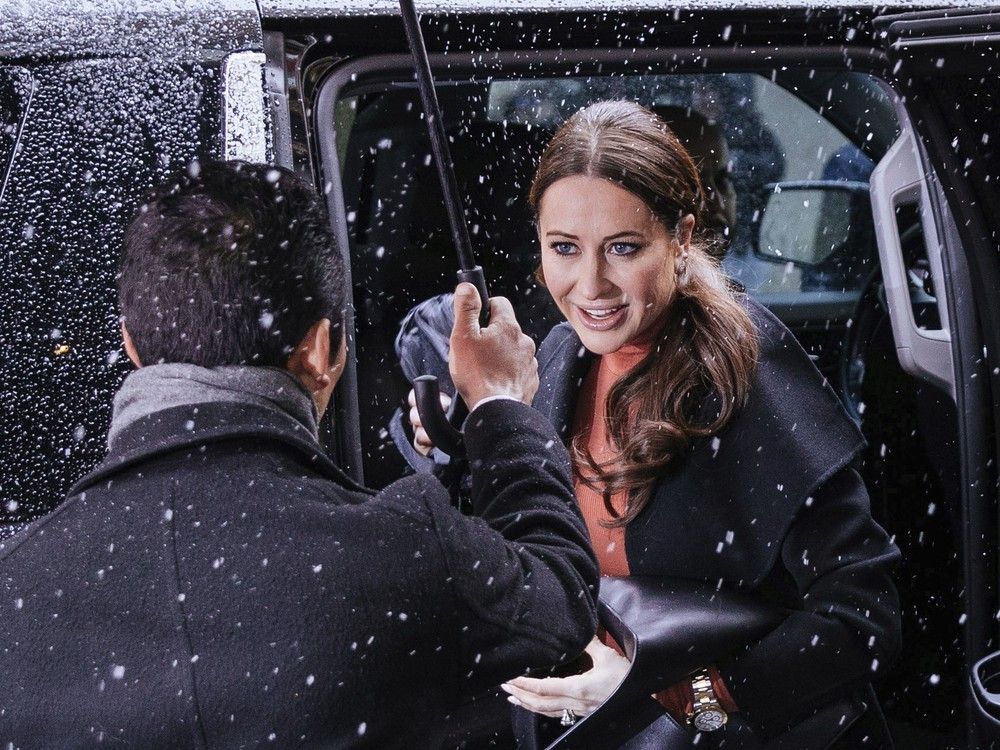
Chief of staff to former Conservative prime minister Stephen Harper, Jenni Byrne waits to appear as a witness before the Procedure and House Affairs committee meeting Thursday, May 11, 2023 in Ottawa.

OTTAWA — Three months after the federal election, Pierre Poilievre’s top advisor Jenni Byrne has broken her silence over the party’s failed bid to form government.

Byrne, a top Conservative operative and Poilievre ally, has been praised for her role in the party leader’s meteoric rise in the polls during the Justin Trudeau era but also criticized for her role in the last federal election that saw the Liberals elected once again.

For the first time since the April 28 election, Byrne spoke at length about the experience on the

Beyond a Ballot podcast hosted

by Rachael Segal.

Here are five things we learned about the sometimes venerated, often feared and much discussed Conservative operative who was Polievre’s last campaign director.

Suggesting little could have been done to win the election

All campaign managers have regrets after a campaign, especially after losing the election.

Byrne is no exception, though her response to the question about what she would do over was notable not because of what she listed, but because she said nothing she would do over in hindsight would ultimately have changed the result.

“I have a few do overs. None of them, I think, would have changed the outcome,” she told Segal.

Reading between the lines suggests that Byrne feels like the loss to the Liberals may have been inevitable during an election centred mainly around U.S. President Donald Trump. Earlier in the podcast, she said that making the campaign about Trump would have also played into the Liberals’ hands.

“I think if we had gone down that road, it would have been an extremely bad mistake,” she said of having Poilievre focus more on Trump.

In terms of do overs, Byrne cited two key regrets: realizing sooner that Poilievre might lose his longtime riding of Carleton (though “I’m not sure what we could have done about it at the time”) and making some different budgeting, personnel and campaign issue decisions.

She says she was not a one-woman army during the campaign

Byrne said people often say she likes to run a political show singlehandedly but argued that it’s untrue that she did everything herself during the spring campaign.

Byrne is frequently described as the key driving force behind Poilievre, from the moment he ran for leadership up until the last federal election.

She’s also been the target of much ire internally since election day on April 28, with many Conservative insiders and

caucus members blaming her for the loss

after dominating the Justin Trudeau-led Liberals in the polls for roughly 18 months.

But she was far from alone on the team, Byrne told Segal.

“If they think that like I was like a one-person machine who was making every decision, ran the campaign by myself like I was some Rasputin or Svengali, then they don’t know how campaigns are run. They don’t know Pierre, they don’t know senior-level people that we had in the campaign,” she argued.

“Some would say I’m aggressive. I actually don’t think I’m that aggressive, or at least, I’ve mellowed in my older years,” she also said.

Asked about Byrne’s statement in confidence, two former campaign operatives scoffed.

She will not be the Conservative campaign manager for the next election

After holding key roles in the 2011, 2015 and 2025 federal elections, Byrne said she’s taking a step back from a top official role come the next national campaign.

The current advisor to Poilievre said that someone else will run the next Conservative campaign and she had no idea who that would be.

“I speak to people on a daily basis, and I’m going to… continue to do that. But I’ve stepped back from the day to day and and I’m not going to run the next campaign,” she said.

She also sounded surprised by the amount of attention she’s received as campaign director since the election.

“I do find it strange or perplexing that in all the years that I’ve been involved in politics, I’ve never seen post-campaign analysis focused on a campaign manager as much as what it has on me.”

She doesn’t like crowds

Poilievre may have attracted thousands at his campaign rallies — a fact he frequently flaunted during the campaign — that’s not where Byrne was most comfortable.

In fact, Byrne said she doesn’t like large gatherings all that much personally.

“I think I’m actually, on a personal level, pretty much of a homebody. I don’t like going out in crowds. I can count on one hand in the last five years how many receptions that I’ve been to,” she said.

But one thing she does like is the Montreal Canadiens hockey team, which may come as a surprise for someone who grew up in Fenelon Falls, Ont., in the Kawartha Lakes area.

She had nothing to do with Poilieve’s makeover

Rarely do glasses and t-shirts make national headlines, but they did when Poilievre decided to ditch the former and don the latter earlier this year as part of a pre-campaign aesthetic makeover.

Byrne says she had no role in Poilievre’s decision to ditch the glasses and added that he’s always been a fan of working out.

“Literally nothing to do with me,” she said. “He said privately and publicly that Anna (Poilievre) prefers him without glasses,” she told Segal.

National Post

cnardi@postmedia.com

Our website is the place for the latest breaking news, exclusive scoops, longreads and provocative commentary. Please bookmark nationalpost.com and sign up for our politics newsletter, First Reading, here.


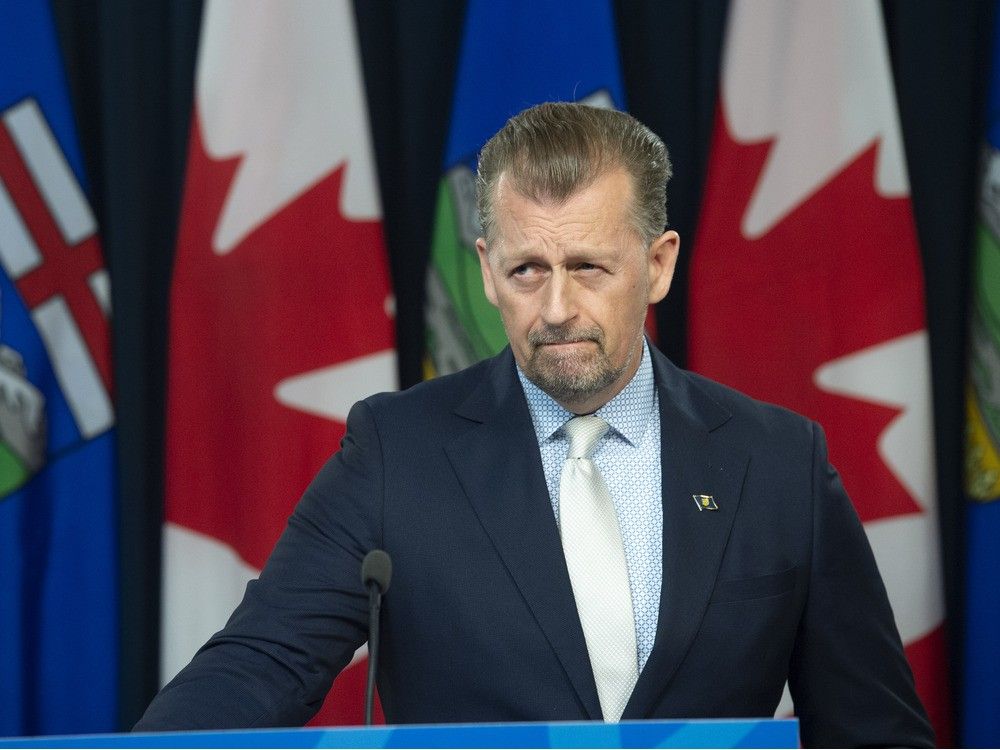
Alberta Premier Danielle Smith at Sir Winston Churchill Square on July 17, 2025, in Edmonton.

EDMONTON — The Alberta government has appealed an injunction granted by the courts that prevents the implementation of restrictions around health care for transgender minors in the province.

In late June, Justice Allison Kuntz concluded that the new rules, which passed late last year but were not fully in effect, raised serious Charter concerns that needed to be hashed out in court. She granted an injunction until those issues could be settled.

“The evidence shows that there is a benefit to the public in issuing the injunction because it will allow this marginalized group to continue receiving medical care from trusted doctors and a broader team of health professionals thereby avoiding the adverse consequences the Ban will have on them,” Kuntz wrote in her decision.

On July 25, the provincial government appealed the injunction to the Alberta Court of Appeal, arguing that Kuntz had erred in pausing the restrictions.

Last year, the Alberta government passed legislation that sought to ban doctors from providing treatment such as puberty blockers and hormone therapy to those under the age of 16 and enacted a total ban on gender-reassignment surgery for minors in the province.

In response to the changes, Egale Canada, an LGBTQ advocacy group, along with the Skipping Stone Foundation and five transgender youth, sued the Alberta government and sought a pause on the new rules until the courts could decide on their constitutionality.

At the time the injunction was issued, Alberta Premier Danielle Smith vowed to fight on.

“The court had said that they think that there will be irreparable harm if the law goes ahead. I feel the reverse,” Smith said on her radio program, Your Province, Your Premier, the day after Kuntz’s decision was issued.

Asked about the decision to appeal Kuntz’s ruling, Heather Jenkins, a spokesperson for Alberta Justice Minister Mickey Amery, said in an emailed statement that the legislation was passed to “protect children and youth when making life-altering and potentially irreversible adult decisions about their bodies.

“Alberta’s government will continue to vigorously defend our position in court,” Jenkins wrote.

Amery was not made available for an interview.

Bennett Jensen, the director of legal at Egale Canada, said the advocacy group respects the right of the government to appeal the decision, but that the province was seeking to interfere with “the relationship between doctors and patients by seeking to ban medically necessary, evidence-based care for an already marginalized group of youth.”

“We urge the Government to focus on the real challenges facing Alberta’s health care system. This is not one of them,” said Jensen in an emailed statement.

Last December, Smith had said that using the Notwithstanding Clause — which would allow the law to stand irrespective of what the courts concluded — is also an option before the government, although Smith maintains that the government can win in court and won’t pre-emptively use the notwithstanding clause to shield its rules from court scrutiny.

The medical treatment of transgender minors has become a major policy debate since the release of the Cass Review the U.K. in April 2024, which disputed some of the evidence surrounding the treatment of gender dysphoria in minors. The Alberta government moved to enact the most stringent restrictions in Canada on health care for transgender minors last fall.

“Prematurely encouraging or enabling children to alter their very biology or natural growth, no matter how well intentioned and sincere, poses a risk to that child’s future that I, as premier, am not comfortable with permitting in our province,” Smith said last November.

The Alberta Medical Association has spoken out against the United Conservative government’s restrictions, arguing that the treatment options provided — including the use of puberty blockers and hormone therapy — follow the standards of care set out by the Canadian Paediatric Society and the American Academy of Pediatrics.

“Governmental interference by legislating medical therapy options is inappropriate, unethical and represents serious government overreach into the practice of medicine and patient/family rights to autonomy in their health care decisions,” the group’s pediatrics section

wrote in a statement last November

.

Our website is the place for the latest breaking news, exclusive scoops, longreads and provocative commentary. Please bookmark nationalpost.com and sign up for our daily newsletter, Posted, here.

Northern Lights illuminate the sky above Joshua Tree National Park during the Perseids Meteor shower in Joshua Tree, California, early on August 12, 2024.

Next week, Canadians will have the chance to witness one of nature’s most spectacular light shows, the Perseid meteor shower. For anyone looking to catch a glimpse of these “shooting stars” here’s everything you need to know to make the most of this celestial event.

What are the Perseids?

The Perseids are an annual meteor shower that happens from late July to mid-August, in the Northern hemisphere. They happen because of Comet 109P/Swift-Tuttle.

The comet moves around the sun, leaving behind debris that the Earth passes through, every summer. When the tiny particles enter the Earth’s atmosphere, they burn up and create bright streaks of light in the sky — the shooting stars ” seen during the meteor shower. According to NASA, around 50 to 100 meteors can be seen per hour.

The Perseids are also known to produce fireballs. These are larger explosions of light and colour. These fireballs come from larger pieces of the comet’s debris and can last longer in the sky than regular meteors.

The Perseids take their name from the constellation Perseus. Just before dawn, when the shower is most active, Perseus is at its highest point, and the meteors look as though they are falling from it.

 A Perseid meteor streaks through cloudy skies above Kingston, Ont. early Monday morning Aug. 12, 2024 during the annual meteor shower.

When and where to watch the Perseid meteor shower

This year the shower is active from July 14 to Sept. 1, but its peak is next week on Aug.12 or 13, according to the American Meteor Society. According to the Canadian Space Agency (CSA), the best viewing time is “between moonset and dawn,” or the hours after midnight.

The CSA also advises that people go to rural areas, away from city lights, to increase their chances of seeing shooting stars. For an even clearer view, Canadians can head to one of the country’s many Dark-Sky Preserves, which are ideal for watching meteor showers.

This year, a bright moon will dampen viewing during the peak, so some experts recommend waiting a week or so to glimpse shooting stars against a darker sky.

Under dark skies with no moon, the Perseids can produce between 60 to 100 meteors per hour, said Thaddeus LaCoursiere, planetarium program coordinator at the Bell Museum in St. Paul, Minnesota.

Since the moon will be around 84 per cent full during the peak, skywatchers might expect between 10 to 20 meteors per hour, according to the American Meteor Society.

“This year I’m actually recommending that people go out a little bit later” — a week or so past the peak when the moon will not be as bright, LaCoursiere said.

Viewing of the Perseids lasts until August 23.

 In this 30 second exposure, a meteor streaks across the sky during the annual Perseid meteor shower, Wednesday, Aug. 11, 2021, in Spruce Knob, West Virginia. NASA/Bill Ingalls

How to get the best view of the Perseid meteor shower

For the best viewing experiences, the CSA has a few tips that can help Canadians trying to see the shower.

If using a flash light, use a red filter over it (a red balloon can be used). This is because white light is very blinding and can affect your night vision, making it harder to see meteors.

Even though it is August, nights can get chilly so it’s important to dress accordingly and keep yourself warm. Sitting back in a reclining chair, or laying down on a blanket are not only more comfortable, but allow you to take in more of the sky at once, allowing for a better viewing experience.

Lastly, remember to be patient. It might take a little while to spot your first shooting star.

Our website is the place for the latest breaking news, exclusive scoops, longreads and provocative commentary. Please bookmark nationalpost.com and sign up for our daily newsletter, Posted, here.


Court exhibit photo of Nicola Puddicombe, who was convicted of killing her boyfriend, Dennis Hoy, with an axe while he was asleep in 2006.

Toronto woman Nicola Puddicombe, convicted of first-degree murder in 2009, is seeking early release. She has served more than 15 years of her 25-year life sentence.

On Oct. 27, 2006, her boyfriend Dennis Hoy was beaten to death with the blunt end of an axe while he was asleep in bed, according to a Supreme Court of Canada case summary.

Court documents obtained by National Post reveal that Puddicombe is applying for parole under the

“faint hope” clause

.

In Canada, anyone convicted of first-degree murder is not eligible for parole until they have served 25 years of their sentence. However, under the faint hope clause, they can apply after serving 15 years. It is referred to as such because it requires an offender to overcome major hurdles. Parole through the clause is applicable only for those

convicted before Dec. 2, 2011

.

A decision by Justice Robert F. Goldstein last September found that Puddicombe’s “application has a reasonable likelihood of success.” A hearing date is scheduled for Nov. 17.

A jury will then have to decide unanimously whether Puddicombe is eligible for her parole to be reduced, and if so, by how much. If deemed eligible, she must apply to the National Parole Board, which can grant parole.

Attorneys for the Crown still believe that Puddicombe is “a cold-blooded killer and a liar,” wrote Goldstein in his decision. “She has refused to accept responsibility for the murder of Mr. Hoy. She has not changed a whit,”

 the attorneys maintain.

Conversely, the defence’s position is that she “has accepted responsibility for her role in the murder” and “has made great strides while in custody.” Per Goldstein’s decision, the defence says Puddicombe is at “a very low risk to re-offend.”

 Nicola “Nicky” Puddicombe, was convicted in first-degree murder of her boyfriend Dennis Hoy.

The 2006 murder was borne out of jealousy and greed, according to a theory presented by the Crown.

Puddicombe was working as a manager at Loblaws in 2005, when she was 32 years old. She was in a relationship with Hoy, who was a GO Transit operator, when she met 21-year-old Ashleigh Pechaluk. Pechaluk worked at a different Loblaws location.

Around the same time, Puddicombe and Hoy’s relationship was crumbling and he was seeing other women.

Puddicombe and Pechaluk entered into a romantic relationship. Pechaluk eventually moved into a spare bedroom in Puddicombe’s apartment. The Crown said that Puddicombe manipulated the young and impressionable Pechaluk, telling the 21-year-old that Hoy was abusive. “Ms. Puddicombe, the Crown theorized, dangled the prospect of the two spending their lives together if (Pechaluk) could get rid of Mr. Hoy,” per the decision.

 Nicola Puddicombe and Ashleigh Pechaluk are shown in this undated photo.

A plan was hatched to kill Hoy with Puddicombe pulling the strings, the Crown said. Although Hoy didn’t live with Puddicombe, he was staying at her apartment in October 2006. Witnesses said in court that the two women had discussed the murder beforehand.

After Hoy was killed, Puddicombe dialled 911. When authorities arrived, she said Hoy had been attacked while she was in the shower. Pechaluk was arrested at the scene. She gave a detailed confession to police and said Puddicombe “had nothing to do with it.” After further investigation, in May 2007, Puddicombe was arrested and charged.

The two women were tried separately.

Pechaluk’s confession was excluded from evidence because she was not informed of her

right to counsel

. She was later acquitted of first-degree murder. At the trial, she told the jury she couldn’t go through with committing the murder, although she admitted to discussing it. She said she was asleep when Hoy was killed,

CTV News reported

in 2009.

The Crown, however,

maintained

that it was Pechaluk who physically carried out the murder, while Puddicombe was “was liable as an aider, abettor or counsellor.”

 Ashleigh Pechaluk at the courthouse at 361 University Ave. in Toronto, Ont., Wednesday morning, October 14, 2009.

Meanwhile, Puddicombe was sentenced to life. She appealed the decision in 2013, but it was dismissed by the Ontario Court of Appeal. The Supreme Court of Canada dismissed her application for leave to appeal in 2014.

While Goldstein said that the Crown’s submission has merit — that Puddicombe has “shown no insight at all into her behaviour” — he doesn’t believe it is “that simple.”

He continued: “In my view, however, it would be open to a jury to find that Ms. Puddicombe has obtained enough insight into her role in the murder of Mr. Hoy to show progress. It would also be open to a jury to find that Ms. Puddicombe has taken responsibility for it.”

In an affidavit sworn in 2023 in an application to Goldstein, Puddicombe “expressed remorse” and accepted that it was her fault Hoy was murdered, saying she “created the circumstances that led to his death.”

As of May 2021, Puddicombe has been held in a minimum security institution.

Our website is the place for the latest breaking news, exclusive scoops, longreads and provocative commentary. Please bookmark nationalpost.com and sign up for our daily newsletter, Posted, here.


Israeli Prime Minister Benjamin Netanyahu speaks to the press after meeting with U.S. Speaker of the House Mike Johnson at the US Capitol in Washington, DC, on July 8, 2025.

The Israeli Security Cabinet decided by a “decisive majority” to approve Prime Minister Benjamin Netanyahu’s plan to defeat Hamas, including controlling Gaza City, his office said Friday.
“A decisive majority of Security Cabinet ministers believed that the alternative plan that had been submitted to the Security Cabinet would neither achieve the defeat of Hamas nor the return of the hostages,” according to Netanyahu’s office.
The Israel Defense Forces will prepare for “taking control of Gaza City, while distributing humanitarian assistance to the civilian population outside the combat zones,” the Prime Minister’s Office said.
U.S. Ambassador to Israel Mike Huckabee on Wednesday confirmed there will soon be a significant increase in the Gaza Humanitarian Foundation’s aid distribution footprint in the Strip.
“The immediate plan is to scale up the number of sites up to 16 and begin to operate as much as 24 hours a day to get more food to more people more efficiently,” the diplomat said on Fox News.
Netanyahu’s office said on Friday that the forum voted on five principles: disarming Hamas, returning all of the living and dead hostages, demilitarizing Gaza, Israeli security control of the Strip and creating an “alternative civil administration that is neither Hamas nor the Palestinian Authority.”
On Thursday, Netanyahu confirmed that Israel intends to take control of the entire Gaza Strip to remove Hamas, and transfer authority to non-hostile “civilian governance.”
“We want to liberate ourselves and liberate the people of Gaza from the awful terror of Hamas,” the prime minister told Fox News.
Netanyahu stressed that the Israeli government does not “want to keep it” after taking control of the entire 26-mile-long coastal enclave.
“We want to have a security perimeter,” he said. “We don’t want to be there as a governing body. We want to hand it over to Arab forces that will govern it properly, without threatening us, and giving Gazans a good life. That’s not possible with Hamas.”
Hamas rejected Israel’s current plans in a statement. “Expanding of aggression against our Palestinian people will not be a walk in the park,” the terror group said.
An expanded offensive could widen discord between Israel and international powers, which have intensified criticism of the war amid reports of famine in Gaza but largely stopped short of concrete action. Australia and the United Kingdom urged Israel to reconsider.
Israel’s “decision to further escalate its offensive in Gaza is wrong,” British Prime Minister Keir Starmer said in a statement. “It will only bring more bloodshed. … Both parties must step away from the path of destruction.”
Tensions could rise further if Netanyahu follows through on the more sweeping plans to take control of the entire territory.
Israel’s current plan, announced after the Security Cabinet met through Thursday night, stopped short of that, and may be aimed in part at pressuring Hamas to accept a ceasefire on Israel’s terms.
It may also reflect the reservations of Israel’s military chief of staff, Lt. Gen. Eyal Zamir, who reportedly warned that expanding operations would endanger the remaining 20 or so living hostages held by Hamas and further strain Israel’s army after nearly two years of regional wars.
The military “will prepare to take control of Gaza City while providing humanitarian aid to the civilian population outside the combat zones,” Netanyahu’s office said in a statement after the meeting.
Asked in an interview with Fox News ahead of the Security Cabinet meeting if Israel would “take control of all of Gaza,” Netanyahu replied: “We intend to, in order to assure our security, remove Hamas there.”
“We don’t want to keep it. We want to have a security perimeter,” Netanyahu said.
Meanwhile, mediators from Egypt and Qatar are working on a new framework that will include the release of all hostages — dead and alive — in one go in return for an end of the war in Gaza and the withdrawal of Israeli forces from the strip, two Arab officials told the Associated Press.
The new efforts for a ceasefire have the backing of major Arab Gulf monarchies, the officials said, as they are concerned about further regional destabilization if Israel’s government proceeds with a full reoccupation of Gaza, two decades after Israel’s unilateral withdrawal from the strip.
The officials spoke anonymously due to the sensitivity of the discussions. One is involved directly in the deliberations and the second was briefed on the efforts.
The yet-to-be finalized framework aims to address the contentious issue of what to do with Hamas’ weapons, with Israel seeking full disarmament and Hamas refusing. The official directly involved in the efforts said discussions are underway about “freezing arms,” which may involve Hamas retaining but not using its weapons. It also calls for the group to relinquish power in the strip.
A Palestinian-Arab committee would run Gaza and oversee the reconstruction efforts until the establishment of a Palestinian administration with a new police force, trained by two U.S. allies in the Middle East, to take over the strip, he said. It is unclear what role the Western-backed Palestinian Authority would play.
The second official said that a powerful Gulf country is supporting the efforts.
A senior Hamas official, speaking on condition of anonymity because he wasn’t authorized to brief the media, said the terror group’s leadership has been aware of the Arab mediators’ efforts to revive the ceasefire talks, but has yet to receive details.
Files from Jewish News Syndicate and Associated Press

A Ukrainian family fleeing the war with Russia arrives at Toronto Pearson International Airport in May 2022. The number of Ukrainians seeking shelter in Canada this year has declined considerably.

Almost three-and-a-half years after Russia invaded Ukraine, Canadians remain broadly supportive of taking in Ukrainian migrants fleeing their war-torn country, although there has been a drop in support.

A new poll conducted by Leger for the Association for Canadian Studies and the Metropolis Institute finds that 23 per cent of Canadians believe more Ukrainians should be brought to safety, while 40 per cent believe right number are coming. A further 23 per cent of poll respondents say that fewer Ukrainians should be brought to Canada.

In

February 2023, polling found

that 43 per cent of Canadians said the country should keep doing what it’s doing when it comes to welcoming Ukrainians, and 29 per cent said Canada should do more to resettle Ukrainian refugees. Just 16 per cent said Canada should do less.

“What you’re seeing now is that some of the pushback on immigration that we’ve seen … is also impacting support for Ukrainian migration to Canada,” said Jack Jedwab, president of the Association for Canadian Studies.

The war between Ukraine and Russia is well into its third year, despite pressure from U.S. President Donald Trump for Russian President Vladimir Putin and Ukrainian President Volodymyr Zelenskyy to hammer out a ceasefire agreement. Trump has set a deadline of Friday for Russia to agree to peace, or else face a round of American sanctions.

While ceasefire talks grind on, fighting continues across Ukraine. Russian missile strikes on Kyiv last month killed and injured dozens of Ukrainians. Reuters reported on Tuesday that Putin intends to capture the Ukrainian regions of Donetsk, Luhansk, Zaporizhzhia and Kherson before seriously engaging in any peace talks.

The number of Ukrainians seeking shelter in Canada has declined considerably, according to data compiled by the Association for Canadian Studies. In the years leading up to Putin’s February 2022 invasion of his neighbour, there were around 2,000 Ukrainians emigrating to Canada each year. That increased considerably after the invasion. In 2022, 78,360 came to Canada. In 2023, it was 103,350 and in 2024, 111,960 moved to Canada under the International Mobility Program.

In the first quarter of 2024, 66,720 Ukrainians came to Canada. But in the first quarter of 2025, only 21,110 Ukrainians arrived — a nearly 69-per-cent drop compared to the first quarter of 2024.

Those aged between 18 and 24, at 13 per cent, are the least likely to believe that Canada should decrease the number of Ukrainians coming to the country, while 30 per cent of those between the ages of 35 and 64 believe there should be fewer Ukrainians coming to Canada.

Thirty-three per cent of those in Manitoba and Saskatchewan believe fewer Ukrainians should be given temporary visas — the highest proportion in the country. In neighbouring Alberta, only 22 per cent hold that view, as do 25 per cent of British Columbians, 23 per cent of Ontarians, 21 per cent of Quebecers and 18 per cent of Atlantic Canadians.

Those in Saskatchewan and Manitoba, at 17 per cent, are least likely to say Canada should accept more Ukrainians, while 32 per cent of Atlantic Canadians believe we should.

Canadians are somewhat more skeptical of temporary workers; only 12 per cent say Canada should allow more temporary workers into the country, while 41 per cent say the numbers should stay the same and 34 per cent said fewer should be allowed into the country. Temporary foreign workers, according to Statistics Canada, may hold permits for work, study or other purposes; as of 2021, there were roughly 845,000 temporary foreign workers in Canada.

Those who favour increases in temporary foreign workers are more likely to support more Ukrainians coming to Canada, the polling found. Forty-nine per cent of those who support more TFWs also support more Ukrainians, while 48 per cent who say they want fewer TFWs also want fewer Ukrainians.

“(The) net meaning of this is or net implication is some of the pushback we’re seeing in immigration, both permanent and temporary, is spilling over,” said Jedwab. “Before the pushback on immigration, there was really, really large scale support across the country for admitting those Ukrainians. Now, you’re seeing some slippage, because it’s sort of aligning a bit with the overall pushback on immigration.”

Support for accepting Ukrainians into the country is higher among those who say they have a good understanding of the conflict. Forty-one per cent of those who say they have a “very good” understanding of Putin’s invasion of Ukraine say Canada should increase its intake of Ukrainians, while 36 per cent of them say the number should remain the same. Just 18 per cent of those who say they have a very good understanding believe that fewer Ukrainians should come to Canada.

In contrast, those who say they have “barely any” understanding are far more likely to support reductions in the numbers of Ukrainians coming to Canada: 34 per cent say there should be fewer, compared to just 10 per cent who said Canada’s intake should be increased.

“There’s an important relationship between people being sensitized to what actually is going on right now and their openness to Ukrainian migration,” said Jedwab.

Those who believe that Canada is not doing enough are also more likely to say Canada should take more Ukrainian migrants. Fifty-one per cent who say Canada’s support should be increased also say Canada should take in more Ukrainians, and 38 per cent say the intake should remain the same. Just seven per cent say there should be fewer Ukrainians coming to Canada. When it comes to those who think Canada is striking the right balance on Ukraine, 52 per cent say the number of temporary permits issued should remain the same, while 26 per cent say more should be brought in and 15 per cent say there should be fewer.

More than half of those who believe Canada is doing too much to support Ukraine — 55 per cent — say that fewer Ukrainians should be allowed into Canada, while just 11 per cent say more should be brought to Canada and 27 per cent say the numbers should remain the same.

The online poll was conducted by Leger Marketing among 1,511 respondents in Canada between June 6 and June 8, 2025. A margin of error cannot be associated with a non-probability sample in a panel survey for comparison purposes. A probability sample of 1,511 respondents in Canada would have a margin of error of ±2.5 per cent, 19 times out of 20.

Our website is the place for the latest breaking news, exclusive scoops, longreads and provocative commentary. Please bookmark nationalpost.com and sign up for our daily newsletter, Posted, here.


OTTAWA — Republicans on an influential House committee are pushing top Trump administration officials to pressure Canada to kibosh its controversial Online Streaming Act, which they describe as a “major threat” to the trade relationship.

In a July 31 letter obtained by National Post, 18 Republican members of Congress on the powerful House ways and means committee ramped up pressure on White House officials to get Canada to dump the “discriminatory” Act the same way it ditched the Digital Services Tax in late June.

“The fact that the Online Streaming Act already imposes discriminatory obligations and threatens additional obligations imminently is a major threat to our cross-border digital trade relationship,” reads the letter to U.S. Trade Representative Jamieson Greer, Treasury Secretary Scott Bessent and Commerce Secretary Howard Lutnick.

“As bilateral trade negotiations continue, we urgently request that you engage with your Canadian counterparts to share our concerns and rescind the Online Streaming Act,” they added.

Greer, Bessent and Lutnick are at the forefront of negotiations with Canada for a new trade deal that Mark Carney’s government hopes will eliminate a host of new U.S. tariffs against key Canadian industries.

The letter sheds light on how a growing number of influential U.S. politicians are using ongoing trade negotiations with Canada to push back against Canadian digital policies that impacts American companies.

It also comes amid a growing trade war between both countries in which Republicans and President Donald Trump have been vocal about a plethora of commercial irritants with Canada.

The Online Streaming Act is a hotly contested law implemented by the Liberals in 2023. It brought online streaming platforms under Canadian broadcasting laws and regulation by the Canadian Radio-television and Telecommunications Commission (CRTC).

Under the new law, the CRTC ruled last year that streaming services such as Spotify, Netflix, Amazon and Apple will have to pay five per cent of their annual Canadian revenue into a fund dedicated to creating Canadian content.

The decision — which is estimated to cost the platforms $1.25 million each yearly — is

currently being challenged by Apple, Amazon and Spotify

at the Federal Court of Appeal.

While members of the prestigious U.S. House committee have previously raised concerns about the Act, it’s the first time a significant number of members have called for Canada to rescind it completely.

In their letter, the members of Congress tell the Trump officials that the streaming sector represents an “economic growth engine” for the U.S. and should be prioritized as part of negotiations seeking to dismantle “digital trade irritants” from Canada.

“The CRTC’s implementation of the Online Streaming Act… is deeply problematic. Online streaming services significantly differ from domestic broadcasters and the resulting CRTC decisions under the Act clearly discriminate against American companies, interfere with consumer choice, and harm American artists and right holders,” they wrote.

The signatories of the letter include Representatives Rudy Yakym, Lloyd Smucker, Adrian Smith and Brian K. Fitzpatrick.

Asked if Carney supports the Justin Trudeau-era Act or if it could find itself on the chopping block during ongoing trade negotiations with the U.S., PMO spokesperson Emily Williams declined to comment.

“With respect to the negotiations with the US, we can’t speak to the details of those (and) won’t negotiate in public,” she said in an email.

Earlier this year, Greer included the Online Streaming Act in his

most recent report on foreign trade barriers

as viewed by the U.S. administration.

“The rules include criteria that, based on available information, may effectively exclude Canadian streaming services from the new obligations, and under current definitions, would prevent U.S. suppliers from accessing the funding mechanisms that they will pay into,” reads the report, adding that the U.S. is monitoring the effects of the Act closely.

In a statement, advocacy group Friends of Canadian Media pooh-poohed the claims in the new letter and argued that the act protects Canada’s broadcasting and media sectors and the country’s cultural sovereignty.

“Our decision-makers here at home have already bent to American pressure once by scrapping the Digital Service Tax. They cannot make such a costly mistake again,” wrote the group’s senior director of government and media relations Sarah Andrews.

Last year, a bipartisan group of members wrote to President Joe Biden’s Trade Representative Katherine Tai arguing that the Act discriminated against U.S. companies.

“We are concerned that the music industry, including U.S.-based streaming companies and artists, will be harmed by Canada’s implementation of the Online Streaming Act,”

read the 2024 letter to Tai

.

On Tuesday, Carney suggested

he is considering substituting or rescinding another U.S. digital irritant, the Online News Act, to ensure local news is disseminated wider and faster two years after Meta banned access by Canadians to news on its platforms.

National Post

cnardi@postmedia.com

Our website is the place for the latest breaking news, exclusive scoops, longreads and provocative commentary. Please bookmark nationalpost.com and sign up for our politics newsletter, First Reading, here.


War of 1812 re-enactors prepare to fire their muskets at Fort York in Toronto.

America’s most prestigious lawyers’ group is gathering in Toronto Monday, ironically to be greeted by an honour guard of redcoats from the War of 1812 in which American troops sacked the city.

As Canada and the United States are embroiled in a trade war, more than 1,700 people are expected to attend the American Bar Association’s meeting at the Metro Toronto Convention Centre. On the agenda is tackling U.S. President Donald Trump’s law firm intimidation tactics. But first, their house of delegates will be greeted by two members of the Fort York Guard, student re-enactors wearing the historic red uniforms of America’s former enemy.

The fun part: the association’s house of delegates specifically asked to be greeted by the former-enemy redcoats.

“The American Bar Association, like so many professional associations in the United States, leans left. So, they’re going to come up with a plan there that maybe makes a statement to maybe twist Trump’s nose, as it were, the way the Americans used to twist the British alliance’s tail. So, that doesn’t surprise me at all that they would find a way of making a statement to show that they do not approve of his trade war,” said Donald Hickey, a retired Wayne State College history professor The New Yorker dubbed “the dean of 1812 scholarship.”

He suspects the two countries will eventually resolve their differences. “I’m sure they’ll work it out. This is just a little blip, I think, in Canadian-American relations. Although Trump didn’t help at all when he said Canada ought to be a 51st state. That was, I think, ill-advised,” Hickey said in an interview from Omaha, Nebraska.

Don Cranston heads the Friends of Fort York, an organization that promotes the protection of the Fort York National Historic Site, a 43-acre archeological park, where the bloody Battle of York took place more than two centuries ago. He was thrilled the American Bar Association asked for the pretend redcoats to form an honour guard at its meeting.

“Their membership is very appreciative of the past relationship with Canada, and I think they are, in a way, trying to say, ‘Hey, we’ve never had a closer friend. Why are we alienating our closest friend?’” said Cranston, a senior investment counsellor with Fiera Capital.

He points out that, in retaliation for burning and looting Fort York in 1813, British forces marched on Washington, D.C., the following year and burned down the White House and other public buildings.

Cranston hopes playing nice with the visiting American lawyers will help convince them our two countries are better off standing together than not. “But, in my mind, the guard also signifies that if we have to fight, we will.”

While he’s aware of the role soldiers from Fort York played in the War of 1812, Jonathan Cole, who heads the American Bar Association’s house of delegates, downplayed any suggestion that inviting redcoats to Monday’s session is meant as a commentary on Trump’s trade war or his musings about annexing Canada.

He noted the ABA’s Toronto session has been years in the planning, pre-dating the recent friction between two countries that share the world’s longest international land border.

“It’s a good chance to work together despite political issues,” Cole said in an interview from Nashville, Tennessee.

Fort York’s history is a reminder of how “the two countries have worked together since and have been such great allies,” Cole said.

He’s excited the honour guard from Fort York is participating. “They’ll present both the American flag and the Canadian flag, and we’ll have the national anthems sung for both countries as well before we begin our proceedings.”

American forces captured Fort York in the spring of 1813.

“They essentially conquered Fort York and they burned some of the buildings,” Hickey said.

“It was an unpleasant business for people in and around York at the time.”

Hickey argues the War of 1812 was “essentially Canada’s war of independence — and they won, so it is far better remembered in Canada than in the United States.”

 War of 1812 re-enactors at Fort York in Toronto.

There are several ways to see the conflict, he said.

“If you look at what happened on the battlefield and in the peace treaty (of Ghent) it looks like a draw because it was very hard to wage offensive warfare in the North American wilderness and when the United States was on the offensive early in the war they failed to make much headway in Canada,” Hickey said.

“And when the British were in the driver’s seat in the last year of the war, they didn’t make much headway either.”

But overall “it’s a clear British and Canadian victory because the United States went to war to force the British to give up the orders in council, which restricted American trade with the continent of Europe, and also to end impressment — the removal of seamen from American merchant vessels,” Hickey said. “And neither of those issues was mentioned in the peace treaty” signed in December of 1814.

The only way to argue the U.S. benefitted from the conflict is, “the British had a real problem after the war was over; nobody knew that was going to be the last Anglo-American war. And how were they going to defend Canada next time around from this growing expansionist colossus to the south?” Hickey said. “They decided that their best tack was to accommodate the United States. And they pursued that policy in the course of the 19th Century, and ultimately it worked. There was a genuine Anglo-American accord by the 1890s. Then it turned into co-belligerency in World War One, and full-fledged alliance in World War Two that continues to this day. So, in the end, the United States got a little more respect for its sovereignty from the British.”

Our website is the place for the latest breaking news, exclusive scoops, longreads and provocative commentary. Please bookmark nationalpost.com and sign up for our daily newsletter, Posted, here.