LP_468x60
on-the-record-468x60-white

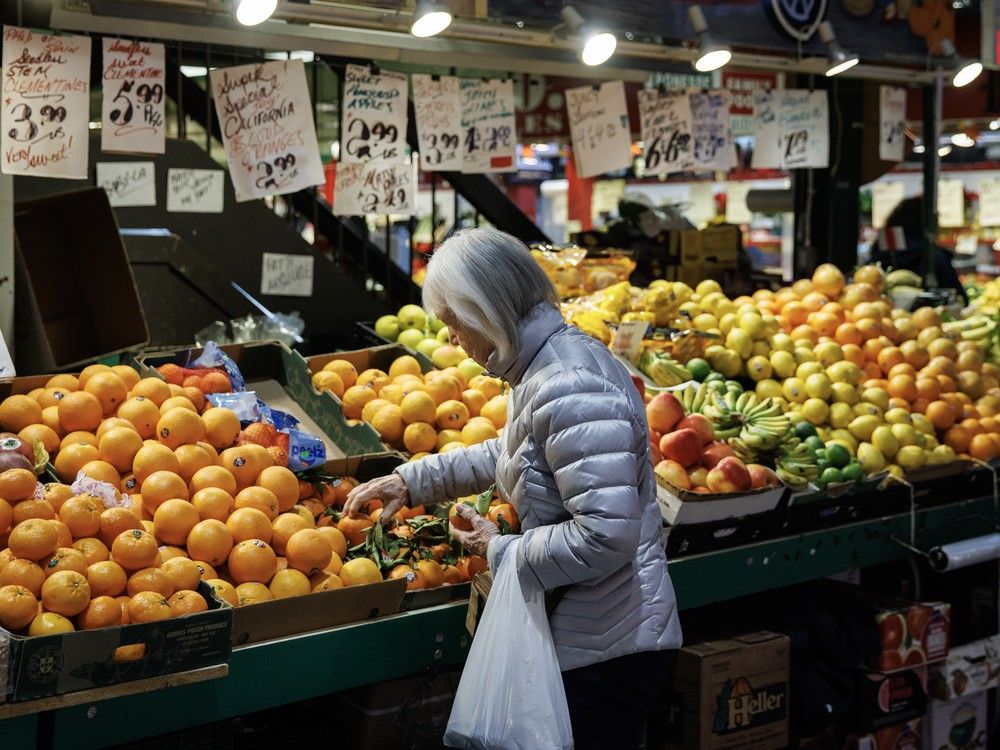
Food inflation jumped 3.5 per cent in August, according to the latest data from Statistics Canada.

Canadians thinking their grocery bills got more expensive in August are right. Food inflation rose 3.5 per cent in August compared to the overall Consumer Price Index, which rose 1.9 per cent.

The CPI is published regularly by Statistics Canada and reflects changes in prices of consumer goods and services, comparing the cost of a fixed basket of items such as  food items, clothing, gas, cell service and travel. It’s the country’s main measurement of inflation.

Much of the gap between August’s food inflation number and the CPI can be attributed to

broad global factors

, such as higher transportation and energy costs within supply chains as well as weather-related disruptions affecting produce and meat, according to the latest Loblaw Food Inflation Report.

What is the impact of drought on food crops?

In the Atlantic provinces, Quebec, and parts of Ontario rainfall was unusually low in August, notes the report. Crops such as corn, soybeans, blueberries and root vegetables were stressed during critical growth phases, resulting in reduced yields.

That means, says Loblaw, grocers have to transition to imports earlier or sell products that may be a bit smaller than usual.

Dry conditions also increase the cost of irrigation and feed, particularly for forage crops and livestock.

How did the cost of meat products fare in August?

Statistics Canada says one of the

big increases came in prices for meat

, which rose 7.2 per cent year-over-year, following a 4.7 per cent increase in July. Higher prices for fresh or frozen beef (+12.7 per cent) and processed meat (+5.3 per cent) put upward pressure on the CPI last month.

“Growth in prices for ground beef and multiple processed meat categories contributed the most to the upward movement.”

Did the price of fruit and vegetables rise too?

On a positive note, year-over-year prices for fresh fruit fell 1.1 per cent in August, after increasing 3.9 per cent in July, says StatCan. “Price declines for grapes, other fresh fruit, and berries (including cherries) contributed the most to the yearly price decrease for fresh fruit in August.”

StatCan acknowledged, as Loblaw stated in its report, that prices for fresh fruit and vegetables are prone to seasonal volatility due to factors such as weather during the growing period.

What are “struggle meals”?

On Sept. 14, during question period, Conservative Leader Pierre Poilievre rose in the House of Commons to question Prime Minister Mark Carney about food inflation. Canadians are now experiencing what he called “struggle meals,” which he said “are often of lower nutritional value because that’s all they can afford.”

He argued that “price inflation” has accelerated to almost double the Bank of Canada’s target, which is not the case. The CPI’s August increase of 1.9 per cent is less than the central bank’s inflation target of 2 per cent.

Poilievre also said Canada’s price inflation is rising 50 per cent faster in Canada than in the United States, which again is not strictly correct. The U.S CPI increase was up 2.9 per cent for the last 12 months ending in August, according to the

Bureau of Labor Statistics

.

Is Canada doing worse than the U.S. with food inflation?

However, comparing food inflation in the U.S. to Canada’s does show a distinct difference.

In August 2025, food prices in the U.S. rose by 0.5 per cent for the month, with the yearly increase in food prices reaching 2.7 per cent (compared to the 3.5 per cent increase in Canada).

Still, says the Bureau of Labor Statistics, the U.S. jump marks a significant acceleration in monthly food inflation — the biggest monthly jump in grocery prices since August 2022.

Poilievre asked Carney about “Liberal taxes” on groceries to which the prime minister responded that there is no GST on groceries.

Most groceries

in Canada are not subject to GST. That includes fresh, frozen, and canned fruits and vegetables, bread, cereals, unflavoured dairy products, eggs, meat, poultry, fish, coffee beans, and plain bottled water.

Grocery items that are taxed include items such as carbonated beverages, snack foods, salads and sandwiches.

How are tariffs affecting food prices?

The Loblaw food inflation report also addressed the hot topic of tariffs. “Since this report first began, tariffs have been a constant headwind in food inflation.”

The grocer recounted that as of September 1, Canada dropped its counter tariffs on most food products imported from the U.S. and customers “can expect to see tariffs come off in waves – the most immediate price decrease on produce (with blood oranges, lemons and peanuts already flowing through), followed by fresh items like meat, poultry and dairy, and then packaged/pantry goods as retailers sell through inventory.”

One of the most high-profile products affected by the tariff war was orange juice. The prices for U.S. imports spiked compared to ‘processed in Canada’ alternatives but have balanced out with the removal of tariffs.

The downside for coffee drinkers, says Loblaw is that prices have climbed back close to the 2025 high, following the imposition by the Trump administration of a 50 per cent tariff on Brazilian imports.

“At the same time, Brazilian producers are holding onto their beans and taking a more cautious approach to selling, which is tightening available supply. Together, these factors are keeping global coffee markets volatile.”

Our website is the place for the latest breaking news, exclusive scoops, longreads and provocative commentary. Please bookmark nationalpost.com and sign up for our daily newsletter, Posted, here.
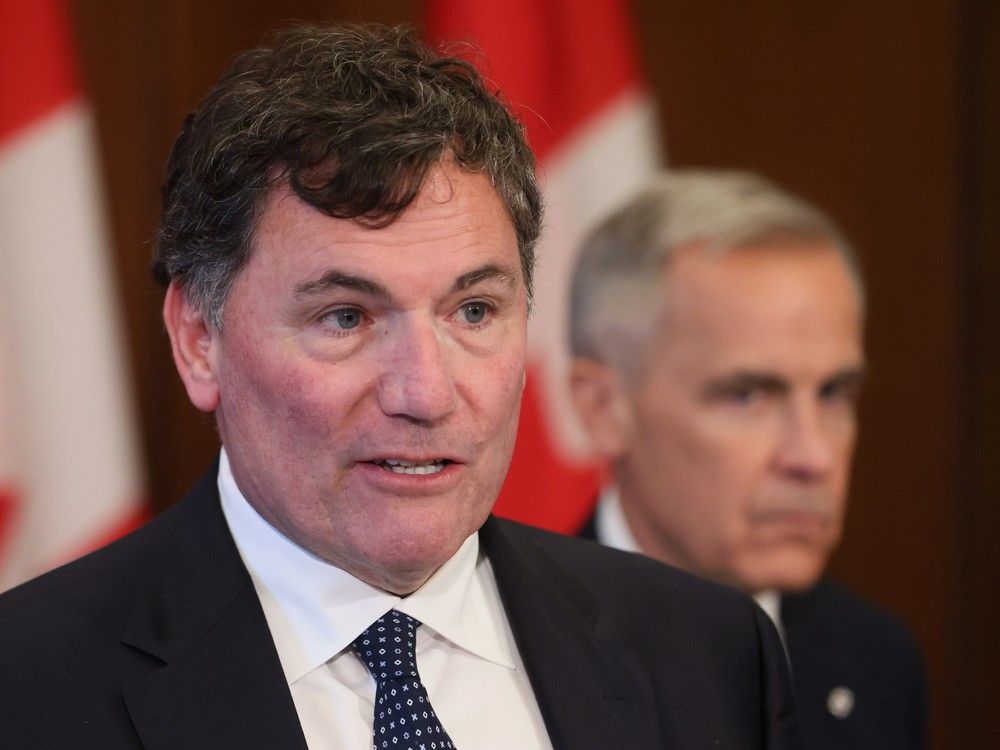

Dominic LeBlanc speaks at a press conference while Prime Minister Mark Carney listens, on Parliament Hill in Ottawa, Thursday, June 19, 2025.

OTTAWA — While Canada remains optimistic that progress is being made in trade talks with the United States, Canada-U.S. Trade Minister Dominic Leblanc warned Thursday that Canadians shouldn’t expect trade terms between the two neighbours to revert back to the patterns of recent decades.

“I do believe this is resolvable,” LeBlanc told the Senate Committee on Foreign Affairs and International Trade, responding to a question from Nova Scotia’s John McNair. “(But) the relationship with the United States has fundamentally changed and it will not magically go back to what it may have been a year ago or 25 years ago.”

LeBlanc, the Carney government’s point person on trade with the U.S. and Mexico, also said that Canada and the U.S. have many common interests and that both countries are stronger and more prosperous with freer trade.

Interviewed after his committee appearance, LeBlanc told National Post that Canada has a two-track strategy in being open to either sectoral deals for industries such as steel, aluminum or softwood lumber, or a broader deal. “Both tracks are still in discussions.”

LeBlanc said it’s too early to say whether a sectoral or a more comprehensive deal is more likely but added that related issues such as energy security, critical minerals and defence may also be involved. “At one point, there may be an intersection.”

The minister also told the Senate committee that Canada is not without influence in talks with the U.S., pointing to the importance, for example, of this country’s dominant aluminum sector in the massive American auto industry. ”There are leverage points,” said LeBlanc, also responsible for intergovernmental affairs and internal trade. “There are so many lines of intersection.”

While he was careful to avoid any forecasts on what might happen in the trade talks, LeBlanc indicated that the Canadian strategy involved remaining open to a deal with the U.S. on either of the two tracks – sectoral or comprehensive – while keeping multiple lines of communication open with American and Mexican officials. Timing is also important, as Canada may be in an improved position if the Trump tariffs lead to significant inflation for American consumers.

The Carney government, meanwhile, is trying to prepare the Canadian economy for a world with more U.S. protectionism and where trade patterns in alternative overseas markets such as Europe and Asia are already well-established. Economists and trade analysts have warned in recent months that trade diversification, a Canadian challenge since before Confederation, is easier said than done.

Mark Manger, a professor of political economy at the University of Toronto’s Munk School of Foreign Affairs, said geographical proximity is critical in driving trade. “It’s extremely difficult to diversify trade.”

Although the 2020 CUSMA trade deal between the three North American countries (or USMCA, as it’s called in the U.S.) isn’t set to expire for more than a decade, it is set to be reviewed next year when it reaches its sixth anniversary.

U.S. President Donald Trump has imposed in recent months a wide range of trade tariffs on a wide range of countries, some of which have since reached negotiated tariffs arrangements for their exports entering the U.S. market. Canada has been sheltered to some degree by its pre-existing CUSMA deal, although some key sectors have been targeted by Washington and have since suffered.

Ottawa’s preparatory measures for the new trade landscape have included early efforts to improve ports, rail lines and pipelines to make Canadian exports more competitive, break down inter-provincial trade protectionism, and re-skilling programs for workers affected by the tariffs.

National Post

Our website is the place for the latest breaking news, exclusive scoops, longreads and provocative commentary. Please bookmark nationalpost.com and sign up for our daily newsletter, Posted, here.

A B.C. man was sentenced to 28 months for raping a woman he'd just met in an alleyway outside a Chilliwack bar in October 2022.

Warning: This story contains disturbing details

A B.C. man will spend 28 months in prison for the “brutal and prolonged” rape of a woman who will suffer from life-long emotional and physical reminders of the horrific attack.

Brendan William John Sullivan, 29, who pleaded guilty in August, was sentenced in a Chilliwack provincial court room last week on one count of sexual assault against a victim who was 19 at the time.

In his written

decision

, Judge Michael Fortino said that while he accepts Sullivan’s remorse for his actions as genuine, it doesn’t diminish the fact that he altered the course the young woman’s life and “caused her irreparable harm.”

“She will live daily with the pain and discomfort of your offending, both emotionally and physically.

“I also appreciate that you will continue to live with the shame your actions have brought to you and your family and you will struggle with reconciling your actions with the person you know yourself to be.”

What happened?

On Oct. 30, 2022, a then 26-year-old Sullivan was at an undisclosed nightclub in Chilliwack, where, after having much to drink he met the victim, identified only as R.D. due to a publication ban, and they “made a mutual decision” to leave and head back to his place.

Outside the club, when R.D. learned that Sullivan’s home was located in Hope, roughly 50 kilometres away and farther than she expected, she “expressed some reluctance.”

While cutting through an alleyway near the club’s parking lot, Sullivan said he’d be fine to have sex then and there, an idea R.D. said no to once and then again as Sullivan persisted.

Moments later, Sullivan pushed her against the wall before throwing her to the gravel pathway, where he “lifted up her skirt and then removed her shorts and underwear along with his own pants” while she repeatedly told him no.

Sullivan then proceeded to have “penetrative penile-vaginal intercourse with her against her will and without using a condom” for approximately 30 minutes, during which time R.D. kept saying no

“When she tried to call out for help as she could hear people in the adjacent parking lot on the other side of some hedges, he covered her mouth,” Fortino wrote. “When she tried to fight him off with her arms, he pinned them down. The force of his body weight on top of her and the pinning of her arms rendered her unable to fight back.”

As the attack began, however, R.D. managed to text her friends using a safe word to signify she was in trouble and another that read “I f—ing said no. Behind the hedges.”

Upon arriving back at the club, one of her friends heard sounds of distress and walked into the alley to find Sullivan sexually assaulting R.D. while he held a hand over her mouth and held down her arms.

As the friend screamed and pulled Sullivan off, he claimed it was consensual and that he and R.D. were friends, prompting the nearly naked woman to scream back, “We are not f—ing friends.”

The clamour caught the attention of others nearby, including two unknown men who hit and kicked Sullivan until he fled. A bouncer stopped and held him until police arrived, at which point Sullivan again claimed the sex was “mutual and consensual, although he acknowledged he never received R.D.’s verbal consent.”

R.D., meanwhile, underwent a forensic examination at the hospital that revealed “bruises and abrasions around her neck, chin and back, along with gravel inside her vagina.”

“It is hard to imagine a more invasive and violative offence,” Fortino wrote.

Who is the victim?

In her victim impact statement, R.D. said injuries from the gravel, which she would find inside her vagina for days after the attack, have resulted in “urinary stress incontinence due to damage she sustained to her perineal area along with constant pain, discomfort and a lack of control over her bladder” that requires her to use incontinence products.

Aside from the physical damage, R.D. said the rape changed her life dramatically, leaving her with flashbacks, panic attacks, sleepless nights, a lack of trust in people and fears of being alone with men and being victimized again.

“It could not be clearer to the Court that R.D. suffered immeasurable physical and emotional harm from the offence and her life was forever changed by it,” Fortino wrote.

Who is Brendan William John Sullivan?

Sullivan, who grew up “in a loving and supportive family,” had no criminal record or involvement with police before his arrest.

A psychological risk assessment conducted before sentencing, however, found a long-term pattern of alcohol abuse that began in high school when he lost three friends in a car accident, followed by his sister to an overdose.

He moved to Kelowna at 24 and while he didn’t stop drinking, he turned his life around somewhat and lost some weight, gaining confidence, he said, but also making him “more susceptible to the effects of alcohol.” He was visiting Chilliwack at the time of the offence.

The risk assessment diagnosed him with “alcohol use disorder and unspecified depressive disorder,” but emphasized that mental illness was not a direct factor in the offence. Instead, his alcohol use was identified as the main “disinhibiting” and “destabilizing” factor impairing his judgment and perception of consent.

Meanwhile, a pre-sentence report bolstered by letters of support from family, friends and coworkers — along with Sullivan’s struggles to reconcile his own actions — suggests the incident is entirely out of character.

In addition to the prison time, Fortino prohibited Sullivan from owning any firearms or weapons for a decade. Defence counsel had been seeking a conditional sentence, given Sullivan was deemed a very low-risk to re-offend.

Our website is the place for the latest breaking news, exclusive scoops, longreads and provocative commentary. Please bookmark nationalpost.com and sign up for our daily newsletter, Posted, here.

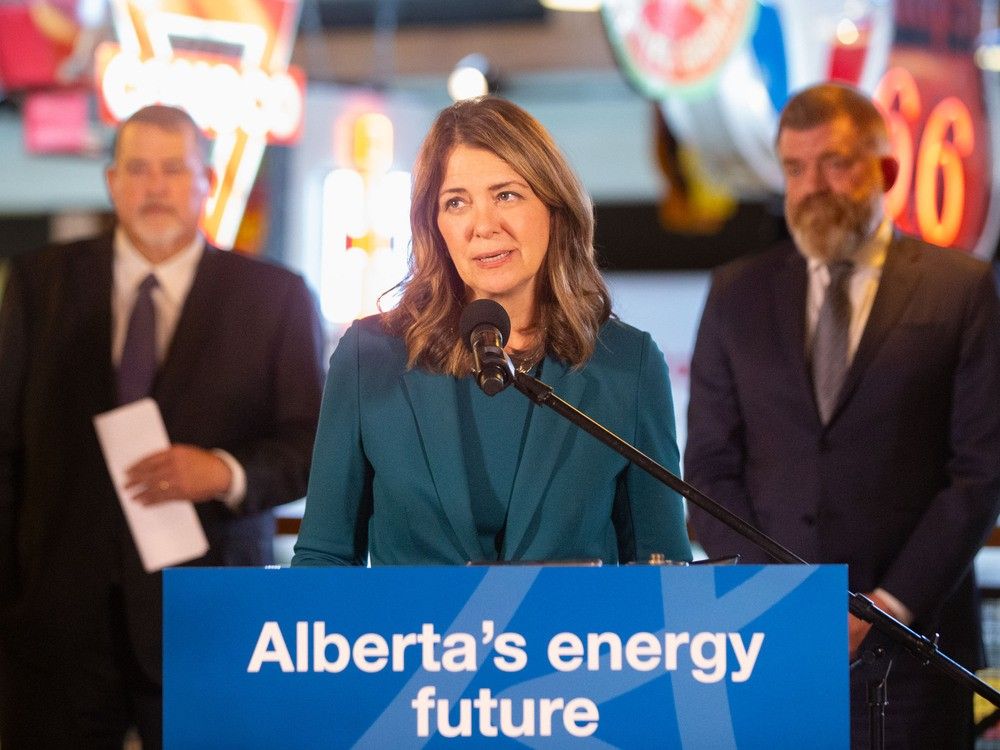
Premier Danielle Smith speaks accompanied by Minister of Energy and Minerals Brian Jean, Minister of Indigenous Relations Rajan Sawhney, and Alex Pourbaix, executive chair of Cenovus Energy in Calgary on Oct. 1, 2025.

OTTAWA — Alberta Premier Danielle Smith says if Prime Minister Mark Carney fails to include her new pipeline pitch on his list of nation-building projects within the next seven weeks, she will have to intensify her efforts to build north to south.

“Everybody wants to be Team Canada and find new markets. But if it means, let’s all work together to get our products to market, but not Alberta’s, well, then that would be the pathway I’d have to pursue,” she told National Post in an interview Thursday.

Diversifying Canada’s market access and trading relationships has been a major focus of Carney’s first six months in office.

Political and business leaders have spent much of the past year calling for Canada to widen its customer base to wean itself off an over-dependence on the United States, in light of the ongoing trade war with U.S. President Donald Trump.

Getting more major infrastructure and energy projects built has also been a key plank in Carney’s promise of bolstering Canada’s economy.

He has said the next list of nation-building projects his government will work to fast-track will be announced by Nov. 16.

Smith’s call for Carney to include Alberta’s new proposal to build an oil pipeline to British Columbia’s coastline on that next list is not only a test for the Ottawa-Alberta relationship but also, according to the premier, a test of the prime minister’s commitment to that diversification.

“I’ve taken my colleagues seriously when they’ve said that they want new markets and they want to work together, and this is my demonstration that I believe them when they say that,” she says.

“If they’re not telling the truth, then I guess I’ll find out pretty soon, and then I’ll have to work on other options, which would include working with the companies in the United States and the U.S. administration to build more going to the south.”

As Canada’s biggest producer of crude oil, Alberta exports most of its oil to the U.S. However, Trump’s global trade war has resulted in more Canadian oil flowing to China through the TransMountain pipeline, which runs from Edmonton to Burnaby. B.C., after China sought to cut back on U.S. oil.

So far, Smith’s new pitch has been met with harsh words from B.C. Premier David Eby, who slammed her proposal as not being rooted in reality, saying it lacks both a private backer and private-sector money, and questioned what value there was for Carney’s government to give it any consideration.

Rather than wade into interprovincial disputes, Opposition Conservative Leader Pierre Poilievre, who has accused Carney of being slow to act, turned up the pressure on Thursday.

“There’s one man who stands in the way of this pipeline getting built. It’s Mark Carney,” he said, speaking to reporters in Ottawa.

Smith has defended allocating $14 million of provincial taxpayer money to fund a technical working group, assisted by three major energy companies, as necessary given the failures of past pipeline projects, including Enbridge’s proposed Northern Gateway and Energy East from TC Energy, formerly known as TransCanada Corporation.

Her government’s goal is for private proponents to eventually come forward, but Smith says first, Carney must scrap a suite of Trudeau-era laws that she and other critics have long argued block development.

In a recent statement, federal Energy Minister Tim Hodgson said Alberta was well within its right to submit a proposal for consideration, adding that any project being pitched “will be evaluated against the same rules for all proponents.”

Another issue brewing for Alberta is the B.C. premier’s staunch support of a tanker moratorium that the federal government passed back in 2019, which is among the Trudeau-era laws Smith has demanded Carney scrap.

An alliance of First Nations along the B.C. coastline has called on the prime minister to maintain it, saying in a recent statement that their communities reject Smith’s proposal.

While Alberta’s premier has expressed an openness to seeing a carve-out created for a particular port for her specific proposal, such as in Prince Rupert, B.C., she says she would still prefer Carney’s government to do away with the law altogether.

“If that is a no, then it means no one’s really serious about finding new markets. It means no one’s really serious about acting like a country,” she said.

Another issue that Smith says she has raised with Carney would be how Albertans, feeling aggrieved towards Ottawa and looking to separate, may react to seeing a pipeline proposal rejected.

“That’s what I’ve told the prime minister. What would it signal to that group? I take that group seriously,” Smith said.

National Post, w

ith files from Bloomberg

Our website is the place for the latest breaking news, exclusive scoops, longreads and provocative commentary. Please bookmark nationalpost.com and sign up for our politics newsletter, First Reading, here.


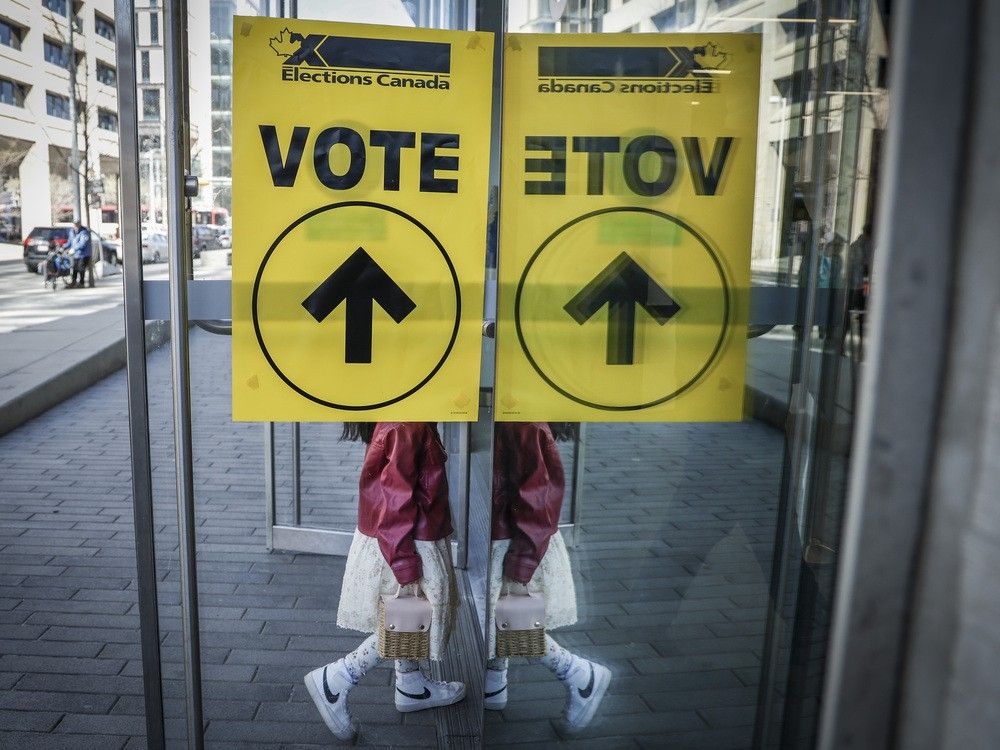
A young girl enters a polling station with her parents as voters cast their ballots in the federal election in Calgary, Monday, April 28, 2025.

OTTAWA — China and Russia once again tried to interfere in Canada’s latest federal election but likely had minimal impact on the vote that was ultimately free and fair, said the foreign interference in elections watchdog.

“While foreign actors attempted to undermine it, it did not affect the integrity of the election. There were no significant security incidents observed during the election, no cyber threats and no incidents of violent expression,” Security and Intelligence Threats to Elections (SITE) Task Force spokesperson Laurie-Anne Kempton told reporters Thursday.

SITE — composed of the RCMP, Canadian Security Intelligence Service, Communications Security Establishment and Global Affairs Canada — is tasked with monitoring federal elections for foreign interference. But the public is only advised of foreign efforts if they meet a certain threshold for disclosure.

In its post-election report published on Thursday, the task force said it detected “small scale” efforts from foreign entities to influence the vote. Those ranged from transnational repression, “inauthentic and coordinated amplification” of Web content and online scams using politicians’ likeness.

But none of the foreign campaigns ultimately impacted voting nationally or locally in a meaningful way, the task force concluded.

Once again, the governments of China and Russia were the two main perpetrators of attempted foreign interference, mostly through online campaigns.

During weekly briefings during the election, SITE warned the public of two separate online campaigns that appeared backed by the Chinese government.

The first was “inauthentic and coordinated”

boosting of two posts on Chinese social media platform WeChat about Prime Minister Mark Carney.

The second was boosting of information

about an arrest warrant and bounty issued last year by Chinese authorities on Honk Kong democracy activist and Conservative Party of Canada candidate Joseph Tay. The campaign also intentionally buried information about Tay that wasn’t related to the bounty.

The report reveals that SITE was made aware of the campaign against Tay weeks before it notified Canadians on April 21. The report says the campaign appeared to have little viewership online at first, but as engagement began to increase, it determined that it warranted advising the public.

“I would say, probably in the week before we came forward on that, it started to move to other platforms, and there was an increase in the number of messages, increase in the awareness of it, and so it was amplified,” Kempton explained.

“And so, the panel felt that it was important that this group inform Canadians before election day,” she added in reference to the panel of five top bureaucrats tasked with deciding when a foreign interference threat reaches the threshold of a public advisory.

Russia, the report said, made mild attempts to influence public online discourse regarding certain unnamed political candidates.

“The SITE TF observed efforts by the Russian Federation to leverage its foreign information manipulation and interference networks online. This consists of a network of websites that launder and amplify Russian government-controlled media outlets’ aggregated items about Canadian candidates and the election throughout the election period,” noted the report.

Despite warning at the onset of the election that India and Pakistan would likely try to interfere in the result, the post-campaign report said nothing about if such efforts were ultimately detected and addressed.

In the pre-campaign report, SITE noted that “the Government of India had been increasingly relying on Canada-based proxies and contacts to conduct foreign interference-related activities.”

Canadian Security Intelligence Service (CSIS) deputy director Vanessa Lloyd said all suspected instances of foreign interference were “thoroughly examined” by SITE member organization and brought to the panel of five to determine if they warranted an advisory to the public. She did not specify if any such cases involved India or Pakistan.

But the report also said that foreign interference is becoming harder to detect as techniques become more sophisticated and subtle.

“Due to an increase in public awareness and scrutiny of foreign interference, threat actors likely adapted their tradecraft to further conceal their activity, making it even more challenging to detect,” the report read.

The task force said it did not detect any “significant” cyber incidents or breaches relating to the election.

But it did notice cyber criminals beginning to use the likeness of party leaders such as Prime Minister Mark Carney and then-NDP Leader Jagmeet Singh to push online scams and cryptocurrencies. The scams sometimes paraded as falsified articles made to appear like they were from legitimate news sources.

“The SITE TF observed fake news articles and online publicity with sensational headlines about Canadian elections that were being linked to websites promoting financial fraud schemes,” read the report.

“These incidents are indicative of a broader trend in impersonation of political figures for the purposes of online fraud and confidence scams.”

National Post

cnardi@postmedia.com

Our website is the place for the latest breaking news, exclusive scoops, longreads and provocative commentary. Please bookmark nationalpost.com and sign up for our politics newsletter, First Reading, here.


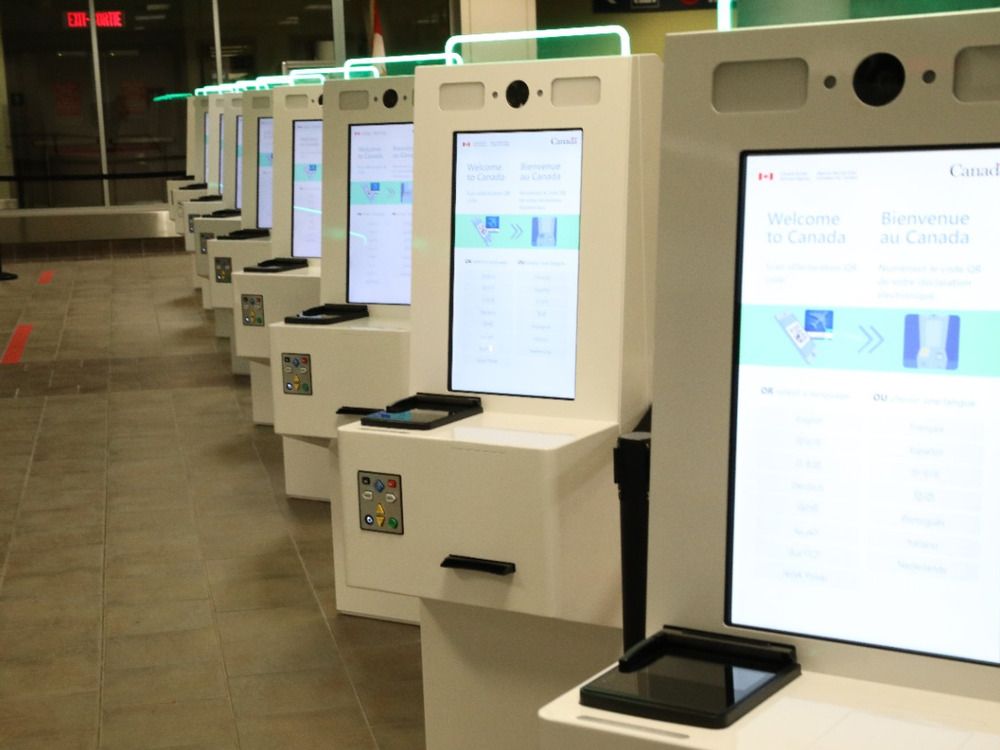
A line of Primary Inspection Kiosks (PIK) is seen at Halifax Stanfield International Airport.

The Canadian Border Services Agency reported an outage that is now resolved with its inspection kiosks at several airports on Thursday, for the second time in less than a week.

“There is currently a CBSA Primary Inspection Kiosks outage impacting some airports,” the agency said in a post on X at 11:30 a.m. ET Thursday morning. “We are working with partners on fixing the issue. We apologize for any inconvenience this outage may cause and thank you for your patience.”

A followup shortly before 2 p.m. said: “The outage has been resolved. Travellers may continue to experience delays in the short term as we resume normal processing operations. We thank you for your patience and apologize for any inconvenience experienced.”

The same outage message was sent out on Sunday, with an identical followup the next day.

During the latest outage, Toronto’s Pearson airport informed travellers that the outage was affected Terminals 1 and 3. “Passengers may experience longer than normal wait times,” it said in a social media post.

A spokesperson at CBSA told National Post that the outage began at about 10:20 a.m. ET, “
affecting 
Primary Inspection Kiosks (PIK) at multiple Canadian international airports.”

He did not say which airports were affected, but PIK are used at

nine Canadian international airports

: Vancouver, Calgary, Edmonton, Winnipeg, Toronto, Ottawa, Montreal, Quebec City and Halifax, as well as Billy Bishop Toronto City Airport.

    The spokesperson said travellers were re-directed during the outage to the primary inspection lines for manual processing.

    “Safety and security standards are upheld at all times, with border services officers working to verify travellers’ identities, receive their declarations, and conduct any additional screening warranted by each traveller’s individual circumstances,” he added.

    Also this week, a system outage at some road border crossings slowed commercial traffic heading into Canada.

    Media reports quoted CBSA as saying the issue affected ports of entry along the Southern Ontario Region beginning late Monday evening, and was partially resolved by the next day.

    Our website is the place for the latest breaking news, exclusive scoops, longreads and provocative commentary. Please bookmark nationalpost.com and sign up for our newsletters here.


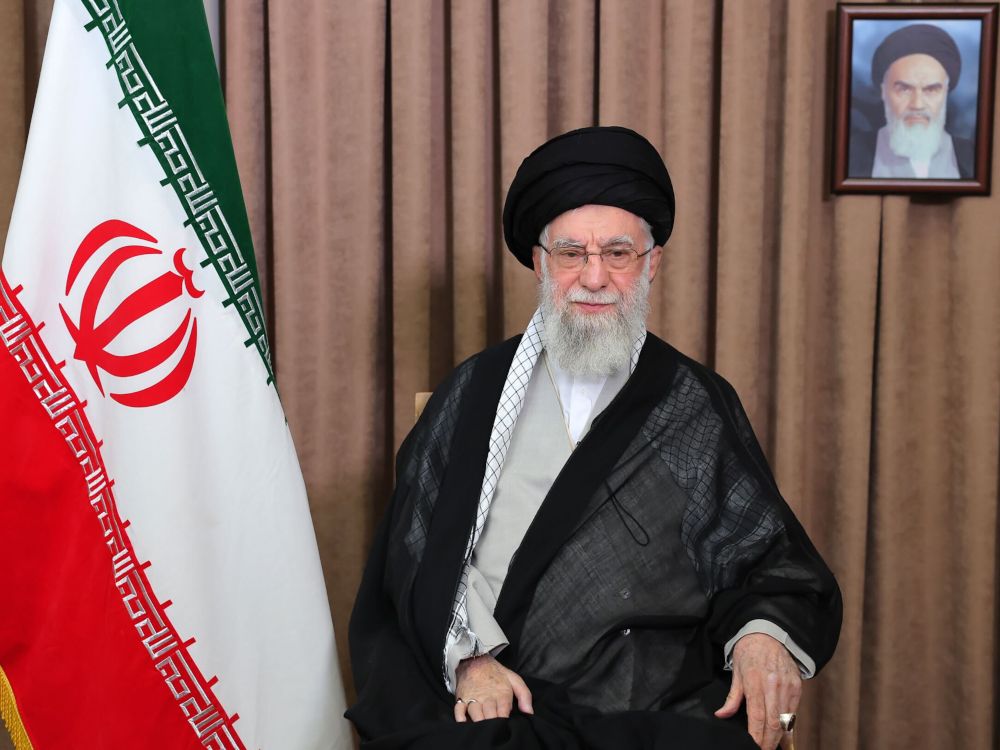
    Iranian Supreme Leader Ali Khamenei

    Reviews and recommendations are unbiased and products are independently selected. Postmedia may earn an affiliate commission from purchases made through links on this page.

    The Iranian government is seen by Canada, and other countries around the world, as a violator of human rights and a sponsor of terrorist networks.

    Among its opponents in this country are a large number of the Iranian diaspora community. But those opposed to the regime here have raised concerns about spying and intimidation.

    Reporter Tom Blackwell joins Dave Breakenridge to discuss the fears of those Iranian Canadians who have voiced opposition to the regime back home, and how the federal government is approaching the issue.

    Background reading:
    ‘Canada is the most infiltrated country’: Iranian Canadians fear the regime’s borderless terror

    Subscribe to 10/3 on your favourite podcast app

    Our website is the place for the latest breaking news, exclusive scoops, longreads and provocative commentary. Please bookmark nationalpost.com and sign up for our daily newsletter, Posted, here.

    A Royal Bank of Canada sign and a Canada flag are pictured in Ottawa on Thursday, June 27, 2024.

    OTTAWA — The former RBC employee who

    allegedly accessed Prime Minister Mark Carney’s banking profile

    defrauded his employer of $68,500, according to newly released court documents outlining the RCMP’s criminal accusations against him.

    Ibrahim El-Hakim was not present in court in Ottawa when he was set to appear on Wednesday, but his lawyer Ron Guertin said he was still awaiting some of the Crown’s evidence against his client. The RCMP’s formal charges were tabled later in the day.

    As previously disclosed, El-Hakim is charged with four offences, namely fraud over $5,000, unauthorized use of a computer, identity theft and trafficking in identity information.

    All offences are believed to have happened between Nov. 16, 2023, and June 18, 2025.

    El-Hakim, a 23-year-old resident of Ottawa, was hired in 2022 by the RBC branch on Bank St., located steps away from Parliament Hill. As client advisor, he was responsible for accessing customers’ files, creating bank accounts and approving lines of credit.

    A police affidavit obtained by Postmedia showed that El-Hakim confessed to having been contacted by an individual under alias “AI WORLD” on Telegram, an encrypted messaging service commonly used by criminals, at a date that is not listed in the document.

    He would then receive certain orders to either grant lines of credit or accept credit card applications to fraudulent identities, and received $500 each time, for a total of $5,000.

    El-Hakim was also asked to access specific banking profiles to consult confidential information. The affidavit shows that he consulted Carney’s banking profile as well as the profile of a certain “Justin Trudeau” who is not believed to be the former prime minister.

    The charges tabled on Oct. 1 show that the RCMP has reason to believe El-Hakim had in his possession “for the purposes of transmitting or making available or distributing or selling or offering for sale” personal information knowing they could be used for fraud.

    The RCMP would not say if the charges directly relate to Carney’s personal information.

    El-Hakim’s lawyer suggested on Wednesday that the case against his client has been “sensationalized” by the media because it relates to the prime minister.

    The case will be back in court on Nov. 5.

    National Post

    calevesque@postmedia.com

    Our website is the place for the latest breaking news, exclusive scoops, longreads and provocative commentary. Please bookmark nationalpost.com and sign up for our newsletters here.


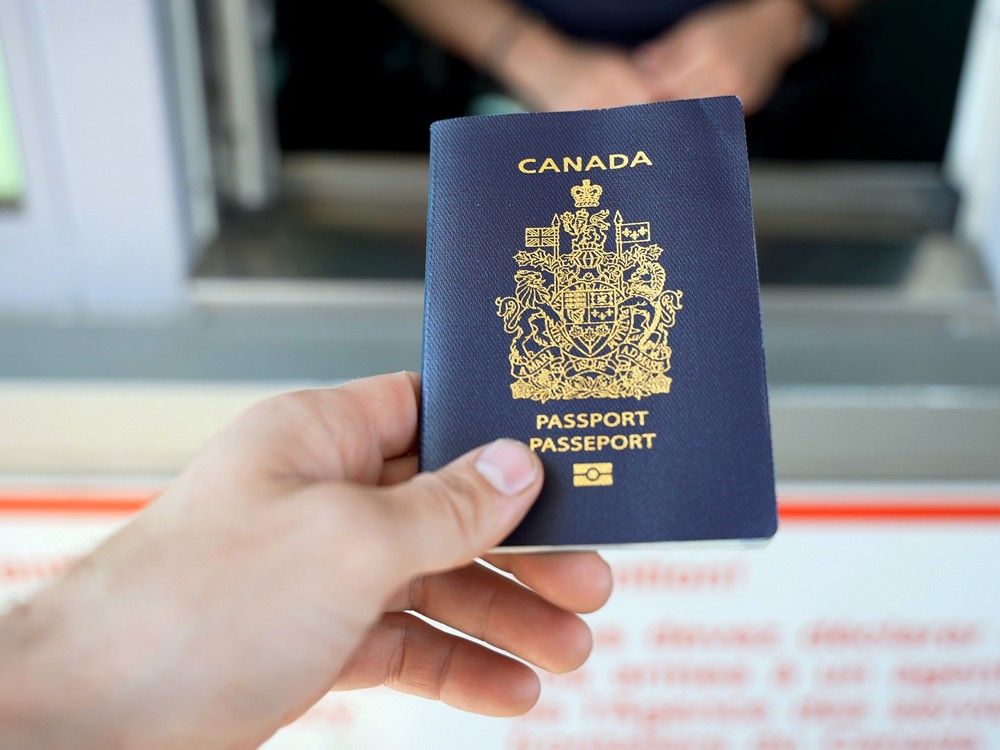
    Canada is advising non-binary Canadians with gender-neutral passports that they may face restrictions when travelling to the U.S.

    Ottawa recently updated its travel guidance to the U.S. to advise Canadians using gender-neutral passports that they could encounter problems crossing the border.

    The Canadian government advises that non-binary individuals using the X gender identifier in place of male or female — an option available to Canadians since 2019 — may face restrictions in the U.S. and said travellers should “verify this information” before heading there.

    The

    advisory

    goes on to caution that travellers could still be asked to provide their “sex/gender information as either male or female.”

    Approximately 3,600 Canadians use the identifier on their passport, according to

    CBC

    .

    It’s not immediately clear when the travel advice was updated, but

    an archived version of the page

    from Sept. 22 doesn’t include the topic.

    The decision comes as the debate around gender ideology has become an increasingly contentious topic in the U.S.

    Among the many executive orders signed by U.S. President Donald Trump on inauguration day was one that declared the American government would henceforth only recognize two sexes, male and female.

    “My Administration will defend women’s rights and protect freedom of conscience by using clear and accurate language and policies that recognize women are biologically female, and men are biologically male,” the

    order

    reads.

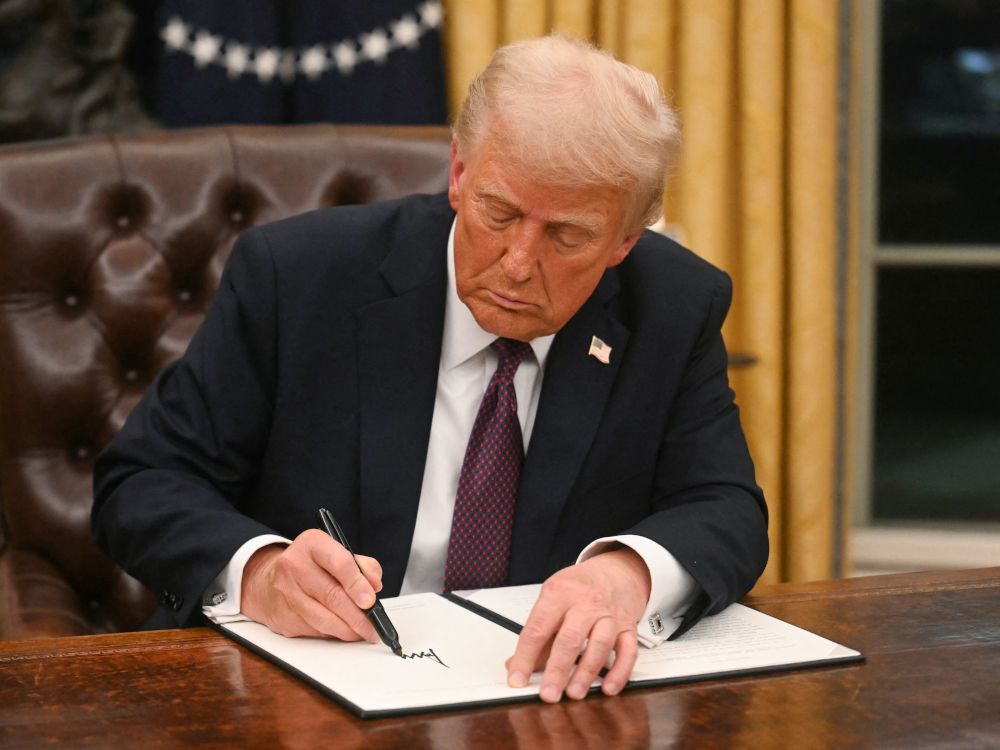
     U.S. President Donald Trump signs an executive order in the Oval Office of the White House in Washington, D.C., on his inauguration day.

    Four days later, Secretary of State Marco Rubio directed his department to freeze applications in processing that used X, as reported by

    ABC News.

    A subsequent lawsuit alleging a violation of rights filed by non-binary and transgender people led a judge to put it on hold, an order upheld by an appeals court, the

    Associated Press

    reported in late September. Justice officials in Trump’s administration have since asked courts to put the order on hold while the lawsuit plays out, thereby allowing the new policy to be enforced.

    Trump’s order had already prompted Global Affairs Canada to update the advisory with a warning that LGBTQ persons could be required to indicate “sex assigned at birth” on travel documents and, for those taking up residency in the U.S., passport and social security applications.

    It also cautioned that there are laws affecting LGBTQ people in some states. Iowa, for instance, has

    removed gender identity from its civil rights code

    , and several states — including Florida, Kansas, Wyoming, and Montana — have introduced legislation around who is permitted to use gender-specific bathrooms.

    Earlier this year, Canada announced it would not include the identifier as an option on new NEXUS card applications or renewals in line with the new U.S. policy. NEXUS is a five-year membership available to pre-approved, low-risk Canadian and U.S. citizens that allows for faster border crossings.

    A spokesperson for the Canada Border Services Agency told the

    Canadian Press

    the shared program is operated out of the U.S. by its Customs and Border Protection agency. They said roughly 550 people submitted applications using X between 2022 and this March.

    National Post has contacted Global Affairs Canada, the CBSA and Immigration, Refugees and Citizenship Canada with questions about the advisory update and more information on the number of Canadians using X on their passports and NEXUS cards.

    It has also contacted U.S. Customs and Border Protection for comment on the updated advisory and Canada’s advisory to gender-neutral travellers.

    In a statement to the

    Washington Post

    in April, a CBP spokesperson said passport gender does “not render a person inadmissible” and that “claims to the contrary are false.”

    Our website is the place for the latest breaking news, exclusive scoops, longreads and provocative commentary. Please bookmark nationalpost.com and sign up for our daily newsletter, Posted, here.

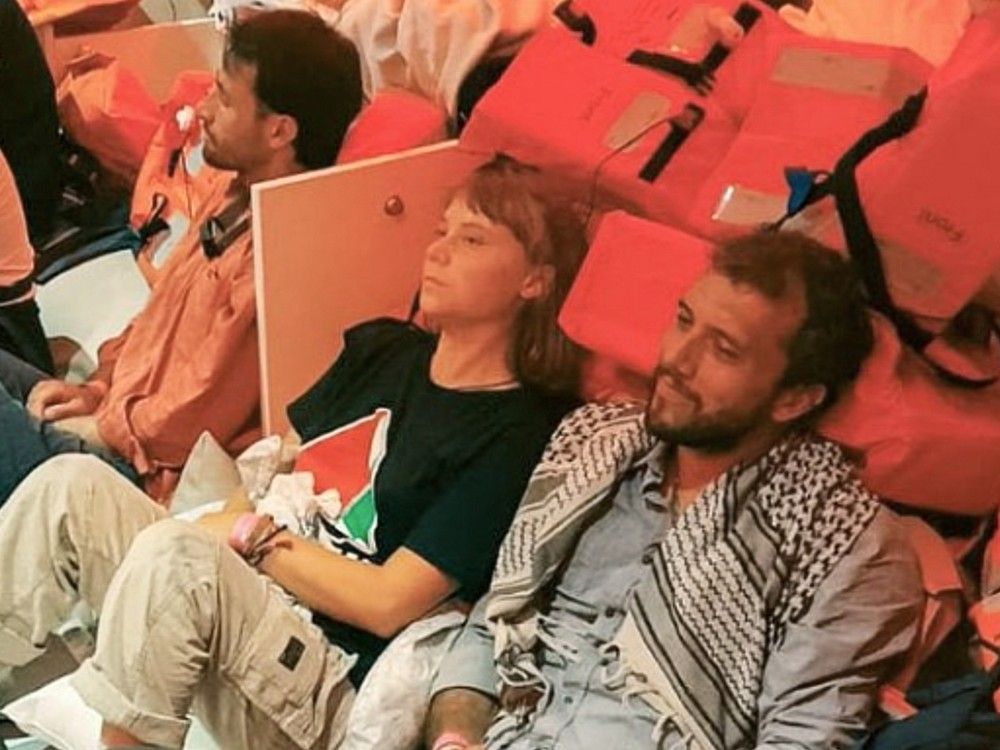
    This image released by the Israeli Foreign Ministry shows Greta Thunberg, second from right, with other flotilla activists after the Israeli navy intercepted the Global Sumud Flotilla carrying humanitarian aid to Gaza, Wednesday, Oct. 1, 2025.

    Greta Thunberg and a group of activists who were sailing in a flotilla to Gaza have been intercepted by Israel, according to the country’s foreign ministry.

    The Global Sumud Flotilla is made up of dozens of vessels carrying a group of activists and humanitarian aid. As of Thursday morning Eastern Standard Time, only one vessel remains and “if it approaches,

    its attempt to enter an active combat zone and breach the blockade will also be prevented,” Israel’s foreign ministry said in a post on X.

    In a news release, the flotilla group said an estimated 443 volunteers were taken from their vessels. It called the move an “unlawful abduction” by Israel.

    On Wednesday afternoon, the ministry said several vessels “have been safely stopped and their passengers are being transferred to an Israeli port. Greta and her friends are safe and healthy.”

    The group is being taken to Israel, where the deportation process to Europe would begin, another post by Israel’s foreign ministry said on X on Thursday. In an Instagram post, an account for the flotilla said their “resolve is only strengthened” after being intercepted.

    The flotilla was heading to Gaza in an effort to break what it calls “Israel’s illegal siege.” Israel has made it clear that it would not allow the flotilla to “enter an active combat zone and will not allow the breach of a lawful naval blockade,”

    according to

    Israeli Minister of Foreign Affairs Gideon Sa’ar.

    While the group says their goal is to deliver humanitarian aid to Gaza, the

    foreign ministry says

    the activists are “not interested in aid, but in provocation.”

    “Israel, Italy, Greece, and the Latin Patriarchate of Jerusalem have all offered and continue to offer the flotilla a way to peacefully deliver any aid they might have to Gaza,” said the foreign ministry on X, but the flotilla refused.

    Before intercepting the flotilla, the Israeli Navy asked them to change course and later informed them that they were “approaching an active combat zone and violating a lawful naval blockade.”

     This image taken from video released by the Israeli Foreign Ministry shows activist Greta Thunberg as she is removed after the Israeli navy intercepted the Global Sumud Flotilla carrying humanitarian aid towards Gaza on Oct. 1, 2025.

    Earlier this week, documents found in Gaza indicated that Hamas was backing the flotilla, Israel’s foreign ministry said.

    The documents “show a direct link between the flotilla leaders and the Hamas terrorist organization,” the ministry said in

    a news release

    .

    Israel alleges that a wing of the Hamas movement, the Palestinian Conference for Palestinians Abroad (PCPA), which is subordinate to the main terrorist organization, has played a role in coordinating the flotilla.

    Members of the PCPA include “high-ranking well-known Hamas operatives,” the ministry said, some of which are flotilla leaders. That includes the head of the PCPA’s Hamas sector in the United Kingdom and an operative from Spain, both named in documents discovered by Israel.

    Dozens of ships that are part of the flotilla are owned by the CEO of a Spanish front company called Cyber Neptune. The CEO is a “Hamas-aligned PCPA operative,” the ministry said. “Thus, these ships are secretly owned by Hamas.”

    A spokesperson for the flotilla, Maria Elena Delia,

    told Italian news agency Ansa

    that the Israeli findings were “propaganda” and dismissed the claims. She said the documents should be handed over for independent verification.

    The PCPA was deemed a terrorist organization by Israel in 2021 due to its connection to Hamas. According to the foreign ministry, it “operates under the pretense of civilian cover and is responsible, on behalf of Hamas, for mobilizing actions against Israel, including violent demonstrations, marches against Israel, and demonstration and provocation flotillas.”

    Our website is the place for the latest breaking news, exclusive scoops, longreads and provocative commentary. Please bookmark nationalpost.com and sign up for our daily newsletter, Posted, here.