LP_468x60
on-the-record-468x60-white

Nathan Cooper, Alberta’s new man in Washington, D.C., stands with Premier Danielle Smith near the U.S. Capitol Building.

Alberta’s new man in Washington, D.C., is Nathan Cooper, the 44-year-old former MLA from the rural heartland of the province. Nathan just wrapped up six years as Speaker of the Alberta legislature, an all-around nice fellow credited with keeping partisan shenanigans in the legislature to a minimum.

Ontario, Quebec and Alberta are the only provinces with full-time boots on the ground in D.C.; Alberta has a total of 11 staff in four offices across America, Nathan reports. “To put that in perspective,” he adds, “Quebec has close to 100 full-time people trying to defend the interests of Quebec in the U.S.”

I’m curious: What would entice Nathan to quit a plum job — refereeing partisan debates under the dome in Edmonton — and move to D.C. as a diplomat, a place where it’s a struggle for anyone to be heard above the cacophony of lobbyists and legislators?

More importantly, will his presence matter one whit, should Mark Carney, Canada’s new prime minister and man of the moment in Kananaskis Country, make it clear he speaks for Canada, full stop?

Alberta needs someone in D.C. “who can tell our story,” Nathan pitches. It’s a glib answer to my question, but he qualifies his response; he knows he needs to convince not just the pro-energy crowd in the U.S. of the merits of Alberta as a trading partner, but the skeptics too. “It’s very possible,” he observes, “the House and the Senate will be different after the (American) midterms.”

“And, I think the Speaker’s role, in many respects, prepared me for that,” he explains, “because at the end of the day, you need to be able to garner the trust and respect of both sides of the House, or you end up in a very unruly place.”

Nathan replaces former MP James Rajotte as Alberta’s representative in Washington, and when we chat, he’s been in the new job for less than two weeks. Cellphone in hand and safely parked on the side of the road, he’s enroute to G7 briefing meetings in Calgary. A full 20 minutes into our conversation, he relaxes a little, unbuckles his seatbelt and takes a few sips of his Tim Horton’s coffee.

“What a rocket ride,” he says with a nervous laugh, and describes his first week in D.C., alongside Premier Danielle Smith: meeting U.S. senators and congresspeople, as well as Canadian and American energy producers. After the G7, where the hosting province enjoys certain privileges including “grip and grins” with world leaders, there’s the Calgary Stampede in early July, a shindig that attracts politicos from across the world.

By August, Nathan plans to have his family settled in D.C. and he’ll be working from an office lodged within the Canadian Embassy. “Alberta and Ontario are still inside the embassy,” he explains, “while the province of Quebec has their own office space and functions independent of the embassy.”

I can’t help but wonder: Isn’t it confusing, operating under one embassy roof, with the Albertans cozying up to Americans (for example, allowing U.S. liquor back on shelves) while other provinces threaten retaliation against Trump’s latest tariff hikes for steel and aluminum?

And worse, isn’t there a risk that provincial representation in D.C. is proof — to those who care about these things — there is no unified Team Canada position that even the prime minister can wrangle?

“The (Canadian) embassy is pretty good to us,” Nathan answers, thoughtfully, “and I think we’re pretty fair with the embassy. On most things we’re ‘Team Canada.’” But, he acknowledges, “there are some issues, around energy and resource development, where we have a different view of the world.

“The good news,” he adds, “is most people don’t know — even (American) legislators — what we’re doing on a province-to-province basis, whether or not we’re retaliating, whether we are in lockstep with the federal government.

“Things are so chaotic there,” Nathan reflects, that even the Americans “don’t pretend to know what the Trump administration is going to do.” Everyone, he says, accepts that every situation is fluid and dynamic: “That’s the default position of everyone right now in D.C.”

Nathan represented the rural constituency of Olds-Didsbury-Three Hills for a decade; his exit from partisan politics triggered a byelection to be held later this month. One of the candidates in the race is Cameron Davies, leader of the Alberta Republican Party; it openly advocates for Alberta’s secession from Canada.

Many of his former constituents are frustrated, Nathan admits, “they want to consider separation, but at the end of the day, the overwhelming majority of those people just want Canada to work and Alberta to have a strong role similar to the role that Quebec plays in Confederation.” That’s a part of the Alberta story he may need to explain more fully to people in D.C.

Nathan’s certainly not agitating for Alberta to become America’s 51st state, but he is paying close attention to Carney’s nation-building efforts. “If there’s no pipeline with hydrocarbons in it, be it gas or oil, in the approved list of (nation-building) projects,” he cautions, “that will have significant impact on how Albertans feel about national unity.”

Americans, too, are watching Canada’s new prime minister, and see him clearly as the guy in charge of negotiating a new bilateral economic and security pact with Trump, Nathan says. But some are asking: “Which Carney is going to govern: the climate change advocate or the world banker?”

It’s a fair question.

Our website is the place for the latest breaking news, exclusive scoops, longreads and provocative commentary. Please bookmark nationalpost.com and sign up for our newsletters here.



Natasha Hausdorff, a British lawyer with an expertise in international law, is frequently seen defending Israel on various media outlets, including BBC, Sky News, Piers Morgan, CNN, and Fox.

Natasha Hausdorff, the British barrister who has become an outspoken defender of Israel’s legal rights on global news networks, warns that a “vicious cycle of disinformation” — fuelled by media self-censorship and terrorist propaganda — has warped the world’s understanding of the Gaza conflict, and put Jewish lives at risk.

More notably, the expert in international law has popularized one such law, 

Uti possidetis juris

. It states that newly formed sovereign countries should retain the borders that their preceding area had before their independence. Therefore, at the time Israel declared itself a state, Mandatory Palestine – which included what today is known as Israel, Judea and Samaria (a.k.a. the West Bank) and Gaza – would by law be legal territorial boundaries of Israel. It is a lynchpin argument, she believes, against the charges of “illegal occupation” and “illegal settlements.”

She regularly briefs politicians and international organizations and has spoken at parliaments across Europe.

After her law degree at Oxford University, she clerked for the president of the Supreme Court of Israel in Jerusalem in 2016. In 2018, Hausdorff was a Fellow at Columbia Law School in the National Security Law Program.

Dave Gordon interviewed Hausdorff prior to a talk she delivered at Toronto’s Nova Exhibition on June 12, hosted by StandWithUs Canada.

It would seem uti possidetis juris ought to have been used by Israel decades ago in international forums. Why hasn’t it?

I can fully appreciate that Israel’s official stance is constrained by diplomatic operations and political pressures. It’s a rule that applies automatically, whatever Israel says about the situation.

There are other examples of Israel not standing on ceremony, as far as international law is concerned. One of those relates to Egypt’s obligation to open the border to Palestinian civilians, fleeing civil disorder in Gaza. That’s in accordance with Egypt’s obligation under the Organization of African Unity Convention on (governing the specific aspect of) Refugees, which it signed in 1980.

This is a convention that has a much broader definition of refugee than the international convention. Nobody has been calling on Egypt to open the border from October 2023. But Israel can’t pressure (that), because Egypt threatened to tear up the peace agreement with Israel.

What’s your opinion about how the media’s been covering the war?

If the BBC were reporting from North Korea, there would be some indication somewhere that we are not free to report without censorship — controlled in what we’re able to say by the regime. I have not seen a single piece of reporting from Gaza that has acknowledged that: nothing comes out of the Gaza Strip that is not controlled by Hamas.

So for a start, the notion that the international media would be parroting Hamas propaganda in this fashion is deeply shameful, and indicates to me a complete absence of journalistic integrity. That’s quite apart from the devastating impact that this is having.

When I talk to policy makers, officials around the world, they tell me they’re basing their determination on what to do, on the basis of the Gaza pictures they see in the media.

Now, let me be clear, they are terrible. But I see on Israeli media, a series of interviews from Channel 12 in November, in Gaza, where they held out a microphone to Palestinians that were leaving Jabala. At the time, they could not grab it from him quickly enough, to tell the world how Hamas was responsible for all of the ills that had been visited upon them, how grateful they were to Israel for the humanitarian assistance, the fact that Israel provided humanitarian corridors.

I didn’t see those interviews anywhere on the international broadcast media. Frankly, they don’t fit with the agenda that people want to follow.

The amount of damage that this self-censorship, and embracing of Hamas, and other terrorist organization propaganda is doing, is seen in the obscene statements that we’ve heard from supposed allies of Israel: the U.K., France and Canada.

Jews are being executed on the streets in the capital of the free world (Washington, D.C.), and I think that is directly attributable to the irresponsible broadcast, where we had the media repeating this absurd claim of 14,000 babies dying in the next 48 hours.

The link, I’m afraid, is undeniable.

Do you think Israel is telling its story well?

So much misreporting is happening, and this isn’t being addressed. Can I put the blame squarely on Israel? I struggle with that, because the fact of the matter is that a lot of this information is publicly available. Right?

The Coordination of Government Activities in the Territories (COGAT) website catalogues all of the aid going into Gaza, over the last 19 months. That is not only ignored by the international media, by politicians, by the UN, by the ICJ, it is actually inverted. And there is this reoccurring canard that there’s not enough food getting into Gaza, which, ultimately, you know, Israel can’t really fix if it’s telling people what the reality is, and they choose to ignore it. That’s not necessarily on Israel’s head.

Have Hamas, Hezbollah, Iran, gotten better at the propaganda war?

They certainly have, I think, invested a great deal more in time, energy and resources into it. It’s certainly been a key factor of Hamas’s planning of this war. Hamas puts members in press vests, and generates fake images.

We’re seeing the impact of that disinformation campaign. I think we need to understand the symbiotic relationship that exists with these terrorist organizations and international organizations.

The Amnesty International report on genocide makes it clear in their methodology that they are taking their information from Hamas. They call them “local government authorities,” but we all know what they’re talking about.

They take this terrorist propaganda, put it into a report, which is headed up by Amnesty International. Then that gets repeated by Special Rapporteurs at the UN, like Francesca Albanese. Then it gets worked into UN resolutions, and the Human Rights Council or the General Assembly, then it gets quoted by the ICJ or the ICC, and then these international organizations pick it up again and say, “see! The ICJ says so.”

So that vicious cycle of disinformation has been operational for a very long time.

Of the untruths peddled, like settler colonialism, genocide, apartheid, etc., which is the biggest?

I think they’re all deeply vicious and poisonous, and the connection that they share is they are reminiscent of the ancient blood libel against Jews.

We’re seeing a phenomenon where the real victims in each of these instances are being blamed for the very crimes that were committed against them. If you’re asking me to pick one, I’d go with genocide, because it is the most reprehensible.

Principally, when you consider that the term genocide was coined by Raphael Lemkin to provide a lexicon for the Jewish experience in the Holocaust.

Ultimately the acts of the seventh of October were acts of genocide by Hamas and other Palestinian terrorists, and even Palestinian civilians targeting Jews. The fact that the experience would be weaponized against the Jews in this fashion, and they would be accused of this, is projection.

It’s clear to me that when South Africa brought this claim of genocide at the International Court of Justice, it didn’t have much hope of getting (a win) on it. It was trying to shift the debate and shift the Overton window.

In fact, when I was on (a broadcast) immediately after, my counterpart in this debate said, “Isn’t it wonderful, now we can finally use Israel and genocide in the same sentence, and nobody can tell us otherwise?” They’ve clearly been successful in doing that, even though the case has absolutely no resemblance to reality.

The Canadian government recently sanctioned two Israeli Knesset members, and in the same statement saying that Judea and Samaria are “illegally occupied.” What’s your response?

There is no illegal occupation to speak of, so (Prime Minister Mark) Carney’s wrong about that. It’s a policy that, as far as I can see, isn’t driven by legal analysis, but by political agenda.

There are demographic issues here, and riding issues of constituencies, and who it is that he needs to kowtow to, that these policies are being put in place.

As a lawyer, we look for the proper and equal application of international law. You cannot have a general rule like 

uti possidetis juris

, then an exception for a country you don’t like very much, where you have some ideological or political opposition to it. That’s not how any respectable legal system can operate.

Mark Carney and his government are actually undermining the very notion of international rule of law, and the international legal system, by inverting it.

Special to the National Post

This interview has been edited for brevity.

Our website is the place for the latest breaking news, exclusive scoops, longreads and provocative commentary. Please bookmark nationalpost.com and sign up for our newsletters here.
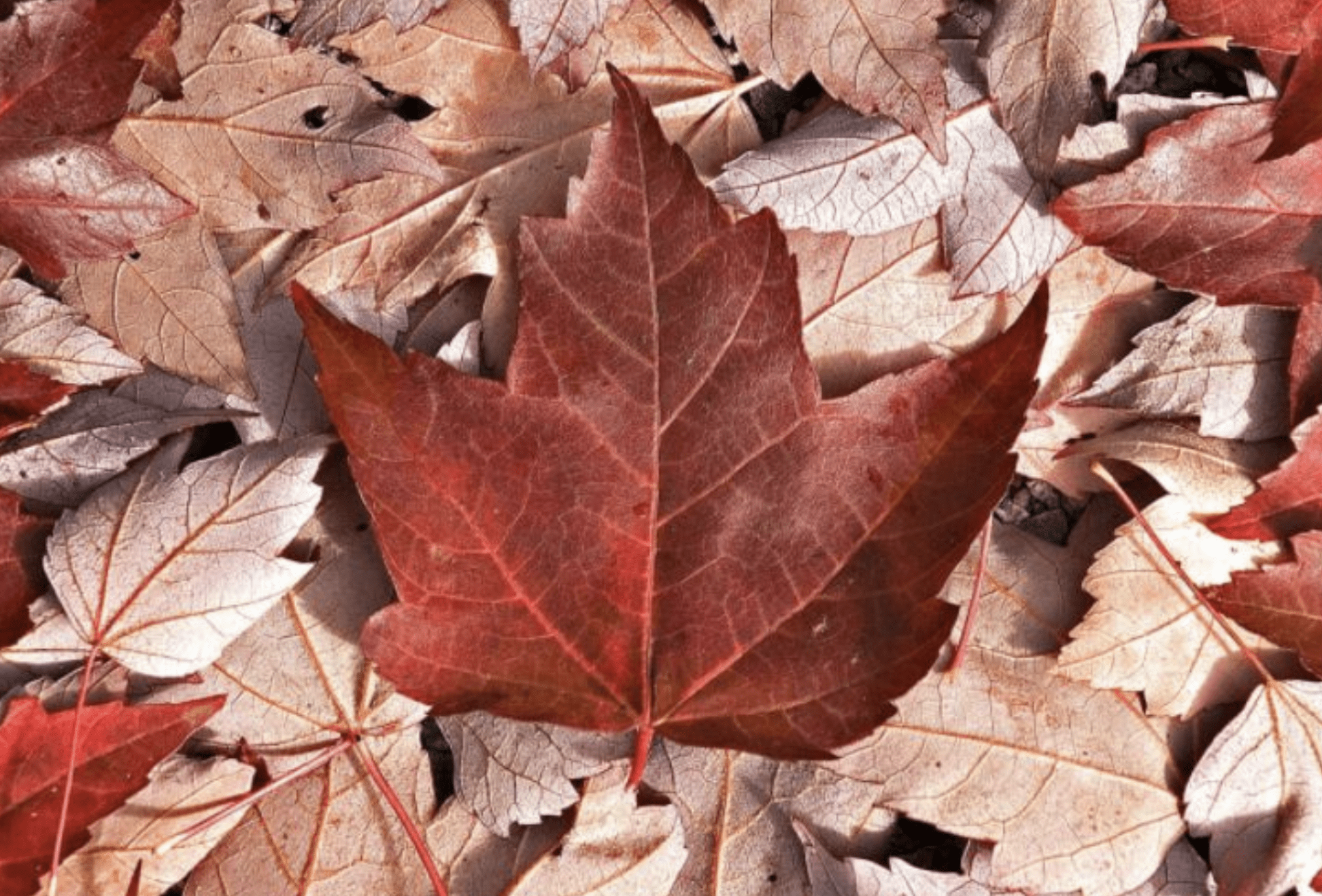

Cameron Davies, leader of the Republican Party of Alberta.

OTTAWA — Cameron Davies, the leader of the separatist Republican Party of Alberta and the party’s candidate for Monday’s Olds-Didsbury-Three Hills byelection, admits that his party’s name and MAGA red branding are causing some confusion at the doors
.

“It certainly has come up in conversation,” Davies told the National Post on Thursday.

“People want to know more about it, what it means and that’s just an opportunity to explain why the word ‘republican’ and why a constitutional republic is something we want to look at.”

Davies’ Republican party isn’t formally aligned with the more well-known one south of the border

notably swapping out the latter’s elephant for a more local buffalo as its logo

— but it does aspire to make Alberta an independent republic governed similarly in principle to the U.S.

“The form of government Canada has doesn’t work for Alberta, and the form of government we have here in Alberta doesn’t work for Alberta,” said Davies.

Davies, an ex-UCP organizer, is one of two separatist candidates who’ll be on the ballot in Monday’s byelection in the south-central Alberta riding, where the governing United Conservative Party won more votes than anywhere else in the province in 2023’s provincial election.

The other is employee benefits specialist Bill Tufts, running under the banner of the Wildrose Loyalty Coalition.

Under normal circumstances, the byelection would be a tap-in for first-time UCP candidate Tara Sawyer. But these are anything but normal circumstances, with support for Alberta separatism spiking on the heels of the federal Liberals fourth straight election win.

What’s more, Davies and Tufts have a fortuitous piece of Alberta election lore to point to.

Western Concept candidate Gordon Kesler notched

a surprise 1982 byelection win

in predecessor riding Olds-Didsbury, briefly becoming the first and only separatist to hold a seat in Alberta’s legislature.

Kesler is still active in the area’s politics and is

backing Davis in the byelection

.

Ex-Alberta MLA Derek Fildebrandt, whose now-defunct riding of Strathmore-Brooks crossed into the riding’s east end, says he expects the Republicans to place a strong second, possibly even pushing the UCP below a majority vote share.

“Based on my gut, nothing hard,” said Fildebrandt.

The UCP’s Nathan Cooper won in dominant fashion with 75 per cent of the vote in 2013.

Davies says he’d be happy with 20 per cent of the riding’s vote, around what the populist Wildrose party got in

its first election in 2008

.

“(Wildrose) got around 20 per cent of the vote, and that was after being a party for close to a year,” said Davies.

The Alberta Republicans, formerly the Buffalo Party of Alberta, formally

launched on February 11

. Davies was acclaimed as leader two months later in April.

“Anything at or above 20 per cent is a significant gain, given how short of a runway we’ve had,” said Davies.

Davies, who lives just outside the riding in south Red Deer, says he typically gets between 12 and 18 volunteers each day and has knocked on 20,000 doors in the riding, which is home to about 50,000 people.

Tufts, for his part, says he’s in it to win it.

“Well, we would like to win,” said Tufts.

Tufts said that the contest’s timing, outside of a general election, gives him an opening.

“Byelections can be quite tumultuous events, typically because of the low voter turnout. So I think we’ve had an opportunity to go out there and work hard, knock on the doors and explain our position.”

Tufts pointed out that both Kesler and Alberta’s

first Wildrose MLA Paul Hinman

won office in byelections.

He said he was optimistic that his party’s brand recognition would propel him past Alberta Republican candidate Davies and into the winner’s circle.

“The Wildrose has been around for a long time … so I think there’s a lot of credibility with the name, the recognition of our brand and our policies that resonate with a lot of voters,” said Tufts.

The populist Wildrose Party

merged with the rival

Alberta Progressive Conservatives in 2017 to form the UCP but Tufts’ Wildrose Loyalty Coalition lives on as a splinter group.

Alberta Premier Danielle Smith led the Wildrose Party from 2009 to 2014 before defecting to the PCs in a disastrous floor-crossing.

Tufts says that a revitalized Wildrose caucus could hold the UCP to account and keep it

from getting weak-kneed

in seeing through the results of a successful referendum on independence, drawing a comparison to the recent Liberal-NDP

supply and confidence agreement

.

“Look at who the most powerful party in Ottawa was over the last few years: that was the NDP,” said Tufts.

Katherine Kowalchuk, a separatist who lives in the riding, says she’ll be voting Republican.

“The sense that I get from Cam (Davies) is that he’s prepared, he has conservative viewpoints on things… and I think that he has the ability to stand by those convictions,” said Kowalchuk.

“We need to fight for our strong Alberta heritage rooted in family and freedom, and Cam is really the only candidate that’s talking about this.”

Kowalchuk ran in the riding for the Alberta Independence Party in 2023, winning 4.7 per cent of the vote.

Pollster Dan Arnold, an executive with Pollara Strategic Insights says that Alberta’s budding separatist movement could hardly have picked a better time and place for its first electoral test.

He noted that support for Alberta independence among committed voters was at 24 per cent in mid-May, the highest level his firm has seen since it started polling Albertans on the topic in 2011.

“My assumption is the reason you’re seeing the numbers edging up is because (separation) is now in the spotlight,” said Arnold.

He said that the UCP will likely get spooked if the separatist vote breaks the double-digits.

“10 per cent can grow over time to 20 per cent and then you’re getting into vote split territory,” said Arnold.

Arnold noted that Smith has dialled up the rhetoric against Ottawa’s equalization program in recent days, likely in an effort to shore up soft separatists in the province.

“In our past polling, we’ve generally found that nobody really knows what equalization is but, at least in Alberta and Saskatchewan, they think it’s unfair to their province.”

Smith said on Monday

that Quebec, the program’s biggest recipient, should develop a resource “royalty framework to wean them off the equalization that comes from western Canada.”

Arnold said that 35 per cent of UCP voters see Smith as a separatist.

Ironically, this could be a problem for her with her base, with polls showing that

over half of UCP voters

would vote ‘yes’ in a referendum on independence.

Sawyer says

she’s not a separatist

and believes in a strong Alberta within a united Canada.

She told National Post that she’s not playing the over/under game. Instead, she’s focused on earning the trust of voters and winning the seat.

“We are working hard and earning every vote,” said Sawyer.

Olds-Didsbury-Three Hills is one of three byelections scheduled for Monday, with the NDP tipped to win two Edmonton-area races.

National Post

Our website is the place for the latest breaking news, exclusive scoops, longreads and provocative commentary. Please bookmark nationalpost.com and sign up for our daily newsletter, Posted, here.


A Federal Court sign.

An Iranian whose refugee claim was turned down in Canada because he was convicted in England 16 years ago of a serious assault that left one person dead and another two injured will get another shot at arguing he should be allowed to stay here because his bisexuality, Kurdish ethnicity, conversion from Islam to Christianity and identity as a Westerner would all put him at risk back home.

An immigration officer refused Sirus Lotfi’s last ditch plea to stay in Canada in March 2024, arguing he had not provided sufficient evidence to establish the basis for his protection claim.

“I respectfully disagree with this position,” Justice Angus Grant wrote in a recent Federal Court decision out of Toronto.

“On the core details related to the applicant’s risk factors, the affidavit (outlining those) was detailed and comprehensive. This was particularly the case with respect to (Lotfi’s) sexual orientation. The affidavit contained many details, from the applicant’s first homosexual encounters, to subsequent relationships, to his time spent in Tehran, frequenting a park where gay men would meet. Moreover, the documentary evidence before the officer clearly raised concerns with respect to the applicant’s safety, assuming the risk factors he raised in his affidavit were true. This being the case, there was simply no doubt that the facts set out in the applicant’s affidavit, if believed, would have justified granting the application.”

The judge noted “the well-established principle that when an individual in refugee protection proceedings swears to the truth of their testimony, that testimony is presumed to be true unless there is a valid reason to doubt its truthfulness.”

The immigration officer’s conclusion that Lotfi “had not established facts that he had categorically and unambiguously sworn to be true” amounted to a “veiled credibility finding,” Grant said. In other words, the immigration officer questioned Lotfi’s honesty without explicitly stating the Iranian’s credibility was in doubt.

The judge granted Lotfi’s application for a judicial review.

“The matter is remitted to a different decision-maker for reconsideration,” Grant said in his decision dated June 18.

Lotfi “entered Canada in November 2022 on a fraudulently obtained passport and made a claim for refugee protection,” said the decision.

“He did not have any other identity documents with him at the time, so he was arrested and detained by the Canada Border Services Agency.”

While Lotfi was in detention, Immigration, Refugees and Citizenship Canada “learned that in April 2009, the applicant was convicted in England with intent to do grievous bodily harm,” it said. “The Canadian equivalent of this offence is aggravated assault.”

Because of his conviction, for which he served half of a 10-year prison sentence, “Lotfi was referred for an admissibility hearing before the Immigration Division of the Immigration and Refugee Board,” said the decision.

It found Lotfi “was inadmissible to Canada on grounds of serious criminality.”

That meant Lotfi became ineligible for his refugee claim to be heard, so he applied for a pre-removal risk assessment — his last ditch plea to stay in Canada.

For that hearing, Lotfi submitted a detailed written argument alleging that he would be at risk in Iran on four distinct grounds. But the immigration officer hearing his case noted Lotfi’s lack of supporting evidence to establish his claim for protection.

The court heard Lotfi “had essentially no relationship with his mother in Iran, and moved to Germany as a young adolescent, where his father placed him in a boarding school.”

At some point his family “stopped paying tuition fees for this school, and he was subsequently placed in a Christian orphanage where he lived until he turned 18,” said the decision.

“Over the course of these years, (Lotfi) grew disconnected with his Islamic background and gravitated towards Christianity. At one point while at the orphanage, he tattooed a cross on his shoulder.”

Lotfi “also explained how he explored his sexual orientation while in the orphanage, though this was not easy to do. At 20, the applicant learned that his father had committed suicide. This led to a period of serious drug addiction, and in 2007 (he) was removed to Iran.”

Lotfi “had a difficult time adjusting to life back in Iran,” said the decision.

“Eventually, he learned of a park where gay men met to have sex. He began frequenting the park and having encounters with men, despite the obvious dangers that this posed. Eventually, however, (he) decided to leave Iran and went to the United Kingdom.”

The subsequent altercation in England “led to his criminal conviction, which resulted in the death of one individual and the injury of two others,” said the decision.

“He claims that he acted in self-defence, but contrary to the advice of his lawyer, he plead guilty and was sentenced to a ten-year sentence, of which he served five years. While in prison, (Lotfi) stated that he received mental health treatment for the first time, that he disavowed drugs, and formally converted to Christianity.”

Our website is the place for the latest breaking news, exclusive scoops, longreads and provocative commentary. Please bookmark nationalpost.com and sign up for our daily newsletter, Posted, here.


A report by Cybernews researchers has revealed a massive data leak affecting 16 billion passwords.

An incredible 16 billion passwords have been leaked in what tech experts are calling the largest data breach ever.

The breach contains a massive amount of information that can affect billions of online accounts since cybercriminals now have access to a massive amount of login credentials.

Cybernews researcher Vilius Petkauskas, whose team has been investigating the online theft since the beginning of the year, told

Forbes Magazine

that the breach comprised “30 exposed datasets” including logins from Apple, Google, Facebook and more.

A

Cybernews report

details that the stolen records from the 30 databases, each contain up to 3.5 billion passwords from social media and VPN logins to corporate platforms.

These aren’t just “old breaches being recycled” but rather “fresh, weaponizable intelligence at scale,” the Cybernews researchers warned.

Here’s how to find out if you’re affected and how to stay safe.

What has been exposed in the leak?

Currently, almost all major platforms have been affected, including Apple accounts (formerly Apple IDs), Gmail, Facebook and GitHub, as well as instant messaging platforms such as Telegram and commercial and government platform portals.

The data appears to contain URLs, usernames and passwords. “However, with the unfathomable size of the data that’s been exposed, there’s no way to tell how many accounts are currently under threat,” reports

tomsguide.com

.

The stolen data appears to come from several infostealers (malicious software created to breach computer systems and steal sensitive information, such as login details). The datasets are reportedly new, but the

sheer amount of info

could also be from a mix of different datasets from previous breaches.

One of those previous breaches included a database containing 184 million records, as reported by

Wired Magazine

in May.

How can you protect your accounts?

First, check on your accounts. To find out if your login credentials have been affected, you could use:

Have I Been Pwned

.

Second, change passwords to affected accounts, but consider doing it anyway with any major accounts where you may be at risk. (Apple, Facebook, Google).

Third, a recommended method to keep your accounts secure is to enable two-factor authentication (2FA). This is intended to stop threat actors from easily accessing your online accounts. A second-step authentication through an app, phone, passcode or a physical USB key will need to be approved by you.

If you haven’t already, find out how to

enable 2FA here

.

Fourth, delete unused accounts and consider using a

password manager

to secure your online accounts. A password manager provides a secure place to store all your passwords in one place, so you can autofill them into a website or app instead of remembering all of them.

Fifth, consider using

passkeys instead of passwords

. Passkeys aim to keep your accounts more secure by using passwordless logins instead of traditional passwords. Each passkey is unique — a digital key that can’t be reused. They’re also stored in an encrypted format on your devices, instead of on a company’s server. That keeps them safe from a data breach.

Our website is the place for the latest breaking news, exclusive scoops, longreads and provocative commentary. Please bookmark nationalpost.com and sign up for our daily newsletter, Posted, here.


Just some of the jewellery that was stolen, according to the FBI.

Police in California have made several arrests and laid charges in what they are calling the largest jewellery heist in U.S. history. The 2022 crime is said to have resulted in the theft of more than US$100 million worth of gold, diamonds, rubies, emeralds and luxury watches.

According to a press release

from the U.S. Attorney’s Office, on the evening of July 10, 2022, two men scouted a Brinks truck leaving an international jewellery show in San Mateo, Calif., with 73 bags containing millions of dollars of jewellery. Overnight, six men and other conspirators followed the truck approximately 480 kilometres from the show to rest stops in Buttonwillow and Lebec, north of Los Angeles.

At the second stop, defendants stole 24 bags from the truck containing about US$100 million in jewellery. In the following days, they all deactivated their cellphone numbers that they had been using during the heist.

Several of the men are also alleged to have stolen US$240,573 worth of Samsung electronics from an interstate cargo shipment in Ontario, Calif., four months earlier. Those same defendants then allegedly robbed a box truck driver of US$57,377 worth of Apple AirTags, with one of the robbers brandishing a knife to threaten the driver.

Next, on May 25, 2022, the defendants allegedly attempted to steal from one truck at a Fontana, Calif., rest stop using a crowbar to break in. Shortly after, they successfully stole approximately US$14,000 worth of Samsung electronics from another interstate shipment in the same city.

The accusations in

the 14-page indictment

have not yet been proven in court. The trial is set to start on Aug. 1. If convicted, five of the men would face statutory maximum sentences of 20 years in federal prison for each robbery charge, and all would face a statutory maximum sentence of five years in federal prison for the theft conspiracy charge, plus 10 years in federal prison for each theft charge.

The FBI, the Los Angeles County Sheriff’s Department, the Fontana Police Department, and the Ontario Police Department are continuing their investigation.

Facing charges are seven men from California: Carlos Victor Mestanza Cercado, 31, of Pasadena, Calif; Jazael Padilla Resto, a.k.a. “Ricardo Noel Moya,” “Ricardo Barbosa,” and “Alberto Javier Loza Chamorro,” 36, of Boyle Heights and currently an inmate in Arizona state prison; Pablo Raul Lugo Larroig, a.k.a. “Walter Loza,” 41, of Rialto; Victor Hugo Valencia Solorzano, 60, of Los Angeles; Jorge Enrique Alban, 33, of Los Angeles; Jeson Nelon Presilla Flores, 42, of Upland; and Eduardo Macias Ibarra, 36, of Los Angeles.

Assistant United States Attorneys Jena A. MacCabe and Kevin J. Butler of the Violent and Organized Crime Section are prosecuting the case.

Our website is the place for the latest breaking news, exclusive scoops, longreads and provocative commentary. Please bookmark nationalpost.com and sign up for our newsletters here.


Ontario Premier Doug Ford next to his brother, former Toronto mayor Rob Ford, at a meeting on Jan. 13, 2014. After the release of a documentary about the late former mayor, the Ontario premier commented he thought it was

Ontario Premier Doug Ford has commented on a Netflix documentary about his late brother and former mayor of Toronto, Rob Ford.

“They’re disgusting people,” he said, referring to the filmmakers, at

a news conference

on Tuesday. “Poor Rob’s been dead for nine years and they just want to keep going after him. I talked to one person that saw it. It’s just disgusting. Leave the guy alone. Let him rest in peace. Let his family rest in peace.”

The premier said that he would not be watching the documentary, entitled Trainwreck: Mayor of Mayhem. It was released on the streaming service in Canada on June 17. The 49-minute film covers Rob’s rise to prominence as a politician, from city councillor to mayor, in Canada’s largest city.

Despite having the support of many of the city’s residents, Rob was a polarizing figure.

 Former Toronto mayor Rob Ford and his brother, current Ontario Premier Doug Ford, at a Toronto council meeting on July 7, 2014.

As his former staffer Tom Beyer described it in the film, there were often two reactions when people saw him driving Rob’s campaign bus on the streets while he was running for mayor. “People would be waving and cheering, and others would be giving me the finger,” said Beyer. “There was no middle ground.”

Rob was elected mayor in 2010. In the first year of his mayoralty, he was “able to get his agenda passed,” city councillor Josh Matlow said in the documentary. “He was ticking off, piece by piece, his plan to make the city work and end the waste,” said Mark Towhey, Rob’s former chief of staff.

However, Rob was also known for making off the cuff remarks to the media and in city hall’s council chambers. He was accused of inappropriate behaviour while intoxicated, including showing up at

a gala while drunk

,

confronting a couple at a Maple Leafs game, and drinking in his City Hall office on St. Patrick’s Day in 2012

. Photos and videos allegedly showing him inebriated surfaced many times during his mayoralty, according to media reports at the time, which prompted him to either deny wrongdoings, or in some cases, apologize.

 Former Toronto mayor Rob Ford is pictured in Toronto on July 15, 2014.

The situation became more dire in 2013 when reports circulated that there was a video of Rob smoking crack cocaine out of a glass pipe. He denied the drug use at first, but later, in November of that year, admitted to it.

“Yes, I have smoked crack cocaine,” he told reporters. “Do I? Am I an addict? No.”

He said it was possible he had tried the drug in one of his “drunken stupors.”

The documentary follows the subsequent fallout from the admission, as well as Rob’s fatal battle with cancer. He died in March 2016.

“Let his family rest in peace,” said Doug on Tuesday. “It absolutely infuriates me, to be honest with you. They want the truth, talk to the real people that absolutely love him. I’ll leave it at that.”

The office of the premier told National Post that his remarks made on Tuesday stand as his response to the documentary.

Our website is the place for the latest breaking news, exclusive scoops, longreads and provocative commentary. Please bookmark nationalpost.com and sign up for our daily newsletter, Posted, here.


A Canada Post mail carrier delivers to a community mailbox in Calgary on Tuesday, March 18, 2025.

Canada Post and its second-largest union have reached an agreement in the ongoing labour dispute between the postal service and its workers.

In a

statement released Thursday

, the employer said it has a new collective agreement with the Canadian Postmasters and Assistants Association. As Canada Post’s second-largest union, CPAA represents more than 8,500 employees, primarily those responsible for managing post offices in rural Canada.

 The end of door-to-door delivery? A recent report includes a recommendation to call it quits as a means for Canada Post to achieve solvency.

What are the terms of the new agreement?

The new agreement includes an 11 per cent wage increase over three years, retroactive to Jan. 1, 2024. The increase is split between 6 per cent in 2024, 3 per cent in 2025, and 2 per cent in 2026. The agreement is effective from Jan. 1, 2024, to Dec. 31, 2026.

According to a

release from the union

, the agreement also includes a $1,000 lump-sum payment to all full-time employees on the date of its signing, and $500 to all other employees.

Does this end the threat of a Canada Post strike?

No. Canada Post is still trying to reach a deal with CUPW, its largest union, which represents about 55,000 postal workers. It has been in a strike position since May 23, with the union having imposed a

ban on overtime

since that date.

Last week, the corporation received notice that Patty Hajdu, the minister of jobs and families, had approved its request for a

vote to take place

on the company’s final offers to CUPW, which was delivered on May 28. The vote will be administered by the Canada Industrial Relations Board as soon as possible.

“Canada Post welcomes the Minister’s decision as it will provide employees with the opportunity to have a voice and to vote on a new collective agreement at a critical point in the company’s history,” the company said

in a statement

. It is still unclear when the vote will take place.

 Jobs and Families Minister Patty Hajdu.

What is Canada Post’s final offer?

Canada Post’s final offer includes a 13.59 per cent cumulative wage hike over four years and a plan to have part-time workers for weekend delivery.

It’s also offering a signing bonus of up to $1,000 and an end to compulsory overtime. “The company is no longer proposing a new health benefits plan, changes to employees’ post-retirement benefits, or enrolling future employees in the defined contribution pension,” according to Canada Post.

Are any other unions involved?

A number of Canada Post workers are part of PSAC, the Public Service Alliance of Canada. However, in April that union announced that it would

defer bargaining

until 2026, after agreeing to a 5 per cent increase retroactive to Sept. 1, 2024, without any concessions on other issues.

When was the last Canada Post strike?

Mail carriers last went on strike for 32 days beginning Nov. 15, at the height of the pre-holiday shipping season last year. That ended with a back-to-work order and an extension of the current collective agreement to May 22, which brings us to where we are now.

— With files from Canadian Press

Our website is the place for the latest breaking news, exclusive scoops, longreads and provocative commentary. Please bookmark nationalpost.com and sign up for our daily newsletter, Posted, here.


Environment Canada senior meteorologist says the heat wave about to hit Eastern Canada is just the first to be repeated throughout the summer.

The first heat wave of Summer 2025 is about to hit Eastern Canada, with temperatures climbing to the mid-30s early next week. Add the humidity from a wet spring and it will feel even hotter.

We’d better get used to it, as it is signalling “a torrid summer ahead,” says David Phillips, senior climatologist with Environment and Climate Change Canada.

“We rarely go a year without a heat wave,” he says, “but this will be the first one and people have to learn how to deal with it again.”

The high pressure system will settle over southern and eastern Ontario as well as southern Quebec. It will edge into southeastern Manitoba on one side and western New Brunswick on the other.

What is such a heat event called?

Contrasting this spate of heat with the renown “polar vortex” of winter, Phillips refers to this phenomenon as a “Bermuda High.” That’s a

semi-permanent, subtropical area of high pressure, which usually migrates east-west, back and forth across the North Atlantic, influencing weather patterns.

Except this one is further west and further north than usual, says Phillips.

“It circulates southern air further north.”

There’s no doubt it will feel oppressive, says Phillips, adding that a heat dome squeezes air molecules, pressing them downward, creating heat from the friction.

How will a lot of spring rain play a role?

Moisture from a particularly wet spring will compound with the heat. There has been 30 to 40 per cent more precipitation than normal this year, he says.

During the day the humidity may make it feel like 40 degrees Celsius or more.

Another factor in the mix is the sunshine. Long summer days “prevent the cool-off,” he says. At night, it will feel tropical, with temperatures above 20 C.

How far east will the heat extend?

The Maritimes won’t get the extreme heat, but temperatures will rise, particularly in western New Brunswick.

What about Western Canada?

Western Canada has been experiencing heat already, with many hot, dry days (made worse by wildfire smoke), he says. But, he adds, in eastern Canada, people have been asking when the warmth is going to arrive.

Normally, Eastern Canada would have several days in the 30s by now, says Phillips, but there were none in May and only one in June. Contrast that with Winnipeg, which he says has had nine or 10.

“In eastern Canada, people have felt left out, on the sidelines.”

How will the heat play out this weekend/next week?

But now summer heat is arriving with a vengeance. It will be a three-day event with temperatures rising to the mid-30s in Toronto, Ottawa and Montreal, accompanied by nighttime temperatures in the 21-23 C range,

with the humidex in the low to mid 40s

. “That’s eight or nine degrees warmer than normal.”

Ultimately, it seems we had better get used to this. All the weather-mapping models from Canada, the U.S. and Europe are predicting increasingly hot summers, says Phillips.

“This will be the first heat wave, but it’s not going to be the last. We’re going to see repetition throughout the summer.”

How does extreme heat affect the body?

He cautions that publicized high temperatures are measured in the shade. As a result, “going out into the sun could add another seven to 10 degrees to the body. It’s a lot of stress on the body. Too much.”

It results in increased hospital admissions, he notes. “People may not be dying in the streets but there is increased respiratory and cardiovascular distress.”

What precautions should you take?

The

Canadian Red Cross

urges people to stay indoors between 10 a.m. and 2 p.m., the hottest period of the day. Drink plenty of cool fluids — even if you’re not thirsty. And avoid alcohol and caffeine, as both can result in dehydration.

Check regularly with the children and seniors in your life to ensure they are drinking enough water.

Finally, says the Red Cross, be aware of the following signs of heat illness: dizziness or fainting; nausea or vomiting; headache; rapid breathing or heartbeat; extreme thirst; dark yellow urine; muscle cramps, especially in arms, legs, or stomach.

Our website is the place for the latest breaking news, exclusive scoops, longreads and provocative commentary. Please bookmark nationalpost.com and sign up for our daily newsletter, Posted, here.


Premier of Ontario Doug Ford speaks to media prior the First Minister's Meeting in Saskatoon on Monday, June 2, 2025.

OTTAWA — Ontario Premier Doug Ford has apologized to Ontario First Nations for saying they cannot “keep coming hat in hand all the time to the government” for more money.

On Thursday, Ford met with chiefs who are part of Anishinabek Nation, which represents 39 First Nations in the province. Before the meeting started, he issued an apology to them and repeated his apology in public during a press conference after the meeting.

“I just want to say I sincerely apologize for my words, not only if it hurt all the chiefs in that room, but all First Nations,” he said.

Linda Debassige, Grand Chief of the Anishinabek Nation, said the chiefs in the meeting felt that Ford’s apology was “sincere.”

“We are looking at today as a new day going forward,” she said.

Ford made those comments on Wednesday

over concerns that First Nations in the province have over the passage of Bill 5, which gives the province the power to suspend municipal and provincial laws for projects through so-called special economic zones.

Ford has said the mineral-rich Ring of Fire region in northern Ontario will be declared the first such zone. While First Nations have said they want to be part of economic development, they are outraged by the government’s decision to proceed with legislation before consulting them.

Ford dismissed those concerns during an unrelated press conference.

“This is like handing an opportunity on a silver platter to First Nations that, by the way, I have treated like gold,” he said. “But there’s going to be a point that you can’t just keep coming hat in hand all the time to the government, you’ve got to be able to take care of yourselves.”

Ford continued: “When you literally have gold mines, nickel mines, every type of critical mineral that the world wants, and you’re saying, ‘No, no, I don’t want to touch that, by the way, give me money’ — not going to happen.”

Assembly of First Nations (AFN) National Chief Cindy Woodhouse Nepinak urged Ford to withdraw his remarks in a letter sent Thursday, saying that his words “only serve to perpetuate racist stereotypes and are not acceptable in any way or circumstance.”

Ford justified his brash comments by saying he gets “passionate” on the issue.

“I want prosperity for their communities. I want prosperity for their children,” he said.

“As I said before, I’ll always respect treaty rights, and I’ll always respect the duty to consult, because without First Nations, we can’t get the critical minerals out of the ground. We can’t have the energy that we need, that the whole world wants,” he said.

“We’re going to work together. We’re going to get through this, and we’re going to have a great collaboration,” he added.

The federal government is also dealing with similar resistance from Indigenous peoples for fast-tracking a bill with the same number, C-5, which would also give cabinet sweeping powers to override federal laws to approve projects in the national interest. Like in Ontario, Indigenous peoples said they have not been consulted on the legislation beforehand.

This has led to chiefs promising a summer of discontent over C-5, which is expected to be passed in the House of Commons by the end of this week and in the Senate next week.

Kebaowek First Nation Chief Lance Haymond qualified the rushed legislative process that led to the creation of C-5 a “case study in how not to engage with Indigenous nations.”

“The conditions for an Idle No More 2.0 uprising are being written into the law as we speak,” he told the House of Commons transport committee late Wednesday night.

Prime Minister Mark Carney said section 35 of the Constitution — which provides protection to the treaty rights of Indigenous peoples in Canada — is at the “heart” of the bill and that it respects the principle of free, prior and informed consent.

He said the legislation also has to be seen in parallel with measures his government is taking to finance equity ownership for Indigenous participation. The government has notably doubled the Indigenous Loan Guarantee Program from $5 billion to $10 billion to help Indigenous peoples make major economic investments.

Carney said projects of national interest would only go ahead after consultation with provinces, Indigenous groups and stakeholders and only if conditions are met.

Liberal MP Marc Miller, who served as minister of Indigenous Services and minister of Crown-Indigenous Relations, said the entire process is about respect and building trust.

“You can’t do that through legislation. You have to do that by being patient and sitting down and talking to people in a respectful way,” he told the National Post.

— With files from Stephanie Taylor and the Canadian Press.

National Post

calevesque@postmedia.com

Our website is the place for the latest breaking news, exclusive scoops, longreads and provocative commentary. Please bookmark nationalpost.com and sign up for our newsletters here.