LP_468x60
on-the-record-468x60-white

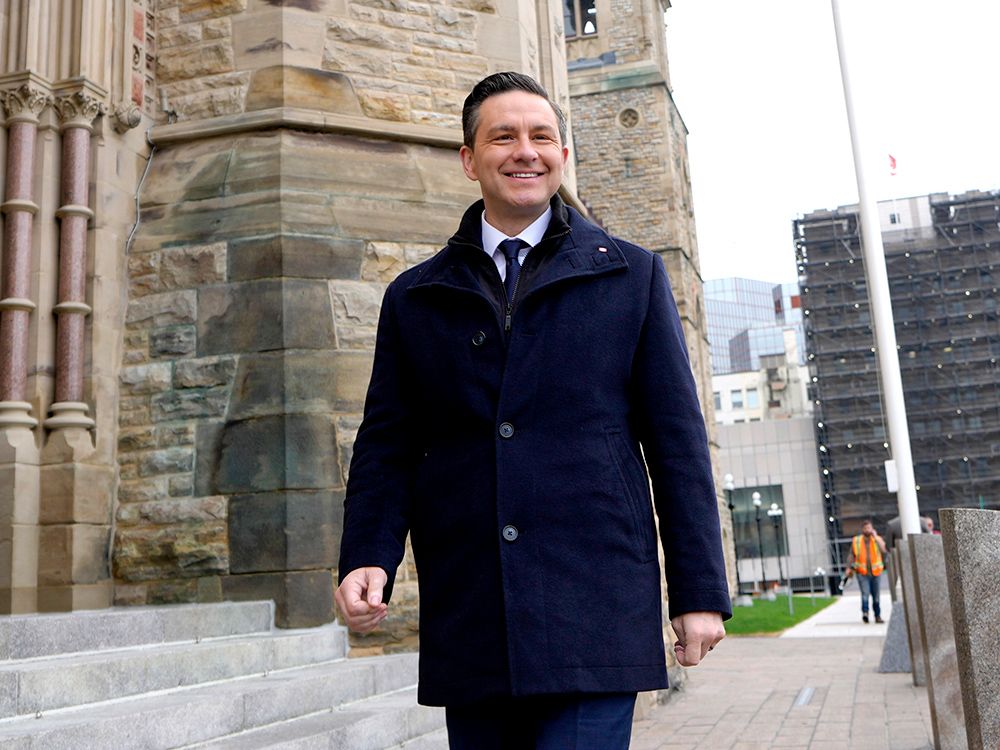
Conservative Leader Pierre Poilievre arrives on Parliament Hill for a caucus meeting following the federal election, in Ottawa, on Tuesday, May 6, 2025.

A staple of Mark Carney’s stump speech during the election was the line that Conservative Leader Pierre Poilievre is the kind of politician who has never changed his mind since he was 17.

“Who hasn’t changed their mind since they were 17?” the Liberal leader would mock.

The attack was validated by Poilievre’s own words in his 

interview with Jordan Peterson

in December, in which he said he has been “saying precisely the same things” since he was a teenager.

The Conservative leader’s supporters portray that as relentlessness; his detractors say it illustrates his intransigence and obstinacy.

Now, Poilievre’s ability to adapt to changed circumstances will determine his political future, and perhaps whether he even has one.

This week’s Conservative caucus meeting

gave the leader the benefit of the doubt. But it is fair to say that doubts continue to hang over him like a sword suspended by a single horsehair.

The caucus reaffirmed its commitment to the Reform Act, which gives it the power to replace the party leader.

One Conservative MP, who said he heard on the doorsteps that people didn’t like the leader, said caucus has given Poilievre the chance to “show a bit of humility” and admit that changes are needed.

If changes happen, he will be allowed to stay on. “But if he goes back to the old ways, where we have to ask to use the washrooms or are forced to use the slogans, then he’ll have a problem,” the MP said. “There is definitely an undercurrent of people being pissed off because we lost a 25-point lead and picked fights with other conservatives,” he added, referring to provincial premiers Tim Houston and Doug Ford.

A common thread repeated by numerous MPs and veteran Conservatives is that Poilievre and his campaign manager, Jenni Byrne, are “not nice people,” and are more inclined to scorching earth than building bridges.

There is

an active backlash against Byrne

(a former girlfriend of Poilievre’s) who made herself the hub to which all spokes were connected and is now being blamed for the campaign’s strategic and organizational shortcomings.

“Ana wants her out,” said one senior Conservative, referring to Poilievre’s wife, Anaida, who multiple sources suggest is not comfortable having Byrne running his political career.

Another MP said that Poilievre can be reasonable and businesslike, but has insisted on being his own attack dog.

“When you’re a leader, your inner circle matters and Jenni does not encourage Pierre’s more compassionate side,” said one source.

Poilievre has preferred to emphasize the additional 23 seats Conservatives won in the election, with the party’s highest share of the vote since 1988. Both he and Byrne are said to stand by the decision to keep the media off the campaign plane. “They believe the best team lost,” said one person familiar with internal discussions.

Poilievre told caucus he acknowledges a change in tone is required. The question among those who have known him over his two decades in federal politics, is whether he is capable of changing, and whether 2025 might prove to be a ceiling of support, rather than a floor.

“I think Pierre believes this (post-election challenge) is about ticking off things on a checklist. But it’s not. It requires an entire mindset shift,” said one veteran Conservative.

Poilievre’s supporters in caucus point to the platform, which was well received and was very much Poilievre’s brainchild.

They say he is committed to “personal growth” and refer to two episodes that showed his more tender side: the moment in the leaders’ debate when he said he regretted not being able to spend more time with the people he met at Conservative rallies who told him their stories and struggles; and an appearance on the Knowledge Project entrepreneurship podcast with Shane Parrish in which he discussed how becoming 

a father to a child with special needs had made him a more empathetic person.

Poilievre positively lit up when talking about his non-verbal, six-year-old daughter, Valentina, and has never appeared more vulnerable than when he talked about his concerns for her future.

But that is not the side of him that most voters saw.

To his detractors, the Conservatives were the Nasty Party and Poilievre embodied its narrow sympathies.

The consequence was opinion polling that on the eve of the election showed the Liberals with commanding leads among the over-60s (typically a strong voting cohort for the Conservatives); among women; and, among people with a university education.

post-election survey

 by Abacus Data suggested Carney was favoured on just about every metric of perceived competence and leadership, except “meanness,” where Poilievre had a 2:1 advantage.

The Conservative game plan was designed to disrupt the status quo and speak to frustrations about affordability. As the Tory leader pointed out in his concession speech, the party “won the big debates of our time” on the carbon tax, inflation, housing and crime, forcing the Liberals to match Conservative policies.

But the campaign failed to adjust and address the existential fears about the country being absorbed by Donald Trump’s expansionism that emerged after the U.S. president’s inauguration.

A plurality of Canadians wanted a trusted captain to restore order, not a rabble-rouser intent on disrupting it.

That failure to accommodate shifting circumstances is prompting questions inside the party about whether a 45-year-old man can truly change.

As someone for whom that relatively spritely age is in the rearview mirror, I’d suggest that Poilievre has softened and matured from the cartoonish figure who won the leadership three years ago.

But Poilievre is as responsible as anyone for the polarization of our politics.

On the one side, we have the censorious bullies of the left, who reject nuanced debate, in favour of accusations of bias, racism and bigotry.

On the other side, there is an angry group of people who feel they are the losers of culture wars that have imposed values on their country they don’t share. They marshal facts that confirm their prejudices and diminish evidence that contradicts them. Rules and institutions are demonized and the national interest sublimated to tribal concerns.

This is the party’s most hardcore base, and I suspect Poilievre cannot evolve to be the calm, serious leader he needs to be because he is one of them.

National Post

jivison@criffel.ca

Get more deep-dive National Post political coverage and analysis in your inbox with the Political Hack newsletter, where Ottawa bureau chief Stuart Thomson and political analyst Tasha Kheiriddin get at what’s really going on behind the scenes on Parliament Hill every Wednesday and Friday, exclusively for subscribers. Sign up here.
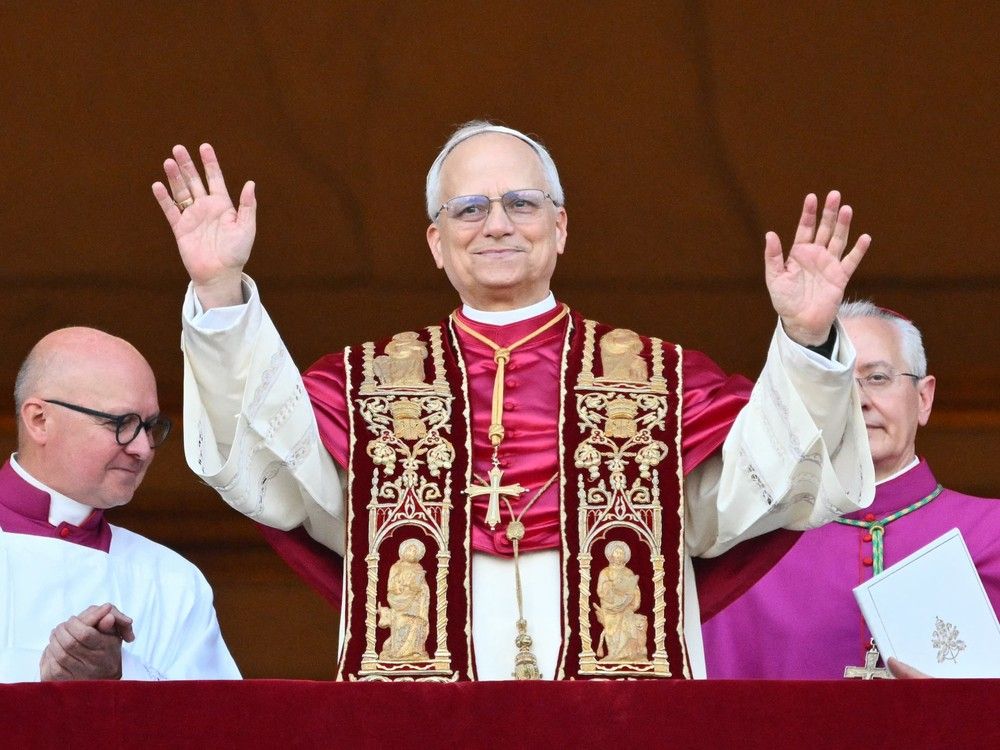

Newly elected Pope Robert Francis Prevost arrives on the main central loggia balcony of the St Peter's Basilica for the first time, after the cardinals ended the conclave, in The Vatican, on May 8, 2025.

The late Pope Francis was canny enough not to let history write his legacy, deciding instead to ensure it continued after his death.

The election of an American, Cardinal Robert Prevost, as Pope Leo XIV, is a surprising first, but many Vatican watchers will see the hand of Francis at work.

Of the 133 cardinals who elected Prevost, 108 had been appointed by Francis — the equivalent of stacking the deck with liberals.

Francis also appointed Prevost as head of the Dicastery of Bishops in Rome two years ago, a powerful position which meant he would have spoken and engaged with many of the world’s cardinals. This familiarity would have boosted his prospects.

Leo has already signalled that he intends to continue Francis’s legacy, thanking him profusely in his speech from the balcony of St Peter’s Basilica and talking of his “courageous” voice.

While that may delight many it will also anger those who felt the late pope was destroying the moral foundations of the papacy and the Church.

In his speech Thursday, Leo promised to be a bridge builder.

“We must seek together how to be a missionary Church, a Church that builds bridges, dialogue, always open to receive like this square with open arms. Everyone — everyone who needs our charity, our presence, dialogue, and love.”

One of the key phrases was a “synodal church” — a church where lay people play a greater part. And this is the legacy Francis wanted to ensure. A synodal church was Francis’s greatest reform, his dream.

It was also the reform that left conservatives angry on the basis that the Church isn’t a democracy.

In his speech, Leo pledged to receive and welcome everyone, but it’s not going to be that easy.

Even supporters of Francis were dismayed that he never went as far in his reforms as they wanted. Women deacons and gay marriage were too much for Francis as they almost certainly will be for Leo.

Some of the biggest opponents of Francis were American conservative clergymen and Leo will be well acquainted with them. Like Francis, he will know his enemies.

Some people will see changes such as synodality as “inside baseball” but if the reforms can be long lasting and made institutional they could have a remarkable impact. Women deacons and gay marriage? Maybe not today, but tomorrow?

Leo has already supported some liberal initiatives including allowing divorced and remarried Catholics to receive Holy Communion and allowing same-sex blessings.

Leo is also relatively young and healthy at 69. If he were to reign two decades that would be a long time to make Francis’s reforms permanent and transformative.

But there is another aspect of the papacy and one that speaks to a wider audience: how human, how approachable, will this pope be?

Francis was one of the people, a jovial pope who lived in the papal guesthouse and shunned the Apostolic Palace. He was known for occasionally cooking his own meals and making his own bed and for taking the bus while in Argentina.

His austere, simple lifestyle and his care for the poor generated stories that he crept out of the Vatican at night to visit the homeless. It was a myth, but one people wanted to believe.

Such stories would never have circulated about his predecessor, Pope Benedict XVI, a man of intense intellectual rigour and seen as somewhat severe.

Leo has been variously described as mild-mannered, calm, measured, discreet and thoughtful.

But will he be distant? Francis utterly changed how he was viewed — and how his papacy would be seen going forward — with a single comment made at the back of a plane shortly after being elected: “Who am I to judge.”

It was a simple and humble statement made in relation to gay priests, but it defined Francis for the public.

Francis was elected as the first Latin American pope and in many respects Leo is the second, despite being born in Chicago. Leo has Peruvian nationality and spent ten years as a pastor and teacher at a seminary in Trujillo in northwestern Peru before becoming Bishop of Chiclayo.

Like Francis, Leo places great emphasis on serving the marginalized and the poor, one of the central tenets of the Augustinian order, which Leo led for 12 years.

In Francis’s first speech in 2013, he said, “Let us pray for the whole world that there might be a great sense of brotherhood.”

Leo seemed to echo that when he told the thousands of people before him Thursday that he hoped peace “may enter your hearts, reach your families, all people, wherever they may be, all peoples, the whole earth.”

With any new pope, you never know what you will really get. Only time will tell. But Leo XIV looks a lot like Francis II.

National Post


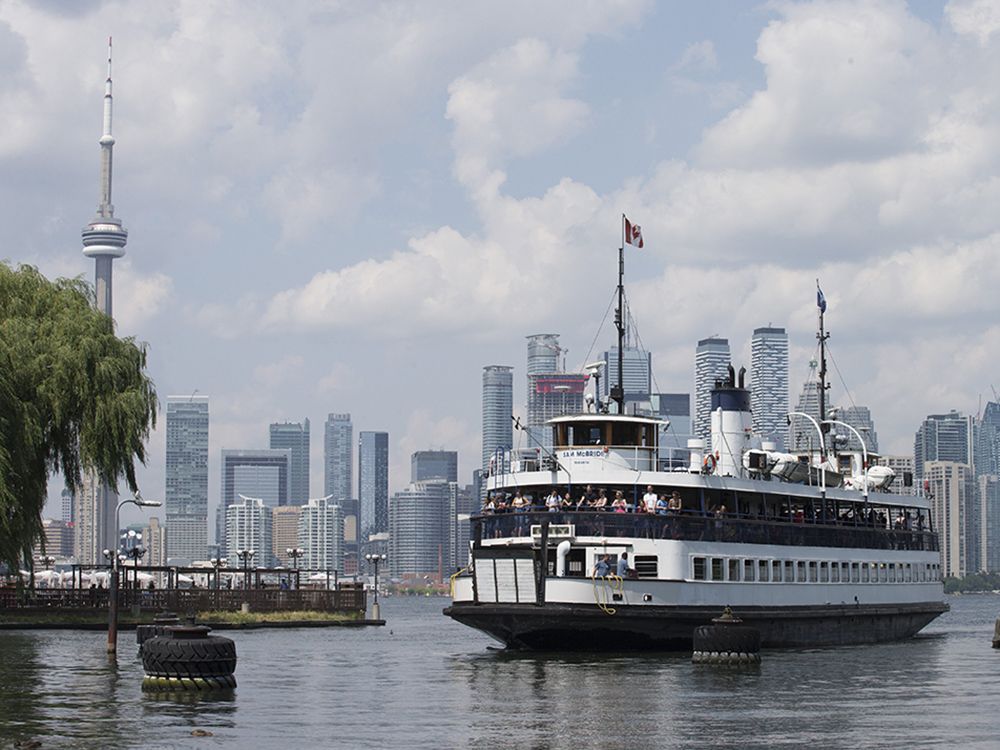
A ferry full of passengers arrives at the Toronto Islands. City officials appear reluctant to consider building a “fixed link” that would make it easier for people to enjoy the park.

Progress has erupted in Toronto. At the request of city council, municipal staff this week delivered

a 27-page report titled “Improved Active Transportation and Water Access to Toronto Island Park,”

in which they contemplated heresy: A permanent link between the 240-hectare isle and the city’s mainland, which would involve constructing a bridge or tunnel across roughly 250 metres of water.

For the record, the Channel Tunnel between England and France is more than 50,000 metres long.

A “fixed link,” as we call the idea here in Toronto for some reason, would have many benefits. No more interminable queues at the ferry terminal on beautiful summer days. No more having to pay $28 for a family of four to visit the city’s greatest park — arguably the city’s greatest

thing

— while still having to subsidize the ferry operations. (In 2019, the ferry service’s operating expenses exceeded its operating revenues by $1.3 million.)

If this bridge-or-tunnel endeavour were taken to its natural logical conclusion, the city could get out of the ferry business altogether. (There are already many private water taxis.) Privatization would liberate the ferry service from city council’s insane decision-making.

Because the city’s current ferry fleet is ancient and decrepit,

in 2020 council approved the purchase of two new ferries

from a Romanian shipyard. Naturally they had to be electric ferries. Also, the ferries would have to be cosmetically similar to the current old-timey ferries.

“For the love of God,” you might ask, “why”?

Well, see, most Toronto city councillors, having ample backyards of their own, if not cottages as well, view the Toronto Islands less as an important civic amenity for parks-starved downtown residents than as a sort of twice-a-summer nostalgia trip — like a day out on a steam train that comes with a souvenir conductor’s cap. They

like

that it’s inaccessible.

In any event,

it recently emerged that plans for the new electric ferries

, which are already (you’ll never believe it) nearly three times over budget — $92 million for two stupid boats — had not hitherto included any provision for

charging

the ferries. D’oh! Another $50 million down the drain for that, subject to cost escalations.

Torontonians don’t get much for their 27-page “fixed link” report. Most of it just rehashes year after year of council decisions with respect to the ferries and the park, including a new recent “master plan” for the Islands that managed not to contemplate a “fixed link.” Staff do go into great detail explaining why this idea is probably doomed to fail, though.

The most convenient link to the island, the quickest and closest to downtown, would be across the western gap of the harbour — except Toronto’s Billy Bishop Airport (which has its own roughly 250-metre tunnel) lies on the other side of that gap, and you can’t have people traipsing across an active runway.

The report considers the eastern gap of the harbour, which doesn’t have that problem, but it’s also further from downtown — a 15-minute-or-so bike ride from Union Station — with no reliable current public transit links.

A bridge would either need to be high enough to allow commercial shipping underneath, but not so high as to disrupt flight paths to the airport; or, more practically, it would have to swing open or lift to allow boats through.

But, staff warn: “A lack of predictability in harbour access would potentially drive recreational and commercial users away from the harbour entirely.”

Really? Redpath is going to shut down its incongruous sugar refinery on the Toronto waterfront, after 65 years, just because boats might have to wait 20 minutes to enter the harbour? The Royal Canadian Yacht Club is going to up stakes and move to Scarborough? It reeks of quintessentially Torontonian conservatism: any change is probably bad.

As for staff’s concerns about transit links, well, if this is a “generational project,” as the report hilariously calls this endeavour, then surely said links could be improved, and future plans modified, while the world’s top engineers rack their brains in search of a feasible solution to this 250-metre conundrum. (For the record, regarding “generational projects”: digging for the Channel Tunnel began in June 1988. Passengers were whizzing through it, sipping Champagne, in November 1994.)

There are many problems with the “fixed link” discourse in Toronto: The aforementioned belief that the Islands, unlike a normal park, somehow

should

be gatekept both physically and financially; the wildly outsized political influence of the few full-time residents on Ward’s Island, who would fight any bridge or tunnel proposal tooth and nail; and, when it comes to the bridge idea specifically, the obvious enthusiasm many proponents have to build some kind of selfie-worthy landmark structure — something with “tourist appeal,” as the staff report puts it, as if a 250-metre sidewalk and bike path might someday rank with the Golden Gate or Sydney Harbour bridges.

In any event, a tunnel obviously makes much more practical sense — especially if it costs roughly the same as a bridge, which staff shruggingly suggest it probably would … while admitting they have no real expertise in the matter, and no way to judge. They suggested around $100 million, give or take … which, interestingly enough, is less than Toronto is paying for its antique electric ferries. Perhaps there’s a lesson in there somewhere.

Staff recommend further study, and quite rightly. But in Toronto, so often, the future never comes. The future means change, and we can’t have that.

National Post

cselley@postmedia.com

Get more deep-dive National Post political coverage and analysis in your inbox with the Political Hack newsletter, where Ottawa bureau chief Stuart Thomson and political analyst Tasha
Kheiriddin
get at what’s really going on behind the scenes on Parliament Hill every Wednesday and Friday, exclusively for subscribers. Sign up here.

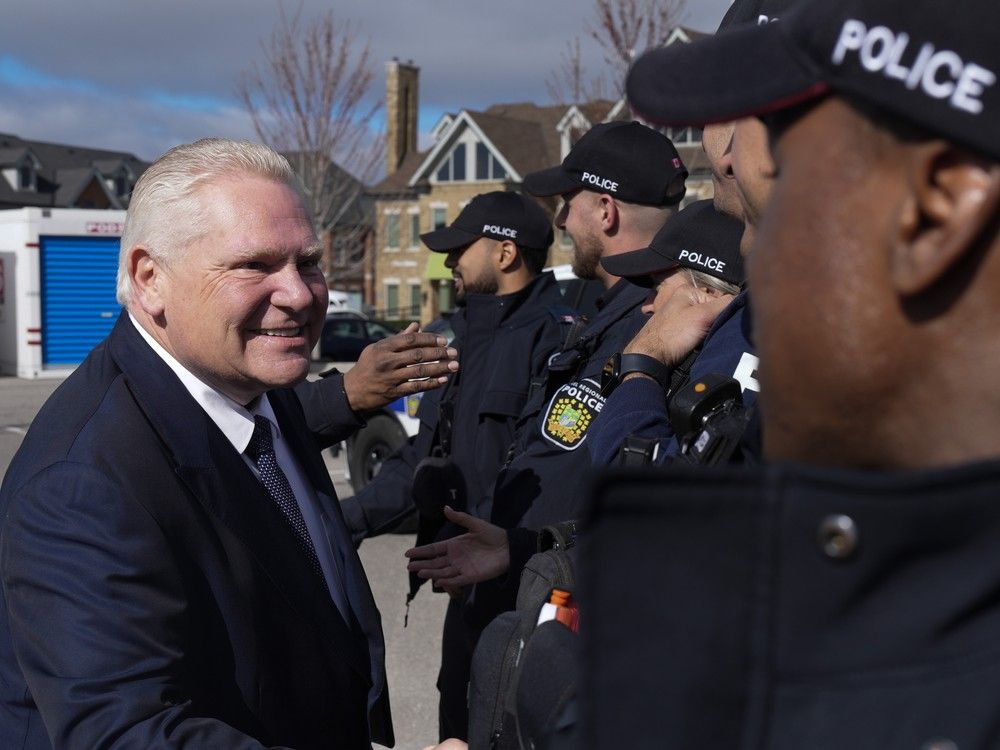
Ontario is making moves to crack down on crime of all sorts, but Randall Denley says the province first needs to address court delays.

The Ontario government has announced

an array of new crime policies

that will feature prominently in next week’s provincial budget. Naturally, they are being described by the government as “tough on crime” moves.

For politicians, it’s easy to talk tough on crime, but harder to be smart on crime. The latter means running an efficient and cost-effective system to catch, prosecute and convict people guilty of criminal offences. That’s the province’s core crime responsibility.

Being smart on crime also means focusing resources on crimes that can potentially affect large numbers of people rather than those that provide the maximum outrage.

By those criteria, how does Premier Doug Ford’s approach to crime stack up? It’s a mixed bag with some good new ideas and slow progress on significant, systemic problems.

Let’s start with the good news: The Ford government is quite rightly focusing a lot of attention on cybercrime and auto theft.

The number of cybercrime incidents reported to police in Ontario

grew by just over 60 per cent

between 2019 and 2023, according to Statistics Canada. Ontario’s cybercrime rate is 196 incidents per 100,000 people. That’s slightly below the national average, but identity theft, online fraud and ransomware attacks are still far more likely to affect the average person than, say, mass murder.

One of the problems Ontario police forces face is the increasing sophistication of cybercriminals. To assist them, the government has announced a new cybercrime and cryptocurrency prosecution team that will support police investigations and prosecute major cases that result from them. Part of the focus will be on human traffickers, drug dealers and illegal firearms sellers who lurk on the dark web.

The Ford government has already taken a similar approach on auto theft, with a prosecution response team focused on hotspot cities across the province. Ontario auto theft numbers actually dropped in 2024 compared to 2023, down to 25,000 from 30,000.

That’s not the only dimension to the problem, though. The Insurance Bureau of Canada reports that auto

theft claims in Toronto alone in 2023 amounted to $372 million

, up 561 per cent since 2018. In Brampton, Vaughan, Markham, Oakville and Richmond Hill, claims are up more than 700 per cent over five years.

What’s worse, drivers across the province are being penalized whether their car was stolen or not. Insurance companies are

charging extra premiums

of between $500 and $1,500 to owners of frequently stolen vehicle models.

 Ontario auto theft numbers actually dropped in 2024 compared to 2023, down to 25,000 from 30,000.

To deter car theft, the province has also announced a change in legislation so that police

can seize devices used to illegally open a vehicle

, but that seems more like a BB than a silver bullet.

The Ford government is also actively attacking issues in the tricky trifecta of courts, bail and jail.  Problems in all three areas are inter-related and difficult to resolve.

Ontario is notorious for its court delays, a factor in a

sharply declining rate of criminal conviction

. Since 2020, a majority of charges have been withdrawn, dismissed, stayed or discharged before the accused gets to trial, according to Statistics Canada.

That makes a mockery of the legal process. The latest government anti-crime plan announces the addition of 17 new judges to help reduce this problem, along with a plan to speed up selection. Good idea. The Ford government announced 25 new judicial positions a year ago, but only eight of those jobs have been filled.

Just stop jailing criminals? The absurd odyssey of Canada’s catch-and-release justice system

The government is also keen to tackle the problem of people committing crimes while out on bail. Two years ago, it committed $112 million to stronger enforcement of bail conditions, and it has lobbied the federal government for more restrictive bail provisions, without notable success.

The

latest moves

continue to support existing prosecution teams that focus on dangerous criminals seeking bail, but it drops off from there. One of the proposals is to institute a user fee for people who are ordered by courts to wear a GPS monitoring device.

The province wants to keep more people in jail awaiting trial, but it’s a costly and inefficient approach. About

80 per cent of all those in provincial custody have yet to be tried

, and Ontario’s jails are over capacity.

Ontario’s solution is to build more prisons. The province is spending $500 million on new or expanded jails. When completed, that will enable Ontario to jail even more accused people awaiting trial at a cost of $350 a day per prisoner. It would be smarter to spend the money on speeding up the courts instead.

Ford often criticizes the decisions of judges and the provisions of the federal Criminal Code, areas he does not control. It would be better to fix the problems he can attack. His government is making a good effort, but there’s a long way to go.

National Post

randalldenley1@gmail.com

Get more deep-dive National Post political coverage and analysis in your inbox with the Political Hack newsletter, where Ottawa bureau chief Stuart Thomson and political analyst Tasha
Kheiriddin
get at what’s really going on behind the scenes on Parliament Hill every Wednesday and Friday, exclusively for subscribers. Sign up here.

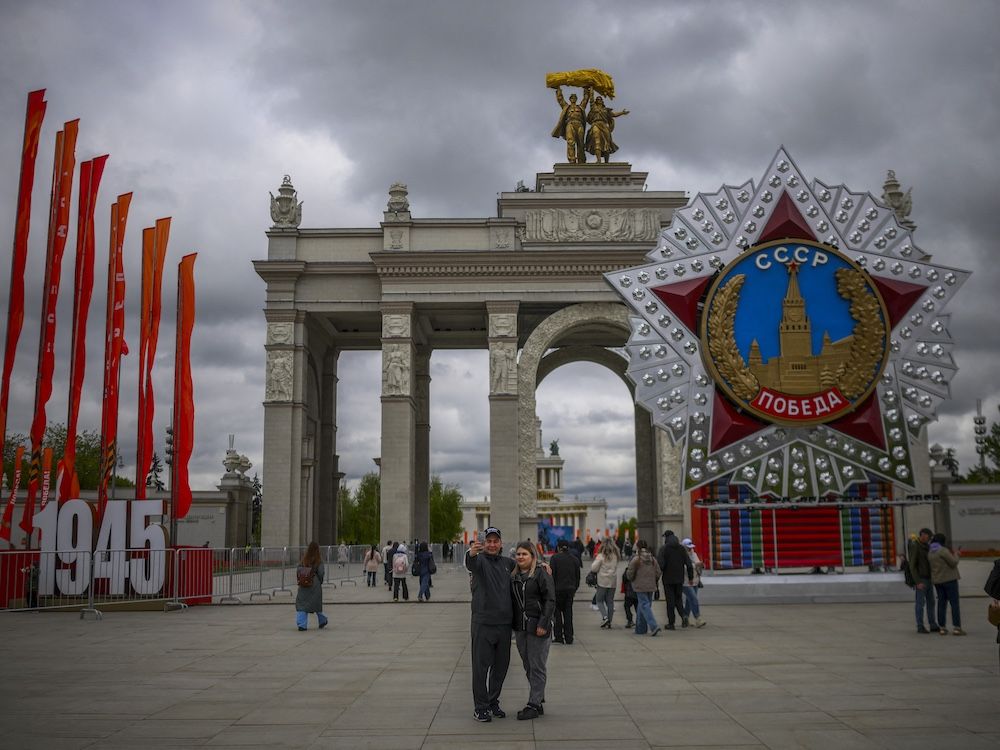
People visit the All-Russia Exhibition Centre (VDNKh), a trade show and amusement park,  decorated for celebrations of the Victory Day. (Photo by ANGELOS TZORTZINIS/AFP via Getty Images)

Every May, Moscow’s streets

bustle with preparations

for Russia’s annual Victory Day parade, which commemorates the anniversary of Nazi Germany’s defeat. The event has become a significant holiday under Russian President Vladimir Putin, rife with jingoistic propaganda, yet, this year, Ukraine’s military has already undermined celebrations, much to the Kremlin’s embarrassment.

Almost two weeks ago, Putin declared a

unilateral three-day ceasefire

coinciding with the May 9 parade, in an apparent attempt to protect his festivities from disruption. However, Ukrainian President Volodymyr Zelenskyy rejected this offer and counter-proposed a 30-day ceasefire that would more equitably benefit both sides.

After Russia refused this deal, Zelenskyy warned that Kyiv

cannot guarantee the safety

of foreign dignitaries attending the parade and “cannot be held responsible for what happens on the territory of the Russian Federation.”

Hundreds of Ukrainian drones subsequently

attacked Russia

this week, of which at least 19 targeted Moscow. While the Moscow-bound drones were all shot down, their debris

reportedly

smashed into a building and major highway, leading to the temporary closure of the capital’s airports. Local critical facilities have been placed under additional protection, and air defence systems from other parts of Russia

have reportedly

been transferred to the city.

Over 100 Moscow-area flights have

been cancelled

so far, with disruptions leaving an estimated

60,000 passengers

stranded in airports throughout the country.

Despite these developments, the Kremlin claims that

29 foreign leaders

will attend the parade, the most prominent of which are

Chinese President Xi Jinping

and Brazilian President Luiz Inacio Lula da Silva. The rest of the dignitaries predominantly represent tertiary powers, such as Indonesia, Egypt, North Korea, Iraq, Cuba, Ethiopia and Russia’s traditional Central Asian allies.

While Victory Day celebrations have been scrapped in

at least 20 Russian cities

this year, including Crimea’s main port,

Sevastopol

, the Moscow parade is expected to continue. Even so, the fact that event safety has been a hot button issue remains a symbolic defeat for the Kremlin. Three years ago, Putin boasted that he would take Kyiv in three days. Now, he has been forced to ask Zelenskyy for a protective ceasefire while assuaging guests that his capital will not be bombed.

This defeat is all the more important when one considers the parade’s political history.

During the Soviet era, Victory Day was a moderate affair. Solemn speeches and ceremonies were held on May 9th, but military parades were organized

only rarely

— in 1945, 1965, 1985 and 1990 — with far more attention lavished upon

International Workers’ Day

, which takes place a week earlier.

After the Soviet Union’s collapse, Boris Yeltsin revived the parade in 1995 and hosted the

heads of 56 states

, including Canada and the United States, at the event. Notably, the exhibition of heavy military hardware (e.g. tanks, artillery) was relegated to a

secondary venue

west of the capital’s downtown. The parade then became an annual affair, widely attended by foreign dignitaries on

special anniversaries

, although military equipment was not displayed after the first year.

Everything changed in 2008, when Putin filled the parade with tanks and heavy weapons. “This is not sabre rattling. We are not threatening anyone and are not going to do so,” he

told his government

days beforehand. Yet, only three months later, Moscow invaded Georgia in what is now widely considered the

opening salvo

of Putin’s prolonged campaign to recreate Russia’s erstwhile empire.

After this point, the Victory Day parades expanded and grew rabidly jingoistic. Emphasizing national unity and independence from the West, they further

consolidated Putin’s domestic authority

by tapping into the public’s historical pride. Use of the black and orange St. George’s ribbon, which commemorates Soviet veterans of the Second World War, surged as a

symbol of government loyalism

.

When mass anti-government protests

erupted throughout the country

in early May 2012, the parade

continued unabated

and presented an alluring counter-narrative to the public: stability in lieu of chaos, duty over dissipation.

Victory Day became

yet more propagandistic

after 2014, following Russia’s annexation of Crimea and its shadow invasion of eastern Ukraine. To justify his war against Kyiv, Putin invested considerable resources into fabricating the

myth

that Ukraine is infested with Nazis and, invoking the Second World War, recast his neo-imperial invasion as an existential defensive struggle.

Of course, maintaining this narrative has required a great deal of

historical revisionism

. The fact that the Soviet Union initially collaborated with Hitler to carve up Eastern Europe has been conspicuously ignored, as has the reality that

seven million Ukrainians

, accounting for

approximately 20 per cent

of Soviet forces, fought against the Nazis. For Putin’s nationalists, Russians have a monopoly over wartime suffering and valour.

Amid the full-scale invasion of Ukraine, Victory Day has become a

propaganda extravaganza

and, with this year marking the 80th anniversary of the defeat of the Nazis, Putin has vowed that this upcoming parade will be the

“grandest”

yet.

But Kyiv isn’t going to let that happen so easily, it seems.The Ukrainians are launching attacks that were once considered unthinkable, and have shown that, with sufficient support, Russian imperialism can be defied.

National Post


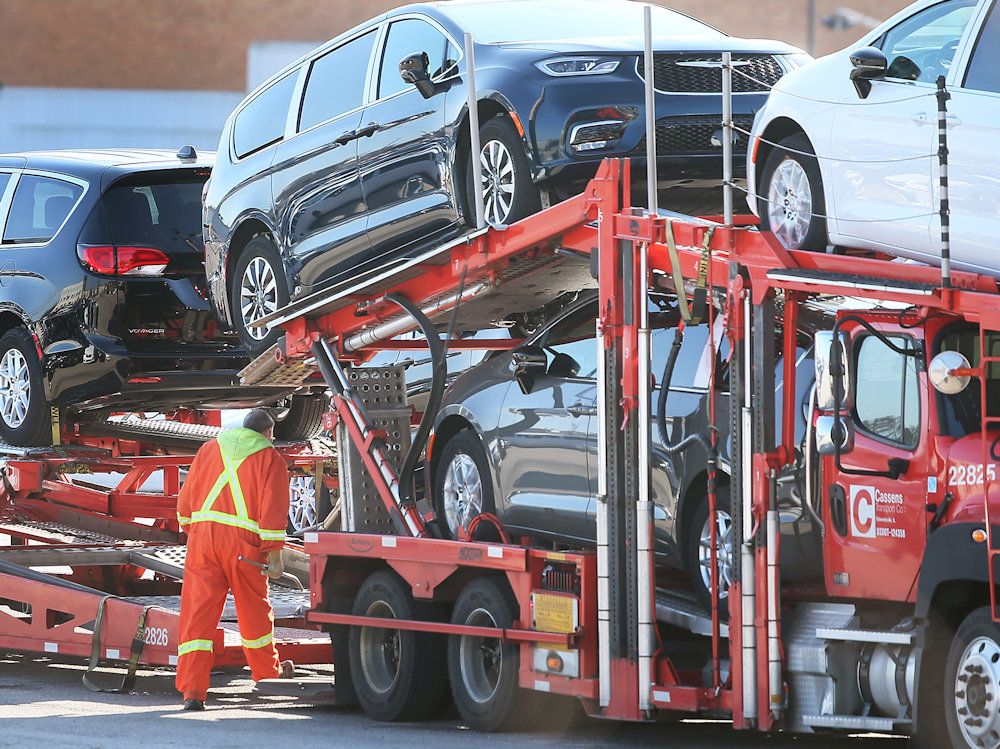
An auto hauler is shown with new Pacifica models at the Stellantis Windsor Assembly Plant on Thursday, March 27, 2025.

First Reading is a Canadian politics newsletter curated by the National Post’s own Tristin Hopper. To get an early version sent directly to your inbox, sign up here.

TOP STORY

Despite campaign promises by Prime Minister Mark Carney that Canada can dodge U.S. tariffs with an “all in Canada” auto sector, a new C.D. Howe Institute report claims that the only realistic future for Canadian auto manufacturing is to make nice with the Americans.

“To maintain our manufacturing base, Canada must either exponentially expand its share of the domestic market or achieve healthy sales across the larger North American market,” reads the new report written by Stephen Beatty, the recently retired corporate secretary of Toyota Canada.

“That leads to the inevitable conclusion that Canada must cut a new deal with Washington.”

The highly integrated North American auto sector has been one of the industries most conspicuously impacted by a wave of import tariffs imposed by U.S. President Donald Trump. Just last week, General Motors laid off 750 workers at its Oshawa assembly plant, in what union leaders said was a direct consequence of U.S. tariffs.

Since April 3, the Trump administration has imposed 25 per cent tariffs on imported autos and auto parts, but with carveouts for parts covered by CUSMA, the North American free trade agreement negotiated in Trump’s first term. A 25 per cent tariff on Canadian steel and aluminum also remains in place.

In the first days of the federal election campaign, Carney proposed to get around U.S. trade barriers by building an “all-in-Canada auto manufacturing network.” As Liberal Party literature described it, “Canadian steel” would be assembled by “Canadian workers” into cars to be purchased by Canadians.

The problem is that Canadian auto manufacturing has become so specialized under free trade that much of the sector would cease to exist if it’s not able to work in tandem with auto manufacturers in Mexico and the United States.

Currently, just nine per cent of new cars purchased by Canadians are assembled in a Canadian factory. Meanwhile, Canada has become dominant in some auto parts categories  — such as dyes and moulds — that would be decimated if denied access to the U.S. market.

“If you try to change the supply chain, something’s going to suffer. Quality could go down. Delivery could go down,” Peter Frise, director of the Centre for Automotive Research and Education at the University of Windsor, told National Post in March.

Beatty has previously written that “the self-sufficiency game has highly uncertain outcomes.” And in this latest report, he writes that Canadian auto manufacturing is “inextricably linked to suppliers and consumers south of the 49th parallel.”

As such, Beatty’s proposal is that Canada’s best hope is to rejig its trade policies to remain within the U.S. orbit, while respecting the Trump Administration’s wish to “restore and anchor production in North America.”

“Tariffs are like castle walls … in the simplest terms, Canada needs to aim to be on the inside of that tariff wall,” he wrote.

Beatty’s basic pitch is that any U.S. tariffs on Canadian cars should be countered with an equivalent Canadian surtax on imports of U.S. vehicles. With the twist being that manufacturers would be given exemptions from the tax “proportionate to their Canadian production.”

So, if a manufacturer builds 100 cars in Canada, they’re allowed duty-free import of 100 cars (or enough parts equivalent to equal 100 cars).

Then, Canada would push to negotiate a new Auto Pact wherein both the U.S. and Canada enshroud their respective auto sectors with tariffs of up to 25 per cent, but give exemptions to one another based on the formula of one duty-free import car for every car manufactured domestically.

Calling his plan the “New Auto Pact,” the idea is that both the United States and Canada would keep their existing auto sectors in a “self-balancing” formula while also meeting the U.S. goal of shutting out China.

“The strategy aligns with U.S. reshoring goals and addresses strategic risks from Chinese imports,” wrote Beatty.

All the while, the U.S. would retain access to the “critical mineral and battery supply chain base in Canada,” and avoid the massive increase in U.S. vehicle prices anticipated if the Trump administrations were to detonate the integrated North American auto sector altogether.

By some estimates, the average cost of a U.S. vehicle would go up by as much as $12,000 if the Americans were to stay the course with blunt tariffs against Mexico and Canada.

Writes Beatty, “Canada does not have many shots at such renegotiations, and the Canadian government needs to build as much leverage as it can during that window.”


IN OTHER NEWS

The NDP had a relatively easy time selecting their interim leader, as they only have seven MPs now. The new leader is 61-year-old Don Davies, who won his Vancouver Kingsway riding by a fraction of a per cent (37.23 per cent compared to the Liberals’ 36.61 per cent). Davies’ new position prompted former MP Kevin Vuong to 

note the NDPer’s reaction to meeting Chinese Leader Xi Jinping in 2013

. “

President Xi shook hands with us. When shaking hands, I felt the great power emanating from this leader’s body,

” Davies 

wrote of the trip

.

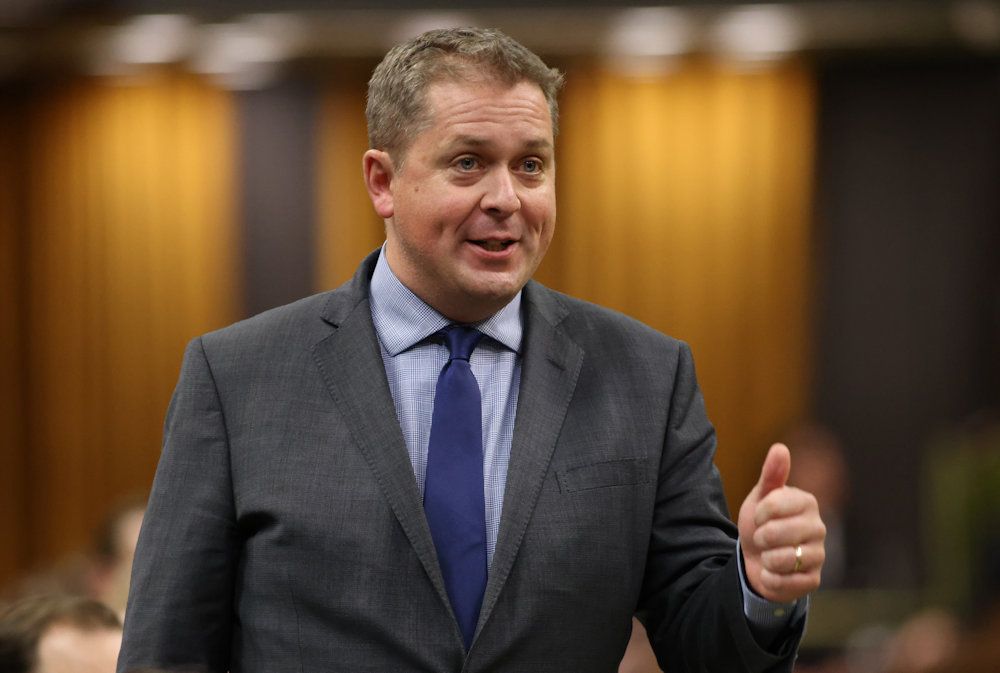
 With Conservative Leader Pierre Poilievre out of the House of Commons until a byelection can be called in the Alberta riding of Battle River—Crowfoot, the Conservatives have picked former leader Andrew Scheer to serve as interim leader in the meantime. This could give Scheer the chance to spend the summer in Stornoway, the official residence of the Leader of the Official Opposition — and the house he was last evicted from in 2020.

Although Alberta Premier Danielle Smith has 

moved to drop the threshold by which Albertans could trigger a separation referendum

, she stated in an address this week “

I do not support Alberta separating from Canada

.” Rather, she said the goal is a “strong and sovereign Alberta within a united Canada.” As to what that would look like, 

her government’s premier demand

 is for a “guaranteed corridor and port access to tidewater off the Pacific, Arctic and Atlantic coasts for the international export of Alberta oil, gas, critical minerals and other resources in amounts supported by the free market.”

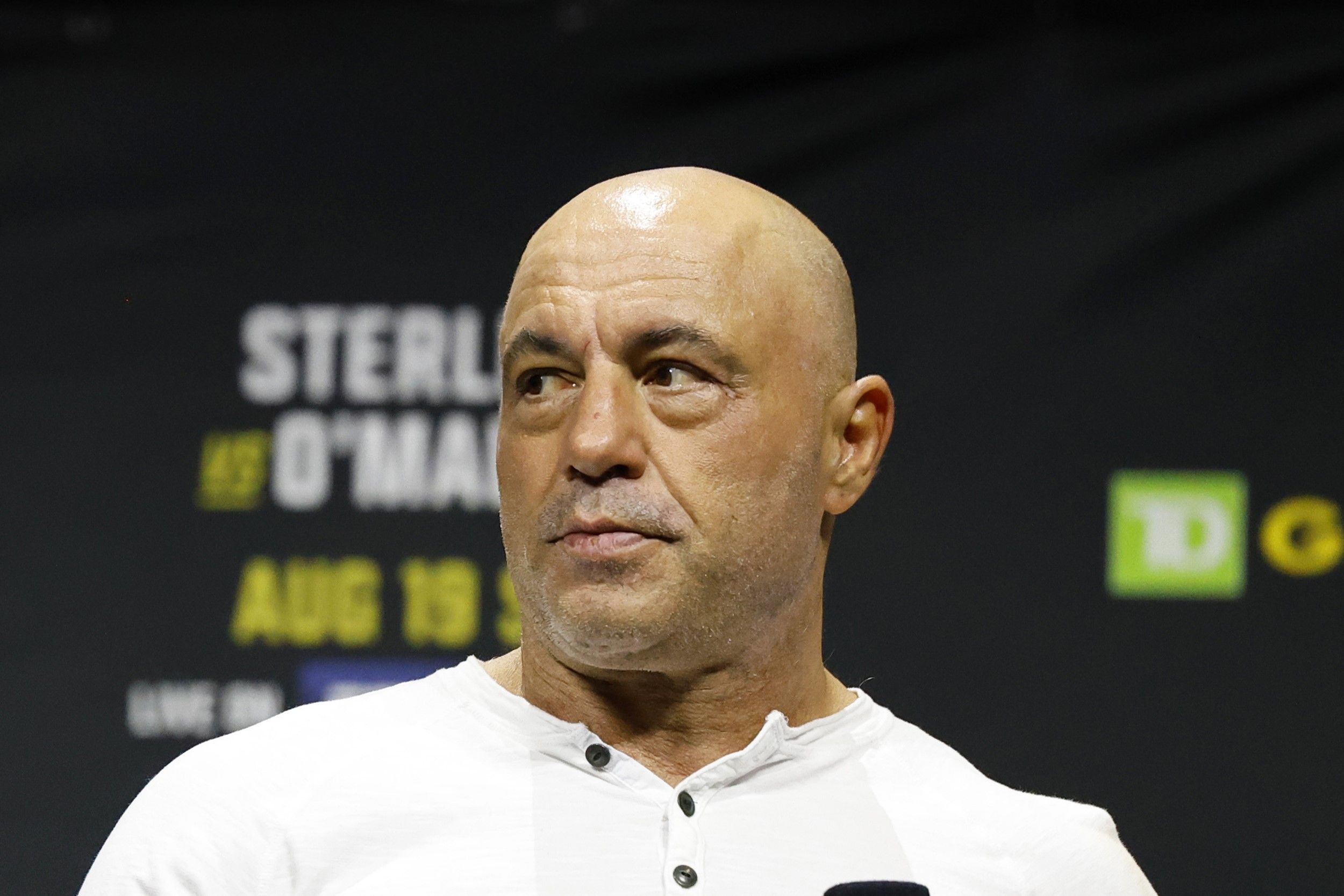
 Podcaster Joe Rogan revealed this week that he offered a spot to Conservative Leader Pierre Poilievre, but that Poilievre turned it down. The Joe Rogan Experience is one of the world’s most popular English-language digital media products, but Rogan said the Conservative campaign wasn’t interested. “I offered to have that Pierre guy come on the podcast, but he wouldn’t do it, thought it was too problematic or whatever,” said Rogan in a broadcast this week.

Get all of these insights and more into your inbox by signing up for the First Reading newsletter here.


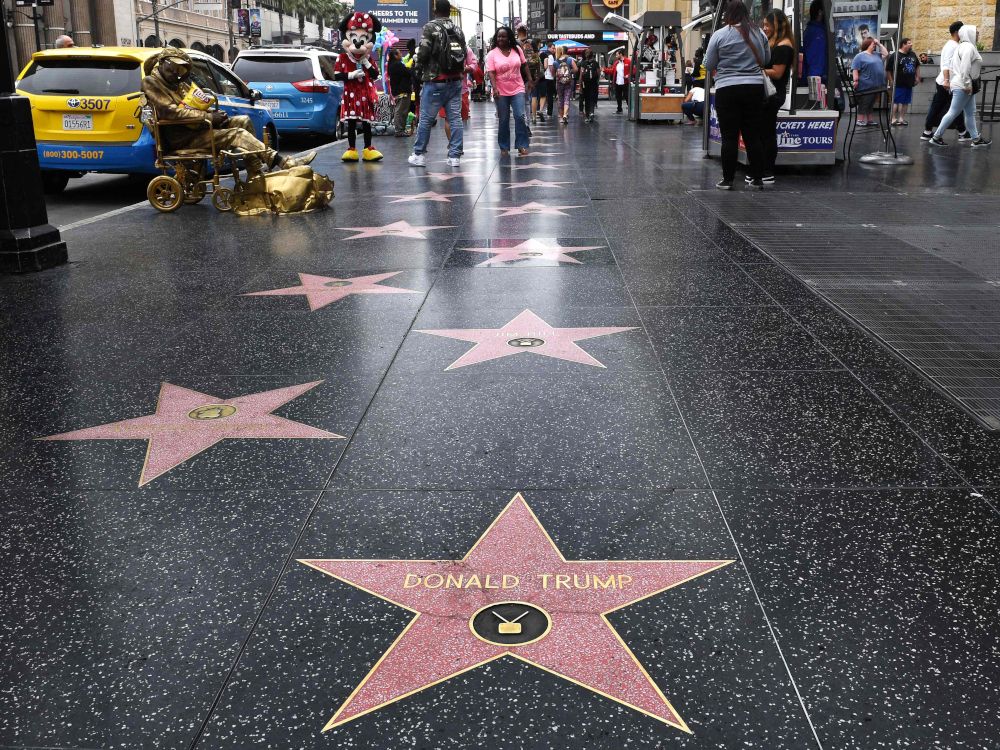
Donald Trump's star is seen on the Hollywood Walk of Fame in Los Angeles in 2017.

Canadians know better than anyone just how much the United States dominates cultural industries. Our theatres are filled with American movies. All the best TV shows, even on Canadian channels, have always come from the U.S. Most of the streaming services are owned by U.S. studios and tech companies. Those that aren’t are filled with American content. The

Canadian Billboard charts

are generally populated with American talent. And our sports channels rely heavily on games taking place south of the border.

So of course U.S. President Donald Trump would

claim

that the American film industry is dying “a very fast death,” which he preposterously calls a “national security threat,” and float the idea of instituting a “100% Tariff on any and all Movies coming into our Country that are produced in Foreign Lands.”

It’s an odd gambit given that the industry itself isn’t exactly thrilled that the president is looking to significantly increase their costs, either by taxing films or forcing studios to shoot in the U.S., which is often significantly more expensive than filming in places like Canada. As one unnamed “industry insider”

told CNN

, this “would represent a virtually complete halt of production.”

Nor does Trump have a warm relationship with liberal Hollywood. When China announced last month that it was reducing the number of American movies it will import in response to Trump’s tariffs,

the president responded

, “I think I’ve heard of worse things.”

As some “industry executives” mused to CNN, this whole proposal may be yet another way for Trump to punish his favourite whipping boy, Canada, due to the

generous tax breaks

we offer movie and television studios. But I wonder if it’s not a means of hurting both Canada and the Hollywood elite who never miss an opportunity to bash Trump and the people who voted for him.

Regardless, Canada has a lot to lose, especially provinces like British Columbia and Ontario that have large film industries and regularly welcome American production. According to

a report

from the Canadian Media Producers Association, foreign production represented 56 per cent of Canada’s $12-billion film and television industry, with foreign companies investing nearly $8 billion into Canadian production in 2023.

Of course, like most of Trump’s outlandish proposals — how’s that waterfront resort in Gaza shaping up? — his Sunday post on Truth Social floating the film tariff idea should be seen as little more than an opening gambit. By Monday, the president was trying to reassure industry executives, saying that he’s going to meet with them and “make sure they’re happy about it.” And a White House spokesman said that “no final decisions” have been made and that “all options” are on the table.

Keeping its options open would seem prudent, given that no one actually knows how such a scheme would work. Unlike physical goods that cross a border, movies are considered services. The money made from selling them stems from the intellectual property rights the owners have over the films, not any physical media on which they’re transported. The proposal thus sounds more like a tax than a tariff, but questions remain about what exactly would be taxed.

Would all foreign films be subject to a 100 per cent tax, or just those that are shot overseas by American production companies? Would the tax apply to the total cost of producing the movie, or ticket sales within the United States? What happens if only part of the film is shot in a foreign country, or if the editing is done in the U.S. but the special effects are designed in Canada? And what about movies that are set in Europe, Asia or elsewhere in the world?

Given the logistical challenges, and the fact that most of Trump’s tariff announcements end up getting significantly watered down following backlashes from consumers and industry, the Ontario government is right to take a “

wait and see

” approach.

But for Prime Minister Mark Carney, this is yet another sign that despite growing opposition to Trump’s economic policies and the negative impact they’re starting to have on the American economy, the president continues to think tariffs are the best idea he’s had since he bought the

Miss Universe pageant

to gain access to the dressing room.

It shows how determined he is to use tariffs and taxes to give American companies an edge, even when the industry he’s supposedly “protecting” doesn’t need any help — according to the Motion Picture Association of America, the U.S. ran a US$15.3-billion (C$21-billion) trade surplus with foreign markets in 2023.

It also shows that Ottawa cannot continue to drag its feet as Trump systematically attempts to destroy our economy. We need an economy that’s competitive enough to attract international investment; a creative industry that can sustain itself without taxpayer subsidies and rules forcing TV networks and streamers to create lame Canadian content; and leaders who will stand up for free markets and globalization in the face of the Bond villain who’s currently occupying the White House.

And we needed these things yesterday.

National Post

jkline@postmedia.com

Twitter.com/accessd


Last week, British Columbia’s NDP government announced that its signature CleanBC program, intended to reduce carbon emissions 40 per cent below 2007 levels by the end of the decade, is going to miss its 2030 emissions-reduction target by a wide margin. In fact,

just half

of the intended reduction is expected to be met.

Coincidentally, at the same time, the provincial government announced it was

freezing

its electric vehicle (EV) rebate program. It was just the first domino to fall in the NDP’s CleanBC program, which, unless overhauled, will end in failure, with consumers taking the hardest hit.

Even if B.C. does do away with its EV program completely, it will not alter the fact that the province is no longer self-sufficient when it comes to producing electricity. A lack of energy diversification caused by hard-headed green initiatives is to blame.

For

generations

, B.C.’s hydroelectric power was abundant, reliable and cheap. It helped power

the province’s growth

from a rural, resource-oriented economy into the home of Canada’s third-largest city and gateway to the Pacific.

Today, B.C. has everything. It has lots of natural resources, a growing population and a vibrant commercial capital in Metro Vancouver. This growth, however, has strained the province’s energy supply.

Without the ability to meet its own electricity needs, British Columbians will go into the future with higher energy bills, and industry will think twice about investing in a province in which electricity is no longer cheap.

Drought and a persistently low annual snow-pack

are gutting

BC Hydro, the Crown corporation responsible for producing the hydroelectricity that powers most of the province. Last year, a staggering

25 per cent

of all the electricity used in B.C. was imported from outside the province, at a cost of nearly $1.4 billion.

The great irony of this is how it undercuts the CleanBC plan. The imported electricity comes from the United States and Alberta, and is largely generated from fossil fuels. Turning on the lights in supposedly green B.C. still contributes to emissions if that power comes from higher-emitting sources.

Proponents of the hydroelectric regime point to the upcoming opening of the Site C dam, which will add

5,100 GWh

to the electricity grid, representing about eight per cent of the total electricity supply. Yet demand for power is projected to climb at least 15 per cent by 2030.

In 2023, the North American Electric Reliability Corporation

warned

that B.C. will be facing a severe electricity shortage as early as next year if drought conditions and warmer winters continue to slash the ability of BC Hydro to produce power.

Adding to this is the electricity demand of TransLink, which oversees public transit in Metro Vancouver. TransLink aims to fully electrify its operations by 2050, but is slated to suffer a

budget deficit

of $600 million in 2026, and has proposed raising its fares to make up the difference.

Currently, TransLink is expanding the SkyTrain network out to the University of British Columbia and

phasing out

its remaining diesel-powered buses in favour of electric ones. All of this will further stretch the province’s dwindling power supply.

It has not helped that Vancouver city council voted late last year to keep its ban on natural gas heating in new homes.

By 2046, B.C.’s population is expected to grow by

44 per cent

, to nearly eight-million people from the current 5.5 million. There is no question that new houses and infrastructure are required to sustain this growth, but the electricity to power it will not appear out of thin air. Alternate energy sources are disappearing as the B.C. government

phases out

natural gas-powered generators, all while hydropower is naturally declining.

Under initiatives like CleanBC and other bullheaded drives for electrification, B.C. consumers are barrelling towards a cost trap. Either through government debt charges or monthly electricity bills, B.C. consumers are going to bear the brunt of this arbitrary misalignment of supply and demand.

Nothing will delegitimize electrification and green initiatives in the public eye more effectively than worsening the cost of living crisis. Recalibration is in the best interest of British Columbians and the provincial government.

B.C. has an abundance of natural gas, with over

524 trillion cubic feet

under the ground, and it can be an effective and readily available source of energy to fill the gaps left by BC Hydro. Given that developing nuclear power is

currently illegal

in B.C., there are few alternatives beyond continuing to import more and more electricity.

Everyday people and families bearing the cost of bad government policy is nothing new, but in B.C., it can be avoided with flexibility, humility and prioritizing the common good over ideology.

National Post


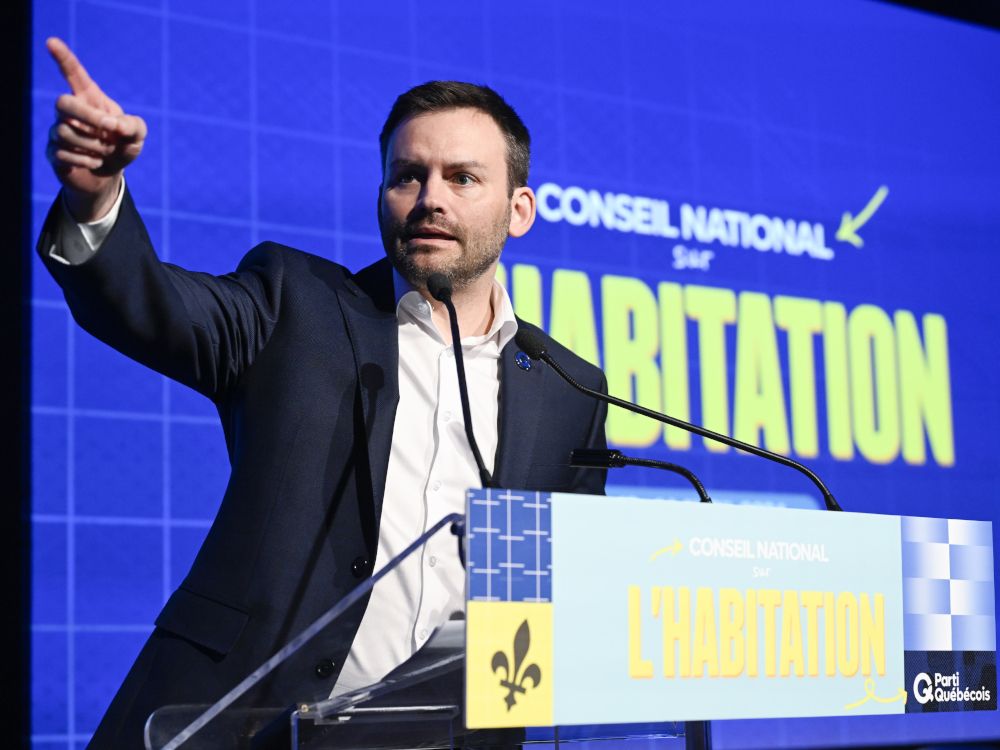
Parti Quebecois Leader Paul St-Pierre Plamondon

There is a paradox in Quebec politics. According to a recent Léger poll, if a provincial election was held today, the separatist Parti Québécois (PQ) would garner 30 per cent of the vote, compared to 24 per cent for the reigning Coalition Avenir Québec (CAQ) and 19 per cent for the Quebec Liberal Party. If these numbers hold, the PQ will form government and, if we believe its leader, Paul St-Pierre Plamondon, would hold a referendum on separation.

Supporters of the Parti Québécois are enthusiastic. Last year, the PQ raised close to $1 million from them. That is a lot of money, considering that political donations in Quebec are limited to $100 each year. So it appears that the separatists have the wind in their sails.

With Plamondon’s popularity high and his determination to hold a third referendum on the province’s independence, long-time separatists are convinced that their dream is finally within reach. Yet the same Léger survey reveals that support for sovereignty is low (32 per cent, compared to 40 per cent in the 1980 referendum). Close to one-third of PQ voters say that they would vote “no” in a referendum on separation. What is happening?

Unknown to Quebecers before the 2022 election, Plamondon, often called by his initials PSPP, made a strong impression during the debates, when he appeared to be the calmest, most reasonable and least partisan of the five leaders on the stage. He and the PQ won only three of the National Assembly’s 125 seats, but when Premier François Legault’s government began to falter after the election, many voters drifted to the man who appeared to be the adult in the room.

Indeed, it is difficult not to succumb to PSPP’s political charm. He speaks softly about topics that Quebecers care deeply about (language, immigration, young people’s addiction to screens, etc.). His moderate tone often conceals the radical nature of his ideas, especially on separation. Most Quebecers do not want another referendum, but they are willing to give the PQ a chance to govern.

Many appear to be thinking that if there’s a referendum, they’ll simply vote “no.” Yet as Brexit has shown, this is a very dangerous bet. Whatever the polls show at the beginning of a campaign, the results of a referendum vote are unpredictable and the damage can be considerable.

Yet all is not well in the separatist camp. In the recent federal election, the Liberal Party of Canada won its largest number of seats since 1980 in Quebec, while the PQ’s federal ally, the Bloc Québécois, lost nearly a third of its 33 seats. This relatively poor performance led PSPP to publicly criticize Bloc Leader Yves-François Blanchet’s strategy.

“The strategy adopted by the Bloc, which validates Mark Carney as a partner, as someone who is about to collaborate with Quebec … that’s not what we think,” said Plamondon, who believes Prime Minister Mark Carney represents an “existential threat” to Quebec. Yet it is clear that if Blanchet had followed the PQ leader’s advice of campaigning on separation, he would have lost even more seats in a campaign in which U.S. President Donald Trump appeared to Quebecers as the real existential threat.

One can sense some frustration within the sovereignist ranks as Canadian patriotism has surged in the province of late. There are thus signs that the PQ’s strong polling numbers are built on a weak foundation. This means that, 17 months before the next election on Oct. 5, 2026, the game is far from over for the other provincial parties. But after six and a half years in government, Legault appears to be at the end of the line: 60 per cent of Quebecers are displeased with his performance.

The Opposition Liberals are in the midst of a leadership race, with a strong group of five candidates, including former federal minister Pablo Rodriguez. The Liberals, who suffered their worst result ever in the 2022 election, are counting on their new leader (to be elected on June 14) to lift the party’s fortunes with the province’s French-speaking population; currently, the Liberals are supported by only 10 per cent of francophones.

Last month, Quebecers chose the federal Liberals because they believe Carney is best qualified to deal with President Trump. Next year, they will be looking for a political party that’s able to form a serious, moderate, competent government to protect Quebec’s economy and culture from the threats of the new world we now live in.

Currently, they see Plamondon’s Parti Québécois as fitting that bill. But PSPP’s commitment to a separation referendum poses a problem. It is in Quebec’s and Canada’s interest that the PQ’s rivals work as hard as they can to take advantage of that weakness.

National Post

André Pratte is the outgoing chair of the Quebec Liberal Party’s policy committee and a doctoral student in history at the Université du Québec à Montréal.


TORONTO, ONTARIO-TUESDAY APRIL 22, 2025—NEVER FORGET—The Nova Music Festival Exhibition in Toronto in remembrance of the people murdered and taken hostage at the event in Israel, Tuesday April 22, 2025.  [Photo Peter J. Thompson/National Post] [National Post Story by TBA for National Post]

On Tuesday, I visited the Nova Music Festival Exhibition — a travelling installation dedicated to the memory of the brutal massacre of 360 Nova music festival attendees and hostage taking of 44 others by Hamas terrorists in Israel on October 7, 2023 — an event the organizers point out is the largest massacre in music history. The exhibit speaks to the remarkable resilience of surviving festival-goers and their desire to heal their community which they refer to as the Nova Tribe. What’s unfortunate, is that doing so requires such a heavy and costly security detail.

Shortly after October 7, exhibit organizers, still reeling from having experienced that horrific day in Re’im, Israel, themselves, set out to create an exhibit that would honour the victims, support survivors and educate visitors. A little over two months after the horrific attack on the festival, the opened at Expo Tel Aviv in Israel on Dec. 13, 2023. From there, it went on to New York, Los Angeles and Miami, before coming to Toronto where it will conclude on June 8. I am told it will be travelling to Europe next.

Waiting to enter the exhibit, I and others outside in line, were struck by the fact that there was a sniffer dog being led around the outside fence by security in order to ensure the area was safe for visitors and staff. After having my ticket scanned, I entered the door to what could have been a scene in an airport — a security detail had each visitor place their belongings in a tray to be inspected and scanned while the visitors passed through full-body scanners.

After I’d finished the tour, Evan Zelikovitz, the Canadian representative for the exhibition told me that the highest cost for the festival, by far, was security.

Any reasonable person would find it disgraceful that an event like this would need to be protected, but this is a sad reality in Canada. While our country has the world’s

fourth largest Jewish population

(according to the 2021 Census around 393,500 people, or 1.06 per cent of Canada’s population) the community has been consistently subjected to the highest number of hate crimes. This only worsened after October 7, 2023. By the end of that year, police-reported hate crimes against the Jewish community

increased

by 71 per cent to 900 of the 1,284.

The exhibit begins with a room where visitors can sit and watch the moments before the tragedy occurs, or, as the exhibit puts it, “the moment the music stands still,” which has been determined to have been 6:29 a.m. IDT. Festival-goers are enjoying themselves, peacefully smiling and dancing.

The DJ is told to stop the music and to inform the crowd of a red alert. It’s at this point that rockets can be seen in the sky, not an uncommon occurrence in Israel, but the organizers immediately took it seriously. The festival-goers started to leave the area and head toward their cars, slowly at first, but then more quickly, not knowing what we know now, that route 232 was strategically blocked by Hamas terrorists.

The exhibit continues in the next room which is dark and smokey, with a thin-layer of sand on its floor. Several screens show videos without placards which illustrate Hamas’ rampage, including the attackers shooting at vehicles of those trying to escape as well as a recording of a terrorist calling his family to tell them he murdered Jews: “Dad, I’m calling you from the phone of a Jew. I just killed her and her husband with my own hands. I killed 10! Dad, I killed 10 with my hands. Dad, open WhatsApp and see how many I killed.”

 Picture of captioned video at Nova Exhibition titled “Terrorist calls his family to tell he murdered Jews.” Photo by Terry Newman/National Post

The darkness continues as visitors walk through a room with tents and camping chairs with phones of festival-goers plugged in and charging while being introduced to more video stories from survivors.

How the exhibit chooses to tell these stories may seem counter-intuitive for their lack of anger. Survivors give full accounts of running and hiding under vehicles or bushes, often injured, or hiding in bomb shelters, while those around them were less fortunate as successive grenades were lobbed into the structures. One man describes keeping a woman, a mother of three, who begged him to save her, alive. They both hid under a vehicle and were later rescued. A medic recounts how the bodies kept coming in, and how painful it was not to be able to save them all. One patient, he told us, had been shot so many times by an AK-47 that he wasn’t sure that she’d survive, even with his help. The video ends with their heartfelt reunion. All of the videos in the exhibit emphasized the importance of community and how they helped each other through the nightmare.

 Burnt van at Nova Exhibit in Toronto, taken from the concert site. Photo by Terry Newman/National Post

Towards the end of the exhibit is a warehouse of found items from the festival site which you can pick up and hold, including hats, shoes, purses and wallets. In a video in this section of the exhibit, a woman responsible for collecting and identifying the owners of these items discussed the difficulty of collecting jewelry from the grounds, and, in one example, of having to send earrings back to the families of two women who had been burnt and were otherwise unrecognizable.

In one corner, a countdown clock reminds visitors that there are still hostages who need to be brought home. In another, visitors can leave cards of remembrance on a long table where the hostages’ pictures line the wall.

The exhibit ends with a message of hope and a declaration that they will all dance again.

In their efforts to support festival survivors — who the exhibit explains are experiencing psychological trauma including flashbacks, anxiety, sleep disorders, and difficulty functioning day-to-day on top of the difficulty of grieving for friends and family who were killed or kidnapped at the event — the Tribe of Nova Foundation has held healing sessions which have been well-attended by survivors and members of bereaved families, 140 memorials and 120 community day gatherings focused on healing and enhancing mental health. In addition, the foundation has provided US$ 900,000 in emergency grants to assist bereaved families and survivors with living stipends. They have also helped festival survivors, who were largely in their mid 20’s to 30’s, navigate the arduous process of securing government benefits.

Notably, there is not one Israeli flag or call for vengeance in the entire exhibit. Instead, the words: friendship, faith, compassion, strength, courage, support, recovery, love, freedom, and community, line the floor that leads the exhibit’s visitors back into the light.

tnewman@postmedia.com

X:

@TLNewmanMTL