LP_468x60
on-the-record-468x60-white

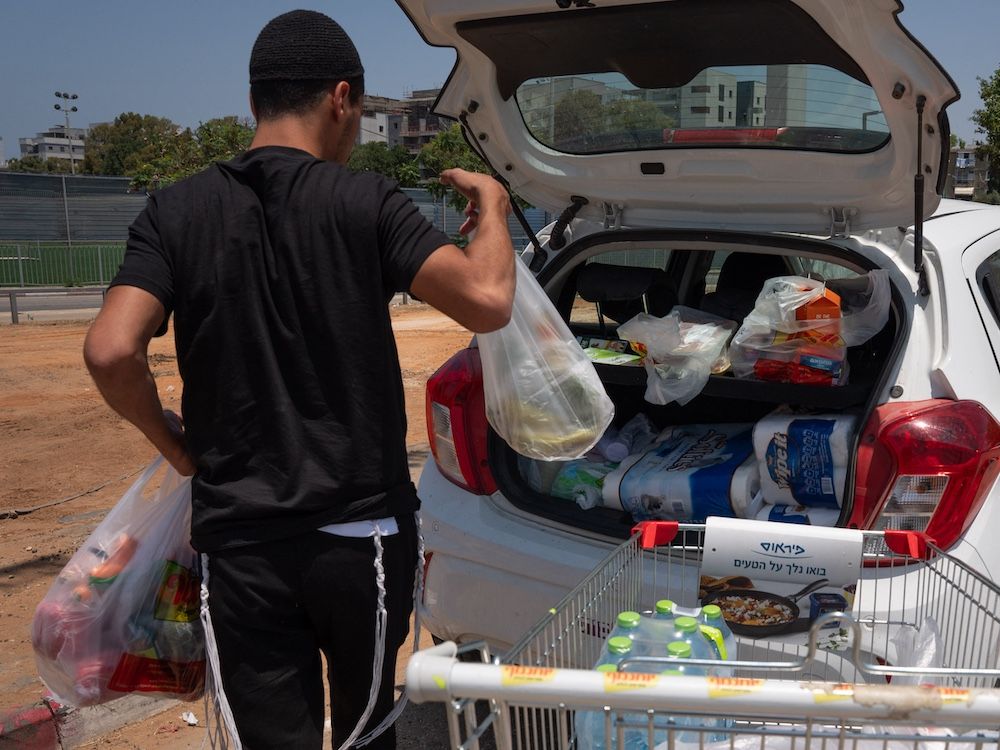
A man loads groceries in the back of his car as he stocks up with supplies in Tel Aviv on June 13, 2025. (Photo by MAYA LEVIN/AFP via Getty Images)

TEL AVIV — Israel launched a
devastating strike
against Iran’s nuclear program early Friday morning, with missiles and drones devastating military targets throughout the country. Although Iran has vowed revenge — and indeed launched missiles on Friday — and already retaliated with more than 100 drones, the mood in Tel Aviv remains remarkably ataraxic.
 

As munitions soared towards Tehran in the middle of the night, a blaring emergency alert was sent to every phone in Israel, warning residents to obey further government instructions “in preparation for a significant threat.”
Rumours had been swirling
in the preceding days that an attack on Iran was imminent, so many recipients immediately understood what was happening, even without confirmation from the government announcements that came shortly afterwards.
 

In the building where I am staying in downtown Tel Aviv, civilians quickly gathered in the staircase: “This is the big war. It’s going to be really big,” said my next door neighbour, a burly man with his hair in a bun, as we descended into the basement bomb shelter. Yet the dingy room was sparsely filled and, of the dozen or so Israelis who had taken refuge there, none seemed particularly scared — anxious and irritated, perhaps. Most of them texted and scrolled on their phones, bleary-eyed.
 

After ten minutes or so, many relocated to an adjacent alleyway, where the air wasn’t stifling and the data reception was better. There, I bumped into two young, female students — Shira and Shivan — who had arrived from a nearby building that had no shelter of its own.
 

“I feel pretty safe. The chance of something really bad happening, like a rocket falling, is very small, usually, because we have an air force and defence system,” said Shivan, an aspiring actress. Hours before, she had been visiting her parents outside Tel Aviv, who had worriedly told her to avoid the city, but she told them, “We have tons of rehearsals, so I cannot miss anything.”
 

After an hour passed and no retaliatory Iranian strike had yet materialized, everyone returned to bed. Meanwhile, the government’s
official safety app
warned that public gatherings, along with most workplace and educational activities, would be prohibited until further notice.
 

The Tel Aviv Pride Parade was
originally supposed to

take place Friday

, but, in lieu of convulsing rainbows and techno, the streets were unsettlingly quiet. Only a few cafes and grocery stores operated throughout the morning, with many customers buying small stockpiles of necessities. Pedestrians were rare and, for the most part, either walking their dogs, rushing to leave the city (miniature luggage in tow) or returning home with full grocery bags.
 

“If we’re going to die, we’d rather die with our friends,” said a beautiful woman, laughing behind her sunglasses, as she and her photogenic boyfriend, who was carrying several bags, prepared to stay with relatives outside the capital.
 

Down the street, three Russian expats sat on a bench, smoking a joint and grinding cannabis. A tattooed woman warned that Iran’s drones were expected to arrive in seven minutes — at 10:30am — and advised that I find a bomb shelter. But the skies remained clear as the deadline passed. The swarm of Iranian drones had
evidently been intercepted
and life returned to the city more fulsomely after that point.
 

There was a crowd of young Israelis cheerfully loitering outside a popular cafe. A young man played guitar, while another bohemian read a book beside him. I asked two young women, who were donned in pastel-coloured leisurewear and gold jewelry, how they were preparing for Iran’s potential retaliatory attack. “Coffee!” they exclaimed. Attacks like this were not new to them: “There’s nothing you can do. The situation is not going to change.”
 

Another young man, Benjamin, described visiting a grocery store at 4:30 am — 90 minutes after the strike on Iran — only to discover that it was swamped with gay tourists who had migrated from the city’s abruptly-shuttered bars and clubs. They were evidently “not sober” and possibly high on drugs.
 

“Do we continue to party? Should we go hide in the shelter? Should we be buying tuna? Is gay pride canceled?” he had wondered to himself. “You’re like, f**k this, I guess I gotta go to bed. And then three hours later, you wake up again to more news. Drones are coming. Drones are not coming. Nobody knows.”
 

At another cafe, 26-year old Yonathan said, in a thick Israeli accent, that Iran’s goal is to “terrorize my mind” so he’d rather stay in bed than go to the bomb shelter: “You know, if I’m dying, I’m dying like that.” He said that his childhood in Jerusalem had been filled with “wars and missiles,” so this was just “a regular morning. I’m sitting here having my beer. You know, chilling.”
 

Two muscular shirtless men drinking coffee on the patio — Tamir and Daniel — said that they were having a “weird Friday.” Daniel had slept through his mother’s phone calls at 5am, leading her to send him a “very dramatic” message about being at war with Iran. “I assume that there is a personal responsibility to make sure that we have whatever we need if something does happen, but we’ve been here before,” he said, citing October 7. “There’s not much we can do about it,” concurred Tamir.


A Canadian-Israeli sitting nearby, whose cheeks were painted with rainbows, said that the morning was “pretty chill” and that Iran’s so far weak response had surprised him — but then his friend, a young IDF soldier who had served extensively in Gaza, interrupted him: “Don’t jinx this.”

Turns out that was too late, as Israelis were told, again, to seek shelter Friday evening after Iran fired dozens of missiles.

National Post
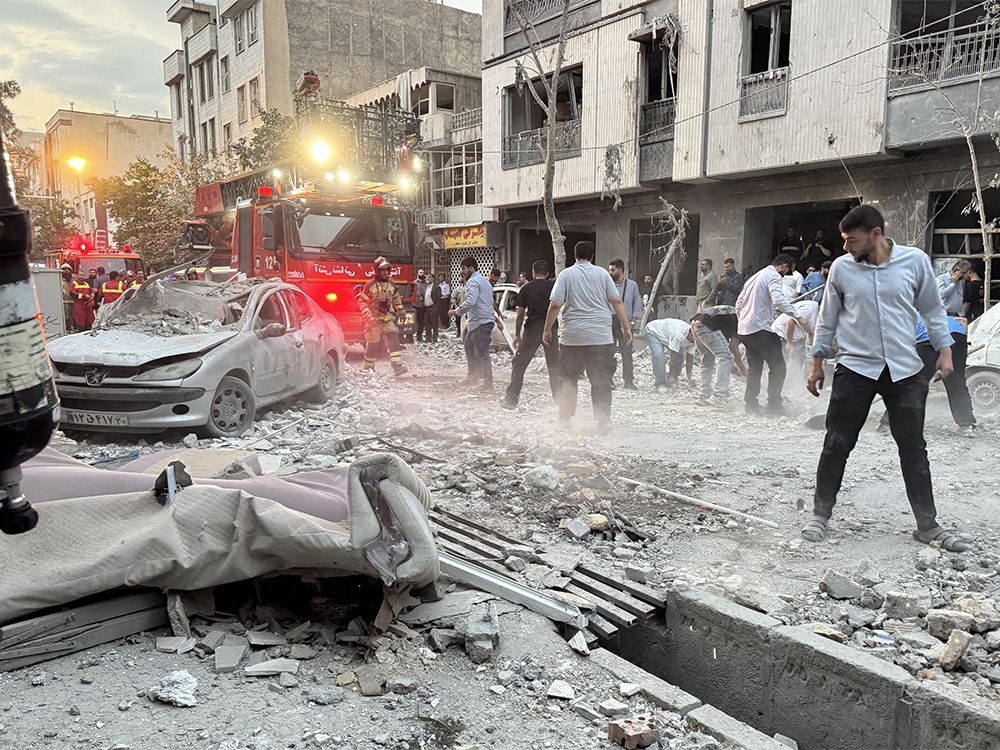

People gather outside a building that was hit by an Israeli airstrike in Tehran on June 13, 2025. Israel hit about 100 targets in Iran on June 13, including nuclear facilities and military command centres.

Israel has gone to war with Iran. Prime Minister Benjamin Netanyahu has decided that time is growing very short — short for Iran to build a nuclear bomb, short to cut off American diplomatic efforts, short for an exhausted Israeli population and short for his own government’s survival.

In recent months an emerging intelligence consensus has concluded that Iran is very close to making a nuclear bomb — perhaps weeks or months, but likely within a year. If that is to be ruled out entirely — as both Israel and the United States have declared for decades — then the military option comes into play if diplomacy fails. Whether weeks or months, the diplomatic track was running out of time.

For 20 years, going back to the George W. Bush administration, American policy has been that Iran’s nuclear weapons program would be prevented by diplomatic deals and economic pressure, not military strikes. Partly this was because it was not clear that military strikes could get the job done. If after 20 months of ground forces in Gaza, Israel cannot eliminate the Hamas threat, housed in tunnels, will airstrikes disable nuclear facilities built deep into the sides of mountains?

Israel likely feels strong after its quick decimation of Hezbollah last year in Lebanon, but Iran is rather different in both degree and kind.

President Donald Trump’s actual Secretary of State, his developer buddy Steve Witkoff, was scheduled to continue his Iran talks on Sunday. Real estate moguls make deals, and Trump prides himself on being the moguliest of all moguls, so the Israelis likely feared that Trump and Witkoff would have accepted a bad deal. There is ample reason to think that; the Trump-Witkoff preferred deal in Ukraine was Ukrainian capitulation; Ukraine refused and Trump’s tantrum in the Oval Office indicated how keenly he had wanted Ukrainian President Volodymyr Zelenskyy to surrender.

Netanyahu’s declaration of war is maximum defiance of Trump. Trump makes deals — or at least claims that he does — and proudly claims that he does not make war. Netanyahu’s Iran war scuttles American deal-making and threatens to pull the United States into war-making. If Netanyahu forces Trump into the art of war rather than the art of the deal, it will make manifest that Trump’s second term is as confused and weak in foreign affairs as he is in trade policy.

There is another consideration, too, rather darker but not to be excluded. Saudi Arabia and the Gulf states share Israeli opposition to Iran’s nuclear program and have been largely supportive of Israel’s war against Hamas in Gaza and Hezbollah in Lebanon. A blow against Iran helps them on long-term strategic and security matters — and generates a fortune in the short term as oil prices spike.

Is it not possible that Israel and its Gulf allies may have concluded that any opposition from Trump could be handled simply by funnelling more money to the Trump family? The extra profits from oil in the next weeks alone would provide more than enough to take care of Trump, who can be bought rather cheaply in Gulf terms. Having just completed his grift tour of Saudi Arabia, Qatar and the United Arab Emirates, Trump has demonstrated that a few hundred million here and there can work wonders.

Time is also running short in Israel. Twenty months into the war against Hamas — begun with the Netanyahu government’s catastrophic failure to prevent the massacres of October 7 — Israel still has not achieved its military goals, whatever they may be. The hostages have not been fully returned, and no one seems to have any plan for how Gaza will be governed when the guns cease. With each passing week the voices in Israel of exhaustion, frustration and exasperation grow. Just this past week Netanyahu’s government narrowly escaped being defeated in the Knesset.

To remain in power after the 2022 election, Netanyahu fashioned a coalition that included extremist parties led by Itamar Ben-Gvir, who became national security minister, and Bezalel Smotrich, who became finance minister. “Extremist” is the term used by the foreign ministers of Australia, Canada, New Zealand, Norway and the United Kingdom, who this week

sanctioned

both ministers, accusing them of “(inciting) extremist violence and serious abuses of Palestinian human rights.”

That Israel’s longtime allies would sanction members of Israel’s cabinet is a diplomatic earthquake, and evidence of how isolated Israel has become under Netanyahu in the past year. Time is running short there, too. Netanyahu has few allies left; he has the shared interest of the Gulf states, and the reluctant, hardly reliable Trump. If they turned on him, Israel would be completely isolated. Thus the imperative to act now.

Netanyahu, Israel’s longest-serving prime minister, is unlikely to prevail in next year’s election, weighed down by his manifold failings and burdened with the ugly policies of his coalition partners. He will finish with a bang, not a whimper. Those who care deeply about Israel’s peace and prosperity, safety and security, are right to be worried.

National Post


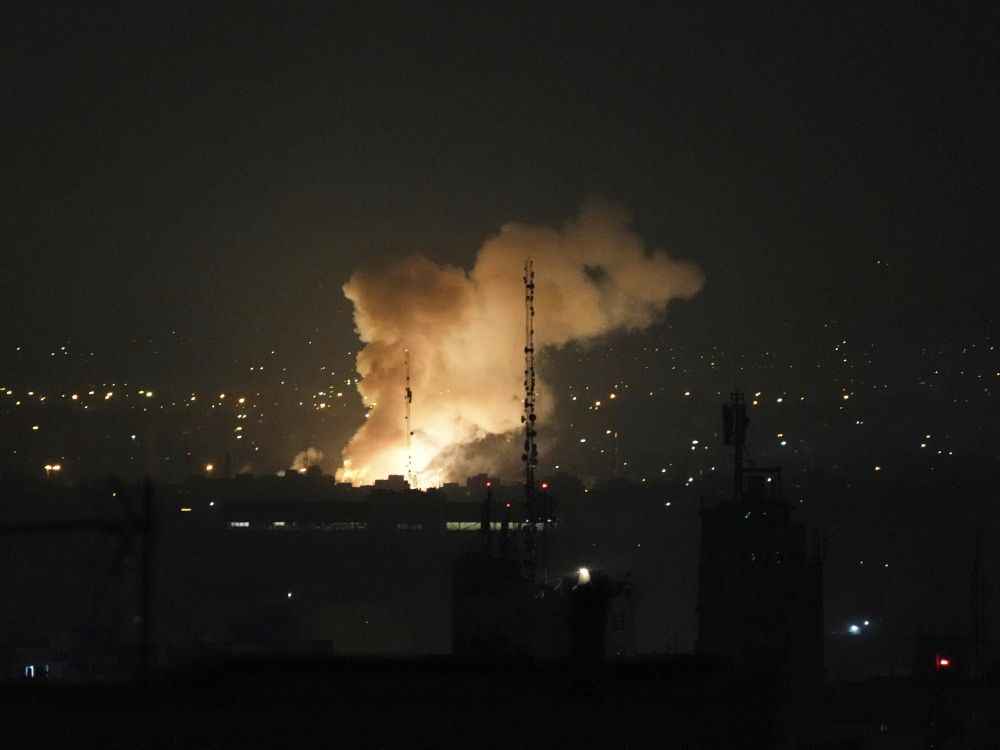
Smoke rises follow an explosion in Tehran on Friday.

In the early hours of Friday morning, Thursday night in Canada, Israel launched a preemptive military strike deep inside Iranian territory — targeting nuclear infrastructure, military sites and senior officials.

First, let’s be clear: this was not an act of aggression by Israel, but a lawful act of self-defence and a last resort against the genocidal regime in Tehran, which has, for decades, vowed to destroy the world’s only Jewish state — and now stood on the cusp of doing so.

Under Article 51 of the Charter of the United Nations, every nation has the inherent right to defend itself. Iran is the only UN member state that openly calls for the annihilation of another, Israel. This is not rhetorical flourish. Iranian Supreme Leader Ayatollah Ali Khamenei has called the Jewish state a “cancerous tumour” that” must be eradicated.” That genocidal intent has also been matched by action.

For years, Tehran has funded and armed a global terror network: Hezbollah in Lebanon, Hamas and Palestinian Islamic Jihad in Gaza, the Houthis in Yemen and militias in Iraq and Syria. These are not mere “proxies,” they are tentacles of the same regime in Tehran that have also attacked American troops, disrupted global shipping and attacked western allies in the Mediterranean, South America and Europe.

Then came Oct. 7, 2023 — the worst massacre of Jews since the Holocaust. This atrocity was carried out by Hamas, with Iranian money, training and weapons. Just as the Nazis sought to annihilate the Jewish people, the Islamic Republic of Iran has vowed, repeatedly, to annihilate the Jewish state.

Through it all, Israel showed remarkable restraint. It absorbed blow after blow, responding proportionately while Iran raced toward nuclear breakout. In the meantime, satellite imagery and intelligence confirmed that Tehran was enriching uranium to near-weapons grade, testing long-range missiles and constructing fortified underground facilities. This week, the International Atomic Energy Agency formally declared Iran in violation of its nuclear non-proliferation obligations. The writing was on the wall, and Iran was racing toward the point of no return.

U.S. President Donald Trump has repeatedly vowed that Iran will never acquire a nuclear weapon. While his administration has rightly prioritized diplomacy to avert conflict, he also warned that military action would be inevitable if Iran did not agree to a deal. Immediately after the strike, the

president reiterated

that, “I gave Iran chance after chance to make a deal. I told them (if they don’t) it would be much worse than anything they know.… It will only get worse!”

Ultimately, Israel acted not out of choice, but out of necessity. Although the cost of action may be high, the price of inaction for the world’s only Jewish state would be existential.

But let’s be clear: this is not just Israel’s war. Iran’s goal has never been limited to wiping the Jewish state off the map. Its aim is to challenge and destabilize the entire western-led world order. It doesn’t just chant “Death to Israel” — it chants “Death to America,” too. It arms and directs terror groups that have attacked U.S. forces, targeted European interests and disrupted global energy and trade routes.

For years, Israel has taken the hits so others wouldn’t have to. It has fought Iran’s terror proxies on its borders, absorbed missile fire and exposed nuclear violations — all while the rest of the world looked the other way and lectured the pesky Jewish state.

Now, with Iran on the verge of the point of nuclear no return, equivocation is not an option. In moving to eliminate the Iranian threat, Israel was not acting alone, but in defence of the West. And it is doing what much of the world has lacked the will to do: confront a genocidal regime before it is too late.

Israel just did the West a favour. The least the West can do is say “thank you.”

National Post

Arsen Ostrovsky is a human rights lawyer and CEO of the International Legal Forum, an NGO and global coalition of lawyers combating terror and antisemitism.


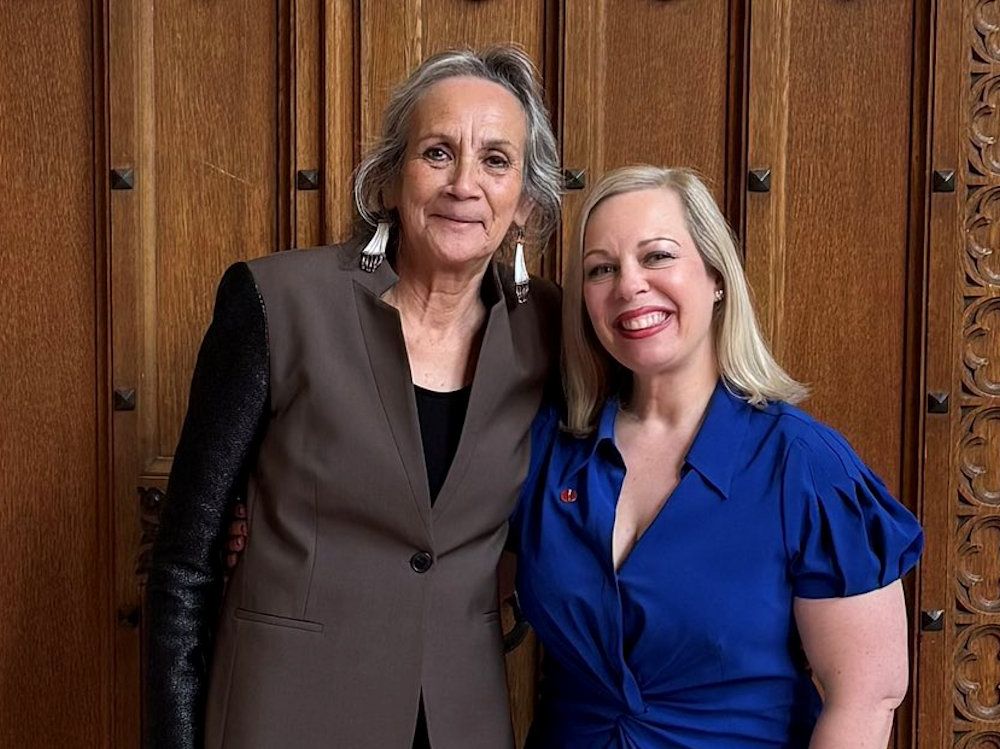
New Conservative senator Mary Jane McCallum poses with fellow Conservative senator Denise Batters.

First Reading is a Canadian politics newsletter curated by the National Post’s own Tristin Hopper. To get an early version sent directly to your inbox, sign up here.

TOP STORY

The Senate, not normally a hub of political intrigue, has recently witnessed a sudden tide of defections to the Conservative caucus. So far this month, three Senators — two of whom were appointed by Prime Minister Justin Trudeau — have announced that they will henceforth be sitting as Conservatives.

It’s been an unexpected reprieve for a caucus that was increasingly lurching towards extinction. As of this writing, 85 of 105 Canadian Senators were appointed by Prime Minister Justin Trudeau. Before the recent floor-crossings, one third of the 11 remaining Tories were set to reach mandatory retirement age within the next two years.

As to why this is happening, the new Tory senators all cited different reasons, ranging from a generalized horror with regards to the state of the country, to a desire to “build bridges” on Indigenous reconciliation.  

Below, Canada’s first new Conservative senators since 2013, and why they went blue.

Mary Jane McCallum

Mary Jane McCallum, a veteran dentist and member of the Barren Lands First Nation in Manitoba, is the only member of the Senate to have been sent to an Indian residential school. From age 5 to 16, she attended Guy Hill Residential School. In Senate testimony, she has described her main emotions during that period as “overwhelming loneliness” and a “bewildering feeling of abandonment.”

Indigenous issues and reconciliation have come up often in her Senate work. In just the last couple of weeks, McCallum tabled legislation that would

bind the RCMP

to follow “First Nations laws,” and

another bill

that would allow the prosecution of First Nations laws by Crown lawyers.  On June 3, she said

she would be asking for a Senate probe

into whether Canada’s treatment of Indigenous people constituted “a crime against humanity and a genocide.”

As to why McCallum decided to join the Conservative caucus, in

a Tuesday statement

she framed it as a way towards “building bridges.”

“Our communities have long sought opportunities for greater collaboration and mutual understanding,” she said. “By joining the Senate Conservative Caucus I hope to help broaden the conversation and ensure Indigenous perspectives are reflected across the full political spectrum.”

David Richards

A novelist and playwright before he was appointed to the Senate by Trudeau in 2017, David Richards has been a vocal critic of the Liberal government for some time now.

This was most notable in 2023, when Richards delivered a scathing critique of the Online Streaming Act, the bill that gave broad powers to the CRTC to impose content quotas on streaming platforms such as YouTube and Netflix.

“I think it’s censorship passing as national inclusion,” he said in a Senate soliloquy that mentioned George Orwell, Cicero, the East German Stasi and the censorship regime of Soviet dictator Joseph Stalin.

“I think, overall, we have lately become a land of scapegoaters and finger pointers, offering accusations and shame while believing we are a woke society,” he said, concluding “this law will be one of scapegoating all those who do not fit into what our bureaucrats think Canada should be.”

Richards’ first Senate statements since the reopening of Parliament have stuck to the same general themes. On June 5, he asked Marc Gold, the government’s representative in the Senate, if he could “admit that much of the policy that the former government promoted in this chamber has bled in many ways into the horrible calamities that this country finds itself in today?”

Larry Smith

Larry Smith is the least surprising of the three to sit under the Conservative banner, given that he was appointed by Conservative Prime Minister Stephen Harper, has always identified as a conservative and was a candidate for the Conservative Party multiple times.

Nevertheless, it was only three years ago that Smith decided to leave the Senate Conservative caucus in order to join the Canadian Senators Group, a non-partisan caucus formed mostly of Liberal appointees.

It wasn’t a clean break with his Tory ties, but the move was interpreted as a note of dissatisfaction with the more populist direction of the Conservative Party, a course that was best highlighted by the events of Freedom Convoy, which saw factions of the Tories either support or denounce the anti-mandate blockades. Notably, Smith opposed Pierre Poilievre’s bid for the Conservative leadership, favouring Jean Charest instead.

In a statement

announcing his return

, Smith didn’t detail what had changed, but said “it’s great to be back with the team” and that he looked forward to contributing to a “constructive, focused Conservative voice in the Senate.”


IN OTHER NEWS

 With Canada set to host world leaders this weekend for the G7 summit, it’s worth noting one other way in which Canada is influencing world affairs: So much of the country is on fire that the smoke is hitting Europe. The two images above, posted this week to Reddit, show a smoky haze descending on Liechtenstein.

According to

reporting by The Economis

t on the state of an emerging Canada-U.S. trade pact, the deal could result in an unprecedented situation in which the

United States is given first dibs on any resource exported by Canada.

“People briefed on the negotiations say the United States would be guaranteed first right of refusal on Canadian resources,” reads the story. It’s not really the kind of policy that exists between sovereign nations, which is why The Economist made a point of highlighting it. And the publication doesn’t miss the irony that such a measure is apparently being entertained by a Canadian government that was only recently declaring that U.S. President Donald Trump intended to “break us, so that America can own us.”

Last December, the Trudeau government announced the last in a series of surprise gun bans, with 324 models of firearm suddenly becoming prohibited. Overnight, any Canadian who used one of the listed firearms for hunting or target practice was suddenly required to keep it locked up at all times lest they risk criminal prosecution. But the strangest aspect of the ban was the claim that the firearms would eventually be seized by Ottawa in a buyback and turned over to Ukrainian military. It was always a tenuous claim; the list was filled with low-power “plinker” rifles that would be useless on a battlefield. This week,

the CBC confirmed that Canada has not, in fact, sent any of the prohibited firearms to Ukraine.
According to earlier reporting by Postmedia,

Ukraine did indeed send over a list of used weapons it would be interested in, but it was almost entirely for arms far more powerful than anything in the hands of Canadian gun owners, such as grenade launchers.

 Toronto’s Sir John A. Macdonald statue is back. After nearly five years of being encased in an impromptu box, ostensibly to discourage vandalism, it is being fitted with a graffiti-proof coating a sign reading “though we cannot change the history we have inherited, we can shape the history we leave behind.” Canada has dispensed with an awful lot of John A. Macdonald memorials in recent years, but this represents the first instance of one being brought back.

Get all of these insights and more into your inbox by signing up for the First Reading newsletter.


President Donald Trump is coming back to Canada for a G7 meeting in Kananaskis this weekend.

The last time he came north was to the Charlevoix summit in 2018, when he refused to sign the joint communiqué and called his host, then prime minister Justin Trudeau, “dishonest and weak.”

To discuss whether we can expect another Trump wrecking ball in Alberta, John Ivison is joined by Louise Blais, former Canadian ambassador and deputy permanent representative at the United Nations, who is now a strategic advisor to the Business Council of Canada.

Ivison asked if the G7 can function properly when the president of the United States clearly disdains multilateralism in all its forms.

Blais pointed out that this is the first multilateral meeting since Trump was re-elected.

“But all the leaders this time have had practice. They’ve had their one-on-one meetings with them. We’re all at the receiving end of a slew of tariffs. But you can see that the leaders are trying to find a way to keep relations cordial. I think everyone will try to avoid a disaster. It’s not without its dangers. It can be unpredictable. But it is my sense that the prime minister has been speaking to the president and I don’t think he has been speaking to him only about Canada-U.S. relations and the lifting of our tariffs. I think he’s also been speaking to him about the G7 and how we can maybe make him at ease and move some things of common interest forward,” she said.

Prime Minister Mark Carney has said that if the U.S. does not want to lead, Canada will. Ivison asked if this is empty rhetoric or whether Canada has a real opportunity to set the agenda?

“I’m very cautious about that ambition personally. I think there’s a very good chance that the prime minister will shine next week. If you had asked me a month ago: ‘Should we pass on this G7 this year?’, I would have probably said yes. Too risky, wrong year for us. We’re in an election. It was really difficult to prepare.

“But now that we’re on the other side, we’re already seeing the elements of the foreign policy that the prime minister wants to put forward. We have established some form of cordial dialogue with the president. I think that it’s actually turned into an opportunity for Mark Carney to show leadership and to balance sort of the core interests of Canada with international leadership.

“On the other hand, he needs to be careful and not present himself too overtly as an alternative. If the world sees it that way, then fine. But I think he personally has to be careful because he has to balance both the president and the president’s sense of himself.”

Blais said Trump’s relationship with China will have a massive influence on how he handles allies at the G7. “I think that the sense probably now in the White House is that it’s difficult for the Americans to take on China on their own. And so, the president is coming to the summit having absorbed that and having (concluded) that if they really want to make headway, they will have to work with allies,” she said.

Ivison said former G7 Sherpa and now Canadian Senator Peter Boehm has suggested there will be no consensual joint communiqué this time, and that the G7 may wrap up with a summary statement from Carney, as the chair of the meeting.

Blais said she is hearing that there may be separate statements on different issues like Ukraine.

“In other words, not putting everything into one, where if you don’t agree on every single comma and every single period, the whole thing is out the window. I know that from experience at the UN, it can happen. It’s tough. It’s really tough to get consensus now in general in the multilateral world,” she said.

Ivison suggested Carney’s decision to invite Indian Prime Minister Narendra Modi and Saudi Crown Prince Mohammed Bin Salman, despite human rights concerns, is symbolic of a new realism in Canada’s foreign policy under Carney.

Blais agreed: “It’s clear that he’s signalling that he wants a foreign policy that is much more focused on our core interests. And those core interests are very simple. They’re sovereignty, territorial, primarily, and of course, economic prosperity. Those are the two things that really Canada needs to focus on… We need to grow up. We need to adapt. And we need to prioritize those interests. That doesn’t mean that we will sacrifice our values at the altar of our own core interests. But it’s a balance that is shifting.”

Blais said her time at the United Nations taught her that world leaders and ambassadors quickly grew tired of Canada attaching progressive values to its relationships.

“We were pushing things that certain countries weren’t ready for. And it’s okay to try to improve the lives of people around the world. But at the end of the day, we have to think about our impact as a nation. We’re not a super-power, we have to be realistic. And we certainly can’t promote those things at the expense of our own interests. I think that’s where it went too far.

“To be honest, what always struck me is no matter how principled the position we took, and no matter what the price of that position might have been, we did not impact the change that we had hoped for.

“We ended up really with very complicated relationships with very important powers, some of them regional, some of them global, and it hurt our interests.”

Get more deep-dive National Post political coverage and analysis in your inbox with the Political Hack newsletter, where Ottawa bureau chief Stuart Thomson and political analyst Tasha Kheiriddin get at what’s really going on behind the scenes on Parliament Hill every Wednesday and Friday, exclusively for subscribers. Sign up here.


The federal government should mimic the Ontario government and set aside 25 per cent of its domestic advertising budget for  Canadian news sites and publications, writes Paul Deegan.

U.S. President Donald Trump’s repeated attacks on Canada’s economy and sovereignty have changed the nature of our bilateral relationship. You can feel it when the crowd joins in the singing of O Canada at Rogers Place when the Edmonton Oilers play, and you can see it in the grocery aisle when a customer picks Hawkins Cheezies over Cheetos.

For many years, the federal government has recognized the importance of “Buy Canadian,” but it tends to be somewhat limited to strategic industries like shipbuilding: Irving in Halifax, Seaspan in Vancouver, and Davie in Lévis. Trump’s threats are a clear and present reminder why our domestic shipbuilding capacity is critically important not just for job creation, innovation and technological advancement and economic growth — especially in coastal regions — but for safeguarding our sovereignty.

For generations — all the way back to the founding of the Halifax Gazette in 1752 — government advertising had been an important source of revenue for news businesses. In recent years, this has waned considerably. For example, the federal government

reports

that during fiscal year 2022 to 2023, it spent more than $86 million on advertising. Of that, less than $1 million went to all print publications in the country combined. Where did the money go?

Largely to American tech giants like Google, Facebook/Instagram, Snapchat, Apple, and X.

One of the most effective ways to sustain independent Canadian journalism would be for the government of Canada to set aside a minimum of 25 per cent of its domestic advertising spend for trusted Canadian news brands.

This is working in other jurisdictions and across the political spectrum.

A year ago, Ontario’s Progressive Conservative premier, Doug Ford, directed that 25 per cent of his government’s advertising spending would be set aside for news publications. This made an immediate and meaningful difference to many news titles.

Five years ago, former New York City mayor Bill de Blasio, a Democrat, mandated that city agencies allocate at least 50 per cent of their print and digital advertising to community and ethnic media. According to

The Center for Community Media at CUNY

, “The impact of this policy cannot be overstated: In its first five years, it injected more than $72 million into the local community media sector. This helped critical information reach New Yorkers who rely on community media as their primary source of news, and added an important source of revenue for these outlets.”

The not-for-profit

Rebuild Local News

found that advertising set-asides, done right, have the following benefits:

• They can provide substantial revenue to local news organizations and help community journalism thrive.

• It is money the government is already spending — not new money — so it does not require enlarging state or local budgets or raising taxes.

• Government messages can reach a full range of residents, including those who may not be using larger media.

• As advertising, it is payment for a service rendered, not a subsidy per se.

• Advertising in community news helps government be more effective by reaching audiences through community and ethnic publications that are more trusted in their communities.

Beyond providing an effective way for the government to reach the 81 per cent of Canadians who read newspaper content in a brand safe manner, a federal set-aside would send an important signal to other orders of government and to the private sector about protecting Canada’s digital sovereignty and sustaining independent commercially viable public interest journalism.

During the recent federal election, the Liberal Party of Canada’s platform vowed to “Deploy a made-in-Canada procurement strategy that prioritizes, whenever possible, Canadian suppliers.” At the same time, it noted the importance of news media. The document stated, “In this time of crisis, protecting Canada means protecting our culture, our journalism, our perspectives.” It continued, “In a sea of American media and disinformation, we need Canadian voices more than ever.”

Prime Minister Mark Carney can meet the moment and fulfill his campaign promise through a federal government advertising set-aside that would see a minimum of 25 per cent of federal advertising spending invested in Canadian media.

Ontario and New York have provided the playbook. Let’s get on with it and get it done with dispatch and determination.

Postmedia News

Paul Deegan is the president and chief executive officer of News Media Canada.


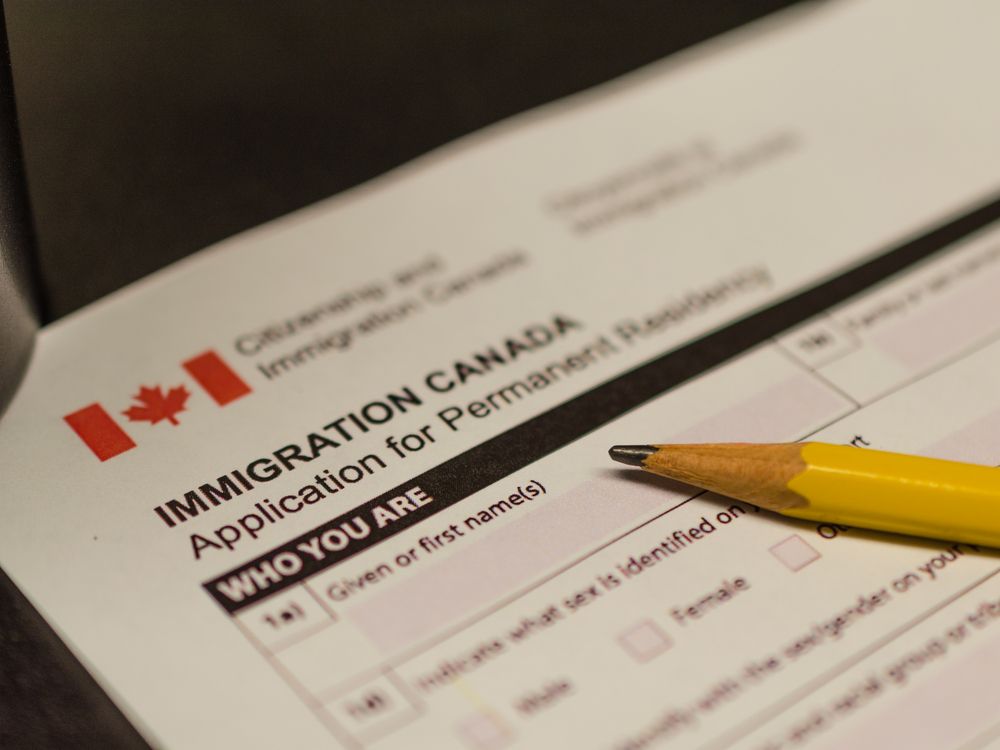
A Canada immigration application form.

In case you were still wondering whether the federal government’s attitude has changed under its new leadership — well, it hasn’t.

In a House of Commons debate earlier this week, the new Liberal immigration minister, Lena Diab, evaded questions, defended her government’s record of over-immigration and finger-wagged the Opposition for drawing a connection between housing shortages and steep population growth.

Diab had to face questions during parliamentary proceedings on the country’s main estimates. She simply refused to answer many of them, deflecting to her colleagues in other departments.

How many people have been removed from the country since December? That was a question for the public safety minister,

she said

. As for the plan to get them to go: “We have rules in this country, and we expect people to follow those rules.”

Immigration officials

estimated

in April 2024 that there were up to 500,000 people living in Canada illegally, noting that, “There are no accurate figures representing the number or composition of undocumented immigrants residing in Canada.” If only there existed a minister who could rejig the system to better track that information …

Alas, the questioning continued. Why bring in hundreds of thousands of people when

millions

of Canadians can’t find a family doctor? That’s a question for the health minister,

said Diab

, the primary person responsible for intake numbers.

Should non-permanent residents be deported if they’re charged with a crime? That’s the

business

of public safety and border services. What was the colour of MP Melissa Lantsman’s shirt, which was observable from across the aisle? Diab wouldn’t even answer that, stating only that, “The member would probably know more than me the colour of her shirt. She is wearing it.”

Diab is, at least, armed with the Liberals’ “2025–2027 Immigration Levels Plan,” which attracted hopeful applause when it was released in the fall. That plan is aimed at achieving a relative reduction in new entrants in the coming years, and thus Diab pointed to it as evidence of the government regaining control over the situation.

The overall

goal

for 2025, according to the plan, is to shrink Canada’s population by 0.2 per cent, but onlookers don’t believe it: CIBC, for example,

estimates

that we’re headed for another year 1.1 per cent growth — or roughly 460,000 more people, by my calculation — in part because many people with expiring visas are expected to stay.

Hence a

question

from Saskatoon MP Brad Redekopp: “How can you set immigration targets, minister, if you do not know how many people have left the country.” The reply: border services and the public safety department are responsible for exit numbers. It’s as if Diab views immigration as a force of nature rather than a completely human-controlled process, under the complete responsibility of elected officials in Ottawa.

And while the new plan projects less extreme inflows than the post-COVID years, they’re still uncomfortably high. It

aims

, for example, to issue 437,000 study permits in 2025. That’s more than twice the number of new international students who came to Canada in 2017 (196,400), and quadruple that of 2012 (106,250), per

Statistics Canada

.

For permanent residents, the target number for this year is now 395,000 — better than the previous 485,000, but still

vastly greater

than 2014’s 260,000. And yes, the Liberals are now looking to close some asylum-seeker loopholes with the proposed Bill C-2, but to actually pull off meaningful change, they

will need

a minister who’s actually willing to say “no.”

Whether Diab has that capacity, we’ve yet to see. Her words are little consolation for those who are currently feeling the most heat due to Canada’s rapid population growth: last year, banks were

warning

that youth unemployment was under pressure from large inflows of unskilled workers; now, even the Bank of Canada

admits

that high immigration from low-income countries has depressed wages.

“Does the minister believe that the large influx of foreign workers is depressing wages for young Canadians?” asked Sherwood Park—Fort Saskatchewan MP Garnett Genuis. “Immigration is our strength,” responded Diab.

Quebec MP Bernard Généreux noted the nationwide housing shortage in a question, which was met with

moralizing

from the minister. “Once again, it is not the fault of immigrants,” Diab said, attempting to malign the observation that immigration is linked to housing pressures.

In 2023, the country saw 240,000 housing starts — relative to 1.2 million newcomers, per the

Aristotle Foundation

. That’s one house for every five newcomers. Back in 2015, we built one home for every two-or-so new entrants. Anyone with a basic awareness of the real estate and rental markets will know that there have been real, painful consequences to this widening ratio.

Even the Liberals are aware: Diab’s department was warning in 2022 that immigration was

outpacing

construction, to the detriment of affordability, and their latest immigration plan explicitly aims to reduce the housing shortage. There’s nothing wrong with understanding the critical, and obvious, link between these two factors.

It may well be that Diab manages to fix the immigration system and bring population increases down to a more manageable level in the coming years, but we best keep our expectations low. From an attitude perspective, at least, we have more of the same.

National Post


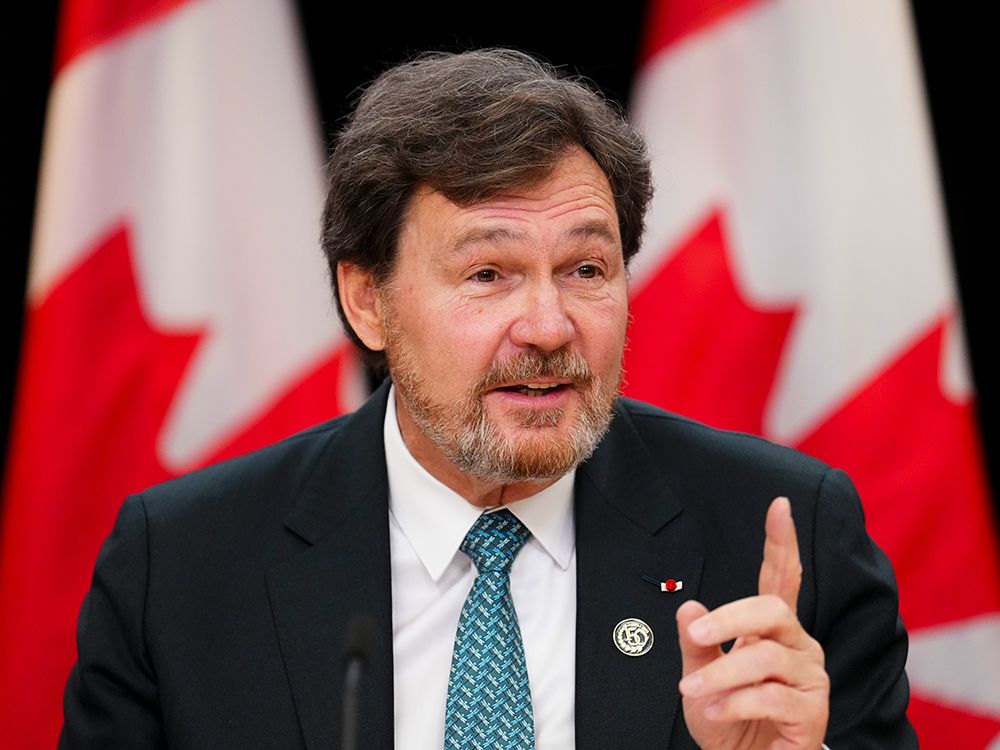
Supreme Court of Canada Chief Justice Richard Wagner.

“I don’t know who paid for that, so how can there be a conflict of interest?”

That hall-of-fame, mic-drop Canadian quote,

delivered to National Post’s Christopher Nardi this week

, came from no less an authority than the chief justice of the Supreme Court, Richard Wagner.

The thing Wagner supposedly doesn’t know who paid for is

a hideous bronze bust of himself

that sits in the entrance hall of the Supreme Court building, where it breaks at least two longstanding traditions: one, that only former chief justices get publicly busted; and two, that the busts indicate their provenance.

Let us pause here to consider the proposition Canada’s most senior jurist has placed before us, in public, as if he thought he was defending himself effectively.

We are to believe he just showed up to work one morning to find himself immortalized in bronze in the lobby of his office, and not only did he not know where this bronze bust came from, but at no point in the many months since it showed up has he bothered to

inquire

where it came from.

“The Chief Justice’s bust was donated to the Court by a donor who specifically asked to remain anonymous. For this reason, the plaque bears no mention of the donor. We have no information on the cost of the bust,” the Supreme Court’s executive legal officer Stéphanie Bachand told National Post last year. “Neither the Chief Justice nor the court’s administration know about the donor’s identity.”

If you believe that — and far be it from me to suggest you should doubt the word of a fine, upstanding, Jesuit-educated judge such as Wagner — then isn’t that a bit of a problem in itself? Canada’s decider-in-chief wasn’t even a bit curious? Can anyone just donate a grotesque likeness of a Supreme Court justice, FedEx it to the Supreme Court, and expect it to be prominently on display when they show up a week later?

It’s not as though Wagner doesn’t take ownership of the court’s other general affairs. At the same press conference Wednesday where he disavowed any knowledge of how the unexpected statuary arrived, he updated reporters on the renovation schedule for the Supreme Court building, and confirmed the court would be hearing cases in Halifax in 2027. He also wants new robes for the justices, because that was definitely the squeaky wheel that needed greasing.

Indeed, he often seems more preoccupied with the court’s general affairs and public image, both international and domestic, than he does with deciding cases.

From 2015 to 2019, the Court heard an average of 63 appeals per year

. In 2024 it heard 39.

The Supreme Court’s 2024 “Year in Review” document

delves into the court’s “outreach initiatives aimed at the public, students and educators, and legal professionals,” which efforts are apparently “essential to strengthening trust in the judicial process.”

Headings include “Inspiring elementary and secondary students,” and “Supporting judicial education in Canada and around the world.” Readers learn of the justices’ various overseas trips, including to the Association of Francophone Constitutional Courts conference in Albania, which is about as francophone as Calgary.

Wagner has no compunction about weighing in on political matters (while obviously insisting he would never do such a thing). “In an era where misinformation and disinformation are so pervasive, judges and courts must do everything they can to explain who they are and what they do. Trust in our institutions depends on it,” the court’s 2024 Year In Review document avers.

Good God, man, no it doesn’t. Most Canadians don’t know who you are, and they don’t want to. “What you do” — in theory; less, alas, in practice — is hear cases and decide them based on a coherent legal framework that can be explained to a normal Canadian human being.

So not saying, for example, that sentencing Alexandre Bissonnette to a lifetime in prison without parole for slaughtering six parishioners at the Islamic Cultural Centre in Quebec City would

“bring the administration of justice into disrepute,”

when it would do precisely the opposite.

This isn’t a partisan thing. Conservative former prime minister Stephen Harper appointed Wagner to the Court. Liberal former prime minister Justin Trudeau made him chief justice. It was a group error. How do we fix it?

National Post

cselley@postmedia.com

Get more deep-dive National Post political coverage and analysis in your inbox with the Political Hack newsletter, where Ottawa bureau chief Stuart Thomson and political analyst Tasha Kheiriddin get at what’s really going on behind the scenes on Parliament Hill every Wednesday and Friday, exclusively for subscribers. Sign up here.


The words

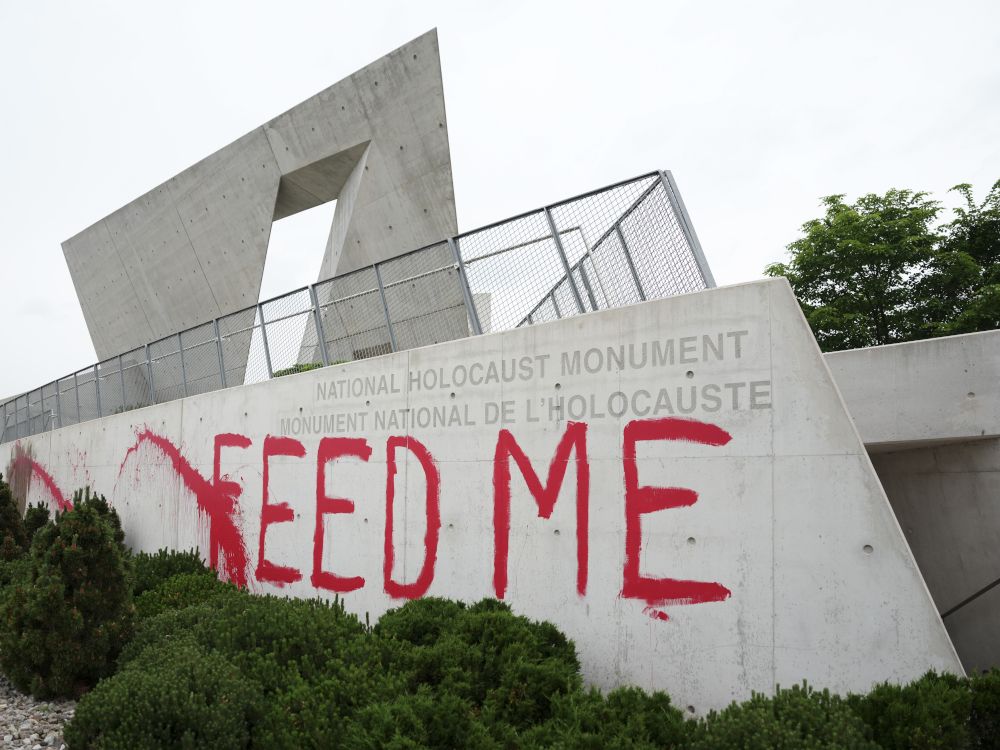
This week, Canada’s National Holocaust Monument in Ottawa was desecrated — its walls graffitied with the words “Feed me,” presumably a reference to Gaza and likely scrawled by a pro-Hamas activist.

I vividly recall the day the monument was unveiled. As I walked through it for the first time, I remember the pride, the emotion and the sacred responsibility felt by the Holocaust survivors and their descendants who worked tirelessly to ensure Canada would have a solemn space to remember the six-million Jews who were murdered.

But the monument was never intended to be just a structure of stone and steel. It was meant to be a living reminder of what unchecked antisemitism can lead to. It was meant to warn future generations of the consequences of silence, complicity and hate. And yet, here we are.

The defacement of this sacred site shocked the nation. But what shocked me more was the ease with which political leaders rushed to condemn it. Statements flowed swiftly and predictably. Everyone, it seems, is passionate and eager to stand up for dead Jews. But us live ones are calling and no one is answering.

I appreciated Prime Minister

Mark Carney’s tweet

that he is “appalled by the National Holocaust Memorial being vandalized by graffiti.” Two days prior, after visiting the Nova Exhibition in Toronto — a powerful tribute to the victims of October 7 —

Carney wrote

, “We can’t look away from this hate, or from the rise in antisemitism we’ve seen in Canada since. We will fight to protect Jewish communities at home.”

Both the Holocaust monument and the Nova exhibit are a warning to humanity. We refuse to be future statistics. We are living Jews here and now — and on behalf of our community, I am still waiting for a reply to my personal letter to the prime minister sent on May 29, just two days after an antisemitic riot broke out outside our organization’s benefit event in Toronto.

In that letter, I described the very hatred he now condemns: “Some attendees, deeply shaken, said the hatred reminded them of the stories their families told about Europe in the 1930s. It started the same way: mobs denouncing Jews, attempting to isolate them from public life, striking fear into their hearts. This isn’t a page from a history book. It is happening at Jewish events every day on Canadian soil.”

A close friend of mine, William Friedman, a prominent lawyer who contributed so much to this nation, and the child of Holocaust survivors, also wrote to Carney. His letter was deeply personal: “My parents survived Auschwitz. My baby sister, just a toddler, did not.… I have always been a proud Jewish-Canadian — until now. For the first time in my life, I am afraid for what it means to be a Jew in Canada.”

The response? A perfunctory note stating that his concerns should be directed to Foreign Affairs Minister Anita Anand — the same minister who, not long ago, falsely

accused Israel

of using food as a weapon of war. She, too, condemned the desecration of the Holocaust monument. But you cannot condemn antisemitism while also inviting it through false accusations levelled against the Jewish state.

Though their words are appreciated, what we need now is action. This week, the Abraham Global Peace Initiative released a working paper proposing the creation of a homeland security task force — a permanent body headquartered in Ottawa that would be able to deploy rapidly to protect Jewish institutions and events, and work alongside police to ensure real-time security and deterrence.

The idea is not radical. It is common sense. And it is necessary.

The Holocaust monument reminds us where antisemitism can lead if left unchecked. If we ignore the warning signs now, we will fail the very lesson that monument was built to teach. I remain hopeful, because I believe that Canada is better than this. I believe we can rise to the occasion, that we can look beyond politics and remember that the measure of a nation lies in how it protects its most vulnerable.

We must not only remember the past. We must protect the present.

National Post

Avi Benlolo is CEO and chairman of the Abraham Global Peace Initiative.


Of the nearly 177,000 cataract procedures performed in Ontario in 2023–24, 143,800 were done in public hospitals.

The Ontario government’s 2023 decision to use

privately owned clinics to boost cataract-surgery capacity

was one of the smartest health-care moves the province has made. This common eye surgery is a simple procedure that does not require a hospital setting and the clinics are faster and more efficient because they concentrate on just one thing.

The new approach allowed 32,000 extra cataract surgeries in 2023–24 the Ontario Ministry of Health reports, and the number of procedures is expected to double this year. Despite that, the Ontario Health Coalition (OHC) is doing everything it can to discredit and undermine the clinics.

The coalition bills itself as a grassroots group whose “primary goal is to protect and improve our public health care system,” but in reality it is against anything it considers privatization, and uses overblown rhetoric to make its case.

To listen to the health coalition talk, clinic-based cataract surgery in Ontario is little more than a scam designed to bilk elderly patients.

Coalition executive director

Natalie Mehra says

that despite cataract surgery being covered by OHIP, “elderly patients are being required to pay increasingly outrageous amounts of money for their surgeries in violation of our medicare laws that explicitly make such charges illegal.”

“Essentially it’s like there isn’t public medicare when it comes to eye surgery in Ontario. It’s gone,” she claims.

That last statement would be alarming, if it was true, but it’s not. Not even close.

Cataract surgery is the most common surgery in Canada. In Ontario in 2023–24, almost 177,000 people received the procedure that replaces an age-clouded lens with a clear artificial lens. Of those procedures, 143,800 were done in public hospitals.

Public eye-care in Ontario is not gone, it’s just basic, like most things the public Ontario Health Insurance Plan provides. The government covers the cost of the surgery, ultrasound measurement of the eye and a standard lens.

Rich Weinstein, chair of the Eye Physicians and Surgeons of Ontario (EPSO), says the standard lens is all that’s required if a patient’s only vision problem is cataracts. He says laser measurement of the eye gives a more accurate prescription for the required lens. The province doesn’t cover that and it typically costs about $300. The patient has the choice whether to get the laser measurement.

The EPSO website provides useful

information on cataract surgery and lens choices

.

Cost and complexity enter the picture when a patient wants to make the perfectly reasonable choice to correct not only for cataracts, but for other vision-blurring conditions like astigmatism. The lenses that fix these problems can cost from $800 to $2,575 per eye, depending on type.

The government does not cover those other lenses on the premise that OHIP’s responsibility is to prevent blindness, not to perfect everyone’s vision. Just as the government doesn’t cover the cost of glasses, it doesn’t cover lenses for non-cataract vision issues.

The health coalition seems offended that patients are offered these choices, but what business is it of theirs? People can spend money on enhanced lenses to fix their vision problems or they can spend money on glasses. The lens choice doesn’t involve any extra cost to the public system.

In the view of hardcore proponents of public health care, all care must be provided directly by government, not a penny can change hands directly, and everyone should receive exactly the level of care approved by government and nothing more. It’s an inflexible, out-of-date approach that denies patients the right to make choices for themselves.

The OHC would like to see eye surgeries take place only in hospitals, or at least be conducted under hospital supervision, but the health coalition’s vision of good, honest doctors working in hospitals versus greedy, dishonest doctors working in privately owned clinics doesn’t pass the reality test.

Doctors who work in clinics typically do work in hospitals, too. The more expensive lenses that fix more eye problems are available to patients getting their work done in hospitals, not just in clinics.

The OHC has rounded up 50 patients who say they were sold lenses they didn’t require, or even were charged for surgeries that OHIP covers. The coalition will lodge formal protests this week with the provincial and federal governments.

Perhaps there is substance to these complaints. If so, the health coalition should forward them to the College of Physicians and Surgeons of Ontario for investigation. Mehra says some patients feel intimidated by that process. Maybe the OHC could help them. That would be doing something useful.

What isn’t useful is attempting to undermine the cataract-surgery clinic program because the service is provided by privately owned businesses. The typical doctor’s office is privately owned, as are many of the province’s diagnostic clinics.

Unfortunately, ideology blinds some to the advantages of private-sector health care involvement, even the extremely mild version offered in Ontario.

National Post

randalldenley1@gmail.com

Get more deep-dive National Post political coverage and analysis in your inbox with the Political Hack newsletter, where Ottawa bureau chief Stuart Thomson and political analyst Tasha Kheiriddin get at what’s really going on behind the scenes on Parliament Hill every Wednesday and Friday, exclusively for subscribers. Sign up here.