An “Anti-Canada Day” barbeque and fundraiser will be
hosted
in Montreal on July 1 by the McGill students’ union, a group called the “Palestinian Feminist Collective” and other equally worthy student activist groups.
They form one of many cancerous cells of post-secondary students who spend most of their energy trying to undermine and demoralize everyone around them.
To McGill’s credit, it moved to
cut ties
with the students’ union in April after it helped to lead a storming of the campus to protest the Israeli government and western support for it. Nonetheless, academia has much to answer for after spending years fostering this toxic political climate.
Universities are packed with derision and outright slander for those who make higher education possible. Businessmen are portrayed as greedy,
exploitative
capitalists
, while blue-collar labourers are portrayed as akin to
racist
zoo animals that must be studied as such.
Those same people help ensure that public university tuition in Canada is generously affordable by covering the lion’s share of the costs through taxpayer subsidies.
At McGill, for example, a four-year undergraduate degree will set a young Canadian student or their family back by
C$22,000
from Quebec, or C$48,000 if they come from outside the province. Even paying international student fees, an American who attends the University of Victoria will
pay C$150,000,
far less than they would
fork over
at the University of Oregon, which would cost C$188,000 for state residents or C$349,000 for anyone else.
Canadian students who go abroad for their education will fare far worse. A three-year undergraduate degree at Bangor University in Wales, equivalent to a four-year degree here, for non-British students costs about
£60,000
, or about C$111,000. The University of Florida projects that out-of-state students will pay a little more than
US$183,000
for their four-year degrees, which is roughly $250,000 in Canadian dollars.
Earning an undergraduate degree in Canada is a bargain, but those who make that possible only get scorn and humiliation in return.
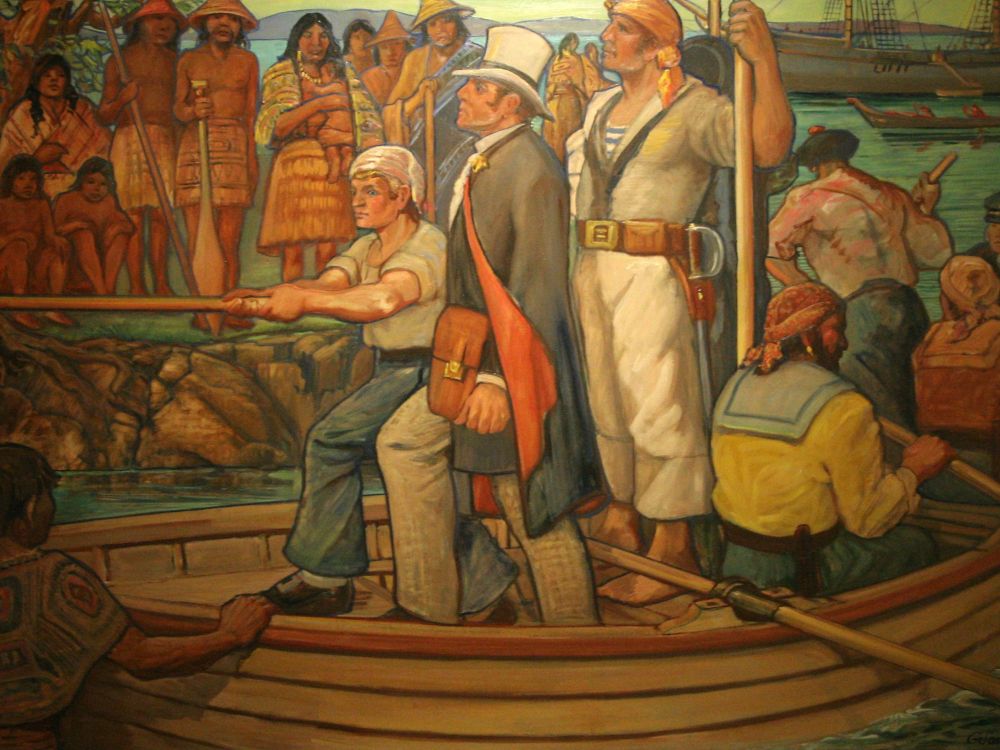
The generations that arrived in the colonial era laid the bricks of places like Trinity College in Toronto and Dalhousie in Halifax, which were foundational to the growth of Canadian higher education. Today, their memory is filed under the category of “settler.”
“Settlers” can never be a positive force in the asinine racial theories of decolonial ideology, which have infiltrated public discourse everywhere. The existence of Canada has been a good thing for the world, however, and nothing will change the fact that it is a colonial country founded by settlers.
It is not that injustice was absent from Canadian history — far from it. Grave offences have been inflicted by settlers and their descendents, both upon Indigenous peoples and each other. However, injustice is not the only chapter in Canada’s past.
Alongside it is hope, enterprise and the dream of creating a strong country with a unique people in North America. Millions have found safety and a good life here due to the efforts of countless others, from the colonial era until the current day.
None of that was by accident, but by the deliberate decisions made by men like
James McGill
and Egerton Ryerson. Both understood the value of good education to help build a society that more than 40 million people enjoy in Canada today.
Beyond accreditation, universities are meant to be places where privileged youth are also taught to be responsible and virtuous citizens, but this task has been mostly ditched in favour of indoctrination.
Instead, university culture now breeds a climate of radical national self-hatred, in which bad ideas are spoon-fed to native-born and immigrant students. The country is routinely portrayed as little more than a
devilish
capitalist
dystopia.
Many academics even call themselves “settlers,” as if their self-identification would save them were there ever a violent revolution.
The resulting student radicals destroy their own campuses, intoxicated by the ideas of revolutionary Marxists like Frantz Fanon. For context, Fanon was a
bloodthirsty militant
who
condoned the murder
of colonizers as a means of psychologically liberating the colonized.
“At the level of individuals, violence is a cleansing force. It frees the native from his inferiority complex and from his despair and inaction; it makes him fearless and restores his self‑respect,”
wrote
Fanon.
In February, the University of Toronto held a “
100th Year Anniversary Symposium
” to celebrate the man. To celebrate his memory is a little more than subsidized nihilism.
Today, those so-called colonizers would be the Canadians whose tax dollars pay for hosting such chic obscenities. Ryerson’s statue at the university that formerly bore his name was destroyed in 2021 on the
false charge
that he was the “architect” of the Canadian residential school system, which did not begin until many years after his death.
The statue of McGill’s namesake
was removed
in 2021, a year after an unremarkable
student petition
declared that “Any tree would be better than looking at James McGill.” That same campus was overrun and
smashed up
by an anti-Israeli mob in April, desperately trying to pretend that the lecture halls were Tel Aviv.
There is no worthiness to any of it, only the desire of selfish people to behave like political exhibitionists and imitate the revolts of dead, murderous men. Educators who understood that part of their duty is to fashion dutiful and good Canadians would have gone a long way in preventing this.
Instead of continuing to fund the cultural, social and political disintegration of the country, Canadians should demand true reform as part of a renewed social contract. This includes a debate on how public universities are funded and how the money is spent.
At their best, universities unite people and work towards a better civilization. There are many professors and thinkers who strive for this, serving as
leading voices
on modern problems like the
affordability crisis
.
They exemplify what academia should be. If only more of their counterparts would follow suit
The majority of Canadians work for a living and are devoted to the nation’s well-being. They deserve universities that uplift the country, not break it apart.
National Post