LP_468x60
on-the-record-468x60-white

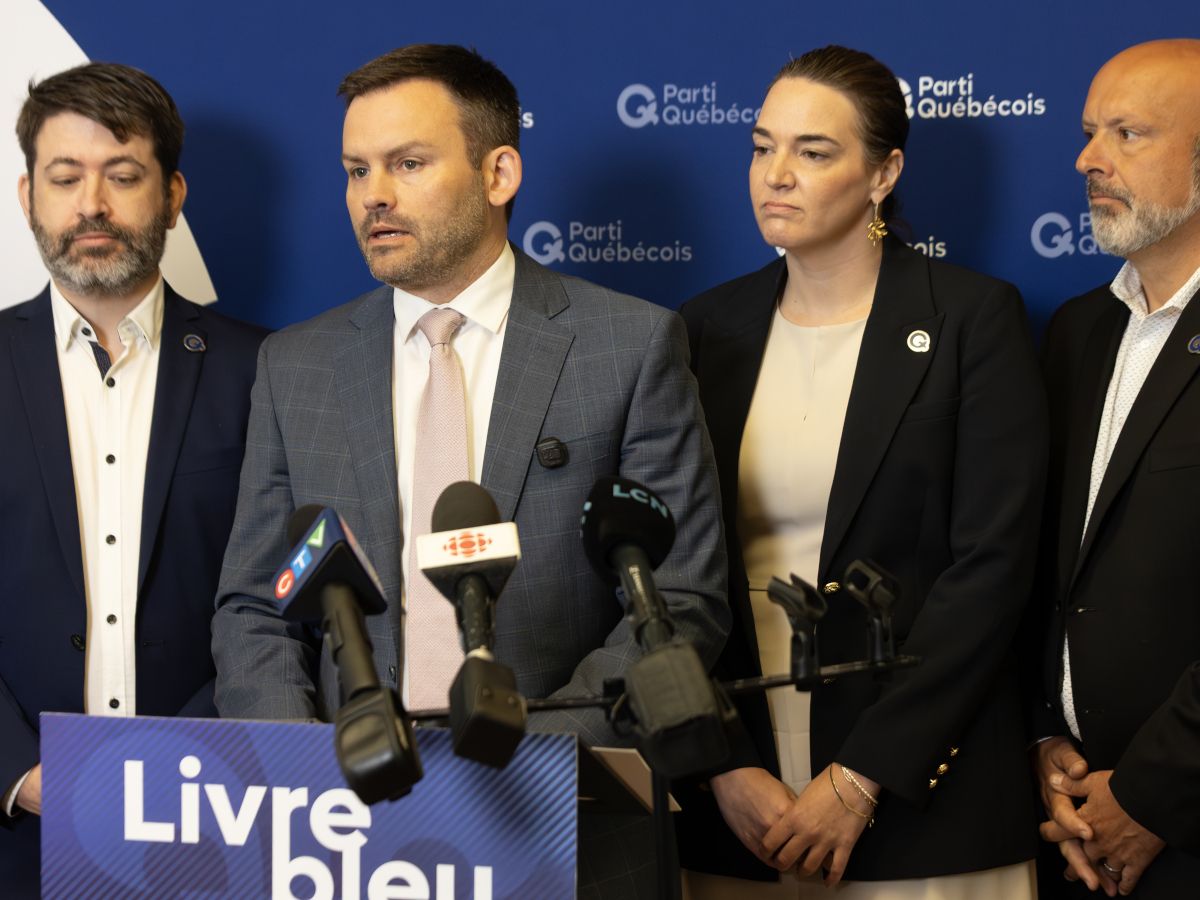
Parti Quebecois Leader Paul St-Pierre Plamondon, second from left, speaks about the PQ’s new independence playbook, Livre Bleu, in Montreal on June 23.

The following is an open letter written by Parti Québécois Leader Paul St-Pierre Plamondon to Quebec’s English-speaking population.

To all English-speaking Quebecers,

I am writing to you today with a sense of hope and an open mind at the dawn of a pivotal election campaign.

While we may not always agree on Quebec’s constitutional future, we share something fundamental: a deep attachment to this nation, its democratic institutions and the quality of life we want to preserve and strengthen for future generations. That is why I believe the election ahead is of critical importance for our shared future.

Because Quebec certainly deserves better than what we’ve seen in the last eight years.

We must state it plainly and without hesitation: we’ve gone through one of the worst regressions in quality of life in Quebec’s recent history. Quebecers know it, and they see it in their daily lives. Their purchasing power has vanished, home ownership has become an increasingly distant dream for too many young people. Our health-care and education systems are struggling to provide the quality of services that our citizens have every right to expect. Security and tidiness have suddenly become major issues in our cities and the number of homeless people has exploded. Meanwhile, our infrastructure projects make headlines only because of soaring costs and endless delays. While the government neglected road maintenance, schools and hospitals, it has normalized the waste of public funds through scandals like SAAQclic and financial debacles such as Northvolt. A part of that decline is connected to the ideological beliefs at the federal level that brought uncontrolled and unlimited immigration during those eight years, yet the Coalition Avenir Québec (CAQ) chose to stand by as a resigned spectator, leading to the consequences we see today.

Quebecers were promised a wind of “change” by the CAQ. Instead, what we have witnessed is not even the status quo — it is decline. We cannot blame citizens for losing faith in the state when, year after year, they pay more and receive less.

I am convinced that we all share this assessment. Over the past months, many Anglo-Quebecers have told me they would vote for the Parti Québécois (PQ) for the first time in their lives, simply because they agree with our stances on a vast majority issues. Underneath that pledge is also the fact the Anglos don’t fear the PQ anymore, since Anglos and Francos share the same realities and concerns. Public discourse has too often encouraged the mistaken belief that the concerns of French-speaking and English-speaking Quebecers are fundamentally at odds. Nothing could be further from the truth. We are all in the same boat. We live under the same institutions. We pay the same taxes. We deserve the same high-quality public services and individual financial well-being.

Together, we have a shared responsibility to reject decline. We would be wrong to accept a Quebec that has grown accustomed to doubting itself, to distrusting its institutions or to settling for less. We would be wrong to allow our ambitions to shrink. Above all, we would be wrong to believe that our interests somehow diverge simply because of the language we speak at home.

The Parti Québécois is the party of all Quebecers. It believes Quebecers should govern themselves. But that project has never and will never be a project that excludes the English-speaking minority. On the contrary, its purpose is to build a new model founded on social harmony and the idea that we are all Quebecers. It seeks to give all Quebecers the ability to make their own decisions, to shape their own future and to build a government that is more effective, and more accountable.

As we clearly stated in our blue book, the country of Quebec that we are building is one where the rights of the historic English-speaking minority will be fully protected. Its institutions will continue to exist and be called on to play their essential role. The Parti Québécois will even ensure that the rights currently enjoyed by the English-speaking community are entrenched in the constitution.

In the years ahead, if Quebecers so choose, we will collectively resume our reflection on the place Quebec wishes to occupy within Canada and within the world, and we will decide that question democratically. But that conversation should not put aside the numerous urgent issues before us in this upcoming election

Who can Quebecers trust to get our nation back on track? Who can embody the change in the way we govern that we so desperately need?

Can we trust the CAQ to restore our public services after they have deteriorated under its leadership? Can we trust the party to make us wealthier when life has never been more expensive? Can we seriously believe that a government that promised so much and delivered so little will suddenly solve the very problems it allowed to flourish?

The real ballot question this upcoming October is who can form a good government for Quebec: a competent government, an honest government, a government prepared to tell the truth about the challenges we face and then hit the ground running to solve them.

It is in that spirit that I extend my hand to you. Let us take an honest look at what we have in common. And when others once again seek to pit French-speaking and English-speaking Quebecers against one another, let us remember the simple, enduring truth that former premier Lucien Bouchard once expressed: “It’s good to know there is one unalterable truth we can cling onto: the knowledge that in the end we are all Quebecers. Nous sommes tous Québécois. We all love Quebec — because Quebec is our home.”

National Post


MONTRÉAL (Québec) – 21 février 2017 – Des enfants jouent dans la neige dans une garderie du centre-ville de Montréal, le mardi 21 février 2017. (John Mahoney / MONTREAL GAZETTE)

Lisez la version française ici.

In 1997, Quebec began building its network of centres de la petite enfance, or CPE daycares. The province promised affordable educational child care on broadly accessible terms. This model, unique across North America, drew praise for increasing mothers’ participation in the labour force and improving some outcomes among children from disadvantaged families. In recent years, the federal government’s Canada-Wide Early Learning and Child Care ( CWELCC ) and New York mayor Zohran Mamdani both openly cited Quebec’s model as a source of inspiration.

However, its reputation has often obscured persistent shortages and inequitable support of parental choices. By directing funding to child-care centres instead of parents, Quebec’s system is neither universal nor equitable — two of its core conceits.

Although the Quebec government wrote into law that every child had the “right” to quality child-care services, in nearly three decades the supply of subsidized child-care spots has never matched the demand. By heavily reducing costs through government funding, the policy creates an ever-growing demand: even though new spots are created almost every year, supply has failed to catch up. At the moment, over 30,600 children are still on a government waiting list.

Without major change, it seems very unlikely that supply will catch up to the demand. The government requires two educators out of three to be certified, and yet the number of certified early childhood educators who graduate in Quebec has steeply declined over the last few years. The system is increasingly failing to meet its own self-imposed quality requirements, and exposing precisely why it cannot be made universal. This permanent shortage means some families will always be left behind.

Workforce issues aren’t the only challenge. The landscape of child care in Quebec reveals a three-tiered system with fundamental inequities. About half of children aged 1-4 attend a CPE or subsidized child care centre, publicly funded at a rate of between $60 and $70 per space per day. Around 30 per cent attend a licensed home-based centre or an unsubsidized centre covered by a tax credit, boasting public support of about $35 per space per day. The remaining children are cared for by parents, relatives or other informal caregivers. Their families receive no comparable child-care subsidy.

Because the subsidy parents receive for child care depends on the option they choose, securing a subsidized spot feels like winning the lottery: it represents over $8,000 more in government support versus what a parent using an unsubsidized centre gets. As for families who prefer to take care of their children themselves, they receive about $18,000 less per child every year in transfers than a family which has a spot in a CPE — despite the fact they aren’t burdening the system.

Regardless of which type of space you desire or end up securing, there’s a greater flaw built into the system. Quebec’s “centre-first” child care policy ignores what parents of young children want the most: time with their children. A poll conducted by the Quebec government concluded that 40 per cent of parents would like to work fewer hours in order to spend more time with their families. When polled on work-life balance, parents also reply that what they desire the most is more vacation time and a more flexible schedule.

A policy whose sole focus is subsidizing time spent in a child care centre disincentivizes family time. It’s no surprise, then, that 85 per cent of preschool-aged children in child care attend for more than 35 hours per week, yet spending so many hours in child care at such a young age can harm the development of social skills and emotional maturity. This is the result of the lack of flexibility and options for parents inherent in the system.

Ever since the federal government created its child-care plan based on the Quebec model, the same issues have appeared across the country. Upfront costs for child care have decreased while waitlists have gone up, and the drive to increase supply has reduced the proportion of certified early childhood educators, possibly harming quality . All Canadian provinces now have a system that funds only the choices of a select few based on an overly narrow definition of child care.

It doesn’t have to be this way. It is possible to offer an alternative for parents who cannot access or do not desire a publicly funded child-care spot. Finland offers one possible approach. Alongside publicly funded child-care services, its Child Home Care Allowance supports eligible parents who care for a young child at home. The policy recognizes that families differ in their circumstances and preferences.

As Quebec, and now Canada’s, examples prove, channeling funding exclusively to centres creates a demand that is never met and leads to inequalities among families. Child-care policy must do better to leave no child behind.

National Post

Étienne-Alexandre Beauregard is an author and researcher at Cardus. Between 2022 and 2025, he was a speechwriter and strategic planning advisor in the office of the Premier of Québec. The English version of his book Anti-Civilization will be released in the fall and is now available for pre-order through Sutherland House.


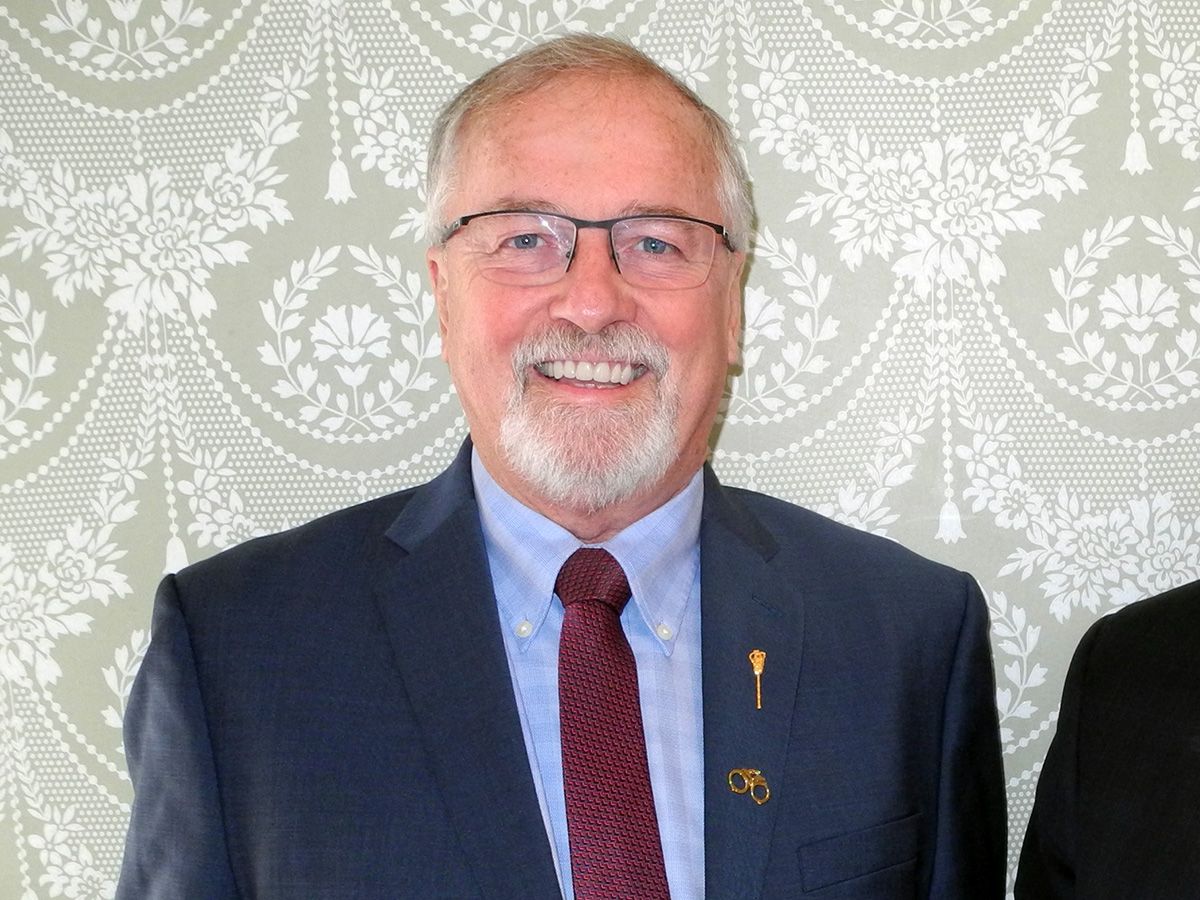
Saskatchewan MLA Doug Steele and former MLA Hugh Nerlien, pictured, helped free a Bangladeshi woman who was a victim of human trafficking.

A Saskatchewan court has convicted two men of human trafficking in an unprecedented case that saw two MLAs intervene to free a Bangladeshi woman from modern slavery.

Last week, Saskatchewan’s Court of King’s Bench convicted two men, a 55-year-old and a 44-year-old, of forcing a Bangladeshi national to work long hours in rural restaurants for little to no pay, and keeping her in conditions the court described as “squalid.” The 44-year-old also coerced the woman into sex on multiple occasions.

“I do not have any reasonable doubt about the guilt of either,” Judge Miguel Martinez wrote in the Aug. 7 decision convicting both men of human trafficking, according a report by SaskToday. The 44-year-old was additionally convicted of three counts of sexual assault.

The victim’s identity is protected by a publication ban.

The nearly year-and-a-half-long trial garnered outsized attention in Saskatchewan due in part to the central involvement of two provincial politicians who mounted a covert campaign to contact and ultimately rescue the woman after she reached out for help.

Doug Steele is a veteran grain farmer who became a Saskatchewan Party MLA in 2016.

He first became acquainted with the complainant in 2022 after she contacted his Gull Lake, Sask., constituency office and tried to explain, in broken English, that she was being exploited by the owners of a diner.

Steele was a frequent patron at the diner, and had reportedly handed his business card to her upon noticing that she seemed distant and forlorn, urging her to get in touch with any problems.

“This was outside the kind of case we usually deal with,” Steele testified last year, according to a report by Golden West Broadcasting. “But once she called us, I felt a responsibility. She was alone out there.”

When the woman was subsequently shuffled out of town to another restaurant in Saskatchewan, this led to Steele recruiting a second MLA, the since-retired Hugh Nerlien.

Nerlien visited the restaurant and clandestinely handed the woman a printed-out list of social services contacts.

“Clandestinely, I passed the note to her with my business card,” Nerlien testified last May, according to CTV.

Nerlien said the woman warned him that if her boss inquired what the list contained, he was to say it was “garbage.”

When the woman was moved yet again, to another restaurant, Steele arranged a March 23, 2023 operation that involved a constituency assistant intercepting the woman in her unfinished basement accommodations and driving her to a women’s shelter.

“The downstairs was a wooden staircase, which lead to an unframed cement floor basement, which was cold, with very little lighting. In that basement there was a shower that did not have walls around … shower didn’t have a curtain on it either,” the assistant, Sean Checkley, told the court last year according to a report by CTV.

Only then did staff at the shelter involve RCMP, who opened an investigation into the two men.

Last September, the Saskatchewan NDP criticized Steele’s involvement in the case, and even called for his removal as Government Caucus Chair under Saskatchewan Premier Scott Moe.

“He didn’t contact the police or authorities despite admitting to fearing for her safety. He kept no record of casework, documenting his interactions with her, and he solicited assistance from unrelated parties like another MLA and a political staffer instead of actually taking things to the RCMP,” Brittney Senger, the NDP’s Shadow Minister for Ethics & Democracy, said at the time .

The woman was described in court proceedings as a Bangladeshi national who came to Toronto in 2022 on a visitor’s visa with the intention of obtaining a work permit to stay permanently. According to court testimony, the 55-year-old recruited the woman and brought her to Saskatchewan, where she mostly worked without any kind of work permit.

The case is the first of its kind to ever hit a Saskatchewan court, a fact in keeping with a generalized increase in human trafficking cases all across the country.

In December, an analysis by Statistics Canada found that police-reported human trafficking incidents have tripled in just the last 10 years, rising from about 200 in 2014 to 600 by 2024.

In a press briefing after the case’s final arguments, Crown prosecutor Leslie Dunning said it was the first instance of employment trafficking to be tried in Saskatchewan.

“This case certainly sets a precedent for human trafficking cases because we don’t have written decisions in our province,” she said.

Human trafficking trials are so rare in Saskatchewan that all the case precedent had to be cited from decisions in Ontario.

Dunning added that she hoped the result “hopefully would be a deterrent” to any other human traffickers.


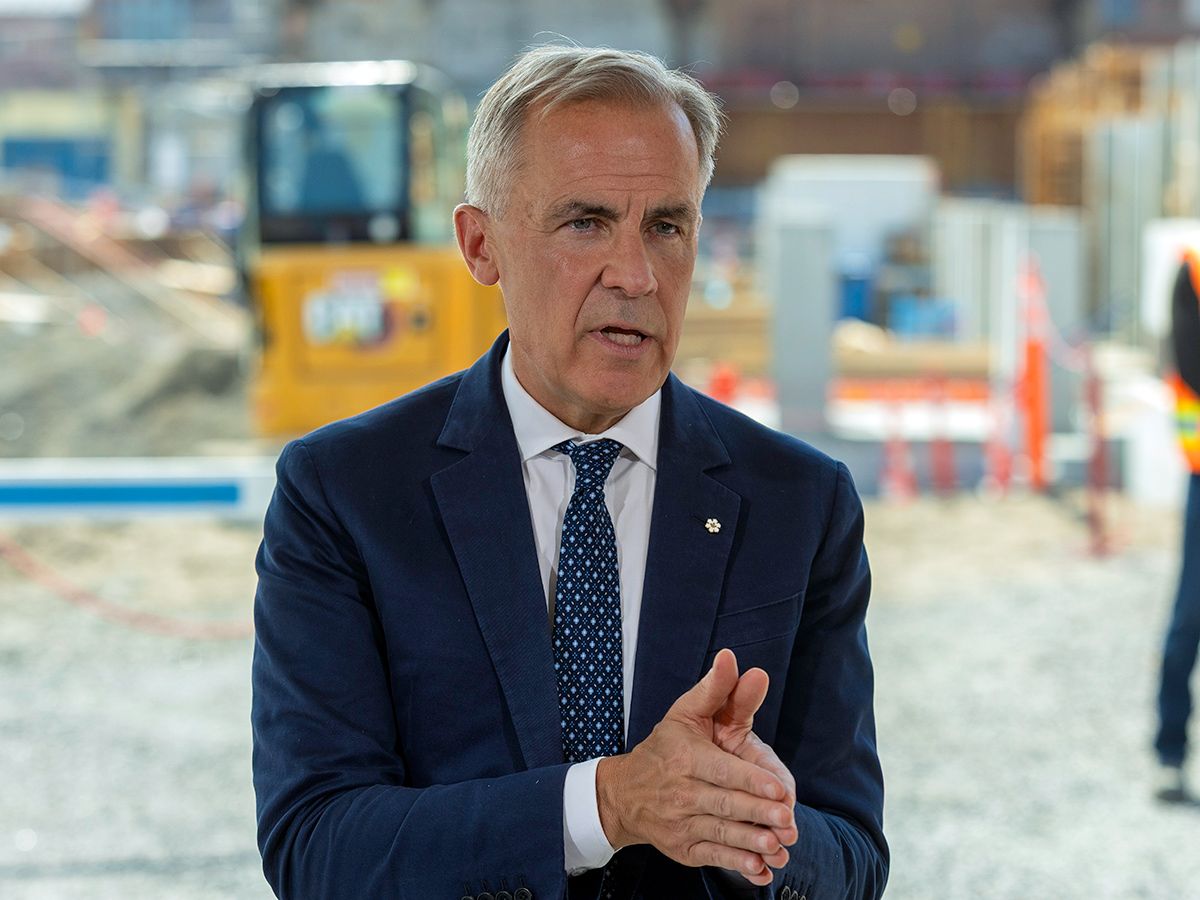
Prime Minister Mark Carney speaks during a news conference at the Rio Tinto aluminum smelter in Saguenay, Que., Thursday August 6, 2026. This content is reserved for subscribers.


Ontario Liberal leadership candidates, from left, top row: Lee Fairclough, Eric Lombardi and Dylan Marando. Bottom row: Navdeep Bains and Stephanie Bowman.

The campaign to select the next leader of the Ontario Liberal Party takes a significant step forward on Monday night with the first leadership debate. Five candidates are seeking to become the fourth permanent leader of the provincial Liberals since Premier Doug Ford became leader of the Progressive Conservatives. Each of the previous three — Kathleen Wynne, Steven Del Duca and Bonnie Crombie — lost an election to Ford and resigned the leadership. The debate is taking place at a studio in Brampton and will be livestreamed on YouTube at 7 p.m. on Monday night. You can watch it live at the top of this post.

Navdeep Bains, a former cabinet minister in the Trudeau government, is leading the fundraising race and is thought to be the favoured candidate of party insiders. Bains retired from politics in 2021 to work in the private sector and was most recently an executive at Rogers Communications.

Stephanie Bowman (Don Valley West) and Lee Fairclough (Etobicoke-Lakeshore) are both members of provincial Parliament, which means neither would have to wait for the opportunity to win a seat at the Ontario legislature in a byelection. Del Duca and Crombie both held the Liberal leadership while not a sitting MPP, and both struggled to make an impression on voters before a general election campaign.

Neither Bowman, first elected in 2022, or Fairclough, first elected last year, are long-time MPPs, but party members will have to weigh whether having a seat at the legislature is a significant asset given the party’s recent electoral struggles.

Eric Lombardi , a financial technology engineer and housing advocate, and Liberal policy advisor Dylan Marando round out the field.

Each candidate will make an opening statement and there will be sections on a number of policy areas.

The leadership race comes after a spring session at Queen’s Park that was dominated by criticism of the premier’s ill-fated purchase of a private jet for his travels. (It was quickly sold back to Bombardier after a public outcry.) Public polls have shown a slipping of support for Ford and the PCs, but the premier insists that internal numbers suggest his voters are still behind him . When reports first surfaced in the spring that Bains was considering a return to politics, Ford said he didn’t mind who the Liberals ultimately selected. “You can run Mickey Mouse against me, or Donald Duck, I don’t care,” Ford said. Fifteen years of Liberal governance in Ontario were ended in 2018 when Ford defeated Wynne.

 Ontario Liberal leadership candidates, from left, top row: Lee Fairclough, Eric Lombardi and Dylan Marando. Bottom row: Navdeep Bains and Stephanie Bowman.

The campaign has already generated mild controvers y when Nate Erskine-Smith , a federal MP at the time, announced plans to contest a provincial byelection in Scarborough as a first step toward seeking the party leadership. He lost a close race for the nomination and challenged the results, but the party accepted the candidacy of businessman Ahsanul Hafiz after an appeal.

The Liberals, who despite the lack of a full-time leader are ahead of the official-opposition NDP in some polls, will make their selection on Nov. 21. Each party member will vote using a ranked ballot in a one-member, one-vote contest.


Iranian-made Zolfaghar missiles are displayed in Azadi Square in Tehran on Aug. 2.

I try not to think too much about the current president of the United States — it’s just too depressing — but it’s been hard to look away as he tries to wriggle his way out of the war he started in Iran.

Donald Trump, the U.S. commander-in-chief and leader of the free world, has other things he’d rather be doing, mostly to do with the real estate world he appears to miss badly.

He’s dug up the backyard at the White House and has a ballroom half built but has once again been ordered to halt by a judge. He’s got a new helipad underway a few steps away but is demanding changes because the lawn evidently slopes in a displeasing manner. He’s mad at D.C. U.S. Attorney Jeanine Pirro for admitting his reflecting pool project wasn’t sabotaged by Olympic canoeist David Hearn but was bungled by his own administration, and he’s determined to push ahead with renovations to a local public golf course despite pushback from locals concerned about the destruction of biking and hiking trails and a grove of cherry trees.

With all this important business at hand — fussing about endlessly over building projects he can mostly see from his window — the war he launched keeps getting in the way. He’s retreated on pretty much every aim he set when he engineered the conflict, yet the remnants of the regime he pledged to obliterate won’t let him quit and go home to play with his bulldozers.

The latest we’ve heard is that he’s willing to call it quits in return for a few token concessions. He wants Iran’s leaders to promise they’ll let ships pass through the Strait of Hormuz more or less unmolested, and without charging any fees. That’s how it worked before he started blowing up their country, and most likely still would work if he’d keep the missiles in check, so it’s not a lot to ask. Given the carnage, the deaths, the destruction and the disruption the war caused you could say it’s the absolute minimum they could do. Trump could pretend he’d won the dispute, wipe his hands of the mess he made and get back to things he understands.

But the regime won’t co-operate.

It’s impossible to admire Iran’s leadership, brutal murderers that they are, but it has to be admitted they’ve taken the measure of Donald Trump and are employing that understanding with consummate skill.

America’s first president would have understood Tehran’s thinking when the U.S. attacks began in February. George Washington knew, 250 years ago, that the way to defeat the British was simply to outlast them. Survival was victory. Like those revolutionaries, Iran’s task was to avoid a direct confrontation with the much stronger enemy, enduring the onslaught until U.S. authorities tired of the battle and began seeking an exit.

It took eight years to wear down the British in an age when transport and communications took much longer; today’s administration lacks that level of wisdom and grit. The Trump White House is ready to call it quits after less than six months.

The lack of resolve was foreseeable from the start. Recent U.S. history is littered with examples of presidents ordering up conflicts with no apparent idea of how to eventually get out. The last time the U.S. exited a major military confrontation with a well thought-out and effective plan for the aftermath was three-quarters of a century ago when it helped rebuild Europe on a democratic basis out of the ashes of the Second World War.

Since then, presidents have sent off troops to a hodgepodge of conflicts from Korea to Vietnam to Iraq to Afghanistan — and now to Iran — only to depart years later after catastrophic loss of life and little gain to show for it.

Again and again, the United States set off with no real understanding of the country, the people or the culture it was attacking. Until the very end it failed to understand North Vietnam’s willingness to sacrifice lives to whatever extent required. It entered Iraq expecting to be hailed as liberators, with a vague plan to somehow Americanize a country with 6,000 years of non-democratic rule. It spent 20 years seeking to rebuild Afghanistan after 9/11, only to have the Taliban return just two weeks after its chaotic departure.

In all those cases, their opponents were happy just to see U.S. forces leave. No one thought of asking concessions: just go, and take your western ideas with you. In Iran things look different: the surviving powers want America to pay a price for the turmoil it set loose.

There’s no more talk in Washington of Iran’s leadership being eliminated, its people freed from the yoke of repression or an end brought to decades of support for regional terrorist groups. The latest plan would see Oman and Iran sharing management of the strait, enabling ships to pass as long as they stuck to fixed routes. No tolls would be charged, but the two countries would share revenue from a “service fee” that amounts to the same thing.

If accepted, it would represent a clear defeat for the U.S., handing Iran a degree of control over a crucial waterway previously open to all, while allowing it to make a profit to boot. That might be humiliation enough, but with agreement supposedly near, Tehran upped the ante with a list of new demands seemingly designed to ensure that if Washington wants out it must be humbled in the process.

A statement issued Saturday by the leader of Iran’s Revolutionary Guard proclaimed the strait won’t open until the U.S. “corrects its behaviour,” ceases issuing threats, stops blocking Iranian ports, lifts all sanctions, unfreezes Iranian assets and agrees to pay for the vast war damage it caused.

No doubt, there will be some fiery words posted on Truth Social, which now charges US$100,000 (C$139,000) a month for wealthy investors to get preferred access to the president’s thoughts. Iran seems unmoved by such outbursts, however, even when all the letters are capitalized.

It understands the U.S. better than anyone in the administration guessed, and seems particularly attuned to the weaknesses and character flaws of this particular president. It’s using his lack of focus and discipline against him, weaponizing his impatience and meagre attention span. It’s looking ever-more likely that when Trump leaves the scene, the despots he sought to oust will still be around to bid him adieu.

National Post


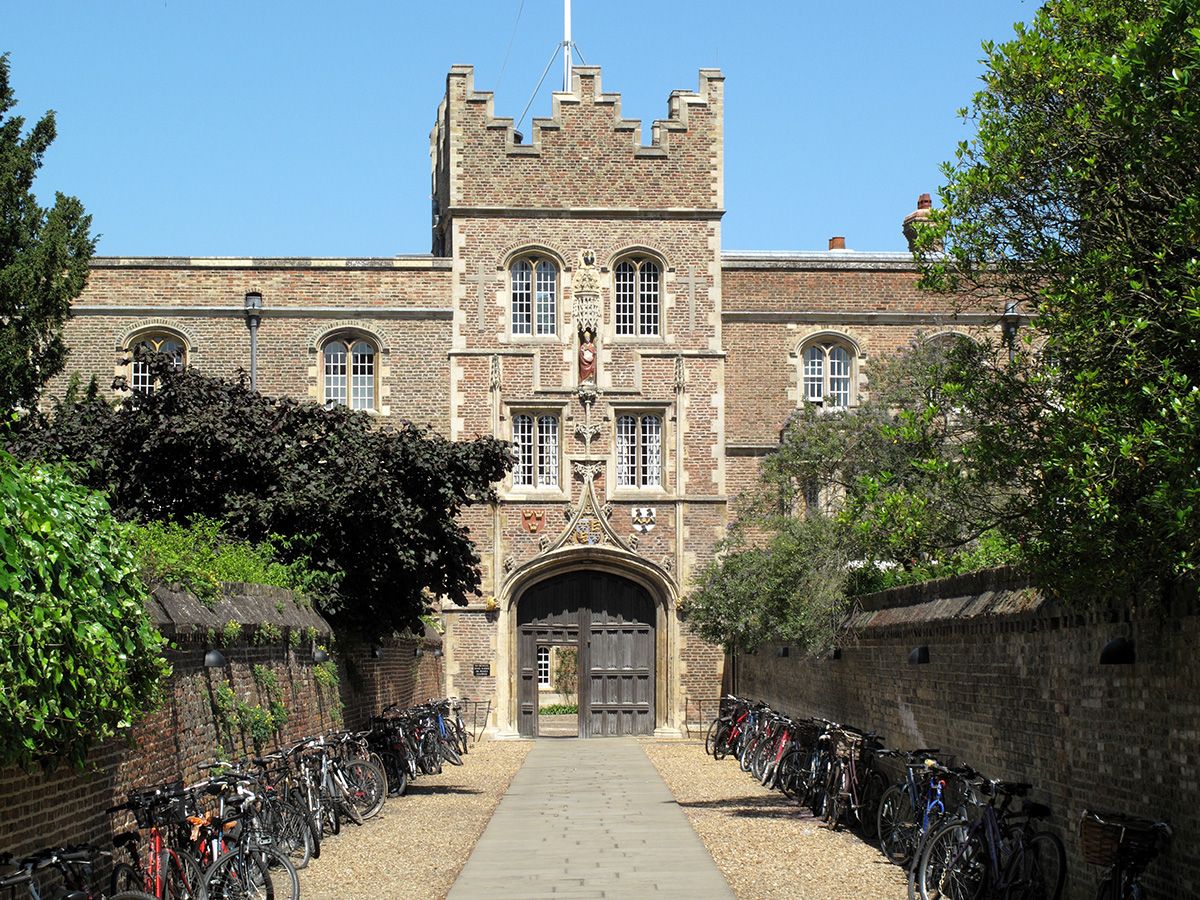
Cambridge University's Jesus College where Jason Arday was a fellow. Arday has resigned following allegations that he plagiarized part of his PhD thesis. Cambridge originally said the professor was the victim of a

There is clear and convincing evidence of declining trust in western universities, and restoring it requires that their leaders ask a fundamental question: what does trust require of us? In administration, teaching and research, recruitment and retention, protecting our campuses and all who come lawfully to them — what does trust require? As places of free inquiry, are they built on trust?

Trust is the confidence that policies and practices reflect reasons why universities exist and receive wide public support. It does not end precipitously; it erodes over time because of repeated failures to earn and maintain this confidence. There are many examples of where this has happened in the modern era.

The latest example is that of Cambridge professor Jason Arday, a Black professor of the sociology of education. With a PhD from Liverpool’s John Moores University, he made claims about his history, mental and physical struggles, athleticism and philanthropy that have been widely celebrated in the media and at Cambridge. They have also been contested, and have been joined by an accusation of plagiarism in his PhD thesis.

The divides are predictable. Arday’s supporters see the questions and criticisms as the playing out of racism; his critics see his supporters as avoiding unsettling questions that bear on his employment and reputation.

The question here is not whether the claims about Arday are true. The question is whether there is sufficient reason to enquire further and to determine whether or not they are accurate. With respect to plagiarism, the basic rule in the academic world is that you must not pass on another’s work as your own. The case against Arday does not rest on rumour or innuendo; it rests on a comparison between his PhD thesis and the work of other scholars. Cambridge’s initial claim that Arday’s thesis was at another university (John Moores) and that the issue was for that university to determine, was not convincing.

Allegations of plagiarism must be carefully investigated but the evidence is available and, if the allegation against Arday is confirmed, it affects his credibility and place of employment, as well as that of the university that awarded his PhD.

The claims about history, mental and physical struggles, athleticism and philanthropy are of a different order. They may be material to his employability though their immediate impacts are on character and reputation, and, if proven, on his credibility and stature as a Cambridge professor.

On Aug. 5 Cambridge reversed its initial position that Arday was “the victim of a vile campaign” and announced that it “had begun an investigation following new information about Prof. Arday’s academic qualifications and honorary appointments.” Following the announcement, Arday resigned from the university.

When we ask the question that opens this column (what does trust require from the University) this is the answer, and better late than never. Universities cannot remain silent and walk away from problems they encounter; the restoration of trust requires that they act.

National Post

Peter MacKinnon has served as the president of three universities and is a senior fellow of the Macdonald-Laurier Institute and the Aristotle Foundation.


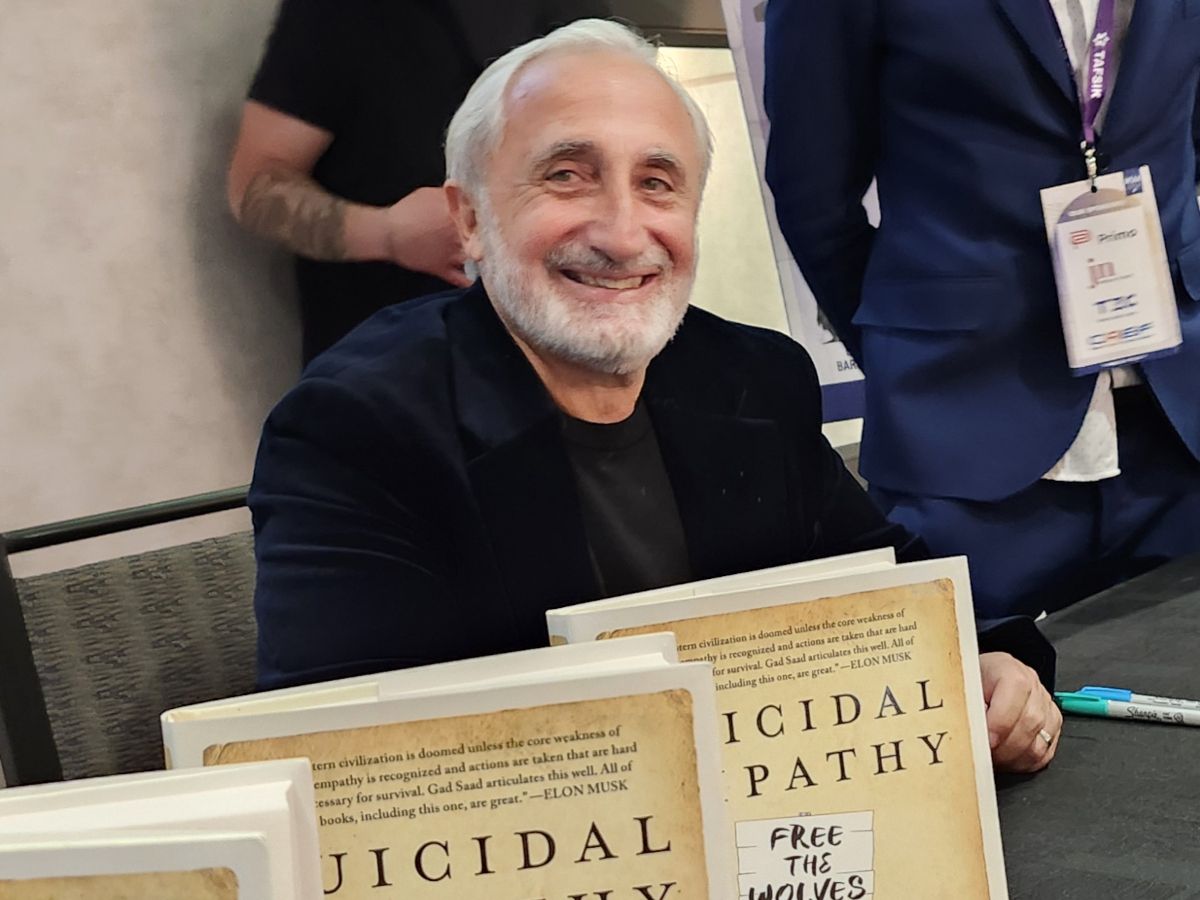
Author Gad Saad

Civilizations die from suicide, not murder, as a famous historian once said. And Canada is in the process of administering MAID to itself, says author and professor Gad Saad. He discusses his new bestselling book, “Suicidal Empathy: Dying to Be Kind,” with Brian Lilley. And he explains the fatal flaw of excessive empathy — and how Canada is rapidly succumbing to it. Radical values imposed by our institutions, embodied in the extreme by the last prime minister, frame our history as shameful. They have led us to embrace immigrants who reject us. And they have made us tolerate the intolerant. It’s why Saad says he’s moving out of Canada, although he explains how our government isn’t making it easy for him to leave. (Originally recorded for a Toronto Sun video, June 26, 2026.)


This spring, the province opened 10 involuntary care beds at Surrey Pretrial centre and 18 beds at the Alouette jail in Maple Ridge for people with severe mental illness and addictions. Photo by Getty Images

B.C. Premier David Eby faced a media scrum on July 10 to announce something that just a few short years ago would have been unthinkable — the province would soon be opening two new involuntary care facilities, one in Prince George (72 beds) and the other in Surrey (60 beds), for people suffering from mental health disorders, serious addiction issues and the brain injuries these addictions often cause.

This triad of afflictions — which has exploded across the country during the illegal fentanyl crisis — is also being addressed by the Alberta government through a similar involuntary initiative, last year’s Compassionate Intervention Act.

In late June, the provincially funded Canadian Centre of Recovery Excellence (CoRE), a Calgary-based research organization, announced the establishment of its Compassionate Intervention Expert Group, which includes 11 “renowned world-class experts in addiction medicine, psychiatry, law, public policy, Indigenous health, recovery science and evaluation from leading institutions across Canada, the United States and the United Kingdom,” who will help guide how the act is applied.

Predictably, organizations that advocated for the decriminalization of street drugs and the proliferation of injection sites are none too happy about the growing push to replace “safe consumption” sites with a modern version of quasi-institutional involuntary care.

In December, for example, the Canadian Drug Policy Coalition released a policy statement opposing the “widespread use” of involuntary treatment claiming “There is limited evidence to suggest that involuntary substance use treatment is safe or effective.”

Nevertheless, there is a growing chorus of voices — even on the left — that are clearly not paying much heed to the Canadian Drug Policy Coalition.

In April, Larry Campbell, the former mayor of Vancouver who was recently appointed by David Eby’s NDP government as an advisor to address the mounting despair that is Vancouver’s notorious Downtown Eastside, said in a Global News interview that not only is he seeking more accountability from existing service providers for the mentally ill, addicted and brain damaged, but also that he didn’t understand why “everyone lights their hair on fire” when the prospect of involuntary care is raised.

Campbell, during his term as mayor, was a harm reduction advocate who oversaw the opening of Canada’s first injection site in Vancouver’s Downtown Eastside in 2003. It’s remarkable that he now openly states his admiration for the voluntary treatment facilities in Alberta, which has coincided with the closure of some injection sites. Campbell wants the Downtown Eastside to follow suit with facilities where those needing care aren’t entering what he calls “One Flew Over the Cuckoo’s Nest.”

Also in April, Louis Hugo Francescutti, an emergency doctor in Edmonton, and a former president of both the Canadian Medical Association and Royal College of Physicians and Surgeons of Canada, appeared as a witness before the parliamentary health committee. Francescutti described for the committee the “moral distress” emergency physicians suffer when they are repeatedly discharging overdose patients back into the streets — what he called “treat’em and street’em” — knowing that the pattern was almost certain to continue.

Francescutti added that if lawmakers wanted to know what they could do to improve things, a good place to start would be passing a law that would prohibit any homeless patient in Canada from being discharged from a hospital into homelessness.

But even if hospitals could keep patients from returning to a life of addiction and mental illness in the streets, many of these institutions are currently unsure about what to do with them. Several emergency department doctors in downtown Toronto I’ve spoken to tell me that when they send patients with both mental health and opioid use disorders (which is the rule, they say, not the exception) for psychiatric assessment, they are typically returned with a memo that says, “Please bring this patient back once their addiction issue is addressed.”

The idea put forward by the Canadian Drug Policy Coalition that there is “limited evidence to suggest that involuntary substance use treatment is safe or effective” has also been scrutinized.

Last October, the Canadaland podcast interviewed Alison Ritter, a professor at University of New South Wales in Australia, which has had success with involuntary care. Ritter, who has 35 years of experience in the field of addiction, explained that the problem with studies on involuntary treatment is that they include findings from very different forms of forced treatment around the world: individuals placed labour camps in south-east Asia and those being treated against their will in American prisons are lumped together with individuals treated involuntarily in other countries. In contrast, in Australia, Ritter says patients are only treated involuntarily as a result of what’s called “civil commitment,” which is determined by a healthcare practitioner and reviewed within 48 hours “from a human rights angle by an independent magistrate.”

“If you just review the civil commitment literature only,” said Ritter, “and you take into account the quality of the care that’s provided, every study shows it’s as effective as voluntary treatment.”

Another bogeyman the Canadian Drug Policy Coalition trots out about involuntary care is that it’s going to be used to “clear large encampments ” and place vulnerable people in large-scale institutions.

Well, that’s not true, either.

Dr. Nathaniel Day, CoRE’s Chief Scientific Officer, said in an email interview that “among the severely impaired population living in entrenched encampments,” the proportion who would be candidates for involuntary treatment “may plausibly fall in the 5-per cent-to-15-per cent range, but we do not currently have adequate linked clinical and administrative data to establish that figure with confidence.”

One of the eleven experts Day has pulled together to advise on Alberta’s Compassionate Intervention initiative is Dr. Daniel Vigo, who was appointed in 2024 as B.C.’s first chief scientific adviser for psychiatry, toxic drugs and concurrent disorders. Vigo was present at Eby’s side when he announced the forthcoming involuntary beds.

Newly-appointed Vigo has come to symbolize the very sharp turn B.C. took away from its extremely liberal approach to the fentanyl crisis to the formulation of a response to the triad of very lethal conditions that has led to thousands of deaths in this country.

The first major forum I’m aware of at which Vigo articulated his ideas was on Dec. 3, 2024, before a parliamentary subcommittee formed by the health committee during the previous government because the opioid crisis had grown so dire that it warranted its own dedicated committee. It’s hard to view this appearance as anything less than a seminal pivot in this crisis.

When pressed on whether B.C. would be pursuing recommended initiatives involving government-supplied drugs such as heroin, cocaine and meth, Vigo flatly stated that “the premier has made it very clear that there will be no expansion of those initiatives that make drugs available.” Instead, the government would only expand “services that are within the context of treatment.” The current priority, Vigo explained, was to find “the sweet spot” in which the use of illegal drugs wasn’t criminalized while, at the same time, laws weren’t being disregarded to the detriment of everyone else.

Vigo also emphasized the need for more Assertive Community Treatment (ACT) teams in addition to long-term psychiatric rehabilitation beds and “de-centralized” housing options for people “who require intensive services” as part of a continuum of care. In case it wasn’t clear, Vigo spelled out that treating addiction, mental health disorders and brain injuries all at the same time meant creating services “that don’t exist.”

He also cut many critics off at the pass by emphasizing that involuntary care should only expand proportionally as options for voluntary care also increase.

At the end of the hearing, Gord Johns, an NDP member of parliament from Vancouver Island, raised yet another, oft-used knock against involuntary care — that it is associated with increased risk of overdose after release.

Vigo wasn’t having it.

“It’s only if the involuntary treatment is inappropriate,” he responded, “that someone would have increased risk of overdose or death afterwards.”

As Day pointed out in the interview, “Existing interventions have not produced the desired outcomes for a small but highly vulnerable (and visible) group, so higher-intensity options are now being considered.”

And those unfolding options at this point, as Vigo explained to the committee, include a combination of anti-psychotic medication and opiate agonist treatment.

“The objective should be to create a realistic opportunity for recovery wherever possible,” Day said, “while providing safe, dignified and continuing care for those who are no longer able to care adequately for themselves.”

National Post


A man who was shot in his leg during protests at the Gaza/Israel border fence enters a medical clinic operated by Medecins Sans Frontieres/Doctors Without Borders (MSF) on May 13, 2018 in Gaza City, Gaza.

On Oct. 17, 2023, immediately following a deadly explosion in the parking lot at Al-Ahli Hospital in Gaza City, Doctors Without Borders/Médecins Sans Frontières (MSF) posted a statement on X unequivocally blaming Israel for a “massacre.”

Satellite imagery, intelligence assessments and forensic evidence and media investigations swiftly pointed to strong evidence that an errant Hamas or Islamic Jihad rocket was the cause. Yet nearly three years later, MSF’s accusation remains online.

In July, a National Post article by Dave Gordon gave MSF an opportunity to explain that X post — and the organization’s broader conduct — in response to a new report published by EiGHT, an initiative established by professionals from leading international NGOs to strengthen accountability across the human rights and humanitarian sectors.

Based on testimony from more than 70 current and former staff across nine organizations, including MSF, the report contains evidence of flawed research, retaliation against staff who filed complaints and persistent failures to address antisemitism.

As a former long-time MSF-USA employee, and a co-founder of EiGHT, I believe MSF squandered an opportunity to demonstrate accountability.

Responding to Gordon, MSF acknowledged that it “is not an investigative body and cannot determine responsibility” for the Al-Ahli explosion. So why did the organization categorically accuse Israel before evidence emerged? And why won’t it remove the post?

MSF’s public voice is ostensibly guided by its principles of independence, neutrality and impartiality, as well as its commitment to témoignage — bearing direct witness to human suffering and speaking hard truths.

Israel is certainly not beyond reproach, and MSF has appropriately documented the devastating humanitarian consequences of its military campaign. It has legitimacy to cite violations of international humanitarian law. But only if it tells the full truth.

While MSF met the low bar of condemning the October 7 attacks in an online FAQ , I am not aware of statements where it has forcefully called on Hamas to cease deliberately endangering civilians by militarizing hospitals or using private homes as firing positions, among myriad other violations. Indeed, I am not aware of any statements where it has called Hamas to account in even the mildest terms.

More alarming is MSF’s treatment of Jewish staff members.

I witnessed — and was the target of — antisemitic remarks, tropes and insinuations at headquarter offices and in the field. Colleagues who knew I’m Jewish told me to my face that Israel had no right to exist. As at many NGOs referenced in the EiGHT report, denial of millennia of Jewish history and Israel’s legitimacy appears prevalent with some within those organizations.

Since the Hamas massacres on Oct. 7, 2023, criticism of Israel within MSF has transcended necessary and legitimate political discourse to open expressions of unhinged anti-Zionism indistinguishable from antisemitism.

As the EiGHT report documents, MSF’s internal communications — including posts on its “Souk” portal — often feature anti-Israel and anti-Jewish invective.

After I called out antisemitism on the platform, one respondent warned me not to play the “Jewish card.” Another described Israel as “a racist, Nazi and genocidal state.” Others questioned my humanity and my legitimacy as a humanitarian. One declared that the world must be liberated “from the grip of Zionism.”

Despite these violations of the Souk’s terms of use, which prohibit bigotry, hate speech and personal attacks, Souk administrators let the remarks stand. Notably, I have not seen a single MSF leader condemn them.

Indeed, leadership has contributed to the vitriol, deepening a permissive environment for the open expression of anti-Jewish sentiment. The immediate past president of the MSF-USA board of directors wrote on the Souk that Israel is an imperialist state that follows “white supremacist logic,” and that we must all “decolonize our minds.”

Much of it is unabashedly public.

Social media posts by current and former MSF officials traffic in anti-Jewish hate, including age-old blood libel tropes . A former international president declared that “Zionists” share the blame for the Tree of Life Synagogue massacre in Pittsburgh in October 2018.

In May 2025, in a since-deleted X post, the general director of MSF-UK expressed gratitude for a donation from the Irish rap group Kneecap. Months earlier, the band waved Hezbollah’s flag onstage and chanted, “Up Hamas, up Hezbollah” — two designated terrorist groups sworn to Israel’s annihilation and soaked in both Jewish and Palestinian blood. The widely publicized stunts led to a (since dropped) terrorism charge. MSF-UK defends accepting the donation, saying that Kneecap claimed it “did not support Hamas or Hezbollah.”

Still, quite the company for a humanitarian organization to keep.

Perhaps nothing better illustrates MSF’s betrayal of Jewish colleagues than the typical double standard.

After a spate of brutal attacks on Asian-Americans in New York City during the height of the COVID-19 pandemic, MSF-USA leadership appropriately circulated an internal message of solidarity, emphasizing emotional support services available to staff affected by the violence.

Not long after, during the May 2021 conflict between Israel and Hamas, antisemites beat Jews in the streets, including not far from MSF’s Manhattan office. A fellow Jewish colleague and I requested that a supportive message be sent to the staff. Request denied.

Solidarity, it seems, depends on the victims’ identity. Perhaps because the Jews, after all, had it coming thanks to the actions of a state thousands of miles away. Needless to say, No humanitarian organization committed to impartiality should adopt such reasoning, much less normalize it.

MSF’s response to EiGHT’s report reveals that the organization has learned little, if anything. Rather than addressing documented examples of ideological capture, it offered stock assurances.

In its statement to the Post, MSF said it “understands how dangerous antisemitism is” and is “committed to taking it seriously.” It added that antisemitism expressed by staff is “unacceptable and fundamentally incompatible with our humanitarian principles.”

Please. That’s just gaslighting.

While MSF commands enormous respect for its humanitarian work, moral authority is not self-sustaining. It’s predicated on genuine introspection, with the honesty and rigour it demands of others. It also requires confronting, accepting and rectifying uncomfortable truths.

The Al-Ahli post was neither a mere communications failure, nor — as the EiGHT report shows — were my experiences isolated incidents.

Together, they force a fundamental question: is MSF willing, or even able, to confront its own blind spots? Or will they ultimately have to be held to account by others?

National Post

Michael Goldfarb is the founder and principal of Tailwind Communications LLC, a strategic and crisis communications consulting boutique. He worked in communications at Doctors Without Borders-USA from 2005 to 2021 and is a co-founder of EiGHT.