


LP_468x60
on-the-record-468x60-white

Prime Minister Mark Carney tours the Roberts Bank Port in Tsawwassen, B.C., July 30, 2026.

Canadians surely don’t begrudge our elected leaders — including even the prime minister — some time off now and then.

A summer vacation, or at least some down time with family, is not something that would be controversial or of concern to most Canadian voters.

However, the when and where do matter. This prime minister, who has shown a surprising amount of political acumen for a rookie prime minister, has failed on both counts with his August Italian getaway.

According to the Prime Minister’s Office (PMO), Mark Carney is “on a reduced schedule in the week of Aug. 10,” and will be in Italy “for personal commitments until Aug. 17.”

Now, in fairness, it is a challenge for a head of government to schedule a vacation. As we’ve seen, crises can arise at any time and there’s no way to know in advance whether an expected quiet week will indeed remain as such.

For the prime minister, it’s always going to be a working vacation to some extent. As the PMO stresses, Carney “is in close contact with his team and officials on several priorities.”

Furthermore, it’s not as though the government grinds to a halt when the prime minister is on vacation. While Carney relaxes in beautiful Tuscany, Canada-U.S. Trade Minister Dominic LeBlanc has been in Washington, D.C. this week meeting with his U.S. counterpart ahead of next week’s tariff deadline.

That deadline of course, did not just suddenly appear out of nowhere this week. And that’s what’s so bizarre and tone-deaf about Carney’s decision here: it flies in the face of his government’s own messaging and framing around some key issues.

As Carney himself has stated, this is a pivotal moment for Canada and for Canada-U.S. relations, specifically. There has been a constant emphasis on just how high the stakes are for our country in navigating and meeting this challenge.

It was July 20 that U.S. President Donald Trump announced new tariffs targeting Canadian imports, which would take effect after 30 days. While Carney might have wished for a quieter summer, those hopes were dashed by Trump’s agenda and this latest curveball.

As a prime minister who has built a political brand as the leader to guide Canada through what he has called a “once-in-a-lifetime crisis,” it’s hard to understand why Carney would see any point within that 30-day window as down time, let alone the final week before the deadline.

On top of that, there’s the questionable optics of leaving the country for this vacation.

“This summer, we choose Canada!” is the proud declaration that greets visitors to the government website for the “Canada Strong Pass.” The pass, of course, was introduced by the Carney government last year in response to Canadians “uniting to find new ways to discover and celebrate our beautiful country.”

As ill-timed and ill-advised as it was to jet off just days before a key moment in Canada-U.S. trade talks, that’s compounded by the decision to very much not “choose Canada.”

It’s not just that Italian vacations are well out of the reach of most Canadian families, it’s the deliberate undermining of the message that Canadian destinations are worthy of attention and in need of support. It’s one thing to see that written on a government website, but it would have been far more powerful and meaningful to see the prime minister leading by example.

The “when” is still a problem here, but the PM and his team whiffed on an easy political win when it comes to the “where.”

Look, obviously Mark Carney was previously in a position where an impromptu summer Tuscan getaway was easy and simple. At some point in the future, he will be in such a position once again.

In the meantime, though, there is some degree of sacrifice that’s required in being the prime minister. That doesn’t mean completely sacrificing summer holidays or family time, but it does mean prioritizing the needs of the country and the responsibilities that come with the job — a job that Carney sought out, let’s not forget.

There is also a political risk this all creates for the prime minister if things go sideways next week or in the weeks ahead. There could be all sorts of factors at play in a scenario where the Canada-U.S. trade relationship erodes even further, but it would be fair to ask if the prime minister did all he could to prevent that.

It would be unfair, of course, to pin any such breakdown solely on this vacation, but it would only serve to reinforce the perception that maybe this wasn’t the wisest move,

In the meantime, Canadians can simply hope that the Italian sunshine refocuses and reenergizes the prime minister. As he has reminded us many times, the stakes are high for Canada in the coming weeks.

Rob Breakenridge is a Calgary-based podcaster and writer. He can be found at robbreakenridge.ca and reached at rob.breakenridge@gmail.com



A composite image of Mark Carney and Justin Trudeau.

On the prairies, progress is measured by simple, tangible work: whether the fence got mended, whether the crop came in and whether the next generation is better off than the last.

From that vantage point, watching Ottawa feels like looking into an ecosystem entirely obsessed with its own reflection. Pundits track every minor polling shift, dissecting Liberal policy moves, endlessly speculating about Conservative infighting and seem to care more about Washington than our own challenges. It makes for lively political theater in the capital, but it misses the fundamental question Canadians across the country are asking: Is Canada actually in better shape?

Enter Prime Minister Mark Carney. The Liberal political machine paints him as a steady managerial hand overseeing a fresh start. But Canadians shouldn’t confuse a polished wrapper with a new product. There is little question that Carney is the ultimate elite technocrat.

In contrast with Justin Trudeau, the difference appears stark. Under the former prime minister, the approach to economics often seemed reckless and unmoored from reality, whereas Carney brings central-banker polish to the forefront, but is life getting better for Canadians?

Thus far, despite many announcements and promises, Carney hasn’t offered real reform… just better public relations and someone who simply isn’t Justin Trudeau.

My friend, former Saskatchewan Premier Brad Wall, had subtle letters engraved above his cabinet room door asking a simple, timeless question: “Did you leave things better than you found them?”

This should be the baseline for anyone who holds public office. When Stephen Harper left government in 2015, Canada was defined by economic strength, rising productivity, deep business optimism, growing national wealth and a quiet, genuine patriotism. More than a decade of Liberal rule systematically eroded that foundation, burdening Canadians with record debt, stagnant living standards, less safe streets and unaffordability.

The danger facing our country now is the “Trudeau metric.” If Canadians allow the Liberals to define success as merely being slightly less disastrous than Justin Trudeau, our country is in deep trouble. Clearing a low bar created by years of policy failure isn’t governance; it’s a low-expectations trap, to the point where the prime minister isn’t even being held to his own self-imposed standards.

This government, and any future government or any political stripe, must be held to a far higher standard. We must judge the trajectory of our nation against the true potential of our country and whether we are leaving things measurably better than we found them. For the current prime minister, and his party that has held the helm for more than a decade, it’s a metric that is sobering.

Ottawa’s political commentators will keep chasing daily drama and polling bumps. But Canadians must reject the low bar. Canada was built on high ambition and we deserve a standard of governance that matches it.

National Post

Damien C. Kurek is the former Conservative Member of Parliament for Battle River—Crowfoot. He is currently a principal at Upstream Strategy Group and continues to farm in Alberta’s Special Areas.


Smoke rises from an area in the direction of Al Udeid Air Base, which houses the Qatar Emiri Air Force and foreign forces including the U.S., in Doha on Feb. 28, following a reported Iranian strike.

Although Canada officially refused to join the United States’ springtime war against Iran, new information suggests that Canadian personnel indirectly assisted the campaign while embedded with American forces. This is nothing to be ashamed of. If anything, Ottawa’s support should have been more fulsome, consistent and overt.

When American bombs began to pummel the Islamic Republic of Iran in March, Prime Minister Mark Carney denounced the campaign as “inconsistent with international law,” and claimed that Canada was “not a party to those actions.”

However, Ottawa and Washington have a longstanding policy of exchanging service members to enhance allied cohesion and intelligence sharing. Through this integration, Canadian personnel have occasionally fought in conflicts that Ottawa is officially uninvolved with — most notably the 2003 Iraq War .

This spring, a handful of media reports suggested that some of these American-embedded Canadians might have been involved in the Iran war. A former senior Canadian general, Denis Thompson, even told the CBC that it was highly likely that some of these personnel helped plan airstrikes against the Islamic Republic.

In response, the Department of National Defence (DND) claimed that American-embedded Canadian service members had been assigned other duties that would keep them out of the conflict, despite otherwise remaining at their posts.

We now know that this statement, even if technically true, was somewhat misleading.

Late last month, the Government of Canada announced it would be awarding a Meritorious Service Cross to Col. David K. Turenne for his “extraordinary leadership and diplomatic skill as director of the Combined Air Operations Center during the Israel-Iran conflict.” He was specifically commended for “synchronizing multinational air operations and enabling the safe evacuation of 10,000 personnel from the Al Udeid Air Base, Doha, Qatar, June 2025.”

The medal, according to its official description, recognizes military deeds “performed in an outstandingly professional manner, according to a rare high standard that brings considerable benefit or great honour to the Canadian Forces.”

This is the first public acknowledgement of Turenne’s involvement in the Israel-Iran conflict, although few details of his service are known. When National Post requested more information on what he did to earn his medal, DND failed to provide it and claimed that an interview with him would not be feasible.

To be clear: while Turenne’s award confirms that he was involved in last year’s 12-Day War, no evidence suggests he was involved in this year’s expanded campaign against Iran. His actions do not appear to have contradicted Carney’s claim that American-embedded service members were kept out of the ongoing conflict.

Still, the award illustrates how Canadian talent helped set the stage for the current war, which, in turn, complicates Carney’s moral and political stance.

To understand why this is the case, one needs to understand the significance of the Combined Air Operations Center (CAOC), which Turenne directed from June to December of 2025.

The CAOC is the U.S. air force’s “nerve centre” in the Middle East. Originally established in Saudi Arabia during the Gulf War, in 2003 the centre was relocated to the Al Udeid Air Base in Qatar, where it stayed put for roughly two decades as an anchor of America’s regional power.

However, for some time, American military leaders have feared that the base, being located beside Iran, was highly vulnerable to the Islamic Republic’s ballistic missile strikes. So they started shifting operations to a base in South Carolina, gradually moving personnel there and operating the two locations in parallel.

These precautions proved prudent. Just before last year’s 12-Day War, the CAOC, under the directorship of Turenne, moved its personnel to South Carolina while maintaining regular operations. Al Udeid, meanwhile, was partially evacuated . When hostilities broke out, Iran launched 14 missiles at the base — one got through and inflicted minor damage , prompting a full evacuation of remaining personnel.

Having learned from this experience, the United States once again evacuated a significant portion of its personnel — including all of the CAOC — from Al Udeid Air Base in January. As predicted, the Iranians subsequently struck the base with ballistic missiles, severely damaging the CAOC’s facilities and rendering them inoperable. The attack had little effect on American co-ordination, though, thanks to the duplicate South Carolina location.

Taking all of this together, it’s clear that, even though Turenne was not directly involved in the join U.S. and Israeli strikes on Iran, his leadership helped set the stage for the campaign. Not only did he direct the United States’ most crucial “nerve centre” during the 12-Day War, his successful management of the 2025 Al Udeid evacuations likely provided invaluable lessons for this year’s campaign.

While some might want to compartmentalize these two waves of conflict, they are militarily, politically and morally inextricable from one another.

In this light, Carney’s denunciations of the war, and his emphasis on Canada’s non-involvement, ring hollow. Canada cannot publicly condemn the United States and Israel’s pre-emptive wars against Iran while quietly honouring a Canadian colonel for aiding their execution.

Rather than downplaying Turenne’s extraordinary work, the correct position for the Canadian government would have been to publicly laud him, and to use his story to show Canadians that crippling the Islamic Republic is the morally correct thing to do. There is no reason to be ashamed of our heroes, and no reason to be ashamed of any efforts to thwart the Islamic Republic.

National Post


Vienna Pedatella and her mother, Janene, who never misses an opportunity to express how proud she is of her daughter's grace and resilience. Used with permission.

Imagine your child is diagnosed with idiopathic scoliosis, a curved spine, just days after her thirteenth birthday. Over the next several months, she wears a brace religiously to see if it will correct the curve, but the bend just keeps getting worse. You watch helplessly as your daughter gives up on sports and becomes increasingly self-conscious about her appearance. You get on the waitlist for surgery, and you wait. And wait. And wait.

After two years, you can’t wait any longer. The curve is now so bad that it’s painful, causing lost sleep and threatening organs. Desperate for relief, you take your daughter to the United States to get the surgery. It’s available there right away. Within weeks, your daughter is cured. She’s back to normal just in time for her last year of high school. But you’re left with a life-altering $200,000 bill. Should the province pick up the tab?

We think so. That’s why we’re supporting Vienna Pedetella’s lawsuit against the province that failed to provide the surgery and denied funding to get the surgery abroad.

Canada controls the supply of health care like no other country in the western world, effectively banning private care while rationing the number of doctors, nurses and operating rooms. The stated purpose of this monopoly, outlined in the Canada Health Act, is to “provide reasonable access to health services without financial or other barriers.”

The results are less than ideal. While few of us end up with medical bills that could bankrupt us, we rank far behind the U.S. on access to care, and seventh out of 10 wealthy countries in overall performance. This is behind Australia, France, Netherlands, New Zealand, Sweden and the United Kingdom.

Timely access to pediatric scoliosis surgery is an example of how the system is failing us. The Conference Board of Canada reported in 2023 that four in 10 pediatric spinal surgeries were performed after the recommended clinical timeframe of six months. When waitlists get this long, they may violate Charter rights.

Section 7 of the Charter guarantees that “everyone has the right to life, liberty and security of the person and the right not to be deprived thereof except in accordance with the principles of fundamental justice.” Liberty has been recognized as protecting fundamental life choices including making medical decisions, but patients often don’t have meaningful access to those decisions in Canada. Life is protected from state-imposed increased risks in death. Security of the person, meanwhile, protects Canadians from physical or serious psychological suffering.

The Supreme Court recognized in the 2005 decision Chaoulli v. Quebec that when governments block patients from accessing care in a timely fashion, that can violate section 7. In that decision, even those judges who found that patients’ rights were not violated by Quebec’s laws agreed their rights would have been infringed upon had there not been a Quebec policy of sending patients abroad when Canada cannot provide care in time.

Yet, more than two decades after Chaoulli’s warning, patients across Canada continue to suffer on waiting lists while being denied out-of-country care, just like Vienna was. In her case, Alberta’s Out-of-Country Care Committee suggested she should just keep waiting for surgery after more than two years, rather than paying for the surgery in the U.S. and asking for reimbursement from the public system.

To Alberta’s credit, the province is already taking steps to improve efficiency, expand chartered surgical facilities, increase funding and allow dual practice so that surgeons who cannot find space to operate in public facilities will be able to take some patients privately. This strategy is a good start that should reduce the number of patients waiting in both the public and private systems, while attracting new doctors and nurses.

But all provinces, including Alberta, need to move faster. Patients simply cannot wait any longer. The deal Canadians made when they gave up autonomy over their health care was that the public system would be there when they needed it. No government in Canada has upheld their end of the deal. If provinces cannot provide surgeries on time within their borders, then they have a responsibility to pay to send patients abroad.

National Post

Josh Dehaas is interim litigation director with the Canadian Constitution Foundation, which is supporting the Pedetella’s lawsuit against the Out-of-Country Health Services Committee. Learn more at TheCCF.ca/kids-cant-afford-to-wait/.


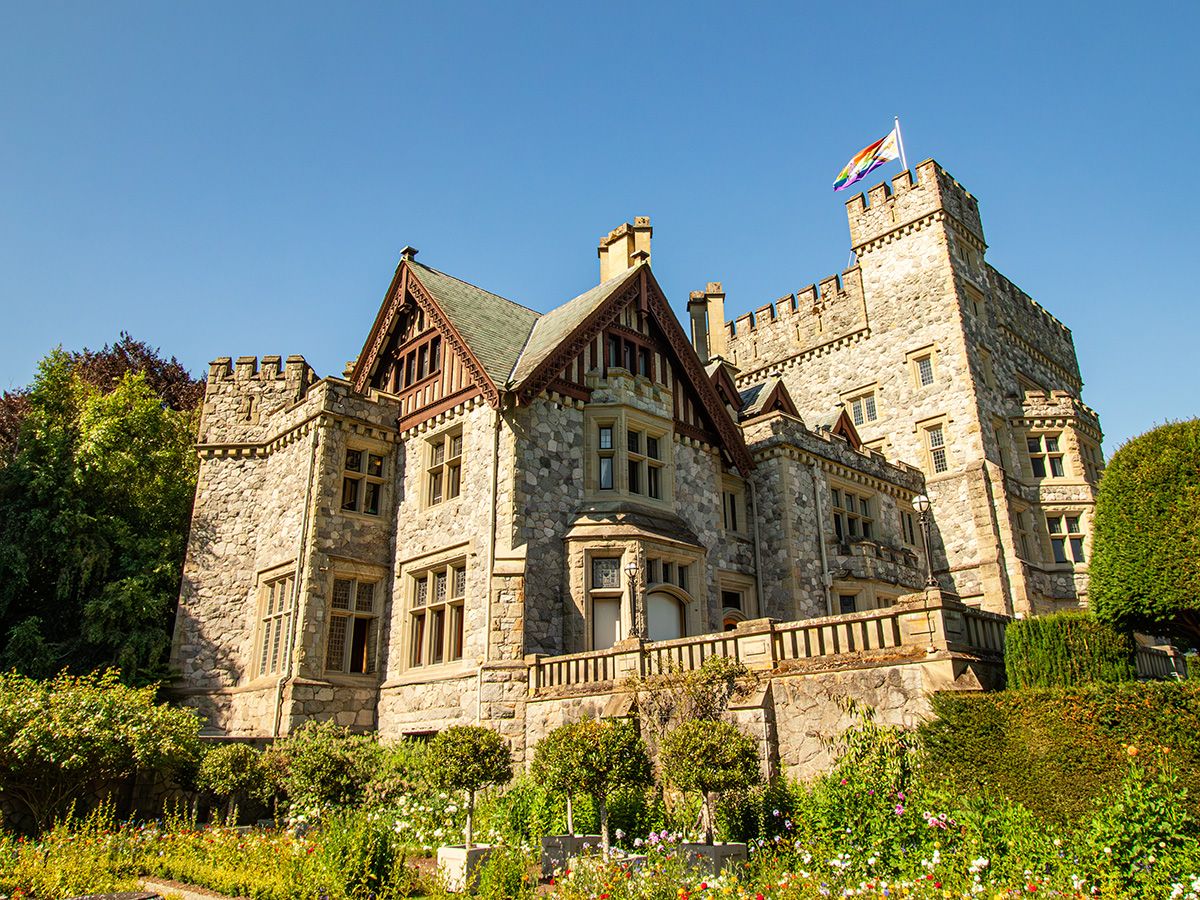
Hatle Castle in Colwood, B.C.

An internal B.C. document has revealed the extent of the province’s plans to cede more than 120,000 hectares of Crown land to First Nations control, including prominent landmarks around the provincial capital of Victoria.

The total proposed cessions are more than twice the size of the City of Toronto, or 300 times the size of Vancouver’s Stanley Park. What’s more, they would all become “treaty lands”; a special territorial designation that is not subject to local zoning controls.

In the case of Victoria, this means that some of the most prime development land in the city could become Indigenous-controlled properties exempted from local bylaws, approvals and building codes.

“Local government bylaws do not apply on treaty lands,” reads a May 2024 consultation paper published by the B.C. government.

That same document warns that the land transfers may “take some getting used to,” as they cover public lands that could end up sealed off from public access.

“Once those lands become treaty lands, there may be limited access or even no access for public use,” it reads.

The planned land cessions are included in the most recent edition of B.C.’s Public Accounts, published each year by the Ministry of Finance.

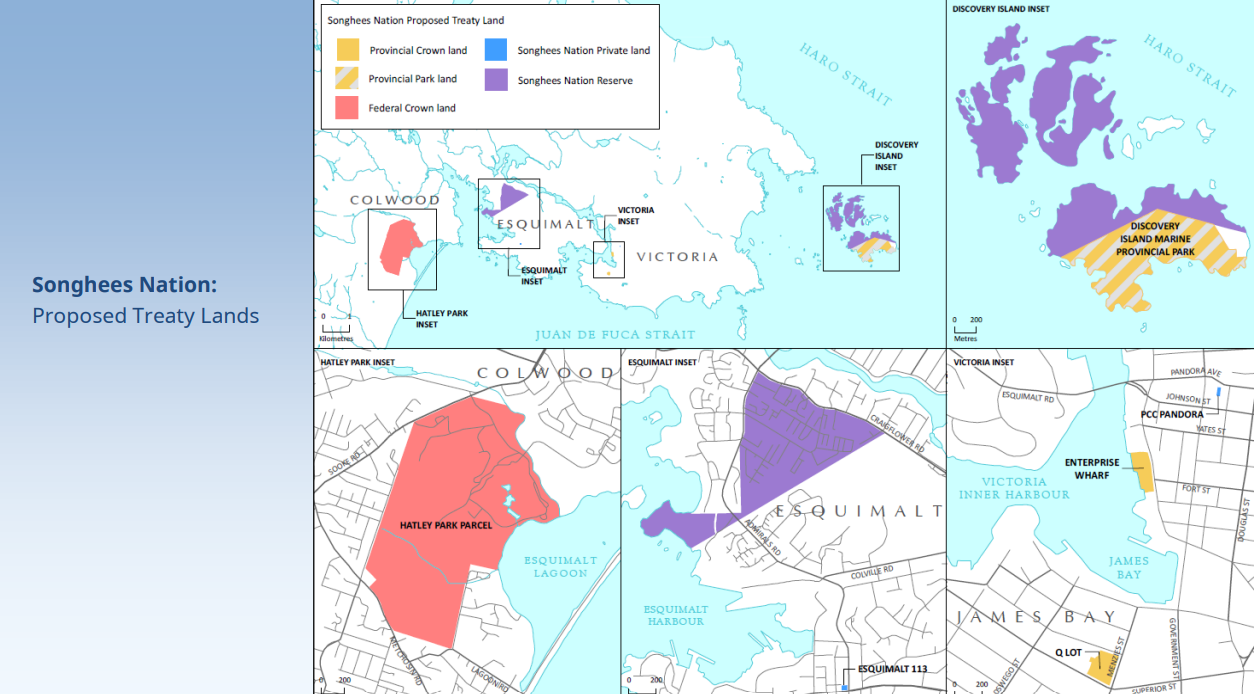
 Proposed Songhees land cessions as part of the Te’mexw Treaty Association negotiations.

The document itemizes 20 planned land transfers to First Nations as “contingent liabilities and contractural obligations.”

The proposed cessions are part of modern treaty negotiations that stretch back to the 1990s in some cases, but the Public Accounts show that the lands are now officially on the books as government liabilities.

One B.C. government outline on modern treaties, published in 2023, explained that one of their primary goals is to “return lands to First Nations.”

The largest of the itemized cessions is 35,290 hectares earmarked for the Kitselas First Nation and 45,789 hectares for the Kitsumkalum First Nation. Both are located near Terrace, B.C., and comprise a total membership of about 1,500 people.

In many of the transfers, First Nations stand to receive territory well beyond the size of their existing reserve lands. And, unlike reserve lands, these would effectively be held as fee-simple territories.

Among the most valuable cessions is the 1,916.7 hectares set aside for the Te’mexw Treaty Association, a coalition of five First Nations on Southern Vancouver Island.

One of the more notable properties within the Te’mexw package is Hatley Castle, the 1908 Colwood estate best known for its role in the X-Men film franchise.

Built by the Dunsmuir coal mining family, the property first entered public ownership in 1940, possibly as part of a Canadian contingency scheme to house the exiled royal family in case of a Nazi conquest of the U.K.

Under terms being negotiated by the B.C. government, it would become a fee-simple possession of the 600-member Songhees First Nation.

The Songhees would also take possession of two parcels of land in Downtown Victoria, including a parking lot across from the B.C. Parliament Buildings with an assessed value of $24.8 million, and a nearby waterfront parking lot assessed at $22.3 million .

As treaty lands, both parcels could be developed without city council oversight. A good analogue being the recently completed Sen̓áḵw development in Vancouver; a compound of skyscrapers comprising 6,000 rental units that was able to exceed the usual local controls on density due its being located on Songhees First Nation land.

In a statement reacting to the Public Accounts, the opposition B.C. Conservatives said that the itemized transfers are a small fraction of the total land cessions under consideration by the government of Premier David Eby, and that the final figure could be in excess of 9.6 million hectares – about 10 per cent of the total province.

“There will be nothing left of B.C. by the time the NDP are finished with their plan to giveaway land that rightfully belongs to the people of British Columbia,” wrote B.C. Conservative Leader Kerry-Lynne Findlay in a Monday social media post .

Ironically, B.C. First Nations governments are set to receive 120,000 hectares of fee-simple lands at the precise moment that the status of B.C.’s other fee-simple lands have been thrown into uncertainty.

Last year, the B.C. Supreme Court ruled in Cowichan Tribes v. Canada that Aboriginal title took precedent over all other land rights in B.C. Although the case is pending appeal, the immediate effect of the decision was to effectively transfer large swaths of privately owned land in Richmond, B.C., to the control of the Cowichan First Nation.

All the 120,000 hectares mentioned in the Public Accounts comprise Crown and other government-owned lands, and private property is not covered by any proposed modern treaty cessions.


Victor Montagliani, President of CONCACAF, looks on prior to the MLS match between Vancouver Whitecaps FC and Los Angeles Football Club at BC Place on Aug. 1, 2026 in Vancouver. This content is reserved for subscribers.
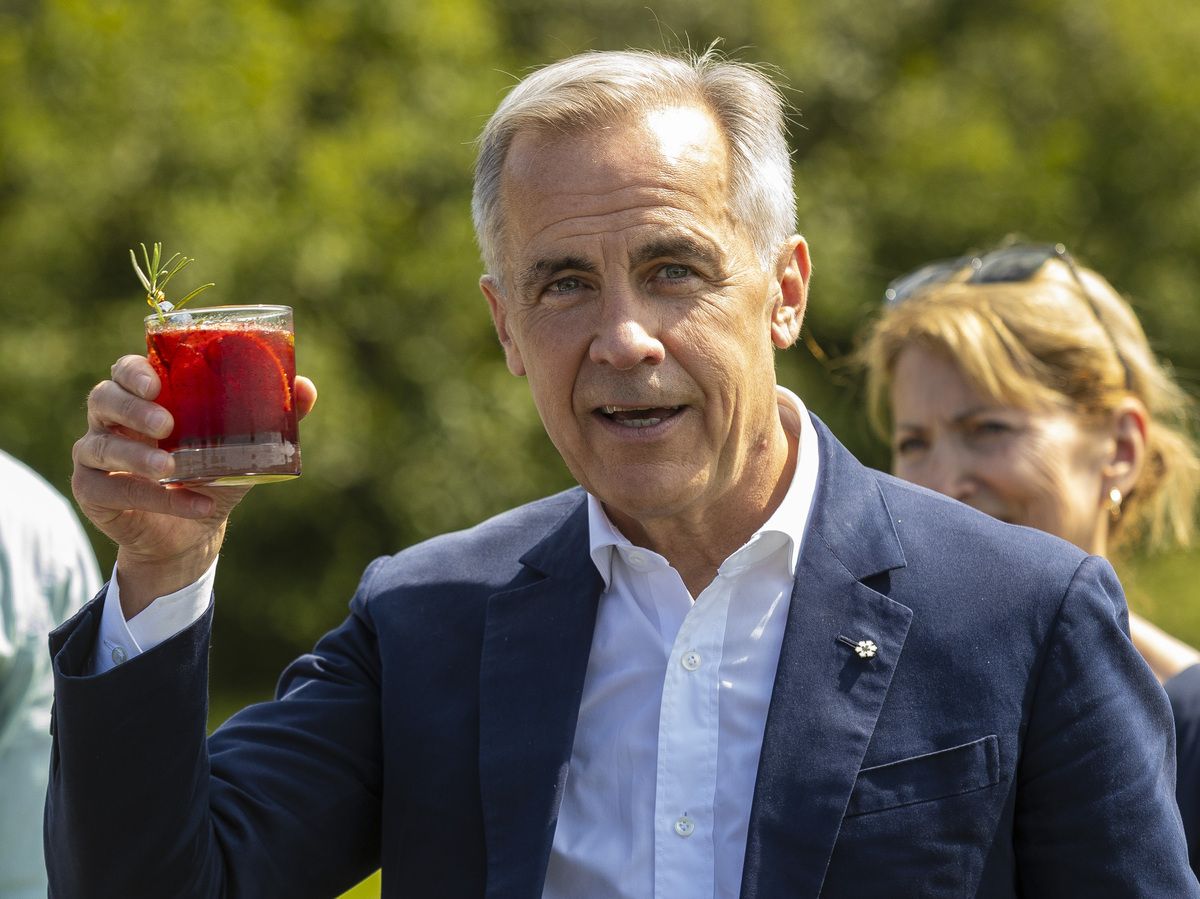
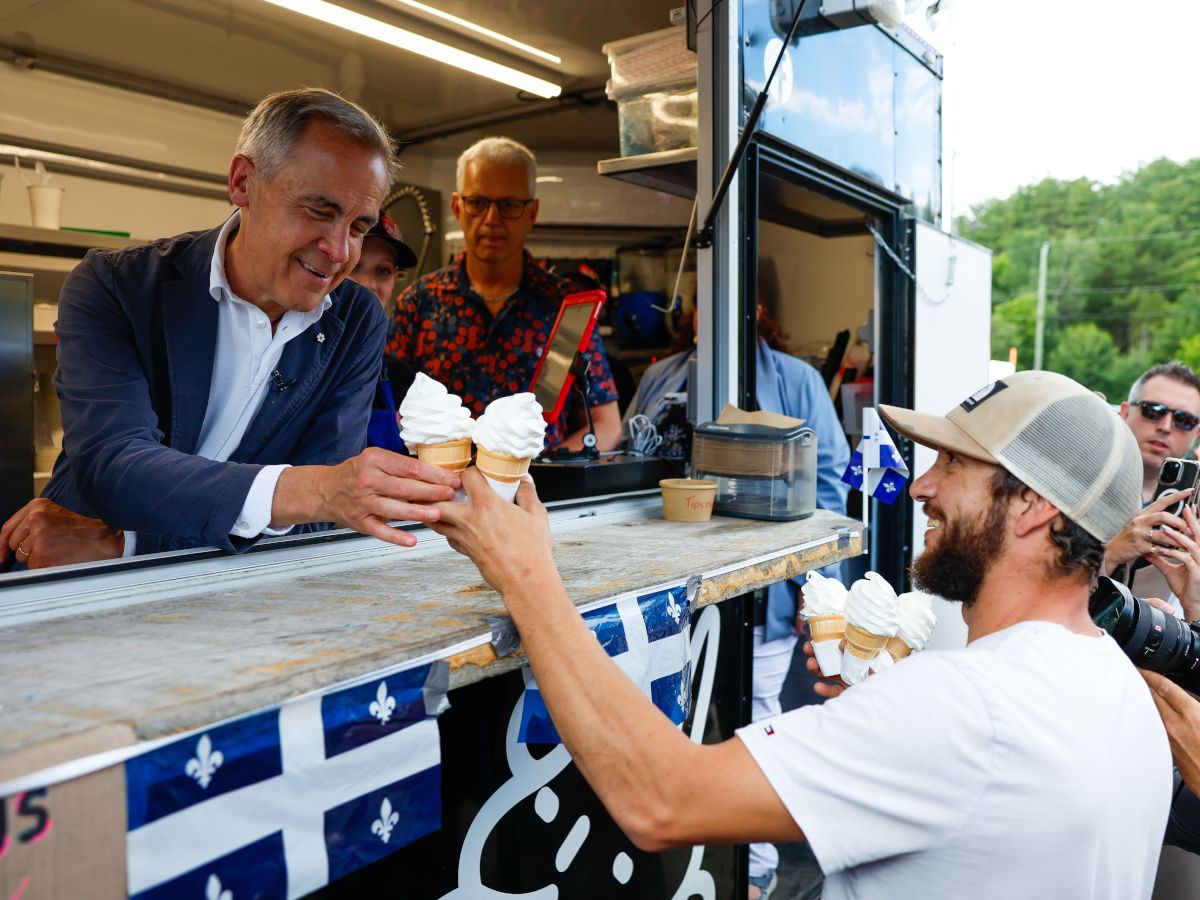

Prime Minister Mark Carney drinks a local beverage during a visit to a small fruit farm in Saguenay, Quebec, on Aug. 6, 2026. He's currently in Tuscany.

The Carneys are living their best vacation lives in Tuscany . And back home, some of us are again debating a prime minister’s vacation choices. Or not so much debating as, mostly, kvetching, in roughly equal parts about the vacation itself and about anyone who would be so gauche and unworldly as to question the vacation. “Lots of Canadians go to Caribbean all-inclusives, right? So why shouldn’t the PM go to Tuscany?”

Tellingly, that sort of absurd comparison — we’re all prime minister, really; Tuscany isn’t much different than that 2.5-star resort in Punta Cana you saw on the Air Transat package-vacations website — is the only card most “none of our business” people know how to play. “Oh, so you think the PM and his wife should dress in sackcloth, don crowns of thorns, and camp out on East Hastings?”

If you genuinely don’t care, that’s fine. We certainly have bigger fish to fry, and there’s only so much room in the national fryolator. But this is self-evidently our business, and no one should apologize for thinking so.

We pay for it, first of all. There’s no official hourly cost for getting one of the Challenger jets into the air, but various reports suggest it’sat least pushing $10,000 . (PMs using the jets on vacation, which we are constantlytold they mustbecause of security concerns , owe the treasury the commercial value of the equivalent economy-class tickets. That would be around $4,300 per passenger on Air Canada to and from Rome, last-minute in August, or around $2,700 on Air Transat.)

Secondly, the federal government regulates Canada’s sclerotic, despised airline industry, among other things forbidding foreign-carrier competition on domestic routes. The transport minister never has to put up with anything less than commercial business class. As long as ministers are in office they’ll never have to worry about “air-passenger rights,” which no doubt partly explains why Canadian air passengers enjoy far fewer rights (to compensation, rebooking on other airlines, hotel rooms, etc.) than Americans, Europeans or Brits.

That’s not because Air Canada and WestJet donate lavishly to political parties, which would be illegal. It’s just to keep all the toy soldiers in the Laurentian sandbox fat and happy in the bar at the Château Laurier: MPs, ministers and would-be ministers, lobbyists, strategists, consultants and unidentified appetizer-grazers. For that reason alone, we should insist the PM endure commercial air travel on personal business. And in economy.

I absolutely loathe the idea, often heard in Canada, that “G7 leaders can’t fly commercial.” It speaks to the hermetically sealed box inside which most Canadian political thinking occurs. And to my ears all it really means is, “I am someone who likes to pretend that Canada and its prime minister are much more important than they actually are.”

Keir Starmer flew commercial to Madeira for a family vacation in 2024. Boris Johnson flew commercial to Slovenia for his (latest) honeymoon in 2022, and later that year British Airways to the Dominican Republic, with wife and baby along (in economy). Theresa May flew commercial on her various hiking holidays in Switzerland and Italy. David Cameron’s vacations in office included flying low-cost carriers EasyJet, Ryanair and Vueling, two of which aren’t even British and none of which has ever heard of business class. (Indeed, Ryanair’s brilliantly funny social media team would mock the very idea.)

The United Kingdom has nuclear weapons: somewhere between 200 and 260 warheads . Ten Downing Street matters in a global crisis. Yet the British PM can spend a few hours aloft, completely incommunicado. (Ryanair’s social media team would probably mock the idea of inflight Wi-Fi as well.)

When a global crisis blows up, no one ever asks, “hold the phone, where’s the Canadian delegation?” The Canadian PM could be on the moon or 20,000 leagues under the sea, for all anyone would care. But no, no, he mustn’t ever fly commercial. The RCMP says so, and they are certainly a disinterested party.

British PMs are routinely criticized for not simply vacationing in Britain, of course, which is also very healthy. It’s hardly a job for life. Before Tony Blair and Margaret Thatcher, the last person to spend more than 10 years as prime minister in a single stretch retired 99 years ago. Once you’re done, you can go anywhere you like, no questions asked. Meanwhile your job comes with a splendid, secluded summer home you’ll never have access to again: Harrington Lake here in Canada, Chequers in Britain. Use it, maybe?

Indeed, I also loathe the idea that Canada somehow isn’t worth spending time in, in August no less. Canada sparkles in August, coast to coast to coast. Carney hasn’t spent all that much time here lately. Maybe use your private-jet privileges to refamiliarize yourself!

Among the biggest problems for normal folks, obviously, is the cost of summer-vacationing in Canada relative to abroad. As of this summer, Air Transat flies to Albania, where a decent hotel room is $20 and a donkey ride is $5, and you get to keep the donkey. I exaggerate. It’s a fascinating country, a bit odd, littered with the ruins of ancient empires, with great seafood, friendly and helpful locals. And like most of the Balkans, it’s cheaper than sausages.

Or I could fly my hypothetical Toronto family of four to and from Vancouver for five nights over Labour Day weekend, without any checked bags, for nearly $5,000. And then pay nearly $3,000 for one room at a Quality Inn. And then, I don’t know, I guess we just have cool ranch Doritos for dinner.

That’s a serious national-unity issue. It would be nice if our economist PM had some ideas about how we might address it, rather than a bottle of Brunello on the go on a picnic blanket under a cypress tree.

National Post
cselley@postmedia.com


Prime Minister Mark Carney, left, gives out ice creams during the fête Nationale Val-des-Monts celebration in Perkins, Que., on June 23.

Tick, tick, tick. That’s the sound of the timer counting down to Aug. 19, the date on which U.S. President Donald Trump’s 50 per cent tariffs on Canada will kick in. Or not. Already one former Trump advisor is predicting that Trump will TACO (Trump always chickens out), but in the unpredictable world we live in, there’s no guarantee.

Faced with this deadline, the pressure is on Prime Minister Mark Carney to get a deal with the Americans. Businesses and investors are worried. Conservative Leader Pierre Poilievre is demanding action . Dominic LeBlanc, the minister responsible for Canada-U.S. trade, and Janice Charette, our chief trade negotiator, are spending their summer in Washington boardrooms, but there’s still no sense of progress.

As Carney has pointed out, he wants a good deal , not a fast deal. A good deal would presumably mean that Canada doesn’t have to make any major concessions — or at least not ones with major domestic blowback. Like, for instance, giving up supply management.

Canada’s supply management system provides stable income to the country’s 9,000 dairy farms , but at a cost to Canada’s 40-million consumers. Canadian households pay an average of $244 more per year for dairy products, with the burden falling heaviest on low-income families. The system imposes production and import quotas and allows marketing boards to set prices, making it difficult for new dairy producers to compete and limiting product choice. It’s been the bane of economists for decades, with many calling for it to be phased out .

Supply management is also one of Trump’s biggest pet peeves. While the president may not always get his facts straight , it is true that supply management rules discourage selling large quantities of American dairy products in Canada. It’s not clear whether we’d swap Oka cheese for Wisconsin cheddar if these rules were lifted, but Trump voters in that state would probably be very happy.

You would think, then, that supply management would be a concession Canada would be prepared to make , both for its benefit and to help secure a deal. But you would be wrong. The dairy lobby is one of the most powerful in the country. Seventy-four per cent of Canadians say they support supply management to some degree, according to a recent poll. And over a third of Canada’s dairy production comes from Quebec .

Quebec is a political hot spot this year. On Aug. 31, voters will go to the polls in a federal byelection in Chicoutimi—Le Fjord. The riding was Conservative until earlier this summer, when Carney appointed MP Richard Martel to the Senate. The Liberals want to flip the seat and are running Daniel Gobeil, former chair of the Quebec Milk Producers.

After that, Carney will have to call byelections in two other soon-to-be vacant Quebec ridings, Laurier—Sainte-Marie and Rosemont—La Petite-Patrie, both of which his party would like to keep out of the hands of the Bloc Québécois. On top of that, Quebecers will go to the polls in a general election no later than Oct. 5 — a contest in which the separatist Parti Québécois is on track to form a minority government.

Sacrificing supply management to get a trade deal would put wind in the Bloc’s sails and jeopardize Liberal chances in those ridings. It would boost PQ Leader Paul St-Pierre Plamondon, who has promised to hold a referendum if he takes power. With a majority, he could do that, plunging Canada into a state of political and economic uncertainty.

In other words, Carney must weigh the implications of not getting a trade deal if he clings to supply management, against the costs to his party and the country if he does. But as long as Canadians consider him their preferred prime minister, he’s got some breathing room. So expect him to rag the puck on a deal as long as he can, to avoid facing that painful choice.

Postmedia Network

Tasha Kheiriddin is Postmedia’s national politics columnist.


Anglo-Quebecers protest in support of English schools, in Montreal in 2019.

Paul St-Pierre Plamondon, the leader of the separatist Parti Québécois, has asked National Post to publish exclusively his open letter to Quebec’s anglophone community, ahead of a fall election that polls suggest his party will win. The Post is publishing that alongside this response from a leader of the anglophone community he is addressing.

Dear Monsieur St-Pierre Plamondon,

Thank you for writing directly to Quebec’s English-speaking community. I am the Montreal city council executive committee member responsible for the anglophone community, and I believe that any political leader who reaches across linguistic lines deserves to be heard.

Your letter recognizes something that anglophones have been saying for years: English-speaking and French-speaking Quebecers share the same concerns. We worry about the cost of living, housing affordability, health care, education, homelessness, public safety and whether our children will enjoy a better future.

Quebecers of every language deserve competent, transparent government that delivers results, which is not the case with the current Quebec government. Where our paths diverge is not over whether Quebec can be governed better. It is over trust.

For decades, English-speaking Quebecers have repeatedly been asked to trust that the Parti Québécois (PQ) would protect their rights in a sovereign Quebec. Yet our lived experience has often been one of watching rights debated, reduced or reinterpreted depending on the political moment — most recently through more restrictive language laws from the governing Coalition Avenir Québec.

Rights should never depend on who happens to be in power.

Former Quebec Liberal cabinet minister Clifford Lincoln said it best: “Rights are rights are rights.” They do not become less important because they belong to a minority. They are not something governments generously grant; they are something governments have an obligation to protect.

René Lévesque, the PQ’s founder and first premier, understood English-Quebecers better than many separatists. He famously described us as an integral part of Quebec. He also spoke of English-speaking Quebecers as partners in building Quebec, not guests living in it.

Those words recognized something fundamental: We do not need permission to belong here. We helped build Quebec.

Our families helped establish its hospitals, universities, charities, businesses, cultural institutions and communities. We have invested in its economy, volunteered in our neighbourhoods and paid our taxes alongside our francophone neighbours.

Quebec is our home.

That is why many English-speaking Quebecers become uneasy whenever separatist leaders reach out. History has taught us that such conversations often become about our place in Quebec. But English-Quebecers are not asking for special treatment.

We ask only for equal treatment, and equal opportunity. And equal confidence that our institutions, our language and our future are secure — not because of political promises, but because they are beyond politics.

If your invitation is sincere, then please continue speaking to English-Quebecers — after the election. Speak with young anglophones deciding whether they can build their futures here. Help ensure fewer feel they must leave the province they love.

The greatest measure of partnership between Quebec’s two historic linguistic communities will not be found in campaign letters. It will be found the day every English-speaking Quebecer feels completely at home, fully respected and entirely confident they belong here without qualification.

There is one notable omission from your letter. You make no mention of your commitment to hold a referendum during a first Parti Québécois mandate.

Poll after poll show that Quebecers are not looking for another referendum, and support for sovereignty remains below 30 per cent. Most Quebecers — francophone, anglophone and allophone alike — want a government that’s focused on improving health care, strengthening the economy, making housing more affordable and restoring confidence in public services.

That is why many English-speaking Quebecers — and many francophone Quebecers, as well — view another referendum not as a path forward, but as a step backward.

It’s worth pointing out that governments exist to improve people’s lives. Party missions should never come before that responsibility.

National Post


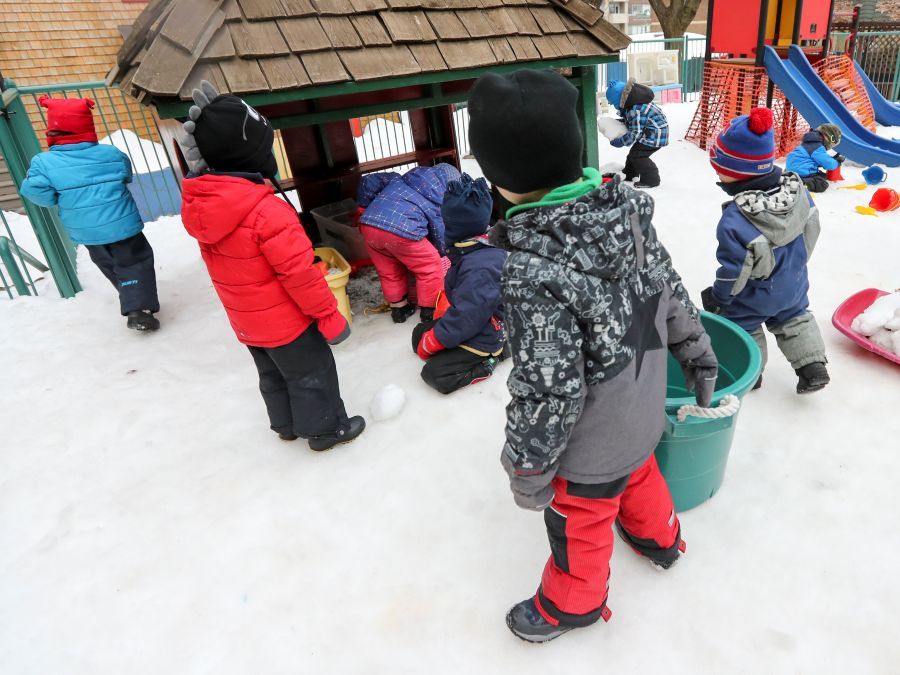
MONTRÉAL (Québec) – 21 février 2017 – Des enfants jouent dans la neige dans une garderie du centre-ville de Montréal, le mardi 21 février 2017. (John Mahoney / MONTREAL GAZETTE)

Read the English version here.

En 1997, le Québec a mis en place son réseau de centres de la petite enfance (CPE), et s’est engagé à offrir des services de garde éducatifs abordables et largement accessibles. Ce modèle, unique en Amérique du Nord, a été salué pour avoir favorisé la participation des mères au marché du travail et aidé le développement d’enfants issus de milieux défavorisés. Ces dernières années, le programme pancanadien pour l’apprentissage et la garde des jeunes enfants ( CWELCC ) et le maire de New York, Zohran Mamdani , ont tous deux ouvertement cité le modèle québécois comme source d’inspiration.

Cependant, ses succès ont masqué des pénuries persistantes et un soutien inéquitable selon les choix des parents. Parce qu’il oriente le financement vers les garderies plutôt que vers les parents, le système québécois n’est ni universel ni équitable, contrairement à ce que l’on prétend.

Bien que le gouvernement québécois ait inscrit dans la loi que chaque enfant avait “le droit de recevoir des services de garde éducatifs personnalisés de qualité,” en près de trois décennies, l’offre de places subventionnées n’a jamais répondu à la demande. En réduisant considérablement les coûts pour les parents grâce au financement public, cette politique engendre une demande sans cesse croissante: même si de nouvelles places sont créées presque chaque année, l’offre n’a pas réussi à suivre le rythme. À l’heure actuelle, plus de 30 600 enfants figurent toujours sur une liste d’attente du gouvernement.

Sans changement majeur, il semble très improbable que l’offre parvienne à rattraper la demande. Le gouvernement exige que deux éducateurs sur trois soient qualifiés, et pourtant le nombre de diplômés en éducation à la petite enfance au Québec a fortement diminué ces dernières années. Le système parvient de moins en moins à respecter ses propres exigences de qualité, et révèle précisément pourquoi il ne peut pas être rendu universel. Cette pénurie permanente signifie que certaines familles seront toujours laissées pour compte.

Les problèmes de main-d’œuvre ne constituent pas le seul défi. Le paysage des services de garde au Québec révèle un système à trois paliers financés de manière inéquitable. Environ la moitié des enfants âgés de 1 à 4 ans fréquentent un CPE ou une garderie subventionnée, financée par l’État à hauteur de 60 à 70 dollars par enfant par jour. Environ 30 pour cent fréquentent une garderie en milieu familial subventionnée ou une garderie non subventionnée couverte par un crédit d’impôt, bénéficiant d’un soutien public d’environ $35 par enfant par jour. Les autres enfants sont pris en charge par leurs parents, des proches, ou d’autres moyens de garde informels. Leurs familles ne reçoivent aucune aide financière comparable pour la garde d’enfants.

Comme la subvention que les parents reçoivent pour la garde d’enfants dépend de l’option qu’ils choisissent, obtenir une place subventionnée revient à gagner à la loterie: cela représente plus de $8,000 supplémentaires d’aide publique par rapport à ce que reçoit un parent ayant recours à une garderie non subventionnée. Quant aux familles qui préfèrent s’occuper elles-mêmes de leurs enfants, elles reçoivent chaque année environ $18 000 de moins par enfant en transferts qu’une famille disposant d’une place dans un CPE – alors même qu’elles n’engorgent pas le système.

Quel que soit le type de place que vous souhaitez ou que vous finissez par obtenir, le système comporte une faille majeure. La politique québécoise de garde d’enfants axée sur les garderies ne tient pas compte de ce que les parents de jeunes enfants souhaitent par-dessus tout: passer du temps avec leurs enfants. Un sondage mené par le gouvernement du Québec révèle que 40 pour cent des parents aimeraient travailler moins d’heures afin de passer plus de temps avec leur famille. Interrogés sur l’équilibre entre vie professionnelle et vie privée, les parents répondent également que ce qu’ils souhaitent le plus, c’est davantage de congés et des horaires plus flexibles.

Une politique dont le seul objectif est de subventionner le temps passé en service de garde omet cette réalité. Il n’est donc pas surprenant que 85 pour cent des enfants d’âge préscolaire fréquentant un service de garde y passent plus de 35 heures par semaine; or, passer autant d’heures en garderie à un si jeune âge peut nuire au développement des compétences sociales et à la maturité émotionnelle. C’est le résultat du manque de flexibilité et d’options offertes aux parents, inhérent au système.

Depuis que le gouvernement fédéral a mis en place son plan services de garde inspiré du modèle québécois, les mêmes problèmes se posent partout au pays. Les coûts directs liés à la garde d’enfants ont diminué tandis que les listes d’attente se sont allongées, et la volonté d’augmenter l’offre a réduit la proportion d’éducatrices qualifiées, ce qui pourrait nuire à la qualité des services. Toutes les provinces canadiennes disposent désormais d’un système qui ne finance que les choix de certains parents, selon une définition trop restrictive de la garde d’enfants.

Il pourrait en être autrement. Il serait possible d’offrir une alternative aux parents qui ne peuvent pas accéder à une place en service de garde financée par l’État ou qui n’en souhaitent pas. La Finlande en constitue un exemple. Parallèlement aux services de garde financés par l’État, son allocation pour la garde d’enfants à domicile soutient les parents éligibles qui s’occupent d’un jeune enfant chez eux, ou qui ont recours à d’autres moyens de garde informels. Cette politique reconnaît que les familles ont des situations et des préférences différentes.

Comme le prouvent les exemples du Québec, et désormais du Canada, le fait de financer les garderies plutôt que les parents directement crée une demande qui n’est jamais satisfaite et entraîne des inéquités entre les familles. Nos politiques de garde d’enfants doivent faire mieux pour ne laisser aucun enfant de côté.

National Post

Étienne-Alexandre Beauregard est essayiste et chercheur à l’Institut Cardus. Entre 2022 et 2025, il a travaillé comme rédacteur des discours et conseiller à la planification stratégique au cabinet du premier ministre du Québec. Son dernier essai, Anti-Civilisation: Pourquoi nos sociétés s’effondrent de l’intérieur, est paru en 2025 aux Presses de la Cité.