LP_468x60
on-the-record-468x60-white

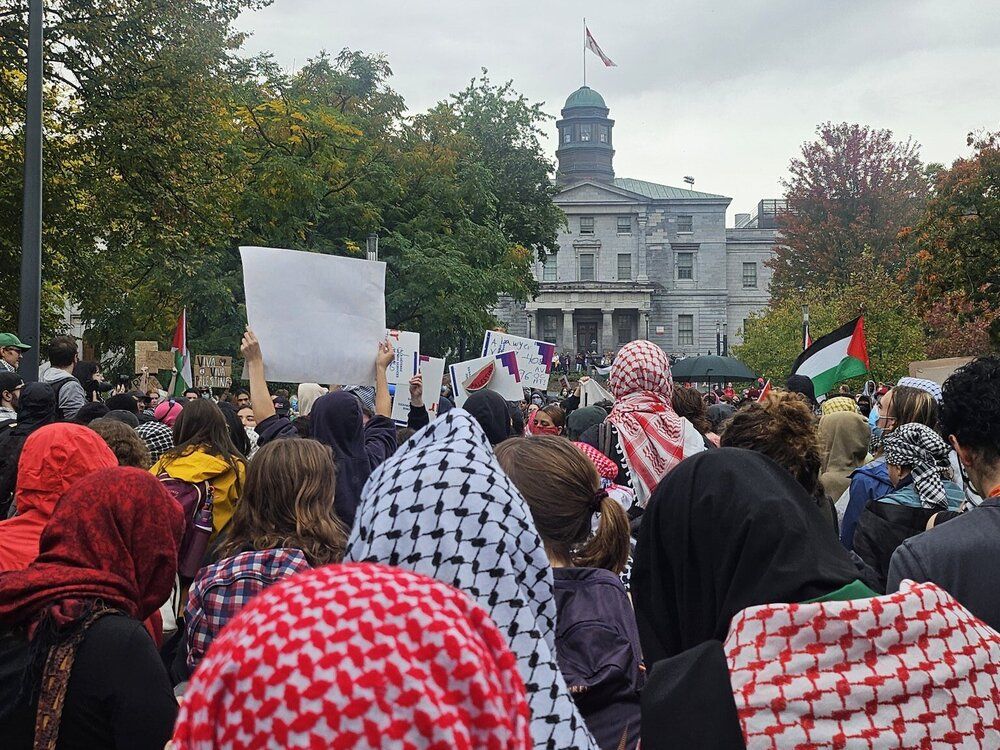
Anti-Israel protesters gather on McGill University's campus in Montreal on the two-year anniversary of October 7. Photo credit: Terry Newman / National Post

Jewish students and their parents must prepare themselves for shock and awe this fall on college and university campuses. The latest statistics coming from a report commissioned by the Department of Canadian Heritage are alarming. The report found that 95.7 per cent of the 900 students interviewed experienced some sort of antisemitism, while 84 per cent considered antisemitism a serious matter on campus.

This is not alarmism . There is now concrete evidence showing that 7 in 10 Jewish respondents in the study felt their universities were not taking antisemitism seriously. Seventy-two per cent said they limit what they say in class about being Jewish. Fifty-seven per cent avoid wearing or displaying Jewish symbols because of safety concerns. Sixty-eight per cent said their campus is not a safe and inclusive place for Jewish students.

It’s been 21 years since I attended the first “Israeli Apartheid Week” at the University of Toronto. Since then, I have been on the frontlines witnessing countless demonstrations, anti-Israel speakers and even the now infamous ‘boycott, divestment and sanctions’ campaigns promulgating hate against the Jewish state and Jewish students. The situation has only gotten worse for our children.

Who would have thought that the Palestinian flag would make an acceptable appearance at some graduation ceremonies this past spring?

The consequences of these sobering statistics are transforming how Jewish students live and learn as they and their parents worry for their safety, given the report’s finding that 22 per cent have experienced some sort form of physical violence.

One student described a kippah-wearing friend being chased from a university building by people shouting , “There’s a Jew — let’s get him.”

In another survey commissioned by the Association for Canadian Studies, positive opinions of Judaism fell from 49 to 40 per cent over 15 months, while negative opinions rose from 25 to 32 per cent.

The question for us all is whether universities are just factories for turning out anti-Jewish bigots who are now forming our nation’s social fabric.

Jewish students entering university this fall will be on the frontlines of Jew-hate and they must come prepared, especially if they are entering their first year. Here are some of my suggestions:

First, I recommend they develop a safety and support plan, even before classes begin. Aside from identifying campus security contacts and emergency numbers, they can connect with aligned and trusted faculty (even if not their own), join Jewish student groups like Hillel and Chabad and foster a strong social protective network. They must never confront organized anti-Israel hostility alone.

Second, for those wishing to pursue activism, I suggest they document all issues of concern using video and screenshots — provided it is safe and legal. Evidence is far more difficult for an institution and law enforcement to ignore. In this, students can create report incidents in writing to deans, university presidents and even members of governing boards, citing applicable university discrimination policies. I encourage students to also refer the matter to local law enforcement and an external Jewish organization, especially concerning hate speech and violence.

Third, understanding your legal rights as a student is important. Threats and intimidation, blocking access anywhere on campus, following students, damaging property, glorifying terrorism and, of course, open discrimination and exclusion are all illegal according to Canadian law. Universities often hide or bury these incidents excusing them as “academic freedom.” Aside from issuing a complaint to administration, students should refer such matters externally to law enforcement.

Fourth, I strongly encourage students not to get baited into uncontrolled confrontations in person or online. It’s important to always remain calm and not be drawn into reckless behaviour that might endanger yourself or a friend.

For their part, parents these days must remain engaged given these safety concerns. Some students may be genuinely afraid to be away from the comfort of home, feeling isolation, fear and anxiety.

None of these suggestions relieve universities from accountability. These jarring statistics are a wake-up call for all university presidents about the need for immediate institutional change. No Jewish student should have to hide their Star of David or remove their kippah, a sign that the university has failed one of its most fundamental objectives — to turn every student into a respectable and contributing member of society.

Jewish students should return to campus alert, organized and unafraid. They should know their rights, protect one another, record every incident and demand accountability.

Avi Abraham Benlolo is the chairman and CEO of The Abraham Global Peace Initiative, a Canadian think-tank countering antisemitism, defending Israel and promoting democracy.

Student protesters block the entrance to a lecture hall in the Leacock Building on the downtown McGill campus in Montreal.

Canadian authorities, by and large, now regard antisemitism as a significant and growing problem, and universities have become one of the places where, post-Oct. 7, 2023, it has manifested itself most visibly.

When Prime Minister Mark Carney identified antisemitism in Canada as having reached levels not seen in generations, he specifically highlighted the plight of Jewish students being driven from common spaces on University campuses.

Hundreds of experiences like that and far more egregious instances of antisemitism are detailed in the Campus Antisemitism and Student Experiences (CASE) report issued last week.

Here’s a verbatim sampling of what some Jewish students say they have experienced on Canadian campuses taken from that report:

I was told “Hitler should have finished you off” when people found out that I was Jewish.

I saw graffiti saying “Zionism is a death cult,” “Zionists invent false allegations of sexual assault,” “Death to Zionism,” and “Death to Israel.”

A professor wrote that we need to kill all Zionists, that she had worked with them and saw how evil they were.

I went to the bathroom; someone saw my (Star of David) and said, “Welcome to your gas chamber,” while people were vaping.

I was told to go die when I said I was a Jew from Israel.

My friend was walking through (REDACTED) Hall. He also wears a kippah, and a group of students shouted, “There’s a Jew…let’s get him.” They then chased him out of the building.

I was told by a professor, in class, in the middle of the lecture, that Jews belong in Poland and need to go back.

I was told that it was a shame Hitler did not finish the job.

I heard a Jewish friend being called a Zionist whore and spat on because she was wearing a visible Magen David.

I faced extreme pressure from other student organizations to release a statement against Zionism in my position as president of the (REDACTED) student union, and had my name placed on a list circulating on and off campus as a “known Zionist.”

Students asked me to remove my chai necklace because it was too Jewish.

Professor assigned us to listen to a podcast that discussed how Zionism was similar to Nazism, which was unrelated to the course.

I was harassed online … She went as far as spamming my art page for five days straight, sending me radical reels, calling my elderly family “killers.”

Various (protesters) shouted antisemitic slurs at visibly Jewish students on campus, including phrases such as “Hitler should have killed all of you.”

In first year, several mezuzot were torn from the doors of my residence. They never caught the people who did it.

Residents at my on-campus residence started rumours about me that I am a child killer, white supremacist, racist, and Zionist, all because these people found out that I was Jewish.

Jews were described as greedy for money in a lecture.

In a course that had nothing to do with Israel, my professor spent three weeks talking about Gaza and the creation of the State of Israel. He never mentioned the Holocaust as a precursor to its founding, repeatedly calling the state a “Zionist political project.”

When discussing characters in a book, my professor described one character by saying that “based on his last name, he is clearly Jewish and probably has a hooked nose.”

I and many other members of a Jewish organization unrelated to Israel received phone calls containing death threats after October 7.

Someone waiting in line in front of me said: “The Holocaust did not really happen. But if it did, Hitler was right.”

I cannot speak Hebrew with my parents on the phone on campus; I have stopped wearing Jewish symbols; I cannot talk about my holiday plans because they are Jewish; I have to hide who I am and where I come from.

Many students minimize the Holocaust and Jewish trauma, say that Gaza is the modern Auschwitz, and accuse Jews of “becoming what you swore to destroy.”

We were excluded from our (Equity, Diversity, Inclusion) community when it held a “pro-Palestinian” support meeting and said it was not offering a support group for Jewish/Israeli students. So we created our own support group.

Working in my labs, I have had people refuse to work with me due to my Jewish identity and purposely try to mess up my data.

Several faculty members in my program minimized the Holocaust or used it to condemn the Israeli response immediately after October 7.

My classmates required me to share my opinions on Israel as a condition for joining a student-led EDI initiative that should have been open to all graduate students in my department.

I heard a professor say that “Hitler was a hero.”

I was in the library and saw written on a desk: “Just because Hitler killed 6 million Jews does not mean he is a bad person.”

When I was at the campus gym, while wearing a kippah that made me visibly Jewish, a student came up to me and said he wished all Israelis would die because we are “a bunch of colonizers from Europe.”

Shortly after October 7, I told my PhD supervisor that I did not feel safe on campus and she replied: “Well, you should see the other side.”

A member of my anti-racism research lab at the university minimized the impact of the Holocaust while the other lab members remained silent. For example, she said: “The Holocaust was not the first time gas chambers were used. They were first used against Indigenous peoples in Canada.” When I raised this with my research supervisor, now tenured, her reaction was to protect the student responsible. For example, she said: “What happens in the lab stays in the lab.”

I was told to leave a public space because I was wearing a kippah.

One of my friends asked me what I was doing for Christmas, and I answered that I do not celebrate it because I am Jewish. She immediately asked whether I was Zionist. I answered yes, and she began excluding me from activities and making hateful remarks when she saw me on campus.

Many students minimize the Holocaust and Jewish trauma, say that Gaza is the modern Auschwitz, and accuse Jews of “becoming what you swore to destroy.”


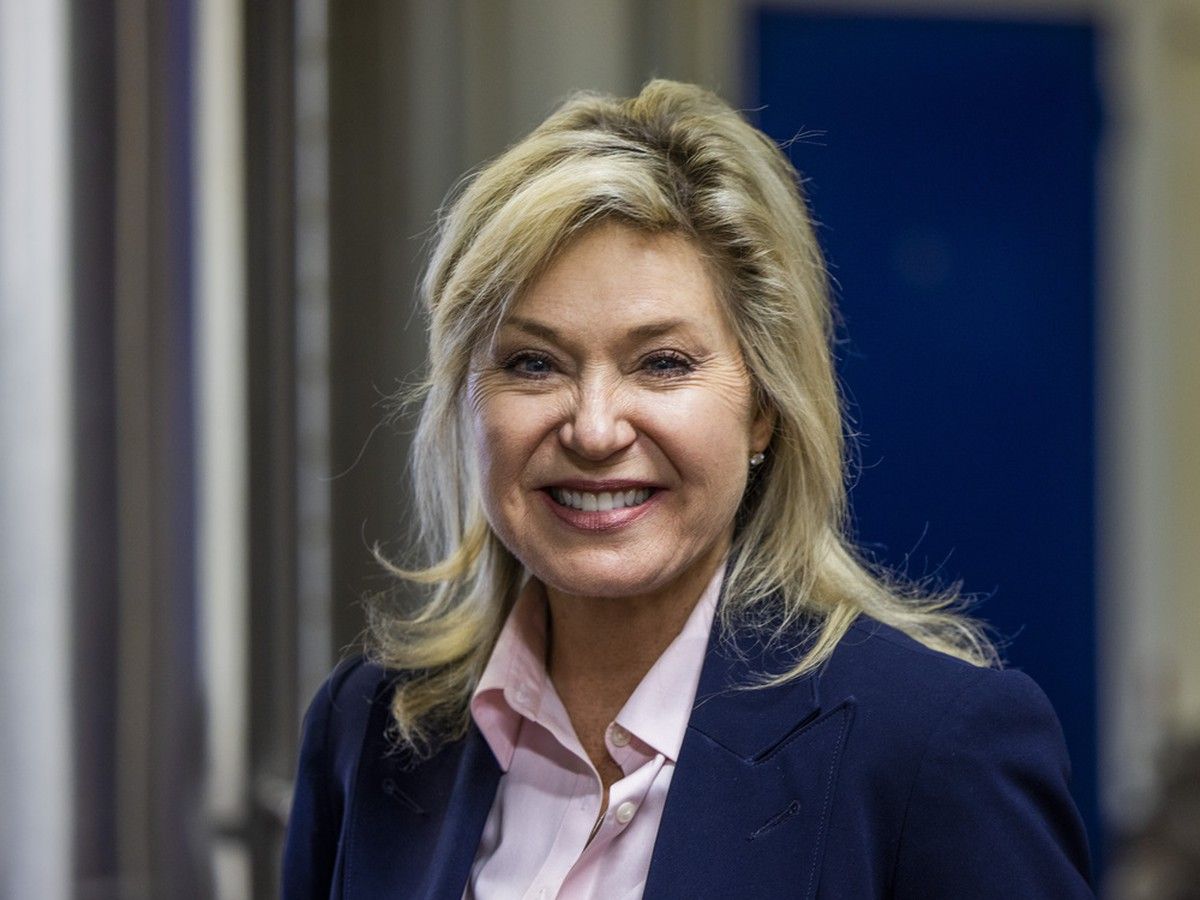
Former Ontario Liberal leader Bonnie Crombie in Mississauga in February 2025.

The story, as it understood at this point, is this: Shortly after winning the Ontario Liberal leadership in early December 2023, Bonnie Crombie took a brief vacation to a resort in Jamaica with her partner.

The Ontario Progressive Conservative party also sent someone to the same resort to “spy on” her.

A report this week in The Trillium , which had first reported that the PCs used party funds at two Jamaican resorts in the same 2023 time period, quoted unnamed sources in a follow-up as saying someone was there to scrutinize Crombie as part of opposition-research work.

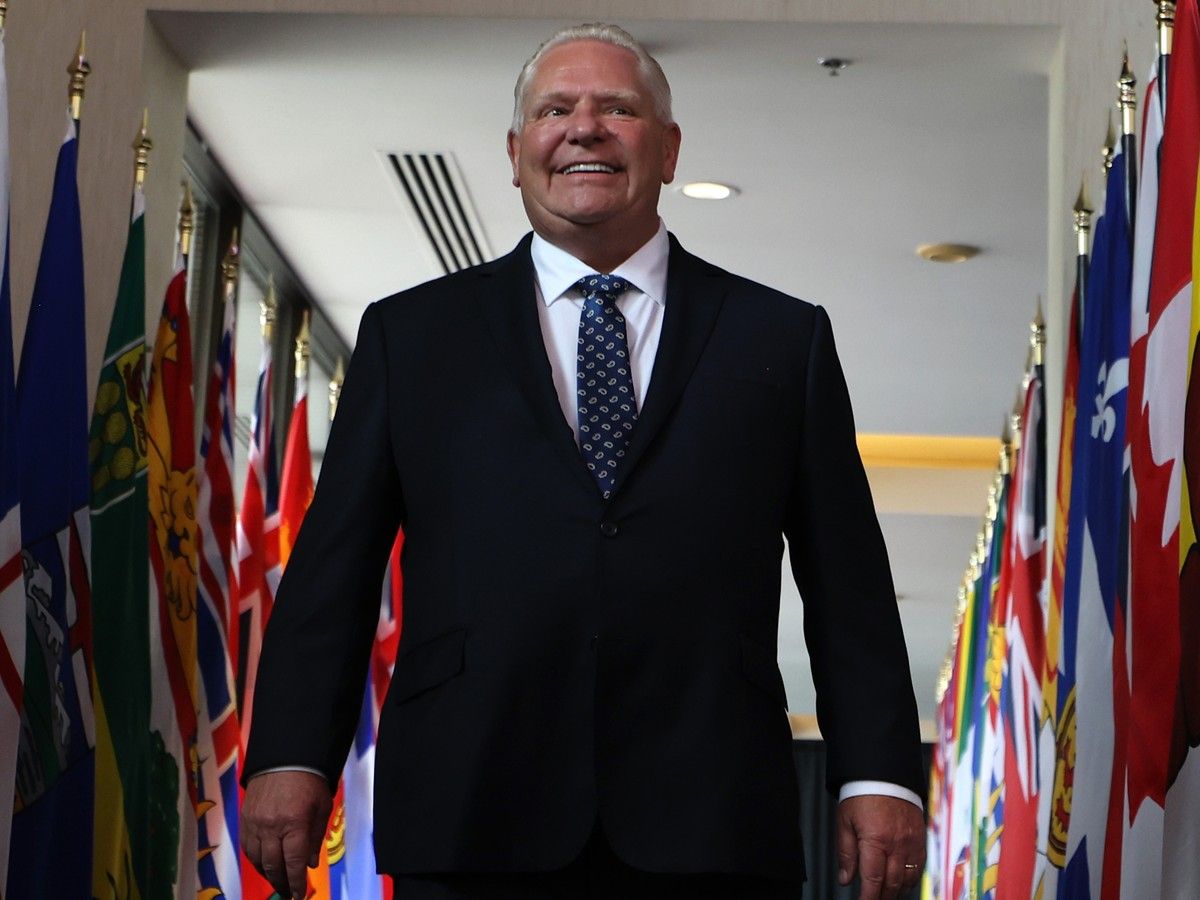
Asked about the story at an unrelated news conference in Guelph on Thursday, Premier Doug Ford said the first he heard about any of it was on Wednesday.

“Talk to the party,” the PC leader said. Ford said he didn’t approve of such a thing, but also did not apologize for what opposition MPPs have called “creepy” and “deeply disturbing” behaviour for a party staffer.

The premier also stressed that the money spent — about $3,000 at two resorts — was from party funds, although much of that budget comes from the public in the form of a per-vote subsidy.

While Ford said he didn’t agree with such tactics, he also shrugged them off, saying “it’s politics” and “stuff happens” in response to questions about whether he was responsible for the actions of his party.

All of it fits what has become a familiar pattern at Queen’s Park. The governing Tories, fresh off a third straight election win, are caught in a scandal of their own making. Ford tries to change the channel quickly, but at the same time avoids speaking in detail on the matter. The opposition parties, having scarcely believed their good fortune that such a scandal has fallen into their laps, gets to stretch out the story for days by demanding answers to questions that the government — or, in this case, the PC party — is not particularly inclined to answer.

It happened with the government’s brief ownership of a $28.9-million private jet to support Ford’s travels. It happened with revelations that more than a dozen PC MPPs billed taxpayers for overnight stays at Toronto hotels despite representing ridings that were within normal commuting distance to Queen’s Park. And it is happening again with the Crombie spy caper.

The third-place Liberals quickly called a press conference at the provincial legislature on Thursday to defend the privacy of their former leader and to demand answers on the Jamaican operation.

Calling it “an absolute violation of someone’s privacy” and the “lowest of the low,” MPP Stephanie Smyth said Ford and the PCs should acknowledge who approved the trip to the Caribbean and admit whether any type of report was produced as a result of it. Was Crombie photographed on her vacation? Do those photos exist anywhere?

(A spokesperson for Ford told The Trillium that the people involved do not currently work for the government or the PC party.)

The PCs spent aggressively in the early days of Crombie’s leadership to try to brand her as a wealthy “limousine Liberal” while also tying her to the unpopular Trudeau government of the day. (She had formerly been a Liberal MP.)

Smyth on Thursday also tried to tie the spy mission to an exchange between herself and the premier during question period in April, when Ford told the MPP for Toronto-St. Paul’s that she was only at the legislature because “CP24 didn’t want her anymore.” Smyth had a long career in broadcast journalism before entering politics.

Smyth said on Thursday that the incident with Crombie being followed is another indication of Ford’s “willingness to make politics intensely personal.”

“I personally experienced it,” Smyth said. (Ford did not publicly apologize to Smyth for his comments, but did so privately, and she accepted his apology.)

Marit Stiles, the NDP leader and leader of the Opposition, said on social media on Thursday that “spying on a woman who is one of your political opponents on her private vacation is creepy Trump-style politics that has no place here.”

Stiles also said that “somebody signed off on that expense, and (Ford) knows exactly who. Heads need to roll.”

Ford was in Guelph on Thursday with three Cabinet ministers to announce a “Data Centre Playbook,” guidelines that the province will use to determine the eligibility of potential data-centre developments.

Allegations of party subterfuge, though, went some way to derailing that message.

Crombie, who resigned as Liberal leader after failing to win a seat in the 2025 Ontario election, is running in the Mississauga mayoral race. She has not commented publicly on the spy story.


The Ontario Liberals are one again looking for a leader who can post a legitimate challenge Premier and PC Leader Doug Ford at the polls.

Why do Ontario’s opposition parties produce a perpetual parade of political pipsqueaks? Surely, in a province of 16 million people, there must be one credible opponent for PC Premier Doug Ford.

In their attempts to defeat Ford, the provincial Liberals offered first Steven Del Duca, then Bonnie Crombie. Both got clobbered at the polls. The NDP tried Andrea Horwath twice and now they have Marit Stiles as leader. As the loser of only one election, she’s just getting warmed up.

Reverting to their real level of competence, Del Duca and Horwath are now mayors of mid-sized municipalities. Crombie is trying to get back her old job as Mississauga mayor.

Now, the Ontario Liberals are once again seeking an electable leader, but it’s not looking good.

They face two key challenges. Their last two leaders didn’t have a seat in the legislature. That’s a significant disadvantage, but their caucus has only 14 members and none of them are well known. That leaves the field open to an outsider, but the next election is at least three years away. That’s a big commitment for an uncertain future. It’s not that appealing to a person who might be considered a star candidate. There is no Mark Carney waiting in the wings for the provincial party.

Despite all of that, the field doesn’t look too bad in theory . It features a former federal cabinet minister, two MPPS with some real-life experience, and two young guys who want to have their ideas heard.

Navdeep Bains is the most experienced politician, having been elected an MP in 2005. He served as a mid-level cabinet minister under former prime minister Justin Trudeau and left federal politics in 2021 to take a corporate executive job. He’s an accountant by training.

 Ontario Liberal leadership candidates, from left, top row: Lee Fairclough, Eric Lombardi and Dylan Marando. Bottom row: Navdeep Bains and Stephanie Bowman.

MPP Stephanie Bowman is a former bank executive and MPP Lee Fairclough had a long career in health care, including management positions. The two other contenders are Dylan Marando, a former political staffer, and Eric Lombardi, a housing advocate and financial technology entrepreneur. To his credit, Lombardi has released a detailed and costed platform.

In their first leadership debate this week , most of the candidates did little to help themselves. Bains was a relaxed speaker but that doesn’t matter much when all you are offering is platitudes. Fairclough needs to work on her distracting and excessive hand gestures and Bowman seemed unsure of herself, having to look at notes even when describing her own résume. Marando was the most effective speaker of the lot.

At this point, it’s difficult to see any one of those candidates offering a serious challenge to Ford. Bains seems bland and being a Trudeau cabinet minister isn’t exactly political gold. The two MPPs have somewhat similar backgrounds. Their challenge will be distinguishing themselves from each other. Lombardi has ideas and Marando has poise, but they have never been elected to anything. Neither has accomplishments sufficient to overcome that deficit.

The weakness of the leadership contenders is disappointing, given the golden opportunity the party has. Ford is certainly vulnerable to a serious challenger.

Despite winning three election majorities, a recent Abacus Data poll says only 34 per cent of Ontarians have a positive image of the premier, while 45 per cent are negative. It’s the highest net negative score of any premier in Canada. The pollster also found that 52 per cent of Ontarians think it’s time for a change of government and a further 18 per cent are open to it.

Not only has the shine gone off Ford, but the federal Liberals hold 71 seats in the province, enough to form a majority government if the provincial Liberals could replicate last year’s federal result. They’re not miles off, generally trailing the Ford government by single digits in the polls.

Closing that gap will require the party to be smarter than it has been in recent years. That means spending less time talking about Ford and more time describing what the Liberals would do in government. While Ford is an appealing target, there’s no saying he’s the person Liberals will run against in three or four years. Will Ford really seek a fourth term? Don’t bet on it.

The Liberal leadership candidates each need to pick just a few issues to define themselves. Affordability, inadequate hospital spending, and billion-dollar business subsidies would be a good list.

Ontarians deserve fresh ideas to challenge the PC status quo and offer a real choice in the next election. The Liberal party’s would-be leaders have a long way to go to achieve those goals. Their predecessors couldn’t do it, but really, can it be that hard?

National Post

Randall Denley is an Ottawa journalist and author. Contact him at randalldenley1@gmail.com


With next week’s deadline for new U.S. tariffs on Canadian imports fast approaching, the opposition Conservatives are calling on the prime minister to finally start delivering on trade — and to stop the unilateral concessions. In this interview, Rob Breakenridge speaks with Conservative MP Shuv Majumdar, the party’s shadow minister for Canada-U.S. relations, about the state of talks ahead of the Aug. 19 deadline and about the letter that Conservative Leader Pierre Poilievre sent to Mark Carney this week. Majumdar says the Liberals have put Canada in a position of weakness heading into these talks, and that Carney has failed to utilize Canada’s strengths to build leverage with Washington. Instead, the Conservatives accuse the prime minister of making too many concessions without having secured any reciprocal gains from the Trump administration. We’ll look at where things stand heading into next week — and beyond. Watch full video directly below.


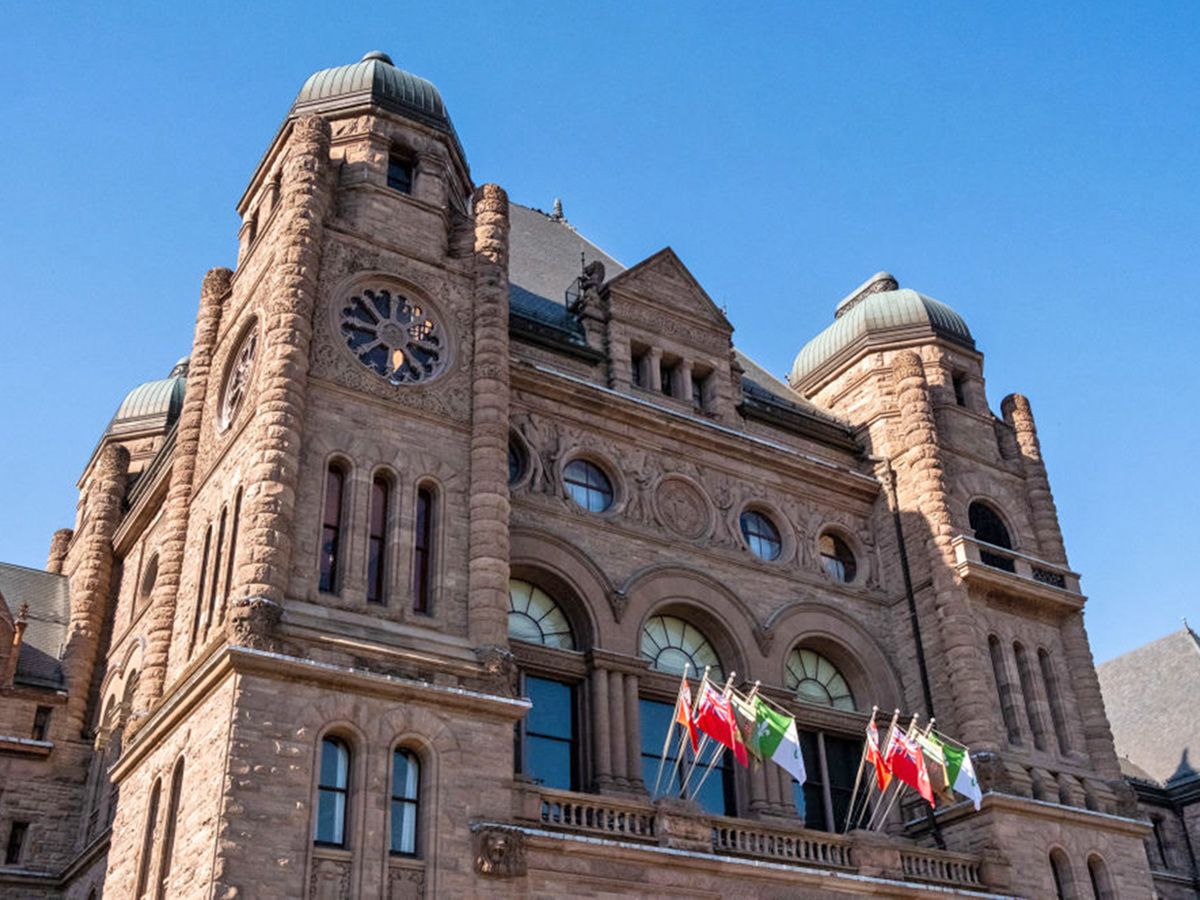
The Ontario Legislature at Queen's Park in Toronto.

The Ontario government has changed regulations to prevent people who are not legal immigrants from collecting social assistance payments.

Doug Ford posted on social media Thursday morning that “taxpayer-funded social assistance was never meant to support people living in Ontario illegally. As of today, it doesn’t.”

The Ontario premier was first alerted to the situation by a National Post story last month that reported on the case of a man who was awarded social assistance payments by a provincial tribunal despite living in Canada illegally for more than two decades.

In that case, the man entered the country in 1997 on a visa that expired after four years, but stayed and worked cash jobs until 2023, when he entered the homeless shelter system. He had initially been denied benefits by Ontario Works due to his lack of legal status, but successfully appealed to the benefits tribunal.

Ford said last month, citing the Post story, that “our government will always be there to support people on hard times — but that doesn’t include people living in Canada illegally,” and he vowed to change the regulations.

Thursday’s announcement does that, amending regulations under the Ontario Works Act and the Ontario Disability Support Program Act to “provide clarity on who is eligible for social assistance,” according to a government statement.

Under the new rules, those in Canada illegally and “individuals authorized to remain in Canada on a temporary basis” — on a student visa, for example — are no longer eligible to collect social assistance payments.

“These changes will protect taxpayer dollars and ensure these programs are there for the people they were intended to support,” said Michael Parsa, minister of children, community and social services, in a statement.

The federal Conservatives called for such a change last week, with Michelle Rempel Garner, the Tory critic for Immigration and Citizenship saying the tribunal decision was “yet another government action that undermines core principles of our immigration system: those who come to Canada should do so legally and with a clear commitment to becoming self-sufficient as quickly as possible.”

She said then that the federal Liberal government should back any change to the regulations that the Ontario government might make.

sstinson@postmedia.com


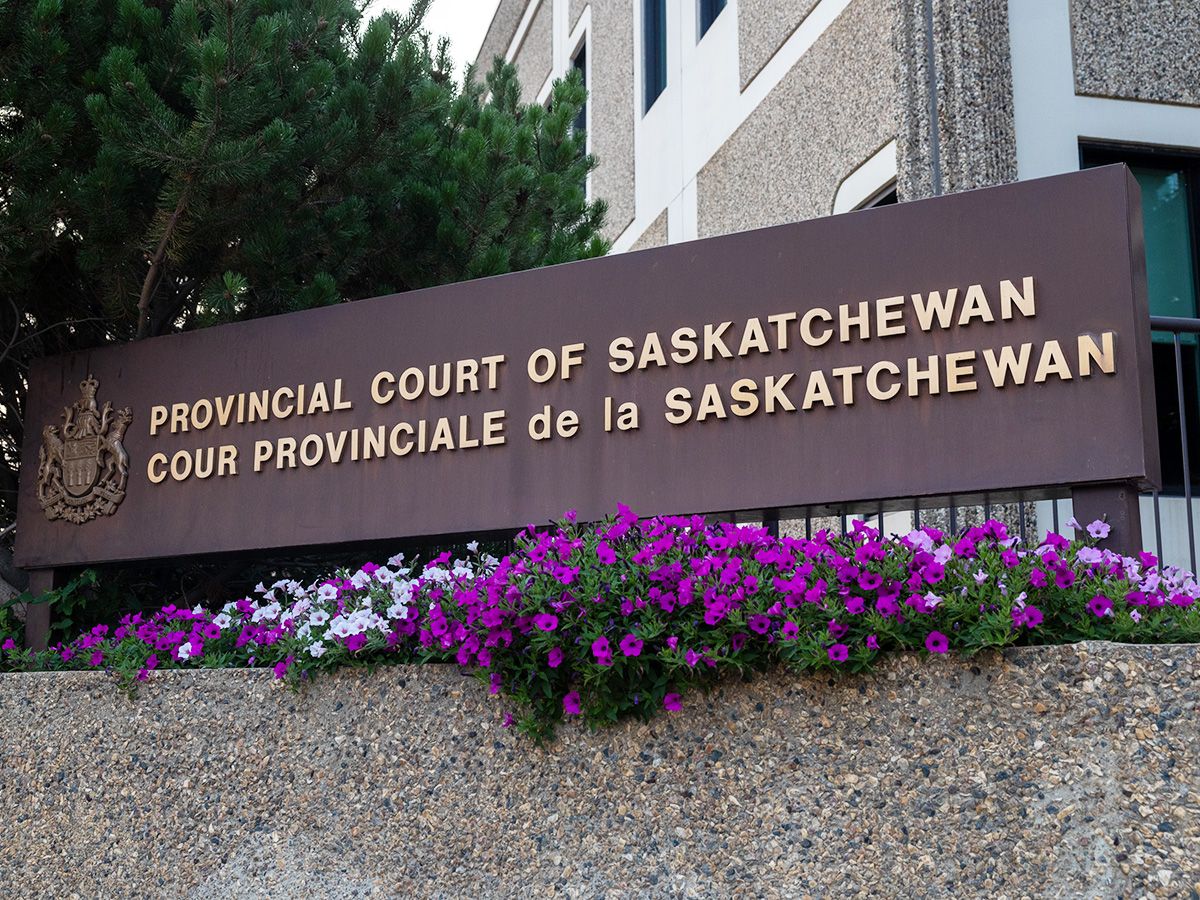
The provincial courthouse in Moose Jaw, Saskatchewan.

A Saskatchewan employer has been fined $5,000 in one of the first successful convictions obtained as part of a provincial effort to crack down on foreign worker exploitation.

On Tuesday, representatives for Dyan Jeny Enterprises pleaded guilty in a Moose Jaw, Sask. court to demanding $12,000 from an employee as a condition of maintaining his Canadian work permit.

Parth Patel, a foreign national working at Moose Jaw’s Guac Mexi Grill, was told that he would lose his job and potentially his immigration status unless he paid $12,000 to his employers.

In addition to the $5,000 fine, Dyan Jeny Enterprises was also ordered to repay the $12,000.

According to a report on the case by DiscoverMooseJaw , Provincial Court Judge Steven Schiefner questioned whether a $5,000 fine was sufficient deterrence for such a clear case of worker exploitation.

“I find the conduct of Dyan Jeny Enterprises and its principals to be atrocious,” Schiefner told the court.

Notably, the court would hear that illegally charging fees to foreign workers was considered common practice in Saskatchewan.

Last October, the charges against Dyan Jeny Enterprises were touted by the Saskatchewan government as the first prosecution pursued under a new provincial law intended to prevent the exploitation of foreign workers.

The Immigration Services Act, which became law in July, 2024, was announced as “the most comprehensive program integrity framework in the nation, including the highest fines for violation in the country.”

When first tabled before the Saskatchewan Legislative Assembly, a statement by the province’s Immigration and Career Training Ministry said it was part of their overall program to obtain “autonomy over immigration” and to grow the province’s population to 1.4 million by 2030.

Under the new law, individual violators can be slapped with fines of up to $750,000, as well as imprisonment of up to two years. Corporations can face fines of up to $1,250,000.

In addition, if the infraction affects “more than one foreign national,” each victim is counted as a separate offence.

However, since the alleged Dyan Jeny Enterprise infractions all occurred before the Immigration Services Act was proclaimed into law, the charges ultimately had to be pursued under the more lenient 2013 legislation that the Immigration Services Act had replaced.

As a result, the stricter consequences of the new law never ended up applying.

In addition, most of the charges laid in October were eventually withdrawn, including a charge that Patel’s employers had taken “unfair advantage of a foreign national’s trust or exploit a foreign national’s fear or lack of experience or knowledge.”

The Moose Jaw decision occurs shortly after another landmark Saskatchewan case involving foreign labour.

Just last week, two Saskatchewan men, Mohammed Masum, 44, and Sohel Haider, 55, were convicted of human trafficking in the case of a Bangladeshi woman first brought to the province as a foreign worker. Prosecutors said it was the first case of labour human trafficking ever heard by a Saskatchewan court.


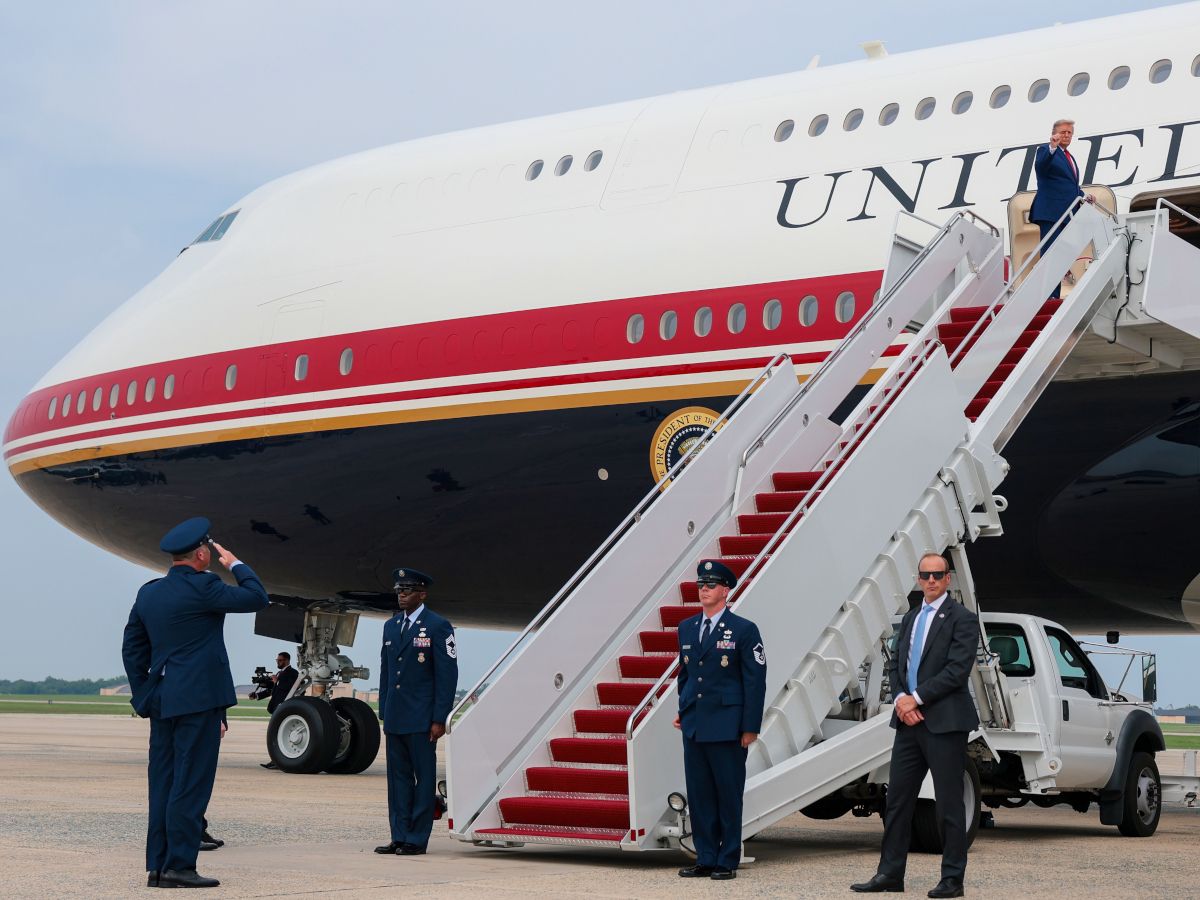
U.S. President Donald Trump boards Air Force One at Joint Base Andrews in Maryland on Aug. 11.

Sometimes I am just awestruck at the glorious feast future historians will have as they try to decipher White House decision-making from the time of U.S. President Donald Trump. On Wednesday, the U.S. newspapers were full of amazement at the weird series of events that happened on the tarmac at Ankara Esenboga Airport in Turkey on July 8. Shortly before departing a NATO summit in the Turkish capital, the president announced that he would be flying out to the United Kingdom on the old Air Force One (a VC-25, i.e., a modified Boeing 747) instead of the new Qatari gift plane (a 747-8) that has just come into occasional use.

He muttered that he was using the older aircraft for “old time’s sake,” eventually boarded it … and was secretly hustled into a catering truck that transferred him to a third aircraft, a U.S. Air Force Boeing C-32A. It was this tricked-out 757 that ended up taking Trump, along with Defence Secretary Pete Hegseth, to Britain.

Reports suggest that U.S. intelligence officials were concerned about an Iranian missile attack on the old Air Force One, but that didn’t stop the older plane from taking off, effectively serving as a decoy, with other cabinet secretaries, dozens of reporters and plenty of executive-branch staff members aboard. When the president was asked how he could expose those people to a danger he avoided, he claimed that, “The (third) plane I flew on was at greater risk,” which raises the question why he (and the military-intelligence establishment) bothered with the little switcheroo at all.

The aircraft shell game induced a lot of chuckles on social media as people imagined Trump being shuffled between planes inside a drinks cart. But, as the national-security historian Garrett Graff observed in an article published on Wednesday, the incident raises several questions of high seriousness.

Why was the Qatari plane avoided in the first place? The answer seems to be, “It’s not yet actually fit for the purpose of secure presidential travel,” although Trump has already flown on it in safer regions. And why was the press corps not told of Trump’s switch? In the past, Graff notes, the media has sometimes been misled by the Secret Service for security purposes, but at least a few trusted reporters were always kept up to date on the president’s whereabouts. This has heavy implications: Trump was, for a while, aboard a mystery plane over foreign soil, with the secretary of defence, and almost nobody knew a thing about it.

Was the nuclear chain of command back in the U.S. fully aware of the switch, and of the use of the old Air Force One as a decoy? Graff reminds us of a fresh outrage that got lost amid the unending chaos and the endless stream of nonsensical Trumpian verbiage last month: the president posted a message on his Truth Social site suggesting that he had given “orders” for Iran to be destroyed by “1000 missiles” in the event of his assassination. Whether or not such a “dead man’s switch” is a good idea strategically — and let’s face it: the person of the president is protected internationally by the implied threat of overwhelming retaliation — it is plainly illegal . Nuclear and other military command responsibilities would devolve upon the vice-president, along with the presidency itself, the moment the president was dead. Assuming, of course, anybody knew he was dead.

National Post
Twitter.com/colbycosh


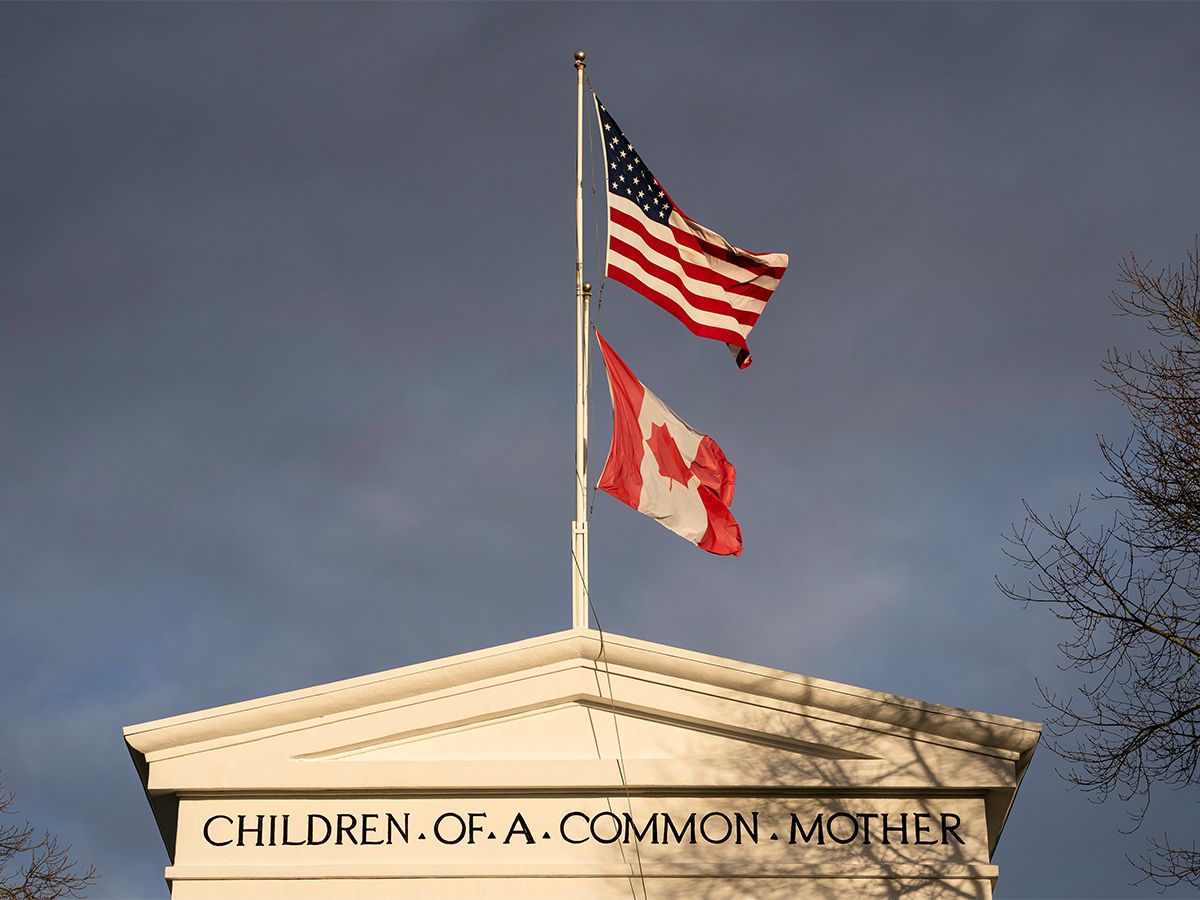
The American and Canadian flags fly atop the Peace Arch at the Peace Arch Border Crossing in Blaine, Wash.

Prime Minister Mark Carney has the luxury of vacationing in Tuscany as our U.S. relationship crumbles to dust but Canadians should buckle up for a rough ride.

Trade negotiators on both sides are reported to be working feverishly on a Canada-U.S. interim trade deal before Donald Trump’s new tariffs come into effect next Wednesday.

But what will Canada concede in any deal and how long will it last before the U.S. president decides to impose other tariffs based on a new excuse such as Carney not sending him a postcard from his Italian hideaway?

Amid all this bewildering uncertainty and intense negotiations comes a new warning tactic from the Canadian government to the U.S.: If these tariffs go ahead then hell hath no fury like a nation scorned.

Two sources told National Post that Canada “made it clear to the U.S. last week that if the tariffs were to go forward on Aug. 19, it will be difficult for Canada to make a deal.”

According to a report in the Globe and Mail, Janice Charette, Canada’s chief trade negotiator, told her American counterparts that if Trump imposed new tariffs then the federal government would not be able to control the premiers or the public.

What an astonishing threat to make. The federal government is absolving itself of any responsibility should a deal fail while also hoping that the likes of Doug Ford, David Eby and the guy on the Toronto subway do its job.

Presumably, Charette was indicating that a lack of a new deal would mean the U.S. booze ban — a major irritant in America — would stay in place while maybe a revitalized Elbows Up campaign would convince Canadians to once again forego trips to Florida and all parts south.

A U.S. factsheet issued in July about Trump’s proposed new 50 per cent tariffs on certain goods, noted that “Canadian imports of U.S. alcoholic beverages decreased by about 81%, or $582 million, compared to the same period in 2024-2025.”

That’s U.S. millions so $812 million Canadian. We are talking big bucks and American breweries and wineries are hurting.

Meanwhile, Canadians are still foregoing trips south of the border. In July, Canadians made 2.3 million trips to the U.S., an increase of 10 per cent over last year. But trips by cars, the main method of travel, were still almost 30 per cent lower than in 2024.

The boycott of American goods and travel won’t end overnight.

But it seems a bit rich to put Canadians so squarely in the negotiating firing line while the prime minister is sipping Chianti in Tuscany. It is ordinary Canadians who have the most to lose and the federal government should be making more of an effort to resolve this dispute at the bargaining table rather than making threats that rely on the premiers and the public.

Just how much is at risk for Canadians was documented this week in a report by the Canadian American Business Council (CABC).

The report envisaged three scenarios and their possible consequences. A “status quo” scenario reflected the current tariffs war but of most importance were the scenarios under which the Canada-U.S.-Mexico free trade agreement (CUSMA) was either renegotiated or broke down.

A breakdown of the CUSMA agreement would see the loss of 102,000 jobs, an average household losing almost $6,000 in income and a loss of $271 billion in GDP over 10 years.

Conversely, renegotiating CUSMA would result in the creation of 98,000 jobs, an increase in average household income of $4,166 and a rise in GDP of $253 billion in 10 years.

When affordability, food and house prices are on the minds of many Canadians, these are not trifling numbers.

But Carney seems in no mood to make a quick deal. In July, he told provincial and territorial premiers at an Ontario retreat that his team was “only going to accept the best deal for Canada.”

And to diversify the Canadian economy away from the U.S., the prime minister has reached out to the likes of China and Qatar .

Whether Canada should be getting into “strategic partnerships” with these countries is one issue, but a bigger one is that there has been no new trade agreements (although tariffs were lowered under a deal with China.)

But as the CABC report noted, Canada and the U.S. are economically tied at the hip. If CUSMA (also known as USMCA) breaks down, or the status quo continues, even trade agreements with other countries is not going to rescue Canada.

“Because the two countries are each other’s most natural trading partners — integrated over four decades through CUSFTA, NAFTA and USMCA — trade diversion to third countries is costly and, at best, partial,” notes the report.

And Canada has the most to lose.

“Given the highly dominant position of the US as Canada’s largest trade partner to begin with, the US still accounts for 67% of Canadian exports and 42% of Canada’s imports even under USMCA Breakdown.”

In combatting Trump, Carney’s defining mantra is to build big, fast and bold. But he has done none of these things. Now, in trade negotiations, the Liberal government appears to have abdicated its responsibility to secure a deal and instead threatened the U.S. with the fury of Canadians.

Canadians are mad, they have a right to be. But pointing this out to the U.S. seems like an act of desperation from a government devoid of leadership, negotiating talent or ideas.

“Make a deal or we won’t buy Napa Valley wine or visit Florida.” Well, maybe it’ll work.

National Post


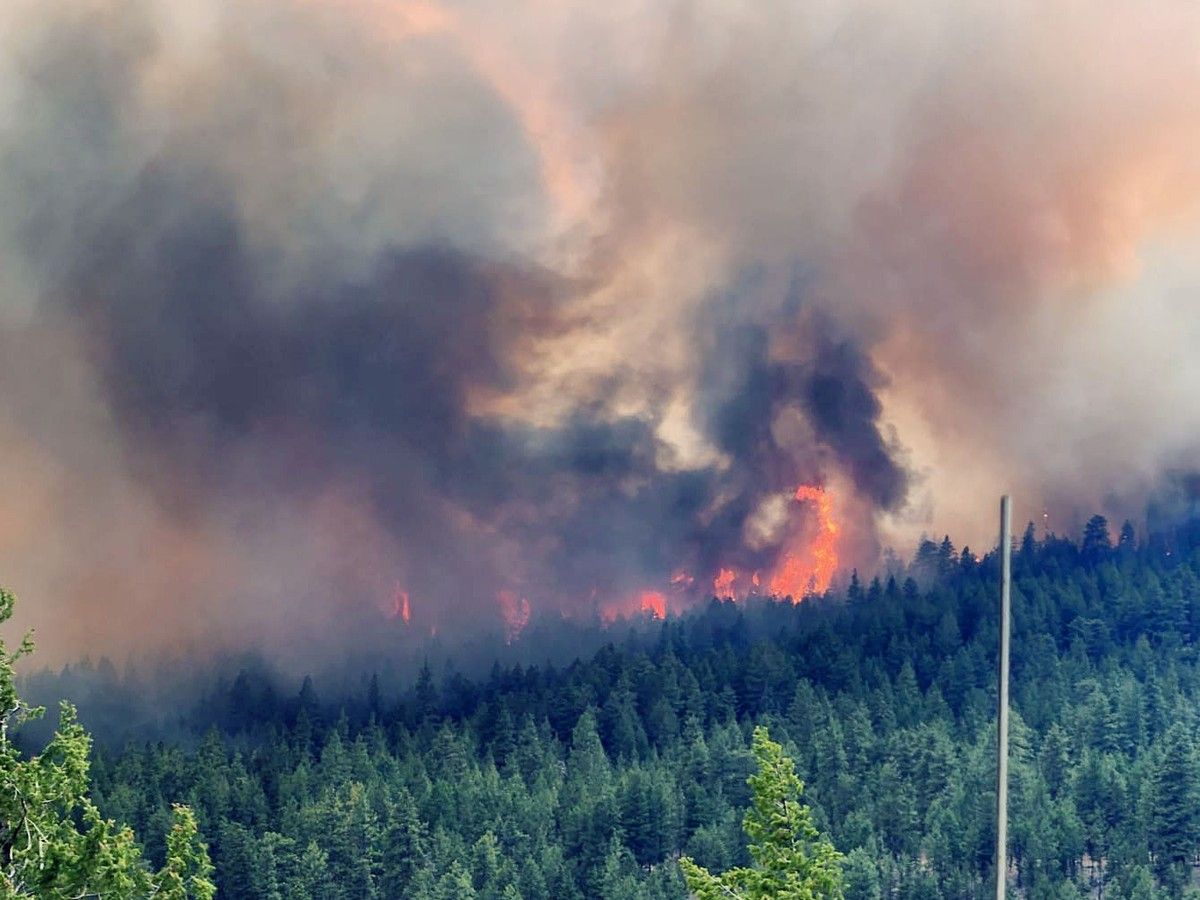
The Bald Range Fire on Aug. 10, 2026.

One of the laziest tropes about governance is that tragedies should not be politicized. Generally speaking, the ones who relay that silly maxim are the ones who must reckon with the tragedy and don’t want the headache or their rightful share of the blame.

There is no question that lightning strikes are not partisan occurrences. They can strike at any time and produce unpredictable effects, such as sparking a wildfire in the hinterland of British Columbia.

However, the choice not to expand airborne firefighting capacity, the treatment of wildfire fuels, and post-fire reconstruction are all political choices. If the Okanagan is going to burn, taking beloved homes and lives with it, there is responsibility that must be assigned. In fact, accountability in these situations is the decent thing.

The 2026 wildfire season in B.C. has been horrific, to put it mildly. By Tuesday, there were 904 fires burning, and nearly 400,000 hectares had burned, which is roughly the same size as the American state of Rhode Island. The especially dreadful Bald Range fire near Summerland has burned 17,800 hectares and forced roughly 20,000 people to flee their homes. An 80-year-old woman who failed to escape has been identified as the first casualty .

A state of emergency is in effect in B.C., having been declared on Aug. 8. That was four days after Emergency Management Minister Kelly Greene said that such extraordinary tools were not yet justified. Conditions and political calculations have apparently flipped with equally terrifying and infuriating speed. It was precisely this volatility and danger that the B.C. NDP government claimed it was preparing for months ago.

Back in March, the province assured British Columbians that it was “ready” for the wildfire season, boasting more than 600 full-time positions, 1,300 firefighters, 28 airtankers, and more. This is not an insignificant arsenal, and absolutely nobody should be placing a single shred of blame on the firefighters themselves, whether they are local or flown in from Mexico as reinforcements. We are all deeply grateful to all of them.

Now, as for the government, if only its preparations could have been made adequate through the bravado of a press release. The only way to assess the province’s capacity for combating wildfires is by examining the results.

Considering the mass evacuations, international assistance, and federal aid that had to be requested once the fires were underway, it is clear that the NDP fell short of its own expectations.

Not every hill, patch of grassland, and knoll can be manned by a crew. Nor can the government shield the surface of the Earth from electrical storms or identify every lunatic firebug who drops a lit match. Still, the NDP has been in office for nine years and has yet to produce a transformative wildfire response strategy, despite escalating disasters throughout its tenure.

Changes in the climate, wind patterns, and snowfall can help us understand why the fires keep getting worse, but they do not explain the government’s ongoing preference for improvisation.

In 2026, the B.C. NDP government’s forward budgeting shows that funding for fire preparedness is set to be cut by 2028–29, as is funding for fire management. Despite the destruction of the Fraser Canyon town of Lytton and the solidification of the nickname “Smokanagan” amid the seemingly endless clouds of smoke that blanket B.C.’s wine country, it is clear that a modernized wildfire response is not on the books.

The B.C. NDP is running a $ 13.3 billion deficit, with funds being directed toward what the government deems more important to its political success and hold on power. These include boutique grants, bureaucratic experiments, ideological rebranding of institutions, and all the sleazy sinecures that come with modern left-wing governance. What about larger permanent crews, advanced nighttime operations, aggressive fuel reduction, or enhanced aerial capacity?

Why is the protection of life and property less important than the political baubles the government dangles before itself and its allies?

The private sector is, in fact, outdoing the provincial government. Coulson, a company in Port Alberni that specializes in firefighting, has just conditionally purchased 10 retired Royal Canadian Air Force CC-130H Hercules aircraft and plans to convert them for aerial firefighting. While the deal is not yet final, it is the sort of bet that the provincial government should have emulated long ago. Coulson is planning for the long term while the province is more concerned with damage control.

Has Lytton been forgotten? A fire in 2021 destroyed almost the entire village, killing two people, and the community has yet to be rebuilt. A report from B.C. Premier David Eby’s auditor general placed blame on the tiny municipality for having failed to procure an engineer and for not sufficiently partnering with the local First Nations. A town reduced to ash was supposed to become its own emergency ministry, reconstruction authority, and secretariat for local Indigenous relations.

Browbeating a shattered village for failing to uphold the NDP’s standard of hyper-ideological Indigenous engagement is a scandal. Can Lytton perhaps be forgiven for failing to perform every little procedural ritual that the province demands of it?

However, the NDP cannot pass the blame for the Bald Range fire down to Lytton, eastward to Ottawa, or backward to long-dead B.C. Liberal governments. The NDP has held power since 2017, receiving repeated warnings with every successive fire season. It has no more excuses for failing to modernize B.C.’s wildfire strategy. Flames are not partisan, but the NDP certainly is, as are its decisions within a democratic system.

British Columbians should politicize these wildfires because politicians bear responsibility for preventable failures. David Eby’s government should stop pretending that it did everything possible and own up to the fact that it did not do enough. Then, finally, it might credibly claim to have shown some leadership.

National Post