LP_468x60
on-the-record-468x60-white

FILE - An electric vehicle charges at an Electrify America station in Arcadia, Calif., May 22, 2025. (AP Photo/Jae C. Hong, File)

It’s not always the unexpected that gets governments in trouble — often enough it’s their own bad judgement, poor timing or general clumsiness that gets in the way. But the unanticipated does happen a lot.

Parties and politicians put time and effort into concocting a set of policies aimed at winning votes by proposing remedies to problems identified as occupying top rungs of current voter concern. If they’re lucky they get elected, presumably intending to put those policies into effect at the earliest opportunity. Then the world shifts and pulls the rug from under them.

Former prime minister Justin Trudeau was a big fan of the attention-getting promise. Especially if it was a pledge timed well into the future when he was unlikely to still be around to be held responsible. Carbon reductions too ambitious to be realistic. Budget targets too unlikely to be believed. Statist planning projects that tended increasingly to the surreal.

Mark Carney is left with the detritus and the problem of what to do about it. As prime minister he’s already acted on a few of the problematic leftovers, ditching the carbon tax even though he’d previously supported it as a good idea; scrapping an increased

tax

on capital gains although the Treasury could certainly use the money; “caving,” as the Trump administration so tastefully put it, on a digital services

tax

that was a bad idea to

begin

with but pushed through by the Trudeau government anyway.

There’s an argument to be made, and not a bad one, that each retreat was the right move for the moment. And if there are mistakes that need abandoning, the early days of a new government is proverbially the best time to do it.

But righting wrongs has confronted Carney with a new predicament, in that there are so many Trudeau-era wrongs that need righting. Washington was still in the midst of its victory dance over its digital tax triumph when Canada’s auto industry came along to plead for similar treatment from Ottawa, insisting automakers couldn’t possibly meet previously-set electric vehicle targets and urging the new Liberal government to backtrack post haste.

Carney

hosted

 the session with Canada’s chief executives for Ford, Stellantis and General Motors. Brian Kingston, chief executive of the Canadian Vehicle Manufacturers Association, was blunt in identifying the targets set for electric vehicle (EV) production as the main topic.

“The EV mandate itself is not sustainable. The targets that have been established cannot be met,” he said on arriving for the meeting. Afterwards he told Politico’s

online

news site, “At a time when the industry is under immense pressure, the damaging and redundant ZEV mandate must be urgently removed.”

There’s no doubt automakers have a serious threat on their hands. The Trump administration is putting a vigorous squeeze on the industry in its crusade to force manufacturing back to the U.S. Canadian plants face tariffs on steel and aluminum, and another on autos themselves. Even if negotiations succeed in reducing those levies, the unpredictability of the current U.S. administration eliminates any chance of certainty, inhibiting long-term planning and investment strategies. Add in the failure of the EV revolution to attain the heights enthusiasts forecast for it and the future looks like one long, bumpy ride into doubt.

The Trudeau EV targets were

introduced

in 2022 by then-environment minister Steven Guilbeault, now minister of Canadian Identity and Culture. They set minimums for zero emission vehicle sales at 20 per  by 2026, 60 per cent by 2030 and 100 per cent by 2035.

The goals were always fanciful and have looked increasingly so as the EV business ran into trouble on numerous fronts. China’s determination to flood the world with low-cost EVs roiled higher-cost rivals in Europe and North America. A global race to secure essential minerals set off commercial clashes in some of the world’s most troubled countries. In addition to his on-again off-again tariff regime, Trump is set on

weakening

the U.S. EV industry, ordering an end to supports introduced by the Biden administration and cancelling a federal tax credit for EV sales in the “Big, Beautiful Bill”

approved

Wednesday by Congress. A last-minute change to the legislation even

advanced

the end of the credit by three months to September this year.

Add to all that the personal

implosion

of Tesla founder Elon Musk, removing the perceived chichi-ness of owning a Tesla and sending sales into a tailspin, a tarnish potentially affecting the popularity of electric vehicles in general.

So there is a more-than-reasonable case to be made for Carney to water down the EV mandate while he’s still in the business of ordering retreats. But there’s an obvious political risk involved, and one he can’t be keen to encourage. One retreat feeds another, and Canada’s history of corporate subsidies and regulatory breaks means there’s a long list of supplicants likely to view concessions to the auto giants as a signal to get out their begging bowls and head to Ottawa for similar treatment.

The auto sector

claims

an annual contribution of $16 billion to the economy, making the need for sympathetic treatment from Ottawa obvious. Yet a tradeoff of EV ambitions to fossil fuel realities is a contravention to Carney’s clearly stated environmental beliefs.

This may be a moment in which we discover how much of the prime minister is the pragmatic business-minded banker intent on shaking Canada free of its low-productivity torpor, and how much is a politician still in his apprenticeship and wary of being pushed in directions he doesn’t want to go.

National Post


Prime Minister of Canada Mark Carney and President of the United States Donald Trump take part in the family photo at the 2025 G7 summit in Kananaskis on Monday, June 16, 2025.

It has become something of a cliché to assert as an evident fact accepted resignedly, that the West is in decline. But it isn’t. The West is essentially the Americas, Central and Western Europe, Israel, Australasia, and Japan, South Korea, Taiwan, arguably the Philippines and beleaguered elements in South Africa. Obviously, some of these places are in better condition than others. A degenerating society is one that has lost the will to defend itself from both external and internal enemies and where belief in the value of the society or civilization and loyalty and pride in the country have eroded to the point where there is legitimate doubt that they can be sustained under any pressure. No part of the Western world has achieved such a condition.

Canadians are vaguely aware that in the last decade we’ve been uncompetitive with peer countries in economic growth and the rise of our standard of living, and although most Canadians have been dissatisfied with many aspects of public policy, almost nobody believes this has ceased to be a worthwhile country and a relatively agreeable place to live with excellent prospects if we have improved standards of political leadership. The burning question is whether the new prime minister, Mark Carney, will follow the authoritarian and socialistic, environmentally-obsessed course indicated by his book, Values, a turgid recitation of an unpromising political agenda, or succumbs to the traditional tenacious enticements of incumbency of a federal Liberal leader. It must be said that, so far, he has shown gravitas in his distinguished office, and although there is a weakness for Pearsonian waffling, that is a merciful relief compared to the green fanaticism and mindless globalism that afflicted him when he was governor of the Bank of England. The appointment of the very capable Michael Sabia as clerk of the privy council is reassuring.

In the United States, on whose strategic direction and political and economic health the condition of the entire West chiefly depends, President Trump, no matter how appalled many may be by his lack of gentility, is moving decisively to stimulate economic growth, reduce the trade deficit, reduce inflation, increase job creation, and has effectively closed the borders to illegal immigration, and is asserting the authority of the federal government throughout the country and requiring the apprehension and deportation of convicted criminals who entered the United States illegally. These are elemental steps in national self-preservation and if they had not been taken, a rising concern about what the late British critic and humorist Malcolm Muggeridge called “the great liberal death wish” in the United States would have been justified. The joint Israeli-American destruction of the Iranian nuclear program and of Iran’s capacity to finance international terror on the scale that it has through most of the history of the Islamic Republic has been a decisive and absolutely essential step in raising the prospects for peace and prosperity in the whole world.

Western Europe is naturally more complicated. For all of history from the rise of the Roman Republic to the 20th century it was the leading and most influential political and economic region in the world. It is naturally heavily burdened by its responsibility for the evils of totalitarian communism, Nazism, and fascism and the terrible hecatombs of the world wars. For notorious historic reasons, it lumbers its economy with extravagant Danegeld for the working classes and the small farmers. Much of Europe went perilously far in abdicating democratic political authority to the undemocratic commissioners of the European Union. They are all committed to the “ever closer union” which is the founding objective of the EU, but which has not been specifically ratified by many of the adherent populations, and as the European commissioners are not elected and are not answerable to the talking shop European Parliament in Strasbourg, this is not democracy. That was the great problem in the United Kingdom, which Mark Carney failed to recognize as he tried in his in supposedly nonpolitical position of central banker to terrorize the British into voting against Brexit. Britain had voted to join a common market not a federal union. The institutions of government that had developed over 800 years of British history would be subsumed into the well-intentioned but unfledged institutions of Brussels, and its relations with the United States and its senior Commonwealth kindred countries, relationships that have made an incomparable contribution to Western civilization, would be handed over to the Davos-minded foreign placemen of Brussels.

The European Union will have to be rethought and probably will proceed on a two-tiered basis where those countries which wish federation should certainly have it and those that wish to retain national sovereignty but in affiliation with European central government are accommodated. The whole enterprise will have to adopt a tax and benefit system more stimulative to economic growth and more respectful of the market economy. Europeans cannot ignore the implications of the fact that 20 years ago their collective GDP was almost identical to that of the United States and today the American economy is almost twice as large as that of the EU. This is despite the mediocre American leadership between the Reagan and current Trump eras, because European political leadership has been even poorer. For the only time in British history, U.K. Conservatives provided five consecutive failed prime ministers in eight years. The quality of French leadership in the Fifth Republic has declined from the great General de Gaulle in tottering downward increments to the completely incompetent François Hollande, and Emmanuel Macron has been only a very partial improvement. Four-term German Chancellor Angela Merkel, who could Have been a female Bismarck, was ultimately a failure, as was her successor. Both the new chancellor and the new opposition show signs of hope. The Italian Premier, Giorgia Meloni, is a very considerable statesman and the most capable Italian leader since Alcide de Gasperi. The Spanish premier is a socialist imbecile, and the present British government is off to a terrible start.

But there are unmistakable signs that the old continent is recovering: the German Christian Democrats like the equivalent Italian parties, are much bolder and more ideologically robust than in the recent past. The French Rassemblement National has respectabilized itself and appears ready for victory. In the United Kingdom, either the Conservative Party will regain a reasonable quality of leadership and political judgment or it will be shunted into the wilderness like the old Liberals by the Reform Party. The most encouraging litmus test of the recovery of Europe is that Vladimir Putin had assumed that it would be wallowing in moralistic platitudes while he reabsorbed Ukraine. Not only has Ukraine repulsed him with great courage, but he succeeded in reawakening Europe from its long torpor and arming it with the resolve of self-respect and determination of olden time, and is doubling its defence budget. The westernized countries of the Far Pacific are responding commendably to the Chinese challenge, encouraged by the pivot of Trump’s America towards them. This is not a civilization in decline.

National Post


Zohran Mamdani, Democratic candidate for mayor, leaves a press conference celebrating his primary victory with leaders and members of the city's labor unions on July 2, 2025 in New York. (Photo by ANGELA WEISS/AFP via Getty Images)

Democratic mayoral nominee Zohran Mamdani is on a mission to bring race socialism to New York City. That is not speculation, it’s in his public campaign platform.

“Shift the tax burden from overtaxed homeowners in the outer boroughs to more expensive homes in richer and whiter neighbourhoods.”

Were it a throwaway line designed to appeal to unhappy, dyed-hair baristas and the local faculty lounges, Mamdani might have quietly removed it, but it turns out that it is essential to his vision. When called out on it on live television, he

doubled down

on the policy while bewilderingly denying it was race-based.

“That is just a description of what we see right now. It’s not driven by race. It’s more of an assessment of what neighbourhoods are being under-taxed versus over-taxed,” Mamdani stated on NBC News.

Despite the blatant attempt at gaslighting, this could be the start of a tremendous shift in global left-wing politics, considering the influence of the United States. The buildup to race socialism has been decades in the making, and Mamdani could be the politician to make it mainstream.

These ideas have been gaining traction in the West, including in Canada.

The far-left publication Canadian Dimension

published

a column in February that called for a wealth tax and explicitly linked it to race: “It’s no secret that extreme wealth in western democracies is overwhelmingly held by white people, and Canada is no exception.”

There is even a

“critical tax theory”

movement arising in North America that argues that white taxpayers should pay higher rates in the name of equity.

For those who want a policy of racial socialism and revolution in the West, Mamdani is their role model for the foreseeable future. If New Yorkers want to consign themselves to stagnation, racial animosity and more bad governance, that is their decision. The burden is on everyone else to reject race socialism wherever it arises.

There is no doubt that Mamdani is a charismatic figure, with a readily deployable smile and a soft millennial bearing that makes him appear rather harmless. It is an excellent shield for a man whose ideology strays sharply from that of Thomas Jefferson, Abraham Lincoln, or even Barack Obama.

For all his faults, it is clear that Obama has

at least a basic,

albeit very critical, respect for the American Founding Fathers and the country’s constitutional principles. Mamdani’s

thinking

has been

deeply shaped

by his family, who are heavyweights in the world of far-left academia.

His father in particular, Mahmood Mamdani, is one of the western world’s more well-known scholars in the field of “postcolonial studies,” with a special interest in Africa.

The Africa Report, an award-winning quarterly focusing on the continent’s current affairs,

reported

in June that the Mamdanis were awash with “diasporic intellectualism, where ideas about justice, decolonization and identity were household conversations.”

How exactly did decolonization play out in Africa following the collapse of European rule? There was great enthusiasm for wealth redistribution and the scapegoating of ethnic minorities, led by charismatic figures like Uganda’s Idi Amin and Zimbabwe’s Robert Mugabe.

Following the British departure in 1962, Idi Amin demonized and

purged

the country’s mostly South Asian merchant class in the 1970s, Mamdani’s father among them. Their businesses were expropriated, and their assets confiscated.

In the 1980s in Zimbabwe, formerly Rhodesia, Robert Mugabe

seized the lands

of the remaining white farmers in an attempt to loot and redistribute the wealth associated with it.

Concurrent to that, Mugabe began a

violent repression

of the country’s sizable Ndebele minority, whom he accused of subversion and sabotage. It resulted in the deaths of up to 30,000 Zimbabwean citizens.

The Ndebele remember it as a time when their people were singled out and slaughtered. Mahmood Mamdani

described this period

as one of “massive social change,” in which “very little turmoil” took place. For those who champion decolonization, the violent cleansing of certain ethnic groups is immaterial if it furthers the cause.

According to Africa Report,

his son Zohran would be

“the first to carry the intellectual legacy of postcolonial Africa into the political heart of the West.”

Right now, the West’s cultural zeitgeist is perfectly aligned for the arrival of this sort of decolonial race socialism in New York City.

It is impossible to ignore the newly emerged, constructed narrative of the “colonizers” and the “colonized.” Resentment and the assignment of ancestral guilt are at the core of it, and it has spread throughout the English-speaking world.

Statues of explorers, monarchs and historical business and political leaders are common targets for radicals who despise the countries they helped to found. They have been toppled, smashed or vandalized in Victoria, Hamilton, and Melbourne, usually without legal repercussions.

This fabricated Indigenous-colonizer conflict is not only permissible, but given space in respectable society across Australia, Canada and even Britain. The hustlers are given

prime- time

television slots or

academic tenure

to vent, and usually receive polite nods from the presenters in return.

In America, Zohran Mamdani’s rise to political stardom is where this wave of racial politics meets the socialist revival spearheaded by

Bernie Sanders

and

Alexandria Ocasio-Cortez

, who have wholeheartedly endorsed him.

The politics of the English-speaking world have always been connected, and the United States is its most powerful engine for driving new narratives. Mamdani’s team are

artful practitioners

of social media, and his presence is felt well beyond the U.S.

Already, Canadian NDP politicians like

Marit Stiles

and MP

Leah Gazan

are falling over each other trying to heap praise upon him.

Gazan, a leading voice

for radical decolonial

, anti-Western politics in Ottawa, posted on X: “Zohran Mamdani’s victory in New York is an inspiring example for how progressives can stand up to establishment liberals or authoritarians like Trump.”

Is it truly sticking it to Trump that has got Gazan and her ilk so fired up, or is it something else?

The majority of people in the U.S., Canada and its peer countries must have the courage to say no to race socialism, with strength and without fear.

National Post


Swimmer Lia Thomas holds a trophy after finishing first in the 500 free at the NCAA Womens Swimming and Diving Championships at Georgia Tech in March 2022.

Money talks, and when the sum being discussed is $175 million it starts speaking the language of common sense.

The University of Pennsylvania has — finally — been forced to see reason over Lia Thomas, the controversial transgender athlete who was allowed to compete against female swimmers.

In an embarrassing climbdown, the university has settled a civil rights case with the Department of Education by: apologizing to female athletes “disadvantaged” by Thomas taking part in swimming competitions; restoring individual records and titles to female athletes who lost to Thomas; sending a personalized apology to each of those female swimmers; agreeing it will not allow males to compete in female athletic programs and adopting a “biology-based” definition of male and female.

It was total capitulation.

“The University will not — on the basis of sex — exclude female students from participation in, deny female students the benefits of, or subject female students to discrimination under, any athletics programs,” reads a

statement

posted to the university’s website on Tuesday.

Crucially, it went on to say, “In addition, in providing to female student-athletes intimate facilities such as locker rooms and bathrooms in connection with Penn Athletics, such facilities shall be strictly separated on the basis of sex and comparably provided to each sex.”

Great, female locker rooms for women. Why was that ever a battle?

The issue of transgender athletes competing against women was always so much more than that, although that in itself mattered. It opened the door not just to unfairness in sport, but access to female spaces like locker rooms, prisons and rape shelters.

This wasn’t just about discrimination, but about how half the population was suddenly vulnerable to the depredations of anyone who wished to declare themselves a woman.

That’s not to accuse transgender people of being sex pests. It is, unfortunately, a recognition that too many predatory men will use whatever means necessary, even posing as a woman, to put themselves in a position where they can abuse women.

If the debate about transgender people had been less strident from the beginning, if supporters had adopted less of an all or nothing principle — all trans women are women — we might have come to a compromise or a reasonable accommodation.

But for trans activists, a simple misgendering was grounds to label you some kind of vocal terrorist.

Moved by “compassion” some people lost their collective minds.

In Scotland, they sent a double

rapist

to a women’s prison. That’s not compassion, that’s being willfully blind to the danger of putting such a dangerous criminal in the presence of women prisoners. It is the triumph of culture war activism over the virtue of common sense.

The University of Pennsylvania was able to parade its transgender credentials by allowing Thomas to compete against women. But it was always unfair.

Thomas went from a

ranking

of 554th in the 200 men’s freestyle in the 2018-19 season to being one of the top-ranked female swimmers in that event.

In 2022, Thomas won the women’s 500 freestyle at the National Collegiate Athletic Association (NCAA) championships, finished fifth in the women’s 200 freestyle and eighth in the women’s 100 freestyle.

While the transgender athlete had supporters, there were also detractors who complained about Thomas competing as well as using the female

locker rooms

.

Why is it always the women who have to suffer? The U.S. Department of Education’s Office for Civil Rights (OCR) is now

investigating

because a school in Denver converted a female restroom into an all-gender restroom. Boys, however, still get exclusive use of a male restroom.

Under the Biden administration, academia could get away with such conduct. But the Trump administration was always going to be different.

U.S. President Donald Trump has pledged to crack down on diversity, equity and inclusion policies and use Title IX (which prevents sex discrimination in education) to support women.

It was Title IX that landed Penn university in trouble. The Education Department threatened to withhold $175 million in federal funds from the university unless it complied with the law.

In a

statement

in March, Penn President Larry Jameson pledged, “We expect to continue to engage with OCR, vigorously defending our position.”

But he folded almost as fast as Prime Minister Mark Carney on the Digital Services Tax.

This week, the university said it would comply with two executive orders from Trump. The first,

Defending Women From Gender Ideology Extremism and Restoring Biological Truth to the Federal Government

, decries “efforts to eradicate the biological reality of sex” because it deprives women “of their dignity, safety, and well-being.”

The second,

Keeping Men Out of Women’s Sports

, states, “It shall also be the policy of the United States to oppose male competitive participation in women’s sports more broadly, as a matter of safety, fairness, dignity, and truth.”

In a statement, Jameson said the institution was only following the rules at that time, but would now, “apologize to those who experienced a competitive disadvantage or experienced anxiety because of the policies in effect.”

It was a craven statement that sought to deflect responsibility to those damnable rules at the time. It’s a pity Jameson didn’t have the courage just to admit that what happened was wrong.

Still, Jameson will now get the $175 million that Trump was threatening to withhold. And if he had to throw Lia Thomas under the bus to get it, so be it.

National Post


A file photo shows the sign for a speed camera that had been placed on Algonquin Avenue between Maurice Street and Field Street in Sudbury, Ont. The cameras have generated more than $700,000 in net revenue for the City of Greater Sudbury in 2024. John Lappa/Sudbury Star/Postmedia Network

Ontario Premier Doug Ford has been focused on improving traffic flow and reducing congestion on provincial roads and highways for several years. His gaze has now turned to an electronic device that can disrupt traffic and frustrate drivers: speed cameras.

Ford and his PC government have tackled this issue on several occasions.

A 2019 amendment to the Highway Traffic Act, for example,

stated

that municipal speed camera signs must be displayed in Ontario “not less than 60 centimetres in width and 75 centimetres in height.” Some

proposed amendments

to the Highway Traffic Act related to speed cameras were also included in Bill 24, Plan to Protect Ontario Act (Budget Measures), 2025. “Municipalities are required to publish the location of automated speed enforcement systems and red light camera systems,” according to the third point, “and, if required by the regulations, to display signs indicating that such systems may be in use.”

Ford was asked about the deployment of speed cameras during a recent press conference in Wasaga Beach, Ont. His immediate concern was this device was a “revenue tool” (as) “opposed to safety” on Toronto streets, roads and neighbourhoods.

“The city is using it as their revenue source, and it’s a little unfair,” he

told

reporters on May 16. “They hide them all over the place and if you’re going, you know, 10 kilometres an hour over, you’re getting dinged…People aren’t too happy when they get dinged for 10 kilometres over, five kilometres over. It’s a revenue tool.”

Ford and the Ontario PCs naturally recognize that speed cameras still serve an important purpose. In particular, using them in community safety zones and school zones. “Everyone should be crawling through a school zone,” the Premier told the media, “but they’re putting them all over the place and they’re creating endless amounts of money.”

Ford summed up the government’s position thusly. “All we’re saying is not to take them away — I don’t like them — but let’s put signs up. The whole purpose of a radar trap is to slow people down, so let’s slow people down by putting big signs that there’s a radar ahead and we’ll go from there.”

The Premier is absolutely right. He should pass legislation to massively reduce the use of speed cameras as a revenue tool on major streets and in residential areas in Toronto and across Ontario.

The sole purpose behind enacting speed cameras in Ontario’s municipalities was always about public safety. It was a means of warning drivers to slow down and help prevent accidents, injuries and fatalities involving fellow drivers and pedestrians. Families with young children would also, hopefully, feel more safe and secure in their neighbourhoods with slower and more responsible drivers on the roads.

Speed cameras were never designed to be a source of revenue. Ontario’s cities, towns and villages already collect more than enough money from taxpayers each year. Municipal and property taxes in Toronto have gone through the roof under left-wing Mayor Olivia Chow,

increasing

by 9.5 per cent in 2024 and 6.9 per cent in 2025. Does Toronto, or any other city, really desperately need a few extra bucks from drivers who went a fractional number of kilometres above the speed limit? The answer should be pretty obvious.

What about the argument that keeping speed cameras hidden in Ontario’s municipalities would help ensure that drivers slow down?

Besides the fact that playing a game of “gotcha” with drivers is juvenile, it doesn’t make much of a difference. While popular navigation systems like GPS and Waze can

identify

hidden speed cameras and speed traps on certain routes, there are plenty of drivers who routinely ignore these warnings. There will always be drivers who ignore (or have ignored) municipal speed camera signs sitting in plain sight, too. The one silver lining? If any of these individuals get caught driving over the speed limit or worse, they’ll be punished to the furthest extent of the law.

Ford is right to suggest there should be certain exceptions to the use of speed cameras in the province. This includes school zones where caution should always be the better part of valour. That’s why speed limits are generally reduced to 30 km/h on Toronto streets located in and around our schools.

Here’s the thing. If you slightly adjust your foot on the pedal or shift around in your car seat, which most drivers do at some point during their journeys, the chances are your speed will briefly go up a few kilometres. This would be caught on a speed camera and, in effect, mean that you’ve broken a municipal law. An inanimate speed camera obviously can’t tell the difference. Are police and city officials going to care or take this into consideration? Of course not. Hence, it’s a bit much to expect everyone to drive their vehicles to the point of a basic crawl or get fined. There has to be a certain amount of rational thinking and leniency involved in the decision-making process.

Ford has the right idea when it comes to speed cameras. Toronto needs to use them as a public safety tool, and stop robbing Peter to pay Paul — and, in turn, pay Olivia.

National Post


June 26th. People walk through Zion Square in Israel. Photo by Adam Zivo/ The News Forum

JERUSALEM — Life in Israel has returned to normal following the

ceasefire with Iran

. Yet, amid this abrupt peace, many Israelis are now demanding that their government go a step further and end the war in Gaza, too, so that the hostages held by Hamas can be brought home safely.

Two days after the ceasefire took hold, I wandered the streets of Jerusalem

on behalf of The News Forum

and found them bustling, as though Iran’s missile barrages had only been a fever dream. Pop-up markets had already returned, with vendors hawking clothes, books and esoteric miscellanea in white tents beneath the withering sun.

“Everybody’s having fun. It’s amazing right now. You know, it’s getting back to normal,” said Obada, a 21-year-old service worker, as he smiled behind a pair of sunglasses: “You can come over here, give us a visit. You’re all welcome.”

Down the street, four young religious students were chatting over plates of food. “Two days ago, this place was empty. Everything was closed. It was basically a ghost town,” said Isaac Blau, one of the boys, gesticulating wildly. Although he was “extremely happy” with the ceasefire, he remained nervous about the possibility that Iran had retained some its enriched uranium.

“There was no point of the war if they didn’t destroy the nuclear sites,” he said, adding that, if Tehran was not properly defanged, then Israel’s soldiers “still have more work to do.”

Aran, a restaurant owner, was eager to see his business fully reopen. “I think it’s enough. We did the damage that we needed to do. We showed them that we won’t accept any nuclear program over there,” he said.

In contrast, Yair, a merchant who sells touristic trinkets, wanted the war to continue, arguing that it was shortsighted to prioritize economic revitalization if that allowed Iran to develop nuclear weapons. He emphasized that Iranians are “very good people” whom he loves, but condemned their fundamentalist government as “crazy.”

“It’s a ceasefire, not the end of the war,” said Elisheva Klein, a middle-aged Israeli-American woman, as she finished eating a hamburger. She was “shocked” and “not happy” about the ceasefire, and said that her grandchildren were finding it difficult to return to school after living in fear of Iran’s attacks. “I believe that we have to finish this, and we’re going to because we’re united and we’re strong, and we’re going to get rid of every evil that comes against us and the whole free world,” she said.

A group of teenagers hanging out on a restaurant patio were eager to share their opinions.

“The attacks were 100 per cent right, because we want to be safe from Iran, and we also want the Iranian people to be free from their very oppressing government,” said 16-year-old Yotam. He had initially assumed that the ceasefire was “fake news,” given a

recent deluge of online disinformation

, and, although he was happy to see hostilities end, he nonetheless felt “very angry and sad that the war in Gaza is still going.”

14-year-old Tania also supported the strikes on Iran, but worried that they had made people “kind of forget about the war in Gaza.” She was concerned about the

hostages still being held by Hamas

, and was distressed about the well-being of Palestinian civilians who “are getting hurt and killed every day.” Her friend, Masha, concurred: “It’s not gonna be normal until the hostages will come back from Gaza.”

They directed me to a table crowded with older students, where I met 18-year-old Itamar, who will soon be commencing his mandatory military service. “We did what we have to did, and we did it fast. We did it quickly. We didn’t hurt that much people, and we stick to the mission,” he said proudly. Yet, he believed that the Islamic Republic would inevitably attack again — perhaps in 20 or 30 years.

“If Iran stops all the war all over the world, the civilians in Iran can live a wonderful life, and they can do whatever they want. They have a lot of money. They have a big space. They have good people — very smart people. If they want, they can live a wonderful life,” he said.

Two days later, tens of thousands of Israelis gathered in

Tel Aviv’s Hostages Square

to rally in support of Hamas’ captives. These weekly demonstrations had begun shortly after October 7th, but were paused during the conflict with Iran, when public gatherings were banned. The crowds this evening were noticeably larger than they

had been a month earlier

— an ocean of discontent that stretched as far as one could see.

“We were patient for two weeks, and now that the threat is gone, we know that this is the time to fight back as hard as we can and demand that all the hostages be back and to end the war,” said Lee Hoffmann Agiv, a social activist.

According to her, many volunteers who normally advocate for the hostages temporarily pivoted towards helping families impacted by the Iran war instead — for example: by gathering essentials for those who’d lost their homes. However, Agiv and her colleagues tried to keep the hostages on the national agenda during this period, often by using social media. “We did our best in making the families feel like they’re not forgotten, and to be with them and to send the message that we think about them all the time,” she said.

Or Keshet, another demonstrator, found it “depressing” that no Gazan ceasefire had been signed, and believed that “political, cynical motivations” were causing the Israeli government to unnecessarily prolong the war. “You know, the Iran war took 12 days, and after 12 days, the war was finished. The war in Gaza is lasting already, you know, 631 days. It doesn’t make sense,” he said.

Shai and Gil Dickmann — a brother and sister duo whose cousin remains in captivity — were similarly disapproving of the government’s prosecution of the war. They believed that if Israel could sign a ceasefire with Iran, wherein the Ayatollah remained in power, then

the same could be done in Gaza

, too. Perhaps fully eradicating Hamas was not strictly necessary.

“For 12 days, the square was empty, and people were focused on the war with Iran, and right now to see it full of people, that means that we hadn’t forgotten about the hostages, and they should know that we will not give up until they’re all home,” said Gil.

In the rally’s epicentre was a stage where the family members of the remaining hostages, bearing photos of their loved ones, gave speeches condemning the ongoing war in Gaza. Their words were broadcast on large screens dispersed throughout the area. Attendees watched intently, sometimes with tears in their eyes.

A father of one of the remaining hostages took to the stage, lambasting Israeli Prime Minister Benjamin Netanyahu: “The history books will not forget if you do not bring back all the hostages, even if you think victory of Iran will supersede your responsibility to October 7th and the death of 1,000s of Israelis and hundreds of hostages. We want all of them now! Bring them home, now!”

The Trump administration has since

pushed for a ceasefire

as well, which would see most of the hostages returned and control over Gaza transferred to a consortium of Arab states. While Israel has accepted these terms, Hamas reportedly remains undecided, lest it lose its grip on power.

National Post


Prime Minister Mark Carney speaks at a news conference on Parliament Hill in Ottawa, on Thursday, June 19, 2025.

On Monday, as the Prime Minister pulled the plug on the controversial Digital Services Tax one day before the deadline for the first payment, he proudly declared that this was a matter of

providing desirable regulatory certainty

for the dozen or so U.S.-based mega-businesses (Amazon, Uber, Meta, Google, et al.) targeted by the tax. Which raises a question: are pitiless algorithmic corporate giants capable of laughter, and, if so, can they laugh

bitterly? 

The law implementing this tax was passed one year ago, and the entities subject to it were asked to provide special returns supported by vast quantities of accounting documentation. The deadline for the first payment was June 30 of this year. And on June 29

everyone was told, eh, don’t bother

. The new tax had become an inconvenient obstruction in trade negotiations with the United States, and the PM decided to instantaneously halt collection of the tax revenue — an action which the text of the law does provide for. He added that “It doesn’t make sense to collect tax from people and then remit [those payments] back.”

This is, as it now turns out,

exactly what will now have to happen

. The Canada Revenue Agency admitted on Wednesday that some companies foolishly submitted returns and payments before D-Day minus one—and the agency confirmed that it will stop demanding and collecting payments now. (Or “forthwith.” Why do I feel like I should say “forthwith”?)

But those who have already paid, it turns out, will have to wait for full parliamentary repeal of the DST legislation before they can get their money back. That relief, in turn, cannot be provided until Parliament comes back from summer vacation in mid-September.

This will come as something of a surprise to assiduous readers of this column, who will recall that when the (minority) Liberal government proposed to increase capital-gains taxes late last year, RevCan was quite content to start collecting the increased sums

in the absence of any legislation at all

. In this case they have collected money according to the terms of a proper, legitimate statute — which was intentionally written so as to be capable of immediate guillotining of this kind, but not to provide for repayments of sums kindly contributed before the deadline. There will, of course, never be any refund of the money spent on researching and filling out DST returns, or on the prospective DST returns that will never be filed.

Perhaps this is the sort of sharp practice that is necessary in a world of whimsical changes in trade policy largely caused by an implosion of the U.S. Constitution. Elbows up! And of course it’s hard to feel ordinary sympathy for the Amazons and Googles of the world, or even the accountants and lawyers who work for them, in the way that one would feel for a taxpaying Canadian physician or electrician. But it still seems a touch gratuitous for our head of government to play these sorts of games while explicitly celebrating Canada’s reputation as a place to do business, a place with a super-stable regulatory environment.

National Post


An aerial view of steel coils sitting in the yard at ArcelorMittal Dofasco's steel mill on June 9, 2025 in Hamilton, Canada.

First Reading is a Canadian politics newsletter curated by the National Post’s own Tristin Hopper. To get an early version sent directly to your inbox, sign up here.

TOP STORY

A new European Union plan to exempt its heavy industry from carbon taxes could have ramifications for Canada, given that heavy industry is one of the only corners of the Canadian economy where carbon taxes will continue to apply.

According to reporting in the Financial Times, the European Commission is

reviewing a measure

that would exempt industrial sectors such as concrete and steelmakers from having to pay carbon taxes on exported products.

The idea is to avoid kneecapping European exporters competing with the likes of China and India, whose own heavy industry face no such taxes.

As the EU’s climate commissioner Wopke Hoekstra told the Financial Times, carbon pricing could not come “at the expense of our own companies (as they) face unfair competition on the global market.”

Such an exemption would effectively be the inverse of what Canada has been doing on carbon pricing.

Unlike much of Europe, Canadians are no longer required to pay a consumer carbon tax. The first action of Prime Minister Mark Carney upon his March 14 swearing-in was to cease collection of federally mandated “retail” carbon taxes on motor fuels and heating oil.

However, the Carney government has stayed the course on

a latticework of industrial carbon taxes

targeting “big polluters” in sectors such as steel, concrete and oil and gas.

Although industrial carbon taxes haven’t generated nearly the same amount of public ire as retail carbon pricing, Canadian exporters have argued that it puts them at a disadvantage in a world market filled with competitors who aren’t subject to carbon levies.

In March, the group Canadian Exporters & Manufacturers

issued an appeal

calling for the federal government to ensure that its industrial carbon taxes were not serving to “inadvertently weaken Canada’s manufacturing base or drive investment and production to jurisdictions with less stringent environmental standards.”

Around the same time, a letter signed by most of the major players in the Canadian oil and gas industry similarly

called for the abolition

of the industrial carbon tax, calling it a hindrance to Canada’s “only form of economic hard power.”

Ironically, the EU’s proposed carbon tax exemptions for heavy industry come at the exact same time that the European Commission is

unveiling new legislation

to reduce the trading bloc’s carbon footprint by up to 90 per cent by 2040. Nevertheless, the EU has promised its member states will be allowed “flexibilities” in reaching that goal.

The proposed EU exemption for heavy industry follows closely on another major EU concession on carbon pricing passed just last month.

Starting next year, the EU is set to implement a carbon border adjustment mechanism (CBMA) that would place tariffs on imports coming from non-carbon priced jurisdictions. The idea being “to encourage greater climate ambition in non-EU countries.”

But in June, the EU announced that

90 per cent of its importers

would be exempt from the CBAM. Any firm importing less than 50 tonnes per year of foreign product wouldn’t have to worry.

The EU exemptions would seem to undermine one of the Liberal government’s signature defences of carbon pricing as being necessary to maintain competitiveness with foreign markets.

Just last summer, Canada’s ambassador to France, Stéphane Dion,

delivered an entire speech

entitled “carbon pricing as an asset for Canadian exports to Europe.”

“Carbon pricing is an export tool, and abolishing it in Canada would not only be an ecological mistake, but also contrary to the economic interests of Canadians,” said Dion.

In June, Liberal MP Kevin Lamoureux 

told the House of Commons

that the industrial carbon tax had to be maintained to preserve Canadian access to the “global market.”

“The new prime minister and the new government have made a decision to get rid of the consumer carbon tax, but we still understand the importance of having the industrial carbon pricing system,” said Lamoureux. “Let us be very clear on that, because we understand the global market and the critical role that has to play in it.”


IN OTHER NEWS

The Liberal government is sticking with its plan not to table a budget until at least the fall, so the eggheads at the C.D. Howe Institute took the liberty of doing it for them. They tallied up the government’s various new spending promises, estimated what tax revenue is going to look like for the foreseeable future, and

concluded that Ottawa is on track to rack up $300 billion in new debt over the next four years

, an average of about $75 billion per year (or, about $5 in new debt per Canadian, per day). And that’s under the most optimistic scenario. More likely is that it hits $350 billion.

This is way higher than any of the non-COVID spending charted under Prime Minister Justin Trudeau.

Recall that it was only a few months ago that Trudeau was pressured into resigning in part due to shock that his government had

allowed the deficit to swell to $62 billion

. According to the C.D. Howe Institute, Canada is on a “troubling path.” “Adding $300 billion in federal debt while doing nothing to raise investment and productivity will make Canada more vulnerable, not less,” read the analysis.

 Tourists hoping to see soldiers in giant hats guarding the Governor General will be out of luck this summer. The Canadian Armed Forces has announced that, due to constrained resources, they’re going to do away with the various ceremonial military things around Rideau Hall, including the changing of the guard and the posting of red-serged guards in bearskin hats.

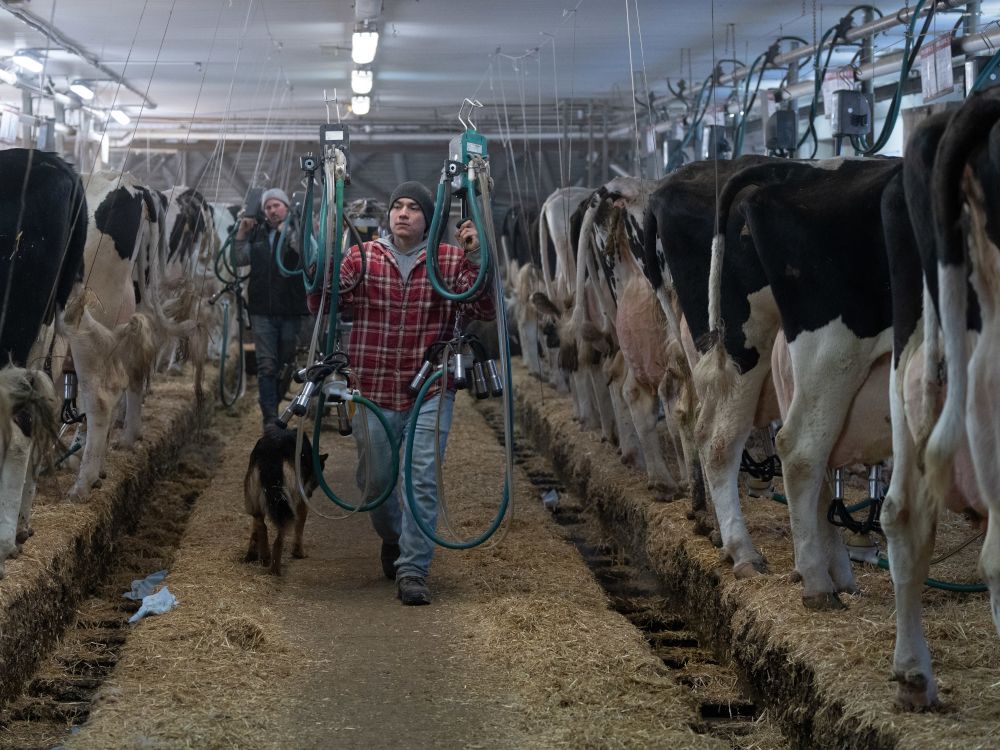
Even though one of the only definitive acts of the 45th parliament thus far has been to pass a bill entrenching supply management,

the bill wouldn’t actually do much to protect the system from a U.S. government determined to destroy it.

That’s according to multiple trade experts quoted

in a CTV analysis

, who identified several ways Canadian negotiators could run around it should the administration of U.S. President Donald Trump decide to play hardball on Canadian import controls of U.S. dairy.

Get all of these insights and more into your inbox by signing up for the First Reading newsletter.


Pro-Palestinian protest outside a Montreal in November 2024. The federal government plans to introduce new criminal laws targetting protest-related intimidation near places of worship, schools and community centres.

Canada is at a crossroads. In the face of growing hatred and escalating threats toward the Jewish community, we must confront a difficult truth: antisemitic violence is no longer a fringe concern — it is now a coordinated and dangerous threat to public safety and national values.

Over the past year, antisemitic incidents have surged. In cities like Toronto, Montreal, and Vancouver, Jewish schools, synagogues, and community centres have been targeted with threats, vandalism, arson, and even gunfire. These are not isolated events — they reflect a disturbing pattern of extremism taking root in the public square, online spaces, and protests where hate speech and glorification of terrorism go unchecked.

The case for a national response is stark. After the Hamas-led October 7th massacre in Israel, Canada experienced a sharp rise in antisemitism. Toronto

recorded

443 hate incidents in 2024 alone — 40 per cent targeting Jews. Across Canada, there was a

670 per cent

increase in antisemitic incidents since the attack. In Vancouver, Jewish institutions were threatened and set on fire. Most shockingly, a Jewish girls’ school in Toronto was shot at three times. These are not abstract statistics — they reflect a wave of hate crossing into real-world violence.

In response, I’ve begun writing a White Paper for a new national conversation — working with friends and leaders in government and law enforcement to explore concrete actions that protect the Jewish community and reinforce the values of our democracy. The response to having the conversation has been overwhelmingly positive across the country.

One of the greatest concerns is deterrence. Hate groups and extremists feel emboldened, often because they believe they can act with impunity. This must change. Deterrence theory offers a clear path forward: offenders must know they will be caught swiftly. In other words, the response must be immediate and the severity must be strong and unambiguous, with meaningful penalties that reflect the seriousness of these crimes.

In order for this to succeed, first, we must reform how hate crimes are prosecuted. In Canada, charges require the consent of the Attorney General — a political hurdle that delays justice. That requirement should be removed, allowing police to lay charges based on evidence and the courts to determine outcomes.

Second, existing hate crime laws must be applied consistently as the law of the land. Canada already prohibits hate speech, incitement to genocide, and the promotion of violence, but enforcement appears to be timid and selective. These laws must be used fully and without hesitation.

Third, we need a dedicated national enforcement unit focused on antisemitic and ideological hate. Canada has long had units to combat organized crime — this is no less urgent. Hate groups are becoming more coordinated and violent against Jewish citizens. Law enforcement must be equally coordinated in its response.

Fourth, I’m proposing a new national security strategy — S.N.A.P.: Share, Notify, Act, Protect. It calls for improved intelligence sharing across agencies, real-time alerts for Jewish communities, swift legal action, and visible protection of high-risk institutions. This model moves us from a reactive stance to a proactive one.

Fifth, we must modernize protest laws. Inspired by recent U.K. reforms, Canada should adopt clear rules: require and enforce advance notice of protest marches; place limits on time, location, and methods; prevent seriously disruptive protests; and restrict demonstrations near Jewish events. Issue immediate and heavy fines. These measures preserve freedom of expression while safeguarding public order and safety.

Sixth, legal definitions must be updated to reflect modern threats. Online radicalization, glorification of terror, and hate propaganda must be addressed with new legislation, including reinstating

Section 13

of the Canadian Human Rights Act curtailing hate online and digitally.

Canada also rightly recognizes that free speech has limits — especially when it infringes on the safety and rights of others. Pro-Hamas groups may have the right to protest peacefully, but they are not free to block Jewish Canadians from attending events or entering synagogues. They are not free to harass, intimidate, or chant genocidal slogans. This is not free speech — it is hate speech. And under Canadian law, it is not protected.

These ideas are drawn from my extensive consultation with political leaders and law enforcement leaders. They are not the final word — but the beginning of a critical national conversation. In the 1980s and 1990s, it was primarily the Jewish community that helped

shape

Canada’s hate crime laws in response to a rising Neo-Nazi threat. Today, the threat is more lethal, more ideological, and more public — and reforms must rise to meet this moment.

The Jewish community, like all Canadians, deserves to live in peace. That requires courage, clarity, and coordinated action. The time to act is now.

Avi Abraham Benlolo is the CEO and Chairman of the Abraham Global Peace Initiative, a Canadian think-tank.

National Post


Ukrainian search and rescue personnel work in a heavily damaged residential building following a Russian missile strike on Kyiv on June 17, 2025, amid the Russian invasion of Ukraine. A University of Toronto project that portrays Ukraine and the Baltic States as having been part of the Soviet Union  risks legitimizing false Russian historical narratives, writes Marcus Kolga.

Ignorance of Soviet Russia’s violently repressive imperialist history and the uncritical adoption of language that echoes modern Kremlin disinformation has landed the University of Toronto’s education faculty in hot water.

The Ontario Institute for Studies in Education (OISE) — which offers graduate degrees in teaching — is currently leading an educational research project that risks legitimizing Russian state narratives that seek to marginalize and delegitimize nations once colonized by the Soviet Union, including Lithuania, Estonia, Latvia and Ukraine.

The fallout is sparking diplomatic concern from all three Baltic embassies, which have formally expressed their concerns to the university.

Titled “

Post-Soviet Canadian Diaspora Youth and Their Families

,” the project claims to explore the integration experiences of youth whose families came to Canada from countries colonized and oppressed by Soviet Russia. While its stated intent may indeed be to foster a deeper understanding of these communities, the project’s language and conceptual framing are historically inaccurate, politically insensitive, and risk reinforcing harmful Kremlin-aligned stereotypes about the very groups it aims to study.

By lumping together all nations once occupied by Soviet Russia into a single “post-Soviet” identity, the project risks distorting the unique histories, cultures and political experiences of Canadians who are of Baltic and Ukrainian heritage, as well as all nations that were violently subjected to Soviet cultural annihilation. Worse, this framing unintentionally echoes Russian propaganda efforts that seek to blur the line between occupier and occupied, casting doubt on the legitimacy of these nations.

The project

defines

the Soviet Union as “formerly the largest country in the world,” and a “multinational and multicultural country … experimenting (with) communist ideology.” This portrayal omits critical context about the violent and repressive nature of Soviet colonization. There is no mention of the mass deportations, forced famines or repression that defined millions of lives under Soviet Russian rule.

Particularly disturbing is the project’s inclusion of a map that depicts Estonia, Latvia and Lithuania as part of the Soviet Union. During the Cold War, most North American textbooks marked these nations differently to denote their illegal occupation. The

map

used by OISE more closely resembles those found in Soviet schoolbooks, presenting occupation as full annexation and thereby indirectly legitimizing Russia’s imperial conquest.

While this may seem like a simple and innocent error, it reflects a deeper failure to recognize that the Baltic nations didn’t just “transition to different, non-communist forms of statehood” in 1991, as the project claims. These were independent nations illegally invaded and annexed by the Soviet Union in 1940, a pattern Russia repeated with its 2014 occupation of Crimea. Their reassertion of independence in 1991 was not the birth of new states, but the restoration of sovereign ones whose continuity Canada rightly recognized. Then-prime minister Brian Mulroney was the first G7 leader to formally re-establish diplomatic ties with the restored Baltic governments.

This key fact in Canadian foreign policy is ignored. As then-prime minister Justin Trudeau

stated

in 2016: “Canada never recognized the Soviet Union’s occupation of Estonia, Latvia and Lithuania, and always supported their struggle to restore independence during decades of Soviet occupation.”

Former Lithuanian foreign minister Gabrielius Landsbergis

recently put it plainly

: “Lithuania never joined the U.S.S.R. Moscow illegally occupied our territory, so we resisted until we restored our independence, and the Red Army went back home. We’re not ‘post-Soviet’.” A better description, he said, would be “never-Soviet.”

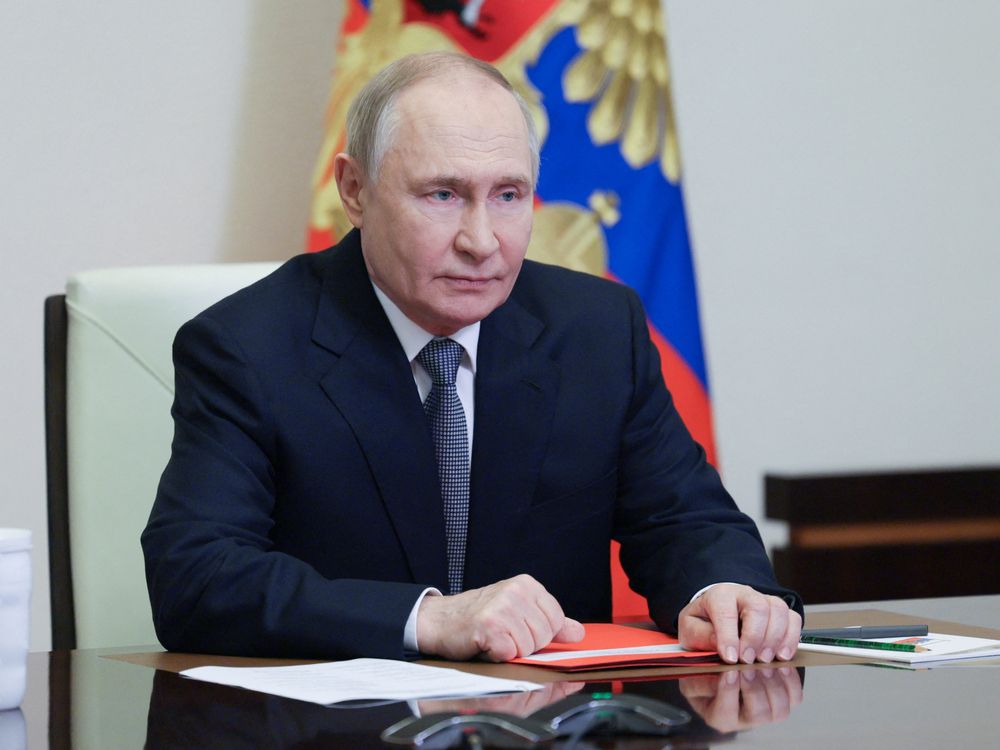
Vladimir Putin’s regime has made this distortion of Russia’s imperial history — and the manipulation of the terms used to describe it — a central pillar of its foreign policy. These distortions are used to justify aggression against Ukraine and to undermine the sovereignty of the Baltic states. Framing Soviet rule as a benign “multicultural experiment,” and labelling formerly occupied nations as “post-Soviet” risks legitimizing the very disinformation that fuels Kremlin imperialism. In both education and information warfare, the accuracy of terminology is critically important. Words matter.

The project’s blanket characterization of Canadian communities as “post-Soviet populations” is not only inaccurate, it’s deeply offensive. My nephew, born in Estonia in the early 2000s to an Estoniаn-Canadian father and now studying in Canada, is not “post-Soviet.” Neither are the tens of thousands of Canadians of Baltic, Ukrainian, Georgian or Central Asian heritage whose families were displaced, terrorized and brutalized by Soviet Russian occupation. This kind of labelling reeks of Western academic chauvinism. It erases the lived trauma of colonization and flattens survivors and their descendants into a vague, ahistorical category — stripping them of agency, dignity and identity.

Most troublingly, this project is federally funded through the Social Sciences and Humanities Research Council (SSHRC). In response to criticism from the Lithuanian Embassy, SSHRC President Ted Hewitt defended the project on grounds of “academic freedom.” But academic freedom does not extend to legitimizing historical falsehoods, especially those that harm communities or align with authoritarian propaganda.

The University of Toronto must acknowledge and apologize for the flaws in this project and not double down on them. In a letter responding to concerns raised by Lithuania’s Ambassador to Canada, Egidijus Meilūnas, OISE Vice-Dean Creso Sá claimed that the “primary aim” of the project is to “deepen understanding” of diaspora communities. This is a laudable goal. But it cannot be achieved by distorting historical truths or marginalizing the very communities the project claims to “understand.”

OISE and SSHRC should instead engage directly with affected communities and experts to develop research that accurately reflects the complex legacy of Soviet colonization and celebrates the resilience of those who resisted it. The contributions of Estonian, Latvian, Lithuanian, Ukrainian and other diaspora groups in Canada should be recognized, not distorted by false generalizations aligned with Kremlin narratives.

Canada has long stood with communities who fled Soviet terror and fought for independence. As a nation that champions sovereignty and freedom, we have a duty to resist careless academic framing that distorts this history and risks misleading future generations.

Special to National Post

Marcus Kolga is a senior fellow at the Macdonald-Laurier Institute.