LP_468x60
on-the-record-468x60-white

Speaker of the House Mike Johnson (R-LA) is congratulated by his fellow Republicans after signing the One Big Beautiful Bill Act at the U.S. Capitol on July 3, 2025.

To hear the critics talk, the tax provisions in President Donald Trump’s One, Big, Beautiful Bill (OBBB) are a gift to the uber-wealthy who are, they insist, already undertaxed. Never mind that the law

prevents a huge tax hike

at the end of the year on most Americans; somehow, it’s bad that the rich will prosper at all. But, while it’s true that the OBBB is

more than a bit of a mess

and adds cost and complexity to an already excessively bureaucratic state, its tax provisions do some good. Importantly, successful Americans are already paying a disproportionate share of the bill for the bloated U.S. government.

According

to California Governor Gavin Newsom, who desperately hopes to grow up to be president, the OBBB “gives tax breaks to the ultra-rich, balloons our national debt, and guts programs that most Americans depend on — including health care, food assistance, and public safety programs.”

Beverly Moran, a professor emerita of law at Vanderbilt America, doubles down on that charge,

claiming

that “the law’s provisions make existing wealth inequalities worse through broad tax cuts that disproportionately favor wealthy families.”

The word “disproportionately” is doing a lot of work there. An important motivation for getting the OBBB passed is that it extends the tax provisions of the Tax Cuts and Jobs Act (TCJA) of 2017, which otherwise would expire at the end of the year. As the Tax Foundation

puts it

, the TCJA “reduced average tax burdens for taxpayers across the income spectrum and temporarily simplified the tax filing process through structural reforms.” Upon its expiration, tax rates would have gone up across the board. The OBBB keeps the TCJA’s lower rates in place and prevents an automatic tax hike.

According to an

analysis

by the Tax Policy Center, relative to that tax hike, extension of the TCJA “would reduce taxes for households in the bottom income quintile by an average of 0.5 percent of their after-tax income.” The second quintile sees a tax reduction of 1 per cent, the middle quintile gets a tax reduction of 1.1 per cent, the fourth quintile one of 1.2 per cent, and the top quintile enjoys a reduction of 2 per cent. That is, everybody benefits, but in general, the more money you make, the more you benefit.

Why do higher-income earners get a bigger tax break from the TCJA and its extension by the OBBB? Because they pay most of the taxes.

Using Internal Revenue Service statistics, the National Taxpayers Union

calculates

that for 2022, “the top 1 per cent of earners, defined as those with incomes over $663,164, paid nearly 40.43 per cent of all income taxes” despite earning 22.4 per cent of adjusted gross income (AGI). In 2021, those top earners paid over 46 per cent of federal income taxes, but that was a result of economic disruptions from pandemic lockdowns. In 2022, the top 10 percent of earners paid 72 per cent of all federal income taxes on 49.4 per cent of AGI. The top 50 per cent paid 97 percent of income taxes on 88.5 per cent of AGI.

By contrast, the bottom 50 percent of earners paid 3 percent of federal income taxes on 11.5 percent of AGI. The U.S. tax system is very progressive; the more you make, the bigger the mugging by government.

In 2023, Pew Research

crunched the numbers

and found that “all groups of taxpayers with $1 million or more in adjusted gross income (AGI) had average effective tax rates of more than 25 per cent.” On the other hand, “tens of millions of Americans owed little or no federal income tax” because of low income and refundable tax credits. For those earning less than $30,000, the average effective tax rate was 1.5 per cent before taking tax credits into account. Because of those credits, millions of people actually get money from the government after filing taxes, effectively giving them a negative tax rate (-3.33 per cent for those earning $25,000 to $30,000, after credits are considered).

In fact, continues Pew, “since 2000, there has been a downward trend in average effective tax rates for all but the richest taxpayers.”

As for those paying the lowest possible rates,

adds

the Tax Policy Center, in 2025 “40 per cent of households, or about 76 million ‘tax units,’ will pay no federal individual income tax.” About 70 per cent of those paying no income tax earn less than $75,000, and 45 per cent earn less than $40,000. The ranks of those paying no taxes were expected to shrink to 33.5 per cent by 2035 if the TCJA was not extended.

That doesn’t mean that 40 per cent of the country is paying no taxes at all. Most still get forced to pay in to the federal Social Security and Medicare schemes just like everybody else, even if they prefer to make their own plans. And many states and some localities impose their own income taxes along with sales taxes. Of course, we all have to pay the tariffs on imports imposed by the federal government.

The U.S. isn’t alone in the progressivity of its tax system.

According

to the Fraser Institute, in Canada, “the top 20 per cent of income-earning families pay nearly two-thirds (64.5 per cent) of the country’s personal income taxes and more than half (56.9 per cent) of total taxes” while earning 47.8 per cent of total income. Meanwhile, “the bottom 20 per cent of income-earning families are estimated to pay 0.7 per cent of all federal and provincial personal income taxes and 1.9 per cent of total taxes in Canada” while earning 4.8 per cent of total income. For the top 20 per cent of Canadian earners, the average personal income tax rate is 22.8 per cent; for the bottom 20 per cent it’s 2.4 per cent. (Canada’s taxes, overall, are

higher than those in the U.S.

Its income tax burden is the

fifth highest among nations in the OECD

while the U.S. is 23rd.)

That doesn’t stop people in both countries from complaining that the wealthy aren’t paying their “fair share.” But it does raise the question of just what “fair share” is supposed to mean when 40 per cent of income taxes are paid by the top 1 per cent of earners and 61 per cent are paid by the top 5 per cent — both numbers much larger than the proportion of total income that’s being taxed. It’s rather obvious that “fair” is just an expression of envy and a euphemism for “take it all to make me feel better.”

But envy isn’t something that should be indulged in a free society. And, if we can find a way to lower taxes for everybody, that’s a great way to encourage people to work for their own benefit.

Again, there’s plenty to object to in the OBBB. The fact that, like so much legislation these days, it was turned into a grab bag of unrelated items with an up-or-down vote on the whole mess required is just the beginning. Projections that it will

send the deficit and debt soaring

also raise concerns.

But across-the-board extensions of lower tax rates may be the most beautiful thing about the law.

National Post


Prime Minister Mark Carney speaks to reporters while meeting with Canada's premiers in Huntsville, Ont., on Tuesday, July 22, 2025.

Mark Carney has been prime minister of Canada since March. He’s been called many things by many people in this short time period. It never came to mind that he would be described as a “progressive conservative” along the lines of Brian Mulroney.

This, in a nutshell, is the nonsense that the Globe and Mail’s editorial board is currently peddling.

“That Mr. Carney was going to drag the Liberal Party back to the centre after years of an NDP-lite government under Mr. Trudeau was to be expected,” a June 28 Globe editorial

noted

. “But more than mannerisms have changed. Since April, the Prime Minister has cut personal income taxes, boosted defence spending dramatically, pledged to cut the cost of the federal bureaucracy, tightened immigration rules, eliminated federal barriers to internal trade, created a framework for breaking the stasis on big national projects and signaled that he will dismiss underperforming top bureaucrats,” they wrote.

The Globe’s editorial board

suggested

“that’s an agenda that Brian Mulroney could have endorsed.”

This analysis likely raised a few eyebrows, and not just in the Mulroney household. Alas, the editorial writers then flipped their collective wig with this bizarre assessment. “In fact, it overlaps a good deal with the actual governing record of his Progressive Conservatives. Mr. Carney is a Liberal but, in the early going, he looks to be governing much like a Red Tory — a progressive kind of conservative.”

We shouldn’t be surprised by the Globe’s over-the-top analysis of Carney’s leadership. It’s become the raison d’être of this once-venerable publication to carry water for this particular prime minister.

Nevertheless, let’s be serious about our national leader. Carney is certainly a progressive, but he’s no “progressive conservative” in any way, shape or form.

Left-leaning progressive conservatives, or Red Tories, generally combine two ideological components: classical conservative sensibilities (espoused by High Tories like philosopher Edmund Burke and former U.K. prime minister Benjamin Disraeli) and socialist-type policies such as government intrusion and developing a social safety net.

As Gad Horowitz, a professor emeritus at the University of Toronto,

wrote

in the May-June 1965 issue of the defunct left-wing magazine Canadian Dimension, “socialism has more in common with Toryism than with liberalism, for liberalism is possessive individualism, while socialism and Toryism are variants of collectivism.”

Modern conservatism has little in common with classical conservatism. The former has largely incorporated classical liberal and libertarian ideals into its main ideology, while maintaining a smattering of social conservative principles related to individuals and families. That’s why modern conservatives typically champion small government, lower taxes, free markets, private enterprise, greater individual rights and freedoms and so forth.

Carney doesn’t fit into these conservative-leaning parameters. His progressive values do fit within the context of the modern Liberal Party of Canada. While he’s not exactly the same as Trudeau, I

pointed out

in a March 16 National Post column that they’re “remarkably similar.” How so? In my estimation, “they’re both left-wing, pro-government intervention, distrust privatization and free markets, favour wealth redistribution, champion radical environmentalist policies, support woke ideology and political correctness — and more.” That’s what today’s Liberals basically stand for, and Carney’s personal and political record fits like a glove.

Contrary to popular belief, the progressive Carney isn’t governing like a “

progressive kind of conservative

,” either.

Cutting personal taxes sounds good in theory, but he’s about to negate any positive effects in practice by increasing public spending at a faster pace than his predecessor. Carney’s Liberal government plans to spend $486.9 billion this coming fiscal year, according to its

recently-tabled

Expenditures Plan and Main Estimates for 2025-26. Neither $24 billion in campaign promises nor $73.1 billion in new spending

outlined

in the fall economic statement have seemingly been factored in. He’s also proposed

running

a deficit “to invest and grow” the Canadian economy,

introducing

a “green incentive program” to replace the hated (and now-eliminated) carbon tax, and

doubling

the amount of new housing construction over a decade. Hiking defence spending to

meet

NATO’s 5 per cent target by 2035, while a positive development, will push these numbers even higher.

The other aspects the Globe’s editorial board highlighted are nothing more than chatter and platitudes at this point, in my opinion.

Maybe Carney will cut the bureaucracy, speed up the process for large national projects and put stricter immigration rules in place, and maybe he won’t. If he does, will it reduce red tape, trim the fat and create efficiencies? Or, will it be nothing more than smoke and mirrors with significant hires in different departments, wasteful new spending programs and costs overrun? Time will tell. The modern Liberal record has been shoddy in this regard, and not just because of Trudeau’s lousy leadership. Why should Carney be any different?

Don’t be fooled, everyone. Carney isn’t a conservative or progressive conservative leader. It’s the same old left-wing, progressive Liberal agenda without Trudeau at the helm.

National Post


Cows at an organic dairy farm in Elgin, Que.

We are approaching the end game of the current round of negotiations between Canada and the U.S. on a new comprehensive trade deal.

The outcome of the talks is still very much uncertain. While it appeared early on as if progress was being made, President Donald Trump has made no secret of the fact that several major obstacles remain. Favourite targets of his have been our banking rules and regulations and our protectionist digital and cultural sectors (in addition to non-trade irritants like our border policies).

But at the very top of the list is Canada’s policy of supply management. This was a serious irritant in the re-negotiated NAFTA treaty in 2017-18 during Trump’s first term (which resulted in Canada making relatively small concessions), and it has re-emerged as perhaps the greatest stumbling bloc to a new deal. President Trump has railed against it numerous times, and he has repeatedly stated that he views it as fundamentally unfair to American farmers.

There is no need in this article to review Canada’s commitment to this program. Suffice to say all of the major political parties remain strongly supportive of it, and thus regardless of which party is in power allegiance to supply management seems to unite them (not to mention that a parliamentary bill passed last month aims to ensure that no concessions are even possible in trade talks).

But the question that is now emerging is just how far is Canada willing to go to protect the program? Or, to put it another way, would the Canadian government be willing to scupper the talks and a potential deal because it remains fully committed to it?

On the surface, the question is absurd. Supply management primarily benefits approximately

10,000 dairy farmers

(down from 150,000 when the program began) most of which are in Quebec and Ontario. These farmers earn relatively high incomes and enjoy price guarantees that no other Canadian farmers receive. But the program results in higher food costs for 40 million Canadians.

As for the question of how much Canadians pay as a result of supply management, studies have shown that the average Canadian family spends

up to $600 more per year because of it,

and they have less choice at the grocery store. These extra costs are borne most heavily by lower income citizens, who pay a higher proportion of their income on groceries.

Given this, you might think that supply management is unpopular with Canadians. You would be mistaken. Polling has consistently showed that the program is broadly popular. One 2023 poll showed that over 90 per cent of respondents believed that it was important that dairy products come from domestic producers.

Thus a question worth considering is what accounts for this support. No doubt part of the explanation is the power of several key domestic interest groups. Both the

Dairy Famers of Canada

and the

Egg Farmers of Canada

spend heavily on ads promoting it, and they have succeeded in persuading many Canadians that supply management results in safer products and more consistent supply.

In addition, supply management has strong support from most of Canada’s media. The Toronto Star and the CBC go apoplectic at the mere mention of changes to it, and the generally centrist Globe and Mail is also quite supportive, in spite of its (supposed) commitment to free markets. Only National Post offers consistent criticism.

And lastly, supporters have succeeded in persuading Canadians that the program’s demise would decimate our dairy sector, as they argue that domestic producers could not possibly compete with larger international players.

That last argument is particularly questionable, as there is little reason to doubt that in the absence of state-controlled quotas and prices, Canadian dairy farmers would become more efficient and innovative.

Indeed, a similar argument was made decades ago with regards to wine. For years Canada’s wine market was carefully regulated and foreign wines were heavily tariffed. Canadian producers argued that without such taxes the industry would be destroyed, as it could not possibly compete with French, Italian, and Spanish wines.

In fact, the opposite occurred. With the opening of the market, Canadian producers were suddenly forced to offer a better product, and the result has been an explosion in both the number of domestic producers (now approaching 1,000) and the quality of our wines. Indeed, Canadian wines now routinely win international competitions, something that would have been unthinkable 40 or 50 years ago (when something called Baby Duck seemed to be the best we could do!).

In sum, the Canada-U.S. trade talks have entered their final phase. But a familiar obstacle remains. The Canadian government seems totally committed to supply management, even if this support comes at the cost of killing a potential agreement. Such an outcome would be catastrophic, as Ottawa would literally be committing economic suicide. And yet this result is very much in play, and might be unavoidable if the U.S. decides that there will be no agreement unless Canada agrees to make dramatic changes to the program.

Andrew Richter is an associate professor of political science at the University of Windsor.


Kg Banjoko and a man who did not want to give his name protest at the Canada Day parade in Fort McMurray on July 1, 2022.

The back-from-the-dead Law Commission of Canada is a distinctly Liberal institution that serves to churn out “independent and non-partisan” policy advice that coincidentally supports government priorities — or pulls them to the left. The genius in all this? It hides in plain sight.

Stephen Harper knew this very well, which is why in his first nine months in the prime minister’s office, he

defunded

it (and 66 other programs). The commission had existed since 1996, brought to life under Jean Chrétien, and was shuttered in 2006. Between those years, its projects covered child abuse in Canadian care, spousal rights and gay marriage, and lastly, electoral reform.

Among the last of the recommendations made by this first iteration of the commission was proportional representation, along with legal reforms requiring parties to help get more women and visible minorities in politics — a move that would give government far too much power over the operations of parties. It also

suggested

that Canada look into creating an Indigenous house of government.

Justin Trudeau

revived

the forgotten project in 2023 because there was really no downside: the commission is an ideologically aligned think tank with all the conveniences of government. Naturally, it was given the express goal of furthering the issues that occupied the hearts and minds of the left, and laundering the “evidence-based policy” to help meet them. This was plain from the government officials who gleefully announced its progress.

“The Commission will develop new approaches to the law to address systemic racism in legislation and the legal system and support reconciliation with Indigenous peoples,” read one government

news release

from 2023. “Other important priorities like access to justice, legal issues around climate change and rapid technological shifts may also be considered.”

In 2022, back when the commission was seeking commissioners, these priorities were also

mentioned

in its job postings.

As for the resulting commission, well, it was

required

by law to be diverse, not just in terms of legal background — which is sensible — but in terms of culture. The

president

is a McGill professor whose research focus is on children’s law. The lead

commissioner

is a “civic organizer and trainer” and former spokesperson for the National Council of Canadian Muslims; she doesn’t have a law background, but rather, public policy.

Joining her in the office is one Aidan Johnson, a lawyer at the Niagara Community Legal Clinic and user of the prefix “Mx.” Kevin O’Shea is the sole openly male commissioner, and is the executive director of a different legal clinic further east. Then there’s Renée Cochard, the Alberta provincial court judge who set up the province’s Indigenous courts program (with mixed success, depending on who you ask). Not the most diverse group in terms of craft, but they certainly check all the boxes.

To their credit, they don’t beat people over the head with social justice. The commission’s

website

is bland; its budget is small (

$4 million

per year — modest, in government measures); its top project at the moment has to do with charity law, a niche that most people don’t think or care about. Think-tank-like, it runs student photo competitions to engage those entering the profession.

But within all that mundanity sits an opportunity more open to radical change: the commission’s

“Beyond Tomorrow” project,

which offers $20,000 to successful essay writers, is aimed at addressing concerns of stakeholders and “embracing complicated conversations, addressing breakdown of trust, contributing to common endeavours, and fostering constructive change.”

It doesn’t mean much until you examine those stakeholder concerns, which the commission compiles in an

annual report

. Included in these are radical notions of a decolonized legal system.

“There is a need for this shift to take place at the pedagogical level in universities, particularly because students are at the heart of decolonization,” read one piece of input in favour of politicizing education even further. Most law schools already mandate Indigenous courses (which are often taught with a heavy anti-Canadian bias). But for some activists, that’s simply not enough.

Another favoured the “recognition of Indigenous jurisdiction over environmental matters,” while other feedback spoke of a “multi-juridical future” in Canada that could be assisted by adding Indigenous legal traditions into law school curriulcums. Canada, for context, is a bijural system that uses both English common law and French civil law; some activists

insist

that the notion of “Indigenous law” — a heterogeneous mix of tribal traditions that are often interpreted through the lens of far-left academics — should make up a third pillar of Canadian law that governs the lives of citizens. The federal justice department

supports

making this so-called third order of law a reality.

We have every reason to believe these will resonate with the commission. Aside from its initial mandate, it published a bizarre navel-gazey

essay

about intersectionality — one concept at the heart of progressive thought — written in the fluffy, philosophically shallow style of a diversity consultant’s website. For example:

“Intersections may prompt us to think of Canada in the world and of worlds within Canada, or of the complicated and perhaps permeable boundaries between human and non-human, whether living or artificial. Solidly grounded in the complex reality of law, the framing notion of intersection mandates ambitious creativity in delineating the scope of meaningful law reform.”

When the Law Commission of Canada starts rolling out publications, it will claim that its ideas were borne from extensive community consultations — and when the reforms it proposes just so happen to suit the government’s social policy desires, well, what a coincidence that will be.

National Post


Members of the Druze community in the Golan Heights rally in solidarity with the Druze in Syria on July 19, 2025. It has been estimated that 300 Druze in Sweida, Syria, were massacred by Bedouin fighters and government troops on July 16 and 17.

SDEROT, Israel — Each day, it seems, we wake to a fresh horror.

On Wednesday July 16, in response to an ongoing massacre of Syrian Druze, the IDF launched a limited but forceful ground incursion as well as airstrikes into Damascus.

For weeks leading up to this crisis, we had heard that Syria was engaged in talks with Israel to normalize relations with its long-time enemy. This dramatic development was driven by U.S. President Donald Trump, who was charmed by Ahmed al-Sharaa, Syria’s new president, at their recent meeting.

“He’s a young, attractive guy,” Trump

enthused

. “He’s got a real shot at holding it together.”

Within days of leading his loose coalition of extremist fighters to depose the long-hated regime of Bashar Assad in December 2024, Ahmed al-Sharaa, 42, had dropped his nom de guerre — Abu Mohammad al-Julani. He trimmed his beard and swapped his fundamentalist robes and turban for a stylish suit and tie. The makeover worked. Many western nations were seduced and tripping over themselves to re-establish diplomatic relations with Syria and, of course, line up for lucrative economic opportunities.

Trump is bullish on bringing Syria into the Abraham Accords group of countries which, if it continues, will transform the Middle East economically and in so many other ways.

But as this excitement built, there was significant tension in Syria.

Now and then

stories

would bubble up about a massacre here or there. Approximately 1,500 Alawites — the minority sect that the Assad family belonged to — were slaughtered in March. And again in April.

Some time later the targets were Christians.

In spite of the periodic murder sprees, al-Julani remained the darling of the West.

On Wednesday and Thursday last week, government troops joined with local Bedouin and entered the Druze town of Sweida, located near the Syrian border with Jordan. There is long-standing enmity between the Druze and Bedouin in the region, and the latter clearly decided it was time to settle scores.

Soldiers and Bedouin fighters entered the Sweida hospital. They were merciless, murdering scores of patients

in their beds

.

Throughout the city of 75,000, brutality was

widespread

. Young men, bound, were forced to

jump to their deaths

at gunpoint. There were many reports of rape. Men were tortured in front of their families. One man was tied to a chair and burned to death while his wife and children were forced to watch. The women and children were then piled into SUVs and taken hostage.

Men were humiliated in the streets, having their moustaches

shaved off

, leaving them with the Sunni Muslim beard alone. A clear humiliation. In Druze culture the moustache is a sign of manhood and respect. In one clip the Syrian soldiers ripped the moustache off a man’s face, with the skin. They laughed. The sadism is eerily reminiscent of Nazi barbarism in Europe. They delighted in pulling and tearing off the beards of ultra-Orthodox Jews.

Horrified, hundreds of Druze from Majdal Shams — a city of 15,000 in the Golan Heights — crossed into Syria, unauthorized, of course. They were intent on defending their brethern under attack. The IDF was caught by surprise and urged these men to return to their homes.

Prime Minister Benjamin Netanyahu responded to frustration from the White House by explaining that Israel was protecting its Druze citizens. Trump, reportedly, was unconvinced.

The Druze in Majdal have long been less than friendly towards Israel. Unlike the Druze living elsewhere in Israel, most inhabitants of Majdal refused to accept Israeli citizenship and ID cards, fearing that this would be seen as loyalty to the enemy by the Syrian government — and the backlash would be felt by their families there. Majdal Druze do not serve in the IDF, again, unlike most Israeli Druze.

But it has been a rough year for the Druze of Majdal Shams.

One year ago, on Saturday, July 27, 2024, the main soccer pitch in Majdal Shams was packed with families and young soccer players attending regular matches. Hezbollah shot a rocket, which slammed directly into the gathering. Twelve children and youth, aged 10 to 16, were murdered in that unprovoked attack. Forty-two were injured. The carnage devastated the town.

Since the fall of the Assad government, long-standing tensions between the Bedouin and Druze in this part of Syria have erupted into violence periodically. The attack on Sweida, however, was of a different order of magnitude.

Multiple sources report a very sharp reaction from Trump, who was “taken by surprise” when informed about the Israeli strikes in Syria. And, apparently, none too pleased.

Also last week, Tom Barrack, the U.S. special envoy for Syria, commented to media: “We told the Israelis to

stand down

and take a breath.”

Almost immediately after the American anger was expressed, Israeli ground incursions were drawn down and peace talks between Israel and Syria resumed. Or so we were told.

White House Press Secretary Karoline Leavitt confirmed that Trump was

“caught off guard”

by the Israeli military attacks in Syria and spoke with Netanyahu to “rectify” the situation. Senior Trump administration officials have referred to Netanyahu in very harsh,

derogatory terms

as a leader who is incorrigible and focused solely on his political survival.

In recent days all has gone quiet. Nothing. No information. No news.

No updates on the condition or whereabouts of the many female hostages taken by the Bedouin attackers.

However, Thursday was a very busy day in the region. U.S. Envoy Barrack met in Paris with Israeli Strategic Affairs Minister Ron Dermer and Syrian Minister of Foreign Affairs Asaad al-Shaibani. It is the first time in

25 years

that senior Syrian and Israeli officials have met face to face. And according to Barrack, significant progress was made with respect to discussing terms of engagement in Syria and protection of the Druze.

Also on Thursday, Netanyahu met with the leading Druze Israeli cleric, Sheikh Muwaffaq Tarif. Israel is not budging from its position as prime protector of the Druze in the region. And he is clearly working to address America’s alarm regarding the recent hostilities in Syria.

President Trump likes al-Julani/al-Sharaa. And he is keen to have him be a part of an economic alliance in the Middle East that will transform the region. Trump likes deals.

What he overlooks is al-Julani’s long and deep terrorist past. The man led a loosely aligned group of fundamentalist militias to overthrow Assad. Whether he can coalesce them into a properly functioning government for all Syrians remains to be seen.

National Post

Vivian Bercovici is a former Canadian ambassador to Israel and the founder of www.stateoftelaviv.com, an independent media enterprise.


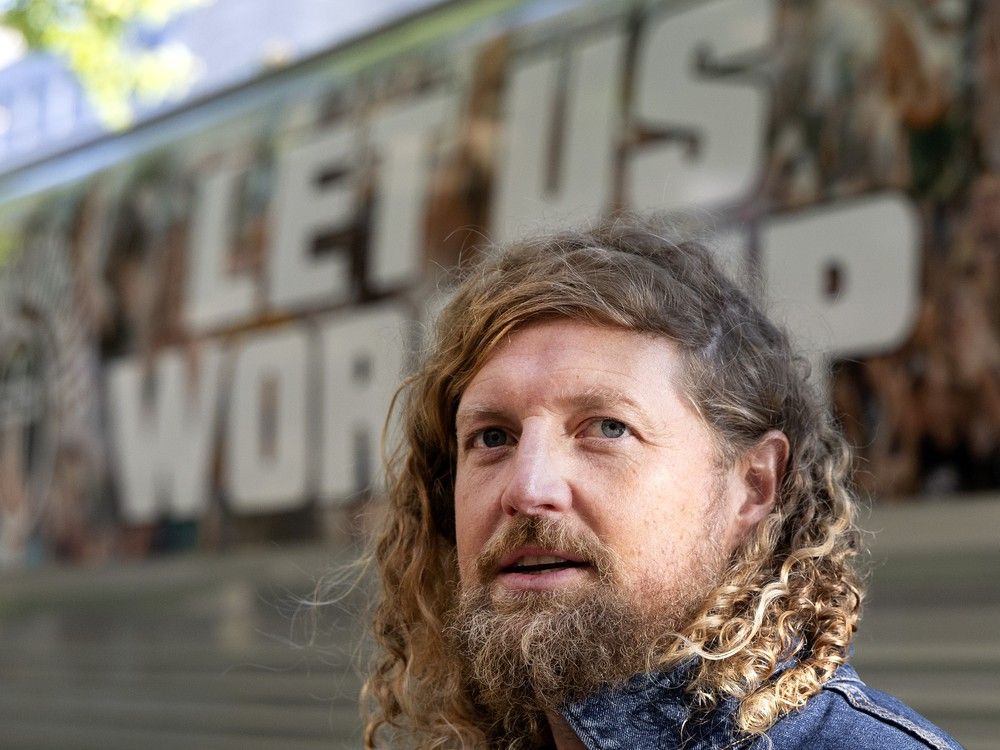
Traveling evangelical musician Sean Feucht preaches during the final stop of

Elbows up against free speech! Sean Feucht, a Christian singer, preacher and Donald Trump enthusiast

saw all six of his scheduled concerts in Eastern Canada cancelled in recent days

. All were scheduled to be held on public sites. Groups of citizens of unknown size demanded the shows be cancelled, and said they would protest if not, which is certainly their right. And as ever, when governments cave to a censorious mob, they sounded ridiculous.

In Halifax, where he was to perform at a national historic site, Parks Canada cited “evolving safety and security considerations based on confirmation of planned protests (and) input from law enforcement.” Charlottetown seemed to piggyback on that: “Evolving public safety and security concerns.” Moncton, N.B.: “Following a thorough review, the event was found to be non-compliant with the city’s code of conduct in city facilities.” Vaughan, Ont., cited “health and safety as well as community standards and well-being.” Gatineau, Que.: “concerns about public safety and security.” Quebec City: “the presence of a controversial artist was not mentioned when the contract was signed.” (Perhaps they should make people tick yes or no: “Are you controversial?”)

There is plenty that bien-pensant Canadians would object to on Feucht’s record: He was fervently anti-lockdown, he deplores abortion, has said nasty things about drag queens.

Rolling Stone reports

his security detail had included a notorious member of the Proud Boys. But you will notice that none of the statements from Canadian officials explain what specifically their actual problem is with the guy.

 Sean Feucht, shown in a picture from the press kit on his website, will be performing at Confederation Landing in Charlottetown despite pushback from local residents.

Do they really want us to believe that an anti-MAGA protest in Halifax might turn violent? And even if it did, why is that the performer’s fault, worthy of cancellation?

Meanwhile, we had the usual chorus of politicians being breathtakingly insincere about free speech.

Halifax Liberal MP Shannon Miedema: “I have the utmost respect for the value of free speech, (but) I do not believe this event aligns with Parks Canada’s core values of respect for people, equity, diversity and inclusion, or integrity.”

P.E.I. Liberal MP Sean Casey: “While I fully respect the right to freedom of expression, I do not believe this event reflects the values of inclusivity and respect that define the City of Charlottetown or the Government of Canada.”

To respect free speech rights, you first have to understand them. These two clearly do not.

Interestingly, Charlottetown at first seemed to understand its obligations. Its

first reaction was very different

: “From a legal standpoint we are limited in restricting access to public spaces,” a statement read. Many constitutional lawyers would agree.

You’ll often hear politicians say that government-owned spaces have a special obligation not to rent venues to people whose views don’t reflect appropriate “values.” “When it comes to public buildings, I believe we should hold ourselves to the highest standard,”

then Toronto mayor John Tory averred in 2019

, when the Toronto Public Library rented a stage to barely controversial feminist Meghan Murphy.

It’s exactly the opposite. Government-owned venues are subject to the Charter. Privately owned venues, such as those Feucht ended up performing at instead near Halifax, Moncton and Charlottetown, are not. It would certainly be interesting to see someone mount a Charter challenge to these decisions.

 In Halifax, where he was to perform at a national historic site, Parks Canada cited “evolving safety and security considerations based on confirmation of planned protests (and) input from law enforcement.”

As is often the case with censorship, one of the primary achievements of these cancellations was to

give a ton of free publicity to Feucht

. He’s not exactly a household name even in the United States. Exactly one of his records has ever charted: at number 37 on Billboard’s Christian albums, in 2016. His constituency is considerably smaller north of the border. I would never even have heard of him had these cities just let the shows go ahead.

Had we denied him entry to Canada, as many were calling for, it would have been an even bigger deal. It’s also one of those things you could imagine Trump taking note of and retaliating — say, by banning godless Canadian bands from crossing the border and performing in the U.S.

And the crazy thing is, many Canadians would say, “good, they shouldn’t be playing in the U.S. anyway.” Canadian singer-songwriter Matthew Good

received lavish praise for cancelling

his stateside shows recently … though he had only booked them in January, when Trump was already president.

It’s a great pity that incoherence, on everything from free trade to live music, is the primary characteristic of Canada’s response to the second Trump era. And there is no sign of it letting up.

National Post

cselley@postmedia.com


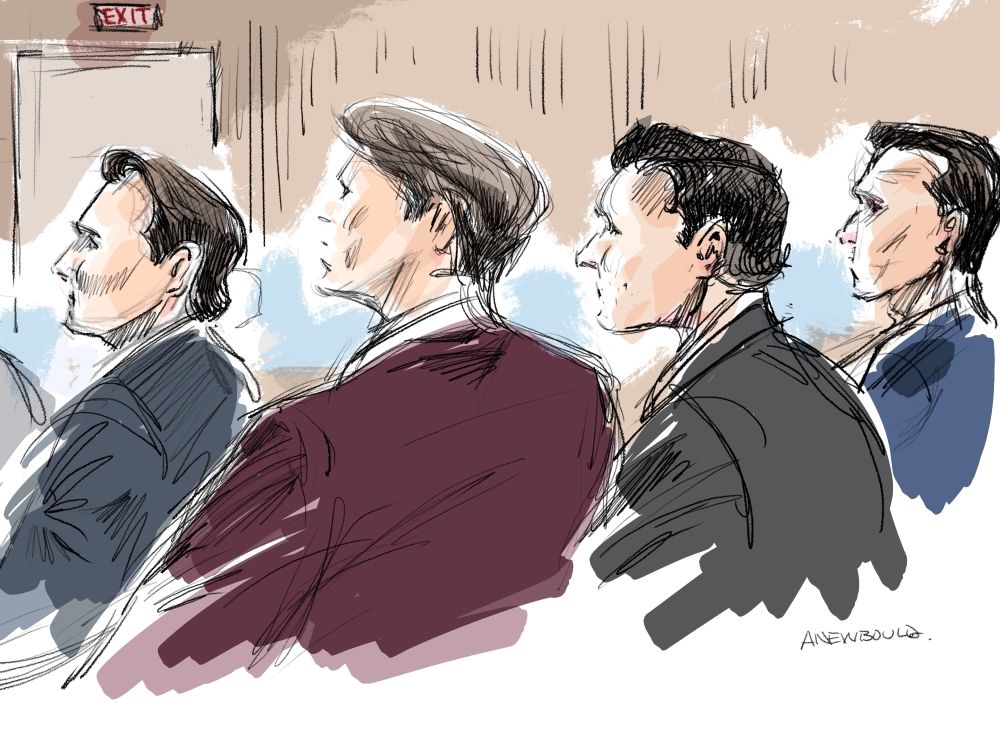
Supporters of the complainant in the junior hockey sexual assault trial rally outside the London Courthouse in London, Ont., Thursday, July 24, 2025. THE CANADIAN PRESS/Nicole Osborne

Everyone in Canada seems to be living in the upside-down when it comes to the results of the Hockey Canada sexual assault trial. Headlines call the outcome everything from a “

crushing day

” to “

absolutely gutting for sexual assault survivors

.” Megan Savard, a female lawyer representing one of the players, was

criticized

for even taking the case solely on the basis of being female.

After seven long years, not only did Justice Maria Carroccia deliver verdicts of not guilty on all counts, she went much further, concluding that the complainant in the case had consented. Thursday’s ruling is a reckoning — not for Hockey Canada, but for North American society, and the excesses of the MeToo movement.

The years leading up to this point included a shady

settlement

paid out by Hockey Canada without the knowledge of the then junior hockey players who were eventually charged, a mistrial, and two dismissed juries.

And after it all, Carroccia

found

all five accused, Michael McLeod, Carter Hart, Alex Formenton, Dillon Dubé, and Cal Foote, not guilty.

“I do not find the evidence of E.M. credible or reliable. The Crown did not meet the onus on any of the counts before me,” she said when delivering her verdict in London, Ont. Thursday morning.

“Much has been made in this case about the concept of consent. This case, on its facts, does not raise issues of the reformulation of the legal concept of consent. In this case, I have found actual consent not vitiated by fear.”

In other words, based on inconsistencies in testimony and the evidence provided, Justice Carroccia did not believe sexual assault had taken place.

E.M., the complainant, claimed during the trial she had been coerced into non-consensual sexual acts by multiple players in a hotel room, feeling intimidated and unable to leave. The defence, on the other hand, maintained that the acts performed that night were consensual, based on her willingness to engage in the acts and two recorded videos, one in which she said that she was “okay with this,” and “it was all consensual.”

In her version of the story, E.M. only consented to sex with one of the men, McLeod, who later texted the other men in a group chat to ask if they wanted to join them for group sex.

In McLeod’s version, when more men arrived in the room, E.M. asked them to have sex with her, was upset when they would not, and offered them oral sex instead.

The judge, though,

pointed

to the inconsistencies between E.M.’s initial 2018 police statement and her 2022 civil suit against the players and Hockey Canada. In the first statement “she did not describe being scared in the room.” Fear was not mentioned until the civil suit.

She also pointed to a text message exchange where E.M. told McLeod, “I was in the wrong too.” When E.M. was pressed during the trial as to what she meant, she testified that she was blaming herself just for being at the hotel in the first place.

The judge noted that Tyler Steenbergen, who was not accused of wrongdoing but testified to what he witnessed in the room, said he felt uncomfortable, and that many of the players did not respond “other than to laugh awkwardly,” when E.M. said, “Can you guys come over and f – – – me?” Steenbergen testified that “he felt like the men in the room were in shock when she said that.”

Steenbergen’s testimony was recalled again to question E.M.’s version of events. “She appeared pretty normal. She was not crying and did not display any sort of reactions to seeing the men in the room,” Carroccia pointed out. Steenbergen also testified that he saw E.M. masturbating and no one there had instructed her to do that.

Regarding whether these players had pressured her to stay and perform sexual acts, Carroccia highlighted testimony made by Alex Formenton. “Mr. Formenton said that no one was encouraging or ordering the woman to do anything. He said that the sex they had was consensual. No one was stopping her from leaving if she chose to.”

Carroccia summarized the arguments of the defence lawyers. David Humphrey, McLeod’s lawyer, argued the Crown had failed to prove the charges “beyond a reasonable doubt.” Also, that the case relied in totality on E.M.’s testimony, describing her as both an unreliable witness and “an enthusiastic and active participant.” While Hart’s lawyer, Megan Savard, suggested it was E.M.’s “shame and embarrassment about her choices that caused her to develop a false narrative about those events after the fact.”

During the trial, Savard,

suggested

that E.M. may have made the allegations up, having cheated on her boyfriend at the time. E.M. denied this. Her then-boyfriend is now her fiancé.

The judge also said E.M. overstated how much she had had to drink. “In my view, the complainant exaggerated her intoxication when confronted with inconsistencies or, when she was unable to explain why she acted in a certain manner, the complainant defaulted to say that, ’It was because I was so drunk,’” Carroccia said.

The judge rejected the argument that E.M. was forced to stay in the room: “There is no evidence that anyone applied force or threatened to apply force to the complainant . . . to cause her to remain in the room.”

We may never know the full details of what happened that night or what everyone in the room was feeling. We do know that on June 9, 2018 after leaving the hotel E.M. texted her best friend, saying she felt “

dirty and used

,” mentioning that she had met a guy who turned out to be “

not nice

.” She

texted

that same friend later saying, “I’m okay, girl. I think I was just being a little overdramatic earlier, but I’m good,” and in another separate text, “I was just feeling really guilty and mad at myself for letting that s – – – happen.”

Defence lawyer Lisa Carnelos

pounced

on E.M. for this during cross-examination, asking why, if she felt she was assaulted, she didn’t tell her friend. E.M. explained she downplayed it because she was embarrassed and ashamed and was still processing events at the time. She also

suggested

she didn’t want to overburden her friend.

Despite this, E.M. initially did not want to pursue charges. Instead, she

wanted

the “police have a conversation with the men to prevent something similar from happening to someone else.” She then changed her mind when she found out that the police couldn’t force the men to have that conversation.

Before the verdict was delivered, Brandon Trask, a law professor at the University of Manitoba,

cast a specific moral judgment.

 “Determining whether something is good or bad is not the same as determining whether something is criminal or not criminal. You can have horrible behaviour that isn’t proven to be criminal beyond a reasonable doubt, but it’s still horrible behaviour. Even if the result is that nobody is found guilty, I don’t think any of the accused should be proud of their actions,” he told CBC.

He then suggested the phenomenon of group sex was unique to the world of hockey. “This should be quite eye-opening for everybody about the culture in relation to hockey. Collectively we need to say as a society, ‘We’re not going to accept this.’ It doesn’t hinge on whether this is ultimately criminal behaviours or not. It is not acceptable.”

For years, the MeToo movement, which, in its efforts to identify many troubling men like Harvey Weinstein who abused positions of power in order to sexually harass or assault women, also scooped up other men, who were accused of assault, or “misconduct” despite having consensual sexual encounters. Given that Justice Maria Carroccia ruled that she had “found actual consent not vitiated by fear,” we might want to consider the realities of the world we live in, apart and separate from the specifics of this case.

Both young men and women are learning about sex from sites like Pornhub. According to the site’s 2024 year in review

report

, women made up 38 per cent of the sites overall users, up seven per cent from 2023. In 2015, women made up only 24 per cent. In Canada, like the United States, women made up 29 per cent, but in other countries, like the Philippines and Argentina, women surpassed male users at 59 and 51 per cent respectively. Colombian and Mexican women almost equalled that of men, at 49 and 48 per cent.

The Pornhub report also has a section that details categories of porn which are viewed more by women than men. Women are 47 per cent more likely to watch threesomes and 37 per cent more likely to watch videos that display group sex with a woman and more than two men.

A 2018
survey
by Justin J. Lehmiller, a Research Fellow at The Kinsey Institute examined sexual fantasies and found that straight women are “the least likely to share and act on their group sex fantasies. And while they do tend to receive positive partner reactions when they share these fantasies, they have the least positive experiences when it comes to acting on them.” He surmises this is because “heterosexual men and women seem to have very different ideas in mind for how group sex should go.”

In 2015, just three years before the incident in the London hotel room, a 20 year-old Calgary woman,

Alexis Frulling

, “enjoyed mutually consenting sex with two male friends at the Calgary Stampede,” as summed up by the Daily Mail. The three of them came up with the idea together and had sex in an alley. They were filmed by a witness and the video was posted to Reddit without their knowledge and without obtaining their consent. It was taken down, but had already circulated widely. Her identity was leaked and she received torrents of online abuse and was labelled a “slut.” While the men involved were left relatively unscathed, socially.

In an interview with

Vice

she said, “I don’t see why I should get bashed for it when the guys don’t get bashed for it. We meant for this to be just between us and our friend group, but it all backfired.”

Frulling shot back at those shaming her posting a video titled “Trampede,” in which she says, “I can’t say I’m really proud of what happened, but I’m not really ashamed. People have asked me if I regret it — and I don’t. If you regret things, how are you going to move forward with your life?”

The world is a complicated place.

Much is made about what women experience after an unsatisfactory sexual encounter. But these encounters can also become a nightmare for a man who suddenly discovers his female partner was not as into it as he thought and had failed to communicate this to him. A woman who does not communicate her feelings or voice her objections can leave a sexual encounter feeling traumatized. Both parties lose. But it doesn’t have to be this way.

Much focus has been placed, correctly, on consent. Now, it’s time to also focus on voicing objections and what that should look like.

National Post

tnewman@postmedia.com

x:

@TLNewmanMTL


VIA Rail's iconic Canadian rolls through the Rocky Mountains.

What did I learn after four days and four nights, some 4,500 kilometres, from Vancouver to Toronto on board Via Rail’s The Canadian? Many things, as it happens.

I learned that The Canadian attracts train aficionados the world over for one of the last great rail journeys on one of the last great trains. The stainless steel rolling stock is 70 years old, the cars having been upgraded along the way, but still rolling as a living part of railway history.

Part of the cultural history Via Rail preserves is superlative meals thrice daily, served in fine style in the dining cars. Four dinners: rack of lamb, beef tenderloin, AAA prime rib, bone-in pork chop. Delicious desserts. Canadian wines and craft beers. Fish eaters and vegans also had options. The question arises ineluctably: Why is the Via Rail food between Montreal and Toronto so horrible?

Perhaps it would be too expensive; The Canadian in sleeper class certainly is. Expense was really the question in the 1870s.

“Could a country of three and a half million people afford an expenditure of one hundred million dollars at time when a labourer’s wage was a dollar a day?” asked Pierre Berton in his 1970 chronicle of that decision,

The National Dream

.

The cost of not building was greater, argued Sir John A. Macdonald. It was the price of remaining a sovereign continental country. Part of the financing was creative; the Hudson’s Bay Company gave Rupert’s Land to Canada, and Canada paid the contractors partly in free land.

Growing up in Calgary, I presumed that the greatest challenge was putting the Canadian Pacific Railway (CPR) through the mountains. And it is true that the most spectacular scenery on the route is the Fraser Canyon and the mountains of the Yellowhead Pass. (The Canadian now travels the northern route of the Canadian National (CN) Railway, not the original southern route of the CPR.)

Yet it was the Canadian Shield, thousands of lakes and muskeg atop the hardest rock on earth, that was the real obstacle. John Palliser, one of the 1860s expeditioners between Thunder Bay and the Rockies, reported back that while getting through the mountain passes could be done, the impenetrable land north of Lake Superior was the insuperable problem. And without getting around the Shield, Canada would be constrained, cooped up, with the prairies and mountains and west coast inaccessible.

Palliser argued for a route south of the Great Lakes, through the United States. Sir John A. was adamant that the route be all-Canadian, lest America turn hostile in the future, as it had in the past. The railway would not go around the Shield. It would blast its way through it.

Having never been north of Lake Superior, the beauty of the vast forest and innumerable lakes was entirely new to me. The reality of that Shield is omnipresent; it seemed that every half-mile or so the train slipped through narrows opened by massive blasting of the rock.

The political challenge required a bit of blasting too.

“In the Canada of 1871, ‘nationalism’ was a strange, new word,” wrote Berton. “Patriotism was derivative, racial cleavage was deep, culture was regional, provincial animosities savage and the idea of unity ephemeral.”

Macdonald and his allies had to promise, persuade, cajole, bully, threaten and fight their way through obstacles as tough as the rock and as high as the mountains. That they did so — and quickly, within a decade — remains improbable at 150 years distance, even though now it is a historical fact.

The greatness of the task summoned greatness in the men who would execute it. The cars on The Canadian are named for various heroes of our history, not limited to the CPR. There is General James Wolfe of course, with his plaque including a favourable mention of Louis-Joseph de Montcalm. Joseph Brant. David Thompson (The Canadian follows the Thompson River into the Rockies.)

And to my delight, George Munro Grant, the 19th-century principal who made Queen’s University what it became, but earlier was a protégé of Sir Sandford Fleming, who was a chief visionary for the CPR project. Sir Sanford, for good measure, developed Canada’s first postage stamp and invented Standard Time — a necessity once railways sped up travel across longitudes.

Via Rail is bedevilled by delays as it uses the CN track, and CN’s freight trains take priority. Pulling over to a siding to await a passing freight is annoying between Toronto and Ottawa. On board The Canadian it was a matter of wonder at the astonishing bounty of Canada’s resources — potash, wheat, lumber, coal, oil and shipping containers, sometimes stacked one atop another, of all kinds of goods — would pass in seemingly interminable chains. Continental passenger rail may have seen its day; freight has not.

The traditional telling of the Canadian story is peaceable compromise, contrasted with the warmaking American character, which birthed its project in violent revolution and rebirthed it in bloody civil war. Yet when the Canadian Pacific Railway bill finally passed Parliament in 1881, Berton characterized what was to follow in martial terms. A war to liberate a country from the supremacy of the land itself was declared.

“Within one year an army of twelve thousand men would be marshalled to invade the North West,” Berton would write of Macdonald’s great political triumph. “Other armies would follow: ten thousand along the Fraser, twelve thousand attacking the mountain crevices, fifteen thousand blackening the face of the Shield…. The granite shield of Canada has to be cracked open to let the railway through. The mountain barrier must be breasted and broken. But the great adventure was launched.”

Should Canadians ride The Canadian in this year of renewed patriotic fervour? It is too expensive and too time-consuming to justify on purely efficient grounds. So too was Canada itself 150 years ago.

National Post


Syrian government security forces deploy in Busra al-Harir in Syria's southern Daraa province on July 21, 2025. (Photo by BAKR ALKASEM/AFP via Getty Images)

It makes for a stirring and uplifting story, and it’s been making the rounds quite a bit lately: Israel has rushed to the aid of a harmless minority that cowers in fear of genocide, besieged and vastly outnumbered by the savage army of a powerful jihadist demagogue.

This is not a true story about the recent upheavals in the Syrian governorate of Sweida, where Israel has intervened in sectarian bloodshed that has taken the lives of more than 1,300 people in clashes this month between the local majority of Druze people and their neighbours among the Sunni Arab Bedouins. The tragedy in Sweida has also pitted Donald Trump’s White House squarely against Israeli Prime Minister Benjamin Netanyahu.

With an eye on the Druze, on Syria’s powerful, well-armed Kurdish resistance in Northeast Syria and the beleaguered Alawites of Syria’s Mediterranean coast, the United States has come down forcefully on the side of a unified Syrian Republic with military capabilities sufficient to enforce order through the entire country. In sharp contrast, Netanyahu has demanded that Syria’s new army stay out of the country’s southern governorates entirely — Sweida, Quneitra, and Daraa – the whole country south of the capital, Damascus.

“We demand full demilitarization of southern Syria” Netanyahu said at a military graduation ceremony in

February

. “And we will not tolerate any threat to the Druze sect in southern Syria.” Israel’s National Security Minister Itamar Ben-Gvir has gone further. Ben-Gvir accuses interim Syrian president Ahmed Al-Sharaa of bearing full responsibility for the atrocities committed against Syria’s Druze sect in Sweida in recent days, and has called for Al-Sharaa’s

assassination

. “Get rid of him,” Ben-Gvir said earlier this week. “He’s a jihadist. Why are we letting him live?”

In Beirut on Monday,

an exasperated Tom Barrack,

U.S. president Donald Trump’s recently appointed envoy to Syria and ambassador to Turkey, took pains to point out that Al-Sharaa’s troops have not had anything to do with the killings in Sweida. “The atrocities that are happening are not happening by the Syrian regime troops,”

Barrack told Reuters.

“They’re not even in the city because they agreed with Israel that they would not go in.”

A great measure of the difficulty in sorting out the facts about what’s been happening in Sweida and identifying the parties responsible for the killings is the breadth and range of the revolutionary and Islamist forces Al-Sharaa has dragged into Syria’s new army — another policy supported by the Americans. There’s also the matter of divisions and factions among the Druze themselves.

The Druze follow an insular, Abrahamic faith that Islamic hardliners consider a heresy. About 250,000 Druze live in Lebanon, another 50,000 or so live in Jordan, and Israel’s 80,000 Druze occupy a respected place in Israeli society and its institutions, including the IDF.

The most prominent figure among Syria’s 800,000 Druze is the slippery

Hikmat al-Hijri.

Nominally the hereditary spiritual leader of Syria’s Druze, the Venezuelan-born Hijri, Israel’s main interlocutor in Sweida, is also something of a cunning warlord.

According to the independent think tank Etana Syria, by the time Al-Sharaa’s Hayat Tahrir al-Sham (HTS) swept into Damascus last December and the hated Baathist regime collapsed, and Syria’s murderous supreme leader Bashar Assad fled to Moscow, there were 160 organized armed groups in Sweida. The militias have not disarmed, and the largest militia bloc is led by Hijri.

Hijri’s spiritual ascendancy occurred in 2012 when the way was cleared by the death of his brother in a mysterious car accident that may been an assassination carried out by the Assad regime. It was nearly two years into the Syrian uprising, which at the time was still a mostly democratic revolt that U.S. president Barack Obama had not completely abandoned to Moscow and Islamist extremism. Bashar Assad attended Hijri’s brother’s funeral, and scandalously, Hijri praised him.

”This event has turned to joy,” Hijri declared. “You are the hope — Bashar the hope, Bashar the nation, Bashar of pan-Arabism and the Arabs.”

That’s not something that many Syrians can easily forgive.

Hijri went on to denounce the anti-Assad Druze movement known as the Men of Dignity. In 2017, Hijri was presented with the “Islamic Resistance Shield” by Harakat Hezbollah al-Nujaba, an Iraqi Shia militia that answers to the Quds Force of Tehran’s Islamic Revolutionary Guards Corps. In January last year, the U.S.

targeted HHN

in a strike that killed at least one of the terrorist group’s senior commanders.

Two years ago, mass protests against the Assad government finally broke out among Syrian Druze, who had become accustomed to just keeping their heads down. It was only then that Hijri began giving the impression that he too wanted the regime overthrown.

Hassan I. Hassan, co-author with Michael Weiss of the 2016 book ISIS:

Inside the Army of Terror,

has grown

increasingly suspicious

of Hijri’s maneuvering over the past few months, and he’s suggested that Hijri may be sabotaging Druze efforts at reconciliation with Damascus, to Netanyahu’s advantage.

Israeli concerns about the Islamist elements in and around Al-Sharaa’s government are perfectly reasonable, and the Israelis’ sense of solidarity with the Syrian Druze is admirable. The evolution of Al-Sharaa’s HTS from the al-Qaida affiliate Jabhat Al Nusra is not something that can be easily overlooked, despite Al Sharaa’s decade-long turning away from jihad and Islamist extremism.

But all the evidence suggests that Al-Sharaa’s transitional government remains the last best hope for the Greater Middle East.

The recent reconciliation between Recep Tayyip Erdogan’s government in Ankara and Turkey’s Kurdish militants was made possible in part by Al Sharaa’s determination to reconcile with Syria’s Kurds. The PKK insurgency in Turkey and Ankara’s cruel repressions have taken 40,000 lives over the past 40 years, but with the receding threat of a hostile Kurdish statelet spread out along the Turkish-Syrian frontier — and now that there’s a government in Damascus that’s on good terms with Turkey — the possibilities for lasting peace and stability haven’t been this good in decades. The stakes are enormous.

While tensions persist and talks continue, the powerful, Kurdish-led Syrian Democratic Forces — the tip of the NATO spear in the war against ISIS — should be expected, especially with American help, to find its place in Al-Sharaa’s new Syria.

Al-Sharaa’s first big test in dealing with Syria’s explosive sectarian flashpoints came this week with the results of an investigation Damascus ordered into the massacres of Alawites in March, and it was no whitewash. The transitional government’s fact-finding

committee

reported that 1,426 people died in attacks on security forces and reprisal killings of Alawites.

The report found that the violence was almost entirely random and rage-fuelled, sparked by a revolt staged by Alawites connected to Assad’s regime and by the killing of more than 200 security forces personnel. The committee concluded that no Syrian commander ordered reprisals, and in fact army commanders gave orders to halt them. The committee identified 298 suspects involved in targeting Alawites, and while their names have not been released their cases have been handed over to the judiciary. Thirty-one people who committed violations have already been arrested.

It’s no small irony that Al-Sharaa’s enemies, primarily Iran’s Quds Force and Hezbollah, are also Israel’s enemies, and Al-Sharaa has gone out of his way to purge Palestinian officials who grew comfortable in Damascus during the Assad years. He has refused entreaties from Hamas and shuttered the offices, confiscated the guns and vehicles and property belonging to the Popular Front for Liberation of Palestine, the PFLP — General Command, the Palestine Liberation Army, Fatah al-Intifada and the Baath-aligned Al-Sa’iqa movement.

Israel has performed miracles in recent months. Hezbollah’s military power has been smashed, its chain of command decapitated. Hamas is crawling around in the rubble of Gaza, the Khomeinists have been badly bloodied, and Tehran’s “axis of resistance” in the region is scattered and broken. It would be a tragedy of unforgivable proportions if these victories were squandered by allowing either Al-Sharaa or Netanyahu to make a hash of things in Syria.

As the American Syria envoy Tom Barrack put it the other day: “With this Syrian regime, there is no Plan B. If this Syrian regime fails, somebody is trying to instigate it to fail,” Barrack said. “For what purpose? There’s no successor.”

National Post


The Supreme Court of Canada.

Last Friday, the same day that Toronto police arrested the at-large 14-year-old alleged to have stabbed a grandmother to death as she loaded groceries into her car, the Supreme Court of Canada made it next to impossible to sentence him to a jail term longer than six years.

In other words, the odds that Canadians — first and foremost, the family of

71-year-old Shahnaz Pestonji,

but also everyone else who was heartbroken to learn of her violent death — will see justice done have now dropped to near zero thanks to seven justices of the top court.

Those justices neutered the adult sentencing provisions under the Youth Criminal Justice Act (YCJA) in the case of

R. v. I.M.

, which reconsidered the adult life sentence of a 17-year-old who murdered another boy of the same age in an alley in a robbery that the former hoped would boost his criminal career. The court ruled in his favour, reducing his jail sentence to the YCJA’s six-year maximum.

The old way of applying adult sentences — supported by years of precedent — required that a judge be satisfied that the youth in question did not have the diminished blameworthiness that courts automatically assume youth to have. It also required that a youth sentence in the given scenario “would not be of sufficient length to hold the young person accountable for his or her offending behaviour.”

The Supreme Court, interpreting the Charter to the habitual extreme, now requires that a youth’s adult-sentenceable maturity be proven by Crown prosecutors beyond a reasonable doubt. In doing so, the Crown must prove that the “developmental age” of a criminal youth “is that of an adult.” That’s the same very high degree of certainty that’s required to prove that a person committed a criminal offence — one that’s incredibly hard to meet in the fuzzy world of psychological maturity.

Factors that should be considered in assessing the developmental age of an offender, instructs the court,

include

“age, background, sophistication in thinking, capacity for independent judgment, behaviour after the offence, whether the person was living like an adult, cognitive, emotional and mental health, and susceptibility to external influences among others.”

Bravado, added the majority of the court, is helpful in getting a youth sentence: “Young persons may commit violent crimes in grim circumstances impulsively or to impress others, in ways that reflect a diminished capacity for adult‑like judgment.”

Naturally, the learned judges also

suggest

that critical race theory be used in the maturity/blameworthiness evaluation by taking into account the “young offender’s disadvantaged background, and the connection between that background and systemic discrimination in their community.” (On this, the dissenting judges

agreed

.)

The court went on to

add

that this should be a nuanced inquiry that doesn’t involve stereotyping or racial discounts — even though that’s exactly what’s going on here. The racial dimension is most helpful to the groups who are most abundant in the youth gang population: Black youth (25 per cent of underage gangsters, according to the most recent data, found in a 2002 Public Safety

report

), followed by First Nations (21 per cent).

Altogether, this decision is most helpful for Canada’s most brazenly dangerous, out-of-control youth: the ones who have already been inducted into gang life, whose parents are absent or even supportive of their actions, who live to glorify violence and who are unlikely to be rehabilitated. The ones who

swarm

,

stab

and

shoot

others in public, with no regard for human life, and the ones who brag online about killing harmless elderly ladies on the way home from the grocery store.

It’s also an additional incentive for gangs to recruit minors into their ranks — something they already do to minimize legal risk, and are sure to do more now that adult sentencing has likely been relegated to history.

Altogether, the killer of Shahnaz Pestonji is exactly the kind of person that the majority of the Supreme Court set out to protect from facing the deserved consequences. The boy is Black, 14 and likely of a rough and disadvantaged background given his actions. Based on his actions, he appears to be lacking in sophistication and revelling somewhat in bravado, having appeared to have to participated in an

interview

— while on the run from police — to tell his side of the story: “She didn’t give me the keys so I yoked her,” explained the subject, adding that he “wasn’t even scared.”

The interviewee expressed regret in killing the woman (“Fam … that was an idiot thing. Cause, I can’t lie, after I think about it, she didn’t deserve it … Low key I would not have done that stuff.”), but overall, it was clear he was on a completely different moral plane than the average Canadian.

What luck that the Supreme Court is looking out for him. The rest of Canadians, well, they better hope they never end up in the wrong parking lot at the wrong time.

National Post