LP_468x60
on-the-record-468x60-white

Students occupy the main entrance to McGill University during a student anti-Israel protest on Tuesday, October 7, 2025.

Released on August 5, the Government of Canada-commissioned Campus Antisemitism and Student Experiences study — CASE — produced a finding that should have ended complacency about the climate facing Jewish students: some 96 per cent of those surveyed reported experiencing or witnessing at least one form of antisemitism during the previous year. The study also collected more than 1,200 accounts of antisemitism by asking open-ended questions.

But another CASE finding deserves attention.

The Jewish students surveyed were not monolithic in their relationship to Zionism. CASE defines Zionism as the belief that Jewish people have the right to self-determination in part of their ancestral homeland. Sixty-nine per cent said Zionism was very important to their identity, 18 per cent somewhat important, six per cent not very important and seven per cent — 55 out of 762 valid respondents — not important at all.

Across the first three groups, concern about antisemitism remained substantial. Among those for whom Zionism was very important, 95 per cent either strongly or somewhat agreed that antisemitism was a serious problem on their campus. That fell to 79 per cent among those for whom it was somewhat important and 61 per cent among those for whom it was not very important.

Then the pattern collapses.

Among students for whom Zionism was not important at all, only 11 per cent agreed antisemitism was a serious campus problem. None strongly agreed. Sixty-seven per cent of this group strongly disagreed with the statement “Antisemitism is a serious problem on campus.”

The divide becomes even more striking when respondents are asked about concrete incidents rather than general perceptions. Forty-two per cent of students for whom Zionism was very important reported antisemitic remarks or gestures directed at them often or occasionally; among those that rejected Zionism most, just four per cent did. Sixty-nine per cent of the first group reported frequently or occasionally witnessing antisemitic remarks directed at somebody else. Among the least-Zionist respondents, that fell to 13 per cent.

Only 23 per cent of respondents for whom Zionism was very important agreed their campus was safe and inclusive for Jewish students. Among those for whom Zionism was not important at all, 92 per cent said it was.

In any case, there is a mountain of evidence on one side of this divide: police-reported hate-crime statistics, public-opinion surveys of Canadians showing wider recognition of anti-Jewish hostility, the testimony of Jewish students and the broader documented escalation of antisemitic incidents. CASE does not stand alone. Its findings sit inside a much larger evidentiary record.

The magnitude of the discrepancy also raises the question of whether something resembling denialism is operating — not necessarily a conscious rejection of facts, but a tendency to minimize or reclassify evidence that conflicts with one’s political framework. One possible explanation is psychological or social: for some students, acknowledging pervasive antisemitism may conflict with their understanding of Jewish identity or with a desire for social acceptance.

The least-Zionist respondents are not merely less likely to regard antisemitism as a problem. Across multiple measures, antisemitism almost disappears from their reports and perceptions of the campus environment.

Jewish students who do not see antisemitism as a serious problem should not negate the experiences of the majority of those who say that it is. We rarely accept that standard when discussing racism encountered by other communities. It should not apply here.

CASE reveals two things simultaneously. First, antisemitism is reported extraordinarily widely among Jewish students. Second, a small subgroup for whom Zionism is unimportant, for some reason or another, is less likely to notice antisemitism on campus.

What the CASE study exposes, therefore, is something deeper than ordinary disagreement. Even Jewish students with somewhat weaker attachment to Zionism continue to report antisemitism at substantial levels. The dramatic break occurs only among the group for whom Zionism is not important at all. Such outright detachment appears to be associated with the near-erasure of antisemitism from their perception of campus life.

The serious question is therefore no longer whether antisemitism exists on Canadian campuses or in the wider society. There is far too much evidence for that question to remain intellectually credible. The question is why, for a small group of Jewish students, so much of it becomes almost invisible. And that’s important whenever a select minority of voices are elevated precisely because they deny or minimize the antisemitism documented by their peers. The evidence does not disappear because some refuse to recognize it. Only the recognition does.

Methodological note: CASE used targeted, network-based recruitment because there is no complete national sampling frame identifying Jewish postsecondary students. Its regional distribution broadly tracks the Census geography of young Canadian Jews, and recalibration by broad region and gender changed the two headline exposure measures only marginally: 89.1 to 87.4 per cent and 95.7 to 95.4 per cent.

National Post

Jack Jedwab, President & CEO, Association for Canadian Studies & Metropolis Institute

Paul Holley, Research & Evaluation Director, Association for Canadian Studies & Metropolis Institute

Cary Kogan, Professor, University of Ottawa, and co-President of the Network of Engaged Canadian Academics


Detractors like to say that House of Commons decorum has never been worse than it is today, but don’t be so sure. Charlie Feldman is the author of the new book, “Unparliamentary: Tales from Canada’s Colourful Unparliamentary Past.” He joins Brian Lilley to recount stories of foul-mouthed, rowdy, drunken and altogether misbehaving MPs and senators from all the way back to Confederation right up to former prime minister Justin Trudeau’s “elbowgate” that make today’s cohort seem tame by comparison. Along the way, Feldman explodes some fabled stories as myths, surveys a surprising scarcity of sex scandals and uncovers some things we might have preferred not to know, from the story of the salmon hidden inside an MP’s pants and why feces were once thrown in the House. (Recorded July 14, 2026.)


U.S. President Donald Trump departs after delivering remarks at the David S. Mack Center for Training and Intelligence on August 14, 2026 in Garden City, New York.

The latest arbitrary deadline to a gratuitous threat made by an untrustworthy president falls this week when Aug. 19 arrives and the U.S. does or does not introduce 50 per cent tariffs on a package of Canadian goods.

The degree to which this seizes Mark Carney might be indicated by the fact the prime minister chose to spend a week vacationing in Italy rather than nibbling his nails as the minutes ticked down. Sure, his aides say he stayed in close contact with Ottawa, but anyone who’s spent any time in Italy knows that distant crises always seem somewhat less desperate when considered over a cappuccino while pondering a statue or two in a pleasant piazza.

Italians tend to take a relaxed view of life thanks to their long history of ups and downs and knowledge that, whatever the disaster, life goes on. Empires, dictators, wars and calamities come and go; Italy is littered with the remnants of fallen worlds testifying to the foolishness humans can get up to, but also to the ability to recover from the madness of others.

If any of this crossed Carney’s mind while he sought a break from his duties, he might also consider that the reputation of one of his predecessors benefits not from something he did, but something he didn’t do. When Jean Chrétien is being toasted by Liberals as a successful and well-remembered leader, his refusal to join the U.S. in its ill-fated crusade in Iraq is a leading reason.

Canada preferred to be friends with the U.S. just as much then as it does now, but was sentient enough to understand that joining it in bad ideas and self-defeating ventures wasn’t a requirement. American President Donald Trump’s misguided tariff war is just such an example. Whatever the temporary pain, Canada would be far better off in the long run avoiding any sort of agreement that lets Washington claim the slightest victory in its attempt to bully concessions out of Ottawa.

Better to walk away, let the White House do its worst and deal with the consequences. That will inevitably be the result under this administration in any case. Whatever piece of paper negotiators wave should a last-minute “deal” be reached won’t be worth the ink wasted on the signatures. As long as Trump is president the U.S. can’t be trusted to keep its word. A quick-fix tariff accord could be signed at breakfast and broken before lunch.

Until its leadership changes, any agreement with the U.S. is a recipe for ongoing uncertainty. Even if Republicans suffer defeat in November’s mid-term elections, the president’s ability to sow confusion will remain considerable until 2028, and likely longer given the time it would take to re-establish America’s reputation as a reliable country.

It’s difficult to know just where the current talks lie. Official pronouncements, strategic leaks and expert analysis are all over the map. Canadian negotiators Dominic LeBlanc and Janice Charette are reportedly hopeful agreement can be reached, but they’d have to say that or they’d be useless in their jobs, no matter how senseless U.S. demands might be. Nothing that comes from the mouth of U.S. Trade Representative Jamieson Greer gives cause to believe their hopes will be fulfilled.

While LeBlanc and Charette have repeatedly trekked to Washington for discussions, Greer has seen no need to return the courtesy. Reports on discussions, opaque as they’ve been, suggest the U.S. has not moved an inch in its list of demands, while showing no material interest in accommodating Ottawa’s rival concerns. Many of the demands, if the reports are accurate, are grotesque in their reach: special rights to Canadian minerals, required purchases of U.S. technologies, guaranteed access to Canadian resources, all of which represent a surrender of Canada’s right to do as it pleases with its assets.

The brazenness of the attempt at a shakedown cries for Ottawa to write off the talks as pointless. Instead, the game plan appears to consist of devising a formula squishy enough to placate Washington while minimizing the immediate damage. Canada’s team seems deep into efforts to find concessions able to soothe delicate American sensibilities without triggering outrage among Canadians already fed to the teeth with the U.S. leadership and its ongoing obnoxiousness.

Carney has managed to retain his popularity with voters to date. Liberals remain well ahead of Conservatives in opinion polls, and Carney enjoys a wide lead over opposition leader Pierre Poilievre. But his standing is based largely on belief in his ability to handle the U.S. challenge, a level of trust that could quickly erode if he’s seen as responding with weakness to U.S. belligerence.

In any case, Trump cares more about attention than popularity; his infatuation with himself is self-generated and immune to human intervention. He’s safe in his job for two more years and unable to run again; Carney needs public support more than Trump does and has to show reason for Canadians to provide it. Demeaning the country in the name of momentary economic gains is not a road to renown.

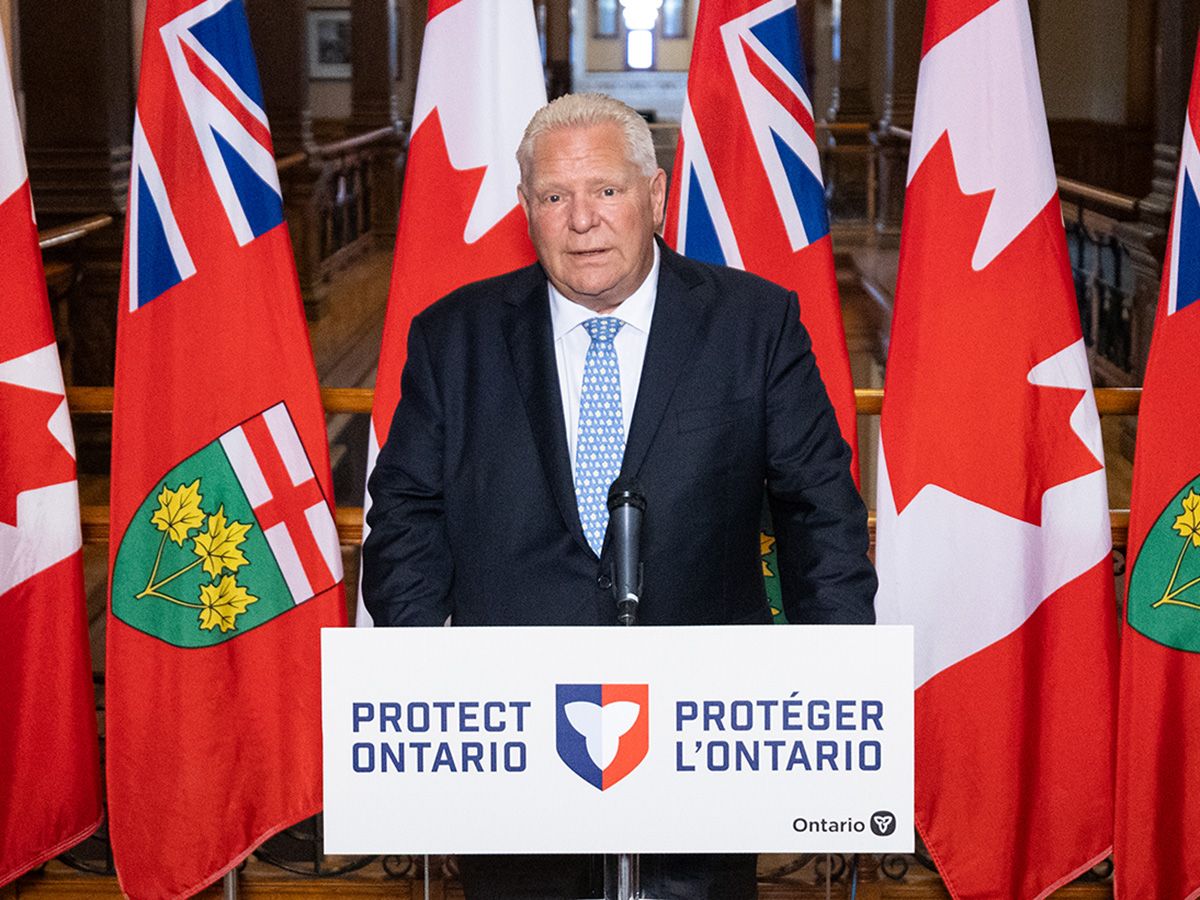
Charette reportedly informed Greer that Canadian hostility towards Washington could force Canada to retaliate to any new tariffs, and that Ottawa couldn’t “rein in or control” premiers set on taking a tough line on talks. The U.S. seems weirdly preoccupied with the boycott of U.S. alcohol, which represents a tiny fraction of imports to Canada; it may be the dispute’s outcome will rest on the ability to talk Premier Doug Ford into allowing California wine and Kentucky bourbon back on the shelves of Ontario liquor stores.

If that’s the case, more power to Ford. There is no such thing as an agreement with Donald Trump, his word is worthless and Canada will have to deal with the end of reliable and sensible trading rules with the U.S. now or later. If something has to be done, it’s just as well to get on with it. Now’s as good a time as any to inform Washington Canada is uninterested in further pointless discussions, and let ordinary Americans get back to bearing the brunt of their president’s expensive obsession.

National Post


Anti-Israel protesters hold a rally at Toronto Metropolitan University in a file photo from April 2024.

The cesspit of antisemitism that has been permitted to fester at Toronto Metropolitan University (TMU) is laid bare in a just released report by former Ontario Appeal Court Justice Mary Lou Benotto.

Jewish students spat on, pelted with sour milk, intimated, harassed, threatened, and living in fear because a university was unable to tackle the scourge of antisemitism that swept through its halls after Oct. 7, 2023.

In an astonishing statement, one tenured professor pleaded with the Jewish community to send their children anywhere but TMU.

“I will tell anyone, with great sorrow, anyone in the Jewish community, not to have their children apply to TMU. Can you imagine that? I love this university and I’ve worked here for (over a decade),” the professor told Benotto.

“It’s given me my entire professional life. Now I tell friends not to let their children go here because they’ll be harassed, and mistreated, and bullied and potentially assaulted. And I say, ‘Send them to McGill, or Western, or U of T, or to the U.S., or somewhere else.’ They are all better.”

What is so horrifying is that it wasn’t just other students behind this wave of hate that put Jews in the crosshairs, but also some faculty.

“Some administrators and University leaders expressed concern that certain faculty members may be encouraging, incentivizing, or intensifying student activism in ways they viewed as inappropriate or inconsistent with professional boundaries,” said the report.

A section entitled “Educator statements” highlighted the hate in the classrooms.

The Benotto review “was also given multiple examples of statements reportedly made in classrooms, faculty-led seminars, and educational spaces that many Jewish participants experienced as antisemitic, dehumanizing, or normalizing hostility toward Jewish people.”

Statements included: denying or minimizing the Holocaust (it appears Hitler wasn’t conducting a genocide, it was merely “discrimination”; saying “academic power is rooted in Jewish supremacism” and it needs to be “rooted out of academia” and holding a discussion about “how much violence we are willing to engage in.”

The introduction to the report notes, “The Review is based on the foundational principle that universities are meant to foster inquiry, debate, and democratic engagement.”

Yet, at TMU, failure to enforce its own policies has allowed hatred towards Jews to blossom, debate and discussion to be shut down and the inmates to overrun the asylum.

It’s clear from the report that the people behind the pro-Palestinian/anti-Jewish protests were out of control.

Senior university administrators were followed, filmed, verbally assaulted and had things thrown at them.

“Administrators, some faculty, Jewish student and faculty representatives, and event organizers frequently described conduct they experienced as crossing from protest into intimidation, harassment, or attempts to silence participation,” said the report.

“Interviewees in this group pointed to repeated event disruptions, aggressive confrontations, social media targeting, doxxing, hostile language, and personal accusations directed at identifiable individuals.”

In one incident, said the report, the vice provost was in a campus café when a student threw pamphlets at her containing accusations of war crimes against Israel. On another occasion, the same woman was surrounded by masked students shouting at her and filming her while displaying signs depicting her as a war criminal.

“Protesters repeatedly followed the University President to the parking garage and surrounded his vehicle and then posted a video of the event with disparaging remarks,” said the report.

Posters around campus showed senior university administrators, including the president, vice-provost and chief financial officer, alongside the phrase, “Wanted for Genocide.”

Is it any wonder that one emeritus professor told of her shame at being associated with the university?

The report also noted that many Palestinian, Arab, Muslim, and pro-Palestinian participants experienced fear, exclusion, and marginalization. “Several described grief and trauma connected to events in Gaza, frustration with institutional neutrality, and concern that criticism of Israel was too readily conflated with antisemitism.”

But it is clear from the report that there was a divide between some students who felt unsafe and those who really were unsafe.

The Benotto review began as an investigation into two incidents. In September last year, Students for Justice in Palestine (SJP) disrupted a Democracy Forum event featuring AI Minister Evan Solomon by shouting “war criminal” and “baby killer” and causing it to be shut down.

In November, the same group smashed their way into an off-campus meeting of a speaking event hosted by Students Supporting Israel. The meeting was also cancelled.

The report noted that in the second incident the university had refused to allow the meeting to take place on campus. “TMU effectively permitted a ‘heckler’s veto,’ whereby the threat of disruption determines who is permitted to speak.”

But Benotto’s review quickly became “a broader institutional issue: a deeply polarized campus environment shaped by the aftermath of October 7, 2023, and the ongoing Israeli-Palestinian conflict.”

Can TMU, the virtue-signalling university that ditched the name Ryerson on the altar of diversity, equity and — how ironic — inclusion, get a grip on things?

“The Review concludes that the two incidents under review were symptoms of a deteriorating campus climate that, absent decisive institutional action, are likely to recur,” said the report.

Urged to act decisively, TMU responded with the speed and gusto of a dead sloth.

It has created “an Implementation Task Force” to review the recommendations of the Benotto report and come up with policies, procedures and proposed actions.

But as Benotto boldly pointed out: the university already has the tools it needs with its Code of Conduct. The challenge lies in a “consistent and principled” enforcement, she said.

Consistency would be nice; principles would be great. TMU seems inclined to neither.

National Post


Anti-Israel protesters hold a rally at Toronto Metropolitan University in a file photo from April 2024.

The cesspit of antisemitism that has been permitted to fester at Toronto Metropolitan University (TMU) is laid bare in a just released report by former Ontario Appeal Court Justice Mary Lou Benotto.

Jewish students spat on, pelted with sour milk, intimated, harassed, threatened, and living in fear because a university was unable to tackle the scourge of antisemitism that swept through its halls after Oct. 7, 2023.

In an astonishing statement, one tenured professor pleaded with the Jewish community to send their children anywhere but TMU.

“I will tell anyone, with great sorrow, anyone in the Jewish community, not to have their children apply to TMU. Can you imagine that? I love this university and I’ve worked here for (over a decade),” the professor told Benotto.

“It’s given me my entire professional life. Now I tell friends not to let their children go here because they’ll be harassed, and mistreated, and bullied and potentially assaulted. And I say, ‘Send them to McGill, or Western, or U of T, or to the U.S., or somewhere else.’ They are all better.”

What is so horrifying is that it wasn’t just other students behind this wave of hate that put Jews in the crosshairs, but also some faculty.

“Some administrators and University leaders expressed concern that certain faculty members may be encouraging, incentivizing, or intensifying student activism in ways they viewed as inappropriate or inconsistent with professional boundaries,” said the report.

A section entitled “Educator statements” highlighted the hate in the classrooms.

The Benotto review “was also given multiple examples of statements reportedly made in classrooms, faculty-led seminars, and educational spaces that many Jewish participants experienced as antisemitic, dehumanizing, or normalizing hostility toward Jewish people.”

Statements included: denying or minimizing the Holocaust (it appears Hitler wasn’t conducting a genocide, it was merely “discrimination”; saying “academic power is rooted in Jewish supremacism” and it needs to be “rooted out of academia” and holding a discussion about “how much violence we are willing to engage in.”

The introduction to the report notes, “The Review is based on the foundational principle that universities are meant to foster inquiry, debate, and democratic engagement.”

Yet, at TMU, failure to enforce its own policies has allowed hatred towards Jews to blossom, debate and discussion to be shut down and the inmates to overrun the asylum.

It’s clear from the report that the people behind the pro-Palestinian/anti-Jewish protests were out of control.

Senior university administrators were followed, filmed, verbally assaulted and had things thrown at them.

“Administrators, some faculty, Jewish student and faculty representatives, and event organizers frequently described conduct they experienced as crossing from protest into intimidation, harassment, or attempts to silence participation,” said the report.

“Interviewees in this group pointed to repeated event disruptions, aggressive confrontations, social media targeting, doxxing, hostile language, and personal accusations directed at identifiable individuals.”

In one incident, said the report, the vice provost was in a campus café when a student threw pamphlets at her containing accusations of war crimes against Israel. On another occasion, the same woman was surrounded by masked students shouting at her and filming her while displaying signs depicting her as a war criminal.

“Protesters repeatedly followed the University President to the parking garage and surrounded his vehicle and then posted a video of the event with disparaging remarks,” said the report.

Posters around campus showed senior university administrators, including the president, vice-provost and chief financial officer, alongside the phrase, “Wanted for Genocide.”

Is it any wonder that one emeritus professor told of her shame at being associated with the university?

The report also noted that many Palestinian, Arab, Muslim, and pro-Palestinian participants experienced fear, exclusion, and marginalization. “Several described grief and trauma connected to events in Gaza, frustration with institutional neutrality, and concern that criticism of Israel was too readily conflated with antisemitism.”

But it is clear from the report that there was a divide between some students who felt unsafe and those who really were unsafe.

The Benotto review began as an investigation into two incidents. In September last year, Students for Justice in Palestine (SJP) disrupted a Democracy Forum event featuring AI Minister Evan Solomon by shouting “war criminal” and “baby killer” and causing it to be shut down.

In November, the same group smashed their way into an off-campus meeting of a speaking event hosted by Students Supporting Israel. The meeting was also cancelled.

The report noted that in the second incident the university had refused to allow the meeting to take place on campus. “TMU effectively permitted a ‘heckler’s veto,’ whereby the threat of disruption determines who is permitted to speak.”

But Benotto’s review quickly became “a broader institutional issue: a deeply polarized campus environment shaped by the aftermath of October 7, 2023, and the ongoing Israeli-Palestinian conflict.”

Can TMU, the virtue-signalling university that ditched the name Ryerson on the altar of diversity, equity and — how ironic — inclusion, get a grip on things?

“The Review concludes that the two incidents under review were symptoms of a deteriorating campus climate that, absent decisive institutional action, are likely to recur,” said the report.

Urged to act decisively, TMU responded with the speed and gusto of a dead sloth.

It has created “an Implementation Task Force” to review the recommendations of the Benotto report and come up with policies, procedures and proposed actions.

But as Benotto boldly pointed out: the university already has the tools it needs with its Code of Conduct. The challenge lies in a “consistent and principled” enforcement, she said.

Consistency would be nice; principles would be great. TMU seems inclined to neither.

National Post


A cyclist in the bike lane along Bloor St. W., near Christie St. in Toronto, Ont. on Thursday May 9, 2019.

It’s absurd it even came to this, but on Friday the Court of Appeal for Ontario ruled that the Ford government was allowed to remove bike lanes in Toronto, overturning Justice Paul Schabas who ruled a year ago that removing them would violate cyclists’ rights to life and security of the person under Section 7 of the Charter.

The decision was unanimous, written by Justice Grant Huscroft, and could be described as a polite judicial smackdown. It’s a win for common sense, and the decision itself is worth reading for yourself no matter how frequently or infrequently you ride a bike. It is one of the best written and clearly and concisely argued decisions you’ll ever find. One specific passage jumps out, and should be mandated for memorization for every law student and practicing lawyer:

“Now, courts learn a great deal about a matter in the course of judicial review proceedings, and judges may be tempted to comment on matters of policy. The temptation to do so may be great; judges may suppose that they have much to offer to public policy debate. But the temptation must be resisted. It is not just that courts have no expertise in policy making — no expertise in making the sorts of polycentric decisions that legislatures make routinely. It is illegitimate for courts to involve themselves in matters of legislative policy. Policy is for politics.”

In one paragraph, Huscroft summarizes the proper role for the courts in our Westminster democracy, and where they so often seem to go wrong and engage in acts of judicial hubris that result in judges becoming legislators imposing policy preferences through the courts.

Huscroft rightly grants that a judge often has access to information and evidence that make them able to weigh in on public policy debates, but in reality judges have no expertise or legitimacy to do so. But far too often they give into the temptation. These kinds of questions must be left to politics, and public policy debates are the domain of politicans and legislators, not judges. It’s notable that Huscroft felt the need to say this in the decision.

Justice Schabas, in his now overturned Aril 2025 decision, introduced the reasons for his ruling with multiple pages of political scene-setting. He recounted remarks from the Ontario premier and the transportation minister, disputed traffic data, exchanges at committee, submissions from the mayor of Toronto and members of the public who had turned up to oppose the bill. He criticized the government’s conduct in passing the law and worried aloud that it had gone through over the objections of the government’s own internal advice. The court of appeal decision dismisses the lower court’s reasoning here in a single sentence: “None of this was relevant to the task before him.”

Schabas found the law arbitrary on the strength of Shoshanna Saxe, a transportation scholar who testified that removing the lanes would fail to ease congestion and would eventually make it worse through induced demand. Huscroft calls that a category error. Legislatures get to decide if a law actually works. A court’s only question is whether the means bear some logical connection to the end, and adding car lanes clears that bar just by being capable of easing congestion for a while. Saxe was forecasting traffic conditions years out. You can agree or disagree with Saxe on this, but it’s irrelevant for whether the law violates a section of the Charter.

At the time of the earlier decision, many of the progressive advocates for Charter protected bike lanes tried to claim, citing Schabas, that the decision did not establish a right to bike lanes. But just because the lower court stated no such right was established doesn’t make it true, and Huscroft demolishes the argument pretty effectively. He states that forbidding a legislature from removing bike lanes can only mean the lanes were constitutionally required in the first place, and he calls the conclusion “logically ineluctable.” A policy chosen by one legislature would end up frozen into the constitution and out of reach of the next one, undermining a bedrock rule of Westsminster democracy, namely that no parliament may bind its successors. The lanes exist only because democratically elected legislators passed a statute enabling them, and nothing stops a later Queen’s Park or City Hall from repealing it.

Deny it or not, the 2025 decision amounted to discovering a Charter protected right to bike lanes on the basis of academic and technical arguments about traffic, induced demand, and congestion. So how did we even get here in the first place? Justice Huscroft is candid about how this happened in the court of appeal ruling: “Something has gone wrong.” Specifically, something has gone wrong with jurisprudence of Section 7 of the Charter, which guarantees the “Life, liberty and security of the person.”

Dave Snow, a professor at the University of Guelph, published a study in May that details exactly what and how things have gone wrong. Section 7 was meant to be modest, and those who drafted it chose the phrase “principles of fundamental justice” over the American “due process” specifically to keep judges away from policy. In one 1985 reference case the Supreme Court decided the Charter’s drafters’ own statements deserved minimal weight and have taken the interpretation of Section 7 in a very different direction than initially intended.

Snow built a dataset covering every Supreme Court Charter decision since 1984. Twenty-one separate principles of fundamental justice have been invented since, roughly one new principle every seven cases, and across 61 Section 7 breaches in 40 years the Court has allowed the infringement to stand exactly once. This has of course trickled down to lower courts, who have among other things, recently used the section to block a homeless encampment clearance in Waterloo and a British Columbia ban on public drug use.

The newest member of the Supreme Court, Glenn Joyal, once called Section 7 “the single most fertile source for the discovery of new rights,” writing as chief justice of Manitoba’s Court of King’s Bench.

Cycle Toronto is considering whether to appeal the bike lanes decision to the Supreme Court, which has separately agreed to hear an Ontario case seeking to answer how far Section 7 reaches outside the criminal justice system. Almost every piece of federal and provincial legislation touches somebody’s health or safety somewhere, and a Section 7 that opens all of them turns every policy fight in the country into litigation, decided by whichever side retains the more persuasive expert. Legislatures would go on meeting and passing bills, but ultimately subject to our supreme legislators who sit on the bench.

Whatever you think about bike lanes, Justice Huscroft’s court of appeal decision is about something bigger than cycling. Those fights should happen, but judges shouldn’t be the ones deciding them. Friday’s decision is a win for democracy, but as long as Section 7 keeps getting interpreted the way it so often is, we’ll keep getting progressive policy legislated from the bench, with only a handful of judges as intellectually rigorous as Grant Huscroft standing in the way.

National Post


A cyclist in the bike lane along Bloor St. W., near Christie St. in Toronto, Ont. on Thursday May 9, 2019.

It’s absurd it even came to this, but on Friday the Court of Appeal for Ontario ruled that the Ford government was allowed to remove bike lanes in Toronto, overturning Justice Paul Schabas who ruled a year ago that removing them would violate cyclists’ rights to life and security of the person under Section 7 of the Charter.

The decision was unanimous, written by Justice Grant Huscroft, and could be described as a polite judicial smackdown. It’s a win for common sense, and the decision itself is worth reading for yourself no matter how frequently or infrequently you ride a bike. It is one of the best written and clearly and concisely argued decisions you’ll ever find. One specific passage jumps out, and should be mandated for memorization for every law student and practicing lawyer:

“Now, courts learn a great deal about a matter in the course of judicial review proceedings, and judges may be tempted to comment on matters of policy. The temptation to do so may be great; judges may suppose that they have much to offer to public policy debate. But the temptation must be resisted. It is not just that courts have no expertise in policy making — no expertise in making the sorts of polycentric decisions that legislatures make routinely. It is illegitimate for courts to involve themselves in matters of legislative policy. Policy is for politics.”

In one paragraph, Huscroft summarizes the proper role for the courts in our Westminster democracy, and where they so often seem to go wrong and engage in acts of judicial hubris that result in judges becoming legislators imposing policy preferences through the courts.

Huscroft rightly grants that a judge often has access to information and evidence that make them able to weigh in on public policy debates, but in reality judges have no expertise or legitimacy to do so. But far too often they give into the temptation. These kinds of questions must be left to politics, and public policy debates are the domain of politicans and legislators, not judges. It’s notable that Huscroft felt the need to say this in the decision.

Justice Schabas, in his now overturned Aril 2025 decision, introduced the reasons for his ruling with multiple pages of political scene-setting. He recounted remarks from the Ontario premier and the transportation minister, disputed traffic data, exchanges at committee, submissions from the mayor of Toronto and members of the public who had turned up to oppose the bill. He criticized the government’s conduct in passing the law and worried aloud that it had gone through over the objections of the government’s own internal advice. The court of appeal decision dismisses the lower court’s reasoning here in a single sentence: “None of this was relevant to the task before him.”

Schabas found the law arbitrary on the strength of Shoshanna Saxe, a transportation scholar who testified that removing the lanes would fail to ease congestion and would eventually make it worse through induced demand. Huscroft calls that a category error. Legislatures get to decide if a law actually works. A court’s only question is whether the means bear some logical connection to the end, and adding car lanes clears that bar just by being capable of easing congestion for a while. Saxe was forecasting traffic conditions years out. You can agree or disagree with Saxe on this, but it’s irrelevant for whether the law violates a section of the Charter.

At the time of the earlier decision, many of the progressive advocates for Charter protected bike lanes tried to claim, citing Schabas, that the decision did not establish a right to bike lanes. But just because the lower court stated no such right was established doesn’t make it true, and Huscroft demolishes the argument pretty effectively. He states that forbidding a legislature from removing bike lanes can only mean the lanes were constitutionally required in the first place, and he calls the conclusion “logically ineluctable.” A policy chosen by one legislature would end up frozen into the constitution and out of reach of the next one, undermining a bedrock rule of Westsminster democracy, namely that no parliament may bind its successors. The lanes exist only because democratically elected legislators passed a statute enabling them, and nothing stops a later Queen’s Park or City Hall from repealing it.

Deny it or not, the 2025 decision amounted to discovering a Charter protected right to bike lanes on the basis of academic and technical arguments about traffic, induced demand, and congestion. So how did we even get here in the first place? Justice Huscroft is candid about how this happened in the court of appeal ruling: “Something has gone wrong.” Specifically, something has gone wrong with jurisprudence of Section 7 of the Charter, which guarantees the “Life, liberty and security of the person.”

Dave Snow, a professor at the University of Guelph, published a study in May that details exactly what and how things have gone wrong. Section 7 was meant to be modest, and those who drafted it chose the phrase “principles of fundamental justice” over the American “due process” specifically to keep judges away from policy. In one 1985 reference case the Supreme Court decided the Charter’s drafters’ own statements deserved minimal weight and have taken the interpretation of Section 7 in a very different direction than initially intended.

Snow built a dataset covering every Supreme Court Charter decision since 1984. Twenty-one separate principles of fundamental justice have been invented since, roughly one new principle every seven cases, and across 61 Section 7 breaches in 40 years the Court has allowed the infringement to stand exactly once. This has of course trickled down to lower courts, who have among other things, recently used the section to block a homeless encampment clearance in Waterloo and a British Columbia ban on public drug use.

The newest member of the Supreme Court, Glenn Joyal, once called Section 7 “the single most fertile source for the discovery of new rights,” writing as chief justice of Manitoba’s Court of King’s Bench.

Cycle Toronto is considering whether to appeal the bike lanes decision to the Supreme Court, which has separately agreed to hear an Ontario case seeking to answer how far Section 7 reaches outside the criminal justice system. Almost every piece of federal and provincial legislation touches somebody’s health or safety somewhere, and a Section 7 that opens all of them turns every policy fight in the country into litigation, decided by whichever side retains the more persuasive expert. Legislatures would go on meeting and passing bills, but ultimately subject to our supreme legislators who sit on the bench.

Whatever you think about bike lanes, Justice Huscroft’s court of appeal decision is about something bigger than cycling. Those fights should happen, but judges shouldn’t be the ones deciding them. Friday’s decision is a win for democracy, but as long as Section 7 keeps getting interpreted the way it so often is, we’ll keep getting progressive policy legislated from the bench, with only a handful of judges as intellectually rigorous as Grant Huscroft standing in the way.

National Post


Canadian Prime Minister Mark Carney with Ontario Premier Ford and Michael Lindsay, President and CEO, Metrolinx, at an Ontario Line construction site in the Don Valley in Scarborough, Ontario on Wednesday, August 5, 2026.

Thirty-four billion Canadian dollars ; $2.2 billion per kilometre. Three times more than projected, with more increases possible, we are warned, which is to say certain.

“Impossible” is a big word, but that’s the new estimate from Metrolinx, the Frankenstein’s monster of a Crown agency whose thundering herd of 7,000-odd employees — 124 of them vice-presidents, at last report — is nominally in charge of building transit in the Greater Toronto Area, with nominal oversight from Queen’s Park. And while almost nothing will shock those who follow this file closely, this is at the very least well beyond the realms of what should be possible.

In 2025, the Ontario Line’s three VPs with “Ontario Line” in their titles, two of them sharing the title of “executive vice president, subway delivery, Ontario Line,” made $902,0000 between them. They should be fired for cause and the entire agency closed down. The Ministry of Transport can screw this up perfectly well on its own, and own it.

Of the Ontario Line’s 15.6 kilometre running length, 57 per cent is at grade or (mostly) elevated, rather than tunnelled. London opened the Elizabeth Line in 2022, featuring 21 kilometres of new twin-bore tunnels under, over and around all 11 existing Underground lines and through 2,000-odd years of city history, for something like $1.7 billion per kilometre (that’s 2025 Canadian dollars, at the current exchange rate, per the Transit Costs Project at NYU’s Marron Institute of Urban Management — as are all subsequent figures).

As it turned out it was actually 9,000-odd years of history, workers having discovered stone-age tools near the Thames, along with the Bethlem mental hospital’s cemetery, the tusk of a woolly mammoth, a “rare Tudor bowling ball ,” “horseshoes … near a well-preserved Roman road, … ancient DNA in the skeletons of victims of the Black Death and 13,000 well-preserved pickle pots and jam jars from (a) 19th-century … factory at Tottenham Court Road,” as a fascinating 2017 exhibit at the London Museum Docklands recounted.

Oh, and there were untold quantities of unexploded German ordnance to keep an eye out for. ( Safety glasseson , people!)

Legions of archeologists would swoop in blowing whistles and waving their fine brushes around — or so I like to imagine — whenever the latest treasure was unearthed. It wasn’t finished quite on schedule, but if Ontario could build things only as behind schedule and within a telescope’s vision of the original cost, as the Elizabeth line was, it would be like landing the Governor General on one of Jupiter’s moons.

Other Canadian (and American) jurisdictions have similar problems. The Expo Line SkyTrain extension from Surrey to Langley , B.C., currently slated for completion in “late 2029”: $437 million per kilometre. Calgary’s Blue Line LRT extension: $223 million per kilometre. Suffice to say France’s, Germany’s or Spain’s transport ministers would chase you up a tree if you proposed those costs for similar projects. China’s would probably throw you and your whole family into a quarry.

The amazing thing about Ontario is it’s getting worse at this. The Ministry of Labour shut down Toronto’s most recent completed subway-extension project for four months after a worker tragically died on the job. That extension, wildly late and over budget as it was, only wound up costing $578 million per km, all of it underground. Tunnelling through downtown Toronto is more difficult than at its outer reaches, but there aren’t and plague pits or Roman roads or bombs down there waiting to be unearthed. If we could just pay $1 billion per kilometre, Ontario would have roughly Toronto’s entire operating annual budget left over to cut taxes , improve health care, (ahem) build more transit … whatever our priorities are. (It’s often quite difficult to tell in Ontario.)

Blaming Doug Ford will not help. Obliterating Metrolinx might be a good first step — another $2.2 billion per annum saved. But the simple fact is we don’t know how to do this better, no matter who’s in charge. Or rather, we do know; we just won’t do it.

Restrictive labour practices . An incurable protectionism fetish across the board. (Toronto’s subway trains must come from Thunder Bay!) A focus (as Prime Minister Mark Carney puts it) not just on “what we build, but how we build it” — i.e., infrastructure isn’t the ultimate goal; jobs are the ultimate goal. Wrong. Hopeless. Guaranteed disaster. As long as we often take getting “shovels in the ground,” we often start digging without enough nearly enough planning underway. We don’t standardize between projects like European and Asian countries do. As we’re seeing with the doomed high-speed rail debacle, politicians think it’s their job to wrestle transit lines around to help people in their wards and ridings. (The Liberals clearly cannot tolerate the idea of winning beet-red Kingston, Ont., by fewer than 20 points; thus, the Alto high-speed rail quango has suddenly fallen in love with dramatically changing the route to include that teeming metropolis.)

Some have suggested a royal inquiry. We could royally inquire into much less important things. But what we really need is for just one province to start doing this properly. People would notice. It certainly won’t be Ontario.

National Post
cselley@postmedia.com


Anthony Fauci is sworn in during a Senate homeland security and governmental affairs committee hearing on Capitol Hill in Washington, D.C., on July 29.

The last few years haven’t done any favours to the status of public health experts. Ongoing revelations from Anthony Fauci’s personal notes emphasize their eroded stature. Once the face of America’s response to COVID-19, the former director of the U.S. National Institute of Allergy and Infectious Diseases has been revealed by the publication of his “diary” as thin-skinned, intolerant of dissent, dishonest and obsessed with fame. To those of us who were already dismayed by authoritarian restrictions imposed by government during the pandemic, the exposed memos and emails confirm our worst suspicions about the nature of the thinking behind those policies.

For those opposed to lockdowns and convinced that Fauci played a role behind the scenes in promoting restrictions, the former public health bureaucrat offered plenty of ammunition. His notes , stored on government servers and therefore fair game for his critics to peruse, revealed him advising the then-governor of New York and mayor of New York City to order schools closed.

“I spoke with Bill de Blasio (Mayor – NYC) and convinced him based on what I was saying publicly and my conversation tonight to close the NYC schools,” Fauci boasted in 2020. “I went on to tell him he should close the bars and restaurants in NYC.” He said he had a similar conversation with California Gov. Gavin Newsom’s chief of staff. Two years later, Fauci told ABC News he “ had nothing to do ” with those lockdown decisions.

Fauci’s notes also reveal him admitting of early claims that the virus originated in a wet market that, “We know the market was not the source, it was the amplifier.” He also wrote that in a phone conference among knowledgeable scientists about the source of COVID-19, “about half of the people felt that this was possibly a constructed virus and the other half were convinced that this was a natural occurrence.”

Despite an obvious division of opinion about the source of COVID-19, Fauci remained convinced of its natural origin and lashed out at dissenters. He raged in 2021 that, “The FBI has no idea what they’re talking about since they are convinced that the origin of COVID-19 is from a laboratory leak.” Fauci similarly vilified the doctors and scientists behind the Great Barrington Declaration ’s call for focusing pandemic responses on the most vulnerable members of society and minimizing restrictions.

Overall, Fauci comes off as a man who projected false certainty despite behind-the-scenes disagreement and who is easily enraged by dissent, even when it comes from people fully qualified to assess diseases and recommend responses that are at odds with those he favours. He denied responsibility for policies he recommended to government officials while meticulously documenting media mentions of his name. If you were deliberately trying to erode expert credibility, he’s the perfect figure to choose for that project.

Public health experts will have to put in a lot of effort to regain trust. Pew Research found that the percentage of the population who believed public health experts had done an excellent or good job in responding to COVID-19 declined from 79 in March 2020 to 52 in May 2022. And that erosion in credibility continues.

Trust in the Centres for Disease Control and Prevention (CDC) “has fallen nearly 25 points since March 2020 when 88 per cent of Americans trusted the CDC,” Ipsos noted in June. “A bare majority of Americans (53 per cent) say public health officials lied to the American public about how effective COVID-19 vaccines and masks are at preventing the virus’ spread.”

Writing in 2022, RAND Corporation adjunct senior researcher and security expert Brian Michael Jenkins cautioned : “As in past epidemics, suspicions that government has exploited COVID-19 to expand its authority have been widespread.”

The case for such opportunistic expansion of authority is impossible to deny. In its 2021 “ Freedom in the World ” report, Freedom House bemoaned that, “As COVID-19 spread during the year, governments across the democratic spectrum repeatedly resorted to excessive surveillance, discriminatory restrictions on freedoms like movement and assembly, and arbitrary or violent enforcement of such restrictions by police and nonstate actors.”

The glimpse behind the scenes at Fauci’s pretense of certainty in the absence of anything of the sort, and his promotion of authoritarian policies while denying that he played such a role, confirm public suspicions that freedom and prosperity were curtailed for little reason. Schools, businesses and borders were closed by preening officials who denied the legitimacy of debate over such decisions.

Jenkins, who literally wrote a book on the topic — ” Plagues and Their Aftermath: How Societies Recover From Pandemics ” — added that government officials have a history of destroying their credibility by over-reaching during medical emergencies. After the deadly Spanish Flu outbreak, “lack of trust was inherited by descendants and persisted decades after the pandemic.” He saw the same dynamic at work during COVID-19, which “heightened distrust in American institutions, which many have come to see as dysfunctional, ineffectual, corrupt, even tyrannical.”

The gloating, self-aggrandizing nature of Fauci’s notes, in which he boasted, “I am the most famous and talked about person in the country,” won’t restore any of the lost trust in public health figures and institutions. To the contrary, they confirm the worst suspicions of many Americans.

Fauci’s concern that his leaked diary may expose him to penalties is evident in his repeatedly invoking the Fifth Amendment’s protections against self-incrimination during testimony before the U.S. Senate. Yale law Prof. Jed Rubenfeld thinks the former public health official pushed his luck and committed contempt of Congress, for which he has been referred to the Justice Department for potential prosecution.

Old and retired as he is, Anthony Fauci is unlikely to face serious legal consequences. But the public health experts he once led may suffer for years from the hubris displayed by him and his colleagues.

National Post


In a photograph from July 15, 1944, Capt. Robert Seaborn, Chaplain of the 1st Battalion, the Canadian Scottish Regiment, gives absolution to an unidentified soldier of the 3rd Canadian Infantry Division near Caen, France. Retired military chaplain Rav Sean Gorman writes that the Sailors and Marines he ministered to called on him for more than

‘Directive … privileges lack of belief over belief’

Re: Forcing religious neutrality on CAF chaplains robs troops of support — Brian Dijkema, Aug. 5

The latest directive for Canadian Armed Forces chaplains privileges lack of belief over belief, even though both are equally protected and affirmed under the Charter. As much as CAF is correctly concerned about language that excludes non-believers, language that suppresses believers and belief must also be of concern.

My colleagues on both sides of the border are deeply committed to the men and women we serve. We are also deeply committed to our personal theologies. Requiring chaplains to sacrifice one in order to serve the other forces weighing our military training against our theological training.

I have offered dozens of prayers at retirements, changes of command, memorial services, prayer breakfasts, and while underway. At every turn, I have been both a rabbi and a United States Navy chaplain. My commanders, my Sailors, and my Marines did not call me to deliver an innocuous spiritual reflection. They called me because of the connections we developed. They called me because I held to a spiritual grounding. They called me because I was “the Chaps.”

Rav Sean Gorman, Toronto, LCDR, CHC, USN (Retired)

P.S. In accordance with my training, prayers always began with “please join me in MY prayer.” It was my prayer, not the command’s prayer. That language gave people a way not to participate. It freed people not to say amen.


Flypast for U.S. ambassador was a mistake

Re: Canadian military says it didn’t initiate July 4 flypast — U.S. ambassador requested it — David Pugliese, Aug. 6

Having two Canadian F-18 fighter jets fly with two American F-35s over the U.S. Ambassador’s residence in Ottawa on the Fourth of July, after all the insults hurled at Canada by the U.S. administration and after the U.S. Ambassador to Canada’s frequent clumsy and ill-informed attempts at diplomacy, only reinforced that the United States can do whatever it wants in relation to Canada, but whenever there is protest on Canada’s part the “glass jaw” of America becomes clearly evident.

In this case the Canadian military should have respectfully denied the Ambassador’s request for the flypast. It wouldn’t have created an international incident, but it would have reinforced the idea that Canada is a sovereign state, not a 51st state, and that the U.S. must respect this instead of requesting an unnecessary air show at Canada’s diplomatic and military expense simply to show off America’s fancy aircraft in an attempt to persuade Canada to favour its jets and not someone else’s.

Douglas Cornish, Ottawa


Pollution knows no borders

Re: ‘You’ll find out about it’: Trump hints at Canada’s wildfire smoke punishment — Ellie Hutchings, Aug. 4

Canada’s wildfire season is heartbreaking, and I understand why Americans are frustrated when smoke crosses the border. It is disappointing, however, to see an issue that once united our countries in co-operation become another political talking point.

We absolutely need to continue investing in wildfire prevention, forest management and firefighting. At the same time, climate change and increasingly severe fire seasons have made this an extraordinary challenge that no single country can solve alone.

What concerns me is the tone of some of the criticism coming from the United States. For generations, the U.S. has consumed substantially more fossil fuels than Canada in absolute terms and has historically relied heavily on coal-fired power. Those emissions, like wildfire smoke, do not stop at the border. Canadians have lived with cross-border air pollution for decades, yet our response has generally been to work together, not to point fingers.

The reality is that both coal combustion and wildfires release pollutants with health consequences. (Coal ash even contains naturally occurring radioactive elements.) Rather than trading accusations, we should be investing together in cleaner energy, healthier forests, and stronger emergency response.

Canada and the United States have always been better neighbours when we tackle shared problems together. Let’s get back to that.

Matt Halliday, Haileybury, Ont.


U.S. government also supports dairy industry

Re: Canada’s dairy sector is built on what I warn every client against — Daryl Ching, July 16

Daryl Ching has obviously valid points in his op-ed about the way dairy supply management raises the costs to the consumer by reducing competition. However to imply that the U.S. dairy industry is a free market governed totally by supply and demand is a laugh.

Canada does interfere with a full free market in dairy by quotas that limit supply in order to support Canadian farmers. It does increase the cost of dairy in Canada over what U.S. consumers pay.

The U.S. government however uses other means to support its dairy industry. It sets minimum prices paid by manufacturers to producers, it insures farmers from rising feed prices, it buys surplus dairy products and gives them to institutions or warehouses them, it subsidizes insurance premiums, and it supports export. This contributes to oversupply and what is in essence income supports for farmers. American farmers therefore have surplus production with which they want to flood the Canadian market.

This is a time when Canadians are wary of U.S. governmental interference in international trade. It is a time when the U.S. slaps protectionist tariffs without regard to international agreements and perhaps out of spite or to gain geopolitical advantage. It is a time when commercial interests in the U.S. are not shy in buying influence in Washington to promote their own wealth accretion. Is this the right time to take chances on destroying essential local food production and relying on the U.S. to provide us with essential food items?

Morris Sosnovitch, Toronto


When did Carney lose confidence in Infantino?

Re: Carney says he no longer has confidence in Gianni Infantino’s ability to run FIFA — Agence France-Presse, Aug. 5

As someone who lost confidence in Gianni Infantino the moment I learned he was president of the corruption-riddled FIFA, I would like to know when Prime Minister Mark Carney lost confidence in the man.

Was it when he learned the extortionate prices that FIFA decided to charge for seats at this year’s World Cup? Was it when, following a call from President Donald Trump to President Infantino, FIFA suspended the automatic one-game red-card suspension meted out to Folarin Balogun? Or was it really only when Carney learned Infantino might be about to sell a valuable part of the FIFA franchise to relatives of Trump that our prime minister felt confident enough to declare his loss of trust?

Maybe Carney actually believes that the three-strikes-you’re-out rule applies in football federations, too?

Patrick Cowan, North York, Ont.


Not an Anand admirer

Re: Anita Anand’s misguided condemnation of Israel — Alan Baker, Aug. 6

I cannot decide if former Israeli ambassador Alan Baker was being kind or disingenuous when he suggested that Foreign Affairs Minister Anita Anand was “misinformed” on the subject of so-called “settler violence.”

Anita Anand is not misinformed. There is plenty of information about what really occurred but the truth, to paraphrase Al Gore, is “inconvenient” for Minister Anand.

Anyone who does a deeper dive into the headlines knows that the Israeli farmers had plenty of provocation from the Palestinians, ranging from poisoning their animals to setting fire to their crops. Of course, the Israelis should not retaliate as they have done and should face justice for their actions. However they are no more guilty of wrongdoing than the Palestinian provocateurs, but Anand seems content to give the Palestinians a free pass, saving her vitriol for those pesky Jews.

Justin Trudeau, the self-styled “feminist” prime minister, booted Jody Wilson-Raybould from her position as attorney general, followed by health minister Jane Philpott, because Wilson-Raybould refused to break the law and shield SNC Lavalin from the consequences of its actions. Philpott supported her and thus also became the object of Trudeau’s wrath.

I admire both of these women for speaking truth to power and for refusing to engage in actions they knew to be wrong, even if it cost them. Not so Anand. She (and her predecessor in foreign affairs, Mélanie Joly), remained silent. One can only deduce from this, that political ambition outweighed honour.

Some pundits have suggested that Anand is the worst foreign affairs minister in Canadian history. It is easy to see why.

E. Joan O’Callaghan, Toronto


Federal government bonuses undeserved

Re: Federal government handed out $201.5M in bonuses to execs despite half of targets missed — Ellie Hutchings, July 31

Thanks to Ellie Hutchings for her excellent report based on findings by the Canadian Taxpayers Federation (CTF). How is it possible that 88 per cent of government executives received a bonus in 2025 when only 54 per cent of departments met their performance targets in 2024-2025?

These payments were categorized as either a (1) “bilingual bonus allowance” for 6,902 employees, at a cost of $4 million; (2) “at risk pay” totalling $172 million for 9,173 employees, or a (3) “performance award” for 1,618 costing $24 million. It is also worth noting that Canada Post handed out $30.8 million in management bonuses in 2025, despite losing $ 1.6 billion that year.

Prime Minister Mark Carney is not yet living up to his billing. And it’s highly unlikely Canadians will see a balanced budget under this Liberal government. The next generation will pay!

Harry K. Hocquard, King, Ont.


Stop the hate

Re: Antisemitic terrorism is a national emergency. Carney needs to act like it — Tasha Kheiriddin, Aug. 4

It would be inconceivable, intolerable and, I would hope, illegal for a group of Winnipeggers to stand outside an Islamic community centre, school or mosque carrying signs and shouting slogans depicting Muslims as garbage, diseased, and deliberate killers of children. Yet, like clockwork, during every Folklorama — an annual early-August celebration of this city’s cultural diversity — a group positions itself outside the Israeli pavilion at Rady Jewish Community Centre and does exactly this towards Jews.

The location of these purported anti-Israel protests underscores a popular pretence where “anti-Zionism” is misleadingly used as a placeholder for Jew hatred. How are protests about Israeli government actions served by attempting to intimidate families attending a Jewish community centre?

When societies allow for the dehumanization and vilification of a group of people, targeted violence is an inevitable outcome. Recent murders of Jewish individuals in Washington D.C.; Boulder, Colo., Manchester, England; and Bondi Beach, Australia, and attacks on Jewish-owned businesses and places of worship in Toronto, Montreal, Vancouver and Winnipeg were not random events.

A dangerous culture of tolerance for hatred towards Jewish people has grown over the past three years. It has to stop.

Daniel Rothman, Winnipeg


EDITOR’S NOTE: Letters to the Editor will return on Sunday, Sept. 6


National Post and Financial Post welcome letters to the editor (250 words or fewer). Please include your name, address and daytime phone number. Email letters@nationalpost.com. Letters may be edited for length or clarity.