


CALGARY — A City of Calgary committee has moved forward on recommended changes to managing its water supply, but the cost is unclear.
In the aftermath of Calgary’s second catastrophic water main break, the executive committee voted almost unanimously Tuesday to pass an implementation plan prescribed from an independent review panel’s report on the city’s Bearspaw South Feeder Main break in June 2024.
The plan outlines a multitude of steps the city intends to take, including stabilizing current water systems, being prepared to respond to future breaks and a long-term transition to a municipally controlled water utility corporation.
The motion is set to move to city council on Feb. 17. City administration is expected to come back to the committee in March with a budgetary request.
Mayor Jeromy Farkas was asked by reporters if signing off on the implementation plan before knowing the price tag was like putting the cart before the horse. He said many of the set recommendations don’t have an associated cost.
“We’re going to have the opportunity through the coming months and years to get a sense of what the actual hard cost will be to modernize Calgary’s infrastructure, starting with our water utility,” Farkas said.
He also said the water utility is one aspect of the city’s infrastructure that needs updating.
“We are behind significantly and we are going to be as proactive as possible with Calgarians to share the good, the bad, the ugly, everything that it entails to be able to catch up.”
The cost of building the pipe can be spread out over its lifetime.
Coun. DJ Kelly said council is looking to make the updates without tax rate shocks to residents.
“Previous councils have made decisions in order to be able to under-invest in our infrastructure, in order to be able to keep tax rates low,” he said.
“We see what the consequences of that are, so, this is a council that’s not gonna pass the buck. We can’t do this again.”
As part of the motion, Calgary’s executive committee is also suggesting council earmark $3 million to begin hiring for a new water utility department and oversight board chair. It also recommends transfer of $50 million to its utility reserve to replenish money spent on the pair of water line breaks.
The Bearspaw South Feeder Main, which carries up to 60 per cent of the treated water supply to the city of 1.6 million, fractured again in late December.
Residents were placed under voluntary water restrictions for the following two weeks and consistently failed to restrict water use to metrics the city considered sustainable.
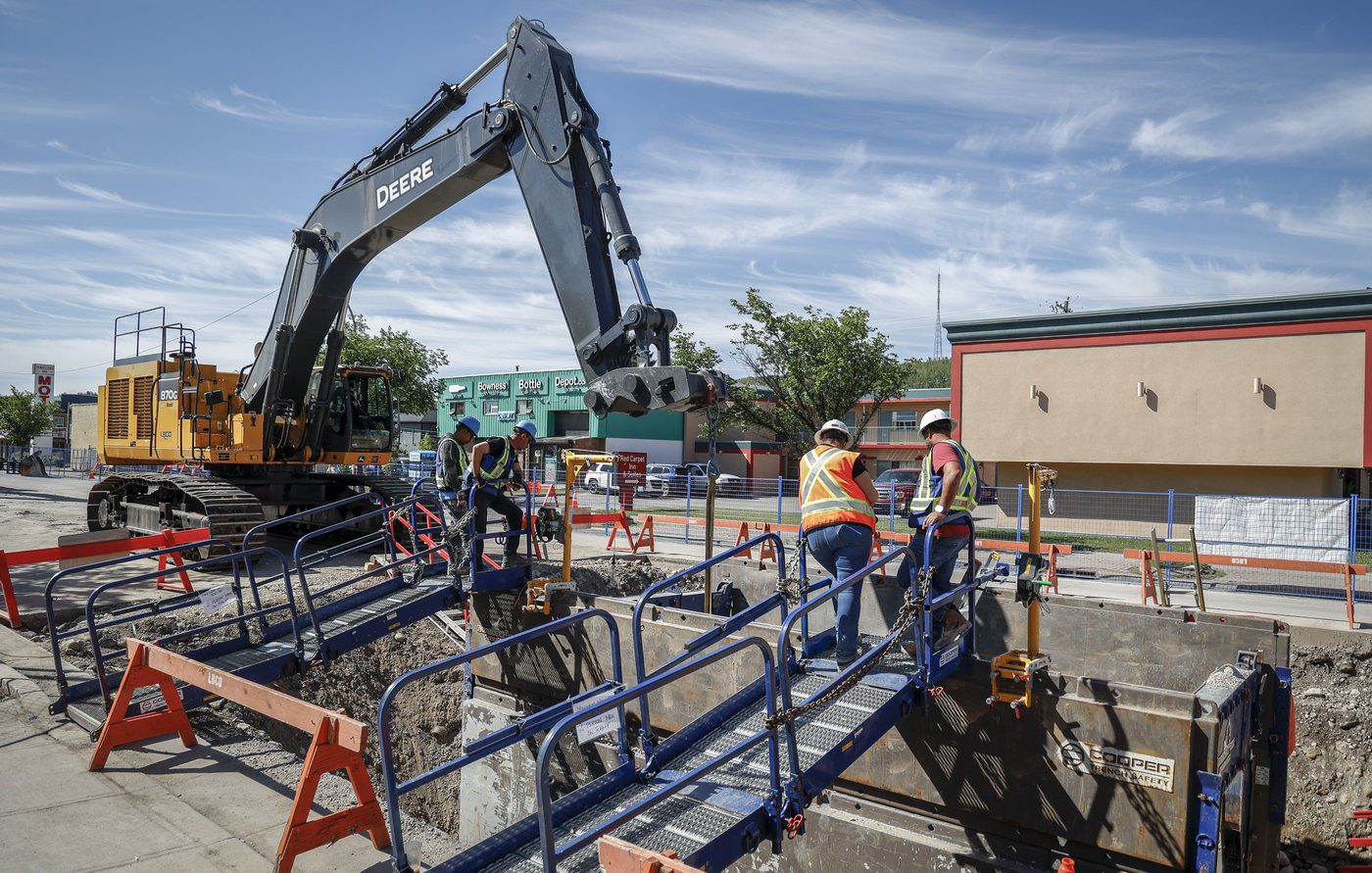
The city is hastily working to pair a portion of the line with a parallel pipe, planned to be complete by December 2026.
This report by The Canadian Press was first published Feb. 3, 2026.
Dayne Patterson, The Canadian Press

