


WASHINGTON — While President Donald Trump said Friday it’s a “good thing” that Prime Minister Mark Carney has signed a trade deal with China, his trade czar cautioned that Canada could regret the decision.
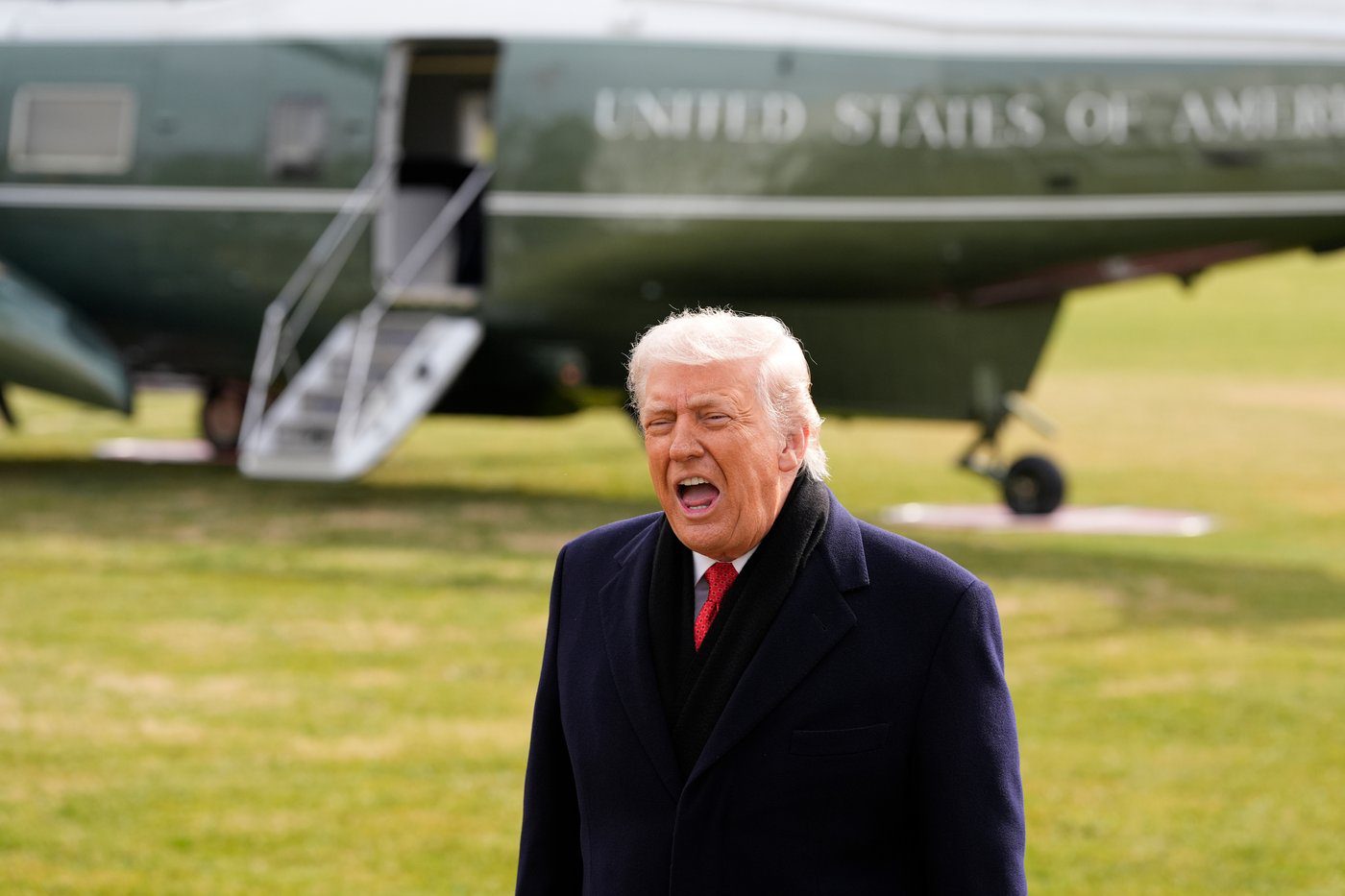
When asked about Carney making the deal as he left the White House on Friday, Trump said, “That’s OK.”
“That’s what he should be doing. It’s a good thing for him to sign a trade deal,” Trump said. “If you can get a deal with China, you should do that.”
Canada announced a deal with Beijing earlier Friday to slash tariffs on a set number of Chinese electric vehicles in exchange for China cutting duties on agriculture products, including canola.
U.S. Trade Representative Jamieson Greer told CNBC on Friday that the deal is “problematic for Canada.”
“I think in the long run they are not going to like having made that deal,” he said.
Canada’s deal with China marks a major break from the United States as Ottawa confronts the effects of massive U.S. tariffs that are rattling Canadian industries.
The U.S. imposed 35 per cent economywide tariffs on Canada, but those duties do not apply to goods compliant with the Canada-U.S.-Mexico Agreement on trade, known as CUSMA. Trump also implemented separate sector-specific tariffs on industries like steel, aluminum, copper, lumber and cabinets.
The idea of a Canadian prime minister going to Beijing to secure a trade deal was almost unimaginable not long ago, said Kyle Chan, a fellow at the Washington-based Brookings Institute.
“I think it’s a sign of a major break with the U.S.,” he said.
In 2024, Ottawa took action against Chinese EVs to match the United States. It also imposed duties on Chinese steel and aluminum to appease the incoming Trump administration.
Carney has said Canada urgently needs to diversify its trade. At a news conference in Beijing, Carney said the new deal is “a partnership that reflects the world as it is today.”
Trump’s return to the White House last year worried Beijing, which thought the United States would work with allies to form a trade coalition against China.
Instead, Chan said, Trump’s imperialistic rhetoric and tariffs have upended geopolitics, resulting in traditional American allies looking for stability elsewhere, including China.
On Monday, the European Union announced it was working with Beijing to resolve disputes around imports of Chinese-made electric vehicles.
Canada did not receive credit from the Trump administration for aligning its policies with the United States around China, said Christopher Sands, director of Johns Hopkins University’s Center for Canadian Studies. The deal with China “suggests that Canada can’t be simply taken for granted,” he added.
“Part of the problem with Canada is being taken for granted and the voluntary alignment doesn’t get noticed,” Sands said. “Whereas suggesting Canada is going to go in a different direction does draw attention.”
Democrats took to social media to say that Canada’s deal shows the president’s policies are alienating long-standing American allies.
“The most basic principle in politics and geopolitics is loyalty to friends. And we weren’t just disloyal — we were hostile,” Brian Schatz, a senator from Hawaii, posted on social media.
While Trump has suggested he’s open to Chinese investment — he mentioned it during a visit to a Detroit auto plant earlier this week — some in the president’s orbit expressed skepticism about Canada’s outreach to China.
Chris LaCivita, a senior adviser to Trump’s 2024 presidential campaign, posted on social media that it was “asinine … the current Prime Minister of Canada advocating a strategic partnership with communist China.”
Fen Osler Hampson, a professor of international affairs at Carleton University in Ottawa and co-chair of the Expert Group on Canada-U.S. Relations, said Carney is taking a risk “with a mercurial and vindictive president who may well see Carney’s Chinese caper as a betrayal and as a threat to North American security.”
“I think the question you always ask yourself is, ‘What’s the bigger game plan here?'” Hampson said.
“And I think Carney believes that the China deal is a valuable bargaining chip in the upcoming CUSMA renewal negotiations.”
Trump’s statements on trade have rattled Canada and Mexico ahead of a review of the trilateral trade pact this year. Trump on Tuesday called CUSMA “irrelevant” and repeated his claim that the United States does not need anything from Canada.
Ottawa’s deal with China shows that Canada has options, Hampson said.
“The agreement with China is a calculated risk, but I think it sends a signal we’re not going to be a patsy in Trump’s trade wars,” he said.
This report by The Canadian Press was first published Jan. 16, 2026.
— With files from Dylan Robertson in Ottawa
Kelly Geraldine Malone, The Canadian Press

