


OTTAWA — Conservatives are questioning why CBC is funding a spoof program that used false pretences to lure high-profile people accused of downplaying the damage caused by residential schools into sitting for interviews.
Several current and former Conservative politicians have gone on social media to denounce the production “Northland Tales.” The show is being produced for CBC and APTN.
The show is described by the Indigenous Screen Office — which works to increase Indigenous media representation using federal funding — as a satire program meant to “flip the script” on modern and historical injustices against Indigenous Peoples.
Frances Widdowson, who has described herself as a “known controversial figure” and has publicly questioned the history of residential schools and unmarked graves of children at the site of a former school in Kamloops, described her interview for the show in a video posted to social media this week.
During what appeared to be the tail end of the interview, a pile of shoes was placed in front of Widdowson. Children’s shoes were widely used as symbols for the children who died or never made it home from residential schools after news broke in 2021 that potential unmarked graves were found on the grounds of the former Kamloops Indian Residential School in Kamloops, B.C.
At that point, Widdowson realized the interview was a spoof and turned her phone on the program host. She grilled him on the purpose of the show in a video that was transmitted live and later posted to social media.
“I’ve got nothing to be ashamed of. I just don’t like being lied to,” Widdowson said in the 11-minute video.
“I was given a sense it was something different than what it was, but that’s kind of part of the thrill of it, I guess.”
The Canadian Press reached out to Widdowson for comment but did not hear back.
The show is described by the Indigenous Screen Office as an unscripted comedy series “where an Indigenous activist trio uses pranks as a form of social action.
“With outrageous humour, they flip the script on modern and historical injustices against Indigenous Peoples, offering a fresh, timely perspective on the prank genre, akin to shows like Borat and The Yes Men.”
Former Alberta premier Jason Kenney attacked the production on social media, calling it “appalling, doubly so as this fraudulent activity is being conducted with our tax dollars.”
Other politicians, including B.C. MLA Dallas Brodie, posted on social media they were also asked to appear on the show.
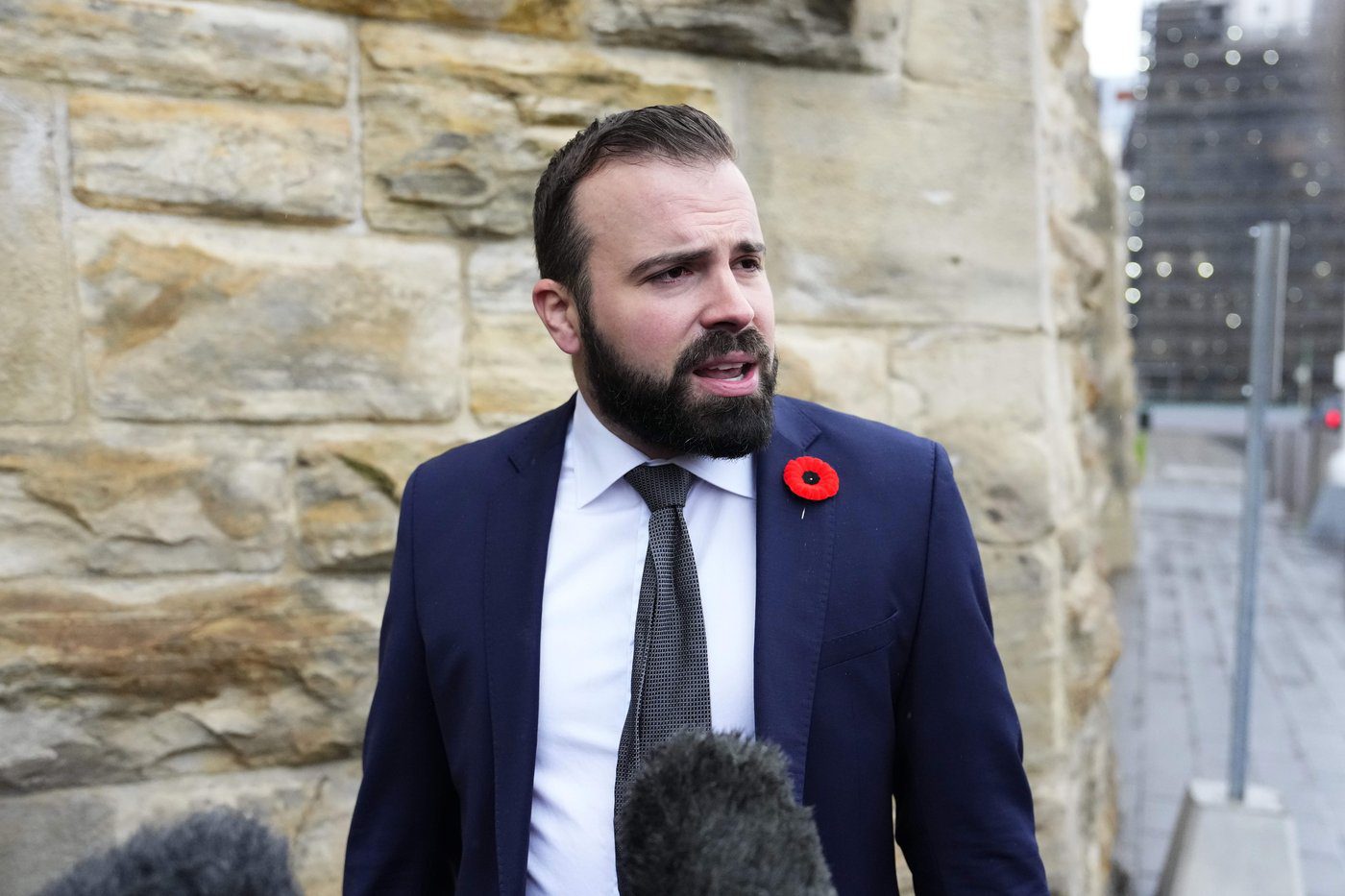
Conservative MP Aaron Gunn told The Canadian Press he was approached “very persistently” by the show’s production staff in April but ultimately decided not to grant an interview.
Emails from the show’s producer to Gunn’s North Island-Powell River constituency office, provided to The Canadian Press, say the show was looking to examine the debate over “Canadian historical memory — specifically the forces driving the removal of monuments to figures like Sir John A. Macdonald, and the pushback from historians, legal advocates, and ordinary citizens against Canada’s founding values and cultural memory.”
“We’d like this series to give a broader platform to those at the forefront of this fight, like Mr. Gunn, bravely speaking in defence of Canadian heritage,” the email continues.
One of Gunn’s constituency office staffers described in an email a conversation she had with the show’s production team. She said she was told the production company was preparing a docuseries for CBC, which was under pressure to provide a balance of views on John A. Macdonald.
Gunn said it seems the show was “trying to entrap, trick and deceive some of the individuals who have been very outspoken in defending Canada’s first prime minister.”
“I think it was entirely inappropriate for a taxpayer-funded state broadcaster to use a production company, or partner with a production company, that disguised their identities and motives in an attempt to lure or deceive or trick an opposition member of Parliament, as well as just other everyday Canadians,” he said.
“I do think everyone’s allowed to, of course, have their own opinions about these and other issues, but I think they are important conversations, and they are nuanced conversations, and they deserve real, serious conversations.”
In an emailed statement, CBC’s head of public affairs Chuck Thompson said the show is in early production for CBC Entertainment and APTN. He said the news divisions of both broadcasters are not involved in the production and had no prior knowledge of it.
“Social experiments and satirical prank shows are a long-established television format used by broadcasters and streamers around the world, including many public broadcasters. In this case, the Indigenous creators are using the format for Northland Tales,” Thompson wrote.
“A form of comedy is being deployed to increase better understanding of historical injustices against Indigenous peoples and support truth and reconciliation in Canada.”
Thompson said it’s important that the series does not have a negative impact on CBC’s news brand.
APTN did not respond to a request for comment.
Gunn has had tense relations with First Nations — especially during last year’s federal election campaign, when the regional chief of British Columbia called on the Conservatives to drop him as a candidate and accused him of denying the history of residential schools. Gunn has rejected that claim.
Gunn also has spoken in support of the first prime minister’s legacy, which has become a cultural and political flashpoint.
Macdonald is largely viewed as the architect of the residential school system and his statues were removed from some public spaces after news emerged of potential unmarked burials on residential school sites in 2021.
More than 150,000 Indigenous children were forced to attend residential schools, the last of which closed in 1996. An estimated 6,000 children died in the schools, though experts say the actual number could be much higher.
The Truth and Reconciliation Commission, which was tasked with researching the institutions, found they were rife with abuse. Children attending the schools were separated from their families and barred from visiting them.
The commission concluded the schools constituted “a systematic, government-sponsored attempt to destroy Aboriginal cultures and languages and to assimilate Aboriginal Peoples so that they no longer existed as distinct peoples.”
Kimberly Murray, Canada’s former special interlocutor on unmarked graves and missing children associated with residential schools, spoke extensively about what she called residential school denialism in her 2022 report.
“Denialism is not a simple misunderstanding of the facts; whether consciously or unconsciously, denialists are working toward the accomplishment of psychological, practical or political goals,” she wrote.
“Indian residential school denialism must be taken seriously because it puts at risk the important work of truth and reconciliation. It should not be dismissed as a harmless fringe phenomenon.”
Conservative MP Billy Morin, who previously served as chief of Enoch Cree Nation, told The Canadian Press the show’s premise fails to respect the gravity of the residential school experience.
“Not only is this wrong against a public servant, it completely disrespects and trivializes residential school survivors and their families,” he said.
This report by The Canadian Press was first published May 14, 2026.
Alessia Passafiume, The Canadian Press

