



On Wednesday, what should have been a timely update from the RCMP on the situation of two children who went missing from their home in Pictou County on May 2 — Lily Sullivan, 6, and Jack Sullivan, 4 — began rather awkwardly.
After stepping to the microphone and introducing herself, RCMP provincial public information officer, Cpl. Carly McCann, delivered not one, but two acknowledgments
them both quickly and nervously: “First, I acknowledge that we are in Mi’kma’ki the traditional and unseated ancestral territory of the Mi’kmaq people.”
She continued: “I also recognize that African Nova Scotians are a distinct people whose histories, legacies, and contributions have enriched that part of Mi’kma’ki
,
known as Nova Scotia, for over 400 years.”
The latter was a whole new type of acknowledgment, not based on land, but race, and a claim about the value of a specific race’s enrichment of the province. The announcement seems to imply a sort of hierarchy of culture in Nova Scotia.
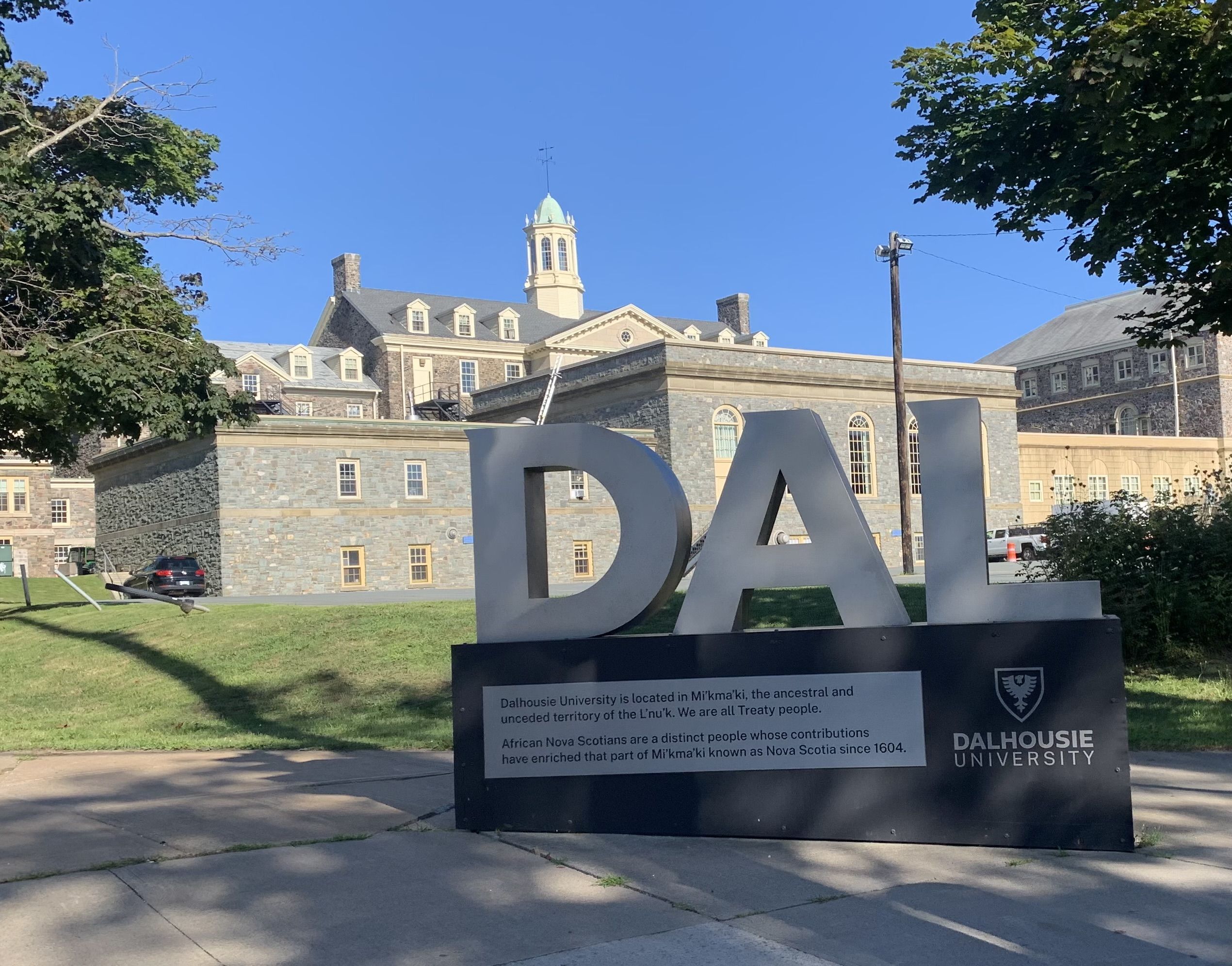
This double-acknowledgment was, easily, the most bizarre public relations performance I have ever seen, and I’ve worked in universities. And, of course, that’s where it appears to have come from. In this instance, Dalhousie University.
Under an initiative the school refers to as a
, two specific communities are focused on — the Mi’kmaq and African Nova Scotians. A testament to the initiative can be found on one of the campuses signs. It reads, “Dalhousie University is located in Mi’kma’ki, the ancestral and unceded territory of the L’un’k. We are all Treaty people.” There’s a space before it continues, “African Nova Scotians are a distinct people whose contributions have enriched that part of Mi’kma’ki known as Nova Scotia since 1604.”
Introducing the initiative, then-Dalhousie president Deep Saini asks, “What would it take to lift Dalhousie University, widely recognized as one of Canada’s best, into the community of the world’s greatest universities? And while on that journey, how can we do our absolute best to serve our communities here at home, helping lift their aspirations to the same heights?”
In other words, the main goal is for Dalhousie to be seen as one of the world’s greatest universities, and they see helping these communities as a means to an end in achieving that goal. It’s right there, in black and white.
The Third Century Promise refers to the African Nova Scotian community as “a distinct people with unique needs and talents,” suggests they require “safe, culturally-specific academic, research, social, intellectual and physical spaces,” and implies that this initiative is necessary to “facilitate meaningful and safe integration” into campuses. From my perspective, the university aims to treat African Nova Scotians like children with special needs. There is no evidence this is necessary, and it should be insulting.
This has likely spread to the RCMP due to the initiative’s fifth stated action to: “Prioritize
advancing
the work of Dalhousie’s Diversity and Inclusiveness Strategy, Indigenous Strategy, African Nova Scotian Strategy, and actions that reflect Dalhousie’s commitment to an anti-racist culture.”
Now, putting the valid distinctness, histories, legacies, and contributions of African Nova Scotians aside for the moment, what use did the RCMP see in making this announcement? They’re obviously not looking to be recognized as one of the world’s leading universities.
Is the RCMP in Nova Scotia insecure about past and present treatment of African Nova Scotians? If that’s the reason, say so. Deliver a clear, public apology for each and every wrongdoing, not at a press conference scheduled for an update on missing kids, but at an event tailored specifically to that purpose. Then, move past it. Change policies that may have led to such wrongdoings. If forgiveness is what the Nova Scotia RCMP seeks from African Nova Scotians, then ask for it.
Was it the RCMP’s attempt to show African Nova Scotians that they can trust them? Well, there are better ways to do that, too. They can begin by stating outright that they are, in fact, seeking to earn their trust. They could become a more regular and warm presence at community festivals and participate in youth initiatives. If you want a community’s trust, earn it with actions.
Just don’t blow smoke up their backsides by delivering the vaguest of possible statements about their distinctness, histories, legacies, and contributions to the enrichment of the province. They know what they are.
Like the land acknowledgment which preceded it, this was a shallow ritual. Both were out of place in the context of an update on a search for missing children. Neither lead to any real-world effects, other than the delay of timely information being communicated to the public and a checkmark on some public relations expert’s checklist.
Even from the most well-meaning of orators, acknowledgments like these are largely a form of self-flagellation for actual or perceived wrongs. They are an attempt for the speaker and/or those in attendance to cast off feelings of guilt in a pseudo-religious ceremonial way. Their underlying purpose is to deflect blame by avoiding direct specific apologies and/or actual efforts needed to put issues to rest. They do not solve cultural problems. Instead, they ensure their persistence by enshrining them as if they were scripture, behaving as if a particular groups’ unfortunate conditions, stated or implied, will be a constant, continuing, and necessary feature of our society.
And where will these declarations end? Does the Nova Scotia RCMP have a hierarchy of groups it believes the public should be acknowledging? Which group is next? Will they be trickling them out one at a time? How do they make these decisions about groups and their contributions to the province? Clearly, they are no longer based solely on length of time spent in Canada. If so, Acadians — who were literally ethnically cleansed from Acadie in 1755 — would have been mentioned before African Nova Scotians. Or are they no longer “distinct” enough, whatever that means? Will future acknowledgment choices be added based on the relationship between the RCMP and particular groups they police? How long can we expect future RCMP updates on missing kids to take, by the time they get to the end of their acknowledgments list?
It’s not clear why such acknowledgments exist, at all, before RCMP updates. One thing is for sure — they certainly should not be reciting them in order to deflect blame, or to avoid apologies or the exertion of the genuine efforts required to actually engage with these groups, which they clearly see as disadvantaged, even if they do not admit it outright and, instead, state the exact opposite.
tnewman@postmedia.com
X:

