



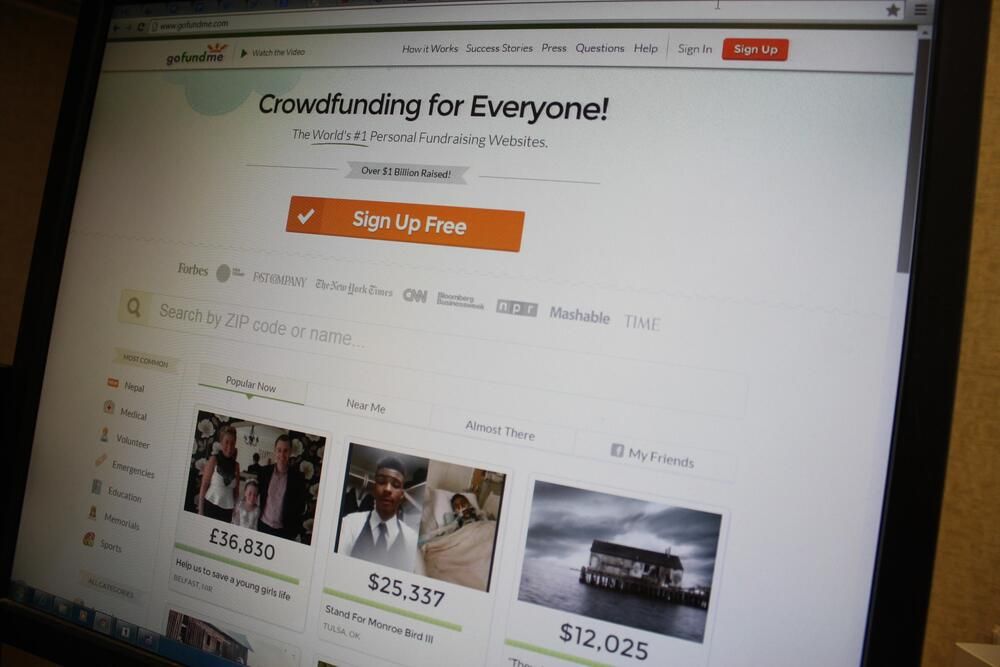
One fundraising campaign on the popular crowdfunding platform GofundMe has been used to finance terrorist group ISIS under the guise of supporting Palestinians in Gaza, and it’s not clear whether there could be more.
On Monday, at the Ontario Superior Court of Justice, 12 year sentence was handed down to Toronto resident Khalilullah Yousuf, who pleaded guilty to participating in a terrorist group and terrorist financing.
Yousuf claimed he was crowdfunding on sites like GoFundMe for Palestinians in Gaza and Muslim religious events, but was instead sending the money to ISIS supporters in the U.S., Spain, and other countries. In combination with pandemic Covid Emergency Response Benefits (CERB) he received and crowdfunding, he
over $35,000. To confirm his funds were being put to ISIS’ use, supporters sent him photos of the weapons and ammunition it was spent on, as well as an ISIS flag.
Yousuf’s involvement with ISIS wasn’t limited to financing. Allegedly, as part of an International ISIS network, he communicated with the group online through encrypted messages, participated in recruitment, created propaganda, and provided instructions to these supporters on how to carry out attacks.
After a two-year investigation, which involved intelligence forces in Canada, the U.S., and Spain, Yousef was finally arrested in July 2023. His use of multiple methods to transfer these funds, especially cryptocurrency, which is increasingly
for funding terrorism, may have led to him being flagged.
Yousuf’s case highlights the need for the strident inspection of crowdfunding platforms which host members claiming to raise funds for humanitarian purposes in the Middle East, not just for ISIS but also for other terrorist groups including Hamas, Hezbollah, the Popular Front for the Liberation of Palestine (PFLP), Samidoun and any other groups who may be exploiting the well-meaning nature of Canadians to fund and plan attacks here and abroad.
Whether the investigation into Yousef’s ISIS financing began at crowdfunding sites, and whether they are all being actively monitored for terrorist funding in Canada is unknown. But they should be.
Setting up a crowdfunding campaign on a site like GoFundMe is an easy way to draw attention to a specific cause and raise money for it. GoFundMe describes it as a three-step process where a user is prompted to fill in the details of a campaign, share it easily with links to have it gain momentum, and fill out their banking details in order to receive the money.
GoFundMe charges a fee of 2.9 per cent plus 30 cents on each transaction. Given that, the platform, no doubt, wants to ensure that they are not facilitating the financing of terror. Intelligence services, for their part, can benefit greatly from having a record of the accounts these funds were paid to.
How the platform and intelligence agencies would identify fraudulent causes, though, is unclear. GoFundMe, for example, has 18 categories of causes listed, which span everything from the medical needs of
patients enduring cancer treatment
to
supporting school robotics teams
to
supporting starved Palestinian kids with hot meals
. The latter campaign already amassing US$3,413,301 of its US$4 million goal.
Perhaps intuiting funds raised for Gaza may be put to alternate uses, GoFundMe has created helpful pointer for those looking to raise funds for Gaza called: “
How to raise funds to evacuate civilians from Gaza
.” In it, campaign creators are kindly warned that they cannot create causes which support armed conflict or most travel for military and territorial defense.
In their
, the crowdfunding platform asks campaign creators to include specific details of where the funds will be sent: names of towns, cities, or villages; how the funds will be used: aid, clothing, medical supplies, food; and if the funds will be transferred to another organization after being deposited into their bank account.
But for all these guidelines and rules, it’s unclear how, if, and by whom this information is verified.
Then there’s an even bigger issue. Campaigns that, perhaps, should be flagged and put into review, may not always be so overt. They could even be fake. Anyone could make a fake campaign in one category — fundraising for veterinarian expenses for a sick cat, for example — but then use the funds for something completely different, like funding ISIS or Hamas, or a phoney non-profit organization affiliated with these groups, once they hit the fundraiser’s bank account.
In other words, the veracity of the campaign cause appears to rely largely on the goodwill of its creator. This is not very comforting. It’s hard to imagine how the platform or intelligence agencies would even begin to verify whether these funds are going, for example, to children in Gaza, or to members of Hamas. But they should.
Of course, the problem inherent in supporting charitable organizations who may be involved in terrorist activities extends past crowdsourcing sites like GoFundMe which largely well-meaning Canadians use to support causes.
The Canadian government has chosen to continue to fund UNRWA, despite
that 12 of its workers were involved in the attacks on October 7, and 190 were working as Hamas or Islamic Jihad operatives at the time. In addition, UNRWA
have r
egularly called to “murder Jews, and create teaching materials that glorify terrorism, encourage martyrdom, demonize Israelis and incite antisemitism” and have allowed Hamas to use UNRWA’s Gaza headquarters to house their data centre.
Stopping the flow of funds to terrorist organizations and those sympathetic to them starts at the highest level in Canada — our government. Hopefully, Canadians will not have to pay heavy costs for their unseriousness in these matters.
tnewman@postmedia.com
X: