


If you thought the past Parliament was dysfunctional, buckle up for 2025.
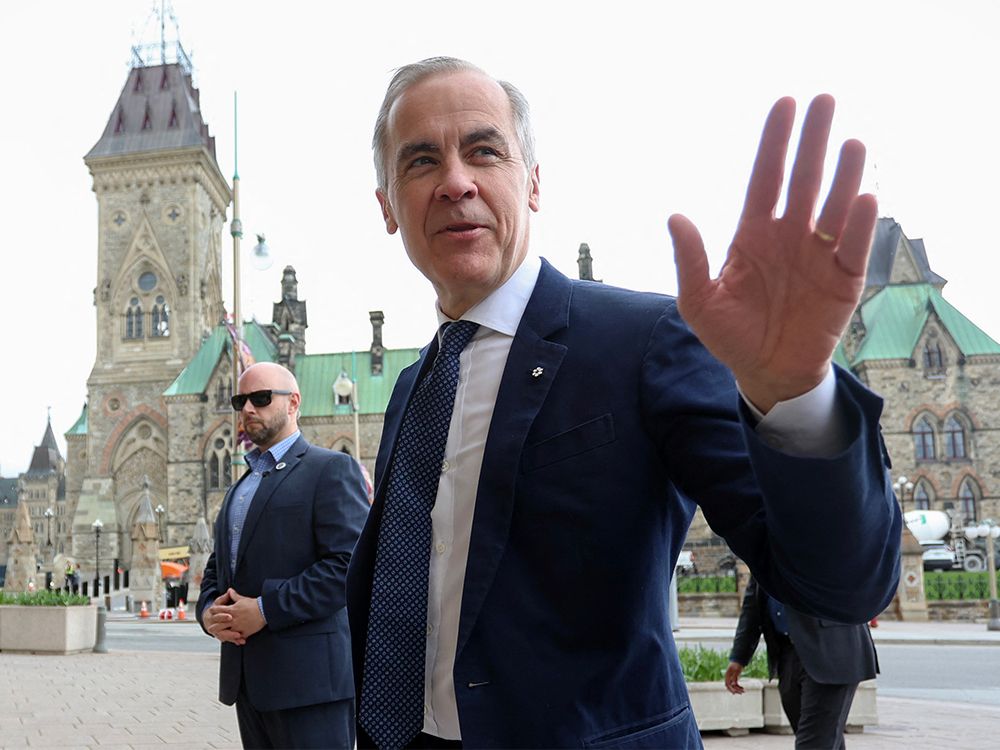
Mark Carney has pulled off a rare political feat: winning a fourth consecutive mandate for the Liberal party, despite not even holding a seat when he became leader. At the same time, the leaders of the NDP and Conservatives, Jagmeet Singh and Pierre Poilievre, both lost their ridings, meaning they won’t sit in the House, and Singh has announced he will resign.
But while Carney smiled for the cameras, and promised to “work with everyone,” behind the scenes, he must have been grimacing. Because what he’s really won is a poisoned chalice, which will make “standing up for Canada” a Herculean task.
As of 4:30 p.m. Tuesday, Carney’s Liberals were leading or elected in 169 ridings, just short of the 172 needed for a majority. To survive, Carney will have to dance with the Bloc Québécois (22 seats) or cobble together support from the seven NDP MPs and Green Party veteran Elizabeth May.
All three potential allies lean hard left, notably on the environment, crushing the possibility of nation-building projects like pipelines and nuclear-powered energy corridors. Carney’s vision for boosting Canada’s economy and securing energy independence now looks like a dead letter. The Bloc and Greens oppose fossil fuel development, and the NDP will demand social spending first, last, and always.
Could Carney turn to the Conservatives for support on such initiatives, especially those that would help the West? No way. Despite Poilievre’s statesman-like turn during his concession speech, the Tories will be out for blood after this election. As of 4:30 p.m., they had
more than eight million votes, just 479,306 shy of the Liberals, capturing a whopping 41.3 per cent of the popular vote — well above the high thirties most polls had predicted as their ceiling. They are looking ahead to the next time.
Where did Poilievre’s surge come from? Voters bled from the NDP, the Liberals, and the People’s Party, which all but
this cycle, dropping to a marginal 0.7 per cent of the vote. This combination allowed the Conservatives to make gains in Ontario,
and exurban strongholds like Newmarket-Aurora, Vaughan-Woodbridge, Markham-Unionville, Brampton South, and Milton East-Halton Hills South. They did well in
, picking off a couple of Liberal seats — even though veteran MP Rick Perkins lost South Shore St-Margarets to Liberal newcomer Jessica Fancy-Landry.
Out west, the Tories wrested seats away from both Liberals and New Democrats. They ousted the NDP in Elmwood-Transcona in Manitoba and
in Alberta, and won seats from the NDP in B.C., including North Island Powell River and Nanaimo Ladysmith.
As for the Liberals, they owe their victory
They picked up 11 seats, mostly at the expense of the Bloc, pushing their total to 44 — exceeding their 2015 high of 40 under past PM Justin Trudeau. Despite his limited French, Carney managed to woo Quebecers by surfing a wave of newly awakened Canadian nationalism. Voters there didn’t buy Bloc leader Yves-François Blanchet’s pitch that sending more Bloc MPs to Ottawa was necessary to defend Quebec against Donald Trump. Ironically, however, Blanchet may end up with the balance of power anyway.
And that’s where the trouble really begins.
A Liberal government propped up by either separatists or a coalition of eco-socialists will not sit well in Alberta, Saskatchewan, or British Columbia. Western Canada already felt alienated before. Now, the discontent threatens to harden into full-blown separatist sentiment. Calls for greater provincial autonomy — or outright secession — will grow louder, particularly if Carney is forced to kill energy infrastructure projects to placate his partners. Alberta Premier Danielle Smith will howl at every opportunity — and U.S. President Donald Trump will only be too happy to fan the flames of discontent to achieve his dream of making Canada his “cherished 51st state.”
In short, a national unity crisis is brewing — one we haven’t seen the likes of in a generation. Unless Carney finds a way to get the West on board, his dream of building a stronger, greener, wealthier Canada may be smothered before it even begins.
Postmedia News
Tasha Kheiriddin is Postmedia’s national politics columnist.
Editor’s note: The seat and vote counts cited above have been updated from when this column was originally published shortly after noon.