


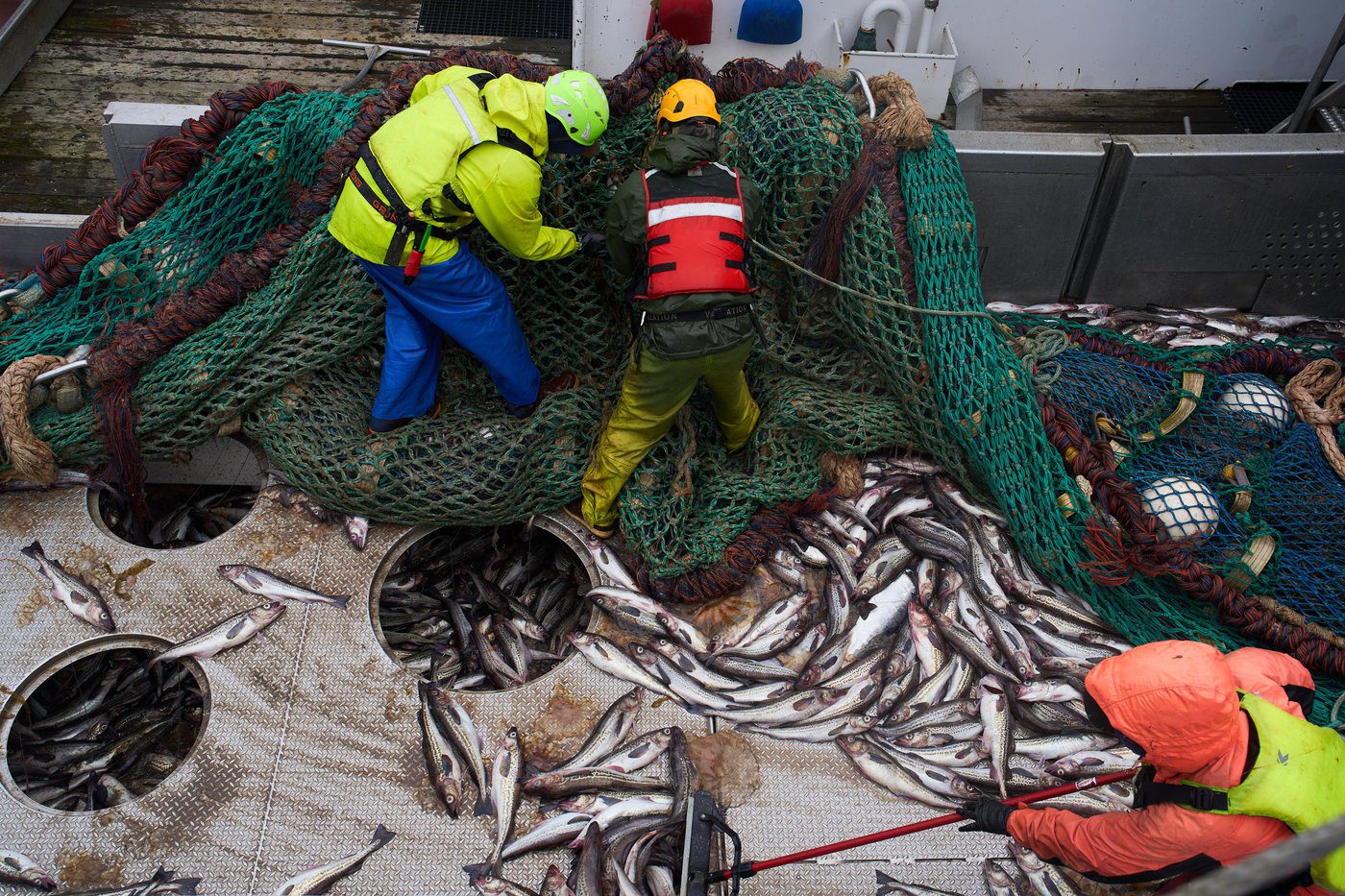
THE BERING SEA (AP) — Alaska pollock is the second-largest fishery on Earth and supplies everything from McDonald’s Filet-O-Fish sandwiches to fish sticks and imitation crab. The fishery uses methods that it — and McDonald’s — say are aimed at minimizing environmental impacts, but the nets that catch pollock catch other marine life, too.
That bycatch — the marine life caught unintentionally while fishers target something else — has become especially contentious as salmon runs across western Alaska have collapsed, leading to a seven-year ban on Chinook fishing along the Yukon River, where dozens of Alaska Native communities have relied on salmon for generations.
In Rampart, a Koyukon village on the Yukon, Janet Woods told The Associated Press that before the ban, her family’s summers revolved around checking nets, cutting fish and tending the smokehouse.
“You think back in history how they tried to destroy us,” she said. “Taking our language, our ceremonies, and now our culture, and it’s been forever a fight for us just to hang on to what very little we have.”
Scientists say warming waters and changing ocean conditions, not trawl bycatch, are the primary causes of the declines. But bycatch is one source of salmon mortality managers can directly control, and critics say even small losses matter when runs are depleted.
Over the last 10 years, Bering Sea pollock trawlers caught an average of about 18,000 Chinook and 288,000 other salmon a year, nearly all of them chum.
“The people that bear the brunt of the conservation measures are people along the river,” said Andrew Seitz, a fisheries professor at the University of Alaska Fairbanks.
Here are some takeaways from AP’s report.
The fishery says it has invested heavily in reducing bycatch
Pollock captains stay in close contact with other vessels throughout each trip to share information about salmon concentrations, while the fleet receives weekly voluntary closure areas based on reports from the fishing grounds. Every pollock vessel also carries a salmon excluder, a device that gives salmon a way out of the net.
“The amount of science and management effort that goes into improving it is basically unprecedented anywhere,” said Matt Tinning, CEO of the At-Sea Processors Association, which represents five Alaska pollock companies.
Every fish, including salmon, caught by the Bering Sea pollock fleet is counted. Trawlers are monitored by observers or cameras, as are deliveries at shoreside processing plants.
Genetic testing shows that most chum salmon caught by pollock trawlers do not originate in western Alaska. But even a relatively small percentage can still represent tens of thousands of fish from struggling runs.
The fight over trawling goes beyond salmon
Small commercial halibut and crab fishers, along with charter operators, have echoed the grievances heard along the Yukon. They too have faced shrinking catch limits and closures as stocks decline, while groundfish trawlers continue to catch both species as bycatch.
The debate extends beyond what trawlers catch to how their gear operates.
Pollock vessels use pelagic, or midwater, trawls, designed to fish in the water column rather than along the seafloor like bottom trawls. But pollock often swim close to the bottom, so the nets can make substantial contact with the seafloor.
Yet some areas closed to bottom trawling to protect corals, sponges, crab and other marine life remain open to pelagic trawlers, prompting calls for tighter restrictions.
Trawling has become a major issue in Alaska’s elections
Anti-trawl sentiment has attracted Democrats, Republicans, commercial and sport fishers, and Alaska Native communities — constituencies that don’t often line up on the same side of resource debates.
At least 10 of the original 19 candidates in this year’s crowded governor’s race took positions critical of trawling or bycatch. The issue has also become a defining one in Alaska’s U.S. Senate race.
___
Follow Annika Hammerschlag on Instagram: @ahammergram.
___
The Associated Press receives support from the Walton Family Foundation for coverage of water and environmental policy. The AP is solely responsible for all content. For all of AP’s environmental coverage, visit https://apnews.com/hub/climate-and-environment
Annika Hammerschlag, The Associated Press

