
LP_468x60
on-the-record-468x60-white

Conservative Party leader Pierre Poilievre makes a statement at a gas station in Charlottetown on Aug. 27.

OTTAWA

— Although Conservative Leader Pierre Poilievre never got the “carbon tax election” he wanted, he is nevertheless sticking to that well-trodden ground by branding another Liberal environmental policy with the same label. 

His announcement in Charlottetown on Wednesday, that Canadians should view a set of regulations applied to fossil-fuel suppliers as “the carbon tax 2.0,” illustrates two central questions the Conservative leader faces.

How much can he stick to the hits versus playing a new tune?

And, more importantly to Poilievre’s political fortunes: Can the Conservative leader prove he is back in the saddle against the new sheriff in town

or is he a one-trick pony?

Poilievre recently took the first step in his new political journey by winning a byelection in rural Alberta, securing his return to the House of Commons by capturing nearly 81 per cent of the vote, which was the same commanding terrain as past Conservative MPs in the riding.

Before appearing in Charlottetown on Wednesday, he made a swing through Halifax in what was the first visit he made to the province since the April federal election, which saw Prime Minister Mark Carney lead the Liberals to the party’s fourth consecutive victory over the Conservatives since 2015.

During his remarks, Poilievre evoked Justin Trudeau’s ghost to warn those watching that while Carney promised he would be different, “he has in fact been worse.”

He pointed to grocery prices that remain stubbornly high and a federal Liberal government that spends too much.

Prosecuting the Liberals’ record on the cost-of-living will be part of Poilievre’s playbook against Carney, the same as it was under Trudeau.

One disadvantage now is that he is without his signature “axe the tax” rallying cry, which became emblematic of larger cost-of-living struggles.

That campaign met its end after Carney quickly scrapped the signature Trudeau policy of charging consumers a carbon tax on everyday fuels, such as gasoline.

Poilievre made a point on Wednesday of claiming victory over that fight

— something some Conservatives feel he could have done more forcefully during April’s federal election, when it was clear that the carbon tax battle was over, and with more Canadians instead focused on the economic threats coming from U.S. President Donald Trump. 

Instead, he doubled down. And on Wednesday, standing in front of a gas pump in Charlottetown, it was clear that Poilievre is not done yet with the carbon tax.

The announcement itself was nothing new: Conservatives have long opposed the set of fuel regulations that came into effect in 2023. Poilievre pointed to a report from the Parliamentary Budget Officer from that year, which said it would increase the cost of gas by 17 cents per litre by 2030.

For some Tories, his message was fundamentally about affordability, a bread-and-butter issue for the federal party that remains very much alive in regions across the country, including in Atlantic Canada.

Branding that message as “the carbon tax 2.0” could be viewed as a practical decision and reminder to consumers that they still find themselves paying in the end, which was the case under the now-defunct consumer carbon tax.

For other Conservatives, his decision to revive the carbon tax was too much of a reminder of the past and sent a glaring signal, including to Poilievre’s own caucus, that he was out of ideas, at a time when supporters are looking for him to demonstrate a capacity for change and relevance with Canadians.

“He’s becoming a caricature of himself,” one senior Conservative said, speaking on background.

As for the policy itself, getting Canadians to care about a set of regulations whose impact remains largely opaque to consumers does not bode well for Conservative hopes of seeing a surge of support for any future campaigns to axe the “carbon tax 2.0.”

In response to Poilievre’s push, Environment Minister Julie Dabrusin’s office said the regulations have been in place since 2022 and touted how they would cut greenhouse gas emissions by some 26 million tonnes in 2030.

“Meanwhile, as Canadian communities face yet another historically devastating wildfire season fuelled by climate change, Pierre Poilievre is campaigning on the same tired approach,” spokeswoman Jenna Ghassabeh wrote in a statement.

Poilievre has spent his summer taking aim at other Trudeau-era environmental policies that remain on the books, namely the federal electric vehicle mandate, which he has vowed to fight through a nationwide campaign,

as well as the industrial carbon tax, both of which Conservatives have long opposed. 

Carney has been pushed on these issues, especially the EV mandate, which has been the subject of mounting criticism from the auto industry. It also does not come without risk for a prime minister whose coalition includes climate-minded progressives.

Predicting what Carney will do is another challenge for Poilievre. He acknowledged as much in an

interview last month,

where he said Trudeau was the type who “

dug in,” while his successor “is a mystery.”

Poilievre also made a point on Wednesday to remind Canadians that he has been right before.

He said “everyone dismissed” the Conservative campaign against the consumer carbon tax, before adopting it themselves.

For Poilievre, who rode discontent about the carbon tax to both an unprecedented polling lead and a crushing electoral loss, it’s just a matter of which chapter of history he finds himself repeating.

National Post

Our website is the place for the latest breaking news, exclusive scoops, longreads and provocative commentary. Please bookmark nationalpost.com and sign up for our daily newsletter, Posted, here.


The Simpsons, which has had a Quebec French-language dub since its first season, may lose that component.

Thousands of Quebecers are asking Disney’s streaming service to maintain Quebec-French-language dubbing for The Simpsons, after a change in broadcasting rights left the issue in limbo for the first time in more than three decades.

Teletoon, which is owned by Corus Entertainment, had an agreement with Disney+ to air new episodes of The Simpsons as well as Family Guy and American Dad. The broadcaster also provided a local dub for the show, using Quebec actors speaking in the local dialect, which is distinct from that spoken in France.

But when Corus chose not to renew the broadcasting rights for The Simpsons, which enters its 37th season in the fall, dubbing also came to an end. Already even the 36th season has not yet been dubbed.

Joshua Biasotto told National Post that he started a petition last Thursday when he heard that the show was not being renewed, and spoke to Gilbert Lachance, who voices Krusty the Clown for the Quebec version.

“I asked him what can I do to help and he said you can protest,” Biasotto said. “So I launched a petition two minutes after that. In two hours I had 500 people sign.”

As of Wednesday afternoon the petition had more than 27,000 signatures. “It went way further than I imagined it would,” Biasotto confirmed.

His

petition at Change.org

runs under a banner that translates as “Let’s save the Quebec dubbing of The Simpsons.”

“For decades, the Quebec version of The Simpsons has been an integral part of our collective imagination. It has allowed entire generations to embrace the series thanks to its high-quality dubbing, rooted in our language and culture,” it says.

“We sincerely hope that Disney+ will continue the adventure of dubbing this series in Quebec and ensure its broadcast in dubbed French in Quebec. The public is insistently demanding it: losing these versions adapted to our linguistic reality would be a huge cultural loss.”

Biasotto is a fan of the show, but

many Quebec actors

who provide the French-Canadian voices of Simpsons characters have also taken up the cause by sharing his petition on their Facebook pages.

Viewers of The Simpsons on the Disney+ service can switch to French, but it’s European French.

“That is really not the same thing,” said Biasotto. “The slang is really different from Quebec, and that’s why it’s so important for us Quebecers to have our version.”

Not only has there been a Quebec dub since the first season in 1989, but Matt Groening, the creator of The Simpsons, has said

the Quebec version

is his favourite dub in the world.

“In the first season there’s a reference to Montreal and Saguenay–Lac-Saint-Jean,” Biasotto said. “It’s not in the American or the French from France version. We adapt certain gags with our local references and our manners.”

He added that Disney has long been at the forefront of producing local dubs for its movies and TV shows, all the way back to the animated film The Little Mermaid, which was also released in 1989.

Corus said exclusivity rather than cost was the reason for its decision. “After reviewing our portfolio, we opted to acquire more exclusive content for our channel,” Julie Godon, general manager of French-language specialty channels at Corus, said in a statement to the Canadian Press.

“With Disney+, among others, offering dubbed episodes, we no longer had exclusivity for The Simpsons for several years,” she said, adding that “since 2019, the decline in viewership of the series was significant enough to make us reconsider broadcasting it.”

National Post has reached out to Disney+ for comment. Biasotto is also hoping to hear back from them. “I’m sure they’ve heard about it now,” he said.

Our website is the place for the latest breaking news, exclusive scoops, longreads and provocative commentary. Please bookmark nationalpost.com and sign up for our newsletters here.


Shoppers in a grocery store aisle, where American goods may soon come down in price even as

Last Friday, Prime Minister Mark Carney announced that counter-tariffs will be removed, effective Sept. 1, for all U.S. consumer goods that are compliant with the Canada-U.S.-Mexico trade agreement. Canadians are hopeful that prices on groceries will start to fall. But is that a reasonable assumption?

Professor David Soberman, Canadian National Chair in Strategic Marketing at the Rotman School of Management, doesn’t think it will make a huge dent in the average consumer’s weekly shopping bill, for two big reasons.

The two ways Trump’s tariffs on Canada could collapse — despite his fight to keep them

“The first is that most of the things that we buy in the grocery store, at this point in time of the year anyway, don’t come from the United States,” he said. “And the second thing is that Canadians have adopted their buying habits and to a much greater degree are buying Canadian, so they wouldn’t actually see a change in the prices of the products based on tariffs being removed.”

Numbers from Loblaw Companies Limited bear this out. The retailer’s CEO, Per Bank, posted to

his LinkedIn page

last month that he was seeing sales declines in the 15-to-20-per-cent range on products marked with a T for tariffs, “while volumes on products prepared in Canada increase, demonstrating … the strong desire by consumers to continue supporting Canadian products and brands.”

He added: “Some declines are closer to 50%, where a strong alternative exists on our shelves.”

More recently, after Carney’s announcement,

a statement

by Loblaw reads: “We are pleased with this development, as will be Canadian consumers. In the days ahead, the price of goods in all grocery stores impacted by tariffs will start to come down. Prices will come down over time, as we sell-through inventory that was purchased based on tariffed pricing.”

 U.S. President Donald Trump, left, greets Prime Minister Mark Carney upon his arrival at the White House this year.

It added that the T symbol would remain as long as the price of that item is impacted by tariffs.

Matt Poirier, v
ice-president of federal government relations at the Retail Council of Canada, said grocers are expressing cautious relief at the change.

“As an industry, we certainly welcome … the government’s reversal of our counter-tariffs because it was just adding to cost and complexity and really messing with supply chains,” he said.

He noted that the last year has been one of complexity and administrative burdens for retailers, between the on-again off-again tariffs, the GST holiday implemented by the Trudeau government before Christmas, and labour disputes at ports, Canada Post and most recently Air Canada, “which is actually a method of shipping goods too, not just passengers.”

As to the million-dollar question of whether food prices will drop, he said: “The short answer is it depends, and that’s simply because there are so many products that were affected by Canada’s counter-tariffs. So it’ll really depend on the goods.”

He noted that some products like orange juice and produce have short shelf lives and will get renewed quickly. Those that can be stockpiled for longer may take more time. And in some cases, grocers may have been able to bring in a large shipment before the tariffs took effect, and only to need to restock after they end, resulting in no change in the price of that product.

Cynical customers may suspect that grocers are quicker to raise prices than they are to lower them.

 “Shop Canadian” signs on grocery store shelves in Victoria, B.C., on Feb. 10.

“That’s a game that retailers have been accused of exploiting for a long time,” said Soberman. “So for example, they’ll get a price increase on a particular type of jam or canned tuna or soup, for example, and they use that increase as a basis to increase their prices at store level, yet what they’re selling for the next three or four weeks is all product that was purchased at the previous wholesale price. So there’s always a little bit of gamery that goes on.”

Poirier pushed back on the notion, based on what he’s heard from grocers.

“They’re very sensitive to their customers’ price sensitivity over the last few years,” he said. “So they’re not planning on messing around with these things. But certainly, there’s so many different goods that were impacted, and everyone might treat that good differently. So you might see orange juice go down faster in some stores than others, but there might be good reasons for that. But retailers are certainly aware of that expectation from consumers and they’re going to try to service that as best they can.”

Poirier also mentioned the Buy Canada movement, comparing it to the drop in travel to the U.S.

“You can look at travel where there weren’t really any tariffs on travel, but Canadians have decided to not travel to the U.S., and boycott regardless,” he said. With tariffs bringing down the cost of some U.S. goods, he said, it will fall to consumers to decide whether to switch back for economic reasons, or keep buying Canadian goods for political ones.

And Soberman pointed out that there hasn’t been an instance of U.S. food products being delisted in the same way that U.S. alcohol was

pulled from LCBO shelves

by the Ontario government and several others at the provincial level.

“For the most part, grocers will put anything on the shelves that people want,” he said. “It’s all based on what’s moving on the shelves, and their objective is to make sure that their shelves are generating profit. If there are products sitting there that aren’t selling, they want to put something on the shelf that is.”

A hopeful note was sounded by Dr. Sylvain Charlebois, a visiting scholar at McGill University and the scientific director of the Agri-Food Analytics Lab at Dalhousie University. He

wrote on X

: “Putting politics aside, ending Ottawa’s tariffs was the right decision for consumers. It’s not often we can expect food prices to fall, but September may be an exception. The 25% counter-tariffs had a significant impact on our food inflation rate, as the latest data from Statistics Canada clearly shows.”

Indeed, the

latest data

from Statistics Canada shows that, year over year, prices for food purchased from stores rose at a faster pace in July (3.4 per cent) compared with June (2.8 per cent). As of July, Canadians were paying a whopping 27.1 per cent more for food purchased from stores than they were just five years ago.

The agency’s charts of food inflation look like a literal roller coaster, as numbers rose to

hit a peak

of 11.4 per cent at the end of 2022, then fell steadily for the next year and a half, bottoming out at 1.4 in April 2024 before beginning a long, slow climb to their current level.

Our website is the place for the latest breaking news, exclusive scoops, longreads and provocative commentary. Please bookmark nationalpost.com and sign up for our daily newsletter, Posted, here.


Taylor Thomson, heiress to the Thomson newspaper fortune, photographed in London in 2004.

Taylor Thomson, the 66-year-old middle child of Canada’s billionaire Thomson family, is

suing

her former friend after a crypto investment, bought by the two friends and allegedly recommended by a psychic, went south.

Now an

Uber driver

, 47-year-old Californian Ashley Richardson is representing herself. She lost her personal wealth in the doomed crypto investment. Thomson reportedly lost US$80 million. It also cost them their friendship.

The two friends reportedly met back in 2009 at a Malibu house party.

Richardson grew up in an affluent part of Monterey County, Calif., attending an elite prep school and skiing by age two. She built a career designing social-media campaigns for companies like Ford Motor and McDonald’s. But Thomson’s wealth was of in a different ballpark. “We would go somewhere for a few days and she’d be buying houses like other people buy mugs,” Richardson told the

Wall Street Journal

.

However, money didn’t interfere with their relationship, Richardson says. “The reason we could be friends is because there was no financial connection.”

She claims she could be defensive about the way people used Thomson. At an art fair in London, she says attendees descended on Thomson. “People know who she is and know she will drop millions. It was nauseating.”

The friendship collapsed in 2022 after the cryptocurrency they invested in crashed within a year.

Thomson has accused her former friend of making hundreds of thousands of risky trades behind her back, according to the Wall Street Journal. Richardson denies the allegation and blames the billionaire for destroying their friendship and leaving her struggling to make ends meet.

Richardson also claims

the heiress made a pass at her

during a 2019 trip to British Columbia. A Thomson spokesperson denied this, telling the WSJ: “This is all false.”

“After spending years living a lavish lifestyle on Ms. Thomson’s dime, Ms. Richardson has taken her bogus story to the media in an attempt to extract more money from Ms. Thomson — which we know because Ms. Richardson has threatened multiple times she will do just that,” a spokesperson for Thomson told

The New York Post

in a statement.

The crypto investment came about due to a newsletter subscription Richardson had that was put out by celebrity psychic Michelle Whitedove. Her recommendation to invest in Persistence crypto coin got Richardson’s attention, and she raised the possibility with Thomson, who allegedly sought advice from her own psychic, Robert Sabella, an astrologer she regularly consulted, according to the New York Post.

“Taylor trusts her own instincts and would use Robert as a sounding board,” Thomson’s spokesman told the WSJ, “but by no means would she make substantial life decisions based on his suggestions.”

Richardson put most of her savings into the coin while Thomson reportedly poured in more than US$40 million. Richardson

claims

she reined in the heiress when Thomson suggested spending another US$60 million on the token after successful early gains.

Thomson also allegedly wrote an email to her brothers, who own the largest stake in the Thomson fortune, accusing them of restricting her ability to invest family wealth in the crypto market, the WSJ reports.

Thomson’s spokesman told the WSJ that an email was never sent.

The Thomson family is worth a reported $98.15 billion and Maclean’s named them Canada’s richest family in 2024. Woodbridge, the family’s holding company, owns about 70 per cent of the shares of Thomson Reuters as well as The Globe and Mail and a minority interest in the Montreal Canadiens.

Woodbridge and the Thomson brothers didn’t respond to the Wall Street Journal’s requests for comment.

Control of the Thomson family empire has passed down the male line. Taylor is the middle child and only girl. Her efforts to forge her own path led to occasional periods of estrangement, sources familiar with the family told the WSJ.

Thomson initially pursued a career in acting, training at the American Repertory Theater in Cambridge, Massachusetts. She performed with Shakespearean theatre companies in Massachusetts and Los Angeles and had roles in the U.S. TV show Matrix and Canadian drama Forever Knight. In 1999, she had a daughter.

During their trading spree, Richardson says she spent as much as 20 hours a day researching cryptocurrencies and executing trades for Thomson — at times stewarding US$140 million of her friend’s investment, according to the WSJ.

Then the crypto market crashed in 2022. Richardson lost everything and Thomson, feeling betrayed, hired lawyers to get her money back.

Thomson sued Richardson and Persistence in 2023, seeking at least US$25 million for their alleged role in roping her into the investment. Her lawyers accused them of lying about the potential returns, aiming to bring in a “whale” or wealthy individual whose investment in the crypto coin would show up publicly in the digital investment record, boost its reputation and entice other potential investors.

According to Thomson’s lawsuit, Persistence allegedly rewarded Richardson an undisclosed kickback or finder’s fee of $783,702 worth of the coin. Richardson countered she and Thomson agreed on a finder’s fee but that it would only be paid if Thomson’s investment was profitable after a year. Richardson now says she ultimately received nothing.

In July, Thomson and Persistence settled for an undisclosed amount.

Richardson has filed a countersuit for US$10 million, alleging Thomson has defamed her. She claims in her court filings that Thomson decided to invest on her own. She also claims she never made a trade without Thomson’s approval and always did her best to “minimize losses.”

“Because of you I have lost everything, and you decided to sue the person who had nothing left to lose,” Richardson wrote in one of her last messages to Thomson, reports the WSJ. “

I loved you

more than anything.”

One of their final interactions via text involved Richardson calling Thomson a “rich motherf–king sociopathic b–h,” according to the WSJ. “Send your f–king goons to take my life. Please, you have destroyed me,” she added.

Our website is the place for the latest breaking news, exclusive scoops, longreads and provocative commentary. Please bookmark nationalpost.com and sign up for our daily newsletter, Posted, here.


A Westjet flight prepares to land at Toronto Pearson International Airport in Mississauga, Thursday July 17, 2025.

WestJet’s argument that passengers shouldn’t be compensated for any flight disruptions stemming from safety issues, regardless of the circumstances that led to the problem, did not fly with the Federal Court of Appeal.

The carrier was appealing a decision from the Canadian Transportation Agency (CTA) that awarded Owen Lareau $1,000 because his WestJet flight from Regina to Toronto was cancelled less than an hour before departure on July 18, 2021, due to a crew shortage.

“The appellant’s proposed interpretation of the safety category would effectively defeat the consumer protection scheme established by the regulations to redress the acute imbalance in market power to which passengers have historically been subjected in relation to air carriers. It must be rejected,” Justice Gerald Heckman wrote in a recent decision out of Toronto from the three-judge panel that dismissed WestJet’s appeal.

After Lareau’s flight was cancelled, WestJet provided him with a hotel and meal vouchers. But the airline declined his request for compensation for inconvenience under the Air Passenger Protection Regulations because the flight “was cancelled due to crew member availability, and that this cancellation was required for safety purposes,” according to the CTA’s July 2022 decision under appeal.

A review of this country’s transportation system conducted a decade back found “Canadians were very concerned with the unsatisfactory treatment of airline passengers affected by delays, cancellations, and denials of boarding,” Heckman wrote in the appeal court decision dated Aug. 25.

“The review concluded that legislative and regulatory reform was needed to ensure the fair and reasonable treatment of air travellers.”

In 2019, the federal government brought in regulations forcing airlines to compensate passengers “for inconvenience caused by a disruption” within their own control.

But it made an exception for safety issues, the use of which should be limited to events “that cannot be prevented by a prudent and diligent carrier,” according to the CTA.

WestJet “argues that passengers should receive no compensation for any flight disruption that arises in response to a safety issue, regardless of the circumstances that have led to the safety issue, including a carrier’s failure to take reasonable measures to develop and implement a reasonable contingency plan to mitigate the disruption,” said the appeal decision. “Moreover, in the appellant’s view, the agency’s interpretation of the safety category cannot stand because it puts pressure on carriers and their personnel to choose to operate flights unsafely in order to avoid paying their passengers compensation.”

Air Canada, an intervener in the case, agreed with WestJet that the CTA’s “test for the safety category ignores whether a disruption is required for safety purposes and asks instead whether it was foreseeable and could have been prevented by a prudent and diligent carrier.”

In Lareau’s case, his flight was cancelled, according to WestJet, because the airline couldn’t find a first officer that day for his flight from Regina to Toronto.

“In the appellant’s view, on the plain and ordinary meaning of the definition of ‘required for safety purposes,’ the cause of the situation that leads to a safety issue, including whether it is due to the actions or inactions of a carrier, does not matter, except with respect to the carve-out for disruptions resulting from issues identified on scheduled maintenance. The only question is whether, in the circumstances that presented, whatever the cause, delaying or cancelling the flight was required by law in order to reduce risk to passenger safety.”

According to the appeal court judges, “a disruption that is within a carrier’s control” is one the airline has “the power to influence or direct, or over which it can exercise restraining or directing influence.”

In that context, said their decision, “it should go without saying that under no circumstances should the prospect of a carrier paying compensation for a flight disruption factor into safety decisions made by carriers or their crew members in the exercise of the discretion afforded to them under the governing regulatory framework.”

WestJet’s proposed interpretation of the safety exception “could deny compensation for disruptions that result either from the carrier’s lack of diligence in carrying out its day-to-day operations,” Heckman wrote, “or from a deliberate decision to privilege its economic interests. These outcomes are irreconcilable with the purpose of the regulations to institute a consumer protection scheme that corrects the acute imbalance in market power between air passengers and air carriers that predated the regulations.”

The judges didn’t stipulate who should pick up the legal tab. “As no costs are sought, I would award none,” Heckman wrote.

Our website is the place for the latest breaking news, exclusive scoops, longreads and provocative commentary. Please bookmark nationalpost.com and sign up for our daily newsletter, Posted, here.


Russian President Vladimir Putin stands on the steps of the plane prior to departure at Joint Base Elmendorf-Richardson, Alaska, Friday, Aug. 15, 2025, after meeting with U.S. President Donald Trump.

OTTAWA — Nearly six in 10 Canadians feel their country is more dangerous than five years ago, before Russia invaded Ukraine, India was linked to the murder of a Sikh-Canadian and Canada reckoned with the scourge of foreign interference.
 

In fact, only a paltry three per cent of Canadians believe Canada is a safer place now than it was five years, according to a January Ekos poll done on behalf of the Canadian Security Intelligence Service (CSIS) and recently published online.
 

The poll suggests the number of Canadians who feel Canada is more dangerous now than five years ago also more than doubled since 2021, the last time CSIS put the question to the public.
 

The reasons cited are all tied to the spy agency’s national security mandate and include international conflict, religiously motivated terrorism as well as foreign interference and transnational repression.
 

“Not surprisingly, in light of Russia’s invasion of Ukraine, foreign interference in Canadian affairs, and an assassination on Canadian soil, tracking… indicates that Canadians are now significantly more likely to feel Canada has become more dangerous than they were in 2021,” reads the report.
 

Many of the findings are positive for CSIS, including “broad public confidence” in the spy agency, a large boost in awareness of its mandate as well as a strong majority (77 per cent) who believe its mission is “very important.”

But behind the numbers hides a more concerning trend for CSIS: Canadians’ trust in the agency’s ability to keep them safe from threats such as espionage, terrorism, violent extremism and foreign interference is dropping.
 

While three-quarters of respondents said they have confidence in CSIS to protect Canadians from national security threats, it’s a 10-point drop from 2021.
 

“Despite an increase in belief in the importance of CSIS, tracking… reveals a decrease in confidence in CSIS’ ability to keep Canadians safe,” the report reads.
 

Respondents were also torn on whether CSIS has enough independence from elected officials, with 36 per cent saying yes and 35 per cent saying no (and 29 per cent saying they’re unsure).
 

In a statement,
CSIS spokesperson Eric Balsam celebrated the positive findings and recognized that the agency still has much room for improvement.
 

“We are pleased that three in four Canadians indicate confidence in CSIS. We recognize that there is more work to be done, and will continue working hard every day to earn that trust through robust transparency and accountability efforts,” Balsam said.
 

The survey results will likely also give the Liberal government pause as it prepares to push C-2, an omnibus security bill with sweeping new powers, through Parliament this fall.
 

Tabled in June, C-2 was sold
by the Liberals as a border safety bill and a response to concerns raised by U.S. President Donald Trump, but its impacts are far wider reaching.

The controversial legislation i
ncludes sweeping new powers to intercept or search communications including mail, increased powers for police and CSIS to access information without a warrant and increased intelligence collection and sharing across the federal government.
 

As the government prepares to move the bill in Parliament, poll results suggest fewer Canadian trust either CSIS or the government to strike a balance between Charter rights and national security since 2021.
 

“Tracking… reveals that the proportion of Canadians who say they trust the federal government to strike a balance between security and civil liberties has decreased somewhat over the past few years (from 56 per cent in 2021 to 49 per cent currently),” reads the report.
 

Furthermore, the survey suggests less than half (47 per cent) of respondents agree intelligence agencies such as CSIS should have more power while 52 per cent think they respect current laws when collecting information about Canadian.
 

In an interview, former national security analyst Stephanie Carvin said the results suggest a bumpy road ahead for the Liberals’ Bill C-2.
 

“I would say the government is fairly well positioned… on the basis of the survey to make arguments, but is going to have to justify these infringements on civil liberties,” said the Carleton University associate professor in national security.
 

“It’s not yet clear how the Canadian public is going to receive C-2 and the impact of the debate on (CSIS) going forward in terms of its perception in the public,” she added.
 

In his statement, Balsam suggested CSIS was aware of the concerns surrounding C-2 and was making efforts to assuage them.
 

“CSIS has met with a number of groups across all segments of society, to ensure that proposed changes to the CSIS Act are well understood. These amendments were carefully crafted to balance Charter rights,” Balsam wrote.
 

“The proposed amendments to the CSIS Act will ensure that CSIS can continue to collect the information it requires to advance investigations. The amendments would not change the type of information that CSIS can collect without a warrant, nor would it expand CSIS’ mandate,” he added.
 

The Ekos survey polled 2,045 Canadian adults, including 1,040 online respondents, between Jan. 9 and 22. The margin of error associated with the total sample is +/- 2.2 percentage points, 19 times out of 20.
 

National Post

cnardi@postmedia.com

Our website is the place for the latest breaking news, exclusive scoops, longreads and provocative commentary. Please bookmark nationalpost.com and sign up for our newsletters here.


“Your English teacher and your gym teacher are getting married,” Taylor Swift posted on Instagram.

“Your English teacher and your gym teacher are getting married.”

So wrote pop icon Taylor Swift on her

Instagram account

, alongside a picture of said “educators” embracing in a flowery garden, and showing off a massive engagement ring. The post was punctuated with a firecracker and backed by her song So High School.

Within hours, online likes surged past the 13 million that is the population of Swift’s home state of Pennsylvania, although it’s likely well-wishers were more spread out than just the tri-state area.

Some

celebrity watchers

have pointed out that the metaphor works. Travis Kelce, the newly minted fiancé, is a tight end (yes, you can snicker) with the Kansas City Chiefs, putting him squarely in “gym teacher” realm.

And Swift’s fans have long said that she gives off “English teacher vibes,” from the

literary references

in her lyrics — Romeo and Juliet in the song Love Story; The Scarlett Letter in New Romantics, etc. — to the fan who

tweeted in July

: “taylor would be my favorite english teacher and i’d probably have a crush on her.”

And she’d probably have some words for you about punctuation and capitalization, young lady, but let’s table that for a moment. My gym teacher and my English teacher never married each other to my knowledge — is that even allowed under board policy? — but if they did I’m pretty sure the engagement ring wouldn’t

weigh in at eight carats

and be said to be worth about $550,000. (All figures in U.S. dollars.)

English teachers in America make about $57,000 annually or around $30 and hour, although top-level educators can get into the $80,000 range. Gym teachers make about $5,000 less but they do get to blow a whistle at kids who misbehave.

Ms. Swift, as she’d want her students to call her, doesn’t have a set salary or an hourly wage, but estimates are that she raked in more than $400 million last year, bringing her net worth to over $1.6 billion. If we assume a 40-hour workweek that works out to a little under $200,000 an hour, or an English teacher’s salary every 20 minutes or so.

Kelce’s salary is easier to compute. He made $17 million with the Chiefs last year as part of a two-year contract, which lines up with gym teachers making less than their more literary counterparts.

But wait — tradition has it that an engagement ring should set you back three months’ salary. By that reckoning, this gym teacher should have shelled out more than $4 million on a rock.

The reported half million he spent at

New York’s Artifex

jewellers is definitely at the low end of the scale. If your high-school football coach had spent a similar amount of his salary to woo your favourite English teacher, he would have paid about $1,500 — still a doable sum, but you’re not getting anywhere close to eight carats for that kind of cash.

Ann Grimmett, the vice president of merchandising at Jared Jewelers told Elle that she thinks the ring would have cost between $250,000 and $500,000. “We estimate the price of her ring to be $550,000,” Benjamin Khordipour, of Estate Diamond Jewelry told brides.com.

Other estimates

put the cost at between $1 million and $5 million.

Kindred Lubeck, the designer behind the custom

ring, hasn’t said anything about the price, but rings on her

Artifex Fine Jewelry

website range from about $4,000 to $40,000.

Still to come is news of the couple’s wedding. High school teachers are likely to pick a summer date when they’re both away from work. Early summer could work with the NFL’s season, and Swift is said to not have

any new tours dates

planned, so a proper teachers’ wedding could be in the cards.


The Ruby Princess cruise ship departs from Port Kembla on April 23, 2020 in Wollongong, Australia.

Two people were separately medically evacuated from a Princess Cruises ship off the coast of Washington and B.C. by the U.S. and Canadian coast guards on Sunday.

U.S. Coast Guard Northwest District watchstanders were notified Sunday morning that two patients on board the Ruby Princess cruise ship, approximately 145 nautical miles west of Cape Flattery, Wash., required immediate medical evacuations. A 52-year-old woman had experienced cardiac arrest and was on life support, while a 99-year-old man experienced a complete esophageal obstruction.

The Coast Guard coordinated with the Canadian Coast Guard and Royal Canadian Air Force (RCAF) to carry out the rescues. A CC-295 Kingfisher aircraft from RCAF 19 Wing Comox provided aerial oversight during the mission.

An MH-65 helicopter from USCG Air Station Port Angeles was launched to medevac the 99-year-old. He was hoisted to the helicopter, which conducted a wing-to-wing transfer with Life Flight Network at Neah Bay, Wash.

Canadian officials, meanwhile, launched a CH-149 Cormorant from 19 Wing Comox to evacuate the 52-year-old. She was successfully hoisted and transported to Royal Jubilee Hospital in Victoria, B.C., Canada.

“This case demonstrates how our specialized expertise and dedicated training allows us to rapidly respond to these types of time-sensitive medical evacuations at sea,“ said Cmdr. Kelly Higgins, commanding officer of U.S. Coast Guard Air Station Port Angeles. “The expert coordination between the Canadian Coast Guard, the Life Flight Network, the Royal Canadian Air Force and the U.S. Coast Guard ensured this patient received the care they needed.”

Our website is the place for the latest breaking news, exclusive scoops, longreads and provocative commentary. Please bookmark nationalpost.com and sign up for our daily newsletter, Posted, here.


Empty shelves where alcohol and wine from the United States used to be at the NSLC (Nova Scotia Liquor Commission). Canada is lifting tariffs on U.S. alcoholic beverages, but some provincial bans on the sale of American beer, wine and spirits remain.

Among the lengthy list of imported U.S. goods soon to be free from Canadian counter-tariffs are spirits, wine and beer. But a U.S. liquor industry advocacy group said it matters little without change at the provincial level.

“This is a very positive sign,” Distilled Spirits Council President of the United States (DISCUS) CEO Chris Swonger

stated this week

after Prime Minister Mark Carney announced the end of tariffs on goods compliant with the existing Canada-United States-Mexico Agreement (CUSMA) as of Sept. 1.

“But until all provinces put American spirits back on their shelves it won’t have much of an impact.”

In concert with former prime minister Justin Trudeau’s retaliatory tariffs, one of the foremost courses of action premiers took to U.S. President Donald Trump’s sweeping 25 per cent tariffs on Canadian goods was to yank U.S.-made alcoholic beverages from their shelves.

In the weeks ahead and just following the U.S. tariff taking effect on March 4, B.C., Manitoba, Ontario, Quebec and all of Atlantic Canada, along with Nunavut, stopped selling and ordering from south of the border.

Alberta, Saskatchewan, the Northwest Territories, and the Yukon, meanwhile, stopped importing new products but permitted the sale of existing stock. The two prairie provinces, however, have since lifted the purchasing moratorium.

“The unfortunate decision to remove American spirits from Canadian retail shelves is not only harming U.S. distillers, but it’s also needlessly reducing revenues for the provinces, and placing unnecessary burdens on Canadian consumers and hospitality businesses,” Swonger stated.

In a

joint statement

with Spirits Canada last month, the organizations highlighted their own economic analysis showing a 66 per cent drop in U.S. spirits sales in Canada and 12.8 per cent less in all spirit sales from early March until the end of April.

They also reported a 6.3 per cent decrease in the sale of Canadian spirits over the same time.

The declines were sharpest in Ontario, Canada’s largest market, where U.S. sales plunged 80 per cent, 20 per cent on total sales, 12.8 per cent on Canadian products and 14.1 per cent on non-U.S. imports.

The data indicate Canadians started buying more Canadian and other imported spirits in April, but the groups contend “the gains did not compensate for the significant losses from the U.S. product removal.” Losses, they said, showed “that substitute products cannot fully replace the market demand previously filled by U.S. spirits.

“Additionally, the replacement products tended to be lower-margin offerings, significantly impacting the profitability of the Canadian spirits sector.”

As for what’s become of all the U.S.-made liquor that was pulled from the shelves and put into storage, National Post has contacted each province and territory to learn what happened to the goods.

In Quebec, the province’s finance minister said last week that $300,000-worth of expiring U.S.-made alcohol would be donated to foundations, charity events, and hospitality training schools. The province’s liquor board had earlier said it may have to destroy the products, which consisted mostly of rose and boxed wines, ready-to-drink cocktails, certain beers, and liqueurs with short shelf lives. The items represented only a fraction of the $27 million of American products in storage.

A spokesperson for the Nova Scotia Liquor Corporation told National Post it continues to store roughly $14 million-worth of U.S. products and hasn’t had to dispose of any.

“Any decision that relates to the sale of U.S. products is led by the Province, and we would review all products at that time,” the spokesperson wrote via email.

National Post has also contacted the office of Premier Tim Houston for comment.

In Nunavut, a spokesperson for the department of finance told National Post via email that the sale of about $600,000-worth of existing U.S.-made inventory resumed on July 3. Once it’s gone, however, there will be none until well into next year. Such products are only resupplied during the territory’s “relative brief summer shipping season,” and the already-completed 2025-26 order “did not include any U.S.-made product.”

— with files from The Canadian Press

Our website is the place for the latest breaking news, exclusive scoops, longreads and provocative commentary. Please bookmark nationalpost.com and sign up for our daily newsletter, Posted, here.


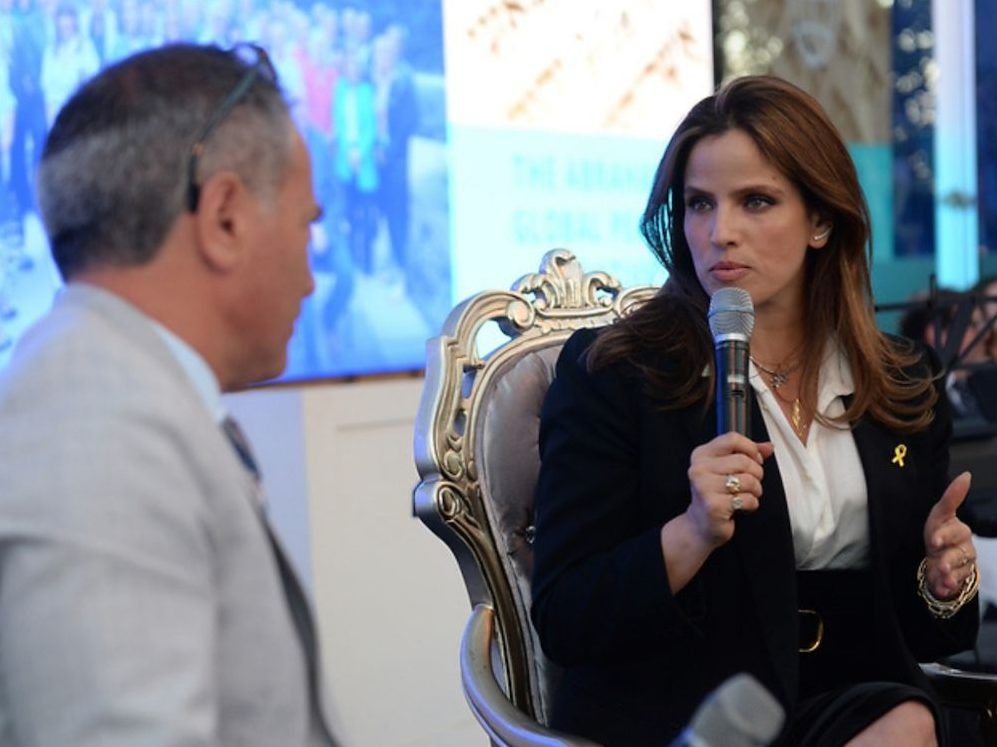
Retired Israel Defence Forces General Noam Tibon in The Road Between Us: The Ultimate Rescue.

Next month’s world premiere of a documentary that follows an Israeli man’s attempt to save his family on October 7 is already sold out after it was pulled from the Toronto International Film Festival and eventually reinstated following an international uproar.

The film, The Road Between Us: The Ultimate Rescue, is

scheduled

to be shown at Roy Thompson Hall in downtown Toronto on Sept. 10. The venue has a

capacity

of nearly 1,800 seats, according to Ticketmaster.

The Road Between Us follows Noam Tibon, a retired Israel Defense Forces general, racing from Tel Aviv to save his son’s family who were sheltering in Kibbutz Nahal Oz, a community near the Gaza border that was besieged by Hamas fighters. Noam’s son, Amir Tibon, is a prominent Israeli journalist who writes for Haaretz.

A member of the Facebook community “Everything Jewish Toronto,” posted a

screenshot

of his attempt to get tickets after they were released to the general public on Monday, showing a generic message from Ticketmaster noting, “Tickets are sold out now. Check back soon.” National Post saw an identical message when it checked on Tuesday morning.

The announcement triggered a discussion in the Facebook group. One user, claiming to be a TIFF member with early ticket access, said that all the tickets were sold out within hours last Wednesday, during an exclusive

early-bird

sale. Commenters encouraged one another to contact TIFF and request that another showing of the documentary be scheduled to meet the high demand. Members of a separate Facebook community, “TIFF Tickets,” also

bemoaned

the sold-out showing.

The Post contacted TIFF for comment, but did not hear back in time for publication.

Earlier in August, an American entertainment magazine reported that TIFF organizers decided to pull the film from the festival’s lineup because some of its footage, which included atrocities committed by Hamas on October 7, failed to meet the “legal clearance of all footage.”

The decision caused an

uproar

among Canadian politicians and prominent members of the entertainment community, including Howie Mandel and Mayim Bialik, to reinstate the film. The backlash prompted TIFF CEO Cameron Bailey to address the controversy.

“First and foremost, I would like to express my sincere apologies for any pain this situation may have caused,”


Bailey wrote


in mid-August. The following day, Bailey and the documentary’s director, Barry Avrich,


released a joint

statement
 

acknowledging that “a resolution to satisfy important safety, legal and programming concerns” had been reached.

Last Wednesday, Bailey said in his first public remarks about the incident, the festival remained committed “to challenging relevant screen storytelling,” expressing his desire to “repair relationships.” Bailey also acknowledged he regretted any prior “mischaracterizations” of the film.

Our website is the place for the latest breaking news, exclusive scoops, longreads and provocative commentary. Please bookmark nationalpost.com and sign up for our daily newsletter, Posted, here.