LP_468x60
on-the-record-468x60-white

Drake showed up to Game 1 of the World Series in Toronto wearing a letterman jacket similar to Rob Ford's and emblazoned with the late former Toronto mayor's name.

Drake was among the 44,000-plus fans at Rogers Centre to witness the Toronto Blue Jays’ decisive Game 1 World Series win Friday night and he did so while paying homage to late former Toronto Mayor Rob Ford.

While watching the series opener against the Los Angeles Dodgers from a private box in right field, Drake, celebrating his 39th birthday, was photographed sporting a green and yellow letterman jacket for the Don Bosco Eagles high school football team.

Embroidered on the right side was the name R. Ford.

The jacket, while similar, is not the same one worn by Ford during his tenure as the school’s volunteer head coach throughout the 2000s and during his time in office as a councillor and later as a mayor, based on National Post archived images.

The rapper and hip-hop artist’s jacket has decorative embroidery on the sleeves, whereas Ford’s had a patch reading “Coach” on the right and the “02” on the left.

Drake’s also has a shorter collar and uses a more modern font for the name.

Some Facebook users wondered by Drake wasn’t wearing something to support the team on the field.

“What’s with that bloody jacket? It’s the Blue Jays game. You should have worn a Blue Jay shirt instead,”

Jude Aure wrote.

“Where’s your Blue Jays Jacket Drake… aren’t you a Canadian cheering for a Canadian Team,” Laura Hunter asked in reply to a Toronto Blue Jays post. 

On X, Barstool Sports host

Kevin Clandy wrote

, “No matter what you think of Drake, rocking the Rob Ford varsity jacket in Toronto for the WS is a legendary move.”

Ford coached the Eagles to a Toronto District Catholic Athletic Association title in 2012, but lost in the subsequent Metro Bowl final to decide GTA high school football supremacy.

His time at the Eagles’ helm ended unceremoniously the following year when he was fired by the board over allegations of egregiously improper behaviour, some of which was detailed in 300 pages of documents disclosed through a freedom of information request.

As reported by

National Post

at the time, Ford allegedly ordered teenage players to roll in goose scat, called them derogatory terms, challenged a co-coach to a fight and arrived at a practice for the 2012 Metro Bowl Championship Game while inebriated.

The allegations came at a fraught time in Ford’s personal and political life, brought on by substance abuse, to which he would later admit and begin treatment to resolve. He abandoned another run for mayor in 2014 after a stomach cancer diagnosis and won a seat on council instead.

Ford died on March 22, 2016, after chemotherapy was ineffective.

Our website is the place for the latest breaking news, exclusive scoops, longreads and provocative commentary. Please bookmark nationalpost.com and sign up for our daily newsletter, Posted, here.


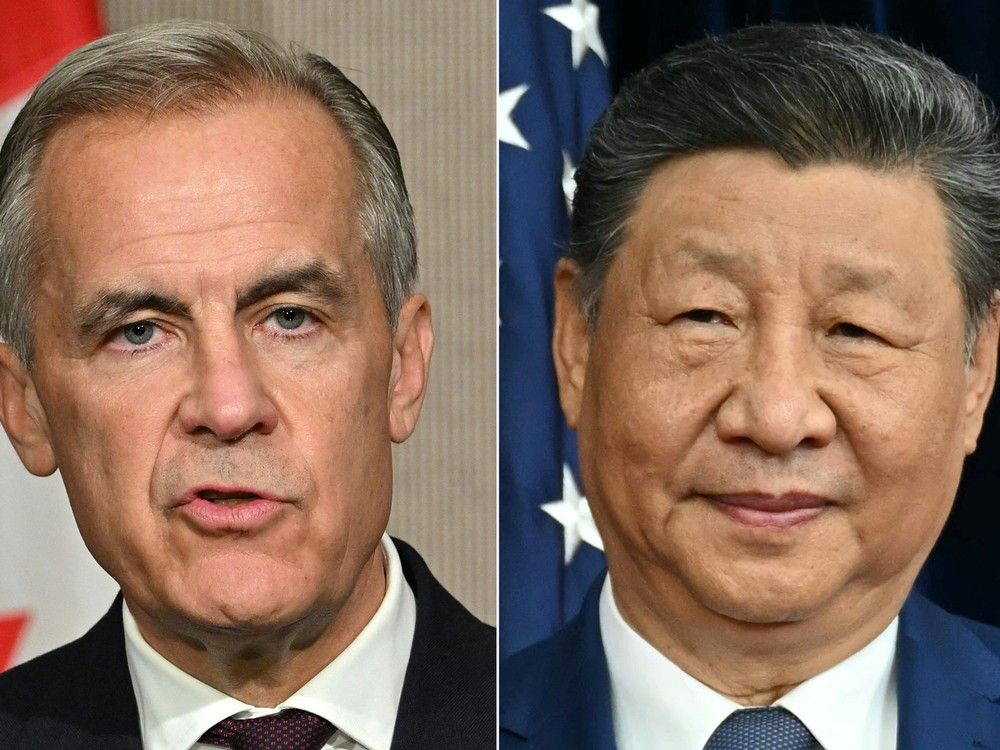
Donald Trump said October 23, 2025 he was ending trade talks with Canada over an anti-tariff advertising campaign, a sudden about-face soon after a cordial White House meeting with Prime Minister Mark Carney.

Donald Trump says he would not meet with Mark Carney “for a while.” Meanwhile, the Canadian prime minister told reporters they were close to reaching a trade deal before the fallout caused by

an anti-tariff advertisement

.

Both leaders are in Asia this week. On Friday, the U.S. president spoke to reporters before travelling to Kuala Lumpur, Malaysia to attend the Association of Southeast Asian Nations (ASEAN) summit. He was asked if he would see Carney. “I don’t have any intention of it. No,” Trump

responded

.

On Monday, after the summit, while Trump was en route to Japan,

he reasserted

that he did not want to meet with Carney “for a while.”

“No, I’m very happy with the deal we have right now with Canada,” he said.

Trump

said

last week that negotiations with Canada were “terminated” after

an anti-tariff ad

 by the Ontario government featured the late former American president Ronald Reagan. Trump called the ad “fake” and said that tariffs are “very important to the national security and economy of the U.S.A.”

He then

said

that the U.S. would increase Canada’s tariffs by 10 per cent.

When asked by reporters on Monday, Trump did not say when the increase would take effect. “Ronald Reagan loved tariffs,” he said, adding that the former president used them “sparingly.”

“I was the biggest fan of Ronald Reagan, but on finance, on trade, it wasn’t his strong suit,” said Trump. He said that Canada has been “ripping off” the U.S. for “a long time.”

“One of the most difficult countries to deal with has been Canada. As much as I love Canada itself and the people of Canada, they’ve just had bad representatives,” he said.

Before trade talks disintegrated, Carney said there were “very detailed, very specific, very comprehensive” negotiations about steel, aluminum and energy “up until the point of those ads running,” he

said

on Monday in Malaysia.

“We stand ready to pick up on those discussions,” he said. “In any complicated high stakes negotiation, you can get unexpected twists and turns. You have to keep your cool during those situations. It doesn’t pay to be upset. Emotions don’t carry you very far. We had made progress … and we stand by the progress that had been made.”

Both of the leaders are expected to be in South Korea for the Asia-Pacific Economic Cooperation summit this week.

Our website is the place for the latest breaking news, exclusive scoops, longreads and provocative commentary. Please bookmark nationalpost.com and sign up for our daily newsletter, Posted, here.


An office romance can accrue real-world benefits to the subordinate's salary.

It’s the stuff HR nightmares are made of. A trio of international researchers — based in British Columbia, California and Finland — has co-authored a paper that examines the links between romantic relationships with the boss and salary.

The bottom line: entering a relationship with a manager increases the subordinate’s earnings by an average of six per cent, while breaking up triggers an “abrupt” 18 per cent earnings decline. Breaking up isn’t just hard to do; it’s expensive.

What’s more, retention of other workers falls when romantic relationships take hold, and the more the subordinate gains in wages, the greater the effect on others.

The paper,

“The Impacts of Romantic Relationships With the Boss,”

was published this month by the National Bureau of Economic Research, which is based in Cambridge, Mass.

The researchers used data from Statistics Finland to analyze the employment administration statistics of Finnish office workers across a variety of sectors over 30 years, from 1988 to 2018. They studied salary information for 1,010 manager-subordinate workplace couples, as well as 728 instances of breakups.

It’s messy work, as the researchers freely admit. They identified the end of a relationship as the moment when the workplace couple stopped living together. But determining the beginning was more difficult.

Since most couples start dating before moving in together, they wrote, “we specify the two years before cohabitation as the ‘dating period’ and define the first year of this period as the event year of interest when estimating the impact of forming a relationship with a coworker.”

They also noted that they didn’t study colleagues who start a relationship but never move in together, nor those who were asked out by a coworker but declined. “Understanding the economic impact of these interactions would be interesting, but it is beyond the scope of our data,” they admitted.

The study looked mostly at female subordinates dating male managers, and found that these women saw a raw earnings growth of 22 per cent between the year before the dating period began and the year after, compared to 16 per cent growth over the same period among women in a control group.

On the flip side, the study found a “clear and stark pattern” for women who broke up with a workplace manager; their earnings fall by 18 per cent the year after the breakup. (In contrast, women broke up with a manager from a different workplace saw a slowdown in earnings growth but no drop in earnings.)

In terms of actual dollars — or in this case euros, since the couples were drawn from data in Finland — the boost in pay from dating a manager amounted to about 4,000 euros (about $6,500) while the hit from breaking up came to 6,000 euros (about $9,700). “These negative effects persist for at least four years after the breakup,” the researchers wrote.

They also tried to tease out whether the salary bump was due to favouritism or merit, the second possible if the subordinate was learning new skills or receiving mentoring from the new partner.

“While it is challenging to distinguish between the two, we provide some suggestive evidence,” they concluded. Among the findings — salary increases dropped dramatically if either partner moved to a new workplace while the relationship continued.

“Regardless of the cause,” they wrote, “higher earnings gains for those in relationships with a workplace manager could lead to resentment among coworkers who might (rightly or wrongly) view this as preferential treatment.”

Sure enough, workplaces that were home to manager/subordinate relationships saw a higher number of departing workers of both sexes. On average, a workplace with 71 employees would see an additional four departures.

“A potentially useful firm-level intervention based on our results is to prevent managers from having a direct influence on the career trajectories of their subordinate partners,” they wrote. “Our findings suggest that other employees dislike these relationships, particularly when they are associated with higher earnings for the subordinate partner. This means that regardless of whether the earnings gains obtained by subordinate partners are due to favouritism, the appearance of favouritism should be curtailed, as it can lead other workers to leave the firm.”

A more direct intervention is to ban such relationships altogether, as is the case with McDonald’s. The restaurant chain fired CEO Stephen Easterbrook in 2019 for a consensual relationship with a subordinate.

“Yet such bans come with their own costs,” they wrote. “If similar rules had existed at Microsoft or Sidley Austin Law Firm, Bill and Melinda Gates and Barack and Michelle Obama would have been barred from dating.”

Our website is the place for the latest breaking news, exclusive scoops, longreads and provocative commentary. Please bookmark nationalpost.com and sign up for our newsletters here.



The French flag flies over France's embassy in Bagdad, located in the Lawee family mansion.

Mayer Lawee, an 86-year-old Montreal man, remembers a childhood in his family’s elegant mansion, built by his father and uncle in the heart of Baghdad, Iraq’s quixotic capital, especially family weddings in the walled gardens with its tiered fountains, palm trees and statues.

The outdoor nuptials for his three sisters were like something from old Hollywood movies, but Mayer, the baby of the family, was always sent to bed early, which during the summer meant sleeping on the roof where the night air was cooler. It was hard to sleep knowing what he was missing.

“There’d be the wedding parties underneath me and I’d be throwing things on the party,” he says. “I was a bit mischievous.”

The family now has only Mayer Lawee’s memories, old photographs, and documents pulled from archives to show for the grand house built in the 1930s by two brothers, Ezra Lawee and Khedouri Lawee.

The family’s mansion is now at the heart of a contentious international dispute shining light on a dark past.

It currently houses the embassy of France in Iraq, for which Paris pays rent only to the Iraqi government, despite the property having been plucked from the Lawee family by Iraqi officials after they fled anti-Jewish pogroms in the 1950s, the family says.

After decades of quietly campaigning for compensation from France, descendants of the Lawee brothers, who resettled in Canada, have turned in frustration to the courts, filing a lawsuit in Paris against the French government.

“It’s really a very odd story,” said Philip Khazzam, a Montreal businessman who is the grandson of Ezra Lawee, and nephew of Mayer.

If not for contemporary history, the location of the house would sound magical. It stands near the bank of the winding Tigris River in the historically crucial region once called Mesopotamia, the cradle of civilization. Recent decades have reduced Baghdad to a synonym for conflict and chaos.

Before Iraq’s authoritarianism and pogroms, before Saddam Hussein’s wars, before the coalition bombings, insurgency, and civil war, there was a time of tranquility, including for the Jewish minority in the majority Muslim country.

Ezra Lawee, Mayer’s father, and Khedouri Lawee, both now dead, were born into a Jewish family in Iraq. As adults the brothers owned the General Motors distribution rights for much of the oil-rich region, making them wealthy enough to jointly buy neighbouring parcels of land in central Baghdad in 1935 and 1937.

There they erected a large mansion to house both of their growing families. It has a stately entrance of stone steps curving to a rounded portico of four columns topped by an ornate balcony.

Mayer, the youngest of the Lawee children — and the last family member to have lived in the home — was born in 1939, a year that also brought trouble. “We were a big family,” he said. “We used to play in the yard. The war was on so most of my activities were in the yard or inside the house.”

During the Second World War, pro-Nazi sentiment in Iraq brought trouble for the long-standing Jewish community, including a period of mass violence targeting Jews. Post-war, Iraq joined the Arab military coalition against Israel in 1948 after it was established as a Jewish homeland, making life harder for Iraqi Jews. There were discriminatory laws, public violence, executions, looting and religious repression.

 Mayer Lawee of Montreal shows images of his family’s mansion in Baghdad which was seized by the Iraqi government.

There was a mass exodus of Jews from Iraq to Israel from 1951 to 1952 in an international airlift operation, but the Lawees’s wealth gave them other options. They left Iraq on their own. One brother travelled to Egypt and the other to England before they reunited in New York and then resettled in Montreal in 1954. Trying to replicate their former life, they bought two adjacent houses and a GM dealership, Barnabe Motors.

The brothers became Canadian citizens in 1969, and their families flourished, some in Canada, others in the United States.

After the brothers left Baghdad, a caretaker watched over their property, Khazzam said. In 1964, the brothers leased it to the French government for use as a diplomatic post, according to old documents filed in court. The deal included the mansion, the caretaker’s home, two garages, and a walled garden with a greenhouse.

It was a suitably prestigious address for France, which had a significant presence, investment and influence in Iraq.

For a time, France paid rent to the Lawee brothers, documents show. The payments suddenly stopped in the 1970s. The family later learned that rather than paying the Lawees, France had agreed in 1978 to pay only the Iraqi government. That was the year Saddam Hussein became prime minister and was consolidating his authoritarian stranglehold on the country.

The Lawee brothers sent letters to government officials in Paris about the rent without any resolution, Khazzam said. Even after Hussein was defeated and executed, France continued to pay the Iraqi governments while ignoring the family.

In 2004, when France reopened its embassy after years of war, the tricolour flag of France was once again raised over the house the Lawees built. It caught the family’s attention.

They hired Lucien Bouchard, a lawyer and former premier of Quebec, to renew their campaign for answers. Bouchard wrote a letter to Dominique de Villepin, France’s minister of foreign affairs under president Jacques Chirac. At the time, de Villepin was best known for his speech to the United Nations opposing the U.S.-led invasion of Iraq. Bouchard’s intervention went nowhere.

 The Lawee family, from left, Farha, Khedouri, Muzli, Naima, Ezra and young Mayer outside their Bagdad home.

“We all thought that it was lost, that we would never get it back,” said Khazzam. However, the family later learned the Lawee brothers were still listed in Iraqi records as the property’s owners.

As a new generation of his family looked at their history, they realized it was not only an issue of an old asset, he said.

“I realized that this is not just about a house, it’s about human rights. That was my motivating factor. It is hugely unfair. They are occupying our house,” Khazzam said. He thought of it in the context of works of art looted by the Nazis during the war, often from Jewish families, that are periodically repatriated.

“If you have art that’s stolen or a house that’s stolen, it’s the same thing,” Khazzam said. “It wasn’t a person or a company who stole it, it’s a country. And France was taking advantage of our misfortune and that’s not right. They’re a G7 country and they also stand up for human rights. So how are they doing this? It doesn’t make sense.”

The family tried again, this time hiring a lawyer in Paris.

Jean-Pierre Mignard is not just any lawyer. He is an establishment figure who was close to François Hollande, president of France for years until 2017. After Hollande stepped down, Mignard was an early supporter of Emmanuel Macron, who went on to become France’s president.

Mignard wrote to his government in 2021 with the flowing grace of a diplomatic entreaty, presenting France’s foreign affairs minister, Jean-Yves Le Drian, with details of the “very painful case,” the letter says, translated from French.

A month later, Le Drian wrote back. It sounded promising.

“The facts you have exposed caught my attention,” says Le Drian’s reply. His office researched the family’s claims and found the embassy had indeed rented the building from the Lawee family in 1964 and later had a replacement lease with the Iraqi government. He asked for documentation.

The family replied with copies of 22 documents, from the architectural drawings for the house when it was being built, photos from the 1930s, title deeds, lease contracts, birth certificates, the brothers’ Iraqi passports and their wills.

 Philip Khazzam: “I realized that this is not just about a house, it’s about human rights.”

Two months later, however, a new foreign affairs minister was appointed. Mignard started again, congratulating Catherine Colonna on her appointment and outlining the “quite sensitive dossier.”

The Lawee family “were robbed of their property,” he wrote, “when the regime of Mr. Saddam Hussein ordered the confiscation of all the property of Iraqi nationals of the Jewish faith.”

Iraq’s claim to the Lawee’s house, he wrote, had no legal basis and was “purely and simply a plunder.” He said an Iraqi law for “the dispossession of Jewish people from their properties in Iraq when they returned to Israel,” didn’t apply here; not only does it abuse international human rights but because the Lawees didn’t leave in the airlift program and didn’t settle in Israel.

“It creates a very difficult situation for France, which occupies Jewish property seized in violation of rules, values of our Republic, and international law,” he wrote.

Once again there seemed to be interest in settling the matter. The family figured they were owed about US$13 million in rent. They asked for repayment of their loss and then the family would sell the property to France.

Momentum, though, seemed only in words. Mignard’s further letters dropped the language of diplomats, sounding more like a debt collector.

“Apparently we did not understand each other well,” Mignard wrote in 2023. “This property is not the property of France. This property is also not the property of Iraq because it has been plundered and stolen. This building is the property of my clients and of them alone.”

He threatened that he and his clients might show up at the door of the Baghdad embassy and try to enter their house.

It is now a court battle. Friday was the deadline for both sides to submit their documentation to the administrative court in Paris.

Mignard told National Post they turned to the courts because decades of informal appeals have failed. He had even written to Macron about it.

“France refuses to acknowledge any responsibility, claiming that it is a decision made by the Iraqi government. This is false. France could at least continue to pay the rent, which would indicate that it is not complicit in the spoliation of Iraq,” Mignard said this week.

“We want France to be condemned, and we feel ashamed and sad because we are French lawyers and this is our country.”

 The Lawee family outside their Bagdad mansion.

A spokesman for France’s foreign affairs ministry wouldn’t answer questions about the Baghdad mansion, saying only: “We do not comment on ongoing legal proceedings.”

Macron’s office declined to say whether the president has stayed at the embassy in the past, but his director of communications, Edouard Lafourcade, said “no visit to the site by the President of the Republic is currently scheduled.”

Estimates of the value of the house and property fluctuate from a low of US$10 million to more than US$20 million.

Mayer Lawee said he would like to see money from his childhood home distributed among the brothers’ descendants. “They should all benefit.”

If Khazzam felt it was safe, he would love to see his ancestral home in person.

“If I could go tomorrow, I’d drop everything and go. That’s how bad I want to see and feel what it was like to walk the streets and be at the parks where my grandparents and parents lived.”

A trial is expected next year.

• Email: ahumphreys@postmedia.com | X:

Our website is the place for the latest breaking news, exclusive scoops, longreads and provocative commentary. Please bookmark nationalpost.com and sign up for our newsletters here.


In era of 'soft assets,' Canada needs to reform digital strategy, BlackBerry founder Jim Balsillie told an Ottawa audience on Sunday night.

The modern digital era, a “new era of human commodification,” violates fundamental human rights, warned BlackBerry founder Jim Balsillie in a speech on Sunday evening.

“The data generated by our experiences, choices, and even our thoughts, are captured, processed, and traded as raw material for manipulative algorithms deployed for profit and power, all with catastrophic costs to society, including mental health crisis, democratic erosion, societal polarization, lost economic dynamism and misinformation to name a few,” said Balsillie, according to notes of Balsillie’s speech, obtained by National Post in advance of his talk.

In his remarks, made to the Ditchley Foundation’s conference in Ottawa, the Canadian tech entrepreneur argued that we’re now living in a new economy where “wealth, power and security” are obtained via soft assets — intellectual property and data/artificial intelligence — rather than hard, tangible assets.

“With the shift to a knowledge-based economy 35 years ago, companies and countries focused on strategically generating valuable IP assets, and more recently, to strategically controlling valuable data assets,” Balsillie’s notes say. “Wealth accrues to the owners who amass these two rent-generating assets.”

 Jim Balsillie says Canada needs to reform its digital strategy to create accrue assets.

Balsillie warned that Canada has no national data strategy and that there are only limited programs to build Canada’s IP assets, something, he said, which costs the country around $100 billion per year.

He argued that Canada needs to shift the way it thinks about innovation and make “a pivot to deliberate strategies that drive productivity, prosperity, and sovereignty in the 21st-century economy,” as Canada’s GDP is growing slowly compared to other countries, especially the United States.

“Because Canada missed the shift, we are seeing Canada’s standard of living in steady decline,” he warned, according to the notes.

Balsillie argued that Canada is spending $7.5 billion on research annually, but without a strategy to own and commercialize outcomes. One potential solution, he argued, is legislation to help Canada own its intellectual property. As one example, Balsillie says that Canada’s publicly funded research built the foundations of the artificial intelligence boom, but Canada is not on the list of top 100 patent holders globally.

“AI is transforming industries at scale in ways we haven’t seen since the rise of the internet,” Balsillie’s notes say.

There are structural forces that reshape the labour market. Globalization and offshoring or a data-driven economy that inspired gig work or the knowledge economy comprised of intangible assets, for example. But this also includes machine knowledge, which Balsillie identifies as a new “factor of production.”

In order to tackle the problems of rights violations and the languishing Canadian economy, Balsillie proposes a four-point plan, which he first articulated in a speech to the International Monetary Fund in 2018. Canada must protect national security in the digital era; ensure there’s fair access to the new means of production in the economy; enhance citizen welfare in the areas of “privacy, democracy, mental health, human rights”; and comply with all international agreements.

“Helping shape this in an integrated fashion is technically complex but also an opportunity and imperative for Canada,” said Balsillie on Sunday.

Balsillie, 64, was co-CEO of Waterloo-based Research in Motion, later renamed after its BlackBerry device. He founded the Balsillie School of International Affairs and the Centre for Canadian Innovation.

Our website is the place for the latest breaking news, exclusive scoops, longreads and provocative commentary. Please bookmark nationalpost.com and sign up for our newsletters here.


Boomers lead the way among Canadians who say it's unlikely they will travel to the U.S. over the next six months, according to a new survey.

There could be drastically fewer retired Canadians flocking south to southern U.S. states like Florida and Arizona to escape the winter this year, according to a new survey.

In its 2025 winter smart travellers survey insights, the Travel Health Insurance Association (THIA) of Canada found that people age 61 and over — typically seen as the “snowbird” generation due to their long-term trips south — lead the way in boycotting travel to the U.S. this winter.

The survey, conducted by The Harris Poll in late September, asked respondents how likely they were to travel to the U.S. between October of this year and March 2026, typically Canada’s coldest months.

Just over a quarter of respondents (26 per cent) said such a trip was likely, a decline of 37 per cent over the percentage of people who said they’d go in the winter of 2024-25 (41 per cent).

Across age groups, the drop was most precipitous among Boomers, with only 10 per cent anticipating a trip to the U.S. in the months ahead, a 66 per cent plunge over the share of people who said they would have last year (31 per cent).

“Meanwhile, younger Canadians are keeping the tradition alive,” The Harris Poll wrote, noting that 45 per cent of those aged 18-34 — including 44 per cent of Generation Z — “still plan to travel to the U.S., down only 18 per cent, showcasing a significant generational divide.”

In April, the U.S. Citizenship and Immigration Services (USCIS) introduced the

Alien Registration Form

, which requires most non-citizens staying in the U.S. for 30 days or longer to register their presence and provide a photograph and fingerprints. Anyone crossing via land border would also be required to pay a $30 fee for a separate arrival-and-departure record.

Last week, the Department of Homeland Security announced new regulations requiring all non-residents, including Canadians visiting for any amount of time, to be

photographed when entering the U.S

. for facial recognition purposes.

When they come into effect on Dec. 26, the new rules will apply to minors under 14 and seniors over 79, groups that were previously exempt from some biometric requirements, and could also require the submission of other biometrics, such as fingerprints or DNA.

The THIA survey also found that Canadians’ winter-destination appetites are changing and veering away from their nearest neighbour.

Of the 53 per cent who plan to leave their home province this winter, only 12 per cent said their primary destination would be in the U.S., down by 23 per cent year over year from the 2024-25 proportion.

Instead, an increasing number of people — 11 per cent more than the previous year — say they’re first headed to another Canadian province, and more still (27 per cent) listed the Caribbean.

“It’s clear that Canadians’ primary vacation spots during the winter months are in flux,” the pollster wrote.

As for those committed to a U.S. trip in the next six months, 13 per cent are doing so for leisurely reasons, while another 13 per cent are visiting family or friends. Escaping the cold, taking advantage of cheap destinations and ease of travel to the U.S. came in at seven per cent, respectively.

Asked what potential barriers factor into their decision about travelling at this time of year, without being prompted, 40 per cent of respondents said political tensions with the U.S., compared to 24 per cent who cited global uncertainties.

Cost was the top barrier at 41 per cent, and 29 per cent listed exchange rates. Rounding out the list were personal safety (20 per cent) and potential travel disruptions (13 per cent).

The random survey was conducted Sept. 24-26 and has an estimated margin of error for the poll was plus/minus 2.5 per cent, 19 times out of 20.

Our website is the place for the latest breaking news, exclusive scoops, longreads and provocative commentary. Please bookmark nationalpost.com and sign up for our daily newsletter, Posted, here.


Justin Trudeau, right, and Katy Perry were seen leaving a cabaret in Parison Saturday night, officially confirming their courtship.

Justin Trudeau and Katy Perry made it officially official on Saturday night, stepping out for date night in Paris.

Video published by TMZ showed the former Canadian prime minister and the pop star hand in hand as they exited a cabaret show at the Crazy Horse in the French capital.

Waiting for them outside was a throng of paparazzi and fans, some of whom started singing the Happy Birthday song to Perry, who celebrated her 41st birthday Saturday.

Another video shared with the outlet showed a woman presenting Perry with a rose, garnering a “Thank you” from the musician.

Within a few seconds and without saying anything else, the duo were ushered into the back seat of a waiting SUV and left.

It was the first confirmed public appearance together since a dog walk and dinner date in Montreal in late July.

Perry was in town on tour and Trudeau, along with his 15-year-old daughter Ella Grace, were seen attending the Bell Centre show a couple of nights later.

Entertainment news, all citing individuals who claimed to be in the know, reported on the rumoured romance throughout the summer

Things remained that way until Oct. 11, when the Daily Mail published photos of Perry and a man reported to be Trudeau embracing and kissing atop the pop star’s yacht while it was docked in Santa Barbara, Calif.

The images were captured by a tourist in a passing boat who said they recognized Trudeau’s distinctive Haida tattoo on his left shoulder.

Perry seemed to hint at a new romance in her life during a show in London, England, two nights later, when a fan extended a marriage proposal on stage, prompting her to reply, “You really should have asked me about 48 hours ago.”


Lawyer Lawrence Greenspon, who represents Freedom Convoy organizer Tamara Lich, is adamant that there was no need to criminalize the non-violent trucker protests.

On October 7, Ontario Court Justice Heather Perkins-McVey handed down conditional sentences to Tamara Lich and Chris Barber for their roles in the 2022 Freedom Convoy. Both Lich and Barber were found guilty of mischief, a criminal charge. While neither faces further jail time, their conditional sentences impose a year of house arrest, followed by six months under a curfew.

“In 45 years of doing this work,” says Lich’s lawyer, Lawrence Greenspon, the Crown and defence have “never been so far apart on sentencing (recommendations) as we were in the Freedom Convoy cases.” Ottawa-based Crown prosecutor Siobhain Wetscher asked for seven years’ imprisonment for Lich and eight for Barber; legal counsel for Lich and Barber sought absolute discharges.

Greenspon says he and his client are leaning toward appealing her conviction. We’ll soon know their decision; documents must be filed within 30 days of sentencing.

In a recent conversation, Greenspon chuckles when I ask about the Crown’s motivation to go after Lich and Barber so aggressively; it’s a question he’s been asked hundreds of times. “Why did we spend upwards of 40 days in trial at a time when far more serious cases are being thrown out because of delay, because they can’t get access to the courts and the judges?” he posits. “Why did the Crown pursue it this way?

“Everyone says, oh, it’s political,” Greenspon says with a shrug, “I just don’t see that connection and I never have. What I do see were prosecutions that were brought by the Ottawa Crown attorney’s office and prosecutions that became epic in length and in intensity, followed by requests for sentencing positions that were found by the judge to be excessive and harsh.”

And, he explains in a very logical, lawyerly way, the judge’s decision became a very important balancing act.

“On the one hand, there’s freedom of expression,” he argues, and on “the other side of the ledger was the interference with enjoyment of property … (and) that side of the ledger is nowhere to be found in the Charter of Rights and Freedoms.” That’s unlike the United States, he notes, where there’s a constitutionally protected right to enjoyment of property.

Unless you’re simply recording your thoughts in a personal diary, freedom of expression always has consequences, Greenspon continues. “In this case, the consequences of freedom of expression, the honking horns, were mostly stopped,” he says, “by virtue of the injunction.”

“The loss of business, the disruption of the downtown core, of people who live in the area within metres of Parliament Hill,” he continues, “is the subject of a class action, where they’re seeking damages for those intrusions on their right to enjoyment of property.”

So there really was no need to criminalize the non-violent trucker protests, he declares. And it was clearly non-violent, he asserts: “How many times did Tamara say, ‘Come to Ottawa and help us in our peaceful demonstration, a lawful demonstration … if you see anybody who’s doing anything improper or illegal, let us know, we will tell the police or you tell the police’?”

Greenspon may not blame the Trudeau government for the heavy-handed charges against his client, but he doesn’t hold back in his criticism of its decision to invoke the Emergencies Act.

“There was no need for the Emergencies Act. It was a complete abuse of power. It’s been found to be just that, by Judge Richard Mosley, a senior federal court judge,” he states, forcefully.

“I know the government is appealing it, for appearances, at this point. But I just can’t see that appeal being successful,” he says. “The Emergencies Act should never have happened. When you look at what Pierre Elliott was dealing with in the ’70s, and the deaths and kidnapping of politicians, and you try and compare that to honking horns and peaceful demonstrations, and hockey games, and that kind of thing in Ottawa … there’s no comparison.”

Sensing we’re finally breaking through Greenspon’s defence counsel persona, I dare to ask how he — a Jewish man who lost family members in the Holocaust — feels about the federal government’s response to anti-Israel protests on the streets of Canadian cities, when compared to their response to the trucker convoy. Is there a double standard?

“Yes, it’s a double standard,” he answers, albeit slowly. “And why is there a double standard?” he asks, more forcefully. “Maybe it has something to do with the fact there’s 1.1 million Muslims in Canada and there’s only 250,000 Jews. Maybe that’s what’s driving it. I don’t know,” he says, quietly.

After a long pause, he reiterates: “But is there a double standard in the way that Tamara Lich and Chris (Barber) were treated versus how the pro-Palestinian protesters with hate messages are being treated? For sure.”

Reverting to lawyer-speak, he explains how “Tamara came out publicly and said, ‘You have to stop these F*** Trudeau signs. He’s a father and he has children and this isn’t right and that’s not why we’re here.’” You don’t see that same kind of condemnation of the messages being carried by the pro-Palestinian protesters, he adds; they hold the Hamas flag or chant Hamas slogans — including “from the river to the sea,” which basically means eliminate all Israelis.

“The other thing,” he notes, “is the truckers, they were invited into the (Ottawa) core, they were told where to park.” It’s a very different circumstance when pro-Palestinian protesters surround a synagogue or protest outside a Jewish seniors home.

 Freedom Convoy organizer Tamara Lich and her lawyer Lawrence Greenspon arrive at the Ottawa courthouse on April 3, 2025.

Greenspon is an ardent champion of the freedom to associate and express yourself, but there are limits. “We start our Constitution,” he notes, not with a statement of the rights, but of the limits: “All freedoms are subject to such reasonable limits as can be demonstrably justified in a free and democratic society.” He smirks, then adds, “It’s a very Canadian way.”

“But there’s got to be limitations on freedom of expression,” he asserts, “and I’m very comfortable with saying: When you’re promoting or inciting hatred against an identifiable group of people, you cross the line.

“The government is now proposing this hate legislation in an effort to give the police the tools which, I would argue they already have,” Greenspon reports, “but you want to make it crystal clear, OK, give them some more tools and actually use them. That would be good … if they actually used them.”

Greenspon, at 71, is still fighting the good fight. And he remains optimistic: “If and when this gets to the Ontario Court of Appeal, my hope is they will send the same kind of message that Judge Mosley sent, which is that the Emergencies Act was uncalled for, and that they will come out and say, ‘This is not a criminal offence. It shouldn’t be considered a criminal offence.’ And then, Tamara will be acquitted.”

An acquittal, he believes, would signal to authorities, across the country, that when you have non-violent demonstrations, which are not promoting hate, these peaceful assemblies should be allowed to continue without criminalization.

National Post

Our website is the place for the latest breaking news, exclusive scoops, longreads and provocative commentary. Please bookmark nationalpost.com and sign up for our newsletters here.


Former U.S. president Ronald Reagan's 1987 remarks on trade have sparked controversy after being used in an Ontario ad.

Did the dustup over Ontario’s $75 million Ronald Reagan ad — the one telling Americans that even the Gipper believed that, “over the long run, such trade barriers (tariffs) hurt every American worker and consumer” — expose two truths and a lie?

Late Thursday, President Donald Trump took issue with the ad in a Truth Social post, expressing concern that it twisted Reagan’s legacy and undermined his own tariff policies.


“The Ronald Reagan Foundation has just announced that Canada has fraudulently used an advertisement, which is FAKE, featuring Ronald Reagan speaking negatively about Tariffs,” Trump wrote.


A source close to the administration noted that the White House must have been in touch with the Foundation over the matter.

Trump’s post did more than criticize the ad — it also scuppered the U.S.-Canada trade talks.

“TARIFFS ARE VERY IMPORTANT TO THE NATIONAL SECURITY, AND ECONOMY, OF THE U.S.A. Based on their egregious behavior, ALL TRADE NEGOTIATIONS WITH CANADA ARE HEREBY TERMINATED.”

In one fell swoop, weeks of seemingly re-energized talks between the U.S. and Canadian trade teams came to a halt — negotiations that, according to the source, “were much further along than people knew.”

But some Canadian politicians, the source said, seem to be losing faith in the talks. “The message I got … was that ‘there’s all these asks, and what if we delivered all of them? What do we get in return?’”

“There’s a sense that, at times, it feels like a one-way street.”

Leaders from elsewhere in Canada had warned Ontario that the ad was likely to ruffle feathers. They pointed out that the Republican Party is nowhere near where it was when Reagan was president, the source said, and that a lot of people alive today cannot even remember him.

Trump purportedly derailed trade negotiations over Ontario Premier Doug Ford’s one-minute ad quoting another Republican. This has left Canadians wondering if the president’s response revealed a truth as to how serious he was about a long-lasting tariff deal.


But it wasn’t just the ad that upset Trump.

According to the source, the White House was also angered by Mark Carney threatening Stellantis with legal action after the automaker announced plans to move Jeep Compass production from Brampton, Ontario, to the U.S.

Ford’s confrontational approach toward Trump is popular with a lot of Canadians. “Given the anti-American sentiment in Ontario, I think that, electorally, the elbows-up approach works for him,” said the source. It may not help the trade talks or Canada’s relations with the U.S., but it lays bare the divide over the preferred leadership style for the conservatives.


Conservative Party leader Pierre Poilievre, an ideological hardliner, is still smarting from his stunning loss to Carney last spring and now faces a leadership review in January. If he loses, the leadership style of the Conservatives could soon shift and look more like Ford’s aggressive pragmatism. That obviously would not bode well for a breakthrough in US-Canada talks.

And as for the lie? It’s not really a lie so much as a departure from standard diplomatic protocols. According to the source, Ambassador Kirsten Hillman has been party to the negotiations, but other diplomats have not. Instead, “Carney has a shadow government. He doesn’t seem to trust the diplomatic service, and he wants to work around them,” the source said.

“Carney is basically treating these negotiations like how he used to do mergers and acquisitions when he was a banker,” the source said. “He’s apparently brought in people who are trusted friends and allies … and he doesn’t want the negotiations going beyond a very small group of people.”

Ford announced on Friday that he would stop running the Reagan ad on Monday to allow for trade talks to resume.

But whether it’s diplomats or Carney’s buddies involved, nobody needs to pack their bags for more negotiations until Trump decides to lift the freeze, which means the future of Canada-U.S. trade negotiations is as uncertain as ever.

Our website is the place for the latest breaking news, exclusive scoops, longreads and provocative commentary. Please bookmark nationalpost.com and sign up for our daily newsletter, Posted, here.


Participants in the weekly walk in Thornhill, Ontario of Jews and non-Jewish allies who have called for the release of the hostages taken in Israel on October 7.

This Sunday marks the final “Run for Their Lives” walk in Thornhill, Ontario, a weekly event held in a local mall for the last two years. It was organized by Toronto resident, Michelle Factor, as one of approximately 250 weekly walks around the world bringing together Jewish and non‑Jewish allies every Sunday to demand the safe return of hostages held by Hamas.

The Thornhill walk began as a gathering of 60–80 walkers and became a weekly affirming of “Chai” (life in Hebrew), with the walkers wearing red to symbolize bleeding hearts, and including prayers led by rabbis and the singing of Hatikvah. However, now that the last 20 living hostages have been returned, the event is coming to a close.

Run for Their Lives was inspired by a video from Rachel Polin Goldberg, mother of one of the captives, calling on communities to start or join walks in their neighborhoods.

The organization spanned several continents with chapters in Vancouver, Victoria, Helsinki, Paris, Braunschweig, and beyond. Factor launched the Thornhill event on Day 100 of the hostages’ captivity.

https://www.instagram.com/p/DPeutIfD_qJ/?hl=en

NP spoke with Michelle Factor about the meaning of the walk and marking the last one. Here is what she had to say:

Michelle, how does it feel to be doing the last of these walks this weekend?

It’s truly a bittersweet ending. I’m so grateful that the 20 living hostages are finally home, but it’s sad to think we won’t be gathering as a community on Sundays anymore after two years together. As a group, we’ve decided that this weekend will be a celebration of life for the 20 who returned home most recently, while we continue to pray for the 13 souls who have not yet been brought back for proper burial. Run for Their Lives began as a way to walk and run for those who could not. While we’ll always keep praying for the 13, this weekend is a moment to celebrate that our hope and prayers for the living have been answered.

What memories of past walks would you like to share?

One of my most cherished memories is from our very first walk. It was January 14th, 2024, minus 20 degrees Celsius, and yet it was one of our largest gatherings … Our biggest turnouts were always on significant dates, like the commemoration of October 7th, and when Rabbi (Doron) Perez joined us to share the story of his son, Daniel Perez (murdered on Oct. 7). Daniel’s quote, “If not me, then who?” has stayed with me throughout these two years. It inspired me to keep going because if I don’t, who will? I’ve also carried my own message with me each week: “If they can hate us, I can love you.” It’s something I remind my walkers of every Sunday that we choose love and unity in the face of hate.

How has this walk been connected to others elsewhere?

There are now 184 Run for Their Lives groups around the world. As a lead, I’ve had the privilege of connecting weekly with other group leaders, cheering each other on, sharing posters, and offering support.

In June, I joined the Israel Parade in New York City and had the chance to walk alongside other Run for Their Lives groups from around the world. We’ve built a strong global community, and our group chats will stay open indefinitely so we can continue to communicate and support one another. Not all groups are finishing this weekend. Some will keep walking until all 13 souls are returned.

Are you planning anything special to mark the event?

We’ll begin the celebration with prayers, including a new one for the 13 remaining souls, for the State of Israel, and for the IDF soldiers who continue to fight tirelessly. I’ll also be giving a short speech to thank our community for their commitment and strength. We’re honoured to have Mayor Steven Del Duca of Vaughan and MPP Laura Smith of Thornhill joining us. For the first time since January 14th, 2024, we won’t be walking in silence. Instead, we’ll be dancing and playing music to celebrate life and unity.

Our website is the place for the latest breaking news, exclusive scoops, longreads and provocative commentary. Please bookmark nationalpost.com and sign up for our daily newsletter, Posted, here.