LP_468x60
on-the-record-468x60-white

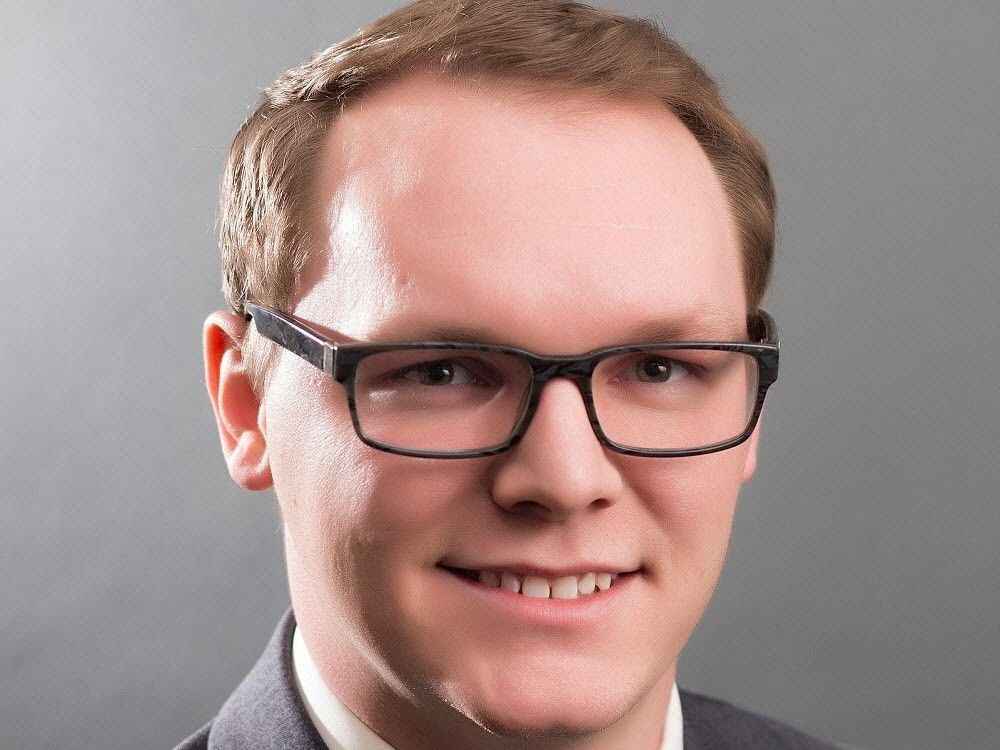
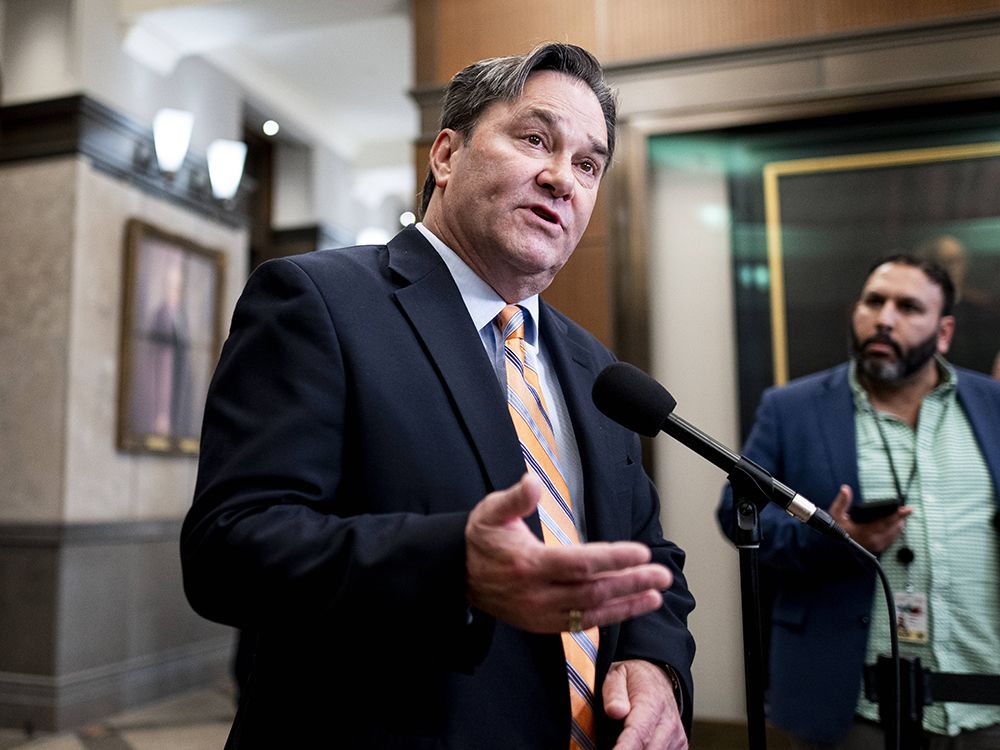
Sault MPP Chris Scott in Sault Ste. Marie, Ont. on Monday, Aug. 25, 2025.

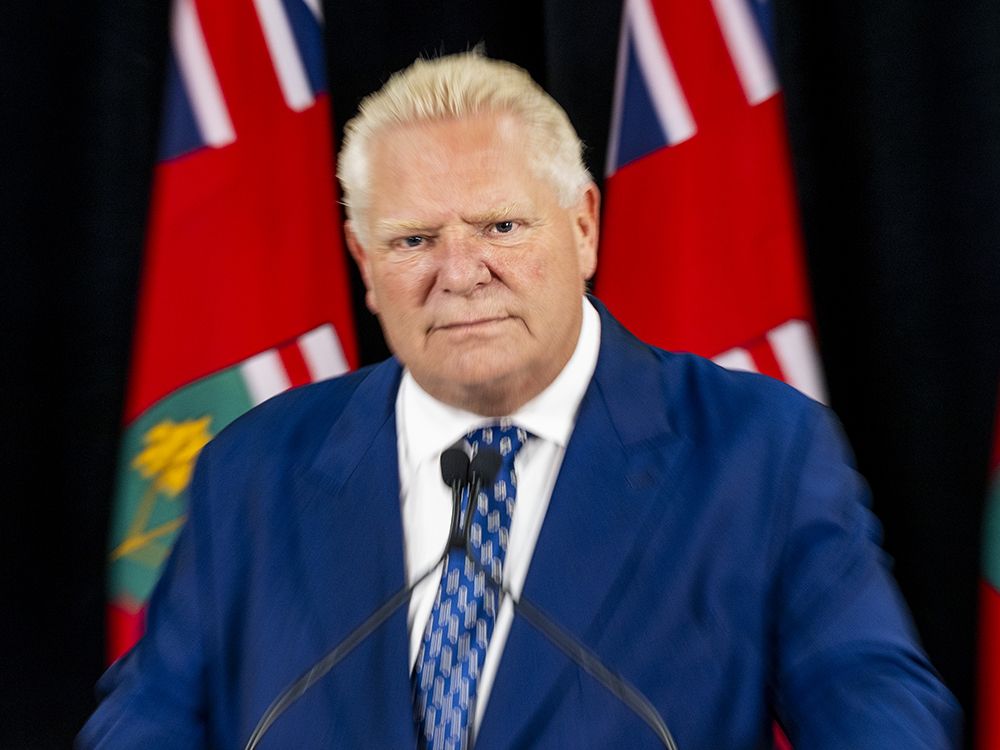
MPP Chris Scott will not be “sitting with our caucus,” said Ontario Premier Doug Ford on Monday. The 35-year-old was charged with assault and assault with a weapon, according to multiple news outlets.

“You can ask Chris Scott the reason why,” said Ford,

speaking to reporters in Russell, Ont.

for an unrelated announcement. “I was informed literally in the parking lot as we’re going through here. Go to the Sault Ste. Marie police. I don’t want to interfere in a police investigation.”

Ford would not clarify why Scott was booted from the caucus; however, according to

a news release

from police in Sault Ste. Marie on Sunday, 35-year-old Scott had been arrested by Toronto police “following an investigation by detectives.”

“To protect the privacy of the victim(s),” police said, “no further details regarding the incident or the charges will be released.”

Toronto police arrested Scott “on an out of town arrest warrant,” spokesperson Cindy Chung told National Post in an emailed statement. “As this is a Sault Ste. Marie investigation, we will not be commenting further,” she said.

According to the court docket for Sept. 22, Scott was scheduled to appear for a bail hearing in person at 9:30 a.m. ET. in Sault Ste. Marie. His assault charges were reported by

CTV News

,

CBC News

and

Soo Today

later on Monday.

One of the conditions of his release, per Soo Today, is that Scott must live in Toronto.

MPP for Toronto Centre Kristyn Wong-Tam said in a post on X on Monday afternoon that she was thinking of the victim (or victims) and said she hopes “they’re getting the care they need right now.”

On the website for the Legislative Assembly of Ontario, Scott is listed as a member of the Standing Committee on the Interior. A page on

the Ontario PC Party website

about Scott is no longer accessible.

Scott won the Sault Ste. Marie riding in Ontario’s provincial election in February,

Soo Today reported

. He

previously worked

for Ford and former MPP Ross Romano.

Our website is the place for the latest breaking news, exclusive scoops, longreads and provocative commentary. Please bookmark nationalpost.com and sign up for our daily newsletter, Posted, here.



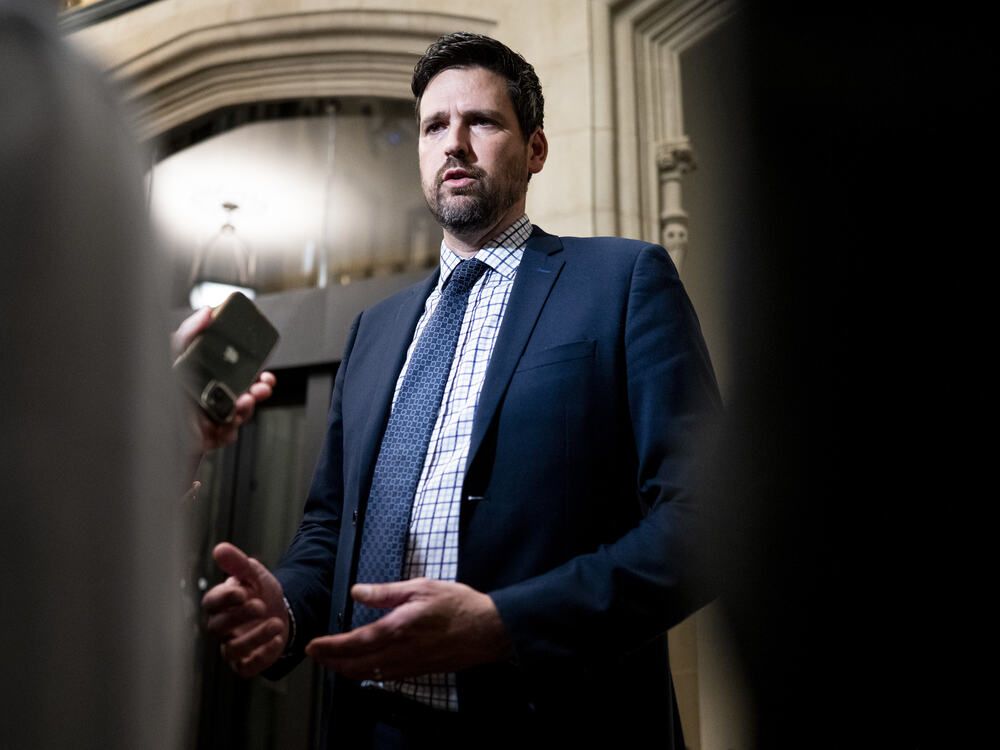
Minister of Public Safety Gary Anandasangaree makes his way to the podium to speak in the Foyer of the House of Commons on Parliament Hill in Ottawa, Tuesday, June 3, 2025.

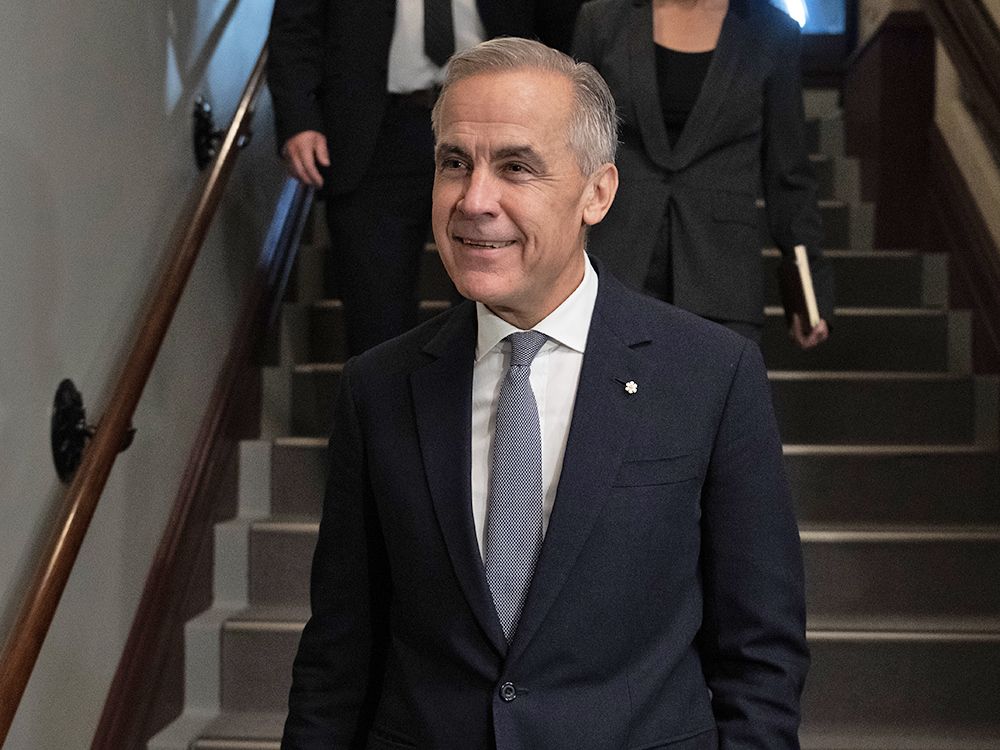
OTTAWA — Public Safety Minister Gary Anandasangaree says he doubts local police will have the resources to enforce the Liberals’ mandatory gun “buy-back” program and says the reason Prime Minister Mark Carney is sticking with the policy is to appease voters in Quebec.

That’s according to a roughly 20-minute conversation the minister had on Sunday with a tenant, which the minister says is authentic but was recorded without his knowledge and then circulated by a “gun lobbyist.”

In the recording, Anandasangaree reveals to the man he is speaking with that the federal government will announce the next phase of the program on Tuesday and unveil a pilot that will roll out in Cape Breton.

The Liberals had planned to move ahead this fall with the next phase of the program, which would cover individuals who own one of the 1,500 “assault-style firearms” former prime minister Justin Trudeau banned in the wake of the deadly 2020 mass shooting in Nova Scotia.

“Don’t ask me to explain the logic on this to you, OK,” the minister tells the individual he is speaking with, after revealing the date of the forthcoming announcement, adding that the person “may not be happy” with the news.

The individual, who identifies himself as a gun owner, repeatedly questions the minister on the policy. At one point, Anandasangaree offers to pay him the difference in compensation and even bail him out of jail, given that the person informs him that he will not hand over his property.

Under the Liberal program, which the government has already launched for businesses, individuals who own one of the 1,500 “assault-style” firearms banned by the government would be mandated to hand over their guns in exchange for compensation.

The Liberals added another 200 models to that prohibited list earlier this year.

Anandasangaree has publicly acknowledged that the amnesty, which has been in place since 2020, protecting businesses and individuals from criminal liability, would be extended beyond October 2025, but has yet to detail how long.

While the

Liberals have always said the program would be mandatory

, Anandasangaree repeatedly emphasized it was “voluntary.”

At one point, the individual suggests to the minister that police would have to come to his home to collect his firearms and place him in handcuffs.

“I doubt very much it’s going to go that far,” Anandasangaree says. “I just don’t think municipal police services have the resources to do this.”

Last week, the minister acknowledged to reporters that the Ontario Provincial Police would not be participating in the program.

At another point in the recorded conversation, Anandasangaree said the program’s budget of $742 million would be “capped.”

He also suggested the government would not reach that budgeted amount.

Throughout the recorded conversation, Anandasangaree does not appear to be defending the need for the program, but explains why Carney’s government chose to stick with it, given the widespread backlash from firearms owners, First Nations, and criticism from the Opposition Conservatives and premiers like Alberta Premier Danielle Smith.

“Like I’m picking up where it was left off, right?” Anandasangaree said. “This is the mandate I was given by Carney to complete this … and not revisit this.”

“That’s my objective, right? Just put an end to this and move on with other additional criminal justice tools,” some of which he lists out, including bail and stiffer penalties for those who have unlicensed firearms.

“Going forward, it will be a different approach, OK,” the minister says. “This is completing something that was started five years ago.”

Asked by the man whether he has spoken to Carney about the policy, Anandasangaree said that he has had “constant, constant discussions” on the next steps, and the government decided to stick with it, given it was a promise made during the spring election campaign

Pressed again by the person on why not break the campaign promise, Anandasangaree said it was because of Liberal voters in Quebec.

“Quebec is in a different place than other parts of Canada, right? And this is something that (is) very much a big, big, big deal for many of the Quebec electorate that vote for us,” Anandasangaree said.

“That’s one of the major things.”

Near the end of the conversation, Anandasangaree says if he were to “redo” the policy, from the beginning, “I would have a very different approach.”

In a statement to

National Post

, Anandasangaree defends the conversation by saying his comments to the individual were “misguided.”

“I make a point to speak with Canadians who do not support our approach, to listen to their concerns and ensure they understand their options in this voluntary buyback program. In trying to address this individual’s frustrations, my comments were misguided,” he said in a statement.

“Anyone who knows me or has worked with me knows how seriously I take my job. No one should be mistaken about my unequivocal support for the program.”

Anandasangaree repeated much of the same when pressed on his comments in the House of Commons on Monday by Opposition Conservative Leader Pierre Poilievre. Poilievre and the Conservatives have long argued against the program, calling it a waste of taxpayer dollars and an ineffective strategy to deal with rising gun violence, given that it targets lawful gun owners.

Poilievre told MPs on Monday that the minister, in his own words, “has admitted it won’t work.”

National Post

Our website is the place for the latest breaking news, exclusive scoops, longreads and provocative commentary. Please bookmark nationalpost.com and sign up for our politics newsletter, First Reading, here.


Sutherland House to Publish The First Survivor by Lisa Banfield, Maureen Banfield, and Sherri Aikenhead in January 2026

A new book penned partially by the spouse of the Nova Scotia denturist who dressed up like a cop and murdered 22 people during the pandemic is coming out early next year.

The First Survivor: Life with Canada’s Deadliest Mass Shooter by Lisa Banfield is slated to appear in North American bookstores on Jan. 20, 2026.

Gabriel Wortman killed 22 people over a 13-hour period in April 2020 after a dispute with Banfield, his common-law spouse, turned violent. She ran into the woods to hide after he torched their cottage in Portapique and fired shots at her.

“On April 18, 2020, Lisa Banfield’s life shattered,” said a press release from the book’s publisher, Sutherland House.

“After nineteen years in a controlling and often abusive relationship, she escaped a violent assault by her partner, Gabriel Wortman — unaware he was about to carry out the deadliest mass shooting in Canadian history in Portapique and the surrounding counties of Nova Scotia.”

Wortman, 51, drove a replica RCMP cruiser and wore a police uniform for much of his killing spree, which began in Portapique, Colchester County, on the night of April 18, 2020. He murdered 22 people, including a pregnant woman, before a Mountie dog handler shot him dead at the Irving Big Stop in Enfield the next morning.

Sutherland House turned down interview requests Monday.

The book, written by Banfield in collaboration with her sister Maureen Banfield and veteran journalist Sherri Aikenhead, “tells Lisa’s story for the first time,” said the publisher’s press release.

“She recounts surviving years of intimate partner violence and the horrific night she fled barefoot into the freezing woods as Wortman began a murderous rampage that left twenty-two people and an unborn child dead.”

According to the publisher, “Banfield’s memoir is more than a personal account – it is a call to action. With intimate reflections and her own transformation, she exposes the failures in how society sees, supports, and judges survivors of domestic abuse. The First Survivor is a powerful story of trauma, survival, and one woman’s journey reclaiming her voice and redefining her life.”

Sutherland House President Kenneth Whyte said in the press release that the book “changes the way we understand both the tragedy of April 2020 and the private realities of intimate partner violence.”

Criminal charges were eventually dismissed against Banfield, her brother and brother-in-law for providing Wortman with ammunition after all three opted to have their charges dealt with through restorative justice.

Our website is the place for the latest breaking news, exclusive scoops, longreads and provocative commentary. Please bookmark nationalpost.com and sign up for our daily newsletter, Posted, here.


U.S. President Donald Trump attends a press conference at Chequers at the conclusion of a state visit on Sept. 18, 2025 in Aylesbury, England.

The Trump administration is expected to make an announcement on autism today, according to multiple reports.

Officials on the condition of anonymity told

The Washington Post

and

Politico

that the administration is expected to speak about autism and how the active ingredient in Tylenol, acetaminophen, may be tied to an increased autism risk in children if taken in early pregnancy. The maker of Tylenol, Kenvue, has denied the link between autism and its drug. It said that it believes that taking acetaminophen does not cause autism, Reuters reported.

The administration will also be offering up what it believes is a drug that can treat autism, officials said, according to Politico.

White House Press Secretary Karoline Leavitt is set to give a briefing on U.S. President Donald Trump’s agenda at 1 p.m. ET. Trump is expected to speak about autism research at 4 p.m. ET from the Roosevelt Room of the White House.

Our website is the place for the latest breaking news, exclusive scoops, longreads and provocative commentary. Please bookmark nationalpost.com and sign up for our daily newsletter, Posted, here.
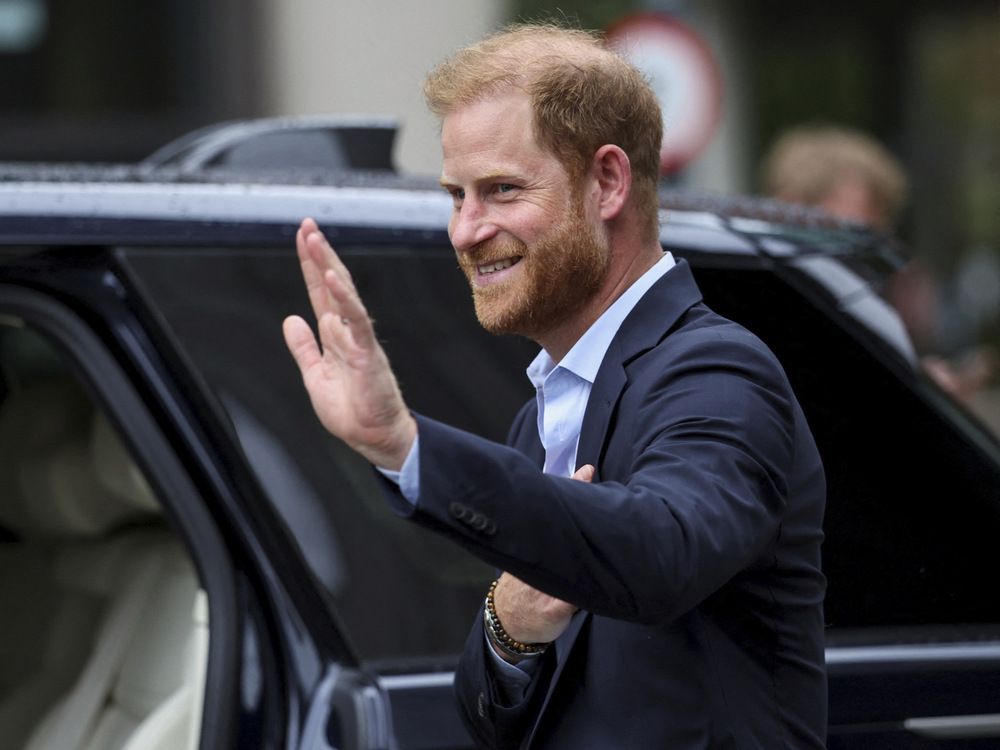

Prof. Danny Orbach, a military historian from the History and Asian Studies Departments, Hebrew University of Jerusalem. He specializes in the dynamics of military atrocities, legal history, and the study of complicated conflict zones.

The claim that Israel has committed genocide in Gaza has become one of the most emotionally charged allegations in recent international affairs. A new study by an Israeli think tank, however, says it has thoroughly researched the accusation and found it to be false.
“We discovered that, in our opinion, much of the coverage of the Gaza war is just factually wrong,” Prof. Danny Orbach, one of the report’s authors, told National Post.
In the 330-page study “Debunking the Genocide Allegations,” military historians and quantitative analysts systematically address the accusations, ultimately contending that the evidence does not support the charge of genocide in Israel’s war against Hamas. 
“If Israel wanted to kill as many civilians as possible, like in a genocidal situation, or was even indifferent, it could just kill hundreds with one bomb,” Orbach said.
The report’s release comes at a key moment in the debate.
On Tuesday, a United Nations body — the Independent International Commission of Inquiry on the Occupied Palestinian Territory — issued a report concluding that Israel has committed genocide against Palestinians in Gaza.
The commission — though not a criminal tribunal — determined that Israeli authorities and security forces carried out four of the five acts outlined in the 1948 Genocide Convention: killing members of a group, causing serious bodily or mental harm, deliberately inflicting conditions of life meant to destroy the group, and imposing measures intended to prevent births. (The Israeli government categorically rejected the findings, calling the report “fabricated,” arguing the report is politically biased, misrepresents Israeli statements, strongly relies on Hamas data, and fails to demonstrate genocidal intent.)
In their report earlier this month, Orbach and other researchers took “a multi-layered approach” using open source facts, legal analysis and ethical analysis. That report, released through the Begin-Sadat Center for Strategic Studies at Bar-Ilan University, Israel, came to a much different conclusion than the UN body.
Central to the genocide allegation is the idea of intentionality: that Israel sought to annihilate the Gazan population through policies designed to starve civilians, massacre non-combatants and bomb indiscriminately.
Orbach said that in this war, the vast majority of civilians have been killed for a variety of reasons that aren’t malicious, including: being caught in the crossfire, misunderstandings or incorrect assumptions by Israeli soldiers, or used as shields by Hamas.
“You don’t see any clip or other forensic evidence in the Gaza war for frontal massacre, putting a line of civilians against the wall and mowing them down, or executing prisoners from close range, you know, one by one,” says Orbach, a military historian from the History and Asian Studies departments at the Hebrew University of Jerusalem. He specializes in the dynamics of military atrocities, legal history and the study of complicated conflict zones.
One of the core planks in the genocide accusation is the assertion that Israel deliberately starved the population of Gaza, bolstered by repeated claims by humanitarian organizations.
The study’s authors say they found fundamental methodological and factual errors in this. First, the benchmark of 500 aid trucks per day as the minimum for Gaza’s survival was based on misinterpreted pre-war data: the actual average of food trucks entering Gaza in 2022 was around 73 per day.
They found that during much of the conflict, Israel facilitated the entry of food into Gaza at or above these pre-war levels.
Orbach said he was unaware of any wars “where one side supplied humanitarian aid in massive amounts,” particularly for two years, to enemy-controlled territory.
The apocalyptic predictions — claiming tens of thousands would die from starvation — were unfulfilled, a reality substantiated by the very medical and mortality data gathered by Hamas’s own Gaza health ministry, which did not register famine or mass nutrition-related deaths. The analysis reveals that reports of widespread starvation were often based on circular citations and media echo chambers, rather than surveys on the ground or reliable nutritional assessments.
The study examines whether Israel pursued a policy of systematically killing civilians. Here, the authors turn to the alleged existence of intent and systematic execution — both prerequisites of the legal definition of genocide.
After surveying extensive forensic evidence, testimonies and video documentation from Gaza, the researchers say they found no credible proof that Israeli policy-directed attacks aimed to kill civilians.
The Palestinian American Medical Association, he added, claimed children were shot by snipers, “intentionally, virtually every day.” Orbach and his colleagues concluded it was “not reliable scientifically,” representing not forensic proof, but only claims.
“We don’t rely on any source that our critics cannot check and verify by themselves.”
Allegations of indiscriminate or disproportionate bombing as evidence of genocidal intent are also examined, and found wanting. The IDF, according to the study, employed an array of unprecedented precautions to limit collateral civilian damage, including advance warnings.
Deaths in “safe zones” were rare, relative to active combat areas, he said.
“Safe zones, as defined in international law, should actually be the initiative of the defender. Hamas shot hundreds of rockets from the safe zones,” he said.
According to BBC, at least 550 people died in a “safe zone” between May 2024 and January 2025, he noted — representing between 1.5 per cent and 3.5 per cent of total war casualties — and it remains unclear how many of those attacks came from IDF. “This tells us that the safe zones were actually much safer than anywhere else in Gaza.” 
The UN, he offered, “bears responsibility for the death of many Gazans, by not cooperating with evacuations to safe zones when there was still time.”
Hamas, furthermore, ought to have opened its network of underground tunnels for civilian safety, but according to Orbach, the terror entity made a conscious choice not to. He said Musa Abu Marzouk, one Hamas’s former top leaders, said to Saudi-owned Al Arabiya TV that it wasn’t Hamas’s responsibility to keep Gazans safe.
“What Hamas did was put Palestinian civilians in danger intentionally, because they knew that the world will blame Israel,” he said.
He and his colleagues dubbed what they call “the humanitarian bias,” coming from UN agencies and human rights organizations who suspect a humanitarian disaster is about to happen, and “exaggerate in order to mobilize public opinion.”
He cited “the loosening” of Integrated Food Security Phase Classification criteria in order “to raise the alarm.”
“Political biases of the experts suddenly became very important,” he explained. “These manipulations meet a very eager audience… Then it gets more and more space in the media.”
He noted something akin to a domino effect, when certain anti-Israel individuals within world bodies make false claims about Israel, then are quoted by NGOs, subsequently appear in the media, then cited by a string of other publications.
“So the average viewer thinks there are numerous sources which document the Israeli crimes in Gaza.”
On a similar idea, a report from the Network Contagion Research Institute (NCRI) and the Rutgers University Social Perception Lab, called “The 4th Estate Sale: How American and European Media Became an Uncritical Mouthpiece for a Designated Foreign Terror Organization,” made the case that large numbers of media uncritically parroted Hamas talking points. 
It cited examples of erroneous data made public, and later quietly corrected.
“The Hamas-run health ministry published in the beginning of the war that 70 per cent of the war casualties are women and children. Even they retracted this later. But again, the retraction was very silent, and the initial news was very loud,” Orbach said.
The United Nations Relief Works Agency “declared that due to the operation in Rafah, humanitarian aid to Gaza was cut 70 per cent” in the summer of 2024, yet retracted it later, “in small font, in the bottom of the graph. The initial news were all over the media.”
The research is in stark contrast to a recent conclusion by the International Association of Genocide Scholars, where the National Post reported, among many credibility problems, that anyone, irrespective of qualifications, could join their panel of consultants, for a fee of $30. 

Nucro Technics, a private medical research lab in Scarborough, Ont., on Sept.. 19, 2025. The lab has used numerous beagles for test subjects.

The vast majority of Canada’s leading university research labs have stopped using dogs as test subjects in scientific research — a practice that Ontario Premier Doug Ford has promised to ban with forthcoming legislation.

But pharmaceutical testing on dogs continues in lesser-known, often private research firms, including a large Scarborough research facility where the animals undergo sometimes invasive — and fatal — experimentation.

Nucro-Technics Inc., which bills itself as Canada’s largest contract research organization (CRO), conducts studies using dogs — including heart research — in a 60,000-square-foot facility with more than 170 scientific support personnel involved in chemistry, microbiology and toxicology testing.

The company performs “cardiopulmonary safety evaluation (a type of drug safety testing) in dogs” according to its

website

. A review of published studies involving Nucro-Technics detail dogs studied with varying degrees of invasiveness.

In some cases, numerous dogs were “humanely sacrificed” as part of that research, the studies show.

Some dogs are put up for adoption after experimentation with a written notice from the company asking new owners not to reveal where they got their dog, an

Investigative Journalism Bureau

(IJB) investigation has found.

The company did not respond to repeated interview requests posed by reporters via email, phone and in a hand-delivered letter to its offices.

 Nucro-Technics, a private research lab in Scarborough, Ont., on Sept. 19, 2025. The lab uses dogs in its research, according to published stidies, with varying degrees of invasiveness.

The use of dogs in scientific research has come under heated public debate in recent weeks following an IJB 

investigation

that prompted Ontario Premier Doug Ford’s vow to introduce provincial legislation that would end the use of dogs and cats in scientific research.

If that happens, the national regulatory oversight body that approves animal testing will abide by the legislation.

“It really is a societal debate. It is up to Ontarians to make that decision,” said Pierre Verreault, executive director of the Canadian Council on Animal Care (CCAC), a national non-profit agency that sets standards for the ethical use of animals in science across Canada.

“If we showed up in institutions that use certain animals in a situation that’s restricted, we would say it is not feasible to do that.”

That could have serious implications for research labs like Nucro-Technics, which has been operating since the 1970s.

Nucro-Technics is

certified by the CCAC

. That means the facility is inspected at least every three years. But CCAC inspection reports are not made public unless institutions proactively disclose them. And there is no way for the public to know the number of animals being used by CCAC member institutions.

The IJB asked Nucro-Technics for a copy of its most recent CCAC inspection report. None was provided.

In a 2019 study by the company testing treatments for prostate cancer, 30 beagles were euthanized, the published paper says. Researchers performed autopsies on the dogs two weeks after they experienced “painless sacrifice.” This research was approved by the company’s animal care committee.

Fifteen beagles were “humanely sacrificed” before their organs were removed for tissue analysis in a 2020 study conducted using dogs from Nucro-Technics’ animal colony. The dogs — who were eight to nine months old at the start of “dosing” — were acquired from Ridglan Farms Inc. in the United States, the study says.

In a 2013 Nucro-Technics drug study, 16 beagles were euthanized “after an overnight period of food deprivation” and autopsies were performed on their bodies.

 Beagle dogs are often used for scientific research because of the docile nature of the breed.

Those beagles in the earlier study were also purchased from Wisconsin-based Ridglan Farms.

Ridglan Farms’ website

says, “Our mission is to provide Purpose Bred Beagles for research that increases and exceeds the expectations of the research community.”

Calls and emails to the company were not returned. The size of the company’s dog colony is unclear.

Following experimentation at Nucro-Technics, some dogs are offered for adoption, the IJB investigation found.

Reporters obtained a copy of a document the company gives to those who adopt the dogs. It reads: “We ask that the origins/history of this dog be kept confidential. To the best of our knowledge, none of the research studies in which this dog participated in pose any long-term health concerns… Best of luck with your new family member!”

A person who has adopted from Nucro-Technics told reporters the lab uses beagles — a breed that is frequently chosen for scientific research because of their docile nature — in their studies.

The adopted dog had “a lot of anxiety” and was “very scared of humans,” the foster said.

All of the allegations contained in this story were shared with Nucro-Technics prior to publication in an effort to include a response. Reporters first reached out to the company on Aug. 26. On Sept. 9, a reporter visited the company’s offices seeking an interview. None was provided and the reporter left a copy of the allegations in writing.

Premier Ford first vowed to end the practice of dog research in scientific experiments after reading the IJB investigation published August 7.

The investigation detailed a long-standing but secret dog research program at St. Joseph’s Hospital in London, Ont., which induced hours-long heart attacks in dogs before euthanizing them as part of research into heart failure recovery.

The research was approved and publicly funded. St. Joseph’s officials declined repeated interview requests but issued a statement saying the research “adheres to the highest standards of, and is in compliance with, all scientific and ethics protocols.”

Days after the IJB investigation was published,

the hospital shut down the dog research program

and the head of the Lawson Research Institute at St. Joseph’s, which conducted the research, was no longer employed there.

“This will have a significant impact on the ground-breaking research that has resulted in major strides in cardiac care and treatment, and on the dedicated teams involved in this work,” the hospital’s statement reads.

 Photo of puppies in a cage at the Lawson Research Institute at St. Joseph’s Hospital in London, Ont. The dogs were used for heart research. The lab was shut down on Aug. 11, 2025, following an IJB investigation.

On Aug. 25, Ford repeated a commitment to introduce Ontario legislation that would

ban the use of dogs and cats in lab

experiments across the province.

“You aren’t going to use pets — dogs or cats — to experiment on any longer,” Ford said during a press conference. “It’s cruel, and it’s unacceptable…If there’s anyone else doing this to animals, come clean because we’re going to catch you.”

Nucro-Technics is part of a much broader dog research regime in Canada, with more than 16,000 dogs used for experimentation last year. That figure is about double the number for all of the European Union in 2022.

And the real number of dogs used in Canadian scientific research could be much higher. Private animal research — which is not reliant on federal funding — is off the public radar, making the true number of dogs used in research unknowable.

Unlike many countries, Canada does not have national regulations and enforcement of guidelines for the use and care of animals in scientific research.

The standards set by the CCAC for the use of dogs were last updated in 1984.

“A 40-plus year lag is really pretty disgraceful, and reflects the tragic degree to which the CCAC is underfunded,” said Georgia Mason, a behavioural biologist and biology professor at the University of Guelph who specializes in animal welfare.

CCAC executive director Verreault said his organization is working on updated standards expected next year.

The CCAC has called on its member organizations to be more transparent about the animal research they conduct in order to better inform and engage the public.

“The world has seen a growing call to action for the scientific community to speak more openly about its animal-based programs and increase transparency within its institutions, practices, and regulatory bodies,” the CCAC website reads.

“The CCAC encourages certified institutions to also make a concerted effort to increase transparency as well as engage the public and other institutions regarding their animal-based scientific activities.”

University dog research

The IJB reached out to the top 15 research universities across Canada, asking if they currently use dogs in their research.

Of the 13 that responded, the vast majority said they are not currently using dogs in any kind of invasive research.

Some specifically indicated they have moved away from dogs as test subjects in favour of alternatives.

“There has not been any medical research on dogs at (the University of British Columbia) for over 30 years as alternative research models have become more mainstream,” said a statement from UBC.

McMaster University in Hamilton said in a statement that the school does not use dogs in research studies and has not for about 20 years. Similarly, the University of Montreal hasn’t used dogs in 25 years, it said in a statement.

The University of Alberta said it has not housed dogs on site for research since 2016. But research involving dogs took place between 2019 and 2024, including 16 dogs that provided blood samples for genetic testing.

“The use of animals in research, teaching and testing at the University of Alberta may be acceptable only after exploring alternative methods, and is only approved by the university’s Animal Care and Use Committee if it can further the understanding of fundamental biological principles or increase knowledge that can reasonably be expected to benefit humans or animals.”

 Cosette and Croissant, two of the 40-some dogs used to study hemophilia at Queen’s University, are pictured in the lab where their blood is studied to develop gene therapies for humans suffering from the genetic bleeding disorder. The dogs are pictured at Queen’s University on Sept. 28, 2025.

For the past 45 years,

Queen’s University

in Kingston Ont., has had a colony of mixed-breed dogs with “naturally occurring hemophilia” for research seeking a cure for hemophilia in people, dogs and other animals, said a statement.

The dogs receive “excellent care that meets or exceeds federal and provincial standards.”

The university reports publicly on its use of animals in scientific research, including the level of invasiveness of the experimentation. In 2024, 43 per cent of research on all animals — including rodents, fish and dogs — were categorized as causing “moderate to severe distress” or “severe pain.”

Federal regulations do not permit the rehoming of dogs that have been subject to the kind of gene therapy research the university conducts.

In a statement, Queens said that if the research was cancelled due to legislative changes, “the entire colony would have to be humanely killed — a heartbreaking outcome for the dogs, the researchers and staff who care for them, and the invaluable research progress that has been made.”

The Investigative Journalism Bureau (IJB) at the University of Toronto’s Dalla Lana School of Public Health is a collaborative investigative newsroom supported by Postmedia that partners with academics, researchers and journalists while training the next generation of investigative reporters.

Our website is the place for the latest breaking news, exclusive scoops, longreads and provocative commentary. Please bookmark nationalpost.com and sign up for our newsletters here.


The sun sets behind the US and Canadian flags near the Blue Water Bridge border crossing between the two countries in Port Huron, Michigan, on April 3, 2025.

WASHINGTON, D.C. — Imagine a Western country declaring it has zero irregular migration. It sounds impossible, but that is exactly what the U.S. Department of Homeland Security (DHS) claimed last month.

“More than 200 days into this job, we have achieved operational security at the border,” the DHS website touted, echoing U.S. President Donald Trump’s oft-made claims of having halted illegal migration. “Zero illegal immigrants were released into the country in May, June, and July.”

No Western democracy can truly lay claim to zero illegal migration, experts say, because it’s not like irregular migrants come forward to refute the claim.

Hyperbole aside, the United States, thanks to a change in political messaging, policy, and ramped-up security efforts, has indeed seen significant drops in border activity and irregular encounters at its borders this year. This, in turn, has eased migration flows into Canada.

Following years of pro-immigration policies that have led to a huge backlog of asylum claimants, Canada is also trying to curb immigration. While political and practical shifts have led to some improvements, experts say that Canada needs to improve its screening methods and restore the integrity of its immigration system while also building a broad political consensus around immigration policy.

By the numbers

For fans of curbing migration, this year’s data looks promising.

Irregular migrant crossings — and border traffic, generally — have dropped significantly at the U.S.-Canada border.

Overall, U.S. Customs and Border Protection reported just 8,024 and 6,177 apprehensions in June and July, respectively, representing a 90 per cent drop for both months year over year compared to 2024.

Along the Canadian border, total apprehensions fell nearly 81 per cent in June to 702, down from 3,601 in June 2024 — and from 3,037 in July 2024 to just 554 in July 2025.

Canadian numbers are collected by various agencies, some of them with overlapping remits, including the Canada Border Services Agency (CBSA), the Royal Canadian Mounted Police (RCMP), the Immigration, Refugees and Citizenship Canada (IRCC), and the Immigration and Refugee Board (IRB), but the overall picture shows that numbers are down. Total asylum claimants processed by the CBSA and IRCC in 2024, for example, hit a staggering 171,840, with 91,540 for the first six months of the year. In 2025, the first six months saw just 57,440 claimants processed, a nearly 40 per cent decline.

Canada has “gotten much better, especially since Roxham Road first broke, when it was clear that Canada wasn’t collecting data, let alone accurate data and didn’t have a (way) of capturing it,” said Christian Leuprecht, a political science professor at Queen’s University and Royal Military College.

Canada is trying to gather more data, and the Roxham Road crossing was closed in 2023 with the expansion of the Safe Third Country Agreement.

“The problem is,” Leuprecht added, “the numbers you see are the people who are intercepted, and we have roughly one-tenth of the resources on this side of the border than the Americans have on theirs.” The implication: some migrants may be slipping through the net.

Fixing a broken system

Canadians know their immigration system is far from perfect.

“Canada does not even have a border patrol,” said Kelly Sundberg, a criminologist and professor at Mount Royal University. “We do not have a very reliable way of ascertaining if we caught everybody,” he added, referring to how the CBSA controls main points of entry but relies on the understaffed RCMP to surveil the longest undefended border in the world, at roughly 5,500 miles long.

“We have a few hundred people, a thousand at best, that are responsible for monitoring that,” Sundberg said.

When it comes to screening foreigners at official points of entry, the experts also point to vastly different approaches.

“I am very concerned that Canada has done virtually nothing for screening,” said Sundberg.

“When we see these people coming in and when we see claims made, we are not screening people … (Canada is) giving visas to people without ensuring we know everything we need to know about them.”

Keith Cozine, professor of homeland security at St. John’s University, notes that while U.S. border officials inspect passports and biometrics, checking various databases for each person, that isn’t happening as rigorously in Canada. This, he said, means the real problem isn’t at the U.S.-Canada border itself but at airports and sea ports of entry.

Individuals are flying into Canadian airports, Cozine explained, but because the “screening just isn’t at the same level as the United States, what you end up seeing is individuals arriving at Pearson Airport on Thursday, and the very next day, they’re apprehended trying to enter the United States.”

Anyone who’s recently received a passport without stepping into a federal office can attest to the informality of the process.

“No longer should we be able to go to the Superstore or Walmart and have some clerk take our photo and then get our friends to sign the back of it (to get our passports),” said Sundberg.

But improper screenings and not taking biometrics of foreigners have been laid bare in more spectacular ways, too — namely through scandals like the one that saw Ahmed Eldidi pass security checks and be granted asylum, permanent residency,

and even citizenship despite his links to ISIS

.

“We are at a crisis point,” said Sundberg, noting how such mistakes delegitimize the system. “Our immigration program, the integrity of it — it’s broken.”

His recommendation? Buy whatever the Americans are using, whether it’s fingerprint readers, scanners, or drones.

“Whatever technology the Americans are using …. We should say we’d like to buy that, and can you please come set it up?” Sundberg said.

Another part of the problem is just the sheer number of foreigners who have entered Canada in recent years versus the number of immigration officials. The IRB reported a backlog of 294,423 pending asylum claims as of last month.

“We don’t have enough people to process that, which is very terrifying,” said Sundberg.

A lack of resources has led to years-long waits for most asylum claimants who, after waiting four or five years for their case to be reviewed, have already established lives in Canada. If they can’t get approval for their initial application, many can do so on humanitarian grounds, legal experts say, because of the long wait.

“It takes way too long. It’s not fair to people. It’s not fair to the system,” said Leuprecht. “My biggest concern is our inability to arrest the public perception of the disintegration of our immigration system.”

Eliminating Canada as a target

But he’s also concerned by the impact improper vetting has on American security, noting how allowing organized crime to leverage Canada’s immigration loopholes delegitimizes the system in Washington’s eyes as well.

“These weaknesses in loopholes are like painting a massive target on our country,” he said, explaining how it gives those in the U.S. who want to target Canada a target-rich environment to do so, with claims like: “Canada’s not a loyal ally. Canada doesn’t want to do enough. Canada doesn’t have the political will. Canada doesn’t have America’s interests at heart.”

Better intelligence and information sharing amongst domestic agencies and police — as well as their American counterparts — would help.

“Since so much irregular migration is driven by human smuggling these days,” Leuprecht added, “the best way to try to prevent it is having good intelligence on how the system is being exploited and by whom.”

To that end, Cozine was encouraged by the reportedly “productive” recent talks between Justice Minister Sean Fraser, Public Safety Minister Gary Anandasangaree, Canada’s fentanyl czar, Kevin Brosseau, and U.S. Attorney General Pam Bondi in Washington.

All of the experts are keen to see how the proposed changes for overhauling Canada’s border and immigration policies with Bill C-2 pan out. The bill, introduced by Carney’s government in June, focuses on boosting surveillance and expediting deportations, but opponents are concerned it will lead to violations of human rights.

“C-2 is a very controversial bill,” said Leuprecht, referring to debates over the proposed one-year limitation on inland refugee claims and allowing authorities to demand information from ISPs and other service providers about subscribers without a warrant.

“We’ll see which parts of it survive and in what particular fashion,” he added, noting that more extreme parts of the bill — regarding deportations and surveillance, for example — may have been strategically added so that they could be altered in the name of compromise later.

National Post

Our website is the place for the latest breaking news, exclusive scoops, longreads and provocative commentary. Please bookmark nationalpost.com and sign up for our newsletters here.


Tens of thousands are expected to fill State Farm Stadium and a nearby arena for Charlie Kirk's public memorial service in Glendale, AZ., on Sunday.

Tens of thousands of people are expected to gather at an Arizona football stadium to honour the life and legacy of slain conservative political activist Charlie Kirk, who was assassinated almost two weeks ago on a Utah university campus.

Expected among the masses are some of the Republican Party’s top leaders, including U.S. President Donald Trump and Vice-President JD Vance — both of whom are expected to deliver speeches — leading members of their administration and several prominent members of the MAGA movement.

“We’re going to celebrate the life of a great man today,” Trump told reporters as he left the White House on Sunday, according to the

Associated Press

. “It will be a tough day.”

The anticipated 73,000-plus at State Farm Stadium in Glendale and thousands more expected to gather at a spillover site at Desert Diamond Arena across the street will also hear from Erika Kirk, the deceased’s widow, who on Thursday was named the new CEO of her late husband’s Turning Point movement.

The memorial service, titled “Building a Legacy: Remembering Charlie Kirk,” is set to begin at 2 p.m. EST and can be watched live via

Turning Point’s YouTube page.

Other speakers for the event include White House Chief of Staff Susie Wiles, Secretary of State Marco Rubio, Secretary of Health and Human Services Robert F. Kennedy Jr., Secretary of Defence Pete Hegseth, Director of National Intelligence Tulsi Gabbard, Donald Trump Jr., former FOX news host Tucker Carlson, White House Deputy Chief of Staff Stephen Miller, and Director of the White House Presidential Personnel Office Sergio Gor.

According to Turning Point USA

, contemporary American Christian performers Chris Tomlin, Brandon Lake, Phil Wickham and husband-and-wife duo Cody and Kari Jobe Carnes will lead the worship, which will also include musical performances by Lee Greenwood and Steve Amerson.

The Dress code for the event was “Sunday Best – Red, White or Blue.” As seen in the live videos, many of the attendees who started showing up at 8 a.m. and quickly filled the stadium’s lower bowl were decked out in patriot colours as they sang along and danced to live Christian music being played on stage.

 The stage is seen ahead of the public memorial service of political activist Charlie Kirk at State Farm Stadium in Glendale, AZ., on Sunday.

With Trump et. al in attendance, security is at its highest for the event and hopeful attendees were warned of long wait times and a strict no bag policy.

As reported by

ABC

earlier this week, the Department of Homeland Security (DHS) assigned it a Level Special Event Assessment Rating, the agency’s highest, reserved for events like the Super Bowl and Boston Marathon.

ABC also obtained a memo from DHS, the FBI, the Secret Service and the Bureau of Alcohol, Tobacco, Firearms and Explosives (ATF), which said the agencies were “tracking several threats of unknown credibility” against Trump, Vance and members of the Kirk family.

Kirk died from a single gunshot wound while speaking outside at Utah Valley University on Sept. 10. Tyler Robinson, the 22-year-old suspected gunman, has been charged with murder. A clear motive for the murder hasn’t been established, but charging documents indicate text messages between Robinson and his transgender romantic partner that he had “had enough” of Kirk’s hatred.

Our website is the place for the latest breaking news, exclusive scoops, longreads and provocative commentary. Please bookmark nationalpost.com and sign up for our daily newsletter, Posted, here.


Jason Jacques, interim Parliamentary Budget Officer appears at the Standing Committee on Government Operations and Estimates on Parliament Hill in Ottawa on Tuesday, Sept. 16, 2025.

OTTAWA — Conservative Leader Pierre Poilievre is calling for interim Parliamentary Budget Officer Jason Jacques to immediately be appointed to a full seven-year term, arguing that his lack of job security compromises his ability to hold the Liberal government to account for its fiscal profligacy.

Poilievre said in an open letter sent to Prime Minister Mark Carney on Sunday that he suspected this was by design.

“To silence the watchdog, you’ve kept him on a short leash with a term that expires in 166 days, after which you could either renew or fire him, meaning you could fire him for telling the truth,” wrote Poilievre.

Jacques was appointed to a six-month term as interim PBO on Sept. 2, just as predecessor Yves Giroux’s seven-year term ended.

Officials signalled at the time that Jacques would serve as budget watchdog temporarily while the government searched for a permanent replacement.

But Poilievre says there’s no time to waste, with the Carney government’s first federal budget set to be introduced in just six weeks.

“We need a (PBO) now, more than ever, to tell Canadians how big a financial mess you’ve made (and)

scrutinize the crooked accounting

you have promised to use in the forthcoming budget,” wrote Poilievre.

Poilievre formally requested that Carney seek immediate approval from Parliament to appoint Jacques to a full seven-year term.

The letter comes after Jacques voiced concerns about the circumstances of his own hiring, and the general lack of accountability around installing an interim PBO.

Jacques told a

parliamentary committee last week

that, under the current rules, Carney could have chosen “

anybody in the world with a pulse” to be his temporary budget watchdog.

“It is ludicrous that this is hoisted on you who is selected by the head of the executive branch, and it could have been anybody,” said Jacques.

In his committee appearance, Jacques also expressed “considerable concern” over the Carney government’s lack of fiscal anchors restraining excess spending.

Unlike the permanent PBO, an interim appointee does not need to be approved by Parliament. It’s also unclear if the prime minister can keep an interim PBO on board for consecutive terms.

Jacques is the second interim PBO in the office’s twenty-year history. The first, Sonia L’Heureux, held the job for just over five months in 2013 before a permanent appointee was named.

The Liberals will table the federal budget on Nov. 4. and Carney has told Canadians to

expect a “substantial” deficit

.

National Post

rmohamed@postmedia.com

Our website is the place for the latest breaking news, exclusive scoops, longreads and provocative commentary. Please bookmark nationalpost.com and sign up for our daily newsletter, Posted, here.

Clockwise from top left, Adi Vital-Kaploun, Alexandre Look, Netta Epstein, Ben Mizrachi, Tiferet Lapidot and Shir Georgy — sick of the eight Canadians killed by Hamas terrorists on Oct. 7, 2023.

The families of eight Canadians killed by Hamas terrorists are calling on Canadians to speak out against Prime Minister Mark Carney’s plans to recognize a Palestinian state, saying it “legitimizes (Hamas) barbarism” and threatens the lives of remaining hostages.

In a joint statement released late Saturday, the families released short profiles of the eight Canadians murdered in the October 7th, 2023, attacks, including a prominent peace activist, to drive their point home.

As expected by the families, Carney, who is headed for to New York for the UN General Assembly, made it official on Sunday morning.

“Canada recognises the State of Palestine and offers our partnership in building the promise of a peaceful future for both the State of Palestine and the State of Israel,” he

posted on X.


“By recognizing a Palestinian state today, Prime Minister Carney emboldens Hamas, legitimizes their barbarism, and sends a devastating message to terror victims everywhere: that their suffering can be brushed aside for political theatre. 48 hostages remain in captivity and we have seen from Hamas’ sadistic propaganda videos that those still alive are in a grave condition, this is who is being rewarded,” the statement continued.

Amid Israel’s ongoing war against Hamas in Gaza, Carney said in July his intention to recognize Palestinian statehood “was predicated on the Palestinian Authority’s commitment to much-needed reforms,” including a commitment by Mahmoud Abbas, president of the Palestinian Authority, to hold general elections in 2026, the release of the hostages, and Hamas stepping down. Abbas does not control Gaza, and has not held elections since 2006. On Friday, The Canadian Press reported that Foreign Minister Anita Anand said there would not be an immediate normalization of diplomatic ties with the Palestinian Authority.

The families’ joint statement noted none of Carney’s conditions have been met.

“Instead of standing firmly against terror, our government has chosen to hand Hamas a victory. Recognition without peace, without security, without justice, is recognition of terror,” it said.

“Canada must not allow the memory of October 7th to fade, nor can we normalize Hamas’s violence by granting statehood to a divided Palestinian leadership that cannot, or will not, control its own extremists. An announcement which was celebrated by Hamas should concern all Canadians and shouldn’t be the direction of our country. We will not be silent as our government undermines the safety of Jews in Israel, Canada, and around the world.”

On Oct. 7, 2023, Hamas terrorists murdered 1,200 Israelis and took 251 hostages. The subsequent Gaza war has left tens of thousands of Gazans dead, including many civilians, and devastated the territory. Israel disputes the official death toll released by Gaza’s Hamas-run health ministry.

Here are the families’ mini-profiles of their loved ones, verbatim:

1. Adi Vital Kaploun

Adi was 33 years old when Hamas invaded Israel on October 7th. A dual citizen of Canada and Israel, she grew up in Israel, but had deep family connections to Ottawa. At her home in Kibbutz Holit, terrorists broke in. She was home with her two small children (4 years and 4 months old), who she tried to protect in a safe room. When terrorists entered the safe room she fought back, doing everything she could to keep her children safe.. She was shot in front of them, and the children were kidnapped briefly, then released. Described as an “amazing woman, amazing mother, and the kindest person”, her family said she brought warmth and laughter to all around her.

2. Ben Mizrachi

From Vancouver originally, Ben immigrated to Israel after high school. On October 7th, Ben was at the Nova music festival when Hamas attacked.

According to reports, in the chaos he used his medic training to help treat the injured, and tried to help others before he was tragically killed. Ben is remembered as joyful, kind, high-spirited, with a big smile, and a loving older brother and devoted son. People described him as a “kind, wonderful, and community-minded” young man who had a positive influence on everyone around him.

3. Shir Georgy

Shir was 22 years old, when attending the Nova music festival in the Negev desert where she fell victim to Hamas. She and others tried to hide, and a video shows her terrified, sitting among injured attendees in hiding. Later her family confirmed her death. She has been described as a young woman with many hopes, killed as part of the horror of the festival attack.

4. Netta Epstein

Netta was a Canadian-Israeli who had spent several summers as a camper and staff member at Herzl Camp in Canada. On October 7th, he was sheltering with his fiancée in a safe room at Kibbutz Kfar Aza when Hamas gunmen broke in. He jumped onto a grenade to save her life, sacrificing his own. He has been described by loved ones as a beautiful man with a huge heart; caring and giving to all his surroundings.

5. Judih Weinstein Haggai

On the morning of October 7th Judih was out for a walk with her husband Gadi on Kibbutz Nir Oz, where they lived …. When rockets began flying over their heads, they lay down in a field. Hamas terrorists killed Judih and Gadi, and abducted their bodies to Gaza. Their remains were recovered from Gaza in June 2025 Judih was a talented writer, and would compose daily Haikus as an outlet to express her thoughts and observations of the world. She also developed a passion for meditation and mindfulness and used it to help children with special needs and attention difficulties in her community.

 Judy Weinstein Haggai. Family Handout

6. Alexandre Look

A 33 year old Montreal native, Alexandre was attending the Nova music festival when Hamas invaded. Alex came together with many others to one of the shelters scattered in the area to protect themselves from the shooting. Dozens of armed terrorists emerged from among the trees and charged at the helpless partygoers. In the moments of horror, Alex pulled out his phone and took a video in which he is heard calming the people down. As the terrorists advanced toward the shelter, Alex stood in the doorway and like a gatekeeper, protected everyone, who hid behind him as he bravely used his body and fought the terrorists with his bare hands to prevent them from entering. “I swear to you that he was our protector, otherwise we would have died,” said one of the survivors. He is remembered by his family and friends for his vibrant spirit and love for life.

7. Tiferet Lapidot

23 year old Tiferet was attending the Nova music festival near Re’im when Hamas terrorists attacked. Tiferet tried to hide in a nearby bush, where she called her mother, and said goodbye with the words: ” Mom , I love you.” For ten days, Tiferet’s fate was unknown, until it had been confirmed that Tiferet had been murdered on October 7th. She is remembered for her beautiful heart and joyful spirit.

8. Vivian Silver

A Canadian-born peace and women’s rights activist, Vivian was in her home on Kibbutz Be’eri, when Hamas terrorists invaded Israel on October 7th . She was hiding in her safe room, where she communicated with family and friends before she was murdered. For more than a month, she was declared missing, until November 14 , when her family confirmed that her remains had been identified via DNA. Vivian was known for her dedication to promoting peace and equality in Israel and Palestine. She helped create an organization called Women Wage Peace, which aims to bring together Palestinian and Israeli women to advocate for a mutually binding non-violent agreement to end the conflict.

 Vivian Silver.

Our website is the place for the latest breaking news, exclusive scoops, longreads and provocative commentary. Please bookmark nationalpost.com and sign up for our newsletters here.