LP_468x60
on-the-record-468x60-white

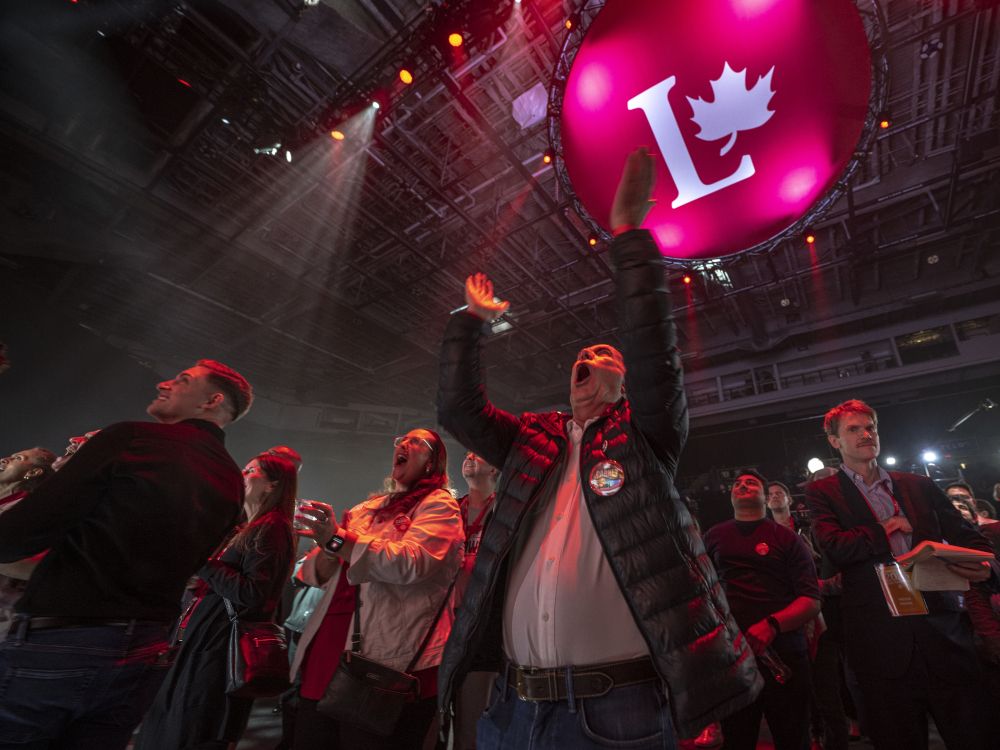
Supporters react at a Liberal party election night event as early polling results indicate a Liberal victory in the federal election, in Ottawa on Monday.

Like it or not, by winning a fourth-straight election following a disastrous and scandal-plagued 10 years in office, the Liberal party has proven, once again, that it is indeed Canada’s “natural governing party.”

Only a party that is the default choice of the Canadian electorate could trail in the polls by

26 percentage points

in January and go on to win an election in April.

Only a party that engenders blind trust among voters could convince people that the team responsible for Canada’s failing economic health are actually those best suited to fix the problems they created; that a government that’s tried the same things over and over again for the past 10 years is actually the party of change; and that a leader who made a career out of trying to keep fossil fuels in the ground is the guy who’s going to develop Canada’s natural resources.

Over the next four years, no one should act surprised when they find makeup on their pork chops. Prime Minister Mark Carney was slathered over the Grits like lipstick on a pig, and judging by the party’s election platform, they’re going to be rolling in the same pile of manure they’ve been in for years.

After literally doubling the national debt to deal with the COVID pandemic, the Liberals are now basking in the joy of another crisis — this one caused by U.S. President Donald Trump’s upending of the postwar liberal economic order and odd infatuation with his northern neighbours — that was sent to them like manna from heaven.

Not only did Trump boost their political fortunes, handing them a fourth-consecutive mandate, he provided them an excuse to continue indulging in pork-barrel politics and centralizing the Canadian economy.

Carney didn’t even try to hide the fact that he’s planning on increasing spending by

$130 billion

over his term in office, or around $32 billion a year. And don’t believe his talk about balancing the budget within three years — that was nothing but smoke and mirrors right from the start.

By the Liberals’ own calculations, they will be running a

$48-billion budget deficit

in four years’ time. The only “balance” will come through

Carney’s plan

to split the operating budget — which includes government salaries, transfer payments and the cost of servicing the debt — and the capital budget, which accounts for infrastructure spending.

Carney never planned on balancing the capital budget, because, as he said, “We’re not spending that amount of money. We’re investing that amount of money.” Except when businesses and individuals invest money, they expect a return on their investment; when government “invests” in a bridge, it doesn’t get any money from it, just the added cost of maintaining it.

And given that these “investments” with no rate of return are all being financed through debt that’s already costing us

$54 billion

a year to service and that will have to be paid by our children and grandchildren, one doesn’t need to be Warren Buffett to see that the analogy doesn’t hold up — or that we’ll pay for these reckless decisions in the long run.

But Canada’s Liberals are not the type of people who consider long-term consequences or plan for the future. For them, it’s all about the here and now — what policies will give them an edge among niche segments of the electorate or make them look good in the eyes of their progressive base.

To be fair, the same could be said of most politicians in democracies like Canada — our system encourages the pursuit of short-term political gain over long-term strategic planning.

But the Liberals have taken this to the extreme over the past decade, enacting a host of measures that clearly worked against our national interests, in the hopes of remaking Canada into some sort of progressive utopia. Only instead of following them into Zion, we wound up falling into the pits of hell.

We’re now living in Trudeau’s “post-national state,” and rather than peace and harmony, it’s characterized by antisemitic protests and the Kristallnacht-style destruction of Jewish businesses and synagogues.

We’ve seen his fabled green jobs, but it’s costing us

$44 billion

in taxpayer money in order to bribe electric vehicle battery plants to set up shop in Canada.

Indeed, despite the best efforts of Carney and Trudeau,

global CO2 emissions

have increased around eight per cent since the Liberals took office. And all we got for all the carbon taxes and paper straws was an increased dependency on the United States for our energy exports and a sputtering economy that’s ill-suited to withstand the economic punishment Trump is bringing upon us.

Somehow, despite all this baggage — not to mention SNC-Lavalin, Blackface, We Charity, foreign interference and the myriad other scandals and failed policies the Liberals are responsible for — the party managed to convince enough voters that it was the best choice to revitalize the economy and deal with Trump to secure another mandate.

If that’s not the hallmark of a “natural governing party,” I don’t know what is.

National Post

jkline@postmedia.com
Twitter.com/accessd


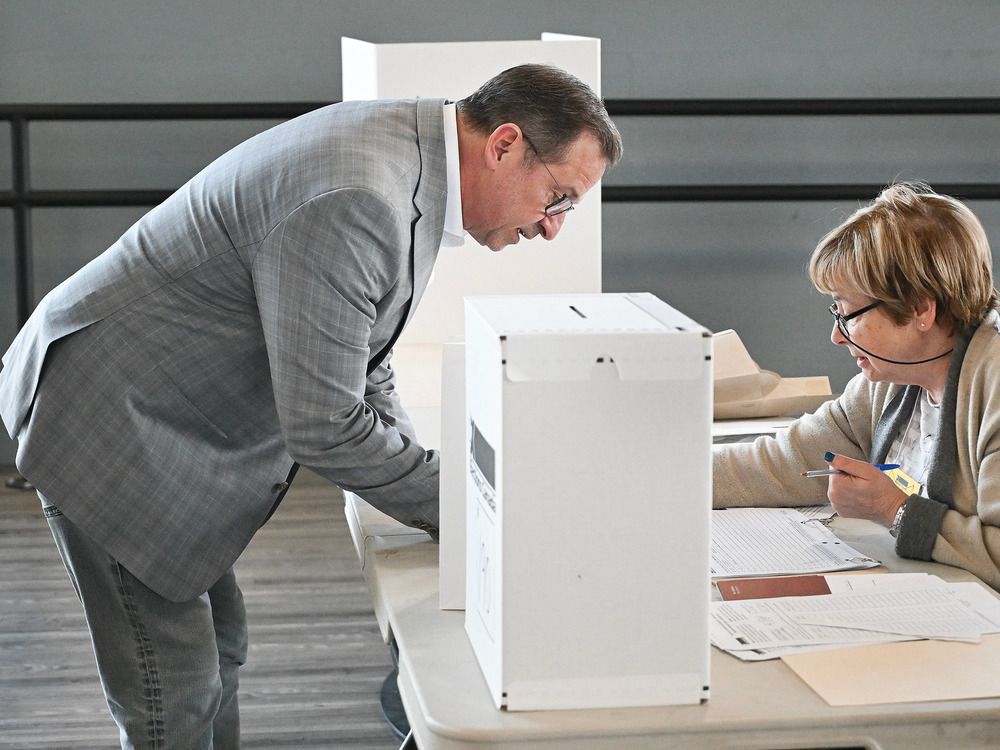
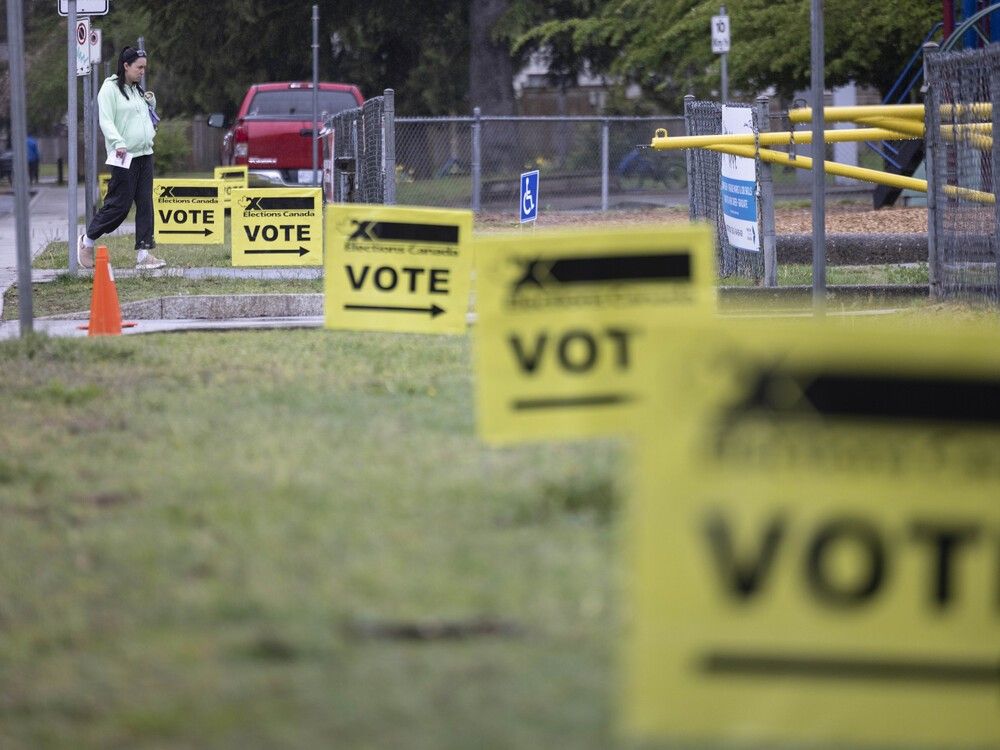
People vote in the federal election at a polling station at Birchland Elementary school in Port Coquitlam, BC Monday, April 28, 2025.

OTTAWA — Social media on election day can be the Wild West, with the tumbleweeds of misinformation blowing in left and right. Luckily, there’s a new sheriff in town: the Elections Canada X account.

After a day of posting infographics telling people how and when to vote, the social media managers hopped onto X to respond to various complaints and inquiries. These ranged from complaints about poll workers asking voters who they voted for, to claims that other workers were stealing ballots. Elections Canada was quick to shoot down the latter allegation.

X users also made claims that a promotional video on the account of the Conservative candidate for York Centre, Roman Baber, was filmed at a polling station. Elections Canada was quick to respond to these posts, stating that they believed no election policies were broken.

Like any good sheriff, the Elections Canada account admins had to make sure people were following the law.

Elections Canada maintained that posting any photos of election ballots is illegal, ironically using a staged photo of someone casting their ballot to illustrate this point.

The official Elections Canada website has had lots of difficulty running on election day, possibly due to an increase in web traffic. Many reached out to the X account to express their concern with this, with Elections Canada claiming they’ve alerted the proper channels, before offering their phone number as a solution.

Polls have now closed across much of the country, which means Elections Canada may soon have to switch from fielding complaints about the process of the election to gripes about the results.

National Post

Get more deep-dive National Post political coverage and analysis in your inbox with the Political Hack newsletter, where Ottawa bureau chief Stuart Thomson and political analyst Tasha Kheiriddin get at what’s really going on behind the scenes on Parliament Hill every Wednesday and Friday, exclusively for subscribers. Sign up here.

Our website is the place for the latest breaking news, exclusive scoops, longreads and provocative commentary. Please bookmark nationalpost.com and sign up for our daily newsletter, Posted, here.


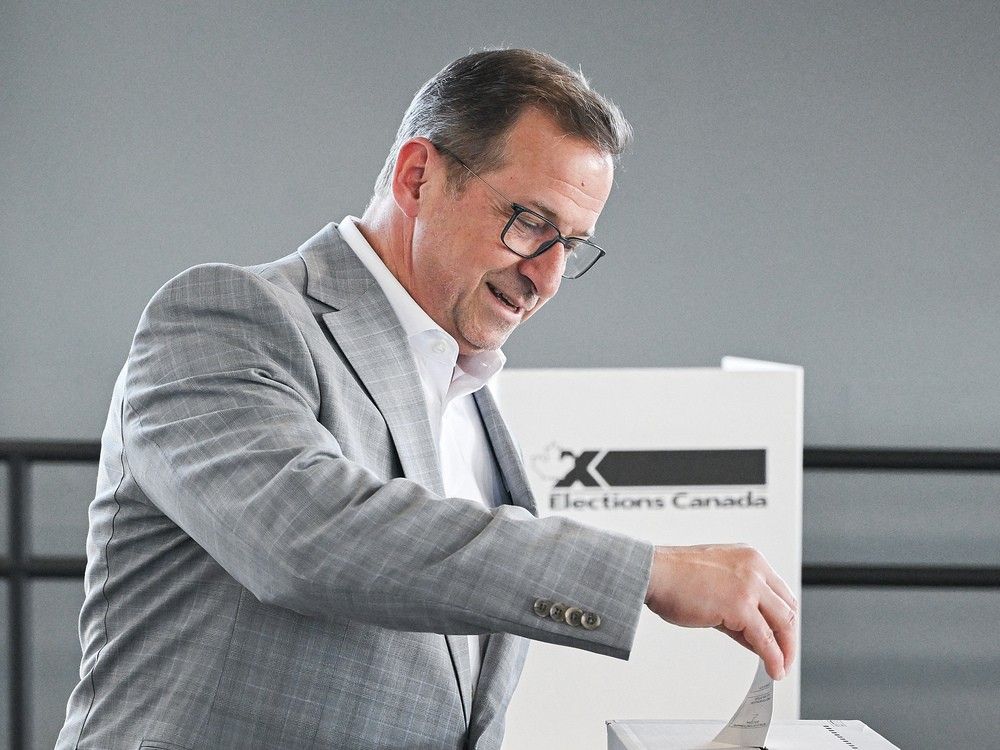
Bloc Quebecois Leader Yves-Francois Blanchet votes on federal election day in Chambly, Quebec, on April 28, 2025. Polls project a Liberal government, but the race has tightened in its final days ahead of the April 28 election day. The public broadcaster CBC's poll aggregator has at various points given the Liberals a seven-to-eight point national lead, but on April 26 it put Liberal support at 42.5 percent, with the Tories at 38.7.

MONTREAL — The Liberal Party and the Bloc Québécois spent the campaign battling to win the hearts of Quebecers in a province where fear of U.S. President Donald Trump seemed to have pushed voters toward the Liberals.

The Liberals must deliver a strong showing in the province if they want to be re-elected for a fourth term. At the time of dissolution, the party held 32 seats, while the Bloc Québécois held 33.

The separatist party managed to secure a majority of seats in the province after winning the riding of LaSalle—Émard—Verdun in a historic by-election in September.

The Bloc campaigned on the idea of holding the balance of power in a minority government. The party did not place much emphasis on Quebec independence, its raison d’être in the wake of the trade war with the United States.

Polls have been highly volatile over the past six months, with the Bloc Québécois tipped to be the next official opposition party in December. Then, the Bloc collapsed when Mark Carney was elected Liberal leader and U.S. President Donald Trump began threatening Canada’s sovereignty.


But the party gained momentum as the days went by. It presented itself as the “voice of Quebecers” in the context of the tariff war. Sources in both the Liberal Party and the Bloc Québécois indicated that the race was very close in the province.


Historically, the Liberal Party has consistently performed well in Montreal, a fertile region with 18 of the province’s 78 seats, while the Bloc has been particularly strong in other predominantly Francophone regions.

The Conservatives, who held nine seats at the time of dissolution, are hoping to gain ground, particularly in the Quebec City and Saguenay-Lac-Saint-Jean regions, where they already have a strong presence. Over the past year, Pierre Poilievre has invested significant time and resources in the Montreal riding of Mount Royal.

Bloc Leader Yves-François Blanchet spent most of his campaign in the ridings on the Island of Montreal that his party already represents. The Liberal Party, meanwhile, seemed more aggressive, targeting Bloc seats.

“This is an important election, as any election is important. “It should never be taken lightly, and you should never declare yourself a winner before you’ve won,” Ms. Blanchet said Monday morning, a few minutes after voting in her riding of Belœil–Chambly.

Mark Carney is targeting ridings in the Eastern Townships, but also on the south shore and the north shore of the island of Montreal. The Liberals have dispatched influential ministers, such as François-Philippe Champagne and Mélanie Joly, across the province to convince voters to support the party’s local candidates.

The Battlegrounds

-Trois-Rivières

-Quebec–Centre

-Gaspésie–Les Îles-de-la-Madeleine–Listuguj

-Beauport—Limoilou

-Jonquière

-Mount-Royal

More to come…

National Post

atrepanier@postmedia.com

Get more deep-dive National Post political coverage and analysis in your inbox with the Political Hack newsletter, where Ottawa bureau chief Stuart Thomson and political analyst Tasha Kheiriddin get at what’s really going on behind the scenes on Parliament Hill every Wednesday and Friday, exclusively for subscribers. Sign up here.


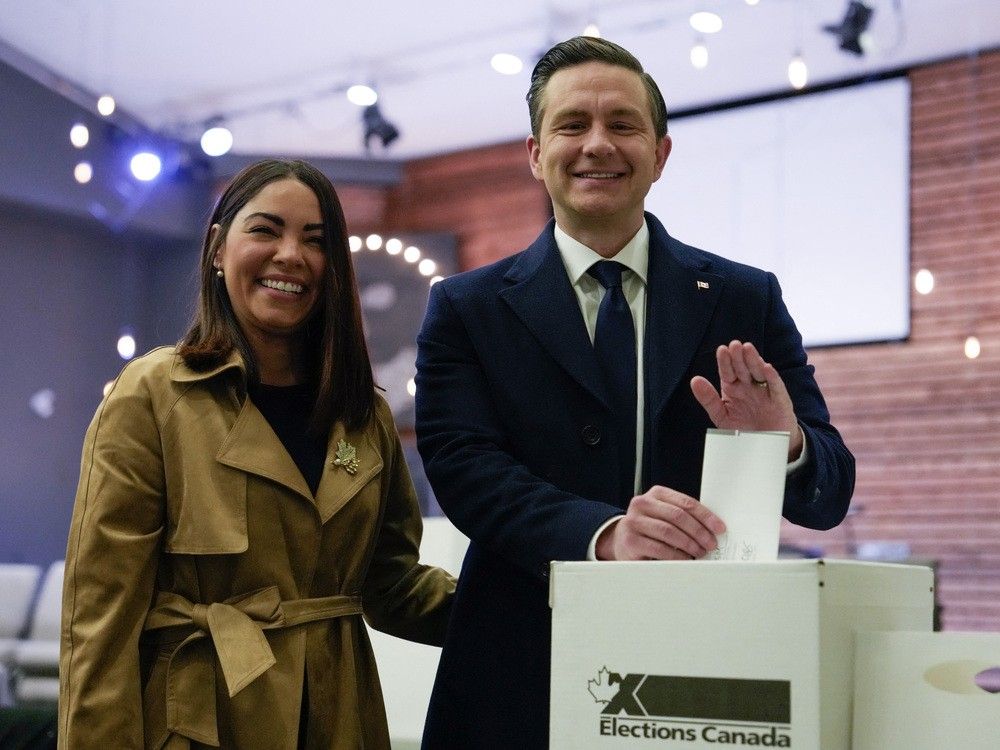
Conservative Leader Pierre Poilievre and his wife Anaida Poilievre cast their votes in the federal election in Ottawa, Ontario Canada, on April 28, 2025.

OTTAWA

— Conservative Leader Pierre Poilievre began election day confronting the issue that most stands in his way to achieving his years-long quest to become prime minister:

U.S. President Donald Trump.

The American president, whose trade war with Canada and constant threats of annexation, once again inserted himself into the country’s politics. This time, suggesting in a Truth Social post that as Canadians go to the polls, they should vote to become the 51st state.

It is exactly the type of behaviour that he allowed Liberal Leader Mark Carney to spend the past five weeks campaigning on a promise that he has the background and experience to handle the American president.

It is also exactly what Poilievre likely did not want to start his day with, after deciding to focus his campaign on affordability issues which he argued were still top of mind for Canadians, even with a more hostile administration in the White House.

Now, after spending more than two-decades in Parliament, the only thing Poilievre can do now is wait to see if Canadians choose him.

“President Trump, stay out of our election. The only people who will decide the future of Canada are Canadians at the ballot box,” Poilievre posted on X. “Canada will always be proud, sovereign and independent and we will never be the 51st state.”

“Today Canadians can vote for change so we can strengthen our country, stand on our own two feet and stand up to America from a position of strength,” he continued.

Poilievre arrives at election day having spent the past three years campaigning for this moment and two-decades before honing his political craft.

The 45-year-old was first elected to the House of Commons in 2004. He launched his bid to become Conservative party leader in February 2022, just days after the party’s caucus chose to eject its former leader, after months of internal turmoil.

He became the third Conservative to lead the party within five years, with his two predecessors’ exits precipitated by back-to-back election losses.

Should Poilievre lose on Monday, the question before him is whether he can escape a similar fate.

For Conservatives, Poilievre’s rise to power had been predictable for many.

Known as a hard-working hyper-partisan who knew how to sell the Conservative message and had a knack for getting under Liberals’ skin with his brash style in Parliament, Poilievre nearly entered the contest two years earlier, but bowed out at the last minute.

When he eventually did run, Poilievre did as as a populist and won the 2022 leadership in a whopping first-ballot victory, winning a stronger mandate than ever Stephen Harper, the last Conservative prime minister to hold power.

When the Conservatives were in government under Harper, Poilievre made a name for himself as an energetic and forceful defender of the government’s record, which critics said was overly aggressive and at times over-the-top.

His instincts to fight were put to good use after 2015 when the Liberals were elected and the Conservatives found themselves relegated to the Opposition benches.

Poilievre, named as the party’s finance critic, got to work mounting eye-catching prosecutions of the Liberals’ spending and scandals, building a social media following, including through his own YouTube videos, which would later come to define his brand as Conservative leader, particularly among young people and especially young men.

During the height of the 2020 WE Charity scandal, an organization that was awarded federal money which former prime minister Justin Trudeau had personal connections to, Poilievre called a press conference only to toss around papers, lambasting the government for redacting information.

Such was the type of flare Conservative supporters came to expect once Poilievre became leader.

He did not disappoint.

In 2023, an exchange Poilievre had with a local reporter went viral, as the reporter asked him about his likeness to Trump, questions that Poilievre batted away while casually crunching on an apple.

As Conservatives gathered for their the party’s convention in Quebec City that September, it looked like they were heading for victory, with for the first time public opinion polls suggesting Poilievre was taking the lead, as Trudeau grew more and more unpopular.

The Conservative lead only grew bigger and bigger, which prompted Poilievre to start calling for an election.

The party was raking in millions, smashing fundraising records, and the Conservative caucus appeared to be squarely behind the leader, reciting slogan-after-slogan that Poilievre felt was key to get Canadians to pay attention.

All that swagger from the past 18-months was nowhere to be found once the election got underway, however.

A series of events happened that upended the Conservatives’ once comfortable chances at winning. First, Trudeau stepped down, meaning the prime minister Poilievre had badly weakened would not longer be on the ballot.

Then Carney, a two-time former central banker, replaced him.

At the same time, Trump’s trade war, the drums of which the American president began beating last fall, quickly overtook Canadians’ concerns about the cost-of-living, which Poilievre had successfully championed for the preceding months coming out of the COVID-19 pandemic, as Canadians saw their mortgages and food prices rise, thanks to inflation.

Instead of jumping on the message of presenting a “Team Canada” approach to Trump’s threats, a name Trudeau revived from the president’s first term in office, Poilievre largely kept quiet on the issue of tariffs, deciding to instead stick to talking about the affordability issues he wanted to, embodied by his call for a “carbon tax election.”

That phrase was nowhere to be heard on the campaign trail though, especially after Carney made one of his first moves as prime minister to zero the tax rate, resulting in gas prices falling at the start of April.

In response, Poilievre doubled-down, taking aim at the industrial carbon price and encouraging voters to see Carney’s decision as nothing more than a distraction.

Throughout the campaign, Poilievre demonstrated he was not in the business of pivoting, something other Conservatives grumbled he needed to do to refocus his campaign message on Trump and his tariffs, a call no one made more loudly than Kory Teneycke, Ontario Premier Doug Ford’s last campaign manager, who described the federal Conservatives blowing their 20-point lead as “campaign malpractice.”

While Poilievre bucked the calls for him to pivot, he did, however, try to soften the edges of his often intense-sounding tone, sporting more smiles and cutting out the sparring he would often do with reporters, especially those in the Parliamentary Press Gallery.

Still, Conservative candidates and those in local campaigns said his aggressive style was coming up at the doors, especially for older female voters, repelled by any resemblance to Trump.

Still, thousands also flocked to see Poilievre at massive rallies he staged across the country, including on the final day he spent campaigning in his own Ottawa-area riding.

At his side throughout the race was his wife, Anaida, who introduced him at rallies. The couple’s two children, Valentina and Cruz, also travelled with the Poilievres.

After Poilievre finished his final speech Sunday night, his wife appeared visibly emotional as the couple waved for final time for the campaign.

“Tomorrow’s the day, vote for the Canadian promise, vote for change,” Poilievre said before raising his fist into the air.

“Let’s bring it home.”

Polls close on Monday at 9:30 p.m. ET.

National Post.

staylor@postmedia.com

Get more deep-dive National Post political coverage and analysis in your inbox with the Political Hack newsletter, where Ottawa bureau chief Stuart Thomson and political analyst Tasha Kheiriddin get at what’s really going on behind the scenes on Parliament Hill every Wednesday and Friday, exclusively for subscribers. Sign up here.


Canadians are choosing between two leaders in this election, Pierre Poilievre, left, and Mark Carney.

Polls don’t win elections, voters do.

As Canadians head to hockey rinks and community centres to cast ballots Monday, previous predictions and prognostications based on small sample size polling matter little.

However, as the two-horse race between the Conservatives and Liberals approached the finish line over the weekend, the final pre-election polling data continued to suggest the latter would emerge victorious.

Here’s a brief round-up of some recent poll data, all released before election day:

Abacus Data

From Thursday through Sunday,

Abacus Data

conducted polling of 2,500 Canadians, which it called its “largest sample of the campaign.”

As it did on April 21, their final likely-voter model, which only polls people who’ve already voted or are almost certainly going to, predicts the Liberal party will garner 41 per cent of the popular vote to the Conservatives’ 39 per cent. The NDP and Bloc Québécois are relegated to 10 and six per cent, respectively.

There was little change regionally, with the Tories strongest in Alberta and the Prairies, the Liberals from Quebec east, and election night battlegrounds setting up in Ontario and B.C. Those results were similar across almost every poll.

While Mark Carney and the Liberals maintain a narrow lead, Abacus CEO David Coletto wrote that a high voter turnout could help Pierre Poilievre and the Conservatives.

“Our model assumes participation in the high-60s to low-70s,” he wrote. “If we’re low — say it pushes well north of 70 per cent — that means more late deciders and infrequent voters, a pool that leans Conservative 39-37 (per cent).”


Liason Strategies

A final poll of 1,000 voters conducted on Sunday for the National Ethnic Press and Media Council of Canada also gave the Liberals a two-point edge, 43 to 41. The NDP came in at seven percent, followed by the Bloc at six.

Liaison principal David Valentin said election night viewers should remember that current poll results won’t be reflected in early reports from polling stations.

“Until the western ridings start reporting, the numbers will be skewed. The Conservative vote is heavily concentrated in the west, and we’ll need those results to come in before we get a clearer picture of the national popular vote,”

he wrote.

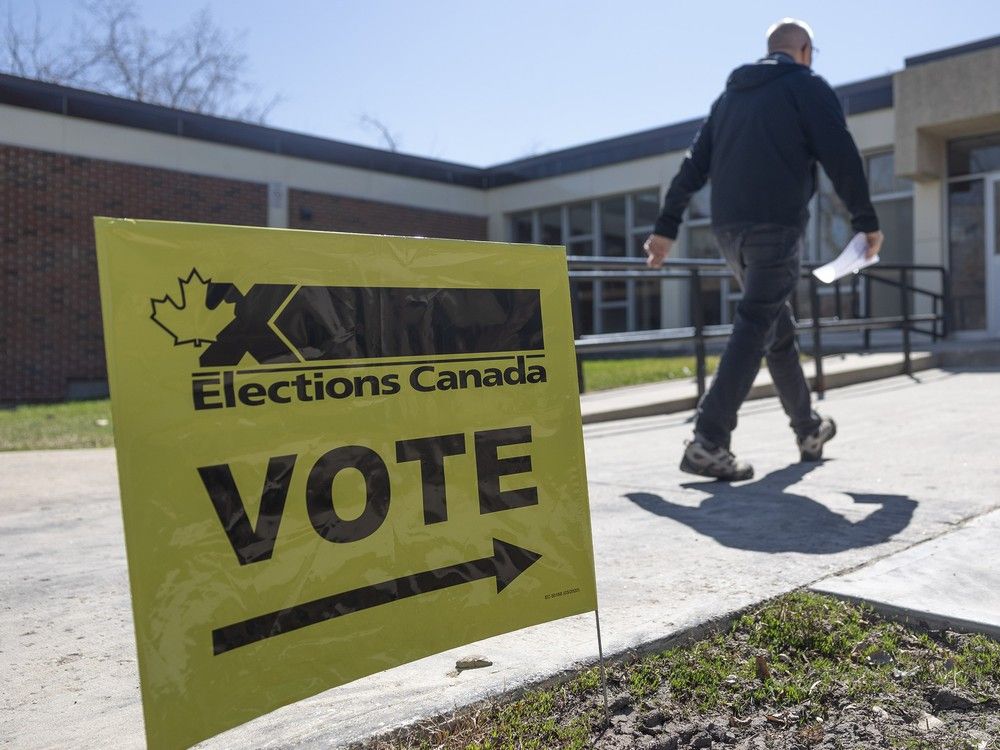
 A voter walks into Balfour Collegiate in Regina, Sask., to cast their ballot on Monday.

Angus Reid

Polling of 2,820 Canadians carried out by

Angus Reid late last week

gave the Liberals a four-point margin over Poilievre and the Tories, 44-40 per cent. The Bloc, meanwhile, had more support among the decided and leaning voters than the NDP, seven to six percentage points.

A record 7.3 million Canadians voted in advance polling this year, and Angus Reid found that more Liberal than Conservative supporters (46 to 34 per cent) turned out for the four-day voting window.

But it also found the parties deadlocked at 38 per cent among leaning and decided voters who were waiting until Monday to cast a ballot.

Léger

In the

final Postmedia-Léger poll released last week,

the Liberals carried a four-point advantage into election day, 43 to the Conservatives’ 39 per cent.

The NDP and Bloc Québécois were well behind the top two parties, polling at seven and five per cent, respectively.

Fifty-four per cent of the 1,500 people surveyed said they expected the Liberals, and precisely half that amount (27 per cent) foresaw a Conservative victory.

‘Slugging it out’: Liberals up by four points ahead of election, poll finds

More polling data, more of the same

A trio of other polls conducted at the election’s end drew near returned mirroring results.

Mainstreet

had the Liberals claim 43.8 per cent of the vote to secure 177 seats, a gain of 17 and enough to form a majority government. The Conservatives, with 41.5 per cent, would increase their presence in the House of Commons by 16 seats to 135.

The Liberals held a lead of five points (44 to 39 per cent) in a

Research Co.

poll and four points (43 to 39 per cent) in

Pallas Data

’s last poll of the campaign.

Our website is the place for the latest breaking news, exclusive scoops, longreads and provocative commentary. Please bookmark nationalpost.com and sign up for our daily newsletter, Posted, here.


Bloc Quebecois Leader Yves-Francois Blanchet checks in as he arrives to vote at a polling place on federal election day in Chambly, Quebec, on April 28, 2025.

It’s not exactly a papal conclave, but the doors are similarly locked, and the counting of votes at Canadian polling stations and their reporting to Elections Canada and onward to the public on election night is similarly steeped in tradition, protocol and a grand sense of purpose.

Many people don’t realize it happens the old fashioned way, each ballot counted by hand, the vote read aloud to an audience of official observers before it is tallied up on paper and only then entered into a secure computer system.

All of this happens on election night, and Canadians can expect to have a pretty good sense of the outcome by the time polls close at 7 p.m. Pacific Time in British Columbia. But with early voting, proxy voting, people who vote outside their riding, such as in the military or correctional contexts, and the possibility of recounts, the official results will still be a few days away.

There will be nothing as portentous as white smoke from the Sistine Chapel chimney, but National Post has all the details on how this works, and how you’ll learn the outcome.

When does voting stop?

Polls close according to a staggered schedule so that most results will be available at the same time across the country. This also allows for dramatic races between media organizations to be the first to declare major results like majority or minority, although these are technically predictions based on incomplete information.

Elections Canada itself does not call anything but vote totals, and those come in only as they are counted. Watch for that to start happening at around 8:30 p.m. in Atlantic Canada, and 9:30 p.m. in Ontario and Quebec, with the final polls closing at 7 p.m. in British Columbia, which is 10 p.m. in Ottawa.

How do I actually mark my vote?

You draw a little X beside the name of your chosen candidate on a ballot provided at a polling station, fold it and put into the box.

How do they count them?

Once voting ends, the doors of the polling station are closed and no one is allowed in or out. An election officer then counts the number of electors who voted. They count all the spoiled ballots and put them in a special envelope. They do the same for unused ballots, along with the stubs of the used ballots.

Then, with observers from the various campaigns and at least two Elections Canada workers, each ballot is unfolded in turn, and the chosen candidate’s name is read aloud and shown around. The returning officer then enters the paper tally of those votes into a computer program, which relays it to Elections Canada headquarters.

Is that reliable?

For one thing, it leaves a paper trail, which some electronic voting systems do not. There are also electronic tabulators that can count handwritten votes, but these are not used in Canadian federal elections. Some provinces use them.

What triggers a recount?

A difference between winner and second place of less than one thousandth of the votes cast. They can also be judicially ordered if there is, as Elections Canada describes, “credible affidavit evidence” of errors.

Can someone erase my pencil vote?

This was a theory that got some traction online lately, that you should bring a pen to vote so that no one will, for example, erase your vote for the Rhinoceros Party and replace it with a vote for the Marijuana Party. Or maybe just smudge your vote and spoil it.

Elections Canada seems to think this is pretty far-fetched, and in any case, you are free to bring your own pen, or marker, indeed crayon. It is part of Elections Canada’s mandate to offer everyone a little golf pencil, which they can keep.

Can I take a photo of my ballot to post on social media?

Absolutely not. It is illegal. As Elections Canada says: “

If people were allowed to show how they voted, they could be forced to vote in a certain way or votes could be bought. If you’re enthusiastic about voting and want to share your experience with your friends, take a photo of yourself outside of the polling station.”

Can I use my phone to show my proof of identity?

Yes, that’s fine. Also, voters who use their phones for help reading may do that, as long as images of ballots are then deleted.

Can I take video of other people voting inside the polling station?

Come on. No, obviously not. You also shouldn’t believe texts or robocalls telling you that your polling station has moved locations at the last minute, but instead report them to Elections Canada. Canada has a history of dirty tricks like that.


Millions of Canadians will cast their ballots in the federal election today.

Conservative Leader Pierre Poilievre

and

Liberal Leader Mark Carney

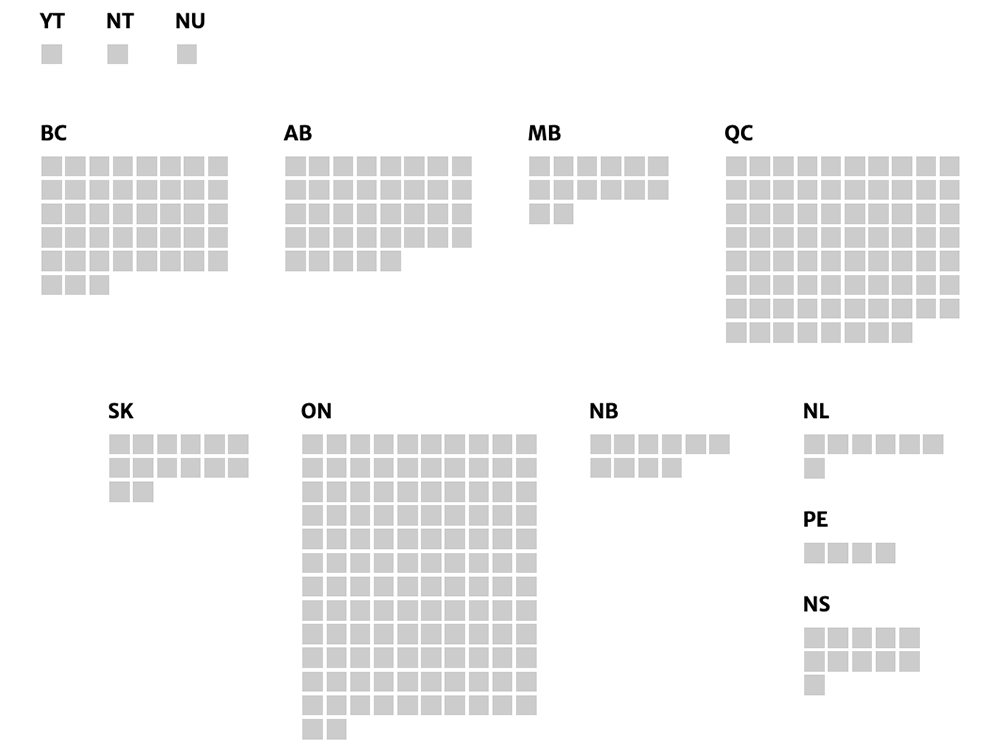
have been campaigning across Canada for the past 35 days, in the hopes of becoming the next prime minister. There are 343 seats up for grabs and the winner will need at least 172 seats to form a majority government.

NDP Leader Jagmeet Singh

is at risk of losing his seat in Surrey, B.C., and support for his party has collapsed. Amid what’s shaping up to be a two-way race between the Conservatives and Liberals in most ridings, Green Party Leader Elizabeth May is also

at risk of losing her seat

. Meanwhile,

Bloc Quebecois Leader Yves-Francois Blanchet

could end up holding the balance of power in a minority government.

On Sunday, the final full day of the campaign, all major party leaders paused to address a

deadly vehicle attack

at a Filipino community event in Vancouver that took the lives of at least 11 attendees, leaving more wounded in hospital.

Canada has almost 30 million eligible voters and a

record 7.3 million Canadians voted in advance polls

. Polling stations are open for 12 hours today, but the

opening times vary by region

, starting as early as 7 a.m. PT in British Columbia and as late as 9:30 a.m. ET in Ontario.

Here’s when polls are open in each time zone:

Newfoundland Time

8:30 a.m. – 8:30 p.m.

Atlantic Time

8:30 a.m. – 8:30 p.m.

Eastern Time

9:30 a.m. – 9:30 p.m.

Central Time*

8:30 a.m. – 8:30 p.m.

Mountain Time*

7:30 a.m. – 7:30 p.m.

Pacific Time

7:00 a.m. – 7:00 p.m.

*In Saskatchewan, voting hours are from 7:30 a.m. to 7:30 p.m.

Most winners will be known by the end of the night, but a

longest ballot protest

 has targeted Poilievre’s riding of Carleton, with 91 candidates signing up to make a point about electoral reform, so it could take longer than usual to count the ballots there.

The Liberals have seen a massive rebound since the start of the year, with most polls now suggesting they lead the Conservatives — who were long favoured to win a majority government while former prime minister Justin Trudeau was in power. But it’s still a close contest.

Former prime minister Jean Chretien said at an event in Ottawa on Saturday that he is predicting a big win for Liberal Leader Mark Carney. He said he expects “to celebrate the majority government of the Liberal party.” “Monday is going to be a Liberal sunshine,” he said.

The Conservatives have leaned on former prime minister Stephen Harper to campaign for Poilievre, including in a television ad that has been in heavy rotation during the NHL playoffs.

Our live coverage will kick off at 4 p.m. ET.

National Post, with additional reporting from The Canadian Press


It’s

election day in Canada

.

Conservative Leader Pierre Poilievre

and

Liberal Leader Mark Carney

are vying to be the next prime minister of Canada.

Elections Canada says almost 7.3 million people voted early, a record turnout. It remains to be seen which party will benefit the most from those early votes. Canada has almost 30 million eligible voters.

Polling stations are open for 12 hours, but the opening times vary by region.

Here’s when polls are open in each time zone:

Newfoundland Time

8:30 a.m. – 8:30 p.m.

Atlantic Time

8:30 a.m. – 8:30 p.m.

Eastern Time

9:30 a.m. – 9:30 p.m.

Central Time*

8:30 a.m. – 8:30 p.m.

Mountain Time*

7:30 a.m. – 7:30 p.m.

Pacific Time

7:00 a.m. – 7:00 p.m.

*In Saskatchewan, voting hours are from 7:30 a.m. to 7:30 p.m.

Both

NDP Leader Jagmeet Singh

and

Green Party Leader Elizabeth May

are at risk of losing their seats, with this election turning into a two-horse race in most ridings.

Bloc Quebecois Leader Yves-François Blanchet

could end up holding the balance of power in a minority government. Most winners will be known by tonight, but it could take longer in ridings where it’s a tight race.

Once results start rolling in, our graphics and maps, below, will start updating.

Follow along as we find out the composition of Canada’s next federal government.

How Canadians voted in 343 federal ridings across the country


How the 2025 result compares to past elections


This map shows key battlegrounds across the country. Select a battleground and then click to view each riding. Scroll down to see detailed results.

Canada election results map


Federal election results map for Newfoundland-Labrador


Federal election results map for P.E.I.


Federal election results map for Nova Scotia


Federal election results map for New Brunswick


Federal election results map for Quebec


Federal election results map for Ontario


Federal election results map for Manitoba


Federal election results map for Saskatchewan


Federal election results map for Alberta


Federal election results map for British Columbia


Federal election results map for the Maritimes


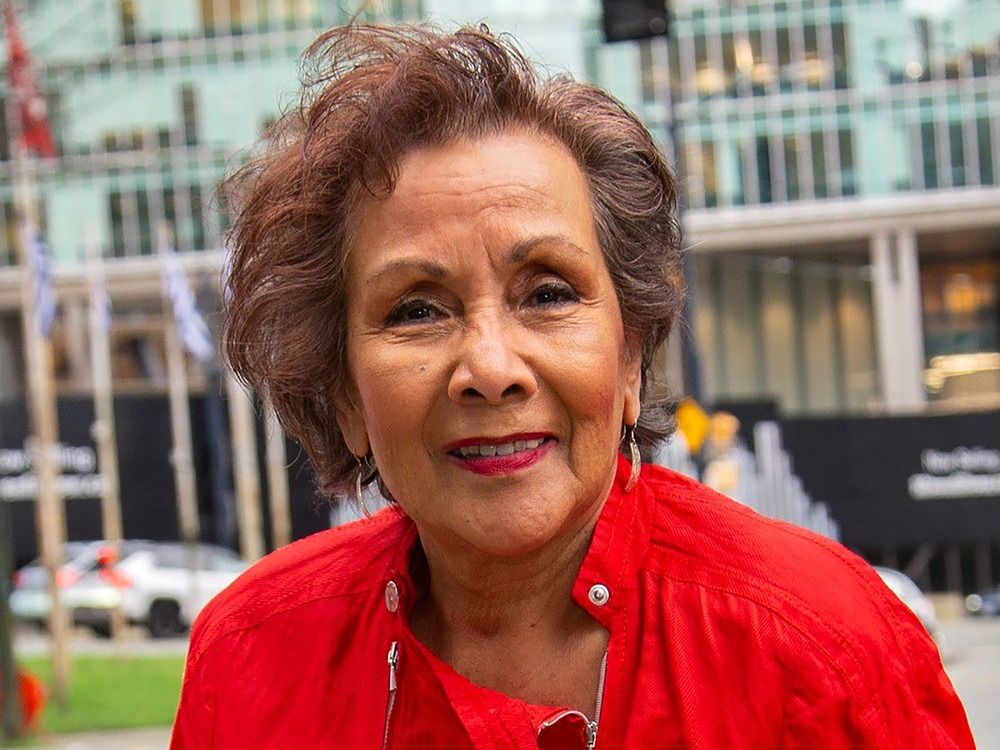
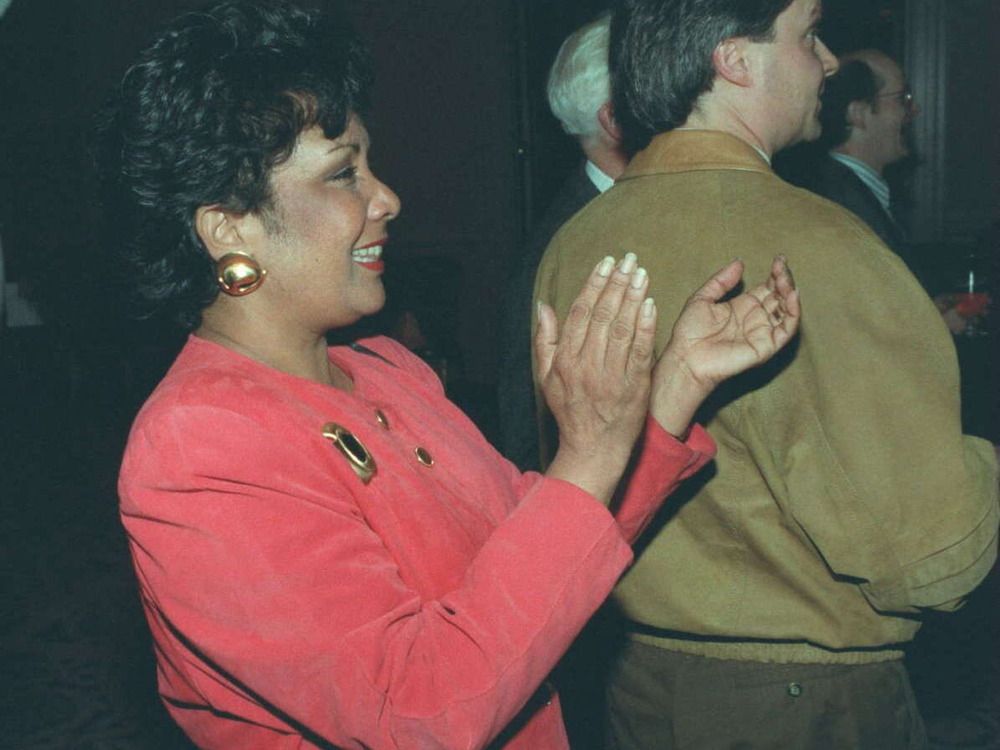
Liberal candidate Hedy Fry in Vancouver Centre.

Among the grand old men and women of world politics, Paul Biya stands out as a record holder, the oldest serving state leader at age 92, and president of Cameroon since 1982.

In America, where electoral politics is typically fairer, Chuck Grassley has been in office even longer, senator for Iowa since 1981, and he is chasing the late Strom Thurmond’s astonishing record of having made it to age 100 in office, and the late Robert Byrd’s record of serving in the Senate for more than 51 years.

Canada, as usual, is not out there at the extremes of global politics, with neither the oldest politicians nor the youngest. (South Africa elected 20-year-old Cleo Wilskut to the National Assembly last year.)

But in Vancouver Centre, a record breaking politician goes to the electorate today for yet another endorsement by voters.

Hedy Fry is not even the longest serving Canadian MP up for re-election today. That honour is held by Louis Plamondon, 81, Canada’s Dean of the House as the MP with the longest unbroken record of service, and his is the longest ever.

But Plamondon represents the Bloc Québécois in Bécancour–Nicolet–Saurel–Alnôbak on the rural South Shore of the St. Lawrence River across from Trois-Rivières, as he has done since 1984. As a Liberal in central Vancouver, Fry’s riding is arguably more vulnerable to changing political fortunes on the national scale, which makes her longevity as the longest serving female Member of Parliament all the more notable. Over the years, she has faced serious challengers from both the left and the right.

Also, Fry is older than Plamondon by about two years, each of which arguably counts for more bragging rights at that age.

What really sets Fry apart, though, is that her parliamentary career started with taking down a prime minister.

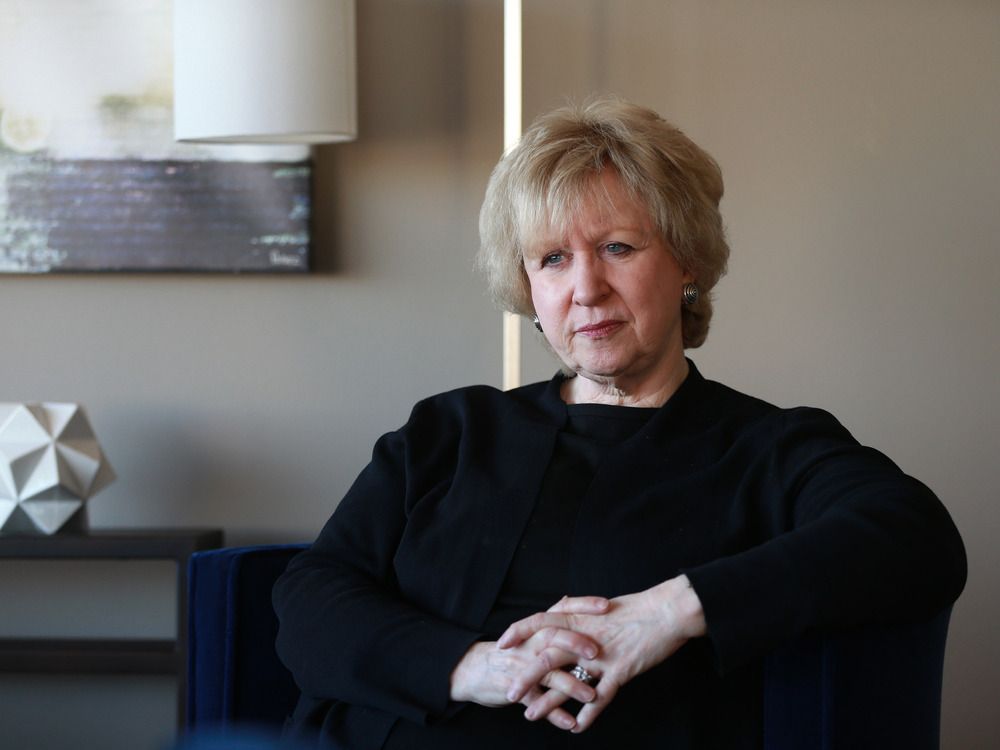
 Former Prime Minister Kim Campbell in Saskatoon on Oct. 4, 2017.

Fry was a doctor when she ran against short-lived Progressive Conservative prime minister Kim Campbell in 1993, beating her by 31 per cent of votes to 25, marking the end of Campbell’s time in elected office.

She was named to cabinet in 1996 as minister for multiculturalism and the status of women. She came to the greatest public notice across Canada for inflammatory and false comments in the House of Commons, while speaking in 2001 to mark the International Day for the Elimination of Racial Discrimination.

“We can just go to British Columbia in Prince George, where crosses are being burned on lawns as we speak,” Fry said. That prompted an RCMP denial, general outrage, and an apology delivered in Parliament the next day.

 Hedy Fry watches early election returns from Eastern Canada, Oct. 25, 1993.

Shuffled out the next year, she never returned to cabinet, but she continued to win the riding in every election, and to serve in lesser roles as parliamentary secretary with various portfolios. In Opposition under the Conservative governments of Stephen Harper, she was critic for Canadian Heritage, later Sport, and after the Liberal Party’s 2011 wipeout, Health.

Fry became the oldest serving MP after winning in 2015, which brought the Liberals back to power under Justin Trudeau, who named her to the National Security and Intelligence Committee of Parliamentarians. She remains the longest serving woman.

Polls suggest she has a lock on this election too, against competition that includes NDP candidate Avi Lewis, the filmmaker husband of author Naomi Klein and son of the former diplomat Stephen Lewis. Another victory could mean she is in office until approximately age 88.

Our website is the place for the latest breaking news, exclusive scoops, longreads and provocative commentary. Please bookmark nationalpost.com and sign up for our newsletters here.


Millions of Canadians will cast their ballots in the federal election today.

Conservative Leader Pierre Poilievre

and

Liberal Leader Mark Carney

have been campaigning across Canada for the past 35 days, in the hopes of becoming the next prime minister. There are 343 seats up for grabs and the winner will need at least 172 seats to form a majority government.

NDP Leader Jagmeet Singh

is at risk of losing his seat in Surrey, B.C., and support for his party has collapsed. Amid what’s shaping up to be a two-way race between the Conservatives and Liberals in most ridings, Green Party Leader Elizabeth May is also at risk of losing her seat. Meanwhile,

Bloc Quebecois Leader Yves-Francois Blanchet

could end up holding the balance of power in a minority government.

On the final full day of the campaign, all major party leaders paused to address a

deadly vehicle attack

at a Filipino community event in Vancouver that took the lives of at least 11 attendees, leaving more wounded in hospital.

Canada has almost 30 million eligible voters and a

record 7.3 million Canadians voted in advance polls

. Polling stations are open for 12 hours today, but the

opening times vary by region

, starting as early as 7 a.m. PT in British Columbia and as late as 9:30 a.m. ET in Ontario.

Here’s when polls are open in each time zone:

Newfoundland Time

8:30 a.m. – 8:30 p.m.

Atlantic Time

8:30 a.m. – 8:30 p.m.

Eastern Time

9:30 a.m. – 9:30 p.m.

Central Time*

8:30 a.m. – 8:30 p.m.

Mountain Time*

7:30 a.m. – 7:30 p.m.

Pacific Time

7:00 a.m. – 7:00 p.m.

*In Saskatchewan, voting hours are from 7:30 a.m. to 7:30 p.m.

Most riding winners will be known by the end of the night, but a

longest ballot protest

 has targeted Poilievre’s riding of Carleton, with 91 candidates signing up to make a point about electoral reform, so it could take longer than usual to count the ballots there.

The Liberals have seen a massive rebound since the start of the year, with most polls now suggesting they lead the Conservatives — who were long favoured to win a majority government while former prime minister Justin Trudeau was in power. But it’s still a close contest.

Former prime minister Jean Chretien said at an event in Ottawa on Saturday that he is predicting a big win for Liberal Leader Mark Carney. He said he expects “to celebrate the majority government of the Liberal party.” “Monday is going to be a Liberal sunshine,” he said.

The Conservatives have leaned on former prime minister Stephen Harper to campaign for Poilievre, including in a television ad that has been in heavy rotation during the NHL playoffs.

Our live coverage will kick off at 4 p.m. ET.