LP_468x60
on-the-record-468x60-white

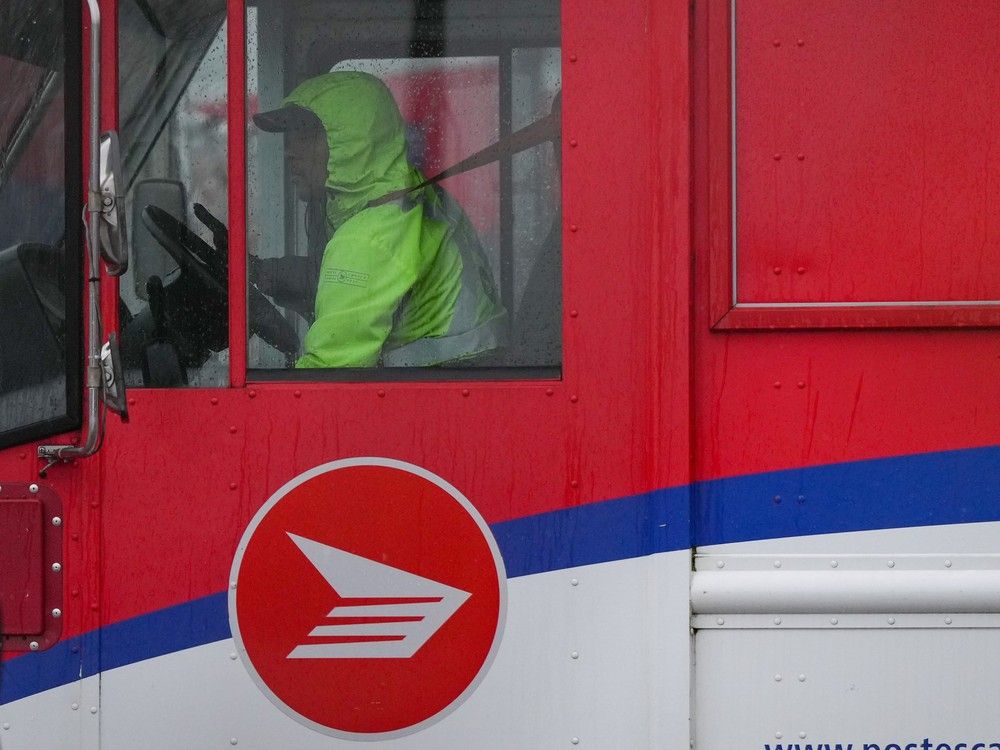
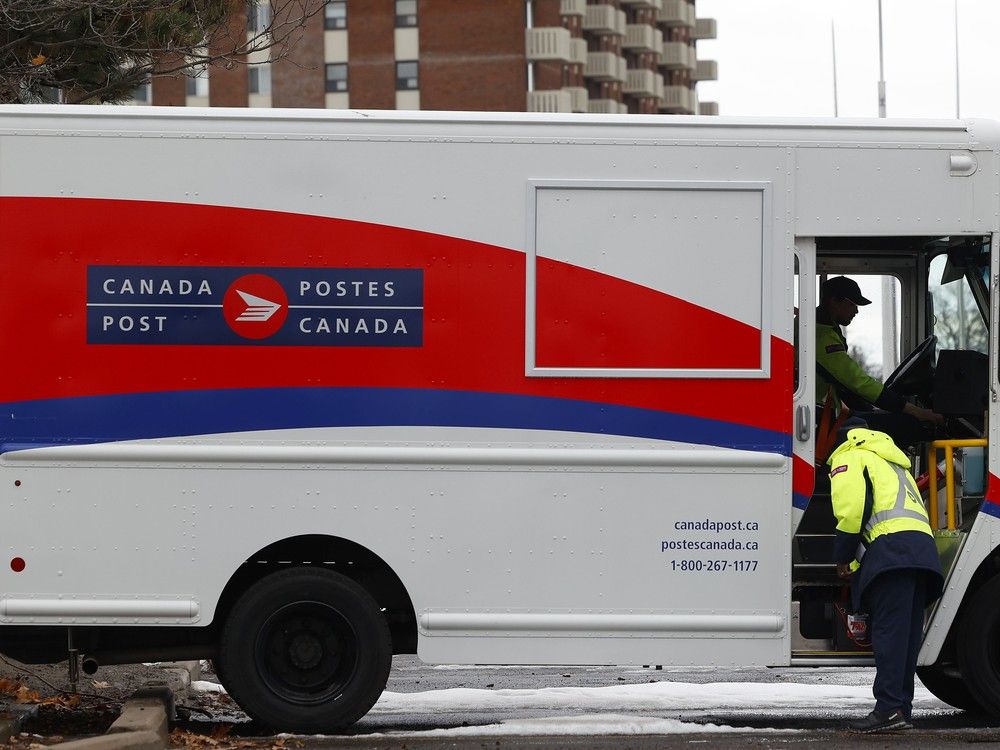
A Canada Post employee drives a mail truck at a delivery depot in Vancouver, B.C., Tuesday, Dec. 17, 2024.

The Canadian Union of Postal Workers (CUPW) said that instead of a strike, which they gave notice for earlier this week, they would be implementing a nationwide overtime ban. More than 55,000 Canada Post workers are being called on to refuse to work more than eight hours a day


and more than 40 hours in a week as the union reviews the latest offers from the Crown Corporation.

Canada Post, union disagree over taking ‘five-minute wash-up time.’ Here’s what it is

The decision by CUPW comes after the Crown Corporation

rejected the union’s offer

to delay a strike by two weeks

creating widespread uncertainty

, the union said.

“At this time, the Union has decided to proceed with an overtime ban to minimize disruptions to the public, and lost days to members,” the union’s national president Jan Simpson

said in a statement.

The union said that it may take additional action in the future if Canada Post changes its working conditions, suspends its benefits or begins layoffs.

“With the urban collective agreement no longer in effect, we have the right not to take overtime, even if your supervisor says it’s forced overtime – because forced overtime was enabled by the collective agreement,” the union said.

It added that letter carriers should return to the depot and drop off their mail after eight hours of work “regardless of whether they have completed their routes.” For part-time and temporary workers, they are permitted to extend to a maximum of eight hours a day or 40 hours a week.

The union’s negotiators are continuing to review proposals put forward by Canada Post on Wednesday. However, the

union has already said that the latest offers were not adequate

. Some of the issues both sides cannot agree upon include weekend work, wages, cost of living allowance, dynamic routing and

five-minute wash-up time

(when employees are given paid time for handwashing prior to a meal).

Canada Post acknowledged the nationwide overtime ban. In

a news release on Friday

, the corporation said it would continue operations but customers may experience delays. It has “already seen parcel and mail volumes decline significantly as customers prepare for another potential labour disruption,” it said.

The corporation added: “Further escalation in strike activity would have major impacts on employees, small businesses and the millions of Canadians who rely on the postal system – and deepen the company’s already serious financial situation. It is critical that both parties focus their energies on resolving issues to reach negotiated agreements.”

Last November, when the union went on a strike that lasted 32 days, Canada Post said it missed delivering

12 million parcels

in early December.

The strike came to a halt with the government’s intervention. Former minister of labour

Steven MacKinnon requested

that the Canada Industrial Relations Board (CIRB) order Canada Post employees back to work if it found that the union and the corporation would not agree by the end of the year. Employees were ordered back to work on Dec. 17.

The terms of the collective agreements of the unions bargaining units, the Urban Postal Operation (UPO) and the Rural and Suburban Mail Carriers (RSMC), were extended until May 22.

Negotiations between Canada Post and the union have been ongoing since the end of the strike. A series of hearings were held to try to solve the issues between them. But as the deadline for new collective agreements approached, neither side could agree on terms. A

report by the Industrial Inquiry Commission

, released mid-May, details the highly contentious negotiations and includes recommendations by its commissioner William Kaplan.

The

union said

that the report “skews heavily in favour of Canada Post’s positions.”

Conversely,

Canada Post said

it welcomed the report’s recommendations and it would “strive to work with our bargaining agents to address our challenges.”

Canada Post has said repeatedly that its financial situation is dire.

“Since 2018, the Corporation has lost more than $3 billion before tax, and it will post another significant loss for 2024,” the corporation said on Thursday. “In early 2025, the Government of Canada announced repayable funding of up to $1.034 billion for Canada Post to prevent insolvency.”

Meanwhile, the union reiterated to its workers that the nationwide overtime ban is a “legal strike action.”

“You cannot be disciplined for participating in a legal strike action,” it said in a news release on Thursday. “When you hit the maximum in a day or in a week, just say no.”

Our website is the place for the latest breaking news, exclusive scoops, longreads and provocative commentary. Please bookmark nationalpost.com and sign up for our daily newsletter, Posted, here.
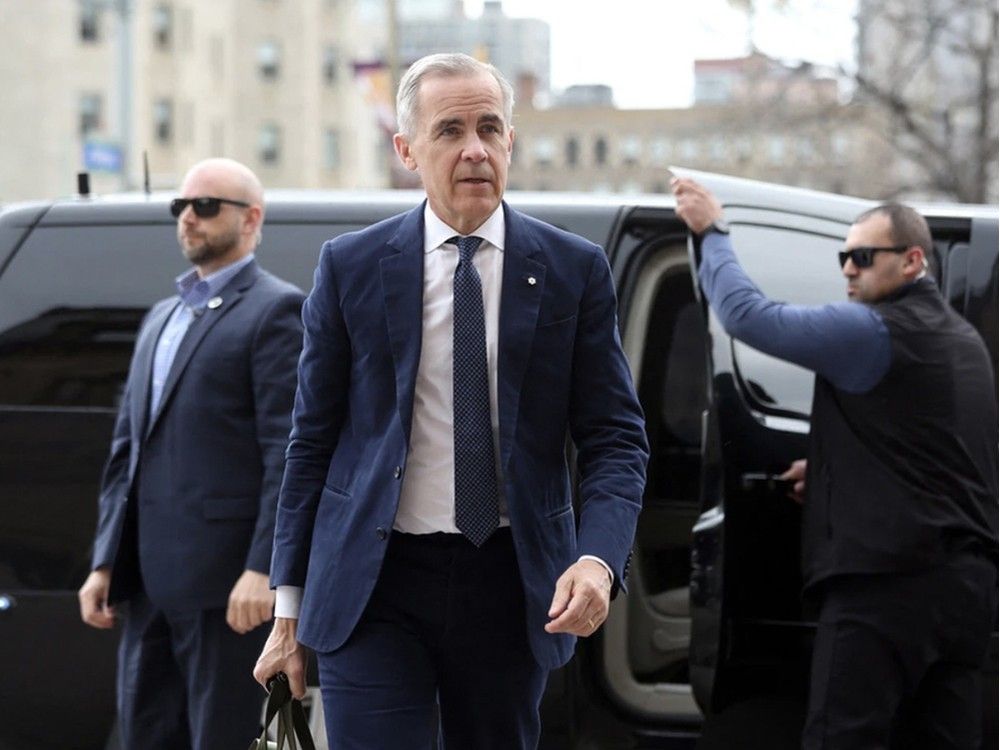

Prime Minister Mark Carney arrives at his office on Parliament Hill in Ottawa.

OTTAWA — Days after the federal election, Prime Minister Mark Carney stepped into the National Press Theatre and did something Canadians hadn’t seen in nearly 10 years under Justin Trudeau: he started the press conference virtually on time.

Carney’s punctuality was a stark contrast with Trudeau, who would frequently start events 30 to 60 minutes later than planned. It is also one of many emerging differences in how the former central banker runs his office, cabinet and caucus compared to his predecessor.

National Post spoke with a half dozen current and former PMO officials, senior bureaucrats and caucus members. All were granted anonymity to discuss internal workings of government openly.

They described Carney as extremely focused on delivering an ambitious agenda of reshaping the Canadian economy in the era of U.S. Donald Trump. He is fiercely punctual, runs a tight ship during meetings and is very decisive — all marked differences from his predecessor.

Gone is the indecision that marred Prime Minister Justin Trudeau’s office, with important decision documents often sitting weeks or months on the desk of chief of staff Katie Telford. Some bottlenecks still exist, but they are more the product of an understaffed prime minister’s office (PMO) serving a political neophyte.

“Decision-making is not a problem,” said one senior government official, describing Carney as “task focused” and for whom results matter.

“He does not suffer fools,” the official added, a common refrain among all sources in this story.

Carney also cares deeply about professionalism in his office. Staff are expected to dress in formal business attire and documents are to be written using British spelling, for example.

But the prime minister is already bearing the signs of a potential micromanager, wanting to review or rework documents or communications products that should be well below the purview of a prime minister.

He is also short on patience and highly demanding of his advisors, senior bureaucrats and cabinet members while not afraid of calling out underperforming members of his entourage.

Whereas there was a sense among Trudeau’s entourage and office that he would give people “multiple kicks at the can” if they provided a sub-par briefing or weren’t on top of their files, sources say Carney is not so patient. Get it right the first time or risk not being called on for that topic again.

Carney filled half of his 28-person cabinet with new faces last week, but all the sources say no one’s job — not even veteran ministers — is safe. If ministers don’t perform to Carney’s expectations or fail to find ways to deliver on their mandates quickly, they may not last the year at the table.

“Carney will call out ministers if needed,” said one senior former Liberal who worked in both the Trudeau and Carney governments. “And he will probably call them personally to do it. Trudeau never called his ministers.”

One Liberal MP even theorized that there could be a cabinet shuffle in less than one year.

“This guy will not have patience, and that’s the thing. That’s why we think there will be a shuffle at some point in the next eight months, or something, not within the next eight months, but in like eight months time, or something like that, less than a year,” a Liberal MP said.

“If you’re that ambitious as a leader, you’re not going to have a lot of time for people who are failing at their files. He’s going to find replacements, you would think, but let’s see,” the MP added.

As a new politician, sources say Carney is not yet fully aware of what he needs and doesn’t need to know. The result is that he will ask to read documents that the prime minister shouldn’t need to review or generate an abundance of back-and-forths demanding staff rewrite briefing notes to his liking, two sources detailed.

“He’s too deep into details already,” said the former Liberal staffer, adding they were frequently surprised by some of the material Carney demanded to see.

Another concern among Liberals is that days before the House of Commons is set to resume, Carney’s office is still surprisingly understaffed.

The prime minister has still not confirmed who will be his permanent chief of staff after temporarily appointing former minister Marco Mendicino to the position back in March.

Thursday evening, Carney announced that Mendicino

had extended his term “into the summer” to “lead the transition of the PMO on my behalf.”

The chief of staff oversees staffing through the PMO but also has a heavy hand in selecting ministers’ chiefs, who then have to fill all the vacancies in their minister’s office. Most of those decisions have been on hold while Carney decided who would be his top aide going forward.

It’s not unusual that PMO and ministers’ offices aren’t fully staffed less than one month after the new prime minister was elected. But all the sources said it becomes problematic when the new prime minister wants move at near-record speed, forming cabinet within two weeks and recalling Parliament within four.

Multiple sources described the state of PMO as a “s–tshow” as key staff who worked with Carney before and during the election wait to see which job they will be offered during this Parliament.

They point to the lack of clear leadership at PMO as explanation for the “disastrous” first outing of Carney’s cabinet on May 18 where

numerous ministers made controversial or headline-generating statements

.

One senior government official said that the issues at PMO mean that decisions are being made, but implementing them can be difficult.

“The PMO is not even settled yet. So, they’re figuring stuff out and how to do stuff, but they are quick on decisions and on recognizing the decisions that need to be made. And so, the corollary on that is that once a decision is made, they expect action to be taken… which could be a challenge,” said the veteran official.

Another key challenge is Parliament. Many Liberals feel that Carney doesn’t fully grasp the challenges of leading a minority government through a fractured House of Commons and a Senate without a Liberal caucus.

Without a clear majority, a governing party must negotiate with opposition MPs to get their bills through both the House of Commons and committees. If it fails to do so, effective opposition parties can take over the agenda of the Commons or some committees (or both) and stonewall the government’s legislative agenda.

Sources point to the scars of last fall’s parliamentary session. Shortly after Trudeau and ex-NDP leader Jagmeet Singh ripped up their supply and confidence agreement last summer, the minority Liberals totally lost control of the House of Commons.

From September until prorogation in January, the Liberals were virtually unable to pass any legislation because the House of Commons was dominated by opposition-led parliamentary privilege debates.

At the same time, opposition parties were able to seize the agenda of multiple committees to launch studies into embarrassing topics for the Liberals.

Senior Liberals say if Carney, who frequently boasts of being a newbie politician, doesn’t surround himself with Commons connoisseurs, his agenda risks being derailed the same way.

They say that recent comments by Carney suggest to them that he doesn’t fully grasp the challenge at hand as his party sits two seats shy of a majority in the House of Commons.

“We received more votes than anyone else in any election,” Carney told reporters last week when asked if he expects to govern like he heads a majority government.

“We’re governing for all Canadians, all regions, with a strong and clear mandate that came out of the election, and that’s how we will govern.”

National Post with files from Catherine Lévesque.

cnardi@postmedia.com

Get more deep-dive National Post political coverage and analysis in your inbox with the Political Hack newsletter, where Ottawa bureau chief Stuart Thomson and political analyst Tasha Kheiriddin get at what’s really going on behind the scenes on Parliament Hill every Wednesday and Friday, exclusively for subscribers. Sign up here.

Our website is the place for the latest breaking news, exclusive scoops, longreads and provocative commentary. Please bookmark nationalpost.com and sign up for our politics newsletter, First Reading, here.


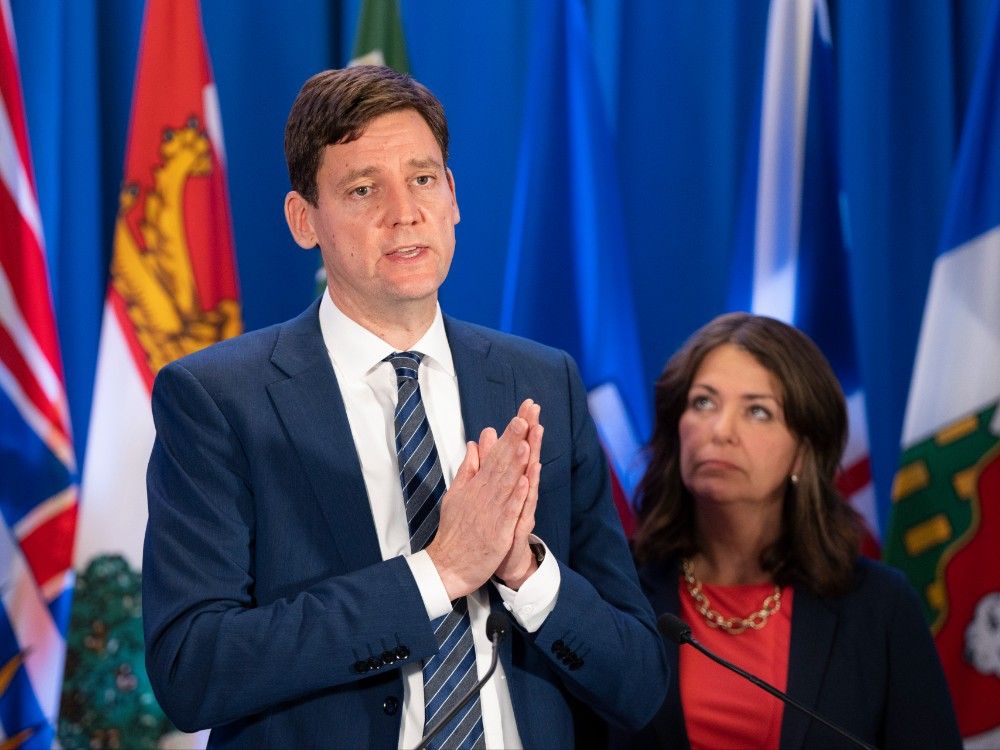
British Columbia Premier David Eby, left, and Alberta Premier Danielle Smith at the Council of the Federation meetings in Halifax on July 16, 2024.

OTTAWA — British Columbia Premier David Eby isn’t saying “no” to Alberta counterpart Danielle Smith’s pitch to revive the cancelled Northern Gateway pipeline project, but his evasiveness on the topic speaks volumes.

Eby was quick to steer the discussion to “points of agreement” when asked about Northern Gateway Thursday at the Western Premiers’ Conference in Yellowknife.

“I know Danielle’s priority is to get heavy oil to tidewater. She is very unambiguous about that. My priority is to… decarbonize and drive our economy in British Columbia,” said Eby, who happened to be seated next to Smith in a conference-ending media availability.

“If Premier Smith is able to convince the federal government to build another pipeline through British Columbia, or a private proponent, we’ll cross that bridge when we come to it.”

In the days leading up to the conference Smith called for the shelved pipeline project to not only be

revived but also fast-tracked

, saying that most direct route to ship Alberta oil to emerging markets in Asia was through B.C.’s northern coast.

Northern Gateway, an initiative of Calgary-based pipeline company Enbridge Inc., sought to carry Alberta oil to a deep-water marine terminal in northwestern B.C., where it would then be exported via tanker.

The project was terminated by former prime minister Justin Trudeau in late 2016, one year after

he ordered a moratorium

on crude oil tanker traffic off B.C.’s north coast.

The tanker ban was later entrenched in Liberal legislation.

Eby said on Thursday that he was averse to “opening up the pristine north coast to tanker traffic,” especially with the new Trans Mountain Pipeline expansion (TMX) not yet filled to the brim.

“If the urgency is to get product to tidewater, I would start (with) ensuring that this publicly owned infrastructure is used to its full capacity,” said Eby.

TMX, which ends in B.C.’s Lower Mainland, has been running at

around 80 per cent capacity

since coming online in May 2024.

Experts say it’s optimal for oil pipelines to run

somewhat below full capacity

to give producers the flexibility to reroute product to different markets.

Smith retorted that, pipeline or no pipeline, she saw tremendous potential in B.C.’s northern coast as a hub for Canadian exports, and was especially bullish on the port of Prince Rupert.

“(Prince Rupert) is the best (point of) access to get all of our products… to the Asian markets,” said Smith.

She added that products shipped to Asia from Prince Rupert arrive weeks sooner than those shipped from the U.S. via the Gulf of Mexico.

A spokesperson for Enbridge said the company is once burned, twice shy when it comes to trying to build heavy oil pipelines to tidewater.

“While we are pleased to see Canadian policymakers discussing ways to make Canada an energy superpower, any new pipeline project would require careful consideration and real provincial and federal legislative change,” wrote Enbridge communications advisor Gina Sutherland in an email to National Post.

“This includes identifying energy projects as being in the national interest, implementing globally competitive energy and carbon policies, simplifying regulation, reducing regulatory timelines and enhancing the Indigenous loan guarantee program to allow for more Indigenous consultation, engagement and direct participation in energy projects.”

We need clear evidence of a supportive framework before considering a major project like Northern Gateway.”

National Post

rmohamed@postmedia.com

Get more deep-dive National Post political coverage and analysis in your inbox with the Political Hack newsletter, where Ottawa bureau chief Stuart Thomson and political analyst Tasha Kheiriddin get at what’s really going on behind the scenes on Parliament Hill every Wednesday and Friday, exclusively for subscribers. Sign up here.

Our website is the place for the latest breaking news, exclusive scoops, longreads and provocative commentary. Please bookmark nationalpost.com and sign up for our daily newsletter, Posted, here.


Footage taken by witnesses captured the moment the suspect in the Washington DC Jewish Museum shooting was taken into custody.
Police have named 30-year-old Elias Rodriguez from Chicago as the only suspect after two Israeli embassy staff were shot dead on Wednesday evening. .

Authorities have “tentatively” identified Chicago resident Elias Rodriguez, 31, as the accused who gunned down two Israeli diplomats in Washington, D.C. on Wednesday night.

According to police in the U.S. Capitol, on-site security detained Rodriguez near the Capital Jewish Museum, about 12 blocks east of the White House, after he allegedly opened fire on four people leaving an event there.

Israeli Embassy employees Yaron Lischinsky, 30, and Sarah Lynn Milgrim, 26, were killed. Their ages aren’t immediately available, but the Israeli Ambassador to the U.S., Yechiel Leiter, said they were a young couple about to be engaged. The two other individuals, both American women, escaped physically unharmed, according to officials who spoke to

CNN

.

Washington Metropolitan Police Chief Pamela Smith said witnesses reported Rodriguez pacing back and forth in front of the building before the incident.

Once in police custody, Smith said the suspect “implied he committed the offence” and told officers where he’d disposed of the handgun he’d allegedly used, which has since been recovered.

“The suspect chanted ‘Free, free Palestine’ while in custody,” Smith told reporters during

a press conference.

Smith also said Rodriguez, who is believed to have acted alone, hasn’t had any previous interactions with metro police.

“We don’t see anything in his background that would have put him on our radar at this time,” she added, but officials will conduct a “deep dive” to learn more.

 Yaron Lischinsky, left, 30, and Sarah Lynn Milgrim, 26.

Rodriguez is reportedly being interviewed by Washington police and the FBI, per CNN. The Israeli embassy is also working with law enforcement.

Smith said it’s too early to discuss a possible motive and didn’t answer whether Rodrigues travelled to D.C. with the intent to carry out this act.

In response to reports by media outlets such as

The Independent

and

NDTV

that he is an active member of the Party of Socialism and Liberation, a U.S. communist party and offshoot of the Marxist-Leninist Workers World Party, the group denied any current involvement.

“We reject any attempt to associate the PSL with the DC shooting,”

they posted on X

. “Elias Rodriguez is not a member of the PSL. He had a brief association with one branch of the PSL that ended in 2017. We know of no contact with him in over 7 years. We have nothing to do with this shooting and do not support it.”

Our website is the place for the latest breaking news, exclusive scoops, longreads and provocative commentary. Please bookmark nationalpost.com and sign up for our daily newsletter, Posted, here.


Canada Post employees work on getting a truck started to start work in Ottawa.

As the possibility of a strike on Friday looms, the Canada Post and the Canadian Union of Postal Workers (CUPW) have several points that they cannot agree upon.

The Crown Corporation received

notice of a strike on Monday

. It presented the union with new proposals for both of its bargaining units, Urban Postal Operation (UPO) and the Rural and Suburban Mail Carriers (RSMC), on Wednesday. The

union said it would be reviewing the offers

, and said it had extended a two-week truce to Canada Post. However, the corporation refused that request, and a strike on Friday remains a possibility.

As the review of the proposals are underway, the union said later on Wednesday that the offers “fall short.”

Among remaining sticking points are weekend work, benefits, wages, dynamic routing, and load levelling. The union also said that Canada Post would be “taking away the 5-minute wash-up time.”

Canada Post echoed this statement in

a summary of its new global for employees in the Urban unit

. The corporation said: “We’re removing the 5-minute wash-up time before the meal period.”

Here’s what to know.

What is five-minute wash-up time?

Five-minute wash-up time refers to time when employees can get ready before they have a meal.

“Employees shall, during working hours, be allowed five (5) minutes paid wash-up time before the meal period when the nature of their work makes it necessary,”

according to the Agreement between Canada Post Corporation and the Canadian Union of Postal Workers

.

In a section about “unproductive time” in

Canada Post’s written submission to the Industrial Inquiry Commission (IIC) in February

, the corporation says part of the Urban agreement allows for “five minutes of paid wash-up time to allow employees to wash their hands before a meal period when the nature of their work makes it necessary.” The commission was created to examine the key issues between both parties with a series of public hearings.

However, Canada Post has removed wash-up time from the new Urban offer currently under review.

Why is five-minute wash-up time such a sticking point between Canada Post, union?

Rafael Gomez, University of Toronto professor and director of the Centre for Industrial Relations & Human Resources, said in an emailed statement to National Post on Thursday that the issue “only inflames members and makes it more likely we will have another strike.”

“I guess management is saying, ‘Any worker is free to wash up after a shift is done, but why should “I”


(i.e., the employer) be asked to pay if the shift is done? Wash up on your time…no one is stopping you,’” he said.

He continued: “While on the other side, the union is saying, ‘Remaining healthy and ready to work another shift IS something “you” (i.e., the employer) should care about and hence pay for.’”

What has the union said about five-minute wash-up time?

The union said that “handwashing is a small but significant part of ensuring a safe, healthy and respectful workplace for all postal workers,” in an emailed statement to National Post on Thursday.

A final

report by ICC

 cited reasons why there was a breakdown in negotiations ahead of the union’s last strike in November 2024.

Canada Post, according to the union, was “indifferent and unresponsive to its legitimate bargaining demands.” One of the concessions that the corporation was seeking included

the elimination of the 5-minute wash-up period.”

What are Canada Post’s reasons for getting rid of five-minute wash-up time?

Per the report, none of Canada Post’s competitors “enjoyed five minutes of paid wash-up time or paid lunches.”

“Canada Post proposed elimination, which would not impact take-home pay but would reduce unproductive time,” the report stated, speaking to the reason why the corporation wanted to get rid of five-minute wash-up time.

Canada Post did not immediately respond to National Post’s request for comment.

Our website is the place for the latest breaking news, exclusive scoops, longreads and provocative commentary. Please bookmark nationalpost.com and sign up for our daily newsletter, Posted, here.

Canada Post workers could go on strike as early as midnight on Friday. BRUNSWICK NEWS ARCHIVES

The Canadian Union of Postal Workers (CUPW) is reviewing offers presented by the Crown Corporation as a potential strike looms.

A 72-hour strike notice was issued on Tuesday, with the deadline set as Friday midnight for a planned strike.

If the postal workers hit the picket lines, this would be their second strike in less than six months. The

last strike was in November

and lasted 32 days after both the parties failed to reach a consensus. In December, the workers were ordered back to work by the Canada Industrial Relations Board.

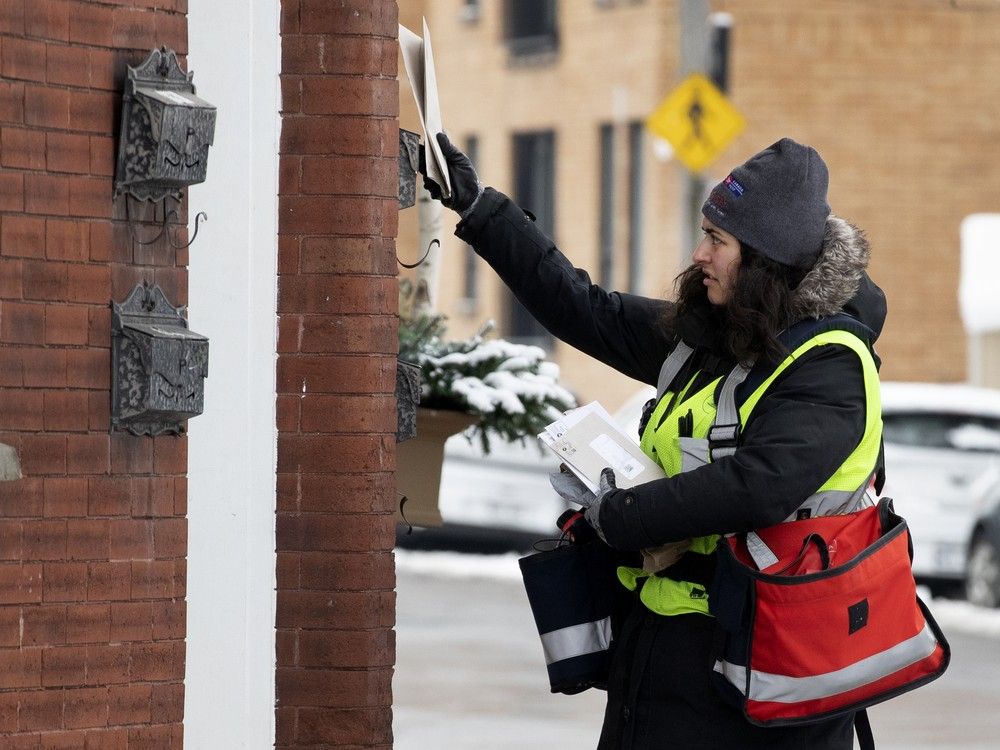
 A Canada Post letter carrier delivers mail in Montreal.

Canada Post rejects strike delay offer from the union

A two-week pause on the strike was proposed by the union, according to CUPW negotiator Jim Gallant. But

Canada Post did not agree to the proposal

, pushing for the union to agree to its offers submitted Wednesday.

The new offers include a wage increase of 6 per cent in year one for current employees, 3 per cent in year two, and 2 per cent in year three and year four, respectively, or 13.59 per cent compounded, per a news release.

“The offers also provide employees with better income replacement for leave under the short-term disability program, and six added personal days locked into the collective agreements,” Canada Post said in a statement.

Under these offers, the statement elaborated, the current employees would keep their defined benefit pension, job security provisions, health benefits and post-retirement benefits, vacation (up to seven weeks) and pre-retirement leave, cost of living allowance that protects against the effects of unforeseen inflation, and work schedules.

Our website is the place for the latest breaking news, exclusive scoops, longreads and provocative commentary. Please bookmark nationalpost.com and sign up for our daily newsletter, Posted, here.

Conservative Leader Pierre Poilievre waves to the crowds as he rides a horse in the Calgary Stampede parade in Calgary, Friday, July 5, 2024.

OTTAWA — Currently seatless Conservative Leader Pierre Poilievre is eyeing an easy win in a not-yet-called byelection in rural Alberta, but locals say he could be caught in the middle of a growing firestorm over Alberta separation.

The first hurdle for Poilievre, who represented suburban Ottawa as an MP for two decades before losing his seat last month, will be convincing locals that he’s not just another central Canada politician who sees Alberta as a giant ATM machine.

“I’m somewhat suspect that Mr. Poilievre has said publicly that he doesn’t feel there

should be any big changes

to the equalization formula,” said Rick Strankman, referring to the federal wealth redistribution program Alberta hasn’t seen a dime from since the mid-1960s.

Strankman is a third-generation resident of Poilievre’s prospective riding of Battle River—Crowfoot, who represented the area as an Wildrose MLA from 2012 to 2019.

He says he’s seen an uptick in support for Alberta separatism within the community

since last month’s federal election

, which saw the Liberals win their fourth-straight mandate.

“I think many people are deeply unsatisfied, and many people are frustrated in that they don’t know how to achieve a positive change, unless it… evolves from a referendum,” said Strankman.

Province-wide polls show

up to two-thirds

of Albertans who support the governing United Conservative Party would vote ‘yes’ in a referendum on Alberta independence.

Poilievre said last week that

he was “against (Alberta) separation”

but sympathized with the “legitimate grievances” of those who were for it.

Strankman, who’s involved with the pro-separation Alberta Prosperity Project, noted that the group has several upcoming events in and around the riding, including a forum in the 800-person town of Castor next month.

“I just saw a poster for the Castor event at my local tractor repair shop,” said Strankman.

Strankman doesn’t think that Poilievre is in danger of losing the byelection but suspects that turnout could suffer if he ignores the rising tide of Alberta separatism.

“You could almost run a straw bale in our riding under the Conservative flag and that would get elected… but there might be an apathy there if (Poilievre) can’t shake the label of being a parachute candidate from Ottawa,” said Strankman.

Jeffrey Rath, a lawyer with the Alberta Prosperity Project, says he expects the high-profile byelection to attract “a strong pro-independence candidate or two” with “good local name recognition.”

“It would be fascinating to see somebody hold Poilievre’s feet to the fire and make him explain how it is that federalism still works for Alberta,” said Rath.

Rath publicly

dared Poilievre last week

to run in

Battle River—Crowfoot

under the slogan “No more Alberta tax dollars for Quebec, and a dairy cow and micro-dairy in every Alberta barn that wants one.”

Prime Minister Mark Carney said shortly after the election that he’d ensure Poilievre’s byelection took place “as soon as possible” if his fellow Conservatives wanted him to stay on as leader.

The soonest the Battle River—Crowfoot byelection can take place under federal law

is in early August

, meaning it will likely

follow three provincial byelections

expected for earlier in the summer.

One of these byelections, coincidentally, will take place in Olds-Didsbury-Three Hills, where Alberta’s first, and thus far only, separatist MLA Gordon Kesler was elected in a 1982 byelection. Kesler was beaten soundly in a general election later that year.

Cameron Davies, leader of the Republican Party of Alberta, announced on Tuesday that he

will be running in the riding

, hoping to follow in Kesler’s footsteps as a separatist voice in the Alberta Legislature.

He says that Kesler, who’s still active in the riding, has been an indispensable source of support and wisdom as he embarks on his own political journey.

Davies told the National Post he doesn’t see Poilievre as an advocate for Alberta, even if he ends up winning a federal seat in the province.

“(Poilievre) is a federal politician… he has to be a Team Canada player,” said Davies.

“Alberta no longer wants to be part of team Canada, and so at some point (he’ll) have to reconcile with that.”

National Post

rmohamed@postmedia.com

Get more deep-dive National Post political coverage and analysis in your inbox with the Political Hack newsletter, where Ottawa bureau chief Stuart Thomson and political analyst Tasha Kheiriddin get at what’s really going on behind the scenes on Parliament Hill every Wednesday and Friday, exclusively for subscribers. Sign up here.

Our website is the place for the latest breaking news, exclusive scoops, longreads and provocative commentary. Please bookmark nationalpost.com and sign up for our daily newsletter, Posted, here.

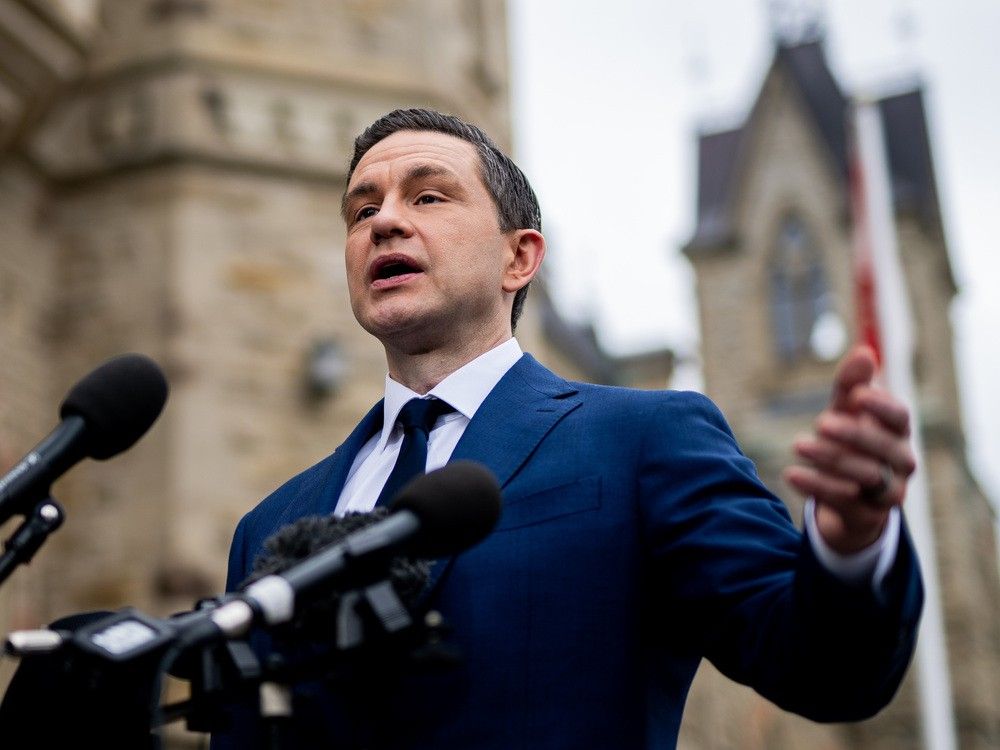
Conservative Party Leader Pierre Poilievre speaks to reporters outside of West Block on Parliament Hill in Ottawa on Thursday, May 15, 2025.

OTTAWA

— Conservative Leader Pierre Poilievre has tapped more than half of his MPs to serve in critic roles when Parliament reopens next week, drawing largely from more experienced caucus members rather than promoting fresh faces. 

On Wednesday, Poilievre unveiled the Conservatives’ “shadow cabinet,” a name the Official Opposition uses to refer to their critics in the House of Commons.

Because Poilievre lost his seat in last month’s federal election, Andrew Scheer, a longtime Conservative and former party leader, will serve as the party’s leader in the House. Poilievre now plans to run in a yet-to-be-called byelection in rural Alberta, after one of his MPs decided to temporarily step down.

Melissa Lantsman and Tim Uppal will remain as Conservative deputy leaders, while Arpan

Khanna will serve as the party’s national outreach coordinator.

Pierre Paul-Hus, a Quebec MP, remains in his role as Quebec lieutenant. Mark Strahl, the MP for Chilliwack—Hope, will act as a special advisor for British Columbia. 

Other Conservatives continuing in more prominent roles include Jasraj Singh Hallan, who will remain the party’s critic for finance, a role Poilievre himself once held. Larry Brock, a Conservative MP from Ontario, will return as the Conservatives’ justice critic. 

Scott Aitchinson, who ran against Poilievre in the party’s 2022 leadership race, will remain the critic for housing.

“Canada must become a self-reliant country where hard work guarantees people a beautiful home on a safe street protected by solid borders and united under a proud flag. Lately, it hasn’t felt that way,” Poilievre said in a statement.


“Crime, inflation, deficits, and job losses are ballooning. Immigration is out of control. Our economy is more dependent on the U.S., and the country is more divided than ever before.”

Poilievre also reiterated his earlier statement that the Conservatives were willing to work with the minority Liberals.

“We will work with the government to put an end to unfair American tariffs or to pass good laws—but we will fight hard when the government is wrong,” he said on Wednesday.

In terms of changes, Poilievre tapped

Shelby Kramp-Neuman, a Conservative MP from Ontario, to act as the party’s critic on Canada-U.S. trade. Previously, Saskatchewan MP Randy Hoback had worked as a special advisor to the leader on Canada-U.S. relations. 

Adam Chambers will take on the critic role for international trade, while Michael Chong, a longtime MP, will remain the party’s critic for foreign affairs. 

In terms of other changes, Frank Caputo, an MP from B.C., will be the critic for public safety, a role previously held by Winnipeg MP Raquel Dancho before she left on maternity leave. 

Dancho will act as the party’s critic for industry, a cabinet portfolio now held by Industry Minister Melanie Joly. 

Poilievre also welcomed back into the fold Michelle Rempel Garner, a longtime Conservative MP from Calgary, whom he declined to give a critic role to following the 2022 leadership race, where she backed Brampton Mayor Patrick Brown.

Rempel Garner, one of the Conservatives’ most experienced MPs, will become the party’s immigration critic in Parliament, replacing Tom Kmiec.

At 74, Poilievre’s list of critics is nearly double that of Prime Minister Mark Carney’s cabinet, which includes 28 cabinet ministers and 10 secretaries of state.

While the Conservatives grew their caucus size in Parliament by nearly 20 seats, only a handful of the newly-elected MPs were handed critic roles.

They include

Billy Morin, former chief of Enoch Cree Nation in Alberta, and Ellis Ross, a former B.C. cabinet minister. Morin was named as critic for Indigenous Services, and Ross, who is also Indigenous, was picked to be the critic for the environment and climate change. 

Other new faces include

Éric Lefebvre, whom Poilievre named as the Conservatives’ associate critic for finance, and Gaétan Malette, picked as the associate critic for natural resources. 

Those left off the list include Jamil Jivani, an outspoken MP from Ontario, as well as

Shuvaloy Majumdar, a Calgary MP with a background in foreign policy and Roman Baber, who also ran against Poilievre in the 2022 leadership.

Newly-elected Conservatives like Andrew Lawton, a former broadcaster and biographer of Poilievre, also was not named as a critic, same with Aaron Gunn, a filmmaker whose comments on social media regarding residential schools drew condemnation from some B.C. Indigenous leaders during the federal election campaign.

Sandra Cobena, a former bank manager who worked in commercial business and was elected to the Greater Toronto Area riding of Newmarket-Aurora, was also left off the list, as was Ned Kuruc, an entrepreneur from Hamilton who flipped the riding of Hamilton East-Stoney Creek for the Conservatives.

National Post
staylor@postmedia.com
Get more deep-dive National Post political coverage and analysis in your inbox with the Political Hack newsletter, where Ottawa bureau chief Stuart Thomson and political analyst Tasha Kheiriddin get at what’s really going on behind the scenes on Parliament Hill every Wednesday and Friday, exclusively for subscribers. Sign up here.

Our website is the place for the latest breaking news, exclusive scoops, longreads and provocative commentary. Please bookmark nationalpost.com and sign up for our daily newsletter, Posted, here.


Canada's Prime Minister Justin Trudeau speaks after Mark Carney was elected as Canada's Liberal Leader and Prime Minister-elect during the election of the new Liberal Party leader, in Ottawa on March 9, 2025.

Former prime minister Justin Trudeau will be eligible for more than $8 million in pensions and severance, according to

calculations from the Canadian Taxpayers Federation

.

The advocacy group ran the numbers on the

pension entitlements of all 110 members of Parliament

who either didn’t run for re-election or lost their bid to return to Ottawa.

Among them was Trudeau, who did not run in the 2025 federal election, having announced in early January his intention to resign as leader of the Liberal party and as prime minister.

Trudeau, the group said, will receive $104,900 in severance. If he lives to age 90, he will receive $8.4 million in pension payments for his more than 16 years of service as a member of Parliament and almost 10 years as prime minister. There is a separate pension for being an MP and for being prime minister, said Franco Terrazzano, the federal director of the Canadian Taxpayers Federation.

“This is Canadian taxpayers’ money. Canadians deserve to know how much politicians are making when they’re in office, but then also, too, how much they’re getting when they leave office, right? It’s the fundamental principle of transparency and accountability,” Terrazzano said.

Canadian parliamentarians become eligible for a pension after six years of service. That means that 29 MPs who lost their jobs won’t receive pensions. However, they did receive severance pay. MPs receive severance if they are ineligible for a pension or if they have not reached 55 — the age the pension begins. That means that some former MPs receive both a pension and severance if they served six or more years but are not yet 55.

Severance for a backbencher is $104,900 and severance for a cabinet minister is $154,850.

The smallest pension on the list goes to Quebec Liberal Yves Robillard, who was first elected in 2015, and represented the Quebec riding of Marc-Aurèle-Fortin. He will receive just $387,000 by the time he is 90.

Trudeau has the largest pension of the bunch, receiving $141,000 annually.

Conservative Leader Pierre Poilievre, who lost his seat of Carleton, is entitled to more than $7 million in pension payments, although he intends to run in a byelection and return to the House of Commons, and is not taking the severance that he would otherwise be entitled to. Former NDP leader Jagmeet Singh, who resigned after losing his Burnaby Central seat, will collect $140,300 in severance and will receive almost $2.7 million in pension payments by age 90.

There are 13 MPs on the list who will receive annual pension payments in excess of $100,000. Among them is former NDP MP Charlie Angus, who’s entitled to $3.9 million by age 90 and former Liberal transport minister Omar Alghabra, who’s entitled to $3.4 million.

Randy Boissonnault, the Edmonton MP who resigned as a cabinet minister following National Post’s reporting into inconsistencies in stories of his heritage, and later dropped out of the election race, is entitled to $44,200 in severance, plus almost $2.8 million in pension payments by the age of 90. George Chahal, the other Alberta Liberal MP between 2021 and 2025, did not serve long enough to get a pension, so he will receive only $104,900 in severance. Ditto for Blake Desjarlais, an Edmonton New Democrat who lost in 2025.

Harjit Sajjan, who served as Trudeau’s defence minister, will receive $4 million in pension payments by the time he is 90.

“I think many Canadians are going to see these numbers and be outraged, because some of these numbers are huge, especially when you factor in the fact that the majority of workers in the private sector aren’t covered by a workplace pension,” siad Terrazzano. “We need a culture change in Ottawa. The leadership has to start with the top, especially if they’re going to tackle the big debt issues, the big cost, the bureaucracy. We have to see leadership at the top. So, you know, we need to see politicians reign in their own paying perks.”

He said future prime ministers should not be entitled to two pensions.

Our website is the place for the latest breaking news, exclusive scoops, longreads and provocative commentary. Please bookmark nationalpost.com and sign up for our daily newsletter, Posted, here.

Minister of Foreign Affairs Anita Anand speaks to journalists as she arrives for a meeting of the federal cabinet in West Block on Parliament Hill in Ottawa on Wednesday, May 14, 2025.

OTTAWA — The federal government has summoned Israel’s ambassador to Canada to explain why Israeli soldiers shot in the vicinity of a delegation of diplomats — including four Canadian representatives — touring the West Bank Wednesday.

“I spoke with Canada’s Head of Mission in Ramallah earlier today. I can confirm 4 of our personnel were part of the delegation in West Bank when the IDF fired shots in their vicinity. Relieved to know our team is safe,”

Foreign Minister Anita Anand

wrote on social media Wednesday afternoon.

“I have asked my officials to summon Israel’s Ambassador to convey Canada’s serious concerns. We expect a full investigation and accountability,” her statement continued.

On Wednesday morning, the Israeli Defence Forces (IDF) confirmed that its soldiers had fired “warning shots” towards a delegation of individuals whom it claimed had strayed away from a pre-authorized route.

But the group was a diplomatic delegation with representatives from over a dozen countries including Canada, France, Italy, Germany and the European Union. The incident sparked widespread condemnation.

Videos of the incident circulating online show a delegation of dozens of foreign diplomats as well as West Bank and United Nations officials standing on a road blocked off by a large yellow gate in the West Bank city of Jenin Wednesday morning.

The video shows IDF soldiers suddenly firing their weapons in the vicinity of the group, which quickly dispersed back towards diplomatic and armoured vehicles parked around the corner.

The tour was organized by the Palestinian Authority and was authorized by Israel, according to foreign media reports. There were four Canadian representatives among the delegation, including the head of mission in Ramallah Graham Dattels.

In a statement, the IDF said it “regrets the inconvenience caused” by the incident and said it launched an inquiry after realizing that its soldiers had fired towards a diplomatic delegation.

“According to an initial inquiry, the delegation deviated from the approved route and entered an area where they were not authorized to be. IDF soldiers operating in the area fired warning shots to distance them away. No injuries or damages were reported,” t

he IDF wrote on social media

.

The claim that the delegation was in an unauthorized area is being met with skepticism within the Canadian government.

Representatives from France, Germany and Italy also expressed their outrage at the shots towards their diplomats and called on the Israeli government to explain itself.

“A visit to Jenin, in which one of our diplomats was participating, was fired upon by Israeli soldiers. This is unacceptable. The Israeli ambassador will be summoned to explain himself,” French Foreign Minister Jean-Noël Barrot said in a statement.

The German Foreign Office “strongly” condemned the “unprovoked fire” and noted that it was lucky that “nothing more serious occurred.”

“The group was travelling in the West Bank in the course of its diplomatic work and in coordination with the Palestinian Authority and the Israeli army. The role of diplomats as independent observers on the ground is indispensable and in no way represents a threat to Israeli security interests,” read the statement.

The incident comes amid increasing pressure from countries like Canada, the United Kingdom and France for Israel to stop expanding its military operations in Gaza and restricting humanitarian aid into the territory.

The three countries released a joint statement on Monday threatening action against Israel if Israeli Prime Minister Benjamin Netanyahu did not stop its military actions in Gaza.

In their statement, Prime Minister Mark Carney, British Prime Minister Keir Starmer and French President Emmanuel Macron cited the “intolerable suffering” unfolding in Gaza, calling the announcement Israel made the day before to allow basic quantities of food into the area “wholly inadequate.”

They demanded Israel’s government halt its military operations and for Hamas to release the remaining hostages taken captive when terrorists stormed into southern Israel in October 2023.

Tuesday, Israel’s ambassador to Canada Iddo Moed told National Post his country is “quite taken aback” by Canada’s threat.

“This is unprecedented,” Moed said. “This has never happened in the past and so this is why we are taken aback. That’s an understatement, I would say.”

National Post, with files from Stephanie Taylor.

cnardi@postmedia.com

Get more deep-dive National Post political coverage and analysis in your inbox with the Political Hack newsletter, where Ottawa bureau chief Stuart Thomson and political analyst Tasha Kheiriddin get at what’s really going on behind the scenes on Parliament Hill every Wednesday and Friday, exclusively for subscribers. Sign up here.

Our website is the place for the latest breaking news, exclusive scoops, longreads and provocative commentary. Please bookmark nationalpost.com and sign up for our politics newsletter, First Reading, here.