LP_468x60
on-the-record-468x60-white

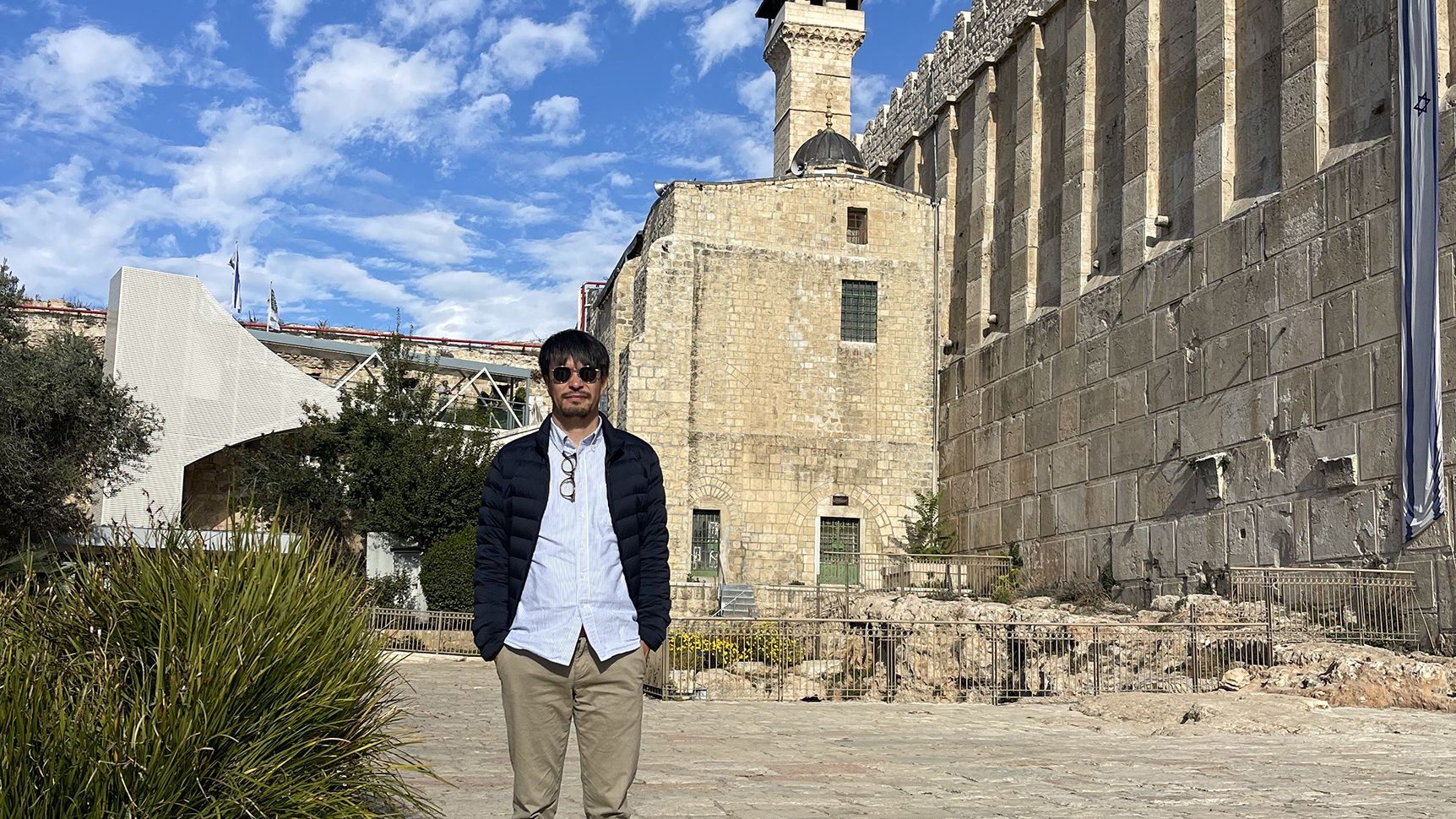
Ehsanullah Amiri in the West Bank city of Hebron, Israel.

JERUSALEM — For Muslims, Al-Aqsa Mosque is one of the top three most important sites, after Mecca and Medina in Saudi Arabia.

In the same compound on Temple Mount as the golden Dome of the Rock that rises over Jerusalem, it is etched into the minds of many Muslims

. Growing up, I was taught to see Jerusalem, with its rich and tumultuous history, as the sole property of Muslims, unjustly occupied by Jews. This city has survived wars and massacres perpetrated by Christians, Muslims and Jews alike.

Born in a remote, picturesque village in the mountains of central Afghanistan, I spent much of my childhood surrounded by the beauty of nature. I had little understanding of the world.

In the 1990s, our only link to the outside world was the crackling voice of the radio my father owned, a rare wealth in our isolated valley. We listened to news about Afghanistan’s civil war, as well as world news, including the conflicts between Israel and Palestine.

When the shadow of the

Taliban

’s first reign, from 1996 to 2001, fell upon us, my family fled as refugees to Pakistan. The neighbouring country not only offered shelter, but continued the familiar narrative of hate for Israel that we had known back home. Pakistan is a land where its government inserts a last page in passports that says its citizens can travel to all countries except Israel.

The arrival of the U.S.-led coalition in Afghanistan in 2001, and the fall of the rule of the Taliban, opened a new chapter in our lives. We returned to our country, where a surge of media and access to the internet connected us to the world, and opportunities to read and study.

I witnessed and still carry the terror of war and have a profound understanding of its destructive nature. As a survivor, like countless Afghans, of Taliban fundamentalism, I yearn for peace and coexistence. It is an ache that punctures the soul to see innocents, children and the elderly among them, killed across the globe, whether in Ukraine, Israel or Gaza.

On Oct. 7, 2023, as I scrolled through my phone, I was struck by horrifying footage:

Hamas terrorists

descending upon Israel, seizing hostages, setting homes ablaze in a rampage, dragging lifeless bodies through the streets of Gaza. Since the outbreak of war between Israel and Hamas, the deaths of tens of thousands of civilians, including children, and the widespread destruction in Gaza caused by Israeli airstrikes have been devastating to me.

It drove me to journey to Israel late last year, a trip made possible by

Sharaka

, a non-profit organization born in the wake of the historic Abraham Accords. Dedicated to promoting peace in the Middle East and fostering bridges between Israel and Muslims worldwide, it offered me a chance, as a journalist, to see beyond the shadows of my past and seek a new understanding of Israel and Jews, their history, culture, struggles and beliefs.

The delegation, consisting of fewer than a dozen people, mostly journalists and civil activists from Pakistan, was accompanied by members of Sharaka and an Israeli journalist working for a local newspaper. We headed south.

Our first stop was

Nir Oz

, a kibbutz in southern Israel just three to four kilometres from the Gaza Strip. The place is no longer the vibrant enclave it once was. Before the October 7 massacre by Hamas, it housed nearly 400 people; a community full of life and love.

On our way there, we were briefed on how to take cover if a rocket came from Gaza, a grim reality Israelis have faced for years — under constant threat, peace perpetually feels out of reach. This reality reminded me of my own experiences in Afghanistan, never knowing if you’d make it home alive at night, always wondering if a suicide attack might kill you, as it did thousands of Afghans.

Nir Oz is now mostly in ruins and

abandoned

, home to only a small number of its remaining community members. Irit Lahav, a survivor of the attack, and the daughter of one of the kibbutz’s founders, welcomed us at the main entrance. Still reeling, she shared her story of survival as our conversation was interrupted by the sound of explosions from Gaza. I was not bothered by those booms, having witnessed so much of the same back home, but it was a stark reminder of the relentless war, the absence of peace.

When Hamas Nukhba Brigade fighters stormed her kibbutz, Lahav and her young daughter hid in a safe room for nearly 12 hours without food, water or a toilet. “We communicated by text message,” she recounted, explaining how they stayed silent to avoid detection.

After their rescue, she learned the devastating toll: about a quarter of her community, more than a hundred people, had been killed or taken hostage.

Lahav and two other Nir Oz residents had been strong advocates for peace with Palestinians and Gazans. She worked tirelessly to help Gazan children with cancer or other serious illnesses, navigating bureaucratic hurdles, securing funding, even driving them to Israel for treatment.

“While I was hiding in my safe room with my daughter,” she said, standing inside a burnt-out house adorned with pictures of its owners, who were killed by Hamas, “I felt deeply hurt because Palestinians knew three people from this kibbutz were helping them.”

When asked if she still feels the same compassion for Palestinians, she replied: “No. They were planning to kill me.” In return for her years of goodwill and assistance, Hamas left Lahav with a shattered kibbutz, a community in ruins. She offered flowers, but they returned bullets, she said.

A 15-minute drive from Nir Oz, in the middle of a desert, is the site of the

Nova music festival massacre

. Once a venue for celebration, it has now become a graveyard honouring the hundreds of people killed there on that tragic day.

Under the afternoon Mediterranean sun, photographs of the victims, mostly young men and women, line the site, each accompanied by small biography tags. The memorials are surrounded by flowers and Israeli flags that flutter in the gentle breeze.

At one corner of the venue, we meet Tomer Hava, a 24-year-old reservist in the Israel Defense Forces (IDF), who had recently spent months on duty in Gaza. Struggling with limited English, he recounted how he narrowly escaped the Hamas attack at Nova while celebrating with close friends. For hours, he hid in the nearby fields. Tomer has also lost his younger brother in Gaza, killed while fighting terrorism.

When asked if he had ever killed civilians in Gaza, Tomer firmly said no. But explaining the complexities of guerrilla warfare or the tactics used by insurgent groups proved difficult for him.

Every war, whether between two armies or a nation and a terrorist organization, claims civilian lives. This, I know so well, is the ugliest aspect of conflict, whether caused by the Taliban, U.S. troops or the U.S.-backed Afghan government.

In Afghanistan, the Taliban often used civilian homes as shields, forcing locals to provide shelter, food and vantage points to attack troops. According to Tomer, Hamas employs similar tactics, using people’s homes as shields in Gaza.

* * *

Israel has many sacred sites, and I explored several of them. In Jerusalem, the Church of the Holy Sepulchre, built in the fourth century, is one of Christianity’s holiest places. It welcomes visitors of all faiths. I also visited the

Western Wall

, in the Old City of Jerusalem, where non-Jewish visitors are required to wear a kippah, a traditional Jewish head covering.

Just a few metres away lies

Al-Aqsa Mosque.

My Israeli friend accompanied me to the main entrance, which is guarded by Israeli security forces. After checking my passport and visa, they allowed me through. Inside, Jordanians and Palestinians handle administrative duties.

“Are you Muslim?” one of the Palestinians asked. “Yes, I am,” I replied with a smile.

“No,” he snapped, looking angry. “Say ‘Alhamdulillah,’” referring to the Arabic phrase Muslims use to praise God for blessings.

“Read me the Shahada,” another demanded, referring to the Islamic oath, one of the five Pillars of Islam.

“You have my passport,” I said. “It says Afghanistan, a Muslim country. Do you doubt me?”

They questioned my faith. I’ve visited numerous Muslim holy sites in Afghanistan and Pakistan, yet never faced such scrutiny. The experience of a Muslim questioning another Muslim’s faith at such a revered site was painful. It left me unsettled.

“I think it’s disrespectful to test whether I’m Muslim,” I said.

“If you don’t recite the Shahada, I won’t let you in,” he replied.

Later, I asked Imam

Mohammad Tawhidi

, of the Global Imams Council, which is comprised of scholars from all sects of Islam, about my experience at Al-Aqsa Mosque. “Such treatment at the gates of Al-Aqsa Mosque is unacceptable and has no basis in Islamic law. Islam does not mandate testing individuals on their faith as a condition for entry into a mosque, nor does it require Muslims to prove their religious identity through recitation,” he said.

“Al-Aqsa Mosque, like all houses of God, is meant to be a place of worship and spiritual reflection, open to all who seek to enter. Denying a Muslim access based on arbitrary assessments is both unjust and un-Islamic, as it disregards the fundamental Islamic principle that a person’s declaration of faith is sufficient to affirm their identity as a Muslim,” the Imam said.

According to Tawhidi, demanding the recitation of the Shahada as a prerequisite for entry not only violates personal dignity, but risks imposing conversion elements upon non-Muslims who may not fully understand its implications. That is contrary to Islamic ethics and the principle that faith must be embraced willingly and with full awareness.

* * *

Throughout Jerusalem or Tel Aviv and even in Israel’s rural areas, you see the toll of war on families. There are photos of Hamas victims everywhere, even greeting you at Ben Gurion Airport. The pain is visible.

At Hostages Square in Tel Aviv, I met several people whose family members remain in Hamas custody. They were living in tents in the square as they wait. As a member of Hazaras, a persecuted minority in Afghanistan, and a journalist, I’ve covered the Taliban’s abductions of my people in Kabul. I asked an elderly woman in one of the tents how her daily life had changed since her loved one was taken. Tears welled in her eyes. “I used to have a normal life. Now I can’t eat, work or live. I’m always thinking about the hostages.” Waiting slowly kills you.

Outside the tents, men and women, mostly elderly, gathered in a circle, singing songs with tragic lyrics in Hebrew while holding portraits of the victims of the October 7 massacre. In the square, families of the victims have recreated a mock Hamas tunnel that is open to the public — a dark, closed space filled with the sounds of explosions. On the walls, people have written messages and marked the number of days their loved ones had been held captive.

Later, in Tel Aviv, I was surprised to meet a young girl who said, “I am an Afghan Jew.” I began speaking Dari, one of Afghanistan’s national languages, but she replied in English, explaining that she was born in the United States and now lives in Israel. Excited to meet someone from her ancestral land, she called her grandmother, who lives in New York, and handed me the phone. Her grandmother spoke fluent Dari with me, despite having been away from Afghanistan for more than half a century. She reminisced about her time studying at a school in Kabul and described the freedom and absence of antisemitism during Afghanistan’s last monarchy.

“Those were the great years of Afghanistan,” she said. “There was peace.” When the call ended, her granddaughter, Sarit Gad, told me, “You made her entire month.”

Afghanistan once had a small Jewish community, but over the course of different regimes and civil wars, nearly all of them fled the country. The last known Jew fled in 2021, when the Taliban took control once again.

Save A Child’s Heart

, a hospital in Tel Aviv, treats children with complex heart conditions, mostly from Africa and Middle Eastern Muslim countries. Since 2017, it has saved five Afghan children, including one in 2022. This was during Taliban rule — the same group that supports Hamas, named a school after

Yahya Sinwar

, a Palestinian militant and Hamas leader (killed in 2024), and celebrates Hamas’s attacks on Israelis.

* * *

Israel is a multicultural, multi-ethnic nation, a fact rarely highlighted. Some 1.2 million Arab Israelis enjoy social freedoms and political representation. About 250,000 Bedouins and Druze have equal rights alongside other Israelis. I met members of both communities, some whom lost family in the Hamas attack simply for being Israeli.

On the road to Hebron in the West Bank (known as Al-Khalil in Arabic), Israelis must travel in armoured buses. As the road passes through enclaves where Palestinians live, parts of it are flanked by tall concrete barriers to deter gunfire from surrounding areas. Bullet marks were visible on the window of the bus beside my seat.

Hebron, one of the oldest cities in the Levant, is a holy site for Muslims, Jews and Christians, with a long history of conflict and contested land. The Tomb of Patriarchs and Matriarchs lies beneath a Crusader-era church. Here, in a series of caves, are buried Abraham, Isaac, Sarah, Jacob, their tombs adorned with inscriptions in Arabic — dating back to the Ottoman era — and in Hebrew.

Orthodox Jews sing, study and pray in the synagogue section of the Tomb, and Muslims pray and worship in their Mosque of Ibrahimi. Two sides of the same Tomb. Male infants are also circumcised here, a procedure performed by a traditional doctor. Once it’s done, the crowd breaks into song and the father reveals the baby’s name.

When the Muslim cleric delivers the adhan, the Islamic call to prayer, the doors remain closed, and the Jewish worshippers are held inside until the call for prayer concludes. Israeli Jews are not permitted in the mosque. A large contingent of Israeli soldiers for the protection of Jews are visible here and throughout Hebron.

As I left the ancient city, I wondered how Abraham would have felt, seeing his Jewish and Muslim descendants locked in conflict rather than living in peace. As one local said, “We are all the grandchildren of Abraham. Why shouldn’t we live in peace?”
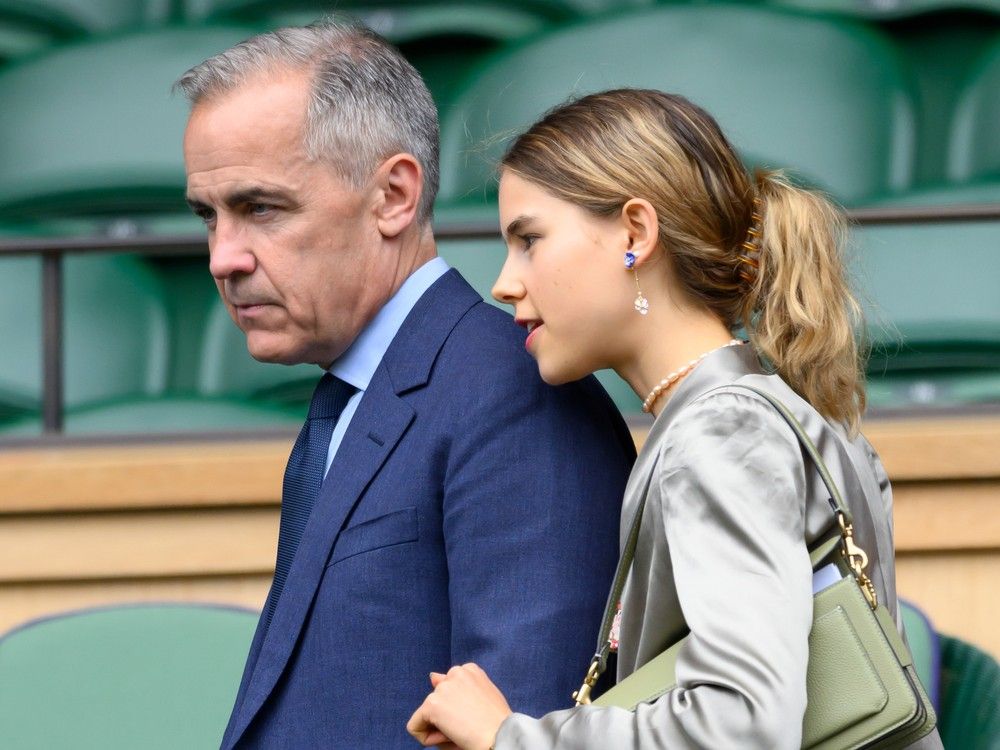
Mark Carney and Cleo Carney attend day ten of the Wimbledon Tennis Championships at the All England Lawn Tennis and Croquet Club on July 10, 2024 in London, England.

As Harvard University remains the focus of the Trump administration’s ire, the fate of its international students hangs in balance, including Cleo Carney, the daughter of the Canadian Prime Minister Mark Carney.

A little over a week ago, the Trump administration cancelled Harvard’s ability to enroll international students, leaving current foreign students to transfer to other colleges or risk losing their visa status.

“They have lost their Student and Exchange Visitor Program certification as a result of their failure to adhere to the law,” Homeland Security Secretary

Kristi Noem posted on X

on May 22. “Let this serve as a warning to all universities and academic institutions across the country.”

In return, the university sued the administration and won its initial court fight. The university on its website notes: “The May 29 court decision allows the University to continue enrolling international students and scholars while the case moves forward. Harvard will continue to take steps to protect the rights of our international students and scholars, members of our community who are vital to the University’s academic mission and community — and whose presence here benefits our country immeasurably.”

For the academic year 2024-2025, the Ivy League university had

6,793 international students enrolled

. As for the Canadians at Harvard, the

unofficial statistics of scholars and students

on its various campus roughly has ranged between 600 to under 800 over the years.

A first-year student, Cleo is pursuing bachelor’s in economics at the prestigious university, one her

father graduated from in 1987

. After Justin Trudeau stepped down as Prime Minister,

Cleo introduced her father

as the newly elected party leader in March at the Liberal Convention in Ottawa.

A sustainability REP for Harvard’s Resource Efficiency Program, Cleo also serves as a board member for Bluedot Institute, a climate-focused non-profit. “When she is not cooking or running,”

reads her Harvard bio

, “she is talking about the need for increased investment in the strategic mining industry.”

Why is the Trump administration making this move against Harvard?

“The White House confirmed Carney, along with other international students, would get the boot if the administration gets its way,” Gabrielle Fahmy for the

New York Post

wrote on Saturday.

“The President’s goal is clear: we will put America first, and that means our policies on everything from trade to immigration should benefit Americans, not other nations at the expense of our people,” a senior administration official told the New York Post.

National Post has reached out to the Prime Minister’s Office for comment.

As Cleo’s return to Harvard in September remains undecided, the

academic future of her siblings — Tess, Amelia and Sasha

— less so. Sasha graduated from Yale University in 2023, Amelia reportedly from the University of Edinburgh last year, and Tess has noticeably stayed out of the public eye.

Our website is the place for the latest breaking news, exclusive scoops, longreads and provocative commentary. Please bookmark nationalpost.com and sign up for our daily newsletter, Posted, here.


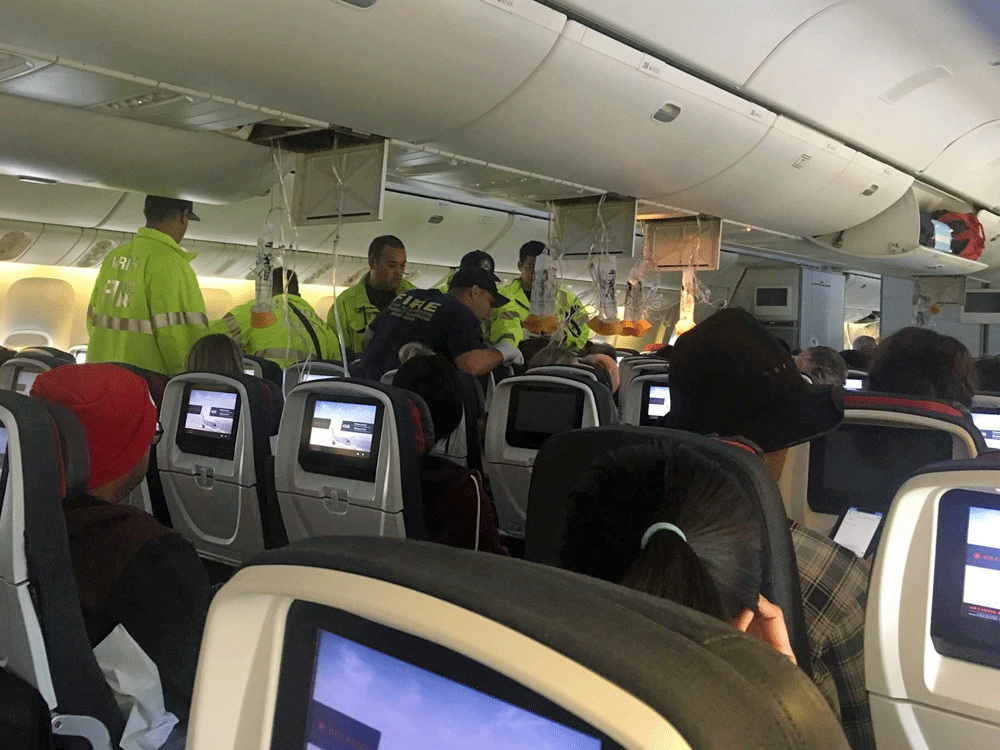
Emergency workers assist passengers of Air Canada AC 33 flight, which diverted to Hawaii after turbulence, at Honolulu airport, Hawaii, July 11, 2019.

This month, two passengers who claimed there should be no upper limit on the amount of compensation Air Canada owes to injured passengers

lost their case

in an Australian court.

The case stems from a

July 2019 Air Canada flight

from Vancouver to Sydney, Australia. The Canadian Press reported at the time that the flight hit severe turbulence and was forced to divert to Hawaii.

Thirty people were sent to hospital, nine in serious condition, some suffering lacerations and injuries to their head, back and neck, emergency first responders in Hawaii said.

Mother and daughter Renae and Stephanie Evans claimed they suffered spinal and psychological injuries during the flight. They also claimed that Air Canada, in its general rules, waived an upper limit set by an international treaty called the Montreal Convention.

The New South Wales Supreme Court initially ruled in favour of the passengers, a decision which was overturned by that state’s Court of Appeal.

The High Court

then unanimously dismissed the passengers’ case.

What is the Montreal Convention?

The Montreal Convention

 (or more formally the Convention for the Unification of Certain Rules for International Carriage by Air) is an international treaty that was drawn up in 1999 and came into force in 2003. It sets limits for airline liabilities for everything from lost luggage to loss of life.

In the case of the latter, it said airlines were liable for up to 100,000 SDR for the bodily injury or death of a passenger. SDR or “special drawing rights” is an economic unit that can be translated into any local currency; 100,000 SDR is worth about $192,000 Canadian.

The amount is examined and may be revised every five years.

As of 2024

it stands at 151,880 SDR, equivalent to $277,940 Canadian.

What was the Australians’ argument?

The plaintiffs had argued that Air Canada’s

terms and conditions

included the phrase: “There are no financial limits in respect of death or bodily injury of passengers,” suggesting that the airline was opting out of the limit set by the Montreal Convention.

However, Lawson Hennick, founding lawyer at Hennick Law in Markham, Ont., told National Post that on closer reading of the airline’s regulations and the lawsuit, the high court’s decision makes sense.

“Article 25 of the Montreal Convention expressly permits carriers to agree to higher or unlimited liability,” he said. “The court acknowledged this, noting that a carrier can raise or even eliminate the threshold at which the no-negligence defence applies.”

However, “the court rejected this position, finding that Air Canada had not clearly waived its right to rely on the no-negligence defence.” Specifically, language in the Montreal Convention note that its liability rules “supersede and prevail over any provisions of this tariff which may be inconsistent.”

Meanwhile, Air Canada’s own international tariff rules note that, “except as otherwise provided herein,” the airline “reserves all defences available.”

Said Hennick: “In the result, the passengers were unsuccessful in establishing that the carrier had waived the Article 21(2) defence for claims exceeding the maximum liability set out in the Montreal Convention.”

What does this mean for those injured by turbulence?

Hennick noted that the Montreal Convention, aside from its cap on liabilities, is very open-ended when it comes to injury or loss of life while flying.

“The Montreal Convention says the carrier is liable for damages sustained in the case of death or bodily injury of a passenger upon condition only that the accident which caused the death or injury took place on board the aircraft or in the course of any of the operations of embarking or disembarking,” he said. “So if you’re injured by turbulence, that’s considered onboard the aircraft, right? So I would say that would be something that could be compensable.”

He added that passengers can sue beyond the limit, “but if you want to claim it under the Montreal Convention, the benefit of that is all you have to do is prove your injuries.”

“As soon as you start claiming amounts above and beyond that, then they can start putting in defences for negligence. They can start alleging, well, the injury wasn’t caused by us, it was caused by a third party, or could have been a result of pre-existing issues, or something other than that. But if you’re going to be pursuing the limits under the Montreal Convention, it’s a strict liability regime. You just have to show that you’re injured on board the aircraft, prove the value of your injuries, and then they’ll have to pay it.”

One downside, he noted, is that the convention only mentions physical injuries.

“So if it’s a purely psychological claim or psychiatric trauma, and you’re not physically hurt … you may not be able to recover anything out of the Montreal Convention.”

Our website is the place for the latest breaking news, exclusive scoops, longreads and provocative commentary. Please bookmark nationalpost.com and sign up for our daily newsletter, Posted, here.


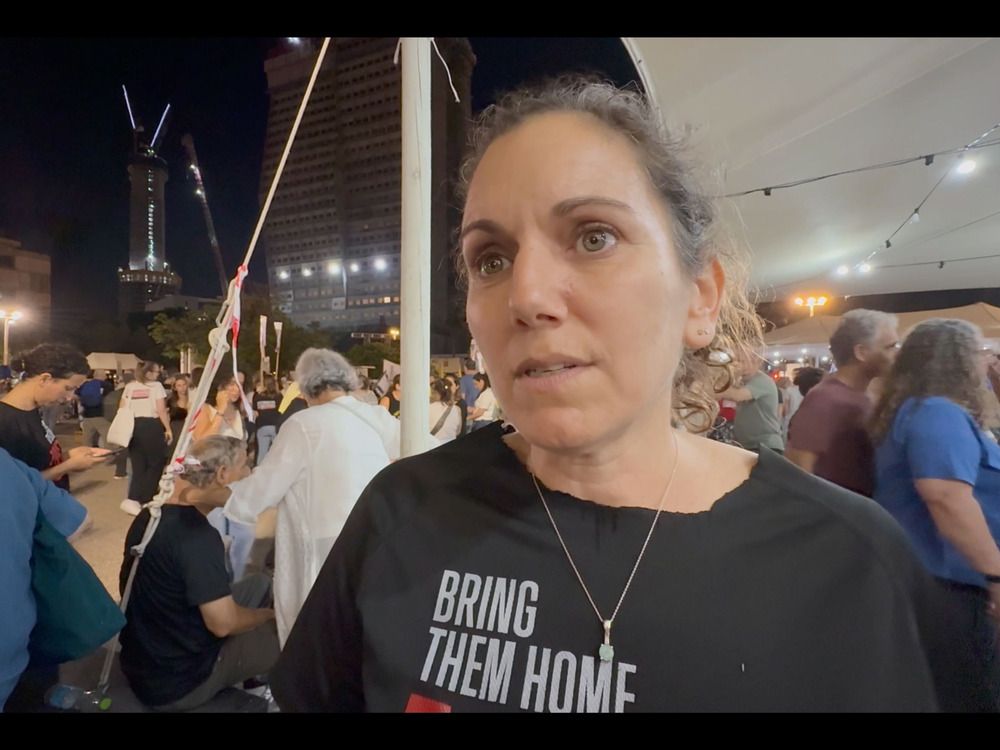
Nili Gefen at Hostages Square in Tel Aviv on May 24, 2025.

Tel Aviv — Every Saturday night, scores of Israelis (along with some tourists) stream into the courtyard of the Tel Aviv Museum of Art, which has become known as Hostages Square, to commune and to call for the return of people held captive in Gaza.

As of last Saturday’s rally, Hamas still held around 58 of its 251 initial hostages, some alive and some believed dead. Speakers at Hostages Square that night included former hostage Naama Levy and family members of other Hamas victims.

“In captivity, I saw thousands of people standing here, wrapped in flags, shouting, singing, holding pictures of the hostages — of my picture. It made me feel that I wasn’t forgotten. That it wasn’t over. That I would return,” Levy told the crowd, according to a translation.

The hostages rally is actually one of two regular, well-attended Saturday night protests in Tel Aviv; the other, a kilometre away at Habima Square, is explicitly political: they want the “corrupt government” of Benjamin Netanyahu gone. It’s part of the same movement that began before October 7, protesting Netanyahu’s proposals to limit judicial power, among other things.

In Hostages Square, however, they aim to be apolitical, even if they don’t always succeed.

As attendees flooded out of the square after last Saturday’s rally, National Post editor-in-chief Rob Roberts spoke to Nili Gefen about why she comes.

What draws people out every week?

I come here every Saturday, especially because at first we came because I thought it would make my government do something to bring them back. Now I come so the families don’t feel so alone.

I don’t know, after 600 days almost, I don’t know if this will change what the government does, but I do hope the families don’t feel so alone with their pain. Yeah, so it’s important we come here, not only sometimes. September, when the six hostages were murdered, we came every night. You know, we have children, jobs and things like that, but this is a terrible, terrible reality that I hope will change soon for everybody.

You talk about first coming here to try to send a message to the government. Obviously, you don’t think they’ve listened. What did you want the government to do?

It’s hard, because the seventh of October didn’t happen in a vacuum, because, like, a year before, there were protests every Saturday against the government.

Over the judicial changes?

Yes, and after the seventh of October, I think everybody — for me, it was very hard to continue protesting. Because it was hard for me to protest when the soldiers and the police are giving their lives to the country.

You wanted to be united as a country.

Yes, and from what I understand, also the families — some were more political, some didn’t want the politics. But everything is politics now, we understand that. We’re just like, they’re putting us on their little chess game.

And for me, the only thing I think now is important is that the hostages just come back. This can’t continue, that people are being tortured and being starved. This has to stop. Afterwards, we’ll go back — I’ll go back — to protest against the government. But right now, I think the only thing that is important — everyone does what they can, because I think mostly we feel very helpless.

Hamas has said they will do October 7 again, if they get the chance. Do you feel a need to eliminate Hamas as well?

I’m a psychotherapist. I have no idea how to solve this thing. No idea.

But in terms of setting priorities.

I want, I think, that my government should do everything in its power, first to get them back, then to keep us safe.

And I’m sure that the people there should know how to do it, and if they don’t, go home and get other people who do know how to do it. I have no idea how to do it. OK? So I’m not telling anyone what to do. I’m just saying, I mean, this is common sense.

I believe that also in the Gaza Strip, not everyone is Hamas and we can’t kill everyone, and we have to find a solution that is both, I say — political and army-wise — I don’t have enough good English, but I’m sure there are people who know how to do it.

I’ve been struck that when Israel is under what seems an existential threat, that the emphasis is given to not just hostages — naturally, because they’re living people — but even to the return of the deceased. Can you speak to that?

I feel it’s like a human (thing), and also very, very Israeli thing, because it’s a small country, and that it’s been threatened always.

And you know, it’s not like if I look at my own personal history, my mother came here as a baby, but they came here because they had to flee Germany because of the Holocaust, and my father came here as a small child from the Fahrud in Iraq, where they were also prosecuted.

And so I think this is a small country, and that the reason that it tries and survives is because everyone is important. And I don’t know how you say this in English. It’s Arvut Hadadit. It’s like — that, I will do anything for you, and you will do anything for me. You know, most of us are in the army. That’s, that’s what you do. You do anything you can for your brothers and sisters.

And I do feel, and I think many people feel, that it’s our brothers and sisters over there. And even though, if we don’t know them personally, we cannot heal if they are not here. And we know what it is for the families that they don’t have a grave. And also in the Jewish tradition, it is that you have to bring people to their grave, to give them the last piece, and the families they have to have the last piece and the closure.

National Post

(This Q&A has been edited for clarity.)

Our website is the place for the latest breaking news, exclusive scoops, longreads and provocative commentary. Please bookmark nationalpost.com and sign up for our newsletters here.


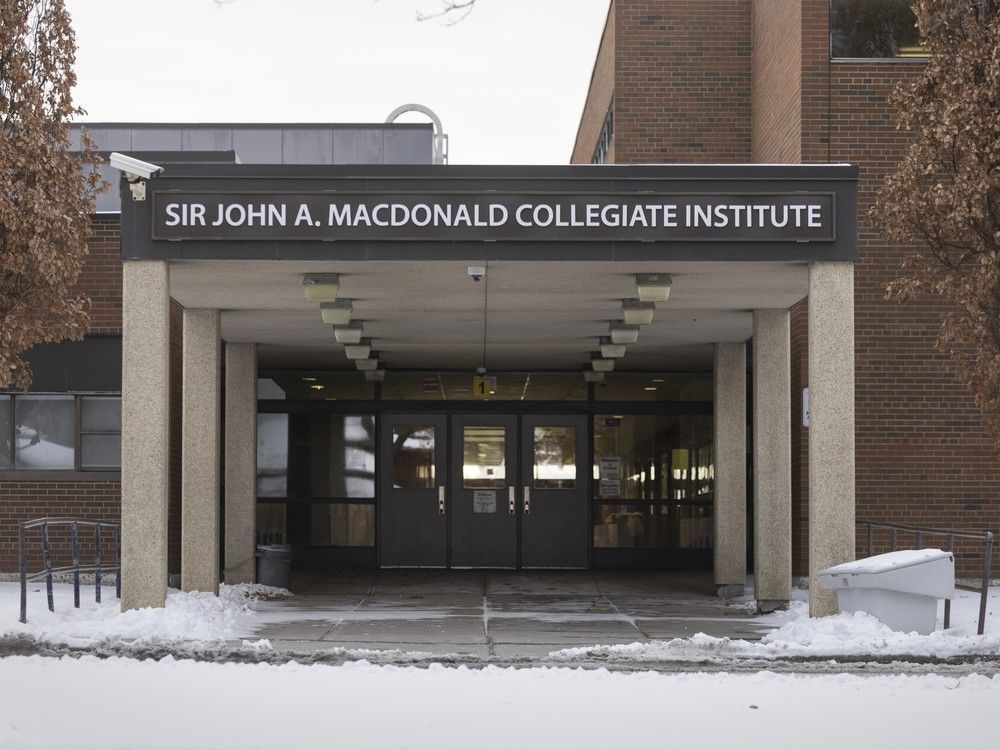
Sir John A. Macdonald Collegiate Institute in Toronto.

The Toronto District School Board has been stopped from erasing the names of Sir John A. Macdonald, Egerton Ryerson and Henry Dundas from its schools.

The new legislation, introduced by Ontario education minister, Paul Calandra, on May 29, will require a board to apply to the minister before changing the name of an existing school.

If a board began using a new name on Jan. 1, 2025 or afterward, the law would still enable the minister to require a board to apply for approval.

Then it will be open to the minister to approve or reject the new name.

The legislation,

Supporting Children and Students Act, 2025

, takes aim at school board accountability, in particular financial mismanagement.

“I should be able to move quickly when it is very clear that a school board has lost its way. The legislation I introduced today, if passed, would allow me to do that,” Calandra posted on X.

The legislative basis for shutting down the TDSB effort is the prevention of boards from “misspending dollars meant for education on wasteful things, such as the time and resources that the TDSB put into the renaming initiative,” says Allan Williams, executive director for the Canadian Institute for Historical Education (CIHE).

“The CIHE is very pleased with the draft legislation introduced by Minister Calandra yesterday that would give him the authority to prevent the misguided attempt by the TDSB to remove the names of Macdonald, Ryerson and Dundas from the three Toronto schools,” says Williams.

“We have been calling on the Ontario government to take the steps necessary to prevent or overturn the schools’ renaming, so we’re happy today and thank Minister Calandra. But draft legislation can take time to become law, so we urge him and the Ford government to move quickly on this.”

Earlier this year, the CIHE called on Premier Doug Ford to intervene and prevent the TDSB from removing the three names. It also sent a representative to a meeting of the TDSB’s Planning and Priorities Committee.

Those efforts seemed to be for naught, as the board announced in late February that it was going ahead.

Williams says the

CIHE petition to stop the TDSB

will stay online for signing until the proposed legislation is a done deal.

Historian J.D.M. Stewart calls the government’s move “a rebuke of the TDSB and its flawed process for renaming these schools, a process that inexplicably did not include consultation with historians.”

On a positive note, Stewart says, this is “an opportunity to learn more about our history. The last several years have been filled with misinformation and misunderstanding.”

The new legislation was hailed by education consultant Paul Bennett in a post on X. “Historic School Names Saved in Toronto! Ontario Education Minister @PaulCalandra intervenes to halt erasure of John A. Macdonald, Egerton Ryerson and William Dundas from Toronto schools,” he wrote on Friday.

The move came just two days after the Ontario government decided to remove the plywood box surrounding

John A. Macdonald’s statue at Queen’s Park

, restoring it to public view.

Our website is the place for the latest breaking news, exclusive scoops, longreads and provocative commentary. Please bookmark nationalpost.com and sign up for our daily newsletter, Posted, here.


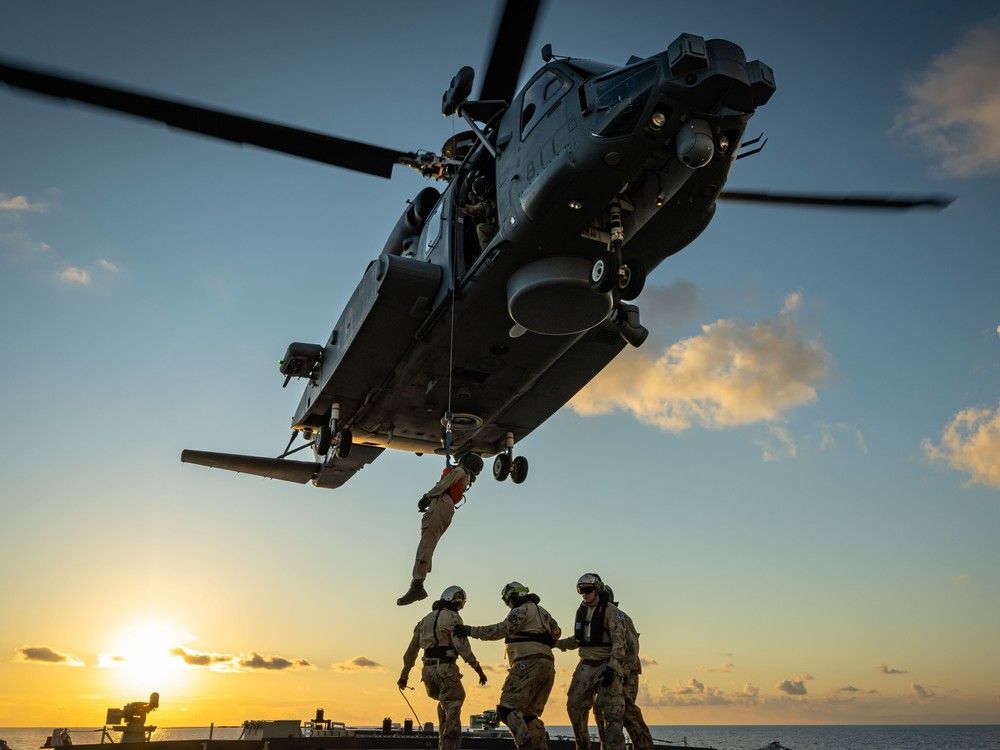
Members of the Helicopter Air Detachment aboard HMCS MONTREAL conduct helicopter hoist drills with a CH-148 Cyclone helicopter, call sign Strider, during Operation REASSURANCE on Feb. 13, 2022.

The Canadian military’s Cyclone helicopters weren’t flying for 27 days in May due to a lack of spare parts, and only one of them is now able to take to the skies.

Canada has 26 of the ship-borne maritime helicopters, with a final one slated for delivery this year. The $5.8-billion fleet is normally used to provide air support for the Royal Canadian Navy. Their missions include surface and subsurface surveillance, search and rescue, and anti-submarine warfare.

“On May 1, the Commander of 1 Canadian Air Division ordered a temporary pause to flying operations for the CH-148 Cyclone fleet, after questions emerged in late April about whether various spare parts for the aircraft were potentially in use beyond their service life. The temporary pause to flying operations was lifted as of May 27,” Kened Sadiku, who speaks for the Department of National Defence (DND), said in an email.

“Certain aircraft components have a defined service life to ensure continued safety and airworthiness. Because using parts beyond their defined service life would pose risks to the safety of personnel and equipment, the decision was made to temporarily pause flight operations until certainty is regained.”

DND, the military and Sikorsky, which manufactured the helicopters, “have been working together to identify potential parts of concern. This includes components of the Cyclone’s landing gear, tail rotor driveshaft flange and auxiliary power unit, as well as engine parts,” Sadiku said.

As of this past Wednesday, one Cyclone, now on deployment, returned to flying operations, he said. “The team works to do the same for the rest of the fleet.”

The Cyclone “fleet is currently facing some challenges, such as aging datalink systems as well as sensor and other capabilities that are overdue for important upgrades,” he said. “Specific details, however, cannot be provided for reasons of operational security.”

Military and government officials “are working together with industry partners to determine a way forward for the aircraft and the capabilities it supports,” Sadiku said.

“The Cyclone remains capable of supporting Royal Canadian Navy operations and will continue to do so for the foreseeable future.”

Sadiku wouldn’t confirm Sikorsky has put a hefty price tag on replacing the Cyclones’ ageing datalinks — used to communicate digital information such as radar images to other aircraft, warships and shore bases. “The datalink upgrade project is still under evaluation, as such, schedule and costs are still being negotiated.”

The military has flown other helicopters off the navy’s warships before.

“In the past, CH-146 Griffons have landed on Royal Canadian Navy vessels in certain operational contexts (specifically, the relief efforts to Haiti in the wake of the 2010 earthquake,” Sadiku said. “However, none of the Royal Canadian Air Force’s helicopter fleets (besides the CH-148 Cyclone) are capable of fulfilling the maritime helicopter role in support of the Royal Canadian Navy.”

Paul Martin’s Liberal government announced in 2004 that the Cyclones would replace Canada’s ageing fleet of CH-124 Sea King helicopters.

“The Cyclones are what we call an orphan fleet,” said retired colonel Larry McWha, an aviation expert who commanded 423 Maritime Helicopter Squadron at 12 Wing Shearwater, when it flew Sea Kings.

That means many suppliers aren’t interested in producing parts for the Cyclones, McWha said. “It’s going to cost us money to keep (the fleet) viable.”

McWha lives on Nova Scotia’s Eastern Shore.

“I used to see Sea Kings flying by here all the time,” he said. “I have extremely rarely ever seen a Cyclone flying by.”

Canada lost a Cyclone on April 29, 2020 when one of the helicopters crashed into the Ionian Sea, claiming the lives of six Canadian Armed Forces members. Months later, senior military officials said there was a “conflict” or “competition” between the Cyclone and its pilot moments before the aircraft, known as Stalker 22, plunged into the water off the coast of Greece.

Our website is the place for the latest breaking news, exclusive scoops, longreads and provocative commentary. Please bookmark nationalpost.com and sign up for our daily newsletter, Posted, here.


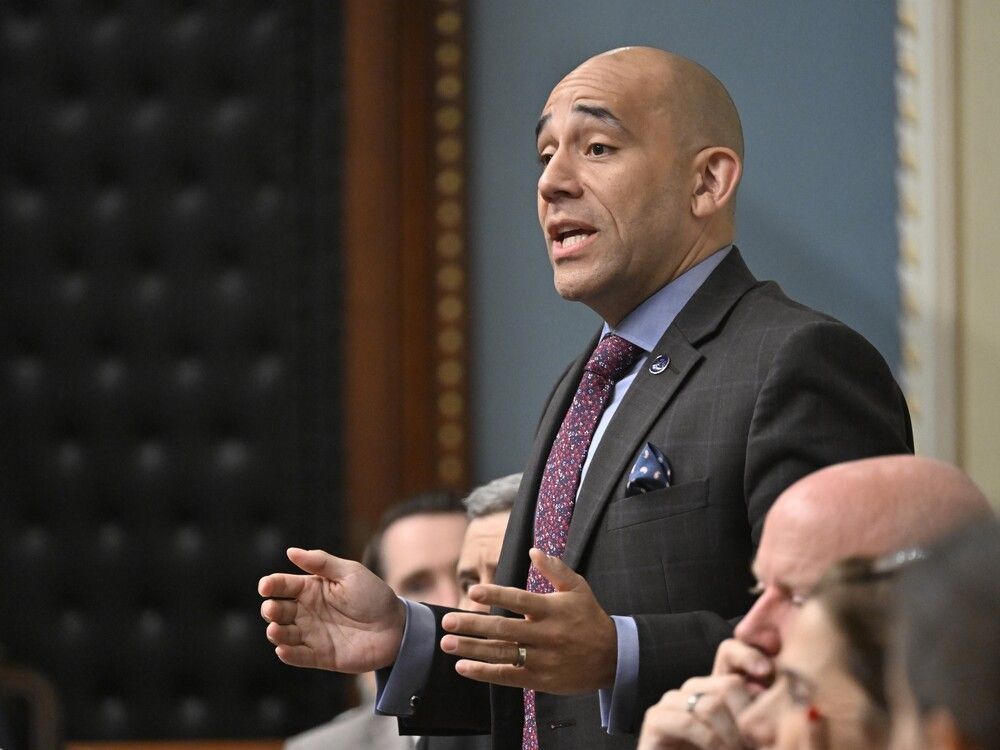
Christopher Skeete, Quebec’s minister delegate for the economy.

OTTAWA – Quebec is joining the Canadian internal trade party. One of the most regulated provinces in the country has introduced “the most ambitious bill in Canada” aimed at removing its trade barriers.

“We are sending a signal that Quebec is open to interprovincial trade,” said Christopher Skeete, Quebec’s minister delegate for the economy. “We must accept to open our market.”

Quebec is yet another Canadian province to remove such barriers, along with Nova Scotia, Ontario and New Brunswick. Nova Scotia was the first province to pass a new law encouraging reciprocity between provinces and territories earlier this year.

“For me, reciprocity is not the answer. Our solution has been to open for everybody regardless, and we believe if everybody does that, we each achieve the same goal,” Skeete said in an interview with National Post.

With Prime Minister Mark Carney scheduled to meet with his provincial counterparts in the coming days, Quebec announced it wants to open its market to other provinces by allowing any of their products to be marketed, used or consumed without any other requirement.

The idea is to facilitate trade in goods by adopting the principle of automatic recognition applicable to all Canadian products. Exceptions will be announced later, but alcohol is not among them. Though, it will be treated “separately” due to its specific characteristics.

“If it’s good for somebody in Ontario, it should be good for Quebecers, unless we have a reason to say otherwise,” Skeete said. The reasons may be related to the protection of human safety, health, or the environment, for example. The construction sector is not included because the Quebec Building Code and the sector are different from those in the rest of the country.

According to the government, 60 per cent of Quebec businesses have no activity in the Canadian market. However, since 2018, domestic trade has increased by 34 per cent to reach nearly $200 billion. Quebec businesses currently export goods and services worth $108 billion and import $96 billion.

“In Quebec, we have our Civil Code… so it creates a little bit of a difference in the way that we write laws here, said Skeete. We had to do more work to make sure that we harmonize a little bit more with the rest of Canada.”

Skeete denied that Quebec is the most protectionist province in the country, nor the most regulated, even though it has the most trade exceptions. He admits that his province is “unique” and “different” from others.

The legal traditions are different, there is a minority language to protect, and supply management in the dairy, egg, and poultry sectors is a top priority.

A 2023 study

by the Montreal Economic Institute (MEI) concluded that Quebec was the most isolated province and, more recently, that it could add up to

$70 billion to Canada’s GDP

if it abolished its trade barriers.

Skeete said the new law could add $10 billion to $25 billion to the province’s GDP. “These are the preliminary figures we have. I’m comfortable with them,” he said.

The MEI, a free market think tank often critical of the Quebec government, welcomed the bill, calling it “a major step in the right direction to liberalize interprovincial trade.”

“(An) area of concern is the mention of a list of exemptions that will be coming later. While this is not unusual for such bills, it’s important to recognize that the longer that list becomes, the smaller the gains will be,” said Gabriel Giguère, senior policy analyst at the MEI.

In Ottawa, Internal Trade Minister Chrystia Freeland praised the “great leadership from Quebec” and Minister Skeete.

“As our economy is battered by U.S. tariffs, we can work together to make Canada stronger and more resilient by building one Canadian economy, instead of 13,” she wrote

on social media

.

However, the National Assembly unanimously rejected the notion of “one Canadian economy, instead of 13”.

In a motion, Quebec’s MNAs reaffirmed Quebec’s right “to protect its own interests, particularly economic, cultural, and linguistic, based on its distinct priorities and social values, while working to reduce barriers to interprovincial trade.”

Skeete said that he agrees with the federal government’ “objective” which is to facilitate trade between the provinces. Though, he disagrees with the “one entity”.

“We’re not the same. And we are federated states, a group of federated states, each with our own concerns and particularities, and that must continue going forward,” Skeete said.

National Post

atrepanier@postmedia.com

Get more deep-dive National Post political coverage and analysis in your inbox with the Political Hack newsletter, where Ottawa bureau chief Stuart Thomson and political analyst Tasha Kheiriddin get at what’s really going on behind the scenes on Parliament Hill every Wednesday and Friday, exclusively for subscribers Sign up here.

Our website is the place for the latest breaking news, exclusive scoops, longreads and provocative commentary. Please bookmark nationalpost.com and sign up for our newsletters here.


Loblaw Corporate Limited headquarters in Brampton, Ont.

Canadians who bought packaged bread in the past two decades may be eligible for a cash payout from a $500-million

bread-fixing class action settlement

.

Earlier this month, the Ontario Superior Court approved the national

 
settlement
of

 a lawsuit that accused Loblaw Cos. Ltd. and its parent company, George Weston Ltd., of participating in an industry-wide scheme to fix the price of bread.

The Quebec Superior Court still needs to approve a second agreement applicable to residents of that province, during its next hearing on June 16.

Seventy-eight per cent of the

funds are allocated

to the Ontario class (covering all of Canada except Quebec), and 22 per cent to the Quebec class.

What type of bread purchase will qualify for making a claim?

Eligible bread includes most packaged bread products found in grocery store aisles (e.g., sliced sandwich bread, buns, rolls).

Ineligible items generally include bread baked fresh in-store, artisan loaves or frozen bread.

Who is eligible to make a claim?

Eligible claimants include individuals or businesses who purchased

packaged bread

, produced or distributed by one of the defendants, in Canada between Jan. 1, 2001 and Dec. 31, 2021.

Claimants to the Ontario settlement who bought the product for personal use must have resided in Canada (excluding Quebec) as of Dec. 31, 2021.

A claimant who received a

$25 Loblaw gift card

in 2018–2019 will still be eligible, but the gift card amount will be deducted from any payout.

Defendants and related parties are excluded.

How can a claim be made?

Once both settlements are approved, an online claims process will be established on the official

Ontario

and

Quebec

settlement websites.

Eligible individuals and businesses are

automatically included

in the class action. They will need to submit a claim online once the process opens.

For updates and to submit your claim, monitor the official settlement websites.

What about proof of purchase?

If you have kept grocery receipts from the eligible period, look for packaged bread products from major brands or store brands associated with the named companies.

If you do not have receipts, you can still file a claim. The settlement does not require proof of purchase for claims up to a certain amount (typically $25), but you may be asked to provide details about where and when you usually bought bread.

Higher claims or business claims

may require documentation.

How much will be paid out per claim?

The exact payout has not yet been determined and will depend on the number of approved claims and the net settlement amount after legal and administrative fees.

Most eligible claimants who did not previously receive a Loblaw gift card could receive up to $25.

Our website is the place for the latest breaking news, exclusive scoops, longreads and provocative commentary. Please bookmark nationalpost.com and sign up for our daily newsletter, Posted, here.


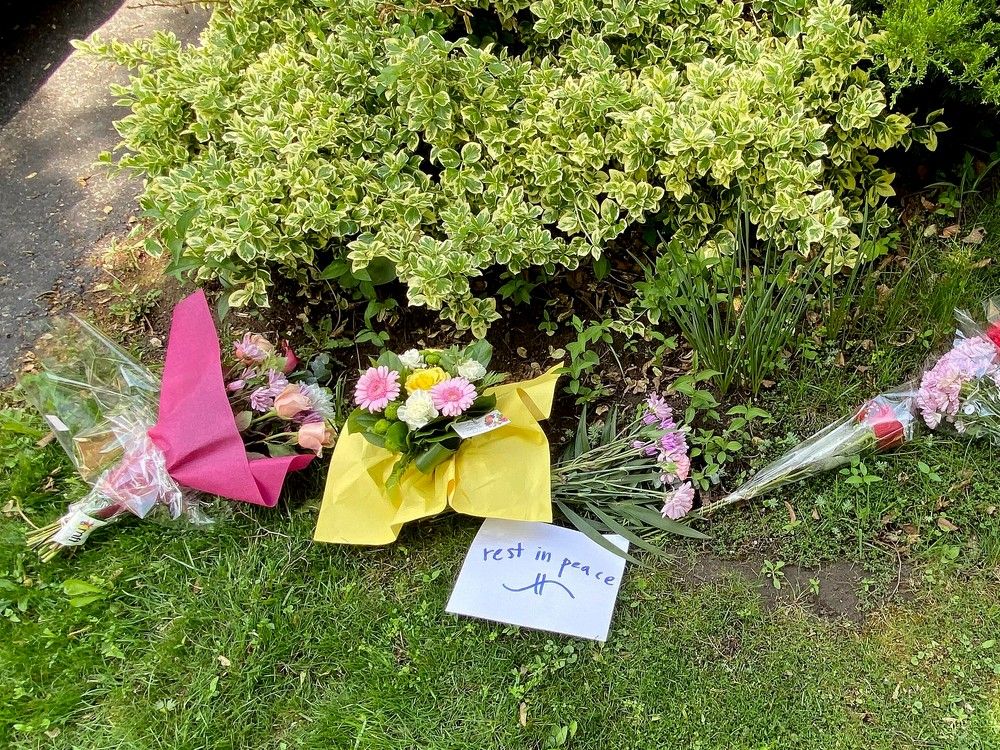
Community members in Pickering are reeling after a 14-year-old boy was arrested following the fatal stabbing of an elderly woman outside her home. A small memorial is seen in Pickering on May 30, 2025.

A teenage boy has been charged with first-degree murder after a woman was fatally stabbed in Pickering, Ont.

Police received a call to a residential area of the Southern Ontario city around 3 p.m. on Thursday, Durham Regional Police said in

a news release

. A passerby had noticed an elderly woman lying on the ground outside of a home near Lynn Heights Drive and Fairport Road. The victim was brought to a Toronto-area trauma centre where she was pronounced dead.

On Friday, the 14-year-old suspect appeared in court via video from the Durham Regional Police Division 17 for a hearing in Oshawa,

CBC News reported

. He said he understood the charges against him and confirmed he had the chance to speak with a lawyer.

In an update to media on Friday morning, acting staff Sgt. Joanne McCabe said police are investigating reports of the suspect allegedly looking at homes in the area weeks before the incident. Although the attack appeared to be random, she said the victim and the suspect had a brief conversation before the woman was stabbed.

A neighbour told CBC she saw the suspect walk toward the woman’s house, but couldn’t see the stabbing from where she was sitting in her bedroom.

“It seems like a lot of people have seen him walking around that day, around that time, just because he stood out quite a bit,” said Pickering resident Gabriela Fredericks.

After watching video footage of the area,

police said

the woman was outside of her house when a suspect approached her. There was a brief encounter and then the woman was attacked. She was stabbed “multiple times,” police said.

A shelter in place was in effect while police conducted a search, and the Ontario Provincial Police issued an Alert Ready notice.

The search team included officers from multiple units, including Air1, Drone, K9 and Tactical Support, according to Durham Regional Police.

The suspect was discovered by police at 8:30 p.m. on Thursday evening and taken into custody without incident.

A press conference was held after the arrest on Thursday. Durham Regional Police Service Chief Peter Moreira told media that authorities would not be revealing details about the arrest,

CP24 reported

. He said the investigation was “in its infancy” and those details “may form part of the evidence.” He said the investigation would also uncover if the victim and suspect knew each other in any way.

Moreira said the victim was stabbed “in a sadistic and cowardly unprovoked attack that was captured on video.”

Pickering Mayor Kevin Ashe posted on X on Thursday, giving his “thoughts, prayers, and sympathies” to the victim and her family.

Ashe also thanked the Durham police “for their efforts in bringing this to a quick resolution.” He later confirmed the woman was in her 80s.

The woman, whose identity has not been made public by police, was a retired teacher, according to neighbour Laurie Deoliveira.

“We live in a safe community. It’s not a normal thing to happen,” she said.

Deoliveira, along with others from the community, have laid flowers at the woman’s home.

Brian Fredericks, who lives across the street from the victim, called her a “lovely lady” whom he had known for 32 years.

A candlelight vigil was set for Friday evening, although its organizer John Meloche later cancelled the event. He said in a Facebook post that it was due to the family’s wishes to have privacy “during this incredibly difficult time.”

The 14-year-old will not be named, as the Youth Criminal Justice Act in Ontario prohibits the identification of minors in such cases.

He is due back in court on June 20, CBC reported.

With additional reporting by The Canadian Press.

Our website is the place for the latest breaking news, exclusive scoops, longreads and provocative commentary. Please bookmark nationalpost.com and sign up for our daily newsletter, Posted, here.


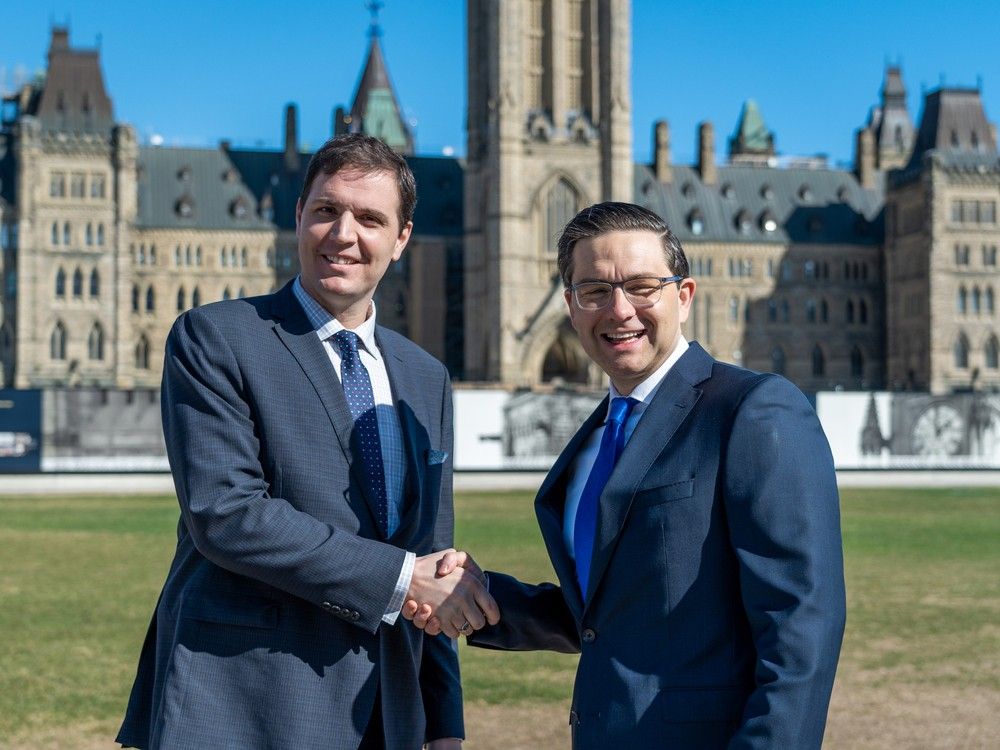
Member of Parliament for Battle River—Crowfoot, Damien Kurek, right, with Conservative Leader Pierre Poilievre.

OTTAWA — With a wave of his black cowboy hat and a call for all Parliamentarians to “fight for Canada,” Alberta Conservative MP Damien Kurek made a heartfelt final address in the House of Commons Thursday before stepping aside for leader Pierre Poilievre.

Flanked by a few dozen of his Conservative colleagues after question period, the MP for Battle River—Crowfoot said that politics had been a “wild, wild ride” for him and his family as he called on his constituents to support Poilievre in the upcoming byelection.

During his 10-minute speech, he called on MPs to fight together for Canada, argued that Alberta deserves a “fair voice” within the federation, threw the occasional barb at the Liberals and joked that stepping down was a more complicated process than expected.

“I didn’t know it would be quite so much work to resign,” the hulking Kurek said with his emblematic booming voice, earning laughs from MPs in the chamber.

Kurek was first elected in the rural Alberta riding in 2019 and was handily re-elected in April with over 80 per cent of the vote. But when Conservative leader Pierre Poilievre lost his longtime Ottawa riding of Carleton, Kurek announced he would step aside to allow the party head to run in his stead.

Kurek said he will resign as soon as House of Commons rules allow it, likely meaning in late June. He’s also promised to run again in Battle River—Crowfoot in the next federal election.

“I don’t plan to retire from politics, but I am stepping aside to ensure that this byelection is triggered,” he said.

The reason why Kurek is the Conservative MP stepping aside for Poilievre appeared to come from NDP MP Gord Johns, who expressed his condolences to Kurek for his father’s passing in the last year and wishing him well in taking over the family farm.

“He’s going to do well with it, and we wish him well as a farmer, supporting Canadians so we get our food, and the work that he does around his farm,” Johns said.

“I thank the member for the very kind words,” Kurek replied. “And I think it emphasizes that in this place, we can trade passionate partisan barbs, we can passionately disagree, but that doesn’t mean that there’s hatred toward each other.”

His farewell speech was briefly heckled by Liberal MPs, one of which loudly booed his announcement that he was resigning to allow Poilievre to run and another who loudly lamented the cost of a byelection (estimates vary from $1.7 million to $2 million).

The comments pushed Conservative MP Michael Barrett to cross the aisle and apparently scold them before Johns and some Liberal MPs jumped in to lower the temperature.

While responding to later well-wishes from the Liberals, NDP, Bloc Québécois and Greens, Kurek acknowledged that he was excited to be back on the family farm — and far from opposing party benches.

“I look forward to being able to spend a little bit more time in a tractor cab. The good thing about being in a tractor cab, Mr. Speaker, is that it doesn’t heckle you,” he said.

Kurek also repeatedly thanked his wife Danielle, who was watching from the visitors’ gallery, for supporting his time in politics and noted that he looked forward to spending more time with his three sons.

He then finished with a call to action for all MPs.

“As Danielle and I move on to what is a bit of an unexpected chapter of our lives, I would ask each and every person in this House: fight for Canada, fight for what’s right, and do so boldly and strongly, because that’s the least we can do for the people that send us here.”

“I plan to be back, God willing, but in the meantime, I look forward to being the best husband, the best dad and the best rural farmer that I can possibly be,” he added.

He then stood up, waved his trademark black cowboy hat in the air, and walked out of the House of Commons.

National Post

cnardi@postmedia.com

Get more deep-dive National Post political coverage and analysis in your inbox with the Political Hack newsletter, where Ottawa bureau chief Stuart Thomson and political analyst Tasha Kheiriddin get at what’s really going on behind the scenes on Parliament Hill every Wednesday and Friday, exclusively for subscribers. Sign up here.

Our website is the place for the latest breaking news, exclusive scoops, longreads and provocative commentary. Please bookmark nationalpost.com and sign up for our politics newsletter, First Reading, here.