



LP_468x60
on-the-record-468x60-white

The lengthy legal battle between K.S., who was born male, dates back to 2022.

A non-binary Ontario resident’s years-long battle for a publicly funded, out-of-country surgery to have a vagina surgically created while maintaining a penis is over.

The Ontario government says it won’t ask the Supreme Court of Canada to review a lower court’s ruling in April declaring that the novel phallus-preserving surgery qualifies as an insured service under the Ontario Health Insurance Plan (OHIP) — the latest win for the patient, identified only as K.S.

The province had until June 23 to seek leave to appeal the April court ruling to the country’s highest court. In an email to National Post this week, a spokesperson for Ontario’s Ministry of the Attorney General said the government won’t pursue the case.

It’s not clear how requests for similar niche gender surgeries will be decided or adjudicated in the future.

The lengthy legal battle between K.S., who was born male, dates back to 2022. K.S. does not identify as either exclusively female or male, but is female dominant and uses feminine or neutral pronounces (she/her/they/them).

According to court records, K.S. “has experienced significant gender dysphoria since her teenage years, as well as physical, mental and economic hardships to transition her gender expression to align with her gender identity.”

In 2022, her Ottawa doctor requested pre-approval from OHIP for a vaginoplasty — the surgical creation of a vaginal cavity — but without a penectomy, which is when the penis is removed.

In a letter to OHIP, K.S.’ doctor said that her patient “identifies as trans feminine but not completely on the ‘feminine’ end of the spectrum and for this reason it’s important for her to have a vagina while maintaining a penis.”

A vaginoplasty without a penectomy isn’t available in Canada and, therefore, the funding was to have the procedure done at the Crane Center for Transgender Surgery in Austin, Texas, which “has an excellent reputation (for gender-affirming surgery) and especially with these more complicated procedures,” the doctor wrote to OHIP.

OHIP denied the coverage, arguing a vaginoplasty without removal of the penis isn’t listed as a separate, specific procedure under its schedule of benefits, and therefore didn’t qualify for coverage.

K.S. appealed OHIP’s denial of coverage to a tribunal. K.S. testified to concerns about the risk of urinary incontinence if she went through with a penectomy, “the risk of losing the ability to experience an orgasm and the concern that removing her penis would invalidate her non-binary identity,” according to court documents.

The review board overturned OHIP’s refusal, arguing that vaginoplasty and penectomy are listed as separate, sex reassignment procedures covered by OHIP, and that a vaginoplasty need not inherently include removal of the penis.

OHIP appealed to the Ontario Divisional Court, but lost again when a three-member panel of judges unanimously backed the tribunal’s position.

That court also said that denying the procedure would infringe on K.S.’ Charter-protected rights. The court concluded that insisting that a transgender or non-binary person born a biological male “remove their penis to receive state funding for a vaginoplasty would be inconsistent with the values of equality and security of the person.”

OHIP appealed again, losing a third time to the Ontario Court of Appeal which, in another unanimous decision released in April, dismissed OHIP’s appeal and confirmed the lower court’s ruling.

The three-member panel of judges for the appeal court said a penectomy was “neither recommended by K.S.’ health professionals nor desired by K.S.” and that it was up to the drafters of OHIP’s list of insured services to describe each sex reassignment procedure “in broad or narrow terms.

“Here, the description chosen, ‘vaginoplasty,’ is broad enough to encompass different techniques,” the appeal court said. “There is no suggestion that the existence of different techniques of performing a vaginoplasty detract from the more basic notion that the procedure recommended for K.S. is still vaginoplasty.”

Egale Canada, which appeared as an intervener for K.S., has described the surgical care K.S. sought as one that “challenges expectations and stereotypes of gender and surgical transition.”

“An interpretation of the eligibility criteria for gender-affirming surgeries that relies on binary stereotypes is discriminatory and denies equal dignity and autonomy to nonbinary people,” 

the LGBTQ rights group has said.

K.S.’s lawyer, reached Friday, referred National Post to previous comments, made after a prior victory in the courts. “K.S. is pleased with the Court of Appeal’s decision, which is now the third unanimous ruling confirming that her gender affirming surgery is covered under Ontario’s Health Insurance Act and its regulations,” John McIntyre said.

National Post

Our website is the place for the latest breaking news, exclusive scoops, longreads and provocative commentary. Please bookmark nationalpost.com and sign up for our daily newsletter, Posted, here.


In its latest annual report published Friday, the Communications Security Establishment (CSE) offered new detail about what it does during an “active cyber operation.”

OTTAWA — Canada’s cyberintelligence agency doesn’t just go after violent extremist group leaders’ computers and networks, it also attacks their reputation, credibility and trustworthiness to undermine them, according to a new report.
 

In its latest annual report published Friday, the Communications Security Establishment (CSE) offered new detail about what it does during an “active cyber operation”.
 

In other words, how CSE leads its minister of defence-approved campaigns meant to disrupt, influence or interfere with online threats posed by hostile actors like foreign states, organized crime or extremist groups.
 

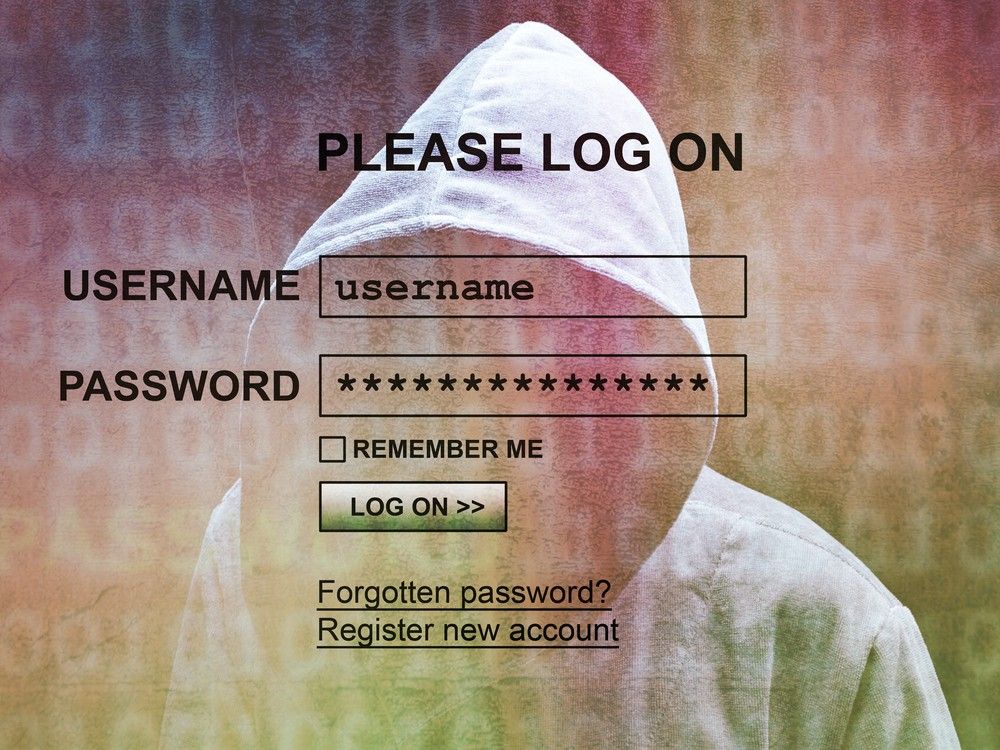
The activities go well beyond the clichéd image of tech wizards in hoodies hacking into foreign threat actors’ computers and wreaking havoc on their IT systems (though that also happens).
 

In cases last year where CSE ran operations against violent extremist organizations, for example, the cyber-spy agency targeted the adversaries’ online presence and reputation on top of their IT infrastructure.
 

“Using a multi-faceted approach that targeted VEOs’ technical infrastructure and online presence, CSE conducted active cyber operations to damage the credibility and influence of key group leaders, reducing their ability to inspire and lead,” reads the report.
 

The operations also aimed to “weaken trust and reduce cohesion between leaders and followers, undermining the unity and strength of these organizations,” the report continues.
 

Asked in an interview if CSE leads online disparagement campaigns against leaders of violent extremist organizations, Cyber Centre deputy head Bridget Walshe declined to go into detail.
 

“It’s difficult for me to get into details about the actual techniques that are being used, because if we share those techniques, then that impacts them and the effectiveness decreases,” Walshe said.
 

“Violent extremism is a big one, because there is an immediate threat to Canada. So, what we’ve tried to do is highlight what the impact is” of CSE’s cyber operations, she said of the latest report.
 

In total, CSE says it was authorized to run four active or defensive cyber operations last fiscal year, including another that targeted the 10 biggest ransomware groups impacting Canada.
 

In one case late last year, the agency detected a ransomware group targeting Canadians working in a critical infrastructure sector. Within 48 hours, the report reads, CSE’s teams identified and notified victims and ran a cyber operation to disrupt the criminal group’s activity.
 

The spy agency also said that it helped identify legitimate businesses that were covertly supporting foreign governments’ military, political and commercial activities meant to undermine the Canadian Armed Forces.
 

Walshe declined to say if the businesses were Canadian or had a connection to Canada but noted that CSE’s mandate does not allow it to act against Canadians.
 

“Our mandate in this sphere is foreign,” she said.
 

Over the last fiscal year, CSE says it responded to 2,561 cyber security incidents affecting either the government of Canada or critical infrastructure providers.
 

That’s a 16 per cent increase compared to the previous year as hostile actors increasingly target Canada’s critical infrastructure sectors such as energy, finance, food, water and manufacturing.
 

CSE also says in the report that between 2020 and 2023, it improperly shared information about Canadians with international partners that had been acquired “incidentally” while targeting foreigners.
 

“Corrective actions included placing strict limits on information sharing and seeking assurances from CSE’s trusted partners that the shared information was deleted,” the agency said, adding that it also notified the minister of defence.
 

The report does not detail how many Canadians were impacted or what information was improperly disclosed.

Once again, CSE says the People’s Republic of China is by far the most prominent threat to Canada’s national security, engaging in activities ranging from espionage to intellectual property theft and transnational repression.
 

China’s targets are also vast and include government, civil society, media, the defence industry and the R&D sector.
 

“The People’s Republic of China (PRC) operates, and continues to expand, one of the world’s most extensive and dynamic security and intelligence systems,” reads the report.
 

“The PRC cyber program’s scale, tradecraft and ambitions in cyberspace are second to none.”
 

Russia is also a key threat actor and continues to conduct espionage, spread disinformation and run influence operations against Canadians.
 

Unlike previous years, the 2024-2025 annual report does not mention North Korea and barely notes the cyber threat posed by Iran, though Walshe said both regimes remain problematic for Canada.
 

“They are both capable threat actors,” she said. “We absolutely do see that those two states posing a continued threat to Canada, just not highlighted in this report.”
 

National Post

cnardi@postmedia.com

Our website is the place for the latest breaking news, exclusive scoops, longreads and provocative commentary. Please bookmark nationalpost.com and sign up for our politics newsletter, First Reading, here.


Freddie, a five-year-old beagle, was kicked by a man at the Dulles International Airport in the Washington, D.C.-area after the dog alerted his handler to the man's baggage.

A 70-year-old man has been deported from the United States after kicking a U.S. Customs and Border Protection dog at an airport in the Washington, D.C. area on Tuesday.

CBP agriculture detector dog Freddie, a five-year-old beagle, and his handler were inspecting bags during a routine screening after a flight landed at the Dulles International Airport from Cairo, Egypt.

Freddie alerted his handler to a suitcase belonging to the 70-year-old, when the man “violently” kicked the animal “with sufficient force to lift the 25-pound beagle off the ground,”

authorities said

 Thursday. Officers handcuffed him and turned him over to Homeland Security Investigations agents.

The veterinarian who examined Freddie determined the beagle had contusions to his right forward rib area. CBP Public Affairs Officer Steve Sapp told National Post in an emailed statement that Freddie is still recovering.

The vet said he needed rest and prescribed low dose pain medication, said Sapp, adding that the beagle should be back to work in a week.

Authorities searched the man’s baggage and said they found more than 100 pounds of food products, including 55 pounds of beef, 44 pounds of rice, 15 pounds of eggplant, cucumbers and bell peppers, two pounds of corn seeds and one pound of herbs. The items, which are on the

prohibited list

, were seized, per the agency.

 Freddie, a five-year-old beagle, is getting some rest after he was kicked while on the job this week. He is expected to back at work next week, according to U.S. Customs and Border Protection.

The man appeared before the U.S. District Court, Eastern District of Virginia and pled guilty to harming animals used in law enforcement. He was

credited with time served

, ordered to pay the veterinarian bill and to report to CBP to be deported.

According to

court documents obtained by CBS News

, the veterinarian fee amounted to US$840.

He left the U.S. on a flight to Egypt at 12:30 p.m. on Thursday.

“Being caught deliberately smuggling well over one hundred pounds of undeclared and prohibited agriculture products does not give one permission to violently assault a defenseless Customs and Border Protection beagle,” said CBP’s Area Port Director for the Area Port of Washington, D.C. Christine Waugh.

She added that Freddie was “just doing his job.”

A video of Freddie working with his handler was posted on the CBP’s Facebook page in March.

CBP K9 Freddy: Small dog, BIG impact! 🐶💪 With his handler, Officer Snyder, this talented pup is keeping our food and farms safe at Washington Dulles International Airport
#ProtectingAgriculture #PawsontheFrontline #BugBustingBeagles #FarmDefenders #OFOproud🇺🇸🌾🍊

Posted by CBP Office of Field Operations on Friday, March 21, 2025

Freddie, who is part of CBP’s Beagles Brigade, helps screen passengers and cargo “to prevent the introduction of harmful plant pests and foreign animal disease from entering the U.S.,” the CBP said.

Our website is the place for the latest breaking news, exclusive scoops, longreads and provocative commentary. Please bookmark nationalpost.com and sign up for our daily newsletter, Posted, here.


A Tesla car sits parked at an electric vehicle charging station on June 12, 2025.

OTTAWA — The head of a national association representing the electric transportation industry says the federal government, and provinces with a zero-emission vehicle sales mandate, should make “short-term adjustments” to their programs at the risk of the policy going the way of the now-cancelled consumer carbon tax.

Electric Mobility Canada President Daniel Breton’s comments come as auto-makers and others in the industry express a fresh round of concerns about the Liberals’ sales mandate, which has set a target of reaching 100-per-cent zero-emission vehicle sales by 2035, beginning with initial targets of hitting 60 per cent by 2030 and at least 20 per cent by 2026.

“We believe that B.C, Quebec, and the federal government should make short-term adjustments, because between now and 2030 we don’t know yet what’s going to happen south of the border. We don’t know yet what’s going to happen between Canada and the U.S.,” Breton told National Post in an interview Thursday.

“Lowering the targets between now and 2030 would be a reasonable path.”

With Conservative Leader Pierre Poilievre ratcheting up his efforts in demanding that the mandate be scrapped, arguing it removes “choice” from consumers, Breton, a former Quebec environment minister, says the risk of not making short-term adjustments at the federal level is that, “this is going to become a political hot potato.”

“Like the carbon tax was.”

The consumer carbon tax was a signature climate policy of the Liberals until March, when Prime Minister Mark Carney cancelled it, saying it had become “too divisive.” That followed a years-long campaign by Poilievre, who criss-crossed the country, promising to “axe the tax,” blaming it for forcing consumers to pay additional costs amid a cost-of-living crisis.

Breton, whose association represents 180 members in the electric transportation industry, including those who sell electric cars, says “we have to find a pathway” that will allow people and those in the traditional automotive industry to buy credits and “ease into this regulation.”

A credit system is at the heart of the federal policy, which the Liberals finalized in 2023 as part of their plan to reduce Canada’s overall greenhouse gas emissions, taking aim at the transportation sector, one of the top emitters.

The government says manufacturers can earn credits by either selling or making zero-emission vehicles, which Ottawa defines as either a battery-powered vehicle or a plug-in hybrid, or by purchasing credits from an electric vehicle maker, or putting money towards building out charging infrastructure.

Companies that fail to comply could face penalties under the Canadian Environmental Protection Act.

While manufacturers have long expressed opposition to the government mandating the sale of electric vehicles, Ford Canada CEO Bev Goodman recently called for the regulation to be scrapped in light of falling sales of these vehicles.

Back in March, Statistics Canada reported a nearly 45-per-cent drop in the sale of new zero-emission vehicles from the same month the year before. The agency reported in April that the sales of these vehicles fell to around 7.6 per cent.

Leading automotive associations have pointed to these decreases as evidence that hitting the 20 per cent sales target is unrealistic and creates additional burden on Canada’s auto-sector at a time when it is dealing with a trade war with the U.S., which under President Donald Trump has dropped the electrification goals introduced by former president Joe Biden.

A spokesperson for Ontario

Economic Development Minister Vic Fedeli called on the federal government to respond to the concerns from automakers. 

“We are meeting regularly with auto companies, industry leaders, and workers as they navigate unprecedented global economic uncertainty,” wrote Jennifer Cunliffe. 

“We need the federal government to do the same and address the concerns raised by industry partners about the impact that their net-zero vehicle mandates will have on investment, jobs, and supply chains.”

Breton attributes the “crash” in electric vehicle sales to the way the federal government suddenly ended the $5,000 rebate program for consumers in January, which it first introduced in 2019.

He said the way Ottawa did so was the “worst-case scenario” as compared to phasing it out more slowly and decreasing the value over time. What made matters worse, he says, was that at the same time, Quebec, which has its own zero-emission sales mandate, paused its rebate, which it has since reintroduced.

Since doing so, he says, Quebec dealers have been telling him sales have been going back up. A presentation to industry by B.C.’s Energy Ministry, which was

obtained by reporters

, also showed the province was considering changes to its own program amid falling sales.

The Liberals campaigned on reintroducing the federal rebate, which Environment Minister Julie Dabrusin’s office confirmed it was working on, but has not stipulated when it will be announced.

Breton said people are now waiting to see when the federal rebate will return before purchasing an electric vehicle.

“In the past two weeks, I’ve been getting phone calls from dealers that I know who told me, ‘well, (electric vehicle) sales are stopping again because people are waiting for the federal rebate to come back.’”

Breton says if it were up to him, the country would reach its overall target of having 100-per-cent new vehicle sales be zero-emission but 2030, “but it’s not me.”

He declined to speculate on what lower targets should be, saying he wants to have further discussions with the government and industry.

“We have to make sure that people see a reasonable pathway, meaning some kind of compromise between some traditional automakers’ issues or challenges,” he said.

“But also we need enough market certainty so that private companies will see that as more electric cars come to market, we will need more infrastructure, and then those companies want to invest in infrastructure charging.”

In a recent interview, Flavio Volpe, president of the Automotive Parts Manufacturing Association, said the government has the option of either abandoning its mandate or taking a look at the policy to “have them reflect reality.” He said the government will have to adjust its program.

“Sure, you should have stretch goals, but stretch goals might be

10-per-cent (by 2026) or you can stick to what you think your ultimate goal is, 100-per-cent by 2035, and the first compliance date out to 2028.”

-With files from

The Canadian Press

National Post

staylor@postmedia.com

Our website is the place for the latest breaking news, exclusive scoops, longreads and provocative commentary. Please bookmark nationalpost.com and sign up for our daily newsletter, Posted, here.


In this photo, taken from a video released on Monday, June 9, 2025, Russian soldiers ride an Akatsyia self-propelled gun on an undisclosed location in Ukraine.

A family from Afghanistan that fled Russia after their eldest son got a draft notice in 2023 has won another chance at staying in Canada in part because some of their five sons could get pulled into the war on Ukraine or one of the belligerent bear’s future fights.

Canada’s Refugee Appeal Division (RAD) found that if Alireza and Shafiq Saberi and four of their children were sent back to Russia, two of their sons, ages 17 and 13, would likely be conscripted during the conflict and suffer discrimination in the military.

The division determined that the two teenagers were refugees, but rejected appeals for refugee protection for the parents and their two youngest children, finding it “difficult to imagine” the two boys, now 10 and three, would suffer the same fate.

It determined the father was too old for conscription and Russia isn’t drafting women.

However, a Federal Court judge has overturned that conclusion. Justice Angus Grant, in a recent decision out of Toronto, noted that the RAD should have considered the possible future treatment of Ali Yaser, the couple’s 10-year-old son, if he were drafted. Grant noted concerns both that the boy could be treated poorly in the Russian military on account of being a minority and that he risks conscription in the future.

“It was important to assess Ali Yaser’s future conscription into the military, not only in the context of the current war, but also in the context of a regime that has almost perpetually been engaged in conflicts around the world and that, by its own admission, has imperial and territorial ambitions beyond those it is currently pursuing in its war of aggression against Ukraine,” wrote Grant.

With his ruling, the judge granted the two youngest members of the Saberi family and their parents an application for judicial review of the refugee decision. But fears of future conscription wasn’t the pivotal reason for his decision — ethnicity was.

“The RAD unreasonably failed to assess the applicants’ forward-facing risk of persecution in Russia on account of their ethnicity as non-Slavs and their immigration status,” Grant said.

The RAD will now reconsider the family’s case.

The family members are Shia Muslims of Hazara ethnicity, an Afghan ethnic group. They fled the Taliban in 2018 and 2019, moving to Russia, where the father, Alireza, had a work permit, and ran a business importing and reselling goods from China. The family later obtained Russian citizenship.

“While in Russia, Alireza was extorted by the police as a result of his non-Slavic ethnicity and immigration status, being required to pay bribes to the Russian authorities in order to be allowed to work. He was additionally called a ‘blackhead,’ a racial slur for non-Slavic individuals,” Grant noted.

The children, save Yousef, a boy now three, who was too young to attend school, “were similarly discriminated against and bullied at school for being non-Slavic and were treated as ‘second class citizens,’” Grant wrote.

Since Russia’s invasion of Ukraine in February 2022, its troubles with manpower for the ongoing war have captured attention around the world. The judge noted that men between the ages of 18 and 30 are subject to one year of forced conscription.

“Although President (Vladimir) Putin initially promised that no conscripts would be used in the conflict, this has proven untrue,” Grant wrote.

The Saberi family’s eldest son Mohammad Komail, who is now 22, “received a military summons in 2023, which prompted the Saberi family to flee Russia,” Grant said. As they fled through other countries, including the United States, Mohammad Komail was detained. He remains in immigration detention in the U.S. Upon arriving in Canada, the family claimed they were refugees.

Canada’s Refugee Protection Division (RPD) rejected them, finding they could safely return to Russia.

“The RPD accepted that the applicants had experienced discriminatory treatment in Russia, but concluded that this did not amount to persecution,” Grant said.

It also found “that the prospect of compulsory military service in Russia did not amount to persecution. It found the applicants’ claim that Alireza and his sons are at risk of being conscripted and sent to fight in Ukraine speculative.”

The family appealed to the RAD, which found their sons Mohammad, 18, and Nasir, 14, qualified for refugee status as they were currently — or soon to be — eligible for conscription and risked being sent to fight in Ukraine.

The appeals of Alireza, Shafiqa, Ali, and Yousef were rejected.

According to Grant, the “central issue” to be determined in this matter is whether the decision to refuse the parents and their two youngest boys was reasonable.

“The RAD accepted that the applicants experienced extortion demands from Russian police, which they had to pay in order to work. The RAD accepted that the applicants were singled out for these extortion payments because of their ethnic and national background,” said the judge. “In those circumstances, it was incumbent on the RAD to explain why this mistreatment at the hands of Russian state agents did not constitute persecution. The only explanation that the RAD provided was that the applicants’ physical or moral integrity were not threatened, but it is unclear to me how this conclusion is compatible with the acknowledgment that the harm feared by the applicants is extortion by state officials. Extortion and bribery are crimes that, by definition, involve some combination of threats, force, and coercion.”

Our website is the place for the latest breaking news, exclusive scoops, longreads and provocative commentary. Please bookmark nationalpost.com and sign up for our daily newsletter, Posted, here.


A federal agent wears a badge of Immigration and Customs Enforcement while standing outside an immigration courtroom in New York, Tuesday, June 10, 2025.

A Canadian man detained by U.S. Immigration and Customs Enforcement (ICE) has died in custody, according to the agency.

The cause of death is currently under investigation. He was identified as 49-year-old Johnny Noviello in a news release on Wednesday. He was being held in Miami at the Bureau of Prisons Federal Detention Center pending removal proceedings, the release said, when he was found unresponsive on the afternoon of June 23.

“Medical staff responded immediately and began administering cardiopulmonary resuscitation, automated external defibrillator shock and called 911,” per the release.

He was pronounced dead just after 1:30 p.m. on June 23 by the Miami Fire Rescue Department.

According to the agency, Noviello entered the U.S. with a legal visa in 1988. He became a permanent resident in 1991. However, he was convicted of racketeering, drug trafficking, and the unlawful use of a two-way communication device to facilitate the commission of a crime in Florida in 2023. He was sentenced to 12 months in prison.

In May, he was arrested by ICE at the Florida Department of Corrections Probation office. He was issued a notice to appear in court and charged with removability. The agency cited that the removal charge was in relation to Noviello “having been convicted of a violation of (or a conspiracy or attempt to violate) any law or regulation of a State, the United States, or a foreign country, relating to a controlled substance.”

According to the American Immigration Council

, “Noncitizens with lawful status may become removable for many reasons, such as immigration fraud, certain criminal convictions, national security, or false claims to U.S. citizenship.”

An article published in

2017 in The Daytona Beach News-Journal

shows a man identified with the same name as Noviello, who was charged “with the sale or delivery of oxycodone, conspiracy to sell or deliver methadone, conspiracy to traffic hydromorphone and unlawful use of a two-way communication device.”

ICE’s Enforcement and Removal Operations “provided telephone notification of the death to the Consulate of Canada,” according to the news release.

Global Affairs Canada received National Post’s request for a comment, but did not immediately respond.

Our website is the place for the latest breaking news, exclusive scoops, longreads and provocative commentary. Please bookmark nationalpost.com and sign up for our daily newsletter, Posted, here.
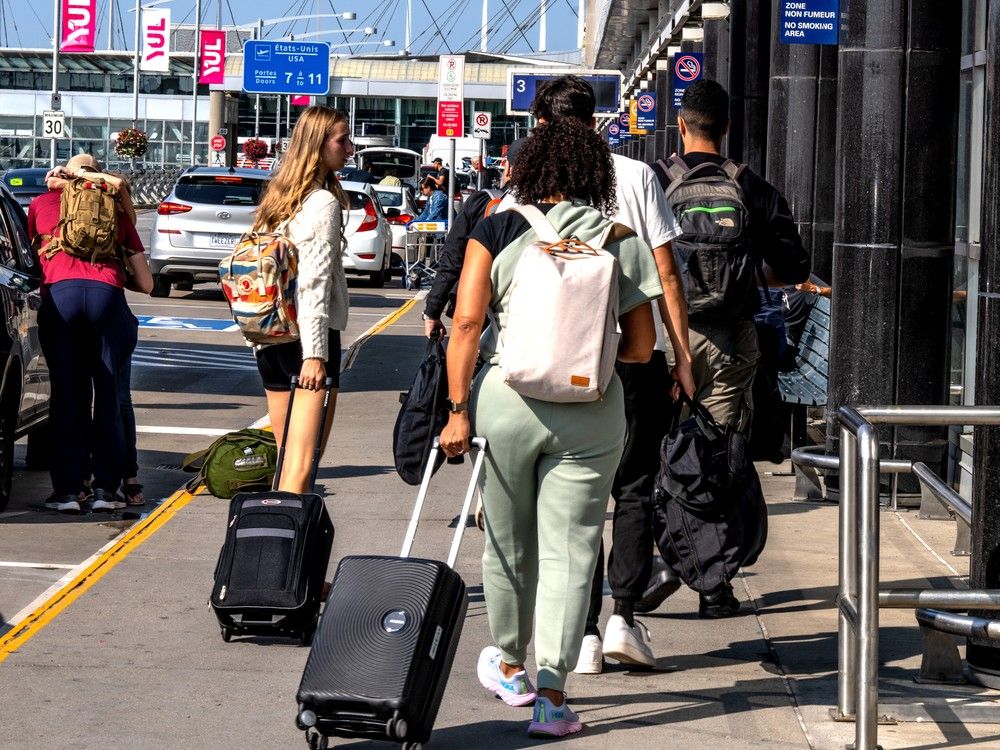

Travellers arrive at Montreal-Pierre Elliott Trudeau International Airport in Montreal, Friday, Sept. 13, 2024.

Americans and other pre-approved visitors travelling to the U.S. through two of Canada’s biggest and busiest airports can benefit from faster border processing times this summer, thanks to new facial recognition technology rolled out by U.S. Customs and Border Protection.

In anticipation of this summer’s FIFA Club World Cup in the U.S., in late May,

the agency introduced two new initiatives aimed at “streamlining lawful travel”

— Enhanced Passenger Processing at Montreal-Pierre Trudeau International and Seamless Border Entry at Toronto Pearson International.

“By leveraging advanced technologies and mobile applications, we are transforming inspections at airports into a seamless, touchless process, enabling faster risk identification and efficient processing of legitimate visitors,” stated Diane J. Sabatino, CBP’s acting Executive Assistant Commissioner.

Why is Canada setting up first-ever border preclearance site in the U.S.?

Here’s what you need to know:

How does Enhanced Passenger Processing work?

When U.S. citizens head for the CBP checkpoint, they’ll approach a tablet which automatically takes their photo when they stand in front of it and uses the facial biometric information to match it with an existing passport in the database.

If approved, the traveller can carry on without having to show their passport or interact with CBP officers. Those denied will need to check in with an officer for identity confirmation and risk assessment.

“It’s really a game-changer for us in how we welcome U.S. citizens back home,” Sabatino said at a news conference at Dallas Fort Worth (DFW) International Airport at the time, per

travel website That Points Guy.

Montreal is just one of 11 airports with EPP and the only one in Canada.

À tous nos voisins américains en visite à Montréal cet été !

Bonne nouvelle ! YUL Montréal-Trudeau est le tout premier…

Posted by YUL Aéroport International Montréal-Trudeau on Sunday, June 15, 2025

EPP is also available at international airports in Orlando, Denver, Charlotte, Seattle, Chicago O’Hare, Los Angeles, Atlanta, Cross Border Xpress in San Diego and Dublin, Ireland.

Since its trial introduction at U.S. airports last fall, CBP said it has seen a 25 per cent reduction in wait times, per

Fox 4 in Dallas-Fort Worth.

At DFW, the Points Guy reported that EPP has reduced wait times for non-citizens by more than 15 minutes as more officers were available to process their arrivals.

How does Seamless Border Entry work?

This new initiative builds upon Global Entry, the existing membership-based trusted traveller program already offered by CBP to expedite the arrival and screening process launched in 2008.

For a US$120 fee, travellers, including approved foreign nationals, benefit from reduced wait times through special queues, aren’t required to fill out paperwork and get a Transportation Security Authority (TSA) PreCheck, an expedited security screening.

Like EPP, Seamless Border Entry technology also photographs and assesses the traveller as they pass through a screening area overseen by CBP officers, but it does so without them even needing to stop walking.

Outside of Toronto’s Pearson, it’s also available at international hubs in Los Angeles, Miami, Washington, D.C., Chicago, Newark, and George Bush Continental Airport in Houston.

Our website is the place for the latest breaking news, exclusive scoops, longreads and provocative commentary. Please bookmark nationalpost.com and sign up for our daily newsletter, Posted, here.


Jacinda Ardern, former prime minister of New Zealand.

OTTAWA — Researchers with the Montreal Economic Institute (MEI) say Canada’s new federal homebuilding agency is likely to overpromise and underdeliver, drawing a cautionary tale from down under.

The free-market think tank argues

in a new study

that New Zealand’s now-defunct homebuilding scheme KiwiBuild, a signature policy of Jacinda Ardern’s Labour government, shows why government bureaucrats shouldn’t try to play real estate developer.

“New Zealand’s experience highlights the limits of government intervention in the real estate market, especially in terms of resource allocation,” write co-authors Gabriel Giguère, Yassine Benabid and Renaud Brossard.

Brossard told the National Post he was struck by the similarities between KiwiBuild and the Liberal government’s Build Canada Homes.

“If you look at government programs that have been done through out the world, this is probably the closest thing to what (Prime Minister) Mark Carney’s pitching,” said Brossard.

KiwiBuild launched in 2018 with the lofty goal of building 100,000 affordable housing units in a decade. It would never come anywhere near meeting this target, completing just 2,389 units by the end of its last full year of activity in 2024.

The program was slammed by both politicians and pundits

as a “complete disaster”

, contributing to Ardern’s fall from global progressive darling to her abrupt resignation in early 2023.

By one estimate, KiwiBuild would

have taken 436 years

to hit the original target of 100,000 homes.

Brossard said that one critical mistake that KiwiBuild administrators made was relying too heavily on prefabricated homes.

“In some of the areas where they were hoping to build homes for (KiwiBuild), they found that shipping in a prefab home was actually more expensive than just building one in situ,” said Brossard.

Carney has

promised billions in subsidies

to prefabricated and modular home builders, as part of his plan

to double the rate

of housing construction and build 500,000 new homes a year within a decade.

Brossard and his co-authors report that KiwiBuild’s prefab homes were often inferior to other housing options available to low and moderate-income families.

Some banks were even

hesitant to approve mortgages

for the prefab homes, given the “flight risk” involved where delinquents could theoretically load the units onto a truck bed and skip town.

Brossard says that the big lesson from KiwiBuild is that civil servants should leave the nuts and bolts of real estate development to the professionals.

“This is what tends to happen with top-down government programs that push one-size-fits-all solutions,” said Brossard.

The study recommends that Carney scrap Build Canada Homes and instead focus on creating a friendlier regulatory environment for private real estate developers.

Brossard also said that policymakers can stimulate homebuilders by harmonizing professional qualifications for workers in the building trades across provinces and territories.

The office of federal Housing Minister Gregor Robertson didn’t respond when asked about KiwiBuild by the National Post.

National Post

Our website is the place for the latest breaking news, exclusive scoops, longreads and provocative commentary. Please bookmark nationalpost.com and sign up for our politics newsletter, First Reading, here.


Carol Hunt (left), 61, and her daughters Hannah (bottom, right), 28, and Louise, 25, were killed at their home on July 9, 2024.

John Hunt, a man whose wife and two daughters were murdered in a crossbow attack, is speaking out for the first time in an interview published by the BBC on Wednesday.

On July 9, 2024, Hunt’s 61-year-old wife Carol, as well as his daughters, 25-year-old Louise and 28-year-old Hannah, were killed. The suspect was Louise’s ex-boyfriend, Kyle Clifford, who was later arrested. He

pleaded guilty

, and in March, was convicted of fatally stabbing Carol before he raped Louise and then killed the sisters at their family home in Bushey, north of London, with a crossbow. He received three life sentences, the

BBC reported

.

 Kyle Clifford was convicted of three life sentences in the killings of Carol Hunt and her daughters Louise and Hannah hunt.

Hunt, who is a BBC racing commentator,

sat down with the publication

alongside his third


daughter, Amy.

“When it happened I thought, ‘How on earth am I ever going to be able to care about anything ever again?’” he said. “It’s fine to sit with that thought in the wreckage of what was our personal disaster. But you come to realize that, with a little bit of work, you can find some light again.”

Hunt and Amy said they didn’t want to speak out earlier because the intense, and sometimes inaccurate, media coverage after the murders “added to their pain,” per the BBC. They didn’t want their family to be “defined by their deaths.”

“From the moment I wake up, I say good morning to each of them,” said Hunt. “Sometimes I say out loud to Hannah and Louise, ‘Girls, sorry I can’t be with you, I’m with your mum at the moment.’ As I close my eyes at night, I chat to them as well. They’re very close to me all the time.”

Amy revealed a touching memory with her sisters around two months before the horrific murders. She said they had gone out to dinner together and were so grateful for the lives they got to lead. They discussed how lucky they were to “have had the parents we’ve had and the life we’ve had,” she said.

She told the BCC, at the time, there was no indication that Clifford was capable of such crimes. Although, the BBC reported, the relationship eventually “started to sour” between Clifford and Louise. It ended in late June, when Louise broke up with him.

Clifford went to the Hunt’s family home on the day of the murders, reportedly to return some of Louise’s belongings. He had a brief and cordial interaction with Carol, which was captured on the family’s doorbell camera. He then followed Carol inside and stabbed her to death. When Louise arrived, her raped her and used a crossbow to kill her. Then, Hannah arrived and he killed her with a crossbow.

Before Hannah died, she texted her boyfriend and called police. Hunt said he believes Hannah’s actions saved his life, as he was likely intended to be a victim of Clifford’s as well.

“Police officers of 30 years’ experience had their breath taken away by how brave she was, how she was able to think so clearly in that moment, to know what she needed to do,” John says.

The father-daughter pair also wanted to set the narrative straight when it came to Clifford and Louise’s relationship.

Unlike how it was portrayed in the media,  it was not an abusive relationship, nor was Clifford “jilted.” The family had “misgivings” about Clifford, they said, but it was a normal and “unremarkable” relationship.

“He never once hit her. He was in the house an awful lot in that 18 months, and never heard raised voices once. There were no obvious alarms that were ever, ever rung,” said Hunt, in

a clip of the interview

.

 Family friend Lea Holloway, left, arrives with others to place tributes following the deaths of three women who were killed in an attack at their home, on Tuesday in Bushey, England, Thursday July 11, 2024.

Although, said Amy, there was “absolutely evidence that he had turned out not to be a nice person.”

“He’s often been referred to as ‘crossbow killer’ and ‘crossbow maniac’ — but that takes away from the very real issue we know to be true. He was just a person, just a man… who went to the gym, had a family, had a relationship, watched TV,” said Amy. “I know it sounds crass, but we often say we wish we’d had some hint that he was capable of this.”

Meanwhile, Hunt said he is reminded of Hannah’s bravery, and how it saved his life, every day.

“I get to live. Hannah gave me that, and I’ve got to treat it as a gift from her,” he said.

Amy and Hunt said the legacy of love left behind by Carol, Louise and Hannah gives them the strength to get through the grief and trauma. In the interview clip, Hunt read a TikTok shared by Louise on social media out loud. It was about loving someone completely.

“I’m proud of myself for realizing that love is always worth giving, even when it may not be received,” one of the lines from the TikTok said.

Although it wasn’t written by Louise, Hunt said it “could well have been.”

“I’m so proud of her, living like that and loving like that,” said Hunt.

Our website is the place for the latest breaking news, exclusive scoops, longreads and provocative commentary. Please bookmark nationalpost.com and sign up for our daily newsletter, Posted, here.


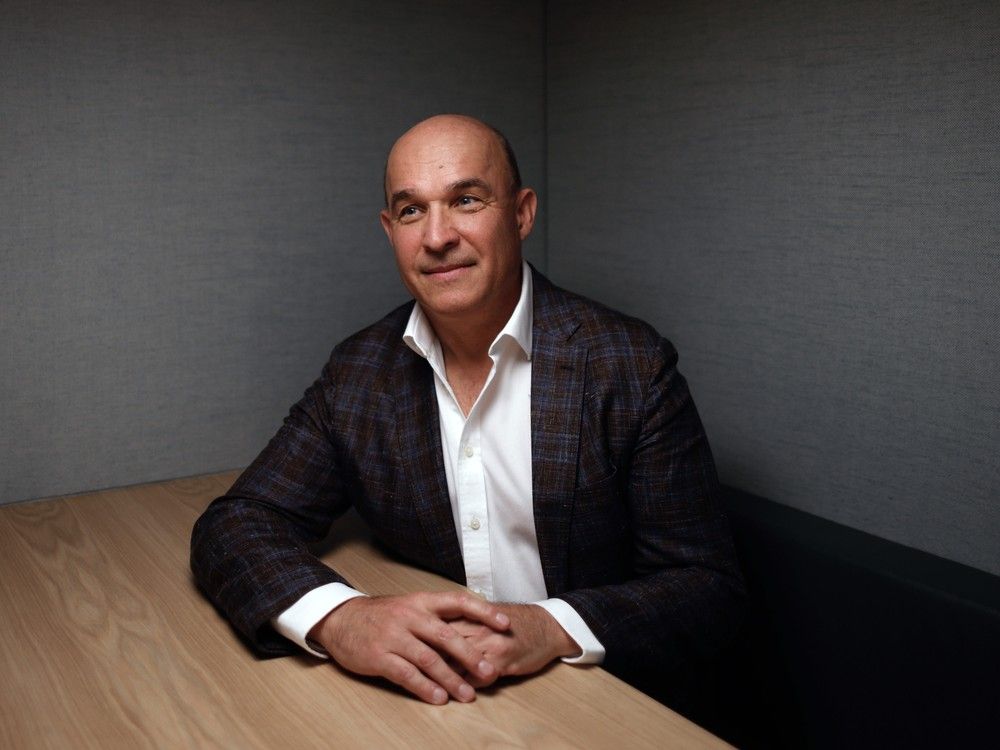
Canadian businessman Jim Balsillie is shown during an interview in Toronto, Monday, April 17, 2023.

Jim Balsillie, the Canadian businessman and philanthropist, has donated $5 million to Wilfrid Laurier University for the establishment of a digital governance initiative to build economic resilience and digital sovereignty.

“The nature and the structure of the global economy and global security has shifted foundationally in the last 30 years in a degree and rapidity that’s unprecedented in mankind,” said Balsillie in an interview. “And if you want to be a sovereign and secure and prosperous nation, you need the capacity for navigating that on a front-footed basis. So, this investment is all about that.”

In a news release, the university in Waterloo, Ont., said Canada needs to “shape policy and increase productivity amid growing threats to sovereignty and security.” It said the Balsillie donation will go toward setting up a legal advisory centre that tackles international trade and technology governance, and establishing professional training programs and a proposed graduate degree that focuses on “law, digital sovereignty and global technology governance.”

“This is about building capacity to manage the expertise into these realms that are digital, whether it’s AI, data, blockchain currencies, intellectual property, trade agreements, all of these things are the realms that this is contended, and Canada has had an eroding prosperity, it’s had an eroding sovereignty because the terrain of protecting and advancing those is the digital realm,” said Balsillie, the former co-CEO of Research in Motion, the company that developed the Blackberry.

He said the digital initiative is a “natural addition” to the school, which is also home to the Balsillie School of International Affairs, a joint project of Laurier, the University of Waterloo and the Centre for International Governance and Innovation.

Deborah MacLatchy, the president and vice-chancellor of Wilfrid Laurier, said the funding will “stand up” the work students and faculty are doing on the topic of the digital future. While figures aren’t yet known, the university hopes to add faculty and more students because of the new research and educational initiative.

“We’re hearing a lot from companies, from government, about their capacity needs, meaning that they just don’t feel that they have all the internal expertise or the up-and-coming expertise of students and grad students who have experience in this area,” said MacLatchy. “And this gift will really allow us to really take a take a run at this in a way that will be unique across the country.”

The hope is that other Canadian universities will eventually follow Laurier’s lead, doing more research and education in the area.

The issue of digital sovereignty, said Ann Fitz-Gerald, director of the Balsillie School of International Affairs, is “about taking control of a state or any organization’s digital destiny and autonomy.” This includes not just corporate data security or intellectual property or cross-border data transfer but also issues of national security, Fitz-Gerald said.

“There’s a big policy shift towards the intangibles from the tangibles, and we need to make sure policymakers worldwide, not just in Canada, have the knowledge and skill sets to operate in this space,” Fitz-Gerald said.

So much of what happens in a modern society, from immigration to business to justice, happens in the digital world and is driven by data. And so Balsillie’s donation, Fitz-Gerald said, will help position Canada and Wilfrid Laurier and the Waterloo region at the forefront of that economic, social and political revolution. Indeed, as data can be siphoned off by corporate giants to aid foreign economic development, Canada could wind up being a loser unless it builds expertise in digital sovereignty.

“The best way that I have come to be able to explain it is that we have had, for time immemorial, a policy orientation and governance structures that are fit for a tangibles world. We now live in an intangibles world,” said Fitz-Gerald. “We want to be able to manage its development and have a real … say in its safe and responsible development, and the safety and responsibility relates to the preservation of our sovereignty and national security and prosperity.”

Our website is the place for the latest breaking news, exclusive scoops, longreads and provocative commentary. Please bookmark nationalpost.com and sign up for our daily newsletter, Posted, here.