


LP_468x60
on-the-record-468x60-white

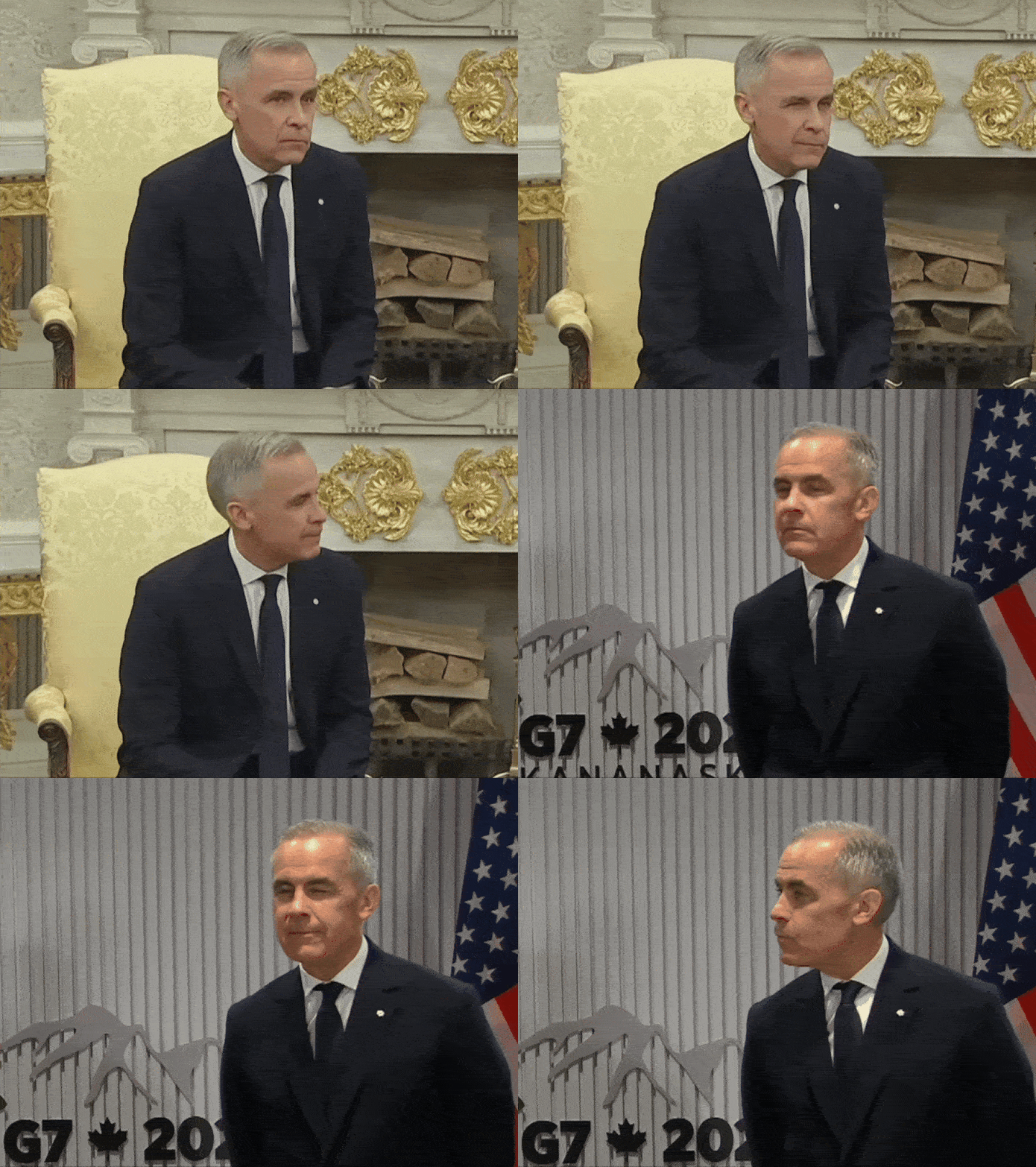
Prime Minister Mark Carney winked at the start of his Oval Office meeting with U.S. President Donald Trump. And at the recent G7 leader's summit in Alberta, Carney, who had been watching Trump speak, turned his head slightly toward someone behind the camera and winked with his left eye.

The prime minister is a habitual winker. Once is once, two is a coincidence, three is a trend, and National Post counts at least four prominent public winks by

Mark Carney

since winning the top office — in Rideau Hall at his swearing in, in the Oval Office, and twice at the

G7

in Kananaskis, Alta. — plus many more going back to his governorship of the Bank of England.

Are these winks deliberate or have they become second nature? Do they mean something? Must they always? If they do, why not just say it? If they don’t, why risk causing misunderstanding or diplomatic insult? Winking around U.S. President

Donald Trump

, which accounts for three of the above examples, especially has an air of recklessness that clashes with Carney’s steady hands image.

A wink seems private even when it is public. It exudes self confidence, but it can seem sly. It can undermine carefully chosen words. It can literally mean “I am lying.” But it can also mean “I’ve got this.”

A wink as Carney does it “communicates a level of comfort with the idea of being noticed,” said Stewart Prest, lecturer in political science at the University of British Columbia. “But it could spiral badly if it is misconstrued.”

At the recent G7 leader’s summit, for example, after lamenting Russia’s absence, Trump was answering a question about what was holding up a trade deal with Canada. “I have a tariff concept,” he said. “Mark has a different concept, which is something that some people like.”

Just then, at this awkward backhand compliment, Carney, who had been watching Trump speak, turned his head slightly toward someone behind the camera and

winked with his left eye

, which pulled the corner of his lip up into the briefest hint of a smile that threatened to become a smirk.

Soon after, Trump was leaving the summit and talking to the media alongside Carney and French President Emmanuel Macron. Just as Trump said they got a lot done, including a U.S. trade deal with the U.K., Carney looked away from Trump toward Macron and winked,

this time with his right eye

, but with the same risky ripple of humour crossing his face.

Some people wink at what they say themselves. Carney just as often winks at what other people say, and not to the speaker, but to their audience.

Prest’s view is that Carney’s winks in Trump’s presence are typical of his style, in that they operate on three levels. This offers a theoretical framework for how to understand Carney winks in general, what they mean, and who they are for, he said.

At one level, Carney is communicating with Trump, in public, quietly listening to him. At a higher level he is communicating with Macron about Trump, in a sort of privacy, signalling an internal reaction to Trump’s words that Carney has decided not to vocalize. At the highest level he is communicating with the all-seeing public on the other side of the camera lens, indicating his comfort in playing all these etiquette games at the same time.

“It’s a high-wire act,” said Prest. “If it goes badly, it could go very badly.”

He needs to be careful that the wink includes the public, not excludes it. “The subtext always has to bring the public along,” Prest said. They need to know what Carney is trying to communicate, that he is confidently in control, and they also have to believe him. Otherwise it’s just a cocky facial tic.

Some winks are simple, obvious. Some winks need to be accounted for more deeply. Winks are almost always ambiguous, but sometimes they mean something important. Criminal court judges have faced this problem more than most. For example, in a 2017 murder case against a Richmond Hill, Ont., man accused of beating his roommate to death, a judge had to decide whether to let a witness testify about the meaning of a wink, and was troubled by its uncertain air of “innuendo.”

A friend of the victim had told police he had seen bruising on the victim’s ribs a couple of weeks before the killing, so he asked what happened. The victim explained he fell down the stairs, or off his bike, but then he winked, and when the friend asked what that meant, the victim said “Kenny’s got a hard punch,” referring to the accused.

The key problem, the judge said, was that it was not clear the victim winked and spoke at the exact same time, such that the wink directly contradicted the claim of falling down the stairs, and implied that the truth was Kenny punched him. It wasn’t clear “whether the wink and the comment were part of a single, ongoing transaction.”

That jury never heard the wink story, and eventually found the accused guilty of manslaughter, not murder.

Winks have been admitted as criminal evidence, however, such as in the 2017 Montreal case of the undercover police agent who testified about getting a “101 course” in robbery of shopping mall jewellery stores from the suspected culprit that was so convincing, so finely detailed, that the undercover officer asked whether the suspect had actually ever robbed the target store he was describing, in the Carrefour Laval.

The accused laughed, winked, and said “no,” which the undercover took as “an implicit admission that the accused had indeed robbed the store in the past.”

So sometimes a wink can mean the opposite of what was just said, that I did not fall off my bike, that I did rob this jewellery store. What I have just said is not true, wink wink. You’ll just have to trust me, and I know you will.
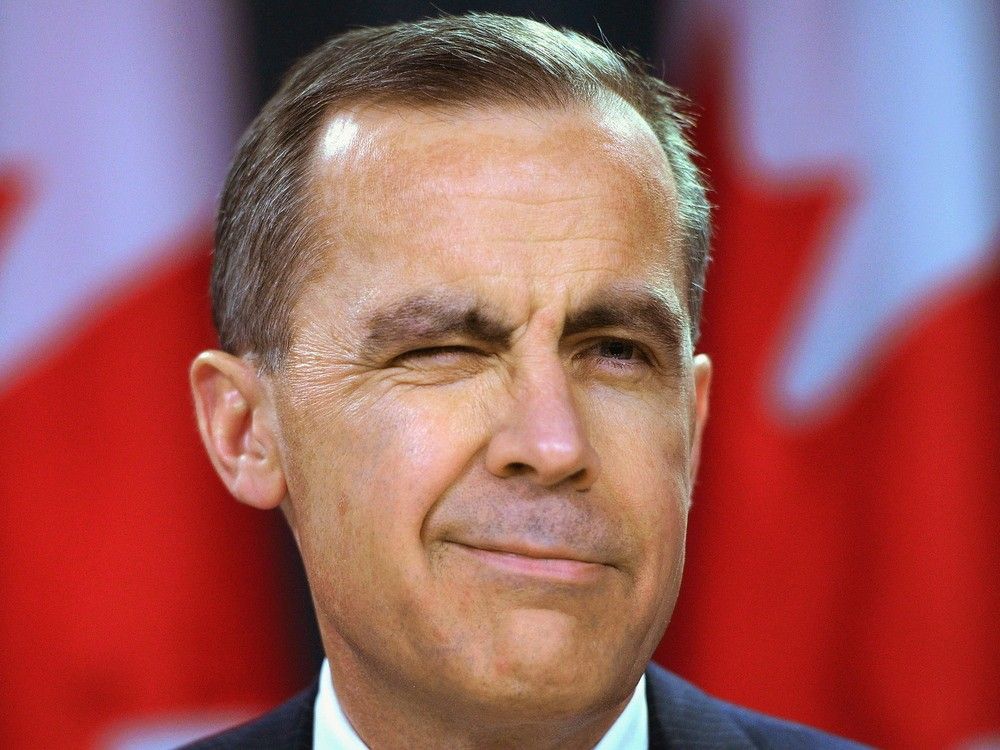
 

 Bank of Canada Governor Mark Carney winks during a press conference at the National Press Theatre in Ottawa on Wednesday, Jan. 23, 2013.

For a national leader’s voting public, that strategy works until it doesn’t, Prest said. Carney is in something of a honeymoon phase, and his current winking spree coincides with surging approval numbers in his first months as prime minister. He can wink and trust that he will be understood in good faith. But that can change.

When she profiled Carney for the Sunday Times in 2020, as he took the United Nations job as Special Envoy on Climate Action and Finance, Charlotte Edwardes told the amusing story of being on a group tour with him through a Picasso exhibit at the Tate Modern in London, led by a curator who kept pointing out hidden penises in the Cubist paintings, and on the fifth or sixth one (a reclining woman whom the curator explained had a penis extending from her head) she caught Carney’s eye and “corpsed,” which is to say she laughed at this inappropriate moment. He joked about it afterwards in a deadpan: “Are you absolutely sure that you could see the penises?” She did not mention whether he said so with a wink, but it seems possible, and later in the piece, she said Carney told her he took the job of governor of the Bank of England because he likes a challenge, and he said so “with a wink.”

Could the winking thus be a bit de trop? Could it get creepy? Or cheesy? With the accumulation of political baggage, could Carney’s winks ever grow as stale as Justin Trudeau’s novelty socks?

“The wink will be perceived as Mr. Carney is perceived,” Prest said.

So, maybe. One day, the winks might turn sour. It would only be then that the leader with a “winking problem,” as the

National Post’s John Ivison once called it

, becomes a winker with a leading problem. Until then, Prest said, Carney seems to be pulling it off.

Our website is the place for the latest breaking news, exclusive scoops, longreads and provocative commentary. Please bookmark nationalpost.com and sign up for our politics newsletter, First Reading, here.


Federal Industry Minister Mélanie Joly.

OTTAWA — The federal government is set to make a highly anticipated decision in the coming weeks regarding internet affordability.

The CRTC recently reiterated its decision

issued last year authorizing Canada’s three major telecommunications companies to resell fibre optics to internet service providers (ISP) on their respective networks.

At the time, then-Minister of Industry François-Philippe Champagne asked the regulator to review its decision, which notably grants Telus more options to access new markets.

According to the regulator, “several thousand Canadian households” are already benefiting from new plans offered by “dozens of providers that are using the access enabled by the Final Decision.”

“Changing course now would reverse the benefits of this increased competition and would prevent more Canadians from having new choices of ISPs in the future,” wrote the CRTC in its June 20 decision.

However, many telecommunications companies are fighting back and exerting pressure on the federal government, particularly Industry Minister Mélanie Joly, to overturn the CRTC’s decision, arguing that it will have a negative impact on investment and competition across the country.

For them, the case is not over and the final decision has not yet been rendered.

They have financial analyses, including from Bank of America and National Bank, that predict “a decline in future investments in telecommunications infrastructure” if the decision is maintained.

Federal cabinet is expected to confirm or overturn the CRTC decision by Aug. 13.

“We take note of the CRTC’s decision to retain mandated wholesale access to fibre networks,” said Joly’s spokesperson, Isabella Orozco-Madison, in a statement. “Cabinet will make its decision on the petition before it in due course.”

The battle between the telecom giants, which began years ago before the federal regulator, is highly political in nature. A source indicated that Telus is also making every effort to ensure that the CRTC’s decision is upheld by Ottawa.

In an interview with National Post, Cogeco Communications’ chief legal and corporate officer said that telecoms will play a crucial role in Canada’s defence, housing, energy, artificial intelligence and agriculture sectors, and that the government must adopt policies that will promote their prosperity.

“It’s really about the moment we’re in as a country, and we don’t have time for regulation that doesn’t make sense and defeats its own objectives,” said Paul Cowling.

Smaller providers like Cogeco, or even independent providers that don’t have their own facilities, could very well be threatened by this policy if Ottawa signs off on it, they say.

“We want to compete, and we want to offer more choice in the marketplace… That becomes very challenging when your biggest competitors, who have many advantages over you, are empowered by the regulator to compete unfairly against you,” said Cowling.

For example, this decision would give Telus, which is strong in Western Canada, the opportunity to use other providers’ networks to add thousands of customers in Ontario and Quebec instead of building its own infrastructure.

Bell Canada’s executive vice president, Robert Malcolmson, recently said that “as a direct result” of the policy, his company has reduced its capital expenditures by $500 million in 2025 alone and by over $1.2 billion since the CRTC’s initial decision in November 2023.

“The CRTC policy will continue to have major negative impacts well into the future,” he wrote in a

scathing statement

.

In the meantime, Telus keeps telling Canadians how important this policy is. The Vancouver-based provider launched a petition online that has gained over 300,000 signatures to support the CRTC decision.

In the petition description, Telus writes “the federal government tried to limit competition, and could do so again” and that “some home internet carriers are still trying to restrict the brands you can choose from.”

“Upholding the decision reinforces the independence of expert regulators, which is necessary to create the certainty needed for Canadian businesses to continue to invest with confidence,” said Telus director of public affairs Richard Gilhooley.

Recently, B.C. premier David Eby said he was “pleased to see CRTC’s decision to uphold its ruling allowing for greater competition.”

“This is great news for BC headquartered Telus and for jobs in BC,” he wrote on social media.

According to

a recent PricewaterhouseCoopers (PwC) report

, the telecommunications sector contributed an estimated $87.3 billion to Canada’s GDP last year.

Now, internet carriers like BCE and Cogeco argue that sustaining this level of economic impact requires a regulatory environment that supports continued investment.

“And what we need in this country right now is more investment. We need more investment in strong digital infrastructure, other telecommunications networks… Our economic ambition is really dependent on having strong connectivity in our economy today, nothing works without connectivity,” said Cowling.

National Post

Our website is the place for the latest breaking news, exclusive scoops, longreads and provocative commentary. Please bookmark nationalpost.com and sign up for our newsletters here.


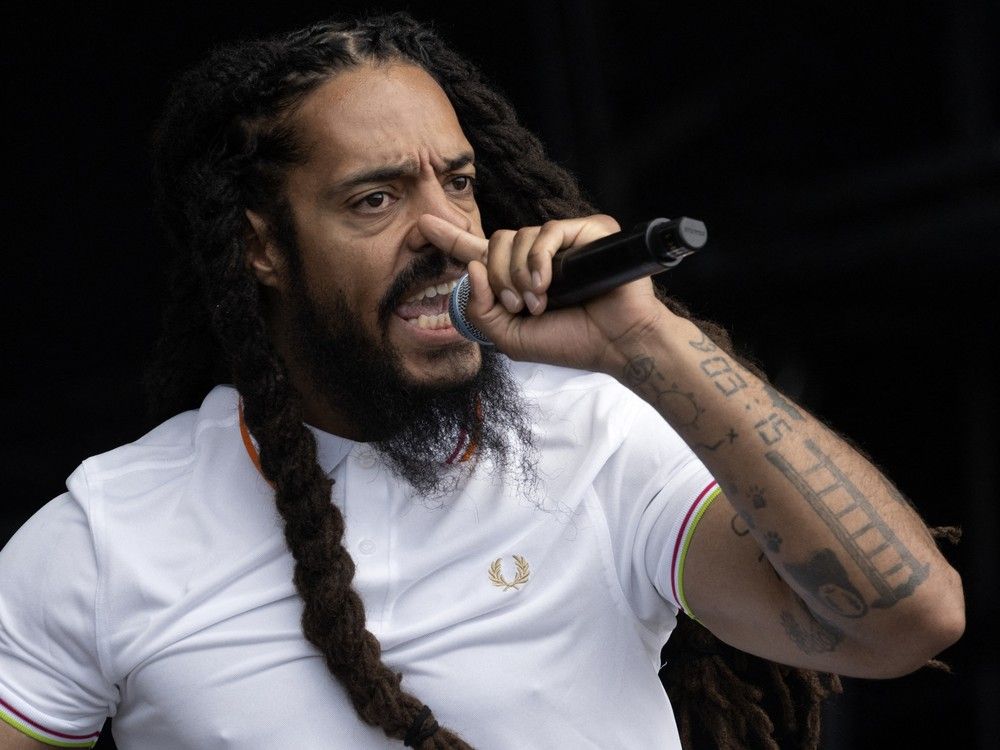
Bobby Vylan of British duo Bob Vylan performs on the West Holts Stage on the fourth day of the Glastonbury festival at Worthy Farm in the village of Pilton in Somerset, south-west England, on June 28, 2025.

When Pascal Robinson-Foster, 34, a rapper from Ipswich, U.K., who goes by “Bobby Vylan” came on stage Saturday afternoon at Britain’s Glastonbury Festival of Contemporary Performing Arts in front of a Palestine flag, there was already tension in the festival’s executive offices.

It was not yet centred on Bob Vylan, the rap duo who are newly infamous for leading the audience at Britain’s leading summer pop cultural event in a chant calling for death to Israeli soldiers, but who on Saturday were a downticket entry on the West Holts stage, which showcases reggae, hip hop, jazz, beats and electronica.

The most pressing concern was about a similar protest from Kneecap, the Northern Irish rap trio, one of whose members faces a terrorism charge for flying a Hezbollah flag at a show in London last year. That charge prompted U.K. Prime Minister Keir Starmer to say Kneecap’s presence on this year’s Glastonbury lineup was “inappropriate.”

So when the British Broadcasting Corporation belatedly said it regrets not pulling its live broadcast during Bob Vylan’s anti-Israel provocations, it is not because it did not expect controversy over the Mideast at all. The BBC had already decided not to broadcast Kneecap live. And just last week, BBC Director-General Tim Davie announced new editorial guidelines about hate speech, including that broadcasting it could constitute a criminal offence, if it is “intended to stir up hatred relating to religious belief.”

What followed, then, was predictable if not specifically expected. Avon and Somerset Police have announced a criminal investigation under hate crime law into Bob Vylan’s performance, which is classed as a “public order incident.”

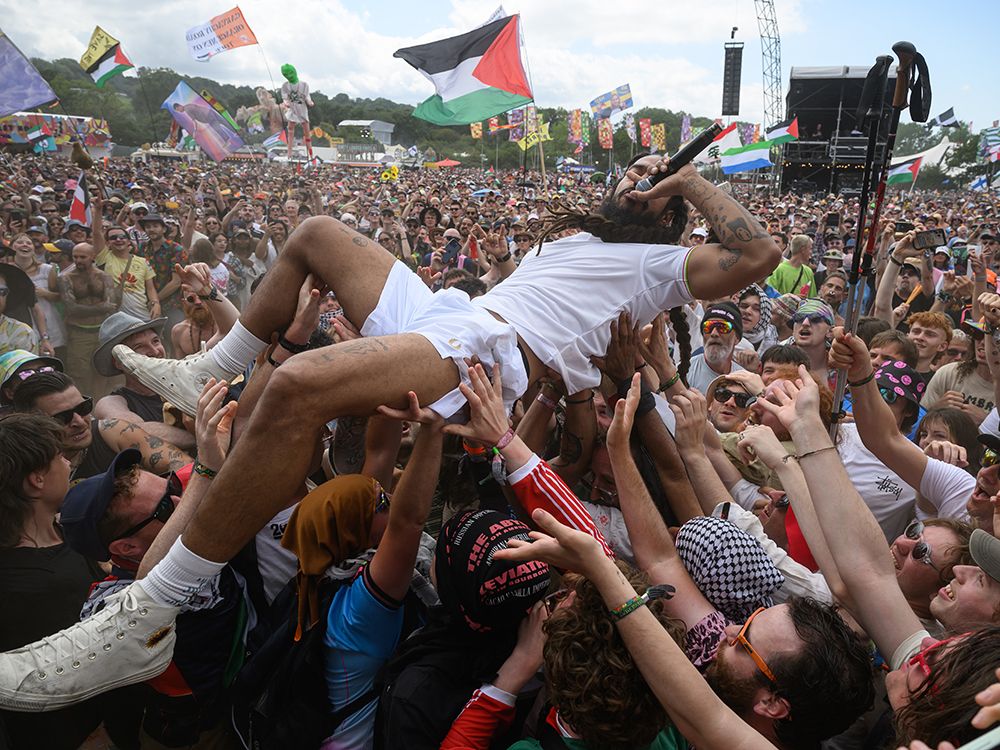
“Free! Free!” Vylan chanted into the mic, to which an audible portion of the crowd replied “Palestine!”

“All right, but have you heard this one though? Death Death to the IDF,” he said.

 Bobby Vylan of Bob Vylan crowdsurfs in front of the stage during day four of the annual Glastonbury Festival in Glastonbury, England, on June 28, 2025.

IDF is the Israel Defense Forces. He repeated it five times, backed similarly by some of the audience, then said, “hell yeah, from the river to the sea, Palestine must be, will be, inshallah, it will be free.”

He also spoke to the audience about working for “f—ing Zionists” at his record label.

Bob Vylan were followed in their performance by Kneecap, but not on the BBC live feed.

Festival organizers said they were “appalled,” and that Bob Vylan’s behaviour went against its mission of “hope, unity, peace and love.”

BBC staff have reported feeling ashamed at how long this diatribe was allowed to continue in the live stream. The BBC itself said in a statement Sunday: “The team were dealing with a live situation but with hindsight we should have pulled the stream during the performance. We regret this did not happen. The BBC respects freedom of expression but stands firmly against incitement to violence. The antisemitic sentiments expressed by Bob Vylan were utterly unacceptable and have no place on our airwaves.” The segment has been removed from streaming services, and the BBC has launched a review.

The British broadcast regulator Ofcom said the BBC “has questions to answer” and that it has been urgently investigating what procedures were in place to ensure the BBC complied with its own editorial guidelines.

Britain’s Chief Rabbi, Sir Ephraim Mirvis, said the episode was “a time of national shame” that “brings confidence in our national broadcaster’s ability to treat antisemitism seriously to a new low.”

“It should trouble all decent people that now, one need only couch their outright incitement to violence and hatred as edgy political commentary, for ordinary people to not only fail to see it for what it is, but also to cheer it, chant it and celebrate it,” Mirvis wrote.

In response to the fallout, which now includes a ban from the United States, the band Bob Vylan posted a statement that read, in part: “We are not for the death of Jews, Arabs or any other race or group of people. We are for the dismantling of a violent military machine. A machine whose own soldiers were told to use “unnecessary lethal force” against innocent civilians waiting for aid.”

That is a reference to a news report Friday in the left-wing Israeli newspaper Haaretz that claimed Israel’s Military Advocate General has opened an investigation into possible war crimes over the allegedly deliberate shooting of Gazan civilians in chaotic scenes near aid distribution stations.

Hundreds of people have been killed in Gaza in the past month attempting to access food aid, according to Hamas-run Gazan health authorities whose accounts cannot be independently verified. After Israel lifted its 10-week blockade of food shipments into Gaza in May, emergency aid has been delivered by the newly created U.S.-backed Gaza Humanitarian Foundation, whose security is overseen by the Israeli military.

Speaking to the Reuters news agency, the Israeli military denied the claim of deliberate shooting of civilians at aid distribution centres. It said it was trying to improve the “operational response” in these areas, and said some incidents were being reviewed by appropriate authorities. “Any allegation of a deviation from the law or IDF directives will be thoroughly examined, and further action will be taken as necessary,” it said, according to Reuters.

International reactions were swift to the live broadcasting of Bob Vylan’s “Death to the IDF” chant.

The U.S. Deputy Secretary of State, Christopher Landau, announced Monday the State Department has revoked visas for the performers “in light of their hateful tirade at Glastonbury, including leading the crowd in death chants. Foreigners who glorify violence and hatred are not welcome visitors to our country.”

In Canada, Liberal MP Anthony Housefather said this was a good idea, and said on social media he had been in touch with Minister of Public Safety Gary Anandasangaree to recommend Canada follow the American lead. Opposition Conservative MP Michelle Rempel Garner said Canada should do the same, and tagged the minister of immigration, refugees and citizenship, Lena Diab, in a social media post.

A Public Safety spokesperson said he could not say whether that would happen, and that this would be a question for border services. The Canada Border Services Agency said it was not in a position to comment on this specific case, and said admissibility decisions are made “case-by-case,” based on information available at a person’s time of entry, and by sharing relevant information on border and national security issues with other agencies and countries.

It is not clear Bob Vylan has any plans to come to Canada. Their website lists upcoming tour dates in Britain and Europe, and American stops later in the fall, now presumably cancelled. Promotional material for a tour by the American-Canadian rapper Grandson with stops in Vancouver, Calgary, Edmonton, Winnipeg, Toronto and Montreal lists Bob Vylan as a co-headliner on American dates, but not the Canadian ones.

The group was also dropped by their agent, United Talent Agency.

Our website is the place for the latest breaking news, exclusive scoops, longreads and provocative commentary. Please bookmark nationalpost.com and sign up for our daily newsletter, Posted, here.


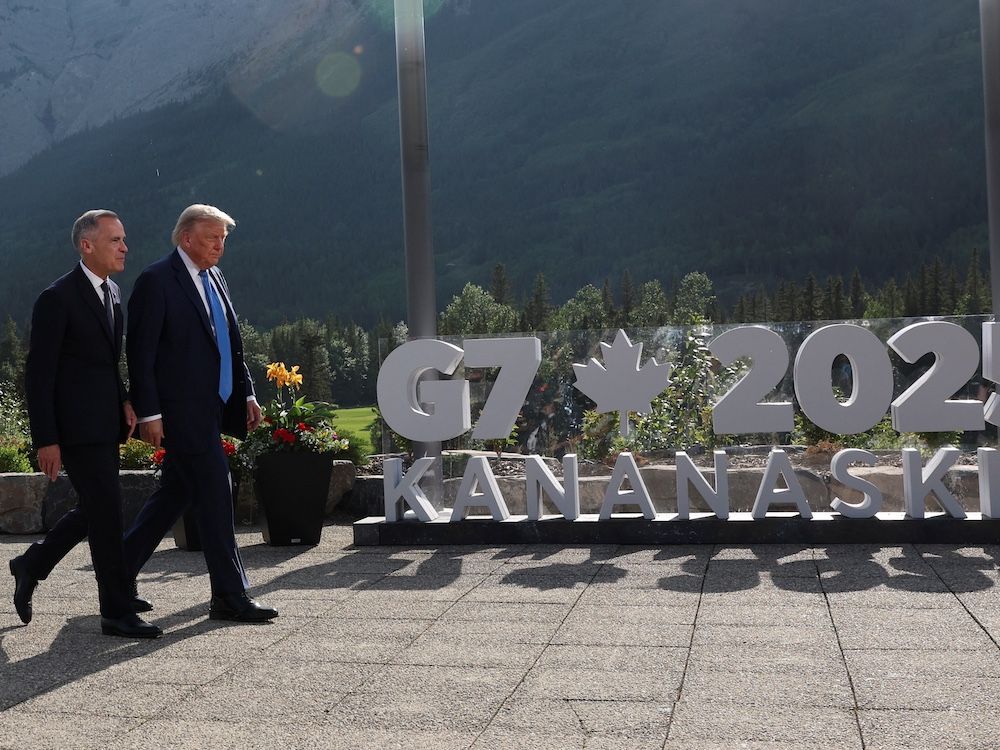
Canadian Prime Minister Mark Carney and U.S. President Donald Trump depart following a group photo in front of the Canadian Rockies at the Kananaskis Country Golf Course during the G7 Leaders' Summit on June 16, 2025 in Kananaskis, Alberta.

WASHINGTON, D.C. — Ottawa could almost taste the tax revenues.

For nearly five years, Canada has been planning a digital services tax (DST) that

would generate billions in revenue by taxing

large tech firms on their Canadian digital revenues. Just hours before the first DST payments were due on Monday, however, Prime Minister Mark Carney’s government called the whole thing off.

Carney’s move late Sunday was a capitulation to the White House — and he had little choice after President Donald Trump abruptly cancelled trade negotiations on Friday over the DST, calling it “a direct and blatant attack on our country.”

Faced with 25 per cent tariffs on most Canadian exports to the U.S. and 50 per cent tariffs on its steel and aluminum, Canada needed to keep the trade talks alive. So Carney did what had to be done, stating that the move “will support a resumption of negotiations toward the July 21, 2025, timeline set out at this month’s G7 Leaders’ Summit in Kananaskis.”

What led to the DST, and why did Washington oppose it?

The Liberals first introduced the DST in 2020 — a 3 per cent tax on big tech companies with Canadian digital revenues above $20 million per year — as a stopgap, with the real goal of pushing for a multilateral, OECD-led overhaul of the international tax system to curb multinational tax avoidance.

Several countries, including France, the United Kingdom, Italy, and Spain, had begun implementing DSTs in 2019 and 2020, raising alarm bells for large U.S. tech firms and advocacy groups.

The Computer & Communications Industry Association (CCIA), a U.S.-based trade association representing technology and communications companies, was one that pushed back, calling the DSTs discriminatory. The taxes “hit U.S. companies but are designed to exempt local companies, putting U.S. firms at a competitive disadvantage in the market,” said Jonathan McHale, VP of digital trade at CCIA.

President Joe Biden supported an OECD approach to reforming the international tax system – and its moratorium halting the rollout of unilateral DSTs, adopted by the OECD/G20 Inclusive Framework in late 2021. Canada waited in hopes of there being an international tax reform, but by July 11, 2023, when the OECD agreed to another year-long extension on the moratorium, Prime Minister Justin Trudeau’s government decided it had waited long enough. It pushed ahead unilaterally to pass the Digital Services Tax Act last summer, despite warnings from U.S. diplomats and risk experts that it could spark a trade war.

While Canada’s approach was meant to tax both foreign and domestic firms, McHale said that’s simply how countries go about saying they are not formally targeting American companies. He referred to “disguised techno-trade” and proportionality, noting that “on the surface, [the DST] looks neutral, but the impact is essentially focused on a particular foreign country.” Canada’s DST, he said, would’ve mostly impacted U.S. tech firms.

But there was opposition to it at home, too, he noted, because the tax would have hurt would-be startups trying to establish themselves in the Canadian market.

“There were lots of Canadian companies that were vocal in their opposition to this, the Canadian Chamber of Commerce chief among them,” he said, noting that they didn’t want it to upset their strong startup culture and digital economy.

Biden’s team pushed back last year when the tax was passed, arguing repeatedly for a multilateral solution, and then-U.S. Ambassador to Canada David Cohen labelled it “discriminatory.”

Trump, in turn, had more leverage and threatened the cessation of trade talks and even higher tariffs, but many saw this coming.

“If you don’t push back against Canada’s [DST], isn’t that a green light for other countries to move ahead?” asked McHale. Opposition to DSTs has been a “longstanding bipartisan issue” in the U.S., he noted.

Could dropping the DST lift trade?

It can’t hurt. Besides, it was necessary to get back to the negotiating table.

After Canada rescinded the tax, Trump and Carney agreed to resume trade talks with an eye toward reaching a deal by July 21, 2025. “Canada’s preference has always been a multilateral agreement related to digital services taxation,” Carney’s statement said, reminding folks that the DST was only ever meant to be a short-term solution.

His government also remains “engaged in discussions with the U.S. and other countries to find a workable solution on international taxation that achieves our common objectives,” a Department of Finance official told National Post.

The Canada Revenue Agency issued a statement on Monday confirming the tax was suspended and noting that reimbursements will be made to companies that already paid “if legislation is tabled in Parliament and receives royal assent.”

The White House, meanwhile, viewed the decision to drop the DST as positive. Trump officials also hope the move will encourage other countries to eliminate similar taxes to avoid U.S. retaliation moving forward.

Canada’s DST “would’ve been the most burdensome tax for U.S. companies — topping the list of revenues extracted from U.S. firms,” McHale said.

But DSTs are still in effect in several countries that have strong trade links with the U.S., including the U.K., Spain, and France, and they should expect similar pushback from Washington.

“The U.S. government has been pretty clear that they oppose the policy … so it stands to reason that it would push back against these others as well,” McHale added.

France and Spain are still working to secure a favourable trade agreement with the U.S.. Although the U.K. managed to forge a deal last month, the Trump administration has publicly stated that getting Britain to rescind its DST remains a top priority.

In the meantime, while Ottawa may be left thirsty for big tech revenues, U.S.-Canada trade relations are finally getting a much-needed drink.

National Post

Our website is the place for the latest breaking news, exclusive scoops, longreads and provocative commentary. Please bookmark nationalpost.com and sign up for our politics newsletter, First Reading, here.

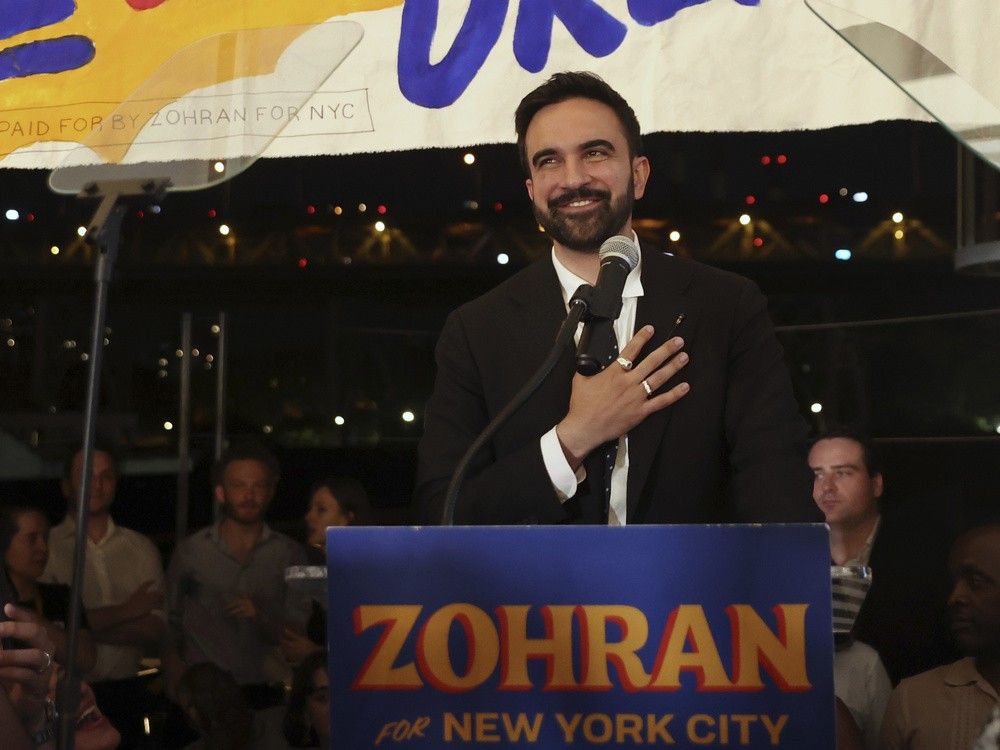
Democratic mayoral candidate Zohran Mamdani takes the stage at his primary election party, Wednesday, June 25, 2025, in New York.

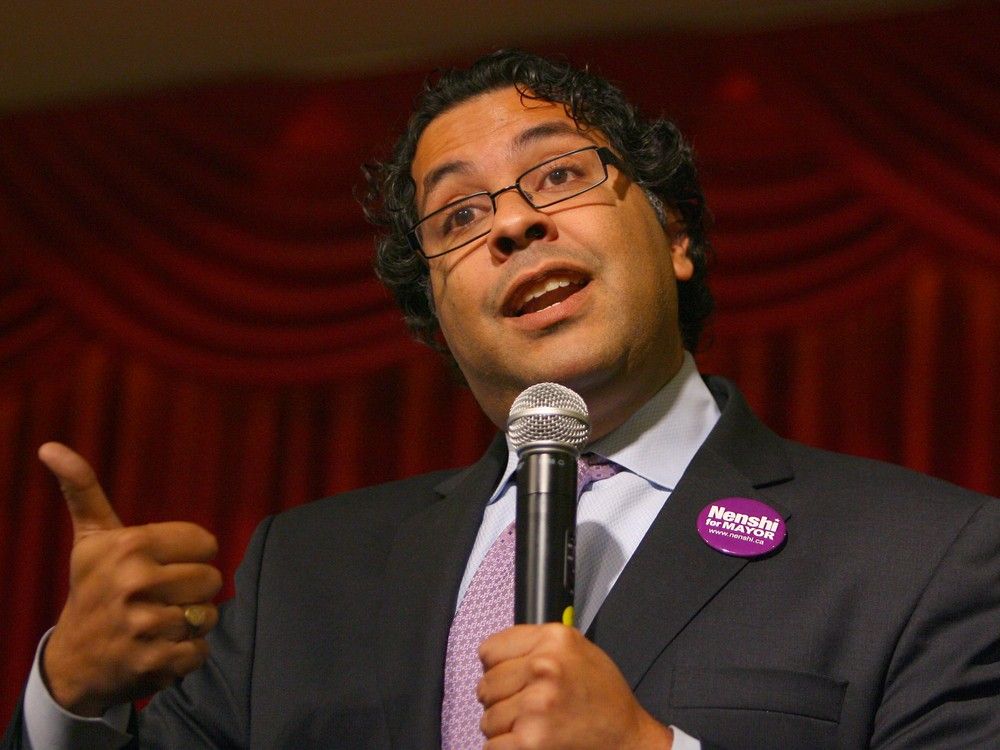
OTTAWA — Two architects of Alberta NDP Leader Naheed Nenshi’s surprise victory in the 2010 Calgary mayor’s race say they’re feeling déjà vu after seeing another thirty-something Shia Muslim — with family ties to East Africa and Gujarat, India — upend the politics of a major North American city.

Stephen Carter, now

president of Decide Campaigns

, says he sees shades of his old boss in 33-year-old Zohran Mamdani, who rode an outsider campaign to victory in last week’s

New York City Democratic mayoral primary

.

“The similarities are hard to miss,” said Carter.

Carter said that, on top of the biographical similarities, Mamdani followed Nenshi’s playbook of using digital tools to build a strong personal brand that transcends party labels.

“I won’t pretend to be an expert on the inner workings of the Mamdani campaign but one thing I can say … is that the brand construction … was spectacularly implemented,” said Carter.

Fifteen years ago, Carter helped then 38-year-old Nenshi leverage newfangled social media platforms Facebook, YouTube and Twitter (now X) to launch a similarly powerful digital brand.

Nenshi’s then novel grassroots digital campaign helped him become the first Muslim mayor of a major North American city.

Carter says that the digital landscape has changed in the past 15 years but the fundamentals of building a political brand haven’t.

“Of all the things we talked about back in 2010, I think the strongest thing was actually the development of brand politics,” said Carter.

“Both parties and individual politicians have brands. And one thing we really thought hard about was where does the (candidate’s) brand lie?”

With Carter at the helm, the Nenshi campaign poured significant

resources into brand building

. For instance, candidate Nenshi frequently donned the colour purple

— a mixture of Liberal red and Conservative blue — to put himself above partisan politics.

Nenshi has held onto

his purple personal branding

since making the jump to provincial politics last year, despite admitting on a recent podcast appearance that purple

doesn’t coordinate especially well

with the Alberta NDP’s traditional orange.

 Naheed Nenshi participates in a mayoralty forum on Sept. 22, 2010. Jim Wells/QMI Agency.

Carter said Mamdani first crossed his radar a few weeks ago, when his social media algorithms started to feed him short videos,

known online as “reels,”

 promoting the upstart mayoral candidate.

“When you’re starting to see (reels) from a New York municipal election in Calgary, it grabs your attention. I’ll tell you that,” said Carter.

And while today’s young adults have migrated from Facebook and X to newer platforms like the China-owned TikTok, Carter says that the big picture remains pretty much the same.

“This is another one of those moments in time where a campaign comes along and captures the zeitgeist in a bottle,” said Carter.

Mamdani, a self-described democratic socialist, ran on an unabashedly far-left platform, promising New Yorkers a rent freeze, free buses and child care, a $30 dollar minimum wage and

city-run grocery stores

. He’s also aligned himself closely with

the “free Palestine” movement

, a cause

that roiled college campuses

in New York City and beyond last year.

This audacious platform, wrapped in a hip, telegenic package, propelled Mamdani past establishment rival Andrew Cuomo, formerly the governor of New York State.

Exit polling shows that

18-29 year olds

voted in the highest numbers in last week’s Democratic mayoral primary, after being one of the lowest voting demographics four years ago.

Mamdani will likely be the frontrunner in November’s general election, as the Democratic nominee in a city where Democrats dominate municipal politics.

Chima Nkemdirim, Nenshi’s longtime best friend and ex-chief of staff, stressed the ideological differences between Nenshi and Mamdani.

“The politics are a bit different. Actually, quite a bit different,” said Nkemdirim.

Nkemdirim noted that then university instructor Nenshi positioned himself as a forward-looking pragmatist to Calgarians, touting his business background and textbook knowledge of city planning.

Nenshi also differed stylistically from Mamdani, swapping out

the latter’s simple slogans

for a more detailed “politics in full sentences.”

Nkemdirim nevertheless sees a few similarities in how each candidate rose from obscurity by keeping an ear to the ground.

“I think the biggest similarity is that you’ve got two politicians that are really listening to what people want and telling them that they can get it,” said Nkemdirim.

“When you go back to 2010, study after study indicated that people wanted … a city where it was easy to walk around, where things were affordable, where you could ditch your car if you wanted to … and no politician was running on that,” remembers Nkemdirim.

“And when Naheed (Nenshi) ran, he said, well why can’t we do all that stuff?”

Nkemdirim said that Nenshi’s revolutionary idea of figuring out what sort of city Calgarians wanted, and then telling them how to get there, helped him go from

two per cent name recognition

60 days out to

an eight-point victory

on election night.

“I think that’s similar to what’s happening in New York. (Mamdani) is talking deeply about this issue of affordability … and saying, maybe we can do something about that.”

Nkemdirim admits that his friend Nenshi has yet to capture the same magic since entering provincial politics but says that listening is a skill that applies equally well in his new arena.

He notes that Premier Danielle Smith’s recent convening of

the Alberta Next panel

, a panel focused on narrowly appealing topics like

the Alberta Pension Plan

and creation of a provincial police force, gives Nenshi an opening to set up a genuine listening post.

“I think you’ll see that from Naheed over the summer. People want to talk about the issues that actually matter, as opposed to the manufactured ones the UCP is putting forward to them,” said Nkemdirim.

Nenshi won

last week’s Edmonton Strathcona byelection

in a landslide but still

trails Smith in popularity

.

He declined a request to be interviewed for this article.

National Post

Our website is the place for the latest breaking news, exclusive scoops, longreads and provocative commentary. Please bookmark nationalpost.com and sign up for our daily newsletter, Posted, here.


Bobby Vylan of Bob Vylan crowdsurfs in front of the stage during day four of the annual Glastonbury Festival in Glastonbury, England, on June 28, 2025.

Montreal Liberal MP Anthony Housefather is calling on the Canadian government to bar the British rap duo Bob Vylan from Canada after the group led the crowd in a chant of death to the Israeli military at the Glastonbury Festival in the United Kingdom over the weekend.

On Monday, the U.S. State Department said that it had “revoked the U.S. visas” of the band members who performed at the festival in southwest England on Saturday, ahead of several American tour dates in October and November. “Foreigners who glorify violence and hatred are not welcome visitors to our country,” Christopher Landau, the deputy secretary of state

wrote

on X.

The announcement prompted Housefather, a former 

special adviser

on antisemitism and Jewish community relations under then prime minister Justin Trudeau, to demand the Carney government follow suit. Bob Vylan is set to perform in Vancouver, Calgary, Edmonton, Winnipeg, Toronto and Montreal in December.

“This is a good decision by the United States,” Housefather wrote on Monday afternoon. “The incitement by Bob Vylan and his band at Glastonbury have no place in North America. I have been in touch with the minister of public safety and believe that Mr. Vylan’s actions should render him inadmissible to Canada.”

On Saturday, frontman Bobby Vylan shouted “Free, free Palestine” while on stage, before leading the crowd to chant “Death, death to the IDF (Israel Defense Forces).”

On social media on Sunday, Vylan, whose real name is Pascal Robinson-Foster, appeared to stand by his comments. In an Instagram post captioned “I said what I said,” he wrote that he has received “messages of both support and hatred” over his performance.

“Teaching our children to speak up for the change they want and need is the only way that we make this world a better place,” he wrote.

In an email to National Post Monday afternoon, Housefather said that “Vylan’s conduct in Glastonbury should render him inadmissible for entry and I sent the information on what occurred to the minister (of public safety) and his team.”

The ministry did not respond to the Post’s request for comment in time for publication.

Members of the Conservative party have echoed Housefather’s call to ban Bob Vylan from Canada.

“The U.K.’s Labour government has decried this person’s performance as ‘hate speech,’ and the United States will not allow them entry to do the same,” Conservative NP Michelle Rempel Garner, the MP for Calgary Nose Hill,

wrote

shortly after Housefather’s initial post, tagging the minister of immigration, refugees and citizenship in her message. “I call upon Canada’s government to do the same and deny any requests from this group to enter Canada.”

Rempel Garner reiterated her demand after one user commented on her original message with a list of several Canadian tour stops. “They should not be allowed into Canada to spread their hate,” she

responded

.

Vylan’s comments before a packed crowd filled with Palestinian and Lebanese flags drew the condemnation of the Glastonbury Festival’s organizers and even British Prime Minister Keir Starmer. The Labour Party leader

said

in a statement, “There is no excuse for this kind of appalling hate speech,” and said the BBC “needs to explain how these scenes came to be broadcast.” The publicly funded news network has faced

allegations

of anti-Israel bias in its coverage of the war in the Middle East.

On Monday, the BBC

apologized

for streaming the event with an on-screen warning and said Vylan’s comments were “utterly unacceptable and have no place on our airwaves.”

The Avon and Somerset Police also issued a

statement

saying “a criminal investigation is now being undertaken” into Vylan’s comments. “There is absolutely no place in society for hate,” the police added. The Northern Irish group Kneecap, which also performed at the Glastonbury Festival, was also listed in the police announcement. The group had its American visa pulled over anti-Israel comments made during a performance at Coachella earlier this year after the band displayed the following

message

: “F–k Israel/Free Palestine.”

Our website is the place for the latest breaking news, exclusive scoops, longreads and provocative commentary. Please bookmark nationalpost.com and sign up for our daily newsletter, Posted, here.


A tax cut lowering the lowest federal income rate takes effect on Canada Day, offering modest savings to most Canadians but drawing doubts.

With a middle-class tax cut promised by Prime Minister Mark Carney and the Liberal government coming into effect Tuesday, some Canadians in the lowest tax brackets may find extra cause to celebrate Canada Day.

While dropping the lowest marginal personal income tax rate from 15 to 14 per cent is expected to offer immediate relief to some, there are questions about how much people are actually saving and whether those who need it most are benefiting.

Here’s what you need to know about the tax cut.

Bottom brackets benefit best

When announced after the election and cabinet swearing in, Minister of Finance François-Philippe Champagne said the measure would deliver upwards of $27 billion in tax savings to more than 22 million Canadians over five years, starting in the 2025-26 tax year.

Since the change is being implemented in July, the full-year tax rate for 2025 is adjusted to 14.5 per cent, dropping to 14 in subsequent years.

Those with a job or other income where tax is taken out automatically might notice slightly more money on the paystubs starting in July, while others won’t realize the savings until they file their taxes in spring 2026.

The cut lowers the rate on the first $57,365 of taxable income, regardless of their income level, according to

Finance Canada.

The department noted the majority of the tax relief would be felt by those in the bottom two tax brackets, with those earning $57,365 and under benefiting from 45 per cent and those making $114,750 or less getting a 41 per cent share in 2025.

These are the new tax brackets for Canadians in 2025

The three highest brackets — $114,750 to $177,882; $177,882 to $253,414; and over $253,414 — pay 18, 10 and 20 per cent of the taxes and gain nine, three and two per cent, respectively, of the tax relief.

It forecasted the maximum tax savings at $420 per person and $840 per couple in 2026.

In early June, a ways and means motion introduced by Champagne in the House of Commons to have the changes take effect for Carney’s promised Canada Day deadline was passed unanimously. The actual legislation will still require approval and adoption when the House resumes in September.

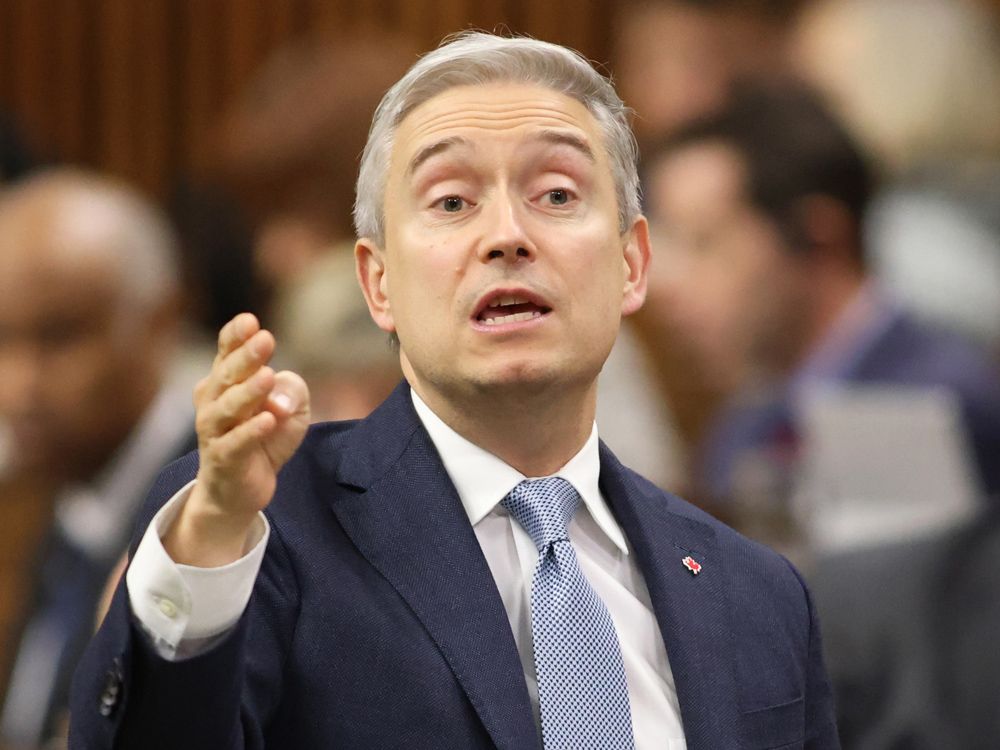
 François-Philippe Champagne.

PBO report sobering on savings

A report from the

Parliamentary Budget Office

that followed two weeks later dampened some of Finance Canada’s projected savings.

Because the tax cut is coming at the midway point of the year, the PBO analysis estimates an average savings of $90 this year, $190 in the following three years and $200 in 2029-30.

And instead of the $840 predicted by the Liberals, it estimates the average Canadian family will only save $280 on next year’s taxes.

Under the PBO’s models, a two-income couple in the second tax bracket with a child comes closest to the government prediction with a potential $750 in savings in future years.

Seniors and single Canadians, including those with a dependent, in the lowest tax bracket could see as little as $50, $100 and $140 in annual savings, respectively.

“In general, the greater the income, the greater the savings in dollars, but the lower as a share of income for individuals in the second tax bracket and above,” the PBO wrote, meaning those with a lower average income can expect to save less on the first $57,375 relative to those who earn more on average.

The Conservative Party of Canada issued a

statement

, calling out Carney and the Liberals for failing to deliver a meaningful tax cut, particularly for seniors.

“For a lower-income senior the savings would be $50 a year, or $4.16 a month,” the Tories wrote. “Not even enough to buy an Egg McMuffin or a Tim’s breakfast sandwich.”

As part of their campaign platform, the

Conservatives pledged

to drop the personal income tax rate to 12.75 per cent, potentially yielding $900 in savings to Canadians in the lowest tax tier and $1,800 for dual-income families.

The PBO report also highlighted the potential net cost of the tax cut, estimating it could be up to $28 billion over the next five years after taking into account associated reductions in federal tax credits under the plan.

— With files from The Canadian Press

Our website is the place for the latest breaking news, exclusive scoops, longreads and provocative commentary. Please bookmark nationalpost.com and sign up for our daily newsletter, Posted, here.


U.S. Ambassador to Canada Pete Hoekstra speaks at the Canadian Chamber of Commerce B7 Summit, in Ottawa, on Friday, May 16, 2025.

OTTAWA — With Canada’s digital services tax now scrapped, a free trade deal between Canada and the Unites States is just a question of time, U.S. Ambassador Pete Hoekstra told National Post on Monday.

In an exclusive interview, Hoekstra said he’s not sure if trade talks between the North American neighbours can be resolved by July 21, a target agreed to by the two leaders when they met in mid-June in Kananaskis, Alta. But the ambassador said he’s very confident that a deal will get done.

“We will get to an agreement. The only question is how long will it take,” he said in an interview. “I’m confident we will have an agreement.”

Hoekstra emphasized that free trade between Canada and the U.S. is good for both countries, but that policies such as Canada’s now-defunct digital services tax are irritants that get in the way.

He said the tax, however, was not the only trade irritant irking the U.S. Others include provincial policies that have pulled American alcohol off store shelves and other anti-competitive measures that make it difficult for U.S. companies to compete in this market. U.S. President Donald Trump has also made it clear that he doesn’t like Canada’s supply management policies protecting the dairy and poultry industries because they make it difficult for American producers to compete in the Canadian market.

“There’s lots of issues that need to be covered. Some of them are going to be tougher than others,” Hoekstra said. “The important thing is that this really sets the table.”

Prime Minister Mark Carney told reporters on Monday that he had always expected the digital services tax to be a casualty of the trade negotiations with the U.S., so it was pointless for the government to collect that tax revenue.

“It’s something that we expected, in the broader sense, that would be part of a final deal,” said Carney, without explaining why the decision to scrap the tax was made only hours before it came into effect at midnight on Sunday.

“It doesn’t make sense to collect tax from people and then remit them back, so it provides some certainty. And as I just said, negotiations have restarted. We’re going to focus on getting the best deal for Canadians. We’re making progress,” said Carney.

Canada’s digital services tax was considered a big deal to the U.S., Hoekstra said, because it unfairly targeted American big tech companies. The tax was raised consistently by the U.S. in every recent conversation about trade, he added.

But Carney called Trump Sunday to say that he would be cancelling the tax, just two days after Trump insisted that the U.S. would walk away from trade talks with Canada and impose retaliatory tariffs if the tax wasn’t killed. The first digital services tax payments were due Monday, although they were to be retroactive to 2022.

Hoekstra said the upcoming trade talks may face more hurdles but that both sides want a deal. “We’ve done this with the Canadians for years. I expect we’ll be able to do it again.”

Trump had said on Friday he was ending trade negotiations with Canada due to the tax, which would have targeted major U.S. tech companies like Amazon and Google.

“Based on this egregious Tax, we are hereby terminating ALL discussions on Trade with Canada, effective immediately. We will let Canada know the Tariff that they will be paying to do business with the United States of America within the next seven day period,”

Trump wrote, on his social media network

Truth Social.

Conservative Leader Pierre Poilievre said the Liberal government shouldn’t have scrapped the digital services tax without a concession from the Americans.

“The tax is gone for good. In exchange, the Prime Minister should insist that the U.S. immediately rescind softwood lumber tariffs. We need to make gains for our workers in these talks,”

wrote Poilievre, on social media

.

On Monday, White House Press Secretary Karoline Leavitt described the Canadian government’s decision to rescind the digital services tax as a big win for the United States.

“It’s very simple. Prime Minister Carney and Canada caved to President Trump and the United States of America. And President Trump knows how to negotiate,” said Leavitt.


National Post,

with files from the Canadian Press

Our website is the place for the latest breaking news, exclusive scoops, longreads and provocative commentary. Please bookmark nationalpost.com and sign up for our politics newsletter, First Reading, here.

Manitoba Minister of Families, Gender equality and accessibility Nahanni Fontaine.

Manitoba’s minister responsible for accessibility Nahanni Fontaine has apologized after she groused on a hot mic about sharing the stage with an American Sign Language interpreter.

At a graduation celebration on June 26, Fontaine spoke to her press secretary, Ryan Stelter, ahead of a media scrum. Fontaine, who is also minister of families and gender equality, complained of the interpreter being distracting during her speech, according to

APTN’s video of the exchange

.

“I was thrown off,” Fontaine told Stelter. “It wasn’t great — but because the woman — she shouldn’t have been on the stage.

“I couldn’t see anybody on (the left) side — all I could see was her…” she added, then started to wave her hands around to Stelter, who referred to the interpreter’s translations as “frantic hand movements.”

“Yeah! I’m like, f— why did I have her on the stage,” said Fontaine, “Jesus, I’m like, ‘You need to leave.’”

On Friday, Fontaine issued an apology in a written statement to media.

“I sincerely apologize to the deaf and hard of hearing community, and to all Manitobans for my comments,” Fontaine wrote.

“Yesterday, during a private debrief with my staff, I was reflecting on my public speaking performance and remarked I had been distracted by the interpreter’s hand movements. I was expressing frustration on my own poor planning to ensure clear sight lines at the event.”

She added: “My comments did not acknowledge signing is not simply “hand movements,” but a full and rich language used by thousands of Manitoban(s) every day.”

“As the Minister responsible for Accessibility I understand that ASL interpretation is integral to our public events, and we must continue to build understanding and respect for sign language and Manitobans who rely on it,” her statement continued.

Fontaine said she has since apologized to the interpreter, Sheryl LaVallee.

Deborah Owczar, who attended the honouring Indigenous women graduates,

told CBC

LaVallee was removed from the stage following Fontaine’s speech. Owczar, who is deaf, said the certificate she received at the event was tainted by the minister’s comments.

“I feel like my certificate is completely ruined. I got it from this event, now when I look at it, it’s associated with these negative memories, not with my accomplishment. I look at my certificate and I think about what was said,” Owczar said through an interpreter.

Barrier-Free Manitoba said interpreters are necessary to “ensuring accessible public communications” under the Accessibility for Manitobans Act.

“It is our hope that Minister Fontaine, as the minister responsible for accessibility and her colleagues will respond by reinforcing the Act’s mandate — ensuring accessible public communications through robust education and compliance,” the non-profit organization wrote

in an email to CTV

.

“Leadership means setting the tone from the top, and we trust the government will act decisively to uphold the dignity and inclusion rights of the Deaf and Hard of Hearing communities.”

Fontaine has said her team always includes ASL interpreters and that they are an important part of her speaking events.

Our website is the place for the latest breaking news, exclusive scoops, longreads and provocative commentary. Please bookmark nationalpost.com and sign up for our daily newsletter, Posted, here.


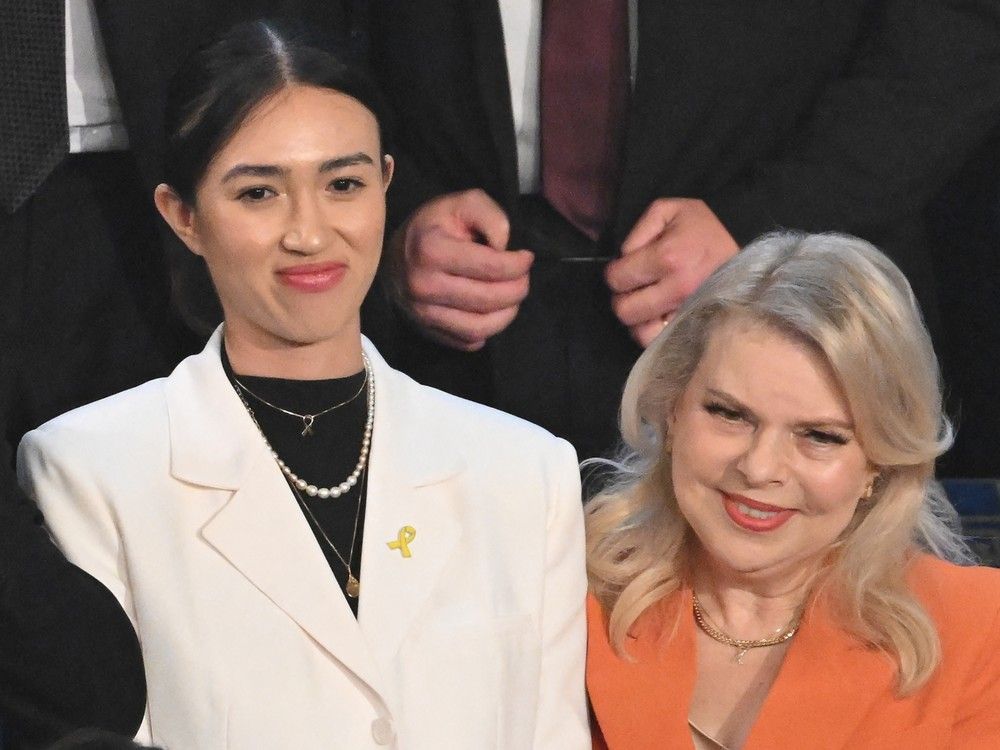
Former Hamas prison Noa Argamani, left, with Sara Netanyahu wife of Israeli Prime Minister Benjamin Netanyahu, in Washington, D.C. Demonstrators allegedly blocked an exit outside a venue where Argamani was speaking in Windsor, Ont. last week.

A Hamas captivity survivor on a speaking tour in Canada this month said she won’t “let terror sympathizers control the narrative” after anti-Israel demonstrators allegedly blocked the exit of her venue last week.

Noa Argamani, 27, was in Windsor, Ont., as part of a Jewish National Fund (JNF) fundraising event at the University of Windsor, which reportedly attracted members of the school’s Palestinian Solidarity Group.

On Saturday, Argamani shared an X post from FactsMatter describing the activists surrounding the building, “blocking the only entrance and shouting at the Jewish attendees. In a brief video clip attached, a voice is heard shouting, “Hamas is coming.”

The logo and username in the clip indicate it was a live broadcast from an account operated by the PSG. National Post is attempting to independently verify the source.

“Hamas came. Hamas kidnapped me. Hamas murdered my friends. But I won; I survived,” wrote Argamani, who spent 245 days in captivity after being abducted from the Nova music festival during the terrorist organization’s Oct. 7, 2023, insurgency.

The university student’s abduction and that of her partner, Or Avinatan, were captured on video and released by Hamas on social media. Argamani was also seen in subsequent propaganda videos.

 Noa Argamani’s abduction from southern Israel on Oct. 7, 2023.

She was rescued in June 2024

, but Avinatan remains in captivity. He is listed in a medical report detailing the condition of living hostages released by the Hostages and Missing Families Forum in June, per

The Times of Israel,

and described as suffering from weight loss and mental struggles.

“I’ll keep exposing Hamas’ crimes and fighting for the hostages’ release—including my partner, Avinatan,” wrote Argamani, who’s been a prominent advocate for her fellow captives since finding freedom.

Argamani was speaking at a Negev Event, named for the large desert region in southern Israel, where the goal was to raise money for the Ashdod Rehabilitation & Therapy Centre, “a vital project that will serve trauma victims, children with disabilities, and pediatric cancer patients in southern Israel,” according to

JNF

.

Idit Shamir, Consul General of Israel in Toronto and Western Canada, also

shared the clip on X

, calling it “psychological warfare against trauma survivors.”

“When Canadian campuses become no-go zones for Jews, when terror victims can’t share their stories without facing mob intimidation, you’re witnessing the normalisation of antisemitism,” she wrote.

Speaking to

The J,

event chair Miriam Kaplan condemned the attempted intimidation and said the University should, too.

“These students crossed the line from free speech into aggression,” she said.

The outlet also confirmed via the Windsor Police Service, who “monitored the situation and ensured public safety,” that it was treated as a protest and no arrests were made.

Our website is the place for the latest breaking news, exclusive scoops, longreads and provocative commentary. Please bookmark nationalpost.com and sign up for our daily newsletter, Posted, here.