LP_468x60
on-the-record-468x60-white

RCMP officers take part in the Calgary Stampede parade on Friday, July 4, 2025.

Those who travel by car between the U.S. and Canada at crossings like the Peace Bridge have grown accustomed to long wait times over the years, but drivers headed in either direction today rarely face delays.

Those empty lanes signal a stark change: Cross-border travel has fallen to historic lows, surpassing even the slowdowns seen after 9/11 and the 2008 financial crisis.

“We are currently seeing more extreme drops in travel by car than we did during those (earlier) crises,” says Laura Presley, an analyst at Statistics Canada, noting an “abrupt shift” at the start of this year.

 Prime Minister Mark Carney and U.S. President Donald Trump pose during a group photo at the G7 Summit in Kananaskis, Alta., on Monday, June 16, 2025.

U.S. President Donald Trump’s trade war, his “51st state” rhetoric, and stricter immigration rules have sparked a backlash that has Canadians choosing to spend more at home, and less on American goods and travel.

Americans, in turn, are less sure about being welcome up north, and everyone is dealing with economic uncertainty.

Cities on both sides of the border are rushing out event-driven and targeted marketing campaigns to reverse the slide and bring people back. 

It hasn’t been easy.

Bigger than a blip

After 9/11, car travel to the U.S. by Canadian residents dropped by just over 30 per cent, and the 2008 financial crisis saw car travel drop by just under 23 per cent. Data released last week show this is worse than both: Canadian return trips from the U.S. by car in June dropped 33.1 per cent compared to June 2024, and that was the sixth consecutive month of decline. Canadian air travel to the U.S. also fell by 22.1 per cent in June. 

Canadians spent US$20.5 billion in the U.S. last year, and the U.S. Travel Association has warned that a 10 per cent drop in Canadian tourism this year could cost the American economy US$2.1 billion in spending and 140,000 jobs. 
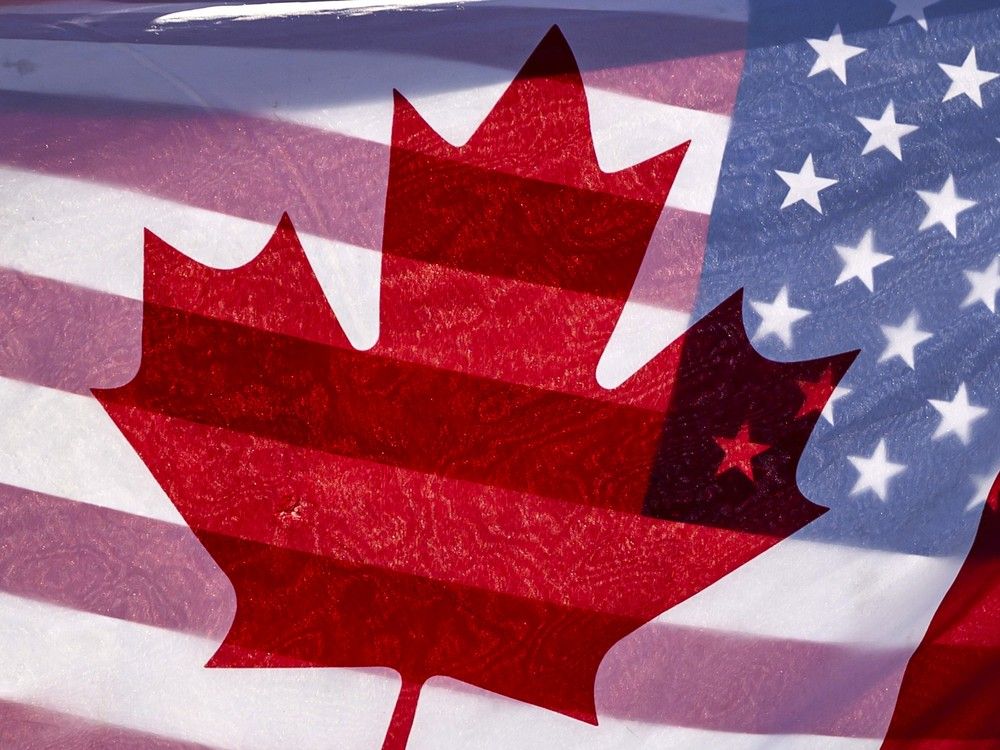
 FILE: Sunlight shines through the flags of Canada and the United States, held together by a protester outside on Parliament Hill in Ottawa, Feb. 1, 2025.

The trend has hurt Canada, too, but not as badly. American car trips to Canada in June fell 10.4 per cent year-over-year, for a fifth month of decline. American air travel to Canada is down too, but only by 0.7 per cent in June. 

Anusha Arif, an economist at TD Economics, said her research points to a decline of up to 10 per cent in U.S. spending in Canada, which could add up to a $1-billion loss.

 Love letters over the border

This year’s downturn is prompting tourism communities on both sides of the border to reimagine event-driven and targeted marketing to attract international visitors.

While U.S. visitation numbers are down across Canada, there is one bright spot: Calgary.

“We’re bucking the trend when it comes to U.S. visitation,” said Alisha Reynolds, president and CEO of Tourism Calgary. 

Alberta showed the strongest growth in U.S. travellers year-on-year as of April, per Statistics Canada, and the Conference Board of Canada is forecasting that Calgary will bring in 8.7 million visitors this year compared to 8.4 million last year. “We did see that visitation to Calgary from the U.S. was up in Q1, which was fantastic,” Reynolds says. Tourism Calgary has reported that U.S. visitor spending increased there by 4.5 per cent in the first three months of the year. 

 (L to R) Eleanor Olszewski, Minister of Emergency Management and Community Resilience, Alberta Premier Danielle Smith, and Calgary Mayor Jyoti Gondek flip pancakes at the First Flip event in Calgary on July 3, 2025.

So, what is Calgary doing right? “One of our strategic pillars at Tourism Calgary is to be a year-round eventful city… We are (working) … to attract global sports, major events, cultural events, to continue to showcase our city as a place that people want to experience.” This includes “strong, targeted U.S. marketing efforts to reinforce that friendly relationship between our countries.”

This year’s Calgary Stampede

drew just a few thousand people fewer than last year’s record-breaking year

, with organizers reporting

1,470,288 attendees by the time the 10-day event wrapped up Sunday night.

International visitors represented an estimated seven per cent of attendees.

While Calgary has been the most successful at it so far, several Canadian marketing campaigns are targeting desired U.S. travellers. 

“American travellers are vital to Toronto’s visitor economy,” says Andrew Weir, president and CEO of Destination Toronto.

U.S. visitations to the city are down so far this year, making this the “essential moment to remind them they are not only invited to Toronto, but genuinely welcomed. That message is at the heart of our ‘100 per cent’ campaign.” That ad campaign, which highlights Toronto as “all in” on diverse culture and food, soft-launched in late February — just weeks after Trump’s tariffs — and fully rolled out in major U.S. cities in May.
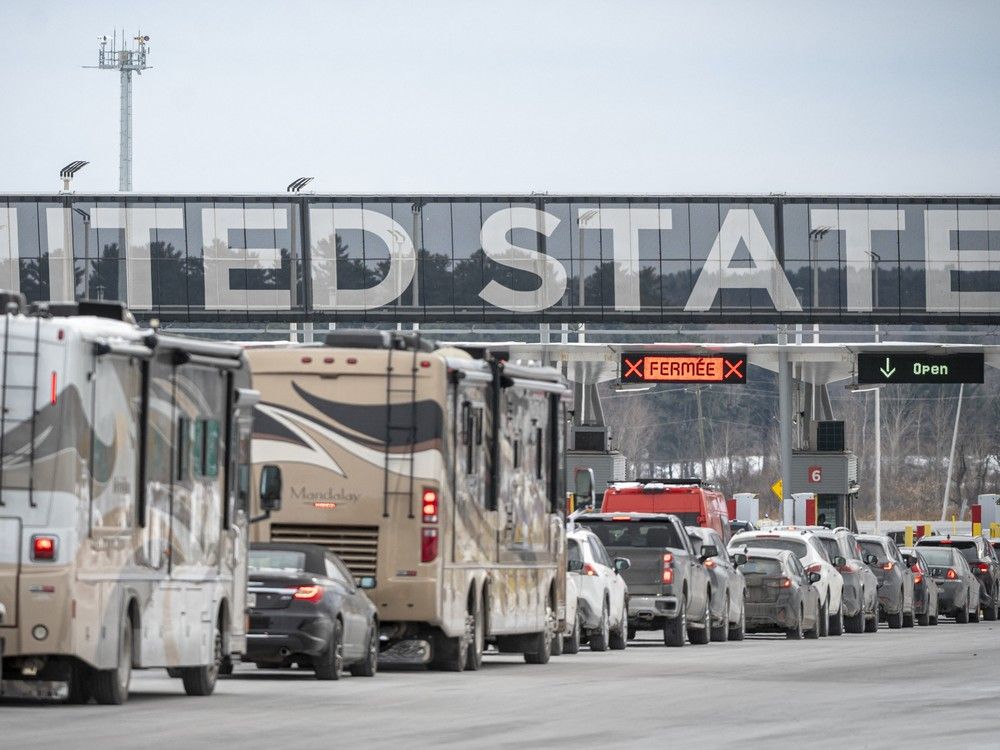
 Cars wait in line to enter the United States at a border crossing at the Canada-U.S. border in Blackpool, Quebec, Canada, on February 2, 2025.

The provincial tourism agency Destination Ontario, meanwhile, is encouraging Americans to “Spend less, do more,” noting the favourable exchange rate. And who can resist a virtual hug? Social media campaigns like
the “Come Hug it Out” campaign for Quebec’s Eastern Townships
are reassuring Americans that they’re welcome in Canada and will be treated well.

On the other side of the border, U.S. states and destinations are also ramping up efforts to woo Canadians back.

In May, Visit California launched its unsubtle “California Loves Canada” campaign to counter what it predicts will be a 19 per cent drop in Canadian visitation in 2025. “Every campaign is developed against a backdrop of evolving political, economic and cultural circumstances,” says Caroline Beteta, president and CEO of Visit California. But this year, “we felt it was important for California Loves Canada to specifically highlight our strong bond with Canada and thank them for all they’ve done for the Golden State over the years.” The campaign offers discounts of up to 25 per cent off more than 1,000 hotels and activities exclusively for Canadians.

Florida saw just under 1.3 million Canadian visitors between January and March this year, a 3.4 per cent drop from 2024, which is why the sunshine state is also targeting Canadians with both event-driven and country-specific marketing. “While traditional seasonal marketing is an important strategy, event-focused campaigns offer a more personal approach, like our Winter Village activation in Toronto’s Distillery District and the popular Sunshine Giveaway this past year,” says Craig Thomas, interim president and CEO of Visit Florida. He notes that his campaigns this year are connecting with Canadians on more platforms than ever, and in both English and French.

In response to the decline in Canadian visitors nationwide, Brand USA, is set to launch its “America the Beautiful” campaign next month, emphasizing what Fred Dixon, the national tourism organization’s president and CEO, has called a clear message that “the USA is open for business and ready to welcome legitimate international travellers.”

Recovery a long way off

With cross-border visitor numbers slumping for most destinations and Trump threatening a new 35 per cent tariff for some Canadian products, analysts don’t have much hope for a travel rebound anytime soon, despite these clever marketing campaigns.

TD Economics doesn’t anticipate improvement, given the current trade tensions. But, says
Arif
, “in today’s environment, the economic trends are dynamic. We might see a modest reversal, at least a moderation of these declines, by the tail end of 2025, but this largely hinges on external factors,” she adds, nodding to the current trade negotiations.

National Post

tmoran@postmedia.com

Our website is the place for the latest breaking news, exclusive scoops, longreads and provocative commentary. Please bookmark nationalpost.com and sign up for our daily newsletter, Posted, here.

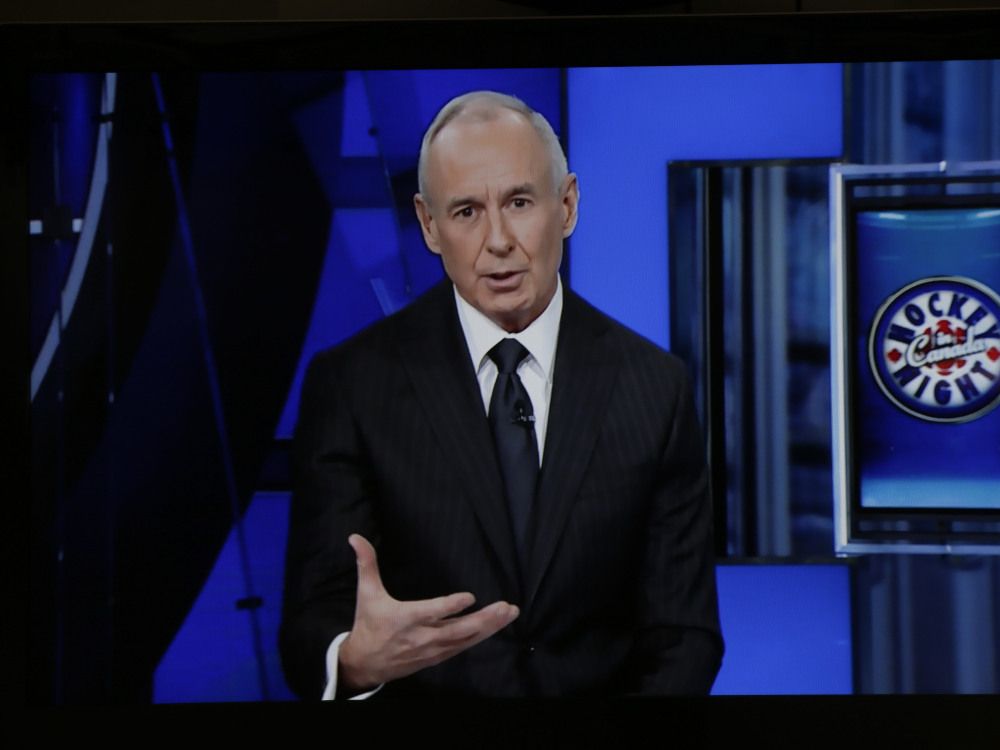
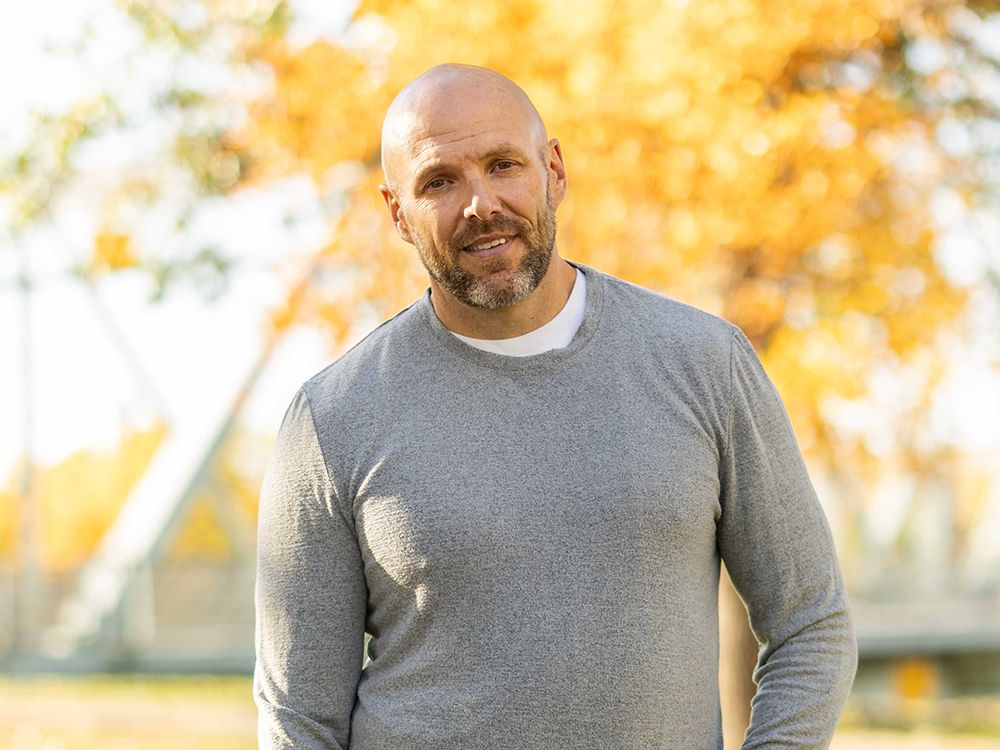
Don Cherry is

Don Cherry said his departure from Hockey Night in Canada in 2019 was not an orchestrated “exit strategy” related to health concerns, as was recently suggested by Ron MacLean, his ex-longtime on-air partner.

The former co-host of Coach’s Corner isn’t ready to call MacLean’s candid comments to the

Kingston Whig Standard

a “betrayal,” but admitted to feeling aggrieved by the narrative created after so many years have passed.

“I’m very disappointed in Ron that he would bring this up,” Cherry, 91, told the

Toronto Sun’s Joe Warmington in a conversation about MacLean’s assertions

. “I’m very disappointed that he would reach back five years and do this.

“He should let it go,” he added.

Cherry said he was “really surprised” when his wife Luba showed him the story, noting to Warmington that as far as she is concerned, MacLean is not welcome at their home or to contact them. Luba told the writer she would speak with her husband’s former peer directly.

Broached with the subject of Cherry and his son Tim possibly ending their podcast Grapevine by Whig Standard sports writer Gare Joyce recently, MacLean was reminded of Cherry’s departure from HNIC and tied it to the pneumonia he was suffering from at the end of a long Stanley Cup Final between the St. Louis Blues and Boston Bruins that June.

MacLean alleged that Cherry was struggling to breathe on their flight to Boston for a decisive Game 7, and he was taken to a sauna upon landing in an attempt to “clear out his lungs.”

A then 85-year-old Cherry would go on air that night, but his account of what occurred after the game differs from MacLean’s.

“Don and I didn’t have our post-show ritual beers (because) he was so sick,” MacLean told the Whig Standard. “I just had a couple of beers by myself and then I got a call from (National Hockey League Commissioner) Gary Bettman — you know, he and I are like, well, pick your poison — and he asks, ‘How’s Don?’ I tell him, ‘He’s good. Why do you ask?’ (Bettman) says, ‘Well, he’s in hospital.’ That was a shocker.”

For his part, Cherry insisted to Warmington that while he was “pretty tired,” there was no hospital visit in Boston.

“I went to my room,” he said, admitting he later visited a hospital upon returning to Canada, where he spent one night being assessed and treated for pneumonia.

Regardless, MacLean went on to suggest the “pneumonia scare” led Cherry to begin “plotting a way out” that ultimately arrived on a November broadcast ahead of Remembrance Day when he spoke about immigrants to Canada not wearing poppies to honour Canada’s fallen soldiers.

“You people come here, whatever it is, you love our way of life, you love our milk and honey. At least you could pay a couple of bucks for a poppy,” Cherry said at the time.

Rogers Sportsnet released him two days later following public backlash, which MacLean said “was the right outcome.”

“Don needed out, and the time was right. (Remembrance Day) was his last swing, taking a stance that’s unpopular, but that feels good in his world. For Don, it’s all a fight. It’s all a battle. So he was happy and I’m happy for him.”

Cherry also flatly rejected that assertion, saying “he wasn’t looking for a way out.”

“He can say what he wants, but it never happened.”

Cherry said he’s not been in contact with MacLean about the statements, nor does he plan to reach out.

As for the future of the Grapevine podcast, Cherry and his son told Warmington that the show will continue.

Our website is the place for the latest breaking news, exclusive scoops, longreads and provocative commentary. Please bookmark nationalpost.com and sign up for our newsletters here.


“If anybody downtown wanted to get housed, they would be, in 24-48 hours.” says Brent Secondiuk, a former Medicine Hat cop who is now a real estate agent.

Brent Secondiuk served as a front-line cop in the southern Alberta city of Medicine Hat for 25 years, and understands the futility of dismantling homeless encampments and otherwise dislodging itinerants who decide to bunk down in public spaces.

“We used to call it leaf-blowing … you just scatter the leaves, and the leaves end up somewhere else,” he says.

The most frustrating part, though: Medicine Hat has housing available for the homeless.

“You can be home if you want to,” he laments. “You just choose not to when it’s nice outside,” he says of itinerants who prefer to live rough.

“Years ago,” Brent explains, “we had little to no homeless people, because we had housing available. And I know we still do today. If anybody downtown wanted to get housed, they would be, in 24-48 hours.”

In 2015, Medicine Hat proudly pronounced itself the first city in Canada to “functionally end” chronic homelessness. The city’s housing-first approach — making permanent, stable housing available to the homeless, without pre-conditions — earned Medicine Hat the gold star in the battle against homelessness.

“I think announcing we had zero homeless brought more people here,” Brent acknowledges with a chuckle. Transients would come in from other jurisdictions, assuming Medicine Hat must have all sorts of available housing programs. “The problem,” Brent continues, “is a lot of them, especially in the summer when it’s nice outside and you can sleep rough outdoors,” turn down the housing because it comes with rules.

“And it became trendy to live outdoors and live rough,” Brent explains, “and it just started and snowballed … if person A is doing it, why can’t person B? So it just compounded and got us to where we are now.”

Brent doesn’t know the exact numbers but estimates there are probably 30 to 40 itinerant people living in the two big parks in Medicine Hat’s river valley. While he suspects not all are technically homeless — a few will be tied to that social network, but go back to their residences at night — the numbers are still higher than they’ve ever been, Brent says, “and it looks bad.”

To respond to an uptick in the number of homeless encampments in Medicine Hat, local police launched a “peace team” a few years back. Brent’s optimistic view? That focused approach helped, but there are still people who don’t want to live in a home or emergency shelter.

And for front-line officers — cleaning up garbage and human waste and needles in tents, and continuously checking for fire risk in a hot, dry place like Medicine Hat where a single spark could set off a fire in the entire river valley — it felt like a losing battle, Brent admits.

To address the burgeoning numbers of homeless people, the city cops also boosted patrols of the downtown and public parks where itinerants gather. That strategy helped, but it was also frustrating; the force lacked the practical ability to enforce city bylaws.

Charging the homeless under a bylaw is rather pointless: “It’s a ticket and most of these people don’t have a lot of income and they just don’t pay their fine. Bylaw tickets used to be able to go to warrants, so you could get arrested after a period of time. But that’s no longer the case,” he says.

And with prosecutors no longer prosecuting for simple possession of drugs, he adds, police “still can technically arrest and take the drugs and dispose of them,” Brent says, “but without a charge, it’s (just) a lot of paperwork.”

There is a little drug trafficking within the homeless community, he says, “we’re talking grams or half grams … which is so difficult for drug enforcement units when they’re dealing with big files — kilograms of cocaine — to focus on the little street level thing. But I know all police agencies do it. Every couple of years, they’ll do a street level roundup and charge people. But again, what’s the gain there? It’s more public perception.”

“It’s a lot of work,” Brent says with a sigh, “and the end result is you just have to move somebody along, to do it all over again.”

Hence, the leaf-blowing analogy.

The police service tried to pick its more empathetic officers for the downtown units, more suitable for the work there. “But that wears on you after a while, because you’re constantly dealing with the same small group of people, you know them by name, you’re dealing with them over and over and over and it feels like there’s no hope. I mean once in a while you’ll get a success story, but it’s quite challenging.”

A psychology major before entering the police service at the age of 23, Brent hasn’t become numb to the needs of the homeless; but he did retire from the service, last spring, and launched a second career selling real estate.

Brent’s also empathetic to the public’s fears and concerns. And he knows what happens when homeowners and businesspeople lose patience with rising theft and vandalism; when families avoid the downtown, parks and public infrastructure seemingly overtaken by a transient population. The police get blamed for not fixing the problem.

My take-away from this conversation with Brent: There’s no panacea, no quick fix. Even offering up free or nearly-free housing isn’t luring some itinerants off the streets. Some jurisdictions are now trying the opposite approach, with new legislation to shore up the power of police and courts to tear down illegal encampments, deter illegal drug use and trespassing.

Most notably, in early June, Ontario’s PC government moved forward on its promised Safe Municipalities Act, equipping municipalities with new tools to crack down on the reported 1,400 encampments across urban, rural and northern communities. The new law beefs up trespassing laws and allows police to confront, arrest and fine anyone they suspect of using drugs in public, with fines of up to $10,000 and potential jail time. At the same time, new money is being dedicated to build more affordable housing, shelters and recovery treatment hubs.

“I think some people need forced treatment,” Brent says. “I think when they shut some institutions down, like some of the bigger mental health facilities in the province years ago, that displaced people with mental health issues into communities.”

His empathy is not naive; it’s clear-eyed and more interested in solutions than ideology. He’s learned lessons useful to every city in Canada.

“I know stories of trauma where (homeless) people have been victims of horrific offences, and you feel for them and you want to get them help and put them in a safe place, and that’s what we’re trying to do. But others are just people that take advantage … you know, low-level traffickers, and they’re taking advantage of others.”

National Post

Our website is the place for the latest breaking news, exclusive scoops, longreads and provocative commentary. Please bookmark nationalpost.com and sign up for our daily newsletter, Posted, here.
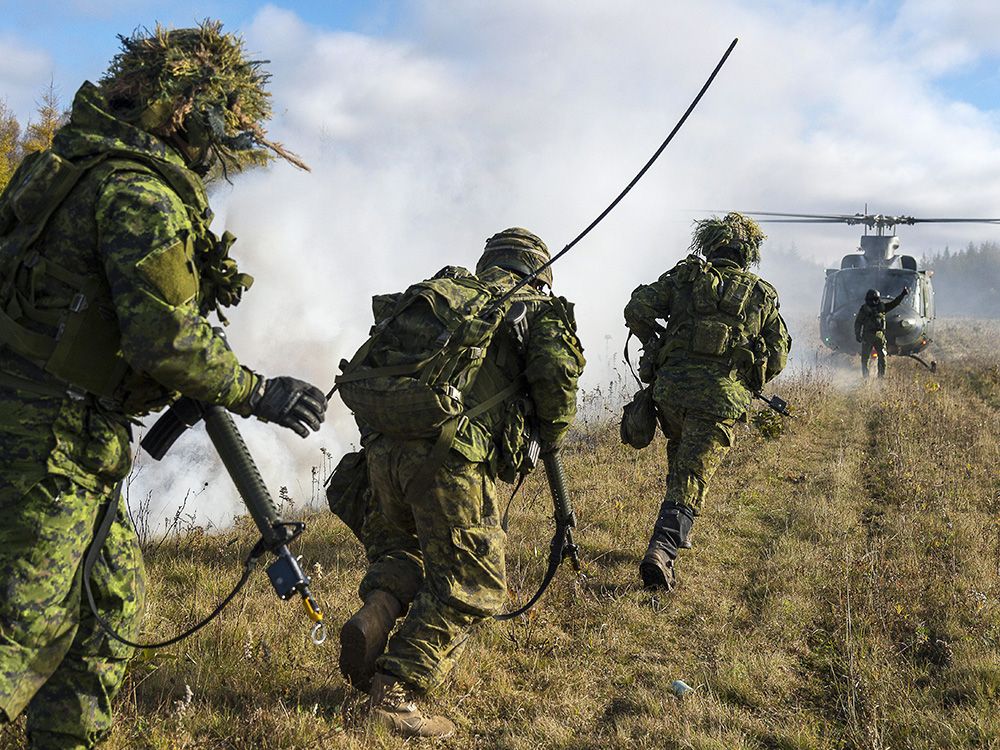

Canadian soldiers on a training exercise in New Brunswick.

As Canada ramps up defence spending in an effort to meet its NATO commitments, a pollster suggests the military may struggle to find the people it needs. According to a new Angus Reid Institute poll, just under half of Canadians say they’d be willing to serve if war broke out, and younger adults were the least likely to say they would volunteer.

The survey asked Canadians if they would be willing to fight in a war. Only 49 per cent of respondents said they would volunteer for military service in a combat role. Nineteen per cent said, “Yes, if my country called on me,” while 30 per cent said, “Yes, but only if I agreed with the reasons for fighting.” More than a third (39 per cent) said they would not be willing to volunteer to fight, while another 12 per cent were not sure. In 1985, when asked if they would be willing to fight for Canada, 61 per cent said “yes,” while 15 per cent said “it depends.”

“One of the things that’s becoming very clear, and very evident is that the conversation around military readiness, security, defence, is certainly having a moment. We’re seeing a 30-year high in terms of willingness to spend more on defence,” said Shachi Kurl, president of the Angus Reid Institute, in an interview with National Post. “We wanted to understand the size and the scope of the willingness (to volunteer for the armed forces) among Canadians.”

For years, the Canadian Armed Forces has been dealing with a recruitment crisis and public pride in the military has taken a hit following concerns about underfunding and the lingering impact of the 2021 sexual misconduct scandal. In 2019 nearly 80 per cent of Canadians said they felt proud of the armed forces, today that has dropped to 52 per cent.

Willingness to serve was highest among men over the age of 54, with 69 per cent saying they would be willing to volunteer (35 per cent unreservedly and 34 per cent if they agree with the war) and only 21 per cent saying they would not. However, since the army’s retirement age is 60, this willingness is of limited practical use. Meanwhile, younger Canadians, who are more sought after by the armed forces, were less willing to volunteer.

“It’s one thing to just talk about, we’re going to spend money, it’s another thing to commit the dollars and spend the money, but the money is going to be spent on people. So how do you square that circle, knowing, for example, that among the least amount of willingness … is among that 18 to 34 cohort,” said Kurl.

The poll found that 45 per cent of men aged 18 to 34 were willing to volunteer to fight (21 per cent unreservedly and 34 per cent if they agree with the war) while 36 per cent of men said they were not willing to volunteer. Women in that age group were far less willing to serve, despite efforts to recruit more women to the armed forces. Only 31 per cent said they would volunteer (10 per cent unreservedly and 21 per cent if they agree with the war) while 58 per cent said they would not.

Overall, Canadians older than 54 are more willing to serve (55 per cent) than men and women aged 18 to 34 (43 per cent).

The poll also showed that political affiliation played a role in willingness. Nearly six in 10 past Conservative voters said they would volunteer, compared to just over four in 10 Liberal voters. A majority of NDP (54 per cent) and Bloc Québécois (52 per cent) supporters declined to volunteer at all.

“We’ve seen through extensive study at the Institute on other related areas, such as where should Canada’s international priorities be, Conservative voters do tend to say they should be more on defence,” said Kurl.

“It’s notable, again, in terms of some of those who are most willing are older male conservative voters,” which again, is not the demographic the forces’ are looking for.

As Canada recommits to its role in NATO, the question isn’t just how much the country is willing to spend on its military, but who is willing to serve in it.

“We don’t have robot armies yet, so there’s also a human aspect to this,” said Kurl.

The national online survey was conducted from June 2 to 23 among a randomised sample of 1,619 Canadians who are members of the Angus Reid Forum. It was weighted to represent Canadian adults nationwide, according to the census. Traditional margins of error do not apply to online surveys, but, for comparison purposes, a probability sample of this size would have a margin of error of plus or minus two percentage points, 19 times out of 20.

Our website is the place for the latest breaking news, exclusive scoops, longreads and provocative commentary. Please bookmark nationalpost.com and sign up for our daily newsletter, Posted, here.
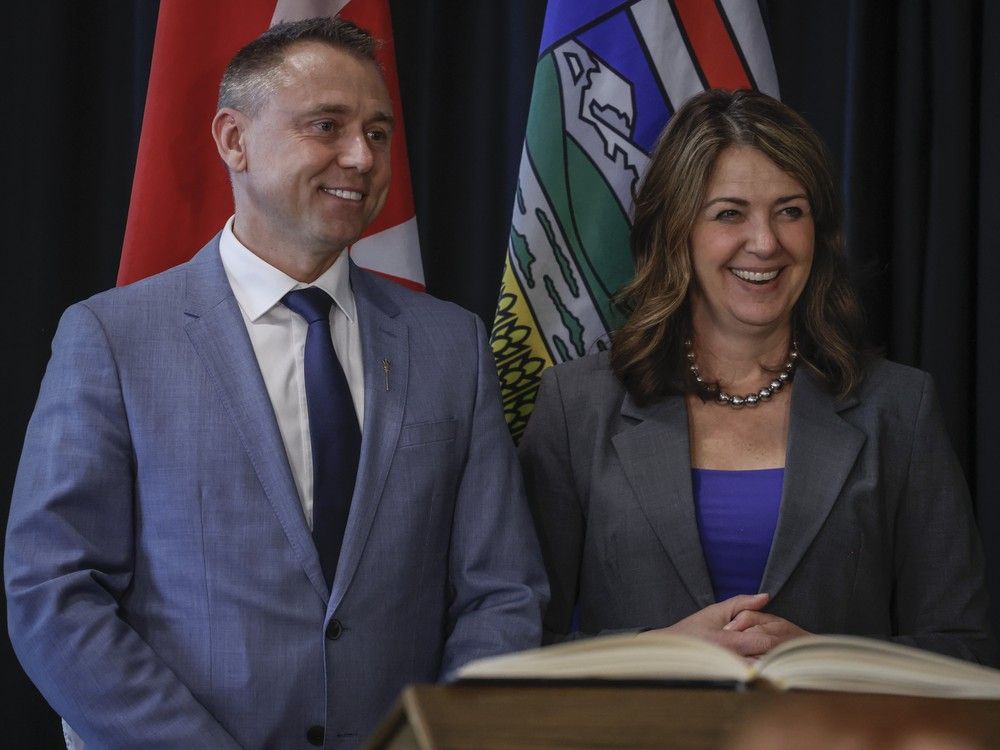

Alberta Premier Danielle Smith with new Minister of Tourism and Sport, Andrew Boitchenko, following a swearing in ceremony in Calgary, Alta., Friday, May 16, 2025.THE CANADIAN PRESS/Jeff McIntosh

EDMONTON — Alberta is rolling out new regulations this fall banning transgender athletes from playing women’s sports, but the province will still welcome out-of-province transgender competitors.

Tourism and Sport Minister Andrew Boitchenko said the discrepancy is out of his hands.

“We don’t have authority to regulate athletes from different jurisdictions,” he said in an interview.

In a followup statement, ministry spokeswoman Vanessa Gomez added it’s due to outside sporting organizations being bound by out-of-province or international guidelines.

She added the rules allow the government “to do what is best for Albertan athletes, while also showcasing Alberta as a premier destination for national and international sport events.”

Starting Sept. 1, the province will block transgender athletes from Alberta who are 12 and older from competing in female amateur sports. It’s one of a suite of changes surrounding transgender health, education and sport introduced last year by Premier Danielle Smith’s United Conservative Party government.

The laws sparked polarizing debate.

Proponents, including Smith, say it’s about fairness on the playing field, so girls are not battling opponents with biological advantages. Detractors say it’s about stigmatizing and punishing those in the transgender community.

Hannah Pilling, a track athlete who petitioned in favour of restricting transgender people in female sports, has welcomed the new regulations. She said in an interview she hopes Smith’s government takes it further.

“It’s kind of hard to enforce that on other athletes that are coming to compete in Alberta, but it’s definitely still not completely fair,” Pilling said.

She added that she would like to see future rules apply to men’s divisions.

Transgender athlete Allison Hadley said the exemption for out-of-province athletes suggests the legislation is not really about fairness or safety.

“If I had the resources to (move), honestly, I probably wouldn’t be in Alberta now,” she said. “We’re here in a province that doesn’t want us to be in the public or exist in many ways.”

Hadley said she didn’t pick up cross-country skiing to win medals. She said she was in it for the health benefits, the motivation that competition brings to her training and the camaraderie on the trail.

“It really sucks to have that taken away,” she said.

Mark Kosak, head of the Alberta Colleges Athletic Conference, said a restriction preventing transgender athletes from coming to Alberta to compete might have stopped the organization from ever hosting a national championship again.

“So there’s some relief from us,” Kosak said.

He said the conference hosts more than 1,000 events a year and, of those, between 40 and 50 host out-of-province competitors.

He said he’s unaware of any transgender athletes competing in the conference.

Kosak added that the sporting community didn’t ask for the government’s new rules.

“This is not a priority. This is not a concern,” he said. “It’s not an issue.”

The rules will be enforced through a complaint-driven process. Female athletes subject to complaints need to prove their sex registration at birth.

For those who were born elsewhere but live in Alberta and can’t retrieve documents that clearly state their sex at birth, Boitchenko said the government will look at “alternative documents.”

“We’ll be looking at (it) case by case, making sure that nobody feels that they can’t compete just because they lost certain documents,” he said.

Possible sanctions could be written warnings or code of conduct violations.

Bennett Jensen, legal director at LGBTQ+ advocacy group Egale, said the validation process alone is a “gross violation of the privacy of all women and girls.”

He said the government is introducing a complaint-based “snitch line” for complaints that will spur even more public policing of women’s bodies and gender presentation among young girls _ whether they’re transgender or not.

He said a 12-year-old, at a vulnerable stage of her life, could be subject to scrutiny and humiliation based on her physical appearance.

Jensen also said the government’s biological advantage argument falls apart in many instances, including for those athletes receiving hormone replacement therapy.

Boitchenko said inclusion is the goal, and the government is planning to expand grants to encourage sporting organizations to create coed divisions where numbers allow.

Pilling’s father, Dave Pilling, said he sits on the board for the Southern Alberta Summer Games, where they introduced open categories in all sports this year.

But for the Alberta Colleges Athletic Conference, Kosak said creating coed divisions across the majority of sports is “totally impractical and unrealistic.”

Our website is the place for the latest breaking news, exclusive scoops, longreads and provocative commentary. Please bookmark nationalpost.com and sign up for our daily newsletter, Posted, here.
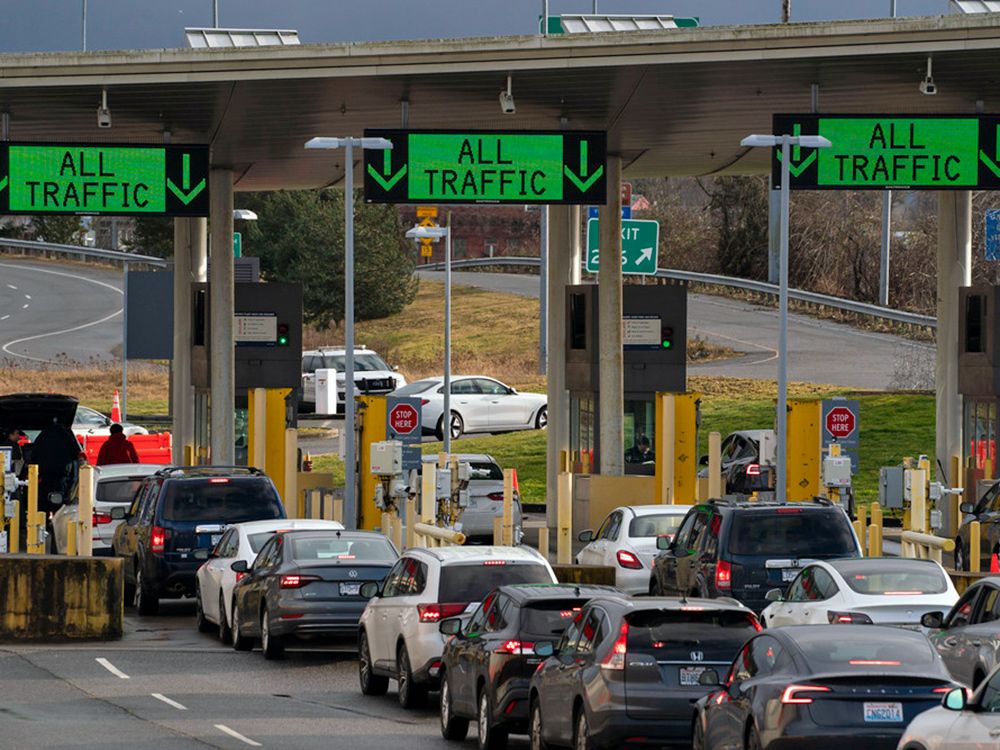

Vehicles enter the United States from Canada at a border crossing in Blaine, Washington. Far more large fentanyl seizures were made at the Mexican border than the Canadian border, the report found.

Most of the fentanyl entering the United States continues to come from the southern border, not the northern one, according to a recent report by an American think-tank, despite President Donald Trump’s statement on Thursday that Canadian authorities have failed “to stop the drugs from pouring into our country.”

“Countering supply effectively depends on understanding what the dominant drug-trafficking routes are,” says the report by the Manhattan Institute, which was published July 1. “New data on fentanyl seizures presented here largely reinforce previous understanding that most IMF (illegally manufactured fentanyl) enters the U.S. from the south. These data call into question tariffs and other policies and policy justifications that treat the threat from the northern border as comparably severe.”

The report used new data regarding fentanyl seizures, which challenges public pronouncements made by Trump and the White House about the threats posed by the Canadian border. Authors Jon Caulkins and Bishu Giri write that such concerns are largely overstated and could even undermine America’s ability to prioritize tightening the country’s border with Mexico.

The report looked at “large” seizures of fentanyl — defined as over a kilogram of powder or more than 1,000 pills — that would suggest wholesale trafficking as opposed to smuggling for personal use. It found that officials made more large seizures in U.S. counties along the northern and southern borders when compared to the rest of the country. However, far more seizures were made in the south.

“Counties along the Mexican border account for only 2.35 per cent of the U.S. population; but in 2023–24, they hosted about 40 per cent of the nationwide quantity of fentanyl appearing in large seizures, for both powder and pills,” says the executive summary of the Manhattan Institute’s

report

. “By contrast, counties in the lower 48 states that border Canada account for 3.1 per cent of the U.S. population but only 1.2 per cent of the powder and just 0.5 per cent of the pills obtained in large seizures.”

Caulkins, the H. Guyford Stever University professor of operations research and public policy at Carnegie Mellon University’s Heinz College in Pittsburgh, told National Post that his findings are “not terribly complicated or subtle.” He said that cross-border drug flows often mirror where seizures occur, and the data point to an uncontroversial finding.

“The basic punch line of this study is that seizures of fentanyl in the United States are disproportionately at borders: no surprise. It’s mostly produced internationally and then shipped in. But the vast majority of that is on the borders of Mexico, not on the borders with Canada.” When asked whether he was surprised by his findings, Caulkins, who has been a drug police researcher for over three decades, laughed and said he wasn’t.

“It’s what I expected.”

One thing that did strike him as overlooked was drug smuggling into Alaska, which he hadn’t contemplated deeply before. The report found that certain counties in Alaska could be portals from Canada to the broader Alaska market, “although those quantities are much too small to be of consequence beyond Alaska.” There were 26 seizures in Alaska counties that border Canada — “triple what would be expected based on those counties’ population” but still small when compared to the rest of the Alaska market.

“Maybe Alaska does get its fentanyl from Canada, because there’s not necessarily a large presence of Mexican drug trafficking organizations in Alaska, and you can’t easily drive from Mexico to Alaska without crossing several international borders,” he said. “I didn’t know that was coming, and by all means, maybe U.S. and Canadian authorities can put a few more inspectors on those ferries or whatever. But that’s not going to move the needle for the country, but it might be useful, right locally.”

President Trump has frequently cited the weakness of the nearly 10,000-kilometre long U.S.-Canada border as a threat to national security and a vulnerability that cartels and smugglers actively exploit.

“Gang members, smugglers, human traffickers, and illicit drugs of all kinds have poured across our borders and into our communities,” Trump wrote in a

public statement released

on February 1, just weeks after returning to the White House. He framed the crisis as having “profound consequences on our Nation, endangering lives and putting a severe strain on our health-care system, public services, and communities.”

“Canada has played a central role in these challenges, including by failing to devote sufficient attention and resources or meaningfully coordinate with United States law enforcement partners to effectively stem the tide of illicit drugs,” Trump said in February.

Two days after Trump’s message, then prime minister Justin Trudeau announced the implementation of a new “$1.3 billion border plan — reinforcing the border with new choppers, technology and personnel, enhanced coordination with our American partners, and increased resources to stop the flow of fentanyl.”

Prime Minister Mark Carney dismissed Trump’s claims of a porous Canadian border posing a threat to American national security in a social media message responding to the U.S. president on Thursday night.

“Canada has made vital progress to stop the scourge of fentanyl in North America,” the prime minister

wrote

. “We are committed to continuing to work with the United States to save lives and protect communities in both our countries.”

The Manhattan Institute report concluded that it would likely be more useful for the United States to direct more of its focus to the southern border if it wants to reduce the flow of fentanyl.

“Counties along the Canadian border are not an important part of this story,” the report states. “Whatever the merits or drawbacks of tariffs on imports from Canada — a question of economics and international relations that goes far beyond our analysis — such actions cannot be justified as part of a pragmatic and data-informed response to the threat of fentanyl to the United States.”

Our website is the place for the latest breaking news, exclusive scoops, longreads and provocative commentary. Please bookmark nationalpost.com and sign up for our newsletters here.


The Alberta government has issued provincial guidelines directing K-12 schools to pull all books with graphic depictions of sexual acts from school libraries.

OTTAWA — Prime Minister Mark Carney might feel pressure to take sides as a new front in the culture wars opens up in Alberta — but don’t count on him doing it, those familiar with the Liberal leader’s thinking say.

Alberta just launched

new guidelines for school library books

, which critics allege

will disproportionately censor materials

discussing LGBTQ and gender-fluidity themes.

Carney’s predecessor, Justin Trudeau, frequently castigated conservative premiers for provincial policies he deemed intolerant, rebuking New Brunswick, Saskatchewan, Alberta, Ontario and Quebec over cultural policies. But Carney is expected to steer clear of those issues, underscoring a key dispositional difference between himself and Trudeau.

“He’s likely to take a different approach than (Trudeau), who had no issue calling out premiers over provincial matters,” says Sharan Kaur, a former senior Liberal government chief of staff who’s known Carney for a decade.

Kaur, now a principal at consulting firm Navigator, says she expects Carney to stay focused on the big picture, as he guides Canada through a perilous moment in both internal crises and cross-border relations.

“With U.S. trade tensions and separatist sentiment brewing in Alberta, he does not need another domestic fire, especially not over school libraries,” she said.

Alberta

issued provincial guidelines Thursday

directing K-12 schools to pull all books with graphic depictions of sexual acts from school libraries. The order also guided schools to restrict access to “non-explicit” sexually suggestive materials to students in Grade 10 and up.

Provincial officials said the action came after

four sexually explicit graphic novels

were found in Edmonton and Calgary public school libraries in the spring and the province surveyed parents in the province about whether the government should put controls on lending materials.

Three of the four books that were highlighted by the province as not acceptable are coming-of-age stories with LGBT protagonists. The fourth depicts male-on-male childhood sexual abuse.

The province said it would continue to allow books that serve as resources for sexual education.

Religious and scriptural books will also be exempt.

Kathleen Wynne, a former Liberal premier of Ontario, said the order

would send Alberta down

“(T)he slipperiest of slopes.” She also shared an article calling the order a “blatant act of cultural vandalism.”

Alberta Senator Kristopher Wells

said he was worried about the order limiting access to sex-ed materials, but added he was relieved that there was nothing in its plain text preventing students from learning about LGBTQ identities.

Wells, a 2024 Trudeau appointee, accused the Alberta government last month of playing to

an “old homophobic trope”

by singling out LGBTQ-themed books as pornographic.

So far, Carney and his cabinet have not commented on the policy.

His predecessor, Trudeau,

blasted New Brunswick in 2023

over its policy requiring schools to disclose student pronoun changes to parents, calling the policy “far-right.” The

policy enjoyed the support

of the vast majority of New Brunswickers and their fellow Canadians at the time.

Then minister of women, gender equality and youth Marci Ien was an equally vocal critic of similar parental disclosure policies rolled out in Saskatchewan and Alberta, saying at one point that these policies put transgender and nonbinary children in a “

life-or-death situation

.”

Trudeau also accused Alberta’s plan to restrict medical transitioning for children of being “anti-LGBT,” opposed Ontario’s changes to its sex-ed school curriculum, and criticized Quebec for rules barring religious symbols being worn by public servants.

Chrystia Freeland, a senior minister under Trudaeau

would later argue that

Trudeau’s loud championing of LGBTQ rights and other culture war issues were part of the reason he fell out of favour with Canadians.

“Liberals … lose when people think that we are focused on virtue-signalling and identity politics,” Freeland said in an interview earlier this year.

Carney looks to be taking this lesson to heart, treading lightly on cultural issues. The women and gender equality portfolio

was conspicuously absent from

Carney’s maiden cabinet, although he assigned former minister of small business Rechie Valdez to the role shortly after April’s election.

Carney said in a post-debate media scrum that he believed there

were two biological sexes,

but also believed that transgender individuals should be accommodated where possible.

“This is Canada (and) we value all Canadians for who they are,” said Carney.

Tyler Meredith, a longtime Liberal insider and former senior adviser in the Prime Minister’s Office and Ministry of Finance, said that attacking the Alberta school libraries order would be a bad use of Carney’s time and political capital.

Meredith said that the Alberta policy would provide for its own undoing.

“Bullies are bullies. Bullies make stupid mistakes,” said Meredith.

“Let the bullies show themselves in public.”

The Prime Minister’s Office didn’t respond to a National Post request for comment on the Alberta policy.

National Post

rmohamed@postmedia.com

Our website is the place for the latest breaking news, exclusive scoops, longreads and provocative commentary. Please bookmark nationalpost.com and sign up for our daily newsletter, Posted, here.


Irish rap band Kneecap performs at the Glastonbury festival in Pilton, England, on June 28, 2025.

A group of Indigenous leaders are pushing for the cancellation of shows featuring the Irish hip-hop group Kneecap, arguing the rappers glorify terrorism and promote antisemitism.

“Kneecap has outwardly supported antisemitism, genocide, and the indiscriminate murder of civilians. Allowing them to play in Canada would be a stain on our country’s reputation,” says the letter, signed by nine Indigenous leaders in Canada.

Kneecap, a Belfast-based trio comprised of Liam Óg Ó hAnnaidh (who performs under the name Mo Chara), Naoise Ó Cairealláin (Móglaí Bap) and JJ Ó Dochartaigh (DJ Próvaí), has seen a number of concerts cancelled amid the band’s outspoken support for Palestinians and criticism of Israel.

Ó hAnnaidh faces charges under the British Terrorism Act for allegedly waving the flag of Hezbollah, the Lebanese terror group, last November. (He is out on bail.)

“We deny this ‘offence’ and will vehemently defend ourselves. This is political policing. This is a carnival of distraction,” the group wrote on social media, according to al Jazeera.

The letter argues that Kneecap, having allegedly voiced support for Hezbollah and Hamas, should not be allowed to play in Canada on Indigenous land.

“By allowing Kneecap to perform on Indigenous lands, Live Nation and the MRG Group are not only endorsing rhetoric that promotes division, hate, and glorification of terror — they are violating the spirit and obligations of the Treaties of Peace and Friendship,” the letter states. (The peace and friendship treaties were a series of treaties signed between the British and the Mi’kmaq, Maliseet and Passamaquoddy people prior to 1779.)

Kneecap has four shows planned for Canada, two in Toronto and two in Vancouver. All four October shows are sold out. The signatories of the letter are calling on Live Nation, the concert promoted, and MRG Group, which manages the venues where Kneecap is playing: History in Toronto and the Vogue Theatre in Vancouver.

Concerts elsewhere have been scrapped and politicians have called for further cancellations since Kneecap played a set at California’s Coachella music festival in April and accused Israel of committing genocide, something the Jewish state has vehemently denied. The group has also compared Israel’s actions in Gaza to the actions of the British in Ireland during the Troubles.

“The Irish not so long ago were persecuted by the Brits, but we were never bombed from the f–king skies with nowhere to go! The Palestinians have nowhere to go – it’s their f–king home and they’re bombing them from the sky. If you’re not calling it a genocide what the f–k are you calling it?” Ó hAnnaidh

said on stage in California.

News reports have also cited video from a 2023 concert that appears to show a band member saying “Up Hamas, Up Hezbollah” and another that allegedly

shows a band member saying

: “The only good Tory is a dead Tory. Kill your local MP.”

Grand Chief Harvey Yesno, one of the signatories of the letter and the former chief of Eabametoong First Nation and grand chief of Nishnawbe Aski Nation, said that part of the reason Indigenous leaders are speaking out is to reassert their voices within Canada.

“We’re in a land of freedom to express yourself … so that’s allowed throughout the country. But the difference is, is when you’re inciting hate and violence and acknowledging who — Canada has put some of these organizations as terrorist organizations. That’s where we draw the line,” said Yesno. “So, our concern there is the defilement of the land, because we believe that, as the Indigenous people on these lands, that we have a responsibility to point out, hey, wait a minute, you can’t be doing that. You can’t be inciting violence here on our lands because the defilement of the land causes things to happen amongst the people.”

Yesno said the group has yet to receive a response from the concert organizers. The signatories are largely involved with Indigenous Embassy Jerusalem, an international group of Indigenous people from various countries that expresses Indigenous solidarity with Israel.

In late June, Kneecap played a show at England’s Glastonbury Festival, despite Keir Starmer, the prime minister of the United Kingdom, saying it would be inappropriate. Kemi Badenoch, the leader of the U.K. Conservative Party, called on the British Broadcasting Corporation to not broadcast Kneecap’s show; the public broadcaster demurred, saying it does not ban artists.

“It’s not about us, it’s about distraction and a loud warning to other acts to stay silent or we will try silence you,” Kneecap wrote on X.

Kneecap could not be reached for comment. Live Nation and MRG Group did not respond to National Post’s request for comment.

Our website is the place for the latest breaking news, exclusive scoops, longreads and provocative commentary. Please bookmark nationalpost.com and sign up for our daily newsletter, Posted, here.


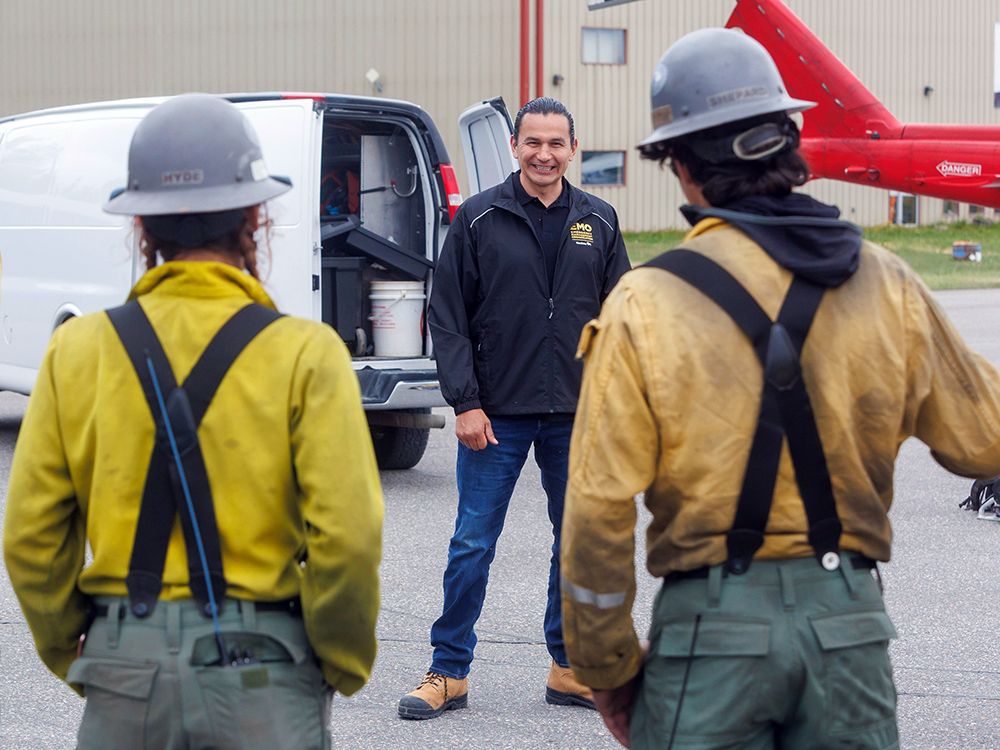
Manitoba Premier Wab Kinew chats with members of the Logan Hotshots from the U.S. Forest Service as they prepare to drop into a wildfire hot zone for the day in the surrounding area of Flin Flon, Man. on June 12, 2025.

Manitoba Premier Wab Kinew has pushed back against U.S. lawmakers who recently sent a letter to Canada’s ambassador

complaining that wildfires

are sending smoke across the border and making it difficult for Americans to enjoy the summer.

The Tuesday letter was signed by six Republican lawmakers from Minnesota and Wisconsin, and questioned Canada’s approach to fighting wildfires. In response, Kinew said Thursday that the lawmakers should speak with the American firefighters currently on the ground in Manitoba, instead of making political statements from afar.

“I’ve shaken the hands of American firefighters in northern Manitoba who are helping us out,” said Kinew. “I would challenge these ambulance chasers in the U.S. Congress to go and do the same, and to hear how much the American firefighting heroes who are here, how much they love our province.”

The letter was sent by representatives Tom Tiffany, Brad Finstad, Tom Emmer, Michelle Fischbach, Glenn Grothman and Pete Stauber of Wisconsin and Minnesota, and addressed to Canada’s U.S. ambassador, Kirsten Hillman.

In the letter, they outlined that over the last few years, Canadian wildfires have impacted American’s quality of life. They argued that a “lack of active forest management” is a key cause, but arson could also be a contributing factor. The letter went on to say that with all the technology available, “this worrisome trend can be reversed if proper action is taken.”

“This is what turns people off politics,” Kinew said in response. “When you’ve got a group of congresspeople trying to trivialize and make hay out of

a wildfire season

where we’ve lost lives in our province. There’s no place for that in politics.

“If you can’t get likes on Instagram from your own skills as a politician don’t bother trying to throw other people under the bus during a state of emergency.”

Our website is the place for the latest breaking news, exclusive scoops, longreads and provocative commentary. Please bookmark nationalpost.com and sign up for our daily newsletter, Posted, here.

PSAC President Sharon DeSousa: “It doesn't have to be done like previous administrations, where it starts off with just this lazy approach of austerity and cutting jobs.”

OTTAWA — Canada’s largest public sector union is warning that any cuts to federal employees, as the Liberal government looks to shrink spending, will mean slower, lower-quality services for people seeking passports, employment insurance and veterans benefits.

Sharon DeSousa, national president of the Public Service Alliance of Canada (PSAC), said Prime Minister Mark Carney should stick with his campaign promise to “cap” the federal public service — not cut it.

However, Carney’s senior-most minister this week

directed cabinet to find a total of 15 per cent in spending cuts in their departments by 2028-29

. The direction from Finance Minister

François-Philippe

Champagne spelled out cuts of 7.5 per cent by 2026–27, an additional 2.5 per cent cut by 2027–28, and another five per cent on top of that by 2028–29. The target  will amount to $25 billion, a government official confirmed to National Post.

Any cuts to staff, said DeSousa, will have consequences.

“What it actually means is that you’re looking to cut jobs, which means cutting services — end of story,” DeSousa said. “It will mean longer wait times. It means that we’re not going to be able to deliver on the programs that are a priority to us, and I think everyone is going to be impacted.”

“What we’re talking about is employment insurance. We’re talking about veterans who are looking for services. We’re talking about an aging population who is looking to get guidance as to how to receive their benefits. It’s going to impact people looking for passports.”

“There’s not one area that’s not going to be affected,” she added.

Mohammad Kamal, director of communications to the President of the Treasury Board, did said the government’s spending review is requesting that all departments “bring forward savings proposals by targeting programs and activities that are underperforming, not core to the federal mandate, duplicative, or misaligned with government priorities.”

There are exceptions, however: the Department of National Defence, the Canada Border Services Agency and the Royal Canadian Mounted Police will be subject to a “lower savings target” of two per cent over those three years, said Kamal.

The process does not apply to agents of Parliament — such as the auditor general and the parliamentary budget officer, the courts administration service and the office of the registrar of the Supreme Court of Canada — to “preserve their independence,” he said.

Anxiety among federal public servants is reportedly already high. DeSousa said 10,000 jobs were cut just last year, and an estimated 2,000 to 7,000 more jobs could be on the chopping block for this year as well. That includes contracts at the Canada Revenue Agency, as well as the departments of employment and immigration that are not being renewed, she said.

“Right now, if you try to call Canada Revenue Agency, less than five per cent of the calls are being picked up. They don’t have enough people to do this,” she claimed.

While the government has vowed to not touch transfers to individuals and provinces, or social programs such as child care and dental care, Assembly of First Nations National Chief Cindy Woodhouse Nepinak warned Indigenous services should be exempt from the cuts as well.

“I think health care for Canadians and Indian Affairs should never be cut back,” said Woodhouse Nepinak in an interview. “And I think because the gaps are so huge, you don’t want to further and widen the gap on First Nations people by cutting services and programs very much needed to make this country be a better place.”

DeSousa said the government can look at different ways of finding efficiencies in delivering services to Canadians while still redirecting money to the government’s core priorities.

“There’s a different way that we can do this. It doesn’t have to be done like previous administrations, where it starts off with just this lazy approach of austerity and cutting jobs… I don’t think it needs to be at the expense of people who rely on those services.”

DeSousa suggested reducing the amount departments and agencies spend on outside consultants, which would save millions of dollars each year, but also reverse the return-to-office mandate to free up buildings so they can be repurposed for other initiatives, such as low-income housing, or sold to generate potentially billions of dollars in savings.

“What we’re trying to do is to provide practical solutions that the government can, in fact, look at so that it doesn’t make the sacrifices on the programs and services, and to get them to understand the actual impact their decision-making is going to have, and how it’s going to affect people residing in Canada who depend on them,” she said.

“For us, it’s about fighting for their services.”

National Post

calevesque@postmedia.com

Our website is the place for the latest breaking news, exclusive scoops, longreads and provocative commentary. Please bookmark nationalpost.com and sign up for our newsletters here.