



LP_468x60
on-the-record-468x60-white

Halifax MP Lena Metlege Diab.

OTTAWA — When Immigration Minister Lena Metlege Diab dropped by a church kids camp this summer, she came

to pose for photos

to highlight the funding that came from the Canada Summer Jobs program.

It might not have seemed unusual: members of Parliament have a hand in helping organizations in their riding get the summer-job subsidies in the first place. MPs get lists of organizations in their ridings that apply for the subsidy, and recommend who should get it.

But Metlege Diab had a more personal relationship with this particular Lebanese parish church in Halifax than just representing it as an MP. She has been a parishioner there since the 1980s.

The situation does not seem to violate either the Conflict of Interest Act or codes that public office holders must follow, but one government ethics specialist said it touches on issues around perceptions of conflict,

as well as what questions the department responsible for administering the money asks of MPs who may have ties to the organizations whose requests they review.

“Do I think that the minister, in this case, has broken the act or code? No,” said Ian Stedman, who previously worked for Ontario’s integrity commissioner and now teaches as an associate professor at York University.

“Do I think that the program may want to protect itself by having a higher bar or a higher standard than the act or code? Yes.”

The Canada Summer Jobs program offers a wage subsidy for employers to hire those aged 15 to 30 each summer. This year, the government announced it would spend $25 million more to create another 6,000 spots to combat the country’s high youth unemployment rate.

How it works is simple: An organization, including religious ones, applies for the subsidy. The department that administers it assesses the application to ensure it meets the criteria and then asks MPs for their feedback based on a recommended list, which, according to the program’s website, is to ensure “local priorities” are met.

Their feedback, it says, is then used to inform the government’s final decisions.

In Metlege Diab’s case, a spokeswoman in her Halifax West constituency office said she provided her feedback back in March, two months before Prime Minister Mark Carney promoted her to cabinet. She has represented the riding federally since 2021.

“The final funding decisions by (Employment and Social Development Canada) were made during the writ period,” the spokeswoman wrote, referring to the period during the spring federal election.

Her office also confirmed she had been a parishioner of the church in question since its was established in the 1980s

“It was wonderful to visit Our Lady of Lebanon Parish and see how the Canada Summer Jobs program is helping our youth gain valuable work experience while supporting meaningful summer opportunities. Thank you for welcoming me — enjoy the rest of your summer!” Metlege Diab

wrote in a recent Facebook post

.

The government confirmed the church received around $50,000 to fund 10 jobs.

Last year, the Conflict of Interest and Ethics Commissioner’s office released an advisory opinion directing MPs on when they should refrain from giving their opinion on whether a particular organization should receive funding.

It added that an entity is not precluded from applying for government money just because an elected official or appointee has a personal connection to it, like a membership.

The office advised that MPs should not provide opinions on applications from groups that employ or are owned by a family member, or where they have a “private interest.”

Stedman says under the rules, “private interest” is defined in terms of it being a financial interest, which is narrow.

He says that narrowness is evident when it comes to the Canada Summer Jobs program, which he said is unique in that the government asks MPs to directly weigh in on a funding decision. “This is really them saying outright, ‘We want you to help influence how our money is spent.’”

While federal ethics rules concentrate on the issue of a public officer using their influence to benefit financially, the program itself is about the community.

“It’s an organization she cares about. It’s a church that she cares about, and the better they do, the longer they survive to be there for her and her community. And she benefits from that in a kind of interpersonal way,” Stedman said.

“It’s just not the kind of benefit that’s contemplated by the act, which can be unpalatable … for I think our modern take on what conflicts of interest could be.”

He said he believes the program, in asking MPs for their recommendations on funding, should also ask whether they have any personal connections to the organizations on the provided lists.

“The public expects that their members of Parliament are going to do everything they can to avoid the perception of a conflict, because we want our government officials to care about public trust in their behaviour, and public trust is about perception as much as it is about reality.”

In a statement, Employment and Social Development Canada did not directly say whether it asks MPs about having any personal ties to the organizations whose applications they review, but members are reminded of the rules under the Conflict of Interest Act and Code of Conduct.

“To ensure their recommendations are considered, they must attest to their compliance with the code by completing the required electronic confirmation. The code provides guidance to MPs regarding the disclosure of conflicts of interest and ensures transparency and accountability in their decision-making, including in the Canada Summer Jobs MP recommendation process,” wrote spokeswoman Liana Brault.

“The department provides final recommendations of projects to be funded after examining all applications against program criteria and national priorities and reviewing feedback from members of Parliament.”

National Post

staylor@postmedia.com

Our website is the place for the latest breaking news, exclusive scoops, longreads and provocative commentary. Please bookmark nationalpost.com and sign up for our daily newsletter, Posted, here.
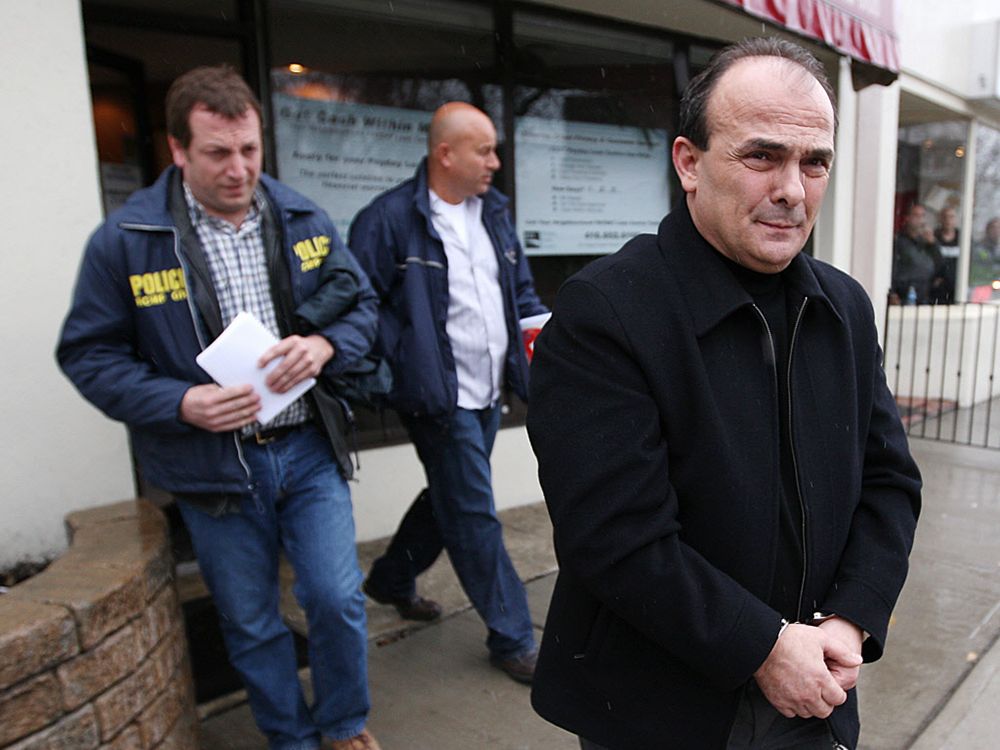

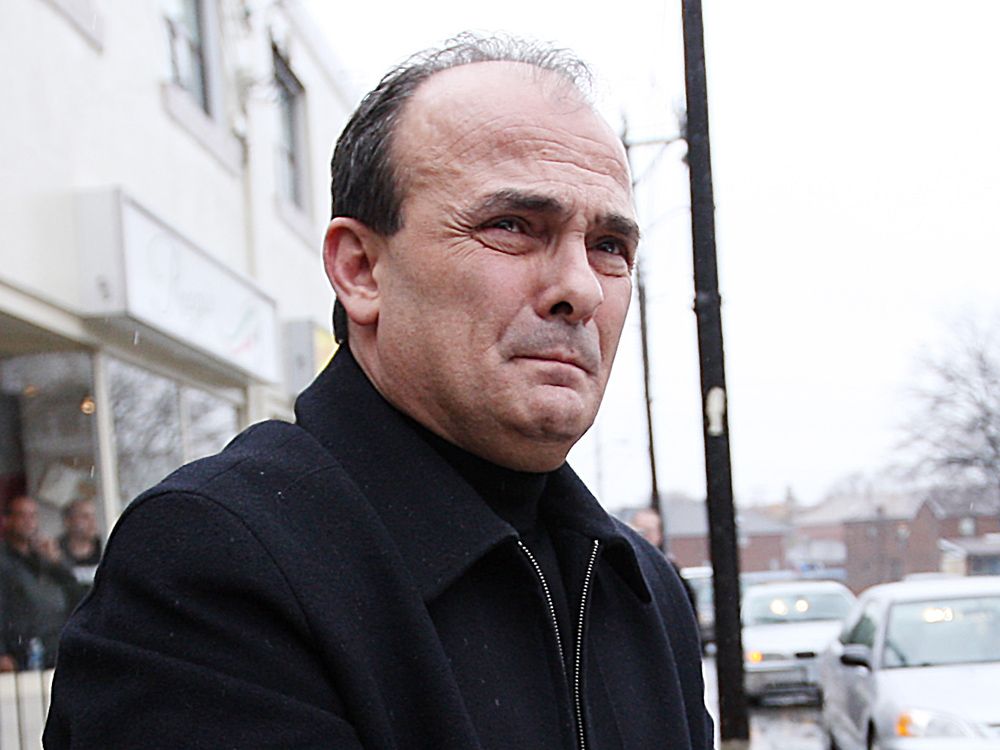
Reputed Mafia boss Vincenzo

In the middle of a high-stakes deportation hearing against an alleged Mafia boss living in Canada, the government unexpectedly declared it will no longer rely on any evidence obtained from controversial Italian police wiretaps covertly made using the phones of visiting members of a mob family to Canada.

The announcement Friday threatens to derail yet another attempt to deport Vincenzo (Jimmy) DeMaria, a man accused of being a Mafia boss in Ontario who has successfully fought off deportation for more than 40 years.

An Immigration and Refugee Board (IRB) hearing is underway on the government’s latest attempt to deport DeMaria based on allegations he is a member of the ’Ndrangheta, the proper name of the powerful Mafia that formed in Italy’s region of Calabria. DeMaria has denied the allegation.

Lawyers for DeMaria had repeatedly called for the Italian police wiretaps to be rejected, calling them illegal foreign interference. On Friday, however, they said the government’s sudden agreement in the middle of the hearing was absurd.

“What we have here is an abuse of process by the minister (of public safety),” said Shoshana Green, one of DeMaria’s three lawyers at the hearing.

“It is an absurdity that the minister, on a whim, is changing the nature of this entire hearing. How can Mr. DeMaria properly prepare for a matter when they are literally changing the foundation of their case four days in?”

Green said information from the wiretaps has already been extensively “co-mingled” with other evidence entered in the case over years, including in two days of testimony earlier this week by a senior police officer from Italy who was the government’s first witness at this hearing against DeMaria.

Green asked Benjamin Dolin, the IRB member deciding the matter, to issue a stay of proceedings, which would suspend the government’s appeal of an earlier immigration board decision

to allow DeMaria to remain in Canada

, where he has lived since moving from Italy as an infant.

“Or in the alternative, we would certainly consent to the minister abandoning their appeal,” Green said.

Andrej Rustja, arguing on behalf of Canada Border Services Agency, said that after reviewing its strategy for the case Thursday night, the government decided to not rely on the wiretaps recorded by Italian police in Canada in 2019 and told DeMaria’s lawyers as a courtesy and to save time at the hearing.

Neither Rustja nor government lawyer Daniel Morse said why they shifted their strategy.

 Vincenzo “Jimmy” DeMaria, right, is led to a police cruiser after being arrested in Toronto on April 20, 2009.

Dolin told Green the government’s change “would seem to benefit” her client. “I don’t see any prejudice to Mr. DeMaria,” but he adjourned the hearing to allow DeMaria’s lawyers to file a written motion for a stay and for the government to respond.

DeMaria had been scheduled to testify in the case Friday morning.

The Italian wiretaps have been under scrutiny for years.

The recordings provided an intriguing and colourful peek into activities of the ’Ndrangheta and revealed links between those under investigation in Italy to alleged affiliates in Canada.

In 2019, Italian police learned that a mobster in Calabria named Vincenza Muià was coming to Toronto to speak with people here to find out who within the ’Ndrangheta had murdered his brother in Italy, so that he could properly avenge his death.

Muià said he needed to be 100 per cent certain before enacting his vicious retribution for his dead brother because of organizational volatility. He wanted to check with DeMaria and other alleged ’Ndrangheta bosses in Canada about it, according to

Italian police testimony heard earlier

.

In one recording, according to a transcript translated into English, Muià told a Canadian who was travelling between Toronto and Calabria to tell “Jimmy” (who police identified as meaning DeMaria): “For my brother, once I know who it was, if I can, I’ll eat him in pieces, in pieces, but I have to be sure…. I’ll eat him in small pieces, small pieces on the barbecue, and I invite him to come eat.”

Police could listen to Muià’s plotting because they inserted a Trojan house virus into his phone that turned it into a microphone — recording not just what was said in phone calls but all sound in the room where the phone was, even when it was not in use.

The recordings are controversial because while the bugging was approved by an Italian judge, there was no judicial authorization by a Canadian court for communications to be intercepted in Canada when Muià visited, bringing his bugged phone with him.

The hearing heard this week that Italian police had asked police in Canada to help them bug the airplane that the visitors were arriving and departing on so they could hear what they said during the flights.

The Italian authorities were told by Ontario prosecutors that intercepting such communications in Canada without judicial authorization was illegal. While Canadian police helped Italian police retrieve a listening device that had been installed in Italy on an Alitalia jet once it landed in Toronto, they refused to help install bugs for the return flight.

Complaints were made about the wiretaps in Italy, as well.

Some of those charged in Calabria based in part on the recordings made in Canada appealed their conviction, but Italy’s high court accepted the operation was legal in Italy because the bugs were installed on the phones in Italy and the recordings captured on them in Canada were transmitted to Italy before they were listened to by police.

In Canada last year, in anticipation of this deportation hearing, DeMaria’s lawyers asked the IRB to exclude the wiretaps, along with other evidence, from the record of the case. They said the wiretaps would be considered illegal in Canada’s courts.

Dolin refused their motion in October, saying that under Canadian law, immigration hearings used different rules of evidence than criminal courts.

“When it comes to entering documentation as evidence, almost anything will be admissible as long as it is relevant to an issue to be decided by the IAD (Immigration Appeal Division),” Dolin wrote in that ruling.

The interruption to this hearing and complaints and arguments over evidence and process are not as surprising in a case against DeMaria as they might otherwise be.

Ottawa has been trying and

failing to kick him out of the country

for more than 40 years.

DeMaria has lived in Canada for almost all his 71 years after emigrating from Italy with his parents when he was nine months old, but he never became a Canadian citizen. The door to citizenship slammed shut after he was convicted of shooting a man who owed him money, killing him at a fruit store in Toronto in 1981.

Ever since his second-degree murder conviction, the government has been trying to deport him, with each attempt fully challenged and litigated by DeMaria and a battery of lawyers.

He was released from prison on full parole in 1992 and lived without legal problems for some time. Over the years, however, various police investigators alleged he grew to become an influential member of the ‘Ndrangheta in Toronto.

At one immigration hearing a police officer named him as the mob’s “top guy in Toronto.”

At a previous immigration hearing in 2023, DeMaria denied being a mobster, or knowing anything about the ’Ndrangheta, apart from what he had read in newspapers. He

claimed ethnic profiling

and anti-Italian prejudice was behind efforts to deport him.

Dolin gave lawyers for both sides at this hearing until the end of August to send him all of their arguments and responses in writing for him to rule on DeMaria’s stay motion.

The hearing was scheduled to reconvene in October unless he told the lawyers otherwise.

• Email: ahumphreys@postmedia.com | Twitter:

Our website is the place for the latest breaking news, exclusive scoops, longreads and provocative commentary. Please bookmark nationalpost.com and sign up for our daily newsletter, Posted, here.

The American Fine Art Gallery in Scottsdale, Ariz.

A thief who was arrested on the roof of an art gallery in Scottsdale, Ariz., has been sentenced to five years in prison for stealing seven artworks, including three Picassos and two Warhols, worth a quarter of a million dollars.

Maricopa County Attorney Rachel Mitchell

announced

that Harpreet Singh, aged 33, pleaded guilty to one count of theft.

“Art heists may seem glamorous in the movies, but in Maricopa County, they end with a prison sentence instead of a dramatic getaway,” Mitchell said. “Thanks to the quick response from Scottsdale Police and MCAO prosecutors Richelle Burch and Jonathan Hutcheson, the only art this thief will be looking at for the next few years will be whatever’s etched on the walls of his cell.”

According to a release from the Attorney’s office and police reports, the theft occurred in the early hours of Sunday, Jan. 7, 2024. The owner of American Fine Art Gallery arrived and noticed several paintings missing as well as noises from the floor above, and called police.

Scottsdale Police arrived and found Singh’s BMW parked directly below an emergency access ladder leading to the roof. Atop the gallery, they found art pieces scattered around, along with a face mask, gloves and several tools.

With the help of a drone, they were able to spot Singh lying on the roof of another gallery nearby, where he was arrested. He told police he was homeless and came up to the roof to sleep, and denied owning a BMW. Police found the keys for the car next to him.

After his arrest, Singh was released on $50,000 bail and ordered to wear and ankle monitor and not to leave Arizona, but court records say the monitor was found in a trash bin on March 6. Meanwhile, Singh didn’t show up for hearings in April or May, and a warrant was issued for his arrest. He was taken into custody again in Nevada.

Singh has also pleaded guilty to one count of interference with monitoring devices for cutting off his ankle monitor. He was given 3.5 years of supervised probation for that offence.

Meanwhile,

ABC News reported

that Singh had been arrested less than a month earlier on a separate art theft in West Hollywood, Calif. He had been charged with breaking into the Hamilton-Selway Fine Art gallery on Dec. 22 and stealing two Warhol edition prints valued at nearly $100,000.

Less than a week later, detectives arrested Singh outside another art gallery in West Hollywood. He was allegedly carrying one of the stolen Warhol prints; the other was found in his car.

Our website is the place for the latest breaking news, exclusive scoops, longreads and provocative commentary. Please bookmark nationalpost.com and sign up for our newsletters here.


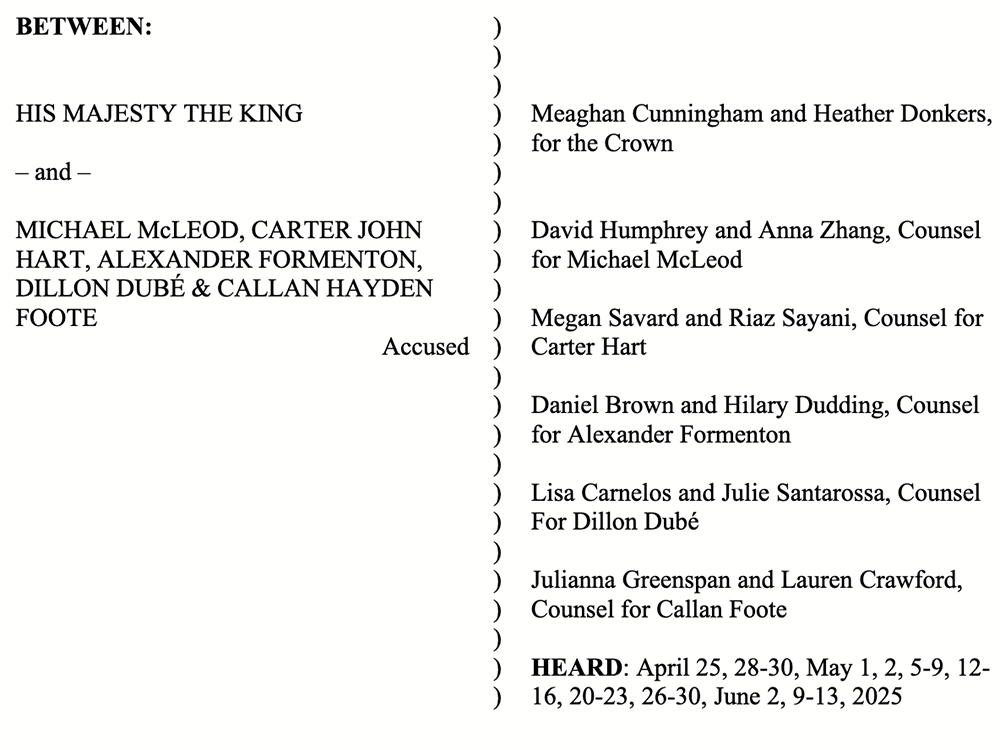
Justice Maria Carroccia’s acquitted five former Canadian

world junior hockey players

of sexual assault in a high-profile trial in London, Ont. Michael McLeod, Carter Hart, Alex Formenton, Dillon Dube and Callan Foote had been charged in relation to a 2018 incident involving the complainant,

identified as E.M.

due to a publication ban, in a London, Ont., hotel room. “Considering the evidence in this trial as a whole, I conclude that the Crown cannot meet its onus on any of the counts,” she said, adding that she did not find the complainant’s testimony to be “either credible or reliable.”

Read the full text of the Ontario Superior Court justice’s verdict, which was delivered in a London courtroom on July 25, 2025:


Justice Maria Carroccia’s acquitted five former Canadian

world junior hockey players

of sexual assault in a high-profile trial in London, Ont. Michael McLeod, Carter Hart, Alex Formenton, Dillon Dube and Callan Foote had been charged in relation to a 2018 incident involving the complainant,

identified as E.M.

due to a publication ban, in a London, Ont., hotel room. “Considering the evidence in this trial as a whole, I conclude that the Crown cannot meet its onus on any of the counts,” she said, adding that she did not find the complainant’s testimony to be “either credible or reliable.”

Read the full text of the Ontario Superior Court justice’s verdict, which was delivered in a London courtroom on July 25, 2025:


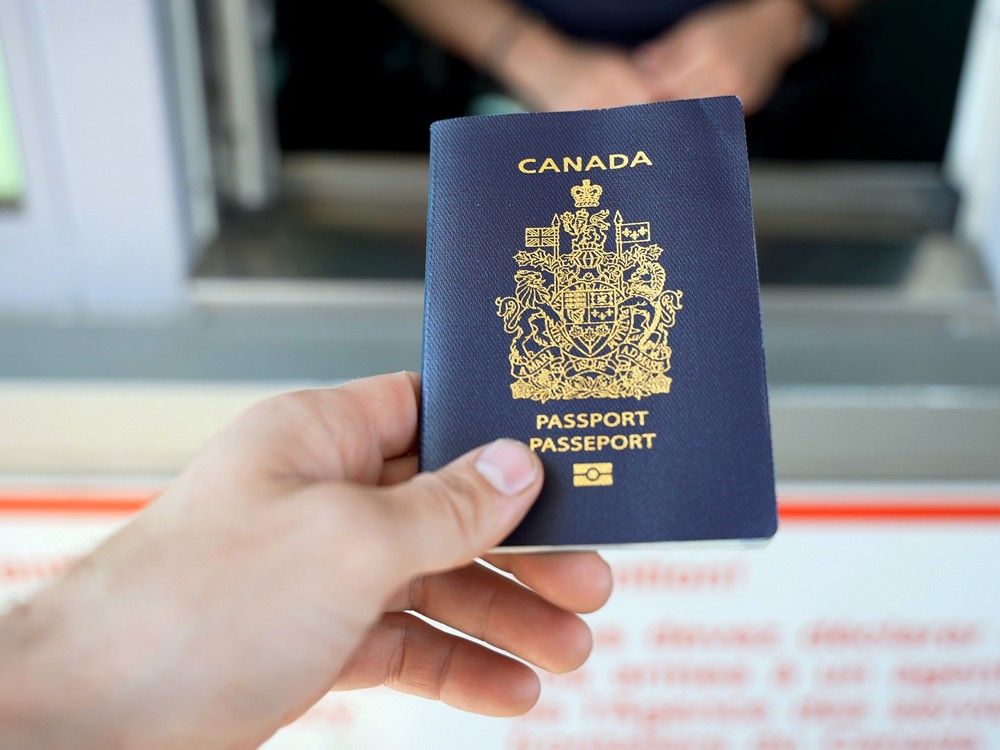
A Canada Border Services Agency photo of a traveller handing their passport to an officer at a land port of entry.

Canadians have one of the most powerful passports in the world, ranking ahead of the United States in a global index.

U.K.-based consultancy firm Henley & Partners recently released this year’s

global passport ranking

. It’s based on mobility, meaning where in the world the holder of the passport can travel to without a visa. In order to rank the countries, it relies on exclusive information from travel information database, the International Air Transport Association (IATA).

The top-ranking country is Singapore. That’s because its passport holders have visa-free access to the most global destinations included in the list, at 193 destinations.

Passports receive a score if no visa is required. The same score is given if the passport holder can obtain a visa on arrival (VOA), a visitor’s permit, or an electronic travel authority (ETA) when entering the destination. An ETA, for example, is needed when Canadians enter the United Kingdom for travel purposes such as tourism, family visits, business, and short-term study.

Passports receive a different score if a visa is required, or if a passport holder has to obtain a government-approved electronic visa (e-Visa) before departure, or pre-departure government approval for a visa on arrival. For example, Canadians require a visa to enter Afghanistan, Algeria, Azerbaijan and Cuba.

Canada came in 8th place in the 2025 list, tied with Estonia and the United Arab Emirates. This is ahead of the American passport, which came in 10th place this year. Historically, according to the firm’s list, Canada has maintained a high ranking. Since 2006, it has not fallen below 9th place. At its peak, the Canadian passport came in second place in 2014.


Canada’s ranking is “based as much as anything on other countries’ confidence that Canadians won’t overstay their welcome (and likewise for any set of countries),” University of Toronto’s Munk School of Global Affairs & Public Policy professor Drew Fagan told National Post over email on Thursday.

“Canada’s relative safety and prosperity means that other countries can be confident that Canadians are coming for a good time, not a long time,” he said.

In 2025, Canadians can visit 184 countries without needing a visa, according to the Henley & Partners ranking.

“Countries at the top of the ranking however must work to maintain it, or they will be overtaken. Looking back slightly further, the U.S. was number one on the ranking in 2014, but by only gaining net access to 8 destinations since then, the U.S. has fallen by 9 spots as other top ranking countries outpaced them,” said Souad Ouared, associate director, private clients at Henley & Partners Canada, in an emailed statement to National Post on Friday.

“Japan on the other hand has added 19 destinations to its score since 2014 and gained one spot in the ranking from 3rd to 2nd. Canada sits in the middle of these two. It was ranked 2nd in 2014 and has lost 6 places since then, with a net access gain of 11 destinations.”

The ranking shows travellers the relative strength of the passport they hold and the global access it gives them, explained Ouared.

“There are many factors that affect a passport’s ranking, including countries updating their visa systems, or diplomatic relations including bi-lateral visa free agreements. It is unusual for a passport’s ranking to change significantly from year to year, but rather will see a trend of incremental gains and losses over time,” she said.

One of the recent changes that has affected Canada’s ranking is the country being

excluded from China’s list of countries that can visit without a visa

. Canadians still require a visa to visit China for tourism, business, study or work.

Another recent change? “The Canadian passport lost access to Brazil, with Brazil citing a lack of reciprocity as the reason,” said Ouared.

“That being said, the Canadian passport remains one of the most powerful in the world, and it is a privilege for all who hold it, considering the broad global access it provides to key destinations.”

Roughly 70 per cent of Canadians hold valid passports and more than 24.6 million passports are in circulation, according to data from the federal government updated in 2022.

Our website is the place for the latest breaking news, exclusive scoops, longreads and provocative commentary. Please bookmark nationalpost.com and sign up for our daily newsletter, Posted, here.

An aerial view of steel coils sitting in the yard at ArcelorMittal Dofasco's steel mill on June 9, 2025 in Hamilton, Canada.

For the hundreds of Canadian steelworkers who lost their jobs this year amid President Donald Trump’s trade war, talk of reaching a trade deal between Canada and the U.S. is coming too little, too late. 

For Trump, the effects — driving down imports, boosting the U.S. steel industry and winning concessions from Canada — seem to be getting him what he wants.

Initially faced with a 25 per cent tariff on exports to the U.S., which ballooned to 50 per cent in June,
Canadian steel is desperate for a resolution.
Trump imposed the levies under
Section 232 of the Trade Expansion Act, declaring steel imports a threat to national security and citing the need to protect American industry. His rationale was that curbing imports would reduce supply and ramp up prices, giving U.S. steel additional revenue to invest in strengthening domestic production.

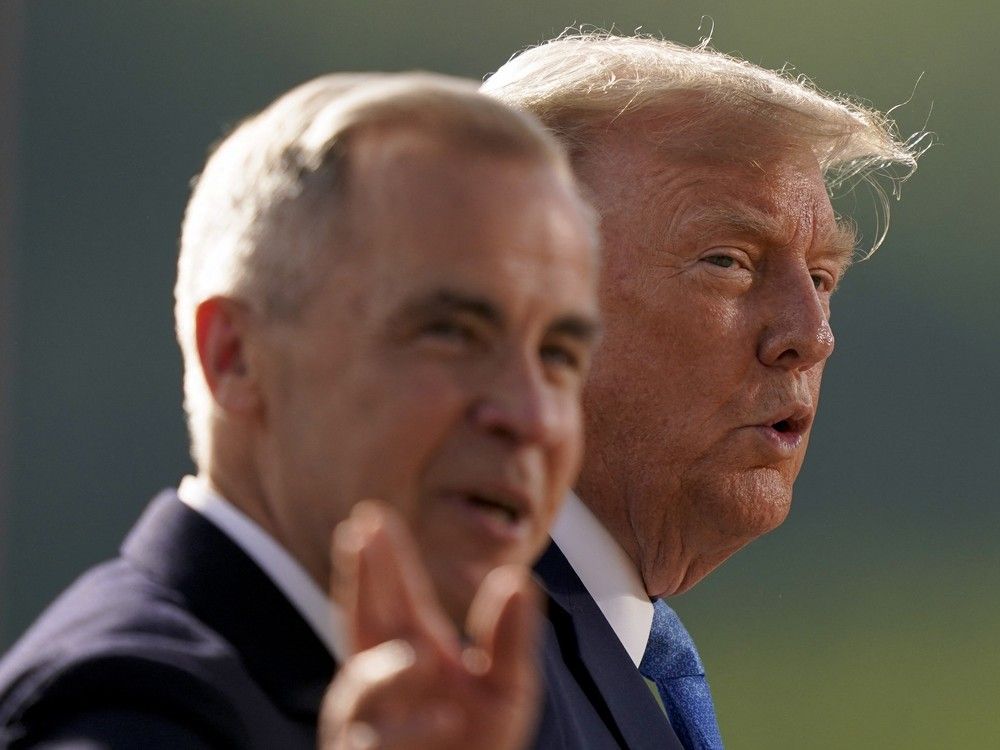
 FILE: Canadian Prime Minister Mark Carney (L) and U.S. President Donald Trump arrive for a family photo during the Group of Seven (G7) Summit at the Kananaskis Country Golf Course in Kananaskis, Alberta, Canada on June 16, 2025.

About US$7.7 billion ($10 billion) in Canadian steel and iron was exported to the U.S. last year, with the American market worth 90 per cent of Canadian exports.

While

Prime Minister

Mark Carney’s team has been trying to get the steel tariffs lifted, he has lately tried managing expectations, publicly acknowledging that any trade deal will likely involve tariffs

Negotiating teams are staring down an Aug. 1 deadline, when Trump said he’ll be hitting Canada with yet more tariffs — on top of the steel, aluminum, lumber, copper, autos, and energy already being whacked, as well as any goods not exempted by the U.S.-Mexico-Canada trade agreement (USMCA).

With the deadline less than a week away, Trade Minister Dominic LeBlanc was in Washington on Thursday for the latest trade discussions.

The talks, said one
 Canadian government source, who spoke on condition of anonymity, “
have been volatile.” 

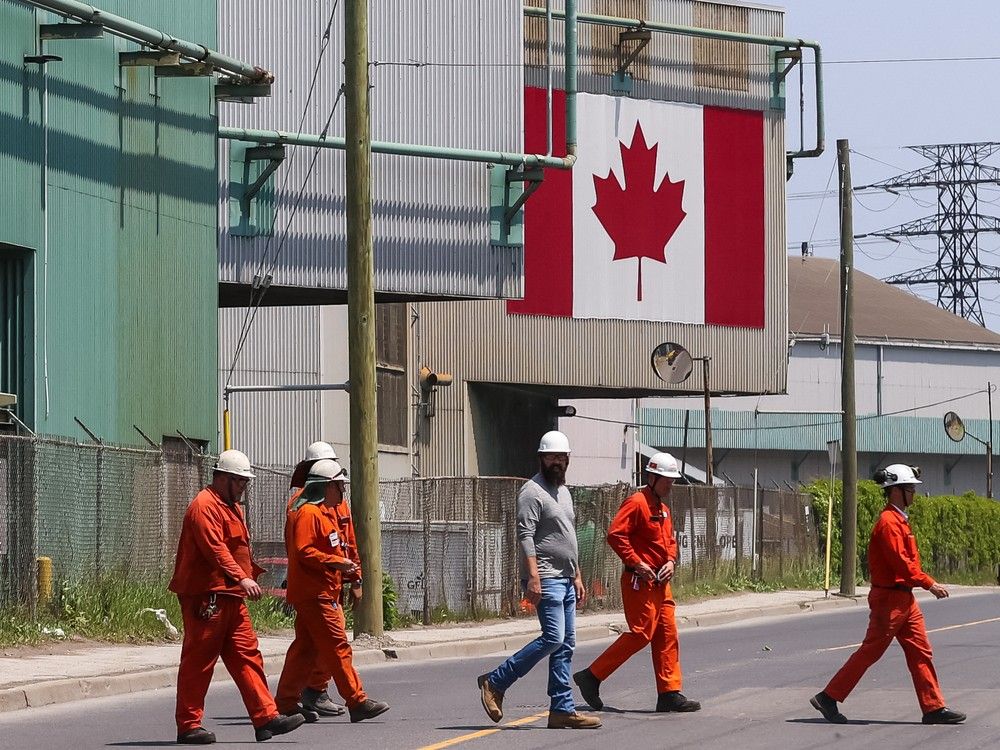
 A Canadian national flag is seen in the background as workers cross the street in front of ArcelorMittal Dofasco’s steel manufacturing buildings in Hamilton, Ontario, Canada, on Wednesday, June 4, 2025.

Canada’s pain worsens

So far, the Canadian steel industry has been one of the hardest hit by Trump’s tariffs, and it’s bracing for things to get uglier.

“By the end of May, before we even hit the 50 per cent tariffs, we saw a 30 per cent decline in production across the country,” said Catherine Cobden, president and CEO of the Canadian Steel Producers Association (CSPA). She doesn’t have the June numbers yet, but she expects it be “
much worse.”

Canadian producers can’t afford to absorb the 50 per cent tariff on six million tonnes of production, the amount that was destined for the U.S. market and is now subject to the levy, Cobden explains. 

While some analysts expected the U.S. market to keep buying heavily taxed Canadian steel to satisfy demand until domestic production increased to fill the gap, that’s not playing out in practice. At least not yet. 

“The customers on the other end aren’t always willing or able to pay, and they expect the steel companies to absorb that,” Cobden said.

“I talk to our members every day, and the situation is that the order books, for those shipments to the United States, are essentially drying up.”

So far, the downturn has led to more than 1,000 industry layoffs, said Cobden. She said she now fears that the problems will continue to mount as investment dries up and the industry shrinks.

 So far, the Canadian steel industry has been one of the hardest hit by Trump’s tariffs, and it’s bracing for things to get uglier.

Trump’s done this before

In Trump’s first term in 2018, U.S. steel ramped up production after the president hit Canadian imports with tariffs of 25 per cent. It seems to be happening again.

According to the American Iron and Steel Institute (AISI), which supports tariffs, U.S. mills have been churning out steel at historic rates. In mid-June, weekly raw steel production hit a three-year peak, and the mill capacity utilization rate has averaged around 76.2 to 78 per cent. If it can be sustained near the 78 per cent mark, it will have exceeded last year’s 76.4 per cent, edging closer to the 80 per cent benchmark the Commerce Department wants.

Imports, meanwhile, have dropped 6.2 per cent compared to this time last year.

The 2018 tariffs also saw U.S. steelmakers invest over US$20 billion in modernization efforts, according to the Steel Manufacturers Association, and created 1,000 American jobs, according to the North American Industry Classification System, while saving others from disappearing.

Other studies, however, have questioned the long-term effectiveness of tariffs for job creation. So far this year, the results have been mixed, with a few plant closings and nearly 2,000 job losses mixed with some paused productions and a few summer ribbon-cuttings.

Other American industries are taking a hit, though. A lot of things are made with steel, so price increases impact loads of other industries, most notably automotive and housing. 

 FILE: Steel products are seen in a warehouse at North York Iron, a steel supplier in Toronto, Ontario, Canada, Tuesday, February 11, 2025.

With steel-related input prices rising, the average American car price is expected to jump by nearly US$2,000. Housing construction is set to drop by four per cent, according to the National Association of Home Builders. 

Some analysts question the logic of disrupting supply lines and causing trade uncertainty in a bid to ramp up domestic production. Andrew Hale, a senior policy analyst at Heritage Foundation, acknowledges that the U.S. steel industry needs to modernize, but he says tariffs won’t help solve the underlying problems. 

“We have horrific regulations and zoning laws,” he says. “All sorts of things prohibit us from building new blast furnaces for the production of refined steel.”

“There’s so much red tape,” he adds, noting that it’s impossible to quickly rejig supply lines, as Trump has suggested.

Carney’s conciliation

Last week, Carney introduced new protections against offshore steel importers, with tariffs on even free-trade partners that export steel to Canada over a set quota, and a 25 per cent tax on any steel from any country – except the U.S. – that was originally melted and poured in China. 

These measures offer some help to the domestic industry, said the CSPA’s Cobden. They’re also a signal to Washington, which has long complained that Canada is a back door to the U.S. market for steel from China. 

But Cobden thinks Canada needs to be ready to hit the U.S. with tariffs, too, if there’s no deal before Aug. 1. Still, she’s optimistic that this war can’t last forever.

“Over time, one has to believe (the U.S.) is going to have to start doing steel trade with somebody. And our hope is it will be Canadian steel companies,” she says.

Hale, at the Heritage Foundation, agrees, pointing to the level of integration between the countries and the shortfall in U.S. production.  

“We created this whole NAFTA, now USMCA, trade area, and the whole auto industry and other industries were built around that to have this, effectively, single market,” he says.

Trump has already pushed back tariff deadlines this year. In April, after he announced sweeping “Liberation Day” global tariffs, the U.S. bond market collapsed and the S&P 500 plummeted to its lowest level since the pandemic
. U.S. Treasury Secretary Scott Bessent pushed for a 90-day tariff pause.

Markets are back to historic highs, but Hale says to watch for signs of market volatility again heading into next week. “If you’re going to lift the pause and implement these tariffs and maintain them, then the same thing could happen again,” he said.

National Post

tmoran@postmedia.com

Our website is the place for the latest breaking news, exclusive scoops, longreads and provocative commentary. Please bookmark nationalpost.com and sign up for our daily newsletter, Posted, here.


Vincenzo

A man who police called Toronto’s top Mafia boss was highly respected by Mafia bosses in Italy, a senior police officer from Italy told an immigration hearing for the man Canada has been trying — and failing — to deport for more than 40 years.

Vincenzo (Jimmy) DeMaria, 71, is facing another deportation attempt over allegations he has secretly been a powerful boss helping oversee a shadowy global criminal cabal called the ’Ndrangheta.

An immigration tribunal heard this week that accused Mafia bosses in Italy were caught on covert police recordings praising DeMaria, saying they “consider him a person worthy of respect,” and he “could carry a lot of weight within their organization,” the Italian police witness said.

The hearing will decide if DeMaria should be deported to Italy.

DeMaria was born in Siderno, Italy, and came to Canada in 1955 with his parents when he was nine months old and has lived here since, but he didn’t become a Canadian citizen. His eligibility for citizenship ended in 1981 when he shot dead a man who owed him money. DeMaria was convicted of second-degree murder in 1982 and given a life sentence without parole for 10 years.

He was first ordered out of Canada in 1984 because of his murder conviction.

From that moment, DeMaria has mounted stubborn, well-resourced and remarkably successful challenges — in courts, at immigration tribunals, and at parole hearings — to rebut allegations of involvement in organized crime.

In disputing, denying, and delaying, he has remained with his wife and children in Canada while periodically being yanked back into prison for alleged parole violations before fighting his way back out.

The federal government is trying once again to deport him.

All week, an Immigration and Refugee Board (IRB) tribunal has been hearing the government’s appeal of a prior decision that allowed DeMaria to remain in Canada. The adjudicator at that hearing ruled evidence of DeMaria’s membership in the Mafia was “circumstantial.”

In pressing its case this time, the Canada Border Services Agency is trying to bolster allegations with evidence captured by Italian police in a probe against alleged members of ’Ndrangheta who, while under investigation, visited Canada in 2019.

The wiretaps are contentious because,

as first reported by National Post

, the sneaky wiretaps were secretly recorded through the Italian visitors’ own mobile phones that were turned into constant microphones, and these interceptions on Canadian soil were not authorized by a Canadian court.

DeMaria’s lawyers referred to them as “

foreign interference.”

Called as the government’s first witness was a senior officer who led several Italian probes that linked mobsters in Italy’s Calabria region, which is the birthplace of the ’Ndrangheta, to affiliates in Canada, including the probe involving the Italian visitors who came to Toronto.

Chief Commissioner Giampiero Muroni headed the Polizia di Stato’s Central Anti-Crime Directorate from 2008 to 2019. He spoke in Italian, through an interpreter.

Muroni said Italian operations showed that the ’Ndrangheta was based on individual family clans rooted in a geographic region that were linked by a centralized hierarchy in Italy with international branches in Canada, Germany, and Australia.

He said information in police files, which included information from informers in Canada, disclosed the presence of nine ’Ndrangheta clans in Ontario, each based on a family originally from Calabria, mostly from the town of Siderno, where DeMaria was born.

He said there was a powerful “Camera di Controllo” — literally meaning “control room,” which acts as a board of control for the ’Ndrangheta — in Canada that mirrored the structure in Italy.

“This is the highest and most important structure of ’Ndrangheta in Canada,” Muroni said. DeMaria was named in Italian court documents as one of the men allegedly sitting on the board.

Under questioning by government lawyer Daniel Morse, Muroni said secretly recorded conversations heard that the ’Ndrangheta in Italy, including its top boss at the time, knew of DeMaria and spoke of him warmly.

In another probe, in 2019, an alleged mobster named Vicenza Muià was coming to Canada to try to learn who within ’Ndrangheta had murdered his brother so he could avenge his death. Muià needed to be 100 per cent certain before seeking retribution and wanted to check in with DeMaria as well as other alleged ’Ndrangheta bosses in Canada.

Muroni was asked why.

“Vincenza Muià, but also other persons, have great respect for Vincenza DeMaria. They consider him a person worthy of respect. They think he could carry a lot of weight within their organization,” Muroni said.

Muià also thought DeMaria could have information on his brother’s murder, Muroni said.

Muià allegedly also said he hopes DeMaria remains free in Canada because “they think that he alone could fix the situation that ’Ndrangheta has undergone in that city.” The men in Italy discussed several violent incidents in the Toronto area involving alleged ’Ndrangheta families, including a murder and an arson attack on DeMaria’s family bakery.

Under cross examination, Jessica Zita, one of DeMaria’s three lawyers, questioned the legitimacy and accuracy of the police wiretaps and Muroni’s explanations of what the men were talking about. She also suggested the officer misidentified the man they were speaking about as DeMaria.

Zita also said the wiretap evidence would not be acceptable as evidence in criminal court because they were illegally obtained in Canada under Canadian law. The IRB, however, has different rules of evidence than a criminal court and a lower standard of proof. Earlier, Benjamin Dolin, the IRB member deciding the case, denied DeMaria’s motion to exclude the wiretaps.

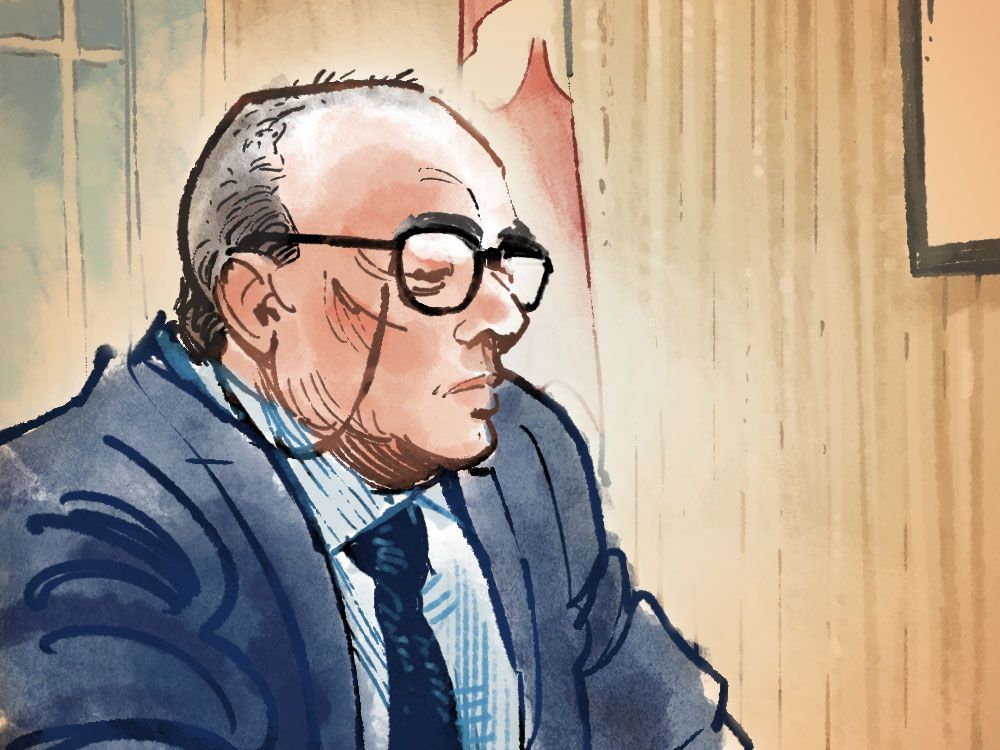
DeMaria sat each day watching the testimony on a video screen at his lawyers’ office, dressed in a shirt and tie underneath a suit jacket, with heavy-framed glasses attached to a loop of cord around his neck. He occasionally scribbled notes, typed on his phone and a laptop, and sometimes leaned to speak with a lawyer in a gravelly whisper.

Documentation filed in the case is so voluminous — more than 20,000 pages — that the computer system the IRB used crashed when more than one of the huge files was opened at same time.

Also called to testify this week was Mark Grenon, a federal government forensic accountant who does analysis for investigations into money laundering and other financial crimes.

Grenon told the IRB his number crunching, requested by the Canada Border Services Agency, suggested several red flags for potential money laundering in the various financial accounts of members of the DeMaria family and their businesses.

He studied transactions reported to Fintrac, Canada’s anti-money-laundering agency, from 2006 to 2013, that included DeMaria’s property management and investing companies, and those of Cash House, a money services business run at the time by DeMaria’s son, Carlo DeMaria.

Grenon said he found several red flags of potential money laundering after tracing about $143 million sent by Cash House to accounts in about 50 different countries, most of it in 2013. The top 10 destination countries were, in order: Barbados, China, Israel, United States, Mexico, Brazil, British Virgin Islands, Italy, Switzerland, and Greece.

The Cash House business was sold in 2015 for about $1 million, the IRB was told. That seemed a low price for a company doing that volume of business, Grenon said.

In her cross examination of Grenon, Zita highlighted rebuttal evidence explaining some of the transactions he found unusual, and noted potential flaws in the data and missing information.

Grenon agreed that in all the financial transactions he studied, most involved DeMaria’s family and family businesses; he found only two that were directly tied to DeMaria himself.

Stephen Schneider, a criminology professor at Saint Mary’s University in Halifax also testified to give expert opinion evidence on money laundering and organized crime.

He described the ‘Ndrangheta as a globally powerful, extraordinarily wealthy, and extensively active organization involved in a variety of crimes around the world.

He said money services businesses were popular among money launderers.

“They are really the perfect money laundering vehicle,” Schneider said.

The hearing continues.

• Email: ahumphreys@postmedia.com | X:

Our website is the place for the latest breaking news, exclusive scoops, longreads and provocative commentary. Please bookmark nationalpost.com and sign up for our newsletters here.


Clockwise from top left: Michael McLeod, Dillon Dubé, Cal Foote, Alex Formenton and Carter Hart arrive Thursday at the courthouse in London, Ont. All were found not guilty by a judge of sexual assault while they were world junior hockey players for Canada in 2018.

Five former Canadian world junior hockey players were found not guilty in a high-profile sexual assault trial related to a 2018 incident in London, Ont. The case had sparked a national reckoning over hockey culture, and what is and what isn’t considered consent. Here’s how the lawyers for Michael McLeod, Carter Hart, Alex Formenton, Dillon Dube and Callan Foote reacted to Ontario Superior Court Justice Maria Carroccia’s verdict, which was delivered in a London courtroom on Thursday.

David Humphrey, lawyer for Michael McLeod

Mr. McLeod will not be speaking to the media, and I understand the other players will not be speaking to the media. I will not be taking questions and other counsel who come to address you, they will not be taking any questions.

Mr. McLeod had confidence in the Justice process, and he welcomes Justice Carrocia’s decision, confirming that he and his co defendants are not guilty of sexual assault. Justice Carrocia’s carefully reasoned decision represents a resounding vindication for Mr. McLeod and for his co defendants. Justice Carrocia’s found that the complainant’s testimony was incredible and was unreliable.

For years, public perception was shaped by a one-sided narrative from a civil lawsuit that went unchallenged.
In large part because hockey Canada settled the claim without first informing or consulting the players. The decision was made unilaterally, and the players were only told of the lawsuit and the settlement after the fact. Had they been consulted, they would have refused to settle, and they would have vigorously contested EM’s allegations.

That version of events dominated headlines and created a lasting and, a false, a false impression of guilt. It was only through this criminal trial that the allegations were fully and finally tested. The court compared the complainant’s 2018 statements to the police, which rightly resulted in no charges with the later conflicting civil claim. Key elements of EM’s story were contradicted by the evidence, exposing serious falsehood and leading to today’s clear and just verdict of not guilty.
Justice Carrocia rejected EM’s claims of fear and her claims of non consent. That should be the takeaway from today’s judgment.

The damage to Mr. McLeod’s reputation and his career has been significant. 
But today’s decision begins to restore what was very unfairly taken away from him. Mr. McLeod is deeply grateful to his family, friends, his agent, and everybody who stood by him.

Megan Savard, defence lawyer for Carter Hart

It is both gratifying and unsurprising to hear an impartial and fully informed decision maker, except Mr. Hart’s testimony about what happened on June 19, 2018, as unshaken, credible and truth.

The public narrative of this event was, until this trial, one sided and untested. Now, the criminal process has shown it to be false. To anyone who is surprised or angered by today’s outcome, it is the direct result of the media’s ongoing failure to publicize the weaknesses in the prosecution’s case as it unfolded.

The office of the Crown attorney knew what today’s verdict was likely to be. And the evidence at trial came as no surprise to them or anyone with full knowledge of the investigation. Almost every single feature of the evidence that Justice Carrocia identified today as fatal flaws for the Crown was known to prosecutors and to police from 2018.
Today’s outcome was not just predictable, it was predicted. The Crown attorney did not have to take this case to trial.

Mr. Hart, in particular, was willing to engage in a restorative justice process. He was willing to be publicly named and prepared to use his public platform to teach other athletes about how to ensure that their sexual encounters are responsible and thoughtful. Instead of pursuing restorative justice, the Crown forced a distressing and unnecessary trial to the detriment of Mr. Hart, his co defendants, the complainant, and the Canadian public.

Mr. Hart regrets that it took a criminal trial for the truth to come out, but he has learned from the experience, and he is committing to sharing what he has learned with others in his personal circle and in his professional life. He will be taking time today to process today’s outcome, and is grateful to his family, his friends, and his supporters for standing by him during this profoundly challenging time. Thank you.

Julianna Greenspan, lawyer for Cal Foote

I promise I’m the last one. We are the last ones. Juliana Greenspan and this is Lauren Crawford, and we were counsel for Mr. Foote. Just have some brief comments that I want to say at this time. At the start of this trial, Cal Foote walked into this courthouse, an innocent man, and he walks out today exactly that.

Cal never lost faith that justice would be done, despite the clamor of external pressures, and agendas, outside the courthouse doors. Criminal investigations and the trial process must always be free from these influences. 
On behalf of Cal and his family, we appreciate the court’s careful and thorough consideration and for the just verdict delivered today.

Seven years ago, Cal was 19. He is now 26. 
That is a significant part of a young man’s life. He is still young. He has a wonderful future ahead of him, and he is eager to embark on his next chapter. 
Thank you. He’s not answering any questions, but thank you.

Daniel Brown, lawyer for Alex Formenton

After what was meant to be a night of celebration with coaches and teammates. For the last seven years, he’s lived under a dark cloud. The public now knows what Alex has always maintained, that he is completely innocent of this false allegation. But only after his case has erupted into a massively publicized social cause, 
Alex’s face has appeared on millions of screens and newspaper pages, and there could be little doubt that an untold number of people out there believed he was guilty, simply because he was accused of a crime, long before any evidence was presented in court.

This rush to judgment to believe the worst of people is one of the most regrettable of human traits. So, too, is our reluctance to change that opinion, even when it’s proven wrong, after a full and fair trial. Notwithstanding Justice Carrocia’s unequivocal exoneration of Alex today, there will inevitably be those who will still believe he committed a crime.

Nobody in Room 209 that night has emerged unscarred from these events. The criminal court process is a bruising experience for everyone, but never more than when a case is high profile incorporates such high stakes. In Alex’s case, he was condemned and felt banished from society. This experience for him has been crushing. 
Nonetheless, the impact of this case has changed Alex as a person, and he’s matured well beyond his years.

It is inevitable that some people will not forgive Alex for what he was accused of doing. Others, however, will understand that this tragic matter, rightly comes to an end today. 
Alex has never minimized his role in the sexual encounter or denied engaging in consensual sexual activity with the complainants. He fully cooperated with the police investigation and provided investigators with a complete account of his behaviour back in 2018.

Alex’s narrative isn’t conjecture. 
His police statement was corroborated at trial by several crown witnesses, by video evidence, and was even supported in large measure by the complainant’s evidence herself. Even Justice Carrocia said today that she accepted that Alex told the truth in that police statement. And while no police investigation is perfect, the London police got it right seven years ago when they decided it would be a mistake to charge Alex. 
The evidence always demonstrated that he didn’t commit sexual assaults. However, political and media pressure brought this allegation back into the spotlight in 2022, and the Crown attorney knowingly forged ahead with a hopeless prosecution.

Besides the human toll of everyone involved, this lengthy legal process exhausted valuable resources that could have been deployed elsewhere in the justice system, but were lost here. 
Alex, his family, and his defense team are grateful to Justice Carrocia for our careful consideration of all the evidence that was presented to this trial. She’s reached a just and correct verdict that must be respected.

Nobody disputes that sexual assault is a terrible societal plague, and Alex sincerely hopes that this prosecution doesn’t stop the quest to combat sexual violence and to bring genuine offenders to justice.
However, an accusation is just that, an accusation. This case stands to the fact that we must never lose sight of the fundamental right to be presumed innocent. Now, more than ever before, a fair response to sexual assault claims requires a balanced perspective and public trust and the decision making of the courts. 
Anything less, only harms the justice system and the cause of eliminating sexual violence. Thank you.

Julie Santarossa, lawyer for Dillon Dubé

For Mr. Dubé, this has been a long and difficult process. He is relieved by the outcome, and he is grateful that Justice Carrocia decided what she did and did so fairly and efficiently. Throughout this trial, Mr. Dube was impressed by the fairness and impartiality demonstrated by her honor. 
This decision comes as a result of careful deliberation by her honor.

She engaged with the evidence in a thoughtful, methodical, and principled manner. Her reasons reflect not only a command of the legal principles at stake, but also a deep sense of responsibility in assessing the evidence, applying the law, and demonstrating a strong commitment to justice.

Mr. Dubé has always maintained his innocence. He is thankful for all of the unwavering support from his friends and family who have also believed in him. For all of you that have been by his side throughout this period of time, you know who you are, we thank you. 
Mr. Dubé is hopeful that everyone can move forward from this in a positive manner. He is requesting privacy during this period of time. In view of the court’s decision, Mr. Dubé will not be making any further statements at this time. 
Thank you.

Read the full statement from the complainant’s lawyer

Our website is the place for the latest breaking news, exclusive scoops, longreads and provocative commentary. Please bookmark nationalpost.com and sign up for our daily newsletter, Posted, here.


Karen Bellehumeur who provided legal assistance to E.M. in London, Ont.

Five former members of Canada’s world junior hockey team were acquitted of sexual assault on Thursday following a high-profile trial involving one complainant, identified only as E.M. due to a publication ban. Ontario Superior Court Justice Maria Carroccia found Michael McLeod, Carter Hart, Alex Formenton, Dillon Dube and Callan Foote not guilty of sexual assault after saying that the complainant’s testimony was not found to be “either credible or reliable.” “Considering the evidence in this trial as a whole, I conclude that the Crown cannot meet its onus on any of the counts,” she said. Outside the London, Ont., court, the complainant’s lawyer called the verdict “devastating.”

Read her full statement, as well as reaction from the Crown and the chief of London Police Services.

Karen Bellehumeur, lawyer for E.M.

She’s (E.M.) asking me to speak on her behalf today. She hasn’t been here today. She’s been watching on Zoom.

I’ve spoken with her today, since the verdict, and she’s obviously very disappointed with the verdict and very disappointed with her Honor’s assessment of her honesty and reliability. She’s really never experienced not being believed like this before.

I’m going to come back to that, but right now I’d like to take the opportunity on her behalf to thank a number of people, really all those who have supported her. She’s extremely grateful for the outpouring of support by the community. It gives her great solace to know that she is believed by so many. She has asked me to extend her heartfelt gratitude for all the support she has received from organizations and individuals who showed up for her in any way they could, either in person at the courthouse, or through the many letters of support.

To quote her, she said, “Your kind words mean so much to me and have helped me through this process more than you’ll ever know.” She also wishes to thank Crowns Meaghan Cunningham and Heather Donkers for their tireless efforts. In this case, as well as Detective Ryan Lindsay and Inspector Catherine Dan for believing her and supporting her. Thank you as well to Lisa Hewitt, her VWAP worker who helped get her through those nine days of testimony.

On a personal note, it has been my honour to represent and assist E.M. through this process. She is a remarkable person and truly a hero. Despite her feeling like this was the hardest thing she’s ever had to do, she chose to persevere and continue with the process of seeking justice. She knew there were no guarantees for guilty verdicts, and that even if she decided not to testify, that decision would have been accepted.

Despite her feeling like this is the hardest thing to do, she knew there was no guarantees for guilty verdicts, and she decided not to testify. That decision would have been accepted, but she felt that it was important to see the process through to the end, even if it meant opening yourself up to intense scrutiny and unjustified criticism. Her purpose, which was always at the forefront of her mind, was to stand up for herself and for others who have had similar experiences. She felt that the sexual violence she experienced should not be concealed. She felt there needed to be accountability, but her choice to testify came at a great personal cost. Nine days of testifying was more than she ever expected. Her treatment during cross examination at times was insulting, unfair, mocking, and disrespectful. None of which was necessary, yet she maintained her composure and kept her emotions in check, only to be criticized for not acting enough like a victim.

I expect many people understand that when a person summons the courage to disclose their story, the worst possible outcome is to feel disbelieved. It’s a gutting experience that no one deserves. That’s why today’s verdict is so devastating. E.M. did everything in her power to recount her experience honestly and to the best of her ability. She agreed to do everything asked of her by the criminal justice system. She spoke to the police whenever requested, she reviewed her evidence, she prepared her testimony, she answered every question, she spoke with intelligence, and from her heart. Yet it was not enough. Now she questions, what more could she have done? As her lawyer, I can tell her, there’s nothing more she could have done. But that said, the Justice system must do better.

It’s important to understand that this case, the criminal justice system worked the way it’s designed to work, to aggressively protect the rights of the accused. It’s based on a concept that 10 guilty persons should walk free before one innocent person is wrongly convicted. So today, the accused have been declared not innocent, but simply not proven guilty beyond a reasonable doubt. And while the accused rights are important, those protections should not come at the expense of the survivor’s wellbeing. Reforms that prioritize protecting survivors from unnecessary re-traumatization and harm must become embedded in our systems. The justice system continues to fall short on identifying and eradicating myth and stereotypes. It struggles to understand complicated social interactions, such as victim responses to unpredictable, threatening situations, such as that described by E.M. These and other problems continue to act as significant barriers to justice in cases of sexual assault.

I am hopeful that the verdict today is not the end, and I know that E.M. very much wants some good to come from this case. So to those other brave souls who are willing to do whatever it takes to pursue justice, we hope you do not give up in a country where only six per cent of sexual assaults are reported to the police, courageous people like you are important. Without you, there is no criminal accountability at all. But the justice system must do better for you. Change is also necessary outside the justice system.

To those in institutional leadership rules, this case should be a wake up call that more is needed from you to prevent sexual violence. The impact you can have on this issue cannot be understated. But for today, despite the verdict, we can marvel at E.M.’s courage and be grateful for her willingness to endure this process for all the right reasons. We are all proud of EM because she shed light on issues that need our attention. She is fostered a nationwide conversation about sexual violence and entitlement culture, bystander responsibility, valid consent, coercion, and responses to threatening unpredictable situations. We look to this case as a turning point to do more to prevent sexual violence, and to make reforms, to afford survivors, better treatment by the justice systems.

I stand with E.M., and we stand resolute that together, we can and must demand better. Thank you.

Meaghan Cunningham, assistant Crown attorney

Good afternoon, everyone. A successful prosecution is not measured solely by whether there are guilty verdicts at the end. The Crown’s goal throughout this proceeding has been to see a fair trial, a trial that is fair to the men charged, and one that is also fair to EM. 
A fair trial is one where decisions are made based on the evidence and the law, not on stereotypes and assumptions, and where the trial process respects the security, equality, and privacy rights of the victim, as well as the accused persons.

We want to thank EM for coming forward and for her strength in participating in this process. We have received dozens of messages from people across Canada and abroad asking us to pass along these messages of thanks and support for EM, and we’ve done so. 
We will carefully review Justice Carrocia’s decision, and as this case is still within the appeal period, we have no further comments to make about the decision at this time. Thank you very much for your time.

Thai Truong, chief of London Police Services

The London Police Service acknowledges the verdict delivered today by Ontario Superior Court Justice Maria Carroccia in the sexual assault trial involving five former members of Canada’s 2018 National Junior Hockey Team.

As a police service, our role in the justice system is subject to the legal standard of reasonable grounds to believe that a criminal offence has been committed. This is the standard upon which arrests and charges are laid in Canada – not the higher threshold of reasonable prospect of conviction, and not the standard that guilt be proven beyond a reasonable doubt as applied by the courts.

I commend the outstanding courage and strength shown by E.M. in coming forward and enduring this prolonged and difficult judicial process. We remain committed to ensuring that survivors of sexual violence feel supported and safe when interacting with the London Police Service, recognizing the distinct impact trauma can have.

It is recognized that incidents of sexual violence continue to be underreported, often because survivors may fear or experience additional trauma within the justice process itself. This includes fear of judgement within their communities and beyond. As Chief, I am determined to ensure that our service consistently delivers victim-centered, trauma-informed responses, emphasizing sensitivity, compassion, and public safety.

This investigation has generated important conversations at both national and international levels about sexual violence, accountability, and systemic issues within institutions, including sport. We see this as an opportunity to reflect, learn, and enhance our approach to investigating sexual violence, strengthening our training, and deepening partnerships with community organizations. Trust in our police service is fundamental and remains a priority for me as Chief.

Given that the case remains subject to possible appeal, I must be mindful of making additional comments at this time.

Finally, I extend my gratitude to the Court, our justice partners including the Ministry of the Attorney General, and to all members of the London Police Service, especially those within our Sexual Assault and Child Abuse Section, for their professionalism, integrity, and compassion throughout this challenging and high-profile case.

Read the statements delivered by the defence lawyers after Hockey Canada acquittals

Our website is the place for the latest breaking news, exclusive scoops, longreads and provocative commentary. Please bookmark nationalpost.com and sign up for our daily newsletter, Posted, here.