LP_468x60
on-the-record-468x60-white

Maria Carroccia outside Superior Court of Justice following the sentencing of a client on Oct. 29, 2013.

Last week, in a 91-page judgement following an eight-week trial in London, Ont., Superior Court Justice Maria Carroccia found all five defendants — 2018 Team Canada world junior hockey players — not guilty of sexual assault involving one complainant, identified only as E.M. due to a publication ban. Carroccia acquitted Michael McLeod, Carter Hart, Alex Formenton, Dillon Dube and Callan Foote after saying the complainant’s testimony was not found to be “either credible or reliable.” Here’s what to know about the woman who made that ruling.

She used to work as a waitress

In the questionnaire Carroccia completed to apply for a federal judicial appointment, she listed under “non-legal work history” two occupations. From 1980 to 1987, she worked as a part-time pharmacy assistant at Patterson Big V Drug Store, part of a chain that was later taken over by Shoppers Drug Mart. And in roughly the same period (1980 to 1986) she was a part-time waitress at Caboto Club of Windsor. Described on its website as “Southwestern Ontario’s largest and oldest Italian club,” the Giovanni Caboto Club turns 100 this year.

Her parents came to Canada from Italy

Carroccia is the oldest child of immigrants from Italy. Her parents did not finish grade school, and when they came to Canada her father became a construction worker, and her mother a homemaker. Their first language was not English and, growing up, Carroccia was often their intermediary when dealing with government agencies and English-speaking people.

“While they encouraged me to further my education, financially, they were not always able to assist, so I worked part time jobs as a student to pay for my education,” she said in her judicial application. “They taught me the value of hard work. We have a close-knit and loving large family.

She also noted that, as the mother of two children herself, “I have developed an ability to balance my professional life with my personal life.”

She worked  as a defence lawyer before she was a judge

Carroccia’s legal work history includes 25 years self-employed as a barrister and solicitor practicing in Windsor, with her practice restricted to criminal defence. Prior to that, she worked for five years for Gordner, Klein, Barristers and Solicitors, practicing criminal law; and two years before that at Gignac, Sutts Barristers and Solicitors, in the same capacity.

She has a degree in English language and literature

Carroccia was called to the Bar of Ontario in 1989 after graduating from the University of Windsor’s faculty of law two years earlier. In addition to her law degree, she also holds an English language and literature degree from Windsor, earned in 1984.

She was appointed in June of 2020 as a judge to the Superior Court of Justice of Ontario by then Minister of Justice and Attorney General of Canada David Lametti. This month, Lametti was named Principal Secretary to Prime Minister Mark Carney, after helping with Carney’s transition into office and as an informal advisor.

She once described herself as a lawyer who ‘works in the trenches’

In her judicial questionnaire, Carroccia noted that most of her time as a lawyer was spent as a sole practitioner. “I do not work in a large firm,” she said. “I view myself as a trial lawyer who ‘works in the trenches.’ My contribution to the law is to represent my clients to the best of my ability, whether they are charged with minor offences or the most serious offences.”

She thinks of herself as a plain speaker

“The audience for the decisions of the Superior Court of Justice is the average Canadian citizen,” she once said. “It is my view that a judge’s decision ought to make sense to an ordinary person, not just to lawyers, scholars and other judges. An individual should be able to understand the decision of a judge and the law upon which it is based even if he or she is not well-versed in the law.”

Her ruling was criticized but also seen by many as fair and balanced

While there was outrage from some quarters at the acquittal, there were also those who praised the verdict and the judge’s careful work. Karen Bellehumeur, lawyer for E.M., said as part of her statement after the verdict: “It’s important to understand that this case, the criminal justice system worked the way it’s designed to work, to aggressively protect the rights of the accused. It’s based on a concept that 10 guilty persons should walk free before one innocent person is wrongly convicted.”

And Meaghan Cunningham, assistant Crown attorney, noted: “A fair trial is one where decisions are made based on the evidence and the law, not on stereotypes and assumptions, and where the trial process respects the security, equality, and privacy rights of the victim, as well as the accused persons.”

Read the full text of the judge’s verdict in the Hockey Canada sex assault trial

Our website is the place for the latest breaking news, exclusive scoops, longreads and provocative commentary. Please bookmark nationalpost.com and sign up for our daily newsletter, Posted, here.



A Nanaimo couple say it's unfair they must pay nearly $200 in import fees to reclaim a family heirloom wedding ring mistakenly left behind in the U.S. and shipped to them. A relative in Washington State sent them this photo afterward to confirm they had found it.

A B.C. couple say it’s not right that they have to pay nearly $200 in import fees to reclaim a wedding ring — also a family heirloom — that was shipped back to them from family in the United States after being mistakenly left behind earlier this month.

Admittedly, the Nanaimo resident isn’t a jewellery guy, so the gold ring given to him by his late father, Jimmy, almost 20 years ago, had sat unused for many years.

“I thought about getting it resized,” he told National Post. “My fingers are substantially more slender, right? His ring was too big for all of them, other than maybe my thumb if I was lucky.”

He’d always promised to make use of it one day, and that came two years after his father’s passing in 2022, when he and his common-law partner of many years, Andrea Nelson, decided to get legally married.

They had the ring fitted for his hand, picked another of his rings for Nelson to use as a wedding band and were married in 2024.

“I think he would have just loved the fact that I had finally done something with it,” Baker-Taylor said.

 Andrea Nelson, second from the left, and James Baker-Taylor, second from the right, on their wedding day in 2024.

While visiting his godparents in Washington State earlier this month, he removed the ring before getting in the shower — “Its structure holds water,” he explained — but then left without putting it back on dry hands. They realized and called their hosts before even departing the state, who confirmed with a photo that it was safe and sound.

Relieved, they did the practical thing and quickly arranged to have it shipped back to their address via UPS with $500 worth of insurance on the package.

When it arrived some days later, however, the delivery person informed the astounded couple that it would cost a combined $189 in cross-border duty, taxes, import tariff and brokerage fee to have it returned.

“We discovered it’s being treated like a jewelry transaction, an import across the border,” said Baker-Taylor.

“There’s no way for them to prove that I purchased this; the burden should be on them.”

They’ve since discovered that proving that the ring was, at one time, a bequest from his father is somewhat challenging.

The Canada Border Services Agency, in a statement to National Post, said the

Customs Act

doesn’t allow it to discuss the couple’s case specifically, but a spokesperson did clarify some of the guidelines that would apply to their situation.

Under the Act, any personal (non-commercial) goods brought into Canada are subject to duty and taxes at the time of importation “based on federal and provincial tax rates, as well as current rates of duty.”

“The CBSA’s calculation of duties and taxes owed for a particular shipment is typically based on information indicated on the customs declaration, invoices attached to the item, or an examination to appraise the value of the goods,” the spokesperson wrote.

In Baker-Taylor and Nelson’s case, those fees should be collected by the courier, UPS, which is also permitted to levy its administrative fees not regulated by the government of Canada, i.e., the brokerage fee.

Nelson went to the local CBSA office and was told much the same.

She also learned that to avoid the import fees, they would have had to provide legal documentation showing Baker-Taylor’s father had bequeathed him the ring. But because it was given to him long before his father’s death, the ring was never in a will.

In the absence of a will, CBSA said it needs “a signed/dated statement from the donor (or individual with power of attorney) transferring ownership of the goods and witnessed by someone other than the recipient of the goods.” Again, not something the couple could hope to acquire so many years later.

Nelson was also told that she could simply pay the fees to UPS and then apply for a partial refund, so long as she included a dated wedding photo, insurance documentation from UPS, an affidavit from Baker-Taylor confirming his long-term ownership and a statement from the person who shipped it.

“The amount of hoops we have to jump through just to get this done, and it’s not even necessarily a guarantee; they could still refuse,” she said.

“I’m beside myself because this has turned into a Rube Goldberg device trying to get this back,” Baker-Taylor added, referencing the American cartoonist whose work depicted simple tasks being performed in very complicated ways by chain-reaction contraptions.

In addition to contacting local MP Tamara Kronis, they’ve also started a

Change.org petition

in hopes of not only expediting their process but also effecting change so others don’t get caught in the same quandary.

Baker-Taylor said that while $189 may not be a significant sum to some people, it is for others and he wonders how many people have “begrudgingly paid” to get their personal property back.

“These are almost extortive,’ he said, “and my concern is how many Canadians pay these and is the government stealing money from Canadians, essentially?”

As for the ring itself, instead of it being shipped back to the U.S., which is customary when fees on delivery are refused, a UPS manager generously agreed to personally store it in his office until the situation is resolved.

Our website is the place for the latest breaking news, exclusive scoops, longreads and provocative commentary. Please bookmark nationalpost.com and sign up for our daily newsletter, Posted, here.


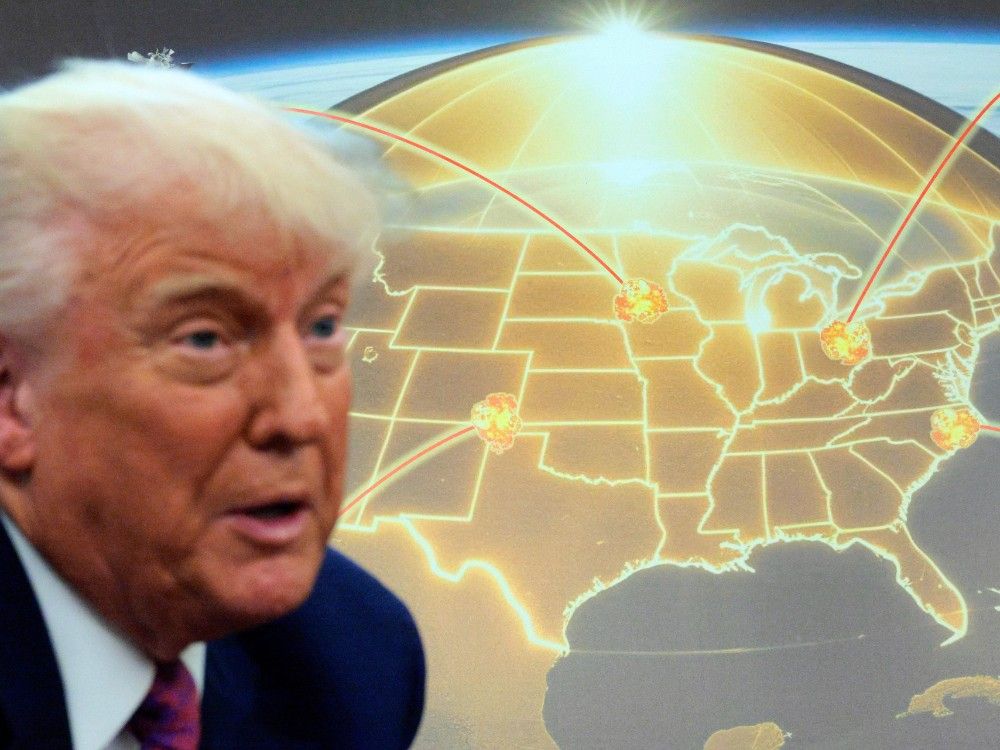
Donald Trump speaks in front of a map of his proposed

Washington, D.C. — U.S. President Donald Trump wants a Golden Dome of missile defence over the United States, and if you’re thinking this sounds familiar, you’d be right. Back in the 1980s, Ronald Reagan’s Strategic Defense Initiative, aka Star Wars, also aimed to develop a space-based and layered defence system to knock out any incoming strikes.

It didn’t work out.

The space-based part proved elusive, but technology has now advanced enough to make more of it feasible, at least in theory. Trump envisions a system that includes space-based weaponry that can take out missiles — ballistic and hypersonic — and he wants Canada to help pay for building this defensive wall over North America.

“I told Canada, which very much wants to be part of our fabulous Golden Dome System, that it will cost $61 Billion Dollars if they remain a separate, but unequal, Nation, but will cost ZERO DOLLARS if they become our cherished 51st State,” the president

posted on social

in May. Since then, the quoted price has gone up to US$71 billion.

Ottawa has acknowledged that discussions with the U.S. are underway, but they’re happening against a backdrop of strained U.S.-Canada relations over defence spending and a trade war. With pressure on Prime Minister Mark Carney to cool Washington’s belligerence, the Golden Dome’s feasibility as a technology may matter less than the symbolism of Canada’s willingness to collaborate with the White House. And none of the options for Canada, whether it’s spending tens of billions of dollars to buy into a risky initiative or spurning a testy and vindictive president, are painless.

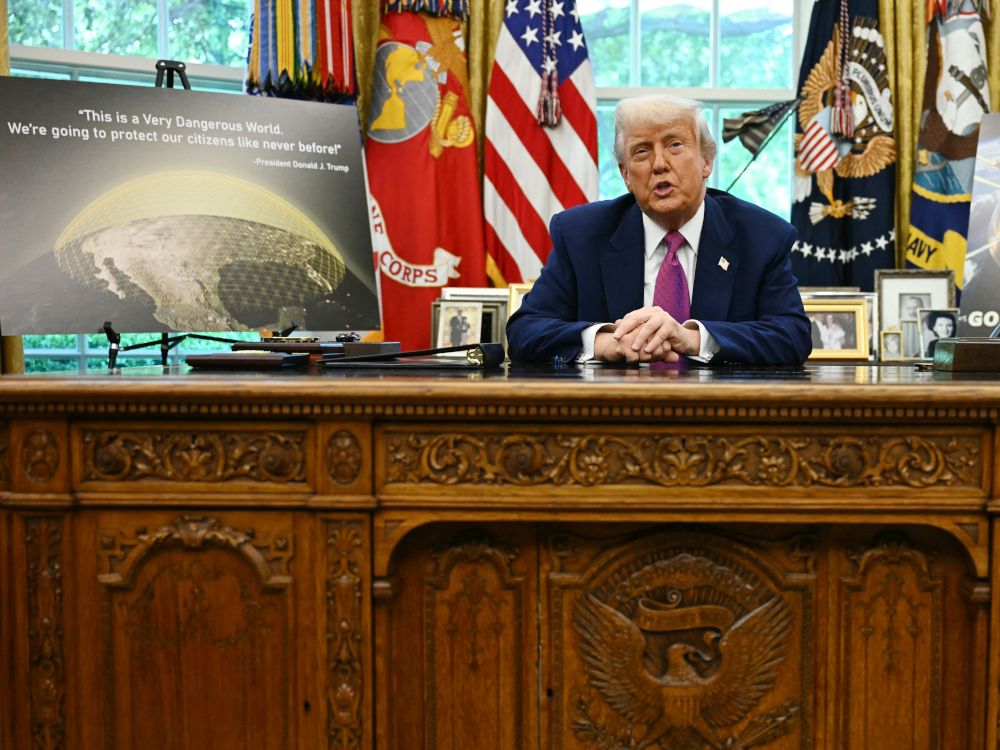
 Posters for the proposed Golden Dome for America missile defense shield are displayed before an event with President Donald Trump in the Roosevelt Room at the White House, Monday, May 12, 2025, in Washington.

The approaching missile menace

U.S. missile defense currently includes the Ground-based Midcourse Defense (GMD) in Alaska and California, which is designed to intercept ICBMs in space and has a 55 per cent test success rate. The Patriot system defends battlefield and critical sites against shorter-range missiles closer to their targets, and the mobile THAAD system (Terminal High Altitude Area Defense) provides regional defence against various missile threats, also closer to their targets. The naval Aegis system, meanwhile, offers effective naval-based missile interception – and the Patriot, THAAD and Aegis all generally outperform GMD. 

Golden Dome aims to integrate all of the above — the ground and sea-based technologies — while adding a new space-based layer of satellites equipped with sensors and interceptors to detect incoming threats and take them out at various stages of their trajectories.

This would improve U.S. missile defence beyond just dealing with potential ballistic missiles coming from rogue nations such as North Korea or Iran, said Patrycja Bazylczyk, a research associate with the Missile Defense Project at the Washington-based Center for Strategic and International Studies CSIS. 

“Now we’re thinking about our great power competitors, such as Russia and China, and they don’t have just ballistic (missiles),” she says. “They have hypersonic weapons, cruise missiles, etc., a whole host of different weapons that have unique trajectories and characteristics that create challenges for sensing and interception.”

A potential arms race

While much of the technology for the sea- and land-based systems is sound, some of the space-based components remain theoretical.

Space-based interceptors or lasers have improved through proliferation and become more resilient, said Michael O’Hanlon, director of foreign policy research at the Brookings Institution think tank. But “the space-based weapons have not gotten much better … and are nowhere near a really practical deployment.”

“It’s very difficult to shoot down intercontinental ballistic missiles,” said Benjamin Giltner, a researcher at the think tank CATO Institute’s Defense and Foreign Policy Department. He explains that the warheads are travelling at speeds north of 1,900 mph during the terminal phase, when they’ve detached from the missile and reentered the atmosphere. 

On top of that, the system would have to deal with multiple warheads at once, decoys, and efforts by the enemy to jam its frequencies. It’s essentially trying to use a bullet to hit a bullet — amid a maelstrom of chaos.

Managing a battlefield with data inputs in a rapidly changing environment, potentially with thousands of objects in the sky, also requires a lot of computing power. “That would be a piece where artificial intelligence is now making certain things more possible than before,” O’Hanlon said.

Bids are being prepared now by several defence contractors, and costs could go sky high. The Trump administration has estimated a cost of US$175 billion, but the Congressional Budget Office says it could cost between US$161 billion and as much as US$542 billion over the next two decades for the whole system.

 U.S. President Donald Trump speaks during an announcement about the Golden Dome missile defence shield, in the White House in Washington, D.C., on May 20.

Much of that will depend on the depth of system and the space-based weaponry. Giltner said he’s seen “estimates of (needing) up to tens of thousands of missile defence systems to have a chance at defending most U.S. territory.” 

It will also depend upon retaining the support of subsequent White House administrations from either party.

Beyond cost and efficacy, building a shield over North America is likely to upset the enemy.

The secured second-strike capability of nuclear nations — meaning a country can hit back hard even after it’s been hit by a nuclear attack — “has so far proven to be the most stable and best form of nuclear deterrent we have,” said Giltner. A missile defence system like Golden Dome would upend that, creating a more “vulnerable strategic environment” and “invite an arms race,” he added.


Bazylczyk sees that another way. “If we look at Chinese and Russian investment in hypersonic and cruise missiles, I think that not having defences to adequately intercept those next-generation threats is kind of concerning for deterrence.”

“If they don’t believe that we are able to counter those threats, then they’ll be more emboldened to embark on escalatory actions.”

Robert Peters, senior research fellow for strategic deterrence at the Heritage Foundation’s Allison Center for National Security, agrees. He says he’s “increasingly concerned” that U.S. adversaries “could pursue a low escalation pathway attack or limited coercive attack … because they keep building systems that could execute such an attack.” 

He means that China and Russia keep discussing development of systems for limited escalation scenarios in which they might launch an attack with just one or a couple of advanced or nuclear missiles, to hit the U.S. without triggering an all-out nuclear war. 

So, for Giltner and many other critics, Golden Dome is likely to start a new arms race. Others, like Peters, say that a race is already underway, and that Golden Dome, “at a minimum, gives us a fighting chance to give the adversaries pause before they decide to go down a limited coercive pathway attack.”

In short, both sides are toying with developments that could undermine the nuclear Mutual Assured Destruction doctrine that prevents nuclear powers from pressing the button on a nuclear war.

Canada’s dilemma

Today, Canada helps support GMD and NORAD operations by hosting sensors for early warning and tracking of missiles, and Trump has suggested that Canada join Golden Dome, a project he very optimistically says will take three years, with an entry price of US$71 billion. That’s well over this year’s Canadian defence budget of approximately $62.7 billion, but it’s unclear how long Ottawa would have to pay the ticket price.

 (L-R) Canadian Prime Minister Mark Carney and U.S. President Donald Trump depart following a group photo in front of the Canadian Rockies at the Kananaskis Country Golf Course during the G7 Leaders’ Summit on June 16, 2025 in Kananaskis, Alberta.

Washington and Ottawa have been involved in volatile trade talks in recent weeks, with Trump stating on Friday that there is no deal likely with Canada and that more tariffs are likely coming on Aug. 1. So how is Carney likely to respond to the Golden Dome invite? 

Giltner doesn’t see how participating in Golden Dome would strategically benefit Canada, because, in addition to the high cost,  it would mean being party to a “more fraught strategic environment.”

But Peters said it is in Canada’s national interest because inbound threats would likely fly over Canadian territory and may not only be directed at the U.S. He believes most Canadians would feel better knowing a defence system could thwart any such attack.

O’Hanlon, however, sees the need for a balancing act.  “It would make sense to be involved in this enough that we can do joint planning and that Canada would get some enhanced consideration as we think about options for protection,” he said. At the same time, the high cost, given Canada’s military budget, means Ottawa “wouldn’t want to get so caught up in this that (they) missed out on the opportunities to improve (their) ground forces.” 

Canada, he says, should aim to be “a substantial partner in this within reason.” 

National Post

tmoran@postmedia.com

Our website is the place for the latest breaking news, exclusive scoops, longreads and provocative commentary. Please bookmark nationalpost.com and sign up for our daily newsletter, Posted, here.


Windsor Mayor Drew Dilkens:

In a very civil tone, the mayor of Windsor, Ont., is asking the fresh faces in the Mark Carney-led Liberal government to butt out of city planning. Mayor Drew Dilkens especially wants to see an end to Trudeau-era affordable housing mandates from Ottawa that don’t serve his community.

“They were just hell-bent on putting forward this really left-principled version of what housing should be,” Drew says of the conditions imposed on cities under the $4-billion housing accelerator fund launched in 2023 by then federal Housing Minister Sean Fraser.

Unlike most other big cities in Canada, Windsor chose not to apply for the housing accelerator dollars — turning down the possibility of a $30-million cash infusion into the city’s densification strategies.

City council didn’t dare to accept the funds and later renege on the feds’ conditions, Drew says: “We basically walked away from $30 million because we refused to succumb, or be co-opted into something we felt was bad for the community.”

Then-Liberal MP for Windsor-Tecumseh-Lakeshore, Irek Kusmierczyk (who lost the 2025 election by just four votes to Conservative MP Kathy Borrelli), implored Windsor’s city council to reconsider, insisting the feds were only asking for “gentle density.”

It’s not so gentle, Drew counters, if you find yourself living next door to a new four-plex and you bought your house based on the community’s single-family residential character.

“We did it in our way,” Drew explains in a recent conversation, “because there’s no one who knows their community better, no level of government that knows their community better,” than the local council. The 53-year-old lawyer-cum-mayor grew up in Windsor, and has served on the city’s council for nearly two decades, 11 as mayor.

And when you look at Canada’s Constitution, Drew points out, these issues are “under the bailiwick of the provincial government … who delegate it to the municipalities.”

The city’s locally generated housing strategies — intense densification along transit routes; blanket rezoning in new neighbourhoods to allow for greater density; repurposing several municipally owned properties for housing — were rejected by the fund’s managers as “not ambitious enough.”

“Ambition” was their favourite word, Drew grumbles: “We weren’t ambitious enough and they wanted to work with municipalities who had greater ambition.”

One of the biggest sticking points for Drew? The minimum ticket to entry for this fund was city-wide rezoning to allow four-plexes to be built on any residential lot, as a right — removing the public hearing process and the possibility for appeals. In the suburban Calgary neighbourhood where I live, blanket rezoning means neighbours hold their breath when a lot comes up for sale.

The province of Ontario already mandates three buildings on a residential lot, the bureaucrats told Drew, so what’s the big deal about adding four? His rebuttal: “Then what’s the big deal about adding five? I mean, where does it stop? And when do you get to say enough’s enough; that we have processes in place that allow us to look at sewer capacity, that allow us to deal with parking, that allow us to deal with garbage control?

“We hope to work with the federal government — who wants to truly be a partner in helping build more housing — without jamming down our throats something residents don’t want,” pleads the veteran mayor.

To that end, after Carney took power, the mayor sent a letter — as yet, unanswered — to the government, asking for a re-evaluation of this rigid approach to the housing accelerator fund.

Drew has previously worked with Gregor Robertson, former mayor of Vancouver and now Carney’s point man on housing and infrastructure. He’s optimistic Robertson will bring practical insights about the correlation between affordable housing and density to the federal table. I noted that if increased density brought affordability, Vancouver would be cheap by now.

“I think the benefit of having a fresh government,” Drew offers, “is they can come in and say, ‘Listen, we looked at the program … while we appreciate the intention the past government was trying to employ here, we think there’s a better way of working with municipalities, allowing them the flexibility to determine how to accomplish the goal. We’ll set the goals and then we’ll hold them to account.’”

Drew’s suggestion echoes what I heard Pierre Poilievre say in the last election campaign. But, we agree, there’s nothing wrong with the Liberals stealing good ideas from the Conservatives.

While the housing accelerator initiative is the focus of Windsor council’s attention, Drew’s not happy these blanket zoning mandates are being applied to other programs — including federal public transit and housing infrastructure funding available to municipalities.

“And it gets even better,” Drew continues, his tone increasingly agitated. “Guess who doesn’t have to do this? The entire province of Quebec. They have an exemption. They carved out a different pathway … four units as of right was not a requirement in the province of Quebec.” Indeed, Premier Francois Legault trumpeted his $900-million deal with Ottawa as being “free of conditions.”

The economy of Windsor has taken a sharp downturn in the past 18 months. Before Donald Trump’s re-election, the Conference Board of Canada predicted Windsor would be the fastest-growing city by GDP of the 24 big cities they studied. “We had the battery factory well under construction,” Drew reports, “and we’ve got the Gordie Howe bridge that is winding up construction and should open officially the first week of December this year.

“But the reality is, there’s a lot of fear here,” he shares. “Our unemployment rate was almost 11 per cent and people are in rainy day mode. People are pinching their pennies … The housing market is very slow and everyone’s just in a wait-and-see mode.”

Property developers are on standby, he says, waiting to see if the Carney Liberals will cut development charges by 50 per cent at the municipal level (as promised during the election campaign), and whether the feds will offer low-interest loans for multi-storey residential units.

“Things have just kind of ground to a halt here,” Drew says with a sigh.

Our website is the place for the latest breaking news, exclusive scoops, longreads and provocative commentary. Please bookmark nationalpost.com and sign up for our daily newsletter, Posted, here.


Astronomer made a cheeky public relations move following the Coldplay

In a clever and completely unexpected public relations move as it seeks to move on from the infamous Coldplay concert “kiss cam” scandal, Astronomer has temporarily hired celebrity Gwyneth Paltrow as a spokesperson.

The 52-year-old actress and Goop lifestyle brand founder is, hilariously, the ex-wife of Coldplay frontman Chris Martin.

In a tongue-in-cheek promotional video released late Friday, Paltrow greets the camera, explaining that the tech startup recruited her “on a very temporary basis to speak on behalf of the 300-plus employees.”

“Astronomer has gotten a lot of questions over the last few days and they wanted me to answer the most common ones,” she says as the screen transitions to a typing text that reads: “OMG! What the actual f…”

Instead of addressing the elephant in the room — former CEO Andy Byron and human resources executive Kristin Cabot’s embrace — Paltrow cheerily promotes the company’s work in the data workflow automation sector.

“Yes, Astronomer is the best place to run Apache Airflow, unifying the experience of running data, ML, and AI pipelines at scale,” Paltrow says, deadpan serious

Another typed question prompt asks how the firm’s social media team is holding up.

Again, Paltrow sidesteps and says there’s still space at a company-sponsored event in September.

“We will now be returning to what we do best, delivering game-changing results for our customers.

“Thank you for your interest in Astronomer.”

The otherwise unheard-of tech company based in New York City was thrust into the spotlight earlier last week with the embrace that was captured as Martin decided to “say hello” to fans in attendance at the band’s show outside Boston on July 16.

The cameras quickly found Byron with arms around Cabot, both of whom turn red and immediately try to hide their faces.

“Either they’re having an affair or they’re just very shy,” Martin said, before the camera moved on.

Once it

found its way to TikTok

and spread like wildfire, it wasn’t long before Byron, a married man, and Cabot, a divorcee, were identified as Astronomer brass.

Within less than 48 hours, the company said it had

started a formal investigation

and Byron had been put on leave. A day later,

Astronomer announced his resignation.

Per the Associated Press,

Cabot’s resignation as chief people officer followed this week.

Our website is the place for the latest breaking news, exclusive scoops, longreads and provocative commentary. Please bookmark nationalpost.com and sign up for our daily newsletter, Posted, here.


Protests erupted and police arrived outside a Montreal church where U.S. Christian musician Sean Feucht held a worship concert without a permit on Friday.

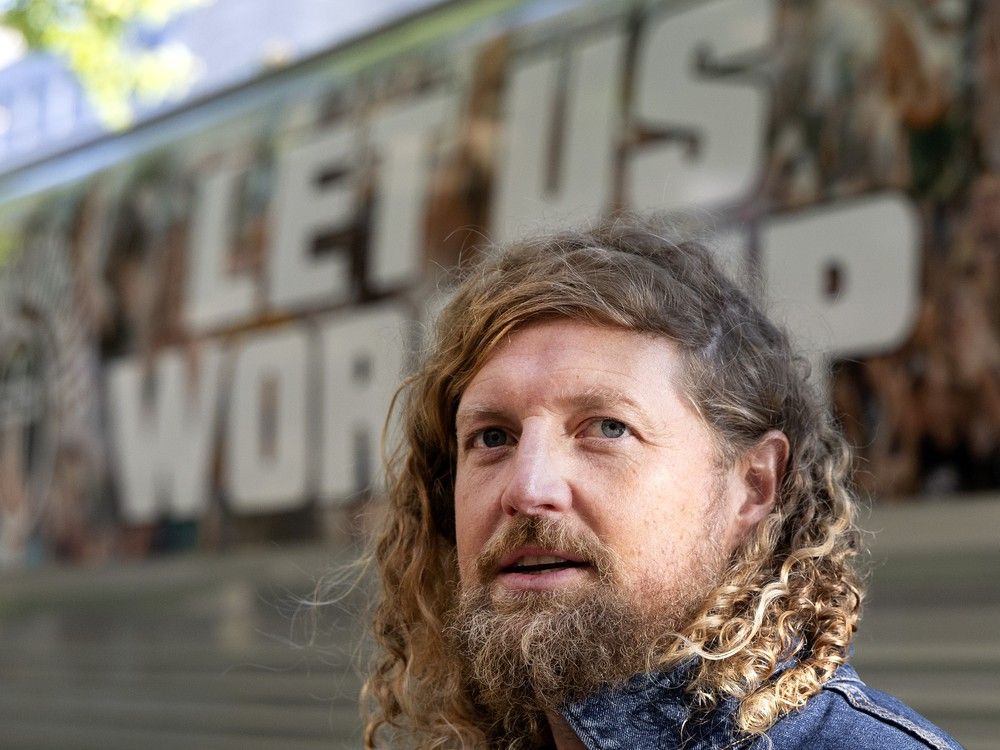
Protesters and police faced off outside a Plateau church Friday evening as Sean Feucht, a pro-Trump and Christian singer, performed a concert as part of his “Revive in 25” Let Us Worship tour. The show went ahead despite a warning from the city that the venue, Église MR, did not have the required permit to host the event.

The show went ahead despite a warning from the city that the venue, Église MR, did not have the required permit to host the event.

Earlier Friday, the Montreal mayor’s office said borough inspectors had notified the owners the activity cannot legally proceed, and that police are prepared to intervene if necessary.

“If the event goes ahead, notices of violation will be issued, and the neighbourhood police station is mobilized to enforce the regulations,” said Catherine Cadotte, a spokesperson for Mayor Valérie Plante.

Police briefly entered the church before the event began. But an officer at the scene later confirmed the show would proceed.

Feucht said he was unfazed by the city’s position.

“This is not a performance, it’s a church service,” he said.

 U.S. Christian singer Sean Feucht speaks to reporters before his worship concert at a Montreal church on Friday.

As Feucht’s supporters began arriving, local activists gathered in front of the Spanish-speaking church on Roy St, chanting anti-Trump and anti-fascism slogans. Tensions grew as the crowd grew.

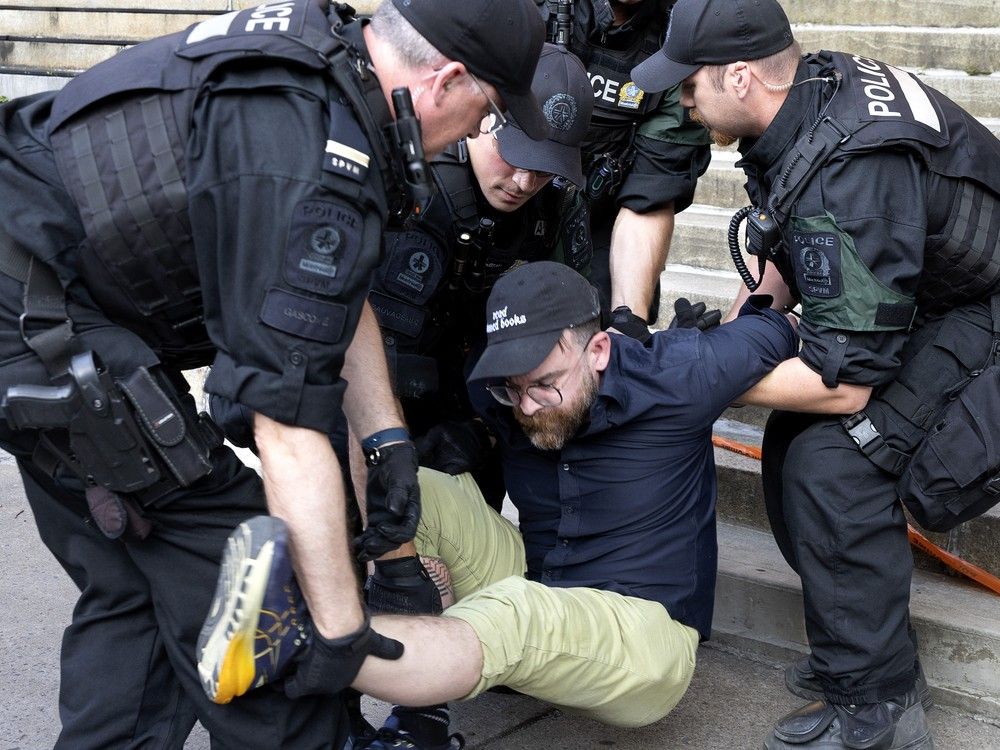
By 7 p.m., demonstrators had surrounded the church entrance. Dozens of police officers formed a perimeter, and at least one protester was arrested.

During one tense moment, a protester’s interaction with a journalist from news outlet Rebel News resulted in police intervening to separate the two.

Inside the church, a few dozen attendees gathered, joining in song and prayer.

By 8.30 p.m., the crowd of protesters outside the church had thinned out.


Feucht, a former worship leader and MAGA-aligned activist, has faced similar pushback across Canada.

All six of his previously scheduled concerts in Halifax, Charlottetown, Moncton, Quebec City, Gatineau and Vaughan were cancelled by local authorities.

Cities said the cancellations were prompted by “heightened public safety concerns” and the potential for protests. Feucht’s outspoken views on abortion, gender identity and LGBTQ+ rights has drawn criticism and been cited as a source of tension.

Chris Selley: Banning MAGA singer Sean Feucht, Canada slips further into Trump-ian incoherence

Feucht has scrambled to put on shows at alternative locations. On Thursday night, he performed at the Bar None Campsite on the Taxis River in Miramichi, N.B., to replace a cancelled show in Moncton.

The hastily-organized event prompted a statement from the owners of the campground on Friday saying the show was not authorized and does not align with their core beliefs, according to the New Brunswick Telegraph-Journal.

“It’s important that our partner organizations know that the performer involved in this event does not align with what we stand for as an organization,” Michelle Seymour, director of administration for Bridges of Canada, said in a statement late Friday afternoon, adding they are conducting an investigation. “We believe in compassion, inclusivity, and integrity.”

The Montreal show was another last-minute announcement to make up for cancelled shows. He has framed the opposition to his performances as a form of religious discrimination.

“If I had shown up with purple hair and a dress, claiming to be a woman, the government wouldn’t have said a word,” he posted earlier this week.

On Friday afternoon, Feucht claimed the pastor of the Montreal church had been “pressured, threatened and attacked” for agreeing to host the concert.

Then, in a follow-up post, he appeared to maintain that the show would still go ahead.

“This pastor and his church ARE NOT BACKING DOWN!!!,” he wrote.

Earlier in the day, Feucht reported that his tour bus was struck by another driver in Quebec.

“The Quebec police on the scene were unbelievably kind and other driver acknowledged he slammed into our bus and somehow ‘lost control,’” he wrote.

The Let Us Worship movement began during the COVID-19 pandemic as a protest against public health restrictions on religious gatherings.

Feucht has since gained a national profile in the United States and brought his message to Canada despite picking some controversy along the way.

— The New Brunswick Telegraph-Journal contributed to this report.

Our website is the place for the latest breaking news, exclusive scoops, longreads and provocative commentary. Please bookmark nationalpost.com and sign up for our newsletters here.


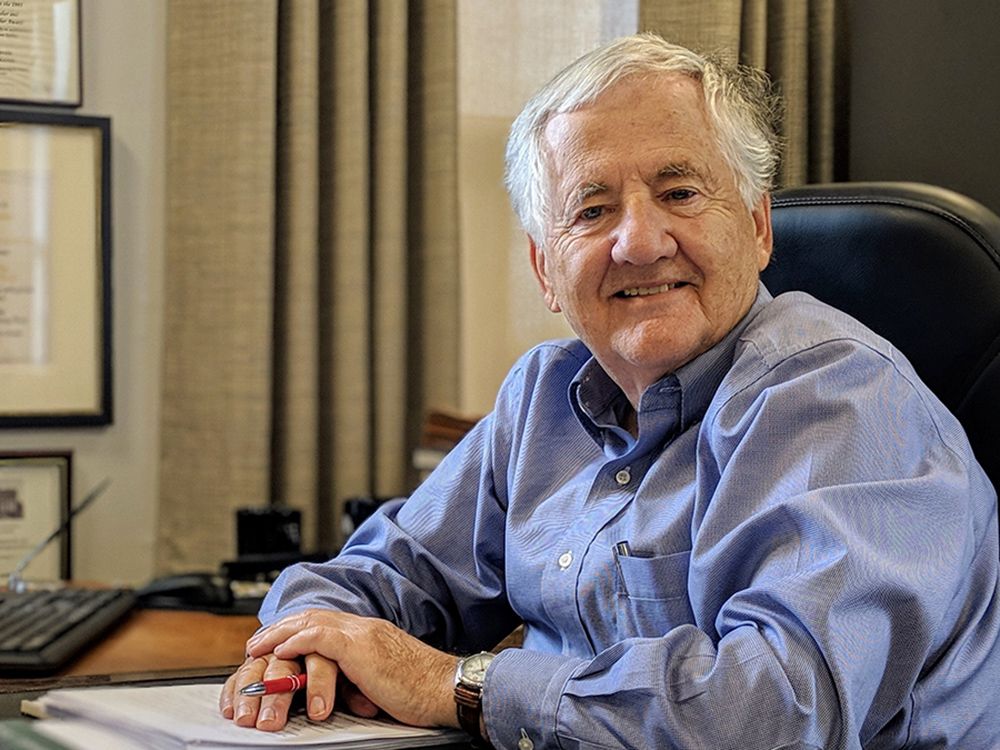
“No country in the western world has concentrated as many (government) employees in the national capital region as has Canada,” says Donald Savoie.

Donald J. Savoie has spent decades studying the inner workings of Canada’s federal bureaucracy. He’s watched Ottawa grow more centralized and more crowded with what he calls “poets,” policy thinkers and advisers, while the “plumbers,” the front-line workers delivering services to Canadians, have not been prioritized. In an interview with National Post about the concept, as discussed in his recent book

Speaking Truth to Canadians About Their Public Service

, Savoie explains why that imbalance matters. Savoie is Canada Research Chair in Public Administration and Governance at Université de Moncton.

Please briefly define what you mean by “plumbers and poets” when it comes to the civil service.

Thank you for the question, that’s a good one. A lot of times I’ve been interviewed about the book, and not many have caught on to the poets and the plumbers, and I think it’s key.

Poets are people mostly in Ottawa, that are part of the government who work on policy issues, who work on liaison, on coordination or dealing with media or dealing with ministers so they define policy.

Plumbers are the ones delivering services to Canadians. Plumbers are the ones you applied to for a passport, plumbers are the ones you applied to for old age pension or whatever program that you want to access; they’re the ones that deliver programs and services to Canadians. So the differences between poets to plumbers is fairly pronounced.

How much has the federal civil service grown in the last decade or so?

It’s grown by leaps and bounds over the past 10 years. In 2014 it was 340,000, in 2025 we’re up to 445,000, so you can see the difference there. It’s over 100,000 more.

How has that growth affected the ratio of plumbers to poets, and what’s the correct ratio?

The growth has clearly favoured the poets. And the reason I say that is just the sheer numbers of public servants in Ottawa — the number has grown. And it has not grown anywhere near the same amount in local and regional offices.

What’s the right number? What’s the right percentage? Frankly, it’s difficult to answer that. I would remind you that 40 years ago about 25 per cent of federal public servants were in Ottawa, and 75 per cent out in the regions, and that sounded like a proper number. So my view is that we should strive towards that.

I can tell you that in France, England, and the United States, the number of public servants in the national capital, whether in London, or Washington, or Paris, is nowhere near the percentage we have in Canada.

Is there any government, in Canada or elsewhere, getting this right?

In the U.K. for example, I’m taking a stab here, but like 75 per cent of public servants are outside of London, and the government over the past several years has made a deliberate attempt to move more and more public servants outside of London.

No country in the western world has concentrated as many employees in the national capital region as has Canada.

You are an academic, which is to some extent the domain of poets and not plumbers, should we be surprised by your position? Don’t we still need people thinking big thoughts in a country of our size?

There’s no shortage of people in Ottawa trying to think big thoughts. I think if there’s a problem it’s at the service delivery. It’s people trying to call Revenue Canada to get answers about income tax, and it’s having issues with supplying passports.

So, big thoughts, there’s thousands of them in Ottawa paid to have big thoughts. I don’t think there’s a lack of big thoughts, there’s a lack of people delivering services to Canadians.

You don’t need an army of people to come up with big thoughts.

Do you think there are any lessons in your theory for the private sector?

I think the private sector has no choice (but) to get it right, has no choice to strike a proper balance, because if a large private-sector firm doesn’t strike a proper balance, the market will tell it to strike the proper balance. The competition will tell it to strike the proper balance.

There is a natural equilibrium in the private sector that happens just because there’s competition, there’s market forces, there’s all kinds of forces that dictate how important it is to run an efficient operation; those forces are not present in the public sector.

The Carney government has announced 15 per cent budget cuts across the board. Does this address your issue?

What I can say is that I wish them well. I think a better solution would be, we have nearly 300 federal organizations, we have 100 federal government programs, I think a better solution would be for the federal government to take a strong look at all its organizations and all its programs and see which ones have long passed their best-by date. See which programs no longer resonate like they did when they were first established. I think there’s a lot of pruning of organizations and programs that could take place.

The 15 per cent cuts sends a message that every program, every organization holds the same priority, just squeeze 15 per cent. I would’ve thought a better solution was to see that we have programs that don’t fit our agenda. We have organizations that don’t serve the purpose that they were initially set up for so why don’t we look at that once we’ve cleaned that up then maybe we can look at the 15 per cent.

Are there any obvious markers as to a civil service job’s usefulness?

There are some, not many, I’ll give you an example. If you hire an auditor at Revenue Canada, every auditor you hire can generate X amount of revenue. So you hire an auditor and you can expect a return.

But for most cases, at least for poets, how do you assess the performance of a poet? That’s in the eye of the beholder. The poet can have 101 reasons why things don’t work. Fault the politicians, it’s the media, not enough resources, there’s all kinds of reasons you can grab.

You can find markers that work on the delivery side, you don’t find markers that work on the poet side.

This is the latest in a National Post series on How Canada Wins. Read earlier instalments here.

Our website is the place for the latest breaking news, exclusive scoops, longreads and provocative commentary. Please bookmark nationalpost.com and sign up for our politics newsletter, First Reading, here.


NHLPA Executive Director Marty Walsh, left, and NHL Commissioner Gary Bettman hold a joint news conference before the NHL draft in Los Angeles, June 27, 2025.

Five former world junior hockey players acquitted in a high-profile sexual assault case will remain ineligible to play in the NHL, according to the league. This move has drawn backlash from the NHL Players’ Association (NHLPA), which says the players deserve to return to work.

On Thursday, in a London, Ont., courtroom, Justice Maria Carroccia found Dillon Dube, Cal Foote, Alex Formenton, Carter Hart and Michael McLeod

not guilty

, more than seven years after an allegation of group sexual assault emerged involving members of the 2018 Canadian world junior hockey team.

Despite the verdict, the players’ conduct is still under review, and they are still sidelined according to a statement from the NHL.

“The allegations made in this case, even if not determined to have been criminal, were very disturbing and the behavior at issue was unacceptable,” the league said. “We will be reviewing and considering

the judge’s findings

. While we conduct that analysis and determine next steps, the players charged in this case are ineligible to play in the League.”

The decision drew criticism from the NHL Players’ Association, which argued that the league was ignoring due process and overstepping its authority under the Collective Bargaining Agreement (CBA).

In a statement, the NHLPA said that the players were acquitted of all charges, and that “after missing more than a full season of their respective NHL careers, they should now have the opportunity to return to work.

“The NHL’s declaration that the Players are ‘ineligible’ to play pending its further analysis of the Court’s findings is inconsistent with the discipline procedures set forth in the CBA.”

They added, “we are addressing this dispute with the League and will have no further comment at this time.​”

The case first drew major attention in 2022, when Hockey Canada settled a civil case. It resulted in a broader scandal surrounding Hockey Canada, which triggered widespread scrutiny of how sexual violence is handled in sport, the loss of corporate sponsorships, and forced the resignation of top Hockey Canada executives.

Since 2022, Hockey Canada has suspended all players involved in the case from sanctioned programming, and those suspensions remain in effect pending the outcome of an internal appeal process.

In a lengthy statement, Hockey Canada said it would not comment further due to the ongoing appeal of a previous adjudicative panel decision that had examined whether players breached the organization’s code of conduct.

“To ensure that we do not interfere with the integrity of the ongoing appeal … we are not able to comment further at this time,” the statement said.

The organization added that it has since introduced mandatory consent training, achieved gender equity on its board, and expanded third-party reporting structures, along with other initiatives.

“As the national governing body for amateur hockey in Canada, Hockey Canada recognizes our role, responsibility and duty to be a leader in delivering a sport that is rooted in safety, inclusiveness and respect,” the statement said.

The case caught the attention of many outside the hockey world as well, with federal secretary of state for sport, Adam van Koeverden, releasing a statement where he called the case a “critical moment” in Canadian sports. He said it sparked a national conversation on the culture of men’s hockey.

“It is the voices of women, and the courage and bravery it takes to come forward, that have led to the changes and toxic culture that we are seeing,” he said. “It’s critical that this work on safe sport continues across the sports system, because we know that when safeguards are weak or absent, real harm occurs.”

Our website is the place for the latest breaking news, exclusive scoops, longreads and provocative commentary. Please bookmark nationalpost.com and sign up for our daily newsletter, Posted, here.


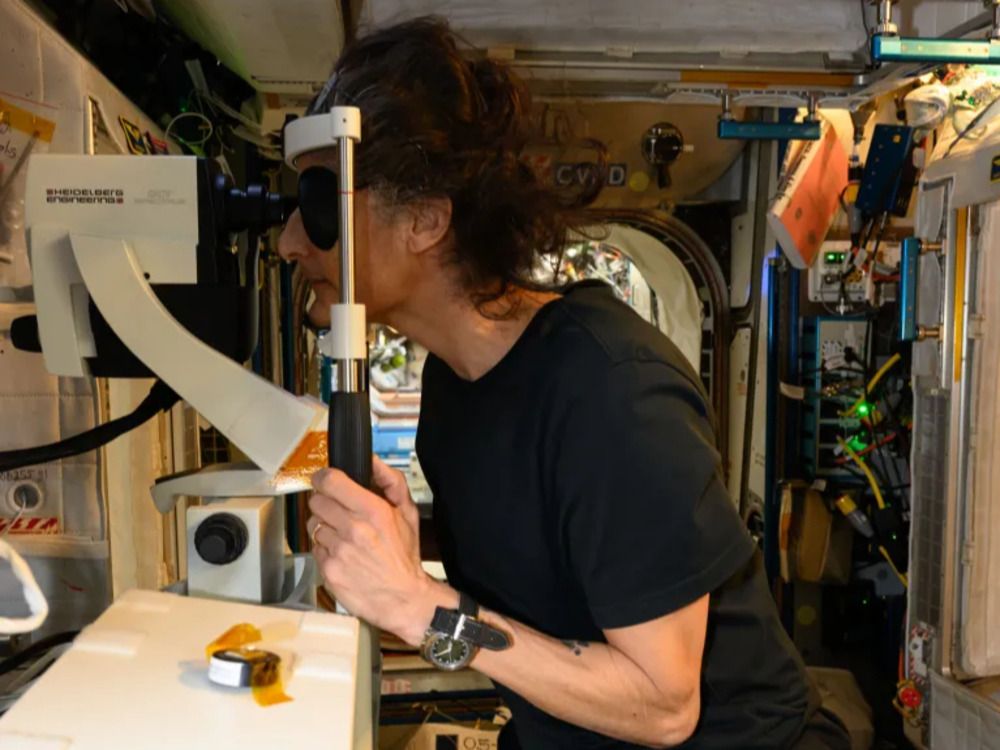
NASA astronaut Suni Williams conducts an eye exam on the International Space Station.

A new study from NASA

, conducted over several years of long-duration spaceflights on the International Space Station, has found that more than half of U.S. astronauts started noticing changes in their vision after more than six months aboard the ISS. Here’s what to know.

What does the study say?

“Many found that, as their mission progressed, they needed stronger reading glasses,” the study says. “Researchers studying this phenomenon identified swelling in the optic disc, which is where the optic nerve enters the retina, and flattening of the eye shape.”

Does the condition have a name?

The acronym-loving space agency calls the condition SANS, short for Space-Associated Neuro-ocular Syndrome.

What is causing it?

“Microgravity causes a person’s blood and cerebrospinal fluid to shift toward the head, and studies have suggested that these fluid shifts may be an underlying cause of SANS,” researchers at NASA found.

A

Canadian-led study

with an even longer acronym — Space Flight-Associated Neuro-ocular Syndrome Ocular Rigidity Investigation, or SANSORI — was carried out to determine whether stiffness of the eye, called ocular rigidity, contributes to development of SANS.

It studied 26 eyes (or 13 crew members) that spent between 157 and 186 days on the ISS, and revealed a drop in ocular rigidity (33 per cent), intraocular pressure (11 per cent) and ocular pulse amplitude (25 per cent) following the missions. “These findings reveal previously unknown effects of microgravity on the eye’s mechanical properties, contributing to a deeper understanding of … SANS,” researchers wrote. “Long-term space missions significantly alter ocular biomechanics and have the potential to become biomarkers of disease progression.”

What kinds of treatment have been tried?

NASA has a study taking place now on the space station with a device called

the Thigh Cuff

. The ongoing investigation has 10 astronauts using tight leg cuffs to change the way fluid moves around inside the body, especially around the eyes and in the heart and blood vessels.

That study is expected to wrap up next year but, if successful, the team behind the device says, “the cuffs could serve as a countermeasure against the problems associated with fluid shifts, including SANS.”

He smashed the world record by spending 878 days in space. His body is likely not the same

They add: “A simple and easy-to-use tool to counter the headward shift of body fluids could help protect astronauts on future missions to the Moon and Mars. The cuffs also could treat conditions on Earth that cause fluid to build up in the head or upper body, such as long-term bed rest and certain diseases.”

Other possible treatments have been considered. Last year,

a paper was published

about an unnamed female astronaut with a particularly severe case of SANS. Her condition improved after she started taking a prescribed B-vitamin supplement that was flown to her on the station; however, there was

coincidentally a reduction in cabin carbon dioxide at the same time, so researchers weren’t certain if that may have also helped.

Are there long-term effects?

The good new is that SANS does not seem to be a lifelong condition.

In an interview

, Dr. Andrew G. Lee, a Houston ophthalmologist and one of the authors of the above study, was refreshingly blunt about the longterm consequences.

“Astronaut vision is super important, not only for their safety but for mission quality,” he said. “It’s really important not to have blind people going to Mars.”

He added: “But so far so good. We have not seen any permanent vision loss from any SANS case, and the treatment seems to be come home. So once you get back to the gravitational field of the planet it seems to just go away after a while.”

Our website is the place for the latest breaking news, exclusive scoops, longreads and provocative commentary. Please bookmark nationalpost.com and sign up for our newsletters here.


Halifax MP Lena Metlege Diab.

OTTAWA — When Immigration Minister Lena Metlege Diab dropped by a church kids camp this summer, she came

to pose for photos

to highlight the funding that came from the Canada Summer Jobs program.

It might not have seemed unusual: members of Parliament have a hand in helping organizations in their riding get the summer-job subsidies in the first place. MPs get lists of organizations in their ridings that apply for the subsidy, and recommend who should get it.

But Metlege Diab had a more personal relationship with this particular Lebanese parish church in Halifax than just representing it as an MP. She has been a parishioner there since the 1980s.

The situation does not seem to violate either the Conflict of Interest Act or codes that public office holders must follow, but one government ethics specialist said it touches on issues around perceptions of conflict,

as well as what questions the department responsible for administering the money asks of MPs who may have ties to the organizations whose requests they review.

“Do I think that the minister, in this case, has broken the act or code? No,” said Ian Stedman, who previously worked for Ontario’s integrity commissioner and now teaches as an associate professor at York University.

“Do I think that the program may want to protect itself by having a higher bar or a higher standard than the act or code? Yes.”

The Canada Summer Jobs program offers a wage subsidy for employers to hire those aged 15 to 30 each summer. This year, the government announced it would spend $25 million more to create another 6,000 spots to combat the country’s high youth unemployment rate.

How it works is simple: An organization, including religious ones, applies for the subsidy. The department that administers it assesses the application to ensure it meets the criteria and then asks MPs for their feedback based on a recommended list, which, according to the program’s website, is to ensure “local priorities” are met.

Their feedback, it says, is then used to inform the government’s final decisions.

In Metlege Diab’s case, a spokeswoman in her Halifax West constituency office said she provided her feedback back in March, two months before Prime Minister Mark Carney promoted her to cabinet. She has represented the riding federally since 2021.

“The final funding decisions by (Employment and Social Development Canada) were made during the writ period,” the spokeswoman wrote, referring to the period during the spring federal election.

Her office also confirmed she had been a parishioner of the church in question since its was established in the 1980s

“It was wonderful to visit Our Lady of Lebanon Parish and see how the Canada Summer Jobs program is helping our youth gain valuable work experience while supporting meaningful summer opportunities. Thank you for welcoming me — enjoy the rest of your summer!” Metlege Diab

wrote in a recent Facebook post

.

The government confirmed the church received around $50,000 to fund 10 jobs.

Last year, the Conflict of Interest and Ethics Commissioner’s office released an advisory opinion directing MPs on when they should refrain from giving their opinion on whether a particular organization should receive funding.

It added that an entity is not precluded from applying for government money just because an elected official or appointee has a personal connection to it, like a membership.

The office advised that MPs should not provide opinions on applications from groups that employ or are owned by a family member, or where they have a “private interest.”

Stedman says under the rules, “private interest” is defined in terms of it being a financial interest, which is narrow.

He says that narrowness is evident when it comes to the Canada Summer Jobs program, which he said is unique in that the government asks MPs to directly weigh in on a funding decision. “This is really them saying outright, ‘We want you to help influence how our money is spent.’”

While federal ethics rules concentrate on the issue of a public officer using their influence to benefit financially, the program itself is about the community.

“It’s an organization she cares about. It’s a church that she cares about, and the better they do, the longer they survive to be there for her and her community. And she benefits from that in a kind of interpersonal way,” Stedman said.

“It’s just not the kind of benefit that’s contemplated by the act, which can be unpalatable … for I think our modern take on what conflicts of interest could be.”

He said he believes the program, in asking MPs for their recommendations on funding, should also ask whether they have any personal connections to the organizations on the provided lists.

“The public expects that their members of Parliament are going to do everything they can to avoid the perception of a conflict, because we want our government officials to care about public trust in their behaviour, and public trust is about perception as much as it is about reality.”

In a statement, Employment and Social Development Canada did not directly say whether it asks MPs about having any personal ties to the organizations whose applications they review, but members are reminded of the rules under the Conflict of Interest Act and Code of Conduct.

“To ensure their recommendations are considered, they must attest to their compliance with the code by completing the required electronic confirmation. The code provides guidance to MPs regarding the disclosure of conflicts of interest and ensures transparency and accountability in their decision-making, including in the Canada Summer Jobs MP recommendation process,” wrote spokeswoman Liana Brault.

“The department provides final recommendations of projects to be funded after examining all applications against program criteria and national priorities and reviewing feedback from members of Parliament.”

National Post

staylor@postmedia.com

Our website is the place for the latest breaking news, exclusive scoops, longreads and provocative commentary. Please bookmark nationalpost.com and sign up for our daily newsletter, Posted, here.