

LP_468x60
on-the-record-468x60-white

File photo of empty aluminum cans for beer at a brewery in Chicago.

WASHINGTON, D.C. — Patrons huddle around the 30-foot-long wooden bar at Spiteful Brewing on Chicago’s Northside, enjoying drinks, televised sports, and games ranging from darts to Dungeons & Dragons.

“It’s a corner tavern without the booze,” says co-founder Jason Klein, noting they only serve beer they brew on-site, not liquor. What customers don’t see is the storeroom, where Klein is engaged in another game: playing Tetris with supplies.

U.S. President Donald Trump’s aluminum tariffs have forced U.S. breweries to consider stockpiling cans as a hedge against rising costs, but for small brewers like Klein, space is limited.

“It’s like a puzzle back there for us. We’ve had to sacrifice on things like grain so we could hook up on cans,” he says. But Klein is facing more than just logistical challenges.

Trump imposed 25 per cent tariffs on steel and aluminum in February, citing the need to promote domestic manufacturing and protect national security. He then doubled them to 50 per cent in June, and small brewers are feeling the squeeze.

Trade talks are underway, with Canada looking for deals to reduce or avoid Trump’s tariffs. Both sides aim to conclude a deal by July 21. If no deal is reached, the tariffs will remain. Meanwhile, higher costs threaten the thin margins and production capacity of smaller U.S. brewers, while trade tensions are limiting export opportunities for the larger ones, particularly in their biggest market, Canada.

An industry on the edge

American craft brewing took off in the 2010s but has since faced challenges, including oversaturation, COVID, and inflation. “Everything’s gone up,” Klein says. “Grain has gone up. Hops have gone up. Storage has gone up.” With input prices rising, brewers feel pressure to raise prices but worry about going too far.

“At some point, you’re not going to pay $14, $15, $16 for a six pack,” Klein says, noting that sales have already slipped.

The whole industry is grappling with this trend. U.S. craft beer production peaked in 2019 and has since declined, according to the Brewers Association. The U.S. craft brewing industry saw a 3.9 per cent drop in barrel production between 2023 and 2024 and a slight decline in its overall U.S. beer market share, dropping to 13.3 per cent. Its retail value grew by 3 per cent to $28.9 billion, but that was largely due to price hikes and strong taproom sales.

Now, the industry is facing even higher production costs related to the price of aluminum cans.

Aluminum cans are the go-to for US breweries because they are light, easy to ship, and more environmentally friendly, as aluminum is recyclable. As of January, cans accounted for 75 per cent of the craft beer market share, according to Beer Insights, so there was plenty of panic when the tariffs were introduced.

Much of the aluminum used for canning in the U.S. comes from domestically recycled products, while just 30 per cent is sourced from raw aluminum, largely from Canada. It’s only the raw imports that are directly impacted by tariffs, which means the feared price spikes have been minimal, thus far.

But the price of aluminum generally is based on the London Metal Exchange (LME) and the Midwest Premium indices, and while the LME hasn’t changed much this year, the Midwest Premium has soared, hitting a record 60 cents per pound in early June — a whopping 161 per cent rise since January. Distributors peg their rates to these indices quarterly.

For distributors like Core Cans, a California-based, family-run company specializing in the supply of aluminum cans and other packaging, this has meant only having to raise prices by 3 per cent thus far, says co-founder Kirk Anderson. For Craft Beverage Warehouse, a Midwest distributor, it has been closer to 4 per cent, according to co-founder Kyle Stephens.

But the tariffs will continue to put upward pressure on pricing, they warn, and the greater the market uncertainty and the higher the indices go, the more big suppliers and companies buy up greater quantities of aluminum to shore up their inventory. “That’s what impacts us the most,” says Stephens, noting that the reduced supply drives up the price. “People are out there hedging, buying a ton of aluminum and driving that price up.”

By the third and fourth quarters, if the uncertainty continues, Sophie Thong, director of account management for Can-One USA, a manufacturer of aluminum cans in Nashua, NH, says craft brewers should expect prices to rise further. “In Q3, it will be higher,” she says.

Smaller brewers say they have little choice when it comes to suppliers. Most major U.S. suppliers have raised minimum order demands so high that smaller players often rely on distributors or Canadian suppliers to get the smaller orders they can manage.

Klein, at Spiteful Brewing, noted that the Trump administration wants the industry to source their cans domestically but that he has to work with his Canadian supplier because his former U.S. distributor raised its minimal order from a single truckload, with 200,000 cans, to five truckloads – a whopping 1 million cans he doesn’t have enough room to store.

Also, for many brewers, buying two or more times the normal amount is about more than just the space. “It has a negative effect on cash flow, too,” Klein adds.

Necessity is the mother of invention

Faced with these challenges, many in the industry are finding creative ways around the pinch.

For distributors and suppliers, this means working with clients to keep costs at a minimum. Craft Beverage Warehouse, for example, has adopted shared shipping, which involves reaching out to breweries by region to see if they want to be part of a group order to reduce shipping costs.

For breweries, some are storing as much as they can, leaning on taproom sales, and diversifying their products. “If their beer volume is going down, maybe they’re making a hop water or, if a state allows it, they might be making a hemp-derived THC product,” Stephens says.

The Canadian crackdown

While U.S. breweries do their best to adapt at home, the international market is presenting a new hurdle.

Canada is the biggest foreign market for American craft brewers, making up 38 per cent of U.S. craft beer exports as of early 2025. But now, amid Trump’s trade war, they’re dealing with rising input costs as well as retaliatory bans on the sale of U.S. alcohol in major provinces, including Ontario, Quebec, British Columbia, Nova Scotia, and others.

​​Last month, Alberta lifted its three-month ban on U.S. alcohol sales, but it remains in place elsewhere, and Ontario and Nova Scotia recently announced they would not order liquor stores to restock U.S. products. Ontario Premier Doug Ford has been vocal about the impact.

“Every year, LCBO sells nearly $1 billion worth of American wine, beer, spirits and seltzers. Not anymore,” he said. In 2024, the Liquor Control Board of Ontario reported more than $6.2 million worth of sales of beer from New England alone.

While most small craft brewers don’t export their products, larger ones do, and they stand to lose tens of millions of dollars in lost sales in 2025 alone as a result of the Canadian sales ban. This is another trade irritant irking the U.S., according to US Ambassador Pete Hoekstra.

Like he did with Canada’s now-dead Digital Services Tax, Trump may soon target these Canadian sales bans for leverage in the ongoing trade talks.

The final pint?

Craft brewing was a tough business before the tariffs. Last year, for the first time in two decades, more U.S. craft breweries closed than opened. Now, with packaging costs rising and trade uncertainty mounting, it’s enough to drive some brewers to … well, drink, and hope for policy shifts.

Klein says policymakers should understand the demands Trump’s tariffs are putting on smaller businesses.

“I think the policymakers need to understand that the only thing they’re doing is increasing costs for small businesses,” he says, noting how they’re punishing him for buying aluminum cans, which he can’t source in America.

Many American craft brewers notably do use U.S.-based distributors and suppliers, and Can One-USA, for example, set up shop just over a year ago to meet the needs of these smaller players, offering smaller minimum orders and warehousing options. But brewers with domestic supply chains are still facing higher prices, thanks to the market uncertainty.

If trade tensions escalate, Klein warns that many small breweries may not make it.

“If the trade war escalated such that you couldn’t buy cans cost-effectively from Canada or from somewhere else, and the American companies didn’t lower their prices or lower their minimum order quantities, I think that would absolutely affect what we could do in the future.”

As U.S. craft brewers grapple with soaring aluminum costs and squeezed margins, the retaliatory Canadian sales bans on American beer and liquor add a painful blow, cutting off their biggest export market and threatening millions in sales.

Amid the trade tensions, many American breweries face an uncertain future where rising costs and shrinking access to shelf space have them wondering how long they’ll be around to pull their next pint.

National Post

Our website is the place for the latest breaking news, exclusive scoops, longreads and provocative commentary. Please bookmark nationalpost.com and sign up for our politics newsletter, First Reading, here.


FILE: In this file photo taken on July 17, 2020 the Department of Homeland Security flag flies outside the Immigration and Customs Enforcement (ICE) headquarters in Washington, DC.

A Canadian woman has been detained in the U.S. during her green card interview for being in the U.S. illegally,

California-based KGTV

reported Thursday.

Cynthia Olivera’s green card interview was on June 13 in California. As she went into the interview room, her husband, Francisco Olivera waited outside. “We feel totally blindsided. I want my vote back,” Francisco told KGTV after Cynthia was detained.

Francisco is a U.S. citizen and self-identified Trump voter. The U.S. president’s promises to deport dangerous criminals appealed to the couple but they didn’t think Cynthia’s lack of legal U.S. status would be a problem — no criminal charges were found under Cynthia’s name by KGTV. “The U.S. is my country,” Cynthia told KGTV from an immigration detention centre in El Paso, Texas. “That’s where I met my husband. That’s where I went to high school, junior high, elementary. That’s where I had my kids,” she continued.

The 45-year-old was born in Canada and taken to the U.S. by her parents when she was 10 years old. In 1999, when Cynthia was 19 years old, U.S. border officials determined she was living in the country without a legal status and an order was obtained to deport her.

After being removed, Cynthia returned within a few months to the U.S. by driving to San Diego from Mexico,

The Guardian

reports. “They didn’t ask me for my citizenship – they didn’t do nothing. They just waved me in,” Cynthia told KGTV.

For the next 25 years, Cynthia is reported to have worked in Los Angeles where she paid her taxes and provided for her family. She has three children who were born in the U.S. As she navigated the onerous task of obtaining a green card, she was granted a permit by the Biden administration in 2024 that allowed her to work legally in the U.S.

Meanwhile, the Trump administration in an emailed statement referred to Cynthia as an “illegal alien from Canada,” The Guardian reports.

In a statement to

Newsweek

, the spokesperson said Cynthia was “previously deported and chose to ignore our law and again illegally entered the country.” The statement further noted that “re-entering the U.S. without permission after being deported is a felony, and it said Olivera would remain in Ice’s custody pending removal to Canada,” Newsweek reports.

Cynthia reportedly told officials that the couple can pay for her to fly to Canada, where she would live with a cousin in Mississauga, Ontario. “Despite offering to pay for her own flight back to Canada and waive her rights to a bond hearing, she remains locked up at an ICE detention facility in El Paso, Texas,” reads a petition on

change.org

.

Canadian woman speaks out about her treatment in U.S. detention

The Canadian government told KGTV that it is aware of Cynthia’s case but cannot intervene because “every country or territory decides who can enter or exit through its borders,” Guardian reports.

Our website is the place for the latest breaking news, exclusive scoops, longreads and provocative commentary. Please bookmark nationalpost.com and sign up for our daily newsletter, Posted, here.

Mitch Murray, left, and Chui Yang are card-carrying conservative, post-secondary students in Calgary.

Young men are falling behind, at school and at work, and the stats on drug overdoses and death by suicide are sobering. Not unlike other mothers of sons, I’ve keenly observed the raging “masculinity” debate, to ensure my own sons aren’t undone by their own sense of being treated unfairly. We’re used to seeing males in positions of power so there’s often not a lot of empathy for the struggles of young men.

Mega-influencers — Scott Galloway, New York University professor and host of The Prof G Pod, and Jordan Peterson, Canadian-born psychologist and author — describe the manosphere, making sure we understand how even the nicest guys can be susceptible to the seductions of social media driven poison.

But what really caused my head to spin was an essay published last month by political and cultural thinker and writer Rod Dreher, and a longtime personal friend of J.D. Vance, titled “The Radical Right is Coming for Your Sons,” where he makes the case for why ignoring the bigots in our midst is perilous, for both the left and right.

Chui Yang and Mitch Murray are card-carrying conservative, post-secondary students in Calgary, and I’m grateful they are open to meeting at the University of Calgary campus for an on-the-record conversation about these unnerving questions.

Mitch, 19, is a first-year finance major at Mount Royal University who aspires to study and work abroad, and Chui, 20, just completed year three of a history/poli sci degree and aims to get into government relations in support of Alberta’s oil and gas sector.

“I’ve had to take a couple people out of the rabbit hole,” Mitch says, even the anti-Jewish rabbit hole (and Mitch is Jewish). What’s his strategy? “Asking questions: Why do you believe this; where do the ideas come from; do you believe this is something you’ve actually formed yourself or is it something you’ve seen online?” This approach, suggests Mitch, seems to free up critical thinking and forces people to question their ideas.

Showing up for the interview in a black suit and a tie, Mitch immediately strikes me as a serious young man. He knows males of his demographic who are being pushed right, and he sees racists and extremists lurking in the social media shadows.

“Mount Royal especially is a very progressive school,” Mitch reports, “and there are a lot of conservative young men on campus, but they’re not necessarily out there with their political opinions.”

Because progressives have such negative connotations about conservatism on campus, Mitch explains, he seizes opportunities to sit down with people of different political persuasions, to explain, “we are not the demons that you see us as.” He insists, believing in fiscal responsibility and conservative values, “doesn’t make me racist; doesn’t make me sexist.”

Chui’s take is slightly different; “I seldom encounter someone who has been corrupted by the ‘manosphere’,” he says with a grin, “and when I do encounter them, it’s more a fad than anything. After a few months, after a season, it’s over; they’re back to normal.”

As for the radical right coming for our sons, Chui acknowledges the growth in young men’s affiliation with the conservative movement but sees this as pragmatic, rather than ideological. Young people who can’t make ends meet, he says, “are choosing to put their faith in a party that historically runs on economic integrity, runs on fiscal responsibility.”

It’s all part of a cycle, he suggests; there was a spike in young men’s support for conservatives in the Mulroney era, and again with the rise of the Reform Party. “It is a cycle that keeps on happening over and over, and I don’t believe social issues have any play within it. Amongst my friends, social issues are not at the forefront of our minds.”

At 6-foot-3, Chui towers over me, cutting an imposing figure in his wide leg jeans and suede jacket. His experience as a Christian street preacher may have shaped him into the most patient 20-year-old I’ve ever encountered.

‘Don’t fret too much,’ is Chui’s primary message (as a mother worried about boys, I’m somewhat comforted); however, his experience door-knocking — most recently, in the Olds-Didsbury-Three Hills constituency on behalf of United Conservative Party MLA Tara Sawyer — sends me reeling.

“At the doors,” Chui shares, “when I do encounter a conservative and the question comes up, ‘would you like a lawn sign?’, it is often, more times than not, a ‘no.’ And almost every single time, it is due to the fact they don’t want their neighbours to know they are conservative because of the weight that carries.”

“You’re talking about rural Alberta?” I ask, incredulously.

“You would expect to have almost every single house welcoming a lawn sign with open arms,” Chui answers, “but that’s far from the truth.

“A lot of the people you encounter at these doors are centrists, and they cast ballots with their pocketbooks,” he explains. “They want fiscal responsibility and that takes precedence over social issues… things like trans rights, things like homosexual rights, social safety nets.”

They feel disenfranchised and are looking for change, he concludes, “but when you take up that lawn sign, what does that say to your neighbour? That you’re a ‘racist’.”

Somewhat dumbstruck, I wade into the murky waters of DEI quotas and cancel culture. “Would you like to see wokeness dialled back at your school?” I ask.

“It’s almost like the ‘he who shall not be named’, Voldemort question, among my circles at least,” Chui quips. “It’s not even spoken about. We almost pretend they (DEI quotas) don’t exist and just carry on.”

With its rainbow flags, rainbow crosswalk and posters everywhere, “DEI is very, very fundamentally rooted into the Mount Royal (University) culture,” Mitch answers. While it may be a great idea, at his school, he says it’s unrealistic to think about shutting down the whole DEI ideology. “What we need to do, to lean into that direction,” he offers, “is foster a sense it’s OK to have different opinions.”

“Guilt has allowed this to perpetrate,” Chui observes, “and that has almost created a world of absolutes where you’re either for or against. And it’s almost painful to live in because you’re gagged.”

“So you silence yourselves?” I say. They both nod.

It’s a difficult question, Chui reflects, and one he’s discussed with a guy from Alberta’s Republican Party, who, he reports, “believes the only way you can fight for change … if you’re backed up to the wall, is show you’re willing to punch them in the face.”

Chui doesn’t believe this is the “proper sentiment” because then the pendulum goes back and forth, and “you have people disenfranchised on either side, time and time again.”

“It’s going to be a long fight,” he says, “if you want to be cordial. But I think it’s the right fight.”

Our website is the place for the latest breaking news, exclusive scoops, longreads and provocative commentary. Please bookmark nationalpost.com and sign up for our daily newsletter, Posted, here.
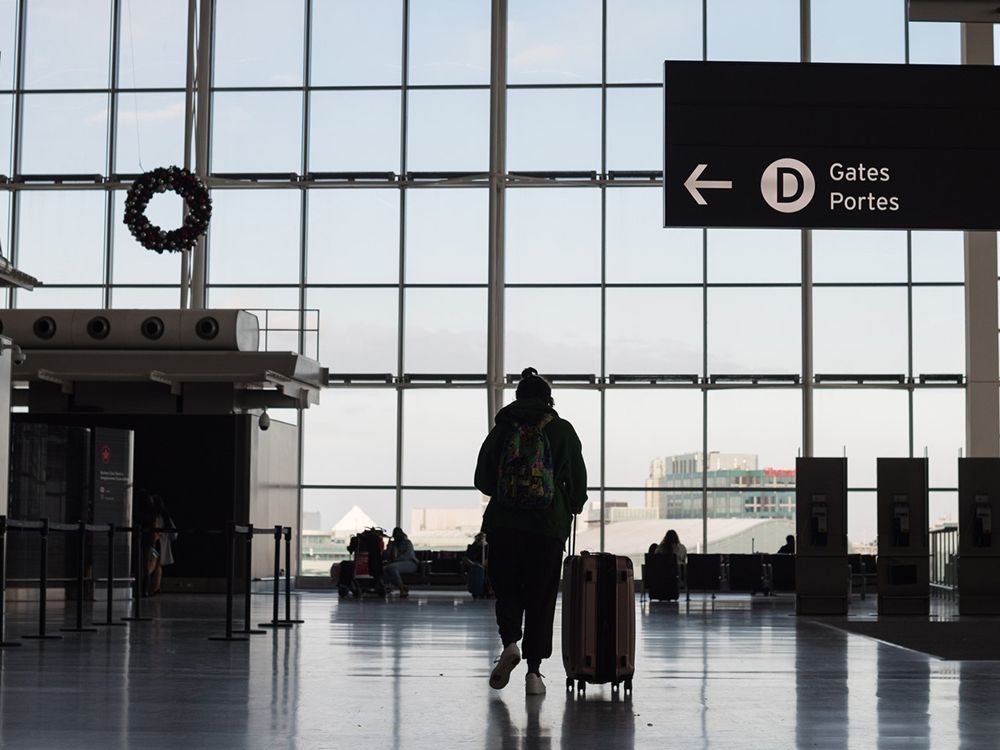

Alcohol consumption is on the rise among Gen Zers, according to a British research firm the surveys drinking patterns in internationally. Previous research painted the cohort as more likely to abstain.

Drinking among Gen Zers is on the rise in many major markets throughout the world, including Canada, according to

IWSR

, a British-based firm that analyzes drinking patterns.

Previous research about Gen Z alcohol consumption that painted them as abstainers. For example, in 2020, researchers from the

University of Michigan

reported that abstention was steadily increasing among college-age Americans. In August 2024, a

Gallup study

found 65 per cent of U.S. adults under 35 considered drinking unhealthy.

An IWSR

research survey

conducted in March has turned that picture of Gen Z on its head. “The idea that Gen Z drinkers are moderating significantly more than other generations isn’t backed up by the data in our latest survey,” says Richard Halstead, IWSR’s COO Consumer Insights.

IWSR interviewed 1,374 Canadian adults in total for its spring survey. This number was determined to be a representative sample of the national population of adults of legal drinking age in Canada.

The percentage of Canada’s Gen Z legal drinking-age (LDA) population who reported drinking rose from 56 per cent in spring 2023 to 69 per cent in spring 2025.

How is drinking more defined by IWSR?

Gen Z drinking more “is based on what we call ‘participation rate,’” says Halstead. To be considered a drinker, respondents must have had one or more drinks in the past six months, he wrote to National Post in an email.

The recent survey found a third of Canadian Gen Z drinkers reported that the last time they drank it was at a bar, restaurant or club — significantly higher than Canadian drinkers as a whole. Nearly four in five reported consuming spirits, which is higher overall than all drinkers in Canada.

How does Gen Z compare to the other generational cohorts?

The Canadian data for the other generational cohorts shows a small increase among Millennials: 71 per cent (April 2023) to 75 per cent (March 2025). However, alcohol consumption fell for Gen Xers (77 per cent in 2023 to 76 per cent in 2025) and Boomers (76 per cent in 2023 down to 72 per cent in 2025).

IWSR defines these age cohorts as follows: Gen Z (18−27); Millennials (28−43); Gen X (44−59); Boomers (60+).

What is contributing to increased Gen Z alcohol consumption?

Increasing income played a role in alcohol consumption among Gen Z drinkers, says Halstead. “As more Gen Z LDA drinkers approach their mid-twenties, their disposable income is increasing, and that generally correlates with increased alcohol purchases.”

IWSR research says cost-of-living pressures have meant most consumers focused more on buying essentials and staying home, rather than going out drinking.

Otherwise, Halstead says the impact of demographic factors such as gender and household income has “been fairly consistent in Canada.” Instead, he adds, an increasing number of people are reaching legal drinking age within Gen Z, boosting consumption for that cohort.

How does Canada’s Gen Zs compare to this cohort elsewhere?

Gen Z alcohol consumption is also growing in other key markets. In the U.S., consumption among Gen Z consumers rose from 46 per cent to 70 per cent over the same time-period. In the U.K. it jumped from 66 per cent to 76 per cent, in India up from 60 per cent to 70 per cent and in Australia up from 61 per cent to 83 per cent.

Our website is the place for the latest breaking news, exclusive scoops, longreads and provocative commentary. Please bookmark nationalpost.com and sign up for our daily newsletter, Posted, here.
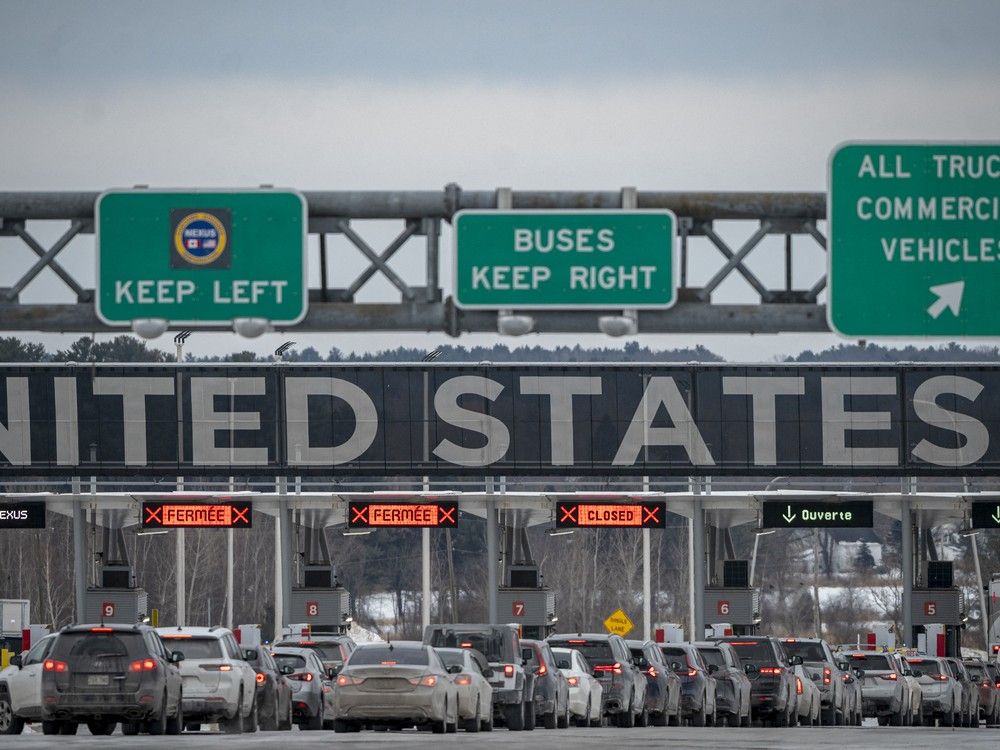

Two officers with a U.S. task force, one of them a special agent with the Drug Enforcement Administration and the other a detective with the New York City Police Department, had flown to the Czech Republic for the anticipated takedown of a man wanted in an extraordinary, politically sensitive murder-for-hire case.

The U.S. officers knew exactly when their target was to arrive in Prague on a flight from India and had given all the details to Czech authorities. International paperwork requesting the arrest and extradition to New York had already been sent for their wanted suspect: Nikhil Gupta, 53, known as Nick.

On the afternoon of the flight’s arrival, the two Americans were told they’d have to wait in a police van parked at Terminal One of Vaclav Havel Airport while the operation went down.

An hour passed before the Czechs returned to the van, escorting Gupta in handcuffs. The Czech’s told the Americans they had waited for Gupta to collect his luggage before arresting him, the DEA agent wrote in his report on the incident, typed 12 days later. Gupta’s arrest, around 6:30 p.m., on June 30, 2023, went smoothly, he wrote.

The agent’s report went on to present a neat and tidy account of the arrest of Gupta on alarming charges that ignited international headlines and diplomatic tensions, most dramatically in the United States, India, and Canada, three countries being drawn into a firestorm.

Gupta stands accused of having a key role in an alleged conspiracy plotted from within an Indian intelligence agency to kill a dual Canadian-American citizen who leads a Sikh organization, as well as other related targets in Canada and the United States.

The murder plot in the U.S. was allegedly underway when Hardeep Singh Nijjar, an outspoken Canadian Sikh separatist, was shot dead outside a temple in Surrey, B.C.; then prime minister Justin Trudeau said “credible allegations” point to the involvement of the Indian government in the hit, setting off a harsh diplomatic dispute between Canada and India. Dozens of diplomats were kicked out of both countries.

The U.S. prosecution of Gupta later alleged that Nijjar was on the list of targets that Gupta was farming out to underworld hitmen.

Nijjar was a close associate of the alleged target in America, Gurpatwant Singh Pannun. Both Nijjar and Pannun have been harsh critics of the Indian government and leaders in the Khalistan movement, seeking to create a separate homeland for Sikhs in India’s Punjab region.

That global backdrop makes this case — and Nikhil Gupta — particularly important and extraordinarily sensitive.

A recent flurry of insider documents rarely seen publicly were filed in federal court in New York, including the DEA agent’s report on Gupta’s arrest that relays a startling confession made by Gupta to the American officers in the back of the Czech police van while driving from the airport after his arrest.

As should be expected in a high-stakes case swirling with global intrigue, spies, and gangland figures, the emerging evidence also presents competing accounts and opposing claims that say the airport arrest, and so much more, are much messier and far sneakier than first declared.

Inside the Czech police van at the Prague airport, DEA Special Agent Mark Franks wrote afterwards in his internal report, he and Jose Sandobal, a New York detective assigned to the joint taskforce, spoke with Gupta as they travelled to a detention facility.

The Americans didn’t have long with Gupta. It was a short drive from the airport to the holding facility, less than 15 minutes, by Franks’ account.

“I want to cooperate. Take me to America and I’ll cooperate right now with you guys,” was the first thing Gupta said to the Americans, according to Sandobal’s account, given much later.

Gupta told them he was travelling in Uzbekistan in 2021 and when he returned to India, he was told he was scheduled for a court appearance for a robbery, according to Franks’ written account.

“Gupta did not understand why, as he was not in the country, but he said this was not unusual as India’s police force is corrupt. Gupta began asking friends to see if they knew anyone who could assist him in clearing his name,” the report says. Gupta then received a phone call from someone named “Amanat” who said he could clear Gupta’s name. The two men met in New Delhi, shortly after, the report says.

“Gupta said Amanat wore a mask, hat, glasses and long sleeve t-shirts.”

Amanat asked Gupta to have someone in New York City killed. If it was a surprising request, Gupta didn’t seem to show it. He told the man he knew someone who could do it, the report alleges he said.

Gupta showed the Americans the contact number for Amanat on his phone and said he knew little else about him. Included in court filings is a photograph, taken inside the police van, of a phone being held open to the contact information screen for “Amanat” showing two numbers.

He said Amanat would probably go into hiding when he hears about Gupta’s arrest.

The agent said they read Gupta his rights as they travelled.

Gupta then wrote his name on the rights advice consent form but before signing it asked to make a phone call. The Americans said they couldn’t authorize that as he wasn’t in U.S. custody. He insisted he would sign only if he could make a phone call. And he didn’t sign it.

“Gupta started very cooperative but later soured; don’t think he liked me,” Sandobal later said in a debrief with U.S. prosecutors, according to a court filing.

According to documents filed in court, there was a text chat group going on after the van ride between Franks, Sandobal, and two Assistant U.S. Attorneys on the prosecution team.

“Is he talking?” prosecutor Camille L. Fletch asked.

“We had limited time,” Franks replied. “He did but he was playing f–k f–k games. We think he will ultimately cooperate. We can fill you in more.”

– – – – –

At the time of Gupta’s arrest, an indictment against him was filed in U.S. federal court in the Southern District of New York. It was sealed by court order and an arrest warrant was secretly issued on June 13, 2023. Then U.S. officials requested assistance from Czech authorities to arrest him.

The Americans knew exactly what Gupta’s travel plans were because they had secretly helped to arrange them in an undercover sting.

Not long before his arrest, Gupta had reached out to a man he thought was a Colombian cocaine supplier, according to unproven allegations in the U.S. indictment and other documents filed in court.

The two men had a past. Since 2016, they had periodically discussed — but never pulled off — various guns and drugs deals. The man he spoke with was an unusually experienced snitch. He has worked as a paid DEA informant for more than 25 years.

During one of their chats in May 2023, Gupta allegedly asked the man if he knew someone who could carry out a hit on a lawyer who lives in New York. Gupta’s belief he was dealing with a professional narco seemed so deep, he gave the man the name of the intended target and told him he could pay $100,000 for the hit, court documents allege.

The snitch, of course, said he would reach out to his contacts in the New York underworld and see. The informant then introduced Gupta to a man who purported to be the Colombian’s New York hitman, but was really an undercover police agent.

Gupta allegedly used WhatsApp, an encrypted messaging app, to arrange for a courier to deliver $15,000 as a retainer for the hitman in Manhattan. The courier and the hitman met in the afternoon on June 9, 2023.

Gupta later added a specific time frame for the job: either shortly before or after the official visit to the United States by India’s prime minister in June 2023.

He also allegedly said this was the first of four hits; he would have more work for the purported killer with more targets, some of whom lived in Canada.

On June 18, 2023, came shocking news from British Columbia: Nijjar had been shot and killed outside a Sikh temple. The Indian-born citizen of Canada had been designated a terrorist by India three years earlier for his support of taking up arms in a fight for a separatist Sikh state.

The next day, Gupta allegedly sent a video clip of the Nijjar killing to the undercover agent and said the victim was one of the intended targets he had previously mentioned.

“This strongly suggests that Gupta and/or persons working with Gupta were responsible for the associate’s murder,” a U.S. letter sent to the Czech government to support Gupta’s extradition says. “Gupta also told the undercover agent that the murder of the intended victim should now be carried out as soon as possible, without regard to collateral consequences such as potential harm to civilian bystanders or any resulting protests or political upheaval.”

On a recording made by the undercover agent, Gupta allegedly said: “Hit the target … no restrictions, no limitations.”

After the victim, Pannun, was killed, Gupta would then give the hitman the next targets, including some in Canada, the U.S. prosecutors allege.

The hitman arranged to meet with Gupta in the Czech Republic to continue the discussions and planning.

– – – – –

The story purportedly told to the American officers in the back of the Czech police van expanded the U.S. investigation and allegations in the probe.

Amanat, said to have recruited Gupta into the plot, was allegedly identified as Vikash Yadav, 39, who U.S. officials describe as a government employee and a senior field officer with India’s foreign intelligence service, called the Research and Analysis Wing.

Last October, U.S. Justice Department officials announced murder-for-hire and money laundering charges against Yadav for directing the foiled assassination plot.

The case is “a grave example of the increase in lethal plotting and other forms of violent transnational repression targeting diaspora communities in the United States,” then U.S. assistant attorney general Matthew Olsen said at the time.

Yadav is accused of providing information on the intended target, including his home addresses, phone numbers, and other identifying information. He also allegedly was involved in arranging the $15,000 advance.

So far, Yadav remains out of reach. He is on the FBI’s Most Wanted list.

Those formal allegations match the alleged confession attributed to Gupta by the DEA agent in his report.

What isn’t in the agents’ reports of Gupta’s arrest in Prague is what Gupta later reported: that he was physically grabbed by half a dozen Czech police as he walked toward an airport exit and forced into a room at the airport, where he was strip searched, questioned, and ordered to unlock his phones, which he did.

His lawyers say Czech police put him in the back of a dark SUV with tinted windows between the two Americans as seven Czech officers piled inside with them. He said the Americans didn’t identify themselves as law enforcement officials and didn’t inform him of his rights, including his right to silence.

Nonetheless, Gupta said through his lawyers in court documents, whatever he said in the van, it wasn’t the incriminating story of being recruited into a murder conspiracy by Amanat.

“At no point during the car ride did Mr. Gupta say anything about having someone in New York City killed,” his lawyers said.

His lawyers claim the ride in the police van was much longer than the 10 to 15 minutes the DEA said it was. Gupta said he heard a Czech officer tell the Americans they would take the “long route” to give them added time.

His lawyers point to time stamps on one of Gupta’s phones — about 75 minutes passed between Gupta giving the password to Czech police and the DEA agent photographing Amanat’s contact information on it in the van.

Lawyers also point to group chat messages between the DEA officers and prosecutors, in which the agent said Gupta was playing “f–k f–k games.”

“That is not the text one would expect from an agent who had allegedly … just obtained an outright confession,” Gupta’s lawyers argue.

About two and a half hours after his arrest, Gupta was formally interrogated by Czech authorities. No Americans were present, Czech officials told Gupta’s Czech defence lawyer.

He wasn’t as talkative as he might have been in the police van. The meeting lasted just 10 minutes, most of which was taken up by him being read his rights with the help of an interpreter.

Gupta told the Czechs he came to Prague for the weekend, “solely for leisure.”

“At present, I have nothing to declare, as I do not even know what charges have been brought against me. Once I am informed of the charges, I will respond to them accordingly,” was his statement which he signed.

At his court hearing the next day, he was provided a Hindi interpreter, although he also speaks English.

After consulting privately with his lawyer, Gupta made a statement to the court: “I consent to extradition to the United States and request that the court allow me to purchase a plane ticket at my own expense so that I may travel to the United States as soon as possible to testify before the court that issued the arrest warrant. I will cooperate with U.S. authorities.” The court rejected his request to go on his own.

He also, according to the minutes of the hearing by Czech authorities asked the Prague court officials to “notify my son in India and my son in Pakistan, as well as the Indian Embassy in Prague, about my placement in pre-trial detention.”

That part in the documents, about him having a son in Pakistan, and elsewhere a reference to him also having a Pakistan passport, grabbed attention in India and Pakistan, two neighbouring countries with strained and often hostile relations. Gupta denied in court appeals that he has Pakistan travel documents.

He also told a court in Prague that he disputed the U.S. allegations.

He said he had no reason to order a murder and didn’t have the money to pay someone $100,000. He also, however, offered a $500,000 surety for his release on bond pending the outcome of his extradition hearing. He said false accusations may have been motivated by jealousy of his success by someone who wanted to ruin his name and reputation.

He then fiercely fought against extradition, appealing repeatedly until his options expired. One of his complaints was that the prosecution against him had political and “semi-military” interests.

He complained of the impromptu interview in the back of the police van by the Americans, alleging they took his photo and photos of his travel documents and accessed his phones without respecting his rights. His lawyer called that “unlawful” conduct. In a Czech high court ruling, it is also said that in one of Gupta’s appeals, he claimed he was “under an obligation, imposed by the Indian intelligence service, not to discuss the matter in any way.” He seemed a man full of contradictions.

Documents speak of him having a global footprint, including a six-month visa for Switzerland, real estate deals in Dubai, travels through Asia and Europe, and trips to Los Angeles and New York.

A court in Prague ordered him extradited to the United States last year and he arrived in New York, where he was taken into U.S. federal custody, in June 2024. He has pleaded not guilty.

It is unusual for this insider information and level of detail in an ongoing criminal case to be available publicly, especially this early in the process.

Lawyers for Gupta in New York, however, have asked the court to suppress some evidence and “unlawfully obtained” statements, and to dismiss one of the three charges, that of money laundering.

In support of that motion, last month they submitted reams of documents into the public court record, including the evidence sent to Czech officials to support the U.S. request for Gupta’s arrest, and more sent to rebut Gupta’s challenges to his extradition.

Gupta’s lawyers say the money laundering charge should not be prosecuted as it was not included in the original indictment presented to Czech authorities when they requested Gupta’s arrest. It was an additional charge included in a superseding indictment sent later. The charge expands the sentencing range Gupta faces from a 10-year maximum to 20 years.

Gupta’s lawyers’ motion also complains that Czech police violated Gupta’s rights by interrogating him and obtaining the passwords for his phones, and then sending the contents of the phones to U.S. authorities. They want any evidence from the phones to be excluded from Gupta’s prosecution.

They also claim the police van interrogation by U.S. officials was an “unconstitutional interrogation” because Gupta was not informed of his rights prior to the questioning. They want any statements he might have made to be excluded from evidence as well.

Those issues are being argued in a New York courtroom.

Lawyers for Gupta and for Pannun did not respond to requests for comment on the case and the allegations. Officials at India’s High Commission in Canada could not be reached for comment prior to publication deadline.

• Email: ahumphreys@postmedia.com | X:


Minister of Energy and Natural Resources Tim Hodgson rises during Question Period in the House of Commons on Parliament Hill in Ottawa, Friday, June 20, 2025.

OTTAWA — Natural Resources Minister Tim Hodgson did not commit to scrapping Trudeau-era climate policies that Alberta and Ontario want to see gone but said that the newly adopted major projects bill could pave the way to doing so “over time.”

Speaking in Calgary on Friday, Hodgson said the new legislation — which enables the cabinet to quickly approve projects of national interest by overriding federal laws — will empower the government to act swiftly and any legislative fine-tuning would come later.

“We need to move quickly. What the… One Canadian Economy Act does is allows us to move quickly under this framework,” he told reporters in a press conference.

“It allows us to do all the things we need to do in one centralized place, under one set of timelines, and to take those learnings to go back and deal with the other acts over time.”

Hodgson was indirectly responding to

a letter from the environment ministers of Alberta and Ontario,

made public this week, who requested that the federal government repeal the Impact Assessment Act, clean electricity regulations and emissions cap, among others.

In their letter, Rebecca Schultz and Todd J. McCarthy argued that those climate policies, implemented by the prior Liberal government, would “undermine competitiveness, delay project development, and disproportionately harm specific provinces and territories.”

“Canada is poised to be an economic superpower, but achieving that potential depends on strong, constitutionally grounded provincial authority over resource development and environmental management,” they wrote to Environment Minister Julie Dabrusin.

Dabrusin, who met with her provincial and territorial counterparts in the Northwest Territories this week, said that the environment remains a priority for Prime Minister Mark Carney even as his government is getting ready to fast-track major projects.

“We know it’s very important to Canadians that as we do this, we’re doing it properly and that we’re doing it in a way that actually supports a strong country as a whole that takes into account our nature and the like,” she said in a press conference on Wednesday.

“So, I very much see it at the centre of the work that I’m doing and that we’re doing as a government,” Dabrusin added.

When asked in Calgary if the federal government would be able to attract private investments dollars with the current climate policies in place, Hodgson said Carney was “focused on results” and that the government would “figure out how to get there.”

Hodgson said there is already a lot of interest in building projects of national interest but remained relatively tight-lipped when asked about the possibility of a new pipeline.

Alberta Premier Danielle Smith has been pushing for a pipeline, built in tandem with Pathways Alliance, that would bring crude oil from Alberta to the Port of Prince Rupert, British Columbia. So far, B.C. Premier David Eby said that is unlikely to happen.

Hodgson said there has been “lots of discussions with various folks” around that project and that it is “something that’s being worked on actively.”

But he declined to spill more details about the lengths the government would go to to build a new pipeline. “In my previous life, I did a lot of deals. I never did a deal with the press. Those conversations are going on. They’re going to happen in private,” he said.

“When there’s a transaction, we’ll let everybody know, but you should assume that everyone is focused on trying to figure out how to make that happen.”

The major projects bill, known as C-5, was

adopted in the Senate on June 26

and given royal assent the same day, becoming law, after being fast-tracked through the House of Commons.

The rushed passage of the bill raised concerns from environmental groups, who fear the government will bypass environmental safeguards to approve projects, and Indigenous peoples, who said the government did not properly consult with them beforehand.

To alleviate some of those concerns, Carney has pledged to hold summits during the summer with First Nations, Inuit and Métis peoples.

But there is more work to do, and more problems may arise in the process.

Hodgson said the federal government will be negotiating with each of the provinces and territories over the next six months to ensure major projects will be subject to one single environmental assessment, not two, in order to speed up the adoption of the process.

The perspective of possibly overriding provincial laws and regulations could prove to be a issue in Quebec and British Columbia, where 42 per cent and 32 per cent of people oppose the idea, according to recent polling from the Angus Reid Institute.

National Post

calevesque@postmedia.com

Our website is the place for the latest breaking news, exclusive scoops, longreads and provocative commentary. Please bookmark nationalpost.com and sign up for our newsletters here.


Prime Minister Mark Carney addresses the crowd during the Canada Day festivities in Ottawa in the nation's capital on July 01, 2025.

OTTAWA — The Carney government is poised to post a massive deficit of more than $92 billion during this fiscal year, a new report from a well-respected financial think tank projects, almost double what was forecast just a few months ago by a non-partisan arm of the government.
 

The report, from the C.D. Howe Institute, also forecasts deficits of more than $77 billion a year over the next four years, also huge increases over what had been expected.

If this fiscal year’s deficit turns out to be as hefty as projected, it would be the second-largest deficit in Canadian history, topped only by the $327.7 billion shortfall from the pandemic year of 2020-21.

Alexandre Laurin, C.D. Howe’s vice-president, said the federal government’s fiscal situation is getting worse. “The picture is definitely not pretty.”

The think tank attributes much of the government’s declining fiscal health to increased spending on defence and other items, the economic effects of the Trump tariffs, cuts to personal income tax and the GST for first-time homebuyers, and the elimination of the digital services tax.
 

Based on the most current and largely optimistic variables, the report says, federal deficits will remain above $71 billion during each of the following three years and in the fiscal year 2028-29 will be greater than three times what the government itself forecast in its most recent federal budget.
 

But more likely, the report says, it will likely be a bit worse than that because the report’s authors say that they’re skeptical that all of the government’s plans to increase revenue through promised higher fines, penalties and savings will actually occur.
 

“It is widely accepted that Canada’s economy is at a critical crossroads,” the C.D. Howe economists write. “So are Canada’s finances – beyond the economic drag of high deficits and rising debt, it is unfair to pass these burdens on to the current young and future generations.”
 

But the most recent federal budget was now well over a year ago. The government took the highly unusual step this year of waiting until the fall to release its annual budget, more than half-way through the fiscal year.
 

The report’s authors – William Robson, Don Drummond and Alexandre Laurin – call on Ottawa to improve its accountability by sharing its revenue and spending figures with taxpayers.
 

The gloomy fiscal forecast bolsters the argument that Canadian government spending at th
e federal, provincial and municipal levels is going from bad to worse.
 

Just four months ago, the Parliamentary Budget Officer projected that the federal deficit would fall to $50.1 billion during this fiscal year, a slight improvement over the $61.9 billion shortfall recorded in 2023-24. The PBO also said at that time that federal deficits would continue to fall in the ensuring years, unless there were new measures to cut revenue or increase spending.
 

The C.D. Howe report criticizes the government’s decision to wait until the fiscal year is more than half over before releasing its budget “Delaying a budget until the fiscal year is more than half over is never good, but Canada’s current high-spending trajectory makes this delay especially bad.”
 

Ottawa is making costly commitments, the report explains, without showing key numbers to the public such as how much more tax it expects to gather, the extent of its new spending and what the increased debt will mean for interest payments.
 

The report also makes policy recommendations to address the “runaway spending, perpetually high deficits and debt and vulnerabilities Canada should avoid at a time of severe economic challenges.” 
 

C.D. Howe suggests that the Liberal government eliminate or forgo some of its costly platform promises, make deeper cuts in its operating spending, substitute some revenue from less harmful taxation such as the GST, and cut federal transfers to provinces and territories.
 

The report also criticizes the government’s plan to separate its operating and capital spending. “The large deficits projected in this update cannot be downplayed or disguised by dividing the budget into two new categories.”
 

National Post

Our website is the place for the latest breaking news, exclusive scoops, longreads and provocative commentary. Please bookmark nationalpost.com and sign up for our daily newsletter, Posted, here.

The Law Courts building in Vancouver is home to the B.C. Supreme Court.

A British Columbia man whose Tesla was once found to contain more than $47,000 in cash and two kilograms of cocaine while he himself was carrying a bag containing 15.6 kilograms of fentanyl has been sentenced to 11 years in prison for trafficking.

Jason Thomas Howard Conrad, age 45, pleaded guilty on June 4 to two counts of possession for the purpose of trafficking, contrary to the Controlled Drugs and Substances Act. One count was regarding fentanyl, the other cocaine. Justice Andrew Majawa sentenced him on June 17.

Court documents show

that Conrad had been under surveillance since January 2023. Police targeted a home on McLeod Court in the Vancouver suburb of Richmond, B.C., and confirmed that it was being used to produce fentanyl.

Conrad was first seen at the home on Jan. 25, 2023, and again in February, when he arrived empty-handed and left with a heavy backpack. Police followed his Tesla to an underground parkade in nearby Coal Harbour, where he met with an unknown male.

In March, Conrad was at the McLeod property again, this time leaving with a heavy reuseable shopping bag. He was arrested, and the bag was found to contain 15.6 kilograms of fentanyl that was 68 to 79 per cent pure. He was also carrying three cellphones.

His Tesla was also searched, and $10,000 cash in $100 bills was found in the centre console. In the trunk was another $37,800 in a shopping bag, and two one-kilogram bricks of cocaine that were 92 to 94 per cent pure. Also found in the Tesla were two more cellphones and a conducted energy weapon described as a jolt stun baton.

Conrad was arrested on March 21, 2023, but was released without charges. A year later, a warrant was issued for his arrest. He was arrested again on March 19, 2024, and has remained in custody since then.

In his ruling, Justice Majawa noted that Conrad had “a very challenging upbringing,” adding: “Both his parents suffered from addiction, and by age 11 he and his siblings had been apprehended by the Ministry. I am told that Mr. Conrad did not have a stable home after his apprehension, and it appears that he was separated from at least some of his siblings at this time. Mr. Conrad’s first engagement with the criminal justice system occurred at around age 11 when he was caught breaking into the group home where his sisters were residing.”

Justice Majawa also noted Conrad’s “significant criminal history” of 28 convictions: four counts of breaches, 10 of property offences, four of assaults or offences against a person, five driving offences and five counts for drug offences. The last stretched from 2001 to 2008, and  “related to the trafficking of cocaine from British Columbia to New Brunswick and the purchase of multi kilograms of cocaine as part of a larger trafficking conspiracy,” he said.

The justice noted that, in addition to the record being an aggravating factor in the latest case, so too was the amount and purity of fentanyl.

“The quantity of fentanyl in this case can be fairly described as enormous,” he said. “The 15.6 kilograms of fentanyl was of a high purity and it would almost certainly have destroyed a very large number of lives.”

He added: “The highly pure fentanyl that Mr. Conrad was involved in trafficking would typically be diluted with cutting agents; and considering that the typical user would consume approximately 0.1 grams of fentanyl at a time, the number of doses to be produced from the nearly 16 kilograms of fentanyl that Mr. Conrad was involved in trafficking is nothing short of staggering. The pernicious effects of cocaine that erode the health and safety of Canadian communities should also not be overlooked, and the profit that would arise from the eventual street-level sale of the quantities of cocaine and fentanyl in this case are of a very significant magnitude.”

Conrad was sentenced to 11 years for the possession of fentanyl for the purpose of trafficking, and seven years for the possession of cocaine for the purpose of trafficking. The sentences are to be served concurrently. In addition, Conrad received a credit of 683 days for the 455 days spent in pre-sentence custody, at a rate of 1.5 days for each day in custody, to be applied against the 11-year sentence.

Justice Majawa concluded: “Mr. Conrad, I wish you success in your journey towards your rehabilitation.”

Our website is the place for the latest breaking news, exclusive scoops, longreads and provocative commentary. Please bookmark nationalpost.com and sign up for our daily newsletter, Posted, here.


Amit Peled and his cello.

A cellist’s quick trip from Baltimore to Montreal turned into a two-day odyssey after Air Canada refused to let him bring his instrument on the plane. This despite the fact that he had paid full fare for a second seat specifically for the instrument, crafted in 1695 and worth over a million dollars, to fly with him.

Amit Peled is an

Israeli-American cellist

, conductor and teacher who has performed at venues around the world and released more than a dozen recordings including The Jewish Soul and Cellobration.

He’s no stranger to travelling by air with his instrument propped up in the seat next to him. “Almost every week of my life,” he told National Post in an interview “That’s what I do. In the last 30 years, I’ve been traveling all over the world.”

This week he was on his way to the Orford Music Festival near Sherbrooke, Que., where he was due to perform and also teach a class. But after driving from his home in Baltimore to the airport in Philadelphia, he was told by an Air Canada employee that his cello couldn’t board the plane.

He was flabbergasted. He’d had issues before — often because his musical companion doesn’t have a passport — but they’ve generally been solved at the airport.

“However, this time in Philadelphia, the lady at the counter said: You can’t bring the cello with you because it was not named the right way in the computer.”

He said the employee informed him that she could make a change but that it would cost $700. “And I said, well, I already paid a full-price ticket. And here it is. It’s right here in front of you. You can see it. And she said: I’m really sorry.”

Peled decided to go through to the gate anyway, hoping someone there would help him, but he was given the same answer. “Everybody goes on the plane, and I told her, I’m going to miss my flight, and thus I’m going to not be in the festival where I have to teach and play,” he said. “She didn’t care. And then, of course, the door closed and I missed the flight.”

Angry and stranded, Peled shot a short video in front of the gate, showing his cello and suitcase and explaining his plight.

“I have a full class of students waiting for me there from all over the world,” he says in the video, posted to social media. “I have my cello ticket, my ticket, and just here at the gate I’m denied entrance because the procedure to ride for the cello was not right on the computer.”

He ends by saying: “I’m really really sorry and I hope to be able to teach the students on Zoom. I can’t perform on Zoom but I’ll teach them on Zoom. I’m going home and never ever ever fly Air Canada again.”

Peled then called his daughter to pick him up for the two-hour drive back to Baltimore. But as he got home, his phone rang. “I get a phone call from somebody from Air Canada, and I’m shocked. And that person is in charge of customer service, calling me,” he said.

The airline had seen the video. “Can you believe that? I mean, it’s the first time in my life, honestly, that social media did something good for me. I was absolutely shocked. I mean, it’s not just somebody from Air Canada. It’s like the guy who runs customer service calling me, and he says: I’m really sorry, but I saw the video, and first I want to apologize.”

Peled was then booked on the same flight the following day. “And the same people, the same people that were there the day before: ‘Hello, Mr. Peled, how are you and the cello? Here are the two tickets.’ I went on the plane, no problem. And I’m here now in Canada.”

Not every airline experience has been so bumpy. Peled recalled a trip on Austrian Airlines several years ago, during which he fell asleep leaning on his cello, and missed dinner. When he woke up he went to the galley and asked the attendant if he could still have a meal.

“And she looks at me says, ‘Oh, you’re the guy with the cello.’ And I said yes. She said, ‘Well, if you bring the cello here and play for us, I’ll give you dinner from business.’ So I did.” The attendant took a video of the performance, and Amit later

uploaded it to YouTube

.

National Post reached out to Air Canada. “We continue to review this matter as it appears the cello was not booked correctly using our process for transporting instruments in the cabin, creating uncertainty about ticketing at the airport,” a spokesperson said. “Unfortunately, we were not able to recover in time for the flight, but we did reach out to this customer immediately afterward to rectify the situation.”

In addition to bringing instruments as checked baggage or (for smaller instruments) carry-on, Air Canada

has a policy

by which travellers may purchase a second seat at a 50 per cent discount. (Peled didn’t know about this, and paid full price for his second ticket.) The airline notes that “seated” instruments must be shorter than 162.5 cm (64 inches) and lighter than 36 kg (80 pounds).

Also, instruments cannot travel first class. “If you are seated in Air Canada Signature Class offering Executive or Classic pods, your musical instrument will, for safety reasons, be placed in Premium Economy or Economy Class,” the airline says.

But that’s better than not travelling at all. Last December, another cellist, Britain’s

Sheku Kanneh-Mason, had a similar problem with Air Canada on a flight from Cincinnati to Toronto. Barred from boarding, he had to cancel a concert at Koerner Hall in Toronto, and reschedule it in June. He too had purchased two tickets, after his flight with another airline was cancelled, but Air Canada requires 48 hours notice for such arrangements.

The New York Times

covered that incident

and reached out to Peled at the time for comment. His response: “Welcome to the club.”

Our website is the place for the latest breaking news, exclusive scoops, longreads and provocative commentary. Please bookmark nationalpost.com and sign up for our daily newsletter, Posted, here.

The Canada Revenue Agency.

A B.C. woman was brought back from the dead, so to speak, after she had been reportedly declared deceased by the Canada Revenue Agency.

June Miller said the mistake, although now resolved, caused her some distress as she tried to figure out how to navigate the situation,

CTV News reported

. The 65-year-old resident of Vancouver shared her story in a Facebook post on June 24.

“After losing my husband, I was wrongfully declared dead by the CRA,” she said.

“They cut off my pension, deactivated my SIN, and now I have no income, no access to support, and just $7 to my name. I can’t even prove I’m alive without documents I can’t afford.”

I never thought I’d have to write something like this.

After losing my husband, I was wrongfully declared dead by the…

Posted by Juna Miller on Tuesday, June 24, 2025

She decided to start a

GoFundMe fundraiser

, entitled “CRA Took My Life on Paper — Now I Can’t Pay to Stay Alive.” She raised $870 after less than a week and posted an update on the webpage thanking people for their support.

“Your kindness and support have reminded me that there is still humanity in this world, even when the system fails,” she wrote. “Because of your generosity, I’ve found the strength to keep fighting to reclaim my life after being wrongly declared dead by the CRA. Every single dollar you gave is helping me survive while I work to fix what should never have happened.”

In an emailed statement to National Post, CRA spokesperson TJ Madigan said the agency cannot comment on specific taxpayer situations. However, in general, he said, situations like these could happen for a variety of reasons, such as human error, a miscommunication from another government department, or an error made when a return is filed on behalf of a deceased person.

“Despite safeguards to ensure accuracy of its files, on very rare occasions an individual may erroneously be declared deceased with respect to their records with the Government of Canada,” the statement continued.

“The CRA regrets these types of situations and is committed to providing the best possible service to Canadians. We take this seriously and we continue to validate and analyze these errors, and implement changes as necessary, to ensure that, wherever possible, they are prevented.”

The agency said it understands that such errors can be “alarming” and have “financial implications.”

Last September, after the death of her husband Giorgio, Miller mailed his final tax return in May,

Daily Hive reported

. She included her own tax return in the same envelope.

She said she received a notice of assessment back from the CRA — but it was addressed to “the estate of the late June Miller,” per CTV News. When she went to verify her account online, she said she was locked out.

“So I called them and they said, ‘You’re deceased.’ I said, ‘You’re talking to me! Deceased, what are you saying? You have to change that.’ And they said, ‘Well, there’s a process. You have to prove that you’re alive,’” she told CTV News.

She provided Service Canada with documents in person that confirmed her identity, as well as a letter from her doctor. She said she was told that, even though she had just retired, she may not receive Canada Pension Plan payments while she was declared dead.

She said she also had to apply for a new social insurance number because her old one had been deactivated.

On Monday, the CRA and Service Canada called Miller to tell her the

issue was resolved

. She told CTV News she was “resurrected.” She expects to receive pension payments by the end of this month.

“In situations where it is determined that an error was made, the process is to simply remove the date of death from the taxpayer’s file and the taxpayer’s CRA account is restored,” per the CRA’s statement.

“This also reverses any letters or changes to taxes or benefits, which were issued in error. The reversal is immediate, though it can sometimes take a few weeks for letters to be re-issued and adjustments to be recalculated.”

Our website is the place for the latest breaking news, exclusive scoops, longreads and provocative commentary. Please bookmark nationalpost.com and sign up for our daily newsletter, Posted, here.