
LP_468x60
on-the-record-468x60-white

Homeland Security Secretary Kristi Noem. She says airline travellers will no longer have to remove their shoes while going through security.

The U.S. Transportation Security Administration (TSA) is easing off the policy requiring travellers to take their shoes off for separate scanning while going through the airport security.

Kristi Noem, Secretary of the Department of Homeland Security (which oversees the TSA) made a formal announcement about the move during

a press conference

at Ronald Reagan Airport in Washington on Tuesday evening

.

She said that as of today, the TSA will “no longer require…every single person” to remove their shoes when going through security checkpoints. She said this is an “immediate nationwide rollout” of passengers being able to keep their shoes on.

The aim of this policy shift, said Noem, is “to improve the travel experience” while continuing to “keep travellers safe.” She referred to several comments the administration has received expressing displeasure over the “no-shoes” policy. And listed several marquee events that the U.S. will soon be hosting, as reasons for doing so, including the Olympics in Los Angeles, World Cup soccer matches, and events geared toward celebrating the 250th anniversary of America’s independence.

Has airport security technology improved?

Noem says security technology has evolved significantly since the shoes-off policy was implemented almost 20 years ago. She said the TSA has “evaluated the technology at every airport … It’s been honed and it’s been hardened.”

She expressed confidence in the multi-layer security now in place, which involves different types of screening individuals, including the relatively new “Real ID,” which encompasses any type of federally recognized identification. Meanwhile, she says the department is looking at even more advanced technology, for example, machines that would result in not having to interact with airport security officers.

Meanwhile, it should be noted that any passenger who triggers the alarm in the scanner or magnetometer, will still be required by the TSA to take their shoes off for additional screening.

What U.S. airports are affected?

So far, reports

airwaysmag.com

, the changes have been noticed in Baltimore/Washington (BWI), Fort Lauderdale (FLL), Cincinnati/Northern Kentucky (CVG), Portland (PDX), Philadelphia (PHL), and Piedmont Triad (GSO) in North Carolina. It says passengers at Los Angeles (LAX) and New York’s LaGuardia (LGA) have also shared stories about being waved through while keeping their shoes on.

Will this happen in Canada?

National Post reached out to Transport Canada, the government arm responsible for establishing regulations regarding security screening procedures for flights originating in Canada. The question was put whether a similar move is contemplated for Canadian airports. A response has not yet been received.

Why were travellers required to remove their shoes in the first place?

The TSA established this unpopular requirement in 2006. It came into effect shortly after terrorist, Richard Reid, subsequently known as the “shoe bomber” tried to detonate a liquid

explosive in his shoe

while aboard an American Airlines flight from Paris to Miami.

“As luck would have it, he encountered technical issues and was unable to carry out the attack,” states a report by the

International Institute for International Terrorism

.

After that taking off your shoes at security became just another part of flying. “While most people never liked it, they grew accustomed to it,” writes

airwaysmag.com

.

Some American travellers were already able to keep their shoes on. They had to go through a background check and pay an US$80 fee to belong to the

TSA’s Trusted Traveler PreCheck

program. Noem says many fliers will still want to retain their membership in the program for the continued ease it provides in checking through security.

The new shift in boarding protocol was first reported by a travel blog,

Gate Access

. The blog stated that a memo went out to TSA officers across the country last week, setting out the change for all passengers in all screening lanes at many airports across the country.

Earlier Tuesday, several media outlets such as the

New York Times

reported on the move as it unfolded in airports across America, citing unnamed sources. White House Press Secretary Karoline Leavitt responded to the reports on X, calling it “big news” from the TSA/Department of Homeland Security.


Our website is the place for the latest breaking news, exclusive scoops, longreads and provocative commentary. Please bookmark nationalpost.com and sign up for our newsletters here.


Vehicles arrive at the ticket booths at the Tsawwassen Ferry Terminal in Delta, BC, May, 14, 2025.

A recently formalized policy by B.C. Ferries is restricting damaged electric vehicles from boarding its vessels, leaving some islanders feeling frustrated and stranded.

British Columbia leads the country in electric vehicle adoption, with more than one-fifth of all new light-duty passenger vehicles sold in B.C. in 2023 being EVs. However, as of the end of June, a B.C. Ferries policy — based on Transport Canada rules from 2014 — forbids vehicles with damaged or defective batteries from boarding ferries.

“While the approach has been in place for years, we’ve seen an uptick in these cases (of damaged EVs boarding the ferries) and wanted to ensure our teams and customers have clear direction,” said B.C. Ferries in a statement.

B.C. Ferries says that these restrictions are in place for safety reasons.

But since B.C. Ferries serves more than two-dozen islands, and with so many people owning electric vehicles — sometimes on islands with few options for repair — it has people feeling trapped.

Johnathan Vipond, the owner of Salt Spring Island Towing, says that on average, he tows disabled hybrid or electric vehicles off the island, one to four times a week, and that there’s a huge concentration of these vehicles on the island of less than 12,000 people.

Vipond says customers haven’t been happy since the policy change. With ferries no longer an option for damaged EVs, the only way to transport them off the island is by barge, a costly alternative. While there are some mechanics on the island with EV training, Vipond notes they’re still limited in what repairs they can perform.

“I stand with B.C. Ferries, I totally agree with them … but the problem is, all these vehicles are already on the Gulf Islands, I don’t want to say too little too late, but it’s like, they’re already here,” said Vipond.

Despite the policy’s existence, damaged EVs have regularly been transported on these ferries in the past without an issue, according to residents of the islands.

The B.C. Ferries policy change states that any EVs with major damage — including exposed batteries, fluid leaks, or wiring issues — are not to be transported. Similarly, any EV that cannot be driven on its own, such as those being towed, are not allowed on ferries.

For vehicles with minor damage, such as cosmetic issues, drivers first need to talk with a terminal attendant, who then speaks with the captain, who then watches while you drive on and decides whether it’s allowed.

In 2019, B.C. passed the Zero-Emission Vehicles Act (ZEV Act), which was meant to drive up sales of zero emission vehicles, to ensure provincial greenhouse-gas reduction targets are met. As a result, B.C. has the highest percentage of EVs being sold in any province or territory, in the last few years.

While Vipond agrees with these new restrictions in terms of safety concerns, he thinks there needs to be other options to get these vehicles off the island. As of right now they don’t qualify as dangerous cargo shipping, but Vipond says that could be an option, among others. He says it all comes down to B.C. Ferries and Transport Canada, and whether they are willing to work with these towing companies.

B.C. Ferries understands that this policy poses challenges for people, especially at a time where electric vehicle adoption increases, but they believe it is in the interest of everyone’s safety that these cautions be applied. That being said, they are willing to look into safer alternatives to transport these vehicles in the future.

“As this area evolves and we gather additional data we will look at whether safe, regulatory compliant options to transport damaged EVs can be introduced in the future,” B.C. Ferries wrote in an emailed statement. “In short, EVs can still travel with us. The updates are about safety and clarity, not restrictions on everyday drivers.”

Hon Chan, the B.C. Conservative MLA for Richmond Centre, says he places the blame squarely with the provincial government, not B.C. Ferries.

“They (the government) asked everybody to get an EV, however now if there’s a problem, it’s almost impossible to get it fixed if you’re not located in the mainland,” Chan told National Post in an interview.

Chan says that around two months ago he

introduced a private member’s bill

to amend rules pushing B.C. towards an all-EV light-duty vehicle market by 2035. He where he pointed out that in certain areas in B.C., especially the more rural ones, don’t have proper facilities to repair EVs. However, his bill was voted down.

“They always create some problems, and now scramble to find a solution,” said Chan.

Chan himself is an owner of an EV, and says that he’s concerned that as his vehicle gets older, it could break down, and then would be stranded on the island, which he says is the concern for many British Colombians.

He says that this is something that should’ve been discussed beforehand, because now people are left to deal with the repercussions themselves.

”Why aren’t we looking at the solutions before?” said Chan.

Jim Standen and Tom Mitchell are residents of Salt Spring Island, and have both owned EVs for around 10 years. The recent policy change has them both feeling a little concerned and frustrated as well.

Standen says that although EVs are reliable cars, there’s a large number of them on Salt Spring Island, and many of them are old, increasing their chances of breaking down. And in terms of repairing an EV, on the island there are not many options.

Dangerous goods ferries come to the island once a week, and there’s also a marine landing craft. Mitchell says that the landing craft could potentially be used to help transport damaged EVs, but something needs to be done.

“It cannot be left standing like that. It’s a dead stop to EV growth,” said Mitchell.

Our website is the place for the latest breaking news, exclusive scoops, longreads and provocative commentary. Please bookmark nationalpost.com and sign up for our daily newsletter, Posted, here.

A copy of the report by the Dinah Project on sexual violence committed on Oct. 7, 2023 by Hamas is displayed by a journalist before a ceremony presenting the report to Israel's first lady Michal Herzog in Jerusalem, Tuesday, July 8, 2025.

A groundbreaking legal report presented Tuesday to the wife of Israel’s President provides the first comprehensive framework for prosecuting Hamas terrorists for the systematic use of sexual violence as a weapon of war during the October 7 attack.

“The report presents the truth as it is – shocking, painful, but vital and necessary,” said First Lady Michal Herzog upon receiving the document in Jerusalem. “On behalf of all those who were harmed, we are committed to continuing to fight until their cry is heard everywhere and until justice is done.”

The 84-page report — written by Professor Ruth Halperin-Kadri, retired District Judge Nava Ben-Or, and Col. (res.) Attorney Sharon Zaggi-Pinhas, former Chief Military Prosecutor of the Israel Defense Forces — represents the most extensive legal and factual documentation to date of sexual crimes committed during the assault on Gaza border communities. Produced as part of “The Dinah Project,” the report analyzes dozens of sources to establish clear patterns of systematic sexual abuse.

The findings reveal consistent patterns of sexual violence committed by Hamas terrorists both at murder scenes and in captivity. The report documents gang rape, public humiliation, forced nudity, genital abuse, and direct shooting of intimate body parts. It also includes accounts from abductees describing repeated sexual assaults, threats of “forced marriage,” and attempts to erase sexual identity, including attacks on men.

According to the report, investigators found recurring descriptions of half-naked female bodies, sometimes tied to buildings and trees, alongside reports from personnel identifying casualties from military bases. The authors conclude unequivocally that Hamas used sexual violence as part of an overall plan of terror, collective humiliation, and dehumanization of Israeli society.

Several Palestinian terrorists captured by Israel have admitted to interrogators they raped and sexually abused women.

‘I’m not really free’

The presentation included testimony from Ilana Gritzewsky, a survivor of 55 days in Hamas captivity who spoke about her experience of sexual abuse. “On October 7, I was in my house, in Kibbutz Nir Oz, with my partner, Matan [Zangauker]. And suddenly – noise. Explosions. Screams. Then a door was broken open. We were kidnapped,” Gritzewsky recounted.

Describing her ordeal, she continued: “When I woke up, I was half-naked. Surrounded by terrorists. They beat me, touched me. I didn’t know what happened to my body in those lost minutes. But my soul already knew: nothing would be the same.”

Addressing her ongoing trauma, she said, “I was released after 55 days. But I’m not really free. Because true freedom only exists when no one has to go through what I went through.”

The report’s authors stressed that sexual violence in conflict is systematic rather than random.

“We say this in a clear voice: sexual violence in conflict is a weapon. It is not random, it is not directed only at the individual and it is not done without direction from above. It is time for the international community to treat this phenomenon as such,” Halperin-Kadri stated.

The Legal Framework

The legal framework proposed in the report calls for applying joint criminal responsibility to all participants in the October 7 attack, even those who did not directly participate in rape. The authors argue that shared responsibility should apply because participants “knew, could have known, or took part in the use of sexual violence as part of the attack.”

Joint criminal responsibility (JCR), also known as joint enterprise or common purpose, is a legal doctrine used in international criminal law and some domestic legal systems to hold multiple individuals responsible for a crime committed by a group, even if not all participants physically carried out the criminal act. It has played a role in war crimes, crimes against humanity, and genocide cases in Rwanda and Yugoslavia.

“When individuals join a coordinated, ideologically-driven assault aimed at destruction and dehumanization, they bear responsibility for the full range of atrocities committed as part of that assault — even if they did not personally commit each specific act or were not aware of its commission by a co-perpetrator,” the report said.

The report outlined several next steps, including calls for the Israeli government to apply shared responsibility doctrine in prosecuting terrorists, appeals to the UN Secretary-General to blacklist Hamas for using sexual violence as a weapon of war, and the development of new legal protocols for handling sexual violence cases in armed conflicts.

“This is a groundbreaking report, not only in the scope of the findings, which all existed but we knew how to look at them and put them together, but also in the tools it provides to the legal world,” said Halperin-Kadri. “Our goal is to show how leaders and perpetrators of crimes can be prosecuted even when there is no direct evidence against each of them individually.”

The report also aims to influence international proceedings, including potential cases before the International Criminal Court in The Hague and UN human rights institutions. Unlike other post-attack summaries, this document provides what the authors said is a concrete legal roadmap for prosecution based on established international and Israeli law doctrines.

At least 1,180 people were killed, and 252 Israelis and foreigners were taken hostage in Hamas’s attacks on Israeli communities near the Gaza border on October 7. Of the 50 remaining hostages, around 30 are believed to be dead.

Our website is the place for the latest breaking news, exclusive scoops, longreads and provocative commentary. Please bookmark nationalpost.com and sign up for our daily newsletter, Posted, here.


Image shared by RCMP showing 'military-style' exercises in which the accused allegedly took part.

Active members of the Canadian Armed Forces are among four people facing terrorism charges in Quebec for allegedly plotting an anti-government militia.

At least three of the four are accused of taking “concrete actions to facilitate terrorist activity,” including a plot “to forcibly take possession of land in the Québec City area,” according to the RCMP. The alleged target was not specified.

“They took part in military-style training, as well as shooting, ambush, survival, and navigation exercises. They also conducted a scouting operation. A variety of firearms, some prohibited, as well as high-capacity magazines and tactical equipment were allegedly used in these activities,” the RCMP said in a written release Tuesday morning.

Marc-Aurèle Chabot, 24, of Québec City, Simon Angers-Audet, 24, of Neuville and Raphaël Lagacé, 25, of Québec City, face a charge of knowingly facilitating a terrorist activity, with a maximum sentence of 14 years in prison.

Matthew Forbes, 33, of Pont-Rouge, faces charges including possession of firearms, prohibited devices and explosives, and possession of controlled items. Forbes faces charges under the Defence Production Act, that regulates military procurement and access to military or national security goods, suggesting some of the weapons or equipment involved were sourced from Canada’s Department of national Defence.

 This photo shared by the RCMP shows military-style weapons seized during a search of the an area in Quebec City.

The RCMP deems it a case of ideologically motivated violent extremism.

The investigation has stretched more than a year and includes searches in the Quebec City area in January 2024 in which 16 explosive devices, 83 firearms and accessories, about 11,000 rounds of ammunition, nearly 130 magazines, four pairs of night vision goggles and military equipment were seized, the RCMP said. Among the weapons seized were military-style assault rifles.

Photos released by the RCMP show a group of seven people in military camouflage armed with rifles in an apparent shooting and tactics training exercise in what looks like a rock quarry.

One of the accused allegedly created and administered an Instagram account to recruit new members to the anti-government militia. The Instagram account featured photos of people in combat fatigues and guns outdoors, some of the scenes are in winter, surrounded by snow, others in summer or fall in woods, and at least one appears to be inside a vehicle.

 Screenshot of the alleged instagram the militia used as a recruiting tool.

Other charges against the accused in this case include the possession of prohibited devices, transfer of firearms and ammunition, careless storage of firearms, possession of explosives and possession of controlled items.

The investigation was led by the Integrated National Security Enforcement Team (INSET), considered a top-tier response to fighting domestic extremism and terrorism. INSET units are led by the Royal Canadian Mounted Police but are made up of officers from multiple law enforcement agencies who are specially trained.

The RCMP describes the mission of INSET as tracking, deterring, disrupting and preventing criminal activities of terrorist groups or individuals who pose a threat to Canada’s national security.

 High-capacity magazines seized by the RCMP following a year-long investigation into a Quebec-based anti-government militia.

The four charged are scheduled to appear today in court in Québec City. None of the allegations have yet been proven.

The RCMP refused to specify which of the accused are active Canadian soldiers but it seems it includes the three younger men facing the terrorism-related charges, at least one of which has his occupation listed on a Facebook profile as a Canadian Armed Forces member.

The RCMP nor the Canadian Forces have responded to requests for more information.

The federal government previously said Ideologically Motivated Violent Extremism (IMVE) “draws from a complex range of grievances and ideas from across the traditional ‘left-right’ ideological spectrum.”

Canada’s national security and intelligence community focusses on four subcategories of IMVE: xenophobic violence, anti-authority violence, gender-driven violence, and other grievance-driven and ideologically motivated violence.

While Canada’s armed forces have fought against terror groups and are a part of Canada’s national security at home and abroad, a few Canadian soldiers have previously been linked to extremist violence and terror plots.

Former army reservist master corporal, Patrik Mathews, of Beausejour, Man., was sentenced in 2021 in the United States for his role in what the FBI calls a plot to trigger a “race war” in the United States alongside a white supremacist group called The Base. His co-defendant, U.S. army veteran.

In 2020, Corey Hurren, a serving member of the Canadian Armed Forces, carrying four guns and anger over the COVID-19 pandemic and restrictive measures, rammed his pick-up truck through the gates of Rideau Hall where Justin Trudeau, prime minister at the time, was living. He said he wanted to arrest Trudeau but was arrested.

Toronto’s Steven Chand was a former Canadian soldier convicted in the al-Qaida inspired Toronto 18 terror plot in 2006.

• Email: ahumphreys@postmedia.com | X:

Our website is the place for the latest breaking news, exclusive scoops, longreads and provocative commentary. Please bookmark nationalpost.com and sign up for our daily newsletter, Posted, here.


ADDED CAPTION INFO: Woman on left (holding

“I didn’t want to kill anybody,” Eric Nagler says. “And I was afraid if I did go in that, because I was a pacifist, I’d get sent to the front lines and shot. So anyway, I dodged the draft.”

Nagler, who is now 83, grew up in Brooklyn, New York, in the 1940s. Like millions of young American men, he was draft-age when U.S. ground troops first set foot in Vietnam in 1965. “My brother came home from university one day and said that he was a conscientious objector and explained what that was,” Nagler says. “I thought it was a terrific idea.

“I claimed conscientious objection, and I had a student deferment, and we went back and forth like that … Finally, the notice came for me to appear at Whitehall Street on a particular day, and instead I drove across the Vermont border into Canada.”

After settling down in Toronto, Nagler opened a music store and went on to become a beloved children’s television personality on

The Elephant Show

and Eric’s World. He’s written three books for children and released countless songs, with titles ranging from You Got a Place Where You Belong to Sneezes. From time to time, he even plays the sewerphone — a saxophone-shaped instrument made of plumbing pipes.

Nagler isn’t bashful about his choice to leave the United States. “Down there in the States, we were called draft resisters, but it was fine up here just to be a draft dodger,” he recalls. “We’re not very good at war, up here in Canada.”

Over 50,000 Americans came to Canada in opposition to the Vietnam War, based on estimates from John Hagan’s book, Northwest Passage (2001). This was the largest exodus of political migrants from the U.S. since The American Revolution. Some hoped to avoid the draft, others deserted after months or years of service, still others left for ideological reasons. Though they weren’t subject to the draft, Hagan writes that more women migrated than men, “most as partners and spouses, and some on their own.”

An elaborate vocabulary emerged in the 1970s to categorize these American newcomers: they were dodgers, evaders, deserters, resisters, émigrés, exiles or plain-old immigrants. Each term came with its own baggage. “Deserter” carried a sense of national betrayal; “resister” had a more sympathetic ring to it.

These categories concealed the messier and more personal realities of coming to Canada. The National Post spoke to nine U.S. war resisters about their journeys north. Their lives had no unifying narrative. Many were highly educated and went on to make lasting contributions to Canadian politics and industry. Some were musicians, painters and authors who immersed themselves in the growing counterculture of the 1960s — be it in the Yorkville neighbourhood of Toronto or in the mountain towns of British Columbia. The war resisters changed Canada and Canada changed them.

As Canada grows estranged from our neighbours to the south, an age-old question comes back into focus: What sets us apart? Prime Minister Mark Carney says it is our ability to

recall the names of the two puppets

on CBC children’s television show Mr. Dressup. Pierre Poilievre, in a strangely American twist, says it is the

“protective arms of a solid border”

and the promise that “hard work gets you a great life.”

Jeff Douglas

, in his renowned rant from a 2000 Molson Canadian beer ad, says it is our belief that “a toque is a hat” and “a chesterfield is a couch.”

The resisters of the Vietnam era had better answers. Maybe it takes years of living between countries to see the gap fully. Or maybe there was something about that era — a time of national reckoning for both countries — that made our differences easier to discern. Decades later, their stories offer some clarity on Canada’s place in an ever-tumultuous continent.

Eric Nagler is the first to reassure Canadians searching for a sense of national difference. “The United States government is run by a bunch of big-time criminals, and that’s more true now than it ever has been,” he says.

“In Canada, it’s run by small-time criminals. You know, you can get along here.”

How the war began

In 1945, Ho Chi Minh declared Vietnam’s

independence from France

. His speech began with a quote from the U.S. Declaration of Independence. “All men are created equal,” he proclaimed. “They are endowed by their Creator with certain unalienable Rights.”

France reimposed colonial rule less than a month after Ho’s address, beginning a brutal conflict known as the First Indochina War. President Harry Truman, worried about the spread of communism in Indochina, committed vast amounts of American money and arms to the French military. By the middle of 1954, the United States was paying about 80 per cent of French war costs. And so the conflict became, as many Vietnamese still refer to it,

“the American war.”

In the 1950s and early 1960s, U.S. leaders tried to conceal their interest in Indochina. Nancy, a resident of the B.C. Interior and the daughter of a U.S. air force officer, lived in Arizona at the time. “There was a little box in the daily news, and it told you how many American advisers there were in Vietnam,” she recalls. (Nancy wanted to use only her first name to speak more openly.) “Those numbers grew, day after day after day, and then pretty soon the numbers started to not make sense.” By the end of 1964, around 23,000 American advisers were stationed in Vietnam.

Nancy wasn’t the only one to question why South Vietnam needed so much advice. Newspapers, activists and concerned citizens began to interrogate the ballooning U.S. presence in Vietnam as the costs of war grew higher. Graham Greene’s

The Quiet American

(1955) satirized America’s failing efforts to fly under the radar. Alden Pyle, a fictional economic adviser from America, is murdered in Vietnam, and his family receives a cable stating that he died a soldier’s death. “The Economic Aid Mission doesn’t sound like the Army,” Graham’s narrator remarks dryly. “Do you get Purple Hearts?”

Soon enough, the war came out of the shadows. In March 1965, the first U.S. troops landed in Vietnam; by 1969, there were more than 500,000 of them. Mark Atwood Lawrence, a history professor at the University of Texas, notes that public support for the war was initially high. Many young Americans rallied around the flag, driven in part by cultural memories of the Second World War.

Yet support faded as the conflict dragged on and “more body bags came back, with no apparent end in sight,” explained Lawrence in an interview with the Post. Then U.S. president Lyndon Johnson failed to provide a clear rationale for the conflict, and Lawrence says that the public “had a really hard time seeing how American interests were really at stake in a fight so far away from American shores.”

Americans took to the streets to express their discontent. About 35,000 rioters

attacked the Pentagon in 1967

, climbing walls and throwing rocks and vegetables at military officers. The

Moratorium to End the War in Vietnam

— a 1969 demonstration of over 500,000 people — was one of the largest antiwar protests in U.S. history.

Corky Evans, a resident of the B.C. Interior, recalls attending several protests while growing up in California. “I saw the police breaking people’s heads and blood everywhere and hundreds of cops,” says Evans. “My younger brother went to prison that day for the crime of stopping to throw up as people were being beaten up in front of him.”

The antiwar movement was part of a larger wave of political upheaval in the U.S.

The Cuban Missile Crisis of 196

2 led thousands of Americans to convert their basements into nuclear fallout shelters. The 1965 Civil Rights Act banned racial segregation in public spaces, sparking violent backlash against African-Americans.

Medgar Evers

was assassinated in June 1963, then John F. Kennedy in November 1963, then Robert F. Kennedy and Martin Luther King Jr. in 1968.

“It was just all falling apart,” Evans recalls. He eventually migrated to British Columbia in 1969 out of opposition to the war.

Between country and conscience

“Sarge, I’m only 18, I got a ruptured spleen, and I always carry a purse,” sang

Phil Ochs

. “I’ve got eyes like a bat and my feet are flat, and my asthma’s getting worse.”

The Draft Dodger Rag was released on Ochs’ 1965 album I Ain’t Marching Anymore, and was later covered by Pete Seeger, Tom Paxton and John Denver. The song takes on the persona of a “typical American boy” who faces his local draft board. Ochs satirizes the vast and creative set of excuses that American youth used to evade the draft, from allergies to epilepsy to working at a defence plant.

The song was popular because it spoke to a newly surfacing truth: a lot of American boys weren’t going to Vietnam. Students could defer conscription for years at a time, as could some married men. Draftees could also gain medical exemptions if they had a letter from their private doctor, notes Christian Appy, history professor and author of Working-Class War: American Combat Soldiers in Vietnam (1993). Well-informed draftees found ways to feign colour blindness, mental illness, homosexuality and so on. “There were actually people who paid to have braces put on to get an exemption,” Appy says in an interview with the Post.

The wealthier the family, the more likely their sons were to benefit from exemptions and deferrals. According to Appy’s Working-Class War, about 80 per cent of Americans who served during the Vietnam War were from working- or lower-class households.

To assuage cries of class discrimination, newly elected president Richard Nixon introduced

the lottery draft in 1969

. Each day of the year was written on a piece of paper and placed inside a plastic capsule. The capsules were randomly drawn out of a jar on live television. If the first day chosen was July 19, then each draft-eligible man born on that day would have Lottery No. 1. The draftees were then called for service in order of their lottery number. It was a “bingo-style system for choosing which 20-year-olds were going to be sent away to die for commercial and political agendas,” recalls Fred Rosenberg, a U.S.-born resident of Nelson, B.C.

Draft calls grew higher when the war expanded and Nixon abolished both occupational draft deferments and deferments for fathers. As evading the draft legally grew more challenging, thousands of young men began eyeing the northern border.

Draft dodgers faced criticism from all directions. A hawkish political right viewed them as traitors to their country. Many of the dodgers’ own parents had served in the Second World War and valued military service as a national tradition. Genevieve, a resident of Nelson, B.C., is the daughter of a Vietnam-era draft dodger. When her father dodged the draft, his parents contacted the FBI and asked for their son to be tracked down.

Even among vocal antiwar activists, draft dodgers were often shunned for taking the perceived easy way out. Students for a Democratic Society, one of the largest antiwar groups in the U.S., urged Canadians to stop supporting Toronto’s draft counselling centres. When Joan Baez performed at a 1969 concert in Toronto, she urged the draft dodgers to return home. “What (the draft dodgers) are doing is opting out of the struggle at home,” she declared. “That’s where they should go, if only to fill the jails.”

These criticisms were tinted by the growing understanding of draft evasion as a class privilege. “These people from the elite don’t go (to Vietnam),” said Richard Nixon in a taped conversation about draft dodgers. “They’re all f-cking running (to Canada) … I don’t buy that repression issue.”

Jack Todd, a deserter from Western Nebraska, spoke to this class dynamic more gently. The draft dodgers “had gone to University of Wisconsin or Berkeley or something,” he said. “They came up with their VW Beetle and their girlfriend or wife, and they already had a job lined up and all that.”

It’s true that the dodgers were disproportionately from college-educated households, according to Frank Kusch’s book All American Boys (2001). It was often at university that men heard about the possibility of migrating north. And, in 1967, Canada introduced a points-based immigration system, which gave priority to migrants with more education, work experience and connections.

Yet the image of the draft dodger conjured by the American public — of a rich, long-haired Ivy League graduate fleeing to downtown Toronto in cowardly avoidance of his national duties — isn’t quite right. For one thing, they weren’t all rich. Many upper-class men were able to gain exemptions earlier in the process, rendering a move to Canada unnecessary.

While knowledge of Canada was limited early in the war, migration became easier after the publication of Mark Satin’s

Manual for Draft-Age Immigrants

in 1968. The manual instructed dodgers on how to rack up enough points to get across the border, how to avoid criminal punishment and how to find housing in major Canadian cities. (“Most Canadians do not live in caves or igloos,” the manual advises.) It sold almost 100,000 copies.

Satin also personally counselled hundreds of draft dodgers in Toronto. “We got huge numbers of middle-class and lower middle-class kids who were very idealistic,” he recalled in a recent interview with the Post. “They didn’t really have options.”

For another thing, the dodgers’ opposition to the war extended beyond a personal unwillingness to fight. “There’s been a real tendency over the years to hang a lot of importance on the draft,” notes Mark Lawrence, the professor from the University of Texas. “I think sometimes that’s a way of dismissing the movement. I wouldn’t say, of course, that it was never a factor, but it’s probably been exaggerated to some extent as a motivator for antiwar activism.”

Even for those who did flee out of personal fear, it’s hard to see their decision as a cowardly one. The draftees’ options were to go overseas for two years to fight in a war they considered destructive and futile, commit identity theft and go underground or end up in federal prison. Conscription presented an impossible choice between country and conscience.

Life in Resisterville

On Halloween of 1969, Corky Evans and his wife ended up in a hospital in Duncan, B.C. “It was midnight, and her water had broken. So we had to go to the hospital to have this baby, but we had no money and we didn’t have a doctor.”

They drove to the hospital and left their two other children in the car parked outside. Evans’ wife was admitted to the maternity ward. “I went and stood at the front door waiting for somebody to come and ask me for money,” Evans remembers. “Because that’s how I had learned the health system works where I had grown up. I’m standing there in the dark. It’s now 1 in the morning or something.”

A nurse came by to ask Evans what he was doing. “My wife is upstairs having a baby, and I’m standing here waiting to talk to somebody about how I’m going to pay,” said Evans. The nurse told him to go upstairs and take care of his wife, and that they would talk about payment the next day.

“I just stood there in the dark. I started to cry. I had never had such an experience in my life where somebody in the health-care system cared more about the well-being of the people than the money.”

Evans migrated from California to Vancouver Island, where he worked as a longshoreman. After a brief stint in the Northwest Territories, his family settled down in the West Kootenays of British Columbia. He would go on to become an MLA for the Nelson-Creston district and hold several cabinet positions in the provincial NDP.

By the late 1960s, the Kootenays had become a hub for the draft dodgers. Many arrived in Vancouver before travelling to the B.C. Interior, where land was cheap and a vibrant counterculture was emerging. The Doukhobors, a Russian religious minority exiled in the early 20th century, helped provide the migrants with housing and jobs. The epicentre of American migration was Nelson, B.C., a small community tucked beside the West Arm of Kootenay Lake. The town became known as “Resisterville.”

The draft dodgers changed Nelson. Professor Kathleen Rodgers, author of

Welcome to Resisterville

(2014), writes that the influx of war resisters was akin to “dropping the population of a large university campus into a remote rural community.” The dodgers took on key roles in local anti-logging protests, made Nelson a nuclear-free zone and, decades later, protested the Iraq War. Many started or led communes — Harmony’s Gate, the Reds and the Blues, and the New Family. One war resister, Jeff Mock, began running a local tofu business.

Of course, Nelson changed the draft dodgers, too. While many dodgers moved to the B.C. Interior with a back-to-the-land aesthetic, they generally came from large cities and lacked the skills to maintain crops or build homes. The residents of Nelson helped the migrants adjust to a rural lifestyle; they wrote books and started community organizations to teach farming and construction.

Other dodgers embarked on spiritual journeys. Nancy and her husband migrated to B.C. after receiving a draft letter in the mail. They travelled through the province, visiting an ashram and eventually joining the New Family commune. Nancy didn’t cede herself fully to the counterculture. “I was a mother at that point, so I wasn’t going to go winging off in the crazy land,” she says. “But I was interested in the spiritual stuff a lot … I taught myself how to meditate, and then, you know, I became part of that world.”

An extremely forgettable city

“Toronto itself is in many ways an extremely forgettable city, sprawled out on the flat north shore of the lake, with endless ticky-tacky suburbs unrelieved by scenery or imagination,” wrote Canadian historian Douglas Myers in a contribution to Satin’s Manual for Draft-Age Immigrants. Myers assures readers that Toronto is nevertheless “a city of many small important pleasures — quiet tree-lined neighbourhoods, clean streets, good schools.”

By the late 1960s, Toronto had become a mecca for Americans on the lam. While some dodgers enjoyed the remoteness of the B.C. Interior, others were ambitious young professionals who preferred an urban setting.

Toronto was an especially appealing choice because the government of Vancouver — the other large, English-speaking city in Canada — had grown openly hostile to war resisters. “I don’t like draft dodgers,” declared Vancouver mayor Thomas Campbell in 1970, “and I will do anything within the law to get rid of them.” He proposed that the 1914 War Measures Act (which allowed the Canadian government to suspend civil liberties in wartime) be used against “any revolutionary, whether he’s a U.S. draft dodger or a hippie.”

Several organizations cropped up to assist American migrants in Toronto with housing, legal aid and social support. The largest group was the Toronto Anti-Draft Programme (TADP), founded in 1966 by the Student Union for Peace Action (SUPA) at the University of Toronto. They resettled hundreds of dodgers in Baldwin Village, Yorkville, the Annex and other neighbourhoods surrounding the university.

“Within a few months, I had a list of literally 200 Torontonians who were housing (the draft dodgers),” recalls Mark Satin, a key organizer in the TADP. “People were constantly calling the office asking if they could help.” Not all of them were stereotypical leftists who opposed the war, Satin notes. “Many of them were simply people who had empathy for the situation.”

The draft dodgers integrated quickly into the free-spirited, eclectic youth culture of 1960s Toronto. “A popular pastime in Toronto is visiting Yorkville Village to spot the beatniks, oddballs, and Bohemia,” said CBC reporter Larry Bondi

in a 1965 broadcast

. “But now the name of the game for visitors is to spot the American draft dodger.”

Some resisters remained highly engaged with the antiwar movement while living in Canada. Jack Colhoun grew up in a patriotic family in Upstate New York. He deserted the U.S. army, where he had served as a second lieutenant, and moved to Toronto for roughly a decade.

“We didn’t want to forget the war, and we didn’t want the American people to forget the war,” Colhoun says. He became an editor for Amex Canada, a magazine for American war resisters in Canada. Amex sought to publicize the stories of Americans fleeing the war, and worked closely with antiwar veterans’ organizations.

Other resisters kept a deliberate distance from wartime politics. Bob Griesel migrated in 1969 from Tacoma, Wash., to Edmonton. He wasn’t selected for military service, but left the U.S. after seeing the war’s effects on his draft-age peers.

“My friends who I went to high school and college with who’d been drafted were starting to return from their tours of duty,” Griesel recalled in a recent interview. “We caused them to be mentally disfigured and physically disfigured and many of them ruined for life. A couple of them I knew ended up dying from leukemia due to Agent Orange. And my question was, ‘Why did we do that to those young men, for that purpose, at that time? What was the point?’”

Griesel chose to integrate fully into Canadian life, putting memories of the war behind him and avoiding American TV channels. The people of Edmonton “didn’t give a darn where I came from,” he says. “Nobody up there was talking about the war.”

The Last Resort

“There was this marvellous house,” recalls Mark Satin. “It was huge. It was painted army green, ironically enough, and there were two guys sitting in front who looked kind of weird.”

It was autumn of 1968, and that army green house was in the middle of Vancouver, a few blocks from False Creek. Satin, a recently migrated resister from Texas, signed the lease for $75 a month. He and his friends converted the house into a hostel for war resisters from the U.S., and called it “The Last Resort.”

Satin estimates that somewhere between one-third and one-half of the men at The Last Resort were deserters. While dodgers left before joining the military, deserters were people who had served for some time before parting ways. “Many of (the deserters) were in terrible emotional shape,” Satin remembers. “When they came here, some of them were virtually silent. Some of them just sort of mumbled.”

For seven months, Satin cooked, cleaned and washed bed sheets for The Last Resort’s guests. He served dinner every night at 6:30 p.m. — spaghetti three nights a week, chicken livers with rice or beef Stroganoff on the other days. “I knew that they needed structure, whether they were middle-class or working-class or deserters,” he said. On Sunday nights, they would have open houses where Vancouverites could buy dinner for 50 cents and meet the resisters.

Running The Last Resort was gruelling work. Satin personally counselled each migrant, and estimates the hostel served over 1,000 people altogether. Many struggled to adjust. One deserter, after being accidentally woken up, “immediately leaped up in his karate crouch, ready to kill the person who’d woken him.” Another became dependent on hard drugs and had to be forcibly removed.

A few months in, Satin left the hostel unsupervised for a weekend while visiting a friend. He returned to find the house’s inhabitants huddled in blankets by an unlit stove, eating Wonder Bread. “It was kind of funny, but it was horrible, too,” Satin says. “These were 18-, 19-year-olds who really didn’t know how to cope.”

According to Hagan’s Northwest Passage, there were more than 432,000 desertions during the Vietnam War, fewer than one per cent of which happened on the battlefield. No written law in Canada discriminated against deserters, and Hagan notes that Canada had taken in many war resisters from Hungary and Czechoslovakia before the war in Vietnam.

Yet in 1966, Canada’s immigration department covertly instructed officers to deny admission to all deserters. The U.S. wasn’t pressuring Canada to turn the deserters back — at least officially — but Hagan suspects the Canadian government worried about future retaliation.

It didn’t help that almost 70 per cent of Canada’s immigration officers were military veterans, based on a report cited in Hagan’s Northwest Passage. Many veterans believed deserters were shirking their obligations and looked for ways to deny them entry. Points-based immigration, implemented in 1967, attempted to standardize admissions; still, the points rubric was extremely vague, giving officers significant discretion over who was kept out.

This de facto exclusion of deserters became clearer to the public over time. In February 1969, five undergraduates from York University pretended to be American deserters and tried to enter Southern Ontario from the United States. Four out of five were denied entry before even filling out an application.

Pierre Trudeau’s Liberal government faced mounting pressure to admit deserters more freely — from antiwar groups and the United Church of Canada, but also from Canadians wary of American control. “Since when is it a function of the Canadian government to enforce U.S. laws respecting the draft?” wrote one Canadian in a letter to Allan MacEachen, the immigration minister at the time.

In May 1969, the federal government announced that draft dodgers and deserters would be admitted to Canada without consideration of their military status. Whether someone was a draft dodger was “an irrelevant question,” Trudeau declared in a

U.S. news conference.

“We also know that a number — perhaps a superior number — of Canadians come to the United States to join the U.S. Army,” he noted with his signature half-smile, “and there may be some solace in that.” By Hagan’s account, the number of male, draft-age landed immigrants from the U.S. tripled in the five months between April and August 1969.

​Deserters faced a unique set of challenges in Canada. While dodgers tended to be college-educated, most deserters were lower- and working-class Americans who had been forced to serve because they lacked the information, connections or wealth needed to evade the draft. When they moved north, they were less likely to have friends or family to rely on, and their lack of formal education made it hard to find work.

“Living in exile wasn’t easy,” says Jack Colhoun, a military deserter who came to Canada in June 1970. “I learned in August of 1970 that my mother had cancer … My mom was my only living relative. We had to go through her struggles with cancer and eventual death. I couldn’t even go to her funeral without risking being arrested and put in jail.”

President Jimmy Carter

pardoned the dodgers in 1977

, but he didn’t pardon the deserters. Many were unable to return home for fear of military prosecution, even decades after the war. As recently as 2006, a British Columbia resident who had deserted the U.S. Marines in 1968 was arrested and held in an American military jail when he tried to visit Nevada for vacation (he was ultimately discharged after a week-long detention).

Perhaps most significantly, deserters often bore permanent physical or psychological injuries from the war. Alice, a woman from the Kootenays, recalled her husband’s decision to leave the U.S. in the early 1970s. He had served in Vietnam as a medic and helicopter repairman in 1969 and witnessed graphic acts of violence.

After returning to a disintegrating America and being told he had one more year to serve, Alice’s husband fled to Canada. “He had some desperate experiences (in Vietnam),” Alice says, “and just retreated into this place where he could no longer handle confrontation of any kind. He felt he had no other choice but to leave.” Alice’s real name has been changed to protect her family’s privacy.

Vietnam in retrospect

What leads someone to see a war differently? Often, it’s a trickling stream of information — news headlines, television footage, protests on a nearby lawn. But many resisters also describe turning points in their understanding of the war — moments where the conflict suddenly became sharper and more personal.

For Jack Todd, the turning point was a conversation with his childhood best friend, who had returned home from a helicopter base in Vietnam. “I went down to his house one night … (he) had seen some really horrific action, and he had pictures of GIs holding a string of Viet Cong ears that they had cut off and things like that.

“That was the pivotal thing that gave me nightmares,” Todd says. “I just couldn’t get it out of my mind.” He moved to Vancouver and then to Montreal.

The Vietnam War itself was a turning point for America — the thing that would give the nation nightmares for decades to come. The draft dodgers were raised in the glow of the Second World War, amid unprecedented American wealth and dominance. They allowed themselves to imagine a radically equal America. By the time the draft letters came in the mail, both a coveted past and an imagined future were fraying at the edges. The trust, pride and idealism of postwar America were never fully restored.

Less acknowledged is the possibility that the war transformed Canada, as well. The draft dodgers left an enduring imprint on Canadian culture. Todd became an influential sports columnist at the Montreal Gazette, where he’s worked for 39 years. Eric Nagler brought the sewerphone, Jesse Winchester brought the guitar, William Gibson brought the cyberpunk. The dodgers also brought with them a distinctly American form of politics: a propensity for standing on lawns with garish signs and speaking loudly about injustice.

In a larger sense, Vietnam marked Canada’s tentative separation from the foreign policy objectives of our southern neighbour. We had followed America obediently through the Second World War, then the formation of NATO, then the Korean War. Trudeau’s welcoming of American exiles was one of the first Canadian decisions since the Great Depression to openly defy U.S. interests.

It’s easy to find parallels between Vietnam-era politics and our current predicament — an increasingly authoritarian America, a newly defiant Canada, a flock of migrants heading north. Yet many of the war resisters argued that North America is experiencing something new.

Some feel that the current state of American democracy is incomparable to past lapses. “This isn’t just a changed political climate,” says Bob Griesel, who moved back to Washington State in the ’70s to be with his family after spending 17 years in Canada. “This is an absolute coup and revolution. I can’t compare it to anywhere we’ve been.”

Others say that conscription made politics more personal than it is today. “There was no apathy,” says Nancy, who migrated to British Columbia during the war. “You were either on one side or the other side. I walked in peace marches, and the people on the sidewalk would jeer at you and call you names and spit at you.”

Conscription gave the war an immediate, inescapable significance for a generation of draft-age men — and for their girlfriends, wives, parents, siblings, teachers. For most North Americans today, the wars in Ukraine, Gaza and Syria live at a comfortable distance. No matter how much moral outrage we feel, we can always choose to look away.

Most striking was the sense of personal and cultural freedom that many interviewees experienced in Canada. The war resisters lived through an incredibly turbulent decade. At the age of 18 or 19, they became strangers in a strange land. Yet almost all of them spoke about the Long Sixties with a vivid nostalgia.

“I would go off and rent a room here for $9, rent a room there for $12,” says Mark Satin, recalling the years he spent in Toronto in the ’70s. “There wasn’t AIDS. There wasn’t herpes. You could find a girlfriend just by talking to someone in a park or in a grocery store.” He sighs. “By the Summer of Love and the late ’60s, we were talking to each other in ways that I’m not sure your generation does.”

About half of the war resisters remained in Canada permanently. Some have stayed politically vocal over the years, advocating on behalf of the few hundred American deserters who fled to Canada during the Iraq War to avoid military prosecution. But most eventually faded into the woodwork, embracing a new way of life and allowing time to erode their old national ties.

Fifty years after the end of the Vietnam War, the resisters have few regrets.

“It took me a long time to reach this point,” says Jack Todd, “but I’m really proud that I did it. I think it’s the defining act of my life.”


Prime Minister Mark Carney took a visit to the Calgary Stampede before dropping out of public view.

Prime Minister Mark Carney is retreating this week for vacation, but the federal government isn’t saying where.

All that has been revealed is that Carney is staying somewhere in the National Capital Region.

“As he does so, he will remain in close coordination with his team and officials on several priorities, including ongoing negotiations on the economic and security relationship between Canada and the United States,” Carney’s spokespeople told reporters in an email.

Carney could be at Harrington Lake, the country retreat set aside for Canadian prime ministers in the picturesque Gatineau Hills north of Ottawa, or he could be at his personal cottage in the Val des Monts, Que., area.

“For security reasons, we won’t be disclosing his exact location,” said spokesperson Audrey Champoux in an email to National Post.

Harrington Lake sits on a 13-acre property. It has both the main cottage and a farmhouse and is used for regular visits and official functions. Since 2018, the National Capital Commission, which manages the property, has spent $8.7 million on renovations.

It was first acquired in the late 1950s as a personal retreat for then-prime minister John Diefenbaker.

The House of Commons has risen for the summer, but Canada remains engaged in tense negotiations with the United States surrounding trades and Carney, still in his first months in office, has been dealing with bullish premiers, including Alberta’s Danielle Smith.

The two bumped into each other at the Calgary Stampede this weekend and exchanged pleasantries after Carney tried — and failed — to fry and flip a beautiful flapjack.

While the secrecy around Carney’s vacation plans isn’t unusual — in 2015, Canadians only found out where his predecessor, Justin Trudeau, was holidaying because the

celebrity tabloid TMZ published photos

— other nations’ leaders regularly inform the public where they are.

During the Trudeau years, extravagant vacations — and the concomitant secrecy — caused considerable controversy. Most notably, Mary Dawson, then Canada’s ethics commissioner, found that Trudeau broke a number of rules when he vacationed on the private Bahamian island of the Aga Khan, the late Karim al-Husseini.

Trudeau further courted controversy in 2021 when he vacationed in Tofino, B.C., with his family on the first National Day for Truth and Reconciliation; his official itinerary had him listed as staying in Ottawa that day.

However, politicians weren’t always so cagey. The Canadian Press reported than when Brian Mulroney was prime minister, he routinely informed reporters where he was vacationing. Former prime minister Jean Chrétien broke from the practice, causing what the media described as a “furor” in 1993 when his office refused to follow protocol and disclose his week-long holiday at Florida’s PGA National Golf Resort and Spa.

 The official rural getaway for Canadian prime ministers in Harrington Lake, Que., seen in 2012.

Yet, holidays have long caused controversy: Free vacations at the hands of the wealthy Irving family caused a major problem in 2003 for Chrétien, who said politicians had every right to accept freebie holidays.

“You know, we have the right to accept hospitality. I do accept hospitality once in a while. I visit my son-in-law, who has a lake, and I fish with him and I’m there with my grandson. Perhaps I should confess that,” Chrétien said at the time. (His son-in-law is billionaire Andre Desmarais.)

It’s not just Liberals, either.

Prime minister Stephen Harper’s Labour Day visit to New York in 2011 — he saw a New York Yankees game and a Broadway show with his family —

cost taxpayers some $45,000

and Peter MacKay, then the defence minister, had a

military helicopter pick him

and his buddies up during a fishing trip in July 2010.

Our website is the place for the latest breaking news, exclusive scoops, longreads and provocative commentary. Please bookmark nationalpost.com and sign up for our newsletters here.


Travis Dhanraj reporting for the CBC in St. John’s, N.L., in 2023.

A national CBC host announced his resignation from the public broadcaster Monday in a letter alleging he could not continue to work there “with integrity.”

Travis Dhanraj describes leaving the network where the veteran journalist once hosted his own show.

“I am stepping down not by choice, but because the Canadian Broadcasting Corporation has made it impossible for me to continue my work with integrity,” he wrote.

“After years of service — most recently as the host of Canada Tonight: With Travis Dhanraj — I have been systematically sidelined, retaliated against, and denied the editorial access and institutional support necessary to fulfill my public service role.”

Dhanraj has spent 20 years in broadcasting, with stints at Global and Bell Media.

“When I joined CBC, I did so with a clear understanding of its mandate and a belief in its importance to Canadian democracy,” he wrote.

“I was told I would be ‘a bold voice in journalism.’ I took that role seriously. I worked to elevate underrepresented stories, expand political balance, and uphold the journalistic values Canadians expect from their public broadcaster.”

But, according to Dhanraj, “what happens behind the scenes at CBC too often contradicts what’s shown to the public.”

He accused the public broadcaster of “performative diversity, tokenism, a system designed to elevate certain voices and diminish others.”

Dhanraj’s lawyer, Kathryn Marshall, said Monday that the CBC didn’t want him booking “Conservative voices” on his show.

“It turned out, to Travis’ surprise, there was a strong editorial direction that he was supposed to promote,” Marshall said.

Dhanraj is Black.

“CBC, when they hired him, thought that they were getting someone who would espouse a certain world view,” Marshall said. “I think they looked at him and they looked at the colour of his skin and they made some assumptions.”

Marshall is weighing making a complaint to the Canadian Human Rights Commission about her client’s treatment at the CBC.

His allegations would include discrimination, reprisal and harassment, she said.

Dhanraj said he “was repeatedly denied access to key newsmakers. Internal booking and editorial protocols were weaponized to create structural barriers for some while empowering others—particularly a small circle of senior Ottawa-based journalists.”

Dhanraj said when he “questioned these imbalances,” he was “met with silence, resistance, and eventually, retaliation. I was fighting for balance and accused of being on a ‘crusade.’”

His show, according to Dhanraj, was rebranded. “My name removed. My access curtailed. My medical leave was whispered about in the newsroom.”

Dhanraj claims he got in hot water over his April 2024 post on the social media platform now dubbed X about how the top CBC honcho at the time declined an interview request to discuss new budget funding for the public broadcaster.

Dhanraj said he “was presented with (a non-disclosure agreement) tied to an investigation about a tweet about then CBC President Catherine Tait. It was designed not to protect privacy, but to sign away my voice. When I refused, I was further marginalized.”

Marshall said that “CBC wanted him to sign an NDA in exchange for his job.”

Dhanraj went on leave in July 2024 and returned to full-time hours last December, she said.

“Within basically the first week of his return he was immediately retaliated against by CBC for not signing the NDA,” Marshall said.

“He was, at that point, permanently removed as the host of Canada Tonight, and his salary got slashed, and it was evident at that point that he had no future or career at the CBC.”

According to Dhanraj, “these were not isolated actions. They were part of a pattern that sent a clear message: fall in line or be removed. I stayed as long as I could, but CBC leadership left me with no reasonable path forward.”

That’s “taken a real toll — on my health, my career, and my trust in an institution I once believed I could help reform from within,” Dhanraj wrote. “But the greater harm is to the public: a broadcaster that no longer lives up to its mandate, a culture that resists accountability, and a system that punishes those who dare to challenge it.”

The CBC rejected Dhanraj’s claims.

“This morning Travis Dhanraj, a unionized employee of CBC/Radio-Canada who is currently on leave, sent internal notes making serious allegations. While we are limited in what we can say in response due to privacy and confidentiality considerations, CBC categorically rejects the accusations made about CBC News, our staff and management,” Kerry Kelly, who speaks for the public broadcaster, said in an email.

Dhanraj’s show was announced in late 2023, hit the airwaves in early 2024 and was done within the year.

“Travis’s engaging curiosity and incredible range of experience allows him to translate complex stories into personal terms and help audiences make sense of the news, which will be key as Canada Tonight sharpens its focus on stories that matter at home and make a difference in this country,” CBC executive Andree Lau said in a statement at the time.

Our website is the place for the latest breaking news, exclusive scoops, longreads and provocative commentary. Please bookmark nationalpost.com and sign up for our daily newsletter, Posted, here.
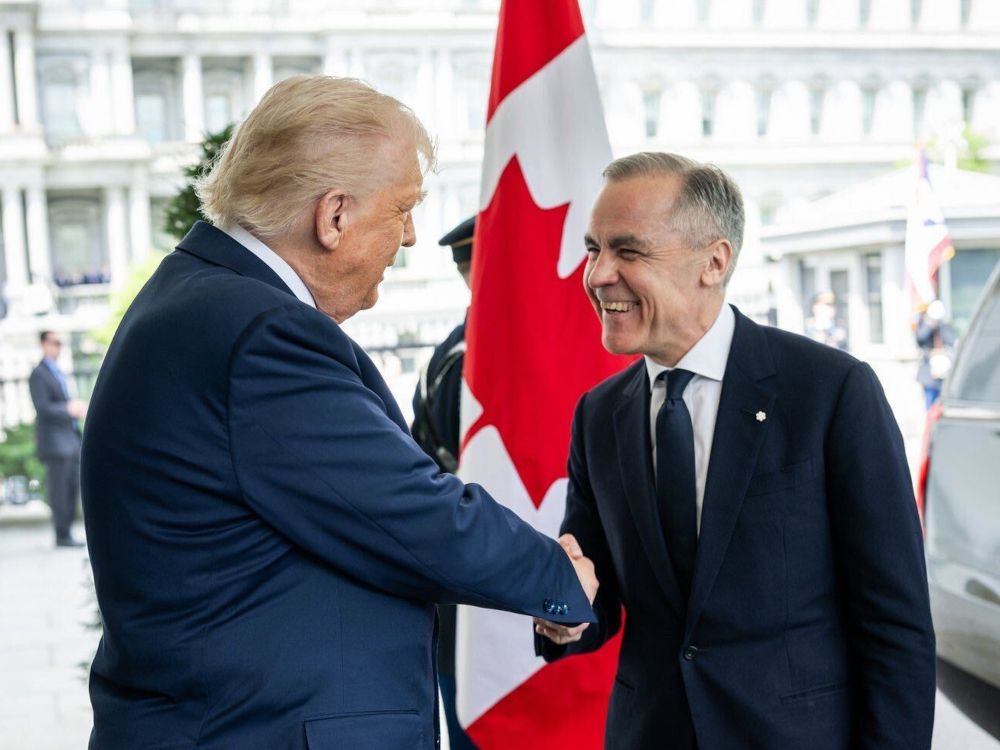

Finance and National Revenue Minister François-Philippe Champagne speaks during question period in the House of Commons on Monday, June 9, 2025.

OTTAWA – After several big government “investments,” it’s time for cuts: Canada’s Finance Minister François-Philippe Champagne has directed his cabinet colleagues to find ways to cut spending by billions of dollars as he prepares to present his first budget in October.

In two letters sent Monday to all his cabinet colleagues — including secretaries of state who sit outside cabinet as junior ministers — Champagne stated his intention to reduce program spending by 7.5 per cent for the 2026–27 fiscal year, by 10 per cent in the second year, and 15 per cent in 2028–29.

National Post did not see the confidential letters, but several high-ranking sources confirmed their contents, as initially reported by La Presse.

“As part of this ambitious review, each minister must examine the programs and activities in their portfolio to determine which (of them): achieve their objectives, are essential to the federal mandate and complement rather than duplicate what is offered elsewhere by the federal government or by other levels of government,” the letter states, a senior government source said.

Champagne also asked ministers for “three priority proposals that can be funded by the reallocation of existing funds, following a spending review” by the end of the summer.

Liberal government insiders indicated that a first wave of budget cuts could be felt in the next budget, with “initial savings.”

“It is a long-term transformation of government,” said Champagne’s spokesperson, Audrey Milette. She also confirmed that department cuts will be “a curve over a certain period of time.” She added that

the government does not plan to cut transfers to the provinces, or social programs such as dental care, pharma care and child care.

In a written statement to this newspaper, Public Service Alliance of Canada president Sharon DeSousa said that the union supports Prime Minister Mark Carney’s efforts at building a strong economy, but doesn’t support cutting public services in the name of “efficiency.”

“Canada’s public service workers power this country, and we need a strong, stable public service to make that vision a reality,” she said.

“We expect to meet with Treasury Board and the Prime Minister’s Office as soon as possible for a full briefing on the expenditure review and its potential impact on workers and public services.”

A senior government source said the idea isn’t to “hurt” the public sector, but to implement long-term changes in how the government operates, including reorganizing staff. As an example, the source said staffers could hypothetically be reassigned from the Immigration Department to National Defence or Housing.

This initiative is being led by the Department of Finance and the Treasury Board at the request of Carney, who often repeated “invest more, spend less” throughout his recent federal election campaign.

His goal is to reduce the operating budget, while setting increased spending apart in the capital budget.

The Parliamentary Budget Officer projected early this year that the federal deficit would fall to $50.1 billion during this fiscal year, a slight improvement over the $61.9 billion shortfall recorded in 2023–24. However, Carney has made several big-ticket spending announcements since then, including

an income tax cut

,

cutting GST on new homes

and

dramatically amping up defence spending

. The C.D. Howe Institute

projected last week that this year’s deficit could reach $92 billion

.

Champagne’s letters arrived just as the new clerk of the Privy Council, Michael Sabia, and Mr. Carney’s new chief of staff, Marc-André Blanchard, took up their posts on Monday.

The exercise is not new at the federal level. Two years ago, then Treasury Board president

Anita Anand asked her cabinet colleagues to find $15.4 billion

in government spending cuts by 2028, followed by $4.1 billion annually thereafter. At the time, the government wanted to redirect underutilized funds to essential services, including health care.

Recently,

the Montreal Economic Institute argued

that Carney should “take a page from the (former prime minister Jean) Chrétien government’s 1994 program review” and cut tens of thousands of public service jobs.

The think tank found that such a program review would result in the elimination of approximately 64,000 federal public service jobs.

National Post

atrepanier@postmedia.com

Our website is the place for the latest breaking news, exclusive scoops, longreads and provocative commentary. Please bookmark nationalpost.com and sign up for our newsletters here.


Ontario Premier Doug Ford and Alberta Premier Danielle Smith hold a news conference in Calgary on Monday, July 7, 2025.

OTTAWA — The premiers of Alberta and Ontario both said at a meeting Monday that they are cautiously optimistic that Prime Minister Mark Carney will successfully get a new oil pipeline built in Canada. But Alberta Premier Danielle Smith said the planning should not be limited to just one.

Meeting with her Ontario counterpart in Calgary, Smith said Alberta crude oil should have access to a “growing share” of pipelines. “I’m of the view there’s probably room for more than one pipeline, probably several.”

Smith has been pushing for a pipeline that would bring crude oil from Alberta to the Port of Prince Rupert, B.C. So far, B.C. Premier David Eby said that is unlikely to happen.

Ontario Premier Doug Ford said he agrees on the need for several pipelines to create more wealth, saying he has been “promoting building pipelines west, east, north and south.”

“We need to unleash the opportunities, no matter if it’s the great oil here in Alberta or the critical minerals of the energy that we have in Ontario, that’s what we need to do. The door is open. We need to go through that door and tell the world Canada is open for business.”

In an interview with the Calgary Herald on the weekend,

Carney said it is “highly likely” a pipeline will make its way on his government’s list of nation-building projects for accelerated approval

under the swiftly passed Bill C-5’s

Building Canada Act. However, he said he couldn’t guarantee it because such a proposal needs to come from the private sector.

“I would think, given the scale of the economic opportunity, the resources we have, the expertise we have, that it is highly, highly likely that we will have an oil pipeline that is a proposal for one of these projects of national interest,” he said.

“The private sector is going to drive it . . . We’ve got legislation, but we’ve also got the people in place at the federal level who can get things done,” he added.

The new act, which received royal assent in late June, allows cabinet to approve major projects deemed in the national interest by bypassing federal laws, such as environmental rules, if needed.

The race is now on for proponents to get their projects on the list of approved plans.

Carney and his Natural Resources Minister Tim Hodgson have

strongly suggested their teams are working behind the scenes

to make a new pipeline to the West Coast a reality.

Hodgson said last week there has been “lots of discussions with various folks” around that project and that it is “something that’s being worked on actively.”

“When there’s a transaction, we’ll let everybody know, but you should assume that everyone is focused on trying to figure out how to make that happen,” he said.

Smith said she would like to see a pipeline on Carney’s list of approved projects by fall.

Asked if Carney is all talk and no action on getting new pipelines built, she said “there’ll be a moment when the rubber hits the road.”

“You can only talk the talk for so long before you start putting some real action around it.”

Ford, who was in Calgary to sign memorandums of understanding to support new energy corridors and increase interprovincial trade between his province and Alberta said he is giving Carney “the benefit of the doubt” on project development and it’s “so far, so good.”

“Well, let’s give Prime Minister Carney an opportunity. And there’s going to be a time that either we’re fully in or we aren’t,” he said.

Ford went on to say how Carney’s Liberal government is much better than under previous prime minister Justin Trudeau.

“I’ll tell you one thing: Prime Minister Carney is no Justin Trudeau. He’s a business mind. He’s run massive, multi-billion dollar businesses, and he’s bringing the business approach to the federal government that hasn’t had that approach in the last 10 years,” he said.

“I have all the confidence that he’s going to listen to the premiers and straighten out the federal government once and for all, and get rid of the red tape and regulations, and let’s see what happens there.”

Ford said the provinces are trying to make Canada’s economy more resilient in the face of U.S. President Donald Trump’s tariffs.

“The days of relying on the United States 100 per cent, they’re done, they’re gone,” he said.

Smith, who has been running into Carney and federal ministers during the Calgary Stampede, said she is glad that they are hearing direct feedback about how frustrated the energy industry has been for the past decade under Trudeau’s government.

Smith said she also had the opportunity to speak directly with Carney,

specifically about his Stampede pancake-flipping technique

which she said “needs a little work.”

National Post

calevesque@postmedia.com

Our website is the place for the latest breaking news, exclusive scoops, longreads and provocative commentary. Please bookmark nationalpost.com and sign up for our newsletters here.


Water rises from severe flooding along the Guadalupe River in Kerr County, Texas, on Friday, July 4, 2025.

A 22-year-old woman, who was reportedly dragged from her campsite by floodwaters in central Texas, was rescued from a tree more than 30 kilometres away.

By the time a nearby resident heard her screams for help on July 4, the woman, who has not been identified publicly, had been clinging to a cypress tree for several hours, according to local news outlet KENS 5.

She survived being pulled by the current over four dams, dodging refrigerators and recreational vehicles in the water.

The woman had been at a campsite with her family in Ingram and ended up in Center Point, KENS 5 reported. To drive from Ingram to Center Point, it would take roughly 30 minutes by car.

When floodwaters hit the woman’s tent, around 4 a.m., she and her family tried to get away in their car. But they were swept into the waters and separated.

Carl Jeter was standing on his deck as the waters began to recede on Friday when he spotted the woman,

he told Fox News

.

“At first, I couldn’t… locate her. I thought she was in the river itself going downstream, and I was like, ‘Oh my gosh,’ and then I finally was able to look across the river at the end of the tree and I spotted her, so I began to call out to her and tell her that I see her… ‘I got you. We’re going to get you some help. It’s going to be okay. Just hang on,’” he said.

Rescue teams arrived and were able to bring the woman to safety by boat.

“She was cut and bruised and banged up from the trek and cold,” said Jeter. “So we wrapped her in blankets and towels and got her into the house, the dry spot because it was raining outside at the time, pretty good.”

He said she was “upset” and “concerned.”

According to KENS 5, the woman told Jeter’s son Josh that, at first when floodwaters approached, she was able to stay with her parents. They attempted to drive away in their car, but they ended up crawling out of the sunroof after it “stalled out.”

“She said they were able to get on a tree and her mom and her were clinging to each other. The dad was behind holding onto them. The water kept overtaking them and eventually they got swept away,” she told Josh. Her father was lost almost immediately while the woman and her mother hung onto each other “for awhile” because “some sort of a rapid” forced them to separate, Josh said.

He said that they were “screaming back and forth, coming down the river for a period of time” before she lost contact with her mother.

The woman had also been travelling with an aunt, uncle and cousin. KENS 5 reported that, at the time of her rescue, the fate of her family was not clear.

Search and rescue operations are still underway in Kerr County after a deadly surge of water flooded from the Guadalupe River over the weekend. According to

a Facebook post

by the sheriff’s office, as of 8:30 a.m. on Monday, 75 people have been found dead, including 48 adults and 27 children. Fifteen adults and nine children are pending identification, the sheriff’s office said.

In a statement on Monday, a summer camp along the Guadalupe River, Camp Mystic, confirmed that 27 campers and counsellors had died over the weekend, with 10 campers and one counsellor still unaccounted for, according to

CNN

.

At least 90 people in total have died, CNN reported on Monday afternoon.

 People climb over debris on a bridge atop the Guadalupe River after a flash flood swept through the area Saturday, July 5, 2025, in Ingram, Texas.

Texas Gov. Greg Abbott said Texas Department of Public Safety troopers have been working “day and night,” in

a post on X

on Monday.

“We will not stop until every missing person is found,” he said.

Our website is the place for the latest breaking news, exclusive scoops, longreads and provocative commentary. Please bookmark nationalpost.com and sign up for our daily newsletter, Posted, here.