“We are the vanguard of Superhumanity!” the rebel exclaims from the stage. It is an audacious brag — a stomp on the grave of purity, hypocrisy and Darwin.
“In 50 years,” he prophesies, “we will look back and realize that biology was never the ceiling!”
In response, the be-knighted Olympic champion in the 1,500-metre run — and current president of World Athletics — clutches his antique ideals to his bosom and offers a tender bon mot:
“Bollocks!”
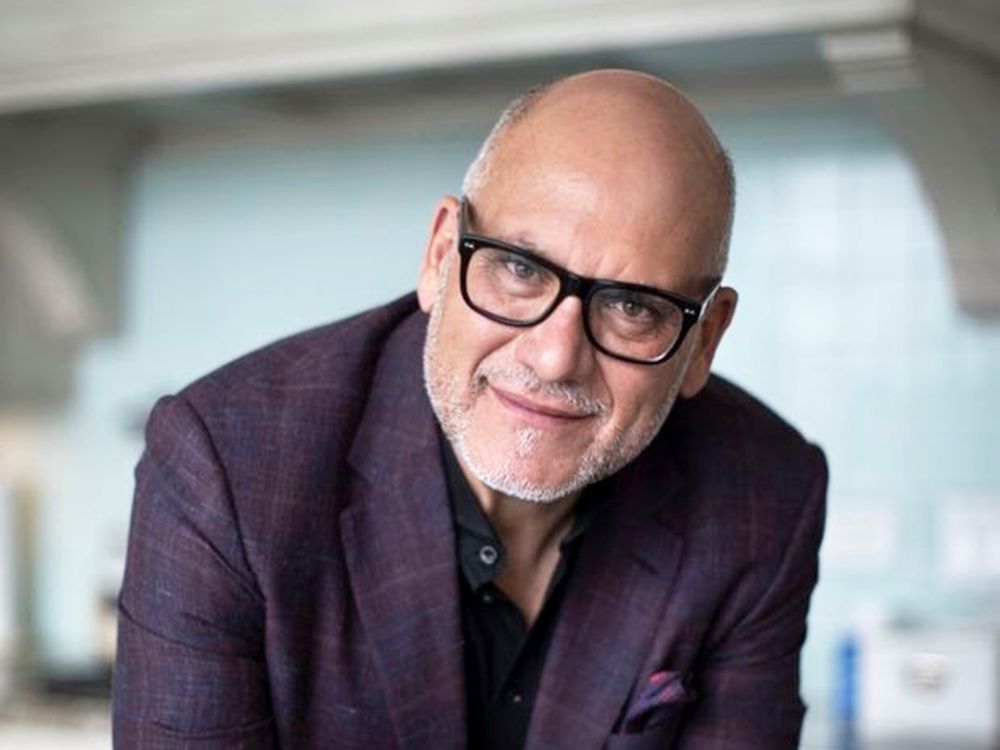
It is the sweltering summer of 2025, a fateful year of supermen and tipping points in human progress — or human degradation, depending on your point of view. The rebel is Aron Ping D’Souza, a 40-year-old Chinese-Indian-Australian scion via Oxford Law with a ninth-floor office on Madison Avenue in New York City.
The skeptic is Lord Sebastian Coe, Olympic track champion and advocate for “Clean Sport,” though sport, as we all know, has been dirty for decades.
“We are here to move humanity forward, to redefine what humanity can be, with audacity,” D’Souza announced in Las Vegas in May, unveiling his
Enhanced Games
, which will be inaugurated next spring in Sin City — where else? — with sprinting, swimming and weightlifting events for the methodically, medically, unashamedly, triumphantly doped. Rock ‘Em Sock ‘Em combat sports, D’Souza posits, will come later.
Funded to the tens of millions by billionaires who aspire to achieve immortality in their own lifetimes, D’Souza is out to demolish nothing short of the Olympic Games themselves, and to make a trillion dollars selling anabolic steroids and other performance-enhancing pharmaceuticals. His backers are, among others, Donald Trump Jr.’s venture-capital fund and the transhumanist founder of PayPal and Palantir
Peter Thiel
, who has poured many millions of dollars into ventures to transcend mere mortal flesh. (A profile of D’Souza in The Financial Times reported that “Silicon Valley insiders” refer to him as Thiel’s “professional son.”)
“Want To Evolve Humanity?” lures the Enhanced Games website, trolling for new hires for this enterprise, which aims to “push the boundaries of human performance.” There will be no testing for banned substances. All entrants will be paid for taking part and they cannot use illegal drugs such as heroin or cocaine.
“Clown show!” sneers a man named Travis T. Tygart, CEO of the U.S. Anti-Doping Agency.
In a two-part series, we are going to dig deeper than mere boasts and insults into the current state of the human future, from the Enhanced Games (Part 1) to “wearable robotics” (Part 2). Competitive sport is a metaphor for “progress” that quantifies achievement in milliseconds, and the Olympics are an easy target. But around the world there are millions of men and women who cannot sprint at all, cannot swim, cannot stand, cannot caress the people they love, and they also await their shot at superhumanity.
“There are some people out there who aspire to be Homo sapiens,” D’Souza has said, encapsulating his, and Thiel’s, core belief. “They aspire to live, suffer, age and die. But I believe that through technology and science, we can overcome this.
“Today, we stop apologizing for progress and embrace it!” D’Souza announced at the Vegas kickoff.
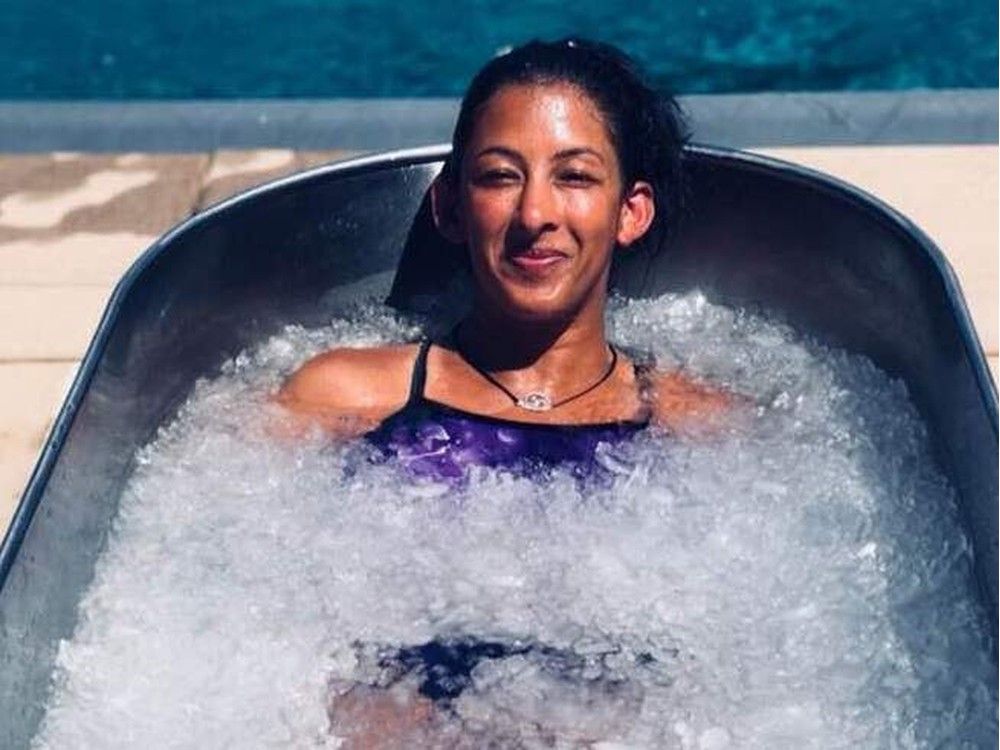
“We’re ripping off the Band-Aid!” choruses the Canadian Olympic bobsledder who is one of the very few women in a leading role with the Enhanced Games. This is Christina Nathalie Smith of Calgary, from whom we will hear quite a bit.
“It’s a movement! It’s a revolution!” Smith tells me.
“Behold, I teach you the Übermensch: he is this lightning, he is this madness!” cries Friedrich Nietzsche in Man and Superman. “I screw up all the time! But that is being human! And that’s my greatest strength!” says the Man of Steel, in this year’s blockbuster movie.
Time will tell whether Aron D’Souza turns out to be Martin Luther or Lex Luthor. What is certain is that the merger of men and medicines and machines is coming for all of us, and nothing will ever be the same.
“There’s no going back,” says Smith, endorsing what D’Souza calls “a new vision of sport and science and human potential … normalizing and celebrating performance medicine.”
“Your Path to Superhuman Starts Here,” the Enhanced website’s featured product page promises, offering a place on a waiting list for a forthcoming “Testosterone Protocol” for US$19.
“You are defining ‘Superhumanity’ by blood chemistry alone,” I challenge D’Souza when I meet him on Madison Avenue.
“Why would we want to be Human 1.0?” he ripostes.
To the titled barons of Olympia, pharmaceutical performance enhancements are kryptonite — bad for business — unless the Chinese are using them, or the East Germans and Sovietskis of old. (They said the same thing about professionals, then caved when Michael Jordan and Magic Johnson dribbled into Barcelona ’92.)
D’Souza and Trump Jr. and Thiel and their ilk are out to demolish Olympic duplicity, snobbery and bribery. But so far, their ground troops are a meagre handful of Samsons on steroids — athletes past their prime who are willing to risk excommunication from the five-ringed cathedral to try to clip a blink off the world record for the 100-metre dash or the 50-metre freestyle and earn a million-dollar gratuity from the promoters of this endeavour.
“Every great institution when it was first proposed was met with a storm of negativity,” D’Souza tells me in Manhattan, playing defence. “Look at Martin Luther and Protestantism — they would have burned him at the stake. Martin Luther King? The idea that we have civil rights was an outrageous concept in the 1960s. Artificial intelligence? If you survey the American people, most of them are very negative about its impact on our society. But someday we will say, ‘How did we live in a world without enhancement?’”
At press time, only five athletes — all swimmers, none Canadian — have cast their lot publicly with the Lords of the Syringe and their big-bucks world-record bonuses.
“I’ll juice to the gills and break it in six months,” gushed one of them, a retired, 34-year-old Aussie and three-time Olympic medallist swimmer named James Magnussen.
“The future isn’t for those who watch the clock, it belongs to those who break it, who step outside of time,” said Aron D’Souza in Vegas.
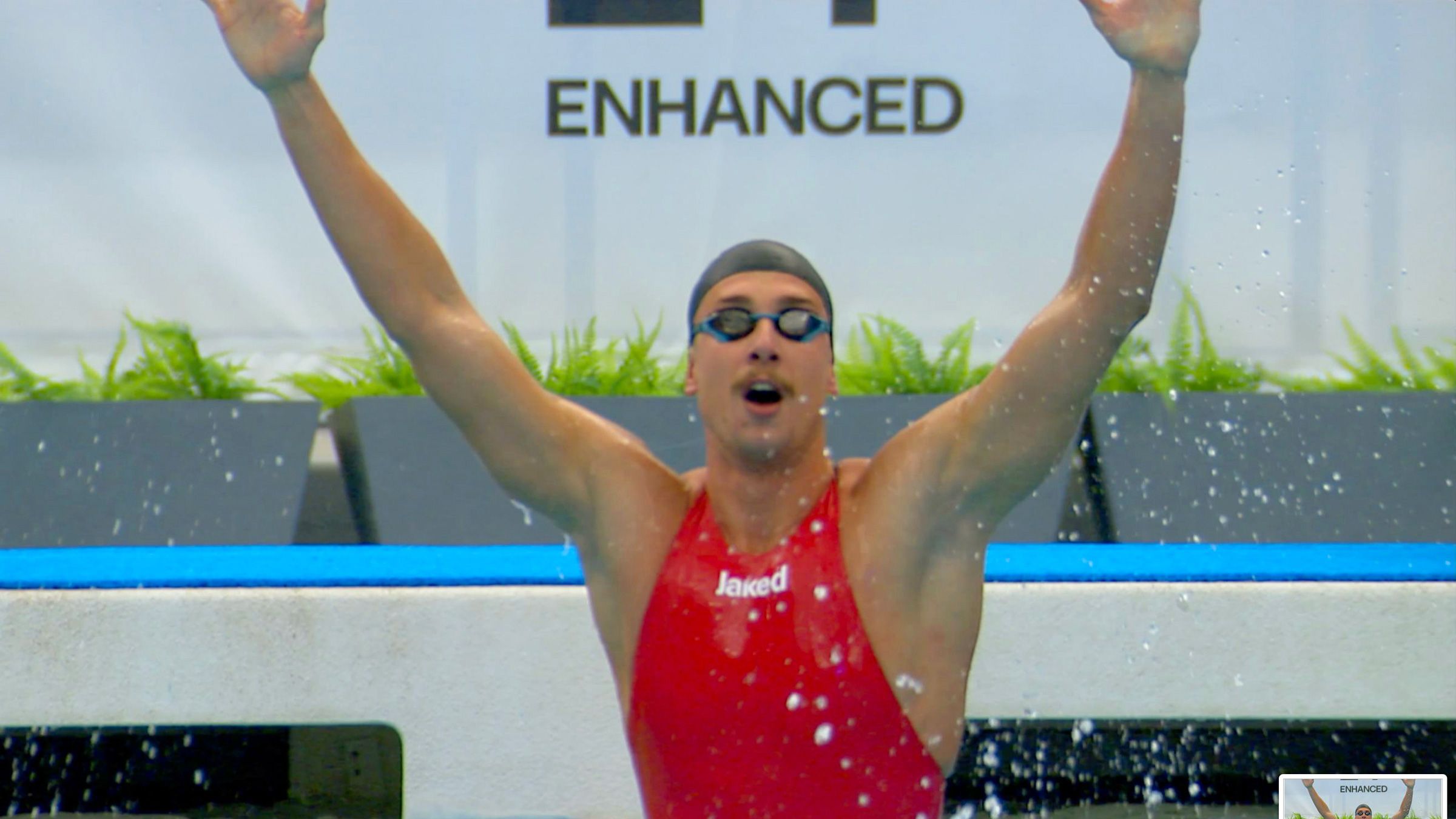
In a practice run, Magnussen touched the timer a few hundredths short of the million-dollar prize in the 50-metre freestyle swim. But in February, a Bulgarian-Greek Olympian swimmer named
Kristian Gkolomeev,
who won multiple NCAA championships for the University of Alabama a decade ago, decided to roll with the pharma tide and spent two months injecting a craft brew of what D’Souza and Christina Smith et al would prefer that we not call “drugs.” They favour “enhancement.”
The drugs — and a high-tech swimsuit that for some reason is not allowed in Olympic competition — did their job. The challenger beat the existing mark in the 50-free by 00.02.
“I feel,” Gkolomeev said, “kind of like a superhuman.”
“Moronic,” said Lord Coe of anyone and everyone enhancing for the D’Souza rebellion.
In late August, the Enhanced Games filed a US$800-million antitrust lawsuit against its detractors for what it claims is an illegal campaign to make athletes boycott its event. The lawsuit was filed in federal court in New York, naming World Aquatics, USA Swimming and the World Anti-Doping Agency as defendants.
The lawsuit keys on a rule adopted by World Aquatics earlier this year that threatens to banish athletes who compete in “sporting events that embrace the use of scientific advancements or other practices that may include prohibited substances and/or prohibited methods.”
“Excellence should always be rewarded, and these exceptional athletes deserve exceptional compensation. We’ll continue to fight for all athletes to ensure they receive it,” D’Souza says in
a statement.
‘A revolution for athletes’
We are chopsticking Singapore noodles on the banks of the Bow River in Calgary’s old Chinatown, and Christina Smith’s eyes are welling with tears. It’s not the curry — it’s our conversation about the Ancient Olympians of the Peloponnesus and how valiantly they strived.
Those naked grapplers and runners whose exertions we admire on pottery jars from the sixth-century BC set the tone for the young men and women who still surrender their best years to sweat and obsession and a longshot chance at a golden token. But what matters to Smith, who will turn 57 on Christmas Day and who finished ninth in the inaugural two-woman bobsleigh at Salt Lake City in 2002, is how little money most 21st-century athletes earn.
It is D’Souza’s promise to pay every Enhanced Games entrant just for showing up that has Smith on board as his associate director of community relations.
“I think that some things come up emotionally when you think of that,” she says. “And I think it’s more that I found a voice. And there’s often in sports, when I look back, that I didn’t have a voice.
“This has been really uplifting and empowering. It’s essentially a revolution for athletes to be able to stand up and say, ‘You know what, we’re worth something.’ And so, when I think about my position, I also think about it as a role that I get to actually speak to athletes that have been through hardships or have been accused, for example, of doping, whereas their circumstances really all vary.
“Some may be blatant, others may be very, very safe, so minor, but (they’re) treated as criminals.”
Smith says that she asked 40 people from her Olympic and post-Olympic career — including her coach and her brakeman — if they would consent to be interviewed for this article, and nearly every one of them said no.
“There was huge hesitation around being somebody who would say, ‘Stand up and share your voice,’” she says.
“You’re out there all alone now,” I tell her.
“Yeah. And there’s no going back. But I feel that when you know what’s going on, I would much rather stand for what’s right and be alone than to stand behind something that is wrong and look the other way.”
“Why do you think that, the last time I looked, only five athletes have signed up for the Enhanced Games?” I ask.
“Well, there’s concerns about perception. There are concerns that all the hard work that they’ve done previously would be tainted, as if they had done it enhanced all along,” Smith says.
“But whether they’re with us or not, all athletes should be recognized and paid. The athletes who are under our umbrella should be proud that they are role models to showcase their hard-work ethic and their transparency of what they’re doing.
“A lot of them are actually reaching out to us, which is really positive. However, let’s say there is a difference between the regular population, who’s really keen, and the calibre that we’re looking for.
“I have a lot of people wanting to be like, ‘Use me.’ I tell them, ‘That’s not what we’re looking for. We’re not looking for guinea pigs,’” Smith says.
“When you competed, you never wanted to be called a cheater, did you?” I ask.
“Never. Even from a young age, I knew that if there are rules and you break them, that is cheating. And the thing is that in the Olympic Games, they have rules. And if you break those rules, you’re cheating.
“And so, our rule is that you have to be transparent and above board with what you’re doing to your body. What it comes to, at the end of the day, is that our rules are different.”
The fact is that the old rules were scant deterrence. Even in the elite and rarefied world of bobsledding, Smith says, “looking back at the men’s program, you would see the transformation over the summer, the definition and the bulk. Well, they were recruiting Olympic sprinters! I was always so naive. They would tell me that, ‘Oh, they’ve been at their grandpa’s farm running after chickens.’”
“If in 2002 someone had said, ‘Take this pill, no one will ever know and you’ll win a gold medal,’ would you have taken it?” I ask.
“No, no, not a chance. Actually, when I was on the edge of retiring, I was struggling with an injury and a powerlifter guy came up to me and said, ‘Christina, how bad do you want to get back?’ And I looked at him and I felt shivers going through my body and I said, ‘Not that much.’ I went home and I felt icky, like somebody would even think that I would do that.”
Christina Smith’s Alberta license plate is OLMPIAN. She is passionately, existentially attached to the brand. And now this.
“I know it’s a tough situation,” she says in Calgary’s Chinatown. “Parents might be thinking, ‘Why would we want Christina to be in front of our children?’”
Beyond the limits of naturally existing humans
“When you took steroids, did it make you feel superhuman?” I ask Richard Singh of Paris, Ont.
“Honestly, honestly, it definitely did,” he replies. “There’s definitely a euphoric feeling to knowing that all the effort you put in is going to work, right? There’s definitely a superhuman element to that. I’m a huge comic book fan. I would define a superhuman as somebody who is beyond the limits of naturally existing humans.”
I am in Waterloo, Ont., in a handsome home whose garage-load of iron discs and bars and chains suggests a medieval torture chamber, not the apparatus of gentlemanly competition. Singh is a former champion in the discipline of powerlifting, one of the few major international “amateur” sports that has divided itself into two separate but equal divisions: one for the chemically enhanced, and one for the certifiably clean. (Powerlifting branched off from Olympic weightlifting half a century ago, diverging in lifts and equipment — and eventually in the permitted or banned use of steroids.)
My host, Bruce McIntyre, founding president of the Canadian arm (and what an arm!) of the World Powerlifting Congress, was one of the non-users. His friend Singh was not.
“We run an untested group, so we don’t care what you do,” says McIntyre, who spent his professional life in computer software. “And then we run a tested group where, if you get caught, you can’t lift again in the tested and you’ll lose all your records.”
“Why did you choose to use steroids?” I ask the prodigious Singh, who is a professional poker player by trade. (He says that many pro poker players take Adderall and other pharmaceuticals to sharpen their concentration, but there are no drug tests or banned substances.)
“I set benchmarks for myself to do certain things, tested, and I never really entertained the thought of using any kind of enhancement,” Singh testifies. “But I took what I did very seriously. And to put in the hours I did training and the time I spent eating all the right things and all the massages and chiropractic and all those things, I just asked myself, what did I want to accomplish? It kind of became a necessary thing. I decided to do it because I wanted to lift the absolute highest amount I can do. I wanted to push myself to the absolute end. And it’s a very necessary tool to do that.
“There’s definitely a stigma around it,” he admits. “But I’m sure anybody who’s been around for a couple of years knows that the best in the world would still be the best in the world if everybody was clean. I’ve never found a drug or compound that will lift the weight for me.
“I never felt like it was somehow cheating or underhanded. I mean, the nice part of what we do is that you can compete on an even playing field untested.”
“We’re saying, ‘Great, everybody should be able to lift,’” McIntyre adds. “If they want to take on the risk associated with the enhancement process, cool. And then for those that don’t — and there’s a bunch of us that don’t — we don’t really care.”
A market for human enhancement
Charles Darwin, realizing that he was besieging the Book of Genesis, vomited nearly every day. But Aron D’Souza, messing around with Übermensch, is as hale as a hurdler.
“Why did I pick the Olympics?” he muses on Madison Avenue. “Because no one watches Formula Two, everybody watches Formula One. Nobody watches minor-league baseball, everybody watches major-league baseball. There is no point in creating a second-tier sports franchise. If we’re going to embark on a journey, it has to be the premier competition.”
He claims to have the business angle of putting the Olympic Games out of business all figured out.
“Imagine it’s Los Angeles in 2028 and the announcer is saying, ‘Now, the eight fastest natural men in the world are going to try to break Usain Bolt’s natural world record,’” he suggests to me. “But then the other announcer goes, ‘Um, are they going to break the enhanced world record?’
“That changes the dynamics. I don’t think NBC will pay billions of dollars to broadcast a second-tier sporting competition.”
“Will they pay you a billion dollars?” I ask.
“We don’t want it. We make money in a completely different way. We make money by selling pharmaceutical drugs. We make money by bringing a market for human enhancement into existence.”
“How do you have an Olympics without flags and anthems and teams?” I naysay.
“The beauty of what we do is that we’re a company and I make the decisions. As we go forward, we can add teams and nations. The Chinese dislike the Olympic system, and Russia’s been kicked out completely for a decade now. How interesting is the Olympics if it’s only Denmark and Sweden?
“Our opening ceremony will be about the march of human progress. Winning medals at the Enhanced Games will be a proxy for the economic and technological prowess of a nation,” D’Souza says.
“What if the IOC caves and says they’re not going to have drug testing in L.A.?” I ask.
“I would probably go to my grave a happy man because that would mean our business of selling enhancements would be very successful, and also it would mean that we achieved a moral victory.
“The IOC has a lot to lose,” D’Souza reckons. “They’ll throw everything that they have at us. But they’ve had a 120-year monopoly, and they’ve abused their position and everyone knows it.”
The prohibited list
Ken Kotyk
is a farm boy from a dot called Rama on the Saskatchewan flatlands who aspired to live in three dimensions. He ended up on the Canadian Olympic four-man bobsled team that missed out on a bronze medal at Torino in 2006 by nine one-hundredths of a second, which is about how long it takes a rattlesnake to strike.
Now, at the age of 44, Kotyk is trying to make the team for the Milano Cortina Winter Olympics in 2026.
“If there was something made by some company above board and they said, ‘We make this, you take this, you’ll be there,’ and it would give you the nine one-hundredths,” I ask him over tea on Calgary’s tony 17th Avenue South, “would you do it?”
“I wouldn’t do it,” Kotyk answers. “And I know I wouldn’t do it because I already looked up some stuff that I thought was going to take — some peptides to just heal my body — and they were on the
prohibited list
. So, I was like, well, I can’t take that.”
“Who gets the right to draw up the prohibited list?” I ask.
“Someone was asking me the same question today. They’re like, ‘Who’s making the list? Who’s drawing the line?’ I don’t even know where the line is. If we’re talking about being ‘pure’ pure, then it would be taking nothing, it’d just be eating food. There’d be no creatine, there’d be no vitamins, it would just be water and food, and that would be it.”
“Yeah,” I concur. “But what’s in the food?”
“I grew up on a farm, so I guess I’m assuming food’s just food.”
“How would you define the word superhuman?” I ask the once and maybe-future Olympian.
“I’d say maybe people that are in the elite of the elites in whatever sport that they’re in,” Kotyk answers. “Maybe not even sport. It could be like Einstein — that’s superhuman.”
Advances in science, technology, medicine, have come through sports
“Intrigued,” says
Patrick Jarvis
, an upper-arm amputee, Paralympic competitor at Barcelona ‘92, and former president of the Canadian Paralympic Committee. “I am not so quick as to just say right or wrong.
“The gut reaction, if you’re in a position of power and influence, you take a stand right away, and it’s probably a moral stand. Or self-protective, because then you get into that whole avenue of who’s really benefiting in these major organizations.
“I was even more intrigued by leaping back to a study that had been done with Olympic athletes that showed that 90 per cent of them would give up their life to win a gold medal. It was crazy. So, I was intrigued by the morality and the ethics of these Enhanced Games.
“But I’m also very intrigued because of my natural affinity for parasport and people with disabilities. And because advances in science, technology, medicine, have all come through sports.
“When you take a look at how many institutions have become incredibly powerful and wealthy off the backs of athletes’ performances, that was another thing that intrigued me when I heard that there was this huge prize money.
“That seems appropriate. Give it to the athletes. If you are an athlete and not in the top eight, that’s quite an inducement,” Jarvis says.
“At one point, you were the one who made the rules,” I note.
“Right,” Jarvis concurs. “I think that when there are rules and standards and parameters, you get this abhorrence and this outrage when somebody’s caught because the public’s expecting the rules to be followed.”
Now comes Aron D’Souza and his tribe, raising their own money and making their own rules in a world where Ideas + Investment = Power.
“Fifty years from now, that might be where we head, but right now there seem to be too many things against them,” Jarvis says. “But you know, on a philosophical bent, I look at the horrible things in the world, such as war, but so many technological advances come from war, right?”
It is worth mentioning in this context that the word “superhuman” often is applied to parathletes like Patrick Jarvis, even though these women and men might reasonably be considered physically diminished from birth or by injury or accident rather than enhanced. For example, when the Paralympics came to London in 2012, Britain’s Channel 4 television network heralded its coverage with the tagline, “Meet the Superhumans,” then repeated the campaign for the 2016 and 2020 Games with, “We Are the Superhumans,” and, “Super. Human,” respectively.
Yet, according to a 2022 survey of Canadian Paralympians conducted by researchers from Western University, most Paralympians reject the term altogether. The study quotes an athlete named “Janice” as saying this: “I would never say I’m superhuman by any means. Just someone who loves to play sports and has a good time with it. That doesn’t make me a superhuman.”
“This isn’t bathtub science,” Aron D’Souza insists. “Why should we accept our biological limits? Why should glasses be allowed and not EPO (erythropoietin)? Performance enhancements very obviously work — why should we ban technology that works?
“What is the next age of mankind?” he muses. “I think there are only two options: there’s the artificial age where AI is superior and man is inferior, or the enhanced age, where the point of all technology is to enhance the human condition.
“I can see an age in which, just as we have hip-replacement surgery and it’s commonplace, that humans will choose to enhance themselves long before disability sets in. There’s going to be this blurring between man and machine.”
And that’s exactly where we will go in Part 2.
Olympics for everyday people
So many critics like Lord Coe & Co. have decried Aron D’Souza’s baby as “The Bad Games” that one may wonder, “Why doesn’t somebody invent something that we could call ‘The Good Games.’”
Former Canadian World Cup soccer player Helen Stoumbos of Guelph, Ont., already beat the world to it. Stoumbos’s
Good Games
just celebrated their 2025 instalment, luring more than 1,500 competitors and 20,000 spectators to Guelph in late June for a festival of spectator and participatory sport that enfolded everything from pro-calibre beach volleyball to “walking soccer” for older adults to a three-legged race.
“My Good Games are for fun and enjoyment,” Stoumbos tells me in Guelph. “I call them ‘the Olympics for everyday people.’ But I don’t know if I would call what they are doing ‘The Bad Games’ because I think they’re just opening up a door to something that’s being done and they’re showing it off rather than hiding it. But then I’m like, where does that end? Five years down the road, are you going to have heart issues or other issues from the drugs?
“Where do we cross that line to just accepting it? There will be kids watching and looking up to these athletes and thinking, ‘That’s what I want to do,’” Stoumbos says.
“Can a needle make you superhuman?” I ask.
“If that needle then allows you to train harder, which means your mind then can push harder, and you’re able to do feats that were not possible before, then it would make you more superhuman than previously.”
For those who want to go beyond
“I’m as squeaky clean as they come — I was clueless about all of this,” agrees Christina Nathalie Smith, of Aron D’Souza’s Enhanced Games.
“I was petrified to even eat poppyseed salad dressing, just in case something would show up in a urine sample as opioids. I lived so, so strict. Everything was bland. My meals were plain. Doping wasn’t even on my radar. I never thought about it. It never crossed my mind.
“But after I retired, I looked back and started noticing the contrast. I’d remember: that girl on the other team, she had a deeper voice, she came from powerlifting … And it disheartens me.
“Did I also compete in an environment where my teammates, or my friends from other countries, were doing it?
“I don’t want to know.”
She begins to cry again.
“It’s upsetting, you know,” she says. “There’s so much pressure on athletes. So much incentivizing by countries. Fame and fortune.
“I think there has to be two avenues: One for those who want to stay natural — I want them to have a platform to show how good they can be.
“And another side — for those who want to go beyond, to be ‘superhuman.’
“Do it safely. Don’t hide it.
“We need to give people access — to do it properly and safely.
“The people who recruited me said, ‘We’re going to allow steroids. We’re going to make enhancement legal. There won’t be drug testing — but there will be health testing.’
“To me, that’s a dream world.”
“Isn’t this just a clown show?” I ask, quoting the CEO of the U.S. Anti-Doping Agency.
“They don’t know any better. And if they do, they’re afraid of us.”
The Pharmaceutical Games
Nietzsche again: You have your way, I have my way. As for the right way, the correct way, the only way, it does not exist.
“Honestly, I think it’s a horrible idea,”
Jungle Jim Hunter
is saying. “I believe it sends all the wrong messages to a world culture that desperately needs good ones.”
Hunter, 72, is another Saskatchewan farm boy who headed for the hills. In his downhill-racing prime, he was the vanguard of super-insanity, leading the Crazy Canucks onto the World Cup and Olympic podiums, addicted to what I defined at Lake Placid in 1980 as “the mechanics of controlled abandon.”
Now a friend whom he has known for decades has signed on for the biotics of controlled injection.
“We’ve spoken many times at various runs and walks, and I didn’t even know Christina had made the move until a couple of months ago,” Hunter tells me in Calgary. “But every time she asked me to get involved, I said, ‘Christina, I can’t. You know what I’ve done with kids. This is sending all the wrong messages to them. I can’t — for all the reasons I stand for.’
“I know my Olympic history. I knew what (Pierre) de Coubertin tried to do — inspire the youth of France and the world,” he says of the 19-century father of the modern Olympics. “I thought the Olympics were on the right track, doing the right thing. But now, personally, I believe every Olympic athlete, by the end of their career, feels exactly what Christina is talking about. It’s rare to find an Olympian who doesn’t carry some resentment unless they’ve drunk the IOC Kool-Aid and fully bought in.
“That ‘Band-Aid’ she’s referring to? It will eventually get ripped off. I paid my own way to become an Olympian. I know what it takes to get there. I know how many times I ate food other people were about to throw away at ski lodges — that’s how badly you have to want it.
“What D’Souza is trying to do is exactly what I predicted back in 1988 — that it was only a matter of time before all athletes would say, ‘If you want us to come to the Games, you’ve got to pay us.’ That still hasn’t fully happened, but it’s coming.
“These will become the Pharmaceutical Games — and that’s sad. I’ve been training kids since 1997. Kids today are in worse shape than when I started, and they were in bad shape back then. This is just another rabbit trail — another way to put drugs in the hands of kids who shouldn’t have them.
“I think this will be another trend that comes and goes. It’ll have its moment, and then it’ll be over. But I could be wrong. I have no doubt they’ll set records. I have no doubt about that. But I don’t believe it will make the IOC cave in.
“I think we’re going to see athletes die in the arena. Guys so strong, so powerful, that others will be killed by them.
“Isn’t there any bastion left where we demand people play fair? We get furious when our kids aren’t treated fairly or don’t play fair. Why would we want someone to win a medal that’s tainted? We should be going the opposite way. East Germany was drug-infested. They didn’t last. Just because you put pharmaceutical science behind something doesn’t mean people will care the way you think they will.
“I’ve always taught every athlete I’ve ever worked with: no one can go beyond 100 per cent. The real ‘superhuman’ to me is the person who gets as close to 100 per cent of their capacity as possible.
“Even getting to 80 per cent is something.
“I don’t think the world will buy into this idea.
“If you gave me a ticket to these new Games, I’d throw it away — right into the garbage can.”