LP_468x60
on-the-record-468x60-white

The Canadian Dental Care Plan expanded in June 2025.

Half of the requests for preauthorized complex dental work have reportedly been denied by Canada’s dental care plan.

Just over 50 per cent of requests for such dental work between November 2024 and June 2025 have been rejected, said Health Canada, per

CBC News

and

Daily Hive

. While 5.2 million people have been approved for coverage under the Canadian Dental Care Plan (CDCP), only about half  — 2.2 million people — have received care, according to the federal agency.

The CDCP, which launched in 2023, is intended to make dental care more affordable for eligible Canadians.

Any resident with an adjusted family net income below $90,000 a year and who does not have access to dental insurance can apply. It is administered by a contracted third-party, insurance provider Sun Life.

Complex dental work

can include procedures like putting in crowns or partial dentures, root canals, specialist examinations and other kinds of oral surgery. These services require preauthorization. The approval process is different than private insurance plans, per Health Canada. “T

he CDCP coverage criteria are more stringent,” it says online.

Supporting documentation is required to prove the work is medically necessary before it can be covered.

“There’s been a lot of confusion for dentists who send in what we would normally send in to a private plan, and it comes back rejected,” Vancouver dentist and president of the Canadian Dental Association Dr. Bruce Ward

told CBC News

. “It’s a much, much, much higher rejection rate than private plans.”

Ward still commended the plan, calling it “very good.” He added that despite its “growing pains” it was still remarkable and noted the influx of people who would have otherwise gone without oral health care because they couldn’t afford it.

Meanwhile, spokesperson for Health Canada and the Public Health Agency of Canada Mark Johnson told Daily Hive that incomplete submissions made up a large part of the preauthorized requests that had been denied between November 2024 and June. The rejection rate went from 52 per cent to 38 per cent when the incomplete submissions were excluded.

“Common reasons for denial (were) incomplete submission, the patient’s needs not meeting the clinical criteria for coverage, the request being a duplicate submission that was already approved previously, or the service requested not being eligible under the plan,” Johnson said in a statement to the publication.

There was also a backlog causing preauthorization delays due to technical issues and a high volume of submissions. However, as of July 11, Johnson said 80 per cent of preauthorization requests are now being processed within seven days.

A new wave of applicants applied to the CDCP when it

expanded in June

. More than a million people signed up and 94,980 received care, according to Health Canada, CBC News reported.

Vice-president of the Canadian Dental Assistants Association Natalie Marsh, who is a dental assistant in North Sydney, N.S., told CBC that the plan was “wonderful” but it did put a strain on some providers.

“You’re seeing people who haven’t seen a dentist in a long time. So they’re coming in with a lot of work to be done,” she said.

Our website is the place for the latest breaking news, exclusive scoops, longreads and provocative commentary. Please bookmark nationalpost.com and sign up for our daily newsletter, Posted, here.


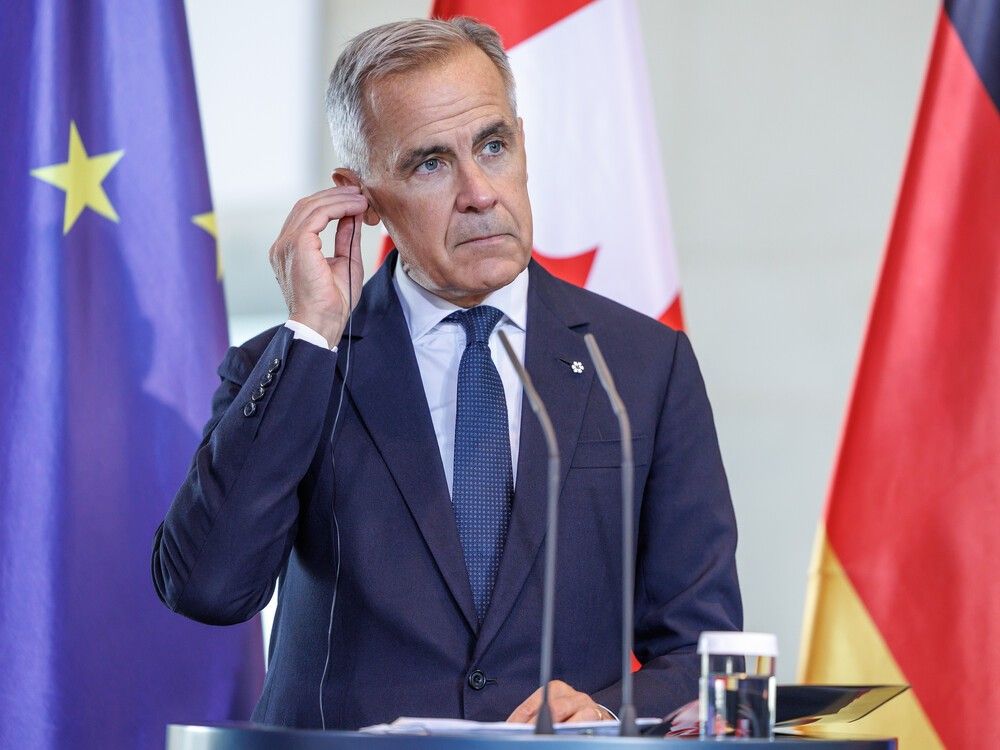
Prime Minister Mark Carney listens to a question at a news conference in the Foyer of the House of Commons in Ottawa, after Bill C-5 passed in the House, on Friday, June 20, 2025.

GATINEAU, Que.

— Prime Minister Mark Carney entered a high-stakes meeting with First Nations leaders Thursday, touting his government’s new law to fast-track major infrastructure projects as having “Indigenous economic growth” at its heart, saying he believes consensus can be reached on how to move forward.

Whether Carney’s pitch lands with the more than 200 chiefs and other First Nations leaders who attended the gathering remains to be seen, given the vocal pushback the law, known as Bill C-5, has received over concerns about its impact on First Nations’ territories and the legal obligation the government has to consult communities.

“I don’t think … that a lot of people are happy right now in terms of the way that the government has gone about ramming through legislation without respecting the current … protections within the environment, the current protections on our water,” said

Southern Chiefs’ Organization Grand Chief Jerry Daniels.

Chiefs who attended the gathering came armed with concerns and questions about the government’s new law, which ushers in a new process for approving major infrastructure projects from ports to pipelines. It aims to bring down the federal approval process necessary for projects to receive the green light to two years, down from the current five.

Introducing and passing what Carney coined as his “One Canadian Economy” bill fulfilled a campaign promise he made during the spring federal election, where he pledged to remove all federal internal trade barriers by Canada Day and get more large infrastructure projects off the ground to bolster Canada’s economy against U.S. President Donald Trump’s tariffs.

Even before it was introduced, the Assembly of First Nations, the main advocacy organization representing more than 600 First Nations across the country, voiced concerns about the lack of involvement of Indigenous-rights holders in developing the bill, which it said directly impacts communities that have a constitutional right to be consulted before projects get approved.

Carney, who announced he would meet with chiefs in response to their concerns, has promised that the government would properly consult, as it decides on which projects would be deemed as benefiting the “national interest.” Those that Carney’s cabinet deems to be would be added to a list and qualify for the faster approvals process, to be coordinated through a yet-to-be-established major projects office.

Before Thursday’s meeting got underway, Carney told reporters they are not yet at the stage of picking projects, but at the beginning stages of hearing from First Nations leaders about how best to proceed.

“Today is about the how, not the what,” the prime minister said, who added that he planned to focus on listening.

Assembly of First Nations National Chief Cindy Woodhouse Nepinak has acknowledged she has heard a diversity of opinion from chiefs about the law, with some in support of having more major resource projects built, while others stand opposed.

Asked whether he believed consensus was achievable, Carney said, “Yes, I do.”

“That’s the purpose of having a discussion, because this is the first step of a process.”

Carney is set to meet at a later date with Inuit and Metis leaders.

He used his opening remarks on Thursday to highlight how he sees the powers ushered in through the new law as opening the door for more economic opportunities for First Nations, saying that a “new chapter” could be written in the relationship between the federal government and communities.

“One of the points is that the economic value of these projects will be shared with First Nations as partners. You will help build the prosperity of your communities for generations to come.”

“In many respects, this is the first federal legislation to put Indigenous economic growth at its core. We now have the opportunity to realize it.”

Indigenous participation is one of the criteria Carney has pledged the government will use in determining what projects would be considered in the national interest.

The planning for Thursday’s meeting was done by the Privy Council Office, the arm of the government that supports the Prime Minister’s Office.

The agenda for the day included panels on the issue of “meaningful consultation” as well as a discussion around the Indigenous advisory council that the government has committed to appoint.

Besides Carney, senior ministers speaking at the closed-door event included Intergovernmental Affairs Minister Dominic LeBlanc and Indigenous Services Minister Mandy Gull-Masty.

Some chiefs expressed frustration at only receiving the agenda late Tuesday, given that leaders had been invited to briefings about the legislation from senior government officials.

Paper copies of a slide presentation prepared by the Privy Council Office, which were available to Thursday’s attendees, showed the government had heard there was “inadequate time to consult” about the new bill and the “importance of respecting Indigenous rights,” as well as the United Declaration on the Rights of Indigenous Peoples.

The media itself was not permitted to cover the discussions and was instructed to leave the building by departmental staff following the prime minister’s opening remarks.

Having the gathering in the first place was pitched by Woodhouse Nepinak, who used her opening address to the chiefs gathered to highlight ongoing challenges First Nations face when it comes to a lack of adequate infrastructure in communities, from housing to clean drinking water, as well as past legal challenges Ottawa has faced when it has not properly consulted Indigenous communities.

She highlighted in her speech, a copy of which was circulated to media, that it was “not clear” to First Nations what the government was intending when it came to speeding up the building of major infrastructure projects and that “until an appropriate process is established with First Nations rights holders and founded in free, prior and informed consent, the Crown’s legal obligations can not be met.”

Woodhouse Nepinak told reporters afterwards she wants Carney to make solid commitments, including to stage another gathering with chiefs next year.

Our website is the place for the latest breaking news, exclusive scoops, longreads and provocative commentary. Please bookmark nationalpost.com and sign up for our daily newsletter.

Our website is the place for the latest breaking news, exclusive scoops, longreads and provocative commentary. Please bookmark nationalpost.com and sign up for our politics newsletter, First Reading, here.


A rare bacteria that lives in brackish seawater has left four dead in Florida this year, according to health officials.

Four people in Florida are dead after being infected with a rare, flesh-eating bacteria found in coastal waters.

According to the latest data from

state health officials

, there have also been 11 non-fatal cases of Vibrio vulnificus reported in 2025. The deaths occurred in the Bay, Broward, Hillsborough and St. Johns counties, respectively. The data does not include how the people came into contact with the bacteria, but it can be transmitted when an open wound is exposed to infected seawater or by eating raw shellfish that has been infected.

Florida health officials have warned anyone with fresh cuts or scrapes to avoid going into the water, saying “water and wounds do not mix.”

Here’s what to know.

What is Vibrio vulnificus?

Vibrio vulnificus is part of the Vibrio group of bacteria that can cause illness in humans, per Health Canada. Although the illness can be mild, it is “more often severe with rapid progression requiring intensive care.” It often causes septicemia, an infection of the bloodstream, that can be fatal.

Symptoms include fever, chills, skin lesions and low blood pressure, and can appear 12 to 72 hours after exposure.

It can also cause skin infections if it comes into contact with an open wound, which can lead to skin breakdown and ulcers, according to Florida Health. If it is ingested, it can cause vomiting, diarrhea and abdominal pain.

Vibrio vulnificus infections can be especially harmful for those with weakened immune systems, in particular, those with chronic liver disease, Florida Health says. Those who get infected with Vibrio vulnificus may even need limb amputation in order to recover. Infections are fatal 50 per cent of the time.

It has been called “flesh-eating” because some Vibrio vulnificus infections can lead to necrotizing fasciitis, described as a “severe rapidly spreading bacterial infection that can cause death” by the Cleveland Clinic. It is when the flesh around the open wound dies, the U.S. Centers for Disease Control and Prevention (CDC) explains.

Where and when are people most likely to be infected with Vibrio vulnificus?

Vibrio vulnificus lives in warm, brackish seawater, according to Florida Health. The CDC says that the bacteria is more likely to be found in high numbers in May through October, due to warmer water temperatures.

There was a surge of Vibrio vulnificus-related deaths in Florida last year, with 19 fatalities reported. Florida Health noted that the “unusual increase” was due to the impacts of Hurricane Helene. In 2022, officials noted that there was another surge due to Hurricane Ian.

The concentration of the bacteria can rise due to heavy rain or flooding,

CNN reported

when the cases increased last year.

Outbreaks in Canada have been linked to eating raw or undercooked shellfish, particularly oysters, Health Canada said.

Our website is the place for the latest breaking news, exclusive scoops, longreads and provocative commentary. Please bookmark nationalpost.com and sign up for our daily newsletter, Posted, here.


U.S. President Donald Trump arriving before speaking at a ceremony to sign the

Trade talks are reportedly continuing between Canada and the U.S., with formal meetings having taken place since U.S. President Donald Trump revealed more threats and demands last week, a source close to the White House said.

Prime Minister Mark Carney said Tuesday that he expected U.S. tariffs would likely be part of any future deal. “There is not much evidence at the moment — from the deals, agreements and negotiations with the Americans, for any country or any jurisdiction — to get a deal without tariffs,” Carney said. He also said he expected trade talks to “intensify” in the next few weeks.

Washington and Ottawa have been engaged in tempestuous trade talks for months. Carney’s team is desperate to end tariffs imposed by  Trump on Canadian steel and aluminum exports and keep tariff exemptions for goods covered by the U.S.-Canada-Mexico trade deal (USMCA).

 Prime Minister Mark Carney and U.S. President Donald Trump in Alberta for a G7 meeting, June 16, 2025.

After Carney’s election in April, things appeared to be going well for awhile: Carney visited the White House, he seemingly got Trump to drop his talk of making Canada a “51st state,” and the prime minister quickly gave in when the president threatened to end talks if Canada didn’t scrap its digital services tax (DST) on U.S. tech firms. Carney also pledged last month to increase defence expenditures dramatically to meet a higher NATO spending target by 2035, a priority of Trump’s. It looked like negotiations could lead to a new U.S.-Canada deal before the July 21 deadline the two of them had set for themselves.

Then came the letter.

Trump wrote an open letter to the prime minister last week, threatening to impose 35 per cent tariffs on Canadian goods starting Aug. 1, vaguely citing as reasons Ottawa’s trade deficit, counter tariffs, dairy trade restrictions, and failure to halt fentanyl from crossing the border. What Trump didn’t do — as he had done with the DST — was outline exactly what Carney needed to do to get things back on track.

National Post looks at the reasons Trump might have wanted to derail the negotiations — and what other surprises the White House might have in store.

Trump is under pressure

Trump “likes to keep us in suspense,” says Andrew Hale, a senior policy analyst at Heritage Foundation. But there is a timing issue at play here that goes beyond the negotiations. “Basically, they have a window of time to use these ‘Liberation Day’ tariffs,” he says, referring to Trump’s sweeping new international tariff regime unveiled in April. Hale said there is significant legal pushback facing the administration’s use of the International Emergency Economic Powers Act (IEEPA) that ostensibly gives the president power to circumvent Congress to impose tariffs in urgent situations.

So far, there have been a few court rulings against Trump’s use of IEEPA tariffs. Oral arguments in the U.S. Court of Appeals are scheduled to begin for one of those rulings on July 31, with another court set to hear two other tariff-related cases in September.

To use IEEPA, a genuine emergency needs to be declared. What Trump did was declare emergencies based on trade deficits, drug trafficking, and immigration. Well, “we’ve been running trade deficits for decades,” says Hale. U.S. j

udges have ruled that there is no direct connection between the national emergency declared over fentanyl and illegal migration.

The court rulings could still go either way. “(Trump’s team is) concerned that they will no longer be able to weaponize these (tariffs) in trade negotiations,” Hale adds.

“By simply heaping on the pressure and saying, ‘Bam, you get these tariffs, you’re getting increased tariffs and the rest of it,’ they’re trying to get as many concessions as possible whilst they can still use them.”

If Trump’s emergency tariffs lose in court, he’d be left with the less-powerful weapon to restrict imports deemed a national security threat, under Section 232 of the Trade Expansion Act.

“I do know that Plan B is to use the 232 tariffs as an alternative more aggressively,” Hale said. But he notes that they are product-specific and do not allow for across-the-board tariffs.

Tori Smith, a senior vice president at Forbes Tate Partners, a government-relations consultancy in Washington, points out that Trump’s Aug. 1 deadline doesn’t seem random given the appeal hearing against emergency tariffs set to start on July 31.

She also notes that the review scheduled of the USMCA, as part of its original terms, begins in October. Trump’s letter, Smith said, was probably meant to “create leverage for the United States in advance of the USMCA review.”

Smith said the “long-game strategy” for the White House is to put it in the “strongest position for (the USMCA) negotiations.”

White House revenge

There may also be something more personal going on, according to a source close to the administration, who spoke on condition of anonymity.

The NAFTA negotiations in Trump’s first term that led to the USMCA were headed by United States Trade Representative (USTR) Ambassador Robert Lighthizer, who had a cordial relationship with Canada’s

then-foreign affairs

minister Chrystia Freeland.

In the process, Lighthizer reportedly neutralized Peter Navarro, then director of the
Office of Trade and Manufacturing Policy
, a fierce protectionist and Trump loyalist, who is now a senior adviser to the president on trade.

“He’s never really forgiven Lighthizer for that,” the source said. (Lighthizer has since returned to private life.)

 Robert Lighthizer speaks during a town-hall style meeting, Tuesday, Sept. 3, 2024, in Braselton.

While the USMCA was once touted by U.S. officials as the “gold standard” of trade deals, possibly the reason the administration has talked of ripping it up “was because Navarro sees that as Lighthizer’s golden legacy, and he has reasons … personal bitterness, to rip it up.”

David Boling, a former deputy assistant USTR for Japan, said he never witnessed the two men in meetings together and couldn’t comment on their working relationship. But they had very different styles, he recalled.

“Lighthizer skillfully renegotiated NAFTA by building up trust with Capitol Hill Democrats. Coalition-building, however, is not Navarro’s strong suit,” said Boling, who now works at the political-risk consultancy Eurasia Group.

Navarro recently said he didn’t like negotiating with Canada, while Mexico’s negotiators were a “pure joy to deal with.”

“You know, they (Mexicans) were tough negotiators, but they were reasonable, fair negotiators. The Canadians were very, very difficult, and they’ve always been very difficult,” he

said in a television interview last week

.

Little downside for Trump

It seems that the more Trump has pushed for concessions from Canada — on defence, on digital taxes, on fentanyl crackdowns — the more he’s been able to get.

Sources say his senior economic team feels they have to sell the president on deal structures, but that Trump often feels he can press for more.

“I think that this can be demonstrated pretty obviously by the Vietnam announcement,” says Smith, noting how Vietnam’s team thought they would be getting a lower tariff rate than 20 per cent, but then Trump “put out a different rate than had been negotiated or talked about by his team.”

Trump mentioned Canada’s highly restricted market for dairy in his open letter to Carney. But he might also start pushing for Canada to commit to more things beyond trade, as he has with fentanyl and defence.

“The Trump administration has also leveraged tariffs in matters that go well beyond trade policy with a number of countries,” said Hale. In March, the president warned countries buying Venezuelan oil they would be punished with tariffs on all U.S. exports; in the last two weeks, he’s threatened “severe tariffs” on Russia if it didn’t make peace with Ukraine, and tariffs on BRICS-aligned countries (meaning Brazil, Russia, India, China, and South Africa as well as Iran and Indonesia) because he said they wanted to undermine the U.S. dollar.


 Brazil’s President Luiz Inacio Lula da Silva speaks during a press conference at the BRICS summit in Rio de Janeiro, Brazil, on July 7, 2025.

So he may want to wield economic pressure to try getting Carney to commit to helping restart a new Canada-U.S. oil pipeline after Keystone XL was killed by the last American president, the source close to the White House said. “They want the Keystone XL pipeline big time,” the source said.

Trump has never stopped wanting that pipeline since he approved it in his first term, and has raised it repeatedly since his re-election, noted Diana Furchtgott-Roth, director of the Center for Energy, Climate, and Environment at the Heritage Foundation.

“Everybody knows that Prime Minister Carney has a focus on the environment, rather than fossil fuel production, so I imagine that it might be a sticking point,” she added. So would the fact that, right now, there is no company proposing that project, since the former proponent, TC Energy, abandoned it.

Apparently, the White House also wants Carney to loosen up on Liberal social objectives, like ESG (environment, social and governance) and DEI (diversity, equity and inclusion), that have in recent years complicated regulation in Canada, including for American companies that do business here. Trump has been aggressive about deregulating away from social and climate rules in the U.S. since he took office.

But Carney is “religious” about ESG, said the Washington source, which could be a “real barrier to these things getting forward.” Yet, if Carney  got rid of net-zero targets and environmental impediments, “I think there’d be a massive love-in,” the source added.

How many of these new lines of negotiation — dairy, defence, oil, DEI, ESG or others — the president opens is anyone’s guess, but what is almost certain is that current trade wrangling will bleed into October’s USMCA review and well into 2026, said Smith.

“The next year is going to continue to be very uncertain and rocky for Canada,” she said.

National Post

tmoran@postmedia.com

Our website is the place for the latest breaking news, exclusive scoops, longreads and provocative commentary. Please bookmark nationalpost.com and sign up for our politics newsletter, First Reading, here.


A vehicle travels into the U.S. from St-Bernard-de-Lacolle, Quebec, on March 6. The crossing has seen a spike in asylum seekers this month.

In less than two weeks this month, a Quebec border crossing saw more than 1,500 asylum applicants coming from the United States, an unusual surge considering overall asylum claims are down by 50 per cent across Canada.

St-Bernard-de-Lacolle, a crossing located on Quebec’s Highway 15, south of Montreal, saw 1,505 asylum applicants between Canada Day and July 13. In June, 1,593 applied for asylum in Canada over the course of the whole month.

It represents a significant increase over 2024, when in the first two weeks of July, just 322 people tried to claim asylum in Canada. Many of the claimants are Haitians, fleeing insecurity at home and precarious legality in the United States, and seeking asylum in a French-speaking territory.

It’s not the first time that the Quebec border crossing has seen a major spike in claimants.

In April, 2,733 people applied for asylum in Canada at that border crossing. It’s an official border crossing that is near the infamous Roxham Road border crossing that is an irregular point of entry to Canada.

Here’s what to know about the border crossing and why there has been a surge in asylum seekers.

How many people have applied for asylum in Canada overall?

Between January and July 2025, there have been

19,730 asylum applications processed in Canada from people arriving at all ports of entry. This is a significant drop since 2024. By this time last year, the Canada Border Services Agency had processed 39,085 asylum applications.

How many have been sent back to the United States?

Of that total, 2,169 have been returned to the United States for being ineligible to enter Canada; 1,531 of those were people who made their asylum claims at official ports of entry, while the other 638 were irregular border crossers.

Both Canada and the United States are signatories to the Safe Third Country Agreement. It means, basically, that a refugee claimant must make a refugee claim in the first country they arrive in, and if they show up at the Canadian border after entering the U.S., unless they meet an exception to the rules, they can be sent back to America.

What are the exceptions?

There are four exceptions, said Pia Zambelli, chairperson of the refugee committee at the Canadian Immigration Lawyers Association. The first is

family ties to Canada

.

“This is the main exception,” said Zambelli.

The second is an exception for unaccompanied minors. The other two are exceptions for those with certain documentation, such as a valid study permit in Canada. The last one is a public interest exception, for those who may, for example, face the death penalty if returned to the United States.

What nationalities are arriving?

Haitians are the nationality making the most asylum claims in Canada at land border crossings. Many of them are crossing at the St-Bernard-de-Lacolle crossing, Zambelli said, because of its proximity to Montreal, a French-speaking city.

“There’s a huge Haitian community in Montreal,” Zambelli said.

Venezuelans make up the second-largest proportion of those seeking asylum in Canada at land border crossings.

Americans made up the third-largest proportion of those seeking asylum at land-border crossings.

Why are Haitians coming to Canada?

The government has more or less collapsed in Haiti and there is rampant gang violence in the failed state. This means that thousands of people are fleeing, if they can. Many ended up in the United States but have faced persecution under U.S. President Donald Trump’s administration.

Under former president Joe Biden, the U.S. government granted temporary legal status in the country to some 500,000 Haitians, the Montreal Gazette reported. Many of those people had been in the country since 2010, when Haiti was devastated by an earthquake.

However, in June the Trump administration moved to revoke that protection, meaning that hundreds of thousands of people could be at risk of being sent back to a failed state. T

he Department of Homeland Security announced it was terminating the t
emporary protected status for Haitians as of Sept. 2. However, a federal judge ruled this month that the Trump administration could not move up the expiration of their status, which was extended to Feb. 3, 2026 under former president Joe Biden.

Our website is the place for the latest breaking news, exclusive scoops, longreads and provocative commentary. Please bookmark nationalpost.com and sign up for our daily newsletter, Posted, here.


Lilly and Jack Sullivan have been missing since May 2, 2025.

More than two months after two young siblings went missing in Nova Scotia, the RCMP say they have received thousands of videos and found a pink blanket belonging to one of the children, but the case remains unsolved.

The investigative team in the Northeast Nova RCMP Major Crime Unit is leading the investigation into the disappearance of Lilly Sullivan and Jack Sullivan who went missing from their rural home in Lansdowne Station, Pictou County, N.S.

“Our collective efforts will continue every day until we determine with certainty the circumstances surrounding Lilly and Jack’s disappearance,” said Sgt. Rob McCamon, Officer in Charge (acting), Major Crime and Behavioural Sciences, in a statement released July 16.

Lilly, six, and Jack, four, were first reported missing on the morning of May 2, 2025, by their mom and stepfather, who believe the kids disappeared while they were still asleep. The stepfather looked for them in neighbouring roads as the mom called police that morning.

Since then, more than 800 tasks have been associated with this investigation, the RCMP said in a news release.

The latest update on the case doesn’t bring any new information about where Lilly and Jack could be or what happened to them, but gives the public an overview of what the next stage of the investigation will look like.

The Nova Scotia RCMP said they are reviewing approximately 5,000 video files of Lansdowne Station and its surrounding areas and assessing more than 600 tips from the public.

Police have formally interviewed over 60 people, including some with a polygraph test, and are requesting judicial authorizations to seize and examine materials and devices that can help in the investigation.

Police also said they are performing forensic examinations on “materials” found in the search areas, including a pink blanket found near the home on Lansdowne Road. It was confirmed by the family to belong to the children.

“A tremendous amount of careful, deliberate investigative work is underway by people here at home and in other parts of Canada,” said McCamon.

When asked in a press conference if the case lacked urgency, a concern expressed by people close to the investigation, spokesperson Cpl. Carlie McCann told reporters that “an RCMP family liaison is in regular contact with a designated relative of Lilly and Jack.”

The Northeast Nova RCMP Major Crime Unit is assisted in the investigation by RCMP units in Nova Scotia, New Brunswick and Ontario as well as the National Centre of Missing Persons, the Canadian Centre for Child Protection, and provincial and municipal police agencies from Nova Scotia and other parts of Canada.

The RCMP is encouraging anyone with specific information on Lilly and Jack’s disappearance to call the Northeast Nova RCMP Major Crime Unit at 902-896-5060. To remain anonymous, contact Nova Scotia Crime Stoppers, toll-free, at 1-800-222-TIPS (8477), submit a secure web tip at

www.crimestoppers.ns.ca

, or use the P3 Tips app.

Our website is the place for the latest breaking news, exclusive scoops, longreads and provocative commentary. Please bookmark nationalpost.com and sign up for our newsletters here.



Assembly of First Nations Chief Cindy Woodhouse Nepinak looks on during a press conference in Ottawa on Wednesday, July 16, 2025.

OTTAWA

— Assembly of First Nations National Chief Cindy Woodhouse Nepinak said the federal government will need to present a plan for how to get more infrastructure built on First Nations reserves as it tries to soothe concerns from chiefs over new powers to fast-track major infrastructure projects. 

Chiefs from across the country are

preparing to meet with Prime Minister Mark Carney and other senior ministers

to discuss the Liberals’ plan to shorten the approvals process for projects like ports and pipelines. First Nations have voiced concerns that fast tracking could neglect their land and treaty rights.

The meeting, set to take place on Thursday, was announced as the legislation, known as Bill C-5,

was passed before the House of Commons broke for summer

. Carney said he hoped to address chiefs’ concerns about ensuring the government upholds its duty to consult First Nations as it pledges to get more projects off the ground, facing economic threats from U.S. President Donald Trump’s tariffs.

“I know Trump’s at our borders, pushing colonialism,”

Woodhouse Nepinak told reporters at a press conference in the Assembly of First Nations’ (AFN) office in downtown Ottawa on Wednesday. 

“We don’t need more colonialism in our country. What we need is to get back to the table and to talk about these really hard things.”

Regional chiefs and other chiefs from different communities spoke during the press conference about the persistent issues that those living on First Nations face in terms of lack of access to clean drinking water, roads and housing, as well as the number of young people dying in communities

— issues that former prime minister Justin Trudeau had pledged to address. 

Woodhouse Nepinak said she hopes dealing with that infrastructure gap “is on the table in a very serious way,” adding that the AFN and others have produced different reports over the years that highlight the chronic issue. 

The AFN, the country’s largest organization representing more than 600 First Nation communities, has been vocal in its concerns about the pace at which the Liberals introduced and passed the major projects legislation, but has not been directly involved in planning the upcoming gathering or selecting speakers.

On Wednesday, some of the chiefs expressed concern about having received the agenda late on Tuesday. A copy seen by National Post shows the federal government plans to have Intergovernmental Affairs Minister Dominic LeBlanc discuss the consultation requirements outlined in the law as well as how projects would be selected.

Other ministers expected to attend are Natural Resources and Energy Minister Tim Hodgson as well as Indigenous Services Minister

Mandy Gull-Masty, who is expected to address the issue of consultations. Members of the Liberals’ Indigenous caucus are also expected to be on hand. Chiefs are also able to submit written questions. 

Woodhouse Nepinak acknowledged the agenda was still evolving and some feel the upcoming meeting is “rushed,” but offered credit to Carney for agreeing with her ask to meet with chiefs, saying such a gathering ought to happen more often, given the last time she said one was staged was around 2012. 

The national chief said she has heard a diversity of views about the Liberals’ plan to fast-track major infrastructure projects. While some chiefs have expressed concerns, she said others have expressed support. There have also been chiefs so consumed with dealing with other issues in their communities they do not yet have a position.

“We’re going to give (Carney) the benefit of the doubt that he produces tomorrow,”

Woodhouse Nepinak said. 

“I think that he has to also listen to First Nations leadership, more listening, rather than talking about how they want to proceed forward.”

The national chief and other First Nations leaders underlined how they saw Thursday’s meeting as only the beginning of talks and should not be considered an act of consultation, something Carney confirmed at an unrelated news conference about tariffs in Hamilton, Ont.

He said the new law was “

enabling legislation” that allows discussions to take place about what constitutes a project to be “nation building” and the process that would follow to ensure rights-holders like First Nations would be consulted and be able to participate. 

Under the law, the federal cabinet would decide which projects would be added to a list that would allow the approvals process to be fast tracked through a yet-to-be-developed major-projects office. Carney has said the goal is to give selected projects the green light within two years, down from the current five.

Terry Teegee, a regional chief representing British Columbia for the Assembly of First Nations, said he had a more skeptical take about the upcoming meeting. 

“If this is a success, I think it’s getting a solid commitment from the prime minister of discussions of how free, prior and informed consent will be implemented.”

He said the problem lies in the fact there could be projects pitched “that are going to be very controversial.”

“It’s those projects that I think the vast majority of chiefs are worried about.”

Teegee named as an example Alberta Premier Danielle Smith’s desire to see

a pipeline built from Alberta to B.C.’s northern coast

, a route that has received widespread pushback from some First Nations in the area in the past.

“We’ve been down that road, and it’s a very difficult situation.”

National Post

staylor@postmedia.com

Our website is the place for the latest breaking news, exclusive scoops, longreads and provocative commentary. Please bookmark nationalpost.com and sign up for our politics newsletter, First Reading, here.


Canadian flags being held by people flap in the wind during Canada Day festivities in Vancouver, on Tuesday, July 1, 2025.

Nearly 40,000 Canadians took a survey on happiness, revealing where the happiest people live across the country.

These results come from a recently released Leger poll, the

2025 edition of Happy Cities

. It was based on data from 39,841 Canadian adults, 18 and over, who took an online survey between March 31 and April 13.

The City of Mississauga ranked highest out of Canada’s 10 largest cities, with a happiness index of 70.3 out of 100.

The

happiness index

calculates how a person perceives their own happiness, using a scale from 0 to 100. It is based on 25 factors that participants are surveyed on, including how they feel about their community, society as a whole, the environment, their health, finances, relationships and work.

Mississauga ranked above Canada’s average of 68.7. The only other city that also had above average happiness was Montreal, which followed Mississauga closely, at 69.4.

Mississauga Mayor

Carolyn Parrish

said it was “wonderful” to see the city getting recognition.

 Mississauga Mayor Carolyn Parrish poses for a photo in her office in Mississauga, Ont., Friday, Jan. 10, 2025.

“This reflects the quality of life our residents enjoy — from green spaces and strong public services to a resilient economy and inclusive community programs,” she said, in

a news release

on Tuesday. “While these survey results are encouraging, we remain committed to listening to our residents.”

Following Mississauga and Montreal in terms of happiness in Canada’s 10 largest cities are Hamilton, Ontario (67.5), Calgary, Alberta (67.4), Brampton, Ontario (66.7), Ottawa, Ontario (66.4), Edmonton, Alberta (66.3), Vancouver, B.C. (66.3), Winnipeg, Manitoba (65.9) and, coming in last, Toronto, Ontario (65.8).

Which Canadian provinces are the happiest in the country?

Although Ontario had the most cities in the top 10, it ranked low on the list of happiest provinces.

Coming in first was Quebec, followed by New Brunswick, and Newfoundland and Labrador. Those three provinces were above average for happiness.

 Despite the heat, people crowd Notre-Dame Street during the street fair in Little Burgundy in Montreal, on Sunday, July 13, 2025.

“Quebecers have a really like positive mindset in a way,” one Montreal resident

told CityNews

. “We see things a lot more optimistically.”

“We are French and English so we have both worlds, languages and vibes,” another resident told CityNews.

However, one person was shocked by the results. “I’m a little surprised honestly,” the Montrealer told CityNews, citing the economy as an issue. “It surprises me that like one of the happiest — happy, yes — but one of the happiest… I’m a little surprised not gonna lie.”

Saskatchewan came in fourth, followed by Nova Scotia, Alberta, British Columbia, Ontario, Manitoba and Prince Edward Island.

Has the happiness of Canadian improved or deteriorated over the years?

Among the findings, the survey revealed what it referred to as a “concerning reality” when Canadians were asked about whether their happiness had improved, stayed the same or had deteriorated over the past year. There were 28 per cent who said they were less happy. Almost half said their happiness remained stable and 23 per cent said they saw improvement.

Young Canadians were more likely to report improvements in their happiness over the past year than older age groups.

There were 36 per cent of Canadians aged 25 to 34 years old who said their happiness grew, compared to only 20 per cent of Canadians aged 55 and over. The survey found a “sense of well-being emerging among younger age groups.” However, it said this also “highlights the importance of supporting adults in mid-life, who are more vulnerable to the pressures of working life.”

Overall, women were slightly happier than men. Women rated their happiness at 69.4, while men rated it at 68.

According to a Leger

news release

about the survey, its results show a “resilient and tested” population that is “affected by everyday uncertainty and challenges.”

“Happiness, while holding its ground overall, shows signs of fragility,” it said.

Canada ranked 18 out of 147 countries included

in the latest World Happiness Report

.

Our website is the place for the latest breaking news, exclusive scoops, longreads and provocative commentary. Please bookmark nationalpost.com and sign up for our daily newsletter, Posted, here.


The BBC says it breached its own editorial policies after failing to disclose that the narrator of a Gaza documentary was the son of a Hamas official.

A BBC report published Monday confirmed the existence of an ethical and editorial issue in a documentary about Gaza that the broadcaster had pulled offline in February, but claimed this was the result of an honest mistake by an external production firm.

The

31-page review

by Peter Johnston, director of the BBC’s Editorial Complaints and Reviews department, upheld complaints of misleading audiences of the documentary film “Gaza: How to Survive a Warzone,” due to the fact that its main narrator, a boy named Abdullah, was later found to be the son of a Hamas government official, Ayman Alyazouri, deputy minister of agriculture in the Hamas-run Gaza government.

The London-based production company Hoto Films, which produced the documentary for the BBC, “had to bring this information to the BBC’s attention” but did not and is therefore “the party with the most responsibility for this failure,” Johnston wrote.

“However, I do not consider that the production company intentionally misled the BBC about the narrator’s father’s position,” he added. Rather, it believed that the father’s position “was a civilian or technocratic one, as opposed to a political or military position in Hamas,” Johnston added. The issue is “a breach of Guideline 3.3.17 on Accuracy, which deals with misleading audiences,” he added.

“This is the only breach of the (BBC) Editorial Guidelines I have identified in connection with the Programme,” wrote Johnston.

Avi Benlolo: Media fuels violence with false reporting on Gaza

All mentions in Arabic of the word “Jew” were translated in the film as “Israeli,” but this was not in breach of the guidelines, Johnston wrote, as Gazans often refer to the Israel Defence Forces this way. “Translating a contributor’s words to give the impression they meant to refer to Jewish people generally would therefore also risk misleading audiences,” he claimed.

“I do not find there to have been any editorial breaches in respect of the Programme’s translation; but I do find that guidance on this topic could be clarified and not just based on previous rulings, as explained further below,” he also said.

The inquiry found that the production firm provided payment to the tune of $2,448 and that this was “reasonable.” An adult earning an average salary in Gaza in 2021 would need to work for 21 months to earn that sum, according to U.N. data. Wages likely dropped even further following the outbreak of war with Israel on Oct. 7, 2023, which eliminated many places of employment.

Johnston also wrote that he had “not seen or heard any evidence to support a suggestion that the Narrator’s father or family influenced the content of the Programme in any way.”

David Collier, an independent British journalist who exposed the family ties of the narrator Abdullah, dismissed the inquiry’s findings as insufficient and criticized the latter’s assertion.

“They didn’t find evidence to suggest ‘daddy’ had any input. Seriously? He only went home to his Hamas daddy EVERY NIGHT,” Collier wrote on X.


Several applications for generic semaglutide, the active compound in Novo Nordisk's injectable drugs Ozempic and Wegovy, are now before Health Canada.

In what

Science magazine

has dubbed “Novo Nordisk’s Canadian Mistake,” Ozempic is soon to come off patent in Canada, opening the door to cheaper generic copycats, after the drug giant reportedly failed to pay a few hundred dollars in annual fees to maintain the patent rights before the weight-loss drug became a blockbuster seller.

As

Science

reported, a patent, once lapsed, can’t be restored. Novo Nordisk will continue to hold its U.S. patent until 2032.

Ozempic was already the third most prescribed drug in Canada last year with 7,390,000 prescriptions dispensed, a 17 per cent increase over 2023, according to drug analytics research firm IQVIA.

Several applications for generic semaglutide, the active compound in Novo Nordisk’s injectable drugs Ozempic and Wegovy, are now before Health Canada. Last week,

a U.S. telehealth service

announced plans to expand into Canada next year and offer generic semaglutide at  a significant discount.

Richard Saynor, the head of Sandoz, a global leader in generic and biosimilar drugs, told

Endpoint News

in June that his company has filed for approval for a generic semaglutide in Canada once Novo Nordisk’s patent exclusivity expires “sometime in Q1 next year.”

Canada is the globe’s second-biggest semaglutide market, Saynor told Endpoint News. “You gotta ask why. I don’t think Canadians are disproportionately large. There’s clearly a dynamic, like insulin, with cross-border business,” he said. Americans with diabetes have crossed into Canada to buy insulin at

much lower prices.

Ozempic and Wegovy cost about $5,000 per year. If money is no longer a factor, if chemically-identical drugs are cheaper and more affordable, “that’s going to change the calculus for many people,” said Justin Lehmiller, a senior research fellow at Indiana University’s Kinsey Institute and co-author of a new survey exploring the impact that weight-loss drugs — formally known as GLP-1 agonists — are having on dating and intimacy.

The survey of 2,000 single Americans (aged 18 to 91) led by Kinsey with DatingNews.com found eight per cent reported having used a GLP-1 medication for weight loss in the past year.

Among the GLP-1 users, 16 per cent said exes had reached out to reconnect, 14 per cent said they were getting more matches on dating apps and 12 per cent said they were going on more dates. The drugs seemed to be doing more to booster “online dating success” for men than for women, the researchers said.

“Some of the studies and research that I’ve seen suggest that men only match one in 100 times on dating apps where for women, it’s more like one in 10,” Lehmiller said. “An attractiveness boost for men, which often accompanies using these drugs, could translate into a much bigger impact for them in the world of dating.”

Men, however, were nearly twice as likely to women to say they feared being judged or shamed for taking Ozempic or other GLP-1 drugs.

“There are some masculinity concerns that are tied up in this,” said Lehmiller, a social psychologist. Men might worry about being accused of cheating, he said. “It might be viewed as a sign of weakness for turning to a drug as opposed to losing weight through ‘hard work.’”

About half of the GLP-1 users also said the medications impact their sex lives, in both positive and negative ways: 18 per cent said their sexual desire increased, while 16 per cent said it dropped. Sixteen per cent said their sexual function improved; 12 per cent said it worsened. It’s a nuanced picture, Lehmiller said. “These drugs seem to be affecting different people in different ways.”

“And I think that makes sense: There is a lot of variability in the side effects people experience on these drugs.” More side effects might mean more negative impact on intimacy, he said. The drugs have also been associated with a slightly higher risk o

f erectile dysfunction and testosterone deficiency

in men taking semaglutide for obesity compared to men not taking the drug.

About one in five in the dating survey said the drugs are creating more stigma against being overweight. “Changing standards of attractiveness might be creating more pressure for people to look a certain way or use these medications,” Lehmiller said.

A study published this week in the

Canadian Medical Association Journal

found 32.7 per cent of adults in Canada (10.6 million people) were obese in 2023, an eight per cent jump over 2009.

Generic semaglutide won’t be as cheap as Aspirin. “It’s still going to be a cost,” said Dr. Hertzel Gerstein, an endocrinologist and professor in McMaster University’s department of medicine. “And that does not relieve a responsible health practitioner of assessing a patient before they prescribe the medication,” he said.

“Is it possible that more people would be willing to pay out of pocket if they don’t have insurance coverage for the drug? Sure, if it’s cheaper,” Gerstein said.

“There may be more demand for it. People need to understand the risks and benefits.”

Taken once a week by injection, Ozempic and Wegovy work by mimicking a hormone — glucagon-like peptide-1 — the small intestine releases when people eat. GLP-1 tricks the body into thinking it’s full. It works on the brain to reduce appetite and interest in continuing to eat, and works on the stomach to slow how fast it empties so that food lingers in the stomach longer.

Semaglutide has been studied extensively, Gerstein said. The amount of weight lost is related to the dosage: the higher the dose, the more weight dropped. In people with type 2 diabetes, the drug can reduce the need for insulin, or the dosage. “But most importantly these drugs unequivocally reduce the future risk of serious health outcomes, including heart attacks, strokes, death from cardiovascular causes” and heart failure symptoms when used long-term, “in the two- to five-year window of time,” Gerstein said.

A

major analysis

published earlier this year based on health data from more than two million Americans veterans with diabetes found that, compared to more traditional drugs, GLP-1 use was associated with a reduced risk of substance use (alcohol, cannabis, stimulants and opioids), psychotic disorders such as schizophrenia, seizures, several respiratory conditions and neurocognitive diseases like Alzheimer’s and dementia.

The magnitude of the associated benefits — about a 10 to 20 per cent reduction for most outcomes — was modest, according to a background release, though the researchers said they don’t “negate” the potential value of the drugs.

There were, however, several drawbacks, including an increased risk of gastrointestinal disorders (nausea, vomiting, diarrhea), low blood pressure, fainting, arthritic disorders, kidney disorders and drug-induced pancreatitis associated with GLP-1 drugs compared to usual care.

Nothing is guaranteed, Gerstein said. “I always tell patients we don’t know exactly what it’ll do in you. And weight loss, if it’s going to happen, usually takes a month or two to start” and plateaus at around eight months. People don’t lose weight indefinitely. “There’s definitely a plateau. You do not keep losing weight,” he said. The drugs yield an average weight loss of around 15 per cent, and weight can also rebound rapidly once the drugs are stopped.

Ozempic has been approved in Canada for diabetes but is often used “off label” for obesity. Wegovy has been approved for obesity.

In an email to National Post, Novo Nordisk, the only current company in Canada with Health Canada-approved products containing semaglutide, said “all intellectual property decisions are carefully considered at a global level.

“Periods of exclusivity for pharmaceutical products end as part of their normal lifecycle and generic treatments may become available over time.”

“Currently, no Health Canada-approved generic versions of semaglutide exist and we cannot speculate on other manufacturers’ plans,” the company said.

National Post


Our website is the place for the latest breaking news, exclusive scoops, longreads and provocative commentary. Please bookmark nationalpost.com and sign up for our newsletters here.