



LP_468x60
on-the-record-468x60-white

After footage of a couple hiding from the camera at a Coldplay concert was posted online, amateur sleuths identified the couple as Andy Byron, CEO of software company Astronomer, and Kristin Cabot, the company's head of HR.

Social media has been abuzz since Wednesday night with images and speculation about two co-workers who were caught on Coldplay’s “kiss cam” during a concert by the group. Another woman at the concert recorded the event and uploaded it to her TikTok account, where it has since racked up more than 58 million views.

From X, the platform once known as Twitter, to media outlets and even a city sanitation department, companies have been weighing in on their own. Some of their jabs made more sense than others. Here’s what we know about the Coldplay couple controversy.

What happened at the Coldplay concert?

It started simply enough. At a Coldplay concert in Boston on Wednesday night, vocalist Chris Martin

told the audience

that he wanted to say hello to some of the fans.

“The way we’re going to do that is, using our cameras, you can look at the screens and we can see who’s out there and say hello,” he said. “Let’s go looking please.”

The cameras quickly found a couple wrapped in an embrace while enjoying the show — but rather than say hello, she turned away to hide her face while he ducked out of view, both of them appearing shocked.

“Either they’re having an affair or they’re just very shy,” Martin says, before the camera focuses on someone else.

In a later video

, he says, “I hope we didn’t do something bad.”

Who are the Coldplay couple?

The footage was soon

uploaded to social media

, and not long after, amateur sleuths identified the couple as Andy Byron, CEO of software company Astronomer, and Kristin Cabot, the company’s head of HR. She’s divorced. He’s married, but not to her.

Who filmed the video?

The video was recorded by Coldplay fan Grace Springer and

uploaded it to her TikTok account

. She said she didn’t expect to spark a scandal, but she stands by posting the video.

“I had no idea who the couple was. Just thought I caught an interesting reaction to the kiss cam and decided to post it. A part of me feels bad for turning these people’s lives upside down, but, play stupid games … win stupid prizes,”

she told the U.S. Sun.

“I hope their partners can heal from this and get a second chance at the happiness they deserve with their

future

 still in front of them.”

Has Astronomer responded?

On Friday, the company

released a statement

noting that its board had started a formal investigation into the matter.

Astronomer is committed to the values and culture that have guided us since our founding. Our leaders are expected to set the standard in both conduct and accountability,” the company said.


“The Board of Directors has initiated a formal investigation into this matter and we will have additional details to share very shortly,” it added.
“Alyssa Stoddard was not at the event and no other employees were in the video. Andy Byron has not put out any statement, reports saying otherwise are all incorrect.”

Late Friday Astronomer made another statement: “Cofounder and Chief Product Officer Pete DeJoy is currently serving as interim CEO given Andy Byron has been placed on leave.
We will share more details as appropriate in the coming days.”

Why did the first statement mention Alyssa Stoddard?

Internet sleuths had claimed that the embarrassed woman who was standing beside Byron and Cabot as they hid from the cameras was Alyssa Stoddard, an Astronomer employee who works for Cabot. The company has made it clear that the woman is not Stoddard.

“Alyssa was not there. This is a rumour started on Twitter. There may be some similarities in the countenance of the person, but it’s not (Stoddard),” a rep at a public relations firm hired on behalf of Astronomer

told Page Six

on Friday. “So (the rumour) is totally false based on misinformation.”

Why did Astronomer mention a statement from Byron?

A purported statement from Byron was posted to X on Thursday but it has since been identified as fake.

“I want to acknowledge the moment that’s been circulating online, and the disappointment it’s caused,” said the fake statement, which included apologies to Byron’s wife, family and Astronomer employees.

“What was supposed to be a night of music and joy turned into a deeply personal mistake playing out on a very public stage,” it said before adding that it was “troubling” that “what should have been a private moment became public without my consent.” The fake statement ends with Coldplay lyrics: “Lights will guide you home, and ignite your bones, and I will try to fix you.”

Before Astronomer put out a statement,

AFP had confirmed it was fake

, but not before it had been shared across social media and in multiple news articles.

“It did originate from a troll account and is indeed fake,” Mark Wheeler, Astronomer’s senior vice president of marketing, told AFP in an email on Friday, referring to the X account

@PeterEnisCBS, which appears to have first 
posted an image of the fake statement
on Thursday. AFP could find no record of a Peter Enis working for CBS, and the X account has since been suspended.

Former Astronomer CEO Ry Walker also called the message “super fake” in an X post.

How have other companies responded?

X delivered a simple line of text: “date idea: take your grok companion to coldplay.”

Tampa International Airport also decided to join in with: “Get your girl a plane ticket to see Coldplay or her boss will.”

And the movie studio Neon chose to post about its new body-horror movie Together with an image of the two canoodlers and the line: “The perfect date night movie.”

Not all the memes were so straightforward. Netflix obliquely posted an image from its documentary series Quarterback of Kirk Cousins of the Atlanta Falcons saying “I like Coldplay,” and that “one of the best concerts I’ve ever been to was Coldplay.”

By far the most unusual take on the situation was from

New York City Sanitation

, which defines itself as the “world’s largest municipal sanitation force” and notes that it collects 24 million pounds of trash and recycling every day.

It tends to send out messages about proper use of garbage bins and holiday well wishes, but on Thursday chose to tell its 98,000 followers: “Cameras are EVERYWHERE! Don’t get caught doing something you *maybe* shouldn’t be doing. Thinking about doing something naughty, like dumping trash in the City? We’ve got video cameras all over. We WILL catch you — and you will pay the price!”

Below those words was a montage of five images: a sign warning about illegal dumping, three photos that showed what looked like people doing just that — and Byron and Cabot at the Coldplay concert. Some people can’t keep their minds out of the gutter.

Love concerts, but can’t make it to the venue? Stream live shows and events from your couch with VEEPS, a music-first streaming service now operating in Canada. Click here for an introductory offer of 30% off. Explore upcoming concerts and the extensive archive of past performances.

Our website is the place for the latest breaking news, exclusive scoops, longreads and provocative commentary. Please bookmark nationalpost.com and sign up for our newsletters here.


Premier Danielle Smith tours Jasper, Alta., on Friday, July 26, 2024. Wildfires encroaching into the townsite of Jasper forced an evacuation of the national park.

OTTAWA — The top administrator in Jasper, Alta., downplayed claims Friday that a report his town commissioned into last summer’s devastating wildfire was about blaming the province for making things worse, after the premier called on the town to apologize.

Jasper Chief Administrative Officer Bill Given told the National Post

that the initial media coverage

of the report hasn’t given the full picture of its contents, although he said he stands by the report.

“As with any comprehensive report, looking at any one part of it in isolation can easily lead to a mischaracterization of the overall content,” said Given in an interview. “I would encourage everyone to take a look at the report in its entirety, so they have a clear understanding of what its intended scope is (and) what was out of scope.”

Given also stressed that there were “a lot of strengths” in the wildfire response, including contributions from the province.

Several news outlets on Thursday, the day the report was released, highlighted some elements of the report that said the Alberta government had complicated firefighting efforts when it added itself to a previously established command structure set up between the town and Parks Canada.

Smith called both the report and its coverage in the media “disheartening” on Friday, saying the province was unfairly characterized as a clumsy interloper in wildfire relief efforts.

“The report and the media response not only appears politically motivated, it is also misguided, given its selective framing and failure to acknowledge the tireless work of provincial emergency personnel and leadership,” wrote Smith in a statement co-signed by three of her cabinet ministers.

She also said that the report glossed over the federal government’s complicity in the fire, specifically its failure to clear out

highly flammable dead trees

and other combustible debris from the area over the years.

Smith said

at an unrelated announcement

about Alberta’s Heritage Fund that she hoped the town would apologize for the report’s contents.

The 57-page report doesn’t expressly attribute blame to the province but suggests at multiple points that provincial officials delayed firefighting efforts at the height of the blaze.

“Provincial involvement added complexity to the response, as the Province of Alberta, though not jurisdictionally responsible to lead the incident, regularly requested information and sought to exercise decision-making authority,” reads one line.

The report also says that the province’s involvement created “political challenges that disrupted the focus of Incident Commanders, leading to time spent managing inquiries and issues instead of directing the wildfire response and reentry.”

Jasper is a specialized municipality within Jasper National Park, a sprawling protected area administered by Parks Canada.

A Unified Command comprising Parks Canada and the municipality led efforts to fight back the wildfire, although the fire ultimately destroyed one-third of the townsite and thousands of hectares of surrounding forest.

A spokesperson with the town of Jasper said the community hasn’t forgotten the province’s contribution.

“We deeply appreciate the role Alberta Wildfire, (the Alberta Emergency Management Agency) and other provincial teams played during the response, and we’re grateful for the Government of Alberta’s continued support throughout the recovery process,” wrote the spokesperson in an email.

The spokesperson declined to respond directly to the premier’s comments and would not say whether an apology was forthcoming.

Federal Emergency Management Minister Eleanor Olszewski said Friday that she was reviewing the report and would have more to say in the coming days.

Olszewski also said that she didn’t “think it would be helpful” for her to discuss Smith’s comments.

She added that she will be in Jasper next week to mark the one-year anniversary of the blaze.

National Post

rmohamed@postmedia.com

Our website is the place for the latest breaking news, exclusive scoops, longreads and provocative commentary. Please bookmark nationalpost.com and sign up for our daily newsletter, Posted, here.


The U.S. Capitol is seen past American flags on the National Mall, June 6, 2025.

Included in the Trump administration’s

One Big Beautiful Bill Act

, which was recently enacted, is a provision about some travellers having to pay $250, a so-called “visa integrity fee,” to enter the country.

The act includes a plan to secure the U.S. border and gives Homeland Security the resources it needs,

per the White House

. It promises to provide more funding for ICE agents, for detention centres, as well as funds for completing the U.S.’s border wall.

The visa integrity fee is meant to go toward supporting “enforcement and administrative efforts related to U.S. visa policy and border security,”

USA Today reported

.

Another travel policy that was previously announced by the Trump administration, the alien registration requirement for foreigners, was

later updated to exempt most Canadians

from being fingerprinted. Currently, in most cases, Canadians do not require visitor, business, transit or other visas to enter the United States from Canada,

according to the Canadian federal government

.

Here’s what to know so far.

Who must pay the visa integrity fee?

The visa integrity fee applies to “any alien issued a nonimmigrant visa at the time of such issuance,” according to the act.

It must be paid in addition to any other fee authorized by law. The fee is currently set at $250, although it can be increased, and will be adjusted for inflation.

“Attaching an additional $250 fee has the very real potential to significantly reduce the number of people that can afford to do that,” managing director of programs and strategy at the American Immigration Council Jorge Loweree told USA Today.

“There are hundreds of thousands of people who receive visas and permission from the Department of State to come to the U.S. every single month temporarily.”

Do Canadians have to pay this fee?

In most cases, no. Canadian citizens can usually stay in the U.S. for 6 months without a visa, but there are some exceptions, which are listed on the

U.S. Department of State website

.

However, permanent residents of Canada do require a nonimmigrant visa and will have to pay the fee.

Can the visa integrity fee be waived?

No. According to the bill, it will not be waived or reduced.

However, the secretary of Homeland Security can provide a reimbursement if the person has complied with all of the conditions of the nonimmigrant visa. This means the person has not tried to extend the period of admission and has left the United States no later than five days after the visa’s expiry.

A person can also be reimbursed if they were granted an extension of nonimmigrant status or if their status changed to “a lawful permanent resident.”

“The intent behind this refund provision is to incentivize compliance with U.S. immigration laws by treating the $250 as a refundable security deposit — essentially rewarding those who follow the rules,” lawyer

Steven Brown wrote online

. Brown is a partner at U.S. immigration law firm Reddy Neumann Brown PC based in Houston.

When will the visa integrity fee go into effect?

Although the act has been signed into law, it is not immediately clear when the fee will be implemented.

In his blog post, Brown wrote there was no effective date.

How will this affect travel to the United States?

As well as the visa integrity fee, there were also other fees included in the act.

U.S. Travel Association President and CEO Geoff Freeman

issued a statement to Congress

, calling the fees “foolish.”

“Raising fees on lawful international visitors amounts to a self-imposed tariff on one of our nation’s largest exports: international travel spending,” said Freeman.

“These fees are not reinvested in improving the travel experience and do nothing but discourage visitation at a time when foreign travellers are already concerned about the welcome experience and high prices.”

Forbes reported that U.S. tourism officials “argue that anything that makes it more difficult or expensive to visit the United States can be a deterrent to large numbers of visitors.”

Tensions between the U.S. and Canada are already high

amid an ongoing trade war and rhetoric about Canada becoming the 51st state.

Our website is the place for the latest breaking news, exclusive scoops, longreads and provocative commentary. Please bookmark nationalpost.com and sign up for our daily newsletter, Posted, here.

Pierre Moreau, Quebec Liberal Party candidate in the riding of Châteauguay in the 2018 Quebec general election..

OTTAWA — Prime Minister Mark Carney has picked a veteran Quebec politician who joined the Senate less than a year ago to become his representative in the upper chamber.

Pierre Moreau, who held a variety of cabinet roles in Quebec’s Liberal governments for 15 years, was appointed to the Senate in September 2024. He will be replacing former senator Marc Gold as the government’s representative. Gold bid farewell to the Senate in June at the mandatory retirement age of 75.

“Senator Moreau’s expertise and experience will advance the government’s legislative agenda to bring down costs, keep communities safe, and build one strong Canadian economy,” said a press release issued Friday morning by Carney’s office.

Carney thanked Gold for his “many years of service” standing for the government in the Senate, which Gold has been doing since 2020, and wished him well on his retirement.

The government representative in the Senate is usually the main point of contact between the government and the upper chamber. His main role is to bring forward the government’s legislation in the Senate and shepherd its passage through the chamber.

The representative can also attend cabinet meetings and is responsible for answering questions on behalf of the government in the Senate,

according to the Senate’s website.

Even though Moreau is new to the Senate, his experience in legal and political circles spans over four decades. He worked as a lawyer in Montreal before he was first elected in 2003 as a member of the Quebec legislature under then premier Jean Charest.

Moreau was defeated in the 2007 provincial election, but was re-elected in 2008, 2012 and 2014. During those years, he served as minister of intergovernmental affairs, transport, education, energy and natural resources and as president of the province’s Treasury Board.

After Charest resigned in 2012, Moreau was a candidate in the Liberal Party of Quebec’s leadership race to succeed him in 2013. Moreau ended up in second place, after Philippe Couillard.

Couillard would go on to serve only one term as Liberal premier, from 2014 to 2018. His government was defeated over spending cuts that ultimately balanced the province’s books, but paved the way for CAQ Leader François Legault’s first majority mandate in 2018.

Moreau lost his seat that year and returned to practice law, while occasionally appearing as a political commentator on Radio-Canada’s television and radio programs.

Moreau was appointed to the Senate by Prime Minister Justin Trudeau in September 2024 and represents the Laurentian region, north of Montreal. He will turn 68 in December, which means he is more than seven years away from the Senate’s mandatory retirement age.

In his maiden speech in the Senate, on June 10, Moreau thanked Gold, his predecessor, for his help and advice in the early stages of his time in the Senate.

“Parliamentarism implies that we can sometimes oppose the ideas of others, even vehemently. However, such opposition must never come at the cost of respect for those who express them,” Moreau said.

“I will therefore draw on your teachings and, like you, I will always keep my door open to talk and discuss with my colleagues,” he added.

Last year, Moreau tabled

Bill S-219 in hopes of establishing a “judicial independence day”

in Canada each year on January 11. He said current events around the world make it necessary, more than ever, to reinforce the independence of the judiciary in Canada.

“In Canada, it is easy to take for granted that these cardinal rules are part of the founding principles of any democratic society. However, as we know, all democracies are fragile, and Canada is no exception,” he said.

Moreau also claimed in his speech that there are Canadian politicians “who have suddenly and inexplicably thought it wise to criticize the courts and judges and publicly challenge their decisions.”

“The direct consequence of these criticisms and attacks is to erode public confidence in the administration of justice and undermine the authority of the courts,” he said.

Moreau was a member of the Progressive Senate Group caucus until his nomination as the government representative.

National Post

calevesque@postmedia.com

Our website is the place for the latest breaking news, exclusive scoops, longreads and provocative commentary. Please bookmark nationalpost.com and sign up for our politics newsletter, First Reading, here.


Residential buildings rise up in Dartmouth, N.S., on June 17, 2025.


TIM KROCHAK PHOTO

Canada is struggling with the effects of an unprecedented immigration boom: Housing shortages, youth unemployment, overtaxed social programs and more.

But in Atlantic Canada, those irritants are largely overshadowed by a much different story: the transformation of moribund and stagnant economies that made the region Canada’s poor cousin.

The authors of a new book detail the dramatic improvements newcomers are bringing to the East Coast — and argue this is no time to swerve. They argue only for a more strategic immigration policy, one that reflects the region’s economic needs.

In Toward Prosperity, The Transformation of Atlantic Canada’s Economy, former pollster Don Mills and economist David Campbell highlight how increasing immigration in the past five years has boosted the economy of a stagnant region with the oldest population in the country.

“Provincial governments across Atlantic Canada have finally understood the implications for an aging population and the need for population growth: all four provinces in the region now have population growth strategies, with immigration as a core focus of those strategies,” they write.

Nova Scotia seeks to double its population to two million by 2060, and New Brunswick, where the population was pegged at 854,355 last year, is aiming for one million people within the decade, according to their 2025 book published by Halifax-based Nimbus.

“Most of the region’s largest municipalities now have their own population growth strategies as well,” Mills and Campbell write. “All these population strategies acknowledge the critical role of immigration to drive labour force and population growth.”

Last year, after three years of especially rapid growth in Canada’s immigration population, the Liberals under Justin Trudeau announced they were reducing the number of permanent residents admitted to the country by 21 per cent. Earlier this year, Prime Minister Mark Carney pledged to cap the total number of temporary workers and international students to less than five per cent of Canada’s population within two years.

Conservative Leader Pierre Poilievre this month called for “very hard caps” on the number of newcomers allowed into the country. He told reporters the country has struggled to integrate newcomers and he wants to see more people leaving than coming in “while we catch up.”

“We have millions of people whose permits will expire over the next couple of years, and many of them will leave,” Poilievre said. “We need more people leaving than coming for the next couple years.”

In 2022, the Canadian population rose by over a million people for the first time in history — and then kept growing faster. According to Statistics Canada, the population reached 40,769,890 on Jan. 1, 2024. That was an increase of 1,271,872 people in a single year — a 3.2 per cent jump, marking the highest annual population growth rate in Canada since 1957.

In an interview, Mills said Atlantic Canada needs smarter and targeted immigration.

“I believe in growth under control,” Mills said. “It got a little out of hand under the Trudeau Liberals. They opened the gates too quickly and it really hurt the housing market and put strains on our health-care and education systems for sure.”

Prince Edward Island was the first Atlantic province to boost immigration levels, he said. The littlest province has been among the country’s leaders in economic growth since. But the island’s population growth rate peaked at three per cent in 2023 — too much, too fast, Mills says.

“We argue in the book for growth under control — somewhere between one and 1.5 per cent is something that we can manage. We still have an ageing population in Atlantic Canada; we need people to fill the jobs of the large group of Baby Boomers who are retiring from the workforce and there’s simply not enough people behind to fill the jobs that we already have. Not just what we have, but what we need to further grow the economy.”

Mills sees the current immigration rethink as a wise thing, as Ottawa figures out the right number of newcomers. It would be a mistake though, both he and Campbell argue, if the Carney government didn’t listen to individual provinces about their immigration needs, including on international student numbers.

“We’ve had really great immigration into places like Miramichi (N.B.), into places like Summerside (P.E.I.), and even in places like Yarmouth (N.S.) and I worry that’s all going to be lost if they keep clamping down on these numbers,” Campbell said.

“Cutting workforce, in our opinion, is like cutting capital. You need three things to have a strong economy. You need capital, you need people, and you need ideas. And if you don’t have one of those three, you’re going to be in trouble.”

Mills uses his own business as an example: When he sold his polling firm, now known as Narrative Research, in late 2018, Mills, along with his son and brother, acquired Cabco, an infrastructure cabling business. Since the purchase in the spring of 2019, the company has grown from 40 to 100 employees.

“We’re continuously recruiting for people,” he said. “It’s hard to find skilled people.”

The company turned to immigrants to help fill the gap. “They’re great workers,” Mills said. “They have a certain ambition that sometimes seems lacking in native-born Canadians.”

In the early 2000s, as young, educated and ambitious immigrants flocked to other parts of Canada, Atlantic Canada had a workforce problem, which left businesses reluctant to invest in the region. “They were not sure there was going to be enough workers,” Campbell said.

In their book, the authors describe Atlantic Canada as being “in the early stage of an economic renaissance” fueled by immigration.

“One of the main reasons why we’re optimistic is because we’ve seen … record levels of population growth across the region, even in Newfoundland and Labrador now, and we feel that will be the impetus for the rest of what needs to happen, such as natural resources development,” Campbell said.

If the region could maintain a “modest level of population growth through immigration,” its future would be “fairly bright,” Campbell said.

The authors point again to P.E.I. The province was able to leverage a greater share of the federal immigration allotment to develop its biosciences and aerospace sectors.

Mills points to the island’s BioAlliance, a private sector-led not-for-profit organization dedicated to building the bioscience industry in P.E.I. that just celebrated its 20th anniversary. “Over that period of time they’ve grown it to … 60 companies and the last time I looked their annual revenues were exceeding $600 million — mostly export dollars, which are really valuable.”

As many as 3,000 people are employed in the cluster, Mills said, equating it to auto manufacturing in Ontario.

The authors make a series of other recommendations to maintain East Coast economic momentum, including “becoming a green energy superpower” by setting up offshore wind power platforms off places like Sable Island, and developing small modular nuclear reactors. Nova Scotia’s Progressive Conservative government has introduced legislation allowing the province’s power utility to own a nuclear plant.

Campbell and Mills also push for measures easing natural resource development, which could help Atlantic Canada move away from its dependence on equalization payments.

“If you really want to eliminate or significantly reduce transfer payments you’ve got to develop your natural resources, including natural gas, and if you have it, oil,” Campbell said. “Because the reality is, if you look at the provinces in Canada that are the strongest, they are the provinces that have oil and gas.”

A Fraser Institute survey last year of senior mining executives found that, in terms of government policy, Nova Scotia was “the least-attractive province, ranking 36th out of 86 jurisdictions, with only the Northwest Territories and Nunavut performing worse in Canada.”

“Miners are skittish because every time somebody wants to do a mine, the pitchforks come out,” Campbell said. “People are really, really nervous about mining, oil and gas, and aquaculture — anything that might have any kind of an impact on the environment. And we’ve got to find a way to get people beyond that and accept the fact that you’ve got to develop your natural resources. You have to have high environmental standards, but if they can do it in Saskatchewan, if they can do it in B.C., if they can do it in Alberta, we have to be able to do it down here.”

The authors also argue the region needs to “become more tax competitive” by lowering personal income tax rates and ensuring corporate taxes are competitive.

A recent Fraser Institute study indicates that “Nova Scotia (at 21 per cent) and Newfoundland & Labrador (at 21.8 per cent) have the highest top marginal provincial personal income tax rates in Canada. New Brunswick (at 19.5 per cent) and Prince Edward Island (at 19 per cent) are also higher than most other provinces.”

Growing the population with new immigrants adds more taxpayers, Mills said.

“This should be an opportunity to bring our taxes in line with other provinces in the country,” Mills said. “But the biggest problem that we still have is governments continue to spend way over what they bring in. That is a systemic problem. Until we get that under control, it’s going to be very difficult to get our taxes under control.”

This is the latest in a National Post series on How Canada Wins. Read earlier instalments here.

Our website is the place for the latest breaking news, exclusive scoops, longreads and provocative commentary. Please bookmark nationalpost.com and sign up for our daily newsletter, Posted, here.


President Donald Trump speaks to reporters before boarding the Marine One presidential helicopter and departing the White House on June 24, 2025 in Washington, DC.

Donald Trump, 79, has been diagnosed with chronic venous insufficiency after he was examined for swelling in his lower legs, White House press secretary Karoline Leavitt said Thursday. Although the swelling was “mild,” the condition caused blood to pool in the U.S. president’s legs.

Leavitt addressed Trump’s condition at a press conference briefly, calling it “benign” and common in people over the age of 70. She added that there is no evidence of Trump’s condition being serious or life-threatening, as confirmed by further and “compressive” tests. The tests revealed there is no evidence Trump has deep vein thrombosis, a serious medical condition where blood clots form in the veins, usually the legs.

Here’s what we know about Trump’s medical condition, how it is treated and what the letter from Trump’s doctor says.

What is chronic venous insufficiency, the symptoms and how is it treated?

Blood is normally pumped all over the body. Veins in the body then take the blood insufficient in oxygen back to the heart to refuel. In some cases, veins aren’t able to carry out that function properly and as a result the blood pools in the legs.

Cleveland Clinic

notes that “this increases pressure in the leg veins and causes symptoms like swelling.” This condition is known as chronic venous insufficiency.

Other than blood pooling around the legs, symptoms for this condition include legs that are achy or tingly. The condition, if severe, can also lead to ulcers.

Leavitt said the condition hasn’t caused Trump any discomfort.

The academic centre based in Cleveland encourages lifestyle changes as the first method of treatment for this condition.

 The left foot and swollen of President Donald Trump are pictured as he sits with Bahrain’s Crown Prince Salman bin Hamad Al Khalifa in the Oval Office of the White House, Wednesday, July 16, 2025, in Washington.

Lifestyle changes, per Cleveland Clinic, may include walking as a form of exercise, losing weight and elevating legs periodically. Leavitt didn’t reveal how the president was treating the condition.

“If these measures aren’t enough, your provider may recommend a procedure or surgery. The best treatment for you depends on how far your condition has progressed and other medical conditions you have,” according to Cleveland Clinic.

What did the White House physician’s letter say?

The letter by Trump’s doctor explained that the diagnosis came after Trump underwent a comprehensive examination as the president noted mild swelling his legs. Results for other tests “were within normal limits,” physician Capt. Sean Barbabella wrote. “No signs of heart failure, renal impairment, or systemic illness were identified,” the letter continued.

Barbabella also addressed the recent photos of Trump that showed the president with minor bruising on his hand.

 Discolouration is seen on the hand of U.S. President Donald Trump as he welcomes Bahrain’s Crown Prince Salman bin Hamad al-Khalifa to the White House at the West Wing entrance in Washington, DC, on July 16, 2025.

“This is consistent with minor soft tissue irritation from frequent handshaking and the use of aspirin, which is taken as part of a standard cardiovascular prevention regimen,” Barbabella wrote. “This is a well-known and benign side effect of aspirin therapy.”

In summary, the letter addressed to Leavitt concluded, “President Trump remains in excellent health.”

Read the full letter here: Trump’s health status update

Our website is the place for the latest breaking news, exclusive scoops, longreads and provocative commentary. Please bookmark nationalpost.com and sign up for our daily newsletter, Posted, here.


TOPSHOT - Shiite Muslim mourners hold portraits of Iran's Supreme leader Ayatollah Ali Khamenei during a religious procession held to mark Ashura, on the tenth day of the Islamic holy month of Muharram in Karachi on July 6, 2025. (Photo by Asif HASSAN / AFP) (Photo by ASIF HASSAN/AFP via Getty Images)

Toronto resident Daniel was not in Iran’s good books even before Israel and the United States showered the country with missiles and bombs last month.

While working as a telecommunications supplier in Iran, he says he deliberately sabotaged schemes to evade sanctions and import equipment for military use, earning the regime’s ire. A member of Iran’s tiny Jewish community, he eventually fled the Islamic Republic and ended up in Canada a decade ago.

But in the wake of the short-lived Iran-Israel war, military officials called in his brother, mother and sister-in-law for hours of interrogation about their Canadian relative. The officials claimed Daniel, who asked that his last name be withheld for security reasons, was a spy for Israel. As evidence, they cited the reports he contributed to

Israel Pars

, an online TV station catering to Israel’s Farsi-speaking minority.

“They told my brother, ‘We know where he is, where he is living with his family, and we are going to execute him,’ ” Daniel quoted his relatives as telling him by phone. “ ’We got the order from the court to execute him.’ ”

Daniel, who has a wife and two-year-old boy, takes the officials’ violent threat seriously.

“I don’t care about myself. (But) I have been living in a state of fear because of my son. If something happened to me his life really would be destroyed.”

It may be an extreme case, but such dread is not uncommon within Canada’s Iranian diaspora, a group estimated to number 400,000 people. As Iran once more becomes a focal point of Middle East tensions, many Iranian Canadians live with a troubling anxiety.

They typically emigrated to escape a system marked by rampant human-rights abuses, stifling censorship and harshly enforced religious edicts. Now some feel like they never truly left the Islamic Republic behind.

No Iranian official has been based here since Canada cut off diplomatic ties in 2012. But there are numerous reports of intimidation of Canadians who speak out against the regime, evidence of planned kidnapping and assassination plots — at least one contracted out to Hell’s Angels — a steady stream of senior Iranian government figures entering Canada, and suspicions of widespread money laundering by the regime and its proxies.

A would-be Conservative candidate for Parliament believes a nomination contest was tainted by misinformation orchestrated by Iran. And a prominent human-rights lawyer even warned that Iranian sleeper cells may be activated in the recent war’s aftermath. Anita Anand, Canada’s foreign affairs minister,

said she shared Irwin Cotler’s concern.

The Iranian-Canadian experience has been double-edged: it’s an impressive immigration success story, unfolding under a dark shadow cast from 10,000 kilometres away.

“I was supposed to live in Canada in safety, in peace, enjoying my life, enjoying my freedoms,” said Ardeshir Zarezadeh, a Toronto legal advisor and human-rights activist who spent years in prison in Iran. “But in Canada itself we can’t live in peace and freedom.”

Even those who lost loved ones in

Iran’s shooting down of an airliner

packed with Canadian citizens and permanent residents have felt Tehran’s grip, citing threatening calls and demands to stay quiet.

The Iranian newspaper Farheekhtegan — Farsi for intellectuals — published a full-page spread last October headlined by the statement “United Iran against the murderers.” The piece featured photos of six alleged “murderers” with targets superimposed over their faces. They included then-U.S. vice president Kamala Harris, Donald Trump, Israeli Prime Minister Benjamin Netanyahu, the Israeli defence minister at the time, and Reza Pahlavi, son of the late Shah of Iran. The sixth person? Hamed Esmaeilion, a Toronto dentist.

The Canadian citizen has been an outspoken critic of the regime but, he says with a wry laugh, “I have never murdered anybody.” Esmaeilion can state without question, though, that Tehran killed his wife and nine-year-old daughter. They were on Ukrainian International Airlines flight PS752, shot down by Iran just outside Tehran in 2020. Iran says it was an accident; family members and others suspect the attack was deliberate.

“I call it the borderless empire of terror and fear,” says Esmaeilion of Iran’s worldwide tentacles.

At the same time, Iranian Canadians subjected to harassment and worried about a steady stream of regime officials settling in or visiting Canada, say security services don’t pay enough heed to their complaints.

“I would argue Canada is the most infiltrated country in the western world,” says Alireza Nader, a Washington, D.C.-based Iran analyst who prepared a study on Tehran’s interference in Canada for the conservative Foundation for Defense of Democracies. “Canada is actually well-known as a haven for the regime. People (in the Iranian community) joke about it. It is part of the popular culture.”

RCMP spokesman Marie-Eve Breton declined to say how many complaints it has received about interference from Iran or to detail how it responds to them, citing “operational reasons.” That said, the Mounties take threats “very seriously” and will investigate if there is a suspicion of criminal or other illegal activity, she said.

But the diaspora that has grown up here since the 1979 Islamic revolution — full of professionals, entrepreneurs and academics — is not unanimous in its dim view of the Iranian government. Some groups have tended to avoid stiff criticism of Tehran, and sometimes echoed its viewpoints.

A rally against Israeli attacks last month — called

“Hands-off Iran

” — included people waving the Islamic Republic flag, a symbol of oppression to some expatriates. Competing vigils for the PS752 victims in 2020 — one involving regime critics, the other factions more sympathetic to Tehran —

ended in a physical fight

that required police intervention.

Organizations like the Iranian Canadian Congress (ICC), a co-sponsor of Hands-off Iran, have been accused of being apologists for the Islamic Republic. The ICC denies the charge and says it simply wants peace, the end to sanctions against Iran and restoration of Canada-Iran diplomatic ties.

“Iranian Canadian activists who oppose military action or sanctions, citing their detrimental impact on the Iranian populace and regional peace and stability, are frequently discredited by hardline political factions,”

the ICC told the federal Foreign Interference Commission.

“These factions prioritize regime change in Tehran over all else, disregarding both Canada’s interests and the potential harm that increased instability may inflict on the people of Iran.”

Complicating the divisions right now are events in the Middle East. Even some staunch opponents of the Iranian regime and its allies like Hamas and Hezbollah are disturbed by the Gaza war. After Iranian-backed Hamas crossed over from the strip and massacred 1,200 Israelis, Israel’s armed forces responded with operations that have killed more than 50,000 Palestinian fighters and civilians and laid waste to much of the territory.

There are “mixed feelings,” says Esmaeilion.

And the exchange of missiles and drones between Iran and Israel, combined with the U.S. bombing of Iranian nuclear sites, has triggered a vicious crackdown by Tehran on alleged “spies” and dissidents, noted Zarezadeh.

“Weakening the regime is good, but what’s next?” he asks. “If this is going to create a lot of damage (to the democracy movement) … mass executions … what is the point?”

Like so many other burgeoning ethnic communities in Canada, Iranians were a rare presence here for most of the 20th century. But that began to change as the revolution transformed their homeland into a theocratic state steered by unelected clerics.

First came people seeking political asylum, then middle-class strivers wanting a freer, more enriching life, especially for women whose existence is tightly constricted in Iran.

Many have settled in Vancouver and its suburbs, but the greatest concentration live in the northern reaches of the Greater Toronto Area. The enclave is predictably nicknamed Tehranto, the main streets in some neighbourhoods lined with Iranian restaurants and other businesses.

The group includes a surprising number of high achievers. Esmaeilion says he knew of a couple hundred dentists of Iranian extraction in Canada when he emigrated in 2010. Now they number well over 1,000, he said. “You can say the same thing about medical doctors, you can say the same about lawyers, about engineers.”

The make-up of the diaspora is partly a result of “selection bias,” says lawyer Kaveh Shahrooz, a rights activist in Toronto. Many are people who had the wherewithal and money to get out of Iran, while Canadian laws in the past favoured newcomers who could invest sizeable sums here, he said. Plus, the culture promotes education and career success.

Shahrooz believes the most recent waves include many people who did well economically under the Ayatollahs and retain a sympathy for the regime or even continued business links in Iran. Esmaeilion disagrees. If anything, he argues, the newest arrivals are more disenchanted than anyone about the Islamic autocracy.

There’s a lack of polling data breaking down exactly what portion of Iranian Canadians are staunch opponents of the Iranian regime. But critics insist it’s the majority, even if many are too afraid to speak out. The dissidents cite in part two rallies held in 2022. They supported protests in Iran over the death in custody of a young woman arrested for wearing an insufficiently modest hijab. Both “Woman Life Freedom” events in the Greater Toronto area attracted an estimated 50,000 people — a significant chunk of local Iranian Canadians — while cities across Canada held smaller demonstrations, noted Zarezadeh.

The Iranian Canadian Congress did not respond to requests for comment by deadline, but it has noted that a petition calling for renewed diplomatic relations with Iran gathered 16,000 signatures; one opposing the idea only a few hundred.

Still, for those Canadians who do publicly criticize the regime, the consequences can be chilling.

A

2021 U.S. indictment

accused Iranian intelligence operatives of planning to kidnap and fly to Iran Iranian-American journalist Masih Alinejad. The same group, prosecutors said, was plotting to snatch three unnamed Canadian opponents of the regime. The FBI has since charged multiple people tied to Iran with conspiring to actually assassinate Alinejad.

Last year, U.S. attorneys

indicted two Canadian Hell’s Angels members

, accusing them of working at the behest of Iranian intelligence to assassinate dissidents in Maryland.

The Canadian Security Intelligence Service’s most recent

annual report

says it continues to investigate “credible intelligence” about death threats against Canadians emanating from Iran, often using proxies like organized crime figures. The targets are “perceived enemies” living abroad, and the threats to Canadians may increase as tensions heighten in the Middle East, said the spy agency.

Iran also uses “malicious cyber activity” to repress and manipulate Canada-based opponents, the CSIS report said.

In its submissions to the Foreign Interference Commission, the Iranian Canadian Congress did not dwell on actions by Tehran. It focused instead on threats it says it and similar groups face closer to home, saying it should be “protected from information wars organized by media outlets established with foreign investments by authoritarian or democratic states.”

But individual Iranian Canadians have reported first-hand experience with a range of intimidation by Tehran.

Ardeshir Zarezadeh, the Toronto legal advisor, says he spent a total of seven years in prison, including two in solitary confinement, for helping organize student protests and the like in Iran. He fled through mountains to Turkey and ended up here in 2006. But he continues to be dogged by the regime, he says.

A suspicious Iranian man called from a pay phone, then showed up unannounced at his office in 2019. Zarezadeh notified both the RCMP and FBI. The Americans responded promptly, informing him that his visitor was an Iranian intelligence officer. Zerezadeh says he never heard back from the Mounties.

Then in 2022, he said Iranian intelligence contacted a friend of his, demanding the friend turn over Zerezadeh’s home address or see all his business interests in Iran destroyed.

Esmaeilion lost his family in Iran’s destruction of flight PS752 but he says that hasn’t stopped the regime from targeting him.

His 76-year-old father was interrogated for two hours in May 2024 about his son’s activities in Canada, while his parents were banned from leaving Iran for a year. Esmaeilion’s mother finally made it here earlier this year but after she returned to Iran two months ago, her passport was seized again.

Esmaeilion posted on X in 2023 when the community discovered by chance that Seyed Hassan Ghazizadeh Hashemi — a former Iranian health minister — was on vacation in Canada, even as Iran continued to evade accountability for the plane shoot-down. While in Toronto, the minister did an interview with Iranian media in which he vowed retaliation against Esmaeilion and others whose posts had interrupted his holiday. The federal government eventually

banned Hashemi from entering Canada

for 36 months, but Esmaeilion says police told him they could do nothing about the threat.

Shahrooz said he often receives threats online and gets regular warnings from Google that state-based actors have been trying to hack into his accounts. After he did an interview with the Voice of America’s Farsi-language service, relatives in Iran were taken in for interrogation about him.

But he considers his experience last year campaigning for the Conservative nomination in the federal riding of Richmond Hill as particularly troubling. He had not even officially announced he was running for the candidacy when posts started proliferating online that falsely accused him of being a member of Mojahedin-e-Khalq (MEK), the anti-regime group that Canada once designated as a terrorist entity. It’s widely unpopular with both regime opponents and supporters.

The smear campaign had an organized tone to it and included references to a particular relative who had been a MEK member, a fact that few people without access to Iranian security files would know, says Shahrooz.

“My name would trend on Twitter, for example, twice in a week — because I’m running for a nomination in a suburb of Toronto. It doesn’t make any sense unless there is an organized cyber army of Iran’s regime working to undermine me.”

He says Conservative Party officials were not receptive to his reports of intimidation and when they closed the nomination race early, before he had time to sign up many of the crucial new members, the Harvard law graduate ended his run.

Mariyam Shafipour was a prominent student activist in Iran and spent two years in Tehran’s notorious Evin Prison, making her way to Canada after being released.

She’s continued her opposition here, resulting in the intimidation of her sisters by Iranian security services, she told the

Human Rights Talks podcast

earlier this year. And there have been ominous signs of not just digital, but physical surveillance here in Canada.

Officials of the Iranian Revolutionary Guard Corps, which Canada designated as terrorist last year, told one of her sisters that Shafipour’s apartment overlooked a school and that she owned three cats,

she told CBC TV

in 2022. Both were accurate observations.

Such experiences help explain deep concern in the community about another phenomenon. Current or former officials of the regime routinely seem to show up in Canada, while some refugee claimants and relatives of ordinary people — including

family of the PS752 victims

— are regularly denied visitor visas.

Zarezadeh said he’s received numerous reports of former IRGC officials entering Canada, which he plans to pass on to authorities. Vancouver lawyer

Mojdeh Shahriari

has said she’s collected hundreds of reports of various senior officials obtaining Canadian visas.

Nader, the Washington-based analyst, said he was shocked to learn that

Mahdi Nasiri

, the head of hard-line newspaper Kayhan in late-1990s Iran, then an adviser to the government, had arrived in Canada earlier this spring. Nasiri told CBC News that he’d been a critic of the regime for six years and was a “liberal” now. Nader and other regime critics were doubtful.

Morteza Talaei, who as Tehran police chief oversaw a crackdown on women’s dress and took part in the bloody response to student protests in 1999,

was spotted in Richmond Hill

, north of Toronto, three years ago. Critics accused him of rank hypocrisy, with video showing him exercising in a local gym next to women in workout outfits, public attire he would have considered criminal in his old job.

The federal government is trying to stem the tide. A law passed in 2022 and updated last year now bars entry to Canada of anyone who was a senior Iranian official as far back as 2003. And there seems no shortage of cases.

Immigration Refugees and Citizenship Canada has cancelled 131 visas under the law, while Canada Border Services Agency has opened 115 investigations. Half of those were deemed to not be senior officials, but the rest are still being reviewed or enforcement action taken, said Luke Reimer, a CBSA spokesman.

The agency has reported 20 alleged senior officials who are in Canada for inadmissibility hearings. But as of June, only three had been ordered deported — and one of those actually removed from the country, Reimer said.

Coupled with the arrival of figures from the Iranian government are fears of rampant money laundering. The proliferation of money-exchange services in Iranian-Canadian neighbourhoods underscores the problem, says Esmaeilion. One such business told a friend that it processes millions of dollars in transfers to and from Iran every day, he said.

National Post was unable to verify that claim. But the Financial Transactions and Reports Analysis Centre of Canada (FINTRAC), Ottawa’s anti-money-laundering watchdog, is planning to require financial institutions to more closely monitor cash flowing to and from Iran, the Globe and Mail reported recently. The number of “suspicious transaction reports” involving Iran and filed with the centre is already soaring, to 19,572 in 2024-25, from 6,866 in 2023-24, the Globe said.

All of this — intimidation, frequent visits by regime heavyweights and alleged money laundering — is transpiring 13 years after the Iranian embassy in Canada was shuttered.

But Daniel, for one, has no doubts about the regime’s ability to function here, with or without an official presence. As he contemplates the Iranian threat to “execute” him, Daniel notes IRGC officials showed his family photographs of him, his wife and son, and knew his correct Canadian address.

“When I was in Iran, because of my business, I knew a lot of high-level government people. One of those guys one time told me, ‘the hub of spying in North America is in Canada,’” he says, a suggestion the Post could not independently verify. “They have the financial support, they have the people to support them. They are capable of doing many things in Canada.”


Parliament Hill reflected on the Bank of Canada building in Ottawa on Sept. 18, 2024. A new report blames the Trudeau government’s spending — less than Bank of Canada interest rate policies — for soaring inflation during the pandemic.

The Trudeau government’s spending splurges — less than Bank of Canada interest rate policies — were largely responsible for soaring inflation during the pandemic, a new report has concluded.

The report, conducted by two economists at the C.D. Howe Institute, points the finger at Ottawa’s unfunded spending spree that acted as “helicopter drops” of money for the private sector.

In 2020, the report says, 20.7 million Canadians out of an adult population of 30.3 million received income from one of the federal pandemic-related programs. In 2020, the programs are estimated to have cost $270 billion — about 12.5 per cent of Canada’s gross domestic product (GDP) — and have since grown to about $360 billion to date.

While the programs generally succeeded in providing relief to individuals and businesses, and buttressed the economy during a crisis, the think tank says injecting that much “nominal wealth” into an economy while unemployment has been relatively low led to an inflation burst and permanently higher prices.

“Whether this wealth takes the form of new money or new debt is largely irrelevant,” the report says.

Benjamin Tal, the deputy chief economist of CIBC World Markets, agreed that loose fiscal monetary policy contributed to the pandemic-era price hikes, but thinks the central bank’s low interest rates also played a role.

“There is no question about the fact that very accommodating fiscal and monetary policies were behind the acceleration in inflation,” Tal said.

According to the Consumer Price Index (CPI), prices rose 11.4 per cent between January 2020 and December 2022. Although the pandemic started in China in December 2019 and the first case was reported in Canada on January 25, 2020, inflation didn’t spike for more than a year. In fact, prices were rising at relatively normal rates until May 2021, and didn’t peak until June 2022 when inflation hit 8.1 per cent, the highest rate in almost four decades.

But while the C.D. Howe economists, David Andolfatto and Fernando Martin, are critical of the spending, their assessment of the Bank of Canada’s policies at that time are more nuanced. They agree with the Bank of Canada’s own assessment that it can be faulted for not raising interest rates quickly enough to suppress inflation at that time. They also argued that it could be criticized for not doing a better job communicating how it intends to achieve its inflation targets. But they conclude that there was ultimately little the central bank could have done to curb the price spikes.

The paper acknowledges that the pandemic was a unique situation that included a series of inflationary and deflationary pressures.

Prices rose in part because the supply of some products tightened, for example, due to factories being closed or experiencing reduced hours. Transportation became more expensive due to shipping delays and congestion at many ports. There were also shortages of some raw materials, such as lumber and metals, which also contributed to inflation.

There was also increased demand for certain things, such as real estate, furniture, exercise equipment and home entertainment gadgets.

Some of that demand increase was due to consumers having more disposable incomes. Many were saving money from working from home and not being able to go out or travel, while others got wage increases or (especially those in health care) were working longer hours. Income from government supports added to the demand. The result of reduced supply and rising demand was increased costs.

Gasoline was among the products hit hardest by inflation, with a price increase of more than 50 per cent over that two-year period. Food and transportation jumped between 15 and 20 per cent, while appliances and rent increased by between 10 and 15 per cent.

Finance Canada, the federal department responsible for fiscal policy, was not immediately available for comment.

Since the pandemic ended, however, prices have not come back down for a number of reasons.

Katherine Judge, senior economist at CIBC Capital Markets, said inflation remained a challenge after the pandemic because many consumers had pent-up demand and excess savings, while long-term changes such as more people working from home and the retirement of many baby boomers also played a role. In recent months, she added in an email, import tariffs imposed by Ottawa amid trade disputes have raised prices.

Statistics Canada reported earlier this week that

Canada’s inflation rate accelerated to 1.9 per cent in June

, up from 1.7 per cent the previous month.

National Post

stuck@postmedia.com

Our website is the place for the latest breaking news, exclusive scoops, longreads and provocative commentary. Please bookmark nationalpost.com and sign up for our daily newsletter, Posted, here.
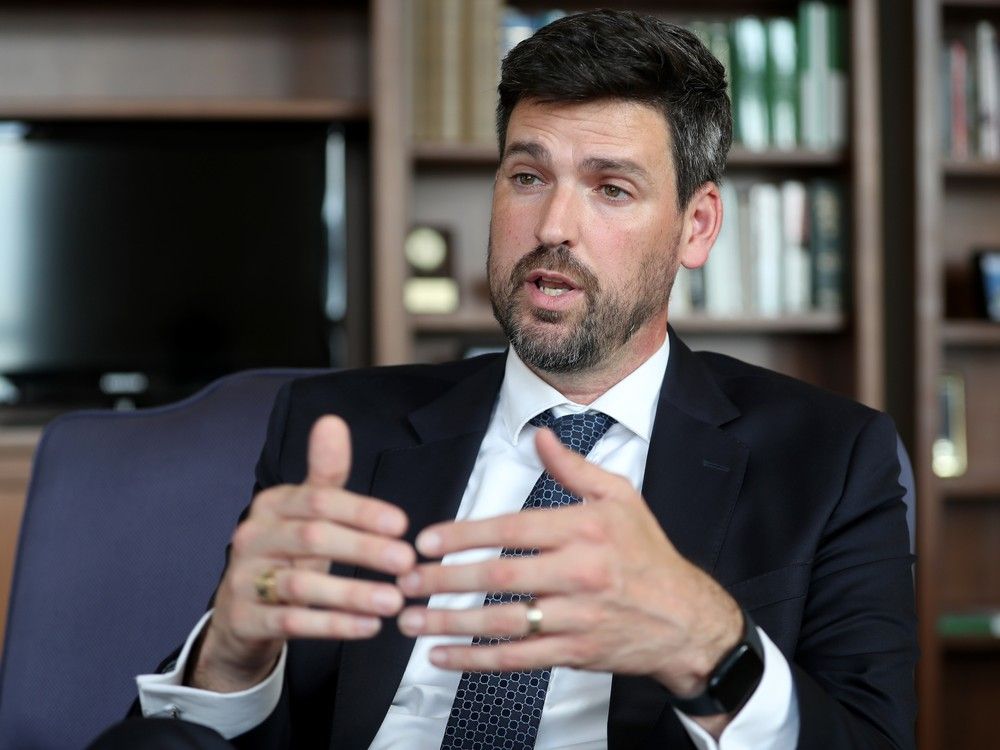

An Indian man claiming refugee status in Canada based on his fear of police persecution has won another shot at staying here, even though his story was 'strikingly similar' to hundreds of others who used the same consultant.

A young Indian man, denied refugee status in Canada because his story of being framed for his friend’s murder was “strikingly similar” to five people who travelled here with him and nearly 200 others who employed the same immigration consultant, has won another chance at staying in Canada.

Parwinder Singh took the decision from Canada’s Refugee Appeal Division (RAD) to a federal court judge for review. The judge granted the review and sent Singh’s case back to another decision-maker at the division for re-evaluation.

“Although narrative similarities between claimants may reasonably ground a negative credibility inference, discrete or incidental similarities in sentence structure and vocabulary do not — in and of themselves — impugn a claimant’s credibility,” Justice Guy Régimbald wrote in a recent decision out of Ottawa.

“Asylum narratives are not exercises in creative writing, and a lack of prosaic originality should not be confused for falsehood, fraud, or the deliberate plagiarism of another person’s story. In this case, the RAD put form over substance in its analysis of Mr. Singh’s narrative. Its conclusion that the narrative was not genuine is therefore unreasonable.”

While he was still in India, Singh “sought out the services” of an immigration consultant named Deepak Pawar, Régimbald wrote in his decision dated July 11.

Singh “maintains that the similarities between his basis of claim narrative and those of other claimants are not enough to impugn his credibility, and that what similarities do exist are more form than substance,” said the decision.

Lawyers representing Immigration Minister Lena Diab responded that “the RAD reasonably found Mr. Singh’s narrative to be fraudulent, insofar as his (basis of claim) was ‘strikingly similar’ to those of others, including individuals who travelled to Canada with him.”

Singh lived in the village of Basant Pura, in the Indian State of Haryana, said the decision.

“The events leading to his departure from India date back to the summer of 2019, when he was a sixteen-year-old boy attending secondary school.”

Singh testified that, on June 25, 2019, he was walking home from school with a group of friends “when they were suddenly accosted by another group of boys carrying knives,” said the decision. “A brawl breaks out and Mr. Singh flees, but the ensuing violence results in one of his friends being stabbed and killed. The group allegedly responsible for his death includes the nephew of a well-known politician.”

Three days later, Singh said local police visited his family home to investigate his friend’s death. “He is brought to the police station, where he is interrogated and provides a statement about the events of June 25, 2019.”

A week later, Singh said local police returned to his home and dragged him to the station, where he spied “the group of boys who had accosted him earlier, including the politician’s nephew,” according to the decision.

“The police force him into a small room, where they inform him that the other boys have all given statements accusing him of killing his friend. Mr. Singh is then beaten to the point of losing consciousness. The police keep him in custody for three days.”

Singh said his father rounded up “some influential people in the village” on July 3, 2019, to demand his son be released.

“The police agree to do so upon payment of a bribe. Before letting the boy go, the police take his signature and fingerprints and threaten him to stay quiet about what transpired. His father takes him to the nearest hospital for treatment.”

Nearly a week later, police called Singh and told him to report to the police station.

“He is afraid of being beaten again, but reports there with his father out of fear of further trouble with the authorities. They wait at the station for hours, being periodically insulted by the local officers, before being told to return there in two weeks’ time.”

Feeling that it was no longer safe to stay in India, Singh fled to New Delhi on July 12, 2019, where he met with Pawar, the immigration agent. “In the meantime, his father arranges the necessary funds and travel documents for Mr. Singh to travel to Canada, where he enters on Nov. 7, 2019, falsely claiming to be participating in a Tae Kwon Do tournament. He claims protection on the basis that he fears harm from the police and his deceased friend’s family.”

The immigration minister intervened in Singh’s case on Feb. 13, 2023, alleging his claim lacked credibility because his “narrative is strikingly similar to those of others, including individuals who travelled to Canada with him and, as such, is not genuine. In support of this allegation, they produce evidence to demonstrate that his narrative contains language, phrases and other similarities to five other claimants who travelled to Canada with the claimant from India, and nearly two hundred other (basis of claim) narratives disclosed by claimants from India. This evidence stems from a Canada Border Services Agency analysis of claims submitted with the assistance of Mr. Pawar, the immigration consultant who represented Mr. Singh.”

Singh amended the narrative that forms the basis of his claim for refugee protection on Feb. 23, 2023. “He now claims that he also fears persecution in India due to his active support of an independent Khalistan, a cause for which he has advocated since coming to Canada.”

Canada’s Refugee Protection Division granted that second claim “despite ‘credibility concerns about the incidents in India and the claimant’s motivation to come Canada,’” said the decision. “Overall, it finds that those concerns do not outweigh his testimony and corroborating evidence in support of his pro-Khalistan views and well-founded fear of persecution.”

Lawyers for the immigration minister appealed that decision and won.

“They reiterate that Mr. Singh’s narrative is fraudulent and that his claim should be accordingly rejected,” said the decision.

“The RAD agrees with the minister. Its analysis relies mainly on alleged similarities between Mr. Singh’s narrative and that of NS, an individual who travelled to Canada from India on the same flight, and who was also represented by Mr. Pawar. The RAD notes twenty-one similar passages between their respective narratives, concluding that the two (basis of claims) are likely duplicates of each other, and therefore fraudulent.”

The Refugee Appeal Division saw Singh’s claim that he was “engaging in pro-Khalistan activity” as “yet another fraudulent refugee claim,” said the decision.

It ruled Singh is neither a convention refugee nor a protected person, and set aside the Refugee Protection Division’s decision.

The Refugee Appeal Division based “its credibility finding on a list of similarities between Mr. Singh’s narrative and that of NS,” Régimbald said.

“It is entitled to do so: ‘courts have found that it is not unreasonable to draw a negative inference as to credibility from unwarranted similarities between a refugee claimant’s narrative and the narratives of other unrelated claimants.’”

“However, not all similarities are unwarranted. Valid reasons may explain the similarities, and in the presence of such reasons, it may be inappropriate to find that the similarities cast doubt on the claimant’s credibility.”

Régimbald said “there is no evidence on file demonstrating that Mr. Pawar uses a template for his client’s (basis of claim) narratives,” and neither the Refugee Protection Division nor the Refugee Appeal Division “seem to have considered that possibility.”

The RAD “fundamentally misapprehend some of the evidence before it and exhibit clear logical fallacies that render its decision unreasonable,” Régimbald said.

Our website is the place for the latest breaking news, exclusive scoops, longreads and provocative commentary. Please bookmark nationalpost.com and sign up for our daily newsletter, Posted, here.

Alberta Premier Danielle Smith makes remarks at Sir Winston Churchill Square on Thursday, July 17, 2025, in Edmonton.

OTTAWA — Canada’s dairy and poultry supply management regime could face a major challenge from within with Alberta Premier Danielle Smith saying she could consider the province exiting the quota system.

Smith said at a town hall in Red Deer, Alta., that she found the idea of the province opting out of supply management intriguing.

“(C)reating our own Alberta version of supply management, maybe as a pathway to a market system and maybe just because it would stick our finger in the eye of Quebec … might be (something) we want to do a little consultation on,” said Smith.

Smith noted that Alberta’s share of the

Canada-wide quotas for dairy

and

egg production

allotted under supply management falls below its share of the population.

Her comments came after one of the attendees, Lee Eddy, a resident of Red Deer County, said earlier in the evening that pulling out of the system would be one way for Alberta to grab the attention of Laurentian power brokers. The town hall was being held as part of Smith’s Alberta Next panel, struck to consider tactics for enhancing Alberta’s sovereignty.

“If we really want to make the eastern politicians … change their underwear, we should remove our supply management from the Canadian system,” said Eddy.

Quebec producers hold

roughly 37 per cent

of Canada’s total milk quota, with

Ontario producers holding 32 per cent

, according to Agriculture and Agri-Foods Canada. Producers in the two provinces have exerted considerable clout over politicians, given their concentration in certain ridings.

Alberta producers hold just short of nine per cent, despite the province representing more than 11 per cent of the national population.

Eddy suggested that Alberta move first to a transitional provincial quota system and eventually to a market-based system.

Supply management has emerged as

a major trade irritant

with the U.S., further complicating already delicate cross-border trade negotiations.

U.S. President Donald Trump singled out Canada’s restricted dairy market

in a recent letter

to Prime Minister Mark Carney, threatening to slap 35 per cent tariffs on all Canadian products on August 1.

During the recent federal election,

Carney promised to keep supply management “off the table”

in new trade negotiations with the U.S.  Federal Conservative Leader Pierre Poilievre has also said

he supports supply management

.

Sylvain Charlebois, director of the Agri-Foods Analytics Lab at Dalhousie University, says that Alberta’s relative lack of skin in the dairy-quota game gives it a freer hand to take on supply management.

“I could potentially see Alberta become the quote-unquote ‘sh-t disturber’ that could actually get everyone, and politicians in particular, to think differently about supply management, instead of just (being) blindly supportive without knowing why,” said Charlebois.

He noted that dairy farmers in Alberta benefit relatively little from the existing scheme, paying up

to twice as much

as farmers in Quebec and Ontario for the same share of quota.

Charlebois said it was “absolutely possible” for Alberta to leave the federal system and set up its own dairy commission. But he said that provincial administration would come with its own challenges, such as selling Alberta dairy products elsewhere in Canada.

“Would they consider other provinces to be foreign markets? It’s hard to say,” said Charlebois.

Charlebois added that other provinces could also object to Alberta “dumping” less expensive, non-supply-managed products across provincial lines.

Alberta’s milk marketing board couldn’t be reached for comment.

Lawrence Herman, a lawyer and international trade expert based in Toronto, says that just because Alberta can unilaterally exit supply management doesn’t mean it should.

“There isn’t anything that legally requires a province to participate,” said Herman. “However, the province couldn’t change the import limits and (tariff-rate quota) system, so it’s difficult to see how it would work.”

“The better option is for the feds and the provinces to work together in phasing out the entire national (supply management) system,” he added.

Supply management in Alberta sparked a minor controversy in April, when an

egg farmer in the province

was jailed in a quota dispute with the egg marketing board.

Smith said in February

that she’d asked her agricultural minister to “start (a) conversation” about potential Canada-U.S. trade concessions relating to supply management.

The Red Deer town hall was the first of

ten scheduled in-person events

hosted by the Smith-chaired Alberta Next panel.

Supply management is not one of

the six formal topics

put up for discussion by the panel.

National Post

rmohamed@postmedia.com

Our website is the place for the latest breaking news, exclusive scoops, longreads and provocative commentary. Please bookmark nationalpost.com and sign up for our daily newsletter, Posted, here.