
LP_468x60
on-the-record-468x60-white

An embassy official cleans blood off the sidewalk outside the Lillian and Albert Small Capital Jewish Museum in Washington, D.C., on Thursday.

Video

of Elias Rodriguez

— the suspect

charged

in the

shooting deaths

of two Israeli Embassy employees outside the Capital Jewish Museum in Washington, D.C., on Wednesday — bears striking resemblance to scenes that have been witnessed at anti-Israel protests on Canadian streets and university campuses in recent years. The senseless murder of a young couple solely because they were Israeli and taking part in an event at a Jewish museum is the logical conclusion of calls to Globalize the Intifada.

Although Rodriguez was clean cut and not trying to hide his identity, he was seen waving a keffiyeh and began the now familiar chant of “free, free Palestine” as he was being led away by police. A

manifesto

posted online after the shooting, purportedly written by Rodriguez, reiterates many of the usual talking points against Israel, but laments that, “Thus far the rhetoric has not amounted to much.” Rodriguez then attempts to justify “the morality of armed demonstration,” and claims others will understand that what he did was “the only sane thing to do.” The

social media post

was accompanied by a call to “Escalate For Gaza” and “Bring The War Home.”

Notably, Rodriguez does not appear to be a radicalized Muslim or a recent immigrant from a Middle Eastern country with high rates of antisemitism. He more closely resembles your run-of-the-mill social justice warrior: the

type of person

who worked as an “oral history researcher” on African-American communities at an educational non-profit;

attended

Black Lives Matter protests and other anti-capitalist demonstrations; gave an interview to a socialist magazine lamenting how Amazon was responsible for the “whitening of Seattle”; and had past ties with the Party for Socialism and Liberation, an

anti-Israel communist group

.

According to his manifesto, Rodriguez wasn’t even aware of the Israeli-Palestinian conflict until 2014. In the same fashion as the kids who were radicalized in mosques after 9/11 and went on to fight with the Taliban and ISIS, Rodriguez appears to have transformed from a fairly typical American lefty into a cold-blooded killer in just over a decade. In too many cases, the progressives have become indistinguishable from the Islamists.

While we don’t know how Rodriguez — who has a BA in English from the University of Illinois Chicago — was radicalized, those who have been paying attention to the antisemitism and anti-Israel bias that has come to dominate universities, the media and left-wing narratives should not be surprised that it eventually led to blood being spilled in the streets of a western capital.

At the

encampment

set up at the University of Toronto last spring, for example, signs reading Revolution Until Victory, Glory to All Martyrs, This is the Intfada (sic) and Globalize Resistance were commonplace. Based on the

clueless statements

made by some students during last year’s encampment craze, it’s clear that at least some of them did not fully appreciate the meaning of these phrases, or the history of the Middle East conflict. Those people now need to take a hard look in the mirror, because the deaths of Sarah Milgrim, 26, and Yaron Lischinsky, 30, is the fruit of their labour.

The two were,

by all accounts

, a promising young couple with their whole lives ahead of them. Lischinsky, a Christian born in Germany, and Milgrim, an American-born Jew, had been trying to make a career of promoting peace and intercultural understanding, and both shared a deep love for the State of Israel. Lischinsky was reportedly planning on proposing to Milgrim in Jerusalem next week. But before that, they attended an interfaith dialogue at the Jewish museum in Washington, where at least part of the discussion centred around efforts to deliver humanitarian aid to Gaza.

None of this mattered to their killer. Whether the young couple were targeted because they worked for the Israeli Embassy, had ties to Israel or were simply attending an event at a Jewish museum is not known. But it is also beside the point. Washington is not a war zone. These people were murdered simply because of their perceived nationality or religion. There was a time when western liberals would have condemned senseless violence such as this as antithetical to everything people in countries like the U.S. and Canada hold dear. Unfortunately, that time has long since passed.

Rodriguez has gained a growing following of

online apostles

, who have taken to social media to cheer on his heinous crimes and spread antisemitic conspiracy theories. While they remain a fringe minority, the ideology that gave license to this senseless violence unfortunately does not. This is what a globalized intifada looks like: young love cut tragically short, the blood of innocents flowing through western streets, mothers and fathers who will have to carry the pain of losing their children around with them for the rest of their lives.

The sad truth is that unless our political leaders, school administrators and media elite get serious about pushing anti-western and antisemitic ideologies to the fringes of society, where they belong, Lischinsky and Milgrim likely won’t be the last individuals to die meaningless deaths. Prime Minister Mark Carney has

condemned their murders

“in the strongest terms,” but will he take any action to ensure something similar doesn’t happen here at home?
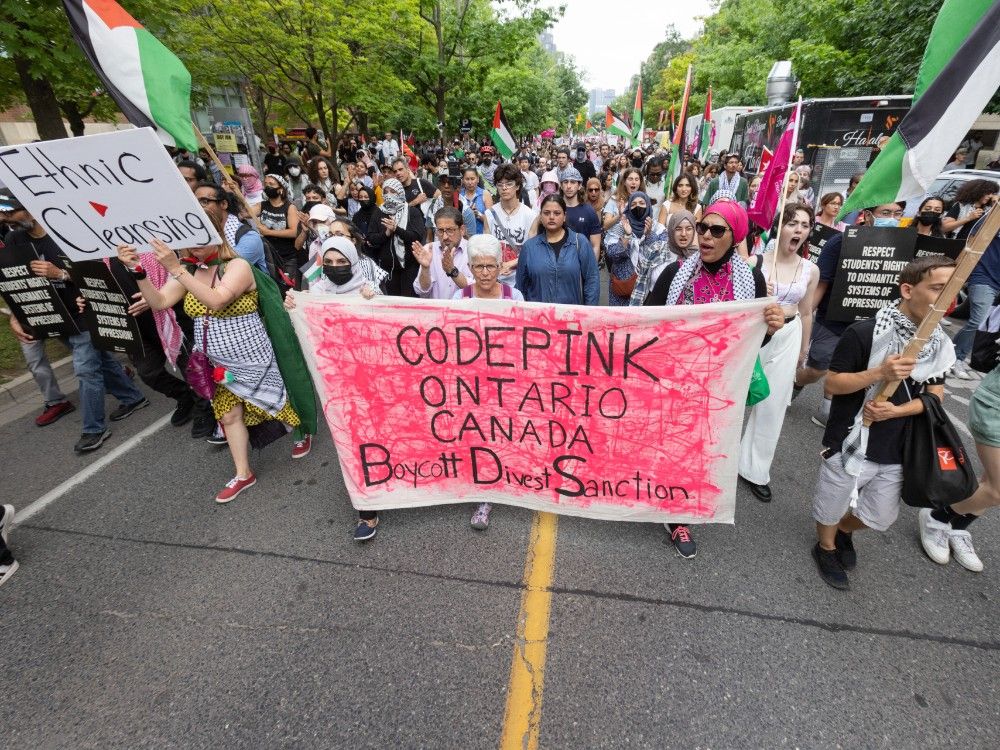

Anti-Israel protestors walk north on St. George Street near the U of T campus on Wednesday, July 3, 2024.

On Thursday Toronto city council

passed a bylaw allowing schools, daycares and places of worship to apply

for a 50-metre “bubble zone” in which protesting would be prohibited. The impetus, obviously, is the anti-Israel protesters who have been targeting synagogues since Oct. 7, 2003. They and their supporters naturally complained bitterly about this new bylaw — a violation of the Charter, they said confidently. (Typically, council voted down a motion that would have made public the legal advice it had received on the matter.)

That said, it seems doubtful any of the synagogue protesters are much worried about this development. Several have proven themselves perfectly willing to be arrested for their cause (

though Crown prosecutors have often been uninterested in pursuing charges

). The idea they would defer to Toronto’s bylaw officers is risible.

The idea Toronto bylaw officers would even wade into this is somewhat dubious, frankly, though council approved funding for 12 new officers. “Toronto bylaw officer” is not a byword for “robust, consistent and judicious enforcement.” In an extraordinary illustration of who really runs City Hall, in January, Toronto’s executive director of licensing and standards

announced to council’s budget committee

that he was thenceforth refusing to have bylaw officers deal with unlicensed marijuana retailers.

“These officers do not have arrest powers and are not permitted or trained to use force while carrying out enforcement activities,” Carleton Grant, who remains in his position, told the committee. “This makes the enforcement of unlicensed cannabis dispensaries challenging and presents health and safety risks to officers.”

And wading into a baying mob demanding global intifada 40 metres in front of a bubble-zoned synagogue is … what, exactly? A fun day out?

Restrictions on unpopular or even repugnant speech, and freedom of association on public property, are not to be taken lightly. It’s chilling to hear politicians decide for themselves what constitutes “hate speech” and demand police enforce their arbitrary definitions — and all the dropped charges only make it worse. You’re supposed to be arrested for breaking the law, not to relieve political pressure for police and their nominal civilian overseers. (People seem to notice and appreciate the arrests far more than they notice the dropped charges.)

But Jewish Canadians have freedom of association as well, not to mention freedom of worship. On its face, a 50-metre no-go zone seems reasonable. If it’s unreasonable, then the Criminal Code is also unreasonable — perhaps even more so. Section 176 reads as follows: “Everyone who wilfully disturbs or interrupts an assemblage of persons met for religious worship or for a moral, social or benevolent purpose is guilty of an offence punishable on summary conviction.”

Furthermore, “everyone who, at or near (such) a meeting referred, … wilfully does anything that disturbs the order or solemnity of the meeting is guilty of an offence punishable on summary conviction.”

So again, we’re asked to believe that bylaw officers will intervene where police will not. Some councillors argued the bylaw might soon be moot, because

during the election campaign, the Liberals promised

tougher federal laws along these lines. But as usual when federal politicians promise to get tough on crime, all they really can do is write things down on paper. Canadian police, and certainly Toronto police, basically enforce what they feel like enforcing.

Some officers are clearly embarrassed by the, shall we say, less than zealous enforcement of existing laws with respect to the anti-Israel protests. A recent video by protest-chronicler Caryma Sa’d shows a keffiyeh-festooned rabble hounding diners at a location of the Jewish-owned Cafe Landwer, including setting off smoke bombs. “Why aren’t you stopping them?” a woman implores police, no doubt speaking for millions of Canadians. Officers sheepishly ordered the protesters back a few feet, accomplishing not much.

That scene really emblematizes the central problem here, and it’s probably not one that police or bylaw officers can ultimately solve under the current rules of engagement. Canada and its institutions simply aren’t set up to deal with protesters, of any stripe, who refuse to accept when enough is enough. And we have never really grappled with the old-world conflicts and hatreds that have been imported to Canada. It’s not often that those conflicts are so in our faces as they are with the anti-Israel mobs, and all we seem to know how to do is look away.

National Post

cselley@postmedia.com

Get more deep-dive National Post political coverage and analysis in your inbox with the Political Hack newsletter, where Ottawa bureau chief Stuart Thomson and political analyst Tasha Kheiriddin get at what’s really going on behind the scenes on Parliament Hill every Wednesday and Friday, exclusively for subscribers. Sign up here.


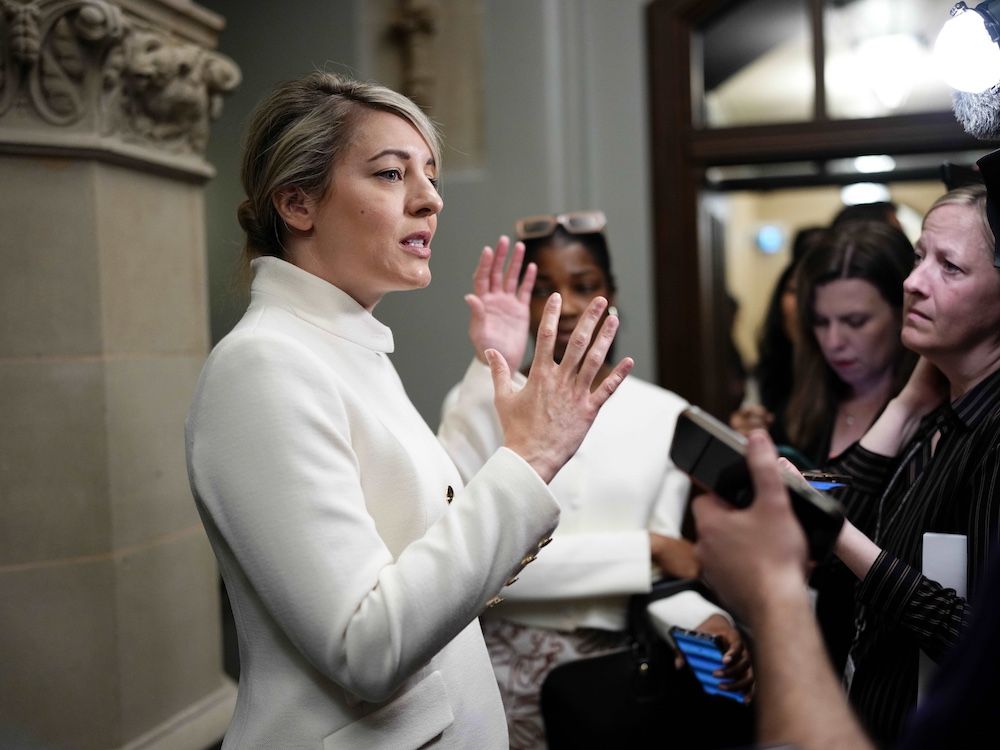
Minister of Industry Melanie Joly speaks to journalists as she arrives for a meeting of the federal cabinet in West Block on Parliament Hill in Ottawa on Wednesday, May 14, 2025. THE CANADIAN PRESS/Justin Tang

We surveyed Canadians on the top three fixes for the country’s ailing economy. Respondents unanimously agreed: pipelines, pipelines, and pipelines. Okay, we didn’t
actually
run a survey, but any sensible Canadian knows what the real answer to our economic woes is — even those who carry a carbon footprint like an albatross around their neck.
And even, it now appears, Quebecers


We are tired of being broke, and at (trade) war with the vastly superior economy of the U.S. We want to unleash our oil and gas potential.
 

Does our new Liberal government feel the same? That’s a clear “no” from Minister of Canadian Identity and Culture Steven Guilbeault, who
insisted this month
that peak oil is imminent and that Canada is hardly using our existing infrastructure — two false claims. (Perhaps to be expected from the
ex-Greenpeace activist turned politician
.)
 

And then there is Industry Minister Mélanie Joly, who has her own zany idea: to attract the flotsam of America’s crumbling, postmodern academic institutions in an attempt to drive Canadian economic growth.
 

Yes, calling all intersectional-colonialist-gender-justice scholars: Canada’s economy, as per Joly, could really use your help right now. 
 

During an
interview with CBC’s Rosemary Barton this week
, Joly downplayed the importance of our energy sector (or its potential), listing it off alongside other sectors including artificial intelligence and digital technology — and then said that she has other ideas for growth.
 

“Meanwhile I think that we can drive the economy through different sectors,” said Joly. By poaching America’s disgraced Ivy League academics. “Because I’m in charge of research, and what we’re seeing with President Trump going after Harvard, and other universities, we can attract the best and the brightest here in Canada. And that will be my goal,” she said.
 

What Joly is proposing is none other than the net zero version of brain drain. No brain power will be crossing north of the 49
th
parallel under Joly’s scheme. The atrocious state of academia in America, including at Ivy League schools such as Harvard, beggars belief. And when Joly talks about Trump’s “attacks” on academia, she makes it clear that any of the “best” or “brightest” she is referring to will be the refugee zealots of the U.S.’s failing diversity, equity, and inclusion (DEI) racket.
 

In 2024, we saw former Harvard president Claudine Gay
resign from her post
in a haze of
plagiarism and antisemitism-related moral relativism
. President Trump has since
frozen billions
of dollars of federal funding for the school. His administration has made
policy demands
, including an end to DEI programs and race-based admissions, and ensuring adequate viewpoint diversity in hiring and admissions. 
 

“The United States has invested in Harvard University’s operations because of the value to the country of scholarly discovery and academic excellence. But an investment is not an entitlement. It depends on Harvard upholding federal civil rights laws, and it only makes sense if Harvard fosters the kind of environment that produces intellectual creativity and scholarly rigor, both of which are antithetical to ideological capture,”
reads the demand letter from the Trump adminnistration
. It goes on to say that Harvard has failed, morally and academically. 
 

Precisely what it is that makes Minister Joly look at the Harvard situation and see flashing Canadian dollar signs, rather than a dumpster engulfed in a kerosene blaze, is troubling.  
 

It suggests that Joly, despite now working for Prime Minister Carney, is still living in Justin Trudeau’s 2015 “
diversity is our strength
” Liberal era — that time before we wised up to Trudeau’s thought-terminating slogans.
 

Another consideration: that Joly does not keep up to date on American Ivy League achievements. If she did, she might have
seen the recently-published paper
from the heretofore prestigious Yale University, entitled “Transfeminist pregnancy: reproductive speculation, genre, and desire.” 
 

Joly certainly — we can hope — missed this scholastic bombshell, in which the scholar, Carlo Sariego, asserts: “I argue that pregnancy is not to be defined by biological phenomena but instead as a genre of political, aesthetic, and affective experience and expectation … involving birth and becoming in a larger sense.”
 

Or maybe Joly didn’t miss it at all. Maybe Joly has instead been praying for some beleaguered Ivy League asylum seeker to beg her for the research funds to uncover polar bear genders in the Canadian arctic. And maybe she is desperate to award those funds. (Here’s a million bucks, one dollar per bear gender tendered!) Who are we to second guess her plans? 
 

It’s for the economy, stupid.
 

National Post


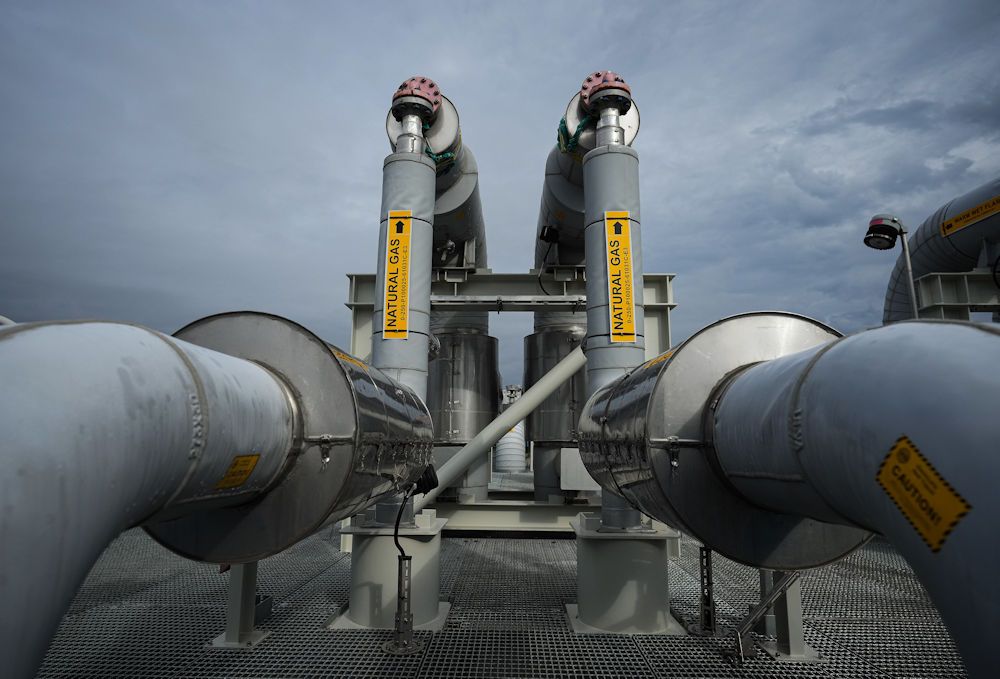
Piping is seen on the top of a receiving platform which will be connected to the Coastal GasLink natural gas pipeline terminus at the LNG Canada export terminal under construction, in Kitimat, B.C., Wednesday, Sept. 28, 2022.

First Reading is a Canadian politics newsletter curated by the National Post’s own Tristin Hopper. To get an early version sent directly to your inbox, sign up here.

TOP STORY

A new report says that if Canada really wanted to save the climate, the most effective thing it could do would be to sell as much natural gas to Asia as humanly possible.

The 46-page study, published on Thursday by the right-leaning Fraser Institute, is premised on the notion that Canadian natural gas exports could singlehandedly reduce Asian dependence on coal.

If Canada could double its LNG production, write the authors, it would divert enough coal from Asian power plants to stop 630 million tonnes of greenhouse gases per year from entering the Earth’s atmosphere.

For context, that nearly represents Canada’s entire carbon footprint. According to the most recent figures from Environment and Climate Change Canada, the country was responsible for 694 million tonnes of carbon emissions in 2023.

“Instead of focusing on reducing domestic GHG emissions in Canada by implementing various policies that hinder economic growth, governments must shift their focus toward global GHG reductions and help the country cut emissions worldwide,” the report says.

The Fraser Institute’s calculation is based on the simple fact that natural gas is an easy substitute for coal, and can produce the same amount of energy with far lower emissions.

The U.S. Energy Information Administration maintains a ranking of fossil fuels by the quantity of emissions they produce for every one million BTUs (British Thermal Units) — roughly the amount of power needed to heat a standard house for several days.

Generating one million BTUs by burning coal will produce between 93 and 103 kilograms of carbon dioxide. Doing the same with natural gas will produce just 53 kilograms.

Canada currently produces about 17.9 billion cubic feet per day of natural gas. Most of this is consumed domestically, while 39 per cent is exported, mostly to the United States via pipeline.

The Fraser Institute calculated that if Canada could double production and “send the surplus … to Asia,” it could potentially supplant more than 200 million tonnes of coal every year.

Although there’s no guarantee that increased Canadian natural gas production would immediately divert coal from Asian furnaces, the continent has recently been burning record quantities of the fuel due in part to supply disruptions of natural gas prompted by Russia’s full-scale invasion of Ukraine.

At the precise moment that many advanced economies are close to phasing out coal entirely, world coal consumption reached an all-time high of 8.77 billion tonnes in 2024. This was driven almost entirely by Asia, with Chinese power plants alone representing a third of global coal consumption.

In December, a report commissioned by the Asia Natural Gas and Energy Association concluded if world natural gas prices weren’t kept low by high North American production, the result would be continued heavy coal use everywhere from Malaysia to Thailand to Vietnam.

“Without certainty of an affordable supply, their fallback position, quite understandably, is to stick with a fuel they are familiar with and which they know is likely to be inexpensive and plentiful: coal,” it read.

The Fraser Institute is not the first to claim that Canada’s best service to the world climate would be to feverishly produce natural gas. Under Conservative Leader Pierre Poilievre, one of the party’s singular pledges on the issue of climate change was to dismantle domestic decarbonization programs in favour of selling more natural gas abroad.

“The best way to reduce emissions is to bring home clean production here,” Poilievre said at a press conference just before the start of the 2025 campaign.

Under the last 10 years of Liberal governance, Canada’s climate strategy has focused almost entirely on bringing down Canada’s domestic carbon emissions, with little accounting on how Canadian actions are otherwise affecting global emissions.

This includes scenarios in which Canada is arguably undercounting its overall contribution to climate change. As one example, Canada remains a major exporter of coal to Asia, but the emissions created by the coal are not counted towards Canada’s overall carbon footprint.

The decarbonization strategy proposed by the Fraser Institute is obviously the more profitable one for Canada.

The Conference Board of Canada has previously reported that for every 4 billion cubic feet of LNG being produced daily by Canada, GDP grows by $7.4 billion per year and the country adds 65,000 jobs. So, a doubling of Canada’s current production could conceivably add more than $30 billion to annual GDP and nearly a quarter million jobs.

And this would be as an alternative to decarbonization efforts that, by any metric, have generally served to reduce growth, GDP and employment.

Prior to the consumer carbon tax being zeroed in March, the Government of Canada’s own internal forecasts showed that it would slash $25 billion from Canadian GDP by 2030 — the equivalent of deleting one per cent of the national economy.


IN OTHER NEWS

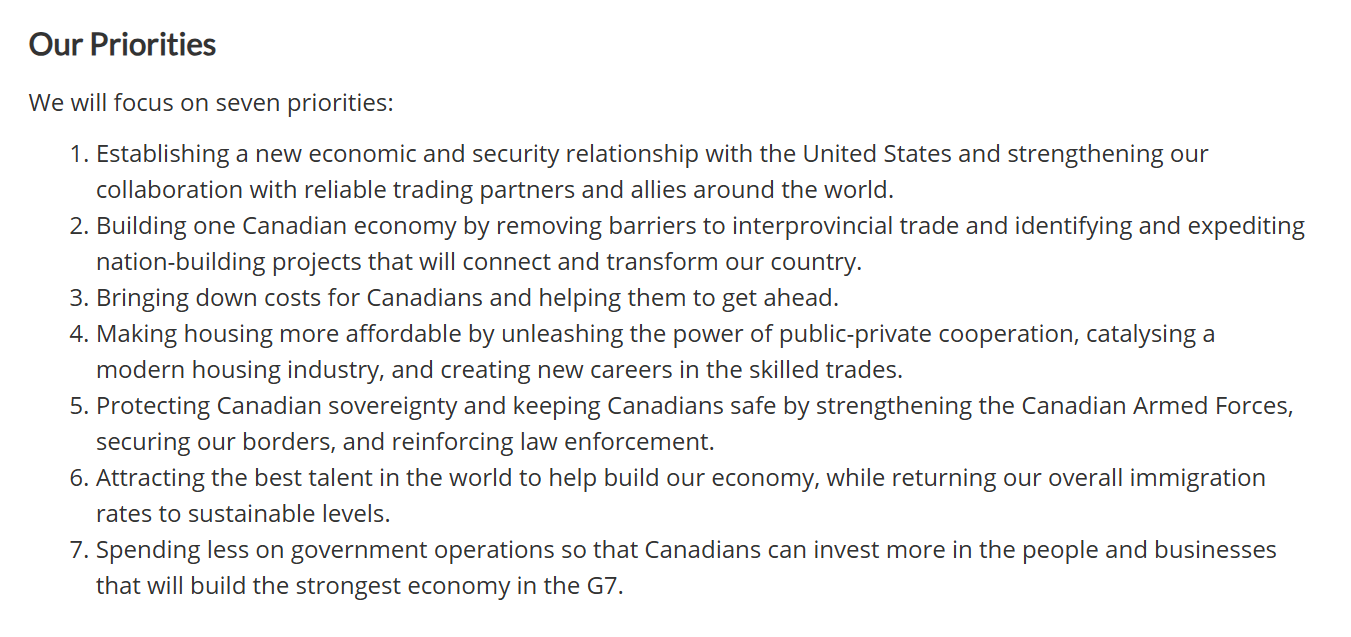
 This is an excerpt from Prime Minister Mark Carney’s mandate letter to his new ministry. Usually prime ministers write a bespoke letter for each minister, but Carney just went with one. He also largely dispensed with mentions of climate change, anti-racism or any of the other culture war issues that defined the Trudeau era. In 2021, by contrast, every mandate letter included a declaration that Canada was plagued with “profound systemic inequities and disparities that remain present in the core fabric of our society, including our core institutions.”

By standing for byelection in Battle River—Crowfoot, the single most Conservative riding in Canada, Conservative Leader Pierre Poilievre was likely angling for an extremely drama-free campaign. But Alberta separatists have promised to make the process hell — or at least difficult — given that Poilievre is very much a federalist. “You could almost run a straw bale in our riding under the Conservative flag and that would get elected… but there might be an apathy there if (Poilievre) can’t shake the label of being a parachute candidate from Ottawa,” Rick Strankman, a former Wildrose MLA for the area, told National Post.

 This is Stephanie, a Toronto woman who was brutally beaten in an April stranger attack while on a visit to Vancouver. Her case was taken up by Conservative candidates during the election given that the alleged assailant was on bail at the time for an earlier assault against a peace office. But in the above video, Stephanie accuses Conservatives of being “awful, terrible f—ing human beings” for using her story, and promises to continue “voting left.” Her alleged assailant, meanwhile, is on bail again.

Get all of these insights and more into your inbox by signing up for the First Reading newsletter here.


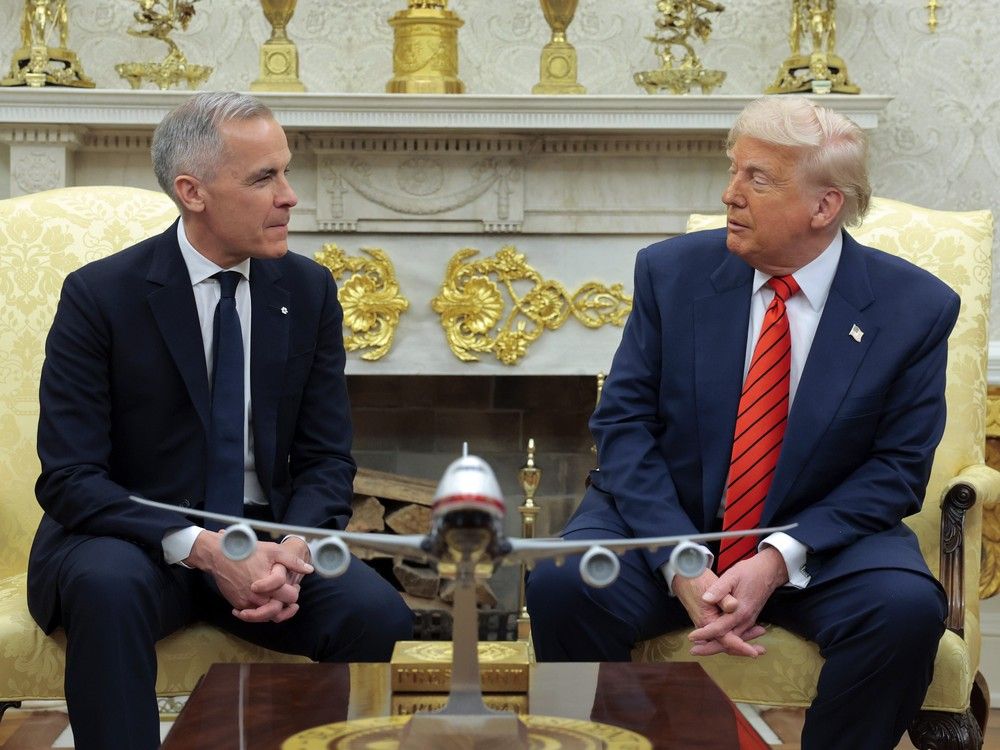
U.S. President Donald Trump meets with Canadian Prime Minister Mark Carney in the Oval Office at the White House on May 6, 2025 in Washington, DC.

It was not that long ago, merely March, when Prime Minister Mark Carney, fresh off his Liberal party leadership win, began

telling

Canadians that his party needed a “strong mandate” because they were “facing the most significant crisis of our lifetimes because of President Donald Trump’s unjustified trade actions and his threats to our sovereignty.” He insisted a snap election was essential, as was electing him, the self-proclaimed “crisis manager,” to address it.

The election is over now. Where’s the “crisis,” Carney?

In late March, pollster Nik Nanos

found

that Canadians’ top concern was “the potential negative fallout of Donald Trump and the threatened tariffs.” That concern quickly shifted. By mid-April, 34.3 per cent of those

polled

ranked Trump and U.S. relations as the biggest issue. A month later, by mid-May, that number plummeted to 19.3 per cent, with jobs and the economy taking precedence.

So, what happened?

Did Carney give Trump the old “elbow’s up” so hard he submitted? Did he pull Trump’s blazer over his head, as if in a Molson’s “I am Canadian Hockey Fight”

commercial

? Did the two face off in an

Epic Rap Battle

, an eagle over Trump’s shoulder and a beaver on Carney’s back, with Carney emerging victoriously after some sick disses?

Hardly. Closer to the opposite, actually.

Six days into the campaign, on March 28, Carney gave

Trump

a heads up in a phone call that he’d be talking about him during the campaign. In that same call, Carney flattered Trump, calling him “

transformative president

.” The PMO’s

press statement

, of course, did not mention these details. There were four more weeks until election day, after all.

Sounds like any “crisis” ended there.

Why else would Carney feel comfortable enough to share his campaign strategy with Trump? That’s not the kind of card one shows their professed political enemy. It’s something a politician would reveal only to someone they trust, as it could easily backfire.

Carney made Canadians the butt of an inside joke between himself and an American president. Imagine how powerful that would have made Trump feel.

After this cordial chat, Carney kept piling on the crisis rhetoric. At a mid-April Hamilton campaign event, Carney

warned

that Trump’s “strategy is to break us so America can own us.” This was reportedly met with boos, assumedly directed at the U.S. president.

Carney also suggested there was going to be a historic change in Canada’s relationship with the U.S., often repeating the claim that the “old relationship we had with the United States based on deepening integration of our economies and tight security and military co-operations is over.”

Much of Carney’s “our old relationship is over” rhetoric appeared to be based upon the idea that Trump was serious about making Canada the 51st state.

“As I’ve been warning for months, America wants our land, our resources, our water, our country. These are not idle threats. President Trump is trying to break us so America can own us. That will never … ever happen,” he

said

at his election victory speech.

But signs of exaggeration were clear as early as February, during the

Canada-U.S. Economic Summit

, signs that Canadians should not have bought into any of this. According to the CEO of the Canadian American Business Council, Beth Burke, Trump’s comments

were

something that “most Americans don’t take seriously.”

Burke told reporters at the summit: “I would say (Americans) don’t believe, generally, that that’s actually something that’s real, or in a real agenda. Instead, I think our perception is more that it is one from a position of negotiation and posturing and using it as leveraging in the conversation.”

This threat — which helped galvanize Liberal support — evaporated post-election. And when Canada becoming the 51st was asked about by a reporter when Carney visited the White House on May 6, Trump responded, “I do feel it’s much better for Canada. But we’re not going to be discussing that. Unless somebody wants to discuss it.”

This suggests the annexation threat may have never been more serious than the “Oh, Canada,”

meme

which helped spread it in early December. In the meme, Trump stands on the alps, in full business suit attire, next to a Canadian flag, gazing over at Matterhorn, which is in Switzerland, not Canada.

Either way, the post-election meeting between Carney and Trump did not go as the Liberals’ “elbow’s up” campaign rhetoric suggested.

The warm feelings between the two were palpable. Trump opened by congratulating Carney, complimenting him on how he ran his race, which we know they discussed prior in that phone call.

When asked by a reporter whether he’d like to see his first trade deal be with Canada, Trump

replied

, “I would. I would love that. I have a lot of respect for this man… He ran a really great election, I thought.” Trump doesn’t usually gush over people who attack him. He tends to take negative comments quite personally.

Carney thanked Trump for his hospitality and his leadership, calling him a “transformational president,” saying he wanted to transform Canada much the same. I guess that’s why he’s been photographed signing all those fake American-style executive orders.

By the end of the meeting, Trump tried to reassure confused reporters that, “Regardless of anything, we’re going to be friends with Canada.”

Weighing in on the Oval Office meeting, the U.S. Ambassador to Canada, Pete Hoekstra, too, confirmed that Canada-U.S. relations were firm,

telling

National Post’s Stephanie Taylor that the last 90 days were “behind us.”

When asked whether Carney and Trump’s meeting was a restart for Canada-U.S. relations, Hoekstra’s face suggested that even the premise of the question was absurd.

“A restart or a reset? No way! … We are great friends. We have been great friends for such a long period of time. You’re not going to change those personal relationships. You’re not going to change those economic relationships, national security… The relationship, from my perspective, and, I think, the president’s perspective, was never in jeopardy.” Well, then.

There were other signs things had improved well before election day. Retaliatory tariffs Carney threatened to wage against Trump went elbows went down as early as April 16, when his government — mid-election campaign — had decided, according to Bloomberg News, citing an Oxford Economics report, “

suspend almost all of its retaliatory tariffs

” dropping them to “

nearly zero.

As for Canada’s military and security relationship with the U.S., it appears the period of deepening integration is not, in fact, over. It’s been reported that Trump

said

Canada wants in on Trump’s

Golden Dome

— a missile defence shield that can identify and intercept incoming projectile threats and destroy them mid-flight — with Carney’s office confirming that discussions are ongoing.

Asked Wednesday by Global reporter MacKenzie Gray about this apparent about-face on deepening security relations with the U.S., Carney

responded

with gibberish,”We are in a position now where we cooperate when necessary, but not necessarily cooperate.”

Now, we could chalk all of these crisis flip-flops up to Carney’s superior negotiating skills in going to bat for Canadians, except for that little problem of that early campaign friendly phone call between himself and Trump.

In late March, Carney told reporters “I’ve managed crises before. This is the time for experience, not experiments.”

He’s managed something, alright — a masterclass in political theatre.

tnewman@postmedia.com

X:

@TLNewmanMTL


Prime Minister Mark Carney

Canadians don’t believe in terrorism. They believe in peace and democracy. That’s why this week’s news should alarm every Canadian: Hamas, a designated terrorist organization responsible for the brutal murders and rapes of over 1,200 innocent people on October 7 — including the deaths of eight Canadians — publicly praised a joint

statement

issued by the UK, France, and Canada. That statement demanded that Israel cease its military operations—or face “concrete actions.”

Let’s be honest: if Hamas is thanking you, you’re on the wrong side of history.

And this isn’t the first time. This marks the second instance where Hamas has openly praised Canada’s stance. When a terrorist organization applauds your foreign policy — not once, but twice — that should trigger a serious moral reckoning.

Even more troubling, after it was revealed that several UNRWA staff were complicit in the October 7 massacre, Canada didn’t cut back funding to the agency. The government

increased

it. What does that say about our moral compass? Are we so determined to appear “neutral” that we’re willing to reward those tied to terror?

This is not a matter of foreign policy nuance. This is a question of moral clarity. Hamas — an organization committed to Israel’s destruction — welcomed the joint Western statement describing it as a “an important step” in the right direction. Why? Because it lets them off the hook. Why release the hostages or stop fighting if even the West is behind us?

The Canadian and friends statement contained no demand for Hamas to disarm and to stop firing rockets. There was no appeal to Qatar or other regional powers to pressure Hamas to lay down its arms — instead, the statement expressed

support

for their efforts.

The blame — once again — was placed squarely on Israel, the only democracy in the Middle East. That double standard is antisemitism, plain and simple.

Canada’s Prime Minister Mark Carney amplified this misguided posture with sharp rhetoric, and Foreign Affairs Minister Anita Anand

added fuel to the fire

by falsely accusing Israel of weaponizing food, citing unverified and inflated casualty statistics — without once acknowledging Hamas’s role in provoking and perpetuating this war.

Let’s remember: this war began with the slaughter of innocent civilians by Hamas. Israel has a right — and an obligation — to defend itself.

And yet, our government, instead of standing with the victims, appears to be echoing the demands of their killers.

By giving voice to terrorists, our leaders risk legitimizing terrorism — and endangering Jewish lives. We are already seeing the consequences. Just this week in Washington, two young Israeli embassy employees were

shot dead

by a gunman who shouted “free, free Palestine,” as he was arrested. When government leaders fail to recognize the weight of their words, these kinds of attacks become more frequent, more brazen, and more deadly.

Of course we support humanitarian aid for civilians in Gaza. But that aid must not be hijacked by Hamas to further entrench its terror network. Our worry is that Canada, in its rush to want a global voice, may take reckless steps that damage its relationship with Israel and inflame antisemitism here at home.

Jewish students are being spat on at universities. Families are harassed while walking to synagogue. Hate crimes are rising. Rather than protecting Canadians, our leaders are giving oxygen to narratives that incite hate and violence.

Everyone wants peace. Everyone wants an end to the suffering. But peace begins with Hamas laying down its weapons, releasing hostages, and surrendering control of Gaza. Until that happens, punishing Israel is not only unjust — it is dangerous.

We call on our government to recalibrate its course. To defend truth. To stand with democratic allies. To reject terrorism, in all its forms.

Canada must remember who we are—and what we stand for.

Avi Abraham Benlolo is the Chairman and CEO of The Abraham Global Peace Initiative, a Canadian think-tank.


Hamas terrorists carry their guns in Nuseirat, in the central Gaza Strip, on Feb. 22.

On Monday, the governments of Canada, France and the United Kingdom issued a joint statement condemning Israel’s military operations in Gaza, threatening punitive measures against the Jewish state and calling for an immediate ceasefire and increased humanitarian aid. They offered a brief mention of the hostages still held in Hamas tunnels, but directed the bulk of their ire at the victim of one of the worst terrorist attacks in history.

As a result, Hamas issued a public statement thanking Canada, France and the U.K. This was the second time since October 7 that Hamas has publicly thanked Canada. That fact alone should set off alarm bells in Ottawa. If a terrorist organization responsible for the slaughter, rape and kidnapping of innocent men, women, children and Holocaust survivors is commending your foreign policy, you’re not advancing peace — you’re legitimizing terror.

Worse, Canada has never issued an equivalent statement directed at Hamas. Not once has the Government of Canada said: “If you do not release the hostages and lay down your arms, we will do the following …” There have been no credible threats, no meaningful consequences and no red lines. Instead, Canada’s condemnation and pressure has been reserved for Israel.

Hamas launched its October 7 massacre not in pursuit of peace or Palestinian statehood, but to destroy the possibility of either. Its goal was to shatter the growing diplomatic progress between Israel and key Arab states, particularly Saudi Arabia, and trigger a war that would cement its grip on Gaza while drawing international pressure against Israel. The recent statement from London, Paris and Ottawa plays straight into that strategy.

Yes, the humanitarian situation in Gaza is dire. But placing the blame squarely on Israel while ignoring Hamas’s deliberate embedding of military infrastructure in hospitals, schools and apartment buildings is not just a moral failure, it’s geopolitical malpractice.

Demanding that Israel halt its military operations without any credible plan to dismantle Hamas is tantamount to demanding that a mass-murdering terror group be left intact, free to rearm and repeat the events of October 7. No state on earth would accept this. After 9/11, the United States was not asked to co-exist with al-Qaida or accommodate the Taliban. It acted — with the full support of these very same allies.

The October 7 attacks were not only a humanitarian catastrophe but a strategic assault on the very idea of peace in the Middle East. Yet instead of supporting the dismantling of Hamas, the joint statement threatens the one state that’s willing to confront it. With friends like these, who needs enemies?

Even the statement’s nod toward a two-state solution is hollow. A two-state solution cannot be built on terror, corruption and incitement. It requires the emergence of a credible Palestinian leadership — one that comes to the table with clean hands, rejects Hamas’s ideology and commits to peaceful coexistence with Israel. The Palestinian Authority must prove itself ready for that responsibility, and the international community must insist on it.

What the joint statement should have said is, “We condemn Hamas’s October 7 massacre in the strongest terms and reaffirm Israel’s right to defend its population from further attacks. We call for the immediate and unconditional release of all hostages. Their continued captivity is a gross violation of international law and an affront to human dignity.

“We recognize the suffering of civilians in Gaza and urge Israel to continue expanding humanitarian access in co-ordination with the United Nations and other trusted partners. At the same time, we condemn Hamas for using civilians as human shields and for placing its military infrastructure beneath civilian sites.

“We are united in our view that Hamas cannot remain in control of Gaza. Just as the international community acted decisively after 9/11 to defeat al-Qaida, we support efforts to dismantle Hamas as a political and military force.

“We call on the Palestinian Authority to demonstrate leadership through governance reform, the rejection of violence and a clear commitment to a negotiated two-state solution. We reaffirm our support for the eventual establishment of a Palestinian state — secured through negotiation, not terrorism — living side-by-side with Israel in peace.”

That is what moral clarity looks like. That is what a responsible statement would have done: supported Israel’s right to dismantle the terror infrastructure threatening its people, demanded the release of the hostages and laid out a credible path for a post-Hamas peace.

Instead, by echoing Hamas’s own narrative and drawing a false equivalence between a sovereign democracy and a terror regime, the leaders of Canada, France and Britain have done lasting harm to the cause of peace — and handed Hamas the propaganda victory it was hoping for.

National Post

Alan Kessel is a former legal adviser to the Government of Canada and deputy high commissioner of Canada to the United Kingdom. He is also a senior fellow at the Macdonald Laurier Institute.


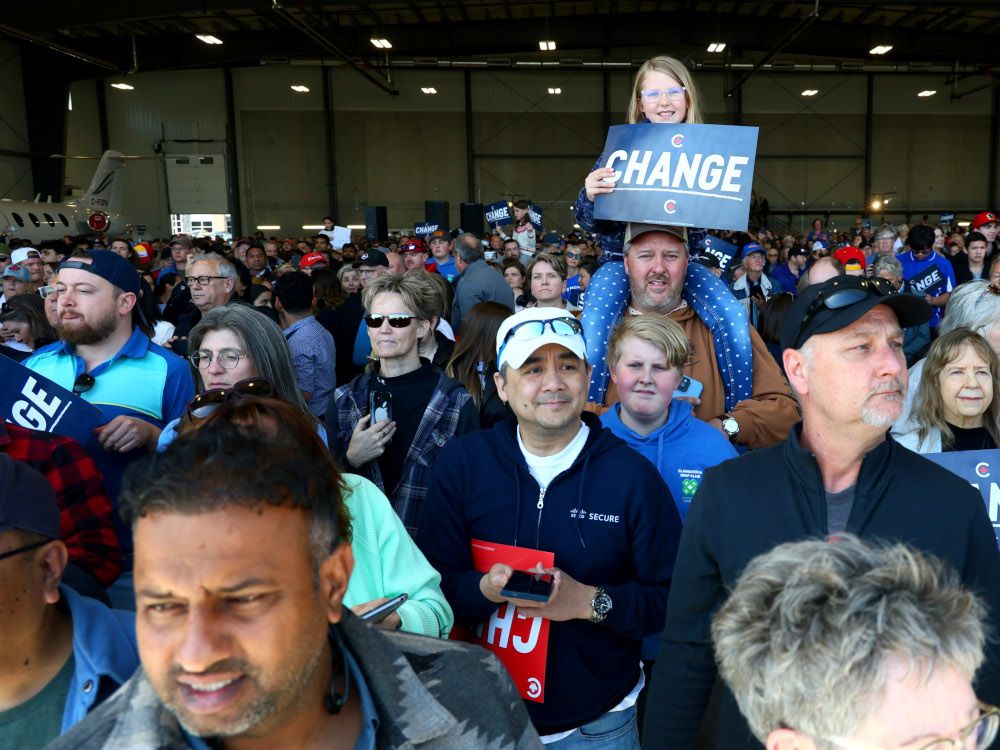
Hundreds of people rally in support of Conservative Leader Pierre Poilievre, in Calgary on April 25.

Canada’s populist moment did not come to pass — at least not yet.

Having deluded themselves into believing that the status quo is tenable, many on the left

celebrated

the result of the recent federal election as proof that Canada could withstand the wave of anti-establishment politics that has swept the West in recent years.

The Trump trade war overtook the many other crises affecting Canada as one of the top election issues, but it did not extinguish them. If anything, Trump’s attempt to reshape the global economic order will only exacerbate the problems this country is facing. Canadian cities remain

mostly unaffordable

and

riddled

with drugs and

petty crime

, and the broken immigration system will not repair itself.

Prime Minister Mark Carney has portrayed himself as an agent of change. While he still deserves the benefit of the doubt, his new cabinet does not. The most glaring of these is Gregor Robertson, the former mayor of Vancouver and the new minister of housing.

In one of his first media appearances as minister, Robertson asserted that it is

not his intention

to bring down house prices. Robertson’s words were in keeping with the Liberal government’s track record.

Ahmed Hussen, who served as housing minister from 2021 to 2023, infamously tried to explain the federal government’s at-best lackadaisical effort to address the cost of housing by asserting that “

mom and pop

” landlords would be at risk if home prices fell too drastically.

Following the Conservative party’s seizure of affordability as their key issue, the Liberals made a show of shuffling Hussen out of the housing portfolio and replacing him with Sean Fraser. Formerly the most incompetent and damaging immigration minister in living memory, the choice of Fraser spoke volumes about Hussen’s ability to run the file.

With Fraser in charge, the government made a series of

announcements

related to the housing supply, but to little avail. He, too,

explicitly said

that the government’s “goal is not to decrease the value” of homes.

This all occurred in 2023 when the Liberals began tanking in the polls. When Trump started rambling about annexing Canada and launching a trade war, the Liberals seized the opportunity. The American president was all they needed to activate their base and garner the support necessary to remain in office.

For millions of older voters, the Canadian election became an opportunity for them to stick it to Trump by voting for Carney, the guy they thought would put his elbows up and hopefully catch Trump on the nose. The Liberal party has evidently taken its victory as a validation of its decade in office, in which the country went into perceptible decline.

The Liberal vision of Canada’s social contract involves redistributing wealth to the top of the age pyramid. Whether it’s

enlarged pension payments

, maintaining the exorbitant rent charged by “mom and pop” landlords or providing cheap labour to big businesses through

mass immigration

, the Liberal economic platform can only be described as “gerontocratic.”

As housing minister, Robertson has clearly embraced the Fraser-Hussen school of thought when it comes to prices and affordability. This is a serious mistake for any government. Generational inequality is at the heart of the populist movement in Canada — not convoys, bigotry or misinformation. It’s why young people and blue-collar workers

flocked

to the Conservatives in large numbers.

As long as young Canadians continue to feel their quality of life decline through

rising debt

,

tightening employment

, restrictive housing supplies and

worsening mental health

, they will become increasingly disillusioned.

Youth unemployment is the

highest

it has been since 2012. In 2022, the number of Canadian-born people who left for the United States increased by

50 per cent

over pre-COVID levels. This is fuel for anger and populism, and it is justified.

Mark Carney still has a long way to go before the next federal election, which gives him a lot of time to set himself apart from the Trudeau government. Yet he will never accomplish this so long as his party continues to pander to the comfortable and the selfish.

Considering that the Liberals plan to allow in

400,000 people

a year by 2027, we should not expect demand for housing to slacken or for prices to meaningfully decrease. Crime, drug addiction and homelessness are still rampant, and the Liberals are unlikely to seriously address any of these issues.

Former prime minister Justin Trudeau’s government oversaw the great decline of Canada into a

more barbarous

, low-trust and hopeless society. Unless Carney has a plan to truly turn the page, his political ascension will only have deferred the Liberals’ day of reckoning.

The longer that Canada’s present condition persists, the more vicious and hard-line the blow-back will become. Establishment parties across Europe have

learned this

the hard way, with many right-wing populist parties having decimated their more moderate rivals.

Canada’s populist moment will come, either through a challenger to the status quo who embraces breaking down our sclerotic, parasitical economic model, or a government that beats them to it.

National Post


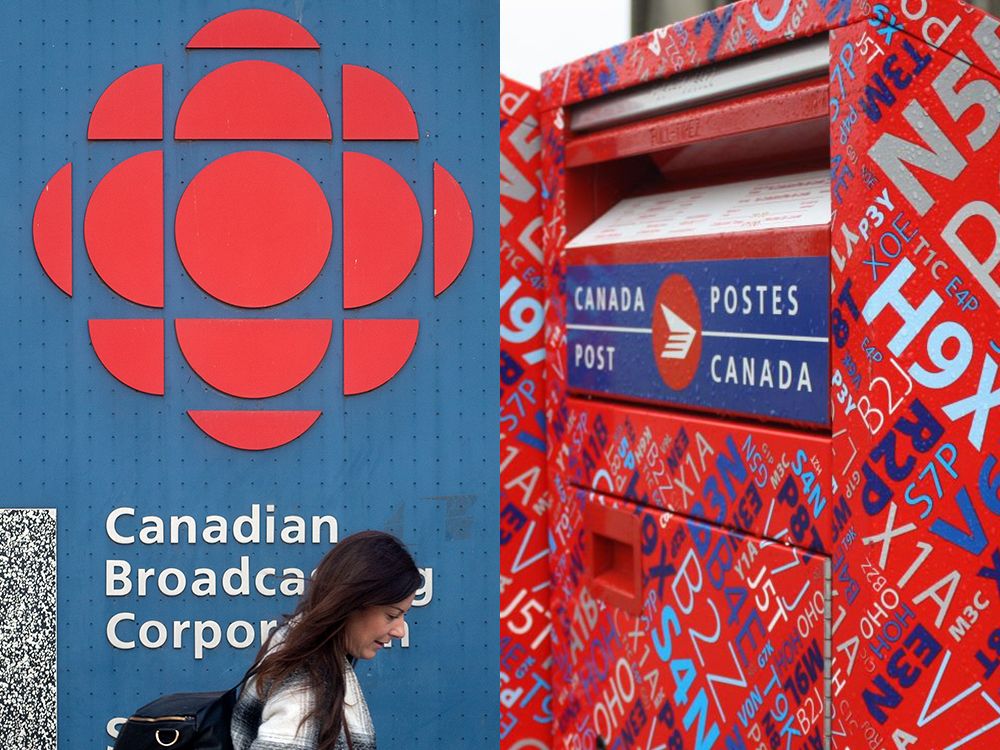
The Canadian Union of Postal Workers must wonder why its 55,000 members get such a bad rep while the CBC’s 6,800 employees and army of bureaucrats are pampered and petted like corgis at Windsor Castle, writes Kelly McParland.

Here’s a riddle to test the depth of your Canadianness, even if you think you’re already pretty Canadian.

The CBC and Canada Post are both fixtures dating to the early days of Canada’s consciousness. Both have long been tasked with serving a scattered population across a large country that for many decades had little alternative to the important services they provided. Both face new and unique pressures from the inevitable forces of change and progress. Neither can support itself on its own. But while the CBC is treated as a national treasure that must be protected from private-sector competitors whatever the cost, the post office is viewed as an aging anachronism, out of touch with the times, resistant to change, focused on protecting its privileges and paycheques. It must change or be left to wither.

Explain the difference.

If you have an answer, you might want to send it to the leaders of the Canadian Union of Postal Workers (CUPW), which must be wondering why its 55,000 members get such a bad rep while the CBC’s 6,800 employees and army of bureaucrats are pampered and petted like a

pack

of corgis at

Windsor

Castle.

Canada’s posties are currently

engaged

in a bitter labour

dispute

, their second in

less

than a year. They previously went on strike just before Christmas, staying out for 32 days in a confrontation that was never really resolved. The basis of this disagreement is the same as the last: how to keep alive a business that remains essential but unsustainable under the old rules, with a workforce wary of seeing hard-won rights eroded or eliminated.

There’s no serious argument about the financial situation. Canada Post loses

money

every year, about $500 million on average over recent years, reaching $748 million in 2023. It can’t survive by simply delivering the mail, but sees potential in expanding its parcel delivery services. To compete with myriad other delivery operations — including one, as it happens, owned by the proprietors of this publication — it must do at least as good a job as they do. That means working weekends and charging reasonable rates. Posties don’t normally work weekends, get extra pay

when

they do, and aren’t keen on management’s plan to hire a supply of part-timers.

Still, while sticking letters and flyers in mail boxes may not be a glamorous business, it remains a necessary one. Especially in parts of the country outside urban centres that aren’t as accustomed to having their food, their information and their bills brought to their doors, if not their desktops, without ever having to leave the room. A generation ago mail delivery was so critical a walkout could bring the economy to its knees in a matter of days. That time may have passed, but if we didn’t still need postal service there wouldn’t be such a stink any time it stops.

To alleviate its woes, Canada Post

got

a billion-dollar loan from Ottawa in January. That’s less than the CBC, with a fraction the workforce, is accorded every year, with no requirement it repay the money. The broadcaster’s

federal

funding totalled $1.38 billion in 2024-25 amid endless moaning about how badly it’s treated. Without a bigger subsidy, it wailed, people would have to be let go, services would be reduced, fewer productions could be commissioned, viewers might be denied their favourite programs. Fortunately, along came Mark Carney, before he was even elected,

pledging

to kick in an extra $150 million a year, with additional increases to come, perhaps adding as much as $1 billion a year to its budget.

The CBC is used to special treatment. In 2021 the Trudeau government pledged an extra $400 million over four years to make it “less reliant on private advertising,” yet the ads are still there, siphoning off revenue from other Canadian-owned and operated broadcasters employing Canadian talent, many with better viewership numbers. When BCE Inc. cut thousands of

jobs

a year ago, its CTV network took a substantial hit in people and programming. When CBC

warned

it might face similar cuts, Ottawa

gave

it a $42-million top-up.

The CBC’s one clear distinction is its claim to relative freedom from the taint of foreign (meaning U.S.) impingement. Canadian viewers determined to avoid cultural contamination can safely watch Canadian programming featuring Canadian faces in Canadian locales. The perceived need for protection from contamination has only increased under the new U.S. administration, a point Carney emphasized in declaring “a new Liberal government will never cower to President Trump’s attacks on Canada.”

“Protecting Canada’s identity is part of securing Canada,” he said in announcing the CBC funding boost. “With this plan, we will protect a reliable Canadian public forum in a sea of misinformation, so we can tell our own stories in our own languages.” Nevermind that the first thing CBC executives did when Carney was safely in office was to award themselves a big pay hike, saving themselves from the embarrassment that came with

annual

“bonuses” that totalled $18.4 million in 2024.

Canada Post, like the CBC, has plenty of competitors offering very similar services, but without the government life support. It lacks the pizzazz of news and entertainment networks. The CBC has a history packed with famous names and faces. Randy Bachman had a radio show. Don Cherry was a Saturday night must. Barbara Frum, Peter Gzowski, Anne Murray, Foster Hewitt, Rick Mercer, Lloyd Robertson … you have to work to find a famous name that wasn’t linked to the CBC at some point or other. Two CBC personalities later served as Governor General. The former host of CBC’s Power & Politics was just named to Carney’s new cabinet.

Name one famous postal worker.

So does the CBC deserve more money and better treatment because it has more glitter? Better scandals? Because it regularly invites politicians to be interviewed? It seems that way. What Canada Post needs is to be attacked by Donald Trump, which would guarantee a rapid leap up the priority ladder. Imagine the result if word got out that the U.S. Postal Service planned to expand operations to Canada, treating it as the 51st state. Billions in federal subsidies would quickly be pledged to protect the integrity of the country’s vital mail operations, ensuring it could go on delivering Canadian leaflets to Canadian mailboxes by Canadian carriers.

If I was CUPW’s boss, I’d forget the strike and get to work on that rumour, pronto.

National Post


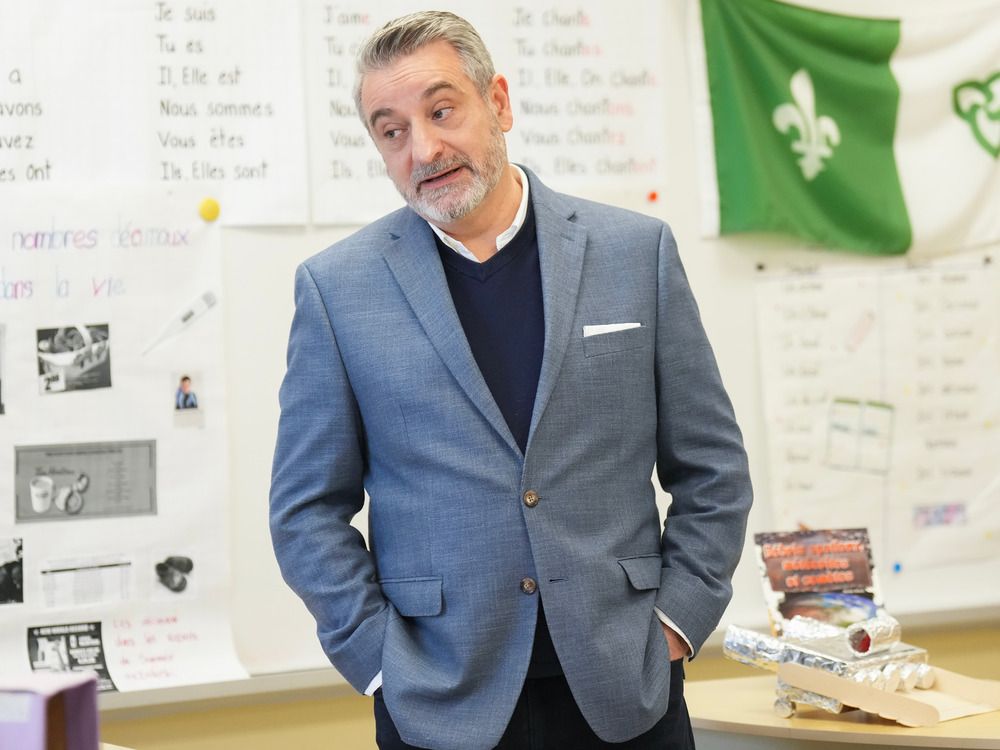
Ontario Minister of Education Paul Calandra visits students in the classroom at École Catholique Pape-François school in Stouffville, Ont., Friday, May 2, 2025.

New Ontario Education Minister Paul Calandra

wants to fix apparent financial incompetence

at some of Ontario’s largest school boards, and so he should. The problem is the fixes will only be temporary unless the provincial government is willing to make fundamental changes in the way school boards are run.

Ontario’s education governance is designed to fail. Trustees are elected, but not responsible for the taxes that pay for the province’s schools. This inherent lack of responsibility has turned some boards into lobby groups for higher spending. Why not demand more if you don’t have to ask voters to pay for it?

Calandra has ordered investigations into the finances of Toronto’s English public and Catholic school boards and Ottawa’s English public board. Provincial investigators are to report their findings by May 30.

All three boards are facing significant deficits for the next school year. The Toronto District School Board (TDSB) has a projected shortfall of $58 million, the Toronto Catholic District School Board expects to be $65.9 million in the red, and the Ottawa-Carleton District School Board is looking at a $20-million shortfall.

Those boards have been struggling to balance their books for years, despite a balanced budget being a requirement of the Education Act. The boards blame the problem on things like underfunded sick-leave costs, basic grants that haven’t kept up with inflation, lack of money for special education, and a provincial rule requiring that under-utilized schools remain open.

The big three boards aren’t alone in having deficits. This school year,

31 boards are reporting in-year deficits

amounting to $200 million. Back in 2020–21, only 11 boards had deficits.

The investigators’ reports should shed light on what’s happening with the three boards, at least. Are they short of money to do their basic job or are they just bad at handling the money they have? Calandra, the education minister, says he will offer financial help if it’s warranted, but that will be a short-term fix, not a solution.

Fundamental reform is needed. The provincial government levies the taxes and the school boards spend the money. Those two functions need to be combined if there is to be any accountability in education.

Calandra has three options. He could abolish school boards altogether. The province can already appoint a supervisor to make financial decisions when a board gets into money trouble. Make it the norm, not the exception. This would be the simplest way to proceed, but there is a political downside. With this approach, the government would get all blame for real and perceived education problems.

The middle ground is to appoint a board of local people with relevant financial and governance experience. It would be decried as anti-democratic, but would surely be more efficient. That would return boards to their core job of strategic direction, policy oversight and financial accountability. As a bonus, it would end the problem of trustees who think their real job is promoting social justice, not focusing on basic education priorities and careful spending.

The third choice is the riskiest. Rather than give trustees less responsibility, Calandra could give them more. Until 1998, the province and the school boards shared financial responsibility for education. The province raised money from its array of taxes and the school boards had an education property tax controlled by trustees. That local tax covered about 40 per cent of the cost of education. It gave trustees real financial power, but with the caveat that they were answerable to local taxpayers.

The education property tax still exists, but now the province takes it, raking in about $5.9 billion a year. To put that in context, total spending on schools is about $29 billion. Why not have elected trustees take responsibility for that $5.9 billion and increase it if they think local voters will support the spending?

Every community has its own ideas of what its students require, but the province’s spending plan doesn’t accommodate that variety. The TDSB, for example, believes its students

require 66 swimming pools

, an expense for which the province does not pay.

If Toronto taxpayers think the swimming-pool program is essential, why not let them pay for it? The provincial government doesn’t tell municipalities how much they can tax and spend.

Such an approach would offer a useful democratic safety valve, but the risk is the trustees themselves. Some Ontario school boards are infested with people whose primary concerns are

anti-colonialism, the Palestinian cause and climate, gender and race issues

; really anything except their actual job.

When school boards had real financial responsibility, they attracted serious people with relevant skills. Give trustees meaningful work to do, and it could happen again. The 2026 municipal election would be the time to make the change. It could be the reset the system needs.

The alternative is endless fights about money that distract from public education’s many other challenges.

National Post

randalldenley1@gmail.com

Get more deep-dive National Post political coverage and analysis in your inbox with the Political Hack newsletter, where Ottawa bureau chief Stuart Thomson and political analyst Tasha
Kheiriddin
get at what’s really going on behind the scenes on Parliament Hill every Wednesday and Friday, exclusively for subscribers. Sign up here.