



LP_468x60
on-the-record-468x60-white

People gather to light candles in a makeshift memorial to honour Yaron Lischinsky and Sarah Milgrim, who were killed as they left an event at the Capital Jewish Museum in Washington, D.C., during a candlelight vigil outside of the White House in Washington, on May 22.

Since Oct. 7, 2023, Jews throughout North America have been confronting a resurgence of antisemitism and violent threats. Last week, we saw the results of that cauldron of hate.

While leaving an event at Washington’s Jewish museum, Sarah Milgrim and Yaron Lischinsky were fatally shot at point-blank range. Upon his arrest, it was revealed that the alleged attacker chanted “free, free Palestine” and told police, “I did it for Gaza,” leaving no ambiguity about his motives. Court documents reveal how he allegedly took time to reload and fire additional shots at Milgrim as she struggled on the ground, attempting to escape.

For more than 19 months, Canada and the United States have regularly witnessed protests featuring calls for violence against Jews. Protest organizers have been conducting a largely unimpeded campaign of open-air radicalization, in which crowds are regularly whipped up with incendiary rhetoric.

Who would have thought that in downtown Toronto, we would hear

crowds calling for

more Houthi missile attacks on commercial shipping? Or that in Ottawa, a crowd would gather outside

a seniors’ residence

(home to several Holocaust survivors) and chant “go back to Europe” and “we want bullets and missiles”?

As we witnessed in Washington, the idealization of violence within the pro-Palestinian movement is setting the stage for violent actions. Here in Canada, we have seen at least

six terrorist plots

disrupted since October 7, some of which explicitly targeted Jewish sites.

This is a ticking time bomb . Strongly worded statements from our public officials won’t put a stop to it. We need concrete actions to safeguard Canadians.

The Canadian Jewish community is resilient and willing to take ownership of our security. Throughout the country, Jewish families have become used to seeing security guards and police while dropping off their kids at school or attending synagogue.

Jewish organizations regularly avoid publicizing the location of events and programs. When guests arrive, airport-style security screening has become the norm. These measures are, sadly, increasingly necessary.

Canada currently provides grants to various faith and cultural institutions to upgrade security. The Carney

government has pledged

to increase this funding, move forward with previous commitments on combating antisemitism and make it illegal to purposely block access to houses of worship, schools and community centres.

In addition to these important measures, what’s needed is a new partnership with on-the-ground Jewish security agencies, which have been developed to work with police and provide centralized co-ordination, planning and daily support for synagogues, schools and other community facilities.

In the United Kingdom and Australia, governments invest significantly in such a partnership with the Jewish community. It’s time for our federal government to follow suit by modernizing the Canada Community Security Program to integrate community security agencies as core program delivery partners.

This strategy has the potential to save lives when incidents occur. But we also need our government to take a proactive approach that not only treats the symptom — the targeting of Jewish community gatherings — but addresses the sources of hate. This begins by cracking down on those who openly call for violence in our streets.

While incitement is illegal, it is a highly limited legal measure that applies only when one is clearly targeting an identifiable group. Those promoting terrorism often use Hamas symbols and slogans — like “resistance is justified” and “globalize the intifada” — which can easily inspire lone-wolf attackers while avoiding accusations of explicit incitement.

The Criminal Code outlaws providing material support or participating in the activities of terrorist groups like Hamas. However, unlike the U.K., Canada does not have a law banning the glorification of terrorism. It is a failure of public policy to have a law that bans a $10 donation to Hamas but permits organizing a pro-Hamas rally for 10,000 people. Our new Parliament should move quickly to pass legislation that will close this loophole.

What a society chooses to accept is a testament to its core values. If we accept that freedom of expression includes the “freedom” to instigate violence, then we can expect tragic consequences like we saw in Washington.

At this pivotal moment, all Canadians should rally around the principle that hate must never be normalized — and every community has a right to live in safety. This can only happen with secure facilities, strong laws and consistent enforcement to hold those who are fanning the flames of extremism accountable.

National Post

Noah Shack is interim president of the Centre for Israel and Jewish Affairs.
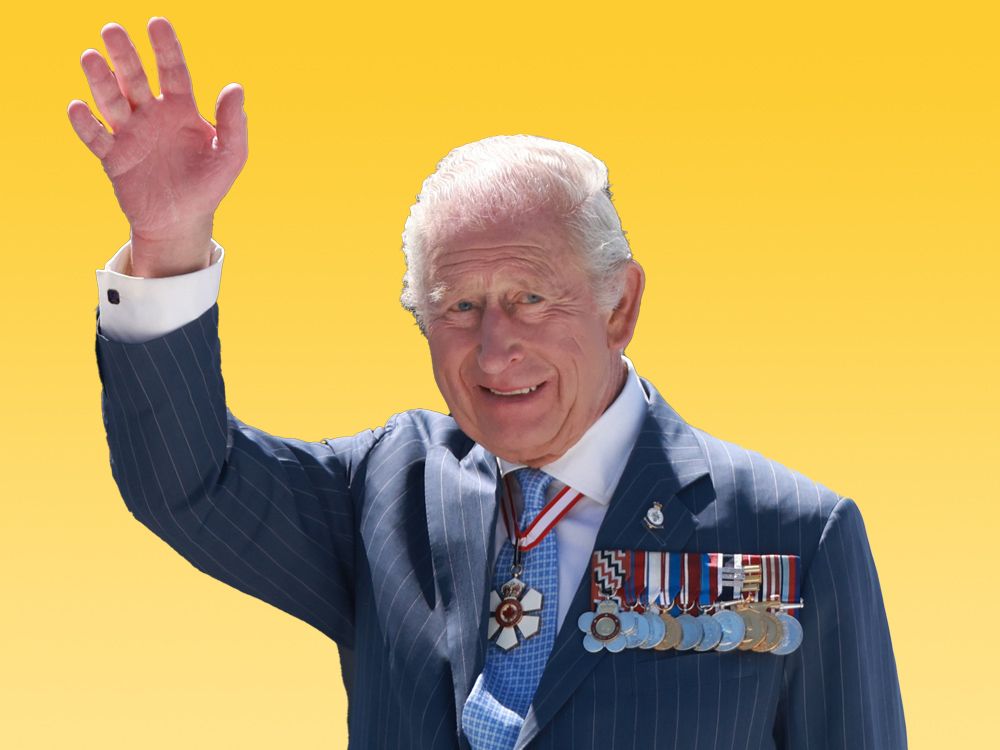

(Watch the full video directly below. (If using the National Post iPhone app, the video is at the top of the post.)

There was a lot for conservatives to like in King Charles III’s throne speech, but as Prime Minister Mark Carney has noted, it’s one thing to have slogans, what we need now is concrete action to back up the government’s ambitious goals, argues political strategist Anthony Koch, in an interview with the National Post’s Terry Newman.

Koch and Newman also discuss whether the King’s trip to Canada made any progress in fending off threats from the United States, along with the reaction to the throne speech from Conservative Leader Pierre Poilievre and U.S. President Donald Trump.


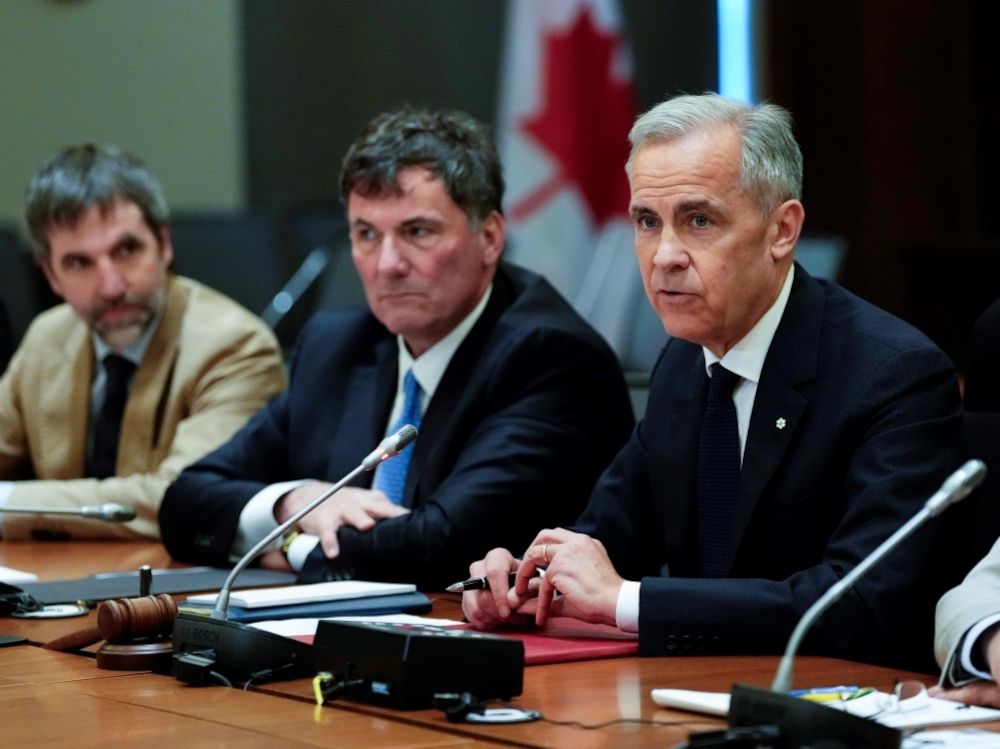
Prime Minister Mark Carney, right, signs a document at the end of a meeting of the federal cabinet, on Parliament Hill in Ottawa on May 14.

Complacency is returning to the Canadian consciousness. The election is over and Canadians have made their choice for change — though not too much change. The new prime minister has chosen his cabinet. The House is sitting for the next few weeks, and Canadians are starting to forget about politics and look forward to the summer. But this is not the time to take our eyes off the ball.

There was little outrage over the ridiculous statements made by some new ministers. Steven Guilbeault, newly appointed as minister of Canadian identity and culture, falsely stated that pipelines are not being used to their full capacity, and that demand for oil will peak in a few years. Foreign Affairs Minister Anita Anand showed tacit support for Hamas.

Finance Minister François-Philippe Champagne declared that there would be no budget, only to be corrected by Prime Minister Mark Carney. And one of the most egregious cabinet appointments, Housing Minister Gregor Robertson, stated that house prices do not need to come down.

Evidently, the prime minister has difficulty disciplining his cabinet. Carney should have made an example of Guilbeault and fired him “pour encourager les autres.” If the prime minister absolutely wanted to keep him, he could have had Guilbeault stand beside him in front of the media to retract his statement.

But no matter. We Canadians now have the government we deserve. That’s democracy. Many of the old faces are back: those above, plus Mélanie Joly, Dominic LeBlanc, Sean Fraser and others. Time will tell if the old Liberal team will change its extremist progressive approach to virtually every issue, or if, as the saying goes, “the deception is exposed, the mask falls off and their true colours emerge.”

Canadians thought Mark Carney would be the better leader to deal with Trump, but that is yet to be evident. The Oval Office meeting between the two in front of the media can be looked at in two ways: did the prime minister stand up to the president or was he too obsequious?

Carney’s line about having consulted the “owners of Canada” was a good one, and he did remind Trump that some real estate is never for sale. At least we didn’t see the obvious disdain for the prime minister that we saw when Trump was dealing with Justin Trudeau.

Aside from dealing with Trump, all the issues that were put on the table by the Conservatives during the election still need to be dealt with. In fact, the best way to deal with the United States is to fix our own country first, in order to foster Canadian confidence and strength.

Top of mind should be the economy. When the budget is released in the fall, we’ll see what the plan is. Whatever it might be, a $60-billion deficit will not help redress our financial ailments or reduce the horrendous debt we are financing. Our productivity needs to be dealt with, and our energy and other resources need to be exploited to make Canadians richer.

Will the previous government’s obsession with climate change continue, or will there be a reasonable approach to building pipelines to get our energy to market and help other countries deal with their emissions while supporting our energy sector? The speech from the throne did not give details other than a reiteration of promises made during the campaign.

Can the new prime minister give hope to young people: hope that they will be able to one day buy a home, afford groceries and live in safe neighbourhoods? How will Carney deal with antisemitism in our country? Certainly, berating Israel and being thanked by Hamas is not the way to show moral clarity. How will he deal with the opioid crisis and the separatist resurgence?

The return of Canada as a leader in the world community will require a huge effort to rebuild the Canadian Armed Forces (CAF) into an effective force. It needs to be able to defend our country with warriors: men and women willing to serve their country, in sufficient numbers, with the best equipment possible, the best training and the right priorities.

Once the requirement to defend our country is met, the CAF needs the ability to uphold our values internationally and participate in allied operations. There should be no more social experiments that take away from operational capability.

At this point, all of us should be watching our government closely. The challenges are enormous. This is not a time to return to business as usual, and this is not a time for a return to complacency.

It is time for action, a time for all of us to be vocal, for us to have an opinion and make it heard, a time to use our own leadership and our service to our country to return Canada to its rightful place in the world as a strong, confident, patriotic and united nation. Let’s see if our leaders can lead us there.

National Post

Lt.-Gen. (retd.) Michel Maisonneuve spent 45 years in service to Canada. He was honoured to command the funeral of the unknown soldier 25 years ago this week. His book, “In Defence of Canada: Reflections of a Patriot,” was published in October 2024 by Sutherland House.


No one — conservatives, least of all — should be cheering for Alberta Premier Danielle Smith’s promise to introduce government standards for age-appropriate school library books.

There is zero question that the sexually explicit books found in Alberta public schools, both elementary and high schools, were not acceptable. It is also not accurate of critics to frame Smith’s move as “book banning,” since the content being removed — which includes graphic depictions of oral sex and molestation, among other things — is so grossly and evidently inappropriate for minors.

If a stash of Playboys made it into a grade school classroom, no one could reasonably frame their removal as “book banning,” and nor should we in this current situation. However, what is also not acceptable is putting the government in charge of setting moral standards, or of regulating content. And make no mistake: it’s likely that any policy or legislation that defines “age appropriateness” is going to do just that — whether intentionally or not, now or in the years to come.

Smith’s government

announced this week

that it is “conducting a public engagement to collect feedback on the creation of consistent standards to ensure the age-appropriateness of materials available to students in school libraries.” An

online survey

is open until June 6. The government hasn’t announced whether the new rules will be set by legislation, or by changing regulations.

“While the province provides voluntary guidelines for learning and teaching resources, Alberta currently does not have a consistent provincewide standard for school boards when selecting age-appropriate school library materials,” reads the government’s press release. It explains that the new standards will be mandatory for the upcoming school year.

It goes without saying that this public engagement can only discover the opinions of survey respondents. No doubt the survey will also attract responses from indiscriminately disapproving puritans, roused by the prospect of having their moral austerity considered, at last, by policymakers.

We do not need this data to tell us that the already discovered sexually explicit materials are not appropriate for school-aged children. It is unclear, then, why the public’s opinion is needed at all — unless any resultant policy will be broader, or applied more restrictively, than what is required to remove

the offending material

. The whole thing is suspicious.

Conservatives who favour smaller and less interventionist government should be skeptical. Whatever policy or legislation the Alberta government implements may well invite censorship by a future government, which could lead to real book bans, not just the removal of content that is pornographic, or pornography adjacent. Is it worth the risk?

Instead, the government should seek to find out who put the inappropriate books into children’s libraries in the first place, determine if those people should be teaching minors and have the schools remove the books. Any educator refusing to pull the ghastly material off the shelves would have their ability to teach children called into question.

Passing legislation, or making policy changes, shifts the focus from the most concerning aspect of this scandal: Did adults intentionally place this graphic content in school libraries for minors to read? And if so, what were their motivations? As it stands, whoever ordered these books for Alberta schoolchildren seems to be enjoying a complete lack of scrutiny.

Because the explicit materials were found in

LGBTQ+ graphic novels

, Smith’s announcement has, predictably, morphed into a new front of the culture war. This has enabled the improper sexual content to become secondary in the discussion.

The Alberta Teachers’ Association (ATA), for instance, issued

a press release

that floats the idea that Smith might be attempting to target the LGBTQ+ community with content bans. (A better question: why is there so much sexually explicit content in LGBTQ+ books?)

As ridiculous as the ATA’s accusation is, Smith will have a difficult time defending herself from it. That’s because she is making a mistake: no government, including hers, should get involved in content regulation for its citizens. That is a slope just waiting to be slipped on. My unsolicited advice to Smith: leave this one to the librarians.

National Post


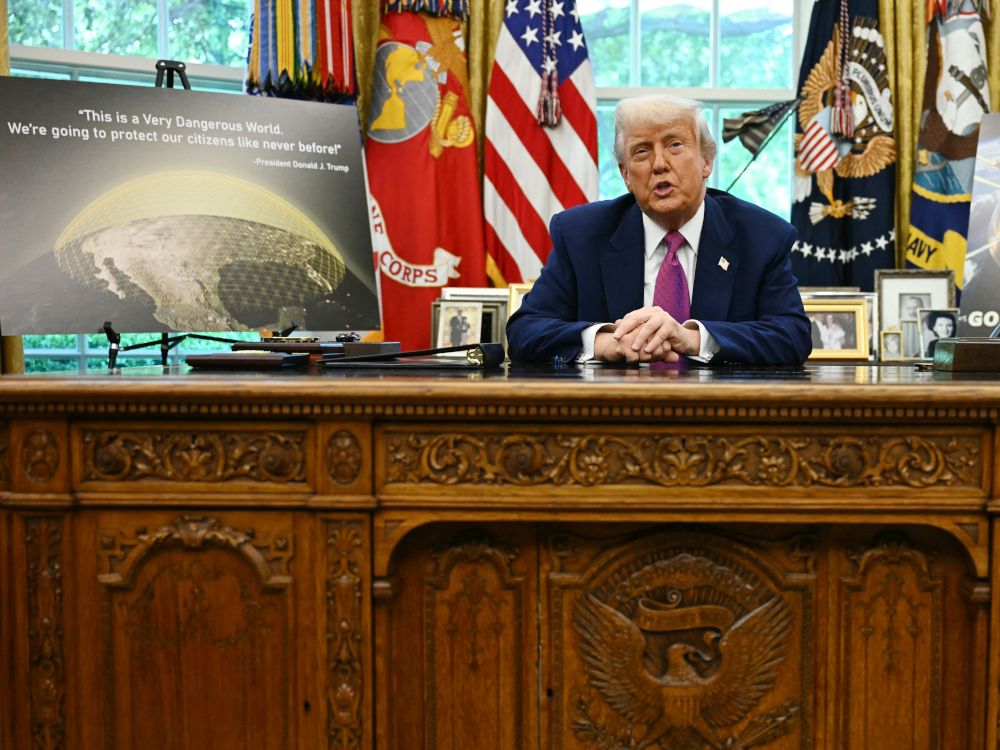
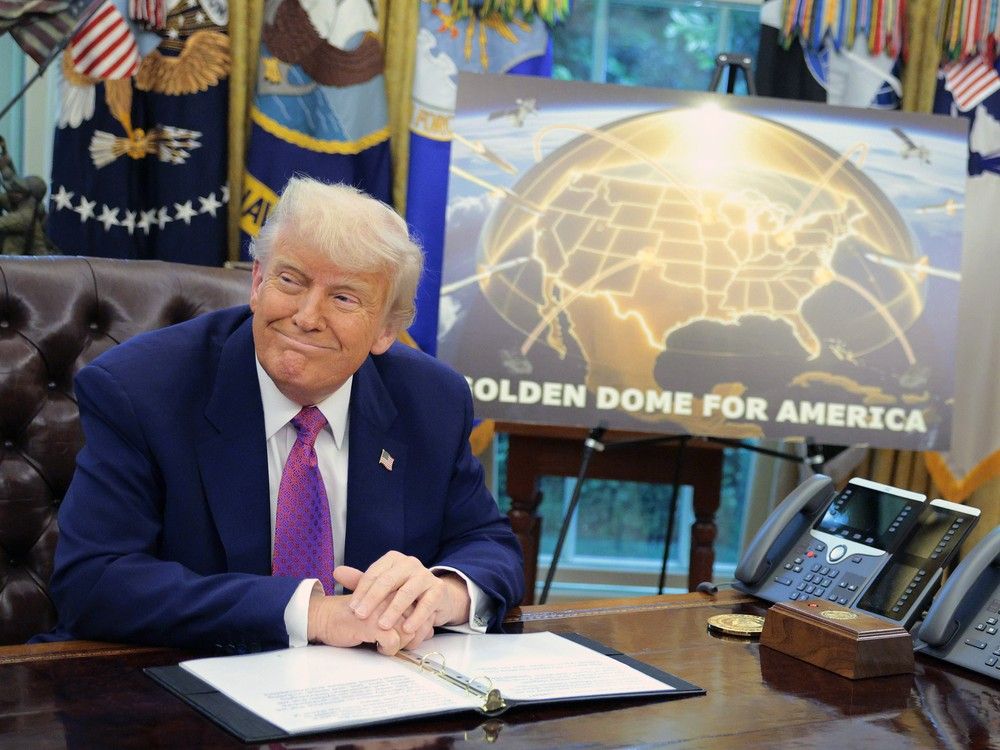
U.S. President Donald Trump speaks during an announcement about the Golden Dome missile defence shield, in the White House in Washington, D.C., on May 20.

It’s hard to feel anything but pity for Pete Hoekstra, the United States ambassador to Canada. I mean, yes, it’s hard to feel anything else about any diplomatic representative of the new Napoleon-model United States. You go into a job like that expecting, or just hoping, to be able to carry out the careful instructions of a professional foreign service. To speak and act on behalf of an enduring vision of your country, and in pursuit of an established grand strategy.

Then the people put a gorilla in the White House, re-electing a TV star who loves to blab and improvise and threaten, and you’re left with nothing but a series of damage-control efforts, most of them completely futile. It’s gotta be hell, or hell with slightly nicer parties.

It just strikes me that Hoekstra’s predicament must be particularly harsh, since he’s not somebody who was flung into some distant warm country as a political favour. He’s from a part of Michigan that has relations with Canada for which the word “intimate” doesn’t suffice, the curling-and-hockey part of the mitten. He understands and likes Canada: in

last week’s interview

with CBC News, he showed that he had a pretty decent grasp of why the King visited us this week and what a throne speech is all about.

Unfortunately, he also made the mistake of telling Canadians to “move on” from his president’s endless “51st state” catcalls and menaces, insisting that all the contrived contention over Canadian sovereignty was “over” and that U.S. President Donald Trump “is not talking about it.” Yesterday, as if on cue,

Trump posted

to social media that, “I told Canada, which very much wants to be part of our fabulous Golden Dome System, that it will cost $61 Billion Dollars if they remain a separate, but unequal, Nation, but will cost ZERO DOLLARS if they become our cherished 51st State. They are considering the offer!”

The “Golden Dome” system is an ill-defined missile-defence project that President Trump made a show of signing off on last week. Trump told reporters the “Dome,” which is basically a 2.0 version of President Ronald Reagan’s Strategic Defence Initiative (SDI), would be ready in three years and would cost $175 billion. I’m no defence expert, but I think I can promise that deadline won’t be hit. From a game-theory standpoint, the important part of the announcement was that Trump is ready to spend cartoon sums on orbital missile defence — and the Republicans in Congress are prepared to begin allocating billions for it, without too much squawking from the taxpayer.

During the Cold War, Reagan’s SDI (reflexively lampooned as “Star Wars” by the mass media) ran up against a credible strategic objection. Yes, critics acknowledged, it might be possible to use space-borne sensors and weapons to knock out intercontinental ballistic missiles of the kind owned in large numbers by the Soviet Union. But if knocking out one warhead was a lot more costly to you than building one was to your adversary, you would just intensify the existing arms race, mostly at your own expense. Russia would simply build ever-large amounts of new weapons to get through your more expensive defence screen.

“Simply,” they said. At the time, any clown with a calculator could and would tell you that the SDI math couldn’t work, because having NASA launch and maintain satellites was much too expensive. Nevertheless, Reagan’s embrace of SDI, by itself, helped contribute to the collapse of the Soviet Union. It turned out that the U.S. might have to outspend the U.S.S.R. enormously in a re-intensified arms race, but the U.S. could quite easily do this after 60-plus years of Russian communism. And now that Elon Musk has shown up on the stage of history, putting small inter-operating satellites in orbit is a matter of millions of dollars, not billions.

This probably doesn’t have much to do with Trump. The number of nuclear-armed states is not ever likely to dwindle, and the U.S. no longer faces one primary strategic adversary covered like a hedgehog with ICBM silos. That means it can’t strengthen continental security very much by making bilateral bargains with Russia. Several hostile countries are fooling with sophisticated new missile tech, and since they’re all otherwise dirt-poor, they may be tempted to engage in tactical or demonstrative anti-American nuclear strikes that wouldn’t necessarily attract the assured genocidal response that was a security premise of the Cold War. At least that’s the

Heritage Foundation’s theory

, which is the one Trump’s probably listening to if he’s listening to anybody at all.

This is part of what our politicians are really talking about when they natter about a “complicated” and “more multi-polar” world. Their/our real anxiety relates to the possibility that the United States will acquire a terrifying all-new level of military supremacy — total, truly instantaneous power to identify and crush any threat to the U.S. that manifests anywhere on the earth’s surface. And do we go along with this, as our old defence minister Bill Blair suggested we might before he was supplanted?

Back when the issue was ICBMs, Canadian participation in continental defence was an important sine qua non, and once we started enforcing a territorial taboo on nuclear weapons, co-operation was largely taken for granted even when Canada-U.S. economic and political relationships foundered. We were guardians of the Pole, close enough to Russia to smell the vodka and zakuski. We were geographically essential. If the U.S. pursues the Golden Dome dream — a grid of fast-acting and fast-moving space drones in low orbit everywhere — they’ll be able to take or leave us as a missile-defence partner.

This is, from one point of view, obviously good news for Canada. It means that our annexation by the U.S. isn’t a long-term strategic imperative for the U.S.! It also means that we can’t expect continental protection under the new Star Wars II umbrella as a matter of course. Thus, in a way, Trump’s latest blathering is just a plain statement of likely fact: only American territory will enjoy the protection of Star Wars II by right.

In other words: join up, pay up or shut up. Nuclear disarmament advocates, of course, have always made the argument that a country that refuses nuclear weapons has nothing to ever fear from anybody else’s. We may, soon enough, be making a high-stakes long-term test of that proposition. Whether we want to or not.

National Post

Twitter.com/colbycosh

Sign up for Colby Cosh’s newsletter, NP Platformed, delivered straight to your inbox Monday-Thursday by 4 p.m. ET.


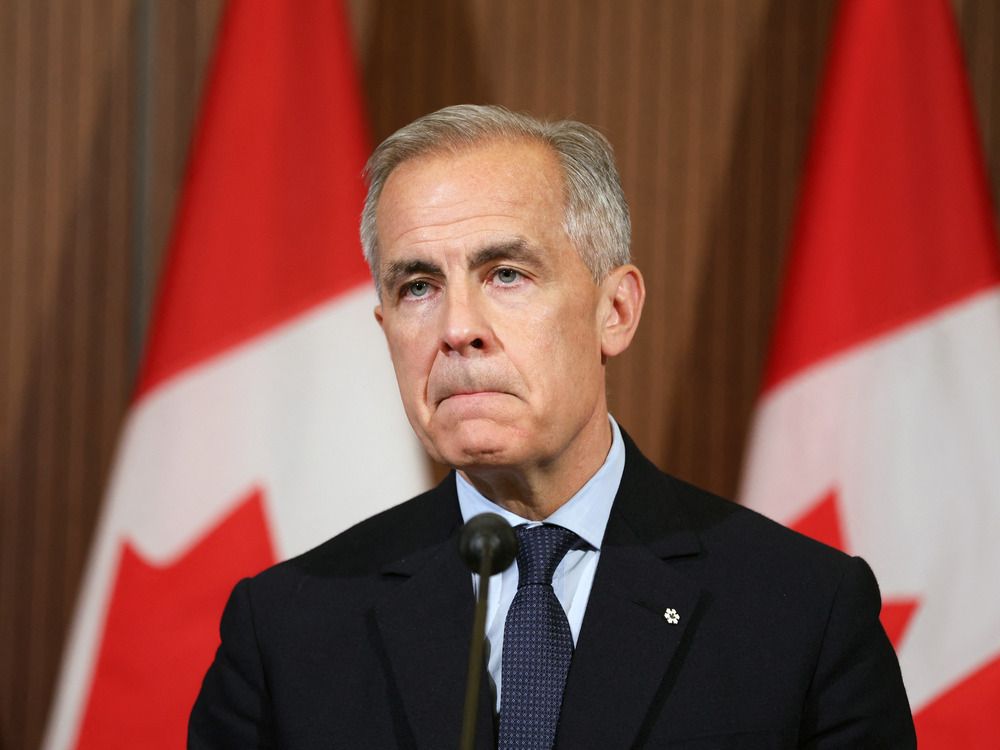
Prime Minister Mark Carney listens to a journalist's question during a press conference on Parliament Hill in Ottawa on May 21, 2025.

Politics is not a zero-sum game where one person’s win is automatically another’s loss. An economy is not a conserved system, so, in theory, it is possible that a government could reduce taxes, increase spending and balance budgets (if, for example, revenues rise).

But it is a theory that is as rare in real life as white peacocks.

The Carney government is

in the process of legislating a $5-billion-a-year middle-class tax cut

, while planning to increase spending on things like the military and housing, and at the same time promising to balance the operating budget in three years.

Yet, the

 Main Estimates, the government’s spending plan

that was released on Tuesday at the same time as the throne speech, shows no signs of the restraint that will be needed if the government is to meet that last target.

This is the first evidence of concrete spending plans since the election and it seems the bureaucracy did not get the memo about the need for fiscal rigour.

The prime minister was critical of his predecessor’s fondness for distributing cash, saying the

Trudeau government spent too much and invested too little

. Mark Carney said his government will limit operating-expense increases to two per cent a year, down from nine per cent a year under former prime minister Justin Trudeau, while preserving transfers to provinces and individuals.

The Main Estimates suggest that message of restraint fell on deaf ears in Ottawa: total budgeted spending is scheduled to rise 7.75 per cent to $486.9 billion this fiscal year across 130 federal organizations (compared to last year’s Main Estimates). The government will ask Parliament to vote on $222.9 billion of spending measures, a 14 per cent increase on last year’s estimates.

The most egregious spending appears to be on consultants. The estimates reveal that 

budgetary expenditure by “standard object”

  — in this case, “professional and special services” — are set to hit $26 billion this year, if departments are granted the approvals they are seeking (the estimates are an “up to” amount; departments could spend less).

These numbers require numerous caveats. They include operating and capital spending, as well as transfer payments and contributions to Crown corporations. To add some perspective, payments to seniors (Old Age Security and the Guaranteed Income Supplement) swallow up $86 billion of that number. Some people have suggested the only way to make a meaningful dent in the spending picture is to means test OAS, but Carney has already ring-fenced all transfers.

It should also be pointed out that the Main Estimates are not the whole picture. There will be additional “supplementary estimates” over the course of the year that will likely increase spending further in response to events.

To be fair to the government, it has hardly had time to conduct a line-by-line spending review.

But it is bemusing how the bureaucracy could read Carney’s election commitments and conclude it was a good idea to increase spending in just about every department in government. My rough calculation is that 63 departments will see their budgets rise beyond the rate of inflation, compared to the previous year’s Main Estimates, and only 14 will have their budgets cut. To take just one example, the National Capital Commission will see its allocated spending increase to $179 million this year, from $94.7 million in 2024/25, most (but not all) of which is earmarked for capital spending.

Carney has said that he will institute a new system of budgets that separates investments in capital projects from operational spending. To make the operations budget balance, the government could blur the line between the two. For example, the Liberal platform promised $30 billion in new spending for the military, including a pay raise for Forces members and investments in housing on bases. All of that could conceivably be deemed to be an “investment,” though wages are clearly operational.

But there are well-established rules and principles to ensure transparency, and if the government attempts any sleight of hand it will be called out by the auditor general’s office and Parliamentary Budget Office.

In any case, the borrowing requirement will still be there, driving up the cost of servicing the debt, which is scheduled to hit nearly $50 billion this year — far more than the $35.6 billion earmarked for national defence.

The only way to truly hit the mythical trifecta of tax cuts, increased spending and budgetary balance will be by introducing an austere-looking budget later this year that prioritizes spending on housing, policing and defence, but makes meaningful cuts elsewhere.

This is a business-as-usual spending plan from a government that has promised “a fundamentally different approach to governing.”

National Post

jivison@criffel.ca

Get more deep-dive National Post political coverage and analysis in your inbox with the Political Hack newsletter, where Ottawa bureau chief Stuart Thomson and political analyst Tasha
Kheiriddin
get at what’s really going on behind the scenes on Parliament Hill every Wednesday and Friday, exclusively for subscribers. Sign up here.


President Donald Trump says it would cost Canada US$61 billion to participate in America's Golden Dome missile defence system as a  “separate, but unequal, nation,

Everything is golden in official Washington these days. The Oval Office is a study in decorative touches direct from pre-revolutionary France. The frames around the portraits are golden, as is the gilt around the ceiling. The flourishes on the fireplace and the knick-knacks on the mantel — maybe the president’s latest golf trophies? — are as well.

The skip-the-line immigration

visas

Donald Trump is peddling at US$5 million a pop are known as “gold cards” because that’s the colour they come in. Naturally, they bear a photo of the president as well.

Which is all fine if your design taste runs to over-the-top knock-offs of 18th-century Versailles. For Mark Carney, whose tastes appear somewhat more sober, it adds another layer of complexity as the prime minister seeks to negotiate a new relationship with America’s president while avoiding entanglement in his burgeoning megalomania.

Among other things, Carney needs to address the president’s enthusiasm for a defence system he’s labelled … what else? … the Golden Dome. Names shouldn’t really matter when it comes to what is, in fact, a serious matter. It’s no longer possible to pretend that Canada is immune to the risk of some addled tyrant deciding it’s a good idea to launch a missile or two in the direction of the U.S., with geography dictating that the quickest route would take it across Canada. Some means of detecting, intercepting and destroying any such mad attempt is not a ridiculous idea.

It doesn’t help, however, when the overwhelming impetus behind the project comes in the form of Donald Trump. The president is easily infatuated by anything he deems “big” and “beautiful” and that covers a lot of real estate — gifts of free luxury airliners from Middle East potentates for example. The protective shield he envisions for America qualifies in spades.

Whether it’s practical, affordable or even possible are other questions, though not the sort that ordinarily preoccupy the current White House. Trump wants the dome built in three years at a cost he identifies as US$175 billion, both of which seem unlikely, the space-based aspects alone having been calculated by the Congressional Budget Office at US$550 billion. But it wouldn’t be wise for Carney to tell him as much at a time when Ottawa is entering talks aimed at diluting the numerous tax, tariff and other damaging measures Trump has already sent Canada’s way.

This is especially so given Carney’s pledge to rebuild the country’s military and send a message to the world that, at long last, Canada takes its national defence seriously. The Liberal campaign platform

committed

to everything from new submarines and icebreakers to the creation of an account to “end the chronic lapsing of defence spending.” Previous governments have pledged similar plans to elevate the military from its slide into impoverishment to little effect, but for the first time in decades Canadians seem to accept the need for the country to possess a respectable military.

It was entirely sensible, then, for the prime minister to carefully avoid greeting Trump’s Golden Dome with the sort of derision Liberals have been quick to dish out to previous renditions of spaced-based defence proposals. Projects mooted under presidents Ronald Reagan and George W. Bush were rejected at least partly from Liberal fears of  being associated with Republican leaders unpopular with progressives.

Dislike of U.S. presidents is fair enough, and this one in particular, but shouldn’t be used to reject proposals that might actually be in Canada’s interest. There is nothing absurd about a system that detects approaching threats so that they can be met before arrival, any more now than when Britain

erected

the first ground-based radar system against approaching German aircraft at the outbreak of World War Two.

The Trump version,

predictably

, goes far beyond anything tried elsewhere and is accompanied by the usual outpouring of flamboyant verbosity. Israel’s Iron Dome protects just a fraction of the territory the U.S. is considering, while the notion of turning space into just another arena for warfare is a new and frightening step for a planet that already dances too often with means of self-destruction. That defence firm Lockheed Martin calls Trump’s dream “a Manhattan Project-scale mission” is hardly reassuring given the horrors that atomic weaponry unleashed.

Deploring the reality of threats from Russia, China, North Korea or others does nothing to remove them, however. Canada can either let our defence capability continue to wither, hoping potential dangers never materialize or that the U.S. will save us, or we play what part we can in making clear to potential adversaries the futility of any act of aggression.

The far north is Canada’s most vulnerable region. Joint warning systems already

exist

under Norad, the North American Aerospace Defence Command. Ottawa has pledged $38.6 billion to upgrading and modernizing Canada’s part in the network. In March, Carney announced a joint

project

with Australia for the development of Over-the-Horizon Radar technology, to “provide advanced early warning and long-range surveillance, enabling faster CAF detection and tracking of a wide range of threats in our Northern air and maritime approaches.”

Unfortunately, we’ve let our defences erode for so long that playing catch-up is that much tougher a task. Ottawa is pledging a serious effort to reach NATO’s defence spending benchmark of 2.0 per cent of gross domestic product just as the alliance is preparing to

raise

it to 5.0 per cent. Whether the dome needs to be a part of the build-up remains to be seen, but Carney will have to convince America’s volatile president that Canada is giving the question honest consideration. That would include ensuring his caucus and cabinet are aware of the need to treat it that way, in public and otherwise.

National Post


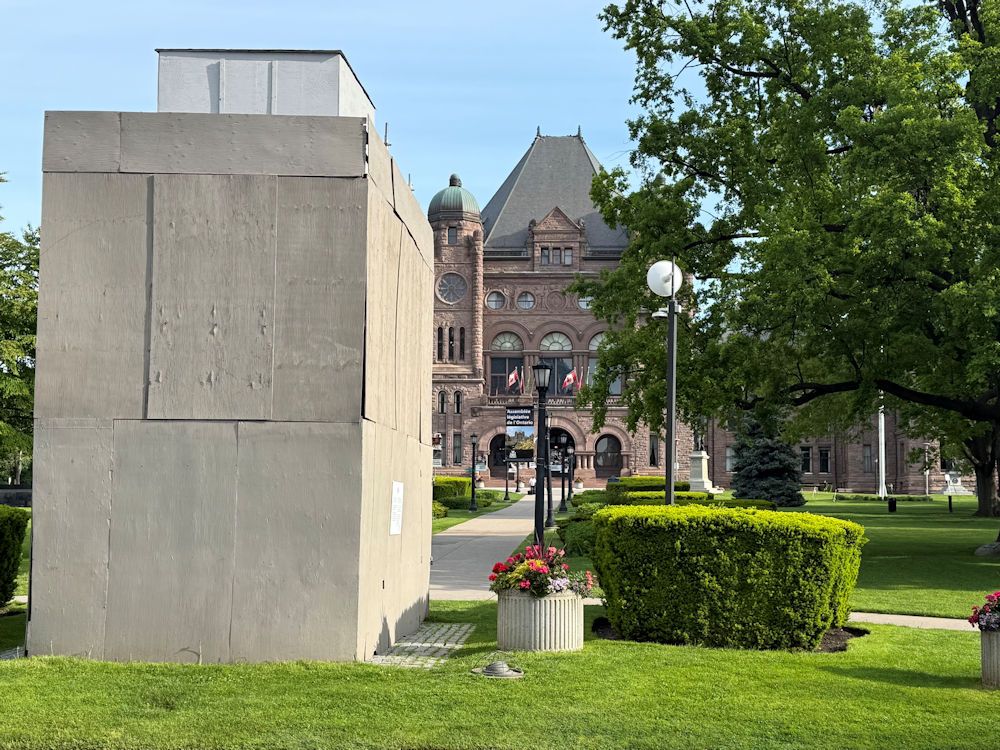
The statue of Sir John A. Macdonald covered at Queen's Park in Toronto.

First Reading is a Canadian politics newsletter curated by the National Post’s own Tristin Hopper. To get an early version sent directly to your inbox, sign up here.

TOP STORY

In one of the first major reversals of Canada’s nationwide purge of historic figures and names, Ontario announced Tuesday it will dismantle a wooden box enshrouding their official statue of Sir John A. Macdonald, Canada’s first prime minister.

Since 2020, an 1893 statue of Macdonald outside the Ontario Legislative Assembly has been covered by an impromptu plywood box ostensibly to protect the structure from vandalism or even outright mob destruction.

On Tuesday, Ontario’s Board of Internal Economy, which controls the grounds around the legislative assembly, announced that the structure would be removed and Macdonald would be restored to public view.

Ontario Speaker Donna Skelly 

told The Trillium

 on Tuesday that she could say with “guaranteed” certainty that the boards would be removed by the summer.

Over the past five years, Canada has experienced a wave of name changes and statue removals unlike anything seen since the First World War, when anti-German sentiment fuelled a purge of Germanic names and symbols.

The trend began in earnest in 2020 as Canadian cities were hit by “defund the police” protests inspired by the death of George Floyd in Minneapolis.

It then became supercharged in the summer of 2021, following a B.C. First Nation’s announcement that 

215 anomalies

 turned up in a radar survey of the former Kamloops Indian Residential school were the unmarked graves of children.

A running Wikipedia list catalogues 

13 Canadian statues

 that have been destroyed by mobs or removed by civic order since 2020.

Seven of those are of Sir John A. Macdonald, included an 1895 memorial in Montreal that was destroyed in 2020 by a defund the police protest. A Macdonald memorial in Hamilton, Ont. was destroyed under similar circumstances the next year, albeit by demonstrators fresh from a Hamilton Indigenous unity rally.

The period has also been marked by dozens of renamings of streets, schools and civic buildings.

In 2023, for instance, Ottawa’s Sir John A. Macdonald Parkway was renamed to Kichi Zībī Mīkan, an Algonquin word roughly meaning “river path.”

Toronto renamed its iconic Yonge-Dundas Square to Sankofa Square in 2024, citing namesake Henry Dundas’s association to slavery. Although Dundas was an abolitionist and a key figure in an 18th century British push to abolish the slave trade, activists criticized him for 

not doing it fast enough

.

Ryerson University renamed itself as Toronto Metropolitan University in 2022, over connections to the Indian Residential School system.

Although Egerton Ryerson was long dead before the establishment of the first Indian residential school, he 

had advocated a program

 of Indigenous children being taught “industry and sobriety” at boarding schools located far from their home communities.

Indian residential schools have also largely characterized the push to remove symbols of Sir John A. Macdonald. Although Macdonald was the singular figure who stitched together Canada’s current form, his record on Indigenous affairs was 

controversial even in his own time

.

The renaming trend has slowed to a trickle of late, particularly amidst a wave off flag-waving patriotism sparked by U.S. President Donald Trump’s trade war against Canada, and repeated annexation threats. An ongoing Toronto District School Board 

renaming push

 remains one of the only such programs underway at a governmental level.

But the announced unboxing of Ontario Legislative Assembly’s Macdonald statue represents one of the first times that a government will be reversing a sanction imposed against a Canadian historical symbol over the past five years.

It occurs amid a recent debate in Wilmot, Ont., to similarly restore a Macdonald statue that was placed into storage after being splashed with red paint in 2020. Beginning last year, the community 

began consultations

 on a possible re-installation of the statue, which depicts Macdonald holding two chairs, a symbol of his bringing together of rival camps in the negotiations that created Canada.


IN OTHER NEWS

Tuesday’s

speech from the throne

, read by King Charles III, is actually one of the few ways to divine what the Carney government intends to do, since they’ve dispensed with the usual indicators such as a budget or specific mandate letters.

It may also be notable for what it

didn’t

contain:

  • Woke stuff. As noted by National Post’s John Ivison, the speech is entirely free of the culture war beats that defined so much of the Trudeau era. As recently as 2021, the Speech from the Throne was laden with lines like “fighting systemic racism, sexism, discrimination, misconduct and abuse, including in our core institutions will remain a priority.”
  • Any mention whatsoever of oil and gas. Or pipelines, for that matter. All it does is repeat a Liberal campaign pledge to make Canada the “world’s leading energy superpower in both clean and conventional energy.”

 King Charles III’s Speech from the Throne represented the first instance of former Prime Minister Justin Trudeau turning up in public following his March resignation. Anyway, here’s the shoes he wore.

It was only six months ago that the Liberal Party was polling at historic lows due in large part to the refusal of then prime minister Justin Trudeau to resign. As was frequently noted at the time, the Liberals could have easily swapped out their unpopular leader much earlier if only they’d bothered to sign on to the Reform Act, a piece of legislation that gives the caucus enhanced powers to trigger a leadership review. With the start of a new Parliament, the Liberals had a fresh opportunity to subscribe to the terms of the Reform Act and avoid any future debacles with leaders who refuse to leave.

They decided “no.”

A source told National Post that

a “large majority” Liberal MPs voted against holding Prime Minister Mark Carney to the terms of the Reform Act.   

 This is an X.com post put out by the official account of Governor General Mary Simon. It’s notable because it flubs a basic detail of what is literally her only job. King Charles III was not here as an emissary of the U.K., as the post seems to imply. He was here as King of Canada (and as Simon’s boss), specifically because Simon’s office had requested he do so.

Get all of these insights and more into your inbox by signing up for the First Reading newsletter.


Canadians deserve an immigration system that serves the national interest. This is exactly what we once had when most Canadians agreed with the economic and cultural arguments in favour of immigration.

For a long time, Canada avoided the sort of backlash seen in many places abroad. But the economic argument for immigration has collapsed during a time of stagnant wages, housing shortages and high youth unemployment. Likewise, cultural arguments about diversity and multiculturalism have given way to doubts about our ability to integrate newcomers.

Now,

half

of Canadians believe immigration harms the country. And according to

a 2024 survey

by the Environics Institute, 57 per cent of Canadians agree that too many immigrants “are not adopting Canadian values.”

In response, the Trudeau government began to

reduce immigration targets

and tinker with eligibility requirements. It was especially wise to reinstate caps on the Temporary Foreign Worker Program (TFWP), which many employers abuse to keep wages artificially low.

But Canada’s immigration system requires fundamental reform, with a sharp eye on integration — both economic and cultural. This reform will become increasingly urgent amidst a backdrop of deglobalization, domestic protectionism and

falling birth rates

.

Other countries will be motivated to hold onto as much of their own populations as they can, so we cannot count on a large and mobile cohort of educated professionals and low-wage workers for much longer. Canada must remain open to immigration, but immigration cannot be our only source of economic and population growth.

The federal government should begin by ending easy access by immigrants to the lower end of our labour market in nearly all sectors of the economy. That means phasing down and eventually eliminating the TFWP, except in limited areas such as seasonal agricultural work. High-wage, high-skill immigration should continue, but in lower numbers.

Meanwhile, governments should use incentives (tax credits, etc.) to encourage businesses to invest in domestic skills training and develop their workforces. Business, government and post-secondary institutions must work together to integrate domestic and international students into a general industrial strategy.

This means creating a pipeline of engineers, researchers and scientists for jobs in areas such as high-end manufacturing, robotics, batteries and advanced engineering. In short, we must gain much better control of immigration and ensure that it serves the national economic interest.

To make it all happen, Ottawa should create a new “population” ministry, formed out of every existing federal ministry and department that deals with immigration, housing, the labour market and family formation (such as Employment and Social Development Canada and the Canada Mortgage and Housing Corporation).

Of course, this is no small task and would take time. But the main policy areas (immigration, housing, labour, parental benefits and population growth) must be viewed as a single system, and a single ministry must be held accountable for the success or failure of future reforms.

In consultation with the provinces, this new ministry would be required to keep immigration at a manageable level, taking into account the state of infrastructure, housing and integration services, along with labour market needs. Artificial Intelligence could be a useful tool in helping predict labour and housing shortages before they happen.

This consolidated ministry would favour high-skill, high-wage immigration above all other categories. And, like some other countries, the ministry would be required to publish total immigration numbers, along with all other relevant population and labour-market information, as part of every federal budget, to ensure maximum transparency.

This ministry would also work with the provinces to develop pro-natal strategies to stabilize or, ideally, reverse the decline in domestic birth rates. This should be informed by successful policies implemented by our peers abroad.

Incentives could include cash bonuses, tax breaks, awards, more generous leave and other signs of public esteem for parenthood. Meanwhile, governments across the country must remove regulatory hurdles and revisit post-war mass production and prefabrication, in order to increase the supply of new housing.

Canada’s immigration policy has failed Canadians. But if properly managed, a new population policy, which includes immigration, can be a powerful force for nation-building and help create and maintain a prosperous and orderly society in an increasingly uncertain world.

National Post

Michael Bonner is a senior fellow at the Aristotle Foundation for Public Policy, a former senior policy advisor to a federal immigration minister, former director of policy to four Ontario ministers and the author of “Repairing the Fray: Improving Immigration and Citizenship Policy in Canada.”


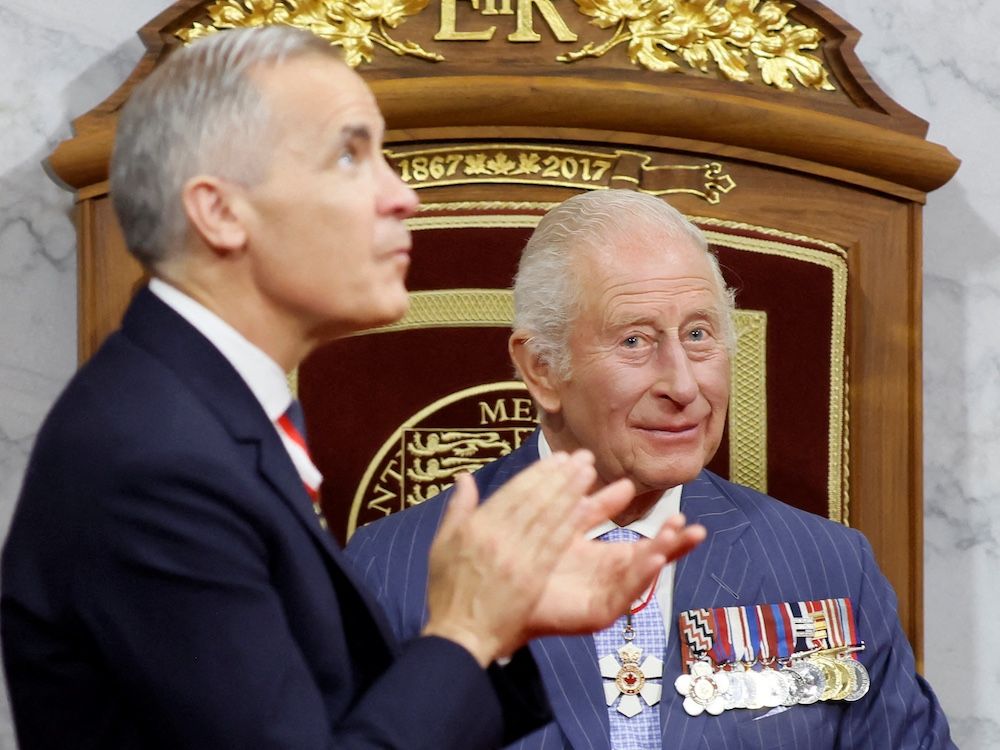
Canada's  Prime Minister Mark Carney claps after King Charles III delivered the Speech from the Throne opening the 45th Parliament of Canada on May 27, 2025. (Photo by BLAIR GABLE/POOL/AFP via Getty Images)

When Canadians flip open their phones to learn about the day’s politics and affairs of state, what do they see? Mostly, it is unremarkable men and women in near-identical suits speaking mundane words or mocking each other during Question Period.

This week, however, they saw King Charles III and Queen Camilla visit Canada. The sun was shining as they arrived in Ottawa, where great crowds gathered to catch a glimpse or shake hands with the monarch, who arrived to open the 45th Canadian Parliament.

No prime minister could ever drum up so much interest and excitement with their mere presence. If only for two days, the King’s visit has dramatically elevated public life in Canada into something special.

For monarchists, it is a lively show of historical continuity and cultural dignity that sets Canada apart from most of the world. For republicans, it is an occasion to quibble and seethe. For everybody else, it is a fascinating display of distinction at an uncertain time, which is needed after a bitter federal election.

Politicians naturally alienate people by catering to short-term passions and partisan interests, which contrasts sharply with the Crown’s enduring neutrality. The institution has no room for partisans, and this is a valuable piece of Canada’s political culture.

There are certainly good utilitarian arguments for retaining the monarchy. A tradition of upholding a head of state who stays above the fray is far better than another dreadful suit that society must divide itself over.

Crownless states typically breed tribalistic strongmen, who are very effective at ravaging their own countries and hollowing them out. Canada, Australia, and New Zealand stand as examples of politically stable former Dominions that retained the monarchy, and are vastly preferable to republics like Pakistan, South Africa, and Ireland.

Despite more than 50 years of passive and overt attempts to sever Canada’s historical ties, the appeal of the Crown endures.

Recent public surveys have shown a

sharp decline

in

support

for abolishing the monarchy, an institution republicans stubbornly refuse to accept as fundamental to our country and how it was built. True, there are constitutional barriers to removing the Crown, but some of the most profound political movements in Canadian history were in pursuit of constitutional change.

The lack of inspiration and vigour in the republican movement is why it continues to fail. It has its vocal advocates, but they are a politically and culturally impotent rabble when taken as a whole.

It is not a coincidence that some of our most radical republicans, like William Lyon Mackenzie, have been

traitors

willing to

spill blood

in the pursuit of their goal.

Thankfully, today’s republicans are reduced to the status of being frustrated, challenged hobbyists.The lack of inspiration and vigour in their movement is why it continues to fail. It has its vocal advocates, but they are a politically and culturally impotent rabble when taken as a whole.

Some among them have even attempted to

cite the Bible

as a reason for removing the monarch, proclaiming that its text goes against the elevation of any one man. They should read further into that same book and find the words “Fear God, Honour the King.”

If republicans are bewildered by the affinity that Canadians retain for the monarchy, it is because their vision of the country is dull, unremarkable, and grey. A republican Canada is one stripped of elegance and tradition, rendered into a purely managerial and bureaucratic state where obscure public servants occupy the position of head of state.

People desire something beyond crass political contests in their leaders. In 2025, this world of ours is incredibly flat, digital, and racked with presentism, where genuine beauty, transcendent majesty, and time-tested refinement are in short supply.

There is something deeply uplifting about the Crown, and all of its pageantry and resonance help to swell national pride, which Canada sorely needs. These intangible qualities enliven society and renew or create a sense of wonder for millions, a gift not easily found and impossible to recover if lost.

For those that do care about preserving a distinct Canada, the Crown is a point of connection that links us with long-buried generations through rituals and continuity. Critics call it irrational, but so is love, friendship, and the other parts of life that motivate and drive human beings more fiercely than anything material.

A Canada with a Crown is the country that it was intended to be in 1867, and fidelity to that is an act of patriotism. This past federal election saw a renewed sense of Canadian nationalism, albeit expressed in strange and lowbrow ways like the worship of ketchup chips and nostalgia for Molson Canadian beer commercials from the 1990s.

Nonetheless, it displayed that the Canadian people still have a desire to be distinct. The celebrations and parades marking King Charles III’s visit to Canada this week are the healthiest expressions of that seen in years.

The monarchy’s popularity in Canada tends to grow whenever it makes

itself present here

, and it ought to do that more often and remind people why it exists.

When the late Prince Philip visited Canada in 1969, he perfectly

summed up

why we still continue to have a sovereign.

“It is a complete misconception to imagine that the monarchy exists in the interests of the monarch. It doesn’t. It exists in the interests of the people. If at any time any nation decides that the system is unacceptable, then it is up to them to change it.”

National Post