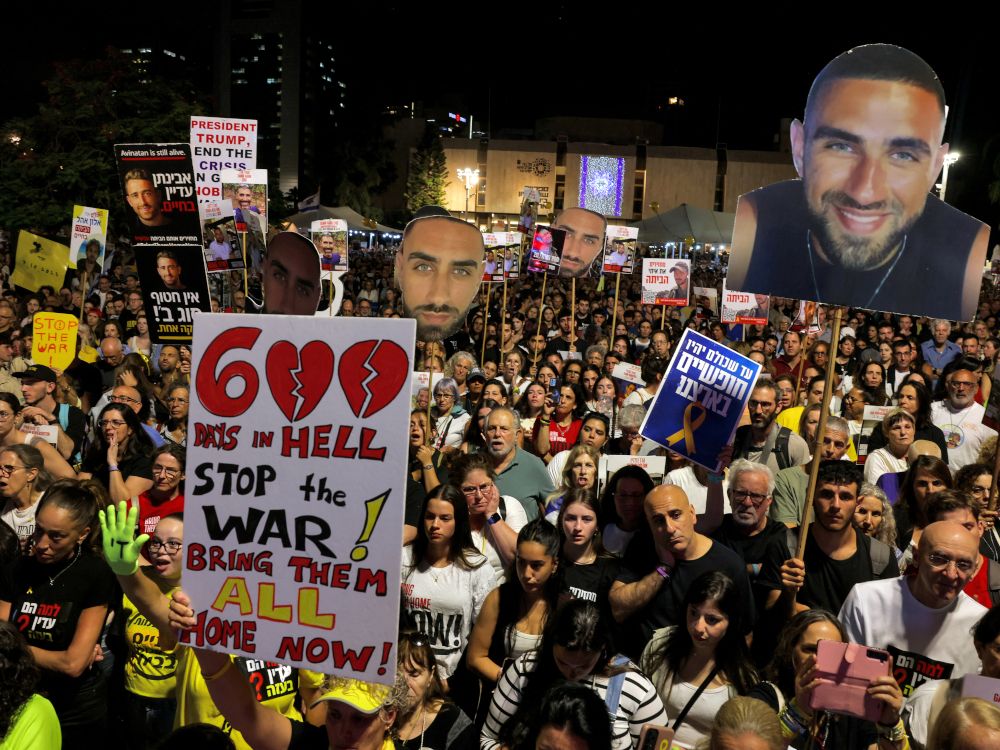
SDEROT, Israel — Wednesday marked 600 days since the Hamas attack on Israel. War still rages, civilians suffer and die, hostages languish and no end is in sight.
In recent weeks, demands from even the staunchest allies of Israel, including the United States, have been mounting — demands for Israel to allow greater supplies of humanitarian aid to flow into the Strip, demands to end the war.
Perhaps surprising to some is that nearly
70 per cent
of Israelis agree with those demands. They want an end to the war and an end to the barbaric captivity of the hostages languishing in Hamas tunnels. They want an end to the intolerable strain with which Israelis and Palestinians have been living since October 7.
The challenge, of course, is how to bring this about. It is a geopolitical mess requiring the deftest of touches — sticks brandished at the right times, and carrots presented with care. The Middle East is not a region that responds to subtlety. But, paradoxically, complex nuance permeates every speck of land.
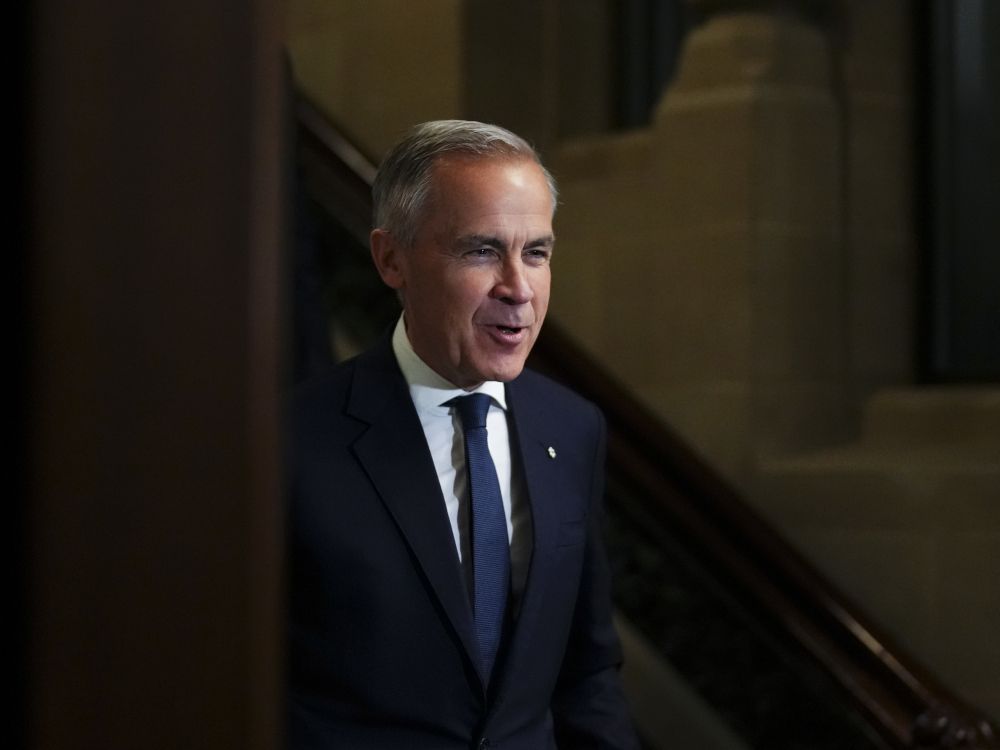
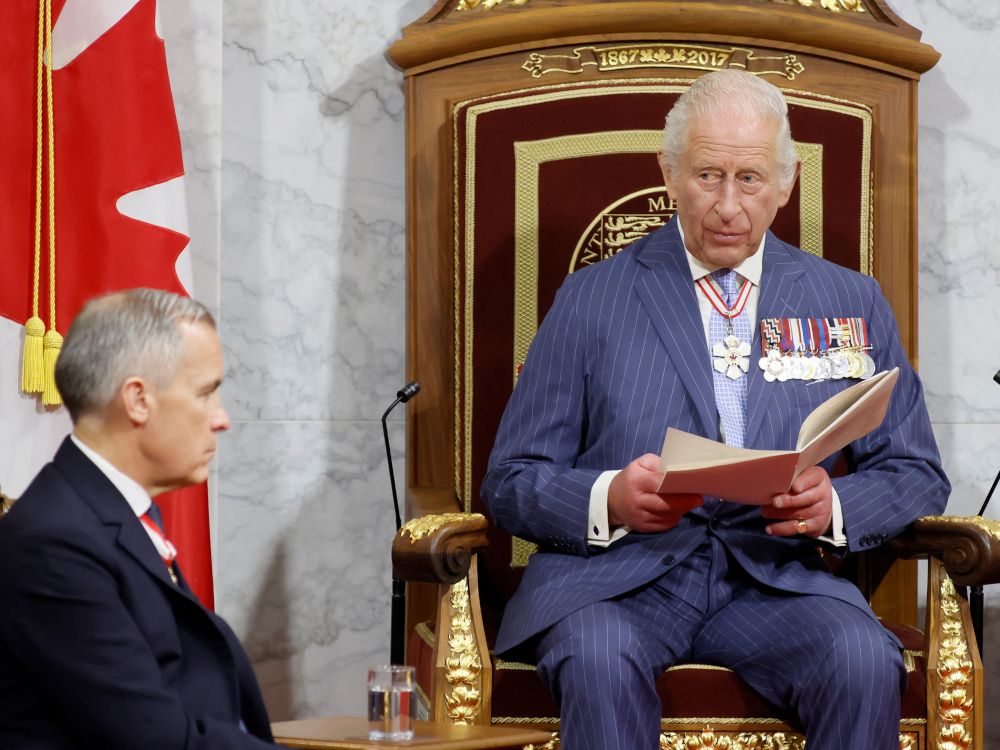
This is a historic moment suited only to the most thoughtful of diplomatic efforts, and it appears that Prime Minister Mark Carney could learn a thing or two, possibly even from the Trump administration.
On May 19, Carney joined with French President Emmanuel Macron and British Prime Minister Keir Starmer in issuing
a statement
that earned them praise and gratitude from Hamas’s leadership. The western troika emphasized their view that sole responsibility for the allegedly imminent famine in the Gaza Strip was attributable to Israel.
No mention was made of the longstanding Hamas practice of hijacking aid trucks and hoarding supplies, to be sold to civilians at extortionate prices.
In recent days, Carney’s preferred narrative has been exposed and debunked. A severe food shortage has moved Gazans to overcome their fear of Hamas brutality. On Wednesday, throngs of civilians overran a warehouse in central Gaza that was full to the rafters with food supplies. Hamas
fired
into the crowd. Four people were reportedly killed. More were injured. Carney and his diplomatic allies were silent.
I recently interviewed Ahmed Fouad Alkhatib at length about the situation in Gaza. Alkhatib was raised in Gaza City and moved to the United States at age 15 to participate in a special high school program. He has resided in America since, but over the decades has visited Gaza often and he maintains very close ties with friends and family there.
Since October 7, Alkhatib has devoted his professional efforts to giving voice to what he maintains are the views of the majority of Gazans, who oppose the hard-line, Islamist Hamas government.
They are fearful of speaking out, Alkhatib explains, because of “the behaviour of Hamas and how it is embedding itself in hospitals and in medical facilities … in schools, and is acting ruthlessly and is stealing a lot of supplies and aid.…
“So many Palestinians from Gaza are unable to speak out because of the blow-back on their families. And Hamas kills opposition members or opponents or those who speak out. Hamas kills protesters and throws them outside of their family’s homes. Hamas is a despicable ISIS-like organization at this point.”
This week, Amnesty International issued
a scathing report
on Hamas’s conduct in the Gaza Strip, condemning the group’s violence perpetrated on its own people for the slightest of infractions, real or imagined.
In recent weeks, many highly regarded Israelis — people who held top jobs in the military, intelligence services and civilian government — have boldly challenged the Netanyahu government’s handling of the war.
A
statement
posted on X by former Israeli Air Force Gen. Amos Yadlin on Thursday — in which he called for a “smart victory” that would see Israel accept a U.S. proposal that would lead to a return of the hostages and a dismantling of Hamas in exchange for an end to the war — is but one example of the prevailing view in Israel.
Several weeks ago, when meeting with hostage families in Tel Aviv, Steve Witkoff, U.S. special envoy to the Middle East,
reportedly remarked
that he did not understand what a renewed war in Gaza was meant to accomplish at this stage. The destruction and disarming of Hamas, as well as its removal as a governing force, he implied, can only be accomplished through diplomacy.
And yet, Carney only offers criticism of Israel — no tangible solutions and no offers to further the diplomatic process.
Meanwhile, the civilized world has been taken aback by the rampant antisemitic violence in Canada. Carney seems unperturbed by it all, aside from one or two nods to the how Canadians should be free to worship and attend school in safety.
But Canadian Jews are constantly being harassed — physically and verbally. Demonizing Jews and holding them responsible for everything that is wrong in the Middle East has been normalized in Canada. And on that, Carney has been silent.
In an extraordinary travel advisory issued on May 25 by Israel’s National Security Council (NSC), Israelis and Jews were warned of an elevated threat in Canada. Jews and Israelis, the advisory stated, have been the targets of sustained hatred and threats in Canada.
The
NSC recommends
Israelis “exercise increased precautionary measures, avoid displaying Jewish and Israeli symbols in public and remain extra vigilant while in public,” because, “In the past few days, the discourse … has become more radical, including what could be understood as calls to violently harm Israelis and Jews.”
This, it must be emphasized, was issued mere days after the murder of two staff members of the Israeli Embassy in Washington, D.C.
There is a wide consensus in Israel that continued war will not resolve this mess. And this fact should have been understood and acknowledged by Carney and his cabinet colleagues.
This crisis must be managed by military pressure, in concert with thoughtful diplomacy that engages regional powers, along with the U.S. and other western countries.
Carney’s rather constrained perspective regarding this issue — that the blame rests with Israel — has emboldened Islamist and “progressive” interests targeting Canada’s Jewish community with violence and incitement to hatred.
Over the past 600 days, Canada’s federal leadership has indulged this ever-intensifying and aggressive antisemitic violence. When Jewish people and institutions are openly targeted and attacked violently, when threats are made against Jews — when such conduct is normalized, it is difficult to see how that is not treated as a national security threat.
Yet Prime Minister Carney seems oblivious to that reality, or the fact that his misguided diplomacy may be contributing to this very dark trend. It is time for the law to be applied to protect Canadian Jews and address the institutionalized antisemitism that flourishes in this country. Things are getting really ugly, and the world is noticing.
National Post
Vivian Bercovici is a former Canadian ambassador to Israel and the founder of the State of Tel Aviv.