LP_468x60
on-the-record-468x60-white

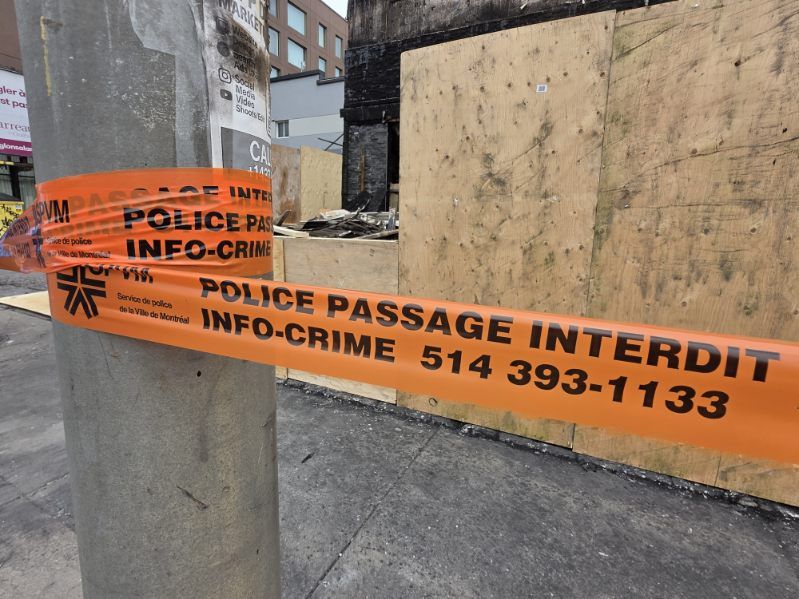
The Montreal police arson squad are investigating a fire that destroyed a popular kosher restaurant in the city.

Beryl P. Wajsman: Special to the National Post

Montreal — There is a debilitating temptation within the Jewish community today to assume that every crime involving a Jewish institution must automatically be an act of antisemitism.

The temptation is understandable. After almost two years of escalating hatred, firebombings, shootings, vandalism, intimidation and open calls for violence against Jews, no one can be faulted for being alert. Vigilance is not only justified — it is necessary.

But vigilance is not the same as reflex.

The arson attack that heavily damaged the Nöam kosher restaurant on Décarie Boulevard in Montreal early Saturday is a serious crime. It deserves a thorough investigation, and those responsible deserve the full weight of the law. Certainly after the attacks in on Kiva’s kosher bakeries in Toronto.

What it does not deserve is an immediate verdict before investigators have completed their work.

I went to the scene. I spoke with people in the neighbourhood. I spoke with contacts familiar with the investigation. The picture that emerged was far more nuanced than the one rapidly circulating on social media.

The Montreal Police Service has assigned both its arson investigators and its hate crimes unit to the case. That is entirely appropriate. Every possible motive should be examined, including antisemitism.

But, as of now, no motive has been established.

According to reliable information surveillance cameras reportedly captured a lone individual walking away from the small commercial building at approximately 3:15 a.m. There were reportedly no antisemitic slogans, no graffiti, and no message claiming ideological responsibility.

The investigation is exactly where it should be: open-minded.

Yair Szlak, the president and CEO of Federation CJA, said that, “Federation CJA and the Security network (CSN) are closely monitoring the situation concerning the arson that took place at a Kosher restaurant in Montreal. We’re working closely with law-enforcement to understand the motive behind it. Regardless of motive, this is a terrible crime and must be punished in accordance with the law.”

This is precisely the right approach. They are working closely with police to determine the motive while emphasizing that, whatever ultimately emerges, grave criminal offences demand prosecution. That is responsible leadership.

I have written before that fear can become self-perpetuating. Every new incident is immediately folded into a predetermined narrative. Facts become secondary. Context disappears. The assumption becomes the conclusion.

Ironically, that weakens rather than strengthens the fight against antisemitism. Let us not forget that in 2022 — the last year before October 7 — Canada recorded some 2,700 antisemitic incidents, according to the League for Human Rights.

When every crime is immediately labelled antisemitic, even when no evidence of that has yet emerged, we blur the distinction between genuine hate crimes and other criminal acts. We invite unnecessary skepticism. We make it easier for those who truly wish to minimize antisemitism to dismiss legitimate concerns as exaggeration.

The truth is our strongest ally. If this investigation concludes that Nöam was targeted because it is a Jewish business, then we should say so loudly and unequivocally. We should demand enhanced penalties where the law permits and insist that governments confront the reality of antisemitism honestly and enforce Criminal Code and Charter protections.

But if investigators conclude it was another criminal motive, we should accept that conclusion with equal honesty.

The Jewish community’s strength has never been panic. It has always been resilience.

I have always argued that governments should stop simply issuing statements and start enforcing the Criminal Code. That principle applies here as well. We should let investigators investigate, prosecutors prosecute, and judges judge.

Our confidence should rest not in fear, but in facts.

Antisemitism is real. It is dangerous. It requires constant vigilance and uncompromising enforcement of the law. But credibility is also a strategic asset.

Every time we insist on evidence, we make it harder for genuine acts of antisemitism to be denied or explained away.

The answer to hatred is not hysteria. It is confidence.

Confidence in ourselves. Confidence in the rule of law. And confidence that truth, not fear, must always have the final word.

Beryl P. Wajsman is president of the Institute for Public Affairs of Montreal


U.S. President Donald Trump, left, welcomes Prime Minister Mark Carney outside the West Wing of the White House in Washington, D.C., on Oct. 7, 2025. This content is reserved for subscribers.


U.S. President Donald Trump, left, welcomes Prime Minister Mark Carney outside the West Wing of the White House in Washington, D.C., on Oct. 7, 2025. This content is reserved for subscribers.


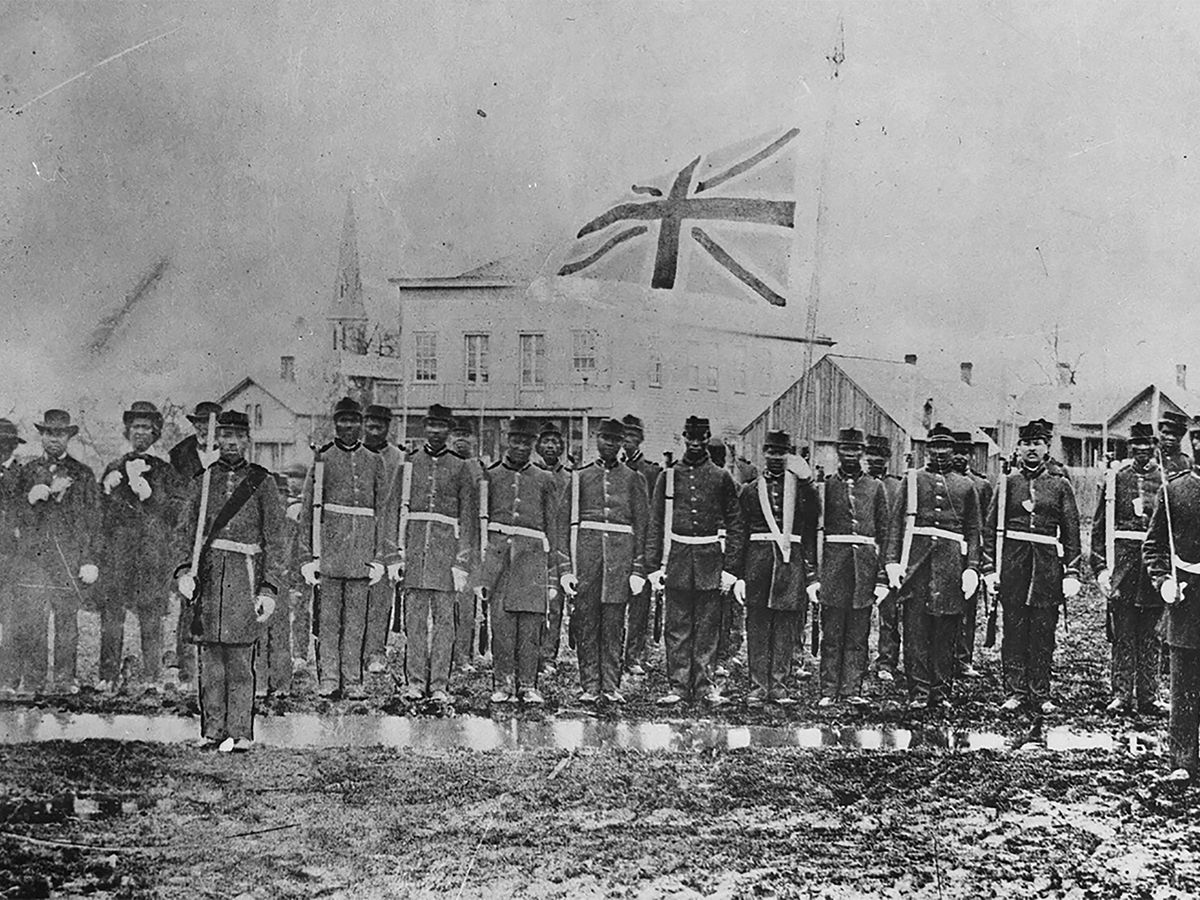
An undated photograph of the Victoria Pioneer Rifle Corps, otherwise known as the African Rifles, an all-Black militia of immigrants from San Francisco's First African Methodist Episcopal Zion Church who settled on Vancouver Island in the 1860s at the invitation of Gov. James Douglas.

It’s an almost entirely forgotten history. It’s hidden away by all the prevailing postmodernist doctrines that oblige Canadians to be ashamed of themselves, and it’s not particularly convenient to certain of the more strident tendencies within the “anti-woke” schools of thought, either. But now that the Emancipation Day weekend falls on the British Columbia Day weekend, it’s worth taking the time to acknowledge a sprawling, dramatic chapter of Canadian history that only rarely gets a proper look-in.

In that story, Canada came within a hair’s breadth of a war with the United States and the loss of what the Fathers of Confederation would go on to imagine as a peaceable dominion from the Atlantic to the Pacific. The Trump administration’s “51st state” provocations invoke memories of those times, and there’s a great deal of bloodshed, intrigue and betrayal in the story, which played out across the entire western half of the North American continent.

There’s certainly no dearth of irony involved. British Columbia, which ended up uniquely belligerent to Indigenous rights among Canadian provinces, owes its very birth and survival to a visionary British colonial defence of Indigenous rights against American marauders and mob rule. The doctrine that treaty-making should precede European settlement and that Indigenous people were to be afforded all the rights of British subjects goes all the way back to the Royal Proclamation of 1763. There’s nothing “woke” about it. It remains a legal doctrine that was one of the chief grievances of the American Revolution of 1776.

All these years later, here we are: All the frantic panic about last year’s Supreme Court of B.C. decision declaring Aboriginal title in the Cowichan land claims lawsuit in Richmond, and all the incoherence arising from the B.C. government’s own-goal quagmire in its preoccupation with the serial redundancies of the United Nations Declaration on the Rights of Indigenous Peoples (UNDRIP), are legacies of that same old belligerence.

While it wasn’t until 2021 that the House of Commons and the B.C. legislature finally got around to officially commemorating Emancipation Day — the first statutory spike in the coffin of slavery throughout the British Empire, in 1834 — the celebration was already a civic holiday in Victoria, B.C.’s capital, in the 1850s. So much for the sins of colonialism.

It’s become sensibly unfashionable to comprehend history as a chronicle of the deeds of powerful men, great or wicked, but there are two men worth paying attention to in the story of British Columbia and Emancipation Day. Their radically conflicting legacies come together in a way that tells the story well.

The first man is the great Sir James Douglas, born in Dutch Guyana, the son of a Scottish planter and a “free coloured woman” from Barbados. A lifelong fur trader, Douglas had just risen to the rank of chief factor at the Hudson’s Bay Company’s headquarters at Fort Vancouver on the Columbia River when the vast Columbia territory was partitioned at the 49th parallel by the Oregon Treaty of 1846. Douglas would go on to become the governor of both the colonies of Vancouver Island and British Columbia.

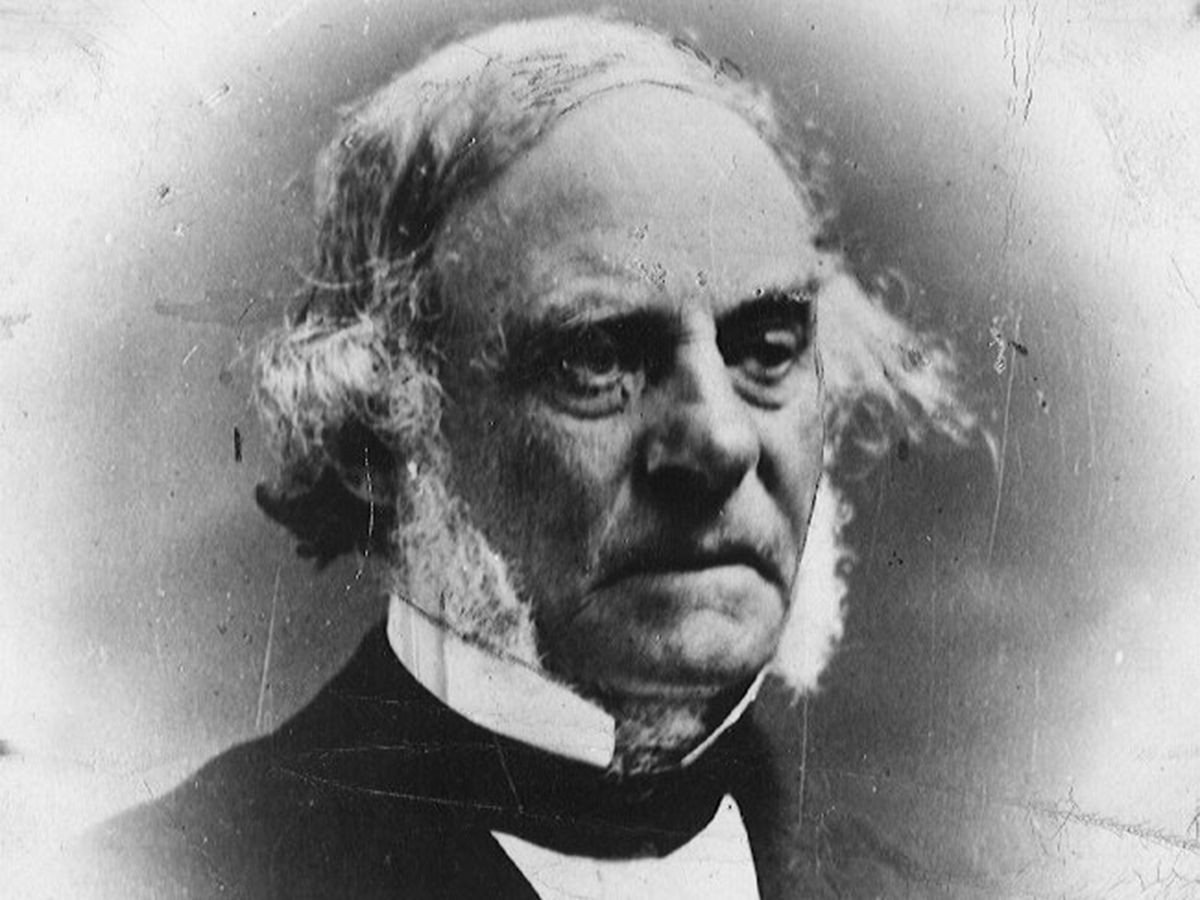
 An undated photograph of Sir James Douglas, the first governor of both of the colonies of Vancouver Island and British Columbia. Douglas was a devoted follower of British abolitionist William Wilberforce.

The other man is the U.S. Army’s Gen. William Harney , known to the Lakota Sioux as Woman Killer. Notorious for his policy of slaughtering the inhabitants of entire Indigenous villages, Harney was court-martialled four times, but he always landed back on his feet owing to his close association with the senator, slavery enthusiast and secretary of war Jefferson Davis, who would go on to serve as the president of the Confederate States in the U.S. Civil War.

In the exodus north of the 49th parallel to establish a new headquarters in Victoria on Vancouver Island, Douglas brought with him what HBC governor George Simpson described as “the prettiest congregation of nations, the nicest confusion of tongues, that has ever taken place since the days of the tower of Babel.”

While Douglas was a bear of a man with a quick temper he was a devoted follower of the British abolitionist William Wilberforce. When he was appointed Vancouver Island’s governor in 1851, the Crown Colony was already a thriving loyalist society of Orkney Islanders, Iroquois and Métis traders, Québécois voltigeurs, Hawaiian Kanakas and various “King George Indians” who had retreated ahead of the American advance across the Rockies into what is now Montana and Idaho.

It wasn’t long before Victoria’s Chinatown was the second largest on the continent after San Francisco’s, and Douglas invited a community of Black pioneers in California to make a new home under the Union Jack. During the height of the gold rush, in 1860 — in the days immediately before the American Civil War — miners arriving in Victoria harbour from San Francisco were greeted at dockside by the Victoria Pioneer Rifle Corps, an all-Black militia known as the African Rifles.

Everyone north of the 49th soon became aware of the American cavalry’s wars of extermination to the south: the Cayuse War, the Klamath War, the Salmon River War, the Yakima War, and the Nisqually War. In his genocidal zeal to clear the West of its independent tribes, Harney once told the New York Times: “I have come to kill Indians, and believe it is right and honourable to use any means under God’s heaven to kill Indians. Kill and scalp all, big and little; nits make lice.”

On Vancouver Island, the local tribes — the Songhees, the Esquimalt, the Tsartlip, Tseycum, Malahat and the rest — welcomed a military alliance with Douglas and the Crown. They didn’t have to be strong-armed into the treaties Douglas offered them, which were co-existence arrangements derived from the Crown’s Treaty of Waitangi with the Maoris in New Zealand.

It was the gold rush to the Fraser Canyon that threatened to spark an all-out war pitting Douglas and his polyglot community of loyalists, along with B.C.’s Indigenous people, against the thousands of heavily armed American miners who had flooded into the Stó:lō and Nlaka’pamux territories in 1858.

Douglas had retained his HBC duties on the mainland while serving as Vancouver Island’s governor, which left him in charge of the entire British half of the old Columbia territory. That August, in the rush to assert British sovereignty on the mainland against what would have been certain and bloody American annexation, the Colonial Office in London established the mainland Colony of British Columbia and appointed Douglas its governor.

That same year, the U.S. Army assigned Gen. Harney to the border districts of the American half of the former Columbia territory, in what is now Washington State. Where there was once peace between the tribes and settlers under the Crown’s authority, Harney pursued a policy of destroying Indigenous livestock, harassing civilians, hanging Indigenous people to terrorize their chiefs and taking measures to ensure against any “overtures of friendship” with the local tribes.

It was a petty affair, the following year, that kicked things off. An American squatter shot a pig owned by the HBC farm on San Juan Island, just seven sea miles from Fort Victoria. Gen. Harney had long opposed the Columbia territory border compromise and sided with the Democratic Party’s “54-40 or fight” pretensions, originally championed by U.S. president James Polk: 54 degrees 40 minutes latitude was the southern point of Russia’s possessions in Alaska. Harney had long dreamt of annexing everything the Oregon Treaty had left in British hands.

It was only the American war of annexation waged against Mexico that sidelined the American ambition to annex Britain’s half of the Columbia territory. Concluded with the 1848 Treaty of Guadalupe, the pattern repeated itself from Wyoming to Southern California: the Yavapai slaughter, the Sand Creek Massacre, the Mendocino War, the Yuki genocide, the Snake River War, the Colorado War, and so on.

After the HBC pursued its claim against the squatters on San Juan Island in 1859, Gen. Harney dispatched 64 troops from the 29th U.S. Infantry to occupy the island, a force that soon grew to 460 soldiers. Gov. Douglas, meanwhile, sent three minor warships to reinforce the “English camp” on the island. It wasn’t until the White House recalled Harney and ordered the troops to hold fire that matters settled down.

Meanwhile, in the Fraser Canyon, a shooting war had broken out between the American miners and the local tribes. Douglas intervened by reminding the Americans that they were no longer under the protection of the Stars and Stripes. He appointed several local Indigenous leaders as government agents and magistrates and lectured the tribes sternly against taking the law into their own hands. In his report to the Colonial Office in London he explained that he had spoken “with great plainness” to the white miners, reminding them that they were in British Columbia only on sufferance, and north of the 49th parallel “the laws would protect the rights of the Indians no less than those of the white man.”

The policy Douglas and the Colonial Office embraced was to discourage American settlement of what was to become British Columbia, and to restrain European settlement until treaties had been concluded. His clear intention was to grant large tracts of land exclusively to Indigenous people until such time as the tribes got a proper footing in the new society they had been building, in common with Douglas and his loyalists.

But Douglas and his old regime was on the way out. His land commissioner, R.C. Moody, undermined him at every opportunity — it was Moody’s double-dealings in the Cowichan case that forced that judge last year to declare unceded Aboriginal title to a patch of Fraser River foreshore in Richmond.

After Douglas came Gov. Frederick Seymour and a policy that Indigenous people had no more right to the land “than the he-panther or the she-bear.” British Columbia absorbed the Colony of Vancouver Island in 1866, and it would not be a stretch to say that by insisting that there was no “Indian land question” to settle west of the Rockies, B.C. lied its way into Confederation in 1871.

The dispute on San Juan Island was resolved in an arbitration overseen by German Emperor Wilhelm Bismarck in 1872, by redrawing the boundary in such a way as to place San Juan Island and several other formerly British islands inside the United States border. The Royal Marines abandoned the island that year. U.S. troops were withdrawn in 1874.

The “prettiest congregation of nations” that was the wellspring of British Columbia was soon overwhelmed by settlement from every corner of the Earth, but the memory of James Douglas and his loyalists is not a thing to cause any of us any shame.

National Post


An undated photograph of the Victoria Pioneer Rifle Corps, otherwise known as the African Rifles, an all-Black militia of immigrants from San Francisco's First African Methodist Episcopal Zion Church who settled on Vancouver Island in the 1860s at the invitation of Gov. James Douglas.

It’s an almost entirely forgotten history. It’s hidden away by all the prevailing postmodernist doctrines that oblige Canadians to be ashamed of themselves, and it’s not particularly convenient to certain of the more strident tendencies within the “anti-woke” schools of thought, either. But now that the Emancipation Day weekend falls on the British Columbia Day weekend, it’s worth taking the time to acknowledge a sprawling, dramatic chapter of Canadian history that only rarely gets a proper look-in.

In that story, Canada came within a hair’s breadth of a war with the United States and the loss of what the Fathers of Confederation would go on to imagine as a peaceable dominion from the Atlantic to the Pacific. The Trump administration’s “51st state” provocations invoke memories of those times, and there’s a great deal of bloodshed, intrigue and betrayal in the story, which played out across the entire western half of the North American continent.

There’s certainly no dearth of irony involved. British Columbia, which ended up uniquely belligerent to Indigenous rights among Canadian provinces, owes its very birth and survival to a visionary British colonial defence of Indigenous rights against American marauders and mob rule. The doctrine that treaty-making should precede European settlement and that Indigenous people were to be afforded all the rights of British subjects goes all the way back to the Royal Proclamation of 1763. There’s nothing “woke” about it. It remains a legal doctrine that was one of the chief grievances of the American Revolution of 1776.

All these years later, here we are: All the frantic panic about last year’s Supreme Court of B.C. decision declaring Aboriginal title in the Cowichan land claims lawsuit in Richmond, and all the incoherence arising from the B.C. government’s own-goal quagmire in its preoccupation with the serial redundancies of the United Nations Declaration on the Rights of Indigenous Peoples (UNDRIP), are legacies of that same old belligerence.

While it wasn’t until 2021 that the House of Commons and the B.C. legislature finally got around to officially commemorating Emancipation Day — the first statutory spike in the coffin of slavery throughout the British Empire, in 1834 — the celebration was already a civic holiday in Victoria, B.C.’s capital, in the 1850s. So much for the sins of colonialism.

It’s become sensibly unfashionable to comprehend history as a chronicle of the deeds of powerful men, great or wicked, but there are two men worth paying attention to in the story of British Columbia and Emancipation Day. Their radically conflicting legacies come together in a way that tells the story well.

The first man is the great Sir James Douglas, born in Dutch Guyana, the son of a Scottish planter and a “free coloured woman” from Barbados. A lifelong fur trader, Douglas had just risen to the rank of chief factor at the Hudson’s Bay Company’s headquarters at Fort Vancouver on the Columbia River when the vast Columbia territory was partitioned at the 49th parallel by the Oregon Treaty of 1846. Douglas would go on to become the governor of both the colonies of Vancouver Island and British Columbia.

 An undated photograph of Sir James Douglas, the first governor of both of the colonies of Vancouver Island and British Columbia. Douglas was a devoted follower of British abolitionist William Wilberforce.

The other man is the U.S. Army’s Gen. William Harney , known to the Lakota Sioux as Woman Killer. Notorious for his policy of slaughtering the inhabitants of entire Indigenous villages, Harney was court-martialled four times, but he always landed back on his feet owing to his close association with the senator, slavery enthusiast and secretary of war Jefferson Davis, who would go on to serve as the president of the Confederate States in the U.S. Civil War.

In the exodus north of the 49th parallel to establish a new headquarters in Victoria on Vancouver Island, Douglas brought with him what HBC governor George Simpson described as “the prettiest congregation of nations, the nicest confusion of tongues, that has ever taken place since the days of the tower of Babel.”

While Douglas was a bear of a man with a quick temper he was a devoted follower of the British abolitionist William Wilberforce. When he was appointed Vancouver Island’s governor in 1851, the Crown Colony was already a thriving loyalist society of Orkney Islanders, Iroquois and Métis traders, Québécois voltigeurs, Hawaiian Kanakas and various “King George Indians” who had retreated ahead of the American advance across the Rockies into what is now Montana and Idaho.

It wasn’t long before Victoria’s Chinatown was the second largest on the continent after San Francisco’s, and Douglas invited a community of Black pioneers in California to make a new home under the Union Jack. During the height of the gold rush, in 1860 — in the days immediately before the American Civil War — miners arriving in Victoria harbour from San Francisco were greeted at dockside by the Victoria Pioneer Rifle Corps, an all-Black militia known as the African Rifles.

Everyone north of the 49th soon became aware of the American cavalry’s wars of extermination to the south: the Cayuse War, the Klamath War, the Salmon River War, the Yakima War, and the Nisqually War. In his genocidal zeal to clear the West of its independent tribes, Harney once told the New York Times: “I have come to kill Indians, and believe it is right and honourable to use any means under God’s heaven to kill Indians. Kill and scalp all, big and little; nits make lice.”

On Vancouver Island, the local tribes — the Songhees, the Esquimalt, the Tsartlip, Tseycum, Malahat and the rest — welcomed a military alliance with Douglas and the Crown. They didn’t have to be strong-armed into the treaties Douglas offered them, which were co-existence arrangements derived from the Crown’s Treaty of Waitangi with the Maoris in New Zealand.

It was the gold rush to the Fraser Canyon that threatened to spark an all-out war pitting Douglas and his polyglot community of loyalists, along with B.C.’s Indigenous people, against the thousands of heavily armed American miners who had flooded into the Stó:lō and Nlaka’pamux territories in 1858.

Douglas had retained his HBC duties on the mainland while serving as Vancouver Island’s governor, which left him in charge of the entire British half of the old Columbia territory. That August, in the rush to assert British sovereignty on the mainland against what would have been certain and bloody American annexation, the Colonial Office in London established the mainland Colony of British Columbia and appointed Douglas its governor.

That same year, the U.S. Army assigned Gen. Harney to the border districts of the American half of the former Columbia territory, in what is now Washington State. Where there was once peace between the tribes and settlers under the Crown’s authority, Harney pursued a policy of destroying Indigenous livestock, harassing civilians, hanging Indigenous people to terrorize their chiefs and taking measures to ensure against any “overtures of friendship” with the local tribes.

It was a petty affair, the following year, that kicked things off. An American squatter shot a pig owned by the HBC farm on San Juan Island, just seven sea miles from Fort Victoria. Gen. Harney had long opposed the Columbia territory border compromise and sided with the Democratic Party’s “54-40 or fight” pretensions, originally championed by U.S. president James Polk: 54 degrees 40 minutes latitude was the southern point of Russia’s possessions in Alaska. Harney had long dreamt of annexing everything the Oregon Treaty had left in British hands.

It was only the American war of annexation waged against Mexico that sidelined the American ambition to annex Britain’s half of the Columbia territory. Concluded with the 1848 Treaty of Guadalupe, the pattern repeated itself from Wyoming to Southern California: the Yavapai slaughter, the Sand Creek Massacre, the Mendocino War, the Yuki genocide, the Snake River War, the Colorado War, and so on.

After the HBC pursued its claim against the squatters on San Juan Island in 1859, Gen. Harney dispatched 64 troops from the 29th U.S. Infantry to occupy the island, a force that soon grew to 460 soldiers. Gov. Douglas, meanwhile, sent three minor warships to reinforce the “English camp” on the island. It wasn’t until the White House recalled Harney and ordered the troops to hold fire that matters settled down.

Meanwhile, in the Fraser Canyon, a shooting war had broken out between the American miners and the local tribes. Douglas intervened by reminding the Americans that they were no longer under the protection of the Stars and Stripes. He appointed several local Indigenous leaders as government agents and magistrates and lectured the tribes sternly against taking the law into their own hands. In his report to the Colonial Office in London he explained that he had spoken “with great plainness” to the white miners, reminding them that they were in British Columbia only on sufferance, and north of the 49th parallel “the laws would protect the rights of the Indians no less than those of the white man.”

The policy Douglas and the Colonial Office embraced was to discourage American settlement of what was to become British Columbia, and to restrain European settlement until treaties had been concluded. His clear intention was to grant large tracts of land exclusively to Indigenous people until such time as the tribes got a proper footing in the new society they had been building, in common with Douglas and his loyalists.

But Douglas and his old regime was on the way out. His land commissioner, R.C. Moody, undermined him at every opportunity — it was Moody’s double-dealings in the Cowichan case that forced that judge last year to declare unceded Aboriginal title to a patch of Fraser River foreshore in Richmond.

After Douglas came Gov. Frederick Seymour and a policy that Indigenous people had no more right to the land “than the he-panther or the she-bear.” British Columbia absorbed the Colony of Vancouver Island in 1866, and it would not be a stretch to say that by insisting that there was no “Indian land question” to settle west of the Rockies, B.C. lied its way into Confederation in 1871.

The dispute on San Juan Island was resolved in an arbitration overseen by German Emperor Wilhelm Bismarck in 1872, by redrawing the boundary in such a way as to place San Juan Island and several other formerly British islands inside the United States border. The Royal Marines abandoned the island that year. U.S. troops were withdrawn in 1874.

The “prettiest congregation of nations” that was the wellspring of British Columbia was soon overwhelmed by settlement from every corner of the Earth, but the memory of James Douglas and his loyalists is not a thing to cause any of us any shame.

National Post


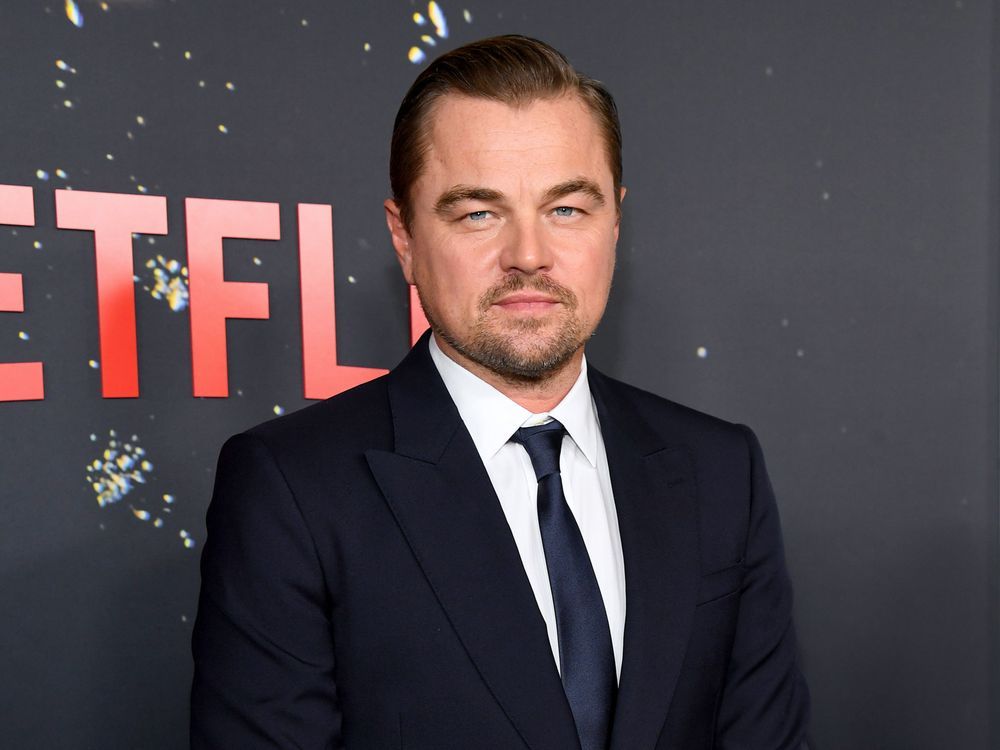
Leonardo DiCaprio - Dont Look Up - Premiere Netflix

Leonardo DiCaprio is meddling in B.C. politics again.

Hollywood actor and self-described environmentalist Leonardo DiCaprio is elated that a B.C. mining project — one that could inject billions of dollars into the province’s economy — has been delayed by an Indigenous land title claim.

Only July 13, the actor posted a video on Instagram referencing a June 8 Supreme Court of B.C. decision which quashed the substantial start designation (SSD) for Seabridge Gold’s KSM project , as a “victory for Indigenous rights, lands and waters in British Columbia.”

In 2024, the mining project was designated as “substantially started,” a regulatory term that ultimately grants an environmental assessment certificate with no expiry date. Now, by order of the court, the province must consult with Tsetsaut Skii Km Lax Ha Nation over the project and reconsider the SSD entirely. It could set the KSM project — which has already been in the works since 2014 — back untold years.

It’s quite possible that DiCaprio (worth hundreds of millions of dollars) crafted his pompous message aboard some 25-million-dollar superyacht , which he is known to charter for his lavish annual summer vacations. Superyachts, in addition to their greenhouse gas emissions, degrade marine ecosystems and create noise pollution that disrupts the echolocation navigation of ocean wildlife, including dolphins and whales. (But hey, a 51-year-old man must keep those 25-year-old ladies impressed somehow!) A fascinating fact: in 2024, Oxfam estimated that enjoying a private jet and superyacht emits more pollution in a single week than one of the world’s poorest persons emit in their entire lifetime. That’s a bit awkward, for DiCaprio.

Nevertheless, the actor says he is concerned about mining waste in our beautiful province.

DiCaprio wrote in his Instagram post: “For years, the Tsetsaut Skii km Lax Ha (TSKLH) Nation has been fighting to protect its territory from a proposed gold mine that would be among the largest in the world. On one side: a small Indigenous Nation. On the other: the government of British Columbia and billion-dollar mining company Seabridge Gold.

“Despite extensive historical evidence confirming that the area designated for the mine’s waste facilities lies within TSKLH territory, the province moved forward without properly consulting the Nation.

“So TSKLH took British Columbia to court. Now, after months of waiting, the B.C. Supreme Court has ruled: the province breached its constitutional duty to appropriately consult the TSKLH Nation… The Tsetsaut Skii km Lax Ha Nation may be small, but it refused to be ignored. It stood up for its territory, culture, wildlife and future.

“Now, British Columbia must return to the consultation process and listen. The world will be watching.”

DiCaprio is almost certainly unaware that Premier Eby’s NDP government is perceived by many in this province as overly invested in Indigenous land claims, to the detriment of our private property rights and economic prosperity. Has he any clue that the NDP government oversaw the disastrous passage of the Declaration on the Rights of Indigenous Peoples Act (DRIPA)? Or that the NDP government talks out both sides of its mouth — claiming to promote energy, mineral and gas projects while behaving, in the courts and legislature, as though stagnation and delay are their real aims? Doubtful.

For their part, Eby’s government has been largely mum on the ruling, likely because it had placed the KSM mine on its “ major projects list ,” and referred to the mine as a “responsible” project that will “support thousands of high-paying jobs, while protecting our lands and waters.” Meanwhile, the Fraser Institute recently compellingly argued that “the NDP government’s own decision-making contradicts its stated aspiration to leverage the province’s abundant critical minerals opportunity and spur natural resource development…”

The KSM story is no David versus Goliath tale, as DiCaprio seems to think. His environmentalist virtue signalling about our province is both hypocritical and grossly clueless.

This is not the first time DiCaprio has found himself in the unenviable position of having to remove his entire foot from his mouth. Two years back, he was lambasted by Indigenous groups in B.C. for his flippant and erroneous commentary on the alleged environmental harms of the province’s salmon farms. At the time, the Kitasoo Xai’Xais First Nation issued a statement to say that DiCaprio’s uninformed and uninvited commentary could “directly threaten the rights, livelihood, and very fabric of First Nations communities” in B.C.

When not clumsily meddling in foreign affairs, DiCaprio is both an investor and brand ambassador for a Swiss watch company that uses lab-grown diamonds and recycled (versus newly mined) metals. That’s a nice little vanity project for a man of his calibre and wealth — he should stick to that and stay out of B.C. politics.

National Post


Leonardo DiCaprio - Dont Look Up - Premiere Netflix

Leonardo DiCaprio is meddling in B.C. politics again.

Hollywood actor and self-described environmentalist Leonardo DiCaprio is elated that a B.C. mining project — one that could inject billions of dollars into the province’s economy — has been delayed by an Indigenous land title claim.

Only July 13, the actor posted a video on Instagram referencing a June 8 Supreme Court of B.C. decision which quashed the substantial start designation (SSD) for Seabridge Gold’s KSM project , as a “victory for Indigenous rights, lands and waters in British Columbia.”

In 2024, the mining project was designated as “substantially started,” a regulatory term that ultimately grants an environmental assessment certificate with no expiry date. Now, by order of the court, the province must consult with Tsetsaut Skii Km Lax Ha Nation over the project and reconsider the SSD entirely. It could set the KSM project — which has already been in the works since 2014 — back untold years.

It’s quite possible that DiCaprio (worth hundreds of millions of dollars) crafted his pompous message aboard some 25-million-dollar superyacht , which he is known to charter for his lavish annual summer vacations. Superyachts, in addition to their greenhouse gas emissions, degrade marine ecosystems and create noise pollution that disrupts the echolocation navigation of ocean wildlife, including dolphins and whales. (But hey, a 51-year-old man must keep those 25-year-old ladies impressed somehow!) A fascinating fact: in 2024, Oxfam estimated that enjoying a private jet and superyacht emits more pollution in a single week than one of the world’s poorest persons emit in their entire lifetime. That’s a bit awkward, for DiCaprio.

Nevertheless, the actor says he is concerned about mining waste in our beautiful province.

DiCaprio wrote in his Instagram post: “For years, the Tsetsaut Skii km Lax Ha (TSKLH) Nation has been fighting to protect its territory from a proposed gold mine that would be among the largest in the world. On one side: a small Indigenous Nation. On the other: the government of British Columbia and billion-dollar mining company Seabridge Gold.

“Despite extensive historical evidence confirming that the area designated for the mine’s waste facilities lies within TSKLH territory, the province moved forward without properly consulting the Nation.

“So TSKLH took British Columbia to court. Now, after months of waiting, the B.C. Supreme Court has ruled: the province breached its constitutional duty to appropriately consult the TSKLH Nation… The Tsetsaut Skii km Lax Ha Nation may be small, but it refused to be ignored. It stood up for its territory, culture, wildlife and future.

“Now, British Columbia must return to the consultation process and listen. The world will be watching.”

DiCaprio is almost certainly unaware that Premier Eby’s NDP government is perceived by many in this province as overly invested in Indigenous land claims, to the detriment of our private property rights and economic prosperity. Has he any clue that the NDP government oversaw the disastrous passage of the Declaration on the Rights of Indigenous Peoples Act (DRIPA)? Or that the NDP government talks out both sides of its mouth — claiming to promote energy, mineral and gas projects while behaving, in the courts and legislature, as though stagnation and delay are their real aims? Doubtful.

For their part, Eby’s government has been largely mum on the ruling, likely because it had placed the KSM mine on its “ major projects list ,” and referred to the mine as a “responsible” project that will “support thousands of high-paying jobs, while protecting our lands and waters.” Meanwhile, the Fraser Institute recently compellingly argued that “the NDP government’s own decision-making contradicts its stated aspiration to leverage the province’s abundant critical minerals opportunity and spur natural resource development…”

The KSM story is no David versus Goliath tale, as DiCaprio seems to think. His environmentalist virtue signalling about our province is both hypocritical and grossly clueless.

This is not the first time DiCaprio has found himself in the unenviable position of having to remove his entire foot from his mouth. Two years back, he was lambasted by Indigenous groups in B.C. for his flippant and erroneous commentary on the alleged environmental harms of the province’s salmon farms. At the time, the Kitasoo Xai’Xais First Nation issued a statement to say that DiCaprio’s uninformed and uninvited commentary could “directly threaten the rights, livelihood, and very fabric of First Nations communities” in B.C.

When not clumsily meddling in foreign affairs, DiCaprio is both an investor and brand ambassador for a Swiss watch company that uses lab-grown diamonds and recycled (versus newly mined) metals. That’s a nice little vanity project for a man of his calibre and wealth — he should stick to that and stay out of B.C. politics.

National Post


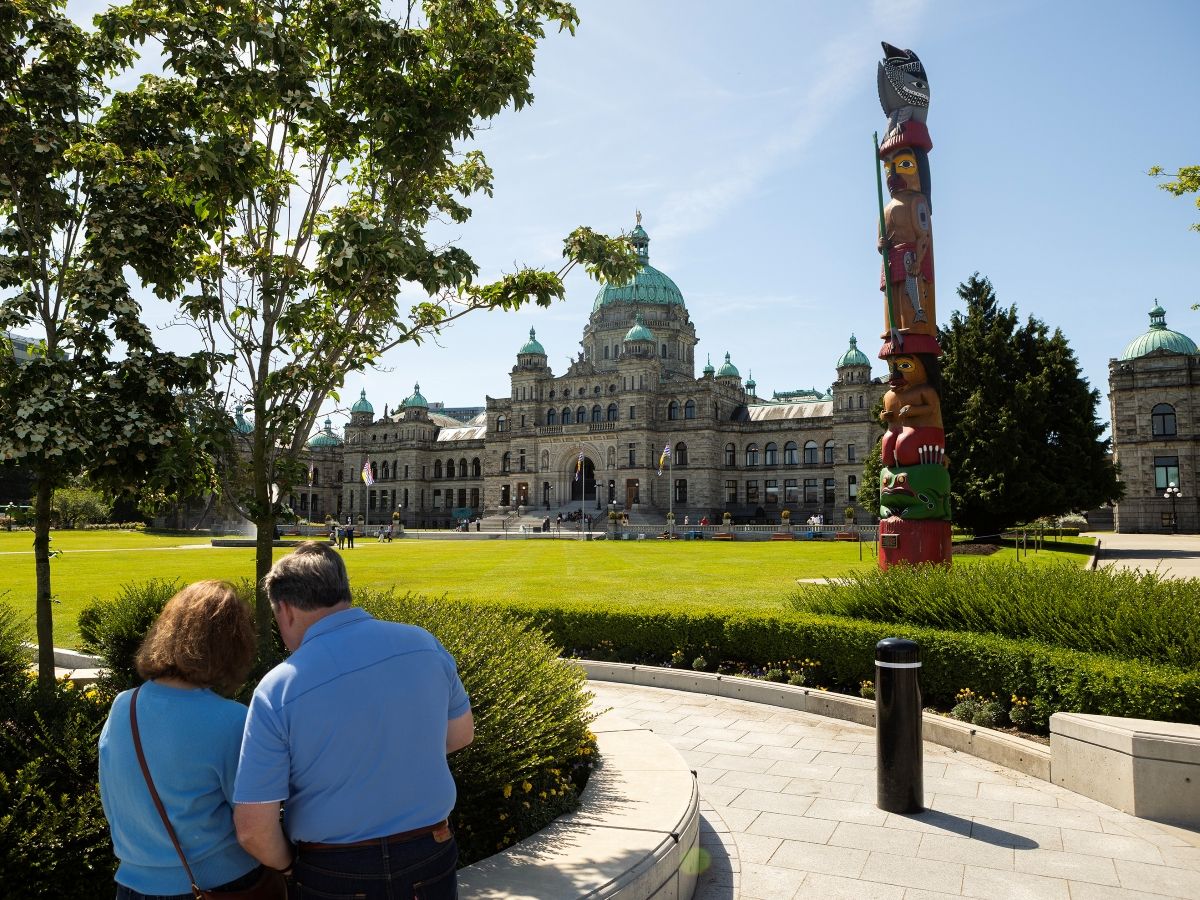
A couple look at a map in front of the Knowledge Totem carved by Master Carver Cicero August and his sons Darrell and Doug of the Cowichan Tribes on the front lawn of the B.C. legislature in Victoria, on Friday, May 22, 2026.

A little more than 50 years ago, members of B.C.’s NDP government gathered in the provincial capital to introduce the British Columbia Day Act, creating a statutory holiday to celebrate the province and its history. Now, B.C.’s current NDP government is negotiating a treaty that would give parts of that same capital away.

In 1974, NDP MLAs rose in the Legislature to advocate for the adoption of B.C. Day, saying it would enable British Columbians to “remember the great people who have helped in making this country what it is.” They encouraged citizens to “get together and celebrate the origin and the history of our province.”

These displays of provincial pride are a far cry from B.C.’s NDP government of today.

In the very same Legislature where her predecessors called upon British Columbians to honour their past, one NDP MLA came under fire last year for using the terms “settler,” “colonizer” and “uninvited guest” to refer to non-Indigenous British Columbians. Premier David Eby himself has referred to British Columbia’s “original colonial mistake,” while government guidelines suggested the phrase “British Columbians” is exclusionary.

Across the street from the Legislature at the Royal B.C. Museum, a similar sentiment was behind the NDP’s highly-criticized 2021 attempt to “ decolonize ” the beloved Old Town exhibit, which had previously celebrated B.C.’s pioneers in a way that would have made the NDP of the 1970s proud.

And now, B.C.’s NDP government is negotiating a treaty that would hand over tens of millions of dollars of prime land in the heart of the province’s capital, threatening public access, eliminating democratic oversight and opening Victoria’s historic centre for unregulated development that could change the face of the iconic city forever.

The late-stage treaty negotiations are with the Te’Mexw Treaty Association, which represents five Indigenous groups on Vancouver Island, including the 600-member Songhees First Nation in the Victoria area.

Maps show plans to transfer two provincially owned properties to the Songhees as treaty lands in fee simple (among many other land transfers to the other four Indigenous groups). These include a large area beside B.C.’s picturesque Legislature, and a large waterfront property on Wharf Street across from Bastion Square. These downtown properties have a combined assessed value of $47 million.

The two downtown properties are in addition to the planned transfer of the enormous $48 million federal Hatley Park property and castle that is currently the site of Royal Roads University (known to non-Islanders as a filming location for the X-Men movies). Discovery Island Marine Provincial Park will also be transferred in fee simple.

It is unknown what the Songhees First Nation might do with these properties, but what is clear is that no local bylaws or zoning rules will apply . This opens the land in and around Victoria’s picturesque inner harbour, and potentially other lands contemplated in this treaty, to unrestricted development of any kind.

Public access is not guaranteed, either. Euphemistically described as a change that “could take some getting used to,” a 2024 consultation summary notes that, when it comes to lands previously accessible to citizens, “there may be limited access or even no access for public use.”

In exchange for these giveaways, the government points to “certainty” as a key treaty accomplishment. However, it appears that even this one tangible public benefit is itself not guaranteed.

Instead, the treaties are referred to as “living agreements” that are “capable of evolving over time” indicating they can be expanded on in perpetuity rather than resolving matters with finality. The treaties also provide a mechanism for new properties to be added to the deal in the future.

Legal certainty is also far from guaranteed. The nearby Esquimalt First Nation is already suing the federal government for offering the Hatley Park property to the Songhees First Nation, and not to them.

Public property ought to be used and managed for the benefit of all British Columbians. With tens of millions of dollars in land transfers, undisclosed cash payments , few guarantees of public access, continued uncertainty and zero restrictions to protect Victoria’s cherished heritage aesthetic, it is not clear how the government has advanced the public interest at all.

The treaty, which has yet to be finalized and then approved in the Legislature, stands in stark contrast to the pride in B.C. expressed by the NDP in that same building decades ago, when they created a holiday in the province’s honour.

“The (B.C. Day) holiday,” as one NDP MLA said at the time, “should be dedicated to the pioneers who built the colony of British Columbia into the great province it is today.” Now, instead of honouring the province our predecessors built, today’s NDP appears more interested in giving it away.

National Post

Caroline Elliott is a B.C.-based policy advocate and advisor. She has a PhD in Canadian government and democratic theory.


A couple look at a map in front of the Knowledge Totem carved by Master Carver Cicero August and his sons Darrell and Doug of the Cowichan Tribes on the front lawn of the B.C. legislature in Victoria, on Friday, May 22, 2026.

A little more than 50 years ago, members of B.C.’s NDP government gathered in the provincial capital to introduce the British Columbia Day Act, creating a statutory holiday to celebrate the province and its history. Now, B.C.’s current NDP government is negotiating a treaty that would give parts of that same capital away.

In 1974, NDP MLAs rose in the Legislature to advocate for the adoption of B.C. Day, saying it would enable British Columbians to “remember the great people who have helped in making this country what it is.” They encouraged citizens to “get together and celebrate the origin and the history of our province.”

These displays of provincial pride are a far cry from B.C.’s NDP government of today.

In the very same Legislature where her predecessors called upon British Columbians to honour their past, one NDP MLA came under fire last year for using the terms “settler,” “colonizer” and “uninvited guest” to refer to non-Indigenous British Columbians. Premier David Eby himself has referred to British Columbia’s “original colonial mistake,” while government guidelines suggested the phrase “British Columbians” is exclusionary.

Across the street from the Legislature at the Royal B.C. Museum, a similar sentiment was behind the NDP’s highly-criticized 2021 attempt to “ decolonize ” the beloved Old Town exhibit, which had previously celebrated B.C.’s pioneers in a way that would have made the NDP of the 1970s proud.

And now, B.C.’s NDP government is negotiating a treaty that would hand over tens of millions of dollars of prime land in the heart of the province’s capital, threatening public access, eliminating democratic oversight and opening Victoria’s historic centre for unregulated development that could change the face of the iconic city forever.

The late-stage treaty negotiations are with the Te’Mexw Treaty Association, which represents five Indigenous groups on Vancouver Island, including the 600-member Songhees First Nation in the Victoria area.

Maps show plans to transfer two provincially owned properties to the Songhees as treaty lands in fee simple (among many other land transfers to the other four Indigenous groups). These include a large area beside B.C.’s picturesque Legislature, and a large waterfront property on Wharf Street across from Bastion Square. These downtown properties have a combined assessed value of $47 million.

The two downtown properties are in addition to the planned transfer of the enormous $48 million federal Hatley Park property and castle that is currently the site of Royal Roads University (known to non-Islanders as a filming location for the X-Men movies). Discovery Island Marine Provincial Park will also be transferred in fee simple.

It is unknown what the Songhees First Nation might do with these properties, but what is clear is that no local bylaws or zoning rules will apply . This opens the land in and around Victoria’s picturesque inner harbour, and potentially other lands contemplated in this treaty, to unrestricted development of any kind.

Public access is not guaranteed, either. Euphemistically described as a change that “could take some getting used to,” a 2024 consultation summary notes that, when it comes to lands previously accessible to citizens, “there may be limited access or even no access for public use.”

In exchange for these giveaways, the government points to “certainty” as a key treaty accomplishment. However, it appears that even this one tangible public benefit is itself not guaranteed.

Instead, the treaties are referred to as “living agreements” that are “capable of evolving over time” indicating they can be expanded on in perpetuity rather than resolving matters with finality. The treaties also provide a mechanism for new properties to be added to the deal in the future.

Legal certainty is also far from guaranteed. The nearby Esquimalt First Nation is already suing the federal government for offering the Hatley Park property to the Songhees First Nation, and not to them.

Public property ought to be used and managed for the benefit of all British Columbians. With tens of millions of dollars in land transfers, undisclosed cash payments , few guarantees of public access, continued uncertainty and zero restrictions to protect Victoria’s cherished heritage aesthetic, it is not clear how the government has advanced the public interest at all.

The treaty, which has yet to be finalized and then approved in the Legislature, stands in stark contrast to the pride in B.C. expressed by the NDP in that same building decades ago, when they created a holiday in the province’s honour.

“The (B.C. Day) holiday,” as one NDP MLA said at the time, “should be dedicated to the pioneers who built the colony of British Columbia into the great province it is today.” Now, instead of honouring the province our predecessors built, today’s NDP appears more interested in giving it away.

National Post

Caroline Elliott is a B.C.-based policy advocate and advisor. She has a PhD in Canadian government and democratic theory.


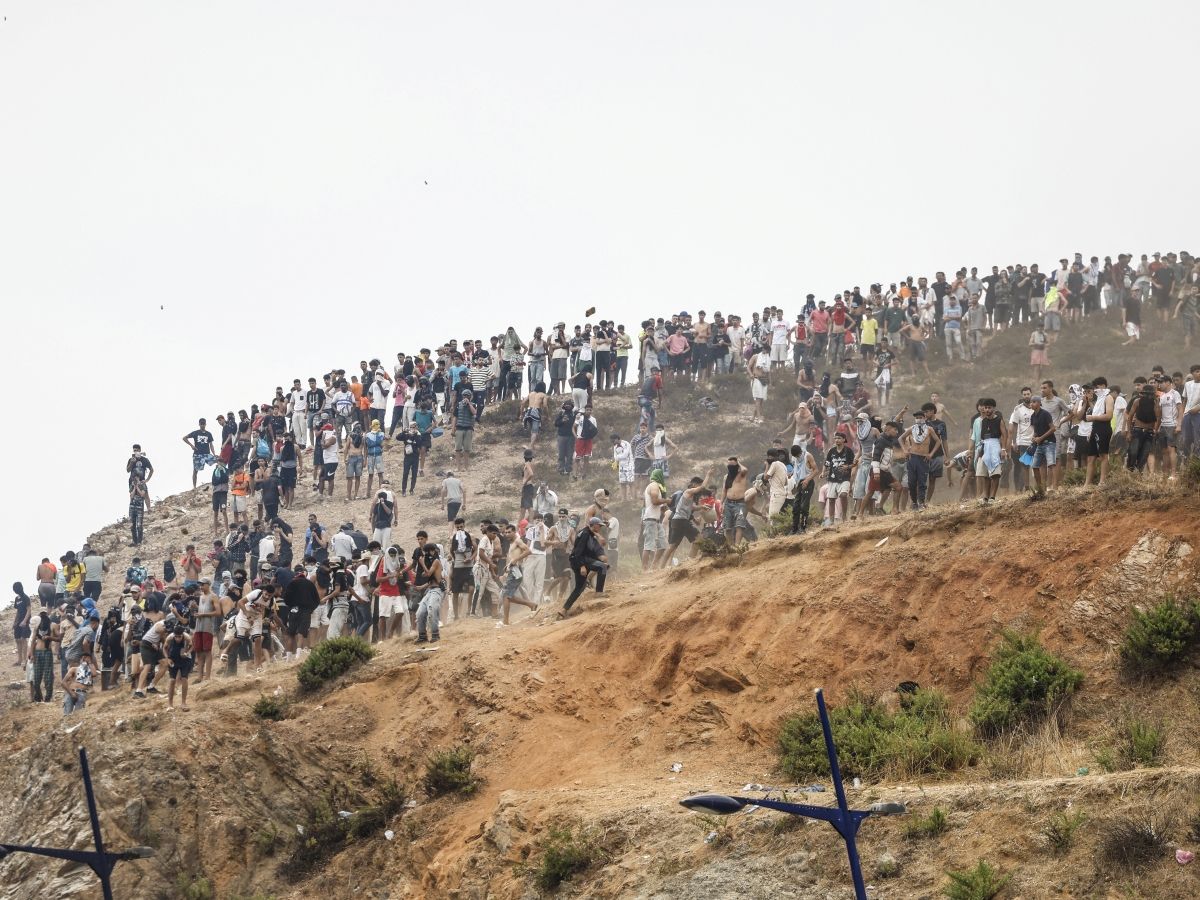
Migrants attempting to cross into Spain's North African enclave of Ceuta gather on a hilltop during clashes with Moroccan security forces near the town of Fnideq, on the Morocco-Spain border, on July 31, 2026.

The Spanish city of Ceuta, which sits on a tiny coastal patch of North Africa within eyesight of mainland Spain, was readying to celebrate its patron saint this weekend — and then it was overwhelmed by a migrant horde.

This is what happens when all of a country’s institutions orient themselves to help outsiders over their own people.

The festivities were called off, but that was the least of the locals’ concerns. Some 60,000 people, primarily young men, entered the city from Morocco over several days by swimming around the border fence. They were hungry, thirsty, barefoot and without a place to stay. Videos circulated online of the masses milling about, of street violence, of men scaling apartments and attempting to gain entry.

We’ll have a tally of the actual damage and crime once the dust settles, but the breakdown of law and order is plain enough. What the city experienced was nothing short of an invasion, which presents serious national security concerns.

Spanish officials estimated on Friday evening that 48,300 migrants had returned to Morocco , but the thousands who remain can’t immediately be forced to leave. That’s because, earlier this month, the Spanish Supreme Court made it illegal to summarily deport anyone who enters Spain by sea.

If it was exclusively the top Spanish court working to advance the interests of illegal migrants, perhaps this problem would have been easier to prevent. But that was far from the case.

Socialist Prime Minister Pedro Sánchez set out earlier this year to mass-regularize those living unlawfully in Spain, and by late June had received more than one-million applications for the scheme. Before that, he embarked on an African strategy that involves funnelling aid abroad and providing work visas to migrants, with the overall effect of fostering warm ties with migrant-sending countries. The CBC has taken note, giving Spain’s uniquely welcoming approach to immigration a positive spin , contrasting it with souring attitudes over in the United Kingdom.

Reality hits hard. On Friday, Sánchez called Ceuta’s migrant tide a “violation of Spain’s territorial integrity” that deserves “condemnation at the strongest possible level.” He empathized with the locals, who had been advised to batten down and cower in place. Speaking words and sounding defensive is an easy thing to do. Much like our leaders in Canada, Sánchez’s apparent support for integrity and order was contradicted by his record of lax administration of the immigration system.

A kinder welcome was extended by the local Catholic church. On Thursday, the Diocese of Cádiz and Ceuta “expressed its closeness to all those affected by the crisis” and “announced that all collections taken this weekend in Ceuta’s parishes will be allocated to the Diocesan Office for Migrants,” according to Vatican News .

Small-scale charity work was going on in the city, as well: the Spanish publication El País followed a young Arab woman from Ceuta who was handing out sandwiches to the migrants on Friday, telling them that local officers can be trusted and informing them of the Supreme Court precedent against their immediate deportation — which was met with “enthusiastic applause.”

All of this happened against a backdrop of research and media reporting aimed at defusing concerns about migration, particularly its impact on crime. One Spanish study last year characterized these kinds of links as “disinformation” and the ensuing concerns as “moral panics.” Another study last month reportedly found no link between “irregular migration and crime rates,” even though a close look at the actual data reveals massively higher crime rates among certain nationalities in Spain — Moroccans, for example, were found to be committing crime at twice the native Spanish rate.

When it comes to migration, concern should be first and foremost for the Spanish people — and right now, for those in Ceuta, in particular.

This is what mass migration looks like, whether at home or on the Strait of Gibraltar: it’s a tide that will wash over you, your history, your culture, your security, your way of life or your general well-being. If your institutions aren’t sandbagged appropriately, and if enough people are ecstatic to meet the flood, you might see what you hold most dearly drift away.

National Post