


LP_468x60
on-the-record-468x60-white

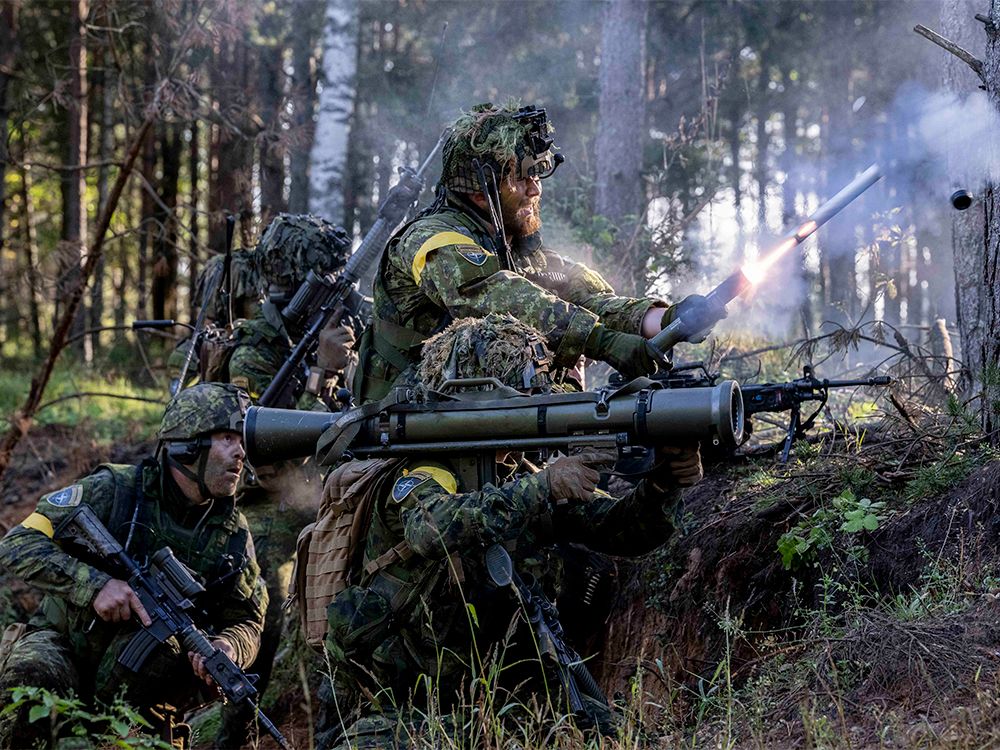
Canadian Armed Forces members take part in a NATO exercise in Latvia on Sept. 25, 2023.

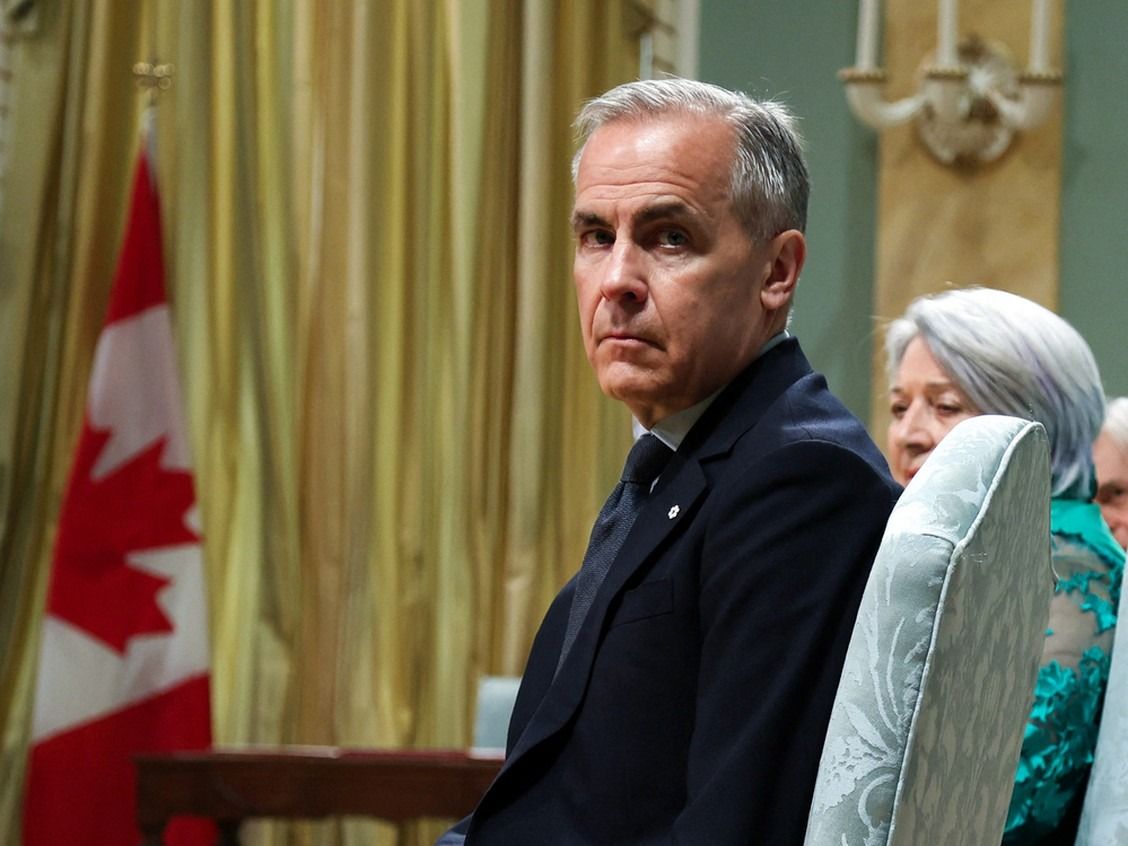
Prime Minister Mark Carney is to be applauded for laying out a bold and ambitious vision for Canada’s military.

For too long, Canada has neglected the men and women who serve our country and have allowed the equipment they rely on to protect us and others to badly deteriorate.

One certainly can’t fault Carney for audaciously declaring that Canada would finally meet the long-delayed NATO target of spending two per cent of our GDP on defence spending this year.

His commitment to do so is not just remarkable, but staggering.

The Liberals have been laggards on this file for all the time they have been in power.

In 2014, NATO countries, including Canada, committed to the two per cent target, but 11 years later we have still not achieved it.

For 2024-2025, defence spending was expected to

reach

1.37 per cent of GDP. In 2020, it

peaked

at 1.42 per cent.

It was only two years ago that The Washington Post

reported

that then prime minister Justin Trudeau privately told NATO chiefs that Canada would never reach the target.

Last year, after pressure from NATO allies, Trudeau

said

we would reach the target by 2032. Our new prime minister

said

in February that he would reach that figure two years earlier.

And then magically on Monday — bam! We’ll meet our commitment this year, said Carney, as he

announced

$9.3 billion in new defence spending.

In one fell swoop a decade of Liberal delay, apathy and tardiness was swept away. It appears meeting that NATO target wasn’t difficult once the Liberals got serious about defence and security.

One of the main reasons for the investment, said Carney, was a “full recognition by Canada’s new government of the fundamental importance of improving the basics, the foundations; proper pay, proper benefits, proper housing, munitions equipment.”

Earlier Monday, during a speech at the Munk School of Global Affairs and Public Policy in Toronto, he also said, “Government must start by fulfilling its most fundamental role, which is to defend Canadians.”

The prime minister also spoke of the need to invest and arm our military because it is an increasingly dangerous world.

But it has been an increasingly dangerous world for quite some time.

When governments made their 2014 commitment to NATO it was in

response

to Russia’s annexation of Crimea and unrest in the Middle East. Times haven’t changed.

“If we want a better world we have to make difficult choices and work harder than we have in decades,” said Carney. “We have agency.”

Exactly. Canada has always had agency in this matter, what was missing was Liberal resolution.

In his speech, Carney enunciated what a decade of Liberal indifference has done to our military — only one of our four submarines is seaworthy and less than half of our maritime fleet and land vehicles are operational.

We have allowed our military to deteriorate despite repeatedly being asked to step up and play our part in the NATO alliance. In 2022, then NATO chief Jens Stoltenberg visited Canada in a bid to shame us into increasing defence funding and

reminded

Trudeau: “The shortest path to North America for Russian missiles and bombers would be over the North Pole.”

“We have been jolted awake by new threats,” said Carney. The threats are not new, but it is gratifying that the Liberals are now awake to them.

The government’s new strategy to “rebuild, reinvest and rearm” Canada’s military has four pillars: investing in manpower and equipment; expanding and enhancing military capabilities; strengthening the defence industry; and diversifying defence partnerships.

“We will invest in new submarines, aircraft, ships, armed vehicles and artillery, as well as new radar, drones and sensors to monitor the sea floor and the Arctic,” said Carney.

Other welcome initiatives from the prime minister included establishing Borealis, the Bureau of Research, Engineering and Advanced Leadership in Innovation and Science, to “advance cutting-edge research in artificial intelligence, quantum computing and other frontier technologies essential to safeguarding our sovereignty”; diversifying our military suppliers by looking to Europe; and creating a new defence procurement agency to centralize decision-making.

Procurement has long been a thorn in the side of the military. Buying any military equipment can take decades because it often involves multiple departments. And, of course, political parties, depending on how they view military spending, can also add to the delay.

In an

interview

with the National Post last year, retiring Chief of the Defence Staff Wayne Eyre said, “We are applying peacetime processes and peacetime mentalities to what could be considered a wartime or immediate pre-wartime security environment.

“So, what did we do in 1939? What did we do in 1914? We certainly didn’t take 10 or 15 or 20 years to get capabilities in place, because the war would be over by that point. … We have to deliver and we have to deliver fast.”

It has taken a decade to get here, but Carney is to be applauded for the urgency with which he is acting; for reinvesting in our men and women in uniform; for rearming our military; and for finally meeting our NATO commitment.

But difficult decisions still lie ahead. In London on Monday, NATO Secretary General Mark Rutte

said

the organization needed a “quantum leap” in new armaments as he warned Russia could be ready to use force against NATO within five years.

Rutte said he believed NATO countries would agree to spend five per cent of GDP on defence at a summit next week in the Netherlands.

Just how committed Carney is to defence looks like it will be tested shortly.

National Post
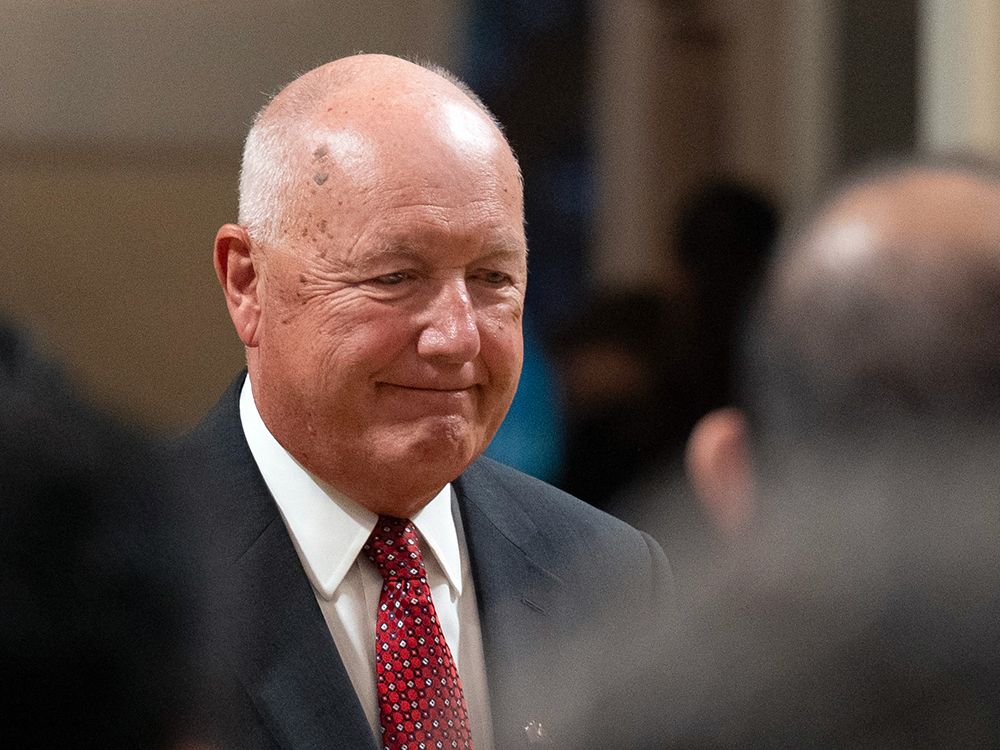

U.S. Ambassador to Canada Pete Hoekstra.

Don’t call it a done deal until it’s done, but America’s ambassador to Canada, Pete Hoekstra, tells Brian this week that negotiations between Ottawa and President Donald Trump’s administration are making progress. He explains why he believes things are moving quickly in the right direction to settle the trade war between our two countries. Hoekstra also talks about why he’s looking forward to the next phase of the longstanding bilateral relationship, when he thinks Canada and the U.S. will work harmoniously and productively again, allied in eliminating the fentanyl scourge from both countries and building the two strongest economies in the industrialized world — although he still thinks Canada will be eating America’s dust. (Recorded June 6, 2025)


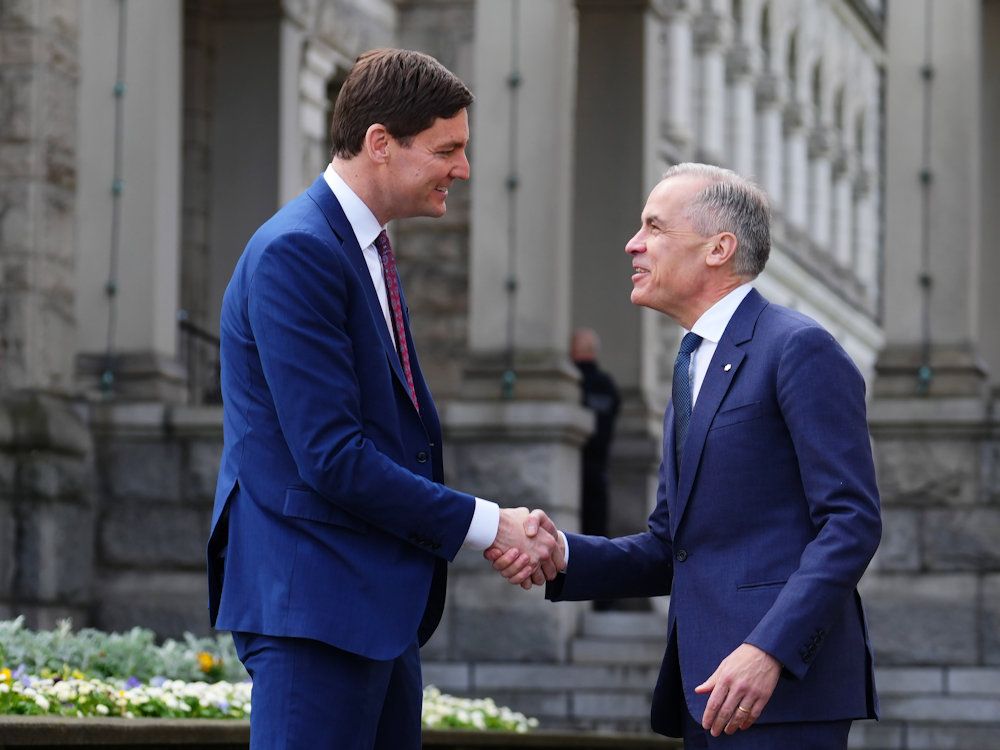
Prime Minister Mark Carney, right, meets with British Columbia Premier David Eby at the Legislative Assembly of British Columbia in Victoria on Monday, April 7, 2025.

First Reading is a Canadian politics newsletter curated by the National Post’s own Tristin Hopper. To get an early version sent directly to your inbox, sign up here.

TOP STORY

Back in January, something near-unbelievable happened. One of Canada’s most vocal and influential anti-pipeline activists said that maybe pipelines weren’t such a bad idea.

Stewart Phillip, grand chief of the Union of British Columbia Indian Chiefs, told reporters that he had changed his mind on Northern Gateway, a proposed $8-billion heavy oil pipeline to Kitimat, B.C., that Philip had worked for years to destroy.

The spur for the epiphany was U.S. President Donald Trump pledging an all-out trade war with Canada. “I would suggest that if we don’t build that kind of infrastructure, Trump will,” said Philip.

The backlash was immediate, and Philip would end up reversing himself within 24 hours. The Union of B.C. Indian Chiefs rushed out a statement clarifying that they still opposed “fossil fuel pipelines,” and quoted Phillip as saying “I do not support resuscitating dead projects.… I sincerely apologize for any confusion on this point.”

But Phillip’s one-day odyssey as a pipeline booster would turn out to be a template for what was to come.

Despite a brief glimmer of possibility that Canada would start building oil pipelines to spite Trump, the last few months have been a whirlwind of Canadian figures returning to their old anti-oil positions almost immediately.

“If you’re not buying oil and gas from Canada and British Columbia, the alternative is Venezuela,” said B.C. Premier David Eby on Feb. 6 in a direct appeal for Canada to start selling more of everything to non-U.S. customers, including oil.

Eby even made glowing reference to the recently completed Trans Mountain pipeline, a project his own B.C. NDP predecessor, John Horgan, had actively tried to sink. Where Horgan had called the pipeline a bringer of “catastrophic oil spills,” Eby now said Trans Mountain was a “critically important” means to “ensure our sovereignty.”

“It doesn’t matter what the product is, we should be looking at how we get that product to other markets,” he said.

The comments were arguably the high-water mark of a flurry of public enthusiasm for new export pipelines. It didn’t matter which coast; Canadians suddenly wanted a way to get more Alberta oil into tankers.

Liberal MP François-Philippe Champagne, who is now minister of finance, said on Feb. 9 that his government’s 2019 decision to cancel a pipeline to the Atlantic Coast should probably be reversed. “Things have changed … you cannot be in the past,” he said.

Even in famously anti-pipeline Quebec, Premier François Legault conceded that the political winds might be shifting.

“What Mr. Trump is doing may change the situation in the future. So, if there is a social acceptability, we will be open to these kinds of projects,” he said on Feb. 3.

A Feb. 10 poll by the Angus Reid Institute found that a record 68 per cent of Canadian respondents now favoured the Energy East pipeline, a project to bring Alberta crude to ports on the Atlantic Coast.

Northern Gateway got the thumbs-up from 55 per cent of respondents, against just 25 per cent who said they opposed it.

A month later, in March, a Nanos poll found that a new pipeline was suddenly one of the most popular pieces of public policy in the country. Three quarters of Canadians endorsed a “national energy corridor which would have a pipeline to move Canadian oil and gas from Alberta to Eastern Canada.”

The context for all of this was the beginning of Trump’s trade war against Canada, and his frequent threats to annex the country as the 51st state. Canadian politicians of all stripes began embracing the idea of shifting the Canadian economy away from its historical reliance on U.S. exports.

And in any strategy to decouple Canada from the U.S., arguably the most impactful thing Canada could do would be to sell its oil elsewhere. Oil is not only Canada’s most valuable export, but it’s an export almost entirely dependent on U.S. customers.

More than 97 per cent of Canadian oil exports leave the country via a pipeline heading to the U.S. The only way Canadian oil can ever find its way to non-U.S. customers is via the occasional tanker filling up either at a Newfoundland offshore platform or via the Trans Mountain terminus in Burnaby.

There’s no immediate evidence that the Canadian public has soured on its enthusiasm for some sort of Trump-spiting oil export pipeline. As recently as April, a poll commissioned by Bloomberg News found 77 per cent of Canadians not only supportive of a new pipeline, but of one that would be “government-funded.”

But it’s a different story at the political level, where specific proposals to actually build and approve a new pipeline are already being met with hedging or new conditions.

In mid-May, Prime Minister Mark Carney said he would support “just doing one pipe,” but only if there was “consensus.”

When he was asked this week in Saskatoon about whether his vision for “nation-building projects” included an oil pipeline, he said that any such project would need to be filled with “decarbonized” barrels of oil — a term that seemed to confuse environmentalists and oil advocates alike.

Then, on Friday, Carney said nothing was getting built without “a consensus of all the provinces, and Indigenous people.” 

In Quebec, opponents haven’t even needed a specific pipeline proposal to start mobilizing against it. “We will not allow the government to build a pipeline through Quebec,” Bloc Québécois MP Patrick Bonin said in the House of Commons this week.

But probably the most dramatic about-face was Eby.

At a premiers’ meeting last month, Eby dodged questions about whether he would support a revived Northern Gateway project, saying that getting “heavy oil to tidewater” was an Alberta priority.

“My priority is to … decarbonize and drive our economy in British Columbia,” he said.


IN OTHER NEWS

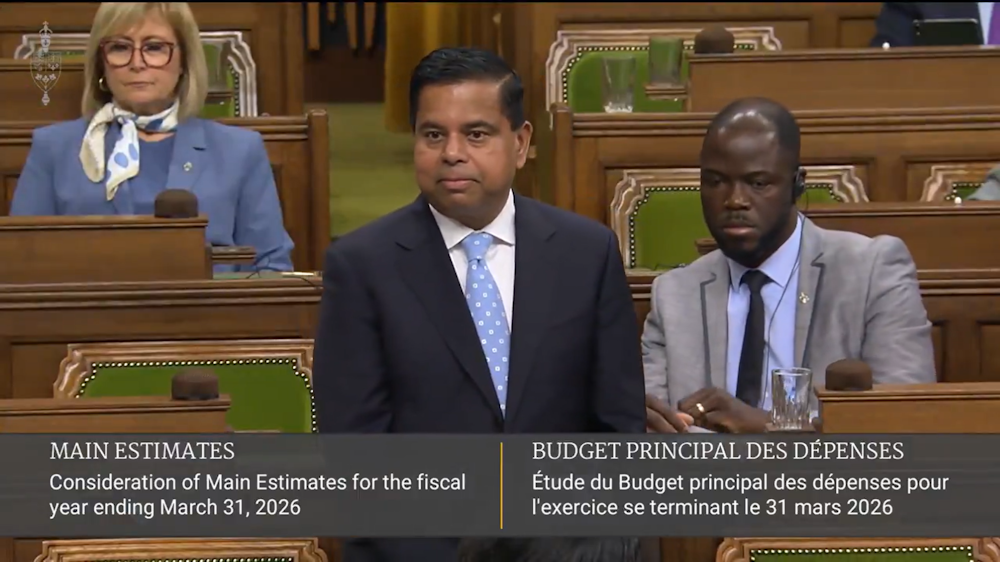
 This is Public Safety Minister Gary Anandasangaree at the precise moment where he said that he didn’t know what an “RPAL” is. Anandasangaree is now in charge of the Liberals’ various ongoing gun control programs, and the Conservatives asked the question because an RPAL is a pretty rudimentary term in Canadian gun law. It stands for “restricted possession and acquisition licence,” and it’s the certification required to own a handgun in Canada. Anandasangaree also didn’t know what “CFSC” is. It’s the Canadian Firearms Safety Course, the mandatory government training required of all Canadian gun owners.

The Liberals have reintroduced a measure that would extend Canadian citizenship to people who have never lived in Canada – and may not even speak either of the official languages. Under the new terms, anyone looking to claim inherited Canadian citizenship needs only one parent who is themselves a Canadian and has lived in the country for a cumulative 1,095 days. So, in extreme case, this technically extends citizenship to the children of people who left the country as toddlers.

This wasn’t the Liberal government’s idea, though. It’s the result of an Ontario Superior Court decision ruling that a “first generation limit” on inherited Canadian citizenship was unconstitutional. Specifically, the court found that the measure violated the Charter right to freedom from discrimination based on “national or ethnic origin,” since being born outside Canada is technically a kind of national origin. As the decision reads, “it treats differently those Canadians who became Canadians at birth because they were born in Canada from those Canadians who obtained their citizenship by descent on their birth outside of Canada.”

 Canada is still in a trade war with the U.S., of course. The U.S. still has six active tariff packages aimed at Canada, including a 50 per cent tariff on steel and aluminum passed just this week. But while new tariffs used to be met with loud, public condemnations, this time around Prime Minister Mark Carney is keeping relatively quiet, reportedly because he’s working out some kind of deal with the Trump White House.

Get all of these insights and more into your inbox by signing up for the First Reading newsletter.


Premier David Eby. The B.C. government is cancelling the carbon tax by introducing legislation to drop the rate to $0, effective Tuesday, April 1, 2025. Photo: B.C. Government

Open any book on politics and you will find that, in Canada, the NDP stands for the New Democratic Party. In British Columbia under David Eby, the acronym needs to be updated to — Not Delivering Prosperity.

Since Eby and his government took over in 2022, British Columbia has been an economic basket case. The

deficit projection

for 2025 was revised upwards in March to $10.9 billion — a

record

— which followed hot on the heels of the 2024 deficit of $9.1 billion — also a record until 2025 stole the deficit crown. The result in April was a

downgrade

to BC’s credit rating from AA to A+. By any measure, the outlook is grim, as total debt for the province is predicted to

soar

by 70 per cent over the next three years.

The ruling NDP and Premier David Eby have been quick to

blame

economic woes on Donald Trump and his tariff policies. While tariffs are no doubt hurting B.C. — as they are all of Canada — this tactic is already tired. In truth, the damage appears to be mostly self-inflicted, caused by poor budgeting and economic policy driven by ideology rather than actual economics.

At the B.C. Chamber of Commerce AGM on June 4th, Ken Peacock, the former Chief Economist at the Business Council of B.C.,

presented analysis

indicating the NDP’s

CleanBC

 initiative has actually been a far greater hit to the province’s sputtering economy than any tariffs. From 2019-2024 it cost B.C. $29.3 billion in lost GDP and is projected to cost the province a further $109.7 billion between now and 2029. That’s David Eby’s economic leadership in action: ideology

torpedoing economic prosperity

for hard working British Columbians.

Eby and the NDP will of course point to the fact that they have passed

Bill 14

and

15

. Bill 15, the Infrastructure Projects Act, is ostensibly a bill to speed up major infrastructure project development, particularly in the resource industry. Eby and the NDP

say

the bills are “critically important” to respond to a “rapidly evolving situation” (read Trump) rather than acknowledge their need as a result of the NDP’s actions in creating a provincial economic dud. Bill 15 gives cabinet

sweeping powers

to override existing regulations for projects in the provincial interest and fast-track them to permitting. It has been met with serious pushback from B.C. Municipalities and from

First Nations

who claim it ignores their voices and dismisses their rights.

While any business which has tried to work in the province’s economically critical resource sector may applaud the notion of a government finding ways to stop B.C.’s quagmire of delays and regulatory hell, the bill fails to address the real problem and merely hands unmerited power to a small group of NDP ideologues. This is always the Eby NDP way: power consolidation for decision making.

The problem should be obvious to any free-market supporter. Bill 15 does not reignite B.C.’s economy by streamlining regulation for private enterprise; it merely allows cabinet to pick and choose which projects it will decide to ram through any further regulatory oversight. This is ripe for abuse and political interference. It is a pay-to-play system where randomness and arbitrary decisions based on cabinet whims, without clear process, will become the norm. Eby’s NDP claim the bill brings

investment clarity

, in fact, it does anything but.

The vague backroom modus operandi of the NDP is, however, consistent in one way. They echo the closed-door decision-making attempts and history of the NDP when deciding how the province’s crown land will be used; something essential for investment and resource development. This important process has been

shrouded in secrecy
on multiple occasions

. The

latest announcement

in this regard covers all of Northwestern B.C. including the mineral-rich Golden Triangle. As a result, nearly a third of British Columbia is now subject to a one year pause on new mining-tenure registrations. This is the exact of opposite of what attracts investment to the province and will send the critical dollars B.C. needs to friendlier investment regions.

David Eby’s NDP has bankrupted the province and has no plan back for the simple reason that they cannot trust the free market to do its work. They are trapped in an ideologically-driven mindset which does not permit British Columbians to make full use of their own province. This arbitrary and regressive policy must change.

National Post


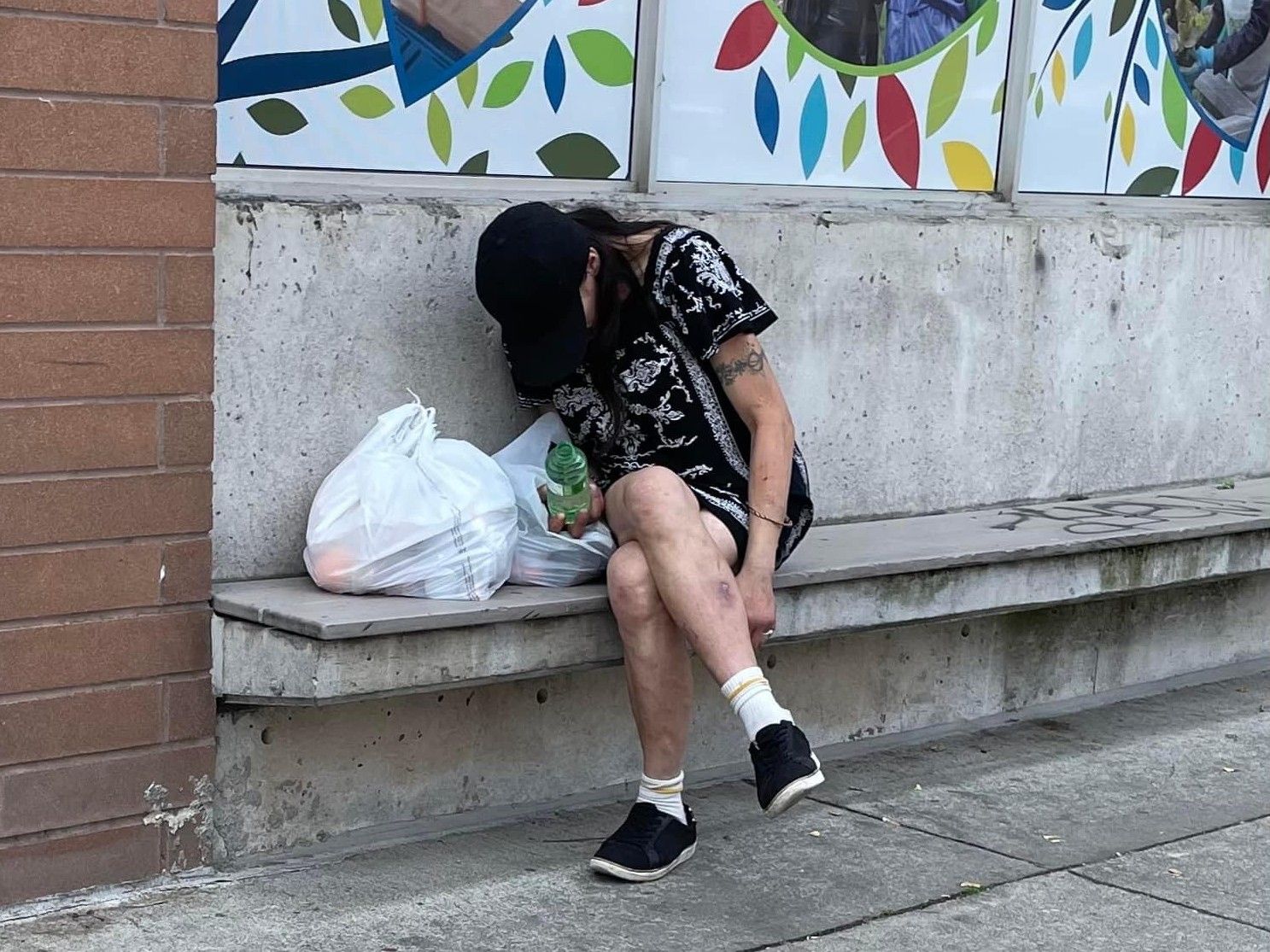
A man is seen slumped outside the South Riverdale Community Health Centre in Toronto's Leslieville area. The safe injection site there is one of 10 being closed by the Ontario government because of close proximity to schools and daycares.

“A lot more people are going to die.”

This was the dire prediction oft-repeated back in March by a busload of lawyers who supported a legal challenge filed by an injection site in Toronto that claimed recent Ontario legislation forcing the closure of sites within 200 metres of schools and daycare facilities violates the Charter rights of drug users.

The two expert witnesses for that site, in the Kensington neighbourhood of Toronto, are employed by the

MAP Centre for Urban Health Solutions

, a hospital-run research centre. MAP had played a key role in the establishment of the city’s first injection sites in 2017. Dr. Ahmed Bayoumi and Dr. Dan Werb both submitted evidence that overdose deaths in Toronto would increase sharply if half of the city’s ten injection sites closed at the end of March because of the legislation.

Fred Fischer, a lawyer representing Toronto’s Board of Health, one of the intervenor groups in the case, also told Justice John Callaghan of the Ontario Superior Court that reducing harm reduction services in Toronto during the ongoing opioid crisis would have severe consequences —

more people will overdose and die

.

A lawyer for another intervenor, a harm reduction coalition, put an even finer point on it. He said that one of the Toronto injection sites not affected by the legislation was anticipating such an immediate and overwhelming increase in overdose deaths in April, after the closures, that the site was in the process of hiring grief counsellors for its staff.

More than two months have passed since then, and now that we’re in June, you might be wondering: How many more people ended up dying because of the closure of these sites?

According to

data

that’s compiled by Toronto Paramedic Services and Toronto Public Health, the answer, so far, is none. In fact, the number of overdoses in Toronto for the month of April, the first month after the sites had closed, dropped notably.

Toronto had 13 fatal overdose calls in April, one less than in March, when the now-closed injection sites were still open. Thirteen is less than half the number of fatal overdoses across the city in April of last year, and significantly below the monthly average for all of 2024 (19).

Thirteen fatal overdoses are far lower than the average monthly number during the period of Covid-19 emergency between April 2020 and May 2023 (25). The last time 13 was the norm for monthly fatal overdoses was prior to the pandemic.

The number of calls for non-fatal overdoses in April was 161. This may sound like a lot but it’s the lowest monthly total so far this year in Toronto. And 161 non-fatal overdoses are 55 per cent less than the 359 that occurred in April of 2024.

Remarkably, in the third week of April, there were zero fatal overdose calls, something that hasn’t happened in Toronto in months.

Of course, this data has barely been reported on, but I can assure that had overdoses gone up in April, even slightly, outlets such as the Toronto Star and other habitual defenders of injection sites would have run we-told-you-so pieces by now.

While this data was being released at the end of May, an injection site in the Sandy Hill neighbourhood of Ottawa was waiting to find out if Health Canada was going to be renewing its federal drug law exemption (required to operate). I wrote

a month ago

about how Health Canada had only renewed the site’s exemption for one month at the end of April. Having received a letter from a prominent community group that was now withdrawing its support for the site, and with a newly elected federal government that has been decidedly opaque on the controversies surrounding injection sites, Health Canada bought itself a little more time.

Since that column, however, the campaign opposing the renewal of the Sandy Hill site’s exemption intensified. The new federal health minister, Marjorie Michel, was the recipient of many such letters, including one from a local daycare operator.

Then, on May 23, Minister Michel received a two-page letter from a heavy hitter, Ottawa’s chief of police, Eric Stubbs.

Stubbs, who has supported harm reduction, this time came to the aid of the community group, Action Sandy Hill, and Sandy Hill Daycare, whose letters had preceded his. The chief emphasized that his frontline officers in Sandy Hill “consistently report that their workload is heavily influenced and consumed by drug-related crimes, mental health crises and social disorder.”

The impact of the site on the surrounding community, wrote Stubbs, “cannot be overlooked.”

He added that his police force was “especially troubled by the unintended but serious consequences, such as the closure of nearby childcare facilities due to safety concerns, a situation that is without precedence in our city.”

Stubbs pleaded with the minister and Health Canada to “revisit the operational model of the site.” It appears that may be what’s happening.

On May 30, Health Canada informed the Sandy Hill site that it was renewing its exemption for six months. This is hardly a ringing endorsement. Another injection site in Ottawa,

facing equally vocal community opposition

, had its exemption renewed for five years last fall under the Trudeau government.

There are clear signs across the country that the disproportional focus on harm reduction from the Trudeau era is being reconsidered. So is the argument posited by some activists that the

only solution to drug encampments is more housing

.

In a recent Globe and Mail

feature

about the open-air drug market on Victoria, B.C.’s Pandora Avenue, a local housing non-profit said that many of the street’s inhabitants turned down supportive units it had opened for them.

A sergeant with the local force called the population “unhousable.”

“This isn’t a housing issue,” said another Victoria officer. “It’s a drug issue. And it’s a mental health issue. People need off-ramps: treatment, long-term care. But we don’t offer them any of that.”

And just in case you don’t think police have the expertise to speak about such matters, Julian Daly, the CEO of a homeless shelter in Victoria called Our Place, advocates for involuntary care, which he says is long overdue: “There is a very small group of people on Pandora Avenue who will frankly need some sort of institutional care for the rest of their lives. They will not be able to go back into mainstream society and be safe and healthy.”

Next week, under Dr. Daniel Vigo, B.C.’s chief scientific advisor for psychiatry, toxic drugs and concurrent disorders, the province is opening 

18 beds at a new mental health facility

in Metro Vancouver dedicated to long-term involuntary care. Vigo says these beds will go to patients who are “stuck in high-security hospital units indeterminately” because of a lack of other options.

Marjorie Michel, the health minister, had a

lukewarm response

to the news, saying that forcing fentanyl addicts into treatment isn’t the answer because clear supporting evidence doesn’t exist yet. What the minister’s position doesn’t acknowledge, however, is that a growing number of street fentanyl users suffer from irreversible brain damage so severe they are unable to adequately care for themselves. They may never be able to.

Pointing to a lack of evidence about involuntary treatment for those without debilitating brain injuries while ignoring evidence about the hundreds, if not thousands, of those who will never recover from the neurological trauma opioids have caused, is short-sighted to say the least.  Vigo is right to pursue more treatment options for those who want it while at the same time doing what’s compassionate for those who can’t care for themselves.

National Post


Mark Carney

Canada may have severed its feudal ties less violently, but like America, it experienced far less sustained aristocratic domination than either of its two mother countries, France and Great Britain. But now, particularly with the rise of the ultimate establishmentarian, Mark Carney, as prime minister, Canada’s feudal future seems increasingly assured.

Carney’s election places power in the hands of the “

ultimate Davos man,

” a habitue and beneficiary of the elite financial and real estate. He is a reliable advocate for the kinds of strenuous climate, tax and regulatory policies undermining Canada’s middle class.

Canadians like to boast that their country as more egalitarian — in terms of distribution of wealth — than the United States. And to be sure, America’s more ruthless capitalism tends to create both a great many winners and a lot of losers, with the middle classes struggling in between. Yet, despite the aspersions of Trumpian fascism, it has been Canada, and

notably the Liberals

, who allow the clerisy — the modern-day Church — and the bureaucracy, to limit free speech, a classic fascist tactic.

But the essence of feudalism lies in the marginalization of the middle and working classes. Here,

Canada

is failing; its per capita income relative to the United States has been slipping for decades, and is now at the lowest level on record. Nor is it living up to its oft-repeated egalitarian image. Rather, today, Canada is well on its way to feudalism, having its

highest income inequality ever recorded

, with the top 20 per cent of households holding more than two-thirds of all wealth, while the bottom 40 per cent holds only 2.8 per cent. At the bottom, notes the left-leaning Policy Option thinktank, up to

one-in-four

Canadians suffer from “a poverty level standard of living.”

Canada not only lacks corporate headquarters, but it is also hardly an entrepreneurial hotbed like the US. Canadian small businesses, notes one recent analysis, are less productive than those in the US, one reason why few, particularly in manufacturing, become large. A

paper

by the Business Council of Alberta identifies trade, financing, institutional, regulatory, or taxation constraints. Overall Canadian poor

productivity

, particularly among high end workers, also contributes to the country’s mediocre performance.

Not surprisingly, job creation outside government employment has been

meagre

. Overall, as the bureaucracy has thrived under the Liberals, the people, in general

have not

. In 2002, Canada’s GDP per capita was about 80 per cent of the US’s, but has dropped by 2022, to 72 per cent of that of its neighbor to the south.

But perhaps nothing so reflects Canada’s feudal dilemma than housing. Despite being a country with enormous reserves of land, even in British Columbia, Ontario and Quebec, Canadian climate and regulatory policies, coupled with

high levels of immigration

, have made building new homes

extraordinarily expensive

by putting more pressure on an already inadequate supply. Although immigration levels may now be

reducing

,

a surge of migrants

, including those fleeing the Trump immigration policies, is already overwhelming border cities like Niagara Falls.

In this shift towards oligarchy,

homeownership

and

investment profits

play a major role. This is particularly true in terms of housing, where the Liberal Party has long championed “urban containment,” a policy that seeks to limit suburban and exurban development while promoting dense urban growth. The result, notes a new

study

by demographer Wendell Cox, has been housing prices that, in terms of the relationship between median home prices and household income, are increasingly out of reach for the average Canadian.

Immigration, key to Canada’s population surge, has contributed to this shortage. While the country’s working population

swelled

by a record 3.7 per cent at the start of this year, housing starts remained essentially flat. At one housing start for every 4.9 people entering the working-age population, “there is no precedent for a housing supply deficit of this magnitude,” notes National Bank of Canada economist Stéfane Marion. The biggest losers have been

people under 40,

for whom the homeownership rate has dropped to around 50 per cent, almost 10 per cent less than a decade before. It also helps to have wealthy parents who own a home; children of homeowners are

twice as likely

to acquire a home as those who do not.

If you wish to live in Canada’s two great international cities, and are not of aristocratic stock, it’s getting tough to get shelter. Four of the six major markets in Canada have a median multiple — a ratio of the median house price by the median gross (before tax) annual household income — of 5.4, considerably higher than the US’s 4.8. Vancouver now ranks fourth among all anglophone markets at 11.8, behind Hong Kong, Sydney, and San Jose. Toronto, at 8.4, stands as the second-least affordable market in Canada and ranks 84th out of 95 markets in international affordability, with a severely unaffordable median multiple of 8.4. As late as about 1990, national price-to-income ratios were “affordable,” at 3.0 or less in Australia, Canada, Ireland, New Zealand, the United Kingdom, and the United States.

This pattern

severely restricts homeownership

, which has been declining since 2021. Not surprisingly, rates are lower in

both Vancouver and Toronto

than in much of the country. Clearly densification, the preferred growth option of the elites, does not help a housing shortage or reduce prices as Patrick Condon of the University of British Columbia has

shown

. Indeed, now Vancouver is now producing

less-than-half

the housing units needed to meet demand, one reason for the high prices even in a weak economy. Condon, an eloquent advocate of densification, cites the “indisputable” evidence that “upzoning” increases the value of land (by increasing the development value).

Concentrations of property and wealth are likely to worsen under the renewed Liberal regime. Planners and climate activists, as in California, a place which almost rivals Toronto and Vancouver in their progressive domination, will likely get even stronger with “net zero” devotee Carney in charge. Similarly, industries that tend to create high-wage jobs, notably in oil and gas, will find themselves constrained, leaving the big money to financial institutions and those firms who rely on protectionism to shield themselves from both Chinese and American competition.

It may comfort the current ruling elites in Canada to bloviate over Trumpian idiocy, but none of this will slow the country’s growing shift to feudalism. Blaming Trump, or the big nasty neighbor to the north, may deflect the suffering public from identifying the real culprits, the property and financial elites, and their political operatives like Carney, whose preferred policies threaten to stymie the progress of most Canadians.

National Post


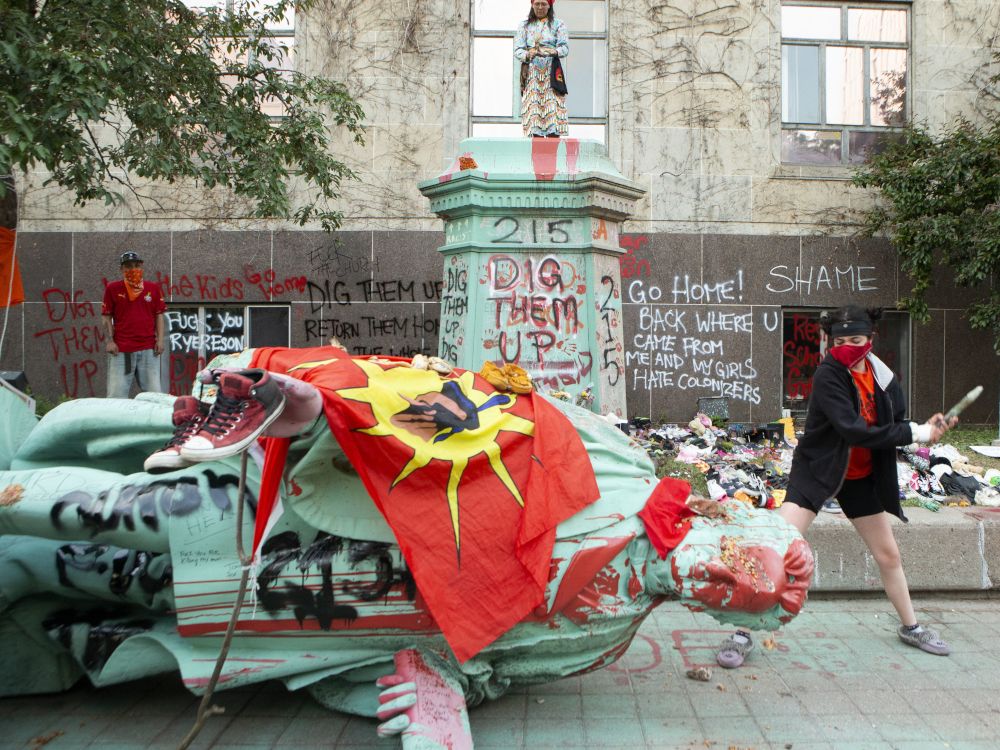
A protester hits the head of Egerton Ryerson's statue after protesters pulled it down, at Ryerson University in Toronto, on June 6, 2021.

Friday marked the fourth anniversary of the sacking of the Egerton Ryerson monument that stood at the heart of Ryerson University in downtown Toronto. The impressive statue was pulled down, its head was hacked off and thrown into Lake Ontario. The head later showed up on a pike in the community of Six Nations of the Grand River near Caledonia, Ont.

The desecration of the statue was in reaction to the declaration made in Kamloops, B.C., that human remains were found on the site of a local residential school. No bodies have since been found there, despite millions spent by the federal government.

The statue, an artistically significant achievement by the illustrious Hamilton MacCarthy, an immigrant from Great Britain, had long been a significant part of the streetscape. For 134 years, it stood high above the heads of students, faculty and staff on a plinth of stone and marble.

It had been erected as a result of a fundraising drive that had started in 1882, immediately after Ryerson’s death, to honour the founder of a great achievement: the Toronto Normal School.

Following the riot, the university’s president  announced that the statue would not be restored. But it should be. All the pieces should be returned to the Government of Ontario, which should restore it and re-erect the statue in its rightful place at Queen’s Park.

Egerton Ryerson was not simply the creator of a teacher’s school. Born in Charlotteville, Upper Canada, in 1803, Ryerson drew attention as a journalist and as a preacher. Raised in an Anglican household, he converted to Methodism in his teenage years but grew into a passionate humanist who was devoted to building bridges across all of Upper Canada’s divides.

He served as a missionary to the Mississauga of the Credit, a largely Christian community, and encouraged the work of translating the bible into Ojibwe, a language he learned to speak (he also spoke a more than passable Latin). He helped launch a newspaper, the Christian Guardian, and a publishing house, and became a loud voice protesting the domination of the Anglican Church in Upper Canada.

When the Methodists decided to create their own university, Victoria College, they called on Ryerson to lead it. It eventually became part of the University of Toronto. When the government of the Province of Canada wanted to make education a priority, it named Ryerson chief superintendent of education.

He would lead a revolution in that sphere over the next 30 years, creating a system that guaranteed a basic education to every child with free textbooks. A profound Methodist all his life, he accommodated the needs of Catholics and was particularly sensitive to the desires of the fledgling French-speaking population.

He took giant steps and was known to be creative and practical. In 1846, he was asked for advice about what the best model would be to educate Indigenous children. His five-page response was that the model of industrial schools, which unites technical and theoretical knowledge, would be best.

He was never in charge of Indigenous schooling — he merely gave some advice as a window was opening to make progress on the education of the Indigenous children. For that small accident of history, his memory has been condemned.

In fact, Ryerson was an extraordinary humanist, a man who was universally respected in his province. Of course, he had his detractors who were sometimes opposed to his drive for centralization and strict standard-setting. But Ryerson was a man who opened the doors of the western world to Ontario.

In his many travels to Europe, he met monarchs, prime ministers, key politicians and no less than Pope Pius IX, who was dazzled by the knowledge and culture of that intellectual from Upper Canada.

But Ryerson was far more than a superintendent. Beyond his achievements in setting education policy were the founding of schools for teachers, the construction of a public library system and the country’s first publicly funded museum.

In sum, Egerton Ryerson embodied the best of his generation and today must be recognized as the founder of our K-12 school system, our impressive public library system, along with the Ontario Institute for Education Studies and the Royal Ontario Museum. His influence has radiated across Canada.

His achievements deserve to be recognized and his monument (and his good name) must be restored in the public eye. His monument should be restored at Queen’s Park, among the giants who shaped our society and our country.

National Post

Patrice Dutil is a senior fellow at the Macdonald-Laurier Institute. His latest book is “Ballots and Brawls: The 1867 Canadian General Election.”


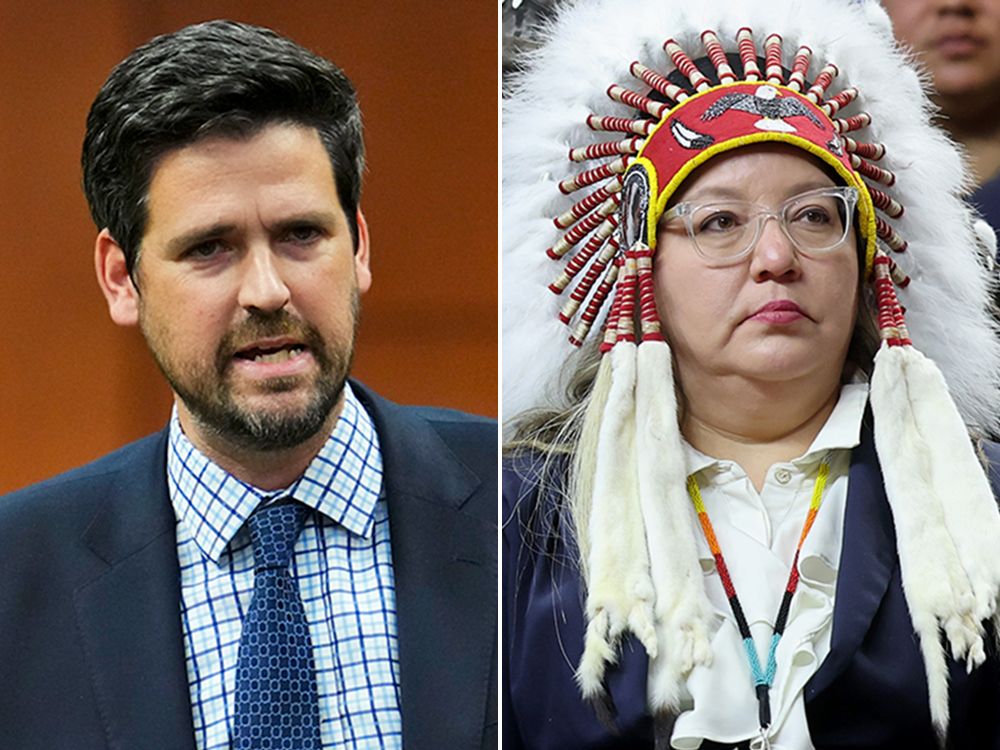
Justice Minister Sean Fraser and Assembly of First Nations National Chief Cindy Woodhouse.

Sean Fraser —  

the federal Liberals’ supposed master communicator

 who

did a bad job as immigration minister

,

and then a bad job as housing minister

, and then

said he wasn’t running again to spend time with his family, and then opportunistically changed his mind

and was rewarded with the justice and attorney general portfolio — laid his first dog’s egg of the Mark Carney era this week.

Fraser said Indigenous groups don’t have a “complete veto”

over natural-resource projects or any other government decisions — but that wasn’t the turd in question, because it was absolutely true.

The turd came later, apparently after getting his ears boxed by Assembly of First Nations National Chief Cindy Woodhouse: Fraser disavowed his entirely truthful statement.

“I think even accepting the premise of the question that was put to me (about a ‘veto’) really made people feel like there may be an attempt by the government to work unilaterally, not in partnership (with First Nations),”

Fraser told reporters

in a public apology.

“Despite innocent intentions, I think my comments actually caused hurt and potentially eroded a very precarious trust that has been built up over many years to respect the rights of Indigenous people in this country,” he said.

Coming up on 500 years since Jacques Cartier first set foot here and named it Canada, and 150-plus years after the Crown concluded the first treaties with First Nations, and with President Donald Trump suddenly bringing our crippling dependence on the United States into very sharp focus, if we can’t even speak the plain truth to each other in plain language, we might be in even bigger trouble than we realized.

But I think we

can

speak the plain truth to each other in plain language, so long as we rightly marginalize fringe and unreasonable voices. While apologizing for speaking the truth, Fraser also accurately pointed to “a frankly dangerous trope that paints a false picture of Indigenous peoples as being anti-development.”

And there, surely, is the rub.

The 2021 Census recorded 1.8 million Indigenous Canadians

— five per cent of the Canadian population, give or take. No one would ascribe monolithic opinions like “supports/doesn’t support resource development” to any other ethnic five per cent of the Canadian population. Yet most Canadian media reliably frame these issues as “First Nations versus the colonialist menace.”

Media mostly portrayed

the Ktunaxa Nation case, which wound up at the Supreme Court in 2017

, as a matter of Indigenous people opposing the proposed Jumbo ski resort in eastern British Columbia on religious grounds: They felt the development would chase a spirit bear from their traditional lands. Receiving much less attention was the fact that

the equally interested local Shuswap Nation supported the project

, believing their concerns had been properly addressed and being eager to reap the financial benefits.

Courts exist, ideally, to strike a balance or decide between such competing interests and claims to rights.

Similarly, media coverage of the

nationwide protests against the Coastal GasLink project, which were ostensibly in solidarity with the Wet’suwet’en Nation in B.C

., tended to ignore evidence that the rank-and-file members of that nation, as opposed to the hereditary chiefs, were broadly in support of the project — on account of needing jobs and paycheques just like settler colonialists do. (Curiously, the Canadian left are generally very suspicious of hereditary leadership in every context

except

First Nations … that is, when they agree with that hereditary leadership.)

Buying Christmas presents for Indigenous kids costs the same as buying Christmas presents for every other kid. Same goes for groceries, bicycles, hockey equipment, car payments, summer vacations … everything, really. They’re pretty much just like everyone else!

And because Indigenous people are pretty much like everyone else, and their governments are a lot like everyone else’s, they often find themselves in conflict, including in court: On

the question of residency rights on First Nations

, notably, but on lots of other issues besides. This isn’t a problem; it’s what we have courts for. It’s what we have a civil society for!

The national chief of the Assembly of First Nations doesn’t speak for all Indigenous peoples in Canada. The justice minister shouldn’t be implying that she does, or walking back factual statements because she is upset. For all he knows, the majority of Indigenous Canadians agreed with his original proposal: That no small group should be able to stand in the way of prosperity for the whole.

National Post

cselley@postmedia.com

Get more deep-dive National Post political coverage and analysis in your inbox with the Political Hack newsletter, where Ottawa bureau chief Stuart Thomson and political analyst Tasha Kheiriddin get at what’s really going on behind the scenes on Parliament Hill every Wednesday and Friday, exclusively for subscribers. Sign up here.


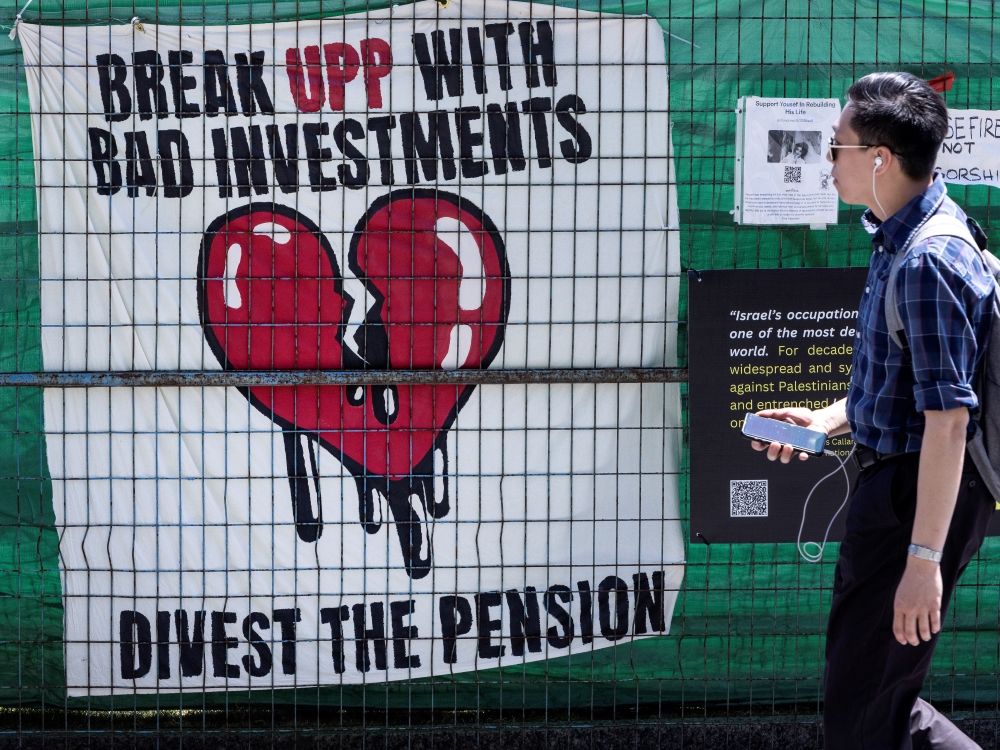
The anti-Israel protest encampment continues at Toronto’s University of Toronto campus, Monday June 17, 2024.

It is not conceivable that Canadians are happy with the increasingly hostile treatment of Jews in this country and the reputation that Canada is acquiring as a woke, trendy, antisemitic country. I’ve written here before of the antics of the University of Toronto Faculty Association (UTFA) and its drooling hostility to Israel. The latest development on that very depressing subject was the association’s vote on May 8 demanding that the university pension plan divest of any securities issued by almost any company that trades with Israel. It is utterly scandalous that Israel should be singled out in this way, especially given the unrelievedly horrifying history of modern antisemitism. It is distressing to think the leadership of a faculty association in one of the principal universities of this country could go to the lengths that it has to adopt such a repulsive measure against such a much-wronged people.

Canadians cannot be completely blasé about the fact that Israel has recently issued a cautionary travel advisory to avoid Canada as a place now unsafe for Jews because of the frequency and violence of antisemitic demonstrations. All of my life, it has been an article of faith and of pride of all Canadians that this country was a haven of toleration where any discrimination or orchestrated hostility to any ethnic or sectarian group was condemned by public opinion and doomed in advance to backfire on its perpetrators. Such sentiments were particularly anathema in academic circles, where the long- vanished tradition was that the university was the last bastion of open minded fairness of debate and condemnation of the victimization of minorities. UTFA called a meeting to hear and vote on a demand for a boycott by the university pension plans against investment in a broad swath of companies dealing with Israel. The meeting was called on short notice, with no minimum threshold of turn-out, and the motion to require disinvestment gave a much fuller hearing to its advocates than to its opponents, and the time window for voting was narrowed down to a few minutes from the normal several days, even though many UTFA members were already on holiday.

Various procedural shortcuts were employed to cut off debate and ensure that the supporters of the boycott resolution had much greater exposure than its opponents. Ultimately, only about 20 per cent of the membership voted in favour of a resolution to about 16 per cent opposed, and a couple of per cent deliberately abstaining. No civilized organization, particularly after such short notice and one-sided procedure, would accept this as a mandate to do anything. When UTFA rams through discriminatory measures with less decorum than a meeting of a chapter of the Ku Klux Klan, and in approximately the same racist spirit, it is not only time to worry, but time to take counter-measures as is happening in the United States. There we have seen the presidents of leading universities sacked for an inability to condemn incitement to violence against Jews, and we have seen the tax-free paradise of over-endowed, corrupt academic centres of hypocrisy challenged, and university administrations put under substantial pressure to oppose racism, and to assure a reasonable variety of opinion in the academic milieu. The need for such intervention is just as great in this country, but all of our governments at every level hear no evil, see no evil, speak no evil, and in all of this voluntary ignorance, foment evil.

I live in a prosperous suburb of Toronto inhabited by people of many ethnicities, including a significant percentage of Jewish families. It has apparently become a routine event where cars are left in the driveway of nearby residences and there are mezuzahs by the doors of those residences, for the windows of the cars to be smashed. This happened to many neighbours last week. They have discovered from experience that nothing useful is achieved by calling the police. Nothing like this should be happening to anyone or any group anywhere in this country and it must be possible to conduct some sort of a follow-up given the profusion of security cameras. This doesn’t directly affect me but it is disturbing and outrageous that this, or any neighbourhood in this country is plagued by such problems.

I commented in this space two weeks ago about the Canadian government joining with the governments of the United Kingdom and France in condemning Israel for conducting its offensive in Gaza. This all appears to be of a piece with the implicit and profoundly mistaken theory that what is going on in Gaza is a disproportionate response to a border skirmish. On October 7, 2023, Israel was invaded and assaulted and more Jews were killed on that day than at any time since the liberation of the death camps in Europe in 1945. The attack was intended to be, was, and has been replied to as an act of war that created a state of war. In wars there is no discussion of proportionality. The bombing of Dresden, like the atomic bombing of Hiroshima and Nagasaki, and innumerable actions of our enemies were disproportionate, but wars have nothing to do with proportion and are conducted until a comfort level has been achieved that the act that began the war will not be repeated.

Now, the RCMP, an organization that has appeared to be incapable of anything more challenging than a musical ride for the last 50 years, has been tasked with a “structural investigation” (which we are told is quite distinguishable from a criminal investigation) into alleged war crimes committed in the Israel-Gaza war. It is difficult to imagine a more unpromising and redundant mission. Does the RCMP imagine that it possesses the ability to assess what goes on in Gaza and by what standard will a Canadian police force purport to judge the conduct of armed forces engaged in mortal combat in the Middle East? This has all the dreary ear-marks of more pandering to the not overly numerous but ever-more noisy and obnoxious Jew-baiters in our society.

I believe most Canadians remain tolerant and civilized, as they have always been. But leaders at all levels of government throughout the country have failed in all of these related areas. The former prime minister, Justin Trudeau, acquiesced in this country falsely labelling it as genocidal because of historic treatment of the Indigenous, which had many failings, but no aspects of genocide. The government of Quebec has been actively engaged for decades in trying to exterminate the English language in that province, often with the passive cooperation of the federal government. This is an outage that is only made less obvious because of the comparative prosperity and ability of the English-speaking population of Quebec to manage its own affairs, despite blunderbuss official suppression from the so-called National Assembly of Quebec.

Now we are clambering aboard the tawdry bandwagon of antisemitism, the most ancient, contemptible, and frequently wicked of all forms of collective hate and persecution. Where are our leaders while the national mission of “peace, order, and good government” is mocked? And where is the solid, sensible, decent majority of Canadians when our leaders have so conspicuously and cravenly failed us, with the complicity of much of our painfully inadequate media? Answer, comes there, none.

National Post


Locked in a standoff with the health system over home care he wants to direct himself, Roger Foley lies in his bed at the London Health Sciences Centre's Victoria Hospital where he's been since early 2016. This image was overexposed to offset darker lighting in the room. Photograph taken on Friday, May 23, 2025.

Roger Foley is a leading activist for the rights of the disabled, including his own. A hero to associations for the disabled, he is often considered a thorn in the side of health bureaucrats. Recently, an account of his case — emanating more sympathy for the bureaucrats than for Foley, alas — was

prominently featured

in these pages.

Foley suffers from a grave neurodegenerative affliction, spinocerebellar ataxia, which renders him almost completely physically dependent on caregivers. Cognitively normal and technologically skilled, he enjoys a rich life of the mind. In spite of what most Canadians would consider the grimmest of circumstances — which shamefully includes persistent reminders from carers that he has a right to euthanasia, which he just as persistently rebuffs — Foley remains life-affirming and bullish in pursuit of more humane and empowering care conditions.

Foley has been a resident for nine years at

London Health Sciences Centre’s

(LHSC) Victoria Hospital as an “alternate level of care” patient, who doesn’t require the acute care Victoria is designed to provide, or, more pejoratively, a “bed-blocker.” The LHSC wants him transferred to a long-term care facility. Foley refuses this option. He yearns to return to his apartment as an integrated member of his community, surrounded by friends and family.

The years-long

clash

over Foley’s future has been mapped in litigation. Additionally, he recently filed a complaint against the LHSC with Ontario’s human rights tribunal because his hospital replaced the special lighting in his room, which he needs because his disease causes extreme photosensitivity, with ordinary lighting. This has, according to emails from Foley and his legal adviser Michael Alexander, caused serious debilitating reactions he fears may prove fatal.

Foley wants to live at home, supported by what is known as self-directed funding (SDF) (or

individualized funding

) for 70 hours a week. SDF, in which home care money follows the person and allows them to hire their own carers, is quite a different program from typical agency-controlled home care, which in the past proved unsuitable for Foley. In fact, several life-threatening mishaps during his home-care tenure were what drove him to the hospital.

With SDF, Foley could choose

registered nurse

carers with a specific interest in and deep knowledge about his condition and pay them at a higher hourly rate than uncredentialed agency support workers. Motivated for long-term service, carers interested in Foley’s affliction would also, in effect, be choosing him. Such carers serve a maximum of 3 to 4 clients, while agency-provided home care support workers may serve up to 20 patients and are unlikely to have special expertise with spinocerebellar ataxia.

Foley has recorded statements by hospital personnel telling him he costs Victoria Hospital more than $1,500 per day, which adds up to at least $548,000 per year. Home care by personal support workers would cost $38 per hour for 10 hours per day, based on a figure Foley says he received from home-care company Gotcare. This would total $138,700 annually. Home care by a registered practical nurse, at $45 per hour for 10 hours a day, would cost $164,000 a year. (For emergencies, Gotcare can provide area caregivers rapidly through an app.)

How many disabled people choose MAiD because their will to live is sapped by the infantilizing strictures of institutional life or forced transfer to a care home

far from loved ones

, even though a cheaper and empowering alternative is available? It is to Foley’s immense credit that he has bent his muscular will to insisting upon self-directed care, which is already a right in many western countries, such as

the U.S.,
Australia

,

New Zealand

,

Ireland

and

Scotland

.

It almost became a right in Canada too. In 2015, the Ontario Ministry of Health and Long-Term Care introduced

“Patients First: A Roadmap to Strengthen Home and Community Care,”

a plan which outlined the province’s intent to introduce a self-directed care option to patients.

“Putting patients first means giving clients and caregivers greater say in choosing a provider and how that provider delivers services,” read the

report

. “Over the next two years, we will begin to offer a self-directed care option, in which clients and their caregivers are given funds to hire their own provider or purchase services from a provider of their choice.” Unfortunately, it never really got off the ground and was “paused” in 2016, according to a local health network briefing obtained by Foley, which he shared with me.

Since SDF would offer immeasurably better quality of life for Foley, free up a bed in the hospital and save LHSC a great deal of money, I’m hard-pressed to see the downside here. C.D. Howe Institute associate director of research Rosalie Wyonch provides additional support for my perspective. Patients like Foley, she

told

Postmedia earlier this week, “take up more patient bed capacity than all the top 10 surgeries combined…. It’s probably the single-biggest hospital capacity issue. If we were to fix it, we would essentially no longer be at risk of acute care bed shortages.”

Euthanasia, for those who want it, is considered a human right in Canada. Self-directed care for those disabled Canadians who do not want MAiD should also be considered a human right.

Foley is only 49 years old, and hopefully has many years of productivity and social pleasure in prospect. Compassion, reason and morality are in accord: Let him go home on his own terms.

National Post

kaybarb@gamil.com

X: @BarbaraRKay