LP_468x60
on-the-record-468x60-white

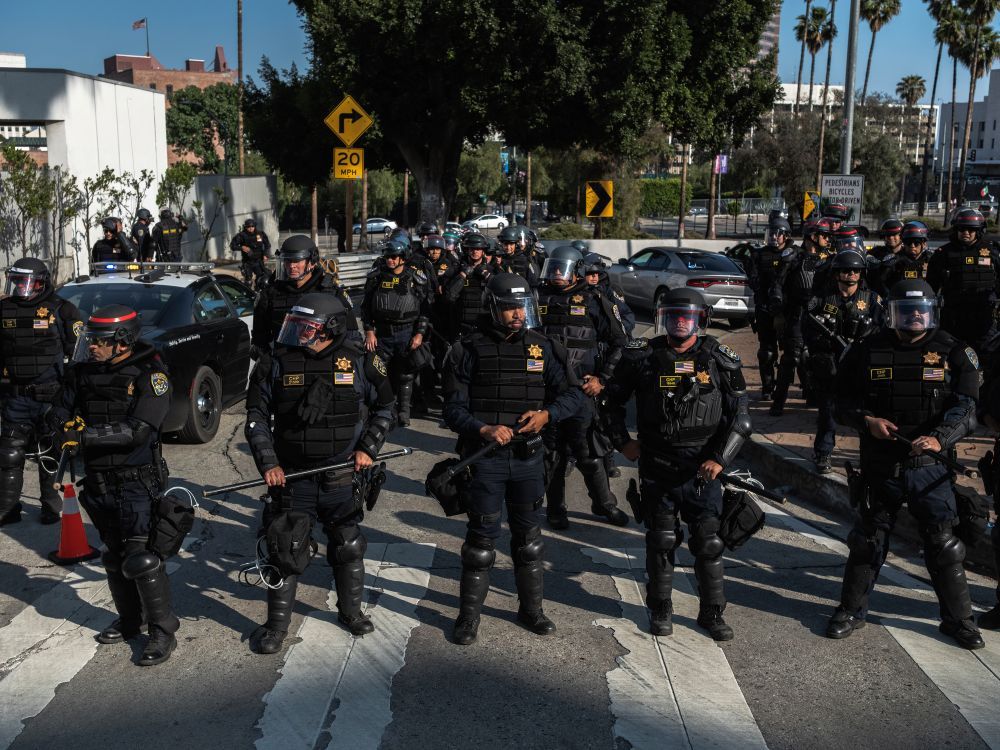
LOS ANGELES, CALIFORNIA - JUNE 11: Police in riot gear block off an on ramp that leads to the 101 freeway on June 11, 2025 in Downtown Los Angeles, California. Tensions in the city remain high after the Trump administration called in the National Guard against the wishes of city leaders. (Photo by Jim Vondruska/Getty Images)

U.S. President Donald Trump is fortunate in the array of political enemies who have chosen to face him. They managed to turn real stories about over-the-top immigration raids into news reports about anti-American riots, overwhelmed and incompetent officials, and the White House riding to the rescue. Idiots in the streets and those holding office in California transformed a debate over immigration policy into marketing for Trump’s vision of bare-fisted and supercharged law enforcement.

On June 7, after violent protests broke out in Los Angeles against raids by federal agents enforcing the administration’s deportation policy for undocumented immigrants, President Trump signed a

memorandum

claiming “numerous incidents of violence and disorder have recently occurred and threaten to continue in response to the enforcement of Federal law by U.S. Immigration and Customs Enforcement (ICE) and other United States Government personnel.” He went on to “call into Federal service members and units of the National Guard” under

10 U.S.C. § 12406

, a law which authorizes such a step in cases of invasion or rebellion. Seven hundred

Marines

will join them in the coming days.

The protests had rapidly degenerated into riots. Writing for the

Los Angeles Times

, Matthew Ormseth and James Queally

described

how “some in the crowd lobbed bottles and fireworks at the LAPD,” “vandals set fire to a row of Waymos,” and “people wearing masks flung chunks of concrete — and even a few electric scooters — at” California Highway Patrol officers. L.A. Police Chief Jim McDonnell conceded his officers were “

overwhelmed

” by the violence.

Tellingly, Ormseth and Queally noted that the riots “diverted public attention away from the focus of the demonstrations — large-scale immigration sweeps.”

That’s too bad. The Trump administration promised to focus its deportation efforts on violent criminals. But ICE has also picked up

day labourers

seeking work,

immigrants trying to pursue the bureaucratic path to legal immigration

, and even

citizens

who were

wrongly detained

by overaggressive federal agents. There’s plenty of room for debate over the wisdom and decency of the Trump administration’s policies.

But the face of opposition to deportation is now rioters and feckless politicians like Los Angeles Mayor Karen Bass and California Governor Gavin Newsom.

Bass

denounced

the deployment of “federalized troops” as a “chaotic escalation.” She then

imposed a curfew

on downtown Los Angeles to curb the rioting, seemingly confirming Trump’s point.

Newsom

huffed

that Trump “commandeered 2,000 of our state’s National Guard members … illegally, and for no reason.” He gave a

glitch-plagued

televised address to criticize Trump’s actions, reaffirming his reputation as incompetent and out of touch, which he

earned during the LA fires

and his state’s COVID response when

he ignored his own restrictions

.

Better people could have made a strong case that it was up to Californians to address the riots. After all, the Guardsmen called up by Trump under emergency powers are assigned to “protect ICE and other United States Government personnel” and “Federal property.” As state troops in their usual capacity, they could be deployed by California officials to augment the LAPD and other local law enforcement.

Better people could have pointed out that President Trump bypassed the

Posse Comitatus Act

, which restricts the use of active-duty military for law-enforcement by tendentiously invoking the power to put down rebellions. And that law confers power over the National Guard — not regular military. Tacking on the Marines seems nothing more than an effort to see what the administration can make stick.

“Preemptive nationwide deployment of the military is the very opposite of using the military as a ‘last resort,’”

warns

Elizabeth Goiten of the Brennan Center’s Liberty and National Security Program. “It is so wildly out of keeping with how the Insurrection Act and 10 U.S.C. § 12406 have been interpreted and applied that it should be entitled to no deference by the courts.”

But we don’t have better people. We have images of rioters and clips of the mayor and the governor downplaying the violence and clumsily posturing for advantage by courting the worst elements.

“What’s unfolding in California should make it glaringly obvious that Democratic officials aren’t yet ready for a real reckoning with their party’s far left,”

cautions

Democratic strategist Ruy Teixeira.

Unfortunately for the whole country, Trump’s cavalry-to-the-rescue moment eases the way for his larger law-enforcement agenda. He federalized the National Guard with minimal excuse and threw in Marines because he can, but he also has a plan to supercharge the recent practice of militarizing policing.

In April, well before the smell of burning Waymos filled Los Angeles streets, President Trump issued an

executive order

to “increase the provision of excess military and national security assets in local jurisdictions to assist State and local law enforcement” and to provide cops with military training.

That wasn’t the first time the president talked about empowering police. Last year, he called for giving them

complete immunity from prosecution

. In 2017 he

urged cops to be rough on suspects

.

Nor is Trump the first politician to blur the lines between the military and civilian law enforcement.

“Over the past 20 years Congress has encouraged the U.S. military to supply intelligence, equipment, and training to civilian police. That encouragement has spawned a culture of paramilitarism in American law enforcement,” Diane Cecelie Weber wrote in a  

Cato Institute briefing paper in 1999

.

In 2007, Radley Balko, then of 

Reason Magazine

, 

told

  the House Subcommittee on Crime that the transfer from the Defense Department to police of “equipment designed for use on the battlefield” was increasing police violence against the public. Balko later wrote 2014’s  

Rise of the Warrior Cop: The Militarization of America’s Police Forces

.

Militarized policing increased friction between police and the public. That led to the protests-turned-riots of 2020 which started as calls for reform and ended — as with LA’s immigration protests — in chaos.

With violence, incompetence, and cluelessness, President Trump’s opponents have cleared the way for him to use the military in a law-enforcement capacity. They’ve made it easier for him to reduce and remove restraints on police conduct. Americans will all pay the price.

National Post
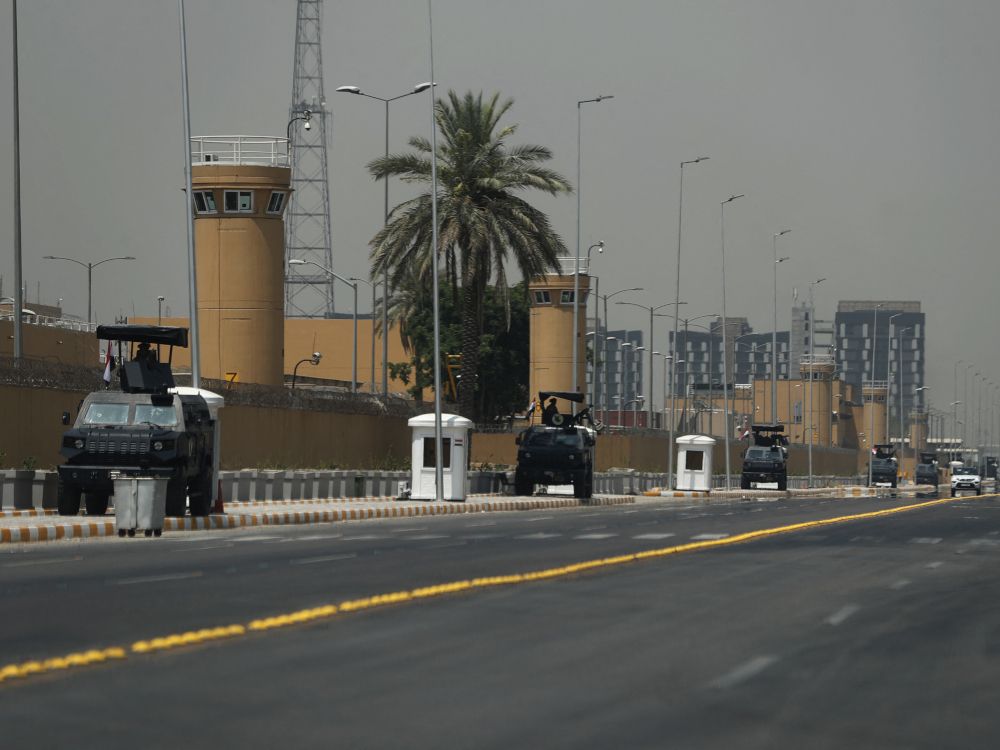

Armoured vehicles of the Iraqi Counter Terrorism Forces are deployed outside the U.S. Embassy in Baghdad on Thursday, after an announcement by the U.S. that staff levels at the diplomatic mission in Iraq were being reduced over security concerns.

SDEROT, Israel — On Wednesday morning, as all eyes were on the violence and worsening food shortage in the Gaza Strip, attention in Israel began to shift. Reporting on some of the details would be prohibited by the military censor in Israel. Others are more banal — like the sudden and extreme malfunctioning of navigation apps.

Israelis have witnessed such things before. Often, in the hours or days preceding significant military operations, odd, seemingly unrelated things happen. In retrospect, the connections become apparent.

By mid-afternoon on Wednesday, there were shards of speculation popping up on social media, and rumours swirling throughout Israel. Was Israel — perhaps in tandem with the United States — preparing to attack Iran?

In recent days, U.S. President Donald Trump’s optimism over the prospects of forging a “deal” with Iran has been overtaken by his discussion of much

darker possibilities

.

In

an interview

with the Pod Force One podcast that was recorded on Monday (but not broadcast until Wednesday), Trump spoke explicitly of his waning confidence about coming to an agreement on the future of Iran’s nuclear program.

“I’m less confident now than I would have been a couple of months ago,” he said, speculating that “something happened to them.”

Trump was unequivocal in stating that the United States would not allow Iran to acquire nuclear weapons — period. But it would be best for all, he said, if an agreement could be reached and military action averted.

“It would be nicer to do it without warfare, without people dying,” he said. “But I don’t think I see the same level of enthusiasm (from Iran) for them to make a deal.”

Following threats issued by Iran against American military bases in the region, the United States

issued an order

to evacuate certain personnel from Iraq and take all measures possible to protect American military bases and assets.

Shortly after announcing the Iraq-focused moves, the White House issued a similar directive to all non-essential American military personnel serving on bases in Bahrain and Kuwait (note that Qatar, the ever-slippery “go-between,”

which also hosts the largest U.S. military base in the Middle East, was not specifically threatened by Iran

.)

Speaking with reporters on Wednesday as the war of words escalated, Iranian Defence Minister Aziz Nasirzadeh was blunt, warning that Iran would target U.S. military bases in the region if the United States attacked Iran first.

“Some officials on the other side threaten conflict if negotiations don’t come to fruition,”

he said

. “If a conflict is imposed on us … all U.S. bases are within our reach and we will boldly target them in host countries.”

Nasirzadeh’s threats were reinforced hours later by Iranian President Masoud Pezeshkian, who affirmed that Iran had no intention of acquiring a nuclear bomb. Yet in the next breath, he lashed out at any country that presumes to dictate what Iran may and may not do.

And then there was the tone set out in a

post on X

by the Iranian mission to the United Nations: “Threats of ‘overwhelming force’ (by the U.S.) won’t change facts: Iran is not seeking a nuclear weapon, and U.S. militarism only fuels instability.

“CENTCOM’s legacy of fueling regional instability, through arming aggressors and enabling Israeli crimes, strips it of any credibility to speak on peace or non-proliferation. Diplomacy—not militarism—is the only path forward.”

By Thursday, there was a tsunami of speculation within Israel as to what it all means. It is widely believed that Iran has enough uranium enriched to near-weapon grade to produce an atomic bomb at the time of its choosing.

Both the United States and Israel are in absolute agreement that a nuclear-armed Iran is not something that either country can abide. The Iranian regime is fervently anti-Zionist and has pledged repeatedly over decades to destroy the State of Israel.

Israel and the U.S. take those threats very seriously.

Throughout the day on Thursday, the pace of warnings, evacuations and alarms continued to build.

Meeting in Vienna on Thursday morning, the International Atomic Energy Agency

passed a resolution

criticizing Iran for the first time in 20 years for not complying with its nonproliferation obligations, including its failure to provide information about nuclear material and activities at various locations.

The resolution was supported by the United States, France, the United Kingdom and Germany, as well as Canada.

Within hours of the vote, Iran responded in kind. The head of the Atomic Energy Organization of Iran stated that a new

uranium enrichment facility

had already been built and will be equipped soon with new centrifuges — presumably in pursuit of ever greater quantities of enriched, weapons-grade uranium.

Whereas many experts are focused on the readiness of Israel to strike Iran’s nuclear development sites, any such attack would have to be executed with American diplomatic and military support.

It is widely believed that Israel lacks the capability to deal a decisive blow to Iran’s nuclear capabilities by itself, thus necessitating direct American engagement.

Such a military operation is, of course, fraught with risk. It is the type of attack that is done once — with maximum impact. It also has the potential to set of a chain reaction of events that spins out of control.

Seasoned experts caution that the heightened rhetoric may be intended to pressure Iran to finalize an agreement with the United States, but, in this tinderbox, all it takes is one match for everything to go up in flames.

And it is on this precipice that the Middle East — and possibly the world — teeters at the moment. There is an eerie stillness that is all too familiar as we wait.

National Post

Vivian Bercovici is a former Canadian ambassador to Israel and the founder of the State of Tel Aviv.


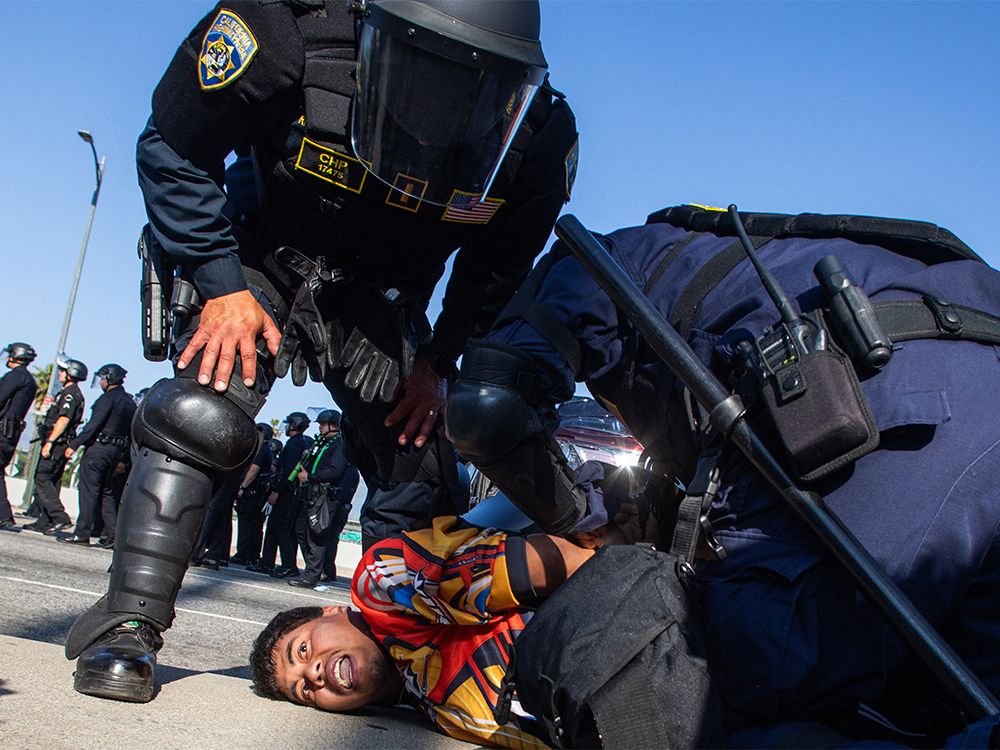
California Highway Patrol officers arrest a demonstrator as protests continue in Los Angeles over the Trump administration's mass arrests of illegal immigrants, on June 10, 2025.

After several days of riots and rabble-rousing in response to the Trump administration’s ham-fisted determination to round up illegal immigrants, downtown Los Angeles was placed under curfew on Tuesday. The disorder has spread to more than a dozen American cities. There have been scores of arrests.

It has all made for great television and amusing political theatre, with Democrats shouting righteously about the rule of law and due process while ignoring their own support for “sanctuary” laws that undermine their own government’s capacity to enforce federal immigration legislation. Not to be outdone, Donald Trump’s Republicans have invoked the 18th-century Alien Enemies Act to back their plans for mass deportations. The 1798 law was about pirates.

Despite heartrending accounts of children torn from their parents’ arms, Americans are not generally overwrought about Trump’s hardline remedy to the preposterously intractable American political quagmire involving undocumented workers and border security.

A CBS-YouGov poll

shows Trump is polling better on this file than on the economy or inflation, with 54 per cent of respondents expressing approval.

In the popular imagination, Canadians would not abide such lowbrow measures as mass deportations of illegal immigrants, but in fact we would. Or rather roughly

half of us would

, which is more or less the same as the American polling results. Nearly half the respondents to a Leger poll undertaken for the Association of Canadian Studies last December said mass deportations are necessary to deal with illegal immigration in Canada.

It’s not for lack of evidence that 65 per cent of Canadians say Ottawa’s immigration levels are set too high. That was the view of only 35 per cent of respondents in 2019, and even after the Liberal government’s recent pledges to get its act together and scale back on the annual volume of newcomers, that’s the standpoint of nearly two-thirds of us. It’s becoming increasingly difficult to argue against it.

Statistics Canada’s “population clock” counted 41,681,71 people who were living in Canada as of Wednesday morning this week, up from 35,851,800 in 2015. This was the biggest spike in immigration in 60 years, contributing to Canada’s rank as the

second-worst country

for housing affordability, after Portugal, in the 38-member Organization for Economic Co-operation and Development.

Despite reassurances from Prime Minister Mark Carney that his government intends to scale back the influx, the numbers keep going up.

StatsCan’s data for the end of the first quarter of this year shows there are 291,165 more

non-permanent residents

in Canada than there were in April of 2024, for a total of slightly more than three million people. Among them are 290,000 foreign students admitted this year. Additionally, asylum claimants numbered 457,000 by April this year, up by nearly 130,000 from 2024.

Then there’s the officially guessed-at number of perhaps 500,000 people

living and working illegally

in Canada.

The 2025 target for new temporary-resident arrivals is 673,650, declining to 543,600 by 2027 — but housing starts in Canada added only 245,000 units in 2024. What all this means is that if we’re extraordinarily lucky, Canada’s housing affordability catastrophe will remain at roughly the same crisis levels for the foreseeable future.

It doesn’t help that Immigration Minister Lena Diab doesn’t seem to know how many undocumented workers there are in Canada, or how many temporary workers leave Canada after their permits expire. Peppered by Opposition immigration critic Michelle Rempel Garner in the House of Commons this week, Diab wouldn’t or couldn’t say how many of the million-plus foreign students from 2023 left Canada after their study permits expired. “Anybody whose visa expired is expected to leave,” she said.

Ottawa’s assumption that people simply leave when their visas run out is “a fiction,” according to former federal economist Henry Lotin, founder of the consultancy Integrative Trade and Economics.

Sky-high immigration levels aren’t the only cause of the breakdown in the relationship between average incomes and housing costs in Canada. Zoning rules and the cost of fees and development charges get a lot of headline play, but it is becoming increasingly clear that there’s a lot more going on, most of it involving profiteering and the

ubiquity of investors

in new housing starts.

Across party lines, there is a broad political reluctance to advance any policy that would actually reduce home prices in Canada. Meanwhile, eight in 10 Canadians have concluded that homeownership has become a

luxury for the rich

, and seven in 10 Canadians who don’t own a home say they never expect to own one.

“We are living through a paradigm shift — one in which homes are no longer primarily bought by local families, but by global investors,” says housing analyst John Pasalis. “Housing has become a financial asset unbound from local incomes, and policy has yet to catch up.”

On top of the economic impacts, there’s the matter of Canada’s fraying social fabric.

A huge surge in wealth migration from the People’s Republic of China in recent years has swamped Canada’s long-standing Cantonese communities and introduced grave threats to Canada’s political sovereignty. After all the scandals involving compromised federal politicians and manipulated federal election races, there is still no sign that the Carney government intends to proceed with a foreign influence registry.

With politically active immigrants from the Middle East emerging as a heavy counterweight to Canada’s long-standing affinity with the Jewish state of Israel, profound changes are underway in the formulation of Canada’s foreign policy and Canada’s traditions of religious tolerance.

For all the Liberals’ recent admissions of error, the Trudeau government’s immigration legacy is with us still, and there’s little evidence that a Carney government, despite its reassurances, will be making much of a break with it.

While Toronto has lately adopted an American-style “sanctuary city” policy through its Access T.O. initiative (“Access to City Services for Undocumented Torontonians), this doesn’t mean that Canada is hurtling towards American-style standoffs between federal and local enforcement authorities.

It’s just that while Americans are going through distinctly American convulsions related to immigration, Canada doesn’t have anything to brag about. Canada’s old consensus on immigration has been broken. The public trust in a functioning immigration system has been badly shaken.

It can’t go on like this.

National Post


Judih Weinstein Haggai, a teacher and peace activist who grew up in Canada before moving to Israel, was murdered along with her husband Gadi in the October 7 massacre in Israel. Their bodies were recovered from Gaza last week after being held for more than 600 days.

Judih Weinstein Haggai was a Canadian. A teacher, a poet, a peace activist. She was also a victim of Hamas’s October 7 massacre, murdered — alongside her husband Gadi Haggai — by terrorists who violated every principle of humanity and international law.

Her death should have shaken this country to its core. Her name should have been remembered in our schools, our Parliament, our streets. Instead, Judih was nearly forgotten.

There is a quiet shame in how Canada responded to her murder. While she and Gadi lay dead, their remains taken into Gaza — our leaders equivocated. When it mattered most — when Canadians were kidnapped, raped and slaughtered — Canada’s political voice was cautious, hedged, and absent. And now, after that moral failure, we watch in disbelief as the government moves to restore funding to support a “reconstructed” Hamas-led Gaza under the guise of humanitarianism, and to recognize a Palestinian state without a single assurance that terrorism will cease or that Canadian lives will be protected.

Judih had devoted her life to peace. Her work as a teacher reflected a belief in dialogue, education, and coexistence. She was everything we say we value: compassionate, thoughtful, engaged. But her Canadian identity and her Canadian death were treated as inconvenient. Her story didn’t fit the narrative that had taken hold — one in which nuance is unwelcome, and moral clarity is drowned in political calculation.

Her body and that of her husband were finally recovered from Khan Yunis in a special operation by the Israeli military — retrieved from the territory of their murderers, where they had been discarded and hidden for over 600 days. The terrorists who held their remains were members of the Palestinian Mujahideen Movement — the same group that kidnapped and murdered Shiri Bibas and her two young sons, Ariel and Kfir. That is who we are dealing with: not freedom fighters, not a resistance, but sadistic murderers who hold the bodies of grandparents and babies as bargaining chips in a depraved game of political leverage.

The rescue of Judih and Gadi’s bodies offered a measure of dignity long denied to their memory by those who should have been their advocates.

 Judih Weinstein Haggai and Gadi Haggai pose for an undated photo in Toronto’s Bayview Village Park.

We are right to feel profound sorrow, and we are right to feel anger, not only at the terrorists who killed Judih, but at the silence that followed. When a Canadian peace activist is murdered by genocidal extremists, and our government cannot even summon the decency to name the crime, or the courage to defend her memory, we have lost more than lives. We have lost our compass.

Canada should have mourned Judih Weinstein Haggai as one of our own. Instead, we left her to history’s margins — and that silence speaks volumes. It speaks to a broader failure in Canada’s response to October 7, not just as a foreign policy lapse, but as a failure of moral and civic imagination. From the moment news emerged of Canadians among the murdered and abducted, our national reaction was curiously muted. There were no national vigils. No major speeches. No commemorative resolutions. Instead, there was hesitation. Anxious parsing of words. A quiet fear of appearing too sympathetic to the victims, lest one be accused of political bias.

And last week, a new insult was added to injury. The Prime Minister’s Office issued an official statement with the title incorrectly claiming that Judih had been released by Hamas. Hours later, the statement was quietly corrected. But the damage was done. That kind of misstatement — made so many months after her murder — showed not only a failure of situational awareness but a stunning insensitivity to the family and to the memory of a Canadian murdered abroad. It revealed a disconnect that can no longer be dismissed as bureaucratic oversight.

To his credit, Prime Minister Mark Carney did extend condolences to Judith Weinstein Haggai’s family and to the Canadian Jewish community, acknowledging the alarming surge in antisemitism across Canada following the October 7 attacks. The recognition was welcome — but far too little, far too late.

It is difficult not to contrast this with the intense, co-ordinated national response to the detention of Michael Kovrig and Michael Spavor by China. Their plight rightly galvanized the Canadian government and the public. Speeches were made. Diplomatic pressure was sustained. There was no confusion about whose side we were on. Yet when Judih — a Canadian peace activist — was abducted and murdered by Hamas, the urgency vanished. The advocacy evaporated. The silence was deafening. Why?

When Canadians are murdered abroad — especially by genocidal terrorists — there should be no confusion. No fear of clarity. The murder of Judih and Gadi Haggai was not a “tragic consequence of conflict”; it was the deliberate targeting of civilians for the crime of being Jewish and Israeli. That Judih was also Canadian makes Canada’s silence even more bewildering.

Some will argue that the government must maintain neutrality to preserve credibility as a peace broker. But neutrality in the face of barbarism is not diplomacy — it is abdication. And the insistence on “both-sides” language in the wake of atrocities sends a clear signal: some victims are more politically acceptable than others.

In that light, Judih’s story is not just a personal tragedy — it is a mirror. It reflects the deep discomfort some feel when confronted with violence that cannot be neatly explained away. A peace activist who taught children, who wrote poetry, who carried two passports and lived her values, was taken hostage and executed. Her murder forces us to reckon with what happens when good people become inconvenient symbols.

The Canadian government claims to stand for human rights, international law and the protection of its citizens. But its actions — or lack thereof — in the case of Judih Weinstein Haggai tell a different story. We have failed to honour her life. We have failed to defend her dignity. And by normalizing the erasure of Canadian victims of terror, we set a dangerous precedent.

Remembering Judih is not a partisan act. It is a moral obligation. Her life deserves to be spoken of, her death to be mourned, her memory to be defended. To do anything less is to collaborate in her erasure.

Special to National Post

Alan Kessel is a former Legal Adviser to the Government of Canada and Deputy High Commissioner of Canada to the United Kingdom. He is also a senior fellow at the Macdonald-Laurier Institute.


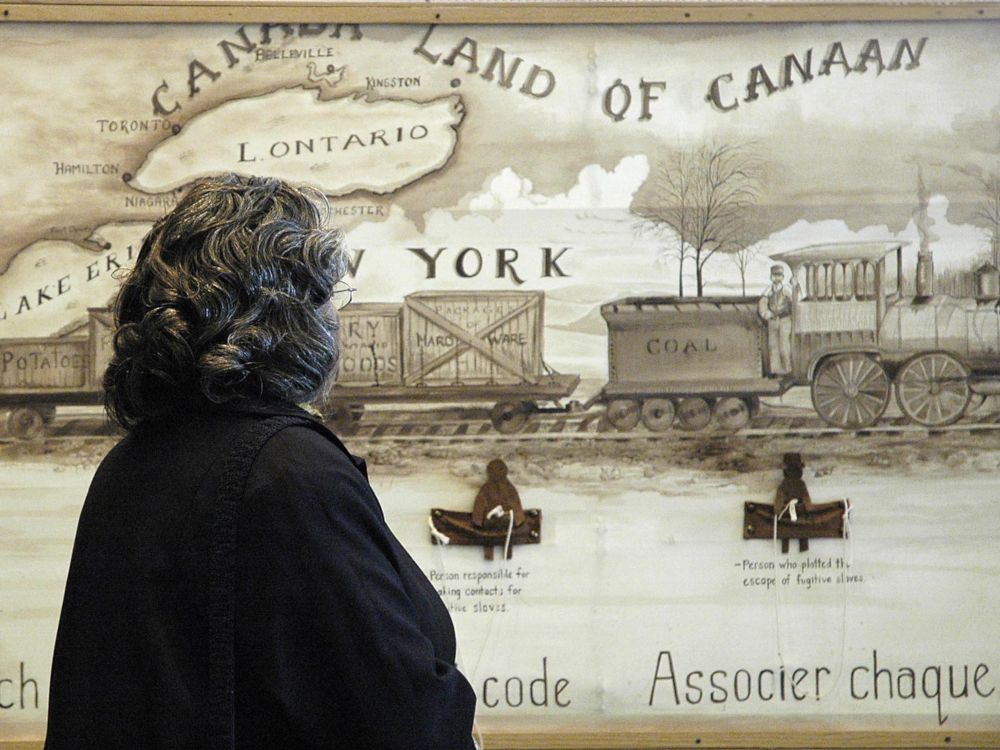
A woman views an Underground Railroad map on display at Pier 21 in Halifax in 2006.

One of the first petitions to Canada’s new Parliament has landed, and the topic is slavery. Endorsed by Gord Johns, an MP from British Columbia who managed to survive the recent NDP annihilation, it demands an apology to Black-Canadians from the Government of Canada: “Black Canadians have endured centuries of systemic racism, beginning with transatlantic slavery, followed by legalized segregation and ongoing institutional discrimination in policing, education, employment, housing, health care and the justice system.… The Government of Canada has yet to formally apologize.”

With only 125 signatures so far from a country of 40 million people, the petition is not exactly a milestone of populist politics. Nonetheless, the issues it raises are worth clarification.

The institution of slavery was not brought to the New World with the arrival of the European settlers. Slavery had been practised since time immemorial over most of North and South America. When the French arrived in what is now Quebec, they brought a few African slaves with them by way of their Caribbean outposts, but mostly they purchased Indigenous slaves from the Iroquois, the Illinois and other far-ranging tribes. These slaves became known as “Panis,” after the Pawnee tribe of Nebraska that furnished many of the captives.

The noted historian Marcel Trudel has estimated that, prior to 1760, the Panis made up two-thirds of all slaves in New France. Africans afterwards became more common, but overall numbers remained relatively small. New France lacked the plantations and mines that were worked by millions of slaves in Latin America, the American south and the Caribbean, so slaves were mainly personal servants and craftsmen.

After the Conquest, more African slaves were brought in from the United States and the Caribbean, but the English conquerors also imported the philosophy of abolition, then starting to make headway in England and its colonies. In 1793, the Government of Upper Canada (now Ontario), under the leadership of Gov. John Simcoe, passed the Act Against Slavery, outlawing the importation of slaves, one of the modern world’s first anti-slavery statutes. In contrast, slavery was not abolished in the British Empire until 1834, in the United States until 1865 (with the end of a bloody civil war) and in Brazil in 1888. Far from being a mainstay of slavery and the slave trade, Canada was a leader in its abolition.

I grew up in Ottawa, Ill. (yes, that Ottawa). Now a wretchedly governed, highly indebted state, Illinois used to be “the land of Lincoln,” on the forefront of human freedom. Ottawa’s proudest boast is that it was a way station on the Underground Railroad. Ottawa’s inhabitants in those days were not afraid to defy state and federal laws, judges, courts and prisons to help runaway slaves get to — you guessed it — Canada.

Even after the legal end of slavery in the United States, Canada remained a beacon of hope for African-Americans. One of my adopted children is partially descended from a group of Black people who came to Saskatchewan from Oklahoma in the early 20th century, to escape mistreatment from both the whites and Native-Americans in their home state. They kept coming till the government of Liberal icon Wilfrid Laurier issued an order-in-council forbidding them to cross the 49th parallel.

There is, however, one blot on Canada’s record in the struggle for emancipation. Slavery was a widespread practice on the West Coast, from California to Alaska. Indigenous tribes sailed up and down the coast in their great war canoes to take captives for enslavement and human sacrifice. Even white sailors were sometimes enslaved. To their discredit, the governments of Spain, the United States, Canada, Great Britain and Russia preferred to look the other way, allowing Indigenous slavery to flourish on the West Coast until the 1890s. (If you think I’m making this up, read “Aboriginal Slavery on the Northwest Coast of North America,” by the anthropologist Leland Donald).

If Canada should apologize to anyone, it should be to those Indigenous slaves’ descendants, who even today often experience diminished social status in their communities. To be honest, I don’t advocate for trans-generational apologies from those who have done nothing wrong to those who have experienced no wrong.

In the real world of politics, the demand for an apology is usually a hand extended not in friendship but in extortion. Former prime minister Stephen Harper learned that lesson when he made his famous apology for Indian residential schools, only to touch off a cycle of multi-billion-dollar class action lawsuits with no end in sight. We can’t change the past, so let’s try to be just in our own time. That’s enough for a human being to aim at.

National Post

Tom Flanagan is a senior fellow with the Aristotle Foundation for Public Policy and professor emeritus of political science at the University of Calgary.


Calgary police talk with protesters across the street from the Drag Me To Church event at the Calgary Unitarian Church on Easter Sunday in 2024.

With all the problems facing municipalities, from parks that look like refugee camps to potholes that can swallow a Mini Cooper, you’d think city councillors would have better things to do than dream up new ways to limit free expression.

Yet in the past few years, city councils throughout the country have created new restrictions on speech in council meetings, in streets, in parks, even in backyards. Many of these restrictions violate the Charter. The Canadian Constitution Foundation (CCF) is fighting back through litigation, with our new report on “

Canada’s Most Censorious Bylaws

” and with our new Municipal Muzzle Award for the city with the worst restriction.

This year, Calgary won top prize. In response to protests against drag queens reading in libraries, Calgary passed its Orwellian-sounding Safe and Inclusive Access Bylaw, which threatens fines for protesting within 100 metres of library or recreation centre entrances if the protesters express an “objection or disapproval towards an idea or action related to” various human rights grounds.

The “bubble zone” bylaw, which the CCF is challenging in court, bans not only speaking out against drag queens reading books to kids, but also speaking out in favour of it. It bans protests against transgender women competing in women’s sports, and protests in favour. It bans “no one is illegal” protests and anti-immigration demonstrations. All of this is obviously protected speech. Toronto and the neighbouring municipalities of Vaughan and Brampton have passed similar speech restrictions in response to anti-Israel protests. Ottawa may be next.

The first runner-up for the Municipal Muzzle Award was Caledon, Ont., where councillors and members of the public speaking at council meetings are banned from using indecent, offensive or disrespectful language when talking about local, provincial or federal politicians. Council members are also banned from insulting the Royal Family. Since when are we not allowed to speak disrespectfully about the premier or the King? Caledon also requires every meeting to open with an Indigenous land acknowledgement, which is a form of compelled political speech.

The second runner-up is South Bruce Peninsula, Ont., which has an outrageous bylaw that prohibits picketing in any public place unless authorized by the town, which amounts to a near-total protest ban. Picketing is defined as “any activity associated with protesting/objecting and may include the display of signs, placards, flags, shirts, hats, etc. which portrays a message, symbols or marks, silence, shouting, chanting, singing, marching, standing and sitting.” You read that right: even silent protests are purportedly illegal according to the geniuses who wrote that bylaw.

The good news is that we’re fighting back. Last summer, Whitehorse passed a “civility policy” that allowed the chair at council meetings to require citizens to remove or cover up any attire that he or she found “disrespectful,” banned bringing signs of any kind into council chambers and forbid the use of “microaggressions,” including “unconscious” expressions. After the CCF sought judicial review, Whitehorse amended its policy to better protect free speech.

The Region of Waterloo, Ont., however, hasn’t backed down. In response to accusations of Islamophobia, council voted in 2023 to ban any “objectionable or unwelcome conduct, comment, bullying, or actions that could reasonably cause offence or humiliation” on municipal property, with fines of up to $5,000. That’s an obvious affront to free speech, which, to quote the Supreme Court, exists to “ensure that everyone can manifest their thoughts, opinions, beliefs, indeed all expression of the heart and mind, however unpopular, distasteful or contrary to the mainstream.” The CCF is challenging this rule, as well.

On Prince Edward Island, the CCF is fighting one of the many “codes of conduct” that councillors use to shut down each other’s speech. John Robertson, a councillor in Murray Harbour, was told by his council that he was suspended for six months, needed to pay a $500 fine and was required to apologize for a sign on his private property that stated: “Truth: Mass Grave Hoax. Reconciliation: Redeem Sir John A’s Integrity.” When he didn’t comply, council tried to have him removed. What kind of democracy sanctions elected officials for having political opinions?

Municipal restrictions on speech are multiplying faster than the CCF can challenge them, but you can help. Read our report, attend council meetings and remind your municipal leaders that their job isn’t censorship, it’s fixing potholes and cleaning up parks.

National Post

Josh Dehaas is counsel with the Canadian Constitution Foundation and co-author of the new CCF’s new report, “Canada’s Most Censorious Bylaws.”


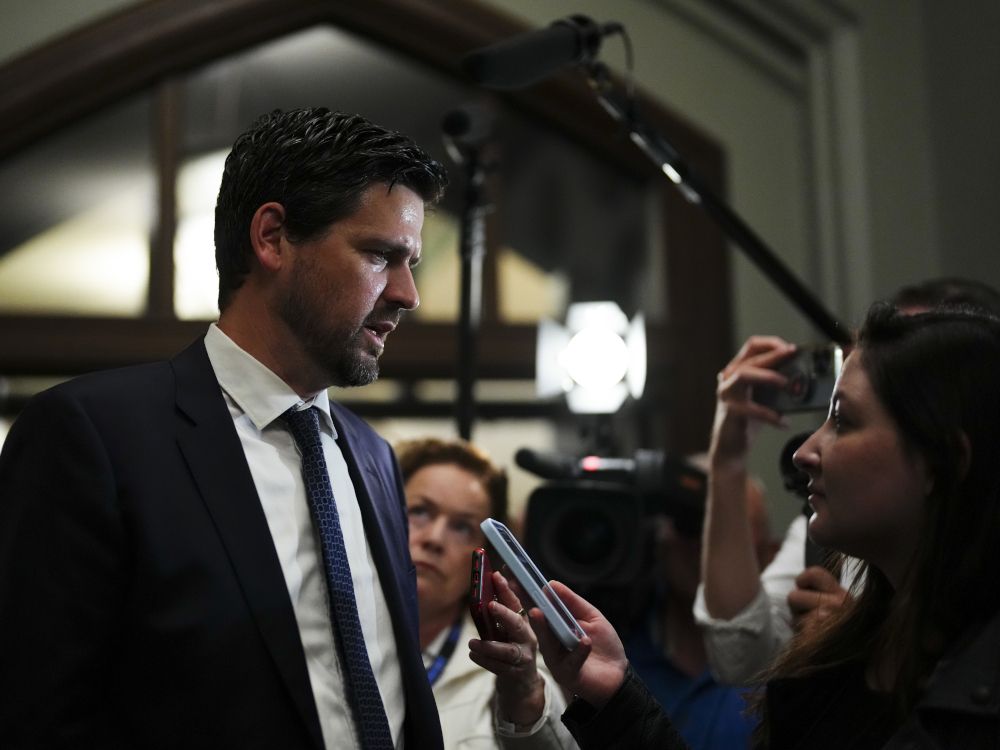
Justice Minister Sean Fraser

Last week, Justice Minister

Sean Fraser apologized

for saying that the duty to consult First Nations on infrastructure projects “stops short of a complete veto.” The apology came in response to a letter from Assembly of First Nations National Chief Cindy Woodhouse Nepinak, who expressed concern about plans to fast-track infrastructure projects, citing the principal of “free, prior, and informed consent” enshrined in the United Nations Declaration on the Rights of Indigenous Peoples (UNDRIP).

For decades in this country, Indigenous rights have been trampled upon and trust has been lost. Years of negligence has caused our people not to trust the process and to second guess commitments made by government and industry. In other words, the trust factor is a huge undertaking for our people when it comes to development in our territories. Not only is there difficulty trusting government and industry, trust between neighbouring nations is extremely challenging, as well.

“Free, prior and informed consent” is a process that is laid out between Indigenous communities, government and industry. For example, if Indigenous leaders and the community who elected them achieve seven line items out of 10 in negotiations, the negotiators and their legal team will make recommendations to leadership about whether to take the deal or not. Thus, if the representatives who negotiate on behalf of the community are satisfied, they will bring the deal back to the community’s leaders for review.

The leadership will present it to the community. If the leadership and community are satisfied based on community feedback and input, the leadership will give its consent. This means the community is satisfied and wishes to proceed, because the deal meets the needs of the community and therefor the community gives free, prior and informed consent to industry and government.

Free, prior and informed consent isn’t a veto. It never was. If this was the case, nothing would get built in Canada. I am a strong believer in democratic processes. You will get those in favour and those who oppose development. If the majority of a community wants development, it will proceed. The best thing governments and companies can do is provide Indigenous communities with all the information they need to make informed decisions.

A number of things can go wrong when engaging communities. Projects that don’t succeed are often due to people who don’t have the community’s best interests at heart, or poor communication about the deal on offer and the benefits it will provide to the community. Gone are the days when industry had the upper hand. Indigenous communities have drastically improved their business acumen. Don’t assume our communities are not aware of what’s at stake and what a good deal looks like.

I had a hard time accepting UNDRIP. It is extremely convoluted and the only real effect it has had is to line the pockets of lawyers and pit elected and hereditary leaders against one another. While not all lawyers are bad people, the UNDRIP process they attempt to fix has had an adverse affect on us. There does not appear to be a single professor, lawyer or consultant who can fully explain UNDRIP, because it was not tailored to meet the needs of Indigenous peoples in Canada. I can only hope the process will improve over time.

It should thus be left up to Indigenous communities to lay out a process for industry and government that will satisfy them. What works for one community may not work for another. It’s extremely complicated and it is not for the faint of heart. Once you understand the people, you’ll understand the process and things will proceed apace. This is about executing strong relationships between our nations and country by building bridges that bring us together.

I can tell you from experience that forging agreements between our communities is a massive undertaking. It has been my biggest challenge, but it is also the most rewarding. It’s what motivates me to make change happen in our communities. It is stressful, even maddening at times, but every step forward that moves our people to a better place is a massive win. The satisfaction I get out of it is the hope that one day, my children will recognize that their dad played a small part in bringing our people together.

Free, prior and informed consent isn’t just about making money. It’s about purpose with the intent to change the lives of our people for the better. We call it “impact investing” and “social innovation.” Investing in people should be a community’s priority. This is about inter-generational knowledge transfer. When many of us are long gone, we will need the younger generation to help manage and sustain our communities’ wealth, culture, arts, language, environment, finances, social well-being, health, education and infrastructure. In order to achieve this, our communities need vibrant economies.

We can’t build capacity without projects that provide opportunities for our people to learn new skills and provide for their futures. Grants and other funds given to us isn’t an economy. Those who think otherwise only hurt the people they claim to represent. We need to do better, because our younger generation is moving away from their communities to find work, or commute long distances to make a living. Large resource and infrastructure projects provide an opportunity for Indigenous people to live and work in their own communities, and lift themselves out of poverty.

Let’s not jump to conclusions over Fraser’s misinterpreted quote. We can’t take offence at every comment. Doing so will only serve to hurt us. If the government and industry say they will consult Indigenous communities on major developments, then we need to open that door. If they don’t follow through, then we must hold them accountable. But Indigenous communities also need to make sure they hire the right people — people who understand big business and major projects. If you don’t hire the right people, your community will suffer the consequences and negotiations will fail. This duty falls on elected First Nations officials and their economic development offices.

The key to fast-tracking major resource and infrastructure projects in Canada is trust. We have asked industry to do better. As Indigenous people, let’s make free, prior and informed consent work for us, to benefit not only our people, but all Canadians.

National Post

Chris Sankey is a senior advisor and business owner from Lax kw Alaams, B.C.


Canada’s military a 'welfare case' despite pledge to meet 2% NATO target.

(Watch the full video directly below. (If using the National Post iPhone app, the video is at the top of the post.)

This week, Prime Minister Mark Carney pledged that Canada would finally meet its NATO commitment to spend two per cent of gross domestic product on defence this year, but is it too little, too late? In this video, the National Post’s Terry Newman and political strategist Anthony Koch discuss the fulfillment of the long-awaited pledge, which former prime minister Justin Trudeau

didn’t plan on reaching

until 2032.

The pledge comes on the heels of NATO Secretary General Mark Rutte proposing that member countries increase spending to five per cent of GDP, as advocated by U.S. President Donald Trump. The move to two per cent represents an

increase

of $9.3 billion and would bring Canada’s defence spending to $62.7 billion. But is it enough? Canada’s military was already woefully underfunded in 2024, with only 67 per cent of its force

combat ready

. On top of this, the Canadian Armed Forces has a recruitment and retention problem that Liberal

DEI initiatives,

including mandatory tampons in male soldiers’ washrooms, hasn’t seemed to resolve. If Carney is correct that, “

We are heading towards a more dangerous and divided world

,” meeting our decades-old two per cent NATO target hardly seems sufficient given the sorry state of our Armed Forces.


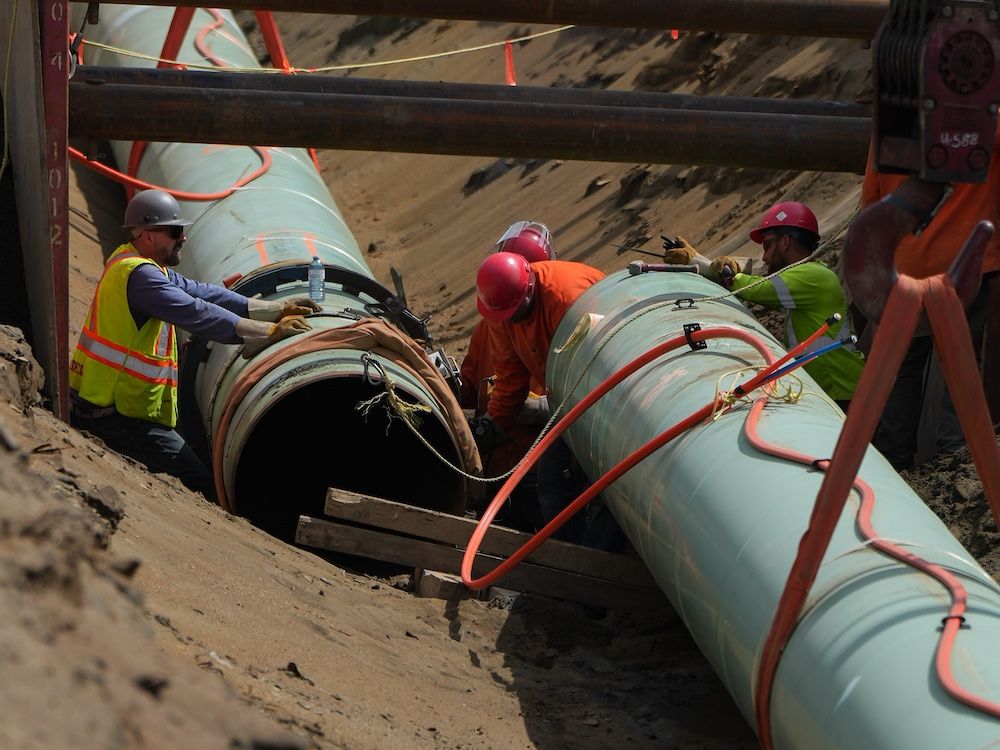
After being hamstrung for years by a lack of export capacity, Canada's oil industry will have reason to celebrate when the much-anticipated Trans Mountain pipeline expansion comes online, expected to be sometime this spring. Workers place pipe during construction of the Trans Mountain pipeline expansion in Abbotsford, B.C., on Wednesday, May 3, 2023.  THE CANADIAN PRESS/Darryl Dyck

Attorney General Sean Fraser jumped into a vat of hot water last week when he asserted that First Nations

do not have

final veto over new resource projects.

While he swiftly apologized for causing offence with his blunt, but admittedly truthful, statement, the controversy gave cover to Canada’s real anti-development culprits: David Eby and his NDP government in British Columbia.

Anybody claiming or celebrating that First Nations are some sort of obstacle to resource development is ignorant, ideological, or both. Indigenous communities and leaders are among the most enthusiastic backers of natural gas facilities and oil pipelines in B.C., and they are as badly let down by this provincial government as anybody else.

The NDP have been in power since 2017, and have long abandoned any pretence of vision, direction, or adaptability, which has resulted in real economic and social harm. This tendency was on display again last week when Eby and his ministers

refused to endorse

another oil pipeline to the coast at a meeting of the premiers and Prime Minister Mark Carney.

Until 2025, resource development had been a fraught and fiery topic in Canada. Debates over costs, consultations, and climate goals slowed down and

killed

major projects like Energy East, Northern Gateway, and more.

Then U.S. President Donald Trump embarked on his quest to use tariffs to remake the global commercial order and threatened to escalate a trade war against Canada. Suddenly, every government in Canada, conservative or progressive, began admitting or alluding to the necessity of diversifying the trade of Canadian energy, our single largest export.

Even Quebec Premier François Legault signalled that he was

open

to the possibility of building new natural gas facilities and pipelines in the province. It is rare that Alberta, the federal government, and Quebec agree on energy, and it would be a historic and actionable opportunity if the B.C. NDP were not so determined to scuttle it.

A quick overview of the B.C. NDP’s anti-pipeline history will make it very clear that this government has no love or desire for such undertakings.

Under Eby’s predecessor John Horgan, the B.C. NDP fought tooth and nail to stop the twinning of the Trans Mountain pipeline. Despite the clear economic, social, and political advantages of expanding TMX, the NDP had to be

crushed

in the courts in 2020 before waving the white flag.

To Horgan’s credit, he

accepted

the defeat with grace. While he had no love of oil, Horgan was a strong proponent of the natural gas industry, and getting it off the ground in B.C. was a

defining part

of his government.

Although initially approved under the previous B.C. Liberal government, Horgan was a proactive partner to First Nations and industry during the construction of the Coastal GasLink pipeline and LNG facilities in Kitimat that finally

began operations

this year.

From Horgan, Eby inherited a

burgeoning

energy industry built on natural gas and the transport of oil from Alberta. The results speak for themselves:

thousands of jobs

, new and

powerful

Indigenous economies, and a huge boost for the provincial and national economy.

It is a strong foundation for B.C. to become an energy powerhouse among the provinces.

Instead, Eby appears content to rest on Horgan’s laurels and drag his feet on the building of new energy projects that the rest of the country is begging for. He could not even make an appearance at a critical meeting in Saskatchewan between the premiers and the prime minister. Instead, he

delegated

that task to his deputy premier, who signalled that the province would not support another pipeline through northern B.C.

When it comes to energy, Eby’s counterpart in Manitoba, Premier Wab Kinew, has been a far more decisive and constructive actor, declaring that the province is

prepared to embrace

the future as an energy corridor and the site of a possible eastbound pipeline.

That is exactly the kind of leadership and vision that Canada needs from its premiers, but this is nowhere to be found in B.C.

Beyond doubling down on disastrous safe supply programs and record debt spending, Eby’s government seems to have no further ambitions beyond

ballooning

the province’s bureaucracy.

Indeed, the provincial government has turned itself into a sort of welfare program for the urban and educated, with the public sector

doubling

in size, which has done nothing to halt the decline of education and health care in the province.

Eby’s refusal to endorse transformative projects like new pipelines is indicative of the B.C. NDP’s shift from a genuine workers’ party into a vessel for managers and bureaucrats.

Constructing energy infrastructure is one of the most reliable ways to keep northerners and rural British Columbians employed. The NDP’s neglect of the wider resource sector led to them

losing many

of their blue-collar ridings in the 2024 provincial election.

The consequences of this change in the party’s culture now expand beyond provincial considerations, and could cripple the rest of Canada’s ambitions for a stronger economy.

B.C. is the most important province in Western Canada. While Alberta has an enviable bounty of fossil fuel wealth, it will be very difficult for it to reach tidewater without a partner in Victoria.

A better and more secure future for Canada hinges on B.C., and both the country and province deserve better leadership that understands the urgency of the moment.

Premier Eby can always change his mind, as was displayed during last fall’s provincial election with his

flip-flopping and retreats

on carbon taxes and drug decriminalization.

Unfortunately, there will not be another contest for some time, and Eby has no incentive to do the right thing, even when Canada needs him to.

National Post


New cars won't be allowed to do this in 10 years.

First Reading is a Canadian politics newsletter curated by the National Post’s own Tristin Hopper. To get an early version sent directly to your inbox, sign up here.

TOP STORY

Although the Carney government may have dispensed with the wildly unpopular consumer carbon tax, Environment Minister Julie Dabrusin confirmed this week that they’re staying the course on an environmental policy that’s almost as controversial.

In the House of Commons on Monday, Dabrusin said there would be no changes to a Trudeau-era plan to ban the sale of gas-powered cars by 2035.

In late 2023, the Liberal government announced a system of mandated sales quotas on new vehicles under which any sales of new gas or diesel-powered vehicles would become prohibited by 2035.

The proposal has not polled well. In October, an

Ipsos poll

found that 66 per cent of Canadians thought the 2035 timeline was “unrealistic.”

A

Nanos poll

from May 2024 found that just 30 per cent of respondents endorsed a “total ban on the use of gas-powered cars and SUVs,” as compared to 66 per cent who opposed it.

The federal government’s own research has warned that Ottawa is falling well short of the charging infrastructure and electricity generation that would be required to meet the EV mandate.

A report published last July by Natural Resources Canada estimated that it

could cost as much as $300 billion

to prepare the country for a future in which the sale of new gas-powered cars becomes illegal.

For context, there are

currently 26.3 million

registered motor vehicles in Canada. An expenditure of $300 billion would be equivalent to spending $11,500 for every single vehicle currently on the road.

At the time of the report’s publication, there were about 30,000 EV charging ports across Canada. It’s estimated that to keep up with the EV mandate, Canada would need to boost this to 679,000 by 2040. In other words, Canada would need to double its total number of charging ports in a single year, and then maintain that pace for at least 15 additional years.

If infrastructure didn’t keep pace, the report warned that the worst impacts would be felt in “rural, remote, and Indigenous communities and lower-income areas.”

Canadian automakers have long warned that the mandates did not track with consumer preferences. “The government can only do so much to entice consumers to purchase vehicles that they would like to see implemented.

Consumers will choose what they need,” Frank Voss, president of Toyota Motor Manufacturing Canada, told Bloomberg News last year.

Of late, automakers have also warned that the mandate risks doing damage to an industry that is already under fire by tariffs imposed by the administration of U.S. President Donald Trump.

This week, Ford Canada CEO Bev Goodman told the Canadian Automotive Summit that Canadians

simply weren’t buying EVs at the rates mandated by Ottawa

.

“Ultimately, it will have a negative impact, if these mandates stick, on the industry. It will have downward pressure on vehicle sales, it will have upward pressure on pricing, and those are real concerns for consumers and the industry as a whole,” she said.

As of last year, EVs

represented just 13.7

per cent of sales of new “light duty vehicles” — a category that includes cars, pickup trucks and SUVs. Notably, these sales are disproportionately concentrated in a single province which until recently had the country’s

most generous program

of EV subsidies.

Of the 81,205 zero-emission vehicles sold in Canada in the last quarter of 2024, 49,357 were sold in Quebec.

To stick with the Liberal government’s mandated quotas, EV sales would somehow need to rise to 20 per cent by 2026.

All the while, surveys show that Canadians’ interest in buying EVs is going down, not up.

The publication AutoTrader

conducts an annual survey

of Canadian’s interest in buying an electric vehicle. Last month, they reported that consumer interest in EVs had dropped for the third consecutive year.

In 2024, 40 per cent of respondents said that their next car would be an EV. By 2025, this number had plummeted to 29 per cent.

In February, Statistics Canada tracked a 41.3 per cent drop in EV sales as compared to the same month in 2024. The drop was likely due to the sudden end of EV subsidy programs both in Quebec and at the federal level.

This included the end to the federally run Incentives for Zero-Emission Vehicle program, which offered subsidies of up to $5,000 for qualifying vehicles.

Canada’s 2035 EV mandate was imposed after similar policies had been adopted in Europe and the United States. But both jurisdictions are already having second thoughts.

The U.S. mandates were cancelled in January by Trump. Just last week, the U.S. Senate also voted to

revoke a similar mandate

passed by the State of California.

And even in Europe, where EV uptake has been much faster than in North America, there is a growing movement to roll back the European Union’s hard ban on new gas-powered cars by 2035.

“We need flexibility on the 2035 target … we don’t want to kill off the industry,” Jens Gieseke, a German member of the main centre-right group in the European Parliament, told a recent profile by the Washington Post.

On Monday, Dabrusin did not explicitly confirm that sales of gas-powered cars would be illegal by 2035, only that the “regulation remains in place.”

Fourteen consecutive times on Monday night, Conservative MP Dan Mazier asked the environment minister some version of whether the Carney government was planning to stick to its promise of prohibiting new gas-powered vehicle sales by 2035.

The most direct answer he received was Dabrusin saying, “We do have in place a regulation that sets consistently increasing targets for EV sales, going to 100 per cent, and there are flexibilities built within that regulation that, if we wanted to have a larger conversation about, we could speak about.”


IN OTHER NEWS

 Conservative Leader Pierre Poilievre hasn’t been in the headlines all that often, in large part because he’s not an MP anymore and can’t participate in question period. But a new Abacus Data poll finds that Conservatives are still extremely satisfied with their leader. Among Conservative voters, Poilievre retained an 80 per cent approval rating. That same poll found that Conservatives dislike U.S. President Donald Trump exactly as much as they dislike Prime Minister Mark Carney; both had disapproval ratings of 59 per cent.

There’s been a new development in the unending saga of the ArriveCan scandal. ArriveCan was a smartphone app that was briefly mandatory for travellers entering Canada during the COVID-19 pandemic. But it became most notorious for its inexplicably

high price tag of $60 million

, about one third of which was awarded to GC Strategies, a two-person consultant company registered to an Ontario home that acted as a middleman on the project (which is to say, it didn’t actually design the app).

This week, Auditor General Karen Hogan determined that GC Strategies had been awarded

$100 million in various contracts

over the tenure of the current Liberal government —

despite most of those contracts failing to meet the government’s own procurement standards.

This is an incredibly large sum of money to be approved under hinky circumstances. The 1990s-era Sponsorship Scandal, for context, only ever involved misallocated funds totalling $2 million.

Worst of all, Hogan

said in a press conference

that

hinky contracts seem to be pretty typical now.

 Hogan referenced two major audits her office has undertaken in recent years: ArriveCan and a probe into federal contracts awarded to McKinsey & Company. In both instances, “we found issues in almost every contract that we looked at,” she said.

 Prime Minister Mark Carney promised this week to finally start spending enough on the Canadian Armed Forces to meet NATO’s suggested defence spending benchmark of two per cent of GDP. This has happened multiple times before across both Liberal and Conservative governments without ever actually yielding increased military spending, but Carney has said that this time they’re serious.

Get all of these insights and more into your inbox by signing up for the First Reading newsletter.