LP_468x60
on-the-record-468x60-white

Israeli soldiers search through the rubble of residential buildings destroyed by an Iranian missile strike in Bat Yam, central Israel, June 15, 2025. (AP Photo/Baz Ratner, File)

After Israel closed its airspace last Friday due to the threat of Iranian missile attacks, about
40,000 tourists

including
over 6,600 Canadians
— were left unable to return home on their own. While many countries are scrambling to evacuate their citizens by land and sea, some Canadians say that they have been abandoned by their government and left to fend for themselves.

With passenger flights indefinitely cancelled, options for leaving Israel are limited. It is impossible to escape northward, into Lebanon or Syria, as the border areas of these countries are infested with violent militias, including the remnants of
Hezbollah
and
ISIS
. The risk of being kidnapped, injured, tortured or murdered there is not insignificant.
 

The same goes for escaping southward into Egypt’s Sinai peninsula. While
most of Egypt
is fairly safe for travellers, the peninsula is a sparsely populated desert
plagued by Islamist insurgencies
— particularly in the
lawless north
. Traversing this vast, lethally desolate region by car is not recommended, meaning that commercial airports are functionally inaccessible from the Israeli border.

There are safer routes, though.
 

In the west, boats are transporting stranded tourists to Cyprus, but the price tag is hefty —
around $4,300 CAD
in some cases — and it can be difficult to discern whether some vendors are scammers.


Meanwhile, in the east, tourists are evacuating to Jordan, a relatively stable country by regional standards. While some terrorist groups operate on Jordanian territory, they are concentrated along the Syrian and Iraqi borders, far from Israel, and attacks in major cities are rare.
 

Still, the Canadian government advises that citizens
avoid non-essential travel
to Jordan, and individuals I spoke with in Israel considered the Jordanian routes to be somewhat unsafe.
 

They worried about being struck by the debris of intercepted missiles, and argued that the country’s political volatility, particularly in the context of this new war, means that the threat of violence is never truly far away. Individuals who are visibly Jewish face additional risks, including potential harassment from antisemitic border officials.
 

There are three crossings into Jordan: a north, central and southern route. Incidentally, the most popular and direct of these options (central) passes through the West Bank, where violence is commonplace. The Palestinian Authority, which administers the area, lacks the capacity to guarantee visitors’ safety, but there have apparently been no reports of attacks against fleeing tourists yet.
 

Navigating these escape routes can be daunting and, in some cases, expensive, which is why
many foreign countries
— e.g. Poland, Greece, the United States — have already organized evacuations for their own citizens. This has typically meant chartering buses to transport evacuees to Jordan and Egypt, and then using government aircraft to fly them to commercial airports.
 

Use of military aircraft has allowed Greece to set up an
e
vacuation point in Egypt’s Sinai region
, bypassing the peninsula’s land-based security threats. The United States, on its end, is exploring
using cruise ships
in conjunction with flights.
 

Some countries have been late to the game, though. Japan and Australia are just now launching their evacuation efforts and, according to several Canadians I spoke to who are stuck in Israel, Ottawa has been doing almost nothing.

On Wednesday night, I conducted phone interviews with three politically-connected Canadians who are in the process of returning home. They had come to Israel last week for a trip organized by the
Centre for Israel and Jewish Affairs
(CIJA), and were all dismayed by the Canadian government’s lacklustre rescue efforts.
 

Michelle Ferreri and Rick Perkins, two former Conservative MPs, were in Eliat, a small town at the southernmost tip of Israel, where they were waiting to cross the border into Jordan.
 

“This is literally one of the most historical wars of our time and there’s nothing in place. There’s nothing happening,” said Ferreri about the Canadian government’s response. According to her, the Canadian embassy has predominantly sent out automated emails containing superficial information on safety and evacuation routes (she provided copies of the emails to National Post).
 

The former parliamentarian was particularly aggravated by the fact that, according to these emails, the embassy could only be contacted during
regular office hours
— 8:30am to 4:30pm on weekdays — despite the presence of an obvious emergency where lives are at risk.
 

“They had this same issue after October 7. They didn’t do a good job then … why wasn’t there something put in place to ensure, if and when this ever happened again, that there was a fast, rapid response to evacuate Canadians?” she said.
 

Perkins concurred that it was “ridiculous” that the embassy was only accepting phone calls during normal business hours, and criticized the government’s reliance on automated messages and its lack of human support.


Ferreri told me that she was able to evacuate to Jordan because of “friends who have stepped up and are taking care of me,” but worried about the vast majority of Canadians in Israel who lack comparable connections. “Where is their Canadian government?,” she asked, describing their situation as “screwed.”
 

Karen Restoule, a Senior Fellow with the
Macdonald-Laurier Institute
, had made it to Jordan when we spoke over the phone. She said that she had originally been offered a speedy evacuation to Egypt through an American friend, but it fell through after the Canadian government failed to help her get an expedited Egyptian visa. “I had to basically decline a relatively quick and easy exit from the country because everyone was largely unresponsive,” she said.
 

Restoule did, however, receive a “wellness check” phone call from the Canadian government. She wondered whether it was prudent to allocate limited resources on such check-ins when many other supports, and evacuation services, have been largely absent.


On Tuesday morning, I spoke with two Canadian hockey players who were stuck in Tel Aviv. An Iranian ballistic missile had landed 200 metres away from their apartment the previous day, ravaging their building. As I am currently in Israel
reporting for The News Forum
(a
Canadian television station
), I was able to witness the damage first hand: shattered windows, cracked ceilings, a door blown off its hinges and so on.
 

“The Canadian government’s not really being clear with us on the embassy side of things. So we don’t know when we’re getting out of here,” said Panagiotis Mavridis, a Greek-Canadian dual citizen. While he found it impossible to get a hold of the Canadian government, the Greek embassy returned his call within hours and “explained everything in great detail.”
 

His friend, Joe Martin, said that he felt abandoned by the embassy and was annoyed by their reliance on automated emails. His frustration towards the Canadian government was palpable, yet he said that, even though his apartment had been damaged in the bombing, he felt safe in Israel, because of the ubiquitous bomb shelters and organized system of alerts.
 

“I think we gotta put our trust more in Israel’s hands than Canada right now,” he concluded.
 

This Thursday, amid rising pressure, Foreign Affairs Minister Anita Anand said that
Canada will station consular officials
on the other side of certain border crossings and facilitate commercial flights for Canadians trying to return home. While the solution is a step forward, it nonetheless falls far short of what other countries have pledged to their own citizens.
 

Global Affairs Canada did not respond to a request for comment by Friday afternoon.

National Post


The Israeli flag flutters in front of a destroyed building at the site of an Iranian missile attack in Ramat Gan in central Israel near Tel Aviv, on June 19, 2025. (Photo by AHMAD GHARABLI/AFP via Getty Images)

No other country on Earth has endured the same relentless combination of verbal abuse, threats of annihilation, and actual terrorism that Israel has faced at the hands of the Islamic Republic of Iran. Since 1979, the Iranian regime — led by its Ayatollahs — has pursued an obsessive, violent campaign against the Jewish state, not only with words but with actions. There is no land disagreement between the two nations. This is hatred — pure, genocidal, and unapologetic.

From the moment Ayatollah Khomeini seized power in the Islamic Revolution, Israel became a target not just of criticism, but of declared extermination. And while the world often dismisses rhetoric as just that — rhetoric — what followed proved otherwise: embassy and community centre bombings in Argentina, Hezbollah’s reign of terror in Lebanon, suicide attacks in Bulgaria and beyond, the funding, arming and training of Hamas and Islamic Jihad, drone and missile barrages, and most recently, the horrific massacre of over 1,200 Israelis on October 7, 2023.

Behind it all, directing and enabling the violence: Tehran.

In April 2024, Iran made history by launching over 300 drones and missiles directly at Israel — a historic and unprecedented escalation. It marked the first time the regime attacked Israel directly from its own territory. That wasn’t just a strategic military move. It was a message of hatred from Ayatollah Ali Khamenei, whose decades of speeches have called Israel a “cancer,” a “tumour,” and a “rabid dog” that must be “uprooted.”

Who can forget former Iranian President Mahmoud Ahmadinejad’s threat to “wipe Israel off the face of the map.” In any other context, these words would be disqualifying for a world leader. But in the world of international diplomacy, Iran has been coddled, empowered, and allowed to spread its hate at the United Nations and across Europe, where this antisemitic terrorism has been tolerated and sometimes endorsed.

But Iran’s campaign goes even deeper — it’s not only aimed at Israel’s destruction,

but at the erasure of Jewish memory itself

. In 2006 and again in 2016, the Iranian regime sponsored global Holocaust cartoon contests, inviting participants to mock the systematic murder of six million Jews. This grotesque state-sanctioned denial of history reveals the depth of Iran’s antisemitism: it is not enough for the regime to threaten Israel’s future — it seeks to defile the Jewish past.

Let us be clear: the only other time in recent history when the Jewish people were threatened with total extermination was under Adolf Hitler. Like Hitler, Ali Khameinei cloaks his genocidal aspirations in ideology — this time not in racial purity but in extreme religious fanaticism. And like Hitler, he and his predecessor has used Jews and Israel as a convenient scapegoat to validate his existence, distract from his domestic failures, and rally radicals to his cause.

This is not just about Israel. This is about the world. Iran’s regime funds terrorism on nearly every continent, suppresses its own people, and builds nuclear weapons while lying to the international community. It undermines democracy, freedom, and peace wherever they try to take root. America’s hesitance in joining the war feels eerily similar to its hesitance to entering the Second World War and bombing the Nazi railroad that led into Hitler’s gas chambers. There must not be hesitance to eradicating evil.

And now, the Ayatollah’s hatred has begun to recoil upon him. Israel has struck back hard — destroying weapons depots, hitting key figures in Syria and Lebanon, and, most symbolically, bombing Iran’s own state broadcaster to send a powerful message: the propaganda ends here. Karma, it seems, has found its way to Tehran.

History teaches us that those who promote violence and glorify hate — especially against the Jewish people — never prevail. Hitler is gone. And so too shall Khamenei follow. The Ayatollah’s hatred is now turning back on himself. That’s how history works. Hate is a fire that always burns the arsonist.

When the dust finally settles, the Iranian people will hopefully be free from the yoke of this hateful, repressive regime. They deserve better. The world deserves better. And yes, the Jewish people — so often targeted, so often scapegoated — deserve to live without fear. Israelis and Iranians deserve a better future.

We are called the “Chosen People” — not because we are special, but because we were chosen to safeguard the world through “tikkun olam,” the repair of the world. We have been chosen to fight evil through pogroms, inquisitions, and genocide to show the world what strength, freedom, and moral clarity look like in the face of hate.

Let the world hear this truth: there is no room in the international community for governments that preach annihilation and deny the Holocaust. There is no justification — religious, political, or otherwise — for calling for the destruction of another nation or people. It’s time the world stopped tolerating Iran’s genocidal rhetoric and started holding it accountable.

Good riddance to hatred. Good riddance to the Ayatollahs’ twisted vision. The world must rise — on the side of life, peace, and liberty. The Jewish people will not be silent. We have lived through slavery, expulsions, crusades, blood libels and a genocide. And we will live through this. Stronger, prouder, freer.

National Post

Avi Benlolo is CEO and chairman of the Abraham Global Peace Initiative.


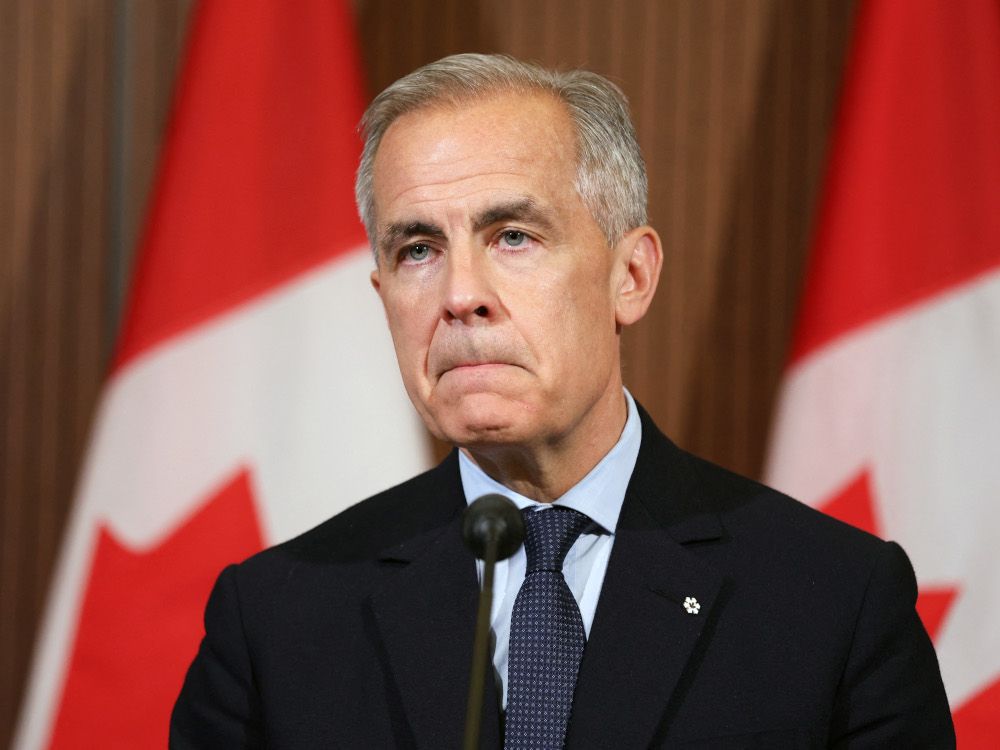
Canadian Prime Minister Mark Carney speaks during his closing G7 press conference in Kananaskis on Tuesday, June 17, 2025. 
Gavin Young/Postmedia

SDEROT, Israel — On Feb. 1, 1979, Ayatollah Ruhollah Khomeini, the leader of the Islamic Revolution in Iran, stood at the top of the stairs of an Air France jet that had just landed in Tehran. This stern, robed man had been whisked from his country villa provided by the French government (then led by President Valery Giscard d’Estaing) to a waiting jet. During his 14 years in exile, Ayatollah Khomeini was treated reverentially by the French. Before descending the stairs, the 40 year old cleric paused, triumphantly.

Eleven days later, Shah Mohammad Reza Pahlavi left Iran in disgrace, marking the end of 54 years of his family’s dynastic rule. He died not long after, in exile.

I remember the moment the Islamic student militants stormed the American Embassy in Tehran on Nov. 4, 1979. It was unthinkable. Sixty-six American diplomatic staff and other embassy personnel were taken hostage and held for 444 days. The footage of them being led, helpless and blindfolded, through the embassy compound is still so fresh. The “students” were enraged that the United States had admitted the Shah for cancer treatment.

The fanatical supporters of the Islamic regime were veiled, bearded and unsmiling. They spent months painstakingly piecing together strips of documents that had been shredded in the final, panicked moments before the embassy was stormed. It was all so dramatic, dark and ominous. They were also masters at media manipulation.

The gravity of the moment was not lost on anyone. But, almost 50 years on, many world leaders seem oblivious to the import of what is going down in Iran today. Some, of course, were barely in grade school in 1979. The intensity of the seismic shift — when Islamism was empowered — is not seared in their historical memory.

And it shows.

In recent days, small minds huddled in Kananaskis country, just north of Calgary for a G7 summit. They were embarrassingly unconcerned with events unfolding in Iran and were much more excited by the self-aggrandizing diplomatic statements they churned out lionizing their brilliant accomplishments. Meanwhile, an emerging new world order rendered their theatrics irrelevant. The disconnect was total.

Since 3 am local time, Friday June 13, an indescribably brilliant Israeli assault on key strategic and military sites throughout Iran has made the collapse of this repressive, theofascist dictatorship suddenly become very possible.

Intelligence assessments confirming that Iran was possibly moments away from nuclear breakout created the urgency. U.S. President Donald Trump had been persistent for months in urging Iranian leadership to negotiate a deal which would require that they abandon all military nuclear ambitions. Iran refused. Israel attacked.

Five days later, the map of the Middle East  and the world — is dramatically different. Borderlines remain but realities have shifted. The Israeli air force dominates Iran’s skies.

Shortly after two long telephone conversations last weekend — one with Trump and another with Israeli Prime Minister Benjamin Netanyahu — Russian President Putin withdrew all his country’s military personnel from Iran.

Hezbollah, the heavily armed fanatical Islamist army entrenched in Lebanon and armed to the teeth for decades by Iran, refused to support its benefactor when requested.

On June 13, Israel focused its efforts on neutralizing Iranian air defence systems. Days 2 and 3 brought a mind-blowing blizzard of activity. Air attacks targeted key military and industrial infrastructure: missile manufacturing sites, launchpads, oil refineries, training bases. Dozens of senior military, intelligence and government officials were assassinated in constant waves of assaults; some from the air and many at close range.

Days 4 and 5 have seen pinpoint hits on critical state, military infrastructure and government offices. On Monday evening the Israel Defense Forces urged civilians to leave Tehran,

leading thousands fleeing. 

One moment, Ayatollah Ali Khamenei is reported to be reaching out indirectly to Israel and the U.S. to negotiate a truce. The next he is breathing fire and brimstone and swearing to wipe out the Zionist regime. The demonization of the Jewish state has been the rallying cry for Iran and its Islamofascist allies and supporters around the world since 1979.

In the immediate aftermath of the overthrow of the Pahlavi dynasty, the excesses and repression of the Shah — particularly in his final decade of rule — were openly acknowledged. Its secret police, the SAVAK, were ruthless. Repression of fundamentalist Islam was extreme. But the mullahs were creative. Ayatollah Khomeni famously recorded inspirational messages for the masses from his plush French villa. His encouragement to the faithful to rise up and rebel was distributed within Iran on home made tape cassettes. It almost sounds prehistoric today.

But those cassette recordings were a key element of the strategy to organize and motivate the people of Iran to overthrow the Shah’s regime.

Today, the Supreme Leader resorts to social media and — until it was bombed by Israel earlier this week — state-controlled television and radio to get his message out. He knows well that control of information is a critical component of any revolutionary effort. As well as maintaining control and power.

In the region, and much of the world, we wait. Will Trump give the order for the B-2 bombers to drop the MOAB — mother of all bombs — on the Islamic regime’s Fordow nuclear site? This would likely result in the Iranian nuclear program being pulverized into oblivion. Fordow is an underground mountain fortress where military grade enriched uranium is centralized. It also houses Iran’s nuclear centrifuge.

When the G7 leaders met in Canada, it was being reported that Khamenei was asking the U.S. to engage in ceasefire talks. Trump hollered on his social media account: UNCONDITIONAL SURRENDER!! By then he had left the G7.

French President Emmanuel Macron — who Trump holds in boundless contempt — declared that the American president had departed early to negotiate a ceasefire with Khamenei. Trump

rebuked

Macron sharply, saying that he had no idea what was going on.

Macron, apparently believing himself to have influence in the middle east,

warned

that working to bring regime change to Iran would result in “chaos.”

We have come full circle, it seems, with yet another French president demonstrating support for an Islamofascist regime. Beyond his pompous utterances, Macron does nothing to substantiate his declarations.

Meanwhile, U.K. Prime Minister Keir Starmer has gone mute and Canadian Prime Minister Mark Carney seems unaware of this momentousness of this geopolitical moment. Instead, he drones on about this and that agreement. Ceasefire. D-escalate. Every now and then he makes a dull, uninspired comment along those lines.

This lot is so besotted with their bureaucratic dullness that they do not comprehend that now is perhaps one of the most significant moments of the last century.

Early Thursday morning Iranian ballistic missiles scored a series of direct hits that were intended to provoke a harsh Israeli reaction. A major hospital in Be’er Sheva was slammed as were several high-rise civilian apartment buildings in central Israel. It is difficult to fathom why Iran is goading Israel and America to escalate their responses. Because it will not end well for the regime.

Should the Islamic Republic of Iran fall in the coming days — which is looking increasingly likely — Germany, Israel, America and most middle eastern nations will likely be uninterested in what Canada, the U.K. and France have to say.

One thing is certain is that neither the U.S., Israel nor the prospective leadership of Iran is seeking the advice of these self-satisfied relics of the past. As for Carney in particular, for all his tough guy “elbows up” bravado, he is showing that he is very much a bureaucrat’s bureaucrat. He’s the kind of guy who thrives when functionaries function and machines hum. A visionary he is not.

National Post

Vivian Bercovici is a former Canadian ambassador to Israel and the founder of the State of Tel Aviv.


Stickers placed on Trutch Street sign in Vancouver, proclaim its namesake, BC's first lieutenant-governor Sir Joseph William Trutch, as a racist, as seen in August, 2012.  (Photo by Jason Payne/ PNG)

The City of Vancouver

describes

its new name for Trutch Street, “šxʷməθkʷəy̓əmasəm Street,” as a gift, but it’s more like a curse.

On Tuesday, city council

unanimously voted

for the change, condemning 100 or so residents to a lifetime of addressarial grief. Joining them in suffering will be countless drivers who make their way down the route, delivering, visiting and otherwise trying to get from A to B.

The new name means “Musqueamview” in Musqueam, but the city itself admits that nobody is likely to be able to read it in its letter-salad form: “With no fluent speakers left, this street name is a landmark moment for hən̓q̓əmin̓əm̓ revitalization,” notes a

webpage

about the change. (That word beginning in “h” refers to the Musqueam’s traditional language.) It will replace the name of Joseph Trutch (1826-1904), B.C.’s first Lieutenant Governor who,

among other things

, reduced the sizes of Indigenous reserves and denied the existence of some earlier treaties.

That remark by the city contained an important admission: the purpose of changing the name of pronounceable Trutch Street into something indecipherable at 40 km/h is political. The goal is to involve the local population in a moral exercise at the cost of their comfort and safety. Indeed, not even the Musqueam (who insisted on this visual obstacle course,

according to

Deputy City Manager Armin Amrolia) are going to be capable of reading it. Beyond signalling solidarity against colonialism, impeding the passage of Vancouverites and

offending

the local Squamish Nation, it’s a functionally useless sign.

Emergency services have already expressed their concerns that the new name will get in the way of saving lives, largely because 911 callers might not be able to pronounce the name. Most people haven’t learned linguistics to the point where they can pronounce Indigenous mainstays like the theta symbol, the tiny W, the 7 and the triangle. “Help, I’m at Sixwomkeymasem Street” is the most we can reasonably expect from people.

To address these concerns, the city has suggested a second set of unofficial signs that read “Musqueamview St.” (though it’s unclear whether that solution has been finalized). Emergency mapping systems will use the unofficial English name, but it won’t appear in the bylaw, which will use the official name instead. Licenses will have to be redone, as will insurance and registration slips. Then, there are land titles, bank addresses, credit cards, etc.

Anyone sending or receiving mail by Canada Post is

asked

to write both official and unofficial street names if possible, but to use English if only one line is available (work is being done to accept these new letters, but “most non-English lettering is not currently recognized” our letter service told me in an email this week). Other internal and external address and map systems — such as transit or B.C.’s insurance corporation — might be unable to digest these characters.

“To move forward, the project team recommended that these systems use the name ‘šxʷməθkʷəy̓əmasəm St” wherever possible, and those that cannot will use the name “Musqueamview St” with a footnote wherever possible stating “Musqueamview St is a translated name available for use while colonial systems work to accept multilingual characters,’” reads the direction from city staff.

The Canada Revenue Agency, meanwhile, can only accept Latin characters, numerals and basic punctuation. “In this case, since Canada Post will be supplying the English version of the street name, that is the format that will appear in CRA records,” said media officer Khameron Sikoulavong in an email Tuesday. This won’t have any impact on tax filing, he assures me, but I’d still feel queasy not using my legal address if I were a resident.

It’s no small matter to expand the letters that a system can use: even for this newspaper, our designer advises me, this article will be a headache to print due to the digital acrobatics involved.

Perhaps Vancouver believes it can force decolonization on others by using this script of what is functionally a dead language. But that hope would be far-fetched: most entities that need to keep legal addresses on file won’t get the memo that there are about 100 potential new system-incompatible entries, and many won’t have the capacity to incorporate upside-down Es into their vocabulary.

On the readers’ side, all sorts of barriers keep these words from being useful in wayfinding: drivers with minor reading disabilities, eyesight problems and second-language capabilities in English can get around fine with numbers and words like “Forest Way” — but with a jumble of letters with foreign marks upwards of 20 letters long? I think not. Indigenous words aren’t out of the question, either; indeed, it’s a tradition we should keep. Many excellent Canadian place names came to us this way, such as “Canada,” “Kitsilano,” “Ottawa,” “Toronto,” “Winnipeg” and “Saskatchewan.” These, however, have been appropriately anglicized, which no longer satisfies the new generation of decolonial busybodies.

It’s clear that easy communication is no longer the priority. This street in Vancouver is being transformed into a “learning opportunity” to force upon commuters, similar to a Grade 1 classroom with labelled staplers and doors, as part of a wider trend. Toronto

decided

to rename its Woodsy Park to “Ethennonnhawahstihnen’ Park” in 2019, resulting in a very awkwardly named

library branch

. Edmonton in 2020

switched

its wards over from numbers to Indigenous words like

“Ipiihkoohkanipiaohtsi,”

which I imagine very few residents can spell or pronounce without seeing the word in front of them. Vancouver has elementary schools named “

χpey̓

” and “

wək̓ʷan̓əs tə syaqʷəm

,” a guaranteed recipe for confusion.

So, now that our wayfinding system has been hijacked by ideologues who see getting around as a secondary, perhaps tertiary purpose, we must look to provincial ministers to help, because only they have the power to do what’s right.

Municipalities are not entities that are set out in the Canadian Constitution; they only exist because provincial legislatures say so. And by the same power, provincial legislatures can limit what these cities can do. The same goes for school boards.

If names are getting out of hand, provincial ministers can limit the changing of historic names; they can put character limits on new street, neighbourhood and school titles to keep them to a reader-friendly length; and they can ban the use of special, non-English and non-French characters to keep a city’s addresses readable by humans and databases alike.

More than a cultural issue, it’s an accessibility issue. Canada has official languages to prevent its people from suffering Tower-of-Babel incidents. If city officials have forgotten all this, it’s time for the provinces to put them in their place.

National Post


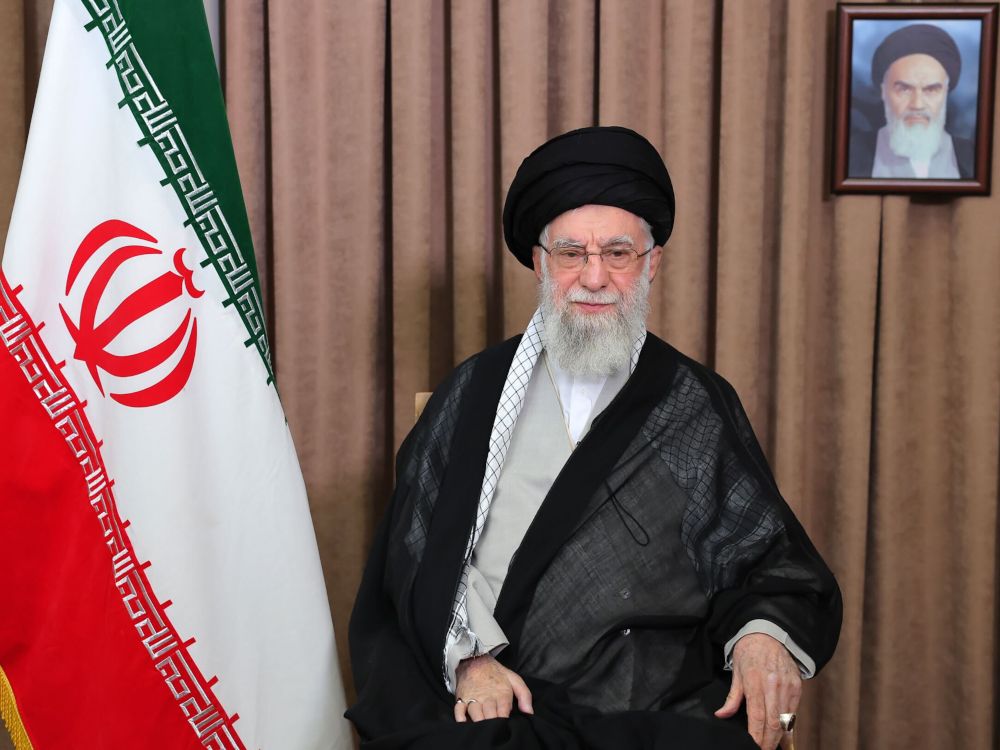
A handout picture provided by the Iranian supreme leader Ayatollah Ali Khamenei's office shows him greeting the crowd before addressing the nation on the first anniversary of the death of Iran's former president Ebrahim Raisi, on May 20, 2025 in Tehran.

First Reading is a Canadian politics newsletter curated by the National Post’s own Tristin Hopper. To get an early version sent directly to your inbox, sign up here.

TOP STORY

With the Islamic Republic of Iran seemingly on the edge of collapse, there’s a good chance its surviving inner circle may attempt to flee to Canada.

That’s according to security analyst Casey Babb, and it follows a lengthy track record of Canada serving as a covert haven for Iranian regime officials.

“We know that over the last several years, many, many senior officials of the Iranian regime, despite inadmissibility laws, have already made it in here,” Babb, a senior fellow with the MacDonald Laurier Institute,

said in an interview this week

with The Ben Mulroney Show.

As such, Babb said that if the Islamic Republic’s ruling class finds itself sent into exile, they “know how to get into Canada.”

As recently as April, the Canada Border Services Agency

reported

that 20 Iranians who had served in high-level positions with the Tehran government have been found to be living in Canada. According to Global News, only one of those has been successfully deported, although others have left voluntarily.

This is despite the fact that Canada has

explicitly barred Iranian officials

from entering the country since 2022, announcing it as part of a new package of measures “to keep war criminals out of Canada.”

Under the order, entry was barred to any “senior officials” who had served with the Iranian regime since June 2003, the date when Canadian photojournalist Zahra Kazemi was detained and

subsequently tortured to death

in Iranian custody.

The Iranian officials seen in Canada have included a former Tehran police chief, Morteza Talaei, who was active in deadly crackdowns against anti-regime protests. He was spotted

working out at a Toronto gym in 2021

.

One of the regime officials subjected to a Canadian removal order was Seyed Salman Samani,

Iran’s former deputy interior minister.

Canada is home to one of the world’s largest Iranian populations, and Iranian-Canadian activists have long warned that regime officials were embedding themselves within the community.

This came up in the recently concluded Foreign Interference Commission. The inquiry met with seven members of the Iranian-Canadian community, including Nazanin Afshin-Jam Mackay, the Iranian-born wife of former Conservative justice minister Peter MacKay.

She

told the inquiry

that “Canada is known as a safe haven for Islamic regime officials and their families” and that “it is very traumatizing for Iranian Canadians to see officials from the Islamic regime in Canada.”

Another interviewee spoke of a “former Iranian cabinet minister” taking a summer vacation in Montreal.

The group StopIRGC, founded in 2022, comprises volunteer lawyers who collect dossiers on alleged Islamic Revolutionary Guards Corps members and other regime figures who are in Canada. According to the group’s website, they’ve

reported 91 cases

to Canadian law enforcement.

Speaking to Ben Mulroney this week, Babb said that while there are regime officials living illegally in Canada, they can become legal residents simply by claiming asylum.

This was the case with Afshin Pirnoon, one of the 20 alleged regime officials identified as living in Canada. A former director general of Iran’s Road Maintenance and Transportation Organization, he

claimed asylum upon arrival to Canada in 2022

.

Canada is currently experiencing a record number of asylum claims, so much so that the government of Prime Minister Mark Carney is looking to fast-track a new bill that would tighten eligibility for refugee claimants.

Of late, those asylum claimants have disproportionately comprised Iranian nationals. According to new figures provided to the National Post by the Association for Canadian Studies, Iran was the second-largest source for Canadian asylum claimants in the first quarter of 2025.

Of 28,830 total claimants, 1,730 were Iranian nationals. The only country with a higher number of asylum claims was India, at 4,195.

The Islamic Republic of Iran is said to be teetering on the edge of collapse after its military and political hierarchy were shattered by a series of devastating attacks by the Israel Defense Forces.

Israeli Prime Minister Benjamin Netanyahu has publicly urged Iranians to overthrow the country’s wounded theocratic regime, and said in an English-language video address earlier this week that regime officials were “packing their bags.”


IN OTHER NEWS

 On Tuesday night, a Canadian team was not only denied the chance to end the country’s 32-year Stanley Cup drought, but the American victors proceeded to immediately damage the famed Canadian-made trophy. The victorious Florida Panthers dented the cup at the precise section recording Canada’s last-ever Stanley Cup win; the Montreal Canadiens in 1993. Celebratory damage isn’t all that unprecedented for the trophy. In the early days of the Stanley Cup – when it started as a challenge cup contested by Canadian amateur teams – its various indignities included being drop-kicked into the Rideau Canal and drunkenly abandoned on a Montreal street corner.

Among the various bills being fast-tracked through the summer session of the House of Commons is Bill C-5, which would give the prime minister unprecedented scope to

suspend federal laws

in the service of any development project deemed to be in “the national interest.” Dubbed the Building Canada Act, it would empower the federal cabinet to draw up a list of “national interest projects,” along with a companion list of laws they don’t have to follow.

 Last week, this newsletter reported on how the Carney government intended to follow through with a total ban on new gas-powered cars by 2025. The Conservatives appeared to confirm as much with the above motion, which was soundly defeated by all the House of Commons’ non-Conservative MPs.

Writing for the National Post, Canadian Constitution Foundation lawyer Josh Dehaas argued that if Canada feels the need to exempt favoured companies and projects from their own laws, maybe they should

just repeal those laws

.

 According to the Angus Reid Institute, Manitoba’s Wab Kinew is the country’s most popular premier right now. The year 2025 is actually proving to be a golden era for premier popularity, with four provincial leaders boasting majority support. It wasn’t too long ago that just a single province, Saskatchewan, had a premier liked by more than half of his constituency.

Get all of these insights and more into your inbox by signing up for the First Reading newsletter.


Quebec Liberal Party leadership candidate Pablo Rodriguez gives a speech at the Quebec Liberal Party Leadership Conference in Quebec City, Saturday, June 14, 2025.

Last Saturday, close to three years after suffering its worst election defeat in 155 years, the Quebec Liberal Party (QLP)

elected

a new leader. Former federal Cabinet minister Pablo Rodriguez won a closely fought battle on the second ballot, with 52 per cent of the vote. The result was much closer than expected as his main rival was a young, dynamic but little-known businessman, Charles Milliard.

Both Rodriguez and Milliard ran good campaigns, with Rodriguez’s lacklustre performance in the candidates’ debates compensated by his notoriety, his government experience and his strong organizing skills. No doubt many party members were impressed by the polls showing that with Rodriguez at the helm, the QLP would be in a position to win the next election, set for October 2026. The rest of the country could then breathe a sigh of relief, since the alternative is the separatist Parti Québécois (PQ), which is committed to holding a third referendum on the province’s independence.

Born in Argentina, Pablo Rodriguez came to Canada when he was eight years old. He learned French on the hockey rinks, he says. He got involved in politics early as a member of the QLP’s youth wing. He then tried his luck with the federal liberals and was elected as a member of Parliament in 2004. He lived through the Liberals’ barren spell following the sponsorship scandal and played a major role in rebuilding the party in Quebec, laying the foundation for Justin Trudeau’s victory in 2015. Rodriguez held several key positions in Trudeau’s cabinet, including minister of Canadian Heritage, house leader and the prime minister’s Quebec lieutenant.

In a province where the integration of newcomers has always been a sensitive issue, it is not insignificant that Rodriguez himself is an immigrant, who today speaks perfect French and who, thanks to his political career, knows Quebec inside and out. Neither is the fact that, at a time when a close relationship between the provinces and Ottawa is more important than ever, he understands how the federal government works and knows the key players in Mark Carney’s cabinet. Rodriguez’s experience in the Trudeau government may play against him, though, as his adversaries will attempt to tarnish him with some of that government’s more unpopular policies.

Commentators have already begun painting the new liberal leader as Ottawa’s man, a dangerous centralizer. Whether this will work remains to be seen. The same criticism was levelled at Jean Lesage in the 1960s and Jean Charest 40 years later. Notwithstanding those attacks, Lesage did become premier and is known as the father of the Quiet Revolution. Charest was premier for nine years (2003 to 2012) and is perceived, rightly so, as the most talented politician of his generation.

Rodriguez is a hard worker. He will need every ounce of energy he can muster; a tremendous amount of work is necessary to rebuild the QLP. Support for the party outside the region of Montreal is meagre. In many ridings, there are few party members left, no association and no money. Depending on the public opinion surveys in the next few months, finding first-rate candidates in all 125 ridings may not be an easy task.

The current political situation in Quebec does offer some hope for the provincial liberals. According to a

Pallas poll

conducted right after Rodriguez was elected, the PQ leads (as it has for months now) with 31 per cent of the vote, followed by the QLP at 26 per cent, its best score in five years. The party currently in government, François Legault’s Coalition Avenir Québec, slides to third place, with only 15 per cent of voting intentions. With such numbers, the next provincial election may turn out to be a traditional PQ-QLP confrontation.

If this is so, it will be tempting for the provincial Liberals to run a campaign based solely on Quebecers’ fear of another separation referendum, a strategy that has worked well in the past. In 2026, though, that would be a mistake. Although most Quebecers want to remain in Canada, especially with Donald Trump’s annexation threats, their priorities lie elsewhere: the cost of living, the catastrophic state of public services, the shortage of housing, high immigration, etc. They will expect concrete and credible solutions to those problems from the parties vying for power.

Under their charismatic leader Paul St-Pierre Plamondon, the Péquistes have demonstrated a knack for developing original policy ideas. Rodriguez’s Liberals will have to come up with their own, more convincing proposals. If they are not successful, Quebecers may vote PQ notwithstanding the referendum threat.

Following a nine-month-long leadership campaign, Rodriguez has achieved his aim. However, considering the challenges he now faces, that may have been the easy part.

National Post

André Pratte is a communications consultant and a doctoral student in history. From December 2023 to May 2025, he chaired the Quebec Liberal Party’s policy committee. 


Prime Minister Mark Carney, left, and U.S. President Donald Trump attend the G7 Leaders' Summit in Kananaskis, Alta., on Monday.

Israel’s demolition of the Iranian regime shows our government at its finest. Unfortunately, because it’s pompously paralyzed amid platitudes. It took hours to say anything, then said nothing. Which illustrates the importance of ideas.

I know, I know. Rarely does one look at our leaders and have “ideas” spring to mind. As

I’ve complained elsewhere

, they’ve have perfected the art of murmuring sweet nothings at the public to the point that it’s metastasized from a tactic into a mindset. But the crucial historical maxim “ideas have consequences” doesn’t only refer to good or carefully considered ones.

Stupid kills and vacant is as vacant does. When the Prime Minister’s Office

blathers about how

“Prime Minister (Mark) Carney and (French) President (Emmanuel) Macron discussed bolstering co-operation on shared priorities such as critical minerals, energy security, bilateral investment, artificial intelligence and quantum technology” at the G7, Carney actually thinks those words describe meaningful actions to help create a better world.

On Israel and the Middle East, it’s worse. Far worse. It’s been clear for some time, to some of us anyway, that something is very wrong in the state of Canada. Protests in our major cities routinely, openly, smugly promote terrorism, harass Jews in their homes and places of worship and break laws, and police bring coffee. Toronto Mayor Olivia Chow is invisible when not dancing in purple feathers to promote “diversity.” Ontario Premier Doug Ford could care less. Academics sign anti-Israel petitions.

Amid this mental and moral feebleness, something momentous is suddenly happening in the Middle East. And a great many supposedly wise and influential persons can’t get their minds around it because, as I told my former bosses at the Reform party years ago, “you cannot fight an enemy that has outposts inside your head” (they fired me, and fizzled out).

So when you look at Canadian policymakers and pundits, before asking what tactical decisions they’re making about the Middle East, primarily about PR strategy because the word-deed fog has permeated their brains, ask yourself what their fundamental beliefs are.

Do they believe that geopolitics is a jungle where force settles disputes not paper promises or sweet-smelling sentiments? That there are people who hate our way of life and would destroy it if they could? That antisemites hate Jews not for their imagined defects but for their real virtues?

Specifically, what do they think of Israel? Do they know it’s the only democracy in the Middle East, the only place gay Muslims are free to be themselves … or cast meaningful ballots? If so, do they care?

More fundamentally, do they know or care about the story of Israel? From Abraham, Isaac and Jacob to the Exodus, the construction and demolition of the temples and the Holocaust? Do they know Israel brought ethical monotheism to the world, which responded about the way you’d expect sinful humans to respond, with an unending series of attempts to slander, exile, maim or kill the messenger? Do they know they are unavoidably part of that story and that refusing to choose a side is choosing a side?

It is a remarkable feature of history, to those who know history, that no movement becomes truly evil without becoming antisemitic and vice versa. Even Imperial Japan adopted anti-Jewish laws, which is especially telling since of course they had no Jews. And the enemies of ancient Israel practised human sacrifice.

Another remarkable feature of history,

Mark Steyn noted

20 years ago, is that, “Whatever the attractions of anti-Semitism, it tends not to work out too well for those who over-invest in it – see the Third Reich, and the loopier parts of the Arab world today.” Do our leaders political, intellectual and cultural know it, and have any idea why it is so? Do they ever think about why antisemitism is so persistent, wicked and dangerous that it routinely engages in blood libels including a “genocide” in Gaza?

Flapping our arms and calling for de-escalation when the Jewish state is taking desperate action to avoid being overrun and raped, or nuked, isn’t just ineffective. It’s wicked.

It is also ineffective. Some people are calling on U.S. President Donald Trump to use America’s heavy “bunker-busting” bombs to smash parts of the Iranian nuclear-weapons program Israel can’t reach, if any. But nobody’s asking Canada to do anything because there’s literally nothing we could do because of our conviction that force is obsolete. So Trump left the G7 early to go do something while we stayed to pose as a moral superpower when we’re neither.

If we see Israel as David fighting Goliath, we know what to do if we could. If we see it as settler-colonial white supremacists, it also suggests a program where instead of meaning well feebly we mean ill feebly. So far our government seems to be getting it wrong. Very wrong.

National Post


Harvard president Alan Garber

Elite American universities have been the brunt of severe criticism by alumni, donors, the public and politicians in a culture war that could have profound implications not only for academia, but for broader societal values and democratic politics. These issues are relevant in Canada because of the obvious parallels.

Some of the resulting penalties imposed on American colleges are overwrought — especially U.S. President Donald Trump’s policies barring foreign students from attending Harvard and defunding research. However, elite universities brought this existential crisis on themselves by failing to respond meaningfully to legitimate concern about civil rights violations and a lack of viewpoint diversity.

A passionate defence of academic freedom was presented by an associate professor of political science at McGill University, Debra Thompson, in

a commentary

that ran in the Globe and Mail last month. However, the 2,600-word article minimized the failure to deal with two core problems — ideological uniformity and rampant antisemitism — which is indicative of the broader problem.

Academics and their governance bodies understate their deficiencies and are disinclined to do anything meaningful about them — unless they’re coerced by the law, or through financial penalties. Canadian politicians generally lack the interest or courage to tackle these issues, while others, like Prime Minister Mark Carney, are undoubtedly comfortable with the “progressive” bias at our institutes of higher learning.

Harvard’s president, Alan Garber, admitted there’s a lack of viewpoint diversity at his school. “We think it’s a real problem if — particularly a research university’s — students don’t feel free to speak their minds, when faculty feel that they have to think twice before they talk about the subjects that they’re teaching,”

he said

.

Since Harvard

ranked dead last

in free speech (itself shocking) in rankings put together by the Foundation for Individual Rights and Expression, it would be hard pressed to use that defence, especially when pervasive class disruption, trespass, intimidation, vandalism and calls for violence have nothing to do with free speech.

A 2022 Macdonald-Laurier Institute study by Christopher Dummitt and Zachary Patterson found that professors “vote overwhelmingly for parties of the left and 88 per cent self-identity as left-leaning, with only nine per cent voting for conservative parties.”

Given the illiberal intolerance of diverse opinions, and the tendency for self-censorship and biased peer reviews, the result is an academic monoculture, especially in the soft sciences, which is inimical to conservative perspectives, including pride in our history and support for the free market.

Thompson’s only comment on pervasive antisemitism at Harvard came in this sentence: “The guise of combating antisemitism on college campuses is a complicated cover for a far-reaching ideological assault.” The insinuation is that those who are critical of the university are using antisemitism as a pretext to achieve their malign objectives.

There is no suggestion that it might actually be a problem, which is remarkable given the widely known facts, which were extensively outlined in Harvard’s

311-page report

from its “Presidential Task Force on Combating Antisemitism and Anti-Israeli Bias.”

The presidents of McGill and Concordia in Montreal both acknowledged that antisemitism is a “

significant problem

” at their universities. A

class-action lawsuit

has been launched against McGill for creating an antisemitic environment. The University of Toronto has been accused of having “a long and sordid history of failing to protect Jewish learners, faculty and staff.”

As a grateful alumnus of McGill and Harvard, I take no pleasure in identifying their failings, but I’m struck by how different the environment was when I attended classes in the 1950s and ’60s. Back then, there was tolerance for diverse views, and it was unthinkable that students would be threatened or demonized based on their religion, ethnicity, race or country of origin. Of course, most students are not harassed now, but Israelis and Jews appear to be the exception.

Administrators and faculty at Harvard (and other universities) have trouble accepting how they are perceived by the public: elitist, privileged, subsidized by taxpayers, charging high tuition, bloated by administrative staff, captured by DEI and other racially discriminatory admissions and hiring policies, and frequently advocating ideas that defy common sense. Operating in a groupthink bubble can lead to responses that underestimate and devalue criticism.

The indoctrination of a woke mindset has implications beyond pampered university campuses. The division of society into the oppressed, who are perpetually victims, and oppressors, who are settler-colonizers and always the guilty party in any conflict, churns out students who loath western history and civilization and have contributed to the worst outbreak of global antisemitism since the defeat of Nazism 80 years ago.

Trump is using a sledgehammer rather than a scalpel, but the problems he is addressing are acute. Having brought on the onslaught, universities risk perpetuating it through their own denial, which is not likely to be the most successful of strategies. Nor do they serve the public interest.

National Post

Joe Oliver is the former minister of natural resources and minister of finance in the government of Prime Minister Stephen Harper.


Indian Prime Minister Narendra Modi, centre, is greeted as he arrives in Calgary for the G7 summit on Monday.

Indian Prime Minister Narendra Modi, whose government faces credible allegations of orchestrating the political assassination of a Canadian citizen on Canadian soil, was welcomed by world leaders at the G7 summit in Canada without hesitation. Meanwhile, Israeli Prime Minister Benjamin Netanyahu — who’s controversial, but is the leader of a democratic state that’s under attack — is threatened with arrest by the International Criminal Court (ICC) for defending his citizens after one of the most horrific terrorist attacks since 9/11.

This is not just hypocrisy, it’s a distortion of justice. Of course, no democracy is above scrutiny. Legitimate criticism of Israel’s wartime conduct — its proportionality, its humanitarian policies, its political leadership — is not only warranted, but necessary. Democracies thrive on accountability. But there is a profound difference between such critiques and the morally bankrupt equivalence that treats a sovereign state defending its citizens as indistinguishable from terrorists who deliberately target civilians.

Let’s be clear: Netanyahu is far from a flawless leader. His judicial reform agenda has shaken Israeli democracy, and his coalition includes extremist elements that many Jews find abhorrent. He deserves political accountability. But legal accountability for war crimes? That’s a bridge too far — especially when the ICC treats a country defending itself from terrorism as morally equivalent to a terror group that proudly live-streams its own atrocities.

On Oct. 7, 2023, Hamas terrorists invaded Israel, murdering 1,200 people — including babies, women and elderly Holocaust survivors — raping and mutilating civilians, and kidnapping more than 250. Fifty-three living and murdered people remain in captivity. That day shattered Israeli society and Jewish communities around the world. It was an unprovoked genocidal assault.

Since then, Israel has waged war in Gaza. Thousands have died, and the suffering is real. But the war could have ended months ago, and it could end now, if Hamas accepted any of the multiple ceasefire and hostage-release proposals brokered by the United States, Egypt and Qatar. Hamas has rejected every one. Every day that hostages remain in Hamas captivity prolongs the war and the suffering of civilians on both sides.

Let’s not pretend this is about proportionality or international law. If it were, the ICC would not ignore the fact that Hamas deliberately embeds its military infrastructure beneath hospitals, schools and apartment buildings. Nor would it ignore the difference between a democratic country’s military operating under civilian oversight, and a terror group that glorifies martyrdom and uses its own people as human shields. The ICC’s pursuit of Israeli leaders while delaying full investigations into far more egregious violations by Russia, Syria and others undermines its own credibility as an impartial institution of justice.

The current war is not the product of some ancient cycle of violence. It is the result of Hamas’s rule in Gaza — 18 years of foreign aid spent not on roads, hospitals or schools, but on tunnels, rockets and indoctrination. Calling this a genocide is not just inaccurate, it’s obscene. It weaponizes the memory of the Holocaust and erases the moral distinction between attacker and defender. As the prophet Isaiah warned: “Woe to those who call evil good and good evil; who put darkness for light and light for darkness.”

But the double standard goes even further. Greta Thunberg, a global voice once synonymous with moral urgency, has refused even to view the documentary footage of the October 7 attacks. Activists set sail on ships to Gaza claiming humanitarian motives, yet say nothing of the hostages being still held there. They speak of “resistance,” while ignoring mass rape and torture. They equate lawful arrests by Israel with the deliberate abduction of civilians by terrorists. This isn’t activism — it’s propaganda. Worse, it’s cruelty disguised as compassion.

Contrast that with how Canada has responded to India’s alleged assassination of Hardeep Singh Nijjar in British Columbia. Former prime minister Justin Trudeau bravely called it out. Yet when Modi is received at international summits, no arrest warrants await. Trade deals are signed. Photos are taken. Everyone moves on. Israel, by contrast, faces isolation, boycotts and courtrooms — simply for surviving.

This is not about justice, it’s about Canada’s political hypocrisy and a glaring double standard. As Jews, we are taught in the Talmud: “He who is kind to the cruel ends up being cruel to the kind.” When the international legal system excuses terrorists and criminalizes their victims, we have lost our moral bearings.

Calls for a Palestinian state have resurfaced — not as the result of negotiations or peace efforts, but as a reward for the worst massacre of Jews since the Holocaust. This sends the message that terrorism pays. Let us be clear: Palestinians deserve dignity, freedom and a future. But peace will not come through appeasing terror or erasing Israel’s right to defend itself. Justice must be grounded in truth, not political expedience.

Canada, of all nations, knows the danger of appeasing political violence. If we extend diplomatic courtesies to Modi while condemning Israel for defending its citizens against genocidal terrorism, we abandon moral clarity. That is not justice — it’s duplicity. And it emboldens those who believe terror can achieve political ends.

National Post

Rabbi Steven Wernick is the Anne and Max Tanenbaum senior rabbi at Beth Tzedec Congregation in Toronto. Opinions are solely those of the author.


U.S. President Donald Trump speaks to the press as workers install a large flag pole on the South Lawn of the White House in Washington, DC on June 18, 2025. (Photo by BRENDAN SMIALOWSKI/AFP via Getty Images)

With the conclusion of the G7 gathering in Kananaskis on Tuesday, it’s an open question whether the session was merely unproductive or downright counterproductive, but there’s one proposition that’s difficult to dispute, and it’s this. It would have been better had U.S. President Donald Trump been invited to stay away.

The kindest explanation for the supine and obsequious postures adopted in Trump’s presence, most noticeably by Prime Minister Mark Carney and British Prime Minister Keir Starmer, is that they’re both deathly afraid of the irrational and ill-tempered American president’s tariff trigger-finger.

It may even be the case that Carney’s flattering tone in Kananaskis will encourage Trump to fold the trade war he’s been waging on Canada within what Carney called a new

“economic and security partnership”

between Canada and the U.S. in negotiations within the next 30 days. It’s not clear whether this partnership will include Canada’s protection under Trump’s proposed “Golden Dome,” which would cost Canadians $61 billion unless Canada became the 51st American state.

As for Starmer, he appears to have obtained further assurances about the contents of a tentative tariff and quota deal the U.S. and the United Kingdom concluded last month, which Trump mistakenly called a U.S. agreement with the European Union. Japanese Prime Minister Shigeru Ishiba was not so lucky. Ishiba left for home with no progress in persuading Trump to drop his crippling 25 percent tariffs on Japanese automobile imports.

Apart from that sort of thing and some commitments to cooperate on trans-national repression, critical minerals, artificial intelligence, migrant smuggling and wildfires, much has been made of a 121-word G7 statement about Israel’s ongoing Operation Rising Lion.

The operation is the closest thing to all-out war between Iran and Israel in the nearly half-century of Iran’s terror campaign against the Jewish state. Determined to smash Iran’s nuclear-bomb aspirations once and for all, Benjamin Netanyahu’s government is in the seventh day of an audacious drone-and-missile assault on the Khomeinist regime.

So far, Israel has crippled several of Iran’s nuclear sites, knocked out much of Iran’s air defence and missile-launching infrastructure and liquidated several key figures in Iran’s ruling military establishment.

The G7 statement notices that Israel has the right to defend itself and that Iran is the principal source of the region’s instability and terror, and further asserts that Iran can never have a nuclear weapon. This is all quite uncontroversial, or should be. Iran is a signatory of the Nuclear Non-Proliferation Treaty of 1970, which prohibits the development of nuclear weapons, which Iran appears to have been attempting, on the sly, for years.

The Israeli operation was put in motion against the backdrop of the UN’s International Atomic Energy Agency finding last week of “serious and growing concerns” that Iran has not been straight with IAEA inspectors since at least 2019. Iran has repeatedly failed to demonstrate that it wasn’t diverting nuclear material for a clandestine nuclear-bomb program, the IAEA reported.

As for Russia’s war on Ukraine, that global catastrophe barely got a look-in. There was no G7 statement dealing with Vladimir Putin’s war or his threats to Europe, and the big controversy about that was merely about whether the Trump administration had scuttled a draft statement or whether Carney’s government hadn’t even bothered to formulate a statement that Trump, whose pleadings on behalf of Russian strongman Vladimir Putin go back several years, could be persuaded to sign.

Trump left halfway through the summit anyway, ostensibly to focus on the Israel-Iran conflict. Ukrainian president Volodymyr Zelenskyy didn’t bother to stick around either, and it was just as well. All Ukraine got was a handful of passing mentions in Carney’s

“chair’s summary”

to the effect that the G7 supports the idea of “a strong and sovereign Ukraine” and that Russia should match Ukraine’s commitment to an unconditional ceasefire. As if to soften the blow, Carney pledged a further $4.3 billion in military and reconstruction aid to Ukraine this week, along with more sanctions targeting Russia’s “shadow fleet” of dodgy oil tankers.

And then there was this: “G7 Leaders expressed support for President Trump’s efforts to achieve a just and lasting peace in Ukraine.”

This is a sentence that stoops below obsequiousness to outright self-abasement.

Trump’s “efforts” in this matter have consisted mainly in allowing himself to be conscripted as Vladimir Putin’s propaganda conduit, grossly exaggerating the Biden administration’s contribution to Ukraine, boasting about his good relations with Putin and generally sabotaging Ukraine’s efforts to defend itself in the bloodiest war in Europe since the Nazi era. Trump also says the war would never have happened had he been president instead of Joe Biden.

Trump’s hubris got the better of him again on Monday, with Carney standing at his side. Trump repeated his wish that the G7 had not expelled Putin in 2014, a move he attributed to former prime minister Justin Trudeau and former president Barack Obama. Trump also repeated his nonsense suggestion that Putin would not have gone to war if Russia had not been expelled from the G8 (for good measure, Trump suggested on Monday that China should be added to the G7’s membership).

In fact, it was former Prime Minister Stephen Harper who led the charge to expel Russia, more than a year before Trudeau came to power, and Russia’s ejection occurred after Putin invaded Donbas and annexed Ukraine’s Crimean peninsula.

Trump also claimed, again, that the U.S. had spent $350 billion on Ukraine’s war effort. This is roughly three times the true amount, and significantly less than the funds the Europeans and Canada have contributed in military, humanitarian and military aid. Just over the past two months, the Kiel Institute’s Ukraine support tracker shows that Europe has advanced $23 billion in aid to Ukraine, and the U.S. has contributed nothing.

To date, the sum total of Trump’s “peace talks” consists of

a minerals profit-sharing arrangement

with Ukraine intended to recover the cost of U.S. contributions to date, no U.S. security guarantees or commitment for future military aid, and “Crimea,” the main prize in Putin’s 2014 invasion,

“will stay with Russia.”

Adding to Ukraine’s humiliation: While the heads of government of Canada, the U.S., France, Germany, Italy, Japan and the United Kingdom were meeting in Kananaskis, Russia launched its deadliest drone attack on Kyiv this year, killing at least 18 people and wounding 151.

The swarms of Shahed drones Russia has been launching at civilian areas in Ukraine are an Iranian innovation. Lately they’ve been manufactured in North Korea.

National Post