LP_468x60
on-the-record-468x60-white

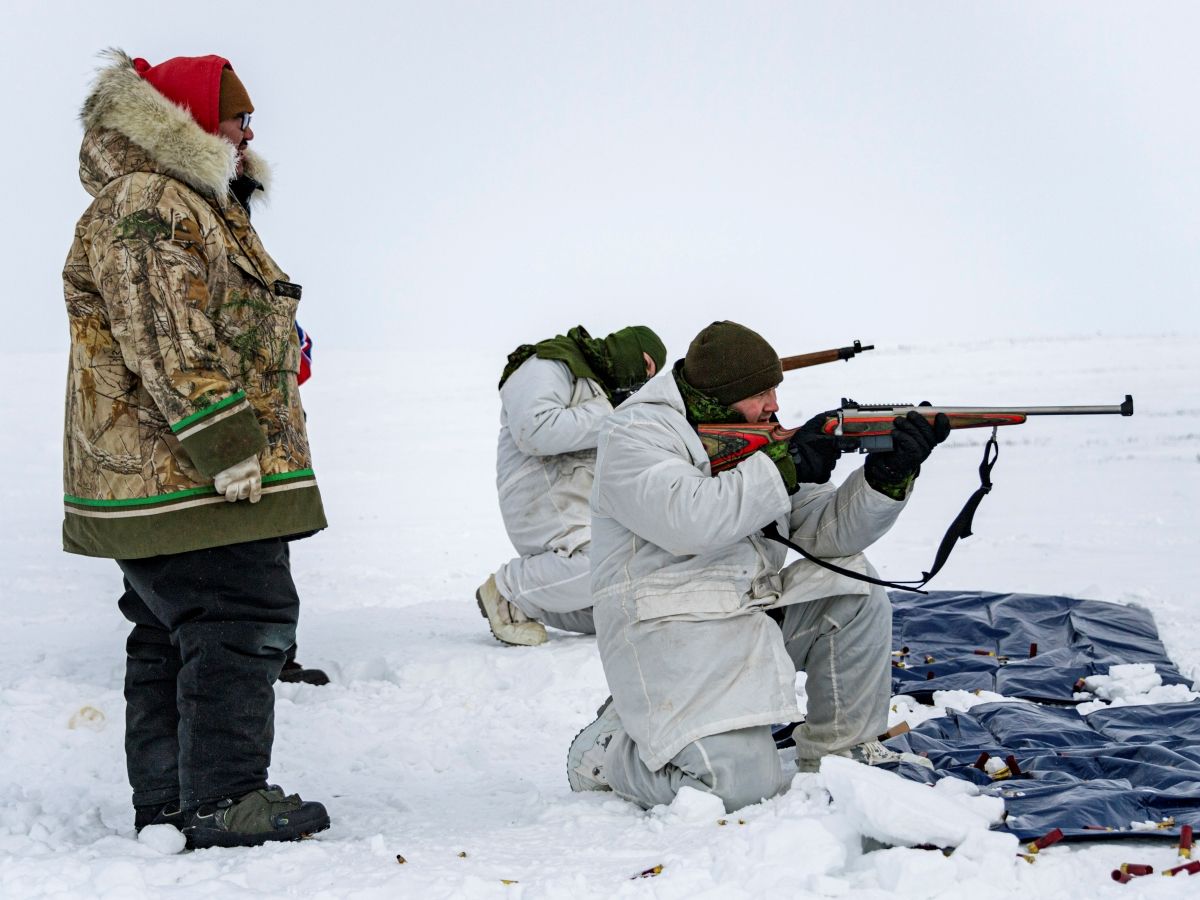
Canadian Forces personnel under the supervision of a Canadian Ranger fire the C19 Ranger Rifle during a military exercise in March 2023.

“Mon pays, ce n’est pas un pays, c’est l’hiver,” Gilles Vigneault sings — my country is winter. Canada is shaped by cold, distance and northern regions inhabited by resilient people. Whether we embrace it or not, we are a polar nation.

Sovereignty over nearly 10 million square kilometres must be demonstrated: we must prove we can protect the vast North, develop its resources and create opportunities for its people. We must stop thinking small.

The North holds immense underdeveloped resources coveted by other nations, yet Canada has limited means to monitor the region, deter adversaries or respond to incursions.

A northern strategy needs four priorities: deterrence, defence of the territory, resource development and corridors for transportation and communications. The first two require forces able to deploy nationwide and operate seamlessly with allied polar nations, plus permanent — or at least persistent — northern basing, with First Nations as full partners.

Consider the Northwest Passage. When the U.S. oil tanker Manhattan transited in 1969, Canada called it internal waters; Washington disputed the claim and went through, and Ottawa protested. The dispute remains: Canada considers the passage internal waters, while the United States considers it an international strait. How will we react when adversaries transit these “internal” waters? Sovereignty means having an answer beyond protest.

Whatever one thinks of climate change, northern temperatures have risen and keep rising. The cause is not the issue here; reversal is not on offer; adaptation is. Climate change, as University of Calgary Arctic security expert Robert Huebert puts it, has “converted the Arctic from a barrier into a corridor.”

That corridor leads to resources other states want secured. Russia leads Arctic development, with dozens of vessels able to operate in and under ice; China calls itself a “near-Arctic” state and, as of 2022, holds equity in more than two dozen Canadian mining companies.

The Arctic is also a route to challenge the United States through a lightly defended Canada.

“Lightly defended” is no exaggeration. Based in Yellowknife, the Canadian Armed Forces’ Joint Task Force North covers the Yukon, the Northwest Territories, Nunavut and the Arctic Ocean — nearly 40 per cent of the country’s land mass — with about 300 personnel. The Canadian Rangers, a lightly armed part-time reserve of nearly 5,000, are the eyes and ears of much of the North, where every operation, resupplying a community or maintaining a radar, is a sovereignty operation.

The nearest fighter bases able to answer a NORAD emergency, Bagotville, Que., and Cold Lake, Alta., are many flying hours away. In contrast, the United States keeps several military bases in Alaska and more than 20,000 active-duty personnel. Canada cannot exercise northern sovereignty principally from southern bases.

In May, the eight Arctic allies committed to more presence, surveillance and joint training in the North.

Security underpins trade, but infrastructure underpins security. The unmanned radars, drones and undersea sensors used at present help identify threats, but the Canadian Armed Forces are poorly placed to manage a major northern crisis. Canada has no year-round ice-free Arctic port, and the deepwater facility at Nanisivik never became fully operational before the military began shutting it down in May .

Against that record, the March 12 announcement of $40 billion in northern investment is a real opportunity: infrastructure in Nunavut and the Northwest Territories, expanded forward operating locations at Yellowknife, Inuvik and Iqaluit, and upgraded Arctic airports. But promise must now become action.

Much of our prosperity depends on extracting and delivering resources, some of them in the North. Distance and climate make that difficult; the private sector can help. Indigenous partners must share in the returns, and dual-use projects stretch public investment by serving communities, commerce and national defence.

The idea is not new. In 1968, Lt.-Gen. Richard Rohmer proposed an east-west mid-Canada corridor from Labrador City, N.L., through Flin Flon, Man., to Fort Nelson, B.C., with highways, railways and communities to draw Canadians northward. Ontario is exploring the Ring of Fire; Quebec has its Plan Nord.

Newer concepts run south to north: from southern Manitoba to an expanded port at Churchill, or through improved facilities at Port Nelson. Either shortens the route to Europe against the haul to Atlantic or Pacific ports.

Grays Bay, on Nunavut’s Coronation Gulf, shows how these objectives can converge: a 230-kilometre all-season road toward the Northwest Territories border, a deepwater port on the Northwest Passage and an airstrip. It could become Canada’s first overland link to a deepwater Arctic port, with royalties to Indigenous partners.

It is also a reminder that development alone does not guarantee sovereignty. The road and port would help unlock the Izok Lake and High Lake zinc-copper deposits, which is owned by MMG Limited , a company controlled through a majority interest by China Minmetals , a Chinese state-owned enterprise.

Canada needs northern investment, but it must understand who ultimately controls strategically important resources.

Full sovereignty requires legal independence, political self-determination and territorial integrity, and the means to see, deter and respond across one’s territory. The North holds wealth that can raise every Canadian’s standard of living through responsible, market-driven development; corridors, east-west and north-south, will carry it to market.

Winter is our country. It is time we governed like it.

National Post

Michel Maisonneuve, a retired lieutenant-general of the Canadian Armed Forces, is a senior fellow at the Frontier Centre for Public Policy, which is hosting the “Reclaiming the North” conference on Arctic development in Winnipeg on Sept. 14 and 15. He is the author of In Defence of Canada.

A man watches as heavy machinery, first responders and residents search the site of an Israeli airstrike that targeted a neighbourhood in the southern Lebanese village of Deir al-Zahrani on Aug. 15.

BEIRUT — The Israel-Hezbollah ceasefire is becoming increasingly fragile as casualties mount and the Lebanese government struggles to deliver on its pledge to disarm Hezbollah. What was presented as a critical step toward restoring Lebanon’s sovereignty now risks becoming little more than a mirage.

I sat by the plane’s window as Beirut’s Mediterranean coastline came into view. As we landed, the cabin erupted in applause — a familiar Lebanese tradition celebrating a safe arrival. I joined in, but I wasn’t clapping for the pilot. I was applauding the resilience of passengers returning home despite the constant news of war, destruction and the rising death toll in southern Lebanon.

My first question to the cab driver, as he sped toward my hotel along the virtually empty corniche on a weekend afternoon, with the Mediterranean stretching out beside us, was simple: “How is tourism these days?”

“The corniche is usually bumper-to-bumper on a Saturday. Look at it now — it’s almost empty,” he said. “Westerners are afraid to come, and Gulf countries have warned their citizens against travelling here. We rely heavily on Lebanese living abroad for summer visits and the dollars they bring. It’s all because of the war — it could resume at any moment.”

While more than 800,000 displaced Lebanese people have returned to their homes in the south since the June ceasefire, my driver and his family remain among the hundreds of thousands still internally displaced. They are living in temporary housing, collective shelters or with host families, unable to return to their villages. Tensions there peaked in March after Hezbollah fired missiles at Israel, days after the United States and Israel began attacking Iran.

“Do you think the Lebanese army will be able to disarm Hezbollah, as agreed under the U.S.-brokered deal between Israel and the Lebanese government?” I asked.

“It will never happen. The military does not recruit members based on political affiliation, but more than half of the army is Shiite Muslim. Many of sons serving in the army remain loyal to or sympathize with Hezbollah,” he said.

“The Israelis are demanding what they call verified disarmament of Hezbollah before they withdraw from my village in the south. I’m telling you now — it will never happen. I am a Shiite Muslim myself, and in our religion, we don’t forget blood. We must avenge the deaths of our people in the south, our martyrs will not be forgotten. It stops there.”

Hezbollah was founded in 1982 by Lebanese Shiite clerics, including Hassan Nasrallah, who led the group until his death in an Israeli airstrike in September 2024. His successor, Naim Qassem, has rejected the U.S.-mediated framework, calling it “humiliating.”

Under the terms of the June ceasefire, Hezbollah operatives were required to withdraw entirely from the buffer zone between the Israeli border and the Litani River, while Lebanese security forces were to assume control of designated “pilot zones” in the south that were previously occupied by Israeli forces.

In the southern village of Zawtar al-Gharbiya , where three-quarters of the buildings have been destroyed and there is still no running water or electricity, Lebanese army units have been clearing unexploded ordnance and rubble, working with residents to recover bodies and ensuring that no Hezbollah military presence remains in the area.

The U.S. State Department has maintained that the pilot-zone model is the only viable path toward lasting security for Lebanon, Israel and the wider region. Yet on the ground, skepticism among the locals remains high.

On paper, the agreement signed in Washington by Israel and Lebanon on June 26 marked a historic shift — the first direct agreement between the two countries since 1983. A road map rather than a peace treaty, it recognizes Israel’s sovereignty and the two countries’ right to live in peace. Yet Hezbollah, the central actor in the conflict, was not a signatory, underscoring the gap between the agreement’s diplomatic ambitions and the reality on the ground.

I worked in Lebanon for a year with the International Committee of the Red Cross, visiting refugee camps, conflict zones and prisons. I came to see a troubling pattern: Hezbollah-affiliated suspects rarely faced prolonged detention through Lebanon’s formal justice system. The few Hezbollah prisoners I interviewed were often quickly released on bail or discharged.

Hezbollah is a Shiite Islamist political and paramilitary organization designated as a terrorist group by the United States, Canada and others. Over decades, it has become a state within the state, challenging Lebanon’s sovereignty and its institutions.

Sitting in my hotel room on Aug. 5, I watched news coverage of the three-day peace talks between Lebanese and Israeli diplomats in Rome, where they were negotiating the broader terms of the U.S.-brokered agreement. Then, suddenly, a breaking-news banner flashed across the screen: two Israeli soldiers had been killed and four wounded by an explosive device in southern Lebanon. The Israeli military described the incident as a “blatant violation” by Hezbollah. Israeli airstrikes followed, along with evacuation warnings for villages across southern Lebanon — a stark reminder of just how fragile the ceasefire remained.

On Aug. 15, weeks before the next round of peace talks, Israeli airstrikes in southern Lebanon killed 11 people and wounded 19, marking one of the deadliest escalations since the fragile truce took hold. In a statement posted on X, Israeli Prime Minister Benjamin Netanyahu accused Hezbollah of violating the ceasefire by attacking Israeli soldiers.

Having a morning coffee with friends on a high-rise terrace overlooking northern Beirut, I could see at a distance the new U.S. Embassy — the second-largest U.S. embassy compound in the world. Spanning 17 hectares, nearly two-and-a-half times the size of the White House grounds, its sheer scale and fortifications are striking.

The reason is rooted in Lebanon’s history. In 1983, a Hezbollah-linked suicide bomber attacked the U.S. Marine barracks in Beirut, killing 241 American service members. The imposing embassy is, in part, a reminder of a lesson Washington learned the hard way: Hezbollah cannot be taken lightly.

Around noon, I heard the unmistakable buzz of a drone overhead. My friends barely flinched. After years of war, the sound had become almost routine to them. What unsettled us was that they had not heard it over the city in weeks — a chilling reminder of how quickly the sounds of war can return.

Walking through Beirut’s backstreets, one encounters chic restaurants and crowded bars blasting techno, house and hip-hop music, just meters from buildings scarred by past wars. It is a striking contrast — a city determined to move forward while, just an hour south, communities remain caught between daily life and the threat of renewed violence.

Since taking office in 2025, Lebanese President Joseph Aoun, a former army commander, has been caught between two camps: those who see a settlement with Israel as a betrayal, and those, exhausted by decades of war and economic collapse, who see peace as Lebanon’s only way forward.

A phrase I repeatedly heard from Lebanese people who favour peace with Israel was, “Let’s have a beer in Tel Aviv.” It comes from a viral clip of Lebanese activist Majd Harb, who, when asked if he would drink a beer in Tel Aviv, simply replied, “Why not?” The comment sparked a polarized debate across Lebanese and regional media.

Many were open to the idea — but not one elegantly dressed woman who captured the political reality in a single sentence: “As long as Hezbollah exists, no one will be able to have a beer in Tel Aviv.”

For many Lebanese, peace has become less a lasting reality than a temporary pause between conflicts.

National Post

Mohamed Fahmy is an award-winning journalist who has covered the Middle East for numerous outlets, including CNN, Al-Jazeera, the Los Angeles Times and Foreign Policy.


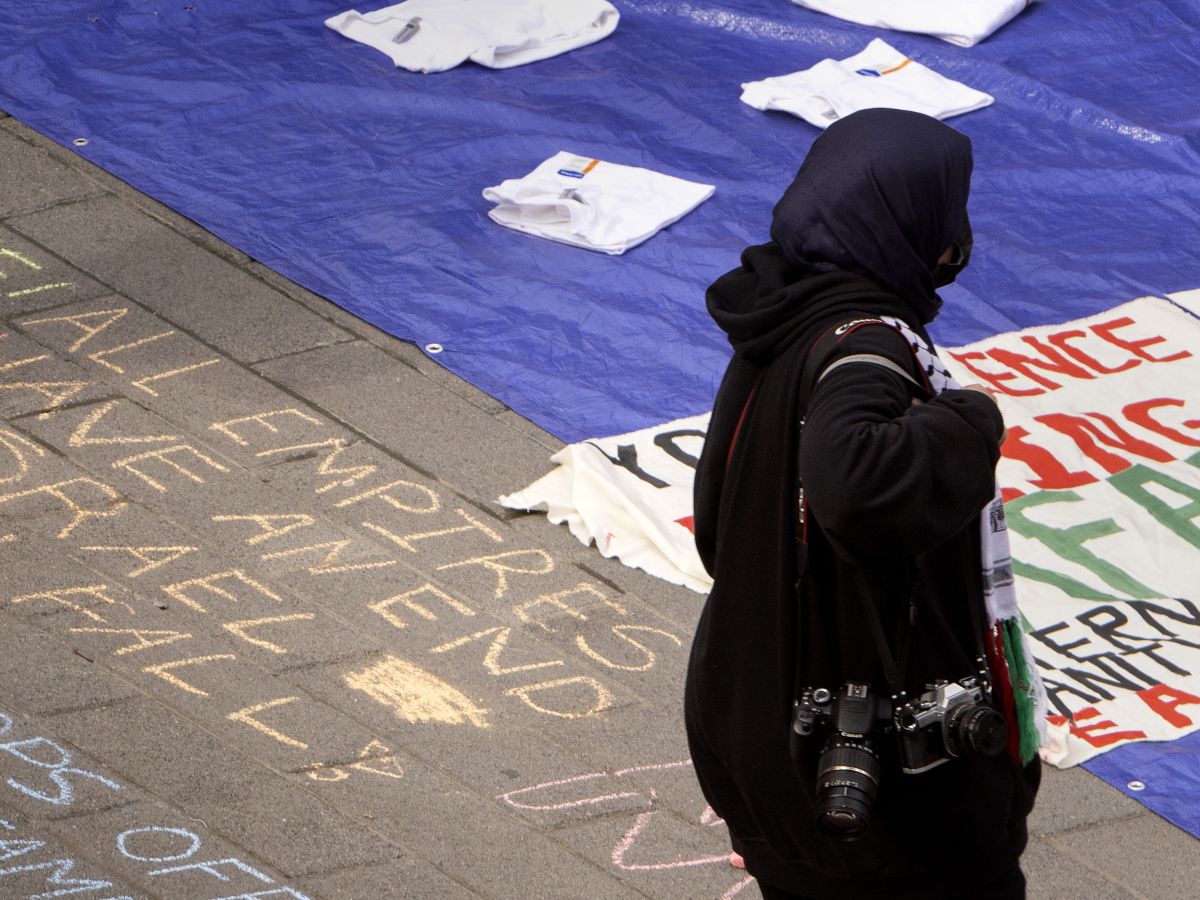
Anti-Israel protesters hold a rally at Toronto Metropolitan University in 2024.

Another horrific report was released this week about institutionalized antisemitism at Toronto Metropolitan University (TMU).

Its primary author, retired judge Mary Lou Benotto, is no wallflower, and she did not mince words in her assessment: “The review finds that the events of Oct. 7, 2023, in Israel fundamentally altered the experience of campus life for many members of the university community. Jewish students, faculty and staff described hostility toward Jewish identity and Zionism that crossed into intimidation, dehumanization and antisemitism.”

The review found “symptoms of a deteriorating campus climate that, absent decisive institutional action, are likely to recur.” But this is nothing new. In 2016, I met with TMU’s president, Mohamed Lachemi, to warn him about reports I was receiving from Jewish students over rising antisemitism. At the time, Lachemi seemed receptive to fixing the growing problem of antisemitism on his campus.

But the Canadian method is to “kick the can down the road” with yet another study rather than implement necessary measures to fix the antisemitism problem. During his now infamous antisemitism speech in June at Holy Blossom Temple in Toronto, Prime Minister Mark Carney announced a new ministerial advisory council that would “reassess” and “measure” antisemitism from “four different directions.” The council has done zilch to date.

At this point, Canadians have seen a plethora of studies on the subject, but very little action. Last year, the government released the “Canadian Handbook on the IHRA Working Definition of Antisemitism.” It noted that, “Over 150 individuals were consulted, including Jewish community leaders, the Canadian delegation to the IHRA, rabbis, academics and teachers, lawyers, civil servants and political staff, and law enforcement personnel.”

Yet handbooks and reports are only as good as their implementation. In April 2026, the standing Senate committee on human rights released its own report titled “Standing United Against Antisemitism,” which provided 22 recommendations. Like numerous other reports now collecting dust, it stated the obvious: a surge in hate crimes, an erosion of safety and an increase in Holocaust denial, among other critical issues.

When will these reports end and action commence? Just last week, another government report found that 95.7 per cent of 900 Jewish students interviewed experienced some form of antisemitism over the past year, while 84 per cent considered antisemitism a serious problem at universities. Taking this to account, my column last week focused on how students and their parents should adapt to campus life this fall.

In her report, Benotto recommended eight easily achievable recommendations that TMU can immediately implement. Among them is the common-sense prohibition of intimidation, harassment and discrimination as part of free speech. She also called for new mechanisms around protests and, most significantly, the enforcement of TMU’s student code of conduct.

Instead of quickly moving to adopt these recommendations, the university called for another study to study the findings. In a statement , Lachemi announced a new “task force” and appointed Bob Rae to “carefully consider and respond to every recommendation” by March 2027.

So the university first hired a former judge to provide a report on antisemitism. Then it hired a former ambassador to take seven months to provide an “implementation blueprint.” Will it then follow the Carney playbook and appoint an advisory council to figure out how to implement the task force’s recommendations on the first recommendations?

National Post

Avi Benlolo is the chairman and CEO of the Abraham Global Peace Initiative, a Canadian think-tank promoting freedom and democracy.


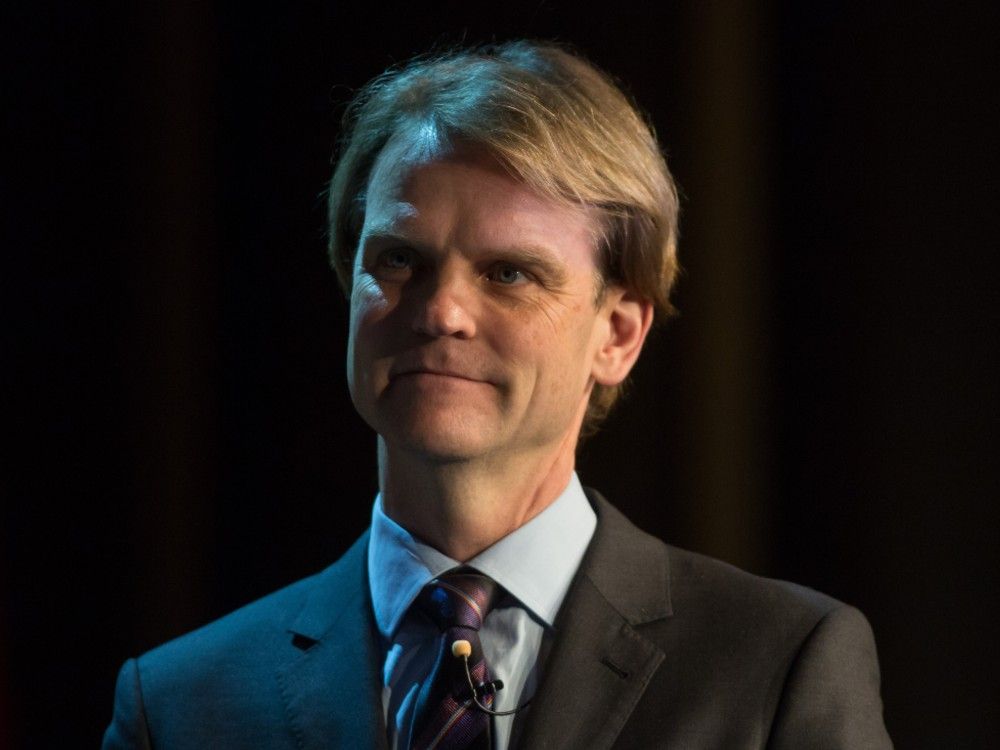
Chris Alexander, seen here during the Conservative Party of Canada leadership debate in 2017, joined the race to become Toronto's next mayor on July 29.

Chris Alexander, a longtime diplomat and former minister of citizenship and immigration for then-Conservative Prime Minister Stephen Harper, announced on July 29 that he intended to run for Mayor of Toronto.

His unexpected and rather late entry into the Toronto mayoral race made absolutely no sense at the time. As the Aug. 21 deadline to either join or withdraw his candidacy approaches, it makes equally no sense why he’s still running — and, more importantly, why he hasn’t dropped out.

A few polls have been conducted since Alexander joined the race. He’s not only sitting in a distant third place in each instance, but the needle for his popular support has barely moved.

Forum Research’s July 29 poll had Toronto mayor Olivia Chow at 47 per cent, followed by Toronto city councillor Brad Bradford at 32 per cent, with Alexander at 11 per cent. Liaison Strategies’s Aug. 4-5 poll had Chow ahead of Bradford 47-40 per cent, with Alexander at 10 per cent. The most recent Liaison Strategies poll of Aug. 14-16 had Chow leading Bradford 49-38 per cent, and Alexander sitting at 11 per cent.

Let’s put aside the fact that Alexander started off in double digits the exact day he made his announcement. It’s a bit hard to believe he was polling higher than Rob Ford and Donald Trump in the early stages of the 2010 Toronto mayoral race and 2016 Republican primaries, respectively. Nevertheless, if we accept the findings of these three polls, his popular support remained stagnant for close to three weeks.

Even worse, Alexander’s small percentage of support has clearly cut into Bradford’s momentum to beat Chow in November. It’s not out of the realm of possibility that Alexander could play spoiler in this campaign and keep the left-wing incumbent mayor firmly ensconced at City Hall.

There was a reason why potential mayoral hopefuls like former Toronto Sun columnist/editor Anthony Furey, former Ontario minister of finance Rod Philips, former Ontario minister of citizenship and multiculturalism Michael Ford (the nephew of Premier Doug Ford), former deputy mayor Ana Bailão, former federal Liberal cabinet minister Marco Mendicino and former Toronto mayor John Tory stayed out of this race. A crowded field of centrist to centre-right candidates in the June 2023 Toronto mayoral by-election had benefited Chow. They weren’t going to let the same thing happen again. Bradford became the consensus candidate to defeat the incumbent mayor, and the others either declined to run or coalesced around his candidacy. If they weren’t pleased with the direction of the city in four years’ time, they could always run against Bradford in 2030.

Alexander was also mentioned as a possible candidate. He told CTV News on July 10 that he was “seriously” considering running for the top job in Toronto. “A number of people and organizations in this city for which I have enormous respect have asked me to, and I don’t take that lightly,” he said, but hadn’t made a decision “yet.”

Most commentators figured he would reach the same logical conclusion that other experienced individuals and politicians already had. Apparently not.

I still have no earthly idea who convinced Alexander that he’s the right person to become Toronto’s next mayor. While he spent 18 years in the Canadian Foreign Service, served as Canadian ambassador to Afghanistan (2003-2005) and had one term as a Conservative MP and cabinet minister (2011-2015), he has no municipal experience. Nothing, nada, zip.

His brief tenure on Parliament Hill had shaky moments, too. He’s been commonly associated with the controversial niqab issue and equally controversial “barbaric cultural practices” hotline. Both of these controversies contributed to the defeat of the Harper Conservatives in 2015. While you can argue that Alexander was simply being a good foot soldier during the election campaign, an experienced politician knows how to wiggle out of difficult situations and negate the potential damage to their political reputations and careers. He was far too inexperienced to accomplish this then — and now.

It should also be pointed out that while Alexander was born and raised in Toronto, he served as a federal MP for Ajax-Pickering. He and his family only moved back to Toronto in 2022. While this obviously doesn’t disqualify him from running for mayor, he’s been out of the loop for many years. A person who runs a major city like Toronto needs to know the ins and outs of municipal politics. He doesn’t.

If Alexander truly cares about the city of Toronto, here’s what he should do.

Alexander should withdraw his mayoral candidacy on Aug. 21 on or before the 2 pm ET deadline. This shouldn’t be viewed as a sign of defeat on his part, but a measure of reality that he can’t win this election and could end up a political spoiler who inadvertently kept Chow in the mayor’s chair. This would be of no personal or political benefit to the 57-year-old Alexander. Instead, he should spend the next four years involved in municipal affairs in some fashion, from volunteer work to joining some high-profile committees. He could then try to launch a legitimate mayoral campaign in 2030, and would have just enough political experience under his belt to accomplish this.

Long story short, Alexander should do the right thing and get out. If not, his political ambitions in any capacity will be wiped out for good.

National Post


Parti-Quebecois leader Paul St-Pierre Plamondon said Thursday that in his view, an independent Quebec “would be in a position to negotiate (with Washington) by ourselves and hence have our interests put forward and not … sacrificed over other interests.

On Wednesday, the Parti Québécois unveiled its slogan for the upcoming provincial election: “Le choix de la confiance,” meaning “the choice of trust” or “confidence” in government. “We will not campaign on the pessimistic themes of uncertainty and fear, but based on policy proposals and a solid team,” leader Paul St-Pierre Plamondon told reporters with a straight face.

Leave aside for the moment that the PQ’s concept of Quebec nationalism is inherently pessimistic, marinated in mistrust and grievance. The PQ’s 524-page doorstopper of a manifesto points to the following themes in its table of contents: “the cement of difference: language”; “the French language has no future in Canada”; “the Anselem affair: religion placed on a pedestal of individual rights” (this refers to a landmark Supreme Court case involving Orthodox Jewish Montrealers).

That’s just in chapter one!

The timing of the slogan unveiling was particularly amusing, coming as it did mere hours after St-Pierre Plamondon made official something he has mused about publicly for months: While remaining committed to holding a third sovereignty referendum in the PQ’s first mandate, he announced the campaign would not commence with Donald Trump still occupying the White House.

“Until then, our priority remains clear: Govern Quebec with consistency and restore the confidence of Quebecers,” he said.

In a not universally well-receivedopen letter to Quebec anglophones , published recently in National Post, St-Pierre Plamondon ventured the following: “The real ballot question this upcoming October is who can form a good government for Quebec: a competent government, an honest government, a government prepared to tell the truth about the challenges we face and then hit the ground running to solve them.”

Oh? Because these are the first words in the party manifesto, attributed to St-Pierre Plamondon specifically: “Quebecers have been questioning their political and constitutional future for decades. Feeling constrained within a Canadian federation that offers them neither linguistic nor cultural autonomy, they are searching for a solution that will truly allow them to ensure the preservation of their unique identity in America.”

The contradictions pile up like rush hour traffic on the Champlain Bridge. Quebec must be independent to protect its interests of all kinds … except if a malign influence occupies the White House? At the risk of wanton speculation, I suspect the United States is going to be a quite important market for an independent Quebec. Trump is a uniquely chaotic president — I suspect historians in 1,000 years will still say he was uniquely chaotic — but he didn’t invent protectionism or tariffs. Quebecers only drink so much bourbon. In 2024, according to the provincial liquor concern’s annual report , just 6.8 per cent of the wine sold on its shelves was American, with the vast majority from France, Italy and Spain. They export a lot of electricity to New York and New England … but they also import quite a bit. It’s an interconnected system.

Perhaps anticipating such criticisms, on Thursday St-Pierre Plamondon decided to stress that in his view, an independent Quebec “would be in a position to negotiate (with Washington) by ourselves and hence have our interests put forward and not … sacrificed over other interests.

“Not deciding by yourself when it matters is as dangerous as letting your neighbour decide for you what your budget will be and what cereals, whether it’s cornflakes or corn puffs, you will be eating in the morning. It’s not normal,” St-Pierre Plamondon said, employing a rare breakfast-cereal political analogy. To him, the benefits of sovereignty in this regard are “obvious,” he said.

And yet faced with the greatest menace from the White House Canada and its provinces have seen in anyone’s lifetime, now’s the time to stand down? It raises the question of trust and confidence, surely: Can a party leader who would postpone a referendum pledge because of Donald Trump be trusted to hold that referendum later? Trump leaves office in January 2029. The next Quebec election would be 18 months away.

And Premier St-Pierre Plamondon is going to roll the dice, no matter what the polls say, just because he promised? Even if he can see he is sure to lose? If you assume correlation equals causation, Trump only knocked a few points off support for sovereignty from a Biden-era peak in the high 30s. Thirty-eight per cent is not “winning conditions.”

Most nationalist pundits seem to see “no referendums under Trump” as wise strategy, given the polls — though, speaking of trust, not all of them are happy about Quebecers’ timorousness. “If our ancestors had been so ‘cautious’ (not to say “so fearful”), they would never have crossed the Atlantic,” Richard Martineau fumed in Le Journal de Montréal.

In the unlikely event St-Pierre Plamondon ever pulls the trigger, that’s the sort of remark the No side will want to have clipped and saved. They will have many cautious minds to change, and the PQ’s mixed messages inspire neither trust in the party, nor the party’s trust in Quebecers

National Post
cselley@postmedia.com


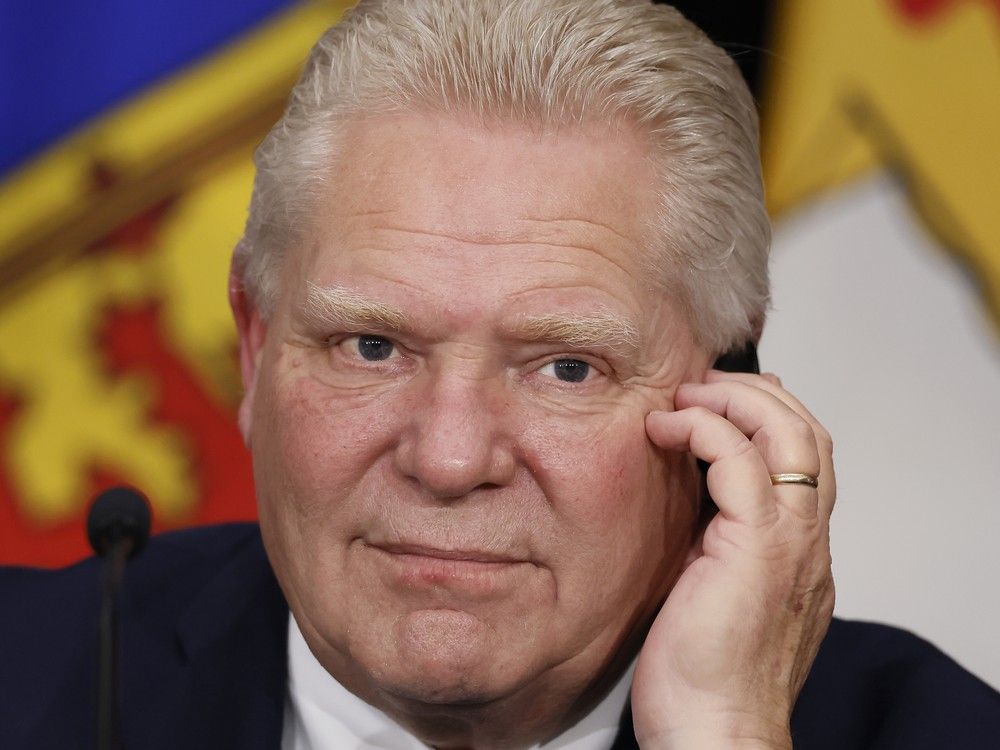
Ontario Premier Doug Ford wears a

In just about every public appearance he has made over the last few months, Doug Ford has expressed his displeasure with Donald Trump.

Often it comes as an aside to his scripted remarks, as when the Ontario premier, while recently mentioning the importance of trust in a trade relationship, veered off to say that he didn’t “trust Trump as far as I could throw him.” Or, when saying how much he generally likes Americans, he’ll pause and say, “I’ll tell ya, there’s one guy down there I don’t like too much.”

Sometimes his complaints have been a bit more measured. At last month’s first ministers’ meeting in Charlottetown, after the U.S. president threatened to impose 50 per cent tariffs on certain Canadian goods, Ford said his fellow premiers “should be a little more vocal” in defending Canada’s interests. “I feel some days that I’m standing alone,” he said.

But now, with federal negotiators said to be in the final stretches of reaching a trade deal with their U.S. counterparts, one that would avoid the worst of the tariffs that Trump has threatened while offering concessions in return, it is Ford who has gone unusually quiet. While other premiers told reporters on Wednesday after a call with Prime Minister Mark Carney that they were encouraged by his update on the trade talks and felt confident of a positive resolution, Ford was nowhere to be seen. Inquiries to his office were met with a response that there would be no comment forthcoming.

The Ontario premier, who easily won re-election last year while literally wearing a “Canada is Not for Sale” cap on his head, seems to have shelved the Captain Canada bit, at least for now.

But is that an indication that Ford is displeased with the concessions that Carney is prepared to make, or a sign that he is keeping quiet and falling in line with whatever the prime minister has requested, which would include an end to provincial bans on U.S. alcohol?

If the latter is true, it would mark something of a shift for Ford. He has consistently, over a period of months, called for Canada to take a harder line in trade negotiations with the United States, saying that the only way to deal with a bully is to fight back. He has also said repeatedly that he would only allow the provincially run LCBO to return U.S. alcohol to store shelves if Trump rescinded the tariffs that he imposed on Canadian steel, aluminum and automobiles last year.

Last week, he softened that position somewhat, saying he would be willing to end the ban on U.S. alcohol in the event of “a fair deal.” It’s unknown if Ford would consider the reduction of some of Trump’s tariffs, but not the elimination of them, as meeting his definition of fair, but given his general tenor about the trade relationship with the United States, probably not.

Ford has said that Canada should be willing to reduce energy exports south of the border to generate leverage in talks, and he even briefly threatened to cut off electricity exports from Ontario to neighbouring states last year before a Trump freakout, and a request from Carney, caused him to back off that plan.

It was the Ford government that also infamously commissioned a television advertisement last year, using portions of an archival interview in which former U.S. president Ronald Reagan extolled the benefits of free trade, which caused another Trump freakout that ultimately led to a long stalling of trade talks between the two countries.

The U.S. alcohol bans have been surprisingly effective in terms of getting a reaction from American politicians and were cited as a key reason for Trump’s threatened 50 per cent tariffs. Ontario alone imported close to a billion dollars worth of U.S. goods through the LCBO before the ban was imposed last year and politicians from states like Kentucky, California and Washington have pleaded with their Canadian counterparts to relent.

Ford, in response to a June attempt from a U.S. Congresswoman to force an investigation of the alcohol ban under trade law, said that Ontatio would “not back down” in its stance that the ban would only be rescinded when the United States dropped “its illegal tariffs on Canada.”

On a visit to Washington that month, Ford told reporters that his only goal with the alcohol ban was to help force through a beneficial trade deal.

Once such a deal was struck, the premier said, “I’m going to be sitting down and bringing all the liquor back on shelves in Ontario, and everyone’s gonna be kumbaya. It’s going to be good.”

We should find out soon if Ford is indeed kumbaya with the prime minister’s deal.

sstinson@postmedia.com


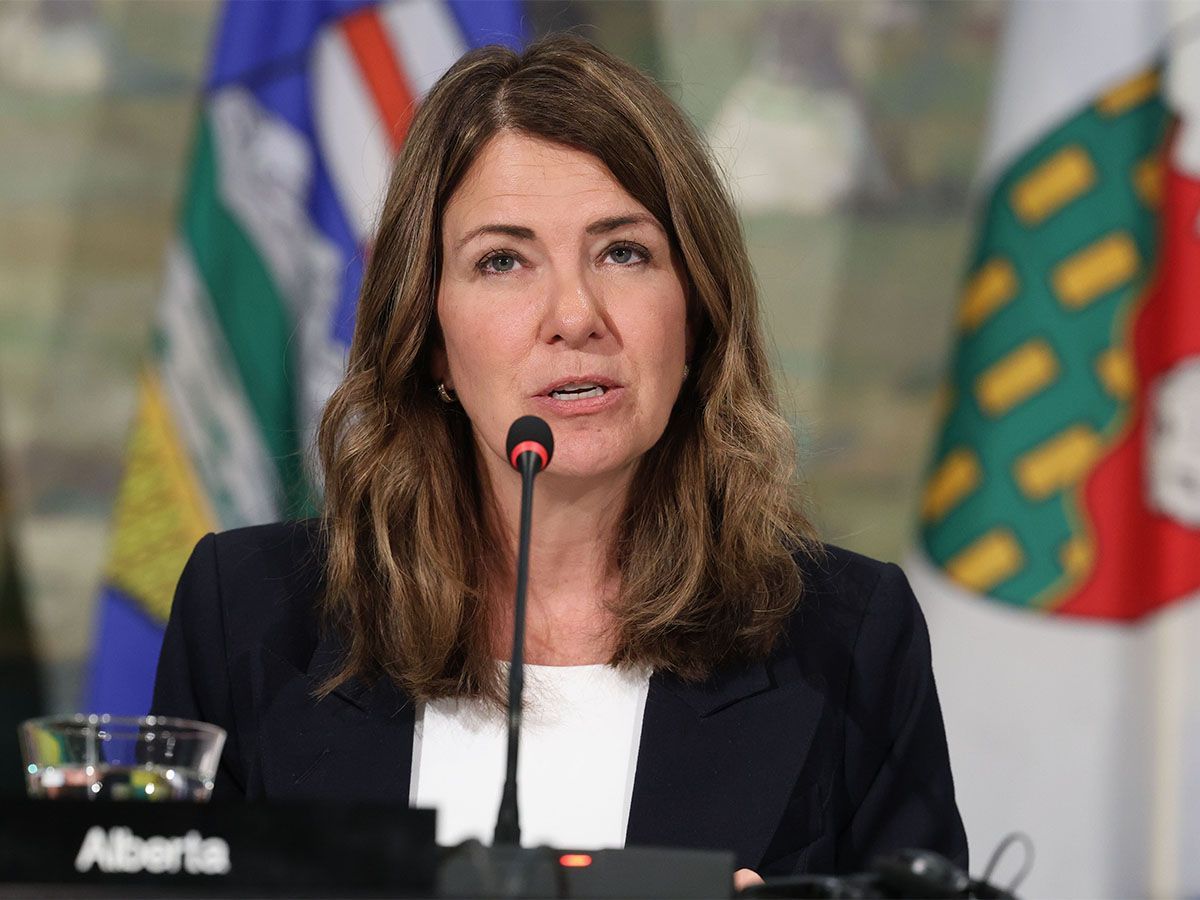
Alberta Premier Danielle Smith speaks during a press conference at the Western Premiers’ Conference in Kananaskis, Alberta on Tuesday, May 26, 2026.

There have been some high-profile disagreements between Alberta and Ottawa in recent years over where provincial jurisdiction ends and federal jurisdiction begins.

The feds prevailed in the battle over the consumer carbon tax, while Alberta scored a major victory against parts of the Impact Assessment Act. The dispute over the Clean Electricity Regulations was rendered moot after the Carney government agreed to put that scheme on hold as part of the Alberta-Ottawa MOU.

And indeed that MOU seemed indicative of a new era of improved relations between Alberta and Ottawa that’s been building over the last eighteen months.

However, there is now a new battle brewing in a realm that is unambiguously provincial jurisdiction: health care.

The Alberta government is moving ahead with plans to allow certain physicians to practice in both the public and private health care systems. To participate, physicians would be required to work a minimum number of hours within the public system.

None of this will involve life-saving treatments, such as cancer surgeries. Nor does it involve family doctors. For now, the allowed procedures cover those already available at non-hospital surgical centres, such as cataract surgery, hip and knee replacements, and hernia repair.

This is all set to launch next month, although the specifics are still being hammered out around the number of hours doctors will be required to spend in the public system. The province says it will likely vary, based on region and specialty.

The jury is obviously still out on whether or to what extent this will improve health care delivery or outcomes in Alberta, and on whether Albertans are on board with this change. Premier Danielle Smith has been ambitious in her reforms and overhaul of health care, but Albertans don’t yet seem convinced that things are on the right track.

But ultimately it is Alberta voters that will judge all of this. Yes, it’s audacious, bold, controversial, unprecedented, or any number of other possible adjectives. One thing it’s not, however, is any of Ottawa’s business.

Nevertheless, the feds are making it their business. Federal Health Minister Majorie Michel has confirmed she fired off a letter to her Alberta counterpart conveying that she is “very concerned” about this plan and told the the Toronto Star she doesn’t “know how it can work within (the Canada Health Act).”

Premier Smith fired back this week, posting on social media that they “expect the federal government to respect Alberta’s jurisdiction and its authority to determine how health care is delivered.”

Smith also points out an important fact in all of this: “Alberta’s dual practice model does not violate the Canada Health Act. The Act does not prohibit private practice outside the publicly insured system.”

Now, it’s conceivable that a dual practice model could run afoul of the Canada Health Act. But the issue isn’t the existence of private health care providers, but rather the expectation that Canadians not be forced to pay out of pocket for insured medically necessary services. Smith maintains that “Albertans never have to pay out of pocket for medically necessary care.”

The Canada Health Act doesn’t erode provincial jurisdiction in this area, and it’s not some law of the land that mandates how provinces must deliver health care. Essentially, the Canada Health Act is the details of the strings-attached federal health care funding. If provinces want money for health care, Ottawa has its own conditions.

So, no, the feds can’t step in and block or veto Alberta’s reforms. The most Ottawa can do is withhold federal health transfers.

Putting aside the obvious national unity implications of such a move, it’s rather counterproductive to respond to concerns about access to health care by reducing overall health care funding.

As it stands, there is nothing that prohibits Alberta’s model as it’s currently structured. If there was, surely the federal minister would point it out, rather than resort to vague concerns and implied threats.

So what is the point of the letter? Despite the very clear lack of federal jurisdiction, the federal Liberals have long tried to portray themselves as the true defenders of Canadian health care through exactly this sort of political grandstanding.

That’s not to say Alberta has necessarily found the answer to fixing health care, but the difficult work of actually delivering care and convincing the public to accept changes to our broken status quo falls to provincial governments. Ottawa merely preaches from the sidelines.

There should be much more tolerance and flexibility in allowing provinces to experiment with alternative models of delivery. We’re so myopically focused on avoiding “American-style” health care, that we forget there are many other models and systems we could learn from or emulate.

Not everyone will be convinced, obviously. The irony though, is that by calling on the feds to intervene and shifting the underlying political dynamic, it will actually be harder to thwart Smith’s plans.

As noted, public opinion polls have not been favourable when it comes to the premier’s handling of health care. The governing United Conservative Party is on much steadier political ground when they’re taking on — or “standing up” to — Ottawa. They’d be much more comfortable if this turned into an Alberta vs. Ottawa fight.

The backlash to a financial penalty from Ottawa would be immediate and intense, especially with so much focus at the moment on how much Alberta contributes to Confederation. Furthermore, the idea that Alberta voters need to be protected from themselves would be another slap in the face.

This kind of federal intervention should be an absolute last resort; one which is not warranted here. If the federal health minister is inclined to worry about or watch closely what’s happening in Alberta, she’s free to do so. But spare us the sanctimonious letters and lectures.

The province’s voters are capable of holding the provincial government to account on a matter of provincial jurisdiction. Ottawa should butt out.

Rob Breakenridge is a Calgary-based podcaster and writer. He can be found at robbreakenridge.ca and reached at rob.breakenridge@gmail.com


Ontario's real scandal is how political parties enrich themselves at taxpayers' expense at levels that are out of sync with the rest of Canada, writes Randall Denley.

Ontario Premier Doug Ford and his PC party have taken some heat lately for squandering taxpayer-supported political donations, and rightly so. It’s difficult to justify spending $3,000 to snoop on Liberal leader Bonnie Crombie in Jamaica . Then there was the revelation that some cabinet ministers’ riding associations spent thousands of dollars on lavish dinners , and even an axe-throwing event.

The real scandal, though, is the way Ontario political parties enrich themselves at taxpayers’ expense at levels that are out of sync with what’s happening in the rest of the country.

In defending the Jamaica adventure, Ford referred repeatedly to “the party’s money,” but every dollar the party receives is subsidized by the public, whether it’s through a donor tax credit or a per-vote payment.

Ontario has one of the highest political donation limits in the country, the most generous tax treatment for donors, and the highest per-vote subsidy.

Donor contributions to federal parties are limited to $1,775 . In Ontario, the limit is $5,000. Ford raised the figure from $3,400 last year . Why do Ontario politicians require so much more money in ridings that are identical to federal ridings?

Ontario’s tax treatment of political donations is also out of step with the federal amounts. The feds cap political donation tax credits at $650 and the amount is non-refundable. Ontario’s tax credit limit is $1,698 and it’s fully refundable. Even if you owe no tax, you still get cash back.

Ontario’s tax credit for political donors is markedly more substantial than any other province. Manitoba and Alberta have $1,000 tax credit limits, but most provinces range from $500 to $650 .

Quebec leads the way on keeping tax dollars out of the hands of provincial politicians. It has no political contribution tax credit, limits donations to $100 and pays parties based on donations, to a maximum of $250,000 per party.

At least with tax credits, someone has to donate their own money, even if they do get a good chunk of it back. That’s not the case with Ontario’s pay-per-vote system, the other main source of political funding. It provides automatic quarterly payments to parties based on their performance in the most recent election.

Back in 2018, Ford campaigned against such payments , which had been brought in by the provincial Liberals the previous year. At the time, he said, “I do not believe the government should be taking money from hard-working taxpayers and giving it to political parties. Corporate welfare is wrong, and political party welfare is equally wrong; I will put an end to both.”

Ford’s batting 0 for 2 there, but at least political welfare is cheaper than corporate welfare.

Like many welfare recipients, Ford subsequently found himself dependent on the payments. The idea of free money without doing any work has a certain allure. After years of extending them temporarily, he made the per-vote payments permanent last year.

Attorney General Doug Downey said the per-vote subsidy ensures “a balance of public and private spending in elections.” He must have meant a balance between money coming out of your right and left pockets.

Again, Ontario is out of step with much of the country. The federal government does not give pay-per-vote payments. Only Prince Edward Island, Nova Scotia, New Brunswick and Quebec pay such allowances.

Quebec’s $250,000 per party limit is pocket change compared to what Ontario parties get . This year, the PCs will collect $5.5 million in taxpayers’ money, the Liberals $3.8 million and the NDP almost $2.4 million.

The other provinces with per-vote subsidies all provide significantly less than Ontario does.

Ontario politicians’ unparalleled generosity to political parties ought to come with enhanced accountability. That’s why Ford’s comments about “the party’s money” and his suggestion that reporters should talk to the party are so off base.

Once you accept the public’s money, you lose the right to talk about “the party’s money.” Even if it were the party’s money, Ford is still the leader of the party. That would suggest he’s the person to talk to about how it’s spent, not some party functionary.

One could make a case for per-vote public subsidies or for a system reliant on donors. It’s difficult to argue that both are necessary, especially when the vote subsidy and the political tax credit are so generous.

It would be nice to think that some electable party would stop fleecing taxpayers, but it’s unlikely. They all benefit from the existing rules, and no one benefits more than the party in power, the one that would have to make the change.

As Ford has already demonstrated, a promise to limit politicians’ access to the trough is easily trumped by naked self-interest.

Randall Denley is an Ottawa journalist and author. Contact him at randalldenley1@gmail.com


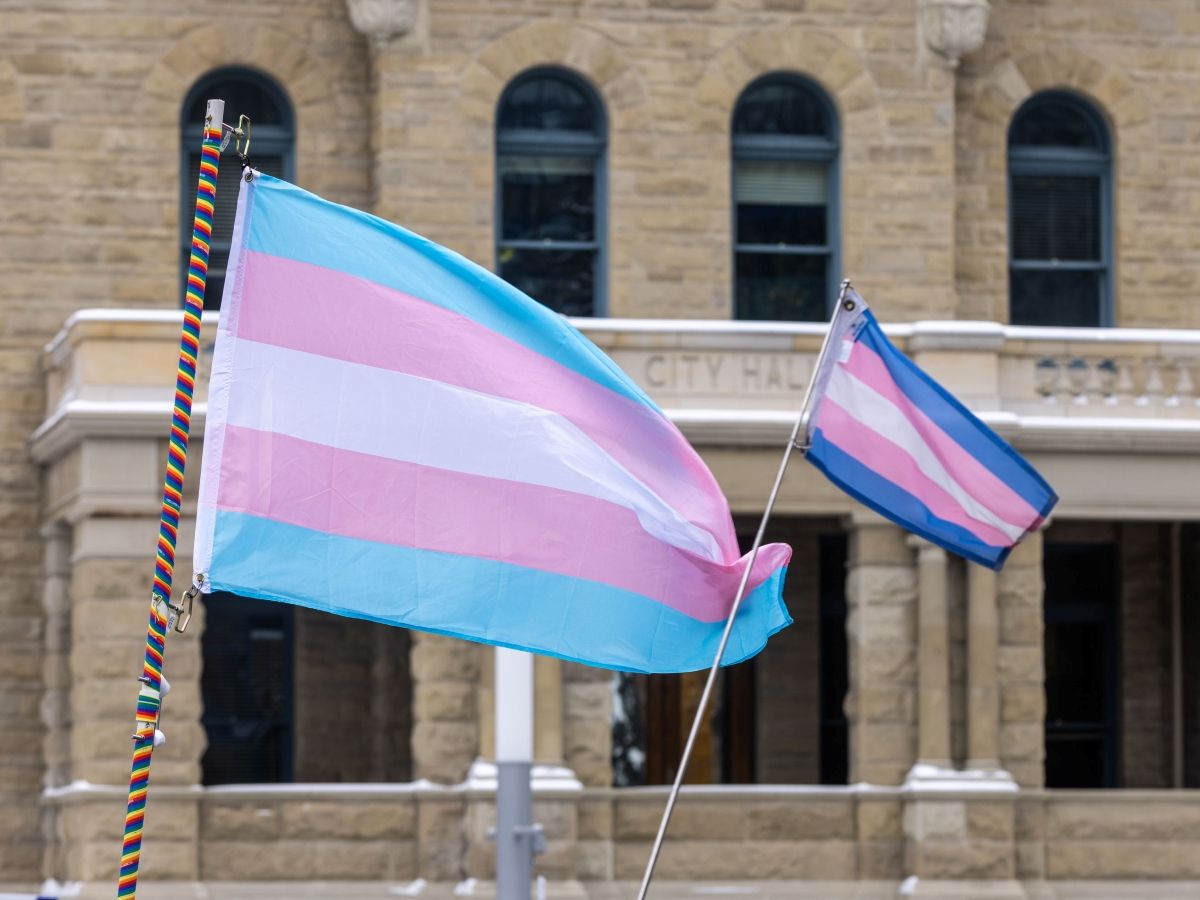
Transgender pride flags fly in the Calgary Municipal Plaza as hundreds gathered for the Transgender Day of Visibility on Sunday, March 30, 2025.

One of the world’s loudest and most successful cheerleaders for gender ideology has been forced into a tactical retreat in an ongoing U.S. court case.

Anyone mildly familiar with the controversy over “gender affirming” care will be aware that proponents for this medical scandal have insisted that there is to be no debate on trans health care — and that debate is not only tantamount to heresy, but could end the lives or very existence of transgender identified persons. Critics are often met with the refrain, “the science is settled,” when they ask questions about the wisdom or safety of transitioning gender-confused minors.

Well, that’s over now.

The World Professional Association for Transgender Health (WPATH), in an application to dismiss a lawsuit, has finally admitted that the debate over gender ideology is very real — and that their guidelines are not so sacred, after all.

The U.S. Federal Trade Commission (FTC), along with the states of Alaska, Iowa, Nebraska and Texas, filed a lawsuit against WPATH in June. In a news release announcing the lawsuit, the FTC alleged that WPATH “has provided the means for medical providers to make false and unsubstantiated claims to parents in order to sell pediatric medical transition services.”

“In 2022, WPATH omitted all mention of age limitations for breast amputation or penis removal from the ‘Standards of Care’ document providing the organization’s official recommendations for treating sex-trait-related dissatisfaction or distress in children,” continued the FTC’s statement. “As alleged in the complaint, WPATH did not base this decision on medical evidence.”

WPATH has for years been treated as the global authority on transgender care, including in Canada. In fact, WPATH names Canada in its court filings as an example of a country that agrees with its “Standards of Care.” These care guidelines contain no lower age limits for surgical treatment and include an entire chapter on the “eunuch” gender identity.

Over the years, WPATH attracted criticism that threw its expertise into question. In March 2024, for example, a non-profit group named Environmental Progress released the “ WPATH Files ,” which were a series of documents that exposed WPATH members’ uncertainty over informed consent and treatment risks for minors, and the incidence of untreated mental health conditions among patients seeking trans health care. In light of the findings within the WPATH Files, Environmental Progress made a similar argument to the FTC: that WPATH “does not meet the standards of evidence-based medicine, and members frequently discuss improvising treatments as they go along.” It also argued that “WPATH-affiliated doctors are knowingly violating bedrock principles of medical ethics and informed consent.”

It wasn’t until the FTC lawsuit, however, that WPATH had to go on record and admit that it is not the one true arbiter of science.

Sprinkled throughout WPATH’s motion to dismiss the FTC’s suit are references to its activities as “policy and opinion work,” and written “opinions about subjects on which there is ‘medical and scientific uncertainty.’” The submissions concede, at long last, the existence of “intense medical debate” about pediatric gender care. Put differently, WPATH is now admitting that the framing of critics as anti-trans bigots is false. There is a legitimate discussion to be had over science and evidence.

In its application to dismiss, WPATH claims to defer to U.S. federalism, that is, each individual state’s authority to create health-care legislation. After admitting that “variation exists among views on transgender health-care for youth,” WPATH states that “such policy disagreements are federalism in action.” It goes on to argue that the FTC lawsuit is a violation of state legislative power.

This is contradicted by several public statements WPATH has issued over the years, including in 2023, when WPATH said that it and its U.S. branch “vehemently oppose the broad and sweeping legislation being introduced and ratified in states across the country to ban access to gender-affirming health care to transgender and gender diverse (TGD) people” and “condemn any legislative actions to restrict or prohibit access to gender-affirming health care.”

Of course, the motion to dismiss makes no mention of the inconsistency between WPATH’s conflicting legal and public positions on the right of states to legislate transgender health care.

Admittedly, WPATH appears to have a good chance of getting the lawsuit quashed based on its legal argument that the FTC is attempting to infringe upon the non-profit’s First Amendment right to free speech. Americans have excellent speech protections, and it will come as no surprise if WPATH wins on this basis alone (the organization makes several other, less persuasive, arguments as to why the FTC’s lawsuit should be dismissed).

No matter, though. WPATH has been forced to back away from its “no debate” mantra, revealing the organization as a crumbling edifice of gender ideology.

“WPATH is contributing to the public medical debate regarding transgender healthcare. If Plaintiffs disagree with WPATH, the ‘remedy to be applied is more speech,’ not enforced silence,” reads the motion to dismiss, quoting another court decision.

It’s difficult to feel sympathy for WPATH, which, along with other gender activists, has dominated the culture war by silencing dissent for years. Now, the organization invokes the old plea of its ideological enemies: to be heard, and to be countered with opposing speech, rather than censorship. The temptation to gloat — at length — is strong.

The FTC lawsuit shone a light on WPATH, and, no matter the legal outcome, WPATH was caught with its pants around its ankles. Every physician who follows its guidelines should immediately step back and reconsider the evidence. This is a major win for vulnerable youth who are at risk of being caught up in this medical scandal.

National Post


Transgender pride flags fly in the Calgary Municipal Plaza as hundreds gathered for the Transgender Day of Visibility on Sunday, March 30, 2025.

One of the world’s loudest and most successful cheerleaders for gender ideology has been forced into a tactical retreat in an ongoing U.S. court case.

Anyone mildly familiar with the controversy over “gender affirming” care will be aware that proponents for this medical scandal have insisted that there is to be no debate on trans health care — and that debate is not only tantamount to heresy, but could end the lives or very existence of transgender identified persons. Critics are often met with the refrain, “the science is settled,” when they ask questions about the wisdom or safety of transitioning gender-confused minors.

Well, that’s over now.

The World Professional Association for Transgender Health (WPATH), in an application to dismiss a lawsuit, has finally admitted that the debate over gender ideology is very real — and that their guidelines are not so sacred, after all.

The U.S. Federal Trade Commission (FTC), along with the states of Alaska, Iowa, Nebraska and Texas, filed a lawsuit against WPATH in June. In a news release announcing the lawsuit, the FTC alleged that WPATH “has provided the means for medical providers to make false and unsubstantiated claims to parents in order to sell pediatric medical transition services.”

“In 2022, WPATH omitted all mention of age limitations for breast amputation or penis removal from the ‘Standards of Care’ document providing the organization’s official recommendations for treating sex-trait-related dissatisfaction or distress in children,” continued the FTC’s statement. “As alleged in the complaint, WPATH did not base this decision on medical evidence.”

WPATH has for years been treated as the global authority on transgender care, including in Canada. In fact, WPATH names Canada in its court filings as an example of a country that agrees with its “Standards of Care.” These care guidelines contain no lower age limits for surgical treatment and include an entire chapter on the “eunuch” gender identity.

Over the years, WPATH attracted criticism that threw its expertise into question. In March 2024, for example, a non-profit group named Environmental Progress released the “ WPATH Files ,” which were a series of documents that exposed WPATH members’ uncertainty over informed consent and treatment risks for minors, and the incidence of untreated mental health conditions among patients seeking trans health care. In light of the findings within the WPATH Files, Environmental Progress made a similar argument to the FTC: that WPATH “does not meet the standards of evidence-based medicine, and members frequently discuss improvising treatments as they go along.” It also argued that “WPATH-affiliated doctors are knowingly violating bedrock principles of medical ethics and informed consent.”

It wasn’t until the FTC lawsuit, however, that WPATH had to go on record and admit that it is not the one true arbiter of science.

Sprinkled throughout WPATH’s motion to dismiss the FTC’s suit are references to its activities as “policy and opinion work,” and written “opinions about subjects on which there is ‘medical and scientific uncertainty.’” The submissions concede, at long last, the existence of “intense medical debate” about pediatric gender care. Put differently, WPATH is now admitting that the framing of critics as anti-trans bigots is false. There is a legitimate discussion to be had over science and evidence.

In its application to dismiss, WPATH claims to defer to U.S. federalism, that is, each individual state’s authority to create health-care legislation. After admitting that “variation exists among views on transgender health-care for youth,” WPATH states that “such policy disagreements are federalism in action.” It goes on to argue that the FTC lawsuit is a violation of state legislative power.

This is contradicted by several public statements WPATH has issued over the years, including in 2023, when WPATH said that it and its U.S. branch “vehemently oppose the broad and sweeping legislation being introduced and ratified in states across the country to ban access to gender-affirming health care to transgender and gender diverse (TGD) people” and “condemn any legislative actions to restrict or prohibit access to gender-affirming health care.”

Of course, the motion to dismiss makes no mention of the inconsistency between WPATH’s conflicting legal and public positions on the right of states to legislate transgender health care.

Admittedly, WPATH appears to have a good chance of getting the lawsuit quashed based on its legal argument that the FTC is attempting to infringe upon the non-profit’s First Amendment right to free speech. Americans have excellent speech protections, and it will come as no surprise if WPATH wins on this basis alone (the organization makes several other, less persuasive, arguments as to why the FTC’s lawsuit should be dismissed).

No matter, though. WPATH has been forced to back away from its “no debate” mantra, revealing the organization as a crumbling edifice of gender ideology.

“WPATH is contributing to the public medical debate regarding transgender healthcare. If Plaintiffs disagree with WPATH, the ‘remedy to be applied is more speech,’ not enforced silence,” reads the motion to dismiss, quoting another court decision.

It’s difficult to feel sympathy for WPATH, which, along with other gender activists, has dominated the culture war by silencing dissent for years. Now, the organization invokes the old plea of its ideological enemies: to be heard, and to be countered with opposing speech, rather than censorship. The temptation to gloat — at length — is strong.

The FTC lawsuit shone a light on WPATH, and, no matter the legal outcome, WPATH was caught with its pants around its ankles. Every physician who follows its guidelines should immediately step back and reconsider the evidence. This is a major win for vulnerable youth who are at risk of being caught up in this medical scandal.

National Post