


As he left the chambers of the U.S. Supreme Court, where justices had just heard arguments Monday over whether to prevent states from counting mail ballots that arrive after Election Day, Nevada Secretary of State Cisco Aguilar texted his staff 3,000 miles away.
His directive: Get ready to plan how to run November’s midterm elections if the high court changes the rules when it issues its decision in June.
“The challenge is educating voters shortly before the election how the election is going to work,” Aguilar, a Democrat, said. “That doesn’t happen overnight. The election planning happens long before.”
Election officials in Nevada and 13 other states that allow regular mail ballots sent by Election Day but arrive some period of days afterward to be counted had their attention trained on Monday’s arguments, where conservative justices appeared skeptical of such grace periods. Fifteen other states have grace periods specifically for military and overseas voters.
Mail ballots, also called absentee ballots, have been the source of conspiracy theories from President Donald Trump, who groundlessly blames them for his loss in the 2020 election. The Republican National Committee and Libertarian Party sued to overturn Mississippi’s law permitting the counting of mail ballots postmarked by Election Day that arrive up to five days later, the case the high court is now considering.
During the nearly two-hour-long arguments, Justice Brett Kavanaugh, one of the court’s supermajority of six conservatives, asked RNC attorney Paul Clement if a ruling during the court’s typical time in June would run afoul of a court principle to avoid handing down decisions that can disrupt upcoming elections.
“June would give them plenty of time,” Clement said of election administrators overseeing November’s voting.
Tammy Patrick, a former Arizona election official who is chief programs officer at the National Association of Elections Officials’ Election Center, said that’s not the case. Most election offices have already printed flyers, signs and even ballot envelopes with the current election deadlines for use in November. They would have to scramble to reprint that material, usually done months or years in advance to save money.
“Nobody has put in their budget to reprint all of their educational material for the midterms,” Patrick said. “That’s the hard spot election administrators are in.”
Monday’s case revolves around just a fraction of the ballots counted during an election year.
In Nevada, for example, 98% of all mail ballots arrive before Election Day. Of those that arrive later, 95% land the next day. In Illinois, another state that allows late-arriving ballots, 106,000 ballots arrived within the state’s 14-day grace period in 2024, just under 2% of the 5.5 million votes cast in that election.
The biggest challenge if the mail ballot deadline were to change would be informing voters that they faced a tighter deadline, said Matt Dietrich, spokesperson for the Illinois State Board of Elections. He said the board would work local election offices to spread the word.
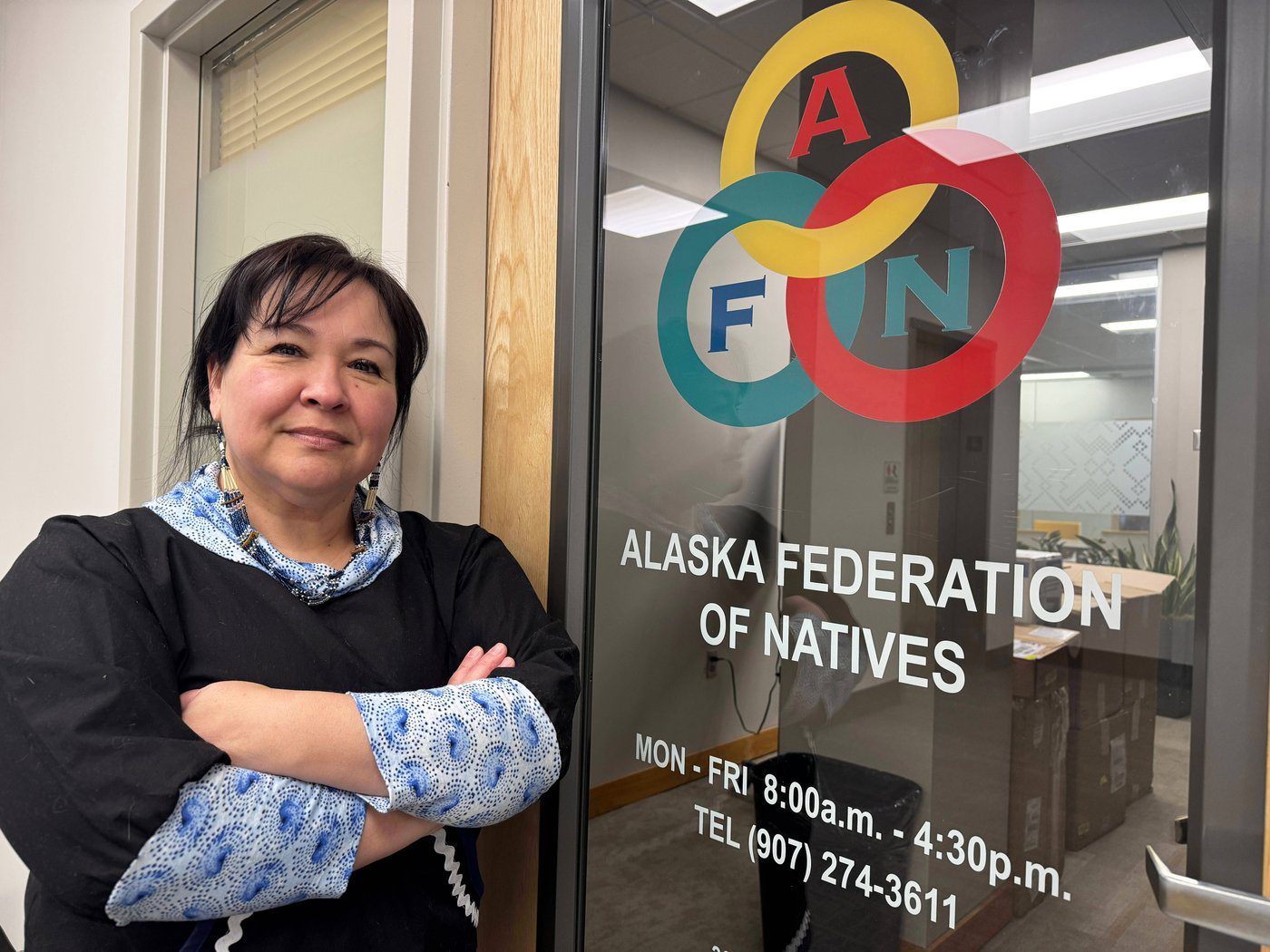
In Alaska, with its enormous distances and isolated population centers sometimes linked only by air, the state’s 10-day grace period is a civic lifeline to some communities.
“The thought that the outcome of Watson v. RNC could reshape elections as soon as June is horrifying to me, and for thousands of Alaskans who will have to rethink the way they approach voting by Election Day,” said Michelle Sparck of the group Get Out the Native Vote.
Massachusetts holds its primary Sept. 1, so cannot send out its general election ballots earlier than that, said Debra O’Malley, a spokesperson for the secretary of state’s office.
“You can’t turn these things around on a dime,” O’Malley said, worrying that there’s no give in that schedule for the itinerary the high court might prefer.
Patrick, of the national association, said election administrators have increasingly struggled to adjust to sudden swings in voting laws that have followed Trump’s attacks on voting. In Texas last year, 3,000 pieces of legislation related to elections were introduced in the state legislature, Patrick said, and election officials have to prepare for any changes months in advance.
That’s why the high court formulated what it calls the “Purcell principle,” a name based on a previous case out of Arizona. In 2006, the court reversed a decision that had struck down a state voter ID law shortly before the election, ruling that judges shouldn’t change procedures too close to voting.
Patrick worked in the elections office of Maricopa County, Arizona’s most populous county, at the time.
“When the rules of engagement change too close to the election, you don’t have sufficient time to notify the electorate and make clear that policy change,” she said.
She worries such a last-minute pivot could happen if the court changes late-arriving mail ballot rules, noting that rural voters whose mail is delivered slower stand to run the greatest risk of disenfranchisement.
Aguilar said he expects his office and local election officials in Nevada will roll with the punches, but he is concerned about a disruptive ruling.
“To change the rules of the game in the middle of the competition does not do anyone any good,” he said.
___
Associated Press writers Becky Bohrer in Juneau, Alaska, and John O’Connor in Springfield, Illinois, contributed to this report.
Nicholas Riccardi And Julie Carr Smyth, The Associated Press

